lift+love family stories by autumn mcalpin
Since 2021, Lift+Love has shared hundreds of real stories from Latter-day Saint LGBTQ individuals, their families, and allies. These stories—written by Autumn McAlpin—emerged from personal interviews with each participant and were published with their express permission.

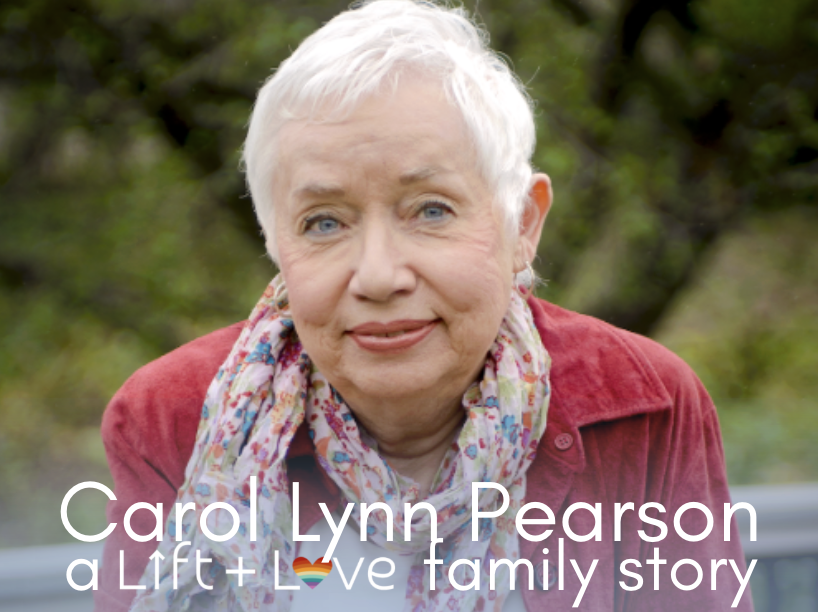
CAROL LYNN PEARSON
“Ultimately, they determined the best thing was to end the marriage and choose to part as friends. From that time on, Carol Lynn supported the family through her writing. Four years after the move, Gerald contracted AIDS. Carol Lynn brought him into the family home to care for him until he passed away.
“It never occurred to me that I’d write about it,” she says. “It was such a shameful thing at the time.” But something stirred. She had come to believe, “We have this whole thing wrong. I don’t know why people are gay, but I know they are children of God. We must figure out a better way to treat these people than we’ve done in the past.” As Carol Lynn witnessed families rejecting their gay children and churches offering no refuge, she knew: this story had to be told…
Carol Lynn Pearson has always known she was here on assignment.
“I was born a very smart girl in a very extreme patriarchal situation,” she says, looking back on her life with a mix of clarity, reverence, and that fiery illumination that for so long has characterized her work. “If we did indeed have some sort of plan before we come to this earth, I may have said, ‘I want to go down there and do something really interesting, dramatic, big’.”
And big it has been.
At 85 years old, Carol Lynn Pearson laughs that she is “still functional”--still walking daily, still writing, still being asked to speak for organizations like Gather and Encircle. And she is still deeply committed to her lifelong assignment—as a poet, playwright, and truth-teller inside a church she both loves and prods toward compassion.
Born in Salt Lake City to two devout Mormon, as those in the faith were widely called for so many years (it’s still her preferred term), Carol Lynn was raised with the belief that the LDS Church was God’s true plan for the human family. “The air that I breathed was certainly Mormon air,” she recalls. “And I loved it.”
Even as a child performing as Raggedy Andy in a Primary musical, she saw the path ahead clearly. “As I looked around, I thought, ‘How come everything important seems to be done by the men’?” She figured, “I’m as good as any of these boys.” Yet she observed how all the people on the stand were men, the voices on the radio were male voices, the Bible stories all seemed to be stories about men. She quips, “I very quickly became an unconsciously devoted feminist.”
Her brilliance was evident from an early age. As a student at Brigham Young High School in Provo, Carol Lynn won speech competitions, represented Utah in a national contest in Washington D.C., and had her photo taken with President Eisenhower. Later at BYU, she majored in theater and won Best Actress twice, once for playing Job’s wife and once for portraying Joan of Arc. “I must have absorbed a lot of cellular energy from playing Joan,” she reflects. “Because I was able to look around at my own church and say, ‘This is not right’.”
After college, Carol Lynn taught at Snow College to save money and then traveled the world for a year—finding herself in Russia the day JFK was assassinated. When she returned to Utah, she worked as a screenwriter for BYU's Motion Picture Studio, including the beloved short film, Cipher in the Snow.
It was as a student at BYU that Carol Lynn met “a charming young man” named Gerald Pearson. He called her "Blossom" and insisted the world needed her poems. After marrying in the Salt Lake City temple, together they borrowed $2,000 to self-publish Beginnings, a small book of her poetry, packed with spiritual gems. It took off. BYU Bookstore and other Provo shops couldn’t keep it on the shelves. 20,000 copies sold, which was unheard of for a book with this kind of origin story. Her former English professor, Bruce B. Clark, was thrilled with the poems and wanted to reference the book in the Relief Society manual he was responsible for producing for the Church. Carol Lynn was on the map.
She went on to publish Daughters of Light, a groundbreaking book on early Mormon women and their expression of spiritual gifts. Her research and poetic insight earned her speaking invitations from general authorities and their wives at various events. Her reputation grew. Her next book, Flight of the Nest, about the early LDS women’s stronghold in politics, firmed her household name across Utah and beyond. “I became well known to the brethren in Salt Lake,” she recounts. “They were impressed by and fond of me.” (She also later penned the well-known stage play, My Turn on Earth, Primary children’s song, “I’ll Walk with You,” as well as numerous other books.)
Carol Lynn and Gerald had four children. But behind the scenes, their marriage carried a silent ache. Before they married, Gerald had told his wife he had had homosexual experiences in the past but that it was not who he was. He had repented, and “all would be well.” Years later, after their third child was born, he confessed that it wasn’t. Despite trying to make the marriage work, and experiencing what Carol Lynn calls a “good physical relationship together,” there was significant heartache because Gerald had acted on his attractions during their marriage.
They decided to move to California for a fresh start. Gerald, an artist and visionary, had gotten them into some financial troubles with his interest in developing Mormon art and investing in some products that didn’t sell. Having spent some time in Walnut Creek and loving it, Gerald convinced Carol Lynn that was a good location to begin again. They moved together, but ultimately, they determined the best thing was to end the marriage and choose to part as friends.
From that time on, Carol Lynn supported the family through her writing.
Four years after the move, Gerald contracted AIDS.
Carol Lynn brought him into the family home to care for him until he passed away.
“It never occurred to me that I’d write about it,” she says. “It was such a shameful thing at the time.” But something stirred. She had come to believe, “We have this whole thing wrong. I don’t know why people are gay, but I know they are children of God. We must figure out a better way to treat these people than we’ve done in the past.” As Carol Lynn witnessed families rejecting their gay children and churches offering no refuge, she knew: this story had to be told.
That story became Goodbye, I Love You, published by Random House in 1986. It was a national sensation, and Carol Lynn appeared as a guest on both the Oprah show and Good Morning America. The book was crafted to appeal to a mass audience, and she says, “Most active Mormon people also knew about this book.” Carol Lynn went on a 12-city tour and had to have a second phone line installed to handle the calls and outreach which came pouring in. She feels lucky her kids didn’t experience any nasty fallout from the book’s publication.
The book marked a watershed moment in how the LDS community began to view its LGBTQ+ members. Historians who’ve examined the plight of the LGBTQ+ community in the LDS faith have been very clear that the publishing of Goodbye, I Love You was the turning point for individuals and families, and ultimately for the church, in seeing their gay brothers and sisters in a different light. Carol Lynn became a voice not only for her late husband but for thousands of others.
Gerald, she believes, understood the divine timing, and in his own way likely influenced it from beyond. Carol Lynn recalls how once, “He told me, ‘Listen Blossom, I know before we came to this earth you and I agreed to do a project together. I’m so sorry this has been so painful for you, but we agreed’.”
Carol Lynn posits that without Gerald, there would be no Beginnings. And without him, no Goodbye, I Love You.
She has since continued the work. Her second LGBTQ+-centered book, No More Goodbyes, chronicled the hundreds of incoming letters she received, sharing stories with permission from families who had embraced their gay children, and those who hadn’t. “There were still too many suicides, too many alienations,” she says. “I had to do something more.”
And so she wrote the stage play Facing East, a haunting portrayal of a Mormon couple grieving their gay son’s suicide. In the play, the son’s lover unexpectedly appears at the gravesite, offering a chance for truth, grief, and reconciliation. Produced by Jerry Rapier’s Stage Two Theatre Company and premiering in 2006, the play became a staple in LGBTQ+ Mormon discourse. The title references the LDS belief that caskets should face east for Christ’s resurrection, but that somehow “our gay people are still not invited into the light.”
The idea sprang when Carol Lynn attended a playwriting workshop in San Francisco and the participants were told to quickly jot down an idea for a play they knew they were ready to write. She was on fire. “It was electric from the beginning,” Carol Lynn recalls. “I knew it would be important.” She secured funding from Bruce Bastian, who she describes as a “marvelous man with large financial abilities to make big things happen in the gay scene.” She wrote the script in three months. A 20th anniversary revival is planned for 2026.
Carol Lynn is grateful to have seen how these three works, as well as her book, The Hero’s Journey of the Gay and Lesbian Mormon (available on Kindle), have been pivotal in the LGBTQ+-LDS space. In fact, all of the works across the six decades of Carol Lynn Pearson’s career have been mind-shifting and at times, feather ruffling. Her haunting recount of various tales from those affected by polygamy, Ghosts of Eternal Polygamy, also changed the nature of how that topic has been perceived by so many. Her much-anticipated, upcoming four-volume memoir, The Diaries of Carol Lynn Pearson: Mormon Author, Feminist, and Activist, is being published by Signature Books, with the first volume expected in August. “I’ve kept a diary since high school,” she says. “Everything is in it. Everything. Even though I lived it all, it’s still fascinating to read.”
Though Carol Lynn has been cautious about travel in recent years, she remains an anchor in both church and community life. Her local bishops and stake presidents have consistently supported her, even as she’s pushed boundaries. She has often looped both them and their wives in on her new projects before they come out, as was the case with Ghosts—a project they all enthusiastically supported and saw the need for. She recalls how, “One stake president told me, ‘When Salt Lake calls asking if we should be doing something about Sister Pearson, I tell them: leave her alone. Carol Lynn Pearson does better PR for this church than you could ever buy’.”
Carol Lynn laments that other trailblazers who have said and done much less out loud than she has have not always been treated with the same respect. She’s unsure why, but surmises this may have something to do with her geography. She also says her work has always been rooted in love, faith, and hope. “I’ve never caused trouble in a church setting,” she says. “My work is not hateful. It shines light on what has been and directs it toward the future of what ought to be.”
Today, she still stands to speak in Sunday meetings. “Part of my assignment is to encourage women to use their voices,” she says. “I try to model that. I stand up. I speak loudly.” She is deeply aware of how slow change comes. “Sometimes glacial,” she says. “But these teeny, teeny steps are just not sufficient. There should be prophetic confidence in just moving forward on something we know is important and correct—not just based on how it will affect our “public relations.” The leadership will never say, “We were wrong, and we apologize.” But we should acknowledge that we can and will do better.
Still, she believes the heart of the church lives not in headquarters and policy, but in wards and stakes, where people love and support one another. “Too often our church presents itself as a patriarchal, hierarchical corporation. But the church itself is down here, where people live and love and learn.”
Looking back on her life’s mission—the poems, the books, the plays, the pain, the joy—Carol Lynn offers no regrets.
“If I had not been chosen by fate, God, circumstance—whatever you want to call it—to be involved in this,” she says, “a lot of people would have lost out on something that changed their lives.”
She still believes in the term Mormon. She still believes in using her voice. And she still believes that God’s reach extends far beyond Salt Lake City.
“We all have our assignment,” she says. “I have a big one. And it just doesn’t seem to end.”
Note: You can purchase autographed copies of Carol Lynn’s books on her website: www.carollynnpearson.com/store
Please join Lift+Love at the 2025 Gather Conference June 27-28th in Provo, Utah, where Carol Lynn Pearson will be presenting on the main stage and he Gather Conference will be honoring Carol Lynn Pearson’s remarkable life.
AUBREY CHAVES
Aubrey Chaves has mastered the art of asking questions. As the co-host, alongside her husband Tim, of the popular Faith Matters podcast, Aubrey is known for her curious spirit and ability to ask complex, thoughtful questions of her guests, who range from scholars and theologians to therapists and philosophers. The conversations she helps lead are not surface-level; they probe deeply into the experience of faith expansion, and often, faith crisis…
Aubrey Chaves has mastered the art of asking questions. As the co-host, alongside her husband Tim, of the popular Faith Matters podcast, Aubrey is known for her curious spirit and ability to ask complex, thoughtful questions of her guests, who range from scholars and theologians to therapists and philosophers. The conversations she helps lead are not surface-level; they probe deeply into the experience of faith expansion, and often, faith crisis.
Her instinct for asking good questions stems from her own period of deep questioning. Around 2011, Aubrey’s husband read Rough Stone Rolling by prominent LDS scholar Richard Bushman, and it shook their world. Aubrey had picked up the book to better understand her husband’s wrestle as he sought answers as to how best to defend the church, but instead found herself devastated by its contents. She says, "It forced me to face questions I’d ignored so long because I thought if a question disturbed me, it must be from an outside source or not true."
What initially disturbed her most was church history, but over time she became even more troubled by the present-day implications—particularly the harm she saw in the church’s position on LGBTQ+ issues. History, she realized, was static, but current doctrine and policy were not. "I felt disturbed by some of what I read that I couldn’t explain—some things that were not doing active harm, but the position on LGBTQ was doing active harm."
Aubrey had long believed that the truthfulness of the church meant it was always aligned with God's will. But once that certainty began to crack, the weight of being complicit in harm became unbearable. She felt a sense of urgency to decide whether to leave or stay. She entered what she calls a "season of consumption"—a six-year period of reading, learning, and trying to resolve the dissonance. Eventually, she became more comfortable with uncertainty. She realized there might never be a single answer that could make everything feel tidy again.
With that realization, she began to redefine the church’s place in her life. Rather than seeing it as a source of all gifts and truth, she started to view her relationship to it as one where she could offer her own gifts and energy. Discovering the Faith Matters community and being asked to take over the podcast along with Tim emerged from this shift—a space to pour her energy into thoughtful conversation. She recalls, “It came about organically because we felt so desperate for connection, to find people asking similar questions and burdened by similar pain.”
Aubrey sees ongoing tension around LGBTQ+ issues as a large part of the necessary struggle. Though she wishes the church were doing more, she believes in the power of creating bridges through honest dialogue. One conversation that stayed with her was with LDS scholar Terryl Givens, who told her, "Sometimes we make an idol of our own integrity." That sentiment helped her understand why she continues to stay and engage, even when doing so is painful.
There have been many moments when it would have been easier to walk away. But she believes there’s value in remaining at the table, asking questions, building trust, and staying in difficult conversations. "I've stayed in the church to stay in the conversation—even if I'm in an excruciating conversation or at a table where we're not all aligned."
Aubrey has often felt conflicted about that choice. There were times when integrity seemed to demand something more finite—like leaving altogether. But she believes that defining integrity in such narrow terms might not capture the full picture. “Maybe we don’t always have to do all or nothing,” she reflected. “People feel a call and energy moving them to where they’ll be able to do the most good for their soul or community. For me, I felt it was okay to stay and be very uncomfortable—a calling to put my gifts and energy here.”
It took years, she said, to feel peace in that lack of alignment. But over time, she found that her discomfort became a source of transformation. “I use my gifts to push toward real change— trusting that transformation within my own circle of influence can create meaningful ripples.”
She describes the Faith Matters experience as one of healing and exchange. “It feels like healing flowing—we’re recipients as much as we put out,” she said. In the most honest conversations, even between people who completely disagree, she has seen something almost mystical happen. “There’s a magic moment where people are being vulnerable, honest, coming to the table in good faith, to connect. The technicalities of where you fall on one issue aren’t quite so loud because of this connection. The energy is so much softer.”
This shift, she said, feels worlds away from the “angsty arguments” that once left her feeling defensive. Instead, there’s a more grounded compassion, a willingness to understand.
In recent years, as Utah legislation has taken sharp turns that many have found painful, Aubrey has also felt the weight of needing to respond. “It never feels like enough to say our hearts are hurting, too, in Utah,” she said. “But whenever church things come up, I hope people feeling the most vulnerable and raw know that those of us who feel more safe are using our privilege. I hope it’s some comfort.” She sees her role as someone who can use her voice to open doors. “I’m hoping to be a resource—to get into a room for someone with a harder path. I hope they feel a sense of solidarity. I’m here, with linked arms.”
A large part of Aubrey and Tim’s allyship journey began while they were living in Boston. They developed a close friendship with a married gay couple—neighbors and classmates of Tim’s in business school. These friends, without ever explicitly trying to teach or convince, helped Aubrey and Tim see that their lives were fundamentally the same. Through genuine friendship, any lingering resistance Aubrey had simply dissolved.
"It was the universe’s gift to us," she said. "While asking big questions, we had this steady handful of friends. It was a totally unspoken way of breaking down any remaining barriers. They evaporated because we loved these people so much."
By the time they returned to Utah, Aubrey felt deeply committed to helping the church become more aligned with the inclusive spirit of Jesus. That experience solidified her sense of purpose. It also helped Aubrey and Tim learn how to be a safe space for others, especially for LGBTQ+ loved ones who later came out. They want to always be the kind of people who radiate unconditional acceptance.
In their Midway, Utah home, Aubrey and Tim are raising four children, ages 16 to 7. From the beginning, they’ve tried to make LGBTQ+ inclusion feel joyful. Each year, they go all out decorating for Pride month, turning it into a family celebration with rainbow-themed treats and signs.
Over time, their children have come to see LGBTQ+ identity as something to celebrate. Their youngest child doesn’t even recognize there might be tension around the topic. For her, learning someone is LGBTQ+ is simply fun and good news.
As their kids have grown, Aubrey has seen how these early efforts shaped them. They’ve formed meaningful friendships with LGBTQ+ peers, who often recognize their home as a safe space just by seeing a rainbow decoration or a photo from a Pride event.
One of the most powerful moments of visceral change in recent years came during last year’s Faith Matters Restore gathering, where Allison Dayton and John Gustav-Wrathall led a session together. Aubrey remembered watching the energy in the room shift as John shared his story. The audience, many unfamiliar with John or his journey in and out and back into the church while being married to his longtime partner, leaned in with openness and empathy.
John’s decades-long effort to seek fulfillment while holding on to what was important to him resonated deeply. Even attendees from more conservative backgrounds responded with compassion. Aubrey said it felt like "4,000 people leaning in together."
Faith Matters surveyed its audience, and LGBTQ+ inclusion ranked among their top concerns, alongside women’s issues. Most of their listeners are still active in their wards, navigating tension as they show up with love and faith. Aubrey hopes those who are struggling know they’re definitely not alone.
Reflecting on how to handle difficult conversations, Aubrey draws inspiration from Jonathan Haidt’s book, The Righteous Mind. She’s learned that trying to persuade through logic is rarely effective. Instead, she finds that storytelling and connecting at that heart level are always more productive for good.
By sharing what is honest and painful instead of confronting or creating tempting arguments, she has seen conversations shift and “connection across the table that does so much of the heavy listening.” It’s then that Aubrey knows, “Seeds are planted in those moments—and that is the most fertile ground for good fruit.”
Aubrey Chaves will be presenting at this year’s Gather Conference. To register, go to: www.gather-conference.com
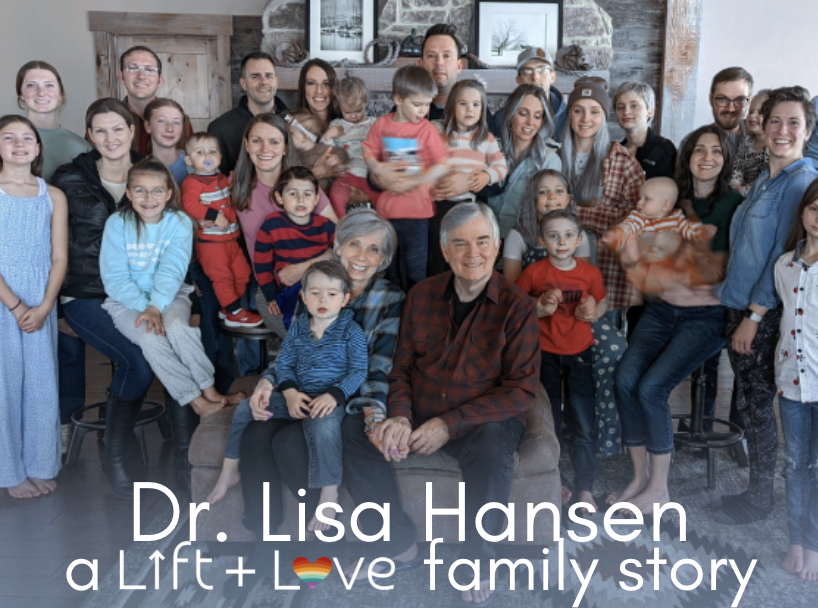
DR LISA TENSMEYER HANSEN
Chapters. That’s how Lisa Tensmeyer Hansen describes the various seasons that have directed her to what she now regards as the pinnacle of her life’s work. All along, she has felt the guidance of an all-knowing hand…
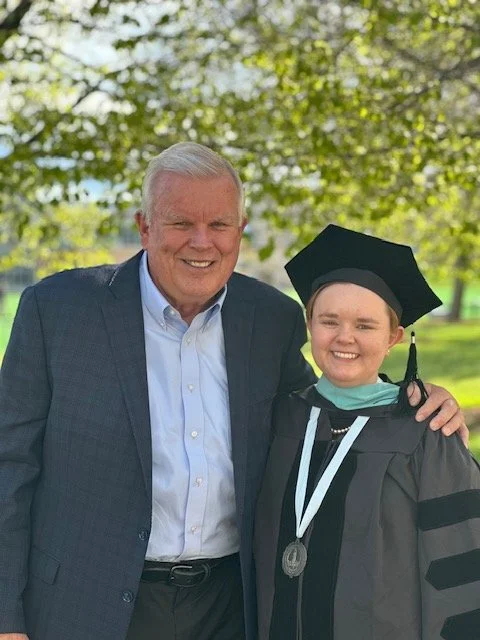
Chapters. That’s how Lisa Tensmeyer Hansen describes the various seasons that have directed her to what she now regards as the pinnacle of her life’s work. All along, she has felt the guidance of an all-knowing hand.
The PhD and LMFT now resides in the heart of Utah Valley with her husband Bill, where she is co-founder and CEO of Flourish Therapy, which provides life-saving therapy for LGBTQ+ individuals. While none of her seven biological children, her foster daughter, or other “bonus children” identify as LGBTQ+, they joke that “maybe someone will come out for mom for Christmas.” Besides having a gay nephew whom she adores--and who is soon graduating in vocal performance from the U where he started a gospel choir. Lisa agrees it’s interesting how her path has brought her to this particular space. But she can’t look back without recognizing she’s always had an awareness and empathy for those often deemed marginalized.
Growing up in the LDS church, Lisa says, “I spent a lot of time thinking about what God as parent would want their children to grow up and be and do.” As she experienced various stages of faith development, she started by believing in a God who had reasons for the rules, even those that seemed to make less sense. She began to recognize a God who valued development and not just blind obedience--a God who saw something in each of us that needs to be deeply valued and seen and understood.
As a teen, Lisa believed somewhat in the idea of “the elect”—that finding a way to be like God was a narrow path and not everyone was destined for eternal greatness. But as she became a parent, she recognized that every single individual’s growth matters. That everyone has been given something to bring them closer to God and something to believe in. This paradigm was further cemented when her youngest children’s involvement in a theater program enlisted her to serve as the program’s director. A former member of the BYU Women’s Chorus, Lisa also ran her stake youth choir and served in the stake Young Women’s presidency. In these capacities, she recognized how some of the most vibrant and lively performers were those brave enough to later come out as gay.
In their small community of Payson, it was easy for Lisa to see how the community of church and school did not provide a safe haven for these performers to be powerful leaders and contributors, despite their phenomenal skills and talents. She witnessed some be excommunicated because they identified a certain way. Another was refused participation in a temple opening extravaganza even after being selected for the top spot, because they were gay. She saw many who were relegated to second class citizen status if they chose celibacy, but “never fully celebrated as they would be if straight.” Lisa says, “That was a powerful message to me… These were not people who were anxious to leave God behind; these were amazingly spiritually deep people whose communities decided they had no place for them.”
In another chapter of Lisa’s development years, she witnessed racism firsthand. Growing up in Indiana, there were both schools and swimming pools segregated based on the color of one’s skin. When Lisa enrolled in an integrated college preparatory high school in her neighborhood, her understanding of what it means to live in a democracy with people who are treated as less than shifted as she heard various viewpoints and recognized her own privilege. At the time, largely due to the teachings she was immersed in via gospel discussions in her home and what was taught over the pulpit, she complacently believed that “God had reasons for the way things were,” even racism. Never hearing anything else, besides the incredulous objections of her more broad-minded classmates, Lisa assumed things would just be that way forever. As she matured in the gospel, and especially after reading Edward Kimball’s carefully crafted summary of the events leading up to his grandfather’s reversal of the priesthood ban in 1978, Lisa experienced a substantial eye-opening. She came to realize that it wasn’t the people waiting around for God to change His mind or make His ways known, but that the people themselves needed to change. She asked herself, “Are we content to keep others at arms’ length so we feel we are holy enough?” As this dissonance set in and Lisa pondered her participation in what she had always believed was the restored gospel, she had an awakening to the reality that even though Jewish leaders at the meridian of time when Christ was on the earth kept many from full participation, that God continued to work in that space. That this delineation didn’t obliterate Christ’s teachings about scripture, prayer, the law and prophets. Lisa says, “This seemed like a path I could emulate.” Perhaps there was something to be gained, or something to be done, in this space of nuance.
As she watched so many in the LGBTQ+ space be excommunicated from a church she as a straight woman could still belong to, Lisa decided to do what she could to elevate the LGBTQ+ community “in the eyes of people like me, and in their own right.” She decided to start a gay men’s chorus in Utah Valley, patterned after the one she’d seen in Salt Lake. “So many I knew cherished the Primary songs and wanted a sense of connection to God that was being denied to them,” she recalls, in reference to LDS markers like missions and temple marriages. It took awhile, but Lisa was able to put together a small gay men’s choir that rehearsed and performed at UVU, the state hospital, and various library holiday celebrations. Once Lisa went back to school, one member of the Utah County Men’s Choir started the One Voice choir in Salt Lake City, and most of the performers followed him to that organization.
With this goal achieved, after some prayer, Lisa felt what she should do next was go back to school with a focus on studying mental health. She knew this is where she could be of most use to the LGBTQ+ community within the context of LDS life, and ultimately chose her alma mater of BYU as the only place to which she’d apply, after a former colleague agreed to mentor her. “At 50 years old, I felt lucky someone wanted to work with me,” she says. The timing was ideal, as BYU was facing accreditation challenges in 2010 and needed to enhance their LGBTQ+ research—a role Lisa eagerly took on. As she put in her hours toward earning her LMFT and PhD, her first client in the BYU clinic was someone with gender identity questions. Soon after, Lisa received an influx of clients who identified as gay, lesbian, gender queer, nonbinary, SSA and bisexual. She says, “I felt like this was confirming a particular direction for my focus.”
Lisa was instrumental in starting a research group at the clinic based on Kendall Wilcox’s Circles of Empathy wherein gay people would come and share their experiences with straight student therapists. Through the four sessions in which it ran, therapists-in-training participated at least once to expand their understanding. She was also able to help a professor build his curriculum on the topic and has been asked back to the MFT program more than once to talk about LGBTQ+ clients. Of her time in BYU’s graduate program, Lisa says, “I felt a lot of support for the things I wanted to do to benefit and support the LGBTQ+ community while at BYU.”
Just as she was graduating with her PhD, Lisa was approached by Kendall and Roni Jo Draper about helping start the Encircle program in Provo, launching her into a new chapter. She recruited two clinicians she knew to help advise a program in which they could offer free therapy. Along with Encircle director Stephenie Larsen, Lisa was there for the opening of the first home in Provo, where Flourish Counseling Services was born (as a separate entity). While “it was the right thing at the right time,” as Lisa oversaw 13 therapists to meet the clients’ needs, ultimately Lisa parted ways with Encircle. However, she still refers young people to the program for their friendship circles, music and art classes, therapy, and as a place where “they can be themselves without their queerness being the most important thing about them.”
After moving off campus from Encircle with those 13 therapists, Flourish Therapy is now its own entity with 80 therapists offering approximately 2500 sessions a month in offices from Orem to Salt Lake, all on a sliding scale based on what clients can afford. Thanks to generous donors and insurance subsidies, Flourish is able to keep their session costs well below national average and even offers free therapy to those in crisis who cannot afford it otherwise. Lisa says, “We deeply depend on people paying it forward.” Because of the large number of therapists available, clients are often able to select a therapist with a similar gender identity or orientation, if they prefer.
Unlike LDS Social Services, Flourish is able to freely adhere to APA guidelines and honor their clients’ authentic selves, however they may show up. They have clients ranging from those trying to stay in the LDS church with temple recommends (whether in mixed orientation or same-sex marriages), to those trying to withdraw their names from the church or seek letters for transitional surgeries. Flourish also often treats missionaries referred by mission presidents when the assigned field psychologist perhaps might be struggling to understand. Lisa’s efforts have been widely recognized, and she considers it “a real honor” that the Human Rights Campaign gave her its Impact Award a few months ago. The Utah Marriage and Family Therapy Association also recently awarded Lisa Supervisor of the Year for her work in mentoring student and associate counselors and Affirmation International awarded her Ally of the Year for her work in steering Flourish through its first five years and maintaining its mission to support the LGBTQ+ community despite outside pressures to change their structure and process.
When the tough questions resurface and dissonance reappears, Lisa finds herself traveling back to the early answers she received in Chapter 1 living—when she first knelt and prayed around age 10 to ask whether Joseph Smith had really seen the Father and the Son. She says, “I felt an enormous feeling of light and love. I received no specific answer to my prayer, but felt a love wherein I recognized that something here is the answer and secret and why of everything. God feels this way about us here on earth–that’s what has sustained me all this time and made me feel that what’s inside of us is valuable to God. God’s not looking at us to shed what we have that’s divine but to lean into it and live and cherish and value the learning experience. We will then become able to recognize everyone’s lives—identity and all--as stepping stones.” Lisa concludes, “The things that are true about me are what have moved me into this space where I hope I’m lifting others to that same place wherein they can see how their Creator recognizes the value—the holiness—within all.”
ELDER STEVEN E. SNOW
“He’s a Democrat and an environmentalist. How did he end up an LDS general authority?” teased the headline of a September 30, 2024 Salt Lake Tribune feature story about Elder Steven E. Snow, an emeritus Seventy and former historian for the LDS church. The header left out an additional, unique identifier for a General Authority, but one that Elder Snow also considers important: ally. After dedicating much of his life to a church service wherein he was assigned to study and present some of the thornier topics that have been known to make or break testimonies, Elder Snow says, “There are a lot of personal stories of grief and heartache we could eliminate if we could find a way to be more inclusive.”
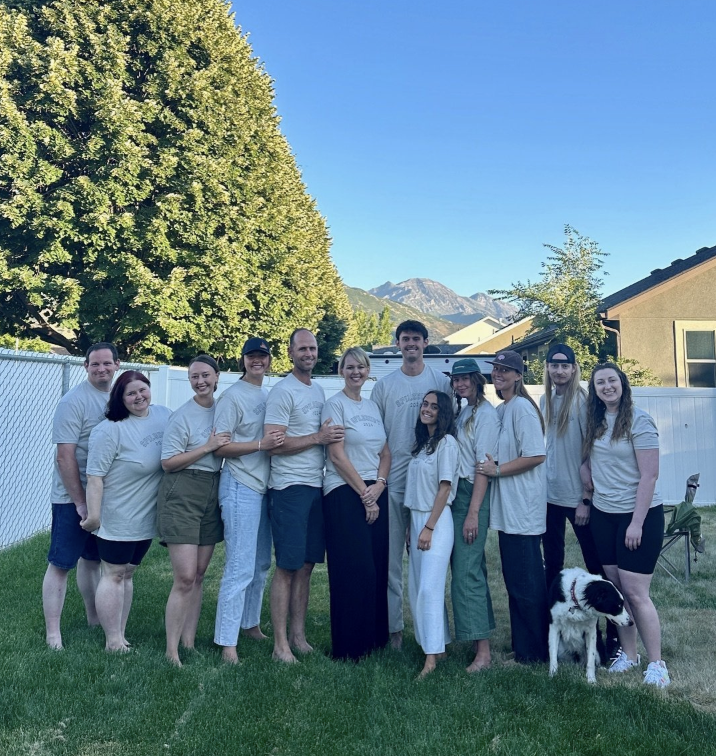
The grandfather to two granddaughters and a granddaughter-in-law who identify as LGBTQ+, Elder Snow says he has always been hopeful that “the church would be more receptive to those who experience same gender attraction and provide opportunities for full engagement so they can one day make all the covenants in the temple.” While he’s always been a devout believer who “loves the church,” Elder Snow sees and appreciates the parallels in its history leading up to the June 6, 1978 priesthood ban reversal and the efforts now being made by many members to treat LGBTQ+ people more inclusively. He remembers exactly where he was, who he was with, and what he was wearing when it was announced the policy many deemed racist was reversed, saying it was as landmark a day for him as JFK’s assassination and America putting a man on the moon. Elder Snow recalls, “Even though I hadn’t been exposed to discrimination personally growing up in St. George, Utah, the priesthood ban really troubled me.”
Much like last August’s new guidelines for transgender individuals in the church, the November 2015 policy preventing the children of same sex couples from getting baptized also deeply troubled Elder Snow, as did President Nelson’s doubling down on it in a speech at BYU Hawaii two weeks later. At the time, Elder Snow was friends with a gentleman who had married in the temple and had kids before later coming out as gay and divorcing his wife. The policy directly affected the man’s family, and at the time Elder Snow promised him it would be corrected, while internally feeling surprised he’d said something so bold that he had no real control over. When the policy was reversed in 2019, Elder Snow rejoiced and was pleased when that friend called him up and said, “You were right!” He’s hoping one day his hopeful words will prove fortuitous again, if and when the church someday allows full temple privileges to all faithful members, including those in the LGBTQ+ community, like his granddaughters.
At a family reunion in Newport Beach, CA a few years back, Elder Snow’s granddaughter Katie approached him and asked if she could share some news with everyone. She detailed a familiar story for many in this forum—that she had struggled through childhood feeling “different,” which led to significant mental health challenges, and that she was ready to share with the family she was gay. Elder Snow appreciates how all at that gathering received the news well, assuring Katie they loved her and that they supported her. Katie graduated in anthropology and now works at a museum in Oregon. Elder Snow says, “She’s such a great soul, everyone loves her – and her sister, Vanessa. I’m partial, I know, but they’re great.” Elder Snow’s oldest granddaughter chose Instagram as the forum to share that she was queer, and later that she was marrying her nonbinary partner, Grey. Elder Snow and his wife attended Vanessa’s and Grey’s wedding in Logan, and admits, “For a former General Authority of 18 years and Mission President, it was a little different and surprising in some aspects, but we were happy to be there and support them. We just love them.” Vanessa received her doctorate from Utah State and now works as an audiologist in the Northwest.
Elder Snow understands why, after so many devout years of trying to make it work, Katie and Vanessa both felt the need to leave the church. He says, “My hope and prayer for the future is we can be more inclusive and find a way to somehow maneuver through this difficult issue and yet keep people together and love them and make them feel they can take part in all the blessings the gospel of Jesus Christ offers everyone.”
Elder Snow and his beloved wife Phyllis (who passed away last year from COVID-related issues) raised their four boys in St. George. Elder Snow very much misses Phyllis, and now tries to focus his time with his many grandchildren, one of whom helps care for him after he suffered a disastrous fall down a flight of stairs a few months ago. “Getting ice cream downstairs at 4am sounded like a good idea, but…” he now chuckles. When he is in optimal health, Elder Snow enjoys golfing with friends and restoring classic cars. A retired attorney and self-proclaimed “news junkie,” Elder Snow has had to turn it all off lately as the nation’s political leadership has proven disappointing to him.
While serving in the church office buildings, Elder Snow was certainly a political minority among his mostly Republican colleagues, some of whom would tease they could convert him. But he says that as a whole, they collectively tried to keep the focus on being an international church, and made efforts to invite both Harry and Landra Reid as well as Mitt and Ann Romney in for conversations about the national and global landscape.
As the LDS church’s historian from 2012 to 2019, Elder Snow’s keynote projects included continuing to oversee the publication of the Joseph Smith Papers as well as supervising the launch of the Saints four book series which chronicles some of the tougher topics in church history. He was also tasked with overseeing the release of the gospel topic essays. Having full access to all of the church vaults, it remained important to the researchers and scholars assigned to this project to bring more transparency to the church history department. The discovery process included many meetings with the First Presidency and Quorum of the Twelve to determine which 13 topics would be addressed more openly by the CES so that seminary and institute teachers might provide more forthright answers to questions that many members had ultimately left the church over in the past. Elder Snow says they found the project ultimately helped many millennials establish more trust in a living church, although there proved quite a population of older members who were unaware and who have found particular aspects of church history jarring. Elder Snow remains optimistic that “This will one day be a church for everyone,” but also that, “It’s going to take some bold leadership, and it might take awhile.”
As for his own relationship with the LDS faith, Elder Snow says, “I love going to church and being in a ward and worshipping with my friends and neighbors. I’m grateful for the good the church does as an organization around the world. I love being a part of it. There are so many good things; those types of blessings should be available to everyone.” He continues, “I also understand the concerns and difficulties, and that it’s not a perfect church. None of us are perfect. We are led by people with challenges and difficulties just like everyone else in the world. But it’s the best place to be I know of. That’s why I feel badly that not everyone can enjoy the same blessings.”
Ever mindful of establishing safe spaces for LGBTQ+ loved ones in the church, Elder Snow surmises, “We’ve done this before with race; we can do it again. Will it be soon? Probably not in my lifetime – it might take a while. But my hope is we can find a way for it to happen.”
JULIE SPILSBURY
Mesa, AZ councilmember Julie Spilsbury recently endured a hostile city meeting in which she was ripped apart for supporting a necessary utility rate increase of an average of $5 a month. While some surrounding communities experienced a much more significant 30% rate increase, many in her city (including several from her church community) still took her to task, yelling and taunting until the mayor had to demand they stop. Julie came home, had a good cry, and woke up the next morning at 5:45am to regroup with a solid distraction—a live news spot at a Turkey Tuesday food distribution. It’s an event that provides turkeys to 2,000 families in need at the holidays and something Julie loves participating in every year for the United Food Bank. “I needed it that morning, to believe in humanity. In this job, I see the best and the worst of humanity.”
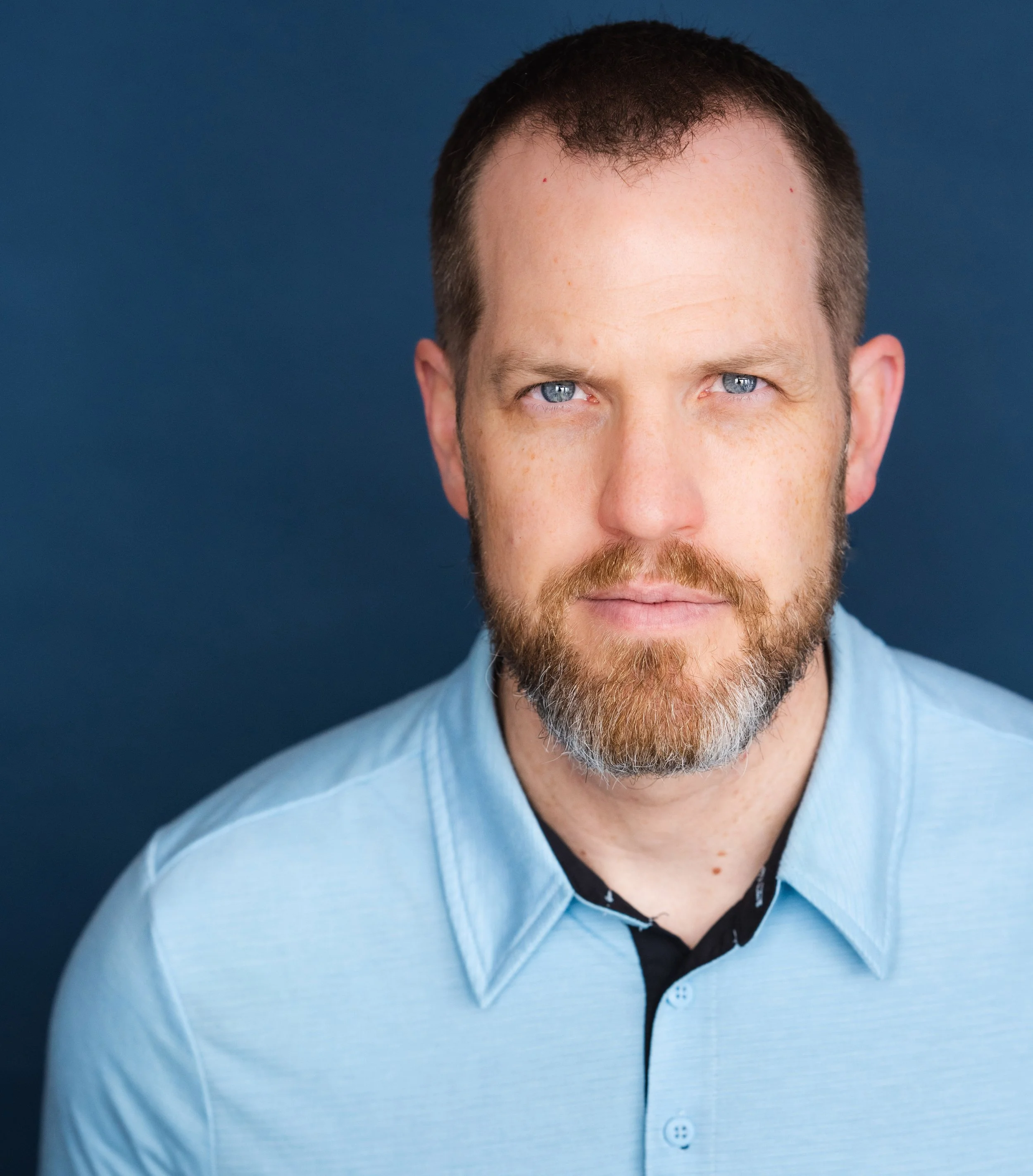
While last month’s council meeting was difficult for Julie, her most brutal public revolt took place in January of 2021, the first month of her tenure. After Julie, who identifies as a super-ally, was elected the prior August, the mayor forewarned Julie he’d be putting forth a non-discrimination ordinance. The bill would bar discrimination for the LGBTQ+ community with housing, employment and public accommodations—meaning trans individuals could use the bathroom of their choice. It was a bill that angered the far right, and even the far left was upset, claiming its “religious protections” language still allowed “plenty of opportunities to discriminate.” Julie says that was an essential inclusion to achieve concession, and that, “When you know the far right and the far left are mad, you’re in a pretty good place of compromise.”
While LDS church headquarters sent a letter of support for these AZ bills via the Area Seventy showing their support for the bill, the outcry against it among the LDS population was still significant and loud. From a city with a population of 520,000, Julie received over 900 angry emails—a far uptick from the 60 or so emails normally generated by a controversial issue. The letters quoted the Family Proclamation, scriptures, and included many accusations that various people—including Julie—would be “going to hell.” Again, Julie marveled at this result over something the LDS church specifically showed support for, much as they have more recently for the US Respect for Marriage Act. Three members of the council had already joined the mayor in supporting the bill, achieving a majority, so technically Julie’s vote wouldn’t sway things one way or another, but all eyes were on her—the religious conservative mother, new to the council. She says she has never regretted voting to support the bill, and was told her action made the most difference to the LGBTQ+ community.
Julie is a paradox to many in her community. She says her large family is ”as Mormon as it gets,” with her husband having served as bishop and five of her kids having served missions. While she comes from a traditional, conservative background, in 2019, she says God started working on her family in regards to the LGBTQ+ experience, leading Julie, her husband Jeremy, and their kids to “listen to all the podcasts, read all the books, and open up to all things LGBTQ+.” During this time, Julie says, “My heart was broken open, giving me a greater capacity to love. Having my heart exposed to the LGBTQ+ community, I have not been the same person since, in all the best ways.” She just didn’t realize how this transformation, which ultimately softened her to all marginalized groups, would result in so much negativity from her church and city community. She says, “I love having people like me, and to have all these people think I’m evil is hard. I have a huge heart and I promise I really am nice. I’m the one who brings cinnamon rolls to city meetings!”
Julie says she grew up a “choir geek” with many LGBTQ+ friends. In hindsight, she claims she still believed many of the myths about gay people back then—but her tutelage, especially courtesy of Richard Ostler’s podcast and books, showed her she perhaps held some misconceptions. She says, “The LGBTQ space is so complicated, hard, and painful, and I also think it’s where Jesus is. That’s why I choose to be in this space—where I feel the most love and the most authentic to who I want to be as a person. There are few things I feel this compelled to be a part of.”
The Spilsbury brood included Lydia—18, Lauryn—21, Brigham—23 (who is married to Tess), Cambryn—24, Miranda—26 (married to Jacob, and an adopted daughter who’s lived with the Spilsburys since age 11), Maybree—26, and their “bonus daughter,” Michelle— (married to Abe). Several of the Spilsbury kids have also chosen advocacy fields, with Lauryn, who just returned from a mission to Spokane and who speaks Swahili, now working with African refugees. Cambryn is getting a Masters in Social Work in Chicago and Maybree is completing her Masters Degree in Conflict Transformation in Virginia. Julie’s husband Jeremy is a long-time arborist and recently sold their tree company and went back to school himself to study Peace and Conflict, and now wants to create a Peace and Conflict curriculum for high schoolers.
The Spilsburys are grateful their allyship is a shared family value, with Julie saying, “It’s been fun to have all my kids be like-minded together in this space. We’re definitely not perfect, but we do have massive love. And we do struggle with things—when General Conference is hard, I love how we can talk about it. Some of my kids struggle with the church, and yet the gospel is part of our cellular structure—not just a Sunday thing. I’m grateful we can talk about all the itchy things and keep open communication.” Julie says that more than anything, she’d prefer her kids be “deep human beings who care deeply about others with true intent than to be people who go to the temple every week but don’t do that.”
After hearing so many stories of struggles faced by the LGBTQ+ community, Julie is now very intentional about her allyship. Of local friends like Michael Soto, Julie says, “They have changed my heart and soul. I have many trans friends, and it all started with this experience.” She joins an ally group on the first Sunday of every month, and has helped support a friend assemble a choir of queer participants who have left the LDS church, but who miss singing the hymns. She says, “I tend to say yes to anything I can in this space.”
Julie wears a rainbow pin to church, and has a rainbow as her screensaver on her phone, saying, “I want my Young Women I work with to know I’m a safe space. Unless you say something, people don’t know. And it’s hard to assume anyone’s safe these days—too many times, these kids get burned and can’t trust anyone.” When her husband, Jeremy, was serving as bishop and they made it clear where they stood, many youth who had left the church because they identify as LGBTQ+ started coming over and coming out. Back in 2021, as they started receiving backlash, Jeremy said to Julie, “Oh my gosh, can you imagine what we’re feeling, and we don’t even have a gay child or are gay ourselves?” A former young woman Julie had worked with who later served a mission came out to Julie and Jeremy and opened up about her struggle deciding whether she should marry her best friend (a female who was living in another country) or stay in Arizona and continue working in the temple as she loved the church. Julie says, “I just got to be there and sit with her through it. I’ve said so many times, if for no other reason did I go through this experience so that I could be there for that one person, it would be worth it. It was incredible to get to mourn with her, cry with her, and feel all the feelings.”
While the past month has been rough as Julie has joined the many struggling with very real emotions stemming from recent election results, especially amid “the bubble” where she lives and attends church, Julie is more motivated than ever to pursue and lead with goodness. She trusts, “Jesus will win in the end.” She joins a group of 20-30 Mesa-based women ready to activate and change individual lives in their community. She says, “We’re looking for ways to serve. I don’t want to be all doom and gloom, but it’s hard to feel it’s all going to be fine. But I don’t want everything to implode, because I care about our country.”
As she moves forward, serving in her various communities, Julie cleaves to a favorite quote from Sam Norton’s book, Come as You Are: “Love that doesn’t try to change you is what changes you.” Julie concurs, “If treating people with love and respect is what makes me evil, so be it. I’m not going to change. I feel all of this very deeply.”
DAN McCLELLAN
For all those who’ve used The Word as a weapon against the LGBTQ+ community, it’s time to holster your Bibles and go on social media. There, you’re likely to encounter the reel-explanations of Dr. Dan McClellan, aka @maklelan, where nearly a million followers on Tik Tok, Instagram and Twitter tune in to find out what the Bible actually says, from an actual Bible scholar. Dan explains there is a difference between a theologian, whose work is to teach how a religious group should incorporate or interpret Biblical teachings, versus a critical Biblical scholar, whose job is to evaluate and explain the historical and social context of the actual written work at the time it was written. Dan says studying it this way removes the common proclivity to consider the Bible as univocal—meaning the text speaks as one universal voice and thus can’t disagree with itself, as all parts should harmonize with the others. This deeper study brings to light the need to consider data over dogma, which is exactly what Dan now does with his online break-it-downs and popular podcast, Data over Dogma…
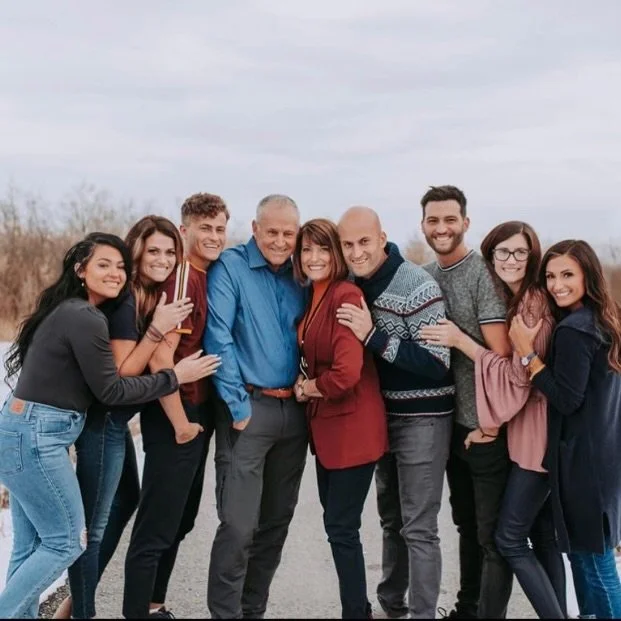
For all those who’ve used The Word as a weapon against the LGBTQ+ community, it’s time to holster your Bibles and go on social media. There, you’re likely to encounter the reel-explanations of Dr. Dan McClellan, aka @maklelan, where over a million followers on Tik Tok, Instagram, YouTube and Twitter tune in to find out what the Bible actually says, from an actual Bible scholar. Dan explains there is a difference between a theologian, whose work is to teach how a religious group should incorporate or interpret Biblical teachings, versus a critical Biblical scholar, whose job is to evaluate and explain the historical and social context of the actual written work at the time it was written. Dan says studying it this way removes the common proclivity to consider the Bible as univocal—meaning the text speaks as one universal voice and thus can’t disagree with itself, as all parts should harmonize with the others. This deeper study brings to light the need to consider data over dogma, which is exactly what Dan now does with his online break-it-downs and popular podcast, Data over Dogma.
The problem with dogma, according to Dan, is that it can be painful for certain populations like the LGBTQ+ community when exclusive ideologies are favored by the power structures that find them beneficial. This social identity politicking underlies so many of the philosophies and interpretations Dan started to see floating across the social media landscape around 2020, when he decided to put his degrees to work online to join the conversation. When it comes to the scholastic frames hanging on his wall, there are four of them—including a bachelor’s from BYU in ancient Near Eastern studies, a masters in Jewish studies from the University of Oxford, a master of arts in biblical studies from Trinity Western University, and a doctorate from the University of Exeter, where Dan defended his thesis on the cognitive science of religion and the conceptualization of deity and divine agency in the Hebrew Bible in 2020. Along the way, he’s become well-versed in 12 languages. When people like to challenge whether he is really a “scholar,” he laughs, and insists that dealing with so much negativity is actually job security.
Biblical scholarship was not a job Dan envisioned until he began his Biblical Hebrew studies at BYU and thought, “If I could make a living out of studying the scriptures, that would be the coolest thing in the world.” He was not the typical BYU student. Raised in West Virginia, Maryland, Colorado, and Texas, he was not brought up particularly religious, and in his late teens, made several friends in the LGBTQ+ and other marginalized communities while waiting tables. Dan joined the LDS church at age 20, and quickly realized he brought along a different world view than many of those raised with “the primary answers.” For instance, he understood evolution to be true, that the earth is not a mere 6,000 years old. He was always fortunate enough to find himself around other likeminded members of the church, even if they were in the minority.
He served a mission a year after joining the church and there says he found himself “compelled to be a representative of a more conservative perspective. At the time, I was willing to toe the line, but it never sat well with me.” Afterwards, he observed that conservative-mindset population multiply at BYU, where most of his peers had a very black-and-white, binary view of the world. He hoped to find more nuance, more compassion and charity for those who got the proverbial short end of the stick. And then he met the Soulforce Equality Riders, who in the vein of the Civil Rights’ Movement Freedom Riders of the 60s, were a group of young people who went on a seven-week bus tour to protest discrimination against LGBTQ+ students on college campuses. This was something Dan could get behind. Knowing people who had family members and friends who’d taken their lives because of oppression from church and the broader conservative community due to their orientation and gender identity, Dan got in touch with Soulforce and asked them to come speak at a gathering at his apartment complex which included several student wards. He felt this was work that mattered.
Dan met his wife at BYU and as they began to raise their three daughters, he further contemplated what kind of world he was bringing his children into. When his oldest daughter approached him at age seven and asked, “What sports are girls allowed to play?” Dan acknowledged that was a question he’d never had to ask as a boy. “But the fact that had occurred to her already, and she had accepted it, brought me to tears. I knew I needed to do more to try to change the world for the generation we’re raising. I couldn’t be on the sidelines.”
This was 2016, around the time where Dan was deeply troubled at the seemingly mass acceptance from his Utah-based community of a political candidate who proudly boasted about sexual assault. The fact that this wasn’t a deal breaker for voters, and the peripheral surge of homophobia in the political space, ignited something in Dan, who then says he “chose to put my privilege on the line and speak up for those who didn’t have accessible privilege.” He became the Democratic party’s precinct chair for Herriman, UT from 2016-2020, was the Salt Lake County Chair of the LDS Democrat Caucus from 2018-2020, and ran for the Utah House of Representatives in 2018 and the Utah Senate in 2020. He didn’t win either race but impressively minimized the blue-red margins. Along the way, he clearly let people around him know he would be speaking out against the hostile actions he was witnessing to let people in minority communities know he was safe, saying, “If my work makes some feel uncomfortable, then good.”
As the pandemic of 2020 continued to incite and divide the country, Dan decided to peek into the Tik Tok space to see what people were sharing. He was surprised at the amount of religious chatter; this was a conversation he had a right to and interest in joining. “I saw a robust community talking Bible and religion from all sides—from very conservative Christian and Jewish creators to those styled as deconstructionists and those overcoming religious trauma. But I didn’t see a lot of credentialed experts. I thought I might be able to position myself not to join anyone’s team, but to call balls and strikes when I see them. To my great surprise, there was a lot of interest.”
When it comes to data vs. dogma, Dan says, “If there’s a dogma I stick with consistently, it’s that all other things being equal, we should give the benefit to the less powerful group. It’s interesting, the fact that doing this infuriates so many people who explain why it’s ok for them to hate… When people challenge my bias recognizing how power structures govern so much of the world around us, and why so many experience the world so differently from someone like me, that’s why I work at the intersections, trying to amplify women, immigrants, LGBTQ, and root out Islamophobia and Antisemitism.”
Dan has worn a Pride-themed watchband for years that his wife bought for him because “he likes colorful stuff.” (A talented sketch artist, he’s also an avid comic book character fan.) He tells those who ask that he wears his watchband as a signal that he’s hopefully a safe space and is going to stand up for people who are often disenfranchised. Interestingly, over the ten years he recently worked for the LDS church as a scripture translation supervisor, he’s worn it in meetings with members of the Quorum of the Twelve when he was often brought in as a Bible expert. “I never got one word about my watch… It's interesting the people who run the church haven’t rejected my expertise, when people on Twitter have so much objection.”
The evangelist community gives Dan the most heat online, and he feels is the largest foe right now to the LGBTQ+ community as many are “inserting their dogmas into the political sphere.” He's always been impressed (though not surprised) by the amount of atheists, agnostics, “none’s” and deconstructionists who follow and laud his work, but occasionally an atypical fan presents themselves, as was the case when someone recently recognized Dan in a grocery store and confessed not only was he in the extremist group DezNat, but he’s also a Dan fan. “I didn’t see that one coming,” laughs Dan.
Having traveled all over the world for his career and seeing the church operate everywhere, Dan is often asked his views on a variety of Bible topics. He has a project in the works via St. Martin’s Press entitled, The Bible Says So—a book that includes the greatest hits of Dan’s social media, with each chapter taking on a different claim of what the Bible says about abortion, Jesus as God, homosexuality, the mark of the beast, etc. As Dan’s online presence has grown, it has become his number one focus and income source, though he still occasionally teaches online courses, and currently has an honorary fellowship with the University of Birmingham Cadbury Centre for the Public Understanding of Religion.
As to what the Bible says about homosexuality, Dan says, “It’s a reflection of where their societies stood at the time and what they understood about sexuality. And it’s different between the Old Testament and the New Testament, based on the ideas of social hierarchies or domination.” He explains that the ancient concepts of gender and sex don’t line up with our concepts today if you allow them to operate on their own terms. “Early Judaism talks about six or seven gender identities, some that could line up with trans and nonbinary. Early Christianity was more conservative and still doesn’t line up perfectly. Everything in the Bible represents a certain framework and set of conventions that are much different from today. Pretending what people said 2,000 years ago ought to be authoritative today gets tricky when it comes to their unflinching endorsement of buying, selling and owning other human beings—it puts the lie to anyone who claims to fully subordinate all their interests to the biblical texts.”
Dan continues, saying, “You have to ask, what are your priorities and agendas with the interpretive lenses you bring to the text?” In regard to structuring power, he says you’ll come up with a certain set of conclusions if you prioritize that over loving God and loving your neighbor. “The Bible is a story about the transition from an insular small group to the whole world. For Christians who read it to understand everyone to be if not a child of God at least their neighbor, they should see it’s about maximizing the success of the whole group, not our domination over a certain group. If people read the Bible and find a God who loves all, that should be the priority. But human nature often retreats to prioritizing the protection of one’s standing and access to power.” But Dan argues that the Bible teaches us to fight against human nature to put what God wants above what we want. “If your Bible is telling you to do the opposite, you should reevaluate your faith.”
Concluding that many Biblical teachings are “outdated, harmful, and have long been irrelevant,” Dan says, “But people have turned their opposition to homosexuality into an identity marker for the social identities important to them. They leverage what the Bible says to authorize and legitimize that identity marker to structure their power and values in favor of their identity politics.” A point Dan reiterates “so often that people are probably sick of it” is that “everyone negotiates with the Bible, so much so that what it actually says is no longer relevant in terms of social monitoring. Polygamy, slavery from the start of the book until its end, the objectification of women—we’ve jettisoned it all as it no longer serves our social identities. I think the Bible-induced homophobia will ultimately go away just like slavery. It’s just a question of how long it will take for people to prioritize children’s safety.”
Dan pointed out that evangelical scholar Richard Hayes (who wrote a book in the 90s that took a hardline stance against homosexuality) will soon come out with a new book in which he claims he was wrong and now argues from a theological point of view for full inclusion of LGBTQ+. Dan recognizes that his first book did a lot of harm for which Hays has not yet had to face accountability, but anticipates more and more people will come around in the future. Dan closes out his own book with the fact that again, “Everything is negotiable. As more people realize they know people who are LGBTQ+ and choose to respect and love them, there will be no choice but to negotiate those prejudices out of our lives.”
Here are some of Dan McClellan’s videos that we especially recommend:
https://www.tiktok.com/@maklelan/video/7375917733050977582
https://www.tiktok.com/@maklelan/video/7369580573762850094
THE MACKINTOSH FAMILY
Theirs may be one of the first family stories you encountered at the LDS-LGBTQ+ intersection when you first leaned in, as the Mackintosh’s video about their son Xian has lived on the LDS church’s website for the past seven years. Becky Mackintosh’s book, Love Boldly: Embracing Your LGBTQ Loved Ones and Embracing Your Faith, may have also been one of the first how-to books you read.
The church approached the Mackintosh family of Lehi, Utah to film a video showing “the reality of having a gay child in the church—that it’s not all tied up in a bow.” The church asked the Mackintoshes specifically to share their story because they knew Xian was in a relationship, and wanted them to answer the question many LDS families were asking at the time: “How do we respond when our child steps away from the church?” Becky’s answer: “Continue to love and include your child in the family circle.” The video has remained on the Church website since 2017, something Becky says a lot of people still don’t know. Deseret Books also initially solicited Becky and family to chronicle their story in a memoir, though ultimately, and with Deseret Book’s blessing, they went with Cedar Fort Publishing for a more expeditious print run. Deseret Books still carries it in their store (as does Amazon). And Becky and Scott Mackintosh are still frequently invited to speak at firesides. They especially love it when Xian is also invited to speak with them. At these firesides, Becky often invites audiences to pull out their phones and go to the gospel library app and scroll to “life help” where they can find “so much support for unique situations like unwed pregnancies, suicide, SSA, and transgender.” There, people will also find Becky’s face as the thumbnail image for the family videos under “SSA.” Becky says, “The story is still so relevant, so needed. However we may respond when our daughters or sons step away, you must love and include. It’s the only way to keep the family together.”
This is something the Mackintosh family has learned through experience, and over time. When Xian first sent his parents a private Facebook message on the last night of a Christmas break home, telling them in simple terms that he was gay, his parents’ initial reaction was not all sunshine and rainbows. It took Scott some time to come around to a place of affirming his son. Becky was the one to stay awake and wait for Xian to come home that night from being with friends; the two stayed up until 4am talking about it. But Becky says she was the one who “was suddenly an expert on this topic I knew nothing about” and did most of the talking—trying to convince Xian that since no one else knew, it might not be too late to “nip this in the bud and hold to the rod.” Becky pulled out Xian’s patriarchal blessing, reminding him of the passage in which he was told he’d marry a woman; and she referenced an LDS Living article about a mixed orientation marriage in which the man “experienced SSA but made it work.” Becky implored her son not to go back to the BYU Hawaii campus where he was studying social work and tell anyone, worried he’d be kicked out. Xian reminded her it’s not against the honor code to be gay, only to break the law of chastity. Xian went on to explain that while he had tried to date and kiss and like many girls, he had known his whole life where his attractions lied, and also tried so hard to “get rid of this.” Becky remembers Xian telling her he didn’t know what his future held, but he knew he couldn’t marry a woman or live a life alone.
With this, Becky thought back to his past. She and Scott had raised their seven kids on a farm they’d lived on for 25+ years. Xian especially loved animals and still does to this day, now the attentive owner of a plethora of pets. Becky says, “Xian was always a happy boy with a big smile on his face. He was a leader, liked by everyone, and had a diverse group of friends as he was able to make friends easily with whoever, wherever. He was always easy to love.” Taught to be faithful, Xian was dedicated to the church and served as both deacon’s and teacher’s quorum president as well as the first assistant to the priests. He served an honorable mission to Detroit, Michigan, and when his parents and sister picked him up there, they loved seeing how much the people loved Xian, and he loved them. While many girls chased Xian over the years and asked him on dates, Becky admits the thought crossed her mind he might be gay as “he was such a good-looking young man, and yet not showing interest in all the girls chasing him.” Becky chalked it up to the fact that Xian was very frugal with money and very studious and maybe just didn’t want a girl to get in the way of his goals to serve a mission and save money. She also admits to thinking at the time that “there’s no way my son would choose to be gay.”
Xian continued to focus on his studies post-mission. He didn’t come home often between semesters--just at the holidays and for a week in the summer after summer sales stints or his internship to Thailand. When he finally did come out in 2012 to his parents over Christmas break at age 24, it was after years of believing he’d take his secret to the grave, knowing how painful it would be for them. Becky says it makes her so sad to think how terrified he was to tell them because they had said so many hurtful things about the LGBTQ community over the years, believing it was a choice. Xian came out to his six siblings a few months later, and while most of his extended family responded immediately with love, some struggled with his news and created barriers that proved painful with family gatherings. With Deseret Books’ prodding, the first chapter of Becky’s book includes Xian’s story, and the last chapter details Scott’s—how he had to really push himself out of his comfort zone to try to understand his son’s orientation, and how realizing that loving his son was the most important thing and leaving the role of ultimate judge to Christ was what changed everything with their family relationship.
Shortly after, while they were serving in a BYU student ward bishopric, Becky recalls an eye-opening moment when they had to come to terms with the fact that two of their kids had moved in with their boyfriends—one a son, and one a daughter. The boyfriends were also both from different faiths. Becky thought, “What is happening to our family? We must be horrible parents! This is not how we raised our kids.” Since, they’ve realized a different perspective.
Becky told Scott that if they didn’t embrace their kids and their partners with open arms, then why would they ever want anything to do with them--or the church? She says, “Who would seek to know more about the gospel if the very people they know who go to church every Sunday are so judgmental and cruel?” Scott concurred. They decided to “embrace their reality” and make concerted efforts so that all their children would feel safe and welcome at home. Becky says, “We didn’t have to preach to them. They already know our beliefs and values. The greatest gift we can give them is our love.”
Now, Becky says she is so glad her daughter married that boyfriend—they are now expecting their fourth child. Xian eventually split up with that first boyfriend, who the Mackintoshes came to love, making it a hard break-up. But after watching his six older siblings get married, it was finally Xian’s turn to do something his parents had always wanted for all their kids: to marry a returned missionary. They just didn’t know it would be to someone of the same sex. Both Xian and a sister went through divorces, of which Becky says, “Divorce happens in gay and straight marriages. No path is easy, whether it’s in or out of the church. We’re all trying to do the best we can. Our job as parents is just to love and support our kids, and meet them where they are.”
The Mackintosh clan has grown to 32, with 17 grandchildren and counting. A new baby is due in a month. Becky loves her “very diverse family—with a spectrum of different races, religions, orientations, and political views. But we are a united family of respect and love.” Becky works hard to create a space where her kids know they’re loved, and want to come home and be around her. She says, “I’m not sure what the future holds, but that’s our lived experience. At the end of the day, they’re there for each other. I couldn’t ask for more to make me feel successful as a parent.”
After Xian came out, Becky says she dove into the scriptures and was comforted to be reminded there “are no perfect families, even in the scriptures.” She learned to focus on what she could control, which was how she responded to any given situation. And the answer she always got through prayer was to love and include. She remembers praying, “But he’s dating a boy!” and hearing in return, “Love and include.” She feels it’s this practice that helped set the tone for Xian’s wedding, a lovely ceremony all his siblings and friends attended, sincerely happy for him. She also feels this approach helped Xian feel he could rely on his family when his marriage later began to crumble. Becky feels, “If we had chosen not to go to the wedding to ‘stand for truth and righteousness and not condone,’ he might have not informed us of his later relationship problems.”
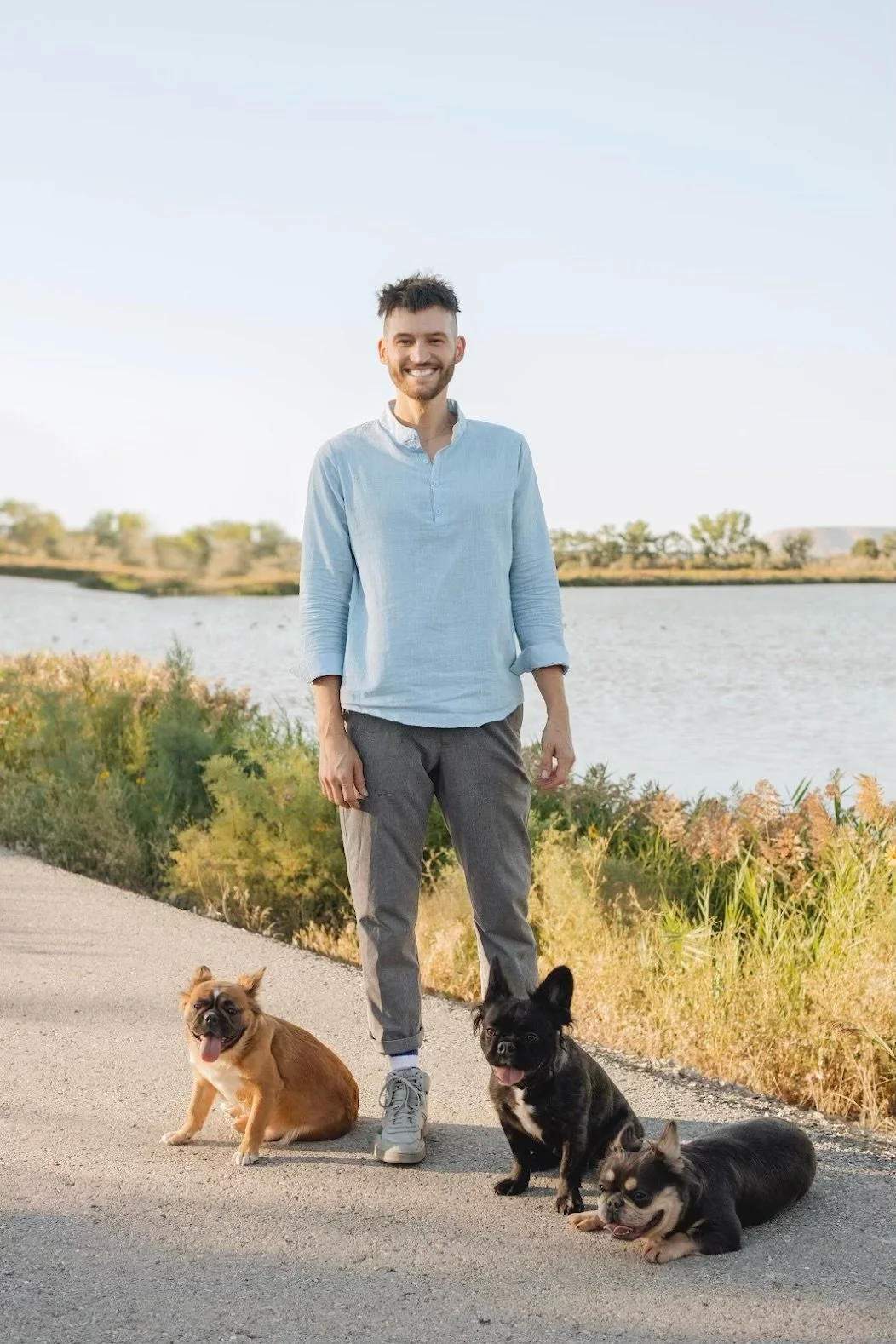
Xian owns a home in North Salt Lake, where he manages his businesses of vending cold plunge freezers and breeding Long-haired French Bulldogs. Given his rigorous work ethic, he financed his college education independently and emerged debt-free, holding a master’s degree in social work from the University of Hawaii.
Not all of Becky and Scott’s kids are active in the church, and she says once upon a time, she would have been “curled up crying thinking, ‘what happened to my eternal family’.” But now she says, “As I’ve laid things at the Savior’s feet, all I can’t control, that’s when peace comes to my heart. My job is just to love them where they are and trust God with the process.” The Mackintoshes try to maintain a respect for the diversity of choices in their family. Becky’s kids support her serving in the Saratoga Springs temple weekly, and she says she’s never felt pressure from them to choose between the church and her children. That being said, she believes if she were to reject her child, she would not be living the gospel which has taught her the two great commandments—to love God and love others.
For many years, Becky and Scott have been involved at North Star, and they’ve joined Xian to be the keynote speakers at Affirmation. In 2020, when Scott and Becky were the keynote speakers at North Star, they were surprised to learn it had been arranged that Xian would be the one to introduce them—a touching moment, especially as Xian was married to his husband at the time and still invited in by the more church policy-adherent group. They felt the love of their son in his introductory words.
The Mackintoshes, most of whom still live in Utah, gather for family dinner the third Sunday of every month. Xian always joins and doesn’t hesitate when asked to give the prayer. It meant a lot to him when one of his nephews also asked him to pray at his LDS baptism. Xian has given his parents his blessing in sharing their side of the story as he believes it will help a lot of families experiencing similar things. He is also willing to share his, which he will soon do in this same forum. Xian also challenges his parents to look at all sides of the issue. When he first came out, he implored his mom to read Carol Lynn Pearson’s, No More Goodbyes, which she was reluctant to finish because the book opened with anecdotes of LDS families kicking out their children after they came out, which she couldn’t fathom, then followed with tales of entire families leaving the church, feeling they had to choose between their child and their church. She knew neither was an option for her, and she never felt she was being asked to choose a side. With Xian’s encouragement to finish the book, she did and that is when Becky felt the confirmation to come out of her own proverbial closet and openly share her story as an LDS mother openly embracing her son and her religious faith. This was two years after Xian’s initial coming out.
With their new desire to openly share their story, Becky’s film school graduate daughter shot a video in which Becky and Xian shared their story and Becky encouraged viewers to invest in kindness. Having served in ward and stake leadership roles for decades, Becky wasn’t sure how leadership would react, so she made an appointment with her bishop and stake president to let them view the video and read the blog post that was about to go live. They responded she was brave and they appreciated her intent. There were hundreds of shares and comments when the video got posted on social media, and Becky was overwhelmed by how many recently returned missionaries related to what Xian had been experiencing and had also felt so alone. Feeling driven to do more, the Mackintoshes have since hosted parent support groups and a bimonthly LGBTQ FHE night for the past nine years, and tried to create safe spaces whenever and wherever nudged.
As for being a public figure in this space, Becky doesn’t want anyone to think the emotions expressed in their six-minute video of going from “My son is gay!” to “One big happy family” are in real time, for it took time. But her book was written “to relate to parents who are really struggling to embrace both their child and the gospel.” Becky owns up to their wedges, and the positives. “It’s been a diversity of feelings, and not an easy journey, but one I am so grateful for. I’ve learned to lean in to love, show empathy and respect, and look for ways to strengthen our relationship. I couldn’t do it without the guidance of God and our Savior.” She continues, “I’m so grateful for this journey. I can’t imagine my life without all the beautiful people I’ve met along the way. I’m so glad God sent me a son who’s gay (and six other perfectly imperfect children) – it’s completely opened my perspective.”
LUPE BARTHOLOMEW
For Lupe Bartholomew, they are the lyrics she inspired in her son David Archuleta’s new single, “Hell Together.” Once Lupe realized the depth of pain her son was experiencing at the crux of his faith transition, she made it clear she would navigate this road with him in words that resonate with many listeners… “If they don't like the way you're made, Then they're not any better, If paradise is pressure, Oh, we'll go to Hell together”
“If I have to live without you
I don’t want to live forever
In someone else's heaven
So let 'em close the gates”
They are lines many parents in this space understand. For Lupe Bartholomew, they are the lyrics she inspired in her son David Archuleta’s new single, “Hell Together.” Once Lupe realized the depth of pain her son was experiencing at the crux of his faith transition, she made it clear she would navigate this road with him in words that resonate with many listeners:
“If they don't like the way you're made
Then they're not any better
If paradise is pressure
Oh, we'll go to Hell together”
However, this was not the initial response Lupe offered when David first came out as queer. Having had little known interaction with the LGBTQ+ community until the moment her son shared his news with her on a phone call at age 29, (after three failed engagements with women and years of trying to make the LDS church’s teachings work), Lupe admits it took her time to get to a place of understanding and affirmation. She is now intentional about sharing her side of the story of her recent decision to step away from the church in solidarity of her son and her newfound understanding, so that she might sit with others. In this space, she recognizes many might echo the lyric, “I'm afraid of letting go of the version of me that I used to know.”
That version grew up in Honduras, the youngest of four daughters born to loving parents who worked hard to provide a happy home amidst widespread poverty. Lupe and her sisters loved to sing. After some missionaries introduced their mom to the LDS faith and they were baptized, the Mayorga girls would often don matching dresses and sing at new members’ baptisms and other services, taking their show on the road. At a young age, Lupe was also an accomplished basketball player and champion free throw shooter on Honduras’ national team. When she was 15, her father’s job allowed the family to move to Miami, where the girls continued their missionary efforts, singing at baptisms and church events.
While in Florida, Lupe met a man from church. At the time, she didn’t attend much as she was working long shifts as a caregiver to help her family pay the bills. But as she became more involved with the young man, she also increased her involvement with the church. The two eventually took a bus to Salt Lake City to get married in the temple, then right back to Florida, where four of their five kids were born. There was a sixth child, but Lupe’s third pregnancy resulted in a full-term stillbirth, which devastated her. But with two young toddlers at home, she had no choice but to keep living, not wanting them to “see me crying in my bedroom all the time.”
The Archuletas traded the sun for the snow when Lupe’s then husband felt Utah would be a better place to raise the kids, surrounded by the influence of the church. They moved west to Bountiful and then Murray, UT, where they could walk to church instead of driving 30 minutes as they had in Florida. Lupe says they loved being surrounded by temples and the church culture. Having always wanted eight kids, Lupe especially loved the supportive environment for men to work and women to stay home with the children. When they were little, Lupe loved homeschooling and taught all of their kids to read by age four. As the children also inherited their mother’s pipes, music filled their home as she taught them to sing. Lupe admits she didn’t love to cook or bake, so instead they would treat their neighbors with Christmas carols at the holidays, and often go sing to residents of senior living facilities.
David was just 16 when he appeared on American Idol. Though he had won Star Search at age 12, this newfound fame was “exciting, but so unexpected.” Lupe continues, “I had trained my kids to sing for fun, not to be famous… And David had always been so shy.” While the fame was “cool” at first, it quickly became overwhelming for Lupe as it affected the family’s privacy with people taking pictures of their house, randomly knocking on their door, and leaving presents. When people at church would ask, “How’s your son?” Lupe would think, “Which one? I have two?” She recalls, “The rest of us kind of became invisible.”
Once American Idol launched David’s career, Lupe says he never really came home full-time after that, nor experienced the childhood many other teens get to. His father handled most of the travel with David, while Lupe stayed home with their other kids. And the rest of the world watched as David took bold actions that affirmed his faith—he served a mission in South America. After he returned, Lupe says, “I saw David praying the gay away—he was so righteous. I thought he’d be a general authority or something, he was so obedient and dedicated. He’d stay in a white shirt and tie on Sundays, listening to conference talks. And he was put on a pedestal by the church, like a posterchild.”
Lupe and her first husband divorced, yet she remained devoted to visiting the temple every week for guidance. It was there while praying that God would send someone who understood her needs that a name clearly entered her mind: “Dave.” The next day, she felt a strong presence of love in her living room so overwhelming she started crying. She now wonders if that might have been a spiritual force nudging the union. Although they’d only been out a few times, Dave Bartholomew turned out to be the man she would marry, and later get sealed to in the Salt Lake City temple. With their blended family, they now enjoy time with nine children and 18 grandkids whom Lupe cherishes, saying, “The love I feel for them is so strong it hurts sometimes.” Lupe and Dave have been happily married for ten years, and she now sees how he’s the perfect person for her in all the ways as they have navigated this road together. She has watched some friends’ husbands leave them after calling them “apostates” when they underwent faith transitions, and she appreciates how Dave has stuck by her side.
When Lupe’s son David first called to tell her he was gay, she expressed how his family will always love him and be there for him. But as Lupe had recently increased her own activity in the church after being disappointed several of her family members had pulled away, she was in a place of determination to be the strong one, the example, the one to “gather my eternal family.” When her daughters stopped attending, she appreciates how they supported her still going but scoffed when one day her daughter said, “Have fun” as Lupe made her way out the door to church. Lupe thought, “I’m not going there to have fun! I’m going there to work and save others!” Resolved to keeping one foot in the door with the church and the other with her family, Lupe reasoned she could still love her child no matter what while also believing all the teachings of her faith. This resulted in several challenging conversations with her son as she tried to convince him to backpedal his announcement. She says, “I was struggling with it because in my mind, we needed to obey the prophet, and what the prophet says, goes. And I reminded him how the youth of the church look up to him and how was that going to work?... I worried all these kids would lose their testimonies, and was concerned for the youth if David stepped away and came out as gay.”
Lupe says she encouraged him to try to work through things and figure out how to keep up with the thousands of people he’d been an example to. She recalls how when visiting home, he’d join her for church at her request, but eventually he expressed it was too painful to keep trying to show up. Around this time, Lupe started to notice things—how when she looked around her ward congregation, she did not see LGBTQ+ people in the crowd. While she had never been interested in delving into church history before, she learned some information that troubled her. While she had been planning to become a temple worker, she started to wonder how honestly she could answer some of the questions anymore as she deconstructed her faith.
And then David’s article in People magazine came out, which opened Lupe’s eyes to realize just how much her son was struggling “having been hurt so much, trying to take his life away, feeling it better to be dead than not be a good example or sinner.” The article that came out on November 1, 2022 shook Lupe, and on November 5 she wrote her bishop after having agreed to say prayers in sacrament meeting along with her husband, but now realizing she couldn’t do it emotionally (although she had always loved praying). She expressed:
“I’m writing this email with tears in my eyes because it hurts so much to make this decision… After careful thought, ponder and praying, we have decided that we’re going to step away from this lovely church and take a break. My family and I have worked so hard on callings, three of our kids served honorable missions and gave everything they had to preach the gospel to others. The reason why we need to take a moment away is because our wounded hearts need some time to heal from knowing not everyone is welcome in this church.”
Lupe’s letter continued to mention how church leadership at the highest level had made some off-putting comments to David that he found dismissive. She also included an excerpt from his interview with People magazine: "For my own mental health, I can't keep putting myself in a place where it's so conflicting where they say, ‘We love you so much, but at the same time, you must change who you are. Oh, you can't? Then we are going to ignore this problem’."
Lupe told her bishop, “It’s hard for us to believe that a loving Heavenly Father doesn’t welcome my son and others like him in this church if it feels to us they don’t fit the profile God's gospel needs to fit: rich and poor, white skin, dark skin, gays, lesbians, all need to be welcome. There are many of them who are beautiful and talented in the eyes of God, but they are not ‘worthy’ like we are.” Lupe then shared the parable in Matthew of the 99 sheep and how Christ always ministered to the one who “went astray.” The Bartholomew’s bishop replied respectfully, letting Lupe and Dave know they were needed and would be missed, but he respected their choice.
Since, Lupe has said her South Jordan, UT community still smiles and waves, yet respects their space and does not pressure them to attend church. Lupe loves teaching voice lessons at the Lupe Bartholomew Vocal Studio, spending time with her husband, and full time grand-motherhood. She tried to attend another church in Draper, but found they had similar views on LGBTQ and concluded, “If everyone is going to be talking about how LGBTQ don’t belong in the church, I don’t want religion in my life. I just want to love my family and move on.” In her deconstruction, she has learned how the Bible was mistranslated in some parts to conflate homosexuality with child abusers and says, “The poor LGBTQ community has been criticized for a misunderstanding. Now that I know LGBTQ people are the most wonderful, caring, fragile, loving and beautiful people, it breaks my heart. David hasn’t changed, he’s always been the same sweet spirit I raised. I know there’s a God and these kids are going to keep coming, like it or not. I now have talks with my nine-year-old grandchild about how these people need to be loved, not bullied. As parents, we need to train our next generation to be more loving.”
Lupe was touched when she received a box of supportive letters from the Mama Dragons after David came out. Together, they went through them and were moved by the outpouring of love. Lupe has enjoyed finding a new community of like-minded mothers who love their kids and prioritize their mental health above all else. Having been on both sides, she says she now sees and understands a variety of perspectives: the faithful side and the ex-Mormon community who often get criticized or called lazy learners or apostates. But Lupe says, “If you’ve never gone through a faith transition, you never know how hard it is. It’s not like you wake up one day and think ok, I want a different life! I’m still the same person. I used to be critical; now I’m not. I read stories of people not talking to their family because they left church. We don’t do that; we still need to be a family, united.”
Of inspiring David’s new song, “Hell Together,” Lupe recalls how David once told her, “When I sang the hymns for the church and did all the things for the church, I meant it.” She says, “I knew my child was not below me because I was staying in a church, so sarcastically, I said, ‘David if you’re going to hell, we’re all going with you.’ I can’t picture my kids in a lower place than me. How can I be higher than them? So I said, ‘We’re walking out with grace.’ That song made me cry when I heard it. He couldn’t have written a more perfect song to describe it. There’s no way I’ll be in a higher glory than my child. He did nothing wrong but shared that he was gay and wants to live an honest life. And he’s ready to move on, and now everyone knows.”
DR LISA TENSMEYER HANSEN
Chapters. That’s how Lisa Tensmeyer Hansen describes the various seasons that have directed her to what she now regards as the pinnacle of her life’s work. All along, she has felt the guidance of an all-knowing hand…
Chapters. That’s how Lisa Tensmeyer Hansen describes the various seasons that have directed her to what she now regards as the pinnacle of her life’s work. All along, she has felt the guidance of an all-knowing hand.
The PhD and LMFT now resides in the heart of Utah Valley with her husband Bill, where she is co-founder and CEO of Flourish Therapy, which provides life-saving therapy for LGBTQ+ individuals. While none of her seven biological children, her foster daughter, or other “bonus children” identify as LGBTQ+, they joke that “maybe someone will come out for mom for Christmas.” Besides having a gay nephew whom she adores--and who is soon graduating in vocal performance from the U where he started a gospel choir. Lisa agrees it’s interesting how her path has brought her to this particular space. But she can’t look back without recognizing she’s always had an awareness and empathy for those often deemed marginalized.
Growing up in the LDS church, Lisa says, “I spent a lot of time thinking about what God as parent would want their children to grow up and be and do.” As she experienced various stages of faith development, she started by believing in a God who had reasons for the rules, even those that seemed to make less sense. She began to recognize a God who valued development and not just blind obedience--a God who saw something in each of us that needs to be deeply valued and seen and understood.
As a teen, Lisa believed somewhat in the idea of “the elect”—that finding a way to be like God was a narrow path and not everyone was destined for eternal greatness. But as she became a parent, she recognized that every single individual’s growth matters. That everyone has been given something to bring them closer to God and something to believe in. This paradigm was further cemented when her youngest children’s involvement in a theater program enlisted her to serve as the program’s director. A former member of the BYU Women’s Chorus, Lisa also ran her stake youth choir and served in the stake Young Women’s presidency. In these capacities, she recognized how some of the most vibrant and lively performers were those brave enough to later come out as gay.
In their small community of Payson, it was easy for Lisa to see how the community of church and school did not provide a safe haven for these performers to be powerful leaders and contributors, despite their phenomenal skills and talents. She witnessed some be excommunicated because they identified a certain way. Another was refused participation in a temple opening extravaganza even after being selected for the top spot, because they were gay. She saw many who were relegated to second class citizen status if they chose celibacy, but “never fully celebrated as they would be if straight.” Lisa says, “That was a powerful message to me… These were not people who were anxious to leave God behind; these were amazingly spiritually deep people whose communities decided they had no place for them.”
In another chapter of Lisa’s development years, she witnessed racism firsthand. Growing up in Indiana, there were both schools and swimming pools segregated based on the color of one’s skin. When Lisa enrolled in an integrated college preparatory high school in her neighborhood, her understanding of what it means to live in a democracy with people who are treated as less than shifted as she heard various viewpoints and recognized her own privilege. At the time, largely due to the teachings she was immersed in via gospel discussions in her home and what was taught over the pulpit, she complacently believed that “God had reasons for the way things were,” even racism. Never hearing anything else, besides the incredulous objections of her more broad-minded classmates, Lisa assumed things would just be that way forever. As she matured in the gospel, and especially after reading Edward Kimball’s carefully crafted summary of the events leading up to his grandfather’s reversal of the priesthood ban in 1978, Lisa experienced a substantial eye-opening. She came to realize that it wasn’t the people waiting around for God to change His mind or make His ways known, but that the people themselves needed to change. She asked herself, “Are we content to keep others at arms’ length so we feel we are holy enough?” As this dissonance set in and Lisa pondered her participation in what she had always believed was the restored gospel, she had an awakening to the reality that even though Jewish leaders at the meridian of time when Christ was on the earth kept many from full participation, that God continued to work in that space. That this delineation didn’t obliterate Christ’s teachings about scripture, prayer, the law and prophets. Lisa says, “This seemed like a path I could emulate.” Perhaps there was something to be gained, or something to be done, in this space of nuance.
As she watched so many in the LGBTQ+ space be excommunicated from a church she as a straight woman could still belong to, Lisa decided to do what she could to elevate the LGBTQ+ community “in the eyes of people like me, and in their own right.” She decided to start a gay men’s chorus in Utah Valley, patterned after the one she’d seen in Salt Lake. “So many I knew cherished the Primary songs and wanted a sense of connection to God that was being denied to them,” she recalls, in reference to LDS markers like missions and temple marriages. It took awhile, but Lisa was able to put together a small gay men’s choir that rehearsed and performed at UVU, the state hospital, and various library holiday celebrations. Once Lisa went back to school, one member of the Utah County Men’s Choir started the One Voice choir in Salt Lake City, and most of the performers followed him to that organization.
With this goal achieved, after some prayer, Lisa felt what she should do next was go back to school with a focus on studying mental health. She knew this is where she could be of most use to the LGBTQ+ community within the context of LDS life, and ultimately chose her alma mater of BYU as the only place to which she’d apply, after a former colleague agreed to mentor her. “At 50 years old, I felt lucky someone wanted to work with me,” she says. The timing was ideal, as BYU was facing accreditation challenges in 2010 and needed to enhance their LGBTQ+ research—a role Lisa eagerly took on. As she put in her hours toward earning her LMFT and PhD, her first client in the BYU clinic was someone with gender identity questions. Soon after, Lisa received an influx of clients who identified as gay, lesbian, gender queer, nonbinary, SSA and bisexual. She says, “I felt like this was confirming a particular direction for my focus.”
Lisa was instrumental in starting a research group at the clinic based on Kendall Wilcox’s Circles of Empathy wherein gay people would come and share their experiences with straight student therapists. Through the four sessions in which it ran, therapists-in-training participated at least once to expand their understanding. She was also able to help a professor build his curriculum on the topic and has been asked back to the MFT program more than once to talk about LGBTQ+ clients. Of her time in BYU’s graduate program, Lisa says, “I felt a lot of support for the things I wanted to do to benefit and support the LGBTQ+ community while at BYU.”
Just as she was graduating with her PhD, Lisa was approached by Kendall and Roni Jo Draper about helping start the Encircle program in Provo, launching her into a new chapter. She recruited two clinicians she knew to help advise a program in which they could offer free therapy. Along with Encircle director Stephenie Larsen, Lisa was there for the opening of the first home in Provo, where Flourish Counseling Services was born (as a separate entity). While “it was the right thing at the right time,” as Lisa oversaw 13 therapists to meet the clients’ needs, ultimately Lisa parted ways with Encircle. However, she still refers young people to the program for their friendship circles, music and art classes, therapy, and as a place where “they can be themselves without their queerness being the most important thing about them.”
After moving off campus from Encircle with those 13 therapists, Flourish Therapy is now its own entity with 80 therapists offering approximately 2500 sessions a month in offices from Orem to Salt Lake, all on a sliding scale based on what clients can afford. Thanks to generous donors and insurance subsidies, Flourish is able to keep their session costs well below national average and even offers free therapy to those in crisis who cannot afford it otherwise. Lisa says, “We deeply depend on people paying it forward.” Because of the large number of therapists available, clients are often able to select a therapist with a similar gender identity or orientation, if they prefer.
Unlike LDS Social Services, Flourish is able to freely adhere to APA guidelines and honor their clients’ authentic selves, however they may show up. They have clients ranging from those trying to stay in the LDS church with temple recommends (whether in mixed orientation or same-sex marriages), to those trying to withdraw their names from the church or seek letters for transitional surgeries. Flourish also often treats missionaries referred by mission presidents when the assigned field psychologist perhaps might be struggling to understand. Lisa’s efforts have been widely recognized, and she considers it “a real honor” that the Human Rights Campaign gave her its Impact Award a few months ago. The Utah Marriage and Family Therapy Association also recently awarded Lisa Supervisor of the Year for her work in mentoring student and associate counselors and Affirmation International awarded her Ally of the Year for her work in steering Flourish through its first five years and maintaining its mission to support the LGBTQ+ community despite outside pressures to change their structure and process.
When the tough questions resurface and dissonance reappears, Lisa finds herself traveling back to the early answers she received in Chapter 1 living—when she first knelt and prayed around age 10 to ask whether Joseph Smith had really seen the Father and the Son. She says, “I felt an enormous feeling of light and love. I received no specific answer to my prayer, but felt a love wherein I recognized that something here is the answer and secret and why of everything. God feels this way about us here on earth–that’s what has sustained me all this time and made me feel that what’s inside of us is valuable to God. God’s not looking at us to shed what we have that’s divine but to lean into it and live and cherish and value the learning experience. We will then become able to recognize everyone’s lives—identity and all--as stepping stones.” Lisa concludes, “The things that are true about me are what have moved me into this space where I hope I’m lifting others to that same place wherein they can see how their Creator recognizes the value—the holiness—within all.”
THE J KIRK RICHARDS STORY
On this day of Thanksgiving, just on the periphery of BYU Provo, a group of loved ones encircles a table. They sit near a brightly hued stained-glass window that provides a direct view of the historic LDS temple just a couple blocks away. But within these walls, this gathering at this table is embracing one of their own. A rainbow hangs over the child’s head. Rich amber, indigo, and cerulean hues permeate through their tablecloth. In this room, this child is “Encircled” by love. And this hypothetical child is safe here, on the walls of the Encircle home one of artist J. Kirk Richard’s first iconic, affirming paintings still calls home seven years later…
On this day of Thanksgiving, just on the periphery of BYU Provo, a group of loved ones encircles a table. They sit near a brightly hued stained-glass window that provides a direct view of the historic LDS temple just a couple blocks away. But within these walls, this gathering at this table is embracing one of their own. A rainbow hangs over the child’s head. Rich amber, indigo, and cerulean hues permeate through their tablecloth. In this room, this child is “Encircled” by love. And this hypothetical child is safe here, on the walls of the Encircle home one of artist J. Kirk Richard’s first iconic, affirming paintings still calls home seven years later.
His work is a salve to so many in this space. It hearkens, it heals, it hangs on the walls of the real families who encircle. It is oft gifted to new families first embarking on their journey through prints and greeting cards. J. Kirk Richards’ breath-taking creations have also hung in museums and universities worldwide as well as at LDS church headquarters. His “Encircled” piece in Provo is especially appreciated by his nephew, who has spent much time at the house that Encircle founder Stephenie Larsen first envisioned being a home away from home for LGBTQ+ kids who needed it, complete with warm, fresh-baked cookies greeting those who gather for friendship circles and after school hangouts. Seeing his uncle’s painting has allowed Kirk’s nephew to feel safe in talking to him over the years. The Encircle team has since commissioned Kirk to paint several pieces that hang in the various homes, one of the several LGBTQ+ mental health-focused nonprofits to which he often donates his unique gifts. In his ever-broadening ally fanbase, Kirk says one of his favorite byproducts is encountering bishops and seminary teachers who share they’ve displayed his images in their offices and classrooms as a sign they’re safe.
Of his allyship, Kirk claims he’s not ten steps in, rather, “I’m just doing things from my corner of the world. I get sheepish about allyship – how people should or shouldn’t be an ally. Maybe I don’t meet a lot of people’s criteria, but one thing that helped me not worry so much was when Troy Williams from Equality Utah told me at a dinner, ‘Just do your thing, don’t worry about doing it perfectly. Of course, we want to learn as we go, but Rome is burning, and we need to work together and not fight each other.’ So that’s what I do.”
As the holiday season heightens, Kirk is currently completing his submissions to the annual creche exhibit in Palo Alto, CA, as well as several private commissions for holiday gifts. A 2000 graduate of BYU Provo, Kirk and his wife Amy (a CSW/therapist) have raised their four kids, Maegan—22, Bryan—20 (married to Aubree), Kate—17, and Jack—14 in Utah valley. They now call Woodland Hills, Utah home. Kirk’s always been a working artist, though admits in the beginning, they lived quite frugally. When he reflects on what or who got him started painting images for LGBTQ+ people, he mentions several former mission companions and childhood friends who later came out as gay. One in particular stands out as having been “extra compassionate, the kind of mission companion who agreed to let us go home on one particular day I was just feeling completely tapped out, rather than making me feel bad about it.” Several years later, once Facebook became a thing, Kirk reconnected with this former companion and saw he had since married a man and was living happily in Canada. Then he found others.
“Watching all these stories of people I loved, it became clear to me that pressuring people into a mixed orientation marriage was not something I thought we should be doing as a community. Of course, if people are choosing that and it appears to be working for them, I wouldn’t want to discourage that, but I didn’t want to pressure or encourage it, based on watching the lives of my friends and mission companions,” says the artist.
Fast forward to 2008; Kirk was serving in a Utah bishopric during Prop 8. Word came down through the channels that leadership needed to be prepared to start mobilizing ward members to call Californians to encourage them to vote against same-sex marriage. Kirk said this was a moment when he couldn’t help but wonder what was going on. He felt very uncomfortable at the idea of asking ward members to call California and ask them to vote on “this thing I potentially don’t agree with.” He tried to watch the church-provided videos online to find a good reason for the policy, but said he’d come away with a sick feeling. Kirk was relieved when his ward ultimately didn’t end up being asked to make the calls. Shortly after, Kirk participated in a solo art show where all the paintings were of different shapes. He included one called “Jesus Said Love Everyone,” in which Jesus wore a multi-colored robe and embraced the small figures around him. “This was one of my first paintings that was explicit about not continuing to exclude and marginalize LGBTQ+ people.”
When he steps into his studio to create a new rainbow-hued commission, Kirk often channels his formative years as one of eight kids growing up in a big LDS family around a dinner table in the tree streets of Provo where the early morning kickstart to the day was musical instrument practice and scripture study. “As I’ve gotten older, I’ve had to really examine what in my faith practice and belief is from God and what isn’t. A lot of my artwork is meditating on that.” Kirk says he comes back again and again to “themes of healing and teaching and community and love and mercy and grace.”
Recently, as part of his daily painting series with artist Melissa Tshikamba in which the two create smaller masterpieces that are auctioned via Instagram, Kirk titled one piece, “By their Fruits, ye shall know them.” He ruminates that Jesus offered so many ways to interpret what these fruits might be. “There are many ways people are using religion to control others… I’m 47-years-old and I may interpret things differently now than I did in my early years.” He strongly feels, “The teachings of Jesus transcend easy interpretations and are worth wrestling within the complexities of life. These are the things I think about while painting. If what I’m painting strikes a chord of emotional and personal significance, then the art feels true and become greater. If it’s imbued with emotion and meaning and truth, it’s a much stronger piece for me.”
His mantra being the golden rule, “something Jesus taught and most major religions have in some form,” Kirk goes on to surmise, “We can’t really treat others like ourselves unless we can imagine being in their shoes. We have to try to empathize with their position and imagine what it would be like to be them. I don’t think we can ask people to forego a committed, passionate relationship with someone they’re attracted to in any ways we’re not willing to forgo ourselves. That’s kind of become the foundation of my thoughts about life and relationships.”
THE JEFF ANDERSEN STORY
His face is a familiar one for many in the LDS-LGTBQ+ space. Several may even consider Jeff Andersen of @latter.day.stonecatchers their pseudo-Sunday school teacher—you know, the one who meets you in the parking lot (via Instagram) on days your actual Sunday School teacher has taken the discussion to a place where it feels necessary for you to walk out. (Why are there so many days when it feels necessary to walk out?) This is a question Jeff Andersen understands. While he currently has no personal “skin in the game” in the form of an LGBTQ+ immediate family member that he’s aware of, Jeff has made it his mission to catch the stones hurled and offer solidarity to so many who long to hear they’re loved, just as they are…
His face is a familiar one for many in the LDS-LGTBQ+ space. Several may even consider Jeff Andersen of @latter.day.stonecatchers their pseudo-Sunday school teacher—you know, the one who meets you in the parking lot (via Instagram) on days your actual Sunday School teacher has taken the discussion to a place where it feels necessary for you to walk out. (Why are there so many days when it feels necessary to walk out?) This is a question Jeff Andersen understands. While he currently has no personal “skin in the game” in the form of an LGBTQ+ immediate family member that he’s aware of, Jeff has made it his mission to catch the stones hurled and offer solidarity to so many who long to hear they’re loved, just as they are.
For several years, Jeff and his brother have competed in adventure racing. An outdoors enthusiast, Jeff loves any type of nature retreat; but adventure races bring an entirely different kind of competition to the forest. Over 4-24 hours, competitors canoe, bike, and run through a massive wilderness area containing several checkpoints. A compass and paper map (which they typically receive just an hour before the event) are their only guides. Jeff says, “You can go any direction you want, and sometimes we have to bushwhack through crazy stuff to find the checkpoints. But you just go and do the best you can while enjoying the beautiful but sometimes harsh wilderness you’re in.”
It's a metaphor Jeff has relied on as he’s turned to personal revelation in lieu of handbooks over the past six years since he stepped into the open ally space. Born and raised in “Happy Valley” as a straight, white, cisgender male, Jeff did all the things: he served a mission, attended BYU where he got a master’s degree in accounting, married his wife Jessica in the temple, and they are now the parents of three children. But sometimes, Jeff hears things from the pews that similarly prick other families. Sometimes, Jeff ends up in the parking lot for car church himself, providing comfort, solace, and always Jesus’ teachings in his trademark rainbow-hued bowtie—a wardrobe choice he started about one year ago to present himself as a safe place to any who may need it.
Jeff’s faith expansion first occurred when a job transfer to London opened his mind to other faith traditions as he fell in love with cathedrals and saw people connecting with God all over the world in different ways. He recalls, “Their faith was as beautiful and valid to them as mine was to me.” He hadn’t thought much up until that point about how church could be a struggle for some; but after returning to live in Utah again, a gentleman who Jeff had noticed was always showing up to serve the ward in any way possible, spoke up in Sunday School. Jeff felt a distinct impression: “He is gay. You need to invite him over for dinner.” Jeff and Jessica did just that and while their young children went out to play, the man broke down crying with gratitude at the Andersens’ kindness. He shared that since his difficult recent divorce to a woman, he had been having a difficult time. He loved the church and wanted to be a part of it, but it felt so impossible because others felt he shouldn’t be there. Jeff said this admission was a first for him and it “just felt sooo… wrong.” Jeff resolved he needed to do something about this—that if someone “wanted to be with us at church participating, they should be able to.”
This launched Jeff’s quest to understand more about the LGBTQ+ experience. He read and listened to everything he could get his hands on. The pandemic of 2020 resulted in a welcome break from church for Jeff and family, as did their subsequent move to Virginia, during which they lived with his brother’s family, a situation that necessitated they continue home church longer than most. This sacred time of focusing their spiritual study on inclusive and loving lessons did not make the return to church seem too appealing, but then Jeff and his brother received a unique call to teach an early morning seminary class together. At first, Jeff was hesitant, but having learned of the recent statistic that nearly 20% of LDS youth and YSA identify as LGBTQ+, Jeff felt uniquely called to be a stone catcher among this young audience. He says, “I had an overwhelming feeling that in a seminary class of 20, 4-5 would be LGBTQ+ and needing to know God loved them… I felt really good about being there for them.” Throughout the school year, Jeff and his brother subtly displayed inclusive art pieces including Tara and Sage’s “God is Love” and J. Kirk Richard’s “Friends at Church” to make the visual point that all were loved and included in their class. While there was a family who pulled their child from the class, there were others who lamented the brothers’ departure year-end when Jeff’s job situation made the calling impossible. Jeff says one student came up to him and thanked him for displaying the pictures they did because it was the first time the student ever felt Jesus loving them as they were. Jeff says while that broke his heart to hear that, he felt so grateful the individual trusted him with that information.
While there were 20 kids in that class, Jeff left feeling like there are tens of thousands in his world who needed to hear messages of inclusion. “The thought that anyone might think God wouldn’t love them because of who they were was unbearable to me,” he says. This is when Jeff started his popular Instagram site and podcast, @latter.day.stonecatchers. He admits, “It’s grown a lot more than I ever anticipated.” While Jeff and wife have received pushback in the largely conservative wards in which they’ve lived—being told their expressions of Pride flags and rainbows are “too political” or hearing that they shouldn’t be considered for certain callings, they have taken the time to express to their kids why Jeff wears his bowtie every week: that while doing so puts a target on them, and possibly even the assumption he is gay, but hopefully makes LGBTQ+ people feel included and loved. Once, while driving to the temple with his kids, they considered the matter and asked if they, too, could buy a rainbow bow tie or earrings, willing to take risks in order to represent what they feel is a loving gesture.
One Sunday, there were some things being said in Jeff’s sacrament meeting that he didn’t agree with, and he walked out—wanting to find somewhere where he could feel God’s love. He retired to his truck with his scripture bag, and pulled out the words of Christ. He remembered someone on a podcast saying that in their car is where they often experienced their church on Sundays. Jeff says he felt a unique connection to all of these people throughout the world, sitting in church parking lots, trying to feel God’s love in a place that for many, made it hard to feel that. This is when Jeff’s alternate Sunday school messages began, and have since proven a respite for those seeking Jesus’ stone catching ways and words. Jeff recognizes how some genuinely feel the impression from above that it’s okay not to go to church, but for those like him who feel called to keep trying because the Lord “has things for (us) to do,” Jeff is dedicated to his ministry.
Jeff says he’s surprised at the massive variety of people he now hears from—most being LGBTQ+ individuals or family members. Many left the church five or more years ago, but are still seeking messages from the Spirit or want a relationship with God but don’t feel wanted at church. Jeff especially credits the moms of LGBTQ+ kiddos, saying, “I honestly believe LGBTQ+ moms are going to change the church. While it’s not happening as fast as it should, you ladies are amazing.” Jeff attempts to post messages that can be shared by more progressive members to their more by-the-book friends, but recognizes that some posts do push boundaries and he laments that some of his thoughts have resulted in a loss of followers. He greatly appreciates when he hears from people who are not quite in a supportive mindset yet–but are trying.
Jeff is often asked, “Why do you stay?” His response: “This is where I feel God wants me to be. I don’t think it’s the right place for everybody, but through personal experiences, I know this is where God wants me to be. If I did not know that, I would have left.”
Jeff says, “I think we need to be gatherers and not gatekeepers. We need to trust in the divine diversity that’s so evident in God’s creation, and have faith that each of us has been created with a unique purpose that no one else could ever fully understand. Rather than doubting others, we need to see their divinity within and know that God loves them just as they are.” Jeff struggles to see why, “for some reason we’re always trying to leave someone out. We need to knock that off. It’s evident in scriptures and our own church history. We need to trust and believe in God when they say everyone’s in. I don’t understand why we feel we need to prevent people from participating in sacred spaces, whether chapels or temples. God wants them there.”
THE BENCH FAMILY
After 14 years of marriage, Lindsey and Keegan Bench of Spokane, WA have defined their role in their church and community as strong allies willing to speak up in love for the marginalized. Because this was a found path for them, rather than an inherent one, they bring the added asset of understanding where others are coming from who might still struggle to be stone catchers in a world filled with stone throwers. But Lindsey and Keegan are the first to admit, it took time to get here. In fact, when Lindsey’s brother first came out as gay over a decade ago, they weren’t even on the same page with each other when it came to understanding LGBTQ issues. Now, united in their quest to break down the fortresses that prevent us from fully embracing God’s love for all, Lindsey and Keegan Bench are grateful to have glimpsed what it means to expand the tent of Zion…
After 14 years of marriage, Lindsey and Keegan Bench of Spokane, WA have defined their role in their church and community as strong allies willing to speak up in love for the marginalized. Because this was a found path for them, rather than an inherent one, they bring the added asset of understanding where others are coming from who might still struggle to be stone catchers in a world filled with stone throwers. But Lindsey and Keegan are the first to admit, it took time to get here. In fact, when Lindsey’s brother first came out as gay over a decade ago, they weren’t even on the same page with each other when it came to understanding LGBTQ issues. Now, united in their quest to break down the fortresses that prevent us from fully embracing God’s love for all, Lindsey and Keegan Bench are grateful to have glimpsed what it means to expand the tent of Zion.
Lindsey says she was born and bred in the “typical, picture-perfect Mormon family.” But their Utah county home was rocked when Lindsey’s brother came out while in high school. Without proper resources to support him, the family struggled to know what to do. Some local church leaders advised Lindsey’s parents they were not to let her brother take the lead of his life, and tried to give counsel as to how he could try to be straight and dismiss this aspect of himself. But all this did was make her family sense that perhaps they could not trust their priesthood leaders. Newlyweds Lindsey and Keegan were living at home at the time with her parents and brother, and they sadly watched as some ward members who had always embraced her brother quietly pulled away. Lindsey reasons, “I know it wasn’t malicious; they didn’t know how to respond. But it was painful watching my family end up on an island. A community that once felt safe and sacred suddenly didn’t feel so safe.”
Even some extended family members distanced themselves, and Lindsey was hurt when they’d ask about every family member except her brother, as if they’d erased him from their lives. It hurt even worse when years later, they would avoid the topic of his wedding altogether, as if it never happened. But all along, inside Lindsey’s home, each of her immediate family members had the same personal revelation: to just love their brother, and to each figure out what that meant for them. For Lindsey, she felt something like the cracking of a shell -- a pull to deconstruct and break down everything she had been taught about the heteronormative, gender-focused, family-centric “plan” as she reevaluated where her family now fit.
Lindsey’s shell continued to crack as she would sit through talk after talk in church that would “remind me my brother’s desire for true companionship was a ‘sin.’ But as I watched him pursue that desire, it didn’t look and feel like a sin to me. This was hard for me to reconcile.” As she reflected on the future of her promised eternal family unit, Lindsey realized that a kingdom that excluded gay family members was no heaven at all. She says, “I’d rather be in a lesser place with my whole family than with a God who wouldn’t allow some of them in because of their desire for the wholeness found in committed, intimate relationships. So many things started to not make sense.” As the church evolved in their teachings (by eventually acknowledging that people don’t choose to be gay, and can’t change it), Lindsey continued to question. “Policies created ‘in the name of God’ that excluded people from saving ordinances in the church were SO painful. Then, we saw the same policies rescinded in the name of God. It was like… is God homophobic, or are they not? Why can’t God make up their mind? It was then I realized this isn’t God’s problem; it’s ours. When we as humans put our own prejudices and faults on God, people give up on God. And that’s on us. It’s painful.”
Lindsey had moments when she found herself telling others, “We’re just so grateful my brother doesn’t have a testimony of the church because he doesn’t have to reconcile who he is.” One day, she says she realized how absurd that felt – knowing her family member was healthier, safer, and happier because he was no longer in the church. At the same time, she was watching one of her close, LDS gay friends struggle with depression and suicidal thoughts while he tried to stay in the church. “The happiness we are promised if we do what we’re told – which for them at the time would be to enter a mixed-orientation marriage – does not only NOT bring happiness, but destroys lives. It was hugely problematic and eye-opening for me.”
As Lindsey internally processed all this, she struggled with her construct of God. Rather than trusting God, she started to fear Him. But ironically, she says it was attending her brother’s wedding that started to reverse that. She’d grown up hearing “the gay agenda” would destroy families, but as she watched the happiness of her brother and his adored-by-all husband as they committed their lives to each other, Lindsey no longer believed that. She officially realized his marriage in no way hurt her own. Lindsey says it was “a holy, joyous experience watching my brother and his husband find each other, and the healing that took place. He came alive; we had our brother back.” Her family describes the wedding as a beautiful day and they were pleased so many from their ward and his life did show up to celebrate.
Lindsey admits she had never actually asked God if gay marriage was wrong until her brother’s wedding – “probably out of fear.” But now she says she’s “so grateful for the personal revelation I received that God would not ask people to forgo companionship in this life. Honestly, the sweet fruits of my brother's beautiful love with his husband are what introduced me to the real God for the first time. This opening has healed me, taught me about my own worth, and the worth of all souls.”
Keegan says he’s now on the same page as his wife, though he took a more circuitous path to get there. In the early days of their marriage, Keegan faithfully embraced the religious dogma of the time that led him to believe that homosexuality was wickedness and could never bring happiness. He admits, “Like Elder Packer, I refused to believe that a loving God would allow anyone to be born ‘that way’ and as a result there would be a way to reverse those ‘innate tendencies’ while in this life.” But over time, that quandary took on new weight. Keegan explains, “As I began looking inward at my own sexual and gender identity and how it had developed naturally over time, I began to imagine being asked to reverse that process by any means possible. The prospect was sobering. I felt that if I was unwilling to give up my current relationship with Lindsey and my children, as a sacrifice for ‘something better’ in the eternities, then I could no longer ask others to do the same. I began to be haunted by the way I had dismissed the pain felt in the LDS-LGBTQ community. How I had assumed it was all natural consequences of sinful behaviors – God’s way of inviting them to repent. I realized it was actually me who needed to repent.” He began to transition from his allegiant obedience to “infallible church leaders” and instead began taking responsibility for his own actions and beliefs. “I began asking myself why I believed what I did, was I actually using the Spirit to guide my life or the words of select leaders? If I open my ears to some but close them to others, am I allowing the Spirit to testify of ALL TRUTH or just the stuff I’m willing to listen to? Using this newfound curiosity to seek out the lived experiences of all those around me has flooded my life with witness after witness that there is a loving God weeping with their LGBTQ children and not because of them, that their happiness is not in fact wickedness.”
It was then that Keegan began the painful process of repentance and educating himself. He credits the brave voices of the LGBTQ+ community found in books and podcasts for helping to prepare him for a profound spiritual experience he had while “walking in Ben Schilaty’s shoes,” via his book of a similar title. Having tasted the fruits of charity, he felt an urgency to better listen to, learn from, and love all who’ve distanced themselves from the church for any reason. Through calls and texts, Keegan reached out to over 50 friends and family members with differing beliefs in an attempt to ask forgiveness, mourn with those that mourn, celebrate their newfound joy, acknowledge the validity of their concerns, and share those concerns with other church members in hopes that we can do better. Keegan’s own role as a parent and desire for his kids to prioritize their relationships with each other helps him now better understand that as we focus on the first two commandments, that it’s the second one of loving our neighbors – all of them -- that helps us to more fully obey the first. “If we can really love those who we see and know, we can work toward loving a God we don’t exactly see every day. The reverse order is how we actually come to love God.“ Lindsey adds, “Sometimes I think about things in context and it becomes laughable. It’s silly to conceptualize God saying – ‘Oh dang, you loved others too much’.
As the floodgates of understanding broke open for Keegan, too, he and Lindsey came to a reckoning and committed to becoming dedicated allies. They joined Richard Ostler’s Ministering Resources for LGBTQ Facebook group, where they are vocal, and now encourage others to listen to the stories and voices willing to share on sites like Listen, Learn, and Love and Lift & Love. After their efforts to help their stake leaders plan events to increase LGBTQ+ understanding lost momentum, the couple started their own Spokane-area ally group, which has now met twice this year. The Bench family, along with their four children (Asher – 12, Ruby – 10, Milo – 7, and Luca – 4) “hardcore celebrated” last June’s Pride month, which they say may have put off some in their circles, while other relationships were strengthened or formed anew. But they concur they’re prepared to take hits along the way. They warn, “Stone catching is painful and resisting the urge to return fire is hard. Highlighting the stones and the wounds in charitable ways can help soften the hearts and lower the arms of those who continue to feel the need to defend themselves from those who they do not understand. As a church, we are not whole without these marginalized voices.” As Keegan and Lindsey have together embarked on the work of encouraging all to just love the many LGBTQ children coming to earth, they say they’ve also felt their own marriage strengthen. “We feel better prepared to approach the future with informed and unconditional love as stewards of the next generation – in our home, ward, and community at large.”
Lindsey says she is gratefully now at a place where, “I refuse to hurt people in the name of God anymore. In fact, God has asked me to do the opposite. When we put our shortcomings on God and hurt people in the name of God, that is taking Gods’ name in vain. It’s worshiping a false God. God has beckoned me over and over again to learn to just love, love, love. Letting go of the conditions placed on ‘God’s love’ has allowed me to remove those same conditions of love that I put on others and myself. This has been the most freeing, healing, sacred work of my life and I’ve been humbled to experience it. I look forward to a lifetime of continual learning and big, bold love.”
A LIFT+LOVE FAMILY STORY
My brother is gay…
My brother is gay.
We are both now in our mid-50s, so that means our journeys started in the 1960s. Here is a bit of a retrospective:
As kids, I never thought anything was different about Joe. We were brother and sister, and that was that. Joe was Joe. He was, however, the cutest. The family landed on that word - “cutest” - because it summed up everything about him: his kind nature, wit, charm, musical gifts, insights, and intelligence, not to mention his good looks or that he was always followed by a flock of adoring friends. It was evident everywhere we went, not just in our family. I’d hear people tell my parents how extraordinary he was. People would stop me on the street and tell me. Once I even overheard a complete stranger exclaim, “I travel every year from Sioux City just to see Joe!” This became easier to hear as I got older - when I could finally discern that, truly, Joe really is the cutest. It worked its way into the family lexicon: “Why did Joe beat us in Monopoly?... get the extra slice of pie? ... get chosen as valedictorian speaker?” “Because Joe is the cutest, naturally.” The saying was a joke rooted in truth.
All this cuteness never occurred to me to be anything more than just outrageous luck.
In those times (the 70s), the only references that I ever heard publicly about gay people were very negative. Very negative. Vulgar and fear-based. But at home, if the topic were to come up, we heard a much different story. Being gay was just different - no better, no worse - but because it affected such a small minority of people, we should always be kind and loving - they were vulnerable. Mom spoke of San Francisco with respect. Wasn’t it wonderful that a city opened its doors wide to people that had been rejected by family and society? A place where everyone could live peaceably?
What a dichotomy of perspectives!
So I went on my merry way and landed at BYU. Joe went to a small liberal arts school in the Midwest. I couldn’t understand his choice. We had grown up with so few church members that I was DYING to get to the land of the Mormons. He hadn’t enjoyed the scouting program at church and was often the only boy there his age. Church was just awkward for him - except for the music, where he was in a regular rotation of providing the special musical numbers in sacrament meeting.
Finally, after graduation (now the 80s), Joe came out to me. What? I never once connected the dots. Never.
That was certainly a different time. Joe wasn’t like the negative words that I had heard on the street. Not one bit. He was great. He was the best. I was lucky he was on my team. And although our family had a more loving and broad description of the complexities of homosexuality, I still hadn’t considered it being that close to me. Willful ignorance?
Here’s the part of the story where I now hang my head in shame: I tried to talk him out of it. “Your life would be so much easier if you just wouldn’t be gay. OK?” He was very patient with me. Explained a TON about it not just being a sex thing, but a worldview thing. And that it wasn’t a choice, it simply was. These conversations went on for many years as he worked to educate me. Back then the word “ally” was only a WWII reference for the good guys. It would have been a useful word for me to understand.
So we went on. He left the church after the church left him.
We hit bumps along the way, but we always managed to put each other first over differing views or allegiances. Most of that grace was on his part, and sadly, not on mine. With more exposure and learning, more growth came. Meanwhile, I knew in my gut that what I heard at church was incorrect. I chalked it up to old-school ideas. (I mean, face cards? Really?) So it was an easy step to see that “the words” were not infallible. Also, as I matured in the gospel and spent more time in the scriptures, I became more and more troubled - good trouble - that a lot of our commonly held beliefs are not grounded in scriptures or in Christ at all. Then came the explosion of light as online resources, including Lift+Love, created a wellspring and repository of archived lived experiences. Open conversations here and there. T and this created a calm strength. All of this has helped me to articulate my views more clearly and to more openly disagree with lessons, casual conversations, and off-hand comments that wander into hurtful paths. I am at once grateful for this, while also ashamed that I couldn’t get there on my own. But still, I am here now.
Joe and I remain close still. Very close. My husband and I attended and participated in his beautiful wedding. Our kids love spending time with Joe and his husband, sending them outlandish Happy Guncles’ Day cards. All is well between us.
Except. Except for the church aspect. He is very supportive of our affiliation and our work in the church, but he is sharp and direct about many of the church’s actions, comments, and inconsistencies. I have grown to love this. It is real. It challenges me. It is not an echo chamber.
I am also aware that this is my version of the story. Joe would likely have more and different things to say. I work hard to keep positivity between us because there can still be hot spots that sting, and that is exactly why I share this anonymously. I was and remain a witness - an evolving witness - to this story.
In summary, Joe remains the cutest. I have changed. A lot. I still worry about being a crummy big sister at a very important time and for a very long time. But grace is beautiful. On my end, I try to do better because I know better. I advocate calmly and firmly for others. I keep an open door. I seek to love my neighbor --as my highest ideal. I keep an open door. And from where I stand, I can see light, and it is beautiful.!
** We’d like to thank our (anonymous) contributor this week for sharing your heart and wisdom. Artwork: Anselm Kiefer’s “The Renowned Orders of the Night”
THE CHAPMAN FAMILY
“It wasn’t a shock,” Susan Chapman says of her 21-year-old daughter, Sarah, coming out earlier this year. In fact, when Sarah was in high school, Susan tried to broach the subject herself with a “Hey, so…” Sarah would laugh and tell her friends, “My mom thinks I’m gay.” Susan now knows Sarah wasn’t ready to admit it just yet. Brought up LDS, Sarah was under the impression that perhaps it was something that might go away after she served a mission. But during her mission, Sarah realized this is who she is and it isn’t going anywhere. When she returned, she thought she might date guys, but quickly realized that also wasn’t going to work out. Shortly after, Susan visited her daughter for her birthday, and Sarah shared a particular Questions from the Closet podcast episode with her mom. Susan says she isn’t proud of how she responded at the time, and the next day apologized for not being as open as she would have liked. “When I went home from that trip, I really realized: my daughter is gay. Heavenly Father was preparing me.” She asked Sarah if anything was troubling her. Sarah replied, “I’m just dealing with some stuff.” Susan said, “You might as well tell me because I think you’ll feel better once you do. I already know, but you’re going to have to tell me.” Sarah said, “How did you know?” Susan said, “God told me.”…
The truth is, they were both dealing with a lot of really heavy stuff. In November of 2020, Susan’s husband Ryan had been diagnosed with colon cancer. He had lost his own father to a different form of cancer a year prior, and Ryan’s prognosis also did not look good. Sarah asked her mom not to tell her dad about her orientation, but Susan did – an action that upset her daughter, and the two did not speak for a few days, which was very out of character for them. But Susan needed the support of her spouse – her best friend, and most importantly, she knew that Sarah would need to know she had her dad’s support while he was still with them, if things were to go south.
Indeed, Ryan instantly expressed unconditional love for his daughter, and his own previous ideologies about what it meant to be gay changed on a dime once it hit home with his own daughter. Susan says he told her that up until that point, he wanted to believe it was a choice -- that if someone did not want to be gay, they could choose not to be. To each his own. But now, he knew that he had misunderstood…
“It wasn’t a shock,” Susan Chapman says of her 21-year-old daughter, Sarah, coming out earlier this year. In fact, when Sarah was in high school, Susan tried to broach the subject herself with a “Hey, so…” Sarah would laugh and tell her friends, “My mom thinks I’m gay.” Susan now knows Sarah wasn’t ready to admit it just yet.
Brought up LDS, Sarah was under the impression that perhaps it was something that might go away after she served a mission. But during her mission, Sarah realized this is who she is and it isn’t going anywhere. When she returned, she thought she might date guys, but quickly realized that also wasn’t going to work out. Shortly after, Susan visited her daughter for her birthday, and Sarah shared a particular Questions from the Closet podcast episode with her mom. Susan says she isn’t proud of how she responded at the time, and the next day apologized for not being as open as she would have liked. “When I went home from that trip, I really realized: my daughter is gay. Heavenly Father was preparing me.” She asked Sarah if anything was troubling her. Sarah replied, “I’m just dealing with some stuff.” Susan said, “You might as well tell me because I think you’ll feel better once you do. I already know, but you’re going to have to tell me.” Sarah said, “How did you know?” Susan said, “God told me.”
The truth is, they were both dealing with a lot of really heavy stuff. In November of 2020, Susan’s husband Ryan had been diagnosed with colon cancer. He had lost his own father to a different form of cancer a year prior, and Ryan’s prognosis also did not look good. Sarah asked her mom not to tell her dad about her orientation, but Susan did – an action that upset her daughter, and the two did not speak for a few days, which was very out of character for them. But Susan needed the support of her spouse – her best friend, and most importantly, she knew that Sarah would need to know she had her dad’s support while he was still with them, if things were to go south.
Indeed, Ryan instantly expressed unconditional love for his daughter, and his own previous ideologies about what it meant to be gay changed on a dime once it hit home with his own daughter. Susan says he told her that up until that point, he wanted to believe it was a choice -- that if someone did not want to be gay, they could choose not to be. To each his own. But now, he knew that he had misunderstood.
Susan said that while their community rallied around them through Ryan’s public battle with cancer, she was also privately processing the confirmation of Sarah’s reality. During those first few days, Susan got her hands on every source of information she could and listened to many Audible books to help her understand and prepare. She had a strong impression that this was something her daughter had signed up for in the pre-existence: primarily to advocate for others and create change. The family always joked about their daughter’s leadership and pioneering vision: “Sarah for President,” they’d say. Sarah is the second oldest of siblings Jared -23 (who is married to Brooke), Emma – 19, Joseph – 17, Joshua – 15, and Jacob – 12. As a child, she was very athletic, loving volleyball and basketball, and very intelligent. “I cannot match wit with her. She’s always going to win an argument, so I’ve learned not to argue with her,” laughs Susan.
Her mother also lauds her genuine compassion for others. The Chapman family had two foster kids, ages 4 and 9, when Sarah was in high school and Susan watched Sarah develop an immense compassion for them and frustration with “the system.” Now she’s seeing that compassion shift to another cause: LGBTQ+ equality. “I’m excited to see what she does with it, because she genuinely feels called to help others.” And in turn, so does Susan as her mother. “I guess I must have signed up for this, too.”
Susan is grateful for a predominately supportive local church community who have reached out with love. She is grateful a friend in her Tuscon, AZ ward is now trying to start an LGBTQ support group. Susan’s nephew is gay, so it was “a moot point” for her side of the family, who’ve already been down this road and fully support Sarah. Susan says it’s been nice to see Ryan’s side of the family also show love.
When deciding to come out publicly in a recent Instagram post (@s.chappity), Sarah first consulted Ben Schilaty for advice, and she appreciates those like him who have been open about their orientation. Sarah longs for positive, LGBTQ female role models in the church, and is on track to be one herself. She is employed by the LDS church in a teaching capacity, and is grateful she has been told by her supervisors that she should live her life with authenticity.
Susan says that Sarah has a deep understanding that she is a child of God and that He loves her immensely. She loves sharing this knowledge with her classroom, and hopes to make others in similar positions feel God’s love for them. The first time she acknowledged she’s gay to a class, Sarah said she felt like she was going to throw up, but she felt comforted seeing that a few in the room gave her subtle thumbs up signs. She’s not sure what the future holds, but for now, she feels called to stay in the church and share the message that people like her are loved completely and unconditionally by their Heavenly Parents.
By fully supporting her daughter, Susan says she is also on board to fully support whatever actions and life steps Sarah takes down the road. “I don’t want her to ever be afraid to tell me if she starts dating, or kisses someone. I want us always to be open and close.” Susan, who is crafty, was more than happy to make a fall rainbow wreath that hangs on their door with pride. Several of her friends (of other Christian faiths) have told her how impressed they are with her daughter sharing her truth, and how the family’s love and support have been positively modeled by them as members of the LDS faith. “I think we’ve come a long way, but we’re still learning,” she says. For other parents who may be struggling, Susan offers the wise advice, “Your child is still your child; they didn’t change. They’re the exact same person they were before they told you. So this shouldn’t change anything. I know some parents might feel shocked at first – and I try to remember that. Though, I’m grateful I was prepared and wasn’t totally shocked.”
Susan says there is some learning she observes that needs to take place with certain leaders so that they might be more inspired to create a safe space for our LGBTQ brothers and sisters. “The leadership sets the tone for the ward. So as leaders, we must show love and support. The youth are always listening, and when you’re gay, you’re on hyper alert – you know where you’re safe, and where you’re not. You want to create a ward, stake, and seminary class where you know you’re safe. I worked with the youth, and they knew they were always safe with me.” Susan also wants people to know there is a better way to respond when someone comes out to you. Before Sarah hit send on her post, Susan was comforted knowing she had friends on standby ready to respond with, “We love you. We support you. Thank you for sharing this part of you with us.” She also said there were those who didn’t respond at all and who seemed to avoid Susan the Sunday after her daughter’s post. “You notice.” But overall, they are very optimistic about Sarah finding her place and making change.
On August 23, 2021, Ryan Chapman succumbed to cancer, with his loving family at his side. Susan says that in hindsight, both she and Sarah are grateful that Susan told Ryan what she did when she did, because when he followed up with Sarah shortly after, he was still in strong enough health that their conversation was deep and meaningful. And now, Sarah will forever know she has her father’s full love and support. Susan is also grateful to know that Ryan can and will support Sarah in more ways than they will ever know from the other side.
THE FOGG FAMILY
Shortly after Michelle Fogg turned 20, she became active in the LDS church and received her patriarchal blessing. In it, she was blessed she’d have children “who will be special to the Lord” -- verbiage she found odd at the time, as she presumed all children fit that category. She wondered what might lie in store; and indeed, many unique experiences have come as Michelle and her husband, Steven, have expanded their family to include five children currently between the ages of 4 and 17. The Fogg children have a range of severe food allergies, rare medical disorders, mental health diagnoses, and giftedness. Emalee, now 17, was born with an array of medical problems that launched science-minded Michelle on a 10-year journey into the food allergy world.
Michelle started a non-profit and advocated for kids like hers in front of legislatures, created trainings for school nurses, served on national boards, and promoted education and safety for kids with life-threatening allergies on a local level. A decade of advocacy took its toll, and Michelle ultimately felt prompted to step back and center her care efforts in the home. It was soon after this time that her oldest daughter, Emalee, then 15, invited her mom to dinner to tell her, “I like girls, instead of boys.”…Saying these words brought Emalee tremendous relief. While this news rocked Michelle’s world, there was some relief that she was now in a place in which she could pivot to a whole new category of parental love, support, and understanding.
Michelle shared their daughter’s news with Steven, and together, they agreed to make it a top priority to continue to love and support Emalee, while pursuing further education and understanding. This time, however, Steven begged Michelle to not make their family a poster family for LGBTQ advocacy – not because they didn’t support their daughter, but because of the lingering PTSD from allergy-world exhaustion. Almost three years later, crediting the crucial connection and perspective she gained from listening to other people’s stories (mostly via Ostler’s Listen, Learn, and Love podcast), Michelle trusts it is the right time to share the signs and preparation she received along her daughter’s special journey. Because there were plenty.
Shortly after Michelle Fogg turned 20, she became active in the LDS church and
received her patriarchal blessing. In it, she was blessed she’d have children “who will be
special to the Lord” -- verbiage she found odd at the time, as she presumed all children
fit that category. She wondered what might lie in store; and indeed, many unique
experiences have come as Michelle and her husband, Steven, have expanded their
family to include five children currently between the ages of 4 and 17.
The Fogg children have a range of severe food allergies, rare medical disorders, mental
health diagnoses, and giftedness. Emalee, now 17, was born with an array of medical
problems that launched science-minded Michelle on a 10-year journey into the food
allergy world. Michelle started a non-profit and advocated for kids like hers in front of
legislatures, created trainings for school nurses, served on national boards, and
promoted education and safety for kids with life-threatening allergies on a local level. A
decade of advocacy took its toll, and Michelle ultimately felt prompted to step back and
center her care efforts in the home.
It was soon after this time that her oldest daughter, Emalee, then 15, invited her mom to dinner to tell
her, “I like girls, instead of boys.” Saying these words brought Emalee tremendous relief. While this
news rocked Michelle’s world, there was some relief that she was now in a place in which she could
pivot to a whole new category of parental love, support, and understanding. Michelle shared their
daughter’s news with Steven, and together, they agreed to make it a top priority to continue to love
and support Emalee, while pursuing further education and understanding. This time, however, Steven
begged Michelle to not make their family a poster family for LGBTQ advocacy – not because they
didn’t support their daughter, but because of the lingering PTSD from allergy-world exhaustion.
Almost three years later, crediting the crucial connection and perspective she gained from listening to
other people’s stories (mostly via Ostler’s Listen, Learn, and Love podcast), Michelle trusts it is the right
time to share the signs and preparation she received along her daughter’s special journey. Because
there were plenty.
The first happened when Emalee was ten. Michelle picked up a phone her daughter had
set down to discover the search engine contained the words “Can you be Mormon and
gay?” At eleven, Michelle received a phone call from the mother of one of Emalee’s
friends at school, who shared that her daughter had received a flower from a girl
(Emalee) who she made a point to refer to as her girlfriend (not her friend who is a girl).
Michelle and Steven had a talk with their daughter at that time and made some fear-
based comments (they would later rethink), operating off the valid concern that their
daughter might become a social pariah in their conservative Salt Lake City, UT
neighborhood. On top of all the other medical issues that were already making her
daughter’s life difficult, Michelle followed a prompting to transfer Emalee to a charter
school. This fresh start ended up being a good move socially. But they also watched as
Emalee fell into a deeper depression throughout middle school – withdrawing more at
home, dealing with major anxiety, no longer wanting to go to her church classes or at
times, even leave her bedroom.
Michelle prayed about what to do to help her now 8th grade daughter, who she
assumed was suffering from years of medical challenges. That fall, she felt led to
explore some of Emalee’s school work in Google Docs, where she found a writing
assignment in which Emalee talked about being gay, being afraid to tell her parents,
and fearing they would disown her because of their religious beliefs. Michelle didn’t
confront Emalee at this time, but filed the experience away in a growing file she wasn’t
quite ready to deal with.
The next spring, while in the temple, Michelle was pleading with God about what to do.
In her dressing room after a session, she felt a strong, clear presence – as if someone
was standing there and speaking loudly, “Be still, and know that I am God.” Michelle
burst into tears and took comfort in the understanding that God was in charge, and that
He loved and could help Emalee more than her parents ever could. It was their job to
just be still and trust Him.
It would be another couple years before Emalee and Michelle’s revelatory dinner date.
Up until that point, Michelle said she had always been a box-checking member who
questioned how anyone could ever leave the church for any reason. After the November
2015 exclusion policy, Michelle remembers thinking, “I’m so sorry those poor families
have to deal with that. I’m so glad it’s not me.” But now, it is. She is grateful for the
humility and enlightenment on this new path which has given her the opportunity to rid
herself of layers of judgment and bias, which she didn’t realize existed inside of her.
Michelle says beyond looking upward, she has always been the type to turn to study
and science to understand our world and the people in it. After studying the history of
LGBTQ people, Michelle said, “My eyes were opened to one of the most brutal tales of
human experience and treatment. What they’ve been through – it’s heartbreaking.”
Yet, she says God has continued to guide her in a method that feels personal. One
night after pondering the debunking of the “choice theory” of sexual orientation, she
prayed that she would understand the biologic mechanisms involved. The next morning,
she came across an article and lecture by Dr. Gregory Prince about the role of
epigenetics. She was fascinated and fully acknowledged her answered prayer – which
kicked off an even deeper study. Michelle also shares that she was buoyed up by the
coming out story of Stacey Harkey (of the family’s favorite TV show, Studio C), who came
out just one month after Emalee had. “His story helped to validate many parts of
Emalee’s life as a young child, and opened me up to a whole new flood of stories. Every
single one was so similar. I just KNEW what my daughter was telling me was true. And I
just want to thank the individuals who did what I’m doing right now – sharing their
stories because they helped me so much! To listen, learn, and love. To lift and love. I
learned through our collective experiences that fear is replaced with love. Then you
have peace. The peace doesn’t come without love.”
Since her daughter has come out, Michelle is grateful for new impressions and
perspectives. Once in prayer, she asked God, “Do you really want me to tell my
daughter that she needs to be celibate and alone?” After which, she felt an emphatic
“No.” Perhaps the greatest thing that has happened since Emalee came out, says
Michelle, is that “it was like a light switch turned on and we got our daughter back. In the
weeks following, she was walking around the house whistling!? I said to Steven, ‘Do you
hear her? There’s happiness again!’ The weight lifted – in knowing you’re not going to
be rejected by the people who love you most. That it’s okay to be who you are.”
While Emalee still has struggles with her mental and physical health, she is doing great.
She recently received an excellent score on her first attempt at the ACT, tested out of
high school a year early, and is now taking college courses. Michelle says, “She is so
much happier.”
While her mother says, “Emalee was always the most valiant, pure, sweet innocent
child -- she once had the strongest testimony,” Emalee has now found it in her best
interests to step away from the church as she is about to turn 18.
Another Fogg child came out to their parents earlier this year, and Michelle senses this
is a road that several in her family will walk or otherwise come to understand on a
personal level. The Fogg family savored the quiet peace of the pandemic, and are
currently figuring out their future relationship with the religion in which they’ve always
been affiliated. In the meantime, Michelle says she is grateful for the sacred duty she
has to share with others how special her children are to the Lord, no matter where their
paths may lead. “I’m done trying to figure it out, I’ve turned it over to Him. I don’t know
any of our destinations, but I don’t worry anymore. Emalee is in God’s hands; He’s
walking right alongside her. He’s going to take her – and all of us – wherever we need
to go.”