lift+love family stories by autumn mcalpin
Since 2021, Lift+Love has shared hundreds of real stories from Latter-day Saint LGBTQ individuals, their families, and allies. These stories—written by Autumn McAlpin—emerged from personal interviews with each participant and were published with their express permission.

AMY GADBERRY
Amy Gadberry, 29, has spent much of her life navigating the complexities of her identity, faith, and mental health. Recently, the West Jordan, UT resident has come to fully embrace her identity as a cisgender bisexual woman, a realization that has profoundly shaped her ability to finally feel self-acceptance. Newlywed life has also brought a new form of happiness, as Amy and her wife Emily Tucker, just celebrated six months of marriage. But while her path has ultimately led her to a life she once only dreamed was possible, not much of Amy’s path to this point has been straightforward.
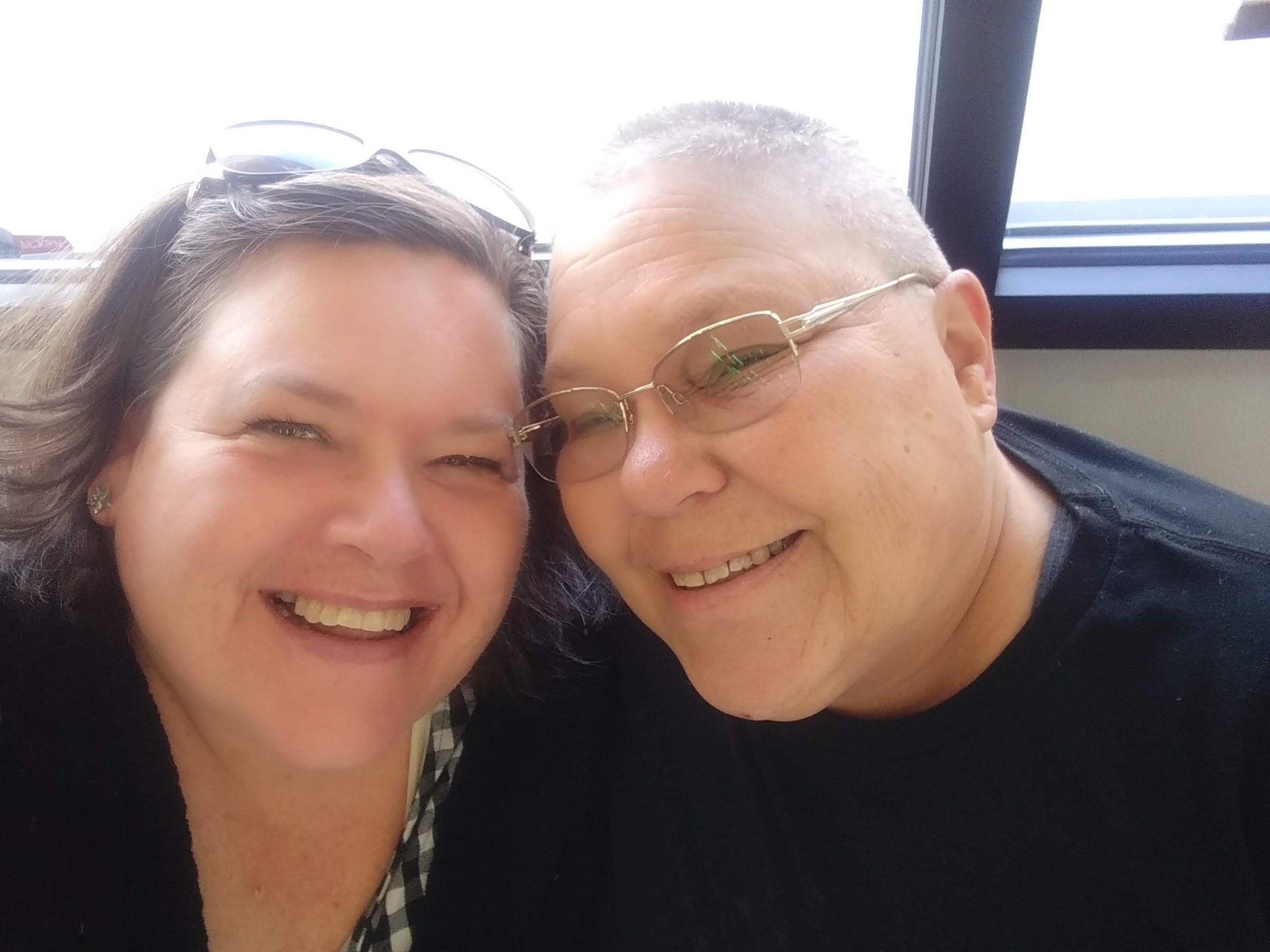
Though she recognized an attraction to men while growing up, Amy never had a strong desire to be with one. Even before meeting Emily, she envisioned a future married to a woman, a realization that initially caused her significant internal conflict. She grappled with whether to identify as lesbian or bisexual, feeling that the latter label carried a stigma within the LGBTQ+ community. At times, she questioned whether she was “queer enough” or had the same right to celebrate her relationship with pride. However, as she has come to embrace her marriage and the love she shares with Emily, these concerns have faded. She now feels that what matters most is the life they’re building together, and she could not be more grateful.
Having first become aware of her attraction to girls around the age of 12, Amy’s discovery came with a mix of shame and confusion. She noticed that the romantic feelings she experienced were different from those of her friends, which led her to suppress them for years. During middle and high school, she dated boys casually and occasionally even had boyfriends, but she says she never developed those deep romantic connections. College did not bring much more clarity, as Amy struggled to find a relationship that truly resonated. Eventually, she realized that her sexuality was something she needed to confront rather than continue to hide.
Raised in Maryland, Amy grew up in a deeply religious household where the church played a significant role in her life. Despite her concerns about how her faith community would respond to her coming out, she found unexpected kindness and support. At 22, after coming out to her therapist—who was the first person she ever confided in about her sexuality—Amy made the courageous decision to share her truth publicly through an Instagram post. To her surprise, she received an outpouring of love, even from those within her church.
Though they needed a little time to adjust once she started dating women, Amy’s parents have remained a steadfast source of love and encouragement since. Despite the initial acceptance she received, Amy ultimately found it difficult to reconcile her faith with her sexuality. In her early 20s, she attended church less frequently and eventually stopped going altogether at 23 or 24, except for supporting the occasional family event. Though she’s never harbored anger toward the church, Amy has experienced deep sadness over what she perceives as an impossible choice between her faith and the ability to pursue the kind of love she has since found.
A pivotal moment came when she attended a fireside where a well-known LGBTQ+ advocate within the church shared his story. His account of a beautiful life with his partner that ended when he decided to reconnect with the church struck a chord with Amy. She sat in the audience crying, and questioning why he had to choose between a life with his loving partner and a beautiful church community. She says, “It didn’t make sense to me, and ultimately was the straw that broke the camel’s back. I didn’t want to choose between the two but if I had to, I decided to choose love and companionship over the church. Since, it’s been a journey figuring out what I believe.”
Amy says she has managed to take the church teachings of her upbringing that resonated with her and keep them close to her heart. She maintains that she bears no angry feelings toward any church members, and that “a lot of people in my inner circle are still active members and good people who I know are uplifted by the church. It’s just not something I can continue forward with, and I’m ok with that.” She still maintains a strong belief in a God who loves and cares for all of us. And she genuinely believes, “God is so happy for me and all the children who are finding joy in this lifetime. That’s something the church taught me—that we are designed for joy.”
Joy has not always been easy to come by for Amy, though even her dark moments have cemented that there’s always been a higher power who cares about and speaks to her. Amy’s journey has been deeply intertwined with mental health struggles. Diagnosed with bipolar disorder and having struggled with an eating disorder, Amy has spent years navigating treatment, including multiple stays in residential centers. Her sexuality and faith crisis contributed to her struggles with suicidal ideation, leading to some of the darkest moments of her life. However, through therapy, support from loved ones, and inner resilience, Amy has persevered and found her way forward.
In February 2022, Amy entered her final residential treatment program, where she worked extensively on self-acceptance and coping strategies. She emerged from treatment in May of that year with a renewed sense of self-worth. That summer, she moved out of her BYU housing in Provo, eager for a fresh start. It was then that she met Emily. Their love story began on a dating app, where Amy was immediately struck by Emily, saying “She was one of the prettiest girls I’d ever seen.” After matching, they quickly hit it off, leading to a dinner date the next evening.
Their conversation flowed effortlessly, and Amy knew she had met someone special. Emily had never dated a woman before, and she was in the process of reconciling her lesbian identity and deciding whether she belonged in the church. Their connection deepened as they navigated their days together, making it official within just a few weeks. They dated for two years before marrying in October 2024.
Reflecting on their relationship, Amy describes it as the best two and a half years of her life. She says, “I never imagined a life for myself where I’d feel as happy and fulfilled and as good as I do now. I credit a lot of it to therapy and treatment, and also to the fact that Emily and I are a good match, which is a testament to the validity of what LGBTQ+ love and relationships can be. I felt I couldn’t ask for anything better, or imagine myself with anyone else. When you know, you know.” Amy describes the sentiment of their first weeks together, saying, “I knew she was my person and would be forever. She felt the same. It’s a reminder this love is not wrong, no matter what people say and what views they have. We know it’s the right thing for us. The life we’re creating together is the best life either of us could have ever asked for. It’s pure joy, and I’m so grateful every day for it.
Both Amy and Emily are fortunate to have families that fully embrace their relationship. Amy says her in-laws are among the most loving and accepting people she has ever met, treating her with the same warmth as they show any other family member. Though her own father initially struggled, he ultimately supported her wholeheartedly, walking her down the aisle at her her wedding, and fully embracing Emily as part of the family.
Amy attributes much of her inner strength to her mother, Tricia Gadberry. From the moment Amy first came out to her mother, while sobbing over the phone, Tricia has remained a pillar of support. Amy appreciates how she listens without judgment and provides a safe space for Amy to process her emotions. To this day, Amy considers her mother to be one of the most important people in her life, and a source of love and guidance she will always cherish.
Currently pursuing a graduate degree in school counseling, Amy plans to graduate in August and is actively searching for a job. She appreciates how her mother-in-law is helping the process by leveraging her connections in the education system. Emily also works with kids as a behavior analyst. Amy’s ultimate goal as a counselor is to be a safe and supportive figure for LGBTQ+ students, particularly those who may feel isolated or unaccepted. She is especially passionate about advocating for transgender students, and ensuring they receive respect and validation despite discriminatory policies that may exist within school systems. She says, “My heart goes out to all trans students now navigating this legislation and the hatred they’re experiencing… I want them to feel like they can talk to me about anything that goes on and that their existence is valid.”
Beyond their activism and careers, Amy and Emily lead a fulfilling life filled with travel, outdoor adventures, and quality time with their beloved pets, Bella (a dog) and Leo (a cat). While they love their roles as aunts to nieces and a nephew, they feel their fur babies may be the only babies they raise. At home, they love to watch reality TV and when the weather cooperates outside, Amy enjoys teaching Emily tennis. In turn, Emily has been teaching Amy canyoneering and water sports.
This October, the couple plans to celebrate their one-year anniversary with a trip to the Netherlands, the first country to legalize same-sex marriage. They are currently feeling out the possibility of living abroad in the future. In the meantime, during what has felt like dark days for many in Utah, Amy is buoyed in knowing that so many allies are out alongside them there fighting and wanting the best for their LGBTQ+ loved ones and others. Amy says, “The only way I can get through it is to find the parts of hope that come with it. Seeing others fight gives me hope. There will always be people who care, even if you don’t know them personally.”
ADELLE GILES
Adelle Giles, 54, has a joyful laugh that emanates resilience. After a turbulent childhood and decades of navigating the complexities of relationships and identity within the LDS faith, only recently, she has found the peace and purpose she always felt she was lacking. She largely credits this to the guidance she felt along her journey pushing her toward her partner, Carmen. “Carmen is my true person in life… I want people to know this may not make sense to everyone, but it makes perfect sense to Heavenly Father and to us.” Adelle now identifies as bisexual and runs a Gathering group where she lives in Pocatello, Idaho. She attends church alongside Carmen in a welcoming ward. It’s a path she never allowed herself to pursue back in the 80s when she first had inklings about her attractions toward women. But she’s grateful for the bends and turns that have brought her here.
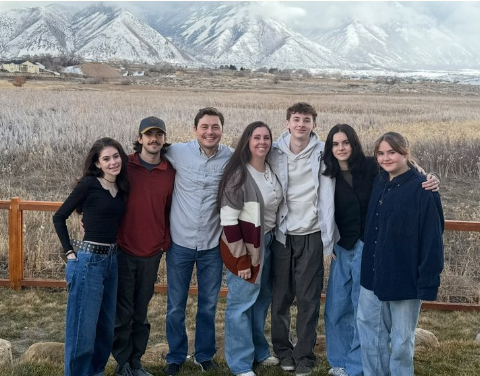
Growing up in Everett, Washington, Adelle describes her upbringing as challenging. Her mother, who she refers to by her name Mary, ruled the household with a controlling, unyielding hand. “We had no room to grow or explore,” Adelle recalls. “Any thoughts that weren’t hers were unacceptable.” Her father, a firefighter who worked long hours, relied on Mary’s perspective to guide the family, leaving Adelle without the parental support she desperately craved.
The oldest of six children, Adelle bore the weight of responsibility in an often abusive home. She managed the household chores and shouldered the blame for anything left undone. While her siblings turned to her for guidance, Adelle’s own needs went largely unmet. She remembers turning to food for comfort, saying she “ate her feelings and developed a weight problem. I never felt good enough, wanted, or loved.” Despite this, Adelle found solace in her Young Women’s leaders at church, especially one who became a mother figure to her and recognized her talents and potential. “This leader was the first person to ever tell me I was pretty -- I was 16 years old.” The leader told the bishopric about the abuse going on under Mary’s rule, but Adelle says she was told, “Because it wasn’t sexual abuse, there was nothing they could do about it.”
As a teenager, Adelle excelled in leadership roles within her Young Women’s classes and cherished the four years she spent at girls’ camp. She was one of the area’s best babysitters and competed with another local sitter to see who could get the most repeat customers. Adelle loved singing, acting, and drawing, and she enjoyed her first paycheck job working at Baskin Robbins. However, these moments of independence and creativity stood in stark contrast to the challenges she continued to face at home.
Adelle was more than ready to leave the house and attend college and pursue a degree in education. It was the first time she felt free from her mother’s oppression. But her independence was short-lived. Although Adelle had graduated and was dating a boy she wanted to marry, Mary’s influence persisted, convincing Adelle to serve a mission shortly after her brother got his call, despite Adelle’s own doubts. “She wanted to be able to say two of her kids had served missions,” Adelle explains. “I wasn’t praying about it for myself—I was doing it for her.” Adelle caved to her mother’s demands to break up with her boyfriend and pack her bags for missionary service.
Her mission experience was challenging to say the least. Physical pain from back problems forced her to return home early, only to face false accusations from her mother that further isolated her. “She told the bishop I’d had sex with my boyfriend,” Adelle recalls. “The next Sunday at church, no one talked to me. It was like I had a big scarlet letter on my forehead.” Adelle’s grandmother confirmed Mary had been spreading lies about her. This betrayal marked a low point in Adelle’s life, leading to estrangement from her family and a period of homelessness. Besides her brother and father (who’ve both passed away), Adelle has maintained no contact with Mary or her four sisters.
While her childhood friends had always predicted she’d be the first one to marry and have lots of kids, things didn’t exactly go that way for Adelle, though it was her wish. In the years that followed her mission, Adelle found solace in teaching. She moved to Idaho and taught middle school science and special education, finding purpose in her work and joy in her students. She recalls often just “feeling happy to be alive,” and loved her church callings teaching gospel doctrine and playing the piano. But her personal life remained tumultuous. After years of praying for a husband, she met a man 26 years her senior, and married him after just two months of dating. One week into the marriage, she walked out of the house, disillusioned by the reality she had married a man who really just wanted a caretaker. “I remember sobbing under a tree and asking Heavenly Father, ‘Why this man’?” Adelle recalls. “And I felt the answer: ‘To teach you’.” The marriage was not the “happily ever after” Adelle had craved. Rather, it was fraught with emotional abuse similar to what she’d endured throughout her childhood, leaving Adelle with no choice but to pack up her bags after seven years and once again go out on her own and seek to rebuild.
It wasn’t until she turned 50 that Adelle began to piece together the puzzle of her identity. She moved to Twin Falls, Idaho, and after what she describes as a vision that made her future clear, she started looking into the idea of dating women—secretly at first, perusing dating sites online and unsure of how to reconcile her feelings with her faith. A turning point came in 2019 when Adelle revealed some of her own struggles with weight (at the time, she weighed 400 pounds), self-worth, and having been diagnosed with cancer in a Facebook chat for the “My 600 Lb Life” show. Producers from the Mel Robbins show saw her post and reached out and soon, she was flown out to New York by CBS to be on the show. “That trip saved my life,” she says. “I saw the sites of Manhattan, shared my story, and came back feeling like I could start again.” After she returned, Adelle finalized her divorce, lost weight, and overcame cancer, emerging with a renewed sense of purpose.
In late 2021, a spiritual prompting led her to pack her bags and move to Palmyra, New York, despite having no job or place to live. “I drove across the country and made it to New York with my last $100,” she says. “When I arrived, I woke up crying, and Heavenly Father told me everything would be alright.” Adelle encountered a woman that day who befriended her and offered her a place to stay. She soon found a job, but after six months, she felt prompted to return to Idaho. Though reluctant, she obeyed, trusting that all would work out.
Back in Idaho, Adelle’s life took another unexpected turn. She met Carmen, a woman from Texas who reached out via Facebook. Carmen asked about the “beautiful light in Adelle’s eyes.” She wanted to know how she could have what Adelle did. Adelle replied it was the gospel. Their friendship deepened, with nightly calls and messages about the church and so much more. When Adelle fell ill, Carmen packed up her life and moved to Idaho to care for her. “I knew we had feelings for each other,” Adelle says. “But I was afraid to admit it. Growing up, I’d been taught that those feelings were wrong.”
It was Adelle’s best friend Sara who gave her permission to embrace her truth. “She met Carmen and said, ‘Adelle, you can love her. She’s part of your wolfpack’.” With Sara’s encouragement, Adelle allowed herself to acknowledge she had fallen in love with Carmen. “She’s my person,” Adelle says. “I know Heavenly Father brought us together.” Adelle has also loved observing Carmen’s spiritual path, saying, “The gospel softened her, she’s the most wonderful person I’ve ever met.”
Today, Adelle and Carmen share a home and life filled with faith and love. Carmen, who was baptized in 2024, has become an integral part of Adelle’s faith practice and church community. Another gay couple (men) attend Adelle’s and Carmen’s ward and Gathering meetings, which has been helpful to building their sense of belonging.
“We always include Heavenly Father in everything we talk about. She has so much to give; people at church flock around her. I’m very lucky. Not a lot of people in life get to meet their true partner.” Adelle continues, “She’s a provider, a protector, and the best person I’ve ever met. Heavenly Father knew I couldn’t be with a man anymore. Carmen has given me a sense of stability I’ve never had before.”
Adelle’s journey has been anything but conventional, but she sees it as divinely orchestrated. “Not all of us will marry the opposite sex or have children,” she says. “But that doesn’t mean we’re not living according to Heavenly Father’s plan. He loves all of us exactly as we are.”
Moving forward, Adelle is excited to introduce Carmen to others as her partner. “We’re a team, a pair, a package deal,” she says. “Heavenly Father showed me who’s what waiting for me – whatever happens, I’m bringing Carmen along. We don’t know what will happen, but we know we’ll be together forever.”
THE BALDWIN FAMILY
Natalie Baldwin has spent her life ensuring things run smoothly—whether as the administrative assistant to the Dean of UVU’s College of Health and Public Service where she currently works, or as the heart of her home in Salem, Utah, where she and her husband, Briggs, are raising five children. But her life’s journey has taught her that even the most careful planning cannot account for the unexpected. Diagnosed with Chronic Myeloid Leukemia in June 2022, Natalie’s health required her husband’s career overseas with the State Department to come to an abrupt halt; until she can hit certain markers, they cannot return to expat living. Instead, the Baldwins were forced to leave their last assignment in Turkey to move near her family in Utah where she could focus on her health. The past ten years of both adventure and change have left Natalie grappling with profound questions—about faith, culture, family, and the unique challenges of raising two LGBTQ children within the framework of her Latter-day Saint beliefs.
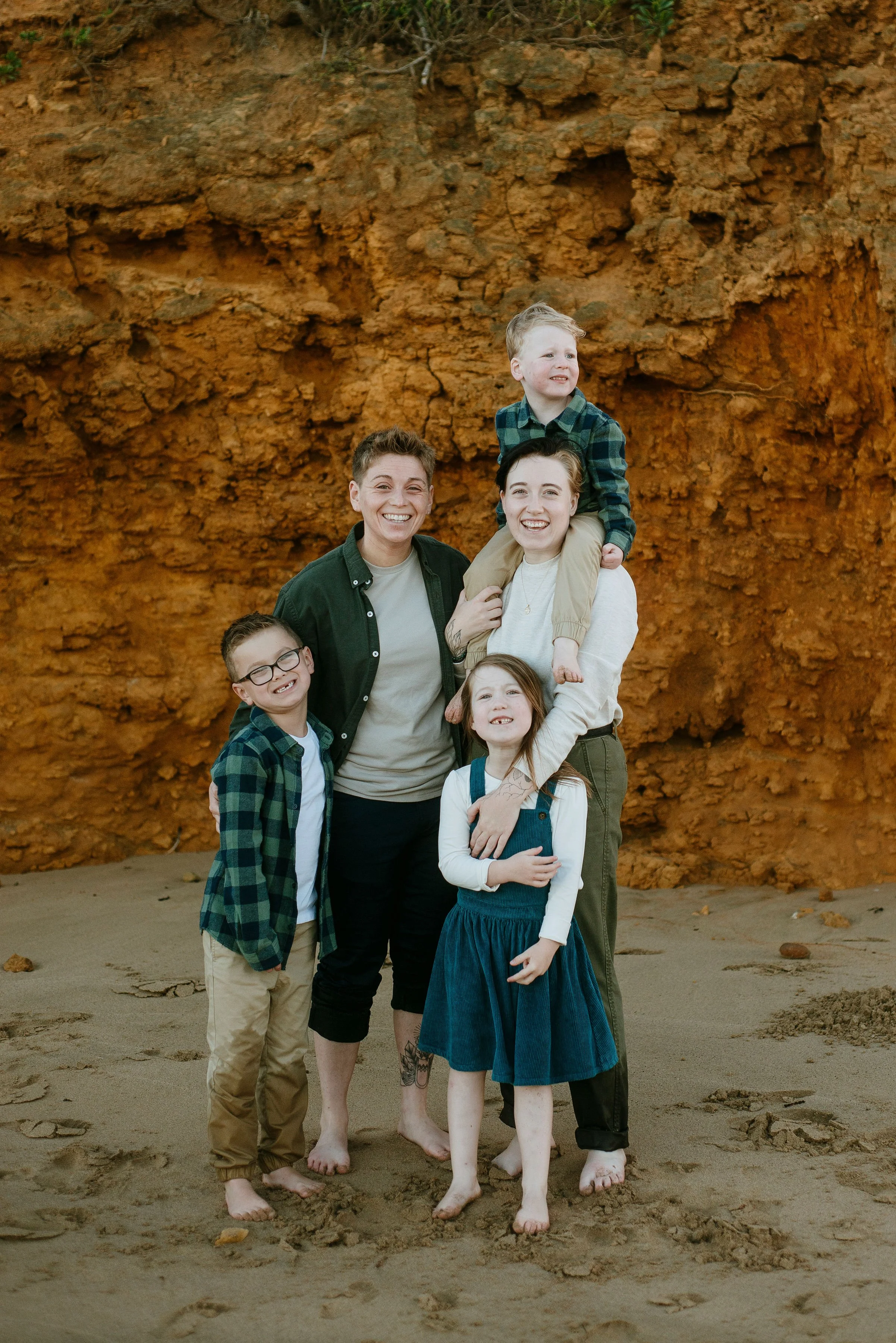
Natalie and Briggs’s children range in age from 13 to 22. Their eldest, Easton, is 22 and a manager at a popular chain restaurant. Emery, 20, a manager of a popular food truck, came out as bisexual at 15, but now identifies as pansexual. After exclusively dating women for a while, she now plans to one day marry her current boyfriend. Eli, 18, is a junior in high school, and Estelle, 13, is in middle school. Eloise, a 15-year-old sophomore, is in the process of exploring her identity and currently identifes as bisexual with just the “occasional” moment of attraction to boys. The Baldwin’s family dynamic has been shaped by love, questions, and a steadfast commitment to embracing their children for who they are.
For Natalie, the first major shift came when Emery came out at 15. Having always been open with her parents until then, Emery had given them a small “heads-up” about a year before her formal declaration, processing much of her identity internally. When she finally came out, Natalie’s immediate response was rooted in her conviction: “I know God doesn’t make mistakes. If you’re made that way, it’s the way you’re supposed to be. We’ll love you unconditionally regardless of any decisions you make.” Those words became a mantra, grounding Natalie through the ups and downs that followed.
Yet there were challenges. Living in Cairo at the time, Emery’s sexuality became a complicated and, at times, dangerous issue. In the predominantly Muslim country, where homophobia was rampant, Emery was outed by a peer. The news reached a church leader, who responded by incessantly preaching the Family Proclamation. Of that time, Emery says, “The year between realizing my sexuality, and finally coming out, I was battling some serious internalized homophobia. I couldn’t grasp the fact that I was queer, but I was also supposed to be a righteous daughter of God. It didn’t make sense to me that I could be both at once. I had a million questions, and so many bad days, but I was terrified to share any of these thoughts. My thought process was, ‘If I myself am having such a hard time accepting my own sexuality, how could anyone else’?” Feeling unsafe and unwelcome in a church community that for much of her childhood had taught her negative things about the LGBTQ+ community led Emery to eventually make the decision to step away from church entirely.
Though the family soon relocated back to the U.S., Emery has not returned to church, but Natalie remains proud of the strong, empathetic woman her daughter has become. Emery likewise is grateful for her family’s unconditional support, saying, “Feeling like you don’t belong, and feeling so utterly lost and helpless, is not an easy thing to come back from, especially when a lot of those feelings were created by peers and teachers from what was supposed to be my church, and my community. While I have nothing but love for the church, the hurt that I felt from individuals in the church is one I don’t think I could ever forget. Every single day of my life, I am eternally grateful for my parents who made the choice to learn more, and love more, rather than to judge and to try and teach.”
Of her eldest daughter, Natalie says, “She has a good head on her shoulders. It didn’t take her long to realize who she is doesn’t align with the church, but that doesn’t make her a bad person. The church is just not a good fit for her. Her sexuality, and Eloise’s, have given them an empathy for others we will never fully understand. They have the ability to see people in ways I never could.” The Baldwin’s oldest son has labeled himself “nonpracticing, but with a testimony.” While he occasionally attends church, Natalie points out that often young men feel out of place when, like Easton, they didn’t serve a mission. He “really doesn’t like the outspoken conservative culture in the church, but still has a love and respect for the gospel,” says Natalie who adds that Easton said he never plans on labeling himself an ex-Mormon.
For Natalie, the process of supporting her children has been deeply personal. She says, “I’m not afraid to ask questions, or of the answers that I’ll receive. I trust myself, my intuition, and my ability to hear God. I know God doesn’t make mistakes. The way these children come to us is the way they’re meant to be. Maybe sometimes it doesn’t align perfectly with gospel doctrine, but that doesn’t change the fact that they’re eternal beings with unique gifts and souls.” Briggs has had his own journey to see things through a different lens, thanks to his wife and daughters, and has grown to embrace and love the LGBTQ+ community.
Eloise, Natalie’s 15-year-old, is currently exploring her identity. Unlike Emery, who initially kept much of her early journey private, Eloise has been more open about her feelings from the beginning. She’s also benefitted from her older sister’s experiences and how they’ve prepped the family. Analytical and self-assured, Natalie says Eloise came to this earth like an adult, speaking in full sentences at age one. “Eloise has a strong sense of her worth. She knows she’s a child of loving Heavenly Parents.” That doesn’t mean her path has been without challenges. Recently, she called her mother in tears, asking to be picked up from seminary after a class discussion on good versus evil where another student included the LGBTQ community as an example of “evil.” Eloise has also been privy to conversations in which her peers have said LGBTQ people are mentally ill or just need to go to therapy. While Eloise’s seminary teacher has been a supportive ally, redirecting harmful comments and fostering a more inclusive environment, incidents like these still sting. Yet, Eloise remains resilient, determined to stay true to herself despite the occasional adversity.
Returning to Utah after years overseas presented its own set of challenges. The family had grown accustomed to the somewhat liberal and inclusive culture of the expatriate community. “Living among expats was a different world,” Natalie explains. “The schools were welcoming, the communities open. Moving back to Utah, we’ve had to face deeply rooted anti-LGBTQ sentiments and the realities of living in a predominantly conservative area. It’s made us all want to retract and keep to ourselves, not knowing who we can trust and who will be a safe space.”
For Eloise, navigating this environment in high school has been a learning experience. “She’s queer, she’s female, she’s liberal,” Natalie says. “It’s a triple whammy in this area. But she’s so bright, intelligent, and mature. She’s learning to decide when to speak up and when to let things go. That kind of wisdom is remarkable at her age.”
Natalie herself is no stranger to speaking out. Over the past two years, Natalie has become a visible advocate, not just for her children, but for all those navigating the intersection of faith and identity. Her ward itself reflects the complexities of her environment. Natalie describes her current congregation as very young and predominantly conservative. “We’re the old people here,” she jokes, noting that she and Briggs often feel out of place as what feels like the lone liberals in a sea of Trump signs and conservative culture. Yet, even in this environment, Natalie has found moments of connection. Her social media posts, particularly on Instagram, often address these themes, sparking private messages of support from some other members of her ward and broader community. “People thank me for being outspoken, but they’re afraid to say it publicly,” she shares. “They don’t want to face ostracization, but they’re grateful someone is saying what they feel. If I can make them feel less alone by being the one to speak up, it’s worth the target I’m putting on myself.”
Natalie’s hopes for the church extend beyond her immediate family. “I wish church leaders would genuinely try to get to know a variety of queer people,” she says. “Really know what they think, feel, experience, and then believe them. If they say they feel a certain way or have confirmation from God, don’t question them, just believe them.”
Through it all, Natalie’s love for her children has remained constant. She believes their unique journeys have made her a better mother and a better person. “I know without a doubt that God has guided us on this path,” she says. “Our family is exactly as it is meant to be. And I will never stop advocating for my children—because their worth is infinite, and their stories deserve to be heard.”
CHANTELLE RYATT
Down under in Melbourne, Australia, Chantelle Ryatt enjoyed a warm holiday season with her wife, Jennadene, and their combined three children, ages 5, 7 and 8. Last year was one to celebrate as the two were married in a beautiful, beachside ceremony on September 21. Standing on a cliff face overlooking a surf beach with massive crashing waves below, the haze of clouds offered a gentle mist as they gathered with the celebrant and the two photographers. The day prior, Chantelle had told Jennadene nothing would make her happier than to have the confirmation they were doing the right thing and to have her mother there. The latter was a difficult order as Chantelle’s mom had passed in May 2020. Yet, as the two said their “I Do’s,” it was undeniable to all present – including their atheist photographer – that there was a special presence felt that no one could deny. As the sun peeked out from behind the clouds, Chantelle felt the presence of her mom, great grandmother, both her grandads and uncle rejoicing, so happy for this union. Chantelle says, “To my mom, family was everything. Knowing she was on the other side, knowing what eternal families look like and rejoicing, was a beautiful confirmation.” She continues, “My wife is the person my mom wanted me to be with to teach me what I needed to learn. To grow, to develop, and to feel loved—it’s been a journey.”
For both Chantelle and Jennadene, life certainly has weaved. Both experienced more traditional LDS domestic arrangements prior to meeting each other. Each grew up in the faith and Jennadene served a mission on Temple Square in SLC in 2014-2015. Each married men in the temple with whom they had children. While both her parents were converts, Chantelle’s homelife was very “church-centered,” and her father typically held leadership positions either as bishop or in stake presidencies. She says, “Our family was well known in the stake.”
From a young age, Chantelle also knew that she was different from the other kids at church and that her life wouldn’t be as simple. She recalls feeling that, “Boys were cool, but girls were awesome.” The feeling of being out of place due to her attraction to girls, which she sensed at age four, became more prominent as she grew. She became terrified people would find out and she’d be shunned. Her very intuitive mother, however, sensed something was off, but didn’t know just how much struggle the conflicts of Chantelle’s sexuality and living the gospel created internally.
As a young adult, Chantelle embraced opportunities to serve—first as a Young Women’s leader at age 18. She married at age 24 to a man she’d known since she was 14, and had further opportunities to serve in the ward Relief Society Presidency and ward Primary Presidency in her late 20s. Two years after the birth of her son, she was called to be the ward Young Women’s President. At the time, she loved her husband and was committed to him and the marriage, though she says the pairing wasn’t ideal due to factors outside of her orientation. “I thought with Heavenly Father, I could overcome my sexuality.” She had told her husband prior that she was queer, and eventually came out to her parents around age 26. True to form, her mother’s first reaction was of concern for Chantelle and included the words, “What are you doing about it?”, quickly followed by loving kindness. Chantelle explained how she had kept close to her Heavenly Father and relied on Him to guide her as to what she should do. The following Sunday, her mother told Chantelle, “I love you no matter what. Wherever you go, whatever you do, I’ll always support you.”
The year Chantelle’s son was born, motherhood, coupled with her “sexuality complications,” did not help her already troubled marriage. When she was 29, Chantelle’s mother passed away, which presented a shifting point. “My mum was my rock in a sense, who I turned to.” Chantelle experienced frequent bouts of depression about her sexuality which occurred about every three months, when fighting against who she was and what she desired became too much. She says, “My mum was so devout, her faith was so strong. She lived and breathed service and magnified all she did. I wanted to carry on her legacy, but could no longer lie to myself. I had to figure out what was going on. That year of grief on top of depression was not fun.”
Chantelle knew it was time to tell her husband she needed a separation to explore and see what her future would look like. He agreed, and what follows was, by Chantelle’s account, a very spiritual experience. Rather than setting out to date “just any woman,” she says she relied on the guidance of her Heavenly Father and her mother from beyond the veil to wait it out. After some time, she reignited her friendship with Jennadene, as the two had known each other since early YSA. Jennadene had recently come out as gay and had left her own marriage to a man.
At first, they bonded over just having someone else to talk to who had experienced such a unique path in the church. They’d converse how there was no guidance for people like them in scripture, especially in the Book of Mormon. They each spent time pondering and praying about their future, and when Chantelle finally asked if this person she’d drawn close to was the person she should pursue, she received a very definitive “Yes!”
They proceeded slowly, frequently checking in with each other to ensure they were both still feeling this was the right thing. Over their first year of dating, Chantelle says frequent spiritual experiences confirmed she was on the right path. Miracles ensued. As the financial dealings of her divorce became more complicated and it felt like she’d lost everything, she says, “Everything that was taken, Heavenly Father provided.” When she was forced to move out immediately, a family friend generously allowed Chantelle and her son to move in without paying rent until she found a job. Quickly she did, at a nearby primary school her son could attend, and she was soon able to pay rent. Money Chantelle was owed from years ago suddenly showed up and she was able to pay for food. She says blessings like these continued to appear, which she feels stemmed from continuing to pay tithing.
Every fortnight, when her son would visit his father, Chantelle would meet up with Jennadene, who’d been living in Adelaide 700 kilometers away. As the two began blending their families, they’d take their three kids to church in Chantelle’s home ward where members had watched her grow up, marry a man, experience a mental decline through her divorce and loss of her mother, and now, “To watch us two women go to church as a family unit… well, some took it well, and some not so much. But we’ve been able to weed out the people you don’t want around.”
The couple have appreciated the warm support of their bishop who meets with them often and welcomes their family unit in the ward family. He recently helped Chantelle seek the cancellation of her temple marriage to her ex, though her sealing to her son remains intact. With the help of her stake president, the cancellation was a process that only took a few weeks. All of this has occurred since Chantelle was disfellowshipped in 2022. When Chantelle was Young Women’s President in the ward and told she’d have to have a membership council for dating a woman, she expressed to the girls she served that she’d likely be released, and “lose everything she had.” She remembers telling the girls she’d loved watching grow up over the prior ten years the importance of building a relationship with their Heavenly Father so “He’s the one who’s guiding you.”
While they know there are some “fuddy duddies” who may not be comfortable with their presence at church, Chantelle and Jennadene say several more have made comments like “What a beautiful family” when they walk in. They often take opportunities to speak up in classes and share the examples of personal revelation they’ve experienced. Recently after sharing what it was like being the only queer members of the ward and the special presence of their wedding day “visitors,” they were touched when two older gentleman separately came up to them after to each offer a hug and words of gratitude that they had helped them feel the spirit and increased perspective that day.
“The understanding I have gained has led to a relationship with Heavenly Father that has never been stronger,” says Chantelle. “Whenever someone’s faced with a unique path, whether it be addiction or not being a member or being homosexual, our very different experiences in the church mean we all receive inspiration that is personal to us. But the main message should be that it doesn’t matter whether queer members come to church or not, their life experiences are personal and it’s not our place to judge.”
Chantelle credits her blended family as providing a loving environment for her son, step-son and step-daughter in which they are living the gospel, learning to pray, and to build their testimonies. “They wouldn’t have that environment if we weren’t a family unit… I know without a doubt, hand on my heart and I will swear to my grave, that I have been led on this path. I know Heavenly Father has guided me, and knowing how important eternal families are to my mom, I know she would not have guided me on this path only just to lead me astray.”
THE BARNARD-CROSLAND FAMILY
This is the story of two “Mormon” girls who were raised in “typical Mormon families.” Rachel was born the youngest of five kids and church was a constant growing up, no matter where they lived. After residing in Texas, Virginia, and Hong Kong, her family moved to Provo when Rachel was in the tenth grade. Upon finishing high school, she attended the University of Utah where she earned a communications degree, excited about the prospect of working in marketing and advertising. She got married during her junior year of college to a man. Feeling pretty clear that the gospel checklist was her road to happiness, Rachel “pursued the path she was supposed to without questioning,” and now says her mind never let her think anything else was an option…
This is the story of two “Mormon” girls who were raised in “typical Mormon families.” Rachel was born the youngest of five kids and church was a constant growing up, no matter where they lived. After residing in Texas, Virginia, and Hong Kong, her family moved to Provo when Rachel was in the tenth grade. Upon finishing high school, she attended the University of Utah where she earned a communications degree, excited about the prospect of working in marketing and advertising. She got married during her junior year of college to a man. Feeling pretty clear that the gospel checklist was her road to happiness, Rachel “pursued the path she was supposed to without questioning,” and now says her mind never let her think anything else was an option.
Rachel now reflects on how many of her experiences as a youth and adult would clearly be considered “SSA,” but as her thoughts continued, she continued to push them off as distractions from the path, or temptations happening to her and not authentic feelings within her. Rachel stayed busy with her career, often working a “ton of hours” while pursuing building a family. When her son came along, the reality of her feelings towards women became even more apparent. In her late 20s, as she began to listen to podcasts and others’ stories of navigating a similar road, Rachel says her sense of denial minimized and she could make more sense of her reality. At first, she rationalized she was bi and could continue to make her marriage work, keeping her family intact. She didn’t have plans to share this part of her with anyone but the tension of the secret she’d been keeping for a long time felt very big, too big—and her husband was the first person she pulled in to share what she was realizing. “He was thankfully receptive and helpful, kind, and gentle through the process,” she says.
As time, went on Rachel continued to wade her way out of denial, accepting that she was gay. With this understanding, she evaluated what her path would look like. She realized growth for herself, her husband, and her son was going to be severely limited and that trying to stick it out would progressively lead to an unhealthy family life for all involved. She came to the devastating realization that was not the life she wanted for herself nor those around her.
Michelle grew up in Provo, UT as the oldest of four kids. From a young age, church felt very important to her. “I took church and the gospel very seriously and had a core testimony that Heavenly Father was real, really knew me, and loved me no matter what.” Michelle went to as many as EFYs as she could, served on the seminary council, dated a lot of boys in high school, and then went to college where she fell in love with a roommate—a girl. While the crush was not reciprocated, Michelle said her feelings felt like an explosion, her past feelings for boys paling in comparison. “I felt I had been colorblind, and then put on those special glasses and could finally see the color that everyone else could see.”
Michelle also felt very confused, working overtime to process, as she’d been taught that these kinds of feelings were wrong. Yet she says her feelings for the girl felt wholesome, right and good. Contemplating her life vision to have a temple marriage and eternal family, Michelle decided to push those feelings aside and likewise pursue the prescribed path. She went on a mission to Nicaragua and came home with a goal to date and get married in the temple. That she did, meeting a man with whom she got along well, who made a lot of sense, and who wanted to marry her. Her feelings for him were nothing like the feelings she had had for her roommate, but she rationalized that there were more important things in marriage. After marrying, they quickly had four kids in five and a half years, keeping Michelle so busy she could distract herself from “the romantic and emotional lack she felt in her marriage, that had been there from the start.”
“I trudged forward with faith, trusting it would be fine. I filled my life with the next best thing—hobbies, service, staying active in the church, being the best mom I could be. It was exhausting, and wasn’t producing the fruit I was looking for or expecting, but I had faith it would come.” Michelle says it got to a point where it was seriously affecting her mental health and she knew she was not on a sustainable path. After much prayer, wrestling to know what to do, she came to know that the Heavenly Father she loved and felt close to was not only ok with who she was, but truly wanted her to be happy and fulfilled.
Rachel and Michelle first met in a Lift & Love online support group for women. Neither was there to try to meet someone romantically, but rather to process their experiences with like-minded individuals. The two discovered they’d both gone to Timpview High School (at different times, with their five-year age gap). They struck up a conversation and became friends. A couple months later, friends from the support group met up to go hiking in Utah, and Rachel happened to be in the area for a family trip, having traveled in from San Diego where she was living at the time. She was still going through the difficult path reckoning what she wanted to do with her future. Rachel says, “I was in love with Michelle as soon as I met her” and Michelle’s feelings were quick to follow. After both women were divorced, Rachel moved to Daybreak, UT and the two began dating. After eight months, they got married and blended their families. Their combined five kids now range in age from 5 to 11. Both of the children’s fathers live nearby as well, and “the moms,” as their kids dub them, share 50/50 custody and maintain a good working relationship with their co-parents/former partners.
Rachel admits there’s a lot of grief that’s come with the decisions they’ve had to navigate and live with—including letting go of the families they’d always envisioned and worked for and only having their kids half the time now, but Rachel says, “Despite all, the good overshadows the hard and we know we still made the right choice.” Michelle concurs, “We can’t really wish things were different, but if we had had the chance to date as teens and been given the opportunity to have developmentally normal experiences, there would not have been so much collateral damage. All the people who have had to go through such hard things—it sometimes feels heavy and makes us angry. But our journeys are what they are, and we are who we are for what we’ve been through. I just wish others understood better that pressuring people to choose a marriage that doesn’t fit their orientation or telling them to be single and celibate their whole life can be so damaging, and not just for the individual.”
The Barnard-Crosland household loves their puppy Jojo and loves to ski, having recently outfitted the entire household in gear for the season. They also love watching the Great British Baking Show, and enjoy music, with Michelle playing the piano, guitar, and singing, and Rachel discovering new artists whose music she introduces Michelle to. While Rachel works at Adobe, Michelle works as a health clerk at an elementary school in Provo, aligning her schedule with the kids’ school schedules. The kids each call their new mom by her first name, and Rachel and Michelle have observed how the five kids were all quick to embrace the change and love each other through it, which they surmise is likely a byproduct of blending families while they were still young.
The family takes their kids to church each Sunday, and enjoys doing “regular LDS family stuff” like reading scriptures and praying together. There are restrictions to their membership due to the nature of their relationship as they walk this tightrope. They are unable to have official callings, but they feel their ward is doing an incredible job of making them feel included. Michelle is often asked to play prelude music, and they were asked to help plan the ward Christmas party by the committee chair. Rachel says, “We feel called to be there and show up as ourselves and participate where we can. We feel we’re doing what the Lord would have us do to build the kingdom and serve God’s children wherever we can, and especially to strengthen others in the LGBTQ+ space.” Michelle adds, “By showing up, we challenge biases and perceptions that become hard to hold onto when people have to deal with the fact we’re here, our type of family exists, and we want to belong and be a part of the body of Christ. We don’t feel conflict in our family dynamic and way of living and being disciples—we are just waiting for the church to catch up.”
When Michelle was going through the heartbreaking process of deciding to get divorced, she says her bishop remained neutral. “While he wasn’t supportive, he was not condemning. Rather, he listened, which was really amazing. He encouraged me to stay close to Heavenly Father and follow His guidance.” Michelle recalls growing up and learning to discern the feelings of right and wrong and how the Spirit prompts her. She knows that “icky, dark feeling” of sin and says, “This doesn’t feel like that. It feels like light, joy, peace, and goodness.” She feels people get stuff wrong about homosexuality. “I wish people could see that we’re just like them. How fulfilling, beautiful, and normal this marriage is. How Christlike our love for each other is. Being married to Rachel, so many things make sense and work now that didn’t before. Now I have my color glasses on and can see all the beauty of a loving, fulfilling marriage, when before it was colorblindness.”
TEGAN (Z) BLANCHARD
Ever since a young age, Tegan said he felt “an inherent, extreme closeness to God in a way that isn’t entirely normal.” Now defining God as Them/his Heavenly Parents, Tegan remembers playing on his bed at age five and talking to God as if They were right there with him. He also felt very aware of himself and the way he’s built. With a high propensity to love others, Tegan always loved love—from romcom movies to having at least three different crushes on girls in elementary school, when that seemed to be the thing to do.
As puberty ensued, Tegan began to notice he felt something much more profound for people of his same sex. At age 12, he told his bishop he was attracted to boys. The bishop responded that it was probably just hormones, that things would change and he’d be fine. Tegan says, “Even though that was not a helpful response, I’m not angry at him at all. I couldn’t have expected him to react in the best of ways given the lack of experience he probably had.” Tegan felt he needed to tell his parents, who he says were not homophobic, but not necessarily educated on the topic either. He still spent about five years having moments of pacing outside their room to drum up the courage. During that process, he’d stare into their large mirror and think about how they saw some of him, but not all of him…
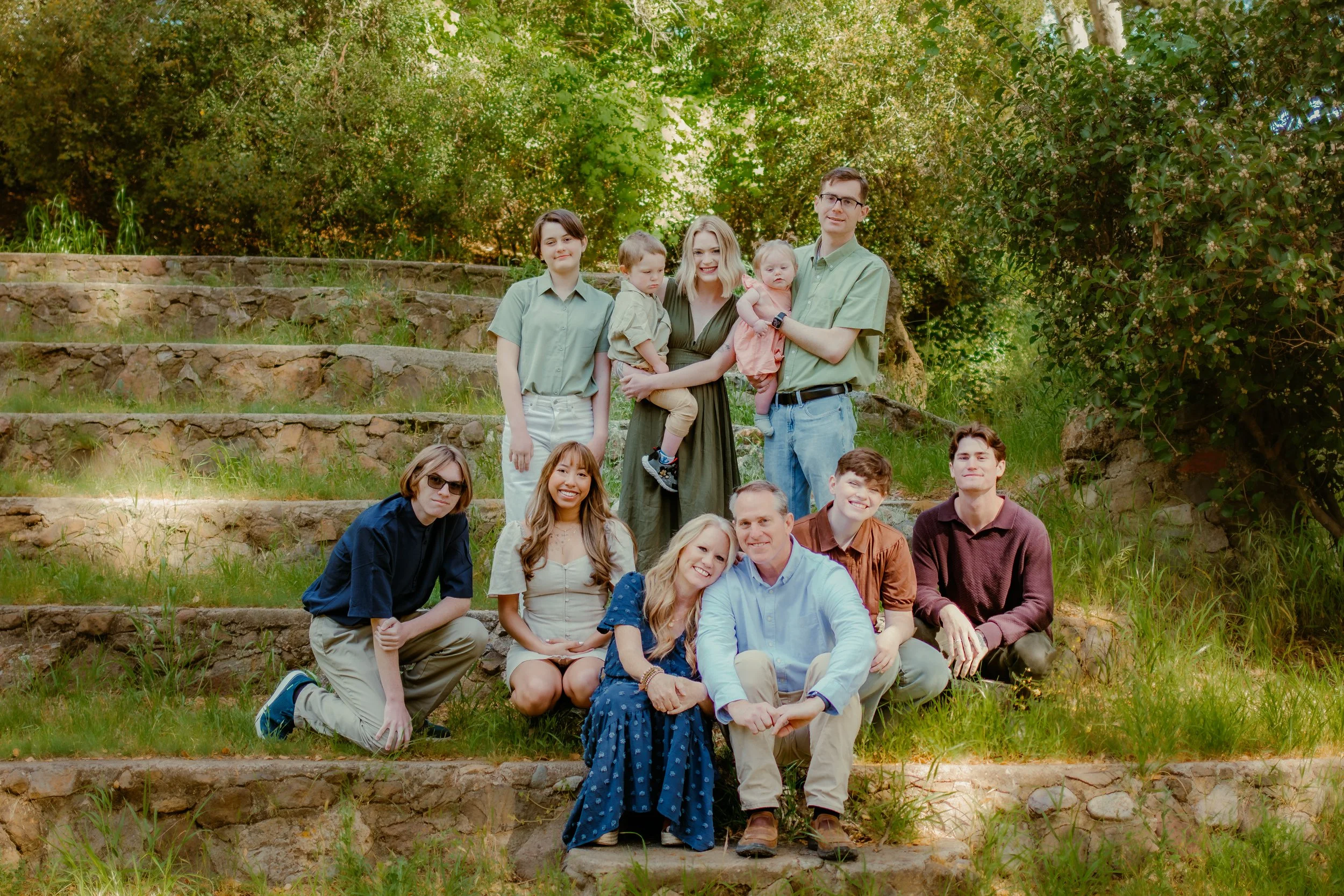
Tegan Zelano Blanchard has lived a lot of life in just 21 years. Tegan, or “Z” as he’s called by friends, is majoring in National Security studies with his foremost interest being in international relations. He hopes to work for the state department and go into diplomacy. But in this hot political climate, he’s quick to state, “I care much less about who’s in charge or how our national political system works, and much more about how to get clean water into under-resourced regions of South America, or how to get sex-education to rural communities that need it. I want my career to be focused on improving others’ quality of life.” He claims if he didn’t need to make money, he’d likely work for an NGO.
Tegan’s global awareness was certainly influenced by his parents, who both work in international business/relations themselves. He was raised bilingual (English and Spanish), and is the youngest of four kids–with his three older sisters all now married. Tegan spent the first nine years of his life in Utah, then moved to Costa Rica for a year, then back to Utah, then to Chula Vista, CA at age 11. When all his sisters had moved out and Tegan was a sophomore in high school, his parents felt strongly they needed to move to Ecuador for business opportunities. Despite this inspiration, it wouldn’t be until the summer before his senior year of high school that this prompting would come to fruition. His father had served a mission there, and the Blanchards started a series of businesses in Ecuador selling everything from carpet cleaning to dragon fruit, and sourcing chocolate and flowers. Their impression for the move felt divine, and after two years in Ecuador, Tegan’s parents were called to serve as bishop and still serve in that capacity.
But their kids all now live in Utah, with Tegan attending UVU with one of his sisters. He loves taking a sculpting class with her, and recently enjoyed going clubbing in Salt Lake with all his siblings. Having just returned from his mission in Argentina three months ago, Tegan is full of life and eager to enter this next chapter. While there were dark periods in his life, he now exudes optimism and purpose.
Ever since a young age, Tegan said he felt “an inherent, extreme closeness to God in a way that isn’t entirely normal.” Now defining God as Them/his Heavenly Parents, Tegan remembers playing on his bed at age five and talking to God as if They were right there with him. He also felt very aware of himself and the way he’s built. With a high propensity to love others, Tegan always loved love—from romcom movies to having at least three different crushes on girls in elementary school, when that seemed to be the thing to do.
As puberty ensued, Tegan began to notice he felt something much more profound for people of his same sex. At age 12, he told his bishop he was attracted to boys. The bishop responded that it was probably just hormones, that things would change and he’d be fine. Tegan says, “Even though that was not a helpful response, I’m not angry at him at all. I couldn’t have expected him to react in the best of ways given the lack of experience he probably had.” Tegan felt he needed to tell his parents, who he says were not homophobic, but not necessarily educated on the topic either. He still spent about five years having moments of pacing outside their room to drum up the courage. During that process, he’d stare into their large mirror and think about how they saw some of him, but not all of him.
The Blanchards lived in California in 2016, when President Obama legalized same-sex marriage. Tegan remembers that time as a hot debate in which he felt his church community was against him, while his school community was for him. “I thought, they’re debating me—I’m the topic of the debate,” he recalls. But he also tried to remain in a state of outward denial. Tegan says most of his queer friends grew up hearing hard things from relatives, and while he loves that his middle name is his great-grandfather’s and loves his extended family, he recalls a close relative telling him that gay marriage was an attack on the family. As a young child, he interpreted that to mean he was Satan’s attack on the family. But all things considered, Tegan said he had a happy, idealistic childhood with a loving family.
Having never experienced depression before, 2020 wrecked Tegan. When the pandemic hit, he was in a “difficult but growing” relationship with a girl, especially because they were both struggling deeply with their mental health. They ended up cutting it off just before his depression began to take hold. “I remember this was the first time in my life I felt absolutely no hope, no light at the end of the tunnel. I felt God less than any other part of my life. Though looking back, I can see just how intimately They were involved.” The Blanchards moved around a lot during this period—to five different homes just during the pandemic. Politically, Tegan felt an intense connection to the pains of marginalized groups he saw online. Feeling the impact of George Floyd’s death, he became involved in BLM, and he started experiencing a faith crisis, questioning the history of racist policies in the church, as well as limitations against women and LGBTQ+. “Something within me cried out so desperately for the pleas of these people. I can’t compare the experiences side by side; each is distinct with its own challenges. But my heart bled so deeply for people struggling to find a place, because I too had felt that pain of feeling like there was no place for me.”
In 2021, when he was 17, Tegan’s parents sat him down to listen to a podcast about sex “to make the topic less taboo.” At that point, Tegan finally decided five years of carrying his stress alone was too much. He’d had some practice, having come out to three or four friends prior, which helped prepare him to face his parents at the end of the podcast and say, “I’m going to throw you a curveball at you right now… I think I’m bisexual.” He says his parents replied with a huge embrace, tears, and “so much unadulterated love.” He was then able to open up and share what it had been like. His parents advised him to focus on girls, but he says moving forward, that advice didn’t prove to be helpful and the topic didn’t come up much again. Tegan’s sisters and brothers-in-law also responded with full support on video calls in which he told each of them, one by one. He’s not sure if they found it a surprise, as he says his interests had always been more artistic, and he recalls his cousin overhearing his parents talking about him at age eight and wondering if he might be gay because he was “very effeminate” as a kid—something Tegan at times was bullied for. When his cousin told him that, Tegan remembers breaking down sobbing and then trying to act more masculine from then on out. Though now, he’s comfortable saying he believes he was born gay,
The day Tegan and his parents decided to move to Ecuador was the same day his friends in California called saying school was canceled due to the global pandemic. But it wasn’t until June of 2021 that they landed in their new home country. The Blanchard’s initial residence in Ecuador was in a dangerous area and his mom was robbed at knife point while going to the gym. After so much transition, and now continued isolation with COVID-19, Tegan says this was the most overwhelming time in his life, grappling with his faith crisis, sexuality and the uncertainty of his living situation mixed with extreme limitations on his ability to socialize with people of his age. Yet, he endured.
In Ecuador, Tegan’s faith crisis culminated with the figurative breaking of the shelf. Harboring internalized homophobia made the cognitive dissonance worse, and church became a difficult place in which he felt so “othered” that there were times he’d stay outside the chapel, sobbing. Yet, watching queer-affirmitive media like Love, Simon and Heartstopper, reading queer novels, and hanging out with queer friends, made Tegan begin to feel less “othered.” He remembers countless nights on his knees praying desperately, not angry at God, but “so worn out feeling so much pain and hurt in the silence.”
That Thanksgiving, Tegan’s sisters all came to visit and held an intervention. They were worried about Tegan’s mental health because to them, “the light had gone out of [his] eyes.” He confirmed he didn’t want to take his life, but felt he had been in darkness with no hope for so long, that he had nothing to live for. Looping in their parents, Tegan’s dad eagerly agreed to support him pursuing therapy, and Tegan says meeting with life coach Jill Freestone (online) made all the difference. Tegan loved how her approach is affirmative both toward the church and the queer community, and in his first session, she centered their work on a more expansive view of God and Heavenly Mother, with which Tegan identified deeply. Tegan now says, “Learning about the Divine Feminine kept me alive spiritually at that time.”
After finding some healing, Tegan went to visit his sisters in Utah and felt “free” for the first time in two years – free to drive, to go out at night, to see people. For the first time, he made out with a girl and “kept his standards,” but did “just about everything fun one could do that’s still legal.” This time, when he went back to Ecuador, his parents had moved to an incredible house with a pool in a safer area, and he was able to design his bedroom with posters and LED lights, just the way he wanted. They could now go outside without getting robbed. Continuing to work with Jill, Tegan moved forward with his mission papers which he says felt “batsh!t crazy” amid his faith crisis; but he felt a desire to proceed in a tentative but trusting mindset. A 2022 talk by Elder Dallin H. Oaks set him back and made him want to give up, but Tegan felt propelled by the wisdom in Jared Halverson’s words, “Don’t let a good faith crisis go to waste.” Following the hard talk, after more than a year of intense bitterness, Tegan hit the point of apathy and screamed at heaven, “I just don’t understand!” At that exact moment, his sister in another country texted him: “They love you.” Tegan screamed up again, “What am I supposed to do now?” He got another text from his sister: “So much.” Tegan says, “It was so precise and perfect in timing that I couldn’t see it as anything but divine. Although I didn’t receive a specific answer like I was hoping for, I felt that a knowledge of Their infinite love would be enough to keep moving forward.”
“Even in apathy, I thought, ‘If God loves me this much, I could go serve’,” says Tegan. His parents gave him autonomy to make his own choices, and supported him as he later was called to Buenos Aires, Argentina. Right before he left, Tegan again went to Utah for some fun with his sisters, and this time he kissed his first boy—which felt important to him, to affirm you can be queer and a faithful member. He says, “Part of it was a ‘take that’ to so many years of pain. I wanted to show I can be me and a disciple of Christ. A week later, I went through the temple and was endowed. There, I better was able to understand that God is much more expansive than we define Them to be. I still have so much left to learn.”
Tegan says his experience in the Mexico MTC was brutal, but he loved every minute of his mission, where he grew close to his mission leaders and spent a lot of time serving in the office. As he prepared his farewell talk, he says he felt the first spark of the joy of the gospel in two years, something that he had deeply missed during the darkest moments of his depression and faith crisis. He realized he could focus on talking about Christ during his two year service. And that’s what he did. He says, “My faith crisis redefined my relationship with the Savior and got it to a place where I could really reach people… I learned how to more deeply love God, others, and myself and developed the divine gifts of empathy and charity. I recognize others have had hard experiences serving a mission and I weep with them and validate their pain. But for me, it was life-changing.”
Now having been home for three months, Tegan is “going on a ton of dates and learning so much about myself and how I was made, and more about God and the way I connect with Them.” Though he originally came out as bisexual, he is learning that attraction is more complicated than he anticipated and definitely leans towards men. Above all, however, he’s most interested in dating people willing to invest in a personal relationship with God, saying, “That has led me to my kind of people, those who are genuinely searching for a connection with the Divine. But if they’re in a potent faith crisis or on a different part of their faith journey than me, that’s still okay.”
Tegan says he is wholeheartedly committed to “living the life and future God would have for [him], no matter what that is.” Though he doesn’t believe that necessarily means marriage to a woman in the temple is the only way. “If God says, ‘I want you to always stay close to me and marry a man that you love,’ or if God says, ‘Here’s the perfect woman for you’, so be it. I trust Them way more than I trust myself.” Tegan continues, “I had made certainty an idol of sorts; it had become my God as I sought after it looking for peace and comfort. It was only when it was taken away from me in those two years of intense darkness that I came to realize only God can give me lasting peace. It was God’s way of teaching me to make Them my God and idol. And I now know more than ever that my future is much brighter as I keep my Heavenly Parents as my focal point and closest confidants.”
THE PRATT FAMILY
Dan and Terri Pratt of Peoria, AZ experienced their first “what if” trajectory after their oldest of six children entered high school. As Brigham bean to struggle emotionally to the extent he battled suicidal ideation and received a misdiagnosis of borderline personality disorder, the Pratts began to question it all. The worry of “What if he doesn’t go on a mission?” took a backseat to “What if he tries to take his own life?”...
Dan and Terri Pratt of Peoria, AZ experienced their first “what if” trajectory after their oldest of six children entered high school. As Brigham began to struggle emotionally to the extent he battled suicidal ideation and received a misdiagnosis of borderline personality disorder, the Pratts began to question it all. The worry of “What if he doesn’t go on a mission?” took a backseat to “What if he tries to take his own life?”
This was not a path they had anticipated. After serving missions before meeting and marrying, Dan and Terri had raised their oldest kids “doing all the things” – daily scripture study, weekly church, and serving every way they could. While they read all the parenting books and tried to check all the boxes that their own Arizona-based, LDS families of origin had, the techniques with which they’d been raised just didn’t seem to result in what they’d been promised. Rather, their houseful of kids, Brigham (now 25), Ammon (24), Sonia (22), Amelia (19), Benjamin (15), and Echo (14) seemed contentious in their youth, and Terri says, “No matter how hard we tried, we didn’t fit.” Since those early days, all six of the Pratt kids have been diagnosed as neurodivergent, five of whom specifically are on the autism spectrum. “The autism now makes more sense of why things didn’t go according to plan.”
Their initial “what if” questioning did prepare Dan and Terri to work with God through prayer on how to love their kids unconditionally, and that no matter what happened, they trusted their kids would be received with open arms by loving heavenly parents whenever that time came. This has brought new comfort as they’ve been thrown more curve balls. A few years ago, their oldest daughter, Sonia, approached Terri and said, “What would you do if you had a gay or bisexual child?” Wanting to be honest, Terri replied, “Well, I think it would be really hard, but I know I would love them.” This started the Pratts on a new quandary that resulted in Terri feeling drawn to read all she could get her hands on to understand the LGBTQ+ community. She read Ben Schilaty’s book, A Walk in My Shoes, then Tom Christofferson’s That We May Be One, and then listened to and read as many stories as she could on Richard Ostler’s Listen, Learn and Love podcast and at Lift and Love. Eventually they realized Sonia’s question had been prompted by her younger sibling Amelia, (preferred pronouns she/her/they/them), who at age 15, had confided in Sonia that she was bi. When Amelia was finally ready to have that conversation with her parents, after they had seen some text messages revealing it was true, Terri says, “We were ready. We wanted to be on the journey with them – and told them we would, wherever it takes them. We told them, ‘We love you and are here to support you in whatever you discover about yourself’.”
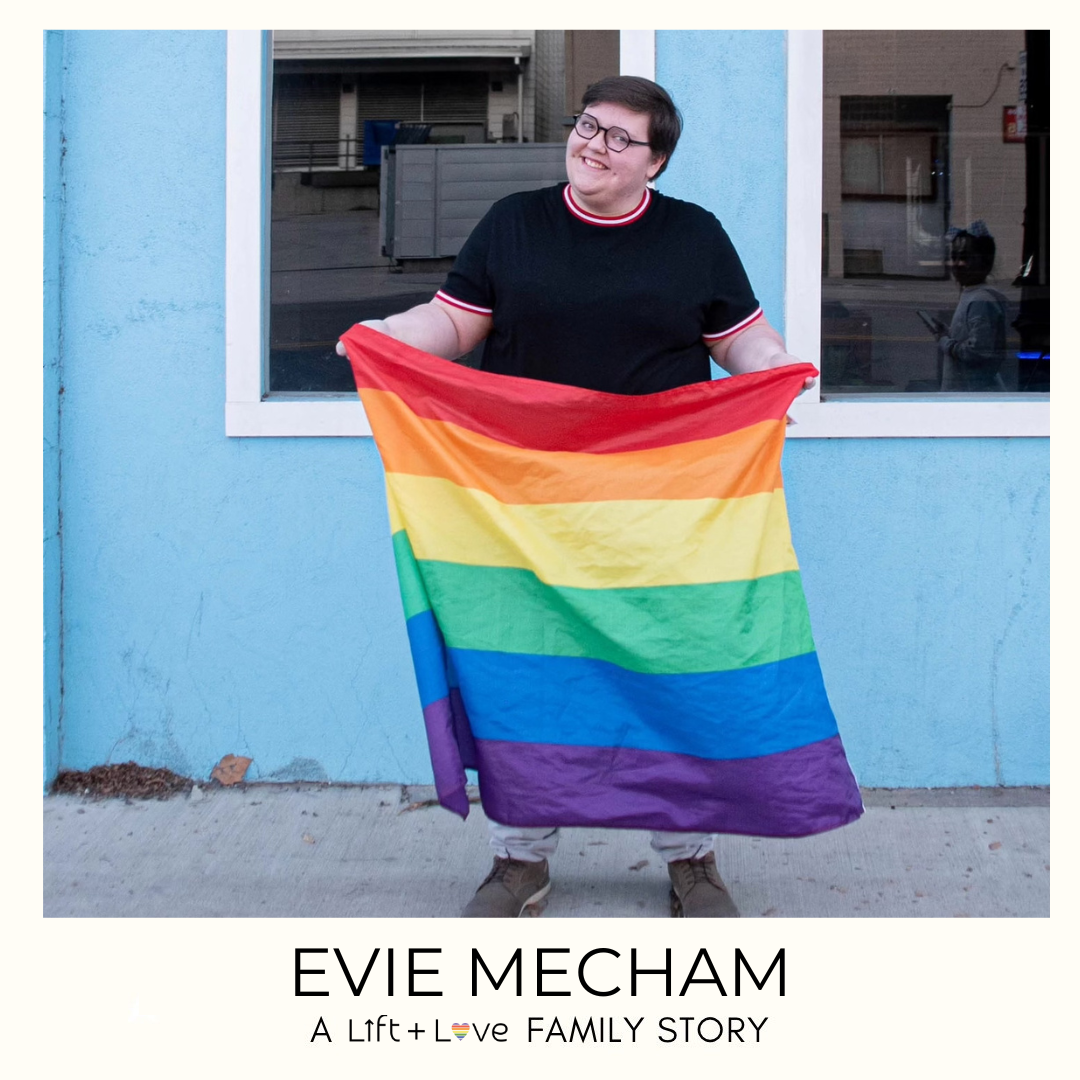
A couple years later, their youngest child Echo (12 at the time, they/them) came out through a letter, letting their parents know they were a lesbian and hoped their parents could still love them. Terri showed the letter to Dan, who called Echo in. Both Terri and Dan thanked Echo for sharing that information. Since, Echo has told them they’re nonbinary, gender fluid and wanted a name change, though they don’t bristle when often still referred to by their name at birth, Evie. Sonia has also since come out as bisexual.
The frequent overlap of the neurodivergent and LGBTQ+ community has been something Terri has discovered to be quite common in her current masters’ studies to be a counselor. During Covid, she felt impressed to finish her bachelor’s degree, and now her graduate studies have led to an internship over the past several months with a practice in town called Neurodiverse Counseling. She says, “It’s been great to embrace more of that community. One’s heart opens to individual’s strengths and uniqueness, learning how a brain functions, and the beauty that comes with it. I’ve adopted an affirming rather than deficit-based perspective. It’s really helped me to love people.” After raising so many kids who struggled to find the therapists and support structures they needed, and seeing there’s not a lot out there in this space of overlap, Terri is eager to now become part of the solution.
Dan and Terri are long time owners of Pratt’s Pet Stores, owning several shops in their area. Dan also spent many years teaching early morning seminary. At the time, he was already undergoing a faith expansion journey, and as he’d read the assigned lessons, he often felt like a school teacher with a pen, mentally drawing red lines that he felt were too fear-based or not as loving as they should be for his young class. “There wasn’t the Jesus in it I’d hope for.” He adopted a class motto, “Haters gonna hate, but we ain't haters.” While he hadn’t yet become aware of his call as a father of LGBTQ+ kids, he was already struggling with a lesson on the Family Proclamation, one he was later glad he had softened, as a girl from his class later came out. Along with her family, she has attended the ally group, Love Without Asterisks, that Terri and Dan started with two other couples in their area.
This group formed after a particularly painful fifth Sunday school lesson on LGBTQ+ in their ward that seemed to focus more on maintaining the comfort of the general membership rather than the inclusion of the LGBTQ+ community. A local career seminary teacher, Clare Dalton, was invited in to be the special guest speaker but only was given a few minutes to speak about being a gay woman before the rest of the class shifted tones. It became so hurtful that Terri and her youngest child left early, but they had invited Clare to join them at their home afterward for lunch. Comforting them, Clare said, “Let’s have our own meeting.” Clare returned the next month to join the Pratts and a few close friends, and that began their monthly ally nights, which the Pratts say have been “such a blessing.”
The Pratts have had to carve out safe spaces for their children, and maintain boundaries. They have prioritized their spiritual focus on teachings that allow people to truly love and care for others. Terri says, “It’s beautiful to build a place where you can be whoever you are, wherever you are, and share that with others. It’s different than Sunday School, where you have to edit yourself to fit in. Our ally nights are a beautiful example of Zion, of expanding the tent to see how we can all fit. And it’s positive for our children to see that they can keep spirituality and God in their life, no matter what their relationship to the church might be. They’re each on individual journeys with that.”
After the recent transgender and nonbinary policy changes, Terri got a call from a good friend who was devastated. She said, “How do you stay and manage all of this?” Terri explained how their primary engagement is no longer serving the church as it used to be. While they attend sacrament meetings, Dan and Terri do not often participate in second hour nor currently hold callings. Instead, they focus on hosting their ally nights, and most recently found much joy and community in being on the committee for the youth program at Gather. The Pratts also love hosting many neurodivergent and LGBTQ+ friends of Amelia and Echo (who are gender fluid) at their house. They’ve witnessed how one of her AMAB friends is only able to express her gender identity in their home through dress and using she/her pronouns. Witnessing this young adult’s joy has expanded Terri’s. She says, “We are able to engage in different ways that feed our soul rather than suck it, which has been vital to our growth.” When the new policy came out, the Pratts had a moment of reckoning in which they realized, “They’re talking about our children, whatever wording they choose.” Terri laments, “I’m so glad they don’t attend church. It’s kinda sad, but that’s how I feel. Dan and I have to empower ourselves to 'stay in' in a way that’s healthy for us.”
Dan says, “In our home, I feel so much more love and acceptance for all my children as I redefine what’s an expectation versus acceptance. I’m always in awe when we get together now about how awesome it is as a father to not have to feel, ‘Are they on the right track?’ – always worried about how to fit in the box, and make corrections, but rather to let go of a lot of that and find out who they are and what they’re interested in or what makes them tick. I can see how glorious each of them are as they go through their journeys. And when they do ask questions about life, it’s all so authentically real in the way it happens.” Terri agrees that where they are now is so different than a decade ago in their relationships with their kids. She says, “They know we love and respect their journey as their own, and it doesn’t have to look like ours.” She explains that a lot of her children have been through hard things, “which may be seen as ‘hard choices,’ but they know they’re allowed to make mistakes and learn from them.”
Dan appreciates how he wouldn’t be where he is if “I was worried about empty chairs – or are we all going to make it to the celestial kingdom with its checkboxes and expectations? I’m not worried about a future of being ‘eternally happy.’ We have the present acceptance and love to bind us and help us through.”
ANONYMOUS
M* drives across state lines to seek the healthcare for her preteen daughter that has improved her sense of well-being. She tells very few people where she is going, as few seem to understand. But a nearby state allows a puberty blocker shot that’s recently been banned for minors under 18 in M’s home state. It’s a shot that has been widely given without major concerns for decades to patients with early onset puberty, until the politicking of the trans community dominated airwaves and stigmatized it as “unsafe.” It’s a shot that can help prevent the further need for medication for trans individuals if timed right, which is why the trans-affirming medical community prioritizes its use in younger patients on the verge of puberty. But this process requires a parent and a medical team to trust the intuition and identity of a patient who is still a child.
M does trust her daughter to know herself better than anyone, describing her as an intelligent and fun-loving home schooled young tween who has “read all the things,” says M. “I know she doesn’t know everything, but she knows a lot more than I do.”
Healthcare. Safety. Well-being. They are the basic human needs most parents desire for their children. But when a child comes out as transgender, the method of how best to pursue each ideal can vary drastically between parents, often creating unease at home. Societal pressures can isolate children and families who don’t fit the binary norms of a classroom or bathroom, further exacerbating isolation. State legislation can dictate what is allowed in the doctor’s office, resulting in mental duress. These are the common realities for families of trans kids, and when a child comes out at an especially young age, the collateral fears can drive the child or family right back into the closet.
As M views the best path forward for her daughter differently than her social circle, church community, and state legislature does, she is only out anonymously, as the creator of the Instagram account, @mama_trans_kid_in_the_closet. The community she has built on this account, as well as her Mama Dragons network, have served as a salve for M, who has appreciated having public forums to discuss social transitions, hormone replacement therapy, puberty blockers, and bathroom bills. They are topics she once knew nothing about, but her network and a helpful book, The Transgender Child: A Handbook for Parents and Professionals Supporting Transgender and Nonbinary Children by Stephanie Brill and Rachel Pepper, have contributed to her new vocabulary and understanding. They have also been able to get acquainted with adult trans women, who offer hope for what can be.
A self-described “Molly Mormon,” M’s advocacy for her children surprises even herself. But she’s grateful for the 2020 impression she had to study LGBTQ+ issues, coupled with Elder Ballard’s oft-quoted nudge for LDS members to learn more about the experiences of LGBTQ+ people. Feeling compelled to do a deep dive into something she had never thoughtfully considered, M picked up Charlie Bird’s book, Without the Mask, at Deseret Book, feeling it might be a “safe” source, then Ben Schilaty’s, A Walk in My Shoes, and began listening to their podcast, “Questions from the Closet.” More podcasts, including “Listen, Learn and Love,” helped her begin to consider what life is like for an LGBTQ+ member of the church.
After reading past church teachings and some messages about queer people delivered over pulpits that were “really tough to swallow,” M began to understand why people in this community were misunderstood. Still, when her daughter came out as trans, it was “super shocking” for M and her husband. “I had heard about trans kids knowing about their identity from a young age—always dressing up as princesses or pirates. But ours was typically into boy things. Even now, besides growing out her hair, she hasn’t expressed a strong interest in make-up or dressing in a feminine way often. Though she has yet to come out publicly.” She came out to her mom via a phone message exchange, sharing she had been feeling confused for some time, like she didn’t know what was going on. And then she said a prayer and had a moment of clarity as a thought entered her head: “I’m trans.” M says her child described suddenly feeling good about that, like God was telling her, “Yep, that’s it.” She felt excited to tell her mom then, having felt some peace about who she was. M says this was at first very hard for her to grasp. Like all their kids, this child was named after a beloved relative, so honoring the name and pronoun transition took some time for M. While navigating this new reality, shortly after, one of M’s older children came out as bisexual.
M feels grateful her kids have had each other’s support and are close, as they have lost friends over people saying disparaging things about LGBTQ. While she and her husband still attend, the church has been a tricky place for some members of the family. When one of her older kids was asked about their plans to serve a mission, their response was, “I don’t see how I can tell people to go join a church where people like my siblings won’t be treated the same as everyone else. It doesn’t feel right.” M’s bisexual child doesn’t feel like they fit in, but says they’d return overnight for the social structure, if the church changed their LGBTQ+ policies.
Bi-erasure is also a new vocabulary word for M. “One of the hardest things with the church is that the teachings on marriage and family are all clearly directed for someone to choose a male or female—the opposite gender—and do what’s expected of them… People assume you can just choose the more simple path, making it much harder for you if you don’t. Also, you’re in between two spaces, making you feel like you don’t fit or are forgotten.” M says when she goes to the temple she can’t help but notice all the binary division, and considers if her trans daughter could ever feel comfortable in church spaces. “Like if she did come to church, would they let her go to Young Women’s? I have so many questions. She doesn’t go, so it’s not an issue.” M’s trans child is only out to her immediate family members and a few others.
M says her kids don’t speak out against her church involvement, but she has explained to them, “I’m not going to church because I support everything they say, but because it’s what feels right, right now. I’d like to help create change. I don’t want to leave, but sometimes I feel so tired.” As someone who naturally wants to talk through her current struggles, M says, “It’s hard when you have a kid in the closet. You want to talk about it, but can’t when they’re not out.” So for now, she speaks out from a closet of her own. And she reminds people that this is a topic that affects everyone. “If you think you don’thave an LGBTQ person in the family, the chances are very slim you don’t. They have always been here; there is just now more vocabulary to be understood and people feeling safe to come out.”
M continues, “It can never be said enough: we parents of LGBTQ kids know our kids, and for those of us who’ve grown up in the church, this is me following inspiration and following my God who wants me to support my child. That’s probably the most hurtful thing I hear people say—that you’ve got to be careful to ‘not be deceived,’ like you don’t know the gospel, when it’s all you’ve known for your whole life.”
(M* = to protect her children’s safety and well-being, M has elected to remain anonymous)
THE GEARHART FAMILY
On Sundays, Jolene Gearhart of Colorado Springs is typically on call for a job that demands she sit with people undergoing unspeakable trauma..
(Content warning: references to the Club Q+ mass shooting and advocacy for victims of sexual assault and violence)
On Sundays, Jolene Gearhart of Colorado Springs is typically on call for a job that demands she sit with people undergoing unspeakable trauma—people who have found themselves suffering not in a church foyer, but in an emergency room or shelter or police car. As a volunteer victims’ advocate, it is Jolene’s duty to hold the hand of those who are often experiencing their very worst day—assuming they let her. As many of Jolene’s clients have just been rescued from domestic violence or sexual assault, physical touch is often the last thing they want. But Jolene makes it her mission to at least seek a moment where she can look them in the eye long enough to say, “This is hard work, but you are worth it. You deserve freedom, happiness, safety.” Jolene believes, “I can’t change the world, but I can try to give people hope.”
Last November, Jolene was called onto the scene of a horrific tragedy that hit too close to home. There had been a mass shooting at Colorado Springs’ only LGBTQ+ nightspot, Club Q, the night before Transgender Awareness Day. Three emergency rooms were swarming with people hoping to identify their loved ones on the lists of survivors. Jolene steeled herself to provide support to numerous families asking the toughest of questions. One family was unsure how to answer whether they were looking for a Jane Doe or a John Doe as their child identified as transgender—which ended up being an important distinguishing marker that night. Unfortunately, that family, along with four others, received the worst news—among the 24 injured by gunfire, their loved ones would not be coming home. It was a long week for Jolene as she worked alongside the care staff, hoping to do whatever she could to help her community heal. As a victims’ advocate, and the mother of an LGBTQ+ child, Jolene was uniquely qualified to serve in that unpleasant space—a role she says has only brought her closer to her Savior.
The Jolene Gearhart of six years ago might not recognize who she is today—an evolved figure of strength who works as an ally and advocate in spaces she once found foreign and uncomfortable. But when she looks back on all she’s learned since her oldest daughter came out, Jolene recognizes how far one can come to inhabit a space of love that also demands action. Just as she serves as a victims’ advocate, Jolene has taken it upon herself to speak out about how we can better love and serve the LGBTQ+ community--something she says she initially struggled to do, having been raised in an extremely by-the-book, LDS family.
Jolene and Thomas Gearhart’s oldest daughter, Alli (almost 24), broke the expectations of her conservative upbringing by choosing to not attend a church school after high school. Instead, she flew over Utah and further west to Laguna Beach, California, where she enrolled in the Laguna College of Art and Design. While Thomas was supportive of whatever school Alli chose, Jolene was anxious about who she might be surrounded by while taking comfort that at least, she’d have relatives nearby. Alli’s parents said they were thrilled to see her seemingly thriving in college. They were much less thrilled when Alli called them during spring break of her freshman year to tell her parents, “I think I’m bi.” (Alli now identifies as lesbian.) Jolene says Thomas was very calm about it, but that she “cried and cried; I spent a week in bed. I definitely said some things I wish I hadn’t—I know so much more now.”
Jolene spent those initial moments reflecting on her daughter’s high school years—chalking up her lack of dating interest to the fact there were few LDS options, and anything else would defy Alli’s strict “only date LDS members” upbringing. But Jolene considered how Alli also hadn’t seem very interested in church dances, or girls’ camp. Her mother had always figured that was because she was a little more introverted. Now, this same daughter was telling them she’d seen a movie she really identified with that had helped her come to terms with her orientation.
Jolene says, “I felt like I was grieving like a kid had died. It was hard for me to navigate.” Alli had told her siblings (Claire—now 21 and married to Brandyn, Ainsley—20, and Rainier—15) her news six months prior to telling her parents, and the kids all reacted well and were supportive of Alli, though they were upset at the tumultuous homelife they experienced navigating their parents’ emotions at the time. But her siblings were the first to say they’d understand if Alli left the church if it caused too much pain. Jolene says, “We asked dumb questions about LGBTQ issues, and wondered if her coming out might be because she was hanging out with other LGBTQ people—myths we had trained ourselves to believe to get away from accepting the community.” But as their new reality settled in, Jolene decided she needed to learn a little more, and began to look for resources. She says she remembers feeling like “a dirty kid” buying Richard Ostler’s book, Listen, Learn and Love. But as she read it, something sank in—the feeling that Ostler’s approach of listening, learning, and loving made common sense. Now it’s a book she recommends wholeheartedly and often.
When she asked her daughter why she didn’t say something sooner, Alli told her that due to the faith in which she’d been raised, it was all so off their radar, she never even thought she could know or explore something different than a heterosexual relationship. This is why Jolene tries to be an outspoken ally now and openly tell their story so hopefully, other LGBTQ+ kids will be able to learn and grow and process this part of them in their homes, under their parents’ tutelages, and not “after they’ve moved 800 miles away. Why are we sending kids out into the world to figure these things out? Adulthood is hard enough. I would have loved to have Alli by my side, and not having to figure this out on her own.” Jolene appreciates that in her former ward, there was a gay young man who the bishop took under his wing and designated as a quorum leader, embracing his authenticity. It’s sad to her Alli didn’t have a similar experience.
After facing a few tough years, Jolene is so proud that Alli has since graduated from college and is now working a “grown up job and can pay all her bills and live on her own. I never thought I’d be so thrilled to have a kid working, but I am. I love that she’s happy and busy working.” Alli tried to attend the singles ward near her college for a few months, but after a particularly painful talk on the Family Proclamation “broke her,” she ran out of the building crying and hasn’t been back since. Jolene says she’s fine with this now, but it saddens her how Alli’s at times struggled alone in California to figure things out. While shunning the idea of a loving God and sometimes struggling to share the interests of her family, Alli has joked she’s the “black sheep” of the family, having developed an affinity for crystals, tattoos, and is independently spiritual. Jolene says, “To me, to not believe in a Savior and Redeemer in life is heart-shattering and I worry. But she has a good head on her shoulders.”
Jolene says that now that Alli’s out of the church, she still recalls how “we judge people and what we think of people like her. Alli rightfully still fears that people discount what she has to say because she presumably ‘is following Satan.’ Alli grew up in it and says she values it, though it’s not for her.” Alli had always maintained a close relationship with her sister Ainsley, but things became a little awkward when Ainsley prepared to leave to serve an LDS mission to Mongolia in June of 2021. Jolene also felt a “ton of anxiety and conflicting feelings about Ainsley going. I’ve questioned why I’m sending a daughter out—though it was her choice—to preach and share the gospel when we now have very conflicting ideas? We say one thing and do another.”
Jolene found much comfort, though, and “felt seen by God” when Ainsley was called to a nametag-free mission to Mongolia where, rather than a proselytizing one, her mission emphasizes Christlike love through service. Ainsley is currently teaching English to kids and can only “missionary” if someone asks. Ainsley spends a couple hours each P-day on Facebook messenger with her mom and sisters, a time the women cherish. But church-centered experiences like these can still be hard for Alli—like when Claire recently got married in the temple and she had to wait outside. Jolene is very grateful more couples like Claire and Brandyn now prioritize civil wedding ceremonies in addition to temple services that can feel exclusive. She loves how both Alli and their son (who was 12 at the time) got to stand up and watch their sister exchange vows.
Claiming she “wears my emotions on my sleeve,” Jolene has found much comfort in talking with other mothers in this space about the best ways to support their LGBTQ kiddos. In the beginning of her journey, she frequented the Lift & Love online support meetings and still regularly recommends them to other friends and most recently a family member so they can join in community with others from across the nation and “be honest about how we’re feeling. In this space, we can find our way, preserve our authenticity, stay in our religion if we choose, and really help educate others so our kids can be who they are.” Jolene also reveres an experience she had visiting the St. George Encircle house with friends on a rainbow moms retreat and feels church should be more like that—a place where people can “be honest about who they are, bear each other’s burdens, and mourn with those who mourn. You can skip over the fluff and really connect on a deeper level in this space. People respond so much more to real experiences.”
Jolene has seen how being Alli’s mom has brought her much closer to the Savior and what really matters to her, which no longer includes the do’s and don’ts of shame-inducing outward behaviors like “overemphasizing dressing modestly and whether or not you smoke or drink coffee or tea”—practices that may just be a part of one’s upbringing or culture, and policies she has observed that in her past serving as a Relief Society president have led friends she’s deeply admired away from a church that should have been there to embrace and love them fully. “What kills me is we’re denying good people temple blessings because they smoke.”
While continuing to volunteer as a victims’ advocate, Jolene is concurrently working to become a Licensed Clinical Social Worker. After learning she could study religious trauma and work as a therapist on a sliding pay scale so all could afford her services at places like Encircle, she resolved, “This is one thing I can do to help out in this space.” Jolene recently worked with a beautiful young woman Alli’s age who is an unhoused drug addict who’d lost custody of her young daughter. When Jolene handed the young woman a blanket, the woman looked at her and said, “You’re weirding me out because you’re being so nice to me.” Jolene says the woman had been raised on the streets and “couldn’t take an ounce of kindness.” Jolene realized that, for so many in privileged circumstances with support systems, how “blessed and ignorant we can be as to what’s really going on out there. Functioning people with healthy families are the minority.” Jolene says, “Both in respect to my job and institutions like church, I often wonder, how many do we exclude because they don’t meet our criteria? They don’t talk like us or do what we want them to, so we push them away. We can’t change the world, but I can try to give people hope and bring them in.”
Jolene often thinks of how her daughter must feel, being pushed out of a system that has no place for her. It’s a similar feeling to when she holds the hands of some of the victims she works with when authorities come in and force them to “answer ridiculous questions” as part of their investigation, shortly after a survivor has suffered assault. Jolene says, “The Savior wants us all to be victims’ advocates. We may not all have huge traumas, and I hope we don’t; but the Savior is there for all. He wants us to be there for each other.”
THE AUSTON FAMILY STORY
Darice and husband Darryl lead with love, and prioritize making their home a safe space for their girls (Bazel—20, Scout—17, Harper—15, and Sawyer—11) and all who enter there. With a professional background in communications and PR, Darice delights in connecting with people. When it comes to her passion of creating affirming environments for kids like her own, Darice is a pioneer armed with resources and personal experience, who works diligently to make her area of Colorado a more inclusive space.
We are thrilled to introduce Darice Auston as our new Lift & Love Family Stories Coordinator and we are excited for her to share her story with us.
Darice and husband Darryl lead with love, and prioritize making their home a safe space for their girls (Bazel—20, Scout—17, Harper—15, and Sawyer—11) and all who enter there. With a professional background in communications and PR, Darice delights in connecting with people. When it comes to her passion of creating affirming environments for kids like her own, Darice is a pioneer armed with resources and personal experience, who works diligently to make her area of Colorado a more inclusive space.
In middle school, Darice and Darryl observed that Bazel gravitated toward an LGBTQ friend group. They let Bazel know, “Hey, if you’re afraid to tell us this is where you belong, don’t be. We completely love and support you.” Bazel assured them this was just her friend group, not her identity. It wasn’t until after high school graduation that Bazel told her parents she was bi, which Darice says she understands can often be considered a “gateway identity,” for kids to test the waters. At this same time, in May of 2021, Darice was called to be her stake’s Relief Society president, which she feels was no coincidence. “It felt very much like God’s timing--that there are others also on this journey who need me to advocate for them through my service in this capacity. I felt such a strong call to reach out to those on the edge and champion belonging.”
That October, Darice and Darryl got a text from Bazel saying, “I’m trans and I want to go by she/her pronouns.” They were shocked. Darice says, “I was a very vocal ally—in and out of the church and on social media, but I felt we had a lot of work to do. For me, it took a huge leap as working with gender identity is a different ballgame than just attraction. There were a lot of questions I hadn’t thought to ask.”
Darice has always relied on her husband to help process things and feels grateful they are generally always on the same page. The evening of Bazel’s text, she and Darryl laid side by side, staring at the ceiling and thinking, “How did we not see this?” She says, “It never crossed our minds not to affirm our child. Acknowledging the complexities our child would face and how best to address them became our first priority.” As Bazel was away at college, they were grateful for the grace period they had to process this information together before welcoming Bazel home from college. It gave them time to get up to speed about how to affirm their trans child.
Especially with the current climate of hate toward the trans community, they worried about Bazel’s safety and how she would be accepted by her peers and by their friends and family. They never tried to talk her out of it, but instead accepted her pronoun and eventual name change. Bazel was no longer participating in church, which made things easier in that they weren’t having to navigate the youth program with a trans child. They did, however, take their time sharing with family members and friends. To their relief, both sides of their families have been incredibly loving and inclusive of Bazel and her partner. And although some friends have shied away since this change, others have stepped in, eager to show love and support not only to their daughter but also to Darice and Darryl as parents.
Bazel chose to come home after a semester at school. Although her time there was brief, it turned out to be fruitful because it was there she met her partner Bugs (they/them), who Darice says is a perfect fit and welcome addition to their family. Darice says, “It’s been amazing to have these two in our lives, teaching us about loving others and loving oneself.” In a recent family discussion, they observed that being trans can be a way of honoring your body—helping it become something you love rather than something you hate.
Through experience, Darice knows that parents of LGBTQ kids go through all sorts of emotions when a child comes out, including grief as you mourn the child it feels like you’ve known and lost, “but it’s not the kind of grief people bring you a casserole for.” Darice found this to be true—although friends were loving and supportive, many just didn’t know what to say. She doesn’t fault anyone for that. Darice just does not yet feel like we’ve have developed a good vocabulary for responding to news that someone has come out. She says the best reaction her family received when she shared Bazel’s news was when someone replied with how much love they had for her child and for their family. Darice also appreciates when people felt comfortable asking about pronouns and name changes, signaling they love and respect her child enough to honor these changes. Darice says that hearing how friends express how they admire the Auston’s advocacy and acceptance of their child’s choices has meant more than she thinks people know.
Darice has spent countless hours in discussions with local church leaders on the topic of LGBTQ inclusion and creating safe spaces. She’s found it is evident that many still feel uncomfortable talking about this subject. In hopes of demystifying the subject and signaling to anyone that they are welcome in her congregations, Darice wears a rainbow pin to church every Sunday. In talks and lessons, she’s shared openly about the complexity of having an LGBTQ child and although that has upset some, for others it has signaled a move away from shame and harmful rhetoric they unfortunately hear sometimes in church settings. Taking what is sometimes considered a “taboo” topic and normalizing discussion of it has been a focus of hers during this journey. Darice hopes to always advocate for belonging and reaching out to the marginalized.
But the lack of church-supported resources for LGBTQ families has been a source of concern for Darice. She’s observed, “In the church, we offer a lot of support for families and individuals impacted by addiction, but when it comes to support for LGBTQ families, there is nothing (not to equate the two, except to show the contrast in church-run support). In the absence of church resources, we do our own work and build our own communities.”
Together, Darice and her friend, Carey Baldwin, formed the support group Rainbow COnnection to kick off Colorado-based inclusion events. Their inaugural speaker was Dr. Ben Schilaty, who traveled from Provo to speak this summer. The event was successful, with a large turnout. Darice says, “Anyone who attended was so moved by Ben’s words and his spirit. You can’t listen to him and not feel uplifted.” Many in attendance, both LGBTQ individuals and their family members, shared how they are suffering in silence, desperate for support from their church community. Darice sees the lack of resources as an opportunity to grow as a faith community and advocates for better training for leaders and members to feel comfortable showing love to all.
Darice says this year’s Come Follow Me studies in the New Testament have been eye-opening. “As I study Christ’s ministry, the parallels between the work of inclusion and Christ reaching out to the marginalized are everywhere. I also can’t unsee the parallels of leaders both then and now focusing on ‘the law’ over love of ‘the one.’ Having a trans child has brought a new perspective to gospel teachings that has been expansive and beautiful. I’m thankful for the faith expansion I’ve experienced on this journey. I love the people I’ve meet while doing the work of advocacy and inclusion. Creating connections with people is my love language.”
Darice is “encouraged by the progress we are making as a faith community and anxious to accomplish more in building God’s kingdom—one that reflects the divinely-designed diversity that is united (not uniform) in our Savior Jesus Christ.”
(For any willing to share their family story, reach out to @dariceauston or email darice@liftandlove.org)
BLAIRE OSTLER
As a ninth-generation descendant of Mormon pioneer stock, notable author and philosopher Blaire Ostler says, “For me, Mormonism is not just a religion, but part of my culture and identity--it’s almost an ethnicity. It’s how I think and see the world. I joke I couldn’t not be Mormon, even if I didn’t want to be—even my rejection of some parts of it is so Mormon.” Equally, Blaire is bisexual and intersex and identifies as queer, saying, “That’s also always been a part of me; it’s how I see the world and navigate life.” Her landmark book, Queer Mormon Theology (published in ’21 by By Common Consent Press), chronicles the juxtaposition of these unique traits that cast people like her in the margins of most circles. But while Blaire was told these two identities couldn’t coexist together, she absolutely knew both existed inside of her. “As one can imagine, having a conflicting view of self can tear at you.”
A self-described “military brat,” Blaire grew up attending LDS wards with anywhere from 15-600 congregants, in meetinghouses from Korea to California. Having this wide exposure to “church,” she saw how it means different things to different people. Outside of Utah, she saw the church as the built-in community you find wherever you go. It was about ensuring everyone has access to food, healthcare, language—basic needs. “That was more important than some of the cultural debris that gets mingled with the gospel. For us, the gospel was ‘Love your neighbor; take care of each other’.” She was also raised by a Catholic mother who converted to the LDS faith—somewhat of a universalist who held there is more than one way to find God. Blaire was given tools to deconstruct—a process that for her began around 14.
At this time, she was coming to grips with the fact that she was biologically queer with intersex characteristics, and also bisexual, experiencing sexual attraction and desire towards a diversity of genders. “It’s difficult to overstate how much it messes with your brain to be taught two conflicting messages about yourself as a Mormon woman, that: 1) your most important goal is to have a temple marriage and raise babies to go with you to the celestial kingdom, and 2) queer people destroy families, are promiscuous, die of AIDS, and corrupt society.” Blaire’s most difficult struggle was to get past this engrained dichotomy of being told “You’re supposed to do this,” but “As a queer person, you will fail at it.”
Blaire, who is now on the editorial board at Dialogue, wound up at BYU Provo where she met her husband of 20 years, Drew. After many moves and jobs, they now again call Provo, Utah home--the Y mountain just outside their doorstep. Blaire jokes her 20s were spent either pregnant, in an operating room, or a hospital–having and nursing babies, and having surgeries that would allow her to do so as an intersex person. “It was a decade of trying to be the ideal version of a Mormon woman in every imaginable capacity—from the way I looked, sounded, functioned, existed. It will burn you out—you can only do it for so long.” Blaire and Drew ultimately had three children, now ages 15, 13, and 10.
In her words, she spent her 30s in a therapist’s office, trying to heal “from all the chaos of trying to fit a narrative that my body—my biology—was not made to create babies. It was a dangerous activity.” She says, “I was convinced I had to prove myself by doing these things, not even caring if I lived or died. That was obviously a low point.” After passing out on the operating room table after having her third child, Blaire chose to get sterilized for her own safety. Her 30s afforded her time to heal her body from the surgeries, her heart from the spiritual trauma, and her mind from the things she’d been told about her purpose. It was during that process that she decided to write her book.
Per Blaire’s educational background, philosophy plus religion equals theology. Via this contextual podium, Blaire ventured into a possibility space where she could be both queer and Mormon? “Queer” is an intentional word for Blaire, who both supports the reclaiming of the word as one with positive connotation (as demonstrated by Queer Nation since 1990), and recognizes how, in its blanket simplicity, it affords many the privacy and legitimacy they seek in a world that sometimes requires labels to consider and afford equitable rights. She also recognizes it as a word similar to “peculiar,” which has likewise been lauded in Mormon philosophy to be a good thing. Further, Blaire reclaims and esteems “Mormon” as a positive term, citing its inclusion in scripture. Her book provocatively explores the inherent coexistence of what it means to be queer, peculiar, and Mormon, and invites the reader to see things that are hidden in plain sight.
Further propelling her quest to upend presuppositions is her role as a mother of three, with Blaire youngest also identifying as queer. “It’s interesting because as a queer parent, my daughter was essentially raised at a Pride parade. We assumed she was simply reflecting what she saw. But over time, it became apparent that this was her. I have a beautiful, queer, 10-year-old child.” But this made things different, regarding church. Blaire found herself becoming protective and concerned with what her Primary-aged daughter might be exposed to. “It’s one thing to roll the dice with yourself; it’s another to do it with your child.” Blaire’s family has taken a calculated approach to their church activity, choosing to support this activity or class or speaker, but perhaps not show up for those deemed riskier. “I didn’t want her to grow up being taught that she was anything other than a beautiful child of God—and strangely enough, she might be taught otherwise at church.” In this Ostler household (no close relation to Richard Ostler’s), there are a variety of faith transitions going on, and Blaire presumes each may land at different spots as they have varied perspectives on Mormonism, church, and God. But “at the end of the day, Mormonism means family. We all agree to take care of each other, and if we do that, then we did our job… This isn’t necessarily a rejection of the church, but a manifestation of our most sincerely held beliefs.” She explains it as the orthopraxy of her orthodoxy and acknowledges that while some may not understand, Blaire views her best perch as one that respects people where they are.
“The thing I learned from Mormonism and how I was raised is that life was about creating eternal families. At the end of the day, when the church is in conflict with my eternal family, I err on the side of family.” She continues, “The church was started by a man desperately trying to connect families and relationships through sealings. When I pick my family, I’m picking Mormonism, by not letting an institution come before my family. Strangely, some conflate the institution with their beliefs. I see the Church more as like a ship, and Mormonism is the people on the ship working together. But some on that ship (the institution) want to throw the queer people overboard, and if people are getting thrown off the boat, I’m going with them--the least of them. Guess who else did that? Jesus. He went with those who were cast out and left behind. The gospel is so much more than just a ship, even though a ship is useful.”
Blaire feels that even her presence causes some cognitive dissonance for others. “Because what I say is steeped in gospel and scriptures, sometimes people have a hard time coming to grips with it. It’s a view of the scriptures that most aren’t accustomed to.” But she honors religious plurality as found in universal concepts like the Golden Rule. “I feel like we need to take it to the next level in Mormonism and recognize when something on the ship isn’t working. We’re a religion of ‘Is this working?’ And if not, we honor change through ongoing revelation. The monolithic narrative of hetero supremacy isn’t working as so many family structures look different,” she says, addressing the single parent, divorced, widowed, polygamous, adoptive, and never married members now casting the nuclear or “traditional” family as a new minority. “We need to recognize our faith community as much bigger than we thought. We’ll be stronger for our diversity and inclusion. Imagine all the beautiful queer youth, queer missionaries, and rising young adults we’re losing because we looked at their queer gifts and said, ‘No, we don’t want your unique contributions.’ We are missing out.”
Referencing the body of Christ as found in Corinthians, Blaire explains, “We were never meant to be the same. Sometimes we look at our differences as a place of conflict rather than beauty and opportunity. If one’s good at writing and one good at building, wow, what a great opportunity that is to help each other! Is the body of Christ all hands or feet? No, we have different parts that work together cohesively. But we’re afraid, and sometimes we look the other way because we don’t want to see the parts of the body of Christ that are suffering. However, by recognizing suffering and mourning with those that mourn, we take the first step to making things better.” Acknowledging those deficiencies, like when the church changed its priesthood and temple exclusion policies and started the perpetual education fund to further restore equity, brings Blaire hope for further change. “Imagine the powerhouse the church could be if all members were ordained to the priesthood instead of half. Or if we didn’t push out 5%+ for being queer; imagine how much stronger we’d be. When we cut people off for insignificant differences like race, gender, or orientation, we’re undermining ourselves.” She recognizes this awareness is needed outside of the church, as well, especially now as people along the LGBTQIA+ spectrum face a litany of hostile legislation and infighting even in the secular community.
While she considers the gospel of Jesus Christ as her personal guiding faith practice, Blaire says she honors each individual’s ability to choose their own healthy path. “If a queer person is happier in a hetero marriage sealed in temple, or if another no longer affiliates with the church because it’s psychologically traumatizing, I support both. You have to go where your basic needs are being met, and you get to decide what that looks like—especially queer people. I have a hard time believing our Heavenly Parents don’t want our queer kids safe more than anything – I can’t imagine any loving parent thinking that, let alone a godly parent. We need to support each queer person wherever they land.” She has reframed her paradigm of God and now considers the concept of God to be a big heavenly family where all are connected. “God isn’t he, or she, God is they—God is all of us in one big eternal family… When we honor our families, we’re honoring God and the greater heavenly family we’re all a part of. Sometimes we think of God as a monster who wants to punish and harm us…I think we limit God’s compassion through our own imagination. I believe in a God that is more compassionate, loving, and benevolent than we could possibly imagine.” Blaire says as a parent herself, she views her role as “a heavenly parent in-training, trying my best to care for my children. Will I send them to a room, activity, or meeting that’s harming them and causing panic attacks? No, I’d rather say, ‘You are that you might have joy.’ This is what we’re doing as a family—prototyping a heavenly family. We stick together; we don’t kick people out on account of our differences.”
Of her faith practice, Blaire especially loves taking the sacrament as it symbolizes the “breaking of bread with my people, especially when we disagree. That’s when we need it the most.” She continues, “We’re all members of the body of Christ and this equates our commitment to each other and to adhering to His gospel.” Again, she is taken back to meeting the primal needs she identified in childhood: does everyone have food? Housing? Care? Health? “That is what Jesus did. Here, our basic needs are met.”
“In Primary, we are taught to love one another. Loving one another is how we find our way home,” says Blaire. “Our queer mantra is ‘Love wins.’ And I truly believe that. Love wins. Or in other words, charity never faileth.”
**If you would like to learn more about the intersex population and what it means to identify as genderqueer, Blaire recommends the books Sex and Gender: Biology in a Social World by Anne Fausto-Sterling and Evolution’s Rainbow: Diversity, Gender and Sexuality in Nature and People by Joan Roughgarden. Blaire’s book, Queer Mormon Theology, is available on Amazon and Audible.
THE ERVIN FAMILY
Every month, parents of transgender and nonbinary kids can join a Lift and Love online support circle facilitated by Anita Ervin of Canal Winchester, Ohio. It’s a topic with which she is very familiar. When Oliver—22, and Rome—19, the oldest of her four children, are both home together, the Ervin house is noticeably louder and filled with laughter. While the two say they fought sharing a room as children, they now share an inextricable bond. Rome credits Oliver for making their coming out journey much easier at age 16. Anita admits Oliver put them all through a learning curve when he first identified as queer in 2018. Rome says, “Oliver got the messy; I got the ‘all good’.”
In summer 2018 at age 18, Oliver came home from BYU-Idaho and told their parents he identified as pansexual. This first happened in a car conversation with his mom in which Oliver asked if he would ever be kicked out of the house. When Anita passed the turnoff to their neighborhood and kept driving, Oliver was startled and feared he was about to be dropped off for good anywhere but home. But instead, Anita drove to a nearby park where they could have what turned out to be a complex conversation in peace. Anita assured Oliver that she would never kick him out unless it was something for his own good, not for his orientation. Almost 18 months later in December of 2020, Oliver (who was AFAB) came out as trans-masculine to Anita by sharing a handwritten letter he was going to send to his grandmother for whom he was originally named. Oliver’s coming out process has continued in a manner in which Oliver typically explains things to his mom, who then shares them with his dad, Ben. A couple months later, during a dinner conversation, Oliver explained to his siblings that there is a spectrum of gender identity with males on one side and the females on the other. Oliver shared he falls just left of center, on the male side, and would prefer to use the pronouns he/they and change their name.
“Growing up in a heavily Mormon family, I didn’t have the words for gender or sexuality and didn’t know what gay people were or gay marriage was until I was 12, and they read that letter in church about gay marriage. It just wasn’t discussed. I didn’t know trans people existed until well into high school. So I didn’t have words for it, but I knew I wasn’t the same as everyone else. I felt like an alien, trying to pretend, because I didn’t have the same guide book,” says Oliver. In college, they met their first queer person inside the church. In their time away from home while at school, Oliver explored how he best identified until he settled on what felt authentic. Oliver, who says he didn’t “get the hype” and hasn’t felt a connection to God since the age of eight, has removed his name from church records. He spent most of his adolescence with his family in a conservative ward in Oklahoma, where the Bible Belt climate often compared people like him as akin to murderers. Oliver is now more open in his spiritual practice, believing that actions beget consequences but does not adhere to a specific organized religion.
After spending many years babysitting and later working at a day care center, Oliver is now comfortable being out at their current workplace. He loves movies and TV, reading, painting and customizing black Vans shoes, and does a lot of art. Oliver has been dating Mya (AFAB) for almost three years, and also identifies as unlabeled orientation-wise. Oliver explains that often, LGBTQ humans first have a sexuality crisis, then a gender crisis, then another sexuality re-examination. Of he and Mya (who uses they/she pronouns and is bisexual), who has been with Oliver through his transition, Oliver says, “We’re not pressed on labels; it just is what it is. We both feel a little too old to lie awake at night trying to find a label or a box to put ourselves in. Sleep is already difficult; I’m not losing more over this.” Oliver and Mya also identify as “kitchen table” polyamorous, which they explain as not really a sexual thing, but more like being open to consensual emotional connections with others. The Ervins really like Mya, and Rome has told Oliver more than once they can’t break up because Rome and Mya are “besties.”
Rome, who was also AFAB, identifies as gender queer and bi-curious. (They have no preferred pronouns.) They selected the name Rome awhile ago, and Anita laughs she still hears the B52’s lyric “Roam if you want to” every time she calls her child’s new name. Growing up, Anita says she and her husband Ben were used to pairing off their kids, having two of each, and referred to their brood as “the girls and the boys” (younger siblings include Connor – 14 and Maddox – 12). But now, it’s the “gremlins and the boys.” Oliver laughs that he and Rome “are a little freakish” and so the name suits them well. Anita is very grateful that both of her oldest kids’ anxiety has improved since coming out.
Rome enjoys making jewelry, specifically earrings, out of miniature things, and loves the aesthetic (not the drug) of the mushroom. They also enjoy true crime, creating art, watching Criminal Minds, Minecraft, and claim they have an “unhealthy love of Mexican food.” Rome has done a year of college and is working at a BBQ joint for the summer.
In 2020, after listening in on a conversation Anita had with the Emmaus (LGBTQ and faith-affirming) group, Rome confided in her mom: “Mom, I think I might like girls.” This time, Anita responded more along the lines of, “I’ll love you forever and ever and ever,” laughs Rome. Anita recalls counseling Rome to not rush to label themselves, that they’d figure it out. Rome is grateful Oliver “paved the way for my ability to come out comfortably because he instigated the learning process for our friends and family,” and that they’ve had a family willing to accept them, no matter what. Rome also has benefitted from a more accepting ward in Ohio where several women wear pants to church and it’s easier to blend in. Anita encourages this, after observing Rome’s choice to wear slacks and a vest to prom. She believes Sunday dress is about “dressing your best” as your full self for the Lord, not adhering to some cultural norm.
Before Oliver came out, Anita says she always considered herself a “middle of the road, cliché Mormon.” She went on a mission, married in the temple, never turned down a calling. When Oliver first approached the LGBTQ subject with her, she didn’t know what to do – should she steer him toward the bishop? She didn’t want him living the life of shame she’d seen another close family member endure. Anita says, “As I prayed about what to do the only answer I got was to love him the way God loved him—fully. It was not my job to ‘teach more truth’ in an attempt to ‘fix’ him.” In the beginning, she and Oliver concur things were rocky; there were lots of tears. But Anita emphasized maintaining a strong connection with her child. She has close ally friends in her ward who she says got her on the right supportive path and to a place where she realized she could be all in with her family and all in with the church. “I loved realizing I didn’t have to choose between fully supporting them and being present in their lives, and being committed to my faith as well. I could do both.”
The Ervins have also reassessed how they teach faith at home, focusing more on how to develop a connection with Christ than follow a pamphlet of do’s and don’ts. “If you strip away everything else, at the core, it’s Jesus Christ and His grace that saves us, not going through the motions of church activity. I can’t limit Christ. I can’t say I have to expect my kids to live a certain way to be saved by Christ. I think He’s big enough to handle the complexity of their lives.” Anita says they have definitely moved on from a place of grieving over lost expectations, and now are able to see the humor in things. Their driveway is witness to the frequent “Can you make that straight?” joke, referring to a crooked parking job with a well-received double entendre.
A significant realization that’s helped Anita came from Richard Ostler’s second Listen, Learn, and Love podcast episode in which he deconstructed three partitions of church: the Church of Jesus Christ. The restored gospel. And the organization of the church. Anita likewise deconstructed her testimony and is able to safely linger in the first when things get hard. She can just focus on maintaining a pure connection to Christ. As looming fears of policy changes regarding trans individuals both in the national landscape and at church brew, Anita is choosing to focus on the one thing that won’t change: her faith in Christ.
Anita says, “I have faith and beliefs which haven’t changed, but I can respect where my kids are coming from. If they don’t go down the path I’d hoped, it doesn’t destroy my perspective. It’s okay for them to choose their paths; it’s only complicated because I don’t know the answers yet. But a pain point for me is that I see my kids in their gender journeys and some of the policies towards trans individuals, and I feel like they’re being treated like wolves instead of sheep. I want some recognition that they’re sheep.”
Oliver concurs there’s an untold level of pain kids like him experience. “The first time I thought about ending myself, I was eight years old… If people truly knew the level of discomfort, they would choose to learn. If people knew they could literally save a child’s life by listening and trying, they would.” He says Wrabel’s song “The Village” (lyrics below) perfectly sums up how important it is to listen to the trans experience in religious environments. Anita also laments the suicidality rates of trans individuals, as found at the Trevor Project. She’s had flashes of “What if? What if I had been the parent who’d said, ‘Not in my house’. I probably would not have all of my kids with me today. This isn’t just about us. We all change in our lifetimes; we all grow. People say, ‘What if it’s a phase?’ I respond, ‘So what if it is—this is real to them right now, and so right now I’m showing up 100% on their team. As their mom, I’ll do what I need to do to get them through the next five, ten years.”
What pains Anita most when she leads the parent support group is witnessing the sadness of families whose kids are being othered and excluded. “Too often when the kids don’t stay, the whole family goes. I feel that loss keenly. I understand when families step away. People need to realize that when they have those casual conversations against our kids, they are often sitting next to a parent of a nonbinary or trans child…” She fears the exponential hurt that may come in the near future for many. “Of all the places on earth where people should feel love and acceptance it should be among the followers of Christ and in His church. Unfortunately, that’s not always the case.”
Lyrics
No, your mom don't get it
And your dad don't get it
Uncle John don't get it
And you can't tell grandma
'Cause her heart can't take it
And she might not make it
They say, "Don't dare, don't you even go there"
"Cutting off your long hair"
"You do as you're told"
Tell you, "Wake up, go put on your makeup"
"This is just a phase you're gonna outgrow"
There's something wrong in the village
In the village, oh
They stare in the village
In the village, oh
There's nothing wrong with you
It's true, it's true
There's something wrong with the village
With the village
There's something wrong with the village
Feel the rumors follow you
From Monday all the way to Friday dinner
You got one day of shelter
Then it's Sunday hell to pay, you young lost sinner
Well, I've been there, sitting in that same chair
Whispering that same prayer half a million times
It's a lie, though buried in disciples
One page of the Bible isn't worth a life
There's something wrong in the village
In the village, oh
They stare in the village
In the village, oh
There's nothing wrong with you
It's true, it's true
There's something wrong with the village
With the village
Something wrong with the village
THE MARANDA THOMPSON FAMILY
“Did you know?” It’s a question so many parents of LGBTQ kids field, and Maranda Thompson of Kaysville, UT is no exception. She and her husband Jacob didn’t fully know their son Riley, 22, was gay until just last year. But Maranda says they have always known Riley was “highly intelligent and super anxious. He was always very obedient, great in school, a rule follower and so easy to parent. Riley was always a happy, good kid.” Their first inkling about his sexuality occurred when Riley was 14 and admitted to viewing gay pornography. Maranda says, “Looking back, how dumb were we?” Riley began therapy for his anxiety around that time, and Maranda pulled the therapist aside and asked if he thought Riley was gay, wondering “what are we dealing with?” Maranda says, “I love how the therapist didn’t lock him in a box with gender and sexuality at that age but said he might be fluid. And just to wait and see. Looking back, I’m grateful for that.”
In high school, Riley enjoyed choir, swim team, and he seemed to like dating girls. But right before he went on a mission, Riley told his mom he might be bisexual. Maranda replied, “When you decide to get married, if you marry a girl, just make sure you’re 1000% in.” Riley replied, “Of course,” and they didn’t speak of it again for the next two years while Riley served his mission in Roseville, CA. A lover of languages and linguistics, Maranda says Riley spoke Spanish “like a boss. He seemed to thrive on his mission – he’d always been the kid in high school who showed up to every youth activity, was 1st assistant in his priest quorum, was super righteous and churchy.”
After Riley came home, he began his schooling in St. George where he studied computer science. After hanging out with his roommates and dating girls for about six months, his anxiety spiked again, which his parents attributed to school, but always wondered… what if? One night, Riley called and again said, “Mom, I think I’m bisexual.” Maranda asked, “Riley, who are you attracted to?” He replied, “Men.” She said, “I’ve been waiting for you to tell me. Riley, I do not support celibacy and loneliness, and I expect an amazing son-in-law. Your dad is waiting for you to tell him, too.” Maranda says, “Of all my parenting moments, that was a good one. But it was the first time in my life that something came out of my mouth that 1000% went against church teachings. But I felt very inspired that’s what he needed, and in that moment, I chose my son over anything else. Our path forward since has been that we choose him; nothing gets in the way of that.”
About a month before Riley came out, Maranda’s close friend introduced her to the Questions from the Closet podcast, but Maranda waited to dive in until her son had come out. “That first podcast, everything in me opened up; it was an insane blessing. The work Ben and Charlie are doing is straight from God.” She was excited to share it with Riley and when he listened to it he found validation, love and a path forward. Then, Maranda found the podcast At Last She Said It. “I loved it. It helped me understand and gave me vocabulary for so many things I was feeling as I entered a complete faith crisis. I told my husband, ‘These ladies are keeping me in the church’.” Maranda also found her way to Lift and Love, where she says the early podcasts made her feel “so seen and heard and ok.” The year Riley came out, Maranda logged 22,000 minutes on Spotify, thanks to her podcast grad school education.
Of this time, Maranda says, “This was the most painful, heart-opening experience of my life. I immediately started questioning church. I picked my kid, and thought, ‘What the hell is wrong with the church?’ I went through a grieving process, always wondering am I going to stay? Early on, in my soul, I felt that not everyone can stay, but if everyone leaves, it won’t get better. I felt I could be one of those people who could stay. I’m not sure how, but I think I can, and I’ve tried to hold on to that.” Maranda feels her own faith crisis has contributed to her ability to bond with Riley, who has been very open with his parents. “As he shares his feelings going through this, I’m able to understand what he needs and where he stands spiritually.”
Maranda says if their kids want emotional support and comfort, they come to her. But if they want logic, reason and great solutions, they go to their dad. “I tell Jacob he’s the best gay dad ever to which he replies, ‘Stop calling me gay dad.’ But Jacob’s my hero. He’s kind, stalwart and straight forward. A few weeks after Riley came out, he called us panicked and said, ‘I don’t know what to do next.’ Jacob said, ‘Well, go on a date.’ and followed up with practical and loving advice. After we hung up, I said ‘How’d you know what to say?’ And he said, ‘I just told him what I’d say if he was dating girls!’ I was like, ‘Oh, ok, that makes so much sense’!”
Maranda had moments where she was scared how people might treat Riley, that the world might be unkind. When he decided to room with a bunch of fellow returned missionaries at Utah Tech, she wondered if he needed his own room. But she laughs that he replied, “Mom you are so old.” She’s relieved that his generation is “so accepting, they’re cool with it…” Maranda says people her age have also been wonderful. They seem to be committed to saying, ‘Ok, we’re going to do this better than our parents did’.” Maranda says, “My faith in humanity has gone through the roof.”
Under her own roof, came the moment in which each of Riley’s three younger brothers would find out he was gay. Tyler—18, was a senior at the time Riley told him and he seemed surprised at first. Maranda said, “Think about him in high school.” And Tyler (the ”cool, ASB kid”) laughed, “Yeah! He was the token gay kid, with all those girlfriends. And he made cakes. Mom, do you know how much street cred I’ll get for having a gay brother?” Slightly younger and more aloof, Noah—16, was “a bit clueless even though we’d been talking about it around the house for months. One night I said, ‘Noah, you know Riley’s gay, right?’ to which he replied, ‘What? Mom, you have to tell me things. Wait… does this mean Riley has to leave the church’?”
Maranda says, “That’s so sad that that’s the message we’re sending. I told Noah that whatever path Riley took, we’d support and continue to honor his personal revelation.” The Thompsons youngest, Dallin—10, who can be “mouthy, funny” has taken to gleefully weaponizing the word homophobic in a humorous way around the house. All the Thompson brothers love and support Riley, and while Tyler now gets a little flack on his mission (in the Dominican Republic) for having a gay brother, “he can handle it.”
One of the most dissonant moments of Maranda’s life were the months between Riley coming out in February of 2022 and Tyler getting his mission call in April. “I spent those months in faith crisis, supporting one gay son and mission prepping another. On Riley’s mission, I’d written him letters full of quotes by prophets—I was so adorable. When I write to Tyler, I focus on loving those he serves and building a personal relationship with Christ—I just can’t with prophet quotes right now.” She says reading Brian McLaren’s book, Faith After Doubt, calmed her soul. Maranda says she was “brutally honest” in her recent temple recommend interview. When she talked to Riley about it, he said, “Mom, I can’t say those things in an interview.” Maranda replied, “But your mom can!” Tyler jokes that Maranda had better hang on to her recommend in case she needs it when he gets home. Jacob has never entertained the idea of leaving the church and is also fully supportive of Riley and what he needs to thrive and be happy. Maranda feels kids need more black & white thinking when they’re little, but “they get a free ticket into nuance when they are ready if their parents are nuanced.”
Riley says he doesn’t regret a single thing about his mission and still goes to church, although it has become very difficult (“He’s always loved God so much”). He did ask to meet with a therapist this summer to process religious trauma. Maranda says Riley attends Encircle and has found that the general consensus among his peers there is that those who are openly queer do not last in the LDS church. Riley’s been dating and still feels comfortable going to the temple. Maranda says, “He calls himself the most emotionally well-adjusted gay man he’s ever met.” After he returns from a date, he’ll joke with his mom about the “trauma bond” he and his fellow gay male date shared, and she’ll ask, “What was his trauma level?”
“Every time we talk about his dating, Riley thanks me. He is often astounded by the way other parents have responded to their LGBTQ children. He says, ‘You and dad being the way you are has made it so much better. All my queer friends want to meet you and hug you.’ I reply, ‘All we said was find a good husband. He knows we’ve got him, church or not. Whatever he needs. He’s such a great human.”
Maranda believes representation matters. As a junior high math teacher, she loves when her students recognize her low-key rainbow jewelry, especially when they complement it in a way in which she knows it also means something to them. Last June was her first Pride month knowing she had a gay son, and Maranda noticed how much it meant to her to see rainbows everywhere. “I realized, that was one more place that is safe for my son. That home, that business, that family is safe, they get it.” Every week, she shows up at church with her rainbow bag from the REI outdoor Pride line, and recently, a friend stood up from across the chapel to show Maranda a large rainbow bag of her own. “It meant so much. She doesn’t even have a dog in the fight; she’s just all about love.” After Maranda mentioned her feelings about seeing rainbows to her therapist, the next time she showed up for a session, she was touched to see a framed rainbow art piece hanging on the wall.
Maranda calls her town a bit of a Mayberry and says people do try really, really hard to be nice—including the “good, kind, loving” people of her ward who she says all love Riley. They have sat through a few uncomfortable lessons at church, one in which someone said you can’t fly a Pride flag or pay for a gay wedding. Afterwards, Maranda met with the bishop (who she calls the kindest person on the planet) and told him they could do better. He then prepared a talk and sent it to her to prescreen, in which he outlined all the good, supportive things church leaders have said about being kind and loving toward LGBTQ people.
Of her journey, Maranda says, “I thought I was a loving person, but had no idea how much more I could love. It’s been a wild ride… I took this year to learn and calm down-- just get to a place where I could start listening and teaching with patience. Recently, I had a conversation with an older man in my neighborhood in which he expressed some hurtful views about LGBTQ and I put my hand on his arm and gently said, ‘You know my son’s gay? The way you’re saying things is so hurtful.’ This transitioned into a 20-minute loving conversation led with courage and love and understanding, where six months ago, I was so fearful and hurt. I’m getting there – getting to a place where I can be an ally and be useful in this space. I’m ready.”
THE ROGERS FAMILY
Lynell and John Rogers first met in 1998, at a single adult church activity in Washington state. John was a returned missionary who had served in Arizona and Lynell was a recent convert who had just returned from a mission to Minnesota that week. After a very short engagement, they were married in the Portland Oregon Temple. Today they have been married for over 25 years and have four daughters, Kendall (age 23), WakeLee “Wake” (age 14), Stevie (age 12), and Hero (age 7).
Oldest daughter Kendall (she/her) was always a bit of an overachiever - she finished the Personal Progress program as a Beehive, graduated from high school with an associates degree at 16 (and her Bachelor degree at age 18) and usually has multiple ward & stake callings. “Kendall has always had a strong sense of justice. People feel drawn to her and many have been comfortable coming out to her over the years. She will stand up for anyone and she will speak up if something isn’t right. She has made our family more aware of how LGBTQ people are hurting - not because of who they are, but because of how people treat them”.
John and Lynell had “mostly been around an attitude (among many church members) of ‘well, the doctrine is the doctrine, so take it or leave it’ and it seemed like that was how it had to be,” says Lynell. “I did feel sorry for people & families who were hurting because of policy or being personally mistreated by other members, but I felt like I had a responsibility, especially in the capacity of leadership callings, to ‘tell it like it is’ when it came to doctrine and policy, with kind of a ‘throwing up my hands’ attitude, like ‘sorry - it’s out if my control!’… because it felt like it was out of my control. What could I do? I had an obligation to ‘teach the doctrine’.”
During her teenage years, Kendall had many conversations with her parents, patiently trying to help them understand the point of view of LGBTQ people. Lynell & John had many common questions like, “Why do LGBTQ people even have to come out? It’s nobody’s business who they are attracted to!” and “Why do they have to put gay characters in every tv show now?”
It wasn’t until John & Lynell actually got to know more LGBTQ people in their area that their hearts began to open up. Kendall was involved in the local single adult branch after college, and as the family got to know many of those individuals, John and Lynell began to realize that there were a lot more LGBTQ people in the area than they had assumed. However, “most of were afraid to come out to their parents, church members, employers, etc. It didn’t seem right.”
One person who did come out publicly was family friend Bethany, who had been in the young women program along with Kendall, while Lynell was serving as Young Women President in their ward. “After that, I started thinking a lot about what I had said during those years that might have been insensitive to her and the other youth who I had just assumed were all straight & cisgender”
John and Lynell’s attitudes began to change over time. Instead of continuing to be upset about “supposedly being inconvenienced by LGBTQ people” or some perceived social agenda, “we became more concerned about actual people. Not lumped together as a faceless group, but as individuals that we knew and cared about. We started worrying about things like, is anyone sitting alone? Does everyone have a safe place to go tonight? Who doesn't have a family to go home to for the holidays? When you focus on people and not making assumptions about entire groups of people, you start to see what is actually going on”
Kendall was called to serve a full-time proselyting mission in Salt Lake City, Utah. While serving in SLC, she covered many wards and stakes, working very briefly with a certain ward Relief Society President by the name of Allison Dayton (founder of the Lift+Love Foundation). Kendall began following Lift+Love on social media.
Meanwhile, back in Washington state, stay-at-home mom Lynell had followed a prompting to return to college. She attended BYU-I online through the PathwayConnect program but had no real plan for a major. Ultimately, she felt impressed to get a degree in Web Design & Development (computer programming with an emphasis in design for websites & social media). “Programming was very difficult for me. I had to take one especially tough class three times before I passed it! But I couldn’t give up, because again & again I felt that there was a specific job that the Lord wanted me to do that was very important to Him and would impact many people. I couldn’t fathom that something I would be able to do could possibly be that impactful, but if it was that important to the Lord, there was no way I was going to give up”. After graduation, Lynell applied for some jobs that didn’t go anywhere and did some freelance work. Every day she wondered - what was this important job she’d felt inspired about, and how would she find it?
Shortly after Kendall returned from her mission, she moved to the East Coast for work. One day, she called Lynell with important news. “Mom,” she said excitedly, “stop whatever you’re doing! This is more important!”. Kendall told Lynell about Allison and Lift+Love. “I just saw online that Lift+Love needs someone to help with social media, and you need to contact her RIGHT NOW!” Allison and Lynell soon met over Zoom and hit it off. “I immediately knew the work Allison was doing with Lift+Love was inspired by the Lord. I don’t say that lightly. Her personal experiences with her brother and her son put her in a unique position to be able to help LGBTQ Latter-day Saints and their families who need resources and support, but aren’t sure where they can find them. She sees the (sometimes awkward) space where many parents are - they love the Lord, and they are faithful members of the church, but they also know that their children are beloved of God - that they aren’t bad and they weren’t created by mistake. It can be a difficult place to navigate, especially when you are first starting out. I wanted to help, too”
Lynell has been working remotely for Lift+Love since 2021, managing the website and social media accounts. “I feel really lucky to be able to use my education to be able to contribute in some way. Every single day, I am excited to do this work”
Working remotely from Washington state, Lynell was able to do her work for Lift+Love through video calls, texts, and other online resources without ever being in the same room as Allison. “The first time I met Allison and Jenie (Hunter) in person was at the 2022 Lift+Love Mother’s Retreat in Utah. I had gone to the retreat just to help, but it was so great to meet many of the women I’d admired, especially those from the Lift+Love Family stories. I did feel a bit of ‘imposter syndrome’ because I was asked many times by the attendees about my own queer kid(s) - which was to be expected at a retreat for moms of LGBTQ kids”, Lynell realizes, “but I felt a little strange for being there when I didn’t have any queer kids myself. Which is funny to me now, because I actually DID have queer kids, but I just didn’t know it at the time”.
John had also felt prompted to learn more about the LGBTQ community. He read a lot of books and articles, and instead of listening to his usual sports radio or political podcasts, he started listening to the “Questions from the Closet” podcast. “For me, listening to Charlie Bird and Ben Schilaty explain things helped a lot. I instantly respected them both, and I found it very easy to understand things that I couldn’t understand before, through their perspective.” John began making small changes, like adding his pronouns to his email signature at work and putting LGBTQ-affirming stickers on his water bottles.
Between John’s research and Lynell’s work at Lift+Love, they found themselves discussing LGBTQ issues on a daily basis, from an ally perspective. They would excitedly share things they had learned and discuss questions like, “If one of our kids were LGBTQ, how would we want to handle it?” “It gave us many opportunities to talk things through and get on the same page. We didn’t have the urgency of having a ‘horse in the race’ like many parents do when they’re first navigating these issues, so we were able to be more objective than we might have been if we'd had a kid come out to us first.”
While Kendall (she/her, age 22 at the time) was visiting her family for Easter a few months ago, she and her sister Wake (she/her, age 13 at that time) gave their parents Easter eggs that contained a picture. The picture was a screenshot from the NSYNC ‘Bye Bye Bye’ video, with three of the singer's faces replaced by the (hilariously photoshopped-on) faces of Kendall, Wake, and family friend Bethany. The caption read “Bi Bi Bi.” “I didn’t get it,” says Lynell, “I thought they were teasing me because someone recently told me that I seemed like the kind of person who would like boy bands. So I’m like, “That’s great, guys. Hilarious.” Then (ironically) I went right back to working on something I was doing for Lift+Love, without giving it any thought. Kendall and Wake just sat there, staring. It finally started to dawn on me, and I said, ‘Wait, are you making fun of me, or are you trying to say something?’”
They were trying to say something...
As they had planned together, Kendall and Wake both came out to their parents as bisexual (Kendall now identifies as queer). John and Lynell replied that this was fine with them, that they love and support them, etc. John says, “We feel like we were very fortunate because we had been prepared and we were able to answer sincerely in a supportive way. I don’t know exactly what our initial responses would have been if the girls had come out much earlier, but there definitely would have been fear and concern on our end. Today, our only concerns are that they are safe & happy.”
Kendall and Wake didn’t come out publicly right away, telling only a few close friends and continuing to attend the Lift+Love online support groups for young adults & youth. It wasn’t until the last weekend in August 2022 that both sisters decided to come out together (from opposite sides of the country) to their other relatives and the general public. Wake (13) is an award-winning thespian, who says she came out because she was “tired of trying to hide” who she is. “When I was with my friends who knew, like at theater camp, I could relax and be happy. The rest of the time, I was so stressed and could never feel comfortable being myself.”
John and Lynell have received mixed reactions from people about the news that two of their daughters are queer. “A few people have expressed surprise that we ‘allow’ our kids to be bisexual, since we are active members of the Church of Jesus Christ of Latter-day Saints. We didn’t ‘allow’ it, that is how they were created. It honestly never occurred to us to try to change who they are. They don’t need to change. It is NOT a sin to be LGBTQ.”
“Our kids are not stereotypes or characters on a tv show. They haven’t ‘fallen in with the wrong crowd’. They are not confused. When they say that this is how they were created, and have always been, we believe them. Our daughters are respected for their intelligence, kindness, and leadership skills. If you respected them before you found out they were LGBTQ, that shouldn’t change. They haven’t changed, but your perception of them may have changed. Who they are attracted to is their own business, same as it has always been.”
“We don’t have all the answers to every gospel question. None of us do,” says Lynell, “but I do know that God’s plan is perfect. I believe that we understand a lot less than we think we do. I believe in the continuing restoration spoken of by President Russell M. Nelson. There is more knowledge coming. We don’t have it all figured out. We don’t even know what it is that we don’t know, so how can we say that the information we have about LGBTQ people is all there is going to be? God isn’t lazy and he isn’t going to just leave a bunch of loose ends and unanswered questions with no solutions. He knows what He is doing. He created these kids - they are exceptional kids. I know how to receive revelation for myself and my family, I will continue to do what He asks, the same as I have done all of these years, even if it doesn’t make sense to other people”
“There is a place for everyone. The church is for LGBTQ people, just as much as it is for anyone else. I’m starting to understand why some people don’t feel safe or welcome at church, and I respect those who need to step away. But if you ever worry that you’re not welcome and you do want to be there, we’ve got a spot for you in the pew right next to us! We will always squeeze in to make more room.”
“Getting to know LGBTQ people & their families is the key to understanding,” says Lynell. “Listen to their experiences. Open your heart to people in real life - watching a gay character on tv or having a gay co-worker (that you’ve never actually spoken to) doesn’t count as knowing LGBTQ people. You can’t hope to understand people if you don’t actually get to know them. It’s not exaggerating to say that many of the best people I know are LGBTQ, and I’m so glad I’m not missing out on that”
“I feel like I’ve actually learned more about how to be Christlike in the past year than I had in all my previous years in the church. I understood the doctrine. I could answer any gospel question. But now I’m learning how to better apply Jesus’ example to how I treat people. If we’re missing that, we’re missing the point,” says John.
You can watch Lynell’s presentation given during the Parents/Family breakout session of Gather Conference 2023 on the Gather Conference Youtube Channel here
*some names have been changed for privacy
THE BALDWIN FAMILY
Like many mothers of LGBTQ kids, Carey Baldwin’s path to allyship was prompted long before her daughter, Millie, ever raised the topic of her own sexual orientation. When she first met Lift & Love founder (and now friend, Allison Dayton), Carey had to agree with her notion: “Isn’t it amazing how God gives you a runway?”
About four years ago, a series of experiences cracked open Carey’s heart to the LGBTQ community. She witnessed a handful of people in her orbit face complex situations with their LGBTQ loved ones, from a trans person being denied the opportunity to be baptized, to multiple friends grappling with their LGBTQ children’s mental health and suicidal behavior. She says, “The hardest part was seeing how everyone seemed to know what was going on, but no one said anything. Why do these young people feel like they have to leave our LDS community and make it on their own – or take their lives?” Around this time, Carey heard the statistic about how LGBTQ youth who have at least one supportive adult in their life are 40% less likely to attempt suicide. At that moment, Carey decided, “I have to be that person. Anyone who knows me has to know how I feel about LGBTQ. That I love them.” But at first, she wasn’t sure exactly how to go about it.
Carey saw J. Kirk Richard’s painting “Jesus Said Love Everyone” online and considered the influx of youth and young adults who frequented her own home as a mother of four and wife of a bishop. She decided to make her home an obvious safe space, and acquired and hung the painting. She also posted a picture of the painting on social media. This caught the attention of a friend whose child had just come out. Her friend mentioned the loneliness and isolation she was feeling, and the two started taking regular walks for hours around a lake, where they’d talk through everything and strategize how they could do better. It was the beginning of 2020’s COVID quarantine, and with more time on their hands, they decided to start an LGBTQ study group and dive into whatever resources they could find for LDS people trying to be better allies. They followed the lead of Questions from the Closet podcast co-host, Charlie Bird, and started reading the Book of Mormon from the lens of an LGBTQ person/ally.
Word slowly spread about their study group, and eventually it turned into a regular Zoom meeting with a growing number of friends. Carey says, “I have learned more from the scriptures in the past couple years studying with this group than I ever have before… It’s definitely a sacred space for me.” Carey felt a warmth inside her the day her Minnesota stake president got up in stake conference and, while sharing successes in their church community, included the fact that they have an LGBTQ Book of Mormon study group. Hearing this, some gay members in attendance then joined the group, which still continues via Zoom and in-person today. As people gradually returned to in-person church, Carey made sure to show up to church gatherings wearing her rainbow pin, and trying to be the best ally she could.
Shortly before the Baldwin's oldest daughter, Ella, was to be married in the temple, Carey remembers popping into Millie’s room one night to say prayers with her. While the two were talking about the wedding, Millie casually said, “You know, I don’t know if I’ll get married in the temple.” When her mother asked her why not, Millie replied, “Well, not everyone can get married there – like people who are LGBTQ can’t.” Carey remembers agreeing that was unfortunate, but didn’t ask more. She assumed this was just the social justice side of Millie speaking – a side that’s always been very much alive and admired by those who know and love Millie.
“She’s always had a different way of viewing the world than most of her peers,” says Carey. Millie was diagnosed with a visual processing disorder that has made the traditional learning environment challenging. Because of this, Carey spent a lot of time with her youngest over the years as they sought the proper therapy and resources to be successful in a school setting. She has learned to advocate for herself and has overcome many learning challenges. Carey now recognizes the gift that Millie has to see the world in a way most people don’t. “Millie’s always been an authentic kid – she doesn’t conform, she’s just herself. And she cares so much for someone her age – about equality, fairness. It’s fascinating.”
In another bedtime check-in about a year later, Millie said, “Mom, I’m just going to tell you I’m bisexual.” Carey remembers feeling so grateful she had immersed herself in the resources she had, but still she found herself silencing thoughts like, “You’re too young to start thinking that/you’ve got all this time/why do you need to identify yourself right now?” But in the moment, what she said was, “I love you, and I think you’re awesome.” Millie then left her room to go tell her dad, Scott, who had walked the ally journey alongside Carey, and was also instantly supportive and affirming. So were all of Millie’s siblings, which include Ella (23), Caroline (20) and Calvin (18). Carey says no one seemed phased by this news. And neither is Millie, who “doesn’t find her orientation a big deal.” As Carey has reflected on this moment, she recognizes that what mattered most was being ready to display unconditional love, without hesitation or reservation. She is also trying to leave safe space for Millie to fully understand herself. “I have learned that many youth evolve in how they understand their sexuality as they grow and learn more about themselves,” Carey said. “I wanted Millie to know that she would be fully accepted and loved by me and our family throughout her journey.”
Carey admires her daughter’s bravery and self-confidence, something she does not remember feeling at the same levels at that age. Carey admits sometimes she still feels the same fear creeping up when it comes to her daughter entering a new environment. After many years living in Minnesota, the family made an unexpected move to Denver, CO last summer, and Carey harbored some anxiety knowing they’d be moving to a new, more conservative area. She feels she may have projected some of that anxiety on Millie who she told, “Maybe don’t come right out with it – get to know people first.” Millie requested to meet with a therapist to help her sort some things out in the transition, which turned out to be a great support as Millie entered her new environment. “She is doing great,” smiles Carey.
Her mother assumed Millie might say “peace out” to the church with the new move, but that has not been the case. When Carey asked her if she was fine to keep going, Millie said, “Yeah, for now.” It helps her to know her parents have her back, and will listen and commiserate when certain lessons don’t effectively address her reality. Millie doesn’t lead with her orientation, but most of the kids know. While their new ward and stake are not quite as LGBTQ-affirming yet as those in Minnesota, Millie says most of her peers don’t feel her identity is a big deal, and she doesn’t understand why her mom “stresses about it so much.”
When they moved, Carey did lead with announcing her own allyship. She showed up the first Sunday at church wearing a rainbow dress and pin, and now laughs, “I may have scared a few people.” But her actions attracted the attention of her stake RS president, who is also an ally, and this new friend asked her to be the stake inclusion specialist. She also suggested that Carey do a training for the bishops about LGBTQ inclusion. Carey has enjoyed sharing what she has learned and making new friendships with others who are working on their allyship. She just wishes that more church members and leaders would engage so that progress could accelerate. Carey says, “Too often, members and leaders either avoid discussing LGBTQ topics or gravitate to outmoded and incorrect ideas.”
As for Millie, she is thriving in her new environment. An avid theatre and music lover and Harry Styles fan, Millie just starred as the Baker’s Wife in a school production of Into the Woods. Her parents were also impressed that, as the new kid in school, she was recently selected to be part of student government. She has a unique sense of fashion and someday wants to go to fashion school in New York. Carey says, “People really like Millie because she doesn’t put on a front with anyone.”
Carey takes her calling as Millie’s mother and LGBTQ advocate seriously, and advises any parent new to this space to lead with love when it comes to their children. “When they come out, you just tell them that you love them and are there to support them. And give them the biggest hug ever. Be so proud they felt comfortable sharing that with you – they’ve thought about it a long time. Give them as much grace and love as you can.”
She thinks back to the day she first bravely posted on Instagram the beautiful painting of the Savior with rainbow robes by J. Kirk Richards, and the friend who reached out to her seeking a supportive person to talk to. Now Carey and her friend realize that having that experience changed both of their lives for the better as they have learned to become allies who are committed to supporting their children and to staying in the church they love – for them, these are not mutually exclusive notions. And they have an LGBTQ study group to prove it.
Carey concludes, “The church should not be a painful place for people to be. That’s so counterintuitive to the radical love the Savior showed – and we are supposed to be like Him. No one should feel pain while worshiping Jesus. Only love.”
THE VON PINGEL FAMILY
Each week, Teddi and Eric von Pingel experience a different type of Sunday than they once envisioned. For Teddi, it’s a physically taxing endeavor as she now serves as the ASL interpreter coordinator for a Deaf ward in Lehi, UT, where Eric teaches Sunday School. While they dutifully raised their three children in the church, partly out of gratitude for the roots planted by their convert parents, Teddi and Eric now attend alone. The von Pingels once adhered to “all in” gospel living, never questioning what they’d been taught; but now, they regularly question how best to navigate the waters of loving both their LGBTQ children and their church, of which their youngest two no longer feel a part…
Each week, Teddi and Eric von Pingel experience a different type of Sunday than they once envisioned. For Teddi, it’s a physically taxing endeavor as she now serves as the ASL interpreter coordinator for a Deaf ward in Lehi, UT, where Eric teaches Sunday School. While they dutifully raised their three children in the church, partly out of gratitude for the roots planted by their convert parents, Teddi and Eric now attend alone. The von Pingels once adhered to “all in” gospel living, never questioning what they’d been taught; but now, they regularly question how best to navigate the waters of loving both their LGBTQ children and their church, of which their youngest two no longer feel a part.
It wasn’t always this way. Before they married, Teddi served an ASL mission in North Carolina and Georgia. Eric equally loved his time as an elder in Montevideo, Uruguay. They were committed to raising their kids (Olivia – 23, D’Artagnan – 21, and Sophia – 17) in their faith. All three attended seminary, and their older two graduated. Teddi says they were taken by surprise when Olivia announced her plans to serve a mission after high school graduation, as she had always said she wouldn’t be doing that. But she accepted a call to McAllen, TX - Spanish speaking. About a week after her departure, the von Pingels got a call that Olivia was experiencing debilitating anxiety. Not eating, not sleeping, she was miserable. Her parents referenced their own experiences as missionaries and told her, “You can do this; we know it’s hard.” But the anxiety got worse, and after several more weeks, Olivia’s mission president put her on a plane to go home.
Her homecoming was the beginning of Olivia’s journey of learning to love herself. Olivia still attended church at that point, as she tried to work through what it meant to come home early, even though all her leaders assured her she had served honorably. Gradually, she became less active. Teddi recalls, “I had several promptings she was experiencing same-sex attraction. When I prayed about it, I’d feel ‘This is not your journey, you have to be there for her and let her experience this’.” When Teddi would talk to her daughter about the emotions she was experiencing, she’d ask, “Is there anything else you’d like to talk to me about?” Olivia would reply, “I don’t know, Mom, I don’t know.”
One of the blessings of Covid was the amount of time the family spent together. Finally one day, Olivia approached her mom and said, “I need to be honest with you – I’m bisexual; I’m attracted to women.” Teddi responded, “I already felt that’s what you were going to say – I love you, and I’m proud of you for being who you are.” Teddi continues, “Come to find out, I was one of the last to know. She was afraid I’d be disappointed in her. I think that came from teachings from the church. But I reassured her, ‘I love you, you’re my child first, I will always choose you. Now you’ve got to tell your dad’.” And in walked Eric, who joined them on their couch of tears. Eric also told Olivia, “I love you so much and I’m so proud of you for telling us.”
Teddi recalls that as one of the most beautiful days of her life: “The day my child trusted me to be who she is. I take that as a great honor – to have a child comfortable enough to tell me.” Their conversation took a turn as Olivia then dovetailed into telling her parents she just didn’t think the church was true anymore, saying, “I can’t be a part of a church that doesn’t accept me for who I am. I was trying so hard and what I was experiencing would be seen as unrighteous even though I had never had a serious relationship with anyone, or done anything.” This became a troubling point for Teddi as well – how so many focus on the physical aspects of being LGBTQ, when in reality, so many of these kids haven’t even had that opportunity.
Olivia soon stopped attending church altogether, and struggled with her parents’ continued activity in a church she felt didn’t accept her. Teddi responded, “Sweetie, I don’t know what else to do. It might take me time to navigate all this.” Again, Teddi felt grateful for the home church focus during the pandemic, and that they had time to process their future together. Siblings D’Artagnan and Sophia completely love and support Olivia, and while D’Artagnan is still active in his singles’ ward, Sophia soon after stopped attending seminary, saying she couldn’t attend a church that doesn’t love and accept her sister. Within the last six months, Sophia, now a junior in high school, has also told her parents that she identifies with the “Q” of “LGBTQ:” she’s questioning.
The von Pingels continue to love and support each other where they’re at, and Teddi values their strong family unit. She cringes when she hears parents say things like, “I’d rather my child die than be gay,” something she’d never want to imagine. And she both thanks and laments figures in their past who affected their own views about what it means to have a gay child. Teddi and Eric are grateful for the various LGBTQ coworkers, friends and family members they have who they had the opportunity to care for and root for before they had a child needing them to apply those actions inhouse. And while they offer him grace, they’re a little less grateful for an older neighbor and former home teacher they once had who chose not to support his own gay child, even refusing to attend his wedding because he “didn’t want to send the wrong message.” Teddi feels bad that this experience really stayed with Olivia who withheld her own feelings from her parents for a long time, feeling like, “If that person couldn’t support his own child, how could he ever accept me?” In contrast, the von Pingels also have a fabulous neighbor who sent a note around the neighborhood offering to distribute Pride flags to anyone who might want to share their love and support for their LGBTQ friends during Pride month. “Those small acts – we see. Those of us struggling to fit in, or who have a child who struggles to fit in and who wants nothing to do with church… it’s just being a community member. We see every single thing people put out – flags, mats. Such simple, great gestures,” says Teddi.
Since quarantine has ended, the von Pingels are transitioning to a new normal, which has proven to be an adjustment. Where they live, Teddi says, “It can be hard to know how to make friends when you’re not part of the church community.” But Olivia wants to get out there and date. A former student at UVU, she now is following her brother’s path and is in the coding program at Lambda. Over the past three years, she’s also diligently woken up to work the 5am shift at Hruska’s Kolaches. (Teddi’s had to diligently ask her to stop bringing the delectable treats home anymore.)
While their daughters have stepped away from the church, Olivia and Sophia recognize and appreciate that their parents still embrace the ideals of service and community which Teddi credits as pillars of the church. Otherwise, they’re struggling to “make sense of all this contradiction in what they’ve been taught and the message in their heads.” There are a lot of questions. But Teddi says there came a day when she asked, “How can we be of service still?” That is when she decided to put her ASL skills to use once again to attend the nearby Lehi 44th deaf ward. She says, “For some reason, I feel Olivia can accept that – she knows the deaf community and their struggles and that they are grateful for our presence there. The deaf community is more loving and accepting of all people where they’re at. We’re not sure how long this will last, but for now, this is where we need to be.”
Teddi says in some ways, their journey reminds her of themes in the recent Oscar-winning film, CODA, which follows a deaf family and their hearing child as she debates whether to follow her dreams to become a singer or stay behind to help translate for her parents. Teddi says, “I feel like that movie has another symbolic meaning for parents of LGBTQ – how do they choose? How do we choose? Do you sign? Do you not sign? Do you stay with your family, or pursue your own path? It can feel like a deaf parent who doesn’t fully understand their hearing child. How do you support and love and lift a child when what they’re experiencing is outside your own experience? You just have to believe them.”
And when it comes to her own beliefs, Teddi says, “I don’t know about a lot of things in the church anymore, but I know I have Heavenly Parents who love me and love my children. That’s where I’m staking my flag – and it’s a Pride one.”
THE MCEWEN FAMILY
There are many things Liz McEwen knows about herself: that she is madly in love with her husband, Jason. She adores her kids, Scarlett – 5, and Leo – 3. And that she has found tremendous relief since last summer when she came out publicly as bisexual. One added nugget that has helped Liz adapt since she first realized this unique part of herself decades ago: Liz knows she was created by Heavenly Parents who fully understand and love her for who she is. That doesn’t mean it’s always been easy.
There are many things Liz McEwen knows about herself: that she is madly in love with her
husband, Jason. She adores her kids, Scarlett – 5, and Leo – 3. And that she has found
tremendous relief since last summer when she came out publicly as bisexual. One added
nugget that has helped Liz adapt since she first realized this unique part of herself decades ago:
Liz knows she was created by Heavenly Parents who fully understand and love her for who she
is.
That doesn’t mean it’s always been easy.
Liz grew up in Idaho Falls, ID, which she describes as a “mini Provo: very conservative and very
LDS.” She recalls knowing as young as eight years old that while other friends entered puberty
and developed crushes on a boy or girl, she was attracted to both boys and girls. In the 90s, she
felt the reality of a less enlightened generation and social norms and remembers hearing
countless anti-LGTBQ slurs, jokes, and teachings – even in her own home. “It was normal to
hear bad things said about queer people.”
Like most kids, Liz explored different romantic experiences as a tween and teen – with boys and
girls alike, and she remembers feeling so scared. “I would lie down at night and look up at the
lace canopy over my bed and imagine it being on fire because I thought I was going to hell. Gay
people were bad, according to everyone I knew. As a result of these beliefs, I had many mental
health issues due to the stress. And I had no one to talk to.”
She made an appointment to confide in her bishop at one point. She remembers him as a kind
and understanding man, but he let her know her attractions and relationships with girls were
wrong. So Liz went back into the closet and carried her thoughts silently in shame for many
years.
Liz chose to pursue relationships with men and fell in love with Jason, her husband of ten years.
On the 4th of July, the two met at a party hosted by one of Liz’s roommates. Literal and
figurative fireworks were present that night, and Liz and Jason fell for each other. Liz describes
their marriage as a happy one, and she was honest with Jason from the beginning of their union
about her bisexuality. It was a relief that she could be completely open about the reality and
trauma she had been carrying alone. She appreciates how kind and understanding Jason was
from the start: “more so than I was,” says Liz, who began working with a licensed professional
counselor who helped her work through some of the internalized homophobia she had accrued
since childhood. “The more I learned, the more I realized how badly this was eating me up
inside – the secrecy and guilt and shame of it all.”
The progress Liz has found through counseling inspired her to become one herself, and she is
now pursuing her master’s degree in clinical mental health. As she has continued to study
LGBTQ issues, Liz has come to more fully understand the trauma many face, especially in a
religious context. She looks forward to soon helping others who’ve experienced a similar path
find peace with who they are. In the meantime, Liz encourages anyone struggling with their
mental health for similar reasons “to pray to Heavenly Father and ask what He thinks about
you. And get some professional help, too – especially if you have overwhelming thoughts of
suicide. I promise there is love and support out there.”
Looking at Liz’s family photo, some may wonder, wouldn’t it be easier to keep this part of you
away from the public eye? But many in the know, including Liz, have found tremendous relief
and healing from authenticity, both at home and beyond. After opening up about this part of
her in her marriage, Liz says, “For Jason and I, I’m not sure it changed anything for us. I’m
attracted to him and vice versa. We both know the truth of who the other is, and it is freeing. If
I struggle or hear hurtful comments at church, now I can talk more freely about it. Keeping that
secret to yourself, is REALLY difficult. It’s such a big part of who you are – I like being able to
share all of me with my husband, and he feels the same.”
And since she came out publicly on Facebook last summer, Liz says many women – including
some married to men – have in turn confided in her that they face the same reality of being bi.
“It feels like a big heavy burden they’re keeping, too, and just being able to talk about it helps.”
But it hasn’t been all sunshine and rainbows. Liz has also faced disappointment and rejection
from many in her inner circle. Even her parents have made it clear that they do not understand
or support Liz’s reality and infer she’s been brainwashed by her educational pursuits. And
things did not get easier for Liz when after coming out last July, she (like many in this space) felt
betrayed by Elder Holland’s August address to BYU faculty. Liz says, “I felt like his talk paid lip
service to how much they love people in the LGBTQ community, and then said, ‘But don’t love
them too much. Don’t advocate for anybody.’ So I don’t know where I stand with the church
right now. Part of me loves a lot of the teachings – about eternal families and serving your
community. But I have a hard time reconciling the good things with hurtful things.”
Liz says her future hopes for the church’s treatment of queer members are not high as “there is
a lot of entrenched thinking about how things should be and what’s true and what isn’t.” She
wonders if some people hold so tightly to some of their “traditional family” ideals because
having to grapple with the cognitive dissonance of what LGBTQ people go through is too
difficult. So she realigns her focus: “What I’m doing, for me, is just working on my relationship
with God and being there for others in this community. Because that’s the only real control
anyone who’s a member and has these nuanced beliefs can do. If me staying and being there
for one queer person makes a difference, that’ll be good enough.”
Luckily, in her hometown of Parker, CO, Liz has been met with love by local leadership since she
came out. Her bishop immediately reached out, wanting to know what he could do for queer
people in general, and what helpful resources are already available -- a gesture that meant a lot
to Liz. “I’ve decided the church is true in my ward,” Liz laughs. “And Jason’s made it very clear
that even if they excommunicate me, he’s still with me. But I’m not sure what my future will
look like in the church. All I know is God loves me. He loves all queer people. I hope someday
the church can see that as well.”