lift+love family stories by autumn mcalpin
Since 2021, Lift+Love has shared hundreds of real stories from Latter-day Saint LGBTQ individuals, their families, and allies. These stories—written by Autumn McAlpin—emerged from personal interviews with each participant and were published with their express permission.

ANONYMOUS FAMILY
“Sometimes being in the ‘Top Ten’ of a ward’s hierarchy can pay dividends,” surmises Molly*, the mother of a family for whom we’ll be honoring their request for privacy by using pseudonyms in this story because frankly, it’s a tough time for families of trans kids. It’s especially tough when you have two trans kids. Such is the case for today’s family of 7, with Peter* and Molly’s children ranging in age from 15-23. Molly laughs that, “We started with four girls and one boy, and we ended up with four girls and one boy.” But a lot has changed since their first child was born, shortly after the couple met and married while at BYU…
Content warning: suicidal ideation.
“Sometimes being in the ‘Top Ten’ of a ward’s hierarchy can pay dividends,” surmises Molly*, the mother of a family for whom we’ll be honoring their request for privacy by using pseudonyms in this story because frankly, it’s a tough time for families of trans kids. It’s especially tough when you have two trans kids. Such is the case for today’s family of 7, with Peter* and Molly’s children ranging in age from 15-23. Molly laughs that, “We started with four girls and one boy, and we ended up with four girls and one boy.” But a lot has changed since their first child was born, shortly after the couple met and married while at BYU.
“I was always the perfect Molly Mormon, and he was Peter Priesthood. We were the ideal LDS unit, and we popped out cute babies like good LDS families do,” says Molly. By the time Peter graduated from law school, they already had two kids, and the family rolled straight into the Marine Corps, with Peter working as a lawyer and Molly managing the family as they moved every three years. “Every ward was excited when we moved in because we brought five kids and were active doers, solid pioneer stock. And we were super judgmental—anyone not pulling their weight? We didn’t want to deal with them. We were excited to be and work with doers.”
When their oldest was around 16, the family was stationed overseas. Molly was sitting in the pew on Mother’s Day Sunday next to Child #1 (who was AMAB), and who leaned over and said, “I don’t want to go to church anymore; I don’t have a testimony. I’m quitting.” This pronounced dissatisfaction came out of the blue; Molly was shocked. She now admits she did not handle it very well. Peter was even less sympathetic. While Molly allowed herself to become the “kind of parent I never wanted to be who let their child wear ear buds all through church, I thought, ‘Well, at least they’re here’.” Eventually Molly realized their child had been struggling with both church and depression, and acknowledged it’s hard to feel the spirit when you’re depressed. Child #1 had also discovered anti-LDS literature and felt church was “horrible, wrong, and stupid.” Molly said her initial counter-argument was along the lines of “Well, you’re dumb for reading the wrong stuff.” When their oldest turned 18, she moved across the ocean to Cedar City to attend Southern Utah University. The next summer, in the middle of Covid, the family moved from Japan to California and shortly after, child #1 sent her parents a text out of the blue saying, “I’m trans; I’m Sierra* now.”
This really threw Molly and Peter for a loop. This child had grown up “all boy, a Thomas the Tank Engine fan, a mild-mannered child which we thought was due to having four sisters. It took us a moment to realize this was not a punchline.” Yet this time, it was Peter who acted quickly, by calling Sierra just to say, “We love you. I don’t know anything about this, but I love you.” Having the physical distance was good for the family as each slowly got used to their new reality, and Molly said, “It was a time of ‘how do we deal with this?’ but admittedly, it wasn’t as hard as when she said she was vegan. That probably changed more for us. But it was that moment of ‘How does this fit into my view of the gospel and families and everything I believe?’ It also led to the realization of, 'Oh my gosh, my kids aren’t a reflection of me.’ I thought if I taught them all the right things, they’d grow into future prophets.” Molly also struggled with knowing what everyone else was probably thinking, because she owns that she was that person who formerly judged families like hers.
When Sierra came home for Christmas that year, she expressed an extreme amount of anger toward her parents for “ruining her life.” She was angry at everything from her parents staying in the church to the fact they’d had to move around so much as kids, even though Molly thought that provided cool opportunities for the kids, like getting to live in Japan for six years. While Sierra’s anger hurt Molly, she realized it was best to validate that whatever Sierra was feeling was real to her, and that she could apologize for any pain they’d caused, which eventually helped Sierra to work through her anger.
“I did not think this was how my life would turn out,” says Molly, a box checker who did all the FHE, Come Follow Me tasks she was supposed to in raising her kids, expecting certain results. “It was mind-blowing.” Molly and Peter also joke their family is the “alphabet mafia”—as most in their family have been diagnosed with either autism and/or mental health challenges, including OCD, ADHD, anxiety and depression. As things finally began to improve with Sierra, Child #4—John*, who was 13 at the time and assigned female at birth, suddenly wanted to cut their “glorious, blonde hair that fell to their waist into a short boy cut, like they had done to themselves when they were age four,” says Molly. Later, she took 15-year-old John to be tested for autism, and as they got on the elevator to the psychologist’s office, John put on a pin that said he/him. Molly says, “I was like, ‘What? We’re doing this right now’?”
After a “definite personality change” that kicked in at puberty, Molly learned from the counselor John had also suffered extreme depression, suicidal ideation, and self-harm that ultimately required stay at an outpatient program. Once John was able to overcome his fear of admitting to himself that he was trans and coming out to his parents, he immediately began to turn around and has been “awesome ever since. He’s the posterchild of the program he was in,” says Molly. Molly eventually found out at a parent’s night at school that the teachers had been honoring John’s chosen name for some time, and felt a little embarrassed thinking they probably assumed he didn’t have support at home. After finishing his treatment program, John was able to get a 504 and access to a gender-neutral bathroom. Availability was not what it should have been, and Molly had to fight with the school to keep the bathroom open, but the school was supportive, aside from that struggle”
John has always willingly attended church, and the family was touched how local leaders in California honored his wish to attend Young Men’s once he started wearing a suit. Molly says that socially, it was somewhat seamless as his best friend was a “giant, hulking kid so no one messed with him.” After being gone for summer travels, Molly had already posted on the ward Facebook page about John's transition and new name with a request to be kind, “even if you don’t support this.” She knew one of her “super homophobic friends” would see the post, but no one said anything. She found it humorous when the same woman who removed her kids from the local public school, saying “there were too many gay people there” still called to invite one of Molly’s kids over to play with her child.
Molly believes all those years of being in the “top 10” families of doers built up a currency which paid off in that most handled it well in California. John's seminary teachers and Young Women's leaders met with them and asked how they could help him feel welcome and agreed to comply with his wish not to be called on by any name in class until he was out to the ward. Their stake president even organized an LGBTQ+ fireside, inviting in a psychologist to speak alongside him. In the stake president’s talk, he shared a story about a young man he'd watched at local baseball games who would always get up and help an elderly couple with season passes up to their seats as they returned from the snack bar. The stake president commented how the (LDS) young man never chided the couple for buying and drinking beer, or refused to carry it – he just saw a need and met it. The stake president challenged his stake’s congregants to just be the person who sees the need, and meets it, despite your feelings about it.
Back when the family was stationed in Japan in 2017, Sierra was given a patriarchal blessing after which the patriarch stayed for lunch and shared an impression he’d had during the blessing that this child would have a difficult life, but didn’t know how to say it in the blessing where it wouldn’t sound bad. During this summer (2024), the two youngest kids received patriarchal blessings from a family friend in which John's name and pronouns were honored and he was called a “son of God,” and told that God “knows who you are and is proud of you.” Molly and Peter found these blessings personal and meaningful. The whole family found it funny when a young man who was new to the ward asked John to pass the sacrament, not knowing he wasn’t able to have the priesthood. A sibling teased John, “You can pass but you can’t pass.”
After Peter retired from the military earlier this year, a new job search forced the family to consider where they could safely move so their kids could maintain continuity of care. Sierra (now 23), who has been living in Utah, has plans to move somewhere safer with their (trans) partner. The rest of the family wanted to stay in California, but the promise of a job took them to another state. Because of the move, John had to fly back to California to get his Lupron shot, which is the only thing that stops his periods, and gender dysphoria. As John also has some genetic anomalies, Lupron is the only drug that works for him. He started testosterone in February. Now 17, John has also consulted with a medical team about pursuing top surgery—something his mom supports as he can only wear a binder for eight hours a day and she wants him to be able to be confident and stand up straight and tall and proud. John also struggles with extremely painful periods without the Lupron, and would like to do a hysterectomy, but is not sure they’ll find a doctor to perform it. The family’s military insurance covers gender-affirming care, but not surgery.
Now that they’ve moved away from their welcoming ward in California, things are not quite so friendly at church. With the handbook’s recent new policy that disallows trans individuals from entering bathrooms or attending gendered classes that don’t align with their gender assigned at birth, their new stake president has said John can either attend Young Women’s, or go home for second hour every other week. If he wants to attend Young Men’s classes and activities, John will have to receive a waiver from the first presidency, and was told chances are grim. This stake president followed up with the instruction that gendered meetings are for those preparing to attend the temple, and since John is not allowed to do that, those classes are not for him. Hearing this, Molly sat next to John in shock at the realization that unlike others who have tried so hard to make them feel welcome, this new climate represented a new reality--this man genuinely did not want her son at church. “In California, John made the sacrament bread every Sunday, saying, ‘I can’t pass the bread, but I can make it.’ He currently wakes up every school morning and leaves the house at 5:30am to go to seminary. He wants to go to church. Why would you say no to someone who genuinely wants to be involved?”
When Molly asked the bishop what John should do during second hour, he was much more affirming and wanted to find ways to help him stay and be involved--while walking the line of following the church’s position. While the bishop has seemed supportive, the stake president made them feel unwelcome. When Molly opened up to John’s friend’s mom about this, she replied, “I go every week and don’t feel welcome. You’re going to stop going when you feel unwelcome?” And thus, Molly says she stays because, “Someone needs to represent, and bring up the things no one wants to talk about. I don’t want to be that person with an agenda where everyone rolls their eyes when she begins to talk. I just want to offer different ways of looking at things that can be more inclusive.” She continues, “I stay because my mom taught me the gospel and the church are not the same thing—the gospel is pure, perfect. I’m all in. The church is not perfect because God has no one to call who is perfect. He's only working with imperfect people, but we also can’t get revelation for questions that haven’t been asked.”
"My trans children have been a blessing in my life. This has required me to examine my testimony and pare it down to my most basic beliefs and to build it back from there. I know absolutely that God loves me. I know absolutely that He loves my children. And I know absolutely that He wants me to help the rest of His children feel loved. I may not know much else, but I know that."
The other children in the family have varying levels of activity. Their 21-year-old is at BYU Idaho, where she hosted waffle Saturdays and games in an apartment that always displays a Pride flag. Their 19-year-old struggles with anxiety and OCD, and has just been called to a service mission near home. John still attends church, but commented after the new church policy that he could have his records removed and would have more rights to the church than if he stayed a member. Molly’s 15-year-old still attends, but Molly anticipates they may eventually feel pushed out as well.
Since the election, Molly feels some relief her trans children are both soon to be safely in their adulthood and live in states where they can continue gender-affirming care, but she feels for those in other states who are not afforded the same opportunities. “To them, I’d say get out, but sometimes you can’t.” When they moved, the family chose a home that could be a gathering space. They have a large basement and extra room, anticipating they’ll likely always house someone who needs a safe place to stay. While the election results worry them, Molly is trying to be optimistic and not live with fear. She says, “I just watched a Hallmark movie with a cute love story about a gay couple—if we are mass marketing Christmas movies like that, it must be mainstream enough where people must be ok, I hope? Although trans issues are a whole new thing.” For now, Molly is holding on to what she has, and for her, it’s, “I love my kids—they’re such neurotic little goofballs, they’re the best.”
*names have been changed for privacy
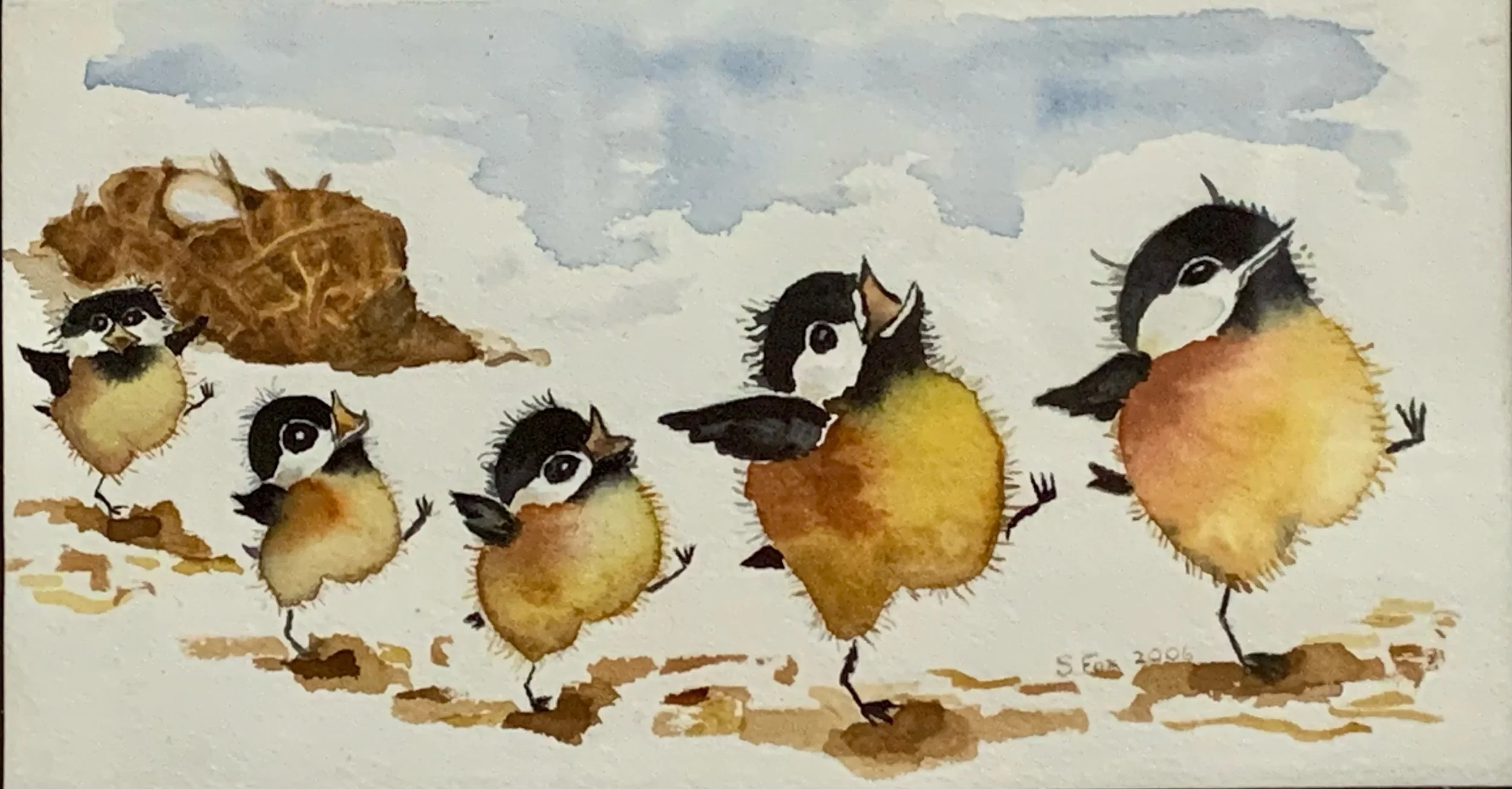
The first piece of art shown below was painted by the grandmother of the kids in today’s story in 2006 and is beloved by the family as a representation of their family in 2006. The second piece of art (by artist Erin Nimmer @erinnimmerart) was purchased by Molly*, the mother of the family, at the Gather Conference, and she says she loves how the visual reflects the idea how she’s paving her covenant path with rainbow stones.
art credit: Erin Nimmer @erinnimmerart
LUPE BARTHOLOMEW
For Lupe Bartholomew, they are the lyrics she inspired in her son David Archuleta’s new single, “Hell Together.” Once Lupe realized the depth of pain her son was experiencing at the crux of his faith transition, she made it clear she would navigate this road with him in words that resonate with many listeners… “If they don't like the way you're made, Then they're not any better, If paradise is pressure, Oh, we'll go to Hell together”
“If I have to live without you
I don’t want to live forever
In someone else's heaven
So let 'em close the gates”
They are lines many parents in this space understand. For Lupe Bartholomew, they are the lyrics she inspired in her son David Archuleta’s new single, “Hell Together.” Once Lupe realized the depth of pain her son was experiencing at the crux of his faith transition, she made it clear she would navigate this road with him in words that resonate with many listeners:
“If they don't like the way you're made
Then they're not any better
If paradise is pressure
Oh, we'll go to Hell together”
However, this was not the initial response Lupe offered when David first came out as queer. Having had little known interaction with the LGBTQ+ community until the moment her son shared his news with her on a phone call at age 29, (after three failed engagements with women and years of trying to make the LDS church’s teachings work), Lupe admits it took her time to get to a place of understanding and affirmation. She is now intentional about sharing her side of the story of her recent decision to step away from the church in solidarity of her son and her newfound understanding, so that she might sit with others. In this space, she recognizes many might echo the lyric, “I'm afraid of letting go of the version of me that I used to know.”
That version grew up in Honduras, the youngest of four daughters born to loving parents who worked hard to provide a happy home amidst widespread poverty. Lupe and her sisters loved to sing. After some missionaries introduced their mom to the LDS faith and they were baptized, the Mayorga girls would often don matching dresses and sing at new members’ baptisms and other services, taking their show on the road. At a young age, Lupe was also an accomplished basketball player and champion free throw shooter on Honduras’ national team. When she was 15, her father’s job allowed the family to move to Miami, where the girls continued their missionary efforts, singing at baptisms and church events.
While in Florida, Lupe met a man from church. At the time, she didn’t attend much as she was working long shifts as a caregiver to help her family pay the bills. But as she became more involved with the young man, she also increased her involvement with the church. The two eventually took a bus to Salt Lake City to get married in the temple, then right back to Florida, where four of their five kids were born. There was a sixth child, but Lupe’s third pregnancy resulted in a full-term stillbirth, which devastated her. But with two young toddlers at home, she had no choice but to keep living, not wanting them to “see me crying in my bedroom all the time.”
The Archuletas traded the sun for the snow when Lupe’s then husband felt Utah would be a better place to raise the kids, surrounded by the influence of the church. They moved west to Bountiful and then Murray, UT, where they could walk to church instead of driving 30 minutes as they had in Florida. Lupe says they loved being surrounded by temples and the church culture. Having always wanted eight kids, Lupe especially loved the supportive environment for men to work and women to stay home with the children. When they were little, Lupe loved homeschooling and taught all of their kids to read by age four. As the children also inherited their mother’s pipes, music filled their home as she taught them to sing. Lupe admits she didn’t love to cook or bake, so instead they would treat their neighbors with Christmas carols at the holidays, and often go sing to residents of senior living facilities.
David was just 16 when he appeared on American Idol. Though he had won Star Search at age 12, this newfound fame was “exciting, but so unexpected.” Lupe continues, “I had trained my kids to sing for fun, not to be famous… And David had always been so shy.” While the fame was “cool” at first, it quickly became overwhelming for Lupe as it affected the family’s privacy with people taking pictures of their house, randomly knocking on their door, and leaving presents. When people at church would ask, “How’s your son?” Lupe would think, “Which one? I have two?” She recalls, “The rest of us kind of became invisible.”
Once American Idol launched David’s career, Lupe says he never really came home full-time after that, nor experienced the childhood many other teens get to. His father handled most of the travel with David, while Lupe stayed home with their other kids. And the rest of the world watched as David took bold actions that affirmed his faith—he served a mission in South America. After he returned, Lupe says, “I saw David praying the gay away—he was so righteous. I thought he’d be a general authority or something, he was so obedient and dedicated. He’d stay in a white shirt and tie on Sundays, listening to conference talks. And he was put on a pedestal by the church, like a posterchild.”
Lupe and her first husband divorced, yet she remained devoted to visiting the temple every week for guidance. It was there while praying that God would send someone who understood her needs that a name clearly entered her mind: “Dave.” The next day, she felt a strong presence of love in her living room so overwhelming she started crying. She now wonders if that might have been a spiritual force nudging the union. Although they’d only been out a few times, Dave Bartholomew turned out to be the man she would marry, and later get sealed to in the Salt Lake City temple. With their blended family, they now enjoy time with nine children and 18 grandkids whom Lupe cherishes, saying, “The love I feel for them is so strong it hurts sometimes.” Lupe and Dave have been happily married for ten years, and she now sees how he’s the perfect person for her in all the ways as they have navigated this road together. She has watched some friends’ husbands leave them after calling them “apostates” when they underwent faith transitions, and she appreciates how Dave has stuck by her side.
When Lupe’s son David first called to tell her he was gay, she expressed how his family will always love him and be there for him. But as Lupe had recently increased her own activity in the church after being disappointed several of her family members had pulled away, she was in a place of determination to be the strong one, the example, the one to “gather my eternal family.” When her daughters stopped attending, she appreciates how they supported her still going but scoffed when one day her daughter said, “Have fun” as Lupe made her way out the door to church. Lupe thought, “I’m not going there to have fun! I’m going there to work and save others!” Resolved to keeping one foot in the door with the church and the other with her family, Lupe reasoned she could still love her child no matter what while also believing all the teachings of her faith. This resulted in several challenging conversations with her son as she tried to convince him to backpedal his announcement. She says, “I was struggling with it because in my mind, we needed to obey the prophet, and what the prophet says, goes. And I reminded him how the youth of the church look up to him and how was that going to work?... I worried all these kids would lose their testimonies, and was concerned for the youth if David stepped away and came out as gay.”
Lupe says she encouraged him to try to work through things and figure out how to keep up with the thousands of people he’d been an example to. She recalls how when visiting home, he’d join her for church at her request, but eventually he expressed it was too painful to keep trying to show up. Around this time, Lupe started to notice things—how when she looked around her ward congregation, she did not see LGBTQ+ people in the crowd. While she had never been interested in delving into church history before, she learned some information that troubled her. While she had been planning to become a temple worker, she started to wonder how honestly she could answer some of the questions anymore as she deconstructed her faith.
And then David’s article in People magazine came out, which opened Lupe’s eyes to realize just how much her son was struggling “having been hurt so much, trying to take his life away, feeling it better to be dead than not be a good example or sinner.” The article that came out on November 1, 2022 shook Lupe, and on November 5 she wrote her bishop after having agreed to say prayers in sacrament meeting along with her husband, but now realizing she couldn’t do it emotionally (although she had always loved praying). She expressed:
“I’m writing this email with tears in my eyes because it hurts so much to make this decision… After careful thought, ponder and praying, we have decided that we’re going to step away from this lovely church and take a break. My family and I have worked so hard on callings, three of our kids served honorable missions and gave everything they had to preach the gospel to others. The reason why we need to take a moment away is because our wounded hearts need some time to heal from knowing not everyone is welcome in this church.”
Lupe’s letter continued to mention how church leadership at the highest level had made some off-putting comments to David that he found dismissive. She also included an excerpt from his interview with People magazine: "For my own mental health, I can't keep putting myself in a place where it's so conflicting where they say, ‘We love you so much, but at the same time, you must change who you are. Oh, you can't? Then we are going to ignore this problem’."
Lupe told her bishop, “It’s hard for us to believe that a loving Heavenly Father doesn’t welcome my son and others like him in this church if it feels to us they don’t fit the profile God's gospel needs to fit: rich and poor, white skin, dark skin, gays, lesbians, all need to be welcome. There are many of them who are beautiful and talented in the eyes of God, but they are not ‘worthy’ like we are.” Lupe then shared the parable in Matthew of the 99 sheep and how Christ always ministered to the one who “went astray.” The Bartholomew’s bishop replied respectfully, letting Lupe and Dave know they were needed and would be missed, but he respected their choice.
Since, Lupe has said her South Jordan, UT community still smiles and waves, yet respects their space and does not pressure them to attend church. Lupe loves teaching voice lessons at the Lupe Bartholomew Vocal Studio, spending time with her husband, and full time grand-motherhood. She tried to attend another church in Draper, but found they had similar views on LGBTQ and concluded, “If everyone is going to be talking about how LGBTQ don’t belong in the church, I don’t want religion in my life. I just want to love my family and move on.” In her deconstruction, she has learned how the Bible was mistranslated in some parts to conflate homosexuality with child abusers and says, “The poor LGBTQ community has been criticized for a misunderstanding. Now that I know LGBTQ people are the most wonderful, caring, fragile, loving and beautiful people, it breaks my heart. David hasn’t changed, he’s always been the same sweet spirit I raised. I know there’s a God and these kids are going to keep coming, like it or not. I now have talks with my nine-year-old grandchild about how these people need to be loved, not bullied. As parents, we need to train our next generation to be more loving.”
Lupe was touched when she received a box of supportive letters from the Mama Dragons after David came out. Together, they went through them and were moved by the outpouring of love. Lupe has enjoyed finding a new community of like-minded mothers who love their kids and prioritize their mental health above all else. Having been on both sides, she says she now sees and understands a variety of perspectives: the faithful side and the ex-Mormon community who often get criticized or called lazy learners or apostates. But Lupe says, “If you’ve never gone through a faith transition, you never know how hard it is. It’s not like you wake up one day and think ok, I want a different life! I’m still the same person. I used to be critical; now I’m not. I read stories of people not talking to their family because they left church. We don’t do that; we still need to be a family, united.”
Of inspiring David’s new song, “Hell Together,” Lupe recalls how David once told her, “When I sang the hymns for the church and did all the things for the church, I meant it.” She says, “I knew my child was not below me because I was staying in a church, so sarcastically, I said, ‘David if you’re going to hell, we’re all going with you.’ I can’t picture my kids in a lower place than me. How can I be higher than them? So I said, ‘We’re walking out with grace.’ That song made me cry when I heard it. He couldn’t have written a more perfect song to describe it. There’s no way I’ll be in a higher glory than my child. He did nothing wrong but shared that he was gay and wants to live an honest life. And he’s ready to move on, and now everyone knows.”