lift+love family stories by autumn mcalpin

Since 2021, Lift+Love has shared hundreds of real stories from Latter-day Saint LGBTQ individuals, their families, and allies. These stories—written by Autumn McAlpin—emerged from personal interviews with each participant and were published with their express permission.

lgbtq+ stories
family stories
ally stories
LGBTQ STORIES Allison Dayton LGBTQ STORIES Allison Dayton

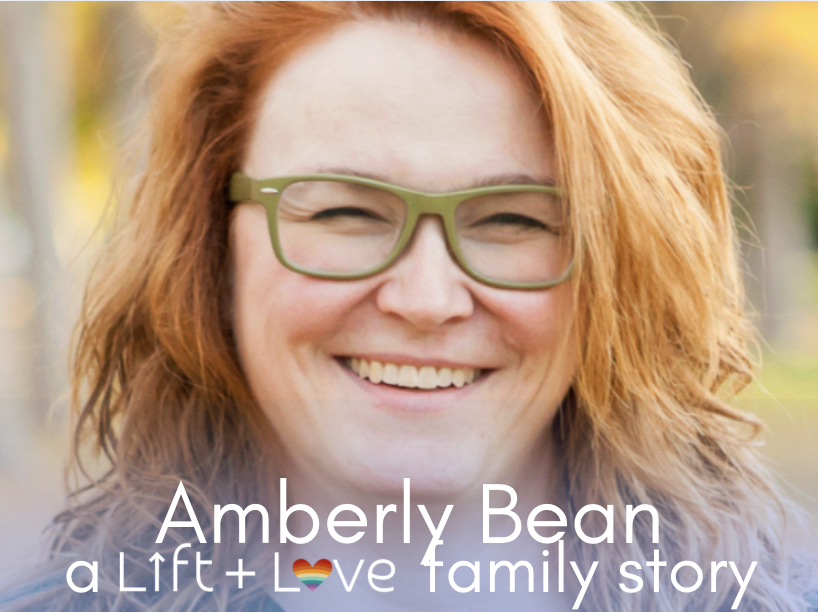
AMBERLY BEAN

Every month, Amberly Bean, 30, leads the Lift and Love youth support group on Zoom. She opens each session of new attendees with the same introductory joke, “I identify as lesbian but I’m married to a man but we’re not going to get into that tonight, it’s a long story.” Amberly and her husband Kendall have known each other since childhood. In fact, he was the name she’d throw out every time her middle school friends talked about the boys they liked, feeling he was a “safe crush because nothing would ever happen.” She laughs that, “Even when Kendall would hear that, there were no moves made—which felt really safe for me.”

content warning - sexual assault

Every month, Amberly Bean, 30, leads the Lift and Love youth support group on Zoom. She opens each session of new attendees with the same introductory joke, “I identify as lesbian but I’m married to a man but we’re not going to get into that tonight, it’s a long story.” Amberly and her husband Kendall have known each other since childhood. In fact, he was the name she’d throw out every time her middle school friends talked about the boys they liked, feeling he was a “safe crush because nothing would ever happen.” She laughs that, “Even when Kendall would hear that, there were no moves made—which felt really safe for me.”

After serving her mission and attending college, Amberly now lives with Kendall once again in Idaho Falls, ID, where she was raised in a devout and loving Latter-day Saint family. The oldest of three children, from the outside, her upbringing looked textbook—kind and faithful parents, an active church life, a close-knit community. But Amberly always knew there was something about her that was different.

She had come out to a close group of friends in her teens. But nearing the end of her high school years, the inner tension she felt with her faith reached its peak. “It was all or nothing,” she believed, rationalizing she could either be a lesbian or a member of the Church. There was no in-between. While she continued to attend church with her family, she said mentally, “for all intents and purposes, I was out.” During her senior year, Amberly experienced a tough break-up with a girl that felt like it was destroying her. She finally felt it was time to come out to her family and all her friends who cared about her.

Grateful to no longer hide so much of herself with her mom, whom she had always felt close with, she remembers her reaction as being as supportive as she could be at the time. Her mom’s words made her intentions clear: “I’ll love you no matter what you do, you’ll always be a part of our family. Nothing will change. But I know the Book of Mormon and gospel is where you’ll find guidance.” Determined to prove her wrong, Amberly asked herself, “How can any part of this faith guide me when it doesn’t even believe I exist?” But two weeks later after finishing the whole book, Amberly’s heart was moved in a way she didn’t expect. “I felt God with me. I didn’t know what would happen with my dating life or my future, but I knew I could figure things out if I had the gospel.”

That conviction led Amberly to prepare for a mission, in the second wave of 19-year-old sister missionaries. She was honest with her local leaders about past relationships with women, which initially led to the direction to wait a year before serving. The delay devastated Amberly, who felt unsure whether a straight person would have been given the same edict. But a week later, she was asked to meet with her stake president again, assuming there had been a logistical error.

Instead, her stake president shared an experience he’d had in the celestial room of the temple, where he distinctly envisioned her kneeling in a small room (which she recognized as her personal oasis where she spent time journaling, playing guitar, etc.). He felt she was ready to serve, and needed to go right away. Her mission papers were submitted that night.

That was the first time Amberly says she felt a confirmation that there is a lot of misunderstanding with how the church deals with queer members and their “sins and transgressions” and “what Heavenly Father actually feels about His queer children.” She says, “It was a big milestone moment for me.” She felt a very strong impression from above that her queerness is a gift. She does not believe her Heavenly Parents sent their kids down and said, “You guys get to be queer because it’s a trial and hard, so good luck.” Instead she has felt, “this is too pure of a thing to be bad.”

Serving in 2014, Amberly felt a deep desire to tell her story, but at the time, there were few visible LGBTQ+ Church members speaking openly—let alone affirmatively—about their identity and faith. She was worried that her news getting out on the mission “might not be kosher” while she was away from home sleeping in bedrooms with girls. She shared her story with one of her companions who then took it upon herself to tell someone else which started whispers around the mission which, later in her mission, resulted in Amberly getting emergency transferred under the pretense that she was gay and had a crush on the companion. Amberly said, “That’s hilarious. The first part is true, but this has been the hardest companionship I’ve had. Even trying to like her as a friend was hard.”

By the time she returned home, Amberly was emotionally exhausted and unsure how to navigate church life again. Once again, she took a break. Dating girls at BYU–Idaho was difficult, but something she ended up doing. Then came another heartbreak. A woman she’d believed she would spend her life with ended things, saying she was bisexual and thought she could make a relationship with a man work—something she didn’t think Amberly could do.

Feeling conflicted and reminded of painful past feelings, Amberly committed to being the best celibate member she could be. She tried dating men, but after coming out to one—her only serious attempt—he sexually assaulted her under the false belief that it was his duty to “fix her.”

The experience was traumatic and left Amberly certain she would never date a man again. The aftermath was confusing as she initially sought the support of leadership but instead felt blame. But transferring her records to a YSA branch back home in Idaho Falls was a turning point. This branch president was operating off of a reliance on the spirit about Amberly’s past romantic relationships with women. Through this branch president, Amberly found healing and increased trust for leadership, and men in general.

Amberly slowly rebuilt her sense of safety and belonging in the Church. She got her temple recommend back and committed to being “the best celibate lesbian ever,” convinced it was the only faithful path for someone like her.

Then Kendall, her “safe crush” who she’d known since elementary school, re-entered the picture. Amberly ran into Kendall’s mom and joked again about any of the handful of her boys being marriage potential. Amberly retorted, “I’d marry any of your boys.” Her number was passed along, and Kendall reached out during a spring break visit home. When she suggested hanging out, he declined and said instead that he’d love to take her on a date. Their first date lasted hours—they couldn’t stop talking. “It was the first time I actually liked a boy for real,” she says. “And it freaked me out.”

She laughs as she reflects that, “As Mormon dating goes, after two weeks, he said, he didn’t want to date anyone else. You?” Two weeks in, Kendall asked Amberly to be his girlfriend. She knew she had to “ruin it and tell him,” and feared the impending break-up. “I’m a lesbian,” she said over the phone. “I’ve only dated women.” Kendall didn’t miss a beat. “Do you still like me?” he asked. Upon her affirmative reply, he said, “Then I don’t see a problem if you don’t.”

Kendall’s steady support has become a hallmark of their relationship. They started dating in March of 2017 and married that August, though they’d known each other forever. Kendall finished his studies in physics at the University of Utah, while Amberly moved to Utah with him to work.

Now, nearly eight years later, they are raising two children—a five-year-old son and a toddler daughter—and building a life grounded in honesty, humor, and mutual respect. “It hasn’t always been a walk in the park,” Amberly admits. “We’ve done counseling. But in the past few years, it HAS been a walk in the park.”

“Kendall is pretty chill and secure,” says Amberly. “He sees this as just a part of who I am. He doesn’t need a ton of outside support, though we’ve connected with other mixed-orientation couples. We talk enough to be each other’s support.”

The couple used to be involved with Northstar but now mostly affiliate with their Lift & Love community, where Amberly loves leading her monthly groups with Kelly Cook. “We usually have four or five kids show up, sometimes more. We chat, do icebreakers, let them go for it and they talk. I love it. It’s something I would have loved to have as a youth in the church.” She says, “Out of the queer kids who attend, they’re mostly still active in the Church, trying to navigate that. Their hope and optimism is contagious.”

Post-COVID and postpartum, four years ago, Amberly felt she wanted to be more authentic about her identity in their “very small, very Mormon community.” Coming out in her current ward was a process. For some time, she’d hidden behind her role as Kendall’s wife, struggling to feel like her authentic self. “I felt like a shell,” she says. “It festered.” She knew something had to shift.

“I told Kendall I needed to come out,” she says. “And he said, ‘Then let’s figure out the best way to do that for you.” With his support and the encouragement of a few trusted friends in her ward, including a YW president she served with who promised solidarity, Amberly began telling her story.

The result? “Not much changed,” she says. Her bishop came over to chat, and it was a good experience. She felt well supported. She says, “Even though I’m not talking all the time about how gay I am, it hardly comes up actually… But if it does in context, I feel the freedom to say something. I can be authentic.” She continues, “People in church don’t realize—coming out in church is not so I can talk about being gay, but so I can feel my friends know me. This is a big part of me.”

She wants her kids to grow up seeing the full range of possibilities, and will talk to them about it someday. “I want them to see that you can be queer and have a happy, fulfilled life in the Church. And I want them to see that people outside the Church can be happy too.” Amberly believes more people need to see both sides of the coin.

Read More
LGBTQ STORIES Allison Dayton LGBTQ STORIES Allison Dayton

AMY GADBERRY

Amy Gadberry, 29, has spent much of her life navigating the complexities of her identity, faith, and mental health. Recently, the West Jordan, UT resident has come to fully embrace her identity as a cisgender bisexual woman, a realization that has profoundly shaped her ability to finally feel self-acceptance. Newlywed life has also brought a new form of happiness, as Amy and her wife Emily Tucker, just celebrated six months of marriage. But while her path has ultimately led her to a life she once only dreamed was possible, not much of Amy’s path to this point has been straightforward.

Amy Gadberry, 29, has spent much of her life navigating the complexities of her identity, faith, and mental health. Recently, the West Jordan, UT resident has come to fully embrace her identity as a cisgender bisexual woman, a realization that has profoundly shaped her ability to finally feel self-acceptance. Newlywed life has also brought a new form of happiness, as Amy and her wife Emily Tucker, just celebrated six months of marriage. But while her path has ultimately led her to a life she once only dreamed was possible, not much of Amy’s path to this point has been straightforward. 

Though she recognized an attraction to men while growing up, Amy never had a strong desire to be with one. Even before meeting Emily, she envisioned a future married to a woman, a realization that initially caused her significant internal conflict. She grappled with whether to identify as lesbian or bisexual, feeling that the latter label carried a stigma within the LGBTQ+ community. At times, she questioned whether she was “queer enough” or had the same right to celebrate her relationship with pride. However, as she has come to embrace her marriage and the love she shares with Emily, these concerns have faded. She now feels that what matters most is the life they’re building together, and she could not be more grateful.

Having first become aware of her attraction to girls around the age of 12, Amy’s discovery came with a mix of shame and confusion. She noticed that the romantic feelings she experienced were different from those of her friends, which led her to suppress them for years. During middle and high school, she dated boys casually and occasionally even had boyfriends, but she says she never developed those deep romantic connections. College did not bring much more clarity, as Amy struggled to find a relationship that truly resonated. Eventually, she realized that her sexuality was something she needed to confront rather than continue to hide.

Raised in Maryland, Amy grew up in a deeply religious household where the church played a significant role in her life. Despite her concerns about how her faith community would respond to her coming out, she found unexpected kindness and support. At 22, after coming out to her therapist—who was the first person she ever confided in about her sexuality—Amy made the courageous decision to share her truth publicly through an Instagram post. To her surprise, she received an outpouring of love, even from those within her church.

Though they needed a little time to adjust once she started dating women, Amy’s parents have remained a steadfast source of love and encouragement since. Despite the initial acceptance she received, Amy ultimately found it difficult to reconcile her faith with her sexuality. In her early 20s, she attended church less frequently and eventually stopped going altogether at 23 or 24, except for supporting the occasional family event. Though she’s never harbored anger toward the church, Amy has experienced deep sadness over what she perceives as an impossible choice between her faith and the ability to pursue the kind of love she has since found.

A pivotal moment came when she attended a fireside where a well-known LGBTQ+ advocate within the church shared his story. His account of a beautiful life with his partner that ended when he decided to reconnect with the church struck a chord with Amy. She sat in the audience crying, and questioning why he had to choose between a life with his loving partner and a beautiful church community. She says, “It didn’t make sense to me, and ultimately was the straw that broke the camel’s back. I didn’t want to choose between the two but if I had to, I decided to choose love and companionship over the church. Since, it’s been a journey figuring out what I believe.” 

Amy says she has managed to take the church teachings of her upbringing that resonated with her and keep them close to her heart. She maintains that she bears no angry feelings toward any church members, and that “a lot of people in my inner circle are still active members and good people who I know are uplifted by the church. It’s just not something I can continue forward with, and I’m ok with that.” She still maintains a strong belief in a God who loves and cares for all of us. And she genuinely believes, “God is so happy for me and all the children who are finding joy in this lifetime. That’s something the church taught me—that we are designed for joy.” 

Joy has not always been easy to come by for Amy, though even her dark moments have cemented that there’s always been a higher power who cares about and speaks to her. Amy’s journey has been deeply intertwined with mental health struggles. Diagnosed with bipolar disorder and having struggled with an eating disorder, Amy has spent years navigating treatment, including multiple stays in residential centers. Her sexuality and faith crisis contributed to her struggles with suicidal ideation, leading to some of the darkest moments of her life. However, through therapy, support from loved ones, and inner resilience, Amy has persevered and found her way forward.

In February 2022, Amy entered her final residential treatment program, where she worked extensively on self-acceptance and coping strategies. She emerged from treatment in May of that year with a renewed sense of self-worth. That summer, she moved out of her BYU housing in Provo, eager for a fresh start. It was then that she met Emily. Their love story began on a dating app, where Amy was immediately struck by Emily, saying “She was one of the prettiest girls I’d ever seen.” After matching, they quickly hit it off, leading to a dinner date the next evening.

Their conversation flowed effortlessly, and Amy knew she had met someone special. Emily had never dated a woman before, and she was in the process of reconciling her lesbian identity and deciding whether she belonged in the church. Their connection deepened as they navigated their days together, making it official within just a few weeks. They dated for two years before marrying in October 2024.

Reflecting on their relationship, Amy describes it as the best two and a half years of her life. She says, “I never imagined a life for myself where I’d feel as happy and fulfilled and as good as I do now. I credit a lot of it to therapy and treatment, and also to the fact that Emily and I are a good match, which is a testament to the validity of what LGBTQ+ love and relationships can be. I felt I couldn’t ask for anything better, or imagine myself with anyone else. When you know, you know.” Amy describes the sentiment of their first weeks together, saying, “I knew she was my person and would be forever. She felt the same. It’s a reminder this love is not wrong, no matter what people say and what views they have. We know it’s the right thing for us. The life we’re creating together is the best life either of us could have ever asked for. It’s pure joy, and I’m so grateful every day for it.

Both Amy and Emily are fortunate to have families that fully embrace their relationship. Amy says her in-laws are among the most loving and accepting people she has ever met, treating her with the same warmth as they show any other family member. Though her own father initially struggled, he ultimately supported her wholeheartedly, walking her down the aisle at her her wedding, and fully embracing Emily as part of the family.

Amy attributes much of her inner strength to her mother, Tricia Gadberry. From the moment Amy first came out to her mother, while sobbing over the phone, Tricia has remained a pillar of support. Amy appreciates how she listens without judgment and provides a safe space for Amy to process her emotions. To this day, Amy considers her mother to be one of the most important people in her life, and a source of love and guidance she will always cherish.

Currently pursuing a graduate degree in school counseling, Amy plans to graduate in August and is actively searching for a job. She appreciates how her mother-in-law is helping the process by leveraging her connections in the education system. Emily also works with kids as a behavior analyst. Amy’s ultimate goal as a counselor is to be a safe and supportive figure for LGBTQ+ students, particularly those who may feel isolated or unaccepted. She is especially passionate about advocating for transgender students, and ensuring they receive respect and validation despite discriminatory policies that may exist within school systems. She says, “My heart goes out to all trans students now navigating this legislation and the hatred they’re experiencing… I want them to feel like they can talk to me about anything that goes on and that their existence is valid.” 

Beyond their activism and careers, Amy and Emily lead a fulfilling life filled with travel, outdoor adventures, and quality time with their beloved pets, Bella (a dog) and Leo (a cat). While they love their roles as aunts to nieces and a nephew, they feel their fur babies may be the only babies they raise. At home, they love to watch reality TV and when the weather cooperates outside, Amy enjoys teaching Emily tennis. In turn, Emily has been teaching Amy canyoneering and water sports.

This October, the couple plans to celebrate their one-year anniversary with a trip to the Netherlands, the first country to legalize same-sex marriage. They are currently feeling out the possibility of living abroad in the future. In the meantime, during what has felt like dark days for many in Utah, Amy is buoyed in knowing that so many allies are out alongside them there fighting and wanting the best for their LGBTQ+ loved ones and others. Amy says, “The only way I can get through it is to find the parts of hope that come with it. Seeing others fight gives me hope. There will always be people who care, even if you don’t know them personally.”

AMY GADBERRY


Read More
LGBTQ STORIES Allison Dayton LGBTQ STORIES Allison Dayton

KATELYN OLIVER

Growing up in Washington State, Katelyn Oliver enjoyed a childhood filled with adventure and exploration. Her hometown of Snohomish is bigger now than it used to be, and Katelyn loved living so close to the beach mountains, desert, and Canada. Youth trips often involved hiking and camping, and weekend family time included jaunts to the San Juan Islands off the Washington peninsula. While there was always a lot to see and do near home, Katelyn’s parents’ Christmas gifts to their four kids were often travel experiences. These trips included visits to Europe, Washington D.C., Arkansas, Utah and Hawaii, and fostered an openness to different cultures and perspectives. “I never felt like I was living in a bubble. For us, it was important to meet different people and have that exposure.” Katelyn says she was “a double minority in Washington – gay and a member of the church.”

Growing up in Washington State, Katelyn Oliver enjoyed a childhood filled with adventure and exploration. Her hometown of Snohomish is bigger now than it used to be, and Katelyn loved living so close to the beach mountains, desert, and Canada. Youth trips often involved hiking and camping, and weekend family time included jaunts to the San Juan Islands off the Washington peninsula. While there was always a lot to see and do near home, Katelyn’s parents’ Christmas gifts to their four kids were often travel experiences. These trips included visits to Europe, Washington D.C., Arkansas, Utah and Hawaii, and fostered an openness to different cultures and perspectives. “I never felt like I was living in a bubble. For us, it was important to meet different people and have that exposure.” Katelyn says she was “a double minority in Washington – gay and a member of the church.” But growing up in a diverse community with friends of all denominations and persuasions, Katelyn never felt the need to tell others they needed to join her church. “We all thought of each other as good people, and had a lot of fun together.”

Now a 23-year-old student at Utah Valley University studying social work and minoring in Brazilian Portuguese, Katelyn says she realized she had crushes on girls from a young age but lacked the vocabulary to express it. A moment of clarity came when she visited her uncle in California and met his partner. Around the age of 10 at the time, she recalls, "I saw them give a kiss goodbye and was like, ‘Oh my gosh, that’s crazy’!" Her father later pulled her into the subway and explained, "So, your uncle is gay…" At that moment, Katelyn had the thought, "Oh, that’s me!" This was a conversation she now understands her parents had been prepared for, suspecting that she might eventually reveal something to them about her own gender or orientation.

As she navigated middle school, Katelyn struggled with the gender binaries that seemed to divide the boys from girls when it came to hanging out, and she always preferred to cut her hair short as a kid. She often expressed disdain at home for losing friends over these things. Navigating her identity within the church she loved could also be complicated, although church was still her favorite place, with most of her closest friends being members of her ward and stake. Katelyn frequently felt a sense of anxiety when approaching her bishop interviews, particularly when asked about supporting any groups or ideologies contrary to church doctrine, because of her strong desire to be honest, which has remained an important value of hers. When she was 15, she brought up a hypothetical, “What if someone was having these kinds of feelings…” to her bishop, a close family friend. He reassured her that, "If you don’t act on it, you’re okay – it’s not a sin. Just having an attraction is okay." This validation lifted a weight off Katelyn’s shoulders, but she continued to keep her feelings private for some time.

The challenges of being openly queer in a church setting quickly became evident at a youth girls’camp when a friend confided with others that she was questioning her sexuality. Another camper overheard and reported it to a leader, leading to the girl being sent home early. Katelyn was deeply upset, and expressed to her mom when she went home from camp that this was why people left the church—that leaders had been so unkind, they basically sent the girl away. "I was so mad because of course, I’m gay and had known." Katelyn’s mom responded, "If it was you, Katelyn, how would you want us to react?" Katelyn replied that she wouldn’t want her parents to change a thing because she was still the same person she’d always been. Later that night, Katelyn texted her mother, asking her to come into her room. "I told her first. I just said, 'I like girls’.” Katelyn’s dad then came in and they both reacted well, having had experience with her uncle. While supportive, the Olivers initially assumed Katelyn was bisexual. It wasn’t until later that she clarified, "No, I’m not bi. It’s 100%." This revelation to her parents and siblings led to months of conversations within her family, with periods of talking about it and then not so much until Katelyn turned 18 and started to tell her close friends. It became refreshing when she finally reached out to a few queer teens from her stake with whom she could really open up. “I started hanging out with queer people for the first time, and got my first playlist of queer music. They were like, ‘You haven’t listened to Girl in Red or Fletcher?’ It was so fun to be around people like me in this one area and be able to talk without a filter.” Katelyn also was able to get together with Ben Schilaty who was from her same stake, and she appreciated the seasoned advice from someone who had been on a mission and experienced similar things.

Deciding to serve a mission herself was one thing Katelyn had always wanted to do, though the reality of it was fraught with anxiety as she wasn’t exactly sure how she would navigate her feelings and be herself. A missionary during COVID, Katelyn was called to the Brazil Brasilia mission but began her service in the Fort Collins, CO mission (serving in Nebraska for six months) due to visa delays. Adjusting to missionary life while grappling with her identity was challenging. "I felt so disconnected and alone," she admits. With encouragement, she confided in her sister training leader (who told her she had never met a gay person before) and later her companion, who responded with tears and unconditional support. "I’m here to take care of you, on your side, here to protect you," her companion replied. Katelyn learned that companion’s best friend back home was also gay, and she had sensed Katelyn had something to share. That reassurance changed everything, and gave Katelyn an easier workaround when there were parts of lessons she didn’t feel comfortable teaching. "It made being able to teach people so much easier – to have someone on my side willing to adjust things with me." After opening up to her companion and making adjustments with how they shared their messages, Katelyn felt she could really feel the spirit when she talked about the Savior.

When she finally arrived in Brazil, Katelyn’s transition proved difficult. Isolated as one of only five American missionaries at the time, she struggled with the language barrier. "For four months, I couldn’t understand them, and they couldn’t understand me." Once she became fluent, things improved, but her relationship with her third mission president became strained. Unlike her two previous mission leaders who she describes as “wonderfully loving” and who had felt prompted about Katelyn’s need to be paired up with someone who would be friendly to a queer person, the new leader had a rigid, numbers-driven approach and a general resistance to anyone nonconforming. In their final interview, he questioned her about cutting her hair and then told her, "I know you’re gay, but if you don’t go home and marry a man in the next six months, you will lose your inheritance in the kingdom of God and destroy your family." He then handed her a certificate and sent her home. Returning from her mission left Katelyn with conflicting emotions. "The mission played a part in where I’m currently at – it showed me what I truly believe. I believe in Jesus Christ. We can never be Him, but He can make us the best version of us we can be. That doesn’t mean I have to deny myself or every part of me that makes me me.” Katelyn also says, “I believe that families are together forever, not that they 'can be’." However, she describes her relationship with the church as iffy. "For me, the LDS church isn’t the biggest focus when it comes to my relationship with God. I’m open to seeing where the future takes me."

Now at UVU, Katelyn is building a life in a way that aligns with her authentic self. She works at the university’s outdoor adventure center, leading camping and skiing trips, and enjoys spending time with her girlfriend. Twice a month, they attend gatherings with other queer Latter-day Saints. "They’re not 100% church-centered, but a good 'how are you doing' check-in. We are there to support each other," she says. Katelyn continues to reflect on her experiences and what they mean for her personal and spiritual development. "There’s a lot of fear in the community about stepping away or questioning," she says. "But I’ve learned that it’s okay to change your path. It’s okay to take breaks and explore what truly brings you peace." Her advice for others navigating similar experiences is simple: "Don’t be so hard on yourself. Regardless of what happens, you’re always capable of changing your course. If you feel you want to try something new, or step away, it doesn’t mean you’ll never come back. You can always change your life. There doesn’t have to be this weight of 'Oh no, if I do this, the consequences if I’m wrong are too grave.' Just be willing to go after the things you want and be kinder to yourself."

Read More
LGBTQ STORIES Allison Dayton LGBTQ STORIES Allison Dayton

VIENNA BOYES

23-year-old artist, musician, and filmmaker Vienna Boyes grew up in a Southern California home most would call a breeding ground for creativity. Every corner of her childhood was infused with art, music, and the permission to dream. “That was how we were taught to cope, express ourselves, aspire,” she says of her family’s ethos… Vienna realized she was gay at 12 years old. Looking back, she remembers experiences as young as first grade where she was drawn to girls and developed early crushes. From a young age, Vienna also observed an older brother experiencing extreme anxiety, mental health problems, and seizures so intense he had to start online school. This brother soon after came out as gay. When young Vienna heard his story, she quietly realized that was her story, too.
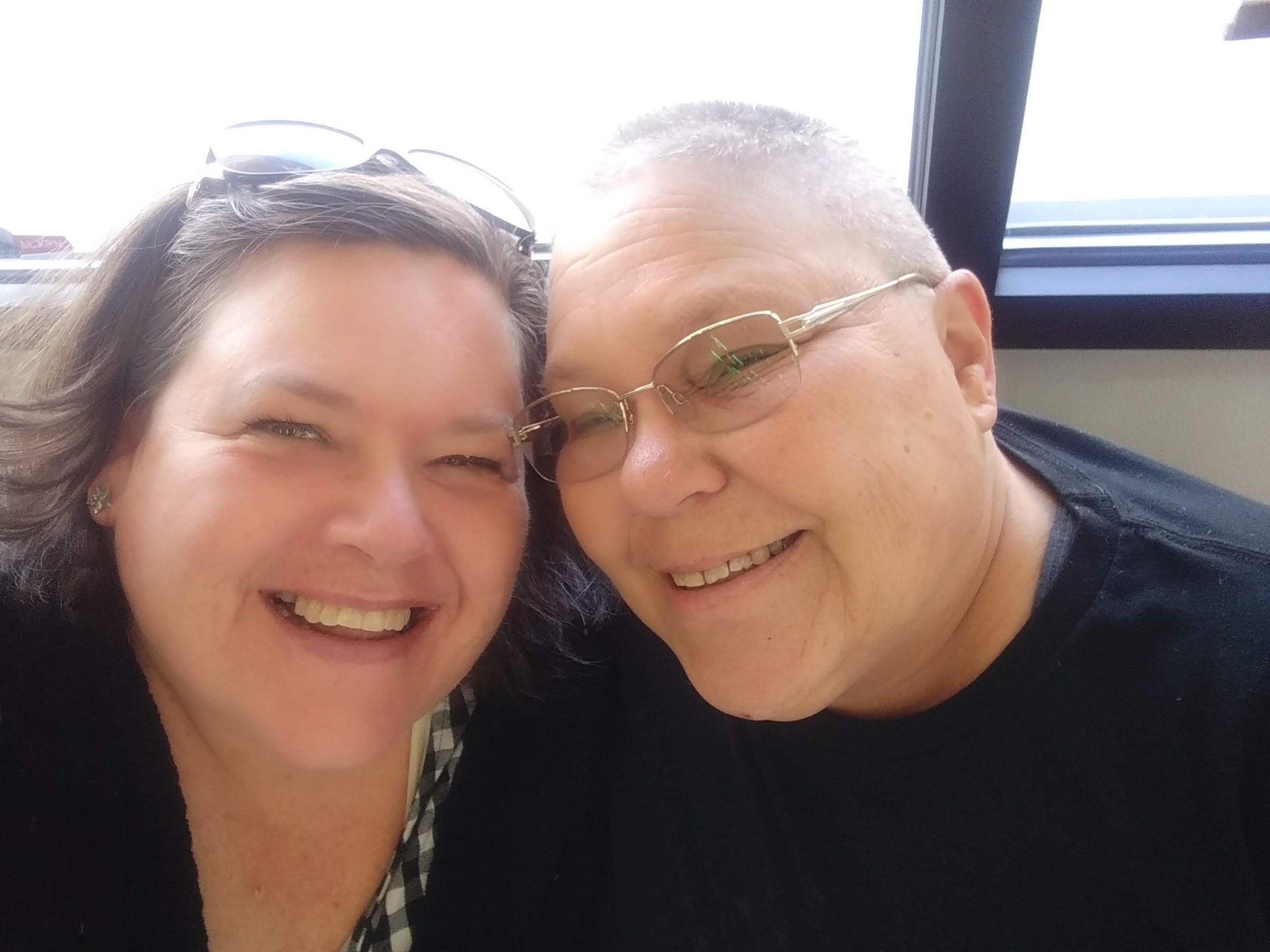
23-year-old artist, musician, and filmmaker Vienna Boyes grew up in a Southern California home most would call a breeding ground for creativity. Every corner of her childhood was infused with art, music, and the permission to dream. “That was how we were taught to cope, express ourselves, aspire,” she says of her family’s ethos. Creativity wasn’t just encouraged—it was the language her family used to make sense of the world. 

Each now an artist of their own variety, Vienna and her four older brothers were also brought up in a “super religious” household. Her dad (who works in fashion) has been in a bishopric much of Vienna’s life; and since the family’s move almost a decade ago to Provo, UT, now serves as bishop of a BYU student ward. Vienna’s mother (a painter) was her Young Women’s president both in San Clemente, CA and then again in Provo as soon as they moved during Vienna’s high school years. Vienna says she’s “always felt very sensitive to energy, divinity, and the presence of love in the world. Growing up in a religious family, that aligned well with me and was easy to take in.” 

At the same time, Vienna realized she was gay at 12 years old. Looking back, she remembers experiences as young as first grade where she was drawn to girls and developed early crushes. From a young age, Vienna also observed an older brother experiencing extreme anxiety, mental health problems, and seizures so intense he had to start online school. This brother soon after came out as gay. When young Vienna heard his story, she quietly realized that was her story, too.

“Watching my family navigate that was fascinating, because there hadn’t been anyone else in our family to come out as gay,” says Vienna. Witnessing the difficulties her brother encountered with his mental health and eventually leaving the church also terrified Vienna as to what might happen if she eventually came out, as the only daughter in the family and caboose to a tribe of brothers who “adored me and put me on a pedestal like this life was made for me.” Vienna told her mom about her attractions at age 13, but then dropped it, unsure of what life would look like if she didn’t fulfill expectations or have a husband.

Throughout middle and high school, Vienna knew being gay “was part of my life but I also ran from it so much. I dated a boy for a year, because I was so in love with my best (girl) friend.”  

Vienna decided to go on a mission after high school. Prior, she had watched her mother become a huge ally for her brother, and loved how she spoke of the queer community. At the same time, internally, Vienna was experiencing anxiety, stress, and panic attacks almost weekly, realizing there was a significant something going on she couldn’t run from anymore. She started going to therapy, hoping to avoid going down a path of extreme mental health duress. Quietly, she navigated the juxtaposition of her identity with her religious upbringing in emotional prayers in which she realized she never felt her orientation was a sin or evil part of her; but she carried so much confusion as to whether the shame she felt was doctrine or society-induced. “I felt so broken at the time.” 

Once Vienna realized it was physically damaging her body to not be authentic, she decided to come out to her older brother, and then to a few of her closest friends. She says, “Once I started coming out to people, I felt this thing I’m experiencing and person I am is light and goodness, and my intentions are pure. The way it feels in my soul is beautiful and true to myself.”

Then, Vienna went on a mission. Houston, Texas showed her a whole new world, and an unexpected part of the journey was how many openly gay people she’d encounter. While door knocking one day, one woman said she’d “never convert,” but invited Vienna and her companion over for dinner out of kindness, saying all people deserved to be treated like humans. At that dinner, Vienna got to know someone who’d become very important in her life. K* was queer, married to an ex-Mormon, seemed to already know everything about the church, and taught Vienna lessons she deeply valued, one being, “It’s more important to be honest than kind. Being honest is being kind.” During one interaction, K spoke about being gay, and seeing Vienna’s reaction, pointedly told her how there’s a beauty and joy in humanity in being yourself, and that you can find true joy even outside a religion. This was a new concept for Vienna, but one that allowed a mind shift that would later prove important.

Vienna also experienced some difficult moments in relation to the LGBTQ+ experience on her mission. One of the friends she’d made in the ward (who was gay) tragically died by suicide. In mourning, Vienna told her mission president about it. His offhand reply, “Oh, that’s too bad” felt eye-opening to Vienna, especially as she knew that her mission president had heard she herself was queer. She no longer felt safe turning to him for guidance on personal matters. While Vienna learned much and especially met many people she loved on her mission, she says stepping off the plane felt like “stepping into a new life.” She felt, “I gave the God I grew up knowing everything I possibly could, and it felt like my way of showing I really did try my best to do this. But I knew now was the time to set myself free from all the expectations I realized were not for me.”

In the first six months after her mission, Vienna’s mental health became worse than it ever had before. She says, “I started going to therapy, worried about suicide and so many things… I’d never felt so hopeless or so much loathing for who I potentially was. I felt if I couldn’t live the life I was expected to live, I didn’t want to live.” But luckily, at the same time, Vienna was surrounded by the support of a group of powerful friends. “We are deeply interdependent. Being able to rely on them and witness how their responses when I came out to them were so beautiful and affirming and hopeful and loving took me out of so many difficult situations. Just being able to rely on them in that way--I am grateful.”

Returning to therapy with “some amazing therapists” helped Vienna navigate future decisions, and eventually she started feeling the right one for her mental health was to stop attending church and do a fresh restart of her life. The hopeless abyss of her past was replaced by a hopeful image of what her future could look like, as she began to see representation online and in real life of “happy beautiful lives and homes with two women.” She says, “Finding it was like breathing—I became addicted to it. THIS is what I want. I felt like the lights had been off in portions of my soul, and I got to turn on all the lights and look at myself. And I thought, ‘This resonates. This is what people are talking about when they talk about love.’ All I’d suppressed I now get to have if I claim the autonomy I deserve.”

After her mission, Vienna did date boys and girls to experiment, but she landed on girls. She says, “I dated a really rad girl for a long time who I’d met through mutual friends, and everything slowly healed for me.” In the past two years, she’s solely dated girls and has had several relationships in which each has taught her a vital something about herself or love in general. She is now dating someone special. 

While navigating her own journey, Vienna has also been co-directing and editing a feature documentary film called “Sanctuary,” about creating safe spaces for the LGBTQ+ community in society and religion. Interviewing various subjects who have likewise felt alienated by institutional intolerance proved a cathartic (and at times soul-crushing) experience for Vienna who has in real time been processing everything in her own life. “While doing that project, my other work, and dating girls, it’s felt like I’ve been running. Because everything was so exposed for the first time, tasting that feeling of freedom and authenticity unapologetically right next to excruciating grief – it felt like I was grieving, processing, healing.” But seeing the humanity in those she interviewed was “proof to me that love is boundless and belongs to every human – regardless of their background or anything. Every living thing belongs to it.”

In the process of meeting so many LGBTQ+ friends through PRIDE events, Vienna has developed a new perspective on living out loud. “To me, the queer community is so unbelievable, because to be proud of something society showers shame on and tells you not to be takes so much mindfulness and intention… On the other end of that, I experienced authenticity and joy, and the amount of love I feel in my body now.” 

Coming to this fulness has not been easy in all realms, as while her family loves her and remains a close unit, Vienna has had to navigate tough talks at times. “The most vulnerable of the conversations I’ve experienced are within family – because the worth and value I get is so much more tender and intimate; so if they were to say something horrible it’d be way worse.” One family member in particular said some things that devastated Vienna after she first came out to them. Thankfully, her mother entered the room shortly after and held her while she cried. But since, Vienna has had poignant sit-down conversations with the family member that have been tough, tricky and ultimately healing as Vienna has been able to finally feel she is seen for who she is and not as a broken soul. “I’ve sat and cried, begging for understanding more times than I can count. It’s part of the journey, but so worth it.” Vienna is touched that now, this individual will text Vienna’s girlfriend just to see if she needs anything, and have sit down relationship conversations with and treat them the same as anyone else. Vienna says, “All the pain, shame, hard conversations that happened with family, leaving the religion I  grew up with... All of it was made worth it because of the feeling I get to experience and how I get to live now.”

Vienna’s friend group has remained “so unbelievable.” She says, “Even though most of them are in the church, they are so understanding and seek to be present with my experience even though it’s different than theirs. Maintaining relationships when you believe different things is extremely valuable and does nothing but strengthen friendships, despite the odds.” 

Art remains the centerpiece of Vienna’s life. Beyond her film work, she is in a band with nine of her best girl friends and they “play music constantly.” She says, “Music is my coping mechanism; it’s how I express emotion and navigate life. It’s the greatest blessing and tool in my life.” Their band, Girl Band the Band (aka Hardly Know Her) played in the Marriott Center and won BYU’s Battle of the Bands last year, and has booked other gigs throughout Utah. Vienna sings lead and plays guitar and bass, though she can play just about any instrument. The uniquely talented videographer and filmmaker also loves drawing, sculpting, and photography.  

Always finding the beauty and the beat in the pain, Vienna says these lyrics (from “Life is Hard” by Edward Sharpe and the Magnetic Zeros) best describe the soundtrack of her life right now…

Life is something to behold

But if the truth is to be told

Let us not leave out any part

Do not fear, it’s safe to say it hear…

Come celebrate, life is hard

All life is all we are


Read More
LGBTQ STORIES Allison Dayton LGBTQ STORIES Allison Dayton

ADELLE GILES

Adelle Giles, 54, has a joyful laugh that emanates resilience. After a turbulent childhood and decades of navigating the complexities of relationships and identity within the LDS faith, only recently, she has found the peace and purpose she always felt she was lacking. She largely credits this to the guidance she felt along her journey pushing her toward her partner, Carmen. “Carmen is my true person in life… I want people to know this may not make sense to everyone, but it makes perfect sense to Heavenly Father and to us.” Adelle now identifies as bisexual and runs a Gathering group where she lives in Pocatello, Idaho. She attends church alongside Carmen in a welcoming ward. It’s a path she never allowed herself to pursue back in the 80s when she first had inklings about her attractions toward women. But she’s grateful for the bends and turns that have brought her here. 
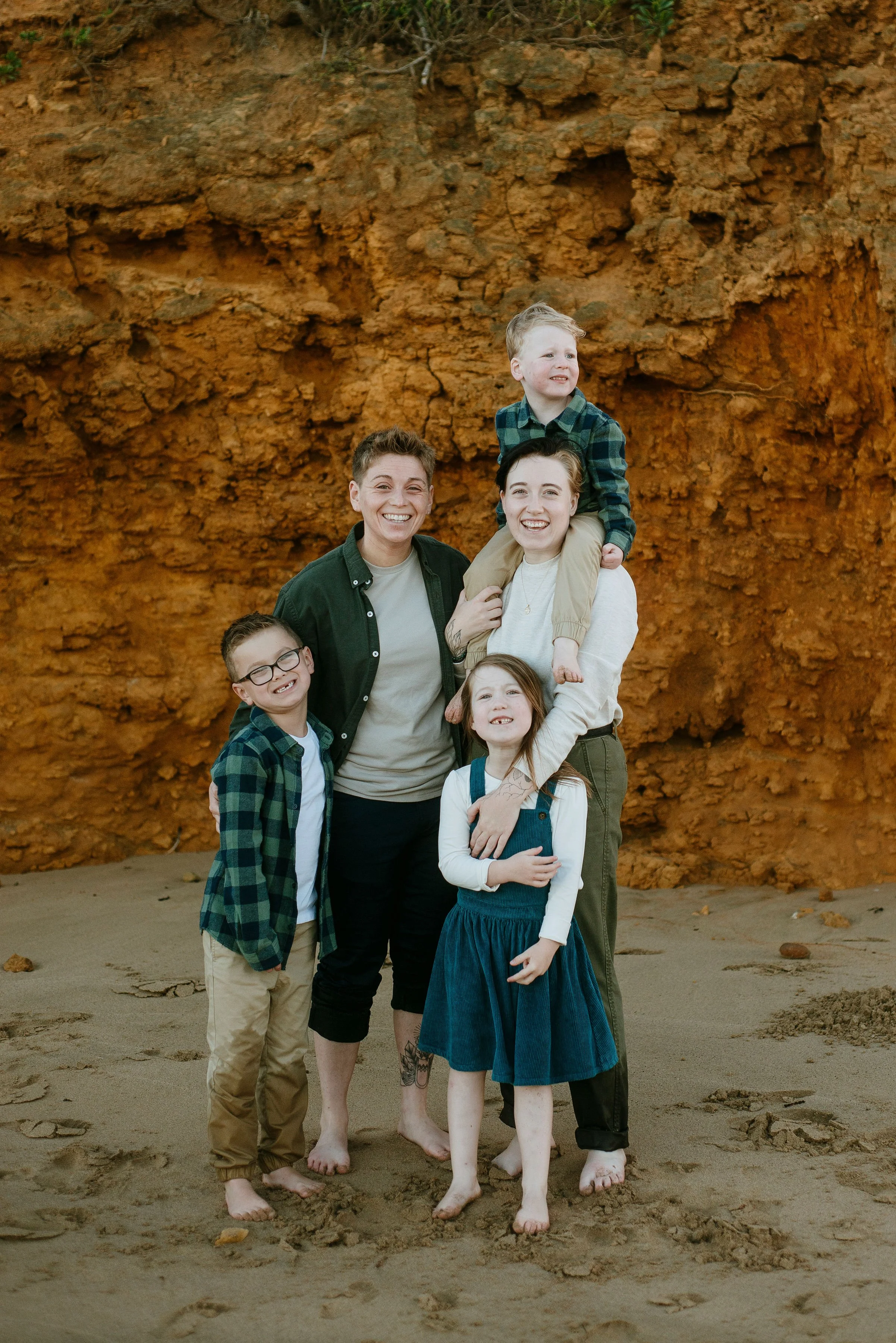
Adelle Giles, 54, has a joyful laugh that emanates resilience. After a turbulent childhood and decades of navigating the complexities of relationships and identity within the LDS faith, only recently, she has found the peace and purpose she always felt she was lacking. She largely credits this to the guidance she felt along her journey pushing her toward her partner, Carmen. “Carmen is my true person in life… I want people to know this may not make sense to everyone, but it makes perfect sense to Heavenly Father and to us.” Adelle now identifies as bisexual and runs a Gathering group where she lives in Pocatello, Idaho. She attends church alongside Carmen in a welcoming ward. It’s a path she never allowed herself to pursue back in the 80s when she first had inklings about her attractions toward women. But she’s grateful for the bends and turns that have brought her here. 

Growing up in Everett, Washington, Adelle describes her upbringing as challenging. Her mother, who she refers to by her name Mary, ruled the household with a controlling, unyielding hand. “We had no room to grow or explore,” Adelle recalls. “Any thoughts that weren’t hers were unacceptable.” Her father, a firefighter who worked long hours, relied on Mary’s perspective to guide the family, leaving Adelle without the parental support she desperately craved.

The oldest of six children, Adelle bore the weight of responsibility in an often abusive home. She managed the household chores and shouldered the blame for anything left undone. While her siblings turned to her for guidance, Adelle’s own needs went largely unmet. She remembers turning to food for comfort, saying she “ate her feelings and developed a weight problem. I never felt good enough, wanted, or loved.” Despite this, Adelle found solace in her Young Women’s leaders at church, especially one who became a mother figure to her and recognized her talents and potential. “This leader was the first person to ever tell me I was pretty -- I was 16 years old.” The leader told the bishopric about the abuse going on under Mary’s rule, but Adelle says she was told, “Because it wasn’t sexual abuse, there was nothing they could do about it.” 

As a teenager, Adelle excelled in leadership roles within her Young Women’s classes and cherished the four years she spent at girls’ camp. She was one of the area’s best babysitters and competed with another local sitter to see who could get the most repeat customers. Adelle loved singing, acting, and drawing, and she enjoyed her first paycheck job working at Baskin Robbins. However, these moments of independence and creativity stood in stark contrast to the challenges she continued to face at home. 

Adelle was more than ready to leave the house and attend college and pursue a degree in education. It was the first time she felt free from her mother’s oppression. But her independence was short-lived. Although Adelle had graduated and was dating a boy she wanted to marry, Mary’s influence persisted, convincing Adelle to serve a mission shortly after her brother got his call, despite Adelle’s own doubts. “She wanted to be able to say two of her kids had served missions,” Adelle explains. “I wasn’t praying about it for myself—I was doing it for her.” Adelle caved to her mother’s demands to break up with her boyfriend and pack her bags for missionary service.

Her mission experience was challenging to say the least. Physical pain from back problems forced her to return home early, only to face false accusations from her mother that further isolated her. “She told the bishop I’d had sex with my boyfriend,” Adelle recalls. “The next Sunday at church, no one talked to me. It was like I had a big scarlet letter on my forehead.” Adelle’s grandmother confirmed Mary had been spreading lies about her. This betrayal marked a low point in Adelle’s life, leading to estrangement from her family and a period of homelessness. Besides her brother and father (who’ve both passed away), Adelle has maintained no contact with Mary or her four sisters.

While her childhood friends had always predicted she’d be the first one to marry and have lots of kids, things didn’t exactly go that way for Adelle, though it was her wish. In the years that followed her mission, Adelle found solace in teaching. She moved to Idaho and taught middle school science and special education, finding purpose in her work and joy in her students. She recalls often just “feeling happy to be alive,” and loved her church callings teaching gospel doctrine and playing the piano. But her personal life remained tumultuous. After years of praying for a husband, she met a man 26 years her senior, and married him after just two months of dating. One week into the marriage, she walked out of the house, disillusioned by the reality she had married a man who really just wanted a caretaker. “I remember sobbing under a tree and asking Heavenly Father, ‘Why this man’?” Adelle recalls. “And I felt the answer: ‘To teach you’.” The marriage was not the “happily ever after” Adelle had craved. Rather, it was fraught with emotional abuse similar to what she’d endured throughout her childhood, leaving Adelle with no choice but to pack up her bags after seven years and once again go out on her own and seek to rebuild.

It wasn’t until she turned 50 that Adelle began to piece together the puzzle of her identity. She moved to Twin Falls, Idaho, and after what she describes as a vision that made her future clear, she started looking into the idea of dating women—secretly at first, perusing dating sites online and unsure of how to reconcile her feelings with her faith. A turning point came in 2019 when Adelle revealed some of her own struggles with weight (at the time, she weighed 400 pounds), self-worth, and having been diagnosed with cancer in a Facebook chat for the “My 600 Lb Life” show. Producers from the Mel Robbins show saw her post and reached out and soon, she was flown out to New York by CBS to be on the show. “That trip saved my life,” she says. “I saw the sites of Manhattan, shared my story, and came back feeling like I could start again.” After she returned, Adelle finalized her divorce, lost weight, and overcame cancer, emerging with a renewed sense of purpose.

In late 2021, a spiritual prompting led her to pack her bags and move to Palmyra, New York, despite having no job or place to live. “I drove across the country and made it to New York with my last $100,” she says. “When I arrived, I woke up crying, and Heavenly Father told me everything would be alright.” Adelle encountered a woman that day who befriended her and offered her a place to stay. She soon found a job, but after six months, she felt prompted to return to Idaho. Though reluctant, she obeyed, trusting that all would work out.

Back in Idaho, Adelle’s life took another unexpected turn. She met Carmen, a woman from Texas who reached out via Facebook. Carmen asked about the “beautiful light in Adelle’s eyes.” She wanted to know how she could have what Adelle did. Adelle replied it was the gospel. Their friendship deepened, with nightly calls and messages about the church and so much more. When Adelle fell ill, Carmen packed up her life and moved to Idaho to care for her. “I knew we had feelings for each other,” Adelle says. “But I was afraid to admit it. Growing up, I’d been taught that those feelings were wrong.”

It was Adelle’s best friend Sara who gave her permission to embrace her truth. “She met Carmen and said, ‘Adelle, you can love her. She’s part of your wolfpack’.” With Sara’s encouragement, Adelle allowed herself to acknowledge she had fallen in love with Carmen. “She’s my person,” Adelle says. “I know Heavenly Father brought us together.” Adelle has also loved observing Carmen’s spiritual path, saying, “The gospel softened her, she’s the most wonderful person I’ve ever met.”

Today, Adelle and Carmen share a home and life filled with faith and love. Carmen, who was baptized in 2024, has become an integral part of Adelle’s faith practice and church community. Another gay couple (men) attend Adelle’s and Carmen’s ward and Gathering meetings, which has been helpful to building their sense of belonging. 

“We always include Heavenly Father in everything we talk about. She has so much to give; people at church flock around her. I’m very lucky. Not a lot of people in life get to meet their true partner.” Adelle continues, “She’s a provider, a protector, and the best person I’ve ever met. Heavenly Father knew I couldn’t be with a man anymore. Carmen has given me a sense of stability I’ve never had before.”

Adelle’s journey has been anything but conventional, but she sees it as divinely orchestrated. “Not all of us will marry the opposite sex or have children,” she says. “But that doesn’t mean we’re not living according to Heavenly Father’s plan. He loves all of us exactly as we are.” 

Moving forward, Adelle is excited to introduce Carmen to others as her partner. “We’re a team, a pair, a package deal,” she says. “Heavenly Father showed me who’s what waiting for me – whatever happens, I’m bringing Carmen along. We don’t know what will happen, but we know we’ll be together forever.”

ADELLE
ADELLE YOUTH
ADELLE CHRIST STATUE
Read More
LGBTQ STORIES Allison Dayton LGBTQ STORIES Allison Dayton

CHANTELLE RYATT

Down under in Melbourne, Australia, Chantelle Ryatt enjoyed a warm holiday season with her wife, Jennadene, and their combined three children, ages 5, 7 and 8. Last year was one to celebrate as the two were married in a beautiful, beachside ceremony on September 21. Standing on a cliff face overlooking a surf beach with massive crashing waves below, the haze of clouds offered a gentle mist as they gathered with the celebrant and the two photographers. The day prior, Chantelle had told Jennadene nothing would make her happier than to have the confirmation they were doing the right thing and to have her mother there. The latter was a difficult order as Chantelle’s mom had passed in May 2020. Yet, as the two said their “I Do’s,” it was undeniable to all present – including their atheist photographer – that there was a special presence felt that no one could deny. As the sun peeked out from behind the clouds, Chantelle felt the presence of her mom, great grandmother, both her grandads and uncle rejoicing, so happy for this union. Chantelle says, “To my mom, family was everything. Knowing she was on the other side, knowing what eternal families look like and rejoicing, was a beautiful confirmation.” She continues, “My wife is the person my mom wanted me to be with to teach me what I needed to learn. To grow, to develop, and to feel loved—it’s been a journey.”

Down under in Melbourne, Australia, Chantelle Ryatt enjoyed a warm holiday season with her wife, Jennadene, and their combined three children, ages 5, 7 and 8. Last year was one to celebrate as the two were married in a beautiful, beachside ceremony on September 21. Standing on a cliff face overlooking a surf beach with massive crashing waves below, the haze of clouds offered a gentle mist as they gathered with the celebrant and the two photographers. The day prior, Chantelle had told Jennadene nothing would make her happier than to have the confirmation they were doing the right thing and to have her mother there. The latter was a difficult order as Chantelle’s mom had passed in May 2020. Yet, as the two said their “I Do’s,” it was undeniable to all present – including their atheist photographer – that there was a special presence felt that no one could deny. As the sun peeked out from behind the clouds, Chantelle felt the presence of her mom, great grandmother, both her grandads and uncle rejoicing, so happy for this union. Chantelle says, “To my mom, family was everything. Knowing she was on the other side, knowing what eternal families look like and rejoicing, was a beautiful confirmation.” She continues, “My wife is the person my mom wanted me to be with to teach me what I needed to learn. To grow, to develop, and to feel loved—it’s been a journey.”

For both Chantelle and Jennadene, life certainly has weaved. Both experienced more traditional LDS domestic arrangements prior to meeting each other. Each grew up in the faith and Jennadene served a mission on Temple Square in SLC in 2014-2015. Each married men in the temple with whom they had children. While both her parents were converts, Chantelle’s homelife was very “church-centered,” and her father typically held leadership positions either as bishop or in stake presidencies. She says, “Our family was well known in the stake.” 

From a young age, Chantelle also knew that she was different from the other kids at church and that her life wouldn’t be as simple. She recalls feeling that, “Boys were cool, but girls were awesome.” The feeling of being out of place due to her attraction to girls, which she sensed at age four, became more prominent as she grew. She became terrified people would find out and she’d be shunned. Her very intuitive mother, however, sensed something was off, but didn’t know just how much struggle the conflicts of Chantelle’s sexuality and living the gospel created internally.  

As a young adult, Chantelle embraced opportunities to serve—first as a Young Women’s leader at age 18. She married at age 24 to a man she’d known since she was 14, and had further opportunities to serve in the ward Relief Society Presidency and ward Primary Presidency in her late 20s. Two years after the birth of her son, she was called to be the ward Young Women’s President. At the time, she loved her husband and was committed to him and the marriage, though she says the pairing wasn’t ideal due to factors outside of her orientation. “I thought with Heavenly Father, I could overcome my sexuality.” She had told her husband prior that she was queer, and eventually came out to her parents around age 26. True to form, her mother’s first reaction was of concern for Chantelle and included the words, “What are you doing about it?”, quickly followed by loving kindness. Chantelle explained how she had kept close to her Heavenly Father and relied on Him to guide her as to what she should do. The following Sunday, her mother told Chantelle, “I love you no matter what. Wherever you go, whatever you do, I’ll always support you.”

The year Chantelle’s son was born, motherhood, coupled with her “sexuality 
complications,” did not help her already troubled marriage. When she was 29, Chantelle’s mother passed away, which presented a shifting point. “My mum was my rock in a sense, who I turned to.” Chantelle experienced frequent bouts of depression about her sexuality which occurred about every three months, when fighting against who she was and what she desired became too much. She says, “My mum was so devout, her faith was so strong. She lived and breathed service and magnified all she did. I wanted to carry on her legacy, but could no longer lie to myself. I had to figure out what was going on. That year of grief on top of depression was not fun.”

Chantelle knew it was time to tell her husband she needed a separation to explore and see what her future would look like. He agreed, and what follows was, by Chantelle’s account, a very spiritual experience. Rather than setting out to date “just any woman,” she says she relied on the guidance of her Heavenly Father and her mother from beyond the veil to wait it out. After some time, she reignited her friendship with Jennadene, as the two had known each other since early YSA. Jennadene had recently come out as gay and had left her own marriage to a man. 

At first, they bonded over just having someone else to talk to who had experienced such a unique path in the church. They’d converse how there was no guidance for people like them in scripture, especially in the Book of Mormon. They each spent time pondering and praying about their future, and when Chantelle finally asked if this person she’d drawn close to was the person she should pursue, she received a very definitive “Yes!” 

They proceeded slowly, frequently checking in with each other to ensure they were both still feeling this was the right thing. Over their first year of dating, Chantelle says frequent spiritual experiences confirmed she was on the right path. Miracles ensued. As the financial dealings of her divorce became more complicated and it felt like she’d lost everything, she says, “Everything that was taken, Heavenly Father provided.” When she was forced to move out immediately, a family friend generously allowed Chantelle and her son to move in without paying rent until she found a job. Quickly she did, at a nearby primary school her son could attend, and she was soon able to pay rent. Money Chantelle was owed from years ago suddenly showed up and she was able to pay for food. She says blessings like these continued to appear, which she feels stemmed from continuing to pay tithing.

Every fortnight, when her son would visit his father, Chantelle would meet up with Jennadene, who’d been living in Adelaide 700 kilometers away. As the two began blending their families, they’d take their three kids to church in Chantelle’s home ward where members had watched her grow up, marry a man, experience a mental decline through her divorce and loss of her mother, and now, “To watch us two women go to church as a family unit… well, some took it well, and some not so much. But we’ve been able to weed out the people you don’t want around.”

The couple have appreciated the warm support of their bishop who meets with them often and welcomes their family unit in the ward family. He recently helped Chantelle seek the cancellation of her temple marriage to her ex, though her sealing to her son remains intact. With the help of her stake president, the cancellation was a process that only took a few weeks. All of this has occurred since Chantelle was disfellowshipped in 2022. When Chantelle was Young Women’s President in the ward and told she’d have to have a membership council for dating a woman, she expressed to the girls she served that she’d likely be released, and “lose everything she had.” She remembers telling the girls she’d loved watching grow up over the prior ten years the importance of building a relationship with their Heavenly Father so “He’s the one who’s guiding you.”

While they know there are some “fuddy duddies” who may not be comfortable with their presence at church, Chantelle and Jennadene say several more have made comments like “What a beautiful family” when they walk in. They often take opportunities to speak up in classes and share the examples of personal revelation they’ve experienced. Recently after sharing what it was like being the only queer members of the ward and the special presence of their wedding day “visitors,” they were touched when two older gentleman separately came up to them after to each offer a hug and words of gratitude that they had helped them feel the spirit and increased perspective that day. 

“The understanding I have gained has led to a relationship with Heavenly Father that has never been stronger,” says Chantelle. “Whenever someone’s faced with a unique path, whether it be addiction or not being a member or being homosexual, our very different experiences in the church mean we all receive inspiration that is personal to us. But the main message should be that it doesn’t matter whether queer members come to church or not, their life experiences are personal and it’s not our place to judge.” 

Chantelle credits her blended family as providing a loving environment for her son, step-son and step-daughter in which they are living the gospel, learning to pray, and to build their testimonies. “They wouldn’t have that environment if we weren’t a family unit… I know without a doubt, hand on my heart and I will swear to my grave, that I have been led on this path. I know Heavenly Father has guided me, and knowing how important eternal families are to my mom, I know she would not have guided me on this path only just to lead me astray.”

Read More
LGBTQ STORIES Allison Dayton LGBTQ STORIES Allison Dayton

THE BARNARD-CROSLAND FAMILY

This is the story of two “Mormon” girls who were raised in “typical Mormon families.” Rachel was born the youngest of five kids and church was a constant growing up, no matter where they lived. After residing in Texas, Virginia, and Hong Kong, her family moved to Provo when Rachel was in the tenth grade. Upon finishing high school, she attended the University of Utah where she earned a communications degree, excited about the prospect of working in marketing and advertising. She got married during her junior year of college to a man. Feeling pretty clear that the gospel checklist was her road to happiness, Rachel “pursued the path she was supposed to without questioning,” and now says her mind never let her think anything else was an option…

This is the story of two “Mormon” girls who were raised in “typical Mormon families.” Rachel was born the youngest of five kids and church was a constant growing up, no matter where they lived. After residing in Texas, Virginia, and Hong Kong, her family moved to Provo when Rachel was in the tenth grade. Upon finishing high school, she attended the University of Utah where she earned a communications degree, excited about the prospect of working in marketing and advertising. She got married during her junior year of college to a man. Feeling pretty clear that the gospel checklist was her road to happiness, Rachel “pursued the path she was supposed to without questioning,” and now says her mind never let her think anything else was an option.

Rachel now reflects on how many of her experiences as a youth and adult would clearly be considered “SSA,” but as her thoughts continued, she continued to push them off as distractions from the path, or temptations happening to her and not authentic feelings within her. Rachel stayed busy with her career, often working a “ton of hours” while pursuing building a family. When her son came along, the reality of her feelings towards women became even more apparent. In her late 20s, as she began to listen to podcasts and others’ stories of navigating a similar road, Rachel says her sense of denial minimized and she could make more sense of her reality. At first, she rationalized she was bi and could continue to make her marriage work, keeping her family intact. She didn’t have plans to share this part of her with anyone but the tension of the secret she’d been keeping for a long time felt very big, too big—and her husband was the first person she pulled in to share what she was realizing. “He was thankfully receptive and helpful, kind, and gentle through the process,” she says.

As time, went on Rachel continued to wade her way out of denial, accepting that she was gay. With this understanding, she evaluated what her path would look like. She realized growth for herself, her husband, and her son was going to be severely limited and that trying to stick it out would progressively lead to an unhealthy family life for all involved. She came to the devastating realization that was not the life she wanted for herself nor those around her. 

Michelle grew up in Provo, UT as the oldest of four kids. From a young age, church felt very important to her. “I took church and the gospel very seriously and had a core testimony that Heavenly Father was real, really knew me, and loved me no matter what.” Michelle went to as many as EFYs as she could, served on the seminary council, dated a lot of boys in high school, and then went to college where she fell in love with a roommate—a girl. While the crush was not reciprocated, Michelle said her feelings felt like an explosion, her past feelings for boys paling in comparison. “I felt I had been colorblind, and then put on those special glasses and could finally see the color that everyone else could see.”

Michelle also felt very confused, working overtime to process, as she’d been taught that these kinds of feelings were wrong. Yet she says her feelings for the girl felt wholesome, right and good. Contemplating her life vision to have a temple marriage and eternal family, Michelle decided to push those feelings aside and likewise pursue the prescribed path. She went on a mission to Nicaragua and came home with a goal to date and get married in the temple. That she did, meeting a man with whom she got along well, who made a lot of sense, and who wanted to marry her. Her feelings for him were nothing like the feelings she had had for her roommate, but she rationalized that there were more important things in marriage. After marrying, they quickly had four kids in five and a half years, keeping Michelle so busy she could distract herself from “the romantic and emotional lack she felt in her marriage, that had been there from the start.”

“I trudged forward with faith, trusting it would be fine. I filled my life with the next best thing—hobbies, service, staying active in the church, being the best mom I could be. It was exhausting, and wasn’t producing the fruit I was looking for or expecting, but I had faith it would come.” Michelle says it got to a point where it was seriously affecting her mental health and she knew she was not on a sustainable path. After much prayer, wrestling to know what to do, she came to know that the Heavenly Father she loved and felt close to was not only ok with who she was, but truly wanted her to be happy and fulfilled.

Rachel and Michelle first met in a Lift & Love online support group for women. Neither was there to try to meet someone romantically, but rather to process their experiences with like-minded individuals. The two discovered they’d both gone to Timpview High School (at different times, with their five-year age gap). They struck up a conversation and became friends. A couple months later, friends from the support group met up to go hiking in Utah, and Rachel happened to be in the area for a family trip, having traveled in from San Diego where she was living at the time. She was still going through the difficult path reckoning what she wanted to do with her future. Rachel says, “I was in love with Michelle as soon as I met her” and Michelle’s feelings were quick to follow.  After both women were divorced, Rachel moved to Daybreak, UT and the two began dating. After eight months, they got married and blended their families. Their combined five kids now range in age from 5 to 11. Both of the children’s fathers live nearby as well, and “the moms,” as their kids dub them, share 50/50 custody and maintain a good working relationship with their co-parents/former partners.

Rachel admits there’s a lot of grief that’s come with the decisions they’ve had to navigate and live with—including letting go of the families they’d always envisioned and worked for and only having their kids half the time now, but Rachel says, “Despite all, the good overshadows the hard and we know we still made the right choice.” Michelle concurs, “We can’t really wish things were different, but if we had had the chance to date as teens and been given the opportunity to have developmentally normal experiences, there would not have been so much collateral damage. All the people who have had to go through such hard things—it sometimes feels heavy and makes us angry. But our journeys are what they are, and we are who we are for what we’ve been through. I just wish others understood better that pressuring people to choose a marriage that doesn’t fit their orientation or telling them to be single and celibate their whole life can be so damaging, and not just for the individual.”

The Barnard-Crosland household loves their puppy Jojo and loves to ski, having recently outfitted the entire household in gear for the season. They also love watching the Great British Baking Show, and enjoy music, with Michelle playing the piano, guitar, and singing, and Rachel discovering new artists whose music she introduces Michelle to. While Rachel works at Adobe, Michelle works as a health clerk at an elementary school in Provo, aligning her schedule with the kids’ school schedules. The kids each call their new mom by her first name, and Rachel and Michelle have observed how the five kids were all quick to embrace the change and love each other through it, which they surmise is likely a byproduct of blending families while they were still young.

The family takes their kids to church each Sunday, and enjoys doing “regular LDS family stuff” like reading scriptures and praying together. There are restrictions to their membership due to the nature of their relationship as they walk this tightrope. They are unable to have official callings, but they feel their ward is doing an incredible job of making them feel included. Michelle is often asked to play prelude music, and they were asked to help plan the ward Christmas party by the committee chair. Rachel says, “We feel called to be there and show up as ourselves and participate where we can. We feel we’re doing what the Lord would have us do to build the kingdom and serve God’s children wherever we can, and especially to strengthen others in the LGBTQ+ space.” Michelle adds, “By showing up, we challenge biases and perceptions that become hard to hold onto when people have to deal with the fact we’re here, our type of family exists, and we want to belong and be a part of the body of Christ. We don’t feel conflict in our family dynamic and way of living and being disciples—we are just waiting for the church to catch up.”

When Michelle was going through the heartbreaking process of deciding to get divorced, she says her bishop remained neutral. “While he wasn’t supportive, he was not condemning. Rather, he listened, which was really amazing. He encouraged me to stay close to Heavenly Father and follow His guidance.” Michelle recalls growing up and learning to discern the feelings of right and wrong and how the Spirit prompts her. She knows that “icky, dark feeling” of sin and says, “This doesn’t feel like that. It feels like light, joy, peace, and goodness.” She feels people get stuff wrong about homosexuality. “I wish people could see that we’re just like them. How fulfilling, beautiful, and normal this marriage is. How Christlike our love for each other is. Being married to Rachel, so many things make sense and work now that didn’t before. Now I have my color glasses on and can see all the beauty of a loving, fulfilling marriage, when before it was colorblindness.”

Read More
LGBTQ STORIES Allison Dayton LGBTQ STORIES Allison Dayton

LIV MENDOZA HAYNES

Liv laughs that no, Matthew does not get nervous when she goes away for a weekend with her lesbian friends. “I feel that if my husband didn’t trust me to be alone with someone of the same gender, we have a bigger problem. It’s about integrity, faithfulness, and values.” Matthew was not as familiar with the LGBTQ+ community before Liv, but she laughs he now has several lesbian friends of his own. Liv does not recommend a mixed orientation marriage for everyone, and says it took her years to figure out what works for her. “We’ve both grown a lot from being together… It’s a mixed relationship in many degrees – culture, orientation, language. I’m social sciences, he's exact sciences. We have enough in common to have a path together – but enough diversity to learn from each other every day – which is key to our marriage.”

Liv Mendoza Haynes claims she fits the birth order stereotype. As the last of three kids, she was the much younger spoiled baby of the family who could convince her parents to cook an alternate meal if the initial wasn’t to her liking. But being raised in a Catholic home with high expectations, she adapted accordingly as she grew. Her mother was in and out of hospitals with illness, leaving Liv’s much older sister to care for her and her brother when they were not at Catholic school. Once Liv began to notice the family had financial struggles, she minimized her special requests.

Though Liv and her brother were born in America, they were raised in Tijuana, Mexico, where her father worked long shifts as a police officer, and her mother often left the kids to be babysat with a good friend who was a known drag queen. Liv remembers it being no big deal that the babysitter would have peers from his drag community stop by for wardrobe fittings while Liv was there. She was told it was no big deal for men to be gay, but her parents spoke negatively about women who were lesbian. Her father would also express distaste for women who joined the police force or who became “manly, lost their attractiveness, and didn’t know their place.” Liv was taught that one of the worst things she could do would be to be with a woman or to not be feminine.

 This presented a problem as, while Liv was extremely close to her mom and sister, she did not share their love for makeup, high heels, and feminine things. Liv preferred her daily jeans, t-shirt, and Converse. She developed her first technical crush on a boy in the first grade, but strategically chose a boy who was mean to her, knowing it would never work out although it would help disguise the way she felt about girls from an early age. As her mother’s health declined, Liv sensed she needed to not add to the family burden by disappointing them with her attractions. She shared her mother’s and sister’s strong personality and kept her friend group small, having the same small cluster of three or four friends throughout her school years.

In high school, Liv dated an LDS young man, but was his last girlfriend, and he is now married to a man. He would often joke with her about LDS myths. Around this same time, Liv’s ex’s brother decided to go on a mission[LM8] , and told Liv to keep an eye on his parents. While he was gone, he referred the missionaries to her door while she was baking a cake. One elder mentioned it was his companion’s birthday that Thursday and Liv said, “What do you want me to do about it? You can come back for food or water, but that’s it.” The elders left, and Liv followed a prompting to run after them and offer them cake at 2pm on Thursday—assuming they wouldn’t be able to come then. But they did, and Liv began taking lessons. One day, she invited a handful of missionaries over and made popcorn so they could all watch a Joseph Smith video, per her request. After they asked if she had any questions, and she asked why they hadn’t yet challenged her to be baptized? She sidestepped telling her parents until the following May, but was baptized that December. And yes, there was cake.

Throughout her teens and young adulthood, Liv noticed her feelings for women even more, and did have a relationship with a woman. When her mother felt it was time for her to have “the talk,” she handed Liv a VHS tape and told her if she had any questions, to ask her sister. But as the tape shared no tips about orientation, rather it was a childbirth video, Liv only walked away from that experience traumatized, thinking “I’m never going to have intimacy if it leads to that.” But it cemented the expectation in her mind that the expectation was for her to have a family. While in high school, Liv’s mom teased she had a “type” of guy she’d go on dates with (those into the arts and cooking who had more androgynous, scrawny body types). Around age 17, Liv started struggling with health conditions of her own, and found out she had a higher chance of getting cancer than becoming a mom. Doctors recommended she get a hysterectomy, with her unusual gynecological issues. Liv’s self-esteem plummeted, feeling a lack of worth as if she was “defective” if unable to have children. While always expected to achieve, the messaging she received was, “It doesn’t matter if you excel. At the end of the day, your expectation is to have a family. If you’re infertile, no guy will fall in love with you.”

These insecurities possibly propelled Liv into developing an unhealthy relationship with a man in Mexico City who “looked perfect on paper,” but over time revealed himself to be controlling (even ordering for her at restaurants) and ultimately, physically abusive. When he slapped her across the face at a party in front of their friends, Liv was stunned, and even more so that none of her friends they were with did or said anything about it. A casual friend nearby noticed it, and took Liv away from the scene to recover. Liv ended up going back to the boyfriend some time later, partly because of outside pressures she was receiving, including a man at church telling her no man would want her because she was broken goods. A few months later, the relationship turned even more physical, and after an especially violent attack, a friend thankfully found Liv in her apartment and took her to a hospital where she stayed for a couple days to recover. When she was released, her first thought was to go to the temple. While she felt less than worthy to go inside, she knew just being on the grounds might bring her peace. She felt like she couldn’t tell her parents about the abuse, thinking her father would cause harm to the guy and she didn’t want to bring them shame. Liv says, “Before that, I would have said, ‘I don’t know how strong, educated women let men do this.’ But then, I became the person I’d judged.”

On the temple grounds, Liv had a breakdown that led to a security guard helping her call a local bishop who led her to talk to a counselor from back home in Tijuana. She blurted out she needed to go on a mission, which she did at age 22—partly to get away from the abusive boyfriend and partly because she felt she had to serve (having been raised under the motto, “If you’re not living to serve, you don’t deserve to live.”) Ironically, Liv was called to serve her mission in Mexico City, near the temple where she had her breakdown as well as close to her ex, but she managed to avoid running into him. While her mission was healing, it also opened her eyes to just how much emotional and psychological support missionaries need.

Liv began to feel like two people—the Tijuana Liv, who was strong and powerful, and the Mexico City Liv—who wanted to date girls and was in some ways, more submissive. After completing her mission, Liv’s commitment level to the church was high, and she struggled for a couple years with whether sharing her feelings about girls would be best for her spiritual and emotional journey.

One night, Liv decided to confide in a friend with a trans brother, which turned out to be a good instinct. The friend knocked on Liv’s door with a Little Caesar pizza. When Liv opened it, she blurted out, “I’m attracted to women. I really like women a lot!” Without missing a beat, Liv’s friend replied, “Well, I like eating my pizza hot—can I come in?” Liv now says, “I don’t think people understand how comforting her response was. It was like, ‘Oh, I learned something about you—let’s talk.’ The best kind of reaction.” The two talked all night and Liv’s friend shared many resources. Liv says she wishes she could say “it was all bliss” after, but Liv spent the next nine years rediscovering herself and toggling with her identity. She finally settled on “queer,” as she was introduced to thousands on a well-known stage she shared with Sister Sharon Eubanks who asked her questions about her reality at BYU’s Women’s Conference several years ago. It was a moment that surprised many, and made Liv feel a sense of validation and acceptance after feeling like she’d grown up at constant intersections: “You’re not American enough, not Mexican enough, not a citizen, not feminine, you don’t like makeup.” 

Recognizing it’s not the preferred term of generations past, the term “queer” still works best for Liv as she says, “It helps me feel happy, and also respectful of the person I’m sharing this journey of life with.” That person happens to be her husband, Matthew, who she met six years ago while playing Two Truths and a Lie on an app. Matthew had just moved to Utah from Montana and was looking to make friends. He handled her Harry Potter banter with humor, and their first date was eating brownies together that Matthew had made. They haven’t spent a day without talking since, and Liv says Matthew is in every sense her best friend. Her prior attempt at online dating had ended quickly after she told a guy with whom she had good chemistry about her attractions and he in turn shared his wife had just left him for her ministering sister. Liv quipped, “Well, at least you have a type.” They went on a couple more dates until his demeanor started to remind her of her ex. A therapist then told Liv just to focus on making friends, which is when Matthew appeared.

When people criticize Liv for being in a relationship with a man just to comply to the church standards, Liv says, “Honestly, that hurts because that person doesn’t know my whole story. My relationship with my husband, as public as it may be, is still our relationship. It’s hard when people have preconceptions. The reality is I fell in love with Matthew. The only way our dating happened is I stopped looking at marriage as something on a checklist and more of an opportunity to be with someone who knows and loves me. We respect each other, and he met me knowing I was open to dating men, women, and anything in between. It’s my reality, my experience, and what works for us. Every day, I choose him, and he chooses me.”

Liv laughs that no, Matthew does not get nervous when she goes away for a weekend with her lesbian friends. “I feel that if my husband didn’t trust me to be alone with someone of the same gender, we have a bigger problem. It’s about integrity, faithfulness, and values.” Matthew was not as familiar with the LGBTQ+ community before Liv, but she laughs he now has several lesbian friends of his own. Liv does not recommend a mixed orientation marriage for everyone, and says it took her years to figure out what works for her. “We’ve both grown a lot from being together… It’s a mixed relationship in many degrees – culture, orientation, language. I’m social sciences, he's exact sciences. We have enough in common to have a path together – but enough diversity to learn from each other every day – which is key to our marriage. Plus, I get to learn random dinosaur names.”

After undergoing three IVF treatments, the two share their son Lucian as well as an angel baby in heaven, and are expecting a new baby they will call Elijah, due November 25th. Throughout their prenatal care, they’ve become aware this baby will be born with challenges, and being open about that has helped Liv cope and “be human.” She says, “As Christ had outbursts, I’m allowed to have moments where I say, ‘This sucks’.”

If life’s taught Liv anything, it’s that she can take moments to have her cake and eat it, too. Shortly after exiting the relationship wherein she experienced domestic violence, it was Liv’s birthday, and a friend asked what she wanted. Liv requested a certain cake from a certain bakery because it was her favorite. The friend brought the cake Liv requested to a restaurant to celebrate with friends. After the wait staff brought out the cake and everyone sang to Liv, she instructed the server to wrap up the cake. Baffled, the group questioned her decision not to share it. Liv replied, “It might sound selfish, but this gift is my cake and I’m taking it home.” She continues, “It might sound silly but it’s symbolic—we are conditioned that if you’re not constantly happy and thankful for the trials you’re going through, you’re not a good person. But the reality is you need to know your boundaries. I had to work for years to learn to find power in my voice and use it. These boundaries are the only way I’ve been able to stay alive. You can’t show gratitude if you’re not here. Where’s the progress if you’re not truly loving yourself? I’m not willing to risk not being my full self.”

Read More
LGBTQ STORIES Allison Dayton LGBTQ STORIES Allison Dayton

DR. LISA DIAMOND

When Dr. Lisa Diamond first moved to Utah 25 years ago, she had never heard the term “LDS.” Likewise new to Utah, her wife, Judi Hilman, bought a Book of Mormon to try to understand the culture better, but may have only made it through a few pages. The two recently celebrated their 30th anniversary, and marvel how 25 of those 30 years have been spent living in the same house in Salt Lake City. As outsiders to the state’s predominant faith, Lisa finds it amazing that “Our whole marriage is planted in the soil of Utah. I never would have predicted we’d find such a sense of meaning and purpose and community here.”

When Dr. Lisa Diamond first moved to Utah 25 years ago, she had never heard the term “LDS.” Likewise new to Utah, her wife, Judi Hilman, bought a Book of Mormon to try to understand the culture better, but may have only made it through a few pages. The two recently celebrated their 30th anniversary, and marvel how 25 of those 30 years have been spent living in the same house in Salt Lake City. As outsiders to the state’s predominant faith, Lisa finds it amazing that “Our whole marriage is planted in the soil of Utah. I never would have predicted we’d find such a sense of meaning and purpose and community here.”

Lisa and Judi each grew up in California, and met in Ithaca, NY while graduate students at Cornell, at the very beginning of both of their careers.  Now, Lisa is a world-renowned researcher and author in the psychology of gender and sexuality, who once appeared as a guest on Oprah--which she described as a positive experience, despite the hair and make-up team tamping down her trademark spunky hair into a mainstream “female politician” look. An expert in health policy reform, Judi is currently a professor of Community Health and Leadership at Salt Lake Community college, and was the founder and executive director of the Utah health policy project--a think and do tank for health policy in Utah. The two initially chose Salt Lake City because the job Lisa was offered at the University of Utah was the only offer she received!  Her work was unconventional, integrating psychology with gender studies, and that was precisely the job opening available at the University.  Now a Distinguished Professor at the U and past President of the International Academy for Sex Research, Lisa could not have known, when she arrived in Utah in 1999, how it would change her and her research.

Lisa’s interest in studying queer development started after her own coming out in the 90s, a time when it was hard to find representations of queer women in the media, and hard to find places to meet other queer people, especially if you were too young to go to bars. “If you were young and queer, you were stuck; you pretty much waited for the Pride parade to roll through town. There was no internet.” Although she came out in Chicago, during her college years, she had grown up in Los Angeles, where her exposure to spirituality was decidedly eclectic: Her father was an atheist (after having set aside his Greek Orthodox upbringing) and her mother was a Southern Baptist, but they sent Lisa and her sister to an Episcopalian elementary school, and all of the family’s best friends’ were Jewish.  So Lisa never experienced religion as a monolith. Rather, moving through multiple faith communities became an everyday experience (as was religious conflict – when Lisa’s mom decided to have her baptized in the local Episcopal church, her atheist father originally refused to attend, and had to be talked into going). But the faith tradition to which Lisa felt closest was Judaism, due to those years and years of gathering with her parents’ friends for Passover and Hanukah, singing Jewish songs and making latkes and attending bar and bat mitzvahs.  So perhaps it was fate that the woman she eventually married was Jewish, and that they celebrate the sabbath every Friday (with Lisa’s homemade challah), and had a Jewish wedding.  For Lisa, religion was always about the people around you, not the doctrine.

Like many young people, Lisa was afraid to tell her parents she was gay, but “didn’t feel the threat that an entire community that might turn away from me,” a phenomenon of fear she has since often witnessed and studied in Utah.  She came out while earning her bachelor’s degree in psychology at the University of Chicago, and remembers hanging out in the gay and lesbian section of bookstores and reading classifieds in the newspaper to find gay social gatherings, for which she usually had to take three forms of transportation to attend. But she didn’t mind; as she now says, “It was worth it for the connections.” There wasn’t much awareness or discussion of queer youth at that time – most research on sexual identity focused on adults.  But while she was at the University of Chicago, one of her professors published a groundbreaking book on queer teenagers in Chicago, called Children of Horizons. She read the whole book while standing up in the aisles of the 57th street bookstore in Hyde Park, and found it perplexing that everything written about queer youth seemed to be about boys.  Where were the women like her?  She had been trying to decide whether to go to graduate school or to become an activist, and it now struck her that bringing women’s experiences into the study of sexual identity development was both a scientific and a political act. “As a feminist, it seemed like a rather low hanging fruit, to just put women in the studies.” The reason women were underrepresented was that they didn’t socialize in gay bars and community centers as frequently as men, and tended to be less open. Lisa finds this mind-boggling now, given that there are now many more queer women than men among Gen Z, along with greater acceptance of bisexual and plural identities.  As she observes, “Now, far more women identify as bi or pan than exclusively lesbian, but bisexuality was not a fully validated identity in the past – bi and pan individuals had less community; it was often underground.”

When it came time to pursue her doctorate, Lisa sought out a program and mentor who could train her to study queer youths’ development, but there were only two academic psychologists doing so: Gilbert Herdt at the University of Chicago and Ritch Savin-Williams at Cornell, and she decided to go to Cornell. Her timing was spot on– Savin-Williams was on the verge of leaving the university because graduate students had stopped applying to work with him once he started studying queer youth.  It was demoralizing, and he was ready to transition to clinical practice when Lisa’s application came through the door.  He figured he’d give it one last try, and ended up staying at Cornell and mentoring scores of other queer researchers before retiring a few years ago.  Lisa says, “I often joke with him that I extended his career 20 years!” During her tutelage, Lisa says she felt isolated from all the other grad students, who were studying conventional topics like cognitive development, or doing research in large teams. Ritch and Lisa were a tiny team unto themselves: As Lisa remembers, “It felt like him and me against the world.”  Ritch didn’t have any research funds, but Lisa needed a Master’s project, so she bought a 1989 used Toyota Corolla for $4,900, and set off each weekend to collect data, driving around New York state to interview as many young queer women as she could about their own identity development. Some of her participants were lesbian, some bisexual, some not quite sure—and Lisa found these stories the most fascinating.

She continued to follow her 100 interview subjects over the phone, every 2-3 years, and ended up publishing the first 10 years of findings in her book, Sexual Fluidity:  Understanding Women’s Love and Desire (Harvard University Press, 2008) which was awarded the Distinguished Book Award from the American Psychological Association. The book argues that while sexual orientation is not chosen, some women show unexpected and unbidden shifts in their sexual orientation identity over time. Lisa points out that in her research, younger women are usually a bit more focused on their identity labels than older women. As one of her participants stated, “These days, I care more about my 401k than my orientation.” Lisa’s work showed that change over time is a widespread phenomenon in women’s sexual patterns, but carefully pointed out that these changes are not under women’s control. But, she says, changes that individuals force on themselves, like conversion therapy, are totally different – they are unhealthy and ineffective. 

When Lisa first started to get to know queer students with a background in the LDS church, she started to observe that the struggles they faced seemed different from the struggles she was used to seeing in young queer people –there was more of a sense of utter despair and loss.  The contradiction between their sexuality and their faith seemed to go beyond just doctrine, it involved their entire sense of self and community and kinship.  For LDS individuals raised in Utah, she came to appreciate that church membership was more than simply a matter of belief, it involved one’s entire sense of social selfhood.  To leave the church meant being cut off from one’s entire community.  Lisa had never lived in a religious community like Utah, in which one’s entire social environment was interbraided with the church, and she remembers her amazement when paging through the Salt Lake City White Pages in the early 2000s, seeing pages and pages and pages of entries for different wards, and realizing the degree to which church membership was literally embedded into each member’s physical environments as well as their psychological world.  There was no way for queer young people to escape the eyes of their neighbors and ward members, the immersion was total – which meant that rejection was a more all-encompassing and devastating prospect than for other faith traditions.  Being queer “could cut you off from not only your religious community but also from your neighborhood and potentially your family; that can result in a fundamental existential loss.” Lisa continues, “It shows that with as much progress as we’ve made, there are a lot of people who’d rather kill a part of them off to stay in the group. It shows how deeply social humans are… We live and die by social connections to people. When they cut us off for something we have no control over – that’s terror.” Over the years, she became increasingly fascinated with the unique experiences of queer Mormons, listening to their autobiographies on “Mormon Stories” and following “the devastating excommunications of figures like Kate Kelley, John Dehlin, Natasha Helfer, and Sam Young, simply for speaking out against the church’s views of sexuality.” 

But it wasn’t until the pandemic that her observations about queer Mormons started to intersect with other aspects of her academic work.  She had been doing a deep dive on the neurobiology of rejection and abandonment, and started to realize that the conventional view of anti-queer stigma as a form of “stress” was incomplete.  Those models presumed that the mental health challenges of being queer stemmed from the stress of discrimination and victimization.  Yet the newer neurobiological work suggested that a far more important threat to stigmatized people is the loss of social safety – the sense of unconditional connection, protection, and belonging that all humans rely on.  As a social species, humans cannot survive alone, and our brains evolved to prioritize staying in the group above almost all else.  Lisa was accustomed to hearing people describe queer people as “oversensitive to rejection,” but the newer neurobiological work suggested that there was no such thing, since the human social brain is literally a “rejection-detecting machine.”  For a social species, social shame and rejection feels like a mortal threat, because isolation and abandonment was a mortal threat in our ancestral environment.  She learned that our entire immune system has evolved to “turn on” under conditions of social threat, preparing the body for wounding and damage. “When humans are rejected, and their social safety is withdrawn, the brain and immune systems start amping up, fear coursing to the same place. That’s the type of loss my queer Mormon students were experiencing. They weren’t exaggerating. They were on fire with abandonment and a sense of real threat.” She saw this especially in the context of “ecclesiastical roulette,” in which youth never know for sure whether their Bishop will strictly enforce church doctrine on sexuality, or will allow queer youth to stay in the fold. On top of that uncertainty and doubt was the ever present possibility of new changes in church policy, such as the devastating “November policy” about the children of same-sex couples, and the more recent “trans ‘clarification’ that has solidified the church’s exclusion of trans individuals.”

 Lisa realized that the toll of this uncertainty was just as significant as the toll of explicit discrimination, but had never been fully appreciated by previous research on queer mental health.  As she says, “Nothing is more stressful for the human brain than unpredictable stress. Studies show that when mice can predict shock, they can handle it better. If they can’t predict it, they develop a state of learned helplessness. If you can’t predict where danger is, you’re in a protective stance at all times. The world becomes threatening, even terrifying.” Looking at the current mental health crisis, Lisa says it’s not daily threats, but sporadic ones that are the most harmful. “You’ll have six months of feeling good, then something terrible happens at church. And so then, you don’t know that the ground beneath you is stable. Unpredictable danger leaves everyone hypervigilant.” Lisa explains that this cycle of constant, chronic watchfulness and the stress preparation of looking around the corner, unsure of what’s to come, produces damaging long-term effects, especially on the immune system.

The solution? Lisa proposes young people without supportive home environments find at least one safe social setting where they can regularly connect with friends or people who they can trust will “come running if they fall.” While online networks can suffice, Lisa recommends in-person connection as the ideal, and shares that her work shows that close friends are often the most important source of social safety and inclusion for both youth and adults. In Utah, Lisa often refers young people to Encircle and SLC’s Sky Hop, which provides free media arts courses, to find joy and connection and community.  Although it’s important to offer emotional support to LGBTQ+ youth, Lisa emphasizes that they also need fun, joy, laughter, and play, experienced in a safe setting with people they authentically enjoy.

In her conversations with LGBTQ+ youth who are struggling with non-accepting parents, Lisa encourages mutual empathy and patience. “I’ve seen some remarkable growth journeys. I tell young people, ‘Your parent may have it the capacity to become a huge ally, but it’s usually not overnight’.” Lisa explains that because the time course of parents’ and kids’ journey are often not in sync, it can create a lot of pain and disharmony. She explains, “Some kids initially lose the warm embrace of their protector, which can be terrifying to any person. But I say, ‘Don’t write them off just yet. And in the meantime, surround yourself with other people who do care, protect, and affirm.”

Speaking at the recent Gather conference, Lisa compared social networks to a dew-covered spiderweb, with life-giving drops of water clinging to the spots where the silken threads connect. “Some of have dense webs with a lot of threads and people. For others, there aren’t that many. But even on a sparse web, we find those drops of water, in human connection. That’s essentially what people are to one another– every relationship is a potential drop of water that offers a bit of connection and safety and support.” She expounds that often, we only focus on the drops closest to us (family, closest friends), but in our broader webs, there are so many more, and they are all important: “the people we regularly see at our book club, at the gym, at work, at our kids’ basketball games.  All of these individuals are part of our social fabric, as well, and we can make active choices to strengthen those ties – each of us has the potential to be a life-giving drop of water for someone we know.”

Lisa advises parents to tap into the “wonderful sense of community the LDS faith provides” and find their own support network when their kids come out. “Meeting another parent whose kid has come out will do more than any website or pamphlet.” She also encourages parents to find their own way to show their allyship. “Some parents may not want to go to a protest, and that’s perfectly understandable. But they can choose other ways to show their love, for example having their kids’ friends over for pizza, and giving them the safety and space to nourish their own webs of connection. Make every step a step forward. For one parent, it can be going to a protest; for another, it can be a quiet conversation with bishop. There are a million ways to show up for one’s kid. And it might even be different between mom and dad – there’s no single way, and it’s important for us not to judge one another, but to keep moving forward together, step by step.” Lisa says that missteps and hurt feelings and poorly chosen words are inevitable, and that we should actually look forward to these moments because they are opportunities for real growth. “Those moments of rupture are the perfect opportunity to come together and ask for a redo and repair. Those are the opportunities where we can model what apology and forgiveness look like.” Lisa says parents need not relinquish their responsibilities as parents to support LGBTQ+ young people – and they need not even agree with or understand their child’s views.  “But their first job, as parents, is to create a safe, protected environment in the home where kids know they are always welcome, and where they can let down their guard.  They can do that just by showing their affection – it need not be a big emotional display, it’s a simple as spending time together doing the things you both enjoy, like watching movies together, feet intertwined, feeling that calm connection.”  Those moments remind both parents and children that their essential bond will never change, and that they don’t have to agree with one another to fiercely love one another, she explains. “Loving in spite of disagreement is, in some ways, the most challenging but important form of love in a family.”

As the tension of election season escalates, especially in a sector in which so many rights are on the line, Lisa advises us to focus our attention on our social ties, instead of distant political debates.  She says that if you really want to make a difference, then “pick one connection in your life, one person who you think could really use some more security in their life.  Invest a little more.  Go for a walk.  Text them more often. Make sure they know that they can call you, anytime.  It’s the fastest way to make a transformative effect on this world. How often do we hear stories that culminate with ‘and then I met this one coach’?”  Lisa has seen this operate in her own family.  Her mom grew up in Lakeland, FL, and dreamed of going to college, but there was no money.  Her piano teacher was determined to help her find a music scholarship, and even helped her created an audition tape (in 1960, this required getting hold of reel-to-reel recording equipment).  It worked – she went to college, and it changed the whole direction of her life.  She met Lisa’s dad, they moved to Los Angeles, and eventually she became a piano teacher, too.  And now both Lisa and her sister Nicole are teachers (Nicole teaches second grade in Burbank, California).  They all link it back to Mrs. Raymond C. Smith, their mother’s dogged protector.  She was that drop of water.  Lisa thinks that all of us have the capacity to do that for those around us; to reknit our social fabric one relationship at a time. And that’s the change she’s now trying to foster in her adopted and beloved home of Utah.

Read More
LGBTQ STORIES Allison Dayton LGBTQ STORIES Allison Dayton

JESSIE + JETT

Jett and Jessie were deeply touched when their entire bishopric and much of their Eagle Mountain, UT ward came out to celebrate at their reception. They acknowledge “leadership roulette” is currently serving them well, and they’ve felt embraced by their current congregation. Jett taught Gospel Doctrine up until the week before the two married. Upon addressing the elephant in the room and likening her situation to the end of Mosiah in which the Lord addressed “the wayward members,” Jett became emotional as she announced she knew she’d be released as she was doing something contrary to church doctrine. After the class, she was moved by the line of people who came up to hug and thank her for her lessons...

Newlyweds since June, Jett & Jessie are what one might call “unruly gays,” and they have no regrets. It’s a term they’ve coined on their IG site: @headedtonineveh, and a concept that still makes them laugh. Their summer wedding at the White Shanty in Provo (coincidentally aka the setting for the infamous party scene in “Secret Lives of Mormon Wives”) sealed the deal--in an (unruly) sense. No longer were they “Saint Gays—the kind who put other LDS at ease as faithful members with full membership willing to be single and celibate, forgoing any relationships.” Jett and Jessie claim that, “While saint gays are sometimes weaponized against unruly gays, they are not to be confused with the straight, single LDS folk who are encouraged to pursue marriage and pray to fall in love. Saint gays pray not to fall in love.”

For them, it's a sad reality that once resonated. But Jett and Jessie were deeply touched when their entire bishopric and much of their Eagle Mountain, UT ward came out to celebrate at their reception. They acknowledge “leadership roulette” is currently serving them well, and they’ve felt embraced by their current congregation. Jett taught Gospel Doctrine up until the week before the two married. Upon addressing the elephant in the room and likening her situation to the end of Mosiah in which the Lord addressed “the wayward members,” Jett became emotional as she announced she knew she’d be released as she was doing something contrary to church doctrine. After the class, she was moved by the line of people who came up to hug and thank her for her lessons.

Teaching the gospel is something that always came natural to Jett, a returned missionary who Jessie describes as “way more orthodox than me”—ironic, as Jett was married to another woman before Jessie, while Jessie followed a more prescribed path, having married a man at age 20 with whom she was married to for nearly 15 years and had three children with. Since their divorce, Jessie’s former husband maintains a friendly co-parenting relationship with both Jessie and Jett and is supportive of their relationship. Although, it was about seven years ago that Jessie first began to wonder if she might also be attracted to women.

It happened during a slice-of-life production for an A&E documentary Jessie was recruited to be in, though her segments never saw the light of day. However, on set at Jessie’s house, while nursing a newborn and wrangling a toddler, Jessie found herself fascinated by two of the female crew members who presented as more masculine and were “most definitely gay.” At the time the information didn’t startle Jessie nor her husband—merely she just observed the feelings, and watched as life marched on—as a wife, mother, and dance choreographer who taught at BYU off and on for six years. Explaining that perhaps it’s because she’s a millennial, Jessie recognizes many her age (36) didn’t inherit as much of the cultural shame others do, she says, “For me it wasn’t a big traumatic thing… my takeaway was ‘it’s fine. You’re fine.’ I see it as a gift, as part of my divine nature.”

At this, Jett laughs and says, “I find it interesting that it wasn’t hard for her, that it wasn’t traumatic.” Just entering her 50s, Gen X Jett hates having to explain how there’s nothing more annoying than errantly being called a boomer, but acknowledges she grew up in the generation where everyone was required to read The Miracle of Forgiveness and beat themselves up. “There was no gay representation anywhere. I now love watching old movies where you can see the gay-coded characters of the time; it’s a lot of fun.” Jett never felt like a “traditional girl.” She says, “I liked boy things and boy characters on Halloween, like the Lone Ranger. I wanted to be anything but the princess. I’d rather be the knight who fought and rescued her. I was clearly a queer little girl.”

When Star Trek: The Next Generation debuted, Jett found herself fascinated by the head of security character Tasha Yar, and told her mom she wanted a “short, boy hair cut like her.” Jessie jokes about Jett’s Xena warrior princess phase, which included her wearing hightops and a leather vest everywhere. Jett admits what started as a “this show is so ridiculous” evolved into Jett joining the internet explosion of the 90s and became a creator of a wildly popular Xena fan fiction comic strip. Her work took off to the extent she became known “by the Xena gays” and even the head writers of the show took notice of her strip. Her comic strip was successful enough to pay for her room and board at school. “I would kill for that now,” Jett laughs. She learned most of her fan mail came from “gay women assuming I’m gay, too. I’d laugh and say, ‘No I’m not,’ but I acknowledged Xena and her ‘friend’ likely were.” 

This wasn’t the last time Jett garnered fans, as the current go-to cartoonist for Sunstone, and as a past contestant on America’s Got Talent as part of the performance group Aurora Light Painters. She also attended art school at Sheridan College in Canada, which is where, during her first year, she allowed herself the concrete thought and then to say aloud that she might be gay. “It was momentous to allow the thought enough cohesion that I spoke it into the world.” And then, “like a Mormon gay ladder, I went through the stages of gay Mormon grief and panic. 1- Don’t tell anyone, remain single and celibate. 2 – Only tell close friends and family and stay in the church and ‘Saint Gay’ our way through.”

At school, Jett was exposed to other gay women for the first time, though she laughs they were “crass and a bit shocking to me, a good Mormon girl from Farmington, UT. But I liked them.” There, she met a woman at, of all places—a Xena party, who she fell for. She taught her all the missionary discussions, still fresh in her mind. Jett’s dad baptized the woman, and ultimately Jett realized the woman would go on to marry a man, which she did. Jett then migrated her way through singles wards, and eventually met and married a woman she lived with in San Francisco for over ten years. While she’s never said the words “I’m gay” to her parents, Jett says they talked around it and she remembers her mom once hugging her and saying, “Oh Jeanettie, your life is so hard,” back when she was going to church as a “Saint Gay.” That made Jett realize that, “A lot of Mormons love to cast their gay loved ones as tragic figures. We love the tragedies, the Romeo and Juliet stories. But we don’t want to be tragedies; we all want to be in romcoms. I realized I had to rewrite the narrative I had going for myself in my head.”

Jett’s San Francisco ward was always welcoming, which she chalks up to both a kind bishop who announced his desire for LGBTQ+ to feel welcome from the pulpit as well as the apparent desperation for anyone to come as numbers were sparse. But when Jett did go, he invited her to take the sacrament and gave her callings. She never banged on the door for a temple recommend, but always felt loved and welcomed. When the 2015 exclusion policy was announced, Jessie says, “Being labeled an apostate hurt Jett profoundly. She had served a mission and meant it.” Jett stopped going for a while. After her marriage ended in 2020, Jett jests she decided to further complicate a pandemic year by moving back to Utah and decided to “come back into full church activity.” When she told this to a friend, he said, “What are they going to make of you?” Jett replied, “They’re going to love me!” She smiles, “And they have.”

Jett decided not to be closeted when she moved into the ward. When the Relief Society came over to help her unpack, she told them she’d just broken up with her partner. Jett says, “They saw me in pain, heartache, divorce. I bristle when people say ‘Oh, those Utah Mormons.’ They have struggles, too—I’ve been truly welcomed in.” Jett decided to give dating men a “good college try” and while she found one nice man with whom she shared much in common, when she realized it just wasn’t going to work out, she says she felt Heavenly Father figuratively flick her on the forehead and say, “Jeanette, my dear daughter, you know why.” She says, “It was the first time, in my mid to late 40s, that I really truly understood and felt comfortable enough in my own skin to accept and tolerate…and celebrate this aspect of myself, as part of my divine nature. The first time Jessie said that, I rolled my eyes, but then I thought—no, she’s right. It is.”

Having already lived in the boundaries at the time, Jessie agrees, “Jett was the belle of the ball when she moved in—the cool, gay lady in the ward.” This year, there have been humorous moments when people realized their relationship had evolved. A new friend said, “I knew you were friends, but I didn’t know you were kissy friends” when she got their wedding invite. Their officiant was a good friend from the ward, and Jessie’s former co-chorister in Primary. Jessie’s 11-year-old son walked her down the aisle, her four-year-old was the flower girl, and seven-year old the ring bearer. “The kids adore Jett; they think she’s the best thing since sliced bread. Having her be a part of their lives has been a tremendous blessing. They’re so lucky to have a Jett,” says Jessie. Jett agrees, “I’ve lived in a lot of cool places and had a lot of cool jobs (as an animator) but I didn’t think I’d ever have kids. It’s stretched me in ways I could never be while single. It can be challenging, hard, exasperating—I’ve learned if you love anything, don’t put it on display. But it’s so rewarding and fun. There’s nothing else I’d rather do the rest of my life than be with Jessie, helping her raise her kids. I’m finally living the whole measure of my creation.”

As they’re still welcomed in their ward, Jett and Jessie still attend, and say, “It’s gone as well as possible.” They admit that over several conversations they had to explain quite a few things to their bishopric, who were new to the LGBTQ-LDS intersection, yet willing to listen to the podcasts and read the things Jessie and Jett recommended. Jett and Jessie explained how it can be hard for someone at the top of the figurative food chain in the church (white, male, straight) to understand what they were going through. It also helped having Jessie’s brother (who served in a bishopric) send over a 5th Sunday lesson and beautiful talk he had written about LGBTQ+ inclusion. In the last meeting before they married, when a leader held out his tablet and asked Jett to read President Nelson’s “Think Celestial” talk, she explained she would not be reading from it, that she had listened live as it was delivered and reread it since and each time, it put her in tears. Jett said, “I understand why it speaks to many, it’s the refrigerator magnet talk. But in real time, I knew it would be used as a cudgel for people like me, and my parents and others will look at me and my wedding and think, ‘If you’re really thinking celestial, this is what you should be doing’—without taking into account my ability to honor personal revelation and have a life partner who loves and gets me.” Once she explained all this, the leader agreed, “Yeah, I guess you don’t need to read that…”. Jett’s parents had indeed made it “abundantly clear” they would not be at Jessie and Jett’s wedding, but hundreds of friends from their lives were, including Jett’s high school principal.

With the gentle prodding of Jessie, Jett has begun sharing their story at the Instagram site @headedtonineveh, which they find symbolic as Jonah also didn’t want to go to Nineveh—"the place where you have to go say hard things to an audience who won’t like it, and who may or may not be receptive.” But Jessie says, “You still have to say it and create more order in the world.” Jett agrees how the first time she was courageous enough to say she was gay to herself out loud changed the world for her. And now, she’s saying, “I grew up in the church, I did the things. Not only does Heavenly Father not care if I’m gay, but this is how I was made and now I’m married to the great, crashing love of my life—and raising kids.” Jessie concurs, “This is not counterfeit. We have as much right as anyone else to claim our divine doctrine and live it. This is my Eve moment. As matriarch of my family, I have special rights to divine revelation. This has absolutely been the right thing. I love my life. We’re not sorry.”


Read More
FAMILY STORIES Allison Dayton FAMILY STORIES Allison Dayton

THE JOHNSON FAMILY

Cameo and Cooper Johnson knew they wanted their children to have a different kind of upbringing: one that expanded outside of Mesa, Arizona, where they were both raised. As such, after marrying, they took their four children, Cora-now 23, Granger-21, Jonah-19, and Ezra-15, for most of their young lives to live in various parts of the world. These travels were not always luxurious—rather, the family worked hard all year to save and sometimes barely broke even as they moved about--living and learning with the locals along the way…


Cameo and Cooper Johnson knew they wanted their children to have a different kind of upbringing: one that expanded outside of Mesa, Arizona, where they were both raised. As such, after marrying, they took their four children, Cora-now 23, Granger-21, Jonah-19, and Ezra-15, for most of their young lives to live in various parts of the world. These travels were not always luxurious—rather, the family worked hard all year to save and sometimes barely broke even as they moved about--living and learning with the locals along the way. 

They lived in Guatemala for four months, where they were involved in various service projects including distributing food to locals for Christmas, building a sustainable tilapia pond with and for their branch president, and assembling stoves for indigenous villagers so the residents could have warmth and a way to cook food. In Petra Jordan, their young son gave his own shoes to a barefoot indigenous child whom he had befriended, after learning that the children there don’t have the opportunity to go to school but must work in order to provide support to their families. In Spain, they met an artist on the street without arms who drew beautiful works of art with his feet and inspired their young son to overcome all obstacles. In downtown Philadelphia, they often passed unhoused residents in the streets to walk into church, and on a fast Sunday, later watched as those same people from the streets entered the building as well and bore the “most gorgeous testimonies” after which their fellow congregants (many of whom were new to the LDS faith) would shout out “Hallelujahs” and “Amens.” In Cambodia, the Johnsons lived with a local family. “Ten of us shared the same pit toilet bathroom without plumbing or hot water and had to pour cold water on ourselves to bathe,” says Cameo. “While there, we were invited to the funeral of the village leader and also invited to be blessed by a Buddhist monk. We honored these other traditions and beliefs. We were constantly exposing our children to other spiritualities and ways of thinking with love being the unifying focus.” This experience happened during the senior year in high school for their eldest child, Cora, and Cameo largely credits the priority on family closeness and emphasis on Christ-focused service and doctrine through their travels rather than building a social network as the reason each of her four kids have chosen to cling to the gospel in which they were raised. “Because we were only in many of our wards and communities temporarily, we didn’t worry about ostracization… and once we returned to Utah and Arizona, we really saw the diversity of the places and people we’d met with such unique needs and wants than what I’d understood growing up.”

On June 1st of this year, the family traveled together to California, where Cora married her girlfriend of over a year, Ady, in a beautiful ceremony in the Redwoods, near where they had both met while serving as LDS missionaries. The two were never companions, but after admitting to having feelings for each other on their mission, they put those feelings aside to focus on serving until they came home. The service was simple, only attended by their parents and siblings. Cora’s returned missionary brother had received a ministerial license to perform the nuptials. Cameo says as the simple ceremony was just “focused on them, we didn’t have to worry about the extraneous. It was beautiful.” She continues, “Both families had come a long way in the last year to process, change, and grow, but because we all know them and what beautiful humans they both are, you can’t help but see the genuine love they have for each other and desire their well-being and happiness. Their pure love is just evident on their faces.”

A week later, the couple had a reception in Flagstaff near the Johnson’s home, in which there was a bounty of music, dancing, acceptance and love. It was a party attended by many family members and friends from near and far, including many from the girls’ missions who they had served. “It was a happy, happy time,” says Cameo, “and because they chose to already be married by the time people arrived at the reception, there were no worries about feeling judged. It was already done.”

While such a warm reception to the marriage of two females from the LDS faith may come as a surprise to some, it was no surprise to Cameo and Cooper when Cora finally came out as queer at age 16. “We always knew, and had had conversations between us as a couple since Cora was three or four years old, like, ‘Hey, what are we going to do if she tells us she’s gay or that she wants to be a ‘he’?” says Cameo. Cora previously shared her own story on Lift & Love, and her mother Cameo concurs her daughter never fit the gender norms as a child. People gave her dolls she didn’t want, and she cried every time she was told to put on a church dress. When she’d play house with her fellow school girls, Cora always cast herself in the role of “husband.” 

When she was younger, Cameo admits she didn’t know anyone in the queer community two decades ago and was quite fearful of what might happen due to how she had been raised, saying, “Anything new is scary for me.” But through many conversations, Cooper assured Cameo that they could just wait and see, that they didn’t need to anticipate everything right then. So a decade later when Cora finally came out, Cameo was not a bit surprised or scared as she’d had a decade to work on her own feelings. She says, “I felt comfortable because I knew who she was—the most kind, nonjudgmental person I’ve ever met, and I’ve met a lot. This is Cora—she’s not sinful or someone who cares more about herself and material desires. She’s a very spiritual person, making It hard for anyone to continue in any preconceived notions about the community. Because I know her worth and value and how amazing she is, and had been prepping for ten years, it wasn’t hard for me. I know I’m lucky in that regard.”

What did worry Cameo a bit was that when Cora came out, in the same sentence, she said, “I’m gay and I want to stay in the church and go on a mission.” Cameo had experienced enough of their Arizona culture to know how the church at large perceives the LGBTQ population, but she also chose to respect her daughter’s decision and support what she needed to do. Cameo again figures that the family’s emphasis on core principles of Christ-centered living is what drove Cora to see the divine purpose in serving a mission for a church that would later not allow her marriage in their temple. 

Cameo also reflects on the efforts they had made to create a safe space in their home when Cora was a young child after they witnessed a neighborhood child  who was perceived to be gay often be referenced by derogatory slurs, including in their own home. Cameo sat down one of her young children who had repeated the word and in very certain terms, made it clear, “That is not a word we use, because people are born this way—lovely, beautiful, and often more kind and gentle than the rest of us. We have something to learn from them, and I never want you to say anything that would make us seem better than them. We all have differences.”

When Cora later came out, she told her mother she remembered that experience and knew her home would always be a safe space. Cameo reminds parents, “Our children are always watching us, including our interactions and the phrases we say. It’s important we remember that they are listening to the jokes we laugh at. Our kids are watching, and determining whether we’ve created a safe space for them to later become whoever they may be.”

While the Johnsons traveled, both Cameo and Cooper pursued their masters’ degrees. Using her training as a Psychiatric Mental Health Nurse Practitioner, and after selling their first mental health practice, Cameo recently started a new one called Ponderosa Psychiatry in Flagstaff. She has found that by word-of-mouth referrals, she largely serves individuals at the LGBTQ+ and LDS intersection, including those serving or having served missions, and those who love them, to help them have a place to process their thoughts and emotions. “There’s an intersection between how we love and how we’re told we’re supposed to love and obey that can come across as not very loving to our children… It’s important to remember that incongruence is much more fabricated than our spirits and bodies believe. Love is love, and we know that in our hearts. When we don’t feel we’re being loving or when we’re being judgmental, it doesn’t feel right.”

Cameo again credits her family’s unique life experiences and current luck in having a very supportive bishop and stake president, who both came to Cora’s and Ady’s wedding reception, as part of the reason they’ve been able to join their kids in their desires to serve and stay in the church. She says, “I love my bishop and stake president. I have had leadership in other areas of the world who weren’t so understanding, but I’ve come to understand that they don’t define my relationship with Heavenly Father and Jesus. It’s just me; there’s no intermediary. Those people are called for a reason, but are also humans struggling with the human experience, and I’m ok with that. That’s the beautiful thing about the church—personal revelation. I love having my direct line.”

Read Cora’s Lift+Love family story here

Wedding photo credits to Anna Naylor Photography

Read More
LGBTQ STORIES Allison Dayton LGBTQ STORIES Allison Dayton

EVIE MECHAM

Emma “Evie” Mecham laughs that she grew up in a one gas station-town, as in, there was nothing else to do besides go to the gas station. In Firth, Idaho, official population of 539, there were no restaurants, no Walmart, just that fuel pump and a couple mechanic shops. “Most of the parents were farmers or teachers. For entertainment, kids mostly just hung out with their friends.” …


Emma “Evie” Mecham laughs that she grew up in a one gas station-town, as in, there was nothing else to do besides go to the gas station. In Firth, Idaho, official population of 539, there were no restaurants, no Walmart, just that fuel pump and a couple mechanic shops. “Most of the parents were farmers or teachers. For entertainment, kids mostly just hung out with their friends.” Though Evie recalls that if she went to her friend’s house, “We’d usually have to help her dad by moving pipe before we could do anything fun.” Students from small neighboring towns melded in to complete Evie’s graduating high school class of 51 students, and her father, a former teacher and librarian, is now the principal of an elementary school of about 250 kids. Yet Evie praises the strong library system and athletic programs of her youth as foundational. She grew up reading, which likely led to her love for writing poetry and other creative writing projects (IG: @theknownpast). When her history teacher begged her to join the varsity soccer team he coached her senior year because they needed a goalie, Evie agreed to do it as long as he didn’t make her run. Holding true to his word, Evie didn’t have to do extra running and says, “We lost every single game, but we had a lot of fun.”

Her home life was somewhat quiet, with her only sibling a brother eight years her senior, so Evie often felt like an only child. He now lives with his wife and four kids about ten minutes away from her parents in Firth. Growing up, it was a joke that Evie was always a lot more like her dad, while her brother was more similar to their mom. Evie loves her family, and says they are always learning how to try to understand each other better, even as Evie has recently come out as gay. In turn, she knows her family loves her and says, “Everything good about me came from my parents.” (Including her nickname “Evie,” a hybrid of her grandmothers’ names Emma and Virginia).

Firth was also a town with a predominant LDS population and conservative mindset—one in which people did not speak of gay people often or with affection. Evie deduces that that, coupled with body image perception and feeling like “not many people pursued me romantically anyway,” led to her putting a pin into coming to terms with her sexual orientation until adulthood. She says, “If you told me I was anything other than straight in high school, I’d have been like, ‘What? I like guys too much.’ And it’s true—but I really like guys as friends--you know, hanging out with guys. But I don’t want to kiss them, or do anything more with them. Romantically, sexually, they’re not my thing.” Since coming out, Evie has found her relationships with her male friends have become more relaxed and fulfilling, simply because the pressure to be anything more than friends has been removed. 

Her upbringing also afforded Evie leadership and speaking opportunities in Family Career Community Leaders of America, where she would do Eagle-scout scale projects, one being to design an incentivized reading program for children with the participation of the fire department. “I had a great FCCLA advisor who took this weird little freshman and turned her into a state champ and national runner up.” Evie had always dreamed of attending BYU in Provo, Utah and was accepted—four times, to be exact. She went straight out of high school, but some mental health struggles and other “weird stuff that got in the way of being able to attend” happened, including the pandemic, leading to a start-stop path that required she reapply four times, but, “each time, I got in!” Evie turns 26 in May, and is now “taking it slow” studying psychology at UVU, where she has also loved working in the mental health training clinic for the past two years. She’s also active in her LDS ward, and considers her inherent belief in God and natural faithful mindset a spiritual gift. Evie says, “When I get frustrated with church things, I think ‘Ok, let’s say I left tomorrow, what would I do?’ I’d still be a Christian. I can’t deny God is real; I’ve had experiences with Him. The Church of Jesus Christ of Latter-day Saints makes the most sense logically to me within the framework of God being real… He’s all loving beyond what we know. My least favorite person is probably still going to heaven, and I love that. I have a strong testimony of God’s love.” Being a devout member of the Church of Jesus Christ of Latter-Day Saints is a core part of Evie’s identity.

Evie loves the world religions class she is taking, and says if she weren’t LDS, she might want to study Islam, as she’s fascinated by other devout religious lifestyles. She feels, “It’s beautiful to believe in something, even if it’s not the same thing I believe in. I think it’s a sign of integrity to believe in whatever it is you do and to be earnest on that journey.” Evie is considering becoming a chaplain, as she finds the relationship between religion and psychology to be so powerful. She has appreciated having kind leaders in her faith who have shown her love and support. She’s come out to two separate bishops while in college, one by accident after “the Holy Ghost snitched first,” the bishop concurring he already knew. That bishop then called her to teach Relief Society, where she has also felt impressed upon occasion to share her real experiences. That bishop went on to become her current stake president, and Evie has offered herself as a resource to her new bishop, with the caveat, “I don’t rep all gay people ever, but if you have a question about the queer stuff, let me know, and I’ll try my best to help” Evie is the first to recognize it can be new territory for some.

While in college, Evie started to wonder if she might be asexual. “I would think, if I don’t like guys, maybe I don’t like anyone,” wondering if in her vast love of music, this might be why she had never connected with love songs. But at the end of 2022, she was attending an activity and hanging out with a girl from her ward, and recalls, “It sank over me—this is something different. This is someone who I want to be more than friends with. This is a CRUSH! It rocked my world. I wanted to be with her, and not just in a lusting after her body way, like we try to boil attraction down to. She was so cool and funny. I’d met guys I thought were cool and funny, but this was an attraction.” Evie says it had never clicked mentally before, but now that it did, she didn’t know what to do about it. It took Evie a long time to approach the topic with God, assuming if she prayed about it, she’d hear a response like, “You’re not gay, pull it together, go date men.” It took some time for her to work up the nerve, but one day she allowed herself to read her patriarchal blessing through the lens of being gay. She says, “When I did, it was like holy cow, everything fit into place and made so much sense.” She finally felt ready to pray and asked, “Hey Heavenly Father, did you know I’m gay? I am.” She immediately felt a response: “Of course I knew. I knew before you did.” Evie then describes feeling overwhelming love, and then a sense of, “Ok, now you know we’re on the same page, let’s get to work. Let’s do this thing.” Evie credits this as being one of her biggest catalysts for spiritual growth, because she no longer had to hide anything from God, realizing He knew since even before she was 13 and got her patriarchal blessing. “He knows, and that’s the point—He did this intentionally.” 

Recognizing there are a lot of lessons to be learned on her journey, Evie says her path is “sometimes lonely, and sometimes good.” But she believes there is good to come. Since coming out on social media in January, she says she hasn’t had any big negative experiences, “no ‘you’re going to hell’ sliding into my dm’s, no slurs.” But she says the sense of loneliness she feels might partly come from the difficulty of people assuming that once you come out, “it’s going to be all rainbows and then I leave the church… I don’t want it to seem I’m like white knuckling it by trying to stay in a church and posting all the time about it. I don’t think anyone cares or thinks about it a ton, but I do. My religious identity is a huge part of me, and I don’t ever want it to come across as if I’m being fake or dishonest about what I believe in, just because I’m gay.” Evie continues, “I haven’t yet found a community where I feel my devoutness to both church and my gayness are fully embraced and loved and understood the way I would like it to be. I haven’t found a place where both are well-held and balanced yet, except with maybe my therapist.” Evie loves that her LDS therapist has been both faith-affirming while also helping her explore her sexuality in a healthy way.  

Regarding relationships, Evie says, “I’d love to explore going on dates with someone I’m attracted to, but I’m taking it one day at a time… I probably need to work more on myself now before I could consider really going on dates. I’m not sure I’d be a great girlfriend right now.” She also expresses that she wishes it didn’t have to be such a big conflict over whether she dates or not. She says, “I wish downloading a dating app wasn’t a huge deal… It’s hard in the church regarding mental health… I don’t know if people understand this is a wrestle every queer member of the church has had to deal with: do I want to live gay or die straight?” Evie says while her mental health in other areas has improved over time, “In relation to the gay stuff, it’s gotten worse.” Upon contemplating the teaching in the temple that it’s not good to be alone, she’s had to consider whether that means friendship or a relationship for her, and “What’s the bigger sin? Dating a woman or killing myself? Thankfully, we don’t view suicide as a terrible, taboo sin anymore, but it’s still obviously not the choice our Heavenly Parents want us to make. I’ve read the church handbook in these sections over and over, and I have thought, if I took my life, I could be buried in my temple clothes, and if I married a woman and passed away peacefully, I couldn’t, which is hard because the temple means a lot to me. It’s a very real wrestle I’m not sure others understand.” 

As she considers her own future, Evie often turns to poetry and music to navigate her thoughts. Her favorite “informal love language” is making playlists for people. Evie loves all genres of music (she’s even starting to warm up to country), and is excited about her concert tickets to Hans Zimmer’s upcoming North American tour. A Twenty One Pilots concert is also on the horizon, and always a favorite. As Evie contemplates the heavier questions of her future, she’s reminded, in the words of Twenty One Pilots, “Life has a hopeful undertone.”

Read More
LGBTQ STORIES Allison Dayton LGBTQ STORIES Allison Dayton

SYTSKE WOODHOUSE

Looking back, much of Sytske (“seet-ska”) Woodhouse’s life can be sorted by the before and after of one major life event that initiated an awakening. Before the last of her four sons was born in 2011, Sytske was a dutiful Latter-day Saint defined by titles: supportive wife, nurturing mom, housekeeper--roles she had fallen in line with for about 10 years. Roles for which she’d been well trained. As a child, Sytske’s Sandy, Utah-based family of origin was absolutely dedicated to the LDS church. Her father worked as President of Ensign college for 17 years where he frequently met with general authorities. He also served as a bishop and stake presidency counselor throughout Sytske’s adolescent and young adult years. Her family was the type who read The Miracle of Forgiveness as a togetherness activity, as her four older brothers were preparing to “date to marry”…

Looking back, much of Sytske (“seet-ska”) Woodhouse’s life can be sorted by the before and after of one major life event that initiated an awakening. Before the last of her four sons was born in 2011, Sytske was a dutiful Latter-day Saint defined by titles: supportive wife, nurturing mom, housekeeper--roles she had fallen in line with for about 10 years. Roles for which she’d been well trained. As a child, Sytske’s Sandy, Utah-based family of origin was absolutely dedicated to the LDS church. Her father worked as President of Ensign college for 17 years where he frequently met with general authorities. He also served as a bishop and stake presidency counselor throughout Sytske’s adolescent and young adult years. Her family was the type who read The Miracle of Forgiveness as a togetherness activity, as her four older brothers were preparing to “date to marry.” 

A product of her upbringing, Sytske now recognizes it was her personality to be a bit scrupulous. She remembers a childhood outlook of strict obedience to the point of self-righteousness and intolerance of the “sinners outside the church doing the things I didn’t agree with.” She also recalls struggling to understand why her high school friends would have to go to the bishop’s office to speak with her father on repeat about their weekend activities. She now laughs as she remembers thinking, “What is wrong with you people; what is so hard about keeping the law of chastity? I didn’t get the whole dating and romantic relationship thing. I had no feelings like this until my first year of college and then I thought, ‘Oh, now it all makes sense’.” Only it was women, not men, who Sytske felt drawn to. Still too observant to recognize it for what it was (“I didn’t even know what the phrase same-sex attraction was, let alone gay or homosexuality”), Sytske just thought she was a “really, really good friend” who would go out of her way to look out for her female friends and make their lives easier, seemingly “because I loved them. I’d get jealous when they had boyfriends. I still didn’t know I was gay,” she laughs.

Sytske was instead focused on the checklist she’d been handed—one she felt would give her structure, identity, and purpose. As a Mathematics major at BYU, she’d go to the temple to perform baptisms every Saturday morning. She found a man to marry in the temple and they got started right away on having kids. “I was just going through the motions; this part of my life was a blur. I wasn’t really alive, but just doing all the things a good, Mormon mom does.” Looking back, Sytske realizes she was missing out entirely on trying to get to know and become herself, instead following the edict: “If you do all the things you’re supposed to, you can create this perfect life of how things are supposed to go—missions, college, temples, kids.” 

And then, in 2011, her youngest baby was born. Sytske and her husband began to notice their son, around the age of one, was not developing quite like the others had. An early intervention specialist came to evaluate him and surmised he was on the autism spectrum. “This blew up my entire construct of how I thought life was supposed to go,” says Sytske. Realizing her son might not serve a mission or even live on his own really changed Sytske. “I started asking questions I’d never asked before that had answers different from all the ones I’d been given since Primary. Questions like ‘what does life look like for him? How does he grow and become celestial’?”

Sytske’s older boys, who were 12 and 10 at the time, would say this was “the year mom changed.” The self-described helicopter, controlling parent stepped back and considered her kids for the first time as individuals with their own ideas and potential, not as people to be programmed to fit into a mold. “When I went through that experience and saw the box-checking I’d been doing, a voice went through my head that said, ‘You didn’t come here for this, to just fall in line and go through the motions’.”

Sytske credits this as the moment she decided to really get to know her kids and herself and uncover the shame she had not yet allowed herself to feel for the past 20 years. Sytske felt ready to deal with it. And it was a lot.

Three years later, in 2014, Sytske finally felt ready to acknowledge the attractions she’d had since those early college days. She came out to both herself and her husband. But she wasn’t ready to acknowledge her feelings publicly for six more years. Behind the scenes, Sytske and her husband sought marriage counseling for problems they were finally able to identify more authentically, and they both eventually concurred the marriage was not salvageable, though it took Sytske longer to get there than her husband. At the time, she was also battling the constant impressions she was receiving that to fully heal, she would need to explore the future possibility of dating women. “It was a wrestle because I was a very faithful member, and the shame kept eating at me.”

After she and her husband separated, Sytske asked for a priesthood blessing from her best friend’s son who had just returned from his mission and thought of her as a second mom. In it, he paused and said words Sytske sensed were divinely inspired, especially as she had not mentioned her private wrestle aloud to him. He said, “It’s difficult for us to be seeking for an answer and not find one, or not accept an answer that is given to us.” With this, it hit Sytske that it was indeed God telling her to date women. As she still struggled, feeling like she was fighting between what’s right and wrong, Sytske would reflect on Elder Uchtdorf’s quote: “We can block the growth and knowledge our Heavenly Father intends for us. How often has the Holy Spirit tried to tell us something we needed to know but couldn't get past the massive iron gate of what we thought we already knew?” Eventually, Sytske surmised the gate was now wide open, and she was able to clear her mental block and accept dating women without feeling it was wrong.

Sytske attended Northstar in early 2022, which was the first time she put herself out there in the LGBTQ+ space. At her first meeting in March, she met a woman named Angela. In May, Angela opened up and shared that she had experienced a similar life path as Sytske—marriage to a man, motherhood, and trying to do “all the things.” The spirit nudged Sytske to go talk to her; the two have been a couple ever since. Angela has since moved from Iowa to Utah with her children to be closer to Sytske, and the two go back and forth between their homes, their children now friends. Sytske has since found her spiritual home to be most comfortable with the LGBTQ+ affirming LDS group, Emmaus LGBTQ Ministry, who shortly after she started attending their FHE online group, invited Sytske to join their board. She loves working alongside founders, John Gustav-Wrathall, Erika Munson, and Valerie Green, to prepare devotionals and finds this to be her self-appointed calling, as her current ward has deemed her role as a single mother to a high needs child as busy enough. (Shortly after they divorced, Sytske’s ex-husband passed away, so she now has full custody of her kids.)

While at dinner on her oldest son’s 16th birthday, Sytske told him, “I have something I want to tell you. I’m gay.” He casually replied, “Oh, cool. I’m straight.” Sytske recognizes his nonchalance as a likely product of the fact that they had moved from Utah for a few years to a more progressive region in Oregon, where her kids had several friends at school with two moms or two dads. She also said his easy acceptance might not have been the same back when they were younger and Sytske was not the same mom. “Because I had spent so much time over the years getting to know my kids, they reciprocated and were very accepting. We talk openly about things; it’s in their nature to be open-minded.”

When Sytske started to come out to her Oregon ward, the bishop called Sytske just to check on her, with no attempts to discipline, which she thought was nice. She’d taught Relief Society for four years, and while the RS President was fine with Sytske mentioning her orientation in class, the bishop said he’d prefer she do a special fifth Sunday lesson on LGBTQ+ rather than “spring it on unknowing people in the ward.” This didn’t happen in Oregon, and while Sytske felt somewhat silenced there, when she moved back to Utah, she was touched by her new bishop’s warmth. Upon coming out to him, he said, “I’m so glad you moved into our ward; will you help me teach a fifth Sunday lesson?” In Provo, she says she’s felt not only included, but needed. Angela and Sytske take turns attending each other’s wards, where they feel welcome at both. Sytske honors her ward dynamic as something that “supports me instead of something I have to feel like I show up to ready to defend my community.” 

While Sytske’s parents are now in their 80s and “it’s been a slower process for them to understand,” she credits her coming out as a state of self-acceptance that has transformed family gatherings from a space that once brought her anxiety to now being one in which all of her siblings, nieces, and nephews (some of whom are atheist and many of whom are nuanced LDS) can talk about hard things and disagree, but still love each other no matter what. Sytske says, “I used to blame my family for feeling I didn’t belong, like, ‘Why are they like this?’; but once I became myself, I started to feel I did belong and could love them more, because I now felt more like myself.”

A lover of volleyball, snowboarding, and playing the guitar, Sytske relishes activities that help ground her body and make her feel alive, much like how living authentically has done. “It’s so weird how I now finally feel peace, doing things I was told only lead to misery. I’m a huge advocate of following personal revelation, because no one else will know what your path is besides you, Jesus, and God. I often tell people to really get to know God and Jesus, because I think the ideas we have of them are not always accurate.” Sytske is grateful to have shed the days where she feared rejection and condemnation and instead got to know Them. “Whatever we know Jesus’ character to be, God’s is even more loving and inclusive. They’re not on opposite spectrums. I am no longer ashamed of myself and afraid to approach them, I can feel their presence. That’s why I’m able to go on, do all the work I do with Emmaus, and participate in church functions even when it’s hard to be in spaces I don’t always feel belonging and acceptance.” She continues, “I encourage everyone to ask God how He feels about you – you won’t be let down.  We have so much turmoil in mortality, but there’s a peace that wipes that all away when you’re able to receive the love and grace that is freely poured into you.” 

Read More
LGBTQ STORIES Allison Dayton LGBTQ STORIES Allison Dayton

CLARE DALTON

As a child, Clare Dalton would watch her dad go off to teach seminary or institute and ask if she, too, might be able to do that one day. His answer was no, as back then, the church encouraged women to stay home with their families. “That made sense,” Clare says, considering all she’d observed at the time. But after growing up in Arizona, Clare would pursue many opportunities. She served an LDS mission in Barcelona, studied linguistics at the University of Arizona while coaching high school girls’ basketball and a variety of middle school sports, worked at a group home, used her bilingual skills to teach driver’s ed, did door to door sales—which she says is everything they say it is (lots of money, lots of crazy), then ultimately ended up back in her parents’ basement, wondering what was next. One day, her father asked her to substitute teach a seminary class. This time, there was space for a woman in that classroom and Clare had an awakening—finally able to combine her two passions of teaching and working with kids. Clare spent the next eight years being called Sister Dalton in Gilbert, Arizona high schools where parents and students regularly asked for their kids to be placed in her seminary class. That is, until she came out as gay… 

As a child, Clare Dalton would watch her dad go off to teach seminary or institute and ask if she, too, might be able to do that one day. His answer was no, as back then, the church encouraged women to stay home with their families. “That made sense,” Clare says, considering all she’d observed at the time. But after growing up in Arizona, Clare would pursue many opportunities. She served an LDS mission in Barcelona, studied linguistics at the University of Arizona while coaching high school girls’ basketball and a variety of middle school sports, worked at a group home, used her bilingual skills to teach driver’s ed, did door to door sales—which she says is everything they say it is (lots of money, lots of crazy), then ultimately ended up back in her parents’ basement, wondering what was next. One day, her father asked her to substitute teach a seminary class. This time, there was space for a woman in that classroom and Clare had an awakening—finally able to combine her two passions of teaching and working with kids. Clare spent the next eight years being called Sister Dalton in Gilbert, Arizona high schools where parents and students regularly asked for their kids to be placed in her seminary class. That is, until she came out as gay. 

Clare had known since she was a child she was different, most consistently feeling “like an alien.” It wasn’t until the pandemic in 2020, at age 32, that Clare finally felt the courage to ask God: “Hey, this SSA stuff I’ve been researching and keep finding my way back to… this topic? Is this me?” She felt the affirmative answer she received didn’t need to be anyone else’s business, and fought God hard on that. Clare laughs, “God and I are good at fighting. I felt strongly prompted by God to come out on social media, and it took us months of back and forth to get me ready to take that leap of faith.” She was perplexed by the timing of it all, and taken aback by the immense outpouring of people in the space seeking connection. “People were starving to be seen and heard, as this affects so many lives.” 

Soon, Clare understood the urgency of her prompting to be more open. A former seminary student reached out and said that on the day they planned to take their life, a friend had forwarded them a screenshot of Clare’s post, which ultimately proved life-saving. They told Clare her example made them realize, “This could be a part of my life that might not ruin everything. Maybe I can stay here.”  Clare says, “That gave me added perspective of what God means by the invitation, ‘Come, labor in my vineyard and be an instrument in my hands.’ Now, I feel called to this space. It’s worth standing here, even if it feels lonely, to hold space for others coming along so we can make the space even bigger.” Clare credits Charlie Bird, Ben Schilaty, Meghan Decker and Tom Christofferson as some of the pioneers who first helped open that space publicly.  

After her public announcement, Clare immediately noticed a shift in her seminary classes. Some students and families started behaving differently towards her. She started hearing secondhand conversations about her, initiated by parents and local leaders who had never actually met her. She says, “It hurt that those with accusations and even just questions didn’t have the courage or integrity to talk to me face-to-face. As a religious culture, we believe in the phrase ‘to stand for truth and righteousness.’ So when we feel we’re on the moral high ground, we like our faces to be seen. But when we don’t have that, we turn into middle schoolers and tattle up the chain to take care of uncomfortable situations we don’t want to face ourselves.” Clare saw “really awful” emails and texts that were passed around about her as she was accused of horrific things that were utterly untrue. She offered to meet with parents, to no avail. “The things I was accused of have left scars, and they’re from parents who had no valid ammunition—just fear. The scary problem is that they don’t need any. I didn’t have to ever actually do anything wrong to be perceived and painted as a threat. Just being gay was enough.” In contrast, Clare will forever remember how some families reached out and some colleagues stepped up to show how much they needed someone like her in this space—an LGBTQ voice who’s connected with God and the church. 

Clare wanted to continue to help people, but started to feel the pushback and belittlement as if “I was being patted on the head, like, ‘You can be here, but don’t make any waves.’ But I kept seeing parents and students who were hurting and who didn’t want to come into a church building because of their experiences. The seminary and institute programs have done so many amazing things for years and can be helpful, but I can’t unsee the broken hearts who don’t fit into that system. Who’s helping those kids and families?” Clare says her faculty would look at the lists every year of students not registered or attending, and consider the tools they were trained and instructed to use to “rescue Israel.” But, “Those tools can be perceived as weapons to people who don’t fit in. Tools like, ‘Let’s go over to someone’s house and invite them to seminary and to read the Book of Mormon.’ What does that tool feel like to someone who was called a slur by someone in their seminary class, and they step into our building and hear that slur again? Or a person of color who studies 2 Nephi and their class discussion isn’t nuanced or sensitive? And in class, when we double down on weaponizing the Family Proclamation, are we gathering Israel, or inflicting wounds that lead to hemorrhaging faith and testimony? People say, ‘We need LGBTQ people in the church,’ but it is so hard to stay when everything from the overt to the subconscious message is ‘You don’t belong here’.”

A lifelong athlete, Clare’s sports brain recognizes the best change can come if we recognize that humans do feel the difference between being “allowed” and being “needed,” or between feeling “welcome” versus “essential.” She likens it to a team on which a coach says, “Here’s a jersey, get used to sitting and watching” versus, “We need what you have. We’re going to build this team and offense around you.” Clare decided that since God had called her, she didn’t need to just sit there, she needed to do something. And if that space didn’t exist, she needed to help create it. She credits many others as being part of the “explosion of people right now wanting to create spaces (books, podcasts, support groups, etc.) with God that haven’t been created before. God isn’t just allowing it, God is inspiring it,” says Clare.

Now on the advisory board for the Gather conference, Clare says it’s been so eye-opening to work in a space without a manual; just a connection to God in which one can ask, how can we do this? With this newfound flexibility, Clare’s been able to tap into part of her spirit that she says has felt dormant to channel the Christlike attribute of creativity. She says, “When we move into the unknown with God, we sample what it’s like to be a creator. We get to accept the invitation to create with God.” Along with a committee of four (including Allison Dayton, Ben Schilaty and Austin Peterson), Clare is now developing the Gatherings curriculum (the free curriculum is available on gather-conference.com under “Gatherings”), a companion study for Come, Follow Me, designed for “the population of those who might find church to be unrelatable, painful, or unsafe. It’s for those who may nervously anticipate General Conference, awaiting the next ‘you’re no longer welcome here’ stone to hit. The team hopes that with the Gathering curriculum, someone can jump into scripture with a different perspective and find themselves in the sacred text … and say, ‘Oh, I’m more like Nephi than I thought’.” Clare reasons, “Constantly deflecting stones from friendly fire takes such an emotional toll and can be a barrier to spiritual growth. When you’re ready for a blow to come, it’s hard to have a soft heart that can be receptive.” 

Reflecting on the recent inaugural Gather conference in which she was the second speaker, Clare says she arrived two hours early, stepped into a giant meeting hall with 1200+ chairs waiting to be filled, and had this moment of, “This is unreal… I didn’t even know to dream on this level. No part of me as a little kid was like ‘I want to get up on a stage and talk about the thing that makes me different.’ But I had this moment of awe—how good God is to be able to move so many things and people. I was able to stand at one of those connection points where so many lines come together and connect you to everyone else. That’s what Gather was—seeing people friendly, happy, smiling, using different pronouns or clothes or for the first time, trying something they had not been able to before. And we all fit in the family of God, in a future that had been described with so much uncertainty for us…” Clare continues, “It doesn’t take away our problems, but it does give us a foundation so we have a place to stand for all the things to come. That’s what I see and want; that’s what Gather is doing… It’s a beautiful sentiment to feel we’re not just taking up space in Zion, but that we literally cannot build Zion without this essential part-us. As we move closer to the Second Coming, God’s moving more and more people.”  

A self-proclaimed introvert who is a voracious reader of fantasy and YA fiction, Clare is now happily dating her girlfriend and figuring out what their path in the church looks like together. They are active in their local ward, and Clare says that living the gospel for them is “more focused on trying to become like Christ and less focused on checking all the to-do boxes. While I hope every week that Sacrament meeting and second hour will be the sacred renewal that I crave, there are times that I have to leave the church building and find that connection with God elsewhere.”

But Clare says, “What gets me out of bed and keeps me going is faith. I don’t know how else to say it. It’s the first principle of the gospel. We have too many cultural patterns that have become patterns of fear. And God is trying to root out that fear. In order to do that, we have to check our patterns, assumptions, and mindsets.” Clare says she did all she could to live a life where she “moved within those patterns and fit in and looked really good on paper, but that wasn’t where God was guiding me. I hope that every member of God’s family remembers that God invites us to talk to Them and find out our individual purpose together with the divine.” As for Clare right now, she is focused on the gathering to come.

Read More
FAMILY STORIES, LGBTQ STORIES Allison Dayton FAMILY STORIES, LGBTQ STORIES Allison Dayton

THE GILES FAMILY

The crux of the LDS-LGBTQ+ dilemma is most frequently characterized by the perception of three limiting life paths when one comes out as gay: 1) Stay in the church and live a celibate life. 2) Enter a mixed orientation marriage. Or 3) Date and allow yourself to fall in love according to your attractions, and necessarily leave a church you may still love and value. But what about when none of these options feels like the right fit? What if you choose to carve out your own way by entering a same sex marriage while still showing up to your faith community of choice, even when its underlying teachings seek to minimize your union? For Liz and Ryan Giles of Yakima, WA, that is the exact path they’re navigating right now, and their new Instagram account @the.fourth.option’s rapidly growing following suggests many others are also intrigued by this option.

The crux of the LDS-LGBTQ+ dilemma is most frequently characterized by the perception of three limiting life paths when one comes out as gay: 1) Stay in the church and live a celibate life. 2) Enter a mixed orientation marriage. Or 3) Date and allow yourself to fall in love according to your attractions, and necessarily leave a church you may still love and value. But what about when none of these options feels like the right fit? What if you choose to carve out your own way by entering a same sex marriage while still showing up to your faith community of choice, even when its underlying teachings seek to minimize your union? For Liz and Ryan Giles of Yakima, WA, that is the exact path they’re navigating right now, and their new Instagram account @the.fourth.option’s rapidly growing following suggests many others are also intrigued by this option.

Like much of their relationship, Liz and Ryan’s wedding was off the beaten path—literally. In August of 2021, about 100 of their close friends and family joined them in the Washington wilderness at Camp Dudley—a summer camp Liz had been involved with since 2009 as a camper and later counselor and teen director. Ryan had always felt typical wedding receptions were “boring,” so they offered their guests the option to go boating, rock climbing, ziplining, and do archery during their special weekend. After their ceremony, Liz and Ryan stole 15 minutes for themselves, and stepped away from the crowd to a secluded place on the shore to pray together and have their own form of a covenant making ceremony in nature, an experience they loved. 

It was the perfect setting for former high school English teacher, Liz—25, who now runs year-round outdoor education programs for fifth graders. Ryan—28, and originally from South Jordan, UT, is an EMT and was just accepted into an occupational therapy program after which she hopes to work in pediatrics helping kids to navigate the emotional and physical connectivity of their health. Together, the two love to do puzzles and play board games like Parcheesi and Scrabble, as well as go rock climbing, explore parks, and “chronically rewatch TV shows” like Schitt’s Creek, the Fosters, Gilmore Girls, The Good Place, Jane the Virgin, and Grace & Frankie. Currently pup parents of dogs Kevin and Casper, Liz and Ryan are currently finishing up their home evaluation to become foster parents. They say they would love to foster-to-adopt sibling pairs who often struggle to stay together, and are also supportive of the reunification track for kids who benefit most from that route.

Liz and Ryan have realized a love that over the past seven years has at times felt complicated. For some in the wards they’ve attended as a gay married couple, their union does complicate some’s sense of “how we do things.” But Liz and Ryan hope that their openness about their marriage will help others, especially LGBTQ+ youth or closeted adults who want similar things, to view it as a possibility, while also helping those for whom gay marriage is uncomfortable to warm to the idea that “their agenda” in attending church doesn’t vary from the average person’s objective to show up to find community and draw closer to Christ.

The Giles’ story started with a meet-cute in 2016. Liz was a freshman at BYU and her roommate had gone to high school with Ryan--who had just returned from her mission and moved in next door. For months, they were just friendly-ish neighbors, but Ryan had never fully caught Liz’s name and after three months, she says, “It felt too late to ask.” Ryan didn’t think she’d see Liz enough for it to matter, but Liz says, “Like a Whacamole, I just kept popping up.” As the friend group continued to hang out, the following semester they all moved into an apartment together where game nights frequently involved improv comedy skits in which Liz and Ryan would draw scenes from a hat and have to act them out. Liz says, “But we’d always draw scenes in which we had to act like a couple. So then as a joke, we started calling each other babe like we were a fake couple within a roommate context.” Ryan adds, “And then, it became less fake than we thought it was.”

The next few years were filled with navigation as the two individually figured out their orientation, their attraction to each other, and their other life plans. As Ryan headed to Paris for a study abroad, and Liz left several months later to serve a mission, they both tried to convince themselves that this was all just a fluke, that they were still straight (Liz thinking this more so than Ryan), and that maybe, sometimes these kinds of things just happened with roommates? Nine months into her mission, Liz came to the realization that her feelings for Ryan (and, on a bigger scale, her same-sex attraction) were not a fluke. After Ryan returned from her internship in Paris, and while Liz was still on her mission, they came out to each other and acknowledged that what they’d felt was real. This didn’t exactly make Liz’s church service easier. At the time, Liz was spending her days with a mission companion who loved to recite the Family Proclamation while they drove around their (very large) area. Although she loved many things about this companion and their several transfers together, she knew that kind of setting was definitely not a safe place to come out. Yet it still took her nearly a year after her mission to realize that she did not want to pursue option one or two in her life—that while she longed to have a family and be a mother, Liz did not want to deny herself a relationship filled with chemistry and deep love. 

When Liz returned, Ryan was patient and careful not to put any pressure on Liz. Ryan had already come out to her parents “accidentally” after she was watching general conference with her brother and dad and a speaker focused on what to do when you feel “the Lord is asking too much of you.” Seeing his daughter become upset by this, Ryan’s dad prodded her to be more specific about what hardships she was facing in a big, long discussion of which Ryan says, “My dad was amazing.” This was a welcome surprise, and the next day she came out to her mom who had a harder time at first, but who she says has also been amazing. Ryan remembers fondly that one of the first questions she asked Ryan was, “Does that mean you’re going to have to cut off all your hair?” Ryan laughed and replied, “That’s not required anymore; we’ll leave that be.” As Ryan continued her schooling at BYU, she felt it wouldn’t be safe to risk her diploma by coming out publicly, so she quietly considered her future options, none of which felt right. Before she’d come out to her parents, Ryan says she’d felt sick to her stomach for months before getting a priesthood blessing from her dad in which he talked about how she’d live “an uncommon life.” He didn’t say directly what that meant, and he had no idea the reality she was mulling, but through personal revelation, this cracked open the possibility that perhaps she would be able to marry someone she loved while “doing all the things I find most important and affirming regarding my relationship with God and participating in a faith community. Maybe none of that had to change.” She says, “That’s when I decided to pursue this option and try to find someone willing to do it with me. I was hoping that person might be Liz, but I didn’t express that yet.”

After returning to BYU from her mission, Liz also planned to stay closeted but admits she had “holy envy for Ryan’s plan because it sounded like such a better plan than the trajectory I was on. I felt a lot of depression and hopelessness deconstructing my faith because I didn’t see a future that was truly happy for me. I’ve always known I was meant to fall in love with a life companion, share my life, be a mother… things that didn’t feel possible to me with a man. It was tough at that point, so I was grateful to ultimately get guidance from Heavenly Father the other way.”

The two remained just friends for about a year, respecting Liz’s process and the BYU Honor Code they’d each signed, until the combination of COVID and botched travel plans placed them both in quarantine together. Liz had just flown to Washington DC to present at a teaching conference when she landed and learned the world had essentially shut down. She spent the next five days alone, reflecting on how unsettled she’d felt about not dating women when she knew where her attractions lied. Considering the “divine plan” intended for her, that week she even wrote a 30-page letter in her journal to her Heavenly Parents to weigh her options. By the end of the week, she felt she had a strong answer she was supposed to be with Ryan and that she could do a lot of good in the world if in that companionship. Liz returned a week later to Provo which had become a ghost town. The rest of their roommates had returned home, leaving Liz and Ryan to spend time together and the freedom to openly express their love. When Liz shared her feelings, Ryan says, “I don’t think I‘ve ever been so happy in my life.”

Ryan graduated that spring, and Liz had one more year that proved a roller coaster for many for LGBT students with the fluctuating “bait and switch” BYU Honor Code regulations regarding public displays of affection and dating allowances. Both women felt the frustration of feeling they had no say in how they were able to live their lives. For Ryan, this felt like the 2015 exclusion policy then 2019 reversal, but in reverse. “It caused so much damage to begin with and a lot of fear for people as a lot had started to come out and be open, then they had to go back into the closet in fear.” Like many, transferring schools wasn’t a realistic option for the women so close to graduation, with the added reality that many of their religious credits wouldn’t transfer at all. 

But as quarantine became a defining factor of 2020, both Liz and Ryan say they benefited greatly from home church where they could think about what their identities meant in relation to the Plan of Salvation as they fully came out to their families and many of their loved ones.

After Liz graduated from BYU in April of 2021, she came out publicly, then drove home to Washington. Two weeks after coming out online, Liz posted she and Ryan were dating, then two weeks later, posted they were engaged. Although Ryan had been showing up in her Instagram feed since 2016, the announcements created some whiplash for Washington ward members who had known Liz since she was in diapers. One said, “I didn’t know Liz was gay or dating or engaged, then suddenly, she was getting married.” As they’ve been more public with their relationship, responses have run the gamut from one relative writing them a letter expressing disappointment that Ryan and Liz had “decided to let go of the rock of the gospel” and that they “would never find peace on this path,” to another relative holding a family intervention behind their back to decide “how to handle the situation.” Attending Ryan’s family ward alongside her family as well as the Instagram trend of “Ask me anything” presented opportunities for the women to publicly share their continued beliefs and why they were choosing to stay in the church. They appreciate when people ask them directly, rather than talk around or about them in ward councils.

The Giles have attended two wards since their marriage a little over two years ago. Of their Houston, Texas congregation, they say, “The people overall were welcoming to us, but most of them never talked about our queerness. It was the elephant in the room they never discussed, but they loved us. In Washington, people acknowledge the wholeness of who we are but it’s more complex—some keep us at arm’s length while others noticeably honor the intersectionality of us being here.” When they left Texas, they were touched when an older woman in the ward threw them a big, fancy going away party that was even announced over the pulpit. Attendees included their bishop and stake president. They appreciated these gestures after they had to carve out their own callings as the “go-to service people,” feeding the missionaries every other week and helping with lots of service projects. This was after their bishop mentioned he'd find a calling for them but never did, besides a ministering assignment. While they have not been sent to a disciplinary council or had their membership records removed, as was the case recently for a gay married couple they’re friends with, their leaders in Washington have reminded them they can’t partake of the sacrament, give talks, bear their testimonies, or have callings on the roster. But they haven’t been told they can’t participate in lessons, so they do that, and Ryan is relearning how to play the piano because she heard their Primary often needs a pianist and she wants to be ready—just in case.

Many in their current ward knew Liz growing up. She says, “One of my former Young Women’s leaders made our wedding cake. The Primary and Relief Society presidents have really stood in for the Savior for us, too, advocating so we can participate as much as we can. It’s so comforting because even though we don’t have a voice at those tables… they are making an attempt for us and telling the ward council we want to be here and serve and be members of this community.” She continues, “As a queer member, it’s really painful being seen as less faithful or more sinful to some. Seeing we’re married, some discount our testimonies or how we can build Zion. As someone who’s just trying to live her most authentic life and follow the Savior, it's hard to see how people treated me then versus now. Even though my beliefs are deeper and I’m so much happier, and in a position to do so much more good, I’m seen somehow as weaker or as an apostate by some. It’s hurtful.”

Of their newfound online following, the Giles have been overwhelmed by how many people have reached out from places spanning from West Africa to Australia to Utah, sharing similar desires and experiences of trying to find their place. They also recognize that while they’ve been able to find a somewhat safe space to occupy at church for now, that could change, and they express that their path is not always the best option for others. There are days when Ryan recognizes, “Going to church might not keep me close to God today; maybe today we go to the mountains instead.” Ryan adds, “We’re showing up because we want to be closer to Christ and connect with our community. If we accomplish nothing else externally (knowing that internally, we do accomplish more) other than showing that LGBTQ+ people do want to be there to stay connected and desire to be Christlike and closer to our Heavenly Parents, I hope that us continuing to go helps people see that.” 


Read More
FAMILY STORIES Allison Dayton FAMILY STORIES Allison Dayton

THE GEARHART FAMILY

On Sundays, Jolene Gearhart of Colorado Springs is typically on call for a job that demands she sit with people undergoing unspeakable trauma..


(Content warning: references to the Club Q+ mass shooting and advocacy for victims of sexual assault and violence)


On Sundays, Jolene Gearhart of Colorado Springs is typically on call for a job that demands she sit with people undergoing unspeakable trauma—people who have found themselves suffering not in a church foyer, but in an emergency room or shelter or police car. As a volunteer victims’ advocate, it is Jolene’s duty to hold the hand of those who are often experiencing their very worst day—assuming they let her. As many of Jolene’s clients have just been rescued from domestic violence or sexual assault, physical touch is often the last thing they want. But Jolene makes it her mission to at least seek a moment where she can look them in the eye long enough to say, “This is hard work, but you are worth it. You deserve freedom, happiness, safety.” Jolene believes, “I can’t change the world, but I can try to give people hope.”


Last November, Jolene was called onto the scene of a horrific tragedy that hit too close to home. There had been a mass shooting at Colorado Springs’ only LGBTQ+ nightspot, Club Q, the night before Transgender Awareness Day. Three emergency rooms were swarming with people hoping to identify their loved ones on the lists of survivors. Jolene steeled herself to provide support to numerous families asking the toughest of questions. One family was unsure how to answer whether they were looking for a Jane Doe or a John Doe as their child identified as transgender—which ended up being an important distinguishing marker that night. Unfortunately, that family, along with four others, received the worst news—among the 24 injured by gunfire, their loved ones would not be coming home. It was a long week for Jolene as she worked alongside the care staff, hoping to do whatever she could to help her community heal. As a victims’ advocate, and the mother of an LGBTQ+ child, Jolene was uniquely qualified to serve in that unpleasant space—a role she says has only brought her closer to her Savior.


The Jolene Gearhart of six years ago might not recognize who she is today—an evolved figure of strength who works as an ally and advocate in spaces she once found foreign and uncomfortable. But when she looks back on all she’s learned since her oldest daughter came out, Jolene recognizes how far one can come to inhabit a space of love that also demands action. Just as she serves as a victims’ advocate, Jolene has taken it upon herself to speak out about how we can better love and serve the LGBTQ+ community--something she says she initially struggled to do, having been raised in an extremely by-the-book, LDS family.


Jolene and Thomas Gearhart’s oldest daughter, Alli (almost 24), broke the expectations of her conservative upbringing by choosing to not attend a church school after high school. Instead, she flew over Utah and further west to Laguna Beach, California, where she enrolled in the Laguna College of Art and Design. While Thomas was supportive of whatever school Alli chose, Jolene was anxious about who she might be surrounded by while taking comfort that at least, she’d have relatives nearby. Alli’s parents said they were thrilled to see her seemingly thriving in college. They were much less thrilled when Alli called them during spring break of her freshman year to tell her parents, “I think I’m bi.”  (Alli now identifies as lesbian.) Jolene says Thomas was very calm about it, but that she “cried and cried; I spent a week in bed. I definitely said some things I wish I hadn’t—I know so much more now.”


Jolene spent those initial moments reflecting on her daughter’s high school years—chalking up her lack of dating interest to the fact there were few LDS options, and anything else would defy Alli’s strict “only date LDS members” upbringing. But Jolene considered how Alli also hadn’t seem very interested in church dances, or girls’ camp. Her mother had always figured that was because she was a little more introverted. Now, this same daughter was telling them she’d seen a movie she really identified with that had helped her come to terms with her orientation.


Jolene says, “I felt like I was grieving like a kid had died. It was hard for me to navigate.” Alli had told her siblings (Claire—now 21 and married to Brandyn, Ainsley—20, and Rainier—15) her news six months prior to telling her parents, and the kids all reacted well and were supportive of Alli, though they were upset at the tumultuous homelife they experienced navigating their parents’ emotions at the time. But her siblings were the first to say they’d understand if Alli left the church if it caused too much pain. Jolene says, “We asked dumb questions about LGBTQ issues, and wondered if her coming out might be because she was hanging out with other LGBTQ people—myths we had trained ourselves to believe to get away from accepting the community.” But as their new reality settled in, Jolene decided she needed to learn a little more, and began to look for resources. She says she remembers feeling like “a dirty kid” buying Richard Ostler’s book, Listen, Learn and Love. But as she read it, something sank in—the feeling that Ostler’s approach of listening, learning, and loving made common sense. Now it’s a book she recommends wholeheartedly and often.


When she asked her daughter why she didn’t say something sooner, Alli told her that due to the faith in which she’d been raised, it was all so off their radar, she never even thought she could know or explore something different than a heterosexual relationship. This is why Jolene tries to be an outspoken ally now and openly tell their story so hopefully, other LGBTQ+ kids will be able to learn and grow and process this part of them in their homes, under their parents’ tutelages, and not “after they’ve moved 800 miles away. Why are we sending kids out into the world to figure these things out? Adulthood is hard enough. I would have loved to have Alli by my side, and not having to figure this out on her own.” Jolene appreciates that in her former ward, there was a gay young man who the bishop took under his wing and designated as a quorum leader, embracing his authenticity. It’s sad to her Alli didn’t have a similar experience.


After facing a few tough years, Jolene is so proud that Alli has since graduated from college and is now working a “grown up job and can pay all her bills and live on her own. I never thought I’d be so thrilled to have a kid working, but I am. I love that she’s happy and busy working.” Alli tried to attend the singles ward near her college for a few months, but after a particularly painful talk on the Family Proclamation “broke her,” she ran out of the building crying and hasn’t been back since. Jolene says she’s fine with this now, but it saddens her how Alli’s at times struggled alone in California to figure things out. While shunning the idea of a loving God and sometimes struggling to share the interests of her family, Alli has joked she’s the “black sheep” of the family, having developed an affinity for crystals, tattoos, and is independently spiritual. Jolene says, “To me, to not believe in a Savior and Redeemer in life is heart-shattering and I worry. But she has a good head on her shoulders.”


Jolene says that now that Alli’s out of the church, she still recalls how “we judge people and what we think of people like her. Alli rightfully still fears that people discount what she has to say because she presumably ‘is following Satan.’ Alli grew up in it and says she values it, though it’s not for her.” Alli had always maintained a close relationship with her sister Ainsley, but things became a little awkward when Ainsley prepared to leave to serve an LDS mission to Mongolia in June of 2021. Jolene also felt a “ton of anxiety and conflicting feelings about Ainsley going. I’ve questioned why I’m sending a daughter out—though it was her choice—to preach and share the gospel when we now have very conflicting ideas? We say one thing and do another.”


Jolene found much comfort, though, and “felt seen by God” when Ainsley was called to a nametag-free mission to Mongolia where, rather than a proselytizing one, her mission emphasizes Christlike love through service. Ainsley is currently teaching English to kids and can only “missionary” if someone asks. Ainsley spends a couple hours each P-day on Facebook messenger with her mom and sisters, a time the women cherish. But church-centered experiences like these can still be hard for Alli—like when Claire recently got married in the temple and she had to wait outside. Jolene is very grateful more couples like Claire and Brandyn now prioritize civil wedding ceremonies in addition to temple services that can feel exclusive. She loves how both Alli and their son (who was 12 at the time) got to stand up and watch their sister exchange vows.


Claiming she “wears my emotions on my sleeve,” Jolene has found much comfort in talking with other mothers in this space about the best ways to support their LGBTQ kiddos. In the beginning of her journey, she frequented the Lift & Love online support meetings and still regularly recommends them to other friends and most recently a family member so they can join in community with others from across the nation and “be honest about how we’re feeling. In this space, we can find our way, preserve our authenticity, stay in our religion if we choose, and really help educate others so our kids can be who they are.” Jolene also reveres an experience she had visiting the St. George Encircle house with friends on a rainbow moms retreat and feels church should be more like that—a place where people can “be honest about who they are, bear each other’s burdens, and mourn with those who mourn. You can skip over the fluff and really connect on a deeper level in this space. People respond so much more to real experiences.”


Jolene has seen how being Alli’s mom has brought her much closer to the Savior and what really matters to her, which no longer includes the do’s and don’ts of shame-inducing outward behaviors like “overemphasizing dressing modestly and whether or not you smoke or drink coffee or tea”—practices that may just be a part of one’s upbringing or culture, and policies she has observed that in her past serving as a Relief Society president have led friends she’s deeply admired away from a church that should have been there to embrace and love them fully. “What kills me is we’re denying good people temple blessings because they smoke.”


While continuing to volunteer as a victims’ advocate, Jolene is concurrently working to become a Licensed Clinical Social Worker. After learning she could study religious trauma and work as a therapist on a sliding pay scale so all could afford her services at places like Encircle, she resolved, “This is one thing I can do to help out in this space.” Jolene recently worked with a beautiful young woman Alli’s age who is an unhoused drug addict who’d lost custody of her young daughter. When Jolene handed the young woman a blanket, the woman looked at her and said, “You’re weirding me out because you’re being so nice to me.” Jolene says the woman had been raised on the streets and “couldn’t take an ounce of kindness.” Jolene realized that, for so many in privileged circumstances with support systems, how “blessed and ignorant we can be as to what’s really going on out there. Functioning people with healthy families are the minority.” Jolene says, “Both in respect to my job and institutions like church, I often wonder, how many do we exclude because they don’t meet our criteria? They don’t talk like us or do what we want them to, so we push them away. We can’t change the world, but I can try to give people hope and bring them in.”


Jolene often thinks of how her daughter must feel, being pushed out of a system that has no place for her. It’s a similar feeling to when she holds the hands of some of the victims she works with when authorities come in and force them to “answer ridiculous questions” as part of their investigation, shortly after a survivor has suffered assault. Jolene says, “The Savior wants us all to be victims’ advocates. We may not all have huge traumas, and I hope we don’t; but the Savior is there for all. He wants us to be there for each other.”

Read More
FAMILY STORIES Allison Dayton FAMILY STORIES Allison Dayton

THE HOWARTH FAMILY

When it comes to reflecting on the life of their 26-year-old daughter, Ellery, Holly and Robert Howarth of Holladay, Utah credit one milestone day that changed everything: Thursday, September 2, 2021…

When it comes to reflecting on the life of their 26-year-old daughter, Ellery, Holly and Robert Howarth of Holladay, Utah credit one milestone day that changed everything: Thursday, September 2, 2021.

Before that Thursday, the Howarths knew their only daughter to be a feisty go-getter who “liked to do everything and who was good at everything.” That hasn’t changed. As a young toddler, Ellery loved “typical girly things,” especially the color pink; but she also had mastered the monkey bars by age three, and really loved and excelled at sports and playing with the boys, including her four brothers (Spencer—now 34, married to Casey, William – 23, married to Hannah, Benjamin –20, and Christian, aka “Boo” -- 17). When she was six, her birthday party was made when her best friend bestowed her gift wish—a light saber, which she gleefully ran off with, hollering to all the little girls and gifts she left behind: “You all can play with all the Polly Pockets!”

In high school, Ellery was junior class president and had many dates and boyfriends. After, she went to BYU and served an LDS mission to Guatemala, which she loved. Her going on a mission surprised her dad a little, as Ellery had expressed some concerns with church doctrine over the years. But when she came home, “something felt different.” Holly says she slept in the same room as her daughter the first couple of nights because Ellery seemed so off. She cried all night and seemed so sad that her parents thought she might be sick from exhaustion.

Ellery proceeded in her schooling and with her plans to be a lawyer. A few years later when her brother got married in the temple, Ellery approached her dad, sobbing, saying this was something that would never happen for her. Looking back, Robert says he was clueless and shrugged it off, joking, “Get outta here; I gotta go to bed.” Continuing to build her resume, Ellery went to Texas to get a Masters in Education from SMU and work for the Teach for America program in a Dallas Title 1 school. Back at home in Utah, Holly acted on the rumblings in her heart and expressed to her brother, “Sometimes I think Ellery might be gay.” To her shock, he replied, “Of course she is; I’ve known that since she was little.” Holly asked why he’d never said anything, to which he replied he’d promised his wife he’d never bring it up unless the Howarths said something first. When Holly broke down crying, her brother said, “Why are you reacting like this? That poor girl, she’s the one who’s been navigating this on her own. If you can’t love her for who she is, then let me love her and parent her.” That statement shocked Holly into an entirely new mindset. She felt her maternal instinct surge, and she said and knew, “No, she’s my daughter. Of course I’m going to love her!” It was Thursday, September 2, 2021.

Holly immediately called Ellery, who was about to walk into class in Texas. She said, “Ellery, you know how you always say I’m your very best friend in the whole world? Sometimes, I think you lie to me.” Ellery replied, “What are you talking about?” Holly said, “I’m going to ask you a question and you have to tell me the truth. Are you gay?” Ellery broke down sobbing and said, “Yes, I am.” Then she angrily yelled, “How can you ask me something like this right now? I have class!” Right after class, she called her dad Robert, who’d already been filled in. She began to profusely apologize. He asked why she was saying sorry, and Ellery replied, “Because I’m an abomination.” Robert said, “I just love you.” Her siblings echoed that sentiment, with her brother Benjamin, who was doing home MTC at the time saying he had prayed all day for inspired words to share with his sister, and the words that came were also just how much she was loved. Holly says this revelation unraveled a decade of torment their daughter had been enduring alone. In those early days, after that Thursday, Ellery continuously called herself an abomination, feeling like she was the reason her family “wouldn’t be together forever.” It turns out she had been working hard to get her finances in order, feeling as if her parents would cut her off if they found out.

After that Thursday night, as the truth came out, it set Ellery free. She revealed she’d figured out she was gay right after breaking up with her tenth grade boyfriend, and realizing her mom’s admonitions to “don’t make out, and keep your feet on the floor” were no problem at all if you weren’t feeling those urges for the opposite sex. While her going on a mission had shocked her dad, Ellery revealed that was an attempt on her part to make a plea bargain with God to change this part of her. Her monumental depression on her return was due to the fact that this hadn’t worked--she was still the same. Ellery had beat herself up over the years, internalizing every phrase ever uttered against people like her, including when her mom once found out a girl they knew came out and she said, “Oh, her poor mom.” Or the times Holly used to say, “I have a lot of single friends and they have to stay celibate, so gay people can do the same.” 

After that Thursday night, Holly actualized she would never want a life of loneliness or celibacy for her daughter. She had recently gone to lunch with a 68-year-old female friend who had never been married and asked her, “Do you still have hope there may still be someone out there for you?” The friend replied, “I absolutely do.” Holly now says, “Why are we telling these gay children, ‘There’s no hope for you’?”

The night after Ellery came out, she told her parents, “If you leave the church over this, I will be angry at you and never forgive you. If it was true before you knew this about me, it still better be true after… Although it’s not for me right now, because there’s no place for me, I know that my God is good.” Holly and Robert went back with Ellery to visit the people of Guatemala whose lives she had impacted on her mission and they loved seeing the pure love and gratitude the people expressed for their daughter. One particular woman who Ellery had helped find the gospel proudly showed them her temple endowment certificate and is a temple worker now. Holly says, “She felt all that; it’s real. Ellery believed all that. That’s where the pain comes from – her not being able to be who she is and have all that. People will say, ‘Oh there’s a place for her in this church,’ and I’ll say, ‘No there’s not, not right now; she can’t have a girlfriend and be a part of the church. That’s hard. It’s heartbreaking for those who want to remain a part.”

While at BYU, Ellery had begun seeing a counselor for her depression and anxiety who helped her work through her own faith progression, after realizing she would need to weigh the pros and cons of staying in an organization that didn’t support her finding a companion. Up until then, she had tormented herself, battling suicidal urges to take her life by the age of 25 so no one would ever “have to know.” Eventually, the therapist helped her identify the church wasn’t servicing her anymore, and she needed to write down those pros and cons and have a ceremony and burn them and say goodbye. One of the hardest pills for Ellery’s parents to swallow was when she asked them why God didn’t love her, saying, “Why would he make me this way if he knew I’d never be able to return to live with Him?” Since Ellery has stepped away from church activity, she has not experienced any more suicidal breakdowns.

Holly reflects that if she hadn’t had that conversation with her brother on that Thursday and immediately called her daughter, she might not have seen her in this life again. Ellery’s 25th birthday was the following December 18th. But instead, Ellery returned home to celebrate and put on a beautiful new dress and went out with friends. Just before she walked out the door, she told her parents, “I never realized I could be this happy.” Ellery currently lives with her girlfriend of a year, Madeline, and one day looks forward to getting married and having kids. She loves knowing she’ll have her family’s support.

As she prepares to welcome their first two grandbabies this summer (each of the Howarth’s daughters-in-law are expecting), Holly has also been on a faith journey, re-examining her belief system. She’s dug into reading the book, Jesus the Christ, to really try to come to understand pure Christianity. She questions why a church would be called after someone who embraces all, but currently as an institution causes so much suffering as there isn’t a safe place for all. She wonders, “Why is it people would rather die than be who they are—those who were born this way? Sometimes I feel like I’ve been punked… The gospel was always so black and white and easy: ‘Do all these things and everything will work out. Unless you’re gay; then it’s not.’ I’m trying to put the work in, so I don’t feel punked. I’m putting in the effort to get to know the Savior again, so I don’t carry these feelings of anger, sadness and heartache. I’ve used the Atonement in my life probably as much as anyone; I’ve needed it. But I’ve been hurt. I have a testimony, but I’m struggling.”   

Robert has maintained his LDS faith with the caveat, “I just have to have a testimony that I don’t know everything, and I won’t while here on earth. I’ve got to take what I know to be true and run with that because I don’t like the alternative.” Both Holly and Robert concur that heaven would not be heaven without all their kids; and Robert says, “Ellery, wherever you are, I will find you.” Holly agrees, “She’s our whole world; she’s everything to us. Nothing’s changed in that regard. But a lot of things have been put into perspective since that Thursday, when everything changed.”


Read More
FAMILY STORIES, LGBTQ STORIES Allison Dayton FAMILY STORIES, LGBTQ STORIES Allison Dayton

THE AMANDA SMITH FAMILY

On weekday mornings, Amanda Smith of Rancho Mission Viejo, CA can often be found guiding a quiet room of clients through a yoga practice, encouraging them to bend, breathe, and just be as they sort through the stresses and traumas that can bring one to child’s pose—a position she has often needed to fold into herself… 


On weekday mornings, Amanda Smith of Rancho Mission Viejo, CA can often be found guiding a quiet room of clients through a yoga practice, encouraging them to bend, breathe, and just be as they sort through the stresses and traumas that can bring one to child’s pose—a position she has often needed to fold into herself. 

Amanda’s oldest child, Lynden (now 11), was diagnosed with cancer at age seven in 2019, and luckily survived after a six-month battle of chemo and radiation. In 2020, shortly after Lynden was pronounced cancer-free, Amanda’s mother tragically took her own life, after battling mental health struggles. After processing each of those immense trials during the pandemic, Amanda felt it was time to undergo certification to be a yoga instructor as well as finally reckon publicly with her orientation—something that until now, she had largely eschewed in an attempt to please others.  But with remarkable strength, the married mother of three has learned to exhale, and summon the desire to share--if only to make the path slightly less difficult for her fellow sojourners.


Amanda Smith was raised in Idaho and then Minnesota during her teens, where she was surrounded with a conservative mindset both in the church and with her family. They didn’t attend church much, but made it very clear that it was not okay to be gay. Amanda thus grew up in a state of shame, always feeling like “something was wrong with me,” as she had sensed she was attracted to girls from a young age. Of her teen years, she says, “I tried to overcorrect. I had all these boyfriends and was actually quite mean to people who I found out were gay or lesbian—like some sort of defense mechanism.”

When she was 19, Amanda told her family she was gay and would not be hiding it anymore. They refused to meet her girlfriend of nine months at the time said they wanted nothing to do with having a gay child. While living with her girlfriend and another gay male friend, Amanda said she assimilated to “an awesome LGBTQ community” and “finally felt I was being true to who I am.” While Amanda says that felt so good, looking back, this was a sad time because of the guilt and shame she carried and the fact that she couldn’t maintain a relationship with her family who believed this was “just a stage” for Amanda because she had had several boyfriends in high school when she was trying to be something she wasn’t. She’d been raised in a house where she was continually reminded by her mom, “I just want you to marry a nice Mormon boy.” Through this, Amanda maintained a testimony, but it came with “so much guilt and shame.” She started making dangerous decisions and spiraled to a dark place. But once she hit rock bottom, Amanda found her legs and knew she needed to make some changes. 

Amanda moved to BYU approved housing where she could start a fresh life on the “straight” and narrow, trying to pass as straight in her newfound anonymity. She wanted a relationship with her family and the church again and felt those both were impossible if she dated women. She’d had several leaders pound in the point that, “As you get closer to Jesus and make correct decisions, it will get easier over time.” Looking back, she now acknowledges they may have meant well, but had no idea or experience in what she was dealing with. She tried to date a few guys in Provo which only made her feel like she’d rather end up alone.

At that time, a family friend casually mentioned she had a brother in California, and she thought he and Amanda might get along. The friend knew of Amanda’s past of dating women, which at the time Amanda outwardly played off as a phase or that she was bi. She says, “I let them believe what they wanted to.” Amanda met the brother, Dan, and something sparked. The two started dating. Eventually she moved to join him in California.

She says, “This was the first guy I’d ever dated who I thought, ‘I really like this person’. My sexuality aside, I knew he was an amazing person.” She thought she could make it work. Dan knew of Amanda’s past with women, but was willing to look past that. So they decided to tie the knot and set up shop in southern California. Four years into their marriage, right after their second child, Ledger (now 9), was born, Amanda became consumed with the thought she was lying to her husband. One night they went out to dinner and she told him, “This isn’t a phase. I’m lesbian—queer.” Dan replied that he figured, and that as long as she wanted to be with him, he didn’t care. That was an aha moment for Amanda, where she finally for the first time felt a brief respite from the shame and self-hatred she had carried for so long, after trying everything to change this part of her. “I’d married a man in the temple, had callings, had leaders say, ‘It’ll get easier as you grow closer.’ But nope, this is who I am.” Amanda has continued to battle those feelings of shame and in the past year, she’s put in a lot of healing work to try to come to a place of full self-acceptance. 

Taylor Swift’s song lyric, “Shame never made anyone less gay” played through Amanda’s head as a mantra, and she decided she didn’t like this elephant in the room. She was tired of sweeping it under the rug. She’d have moments where she’d come out to a close friend, and it would make her so emotional she’d started crying. She hated how she’d tried so hard to have this taken away, but she just couldn’t change it.

It was about this time that Lynden was diagnosed with cancer. Amanda says, “During that time, things were so hard—it was terrible, but I had a distraction and didn’t have to think about myself. I got to shelf it for awhile.” After Lynden finished treatment, Covid hit and two weeks into quarantine, Amanda got the devastating call about her mother’s overdose. As the national political fervor also swirled, headlines thrust LGBTQ issues in Amanda’s face, and friends and family often shared their negative views of LGBTQ people while around her. It got to be too much--everything on her shelf came crashing down.  

In 2022, Amanda told her husband she needed to open up and publicly share that she was in a mixed-orientation marriage with a man she loved, but her attractions toward women were still an undeniable part of her identity (though she has never pursued an interest in anyone else since being married). The nudges continued, and Amanda started coming out publicly on her social media feed, which had garnered a significant following prior when she had shared the details of Lynden’s cancer treatment and her mother’s death. Adding the words “in a mixed orientation marriage” to her Instagram profile did thrust Amanda in the court of public opinion, and she faced naysayers on all sides. Some friends and family really struggled at first, assuming this meant she was leaving her family and the church. But they’ve since seen nothing’s really changed, now they just know this about Amanda. Some in the LGBTQ community also criticized her for not living “an authentic life,” by choosing to stay with her husband and in the church. And some parents reached out to ask Amanda to speak to their gay kids to try to promote mixed-orientation marriages as an ideal option for their kids, to which she’d reply, “It’s not what I’d prescribe.” She recognizes that Dan is one of a kind, saying, “Most won’t find a spouse who is super loving, supportive, and doesn’t need them to be super sexual. It’s hard. Even for me, who has an awesome marriage and partner, it’s still so hard.” She acknowledges that if she had been a young adult now in today’s climate, some of her decisions might have been different. She appreciates that her bishop and Relief Society president both reached out with support and said they’d have her back if anyone gave her trouble.

Amanda’s also immensely grateful to have the support of Dan, who she says is “the best person I know.” She continues, “Even though I am queer and attracted to women, I feel God put my husband in my life for a reason. He’s the best person in the whole world; he’s so incredible. We have such an amazing relationship and so much trust and love for each other. There are times I’ve wondered is this sustainable when there’s not that passion other marriages have, but there’s a lot of trust, respect, love, and friendship we have that other relationships may not. It’s hard for both of us, and probably harder for me because I perhaps could have more of a passionate relationship with a female. But it’s also hard to think I could ever connect with someone the way I connect with Dan. I have no desire to lose that.”

While the Smith household has made it clear to their kids, which now include another son, Pierson – age 4, what it means to be gay, and that they’d be fine whether they developed crushes on boys or girls, Amanda has only opened up about her orientation to Lynden, who is now 11. One day, she confided that her first crush was Princess Jasmine, to which Lynden replied she only thought that was funny because Jasmine was a cartoon. “She knows, and it’s no big deal—we’ve made it normal.”

Amanda says her extended family is now more supportive of her, but she often wonders if the reason people are so loving is because she’s still going to church and married to a man. While she likes attending church for “the feeling” there, she definitely still struggles with stances on many topics that pressure people to be a certain way. “I just truly believe God is a God of love… If something were to ever happen to Dan, I know I wouldn’t try to go find another man to be with. And I don’t think if I chose to be with a woman, God would say, ‘Well Amanda, you did a great job doing all those things but then this? Sorry, no heaven for you.’ I know He’d know and understand my heart and would embrace me the same.” 

While Amanda has married “a good Mormon boy” and did so because she loves him, she now confidently recognizes that she’s not still with Dan just for her family or the church’s expectations. She’s shed the shame cycle that would keep her in a relationship for reasons of expectation and says if she wanted to leave, she would. But Amanda says, “I love my family and I’m at peace with what we have, and I don’t want to tear my family apart. It’s not perfect by any means (as no family is), but my life is so good and I’m happy.”

Read More
LGBTQ STORIES Allison Dayton LGBTQ STORIES Allison Dayton

MEGHAN DECKER

At 11 years old, Meghan Decker was an observant Catholic who loved the faith in which she’d been raised. Then she had a powerful experience with God in which He invited her to “enter into covenant with Him in the LDS Church.” And so she did.

At 11 years old, Meghan Decker was an observant Catholic who loved the faith in which she’d been raised. Then she had a powerful experience with God in which He invited her to “enter into covenant with Him in the LDS Church.” And so she did.

A few years later, as a teen, Meghan recognized she was attracted to girls. It was the late 1970s, a time when some extremely vitriolic dogma about homosexuality was being shared over pulpits and in print. Meghan says, “I knew there was no place or way I could acknowledge my attraction to girls and stay in the Church. But I knew that God wanted me to stay in the Church and close to Him. So I buried my feelings under a mountain of denial and shame for 40 years.” 

When she moved to Rexburg, Idaho to attend Ricks College (now BYUI), Meghan observed that her roommates were consumed with getting married, but she lacked the same interest. Guys she’d date would tell her they loved her, and she’d reply with a polite, “Thank you.” And then, “I met David,” Meghan says, “and all of that changed. Here was a man I could love back. When I came out to myself years later, this was hard to understand until I read Lisa Diamond’s book Sexual Fluidity, which explains that people with a fixed sexual orientation can indeed have an unexpected and genuine relationship outside of that fixed orientation, whether it be a lesbian having a relationship with a man or a straight person having a same-sex relationship.” She read that these relationships could be long-lasting and sincere. She realized she was not in denial about her marriage – that she could and did love her husband, David, while also being attracted to women -- and that sexual fluidity is not subject to intent or control; she could not decide to be attracted to a man and make it happen. But the attraction she feels for her husband is real.

Meghan and David raised five daughters (Rachael, Mary Beth, Ruth, Elise, and Rosalind) in the church, and she served in “all the ways Latter-day Saint women serve.” Meghan has been a Relief Society and Primary president, as well as in the Stake Relief Society, a seminary and gospel doctrine teacher, temple ordinance worker and public affairs director. She says, “I was all in. But I always felt I was fundamentally broken even while in denial, refusing to admit my attractions for years. I knew I had a fatal flaw. Whenever someone would compliment a lesson, talk, or presentation I’d given, the narrative I heard on an unending internal loop was, ‘You don’t know me. If you really knew me, you wouldn’t say that’.” As Meghan listened to the voice in her head, she also battled depression that would spiral at times she now traces to moments in which she felt crushes and attraction toward women. Meghan became suicidal on more than one occasion.

These experiences led to Meghan working with Betsy Chatlin to co-author one of Deseret Book’s first books on mental illness, Reaching for Hope: An LDS Perspective on Recovering from Depression. At the time, Meghan says depression was viewed as such a shameful thing in the church culture and society at large. She interviewed other women for the book, one of whom admitted she feared her bishop might excommunicate her because “good Mormon women don’t have depression.” As therapy helped Meghan to recover, she wanted to hide her own diagnosis of depression and leave it behind her forever, but felt “the Lord now invited me to share my experience with others, so that they could know they are not alone and have hope for better days to come.”

Years later, she faced another coming out. After wondering whether a female friend might be gay, and realizing she really hoped so, Meghan wondered why she’d wanted that to be true. In that moment at age 53, the mother of five and now grandmother walked into her bathroom and faced her reflection. She said, “It’s probably time to admit you’re attracted to women.” She settled in with this knowledge, but had no intention to share it with others – especially her husband, as he was the last person she wanted to know about her secret. She pleaded with God to take away the promptings she was feeling to tell her husband, but they persisted.

On Christmas Eve of that year, Meghan found herself sitting on the floor next to David in front of their Christmas tree in their Kalamazoo, Michigan home, enjoying the solid place in life at which they’d arrived. All their kids were grown, and they were spending the holidays elsewhere. David was serving in their Stake Presidency and Meghan was teaching Gospel Doctrine and Institute classes. Their kids were doing well, and there was a feeling of contentment in their lives and relationship. Meghan felt safe enough in that moment to confide, “I have something to share with you – I’m attracted to women.” She says David was blindsided. This was very hard for him to hear, and it took the couple a long time to hold that as part of the reality of their relationship. Shortly after Christmas, Meghan traveled for a month to stay with a daughter having health problems, and after she returned, they seemed to set further discussion aside. In fact, it would be five years until it would later resurface. 

At that time, Meghan found a video series called Voices of Hope for Latter-day Saints who experienced same-sex attraction. She found there were other women in the Church with experiences similar to hers. She also credits Laurie Campbell’s book, Born that Way, (about a gay Latter-day Saint woman), as crucial in her journey. She also shared her situation with one close friend, who met her with acceptance and love.

Five years after coming out to herself, Meghan says she “read Brene Brown’s observation that the antidote to shame is to speak our truth and be met with empathy and compassion.” It struck her that was what she needed to do to improve her mental health. Meghan felt compelled to tell two friends about her attraction to women, and they each responded with that essential empathy and compassion. One happened to be her stake president, who was also a close family friend. At the time she was teaching an Institute class for young moms, and it meant a lot to her that as she left her meeting with the stake president, he said, “I trust you; you’re good.” She says that’s the first time she didn’t hear her inner voice creep up and say, “You wouldn’t say that if you really knew me,” because this man, this friend, did know Meghan. She says, “Having one person who knew me fully in the room when I was teaching eliminated the imposter syndrome, because that one person truly saw me, and they still loved and accepted me.”

About this time her second oldest daughter, Mary Beth, offered a confidence of her own: that her female friend she was preparing to move in with was actually her love interest. Mary Beth was in her early 30s and feared she might be rejected by her family if she came out. Over the course of a few conversations, Meghan said, “Mary Beth, there’s something you need to know about me…” She says, “It took that for her to believe that in spite of all my assurances, I wasn’t really disappointed in her. I remember feeling if this is the only reason I’ve ever experienced this, then that would be worth it.”

Shortly after Meghan started opening up to a few people, a friend confessed she’d developed romantic feelings for Meghan. “When she told me, it blew my world apart.” Meghan had depended on weak boundaries—primarily secrecy—and that boundary wasn’t going to work anymore.

At this point, Meghan felt she had to tell the rest of her kids, and all of them, including Mary Beth (who was otherwise supportive and proud of her mom for acknowledging her truth), struggled with the notion that this could break up their family and cause their parents to divorce. Of her husband, Meghan says, “He leveled up to be the husband of a suicidal woman…then me coming out as bi and SSA, then gay – he’s leveled up and responded in an unbelievably supportive way, never pressuring me. We often want to influence others’ behavior to divert our own pain. He could have done that at a couple inflection points, when I was debating ‘Can I stay in my marriage? Should I be with a woman? Is there a place for me in the Church?’ But he gave me absolute space to make my own decision. That space he’s given me to choose for myself without pressure has made it possible for me to stay. My LGBTQ friends think he’s wonderful; they love him. Friends join us for dinner, and occasionally he gives them blessings. He’s opened his heart to this community of women in a kind way. And those are the people who could threaten my marriage, in terms of who I’d potentially get involved with. But he says, ‘I’ve chosen to trust you’ That relieves me from having to hustle for his trust every day, which would become unsustainable. I can focus on me, not trying to manage his feelings.”

Their children were worried about David – especially when Meghan announced her plans to come out publicly, which she first did as a guest speaker at a North Star convention. But before that, her husband encouraged her to share her news face-to-face with the YSA branch in which David was serving as branch president and Meghan as Relief Society president. One week, after church ended, they invited people to stay for a few minutes, and Meghan came out to her branch. “They were amazing,” she says. Her 98-year-old mother’s reaction was also reassuring. Meghan’s mother said when she prayed about it, she heard the Lord say, “Just love her.” After talking to the branch, Meghan came home and started sending emails to many friends and former students, as well as members she had served with in various ways over the past decades. She wanted to tell her story fully and in her own words.

Within a month, she was a guest on the Questions from the Closet podcast. She worried about the impact of a public podcast that her children’s friends might hear, but it ended up being a healing experience for some of her daughters.

As the family adjusted to her feeling called to be open about her experiences, she dropped another bombshell – she’d be writing and releasing a book, Tender Leaves of Hope: Finding Belonging as LGBTQ Latter-day Saint Women (available in paperback, Kindle, or Audible, with links at meghandecker.com). As part of the writing process, Meghan started interviewing women of all backgrounds – single and celibate, women who were dating or in committed relationships, polyamorous and trans women, and women in mixed-orientation marriages (where one partner is straight and the other LGB). As she tried to develop as much understanding as she could of this space, she saw how sharing these stories could help both LGBTQ women and those who love them. 

Meghan feels her kids balked because it was so much at once, and they worried about their dad. But she felt a divine hand push her forward. She wanted others to understand they weren’t alone and that they are deeply loved by God. She trusted that God had good intent for her and her children, and if He was asking her to write, He would work in their family’s life for good. As time has passed, relationships have started to heal and strengthen.

Now many women in similar experiences approach Meghan, sharing their reality. She sees that under different circumstances, she might have made choices similar to theirs. “If you change one data point, my life could look completely different. If I’d married another man, my story would be different.” But she feels that she is living an authentic life which includes all of the truths about her: her orientation, her love for her family and her husband, and God’s invitation to join Him in covenant.

In 2020, Mary Beth had plans to marry her girlfriend. The details of their ceremony were altered by the Covid travel restrictions to Canada, where they lived. But Meghan’s family expressed their support of the union, and they enjoyed a large belated celebration in person. At David’s exit interview, when their stake presidency was reorganized, David mentioned his daughter’s upcoming wedding to visiting General and Area Authorities. One of the leaders in the room said, “You are going to that wedding”—more as a statement or instruction than a question. David replied, “Of course.” It was good to have that encouragement, but they didn’t need a leader’s counsel to know they were eager to share that celebration with their daughter and new daughter-in-law. While Meghan and her daughter have made different choices regarding their marriages and religion, they have the ability to hold those differences with love.

Meghan and her husband continue to be engaged with the Church and teach youth Sunday school in their ward. Meghan says, “My therapist said a high percentage of LGBTQ members who grow up in the church experience PTSD. The things I heard about myself as a kid continue to reverberate. I’ll hear something, like a speech at BYU, that knocks me down for a few days and makes me wonder if I’m fooling myself to believe there’s a place for people like me in the Church. After some time in pain, I feel the Lord inviting me to get back up and meet Him in the ward building or temple and to serve his children in this space. My daughter needed to step away – for her well-being. She’s extremely happy. The reason I’m still engaged in the church is because people have made space for me. But a lot of my LGBTQ friends who want to be here have been pushed away.”

Last year, Meghan and David decided to make the move from Michigan to Provo, UT – a move she “never saw coming.” They moved in response to a feeling that God wanted them in Utah. They feel blessed in how they’ve been embraced by their ward. Meghan is now an admin for the women’s LGBTQ community forum at Lift & Love. Since it started last June, she says it has grown into “a vibrant, active community that welcomes women who may have felt they were alone or isolated but want to find people who understand them.” The group has a private Facebook page and meets the second Monday of each month on zoom; those interested can sign up at liftandlove.org. Meghan will also be speaking at the upcoming Gather conference, which is a Christ-centered gathering for Latter-day Saint LGBTQ individuals and those who love them. It will take place in Provo, UT September 15th and 16th, 2023.

Recently, Meghan went to the desert by herself for a few days on a much-needed solo retreat. She was feeling fractured in the church because “it’s not often welcoming to people like me. And I felt fractured in my marriage – a gay woman married to a man. I feel most at ease with my LGBTQ community, yet I still love and embrace my husband and the Church. I tried to empty myself of every expectation of what I thought God would say to me, so I could understand what I really needed. I walked and prayed and asked, ‘Where can I be whole? I’ll go there.’ I came back with the understanding that I’m whole in Christ. Wherever I am, I can have wholeness – whether in the Church, my marriage, or the LGBTQ community. It’s not so much what’s around me as my experiencing Him and being filled with Him and His love.” 

She continues, “The constant in my life is coming back to God. When I was 11, He called me into an imperfect place to experience Him and serve His children. I’m still there, and way beyond frustrated sometimes, but I trust in His wisdom and love.“

MEGHAN DECKER HUSBAND
MEGHAN DECKER FAMILY WOMEN
MEGHAN DECKER WEDDING
MEGHAN DECKER HEART
MEGHAN DECKER CAMPING
MEGHAN DECKER FAMILY CLOSE UP
Read More
LGBTQ STORIES Allison Dayton LGBTQ STORIES Allison Dayton

GRACEE PURCELL

It was fall of 2022 and Gracee Purcell had just arrived in Provo, UT to begin her first year at BYU. Not only was she excited about pressing play on life in a college town, but she was also feeling a bit safer after discovering the RaYnbow Collective—an LGBTQ+ coalition and resource provider wherein she could exhale and be herself. Their first initiative that fall was to fold and distribute 5,000 small booklets advertising LGBTQ+-friendly resources (therapists, safe housing, scholarship and event info, etc.) in the welcome bags that would be given to incoming students at New Student Orientation (NSO) with the hopes that the info would prove helpful to the (reportedly 13%) of BYU students who identify as LGBTQ+. But the day before NSO, the RaYnbow Collective received word that a unilateral decision was made against their contract with BYU and their booklets would be pulled and thrown away…

It was fall of 2022 and Gracee Purcell had just arrived in Provo, UT to begin her first year at BYU. Not only was she excited about pressing play on life in a college town, but she was also feeling a bit safer after discovering the RaYnbow Collective—an LGBTQ+ coalition and resource provider wherein she could exhale and be herself. Their first initiative that fall was to fold and distribute 5,000 small booklets advertising LGBTQ+-friendly resources (therapists, safe housing, scholarship and event info, etc.) in the welcome bags that would be given to incoming students at New Student Orientation (NSO) with the hopes that the info would prove helpful to the (reportedly 13%) of BYU students who identify as LGBTQ+. But the day before NSO, the RaYnbow Collective received word that a unilateral decision was made against their contract with BYU and their booklets would be pulled and thrown away.

Gracee says, “It was disappointing and disheartening to hear about the decision, especially when a lot of the council remembers how isolated, lonely, and unsupported they felt when starting at BYU. I know I personally felt a loss of hope. I had come to BYU hoping for a fresh start somewhere I could do more. Having this happen on day three at BYU for me was hard. I took time to process and the next day when I went to NSO, I definitely thought about the missed opportunity to support the incoming queer students.”

However, Gracee says this provided her with her “why” and a renewed passion for advocacy, especially at BYU, “as well as the realization that maybe there’s nothing wrong with us. Maybe it’s just really difficult to exist within a system that was not designed to support spirits like ours. No student should feel alone. No student should feel rejected by their university because of their identity. I chose right then that I was going to lead with love.” While Gracee says she’d rather have seen those resources end up in the NSO bags, she’s grateful for the experience it gave her. Impressive wisdom for a 19-year-old who only came out as gay to her closest friends and a few family members one year ago. 

Gracee’s life thus far has likewise been rather impressive. She graduated from high school in Eagle, ID in 2021, and by that point, had already achieved her Associate’s degree from Boise State. Her father, Brandon Purcell, says she was a born leader. The oldest of six kids, Brandon says Gracee was just two when her first sibling was born and he remembers telling her she had a super power as the oldest child—that people were going to follow her. “In hindsight, that’s a lot to put on a young person. But we noticed in her toddler years, her future would be as a leader… I think one of the reasons she went to Provo was because there was an opportunity for her to both grow and lead. This year she’s found those. I see her doing a lot of fantastic, important and impactful things—not only for herself, but for others.” 

After high school, Gracee spent the first semester of a gap year in Mexico teaching English part-time at a school through an International Language Program. As a first-year student at BYU, she is now a junior credit-wise, and studying Psychology with plans to become a physical therapist for athletes. Gracee’s always had a heart for helping those in need, and since the age of 15, has helped train seeing eye dogs. Throughout childhood and her high school years, Gracee’s also loved sports. She played soccer, lacrosse, and even tried pole vaulting for a season to overcome her fear of heights. 

She also overcame her fear of coming out by doing so for the first time to her travel group in Mexico, six days in, which in hindsight she says was maybe not the best idea. But in a surprising turn of events, she was embraced and loved wholeheartedly by the girls in her group. She came home and went back into the closet but then started an Instagram and blog (@to_all_the_latter_day_gays) in which she shared her truth of being attracted to women. Soon after, she was invited to go on Richard Ostler’s podcast as a guest, at which point she felt it was time to tell her parents. 

When she came out to her parents, Gracee says there were a lot of tears on her mom’s end. She had never considered this might be a possibility. Later that night, she came out to her dad privately and he thanked her for telling him. Brandon says he recalls thinking this was a moment with a lot of gravity and he didn’t want to say something that would come across as unsupportive or unloving. “I think I expressed something to the effect that I was grateful she had shared this with me, and I’d like to just think on it for a bit and talk about it after I’d collected my thoughts.” Gracee says she knew it would take some time for her parents to wrap their heads around everything due to their strong faith in the church. She senses their faith has always been straight forward and that this was a nuance they perhaps didn’t fully understand quite yet. But she appreciates how they listened to podcasts like Listen, Learn and Love and Questions from the Closet and read recommended books. Still, there wasn’t a lot of conversation about her orientation at home in that time before she started at BYU, and it was Gracee’s choice to not tell her younger siblings or extended family members quite yet. 

Brandon concurs it took more than a minute for him to process that the future he’d envisioned for his daughter might look a little different, but that ultimately both his and his wife’s love for and hopes for their daughter to be happy and fulfilled haven’t changed one bit. Brandon hopes Gracee will “be everything she can be and have the types of connections that are important to all of us.” He appreciates the broadened experience he’s gained from listening to the experiences of others from the LGBTQ community. And he’s expressed to Gracee an impression he felt through the Spirit that while he doesn’t have all the answers to life’s complex questions, he knows one person who does. Brandon encourages his children to, “Stay close to the answers. Stay close to Heavenly Father, and He’ll guide you.”

Gracee had offers to attend other universities, but chose BYU for a particular major and to be closer to family. While she didn’t initially plan to come to BYU as such a vocal representative of the LGBTQ community, she has since realized the importance of the work that needs to be done there and is willing to be in the public eye, even under criticism, to try to create the changes necessary to make it safer for others—especially those who are not quite ready yet to be out. Gracee recognizes how important it is to find a support system and was very intentional about doing so, and thus joined the RaYnbow Collective as soon as she arrived in Provo. About 50 people serve on the council; Gracee has served as the website and design graphic design lead, and was just asked to take over as President in April. 

Gracee acknowledges the climate at BYU is hard, and prospects for dating as a queer student even harder as there is always a fear that permeates. She says LGBTQ students are aware of the different messages given to different students based on who their bishop might be—there have been instances where bishops have required students self-report to the Honor Code for any attempts to date. “It’s so variable between bishops. Some are allies, some aren’t. You just have to choose what you tell them.” There’s also the constant fear that fellow students may rally against your very existence, as a group of protestors did at a Back to School Pride event held just off campus. Gracee is grateful her psychology program is filled with wonderful, supportive peers and professors.

“I think that the ultimate path forward will be with compassion and curiosity. If we move forward in that way, I think hearts and minds will be more open, and there will be more understanding. It’s not about policy change, but people changing,” says Gracee. “There’s always hope. I don’t think God should be confined to one religion or a set of practices. You can find God anywhere. I don’t think we should put God in boxes. In the end, the ultimate problem we’re having is in the core teaching of Jesus, which is to love your neighbor as yourself. The designation of who your neighbor is has nothing to do with geography or orientation or our differences, but rather with our ability to see our shared humanity.”

In high school, Gracee started training guide dogs as a strategic way she could negotiate bringing an animal into a pet-free home. She has since brought up three dogs in the program and currently has a lab puppy living and training with her in Provo. The dog attends classes and events with Gracee at BYU, and is a visible reminder to many students that some people walk through life differently. Some have different needs. And sometimes, it just takes a little training and some resources to get there. Gracee Purcell is one young adult willing to make the personal sacrifices to help others to get there. To help others to see. 

GRACEE PURCELL FAMILY
PURCELL FAMILY
PURCELL
GRACEE MEXICO
BYU GUIDE DOG GRACEE
GRACEE PURCELL FLAG GUIDE DOG
Read More