lift+love family stories by autumn mcalpin
Since 2021, Lift+Love has shared hundreds of real stories from Latter-day Saint LGBTQ individuals, their families, and allies. These stories—written by Autumn McAlpin—emerged from personal interviews with each participant and were published with their express permission.

CAROL LYNN PEARSON
“Ultimately, they determined the best thing was to end the marriage and choose to part as friends. From that time on, Carol Lynn supported the family through her writing. Four years after the move, Gerald contracted AIDS. Carol Lynn brought him into the family home to care for him until he passed away.
“It never occurred to me that I’d write about it,” she says. “It was such a shameful thing at the time.” But something stirred. She had come to believe, “We have this whole thing wrong. I don’t know why people are gay, but I know they are children of God. We must figure out a better way to treat these people than we’ve done in the past.” As Carol Lynn witnessed families rejecting their gay children and churches offering no refuge, she knew: this story had to be told…
Carol Lynn Pearson has always known she was here on assignment.
“I was born a very smart girl in a very extreme patriarchal situation,” she says, looking back on her life with a mix of clarity, reverence, and that fiery illumination that for so long has characterized her work. “If we did indeed have some sort of plan before we come to this earth, I may have said, ‘I want to go down there and do something really interesting, dramatic, big’.”
And big it has been.
At 85 years old, Carol Lynn Pearson laughs that she is “still functional”--still walking daily, still writing, still being asked to speak for organizations like Gather and Encircle. And she is still deeply committed to her lifelong assignment—as a poet, playwright, and truth-teller inside a church she both loves and prods toward compassion.
Born in Salt Lake City to two devout Mormon, as those in the faith were widely called for so many years (it’s still her preferred term), Carol Lynn was raised with the belief that the LDS Church was God’s true plan for the human family. “The air that I breathed was certainly Mormon air,” she recalls. “And I loved it.”
Even as a child performing as Raggedy Andy in a Primary musical, she saw the path ahead clearly. “As I looked around, I thought, ‘How come everything important seems to be done by the men’?” She figured, “I’m as good as any of these boys.” Yet she observed how all the people on the stand were men, the voices on the radio were male voices, the Bible stories all seemed to be stories about men. She quips, “I very quickly became an unconsciously devoted feminist.”
Her brilliance was evident from an early age. As a student at Brigham Young High School in Provo, Carol Lynn won speech competitions, represented Utah in a national contest in Washington D.C., and had her photo taken with President Eisenhower. Later at BYU, she majored in theater and won Best Actress twice, once for playing Job’s wife and once for portraying Joan of Arc. “I must have absorbed a lot of cellular energy from playing Joan,” she reflects. “Because I was able to look around at my own church and say, ‘This is not right’.”
After college, Carol Lynn taught at Snow College to save money and then traveled the world for a year—finding herself in Russia the day JFK was assassinated. When she returned to Utah, she worked as a screenwriter for BYU's Motion Picture Studio, including the beloved short film, Cipher in the Snow.
It was as a student at BYU that Carol Lynn met “a charming young man” named Gerald Pearson. He called her "Blossom" and insisted the world needed her poems. After marrying in the Salt Lake City temple, together they borrowed $2,000 to self-publish Beginnings, a small book of her poetry, packed with spiritual gems. It took off. BYU Bookstore and other Provo shops couldn’t keep it on the shelves. 20,000 copies sold, which was unheard of for a book with this kind of origin story. Her former English professor, Bruce B. Clark, was thrilled with the poems and wanted to reference the book in the Relief Society manual he was responsible for producing for the Church. Carol Lynn was on the map.
She went on to publish Daughters of Light, a groundbreaking book on early Mormon women and their expression of spiritual gifts. Her research and poetic insight earned her speaking invitations from general authorities and their wives at various events. Her reputation grew. Her next book, Flight of the Nest, about the early LDS women’s stronghold in politics, firmed her household name across Utah and beyond. “I became well known to the brethren in Salt Lake,” she recounts. “They were impressed by and fond of me.” (She also later penned the well-known stage play, My Turn on Earth, Primary children’s song, “I’ll Walk with You,” as well as numerous other books.)
Carol Lynn and Gerald had four children. But behind the scenes, their marriage carried a silent ache. Before they married, Gerald had told his wife he had had homosexual experiences in the past but that it was not who he was. He had repented, and “all would be well.” Years later, after their third child was born, he confessed that it wasn’t. Despite trying to make the marriage work, and experiencing what Carol Lynn calls a “good physical relationship together,” there was significant heartache because Gerald had acted on his attractions during their marriage.
They decided to move to California for a fresh start. Gerald, an artist and visionary, had gotten them into some financial troubles with his interest in developing Mormon art and investing in some products that didn’t sell. Having spent some time in Walnut Creek and loving it, Gerald convinced Carol Lynn that was a good location to begin again. They moved together, but ultimately, they determined the best thing was to end the marriage and choose to part as friends.
From that time on, Carol Lynn supported the family through her writing.
Four years after the move, Gerald contracted AIDS.
Carol Lynn brought him into the family home to care for him until he passed away.
“It never occurred to me that I’d write about it,” she says. “It was such a shameful thing at the time.” But something stirred. She had come to believe, “We have this whole thing wrong. I don’t know why people are gay, but I know they are children of God. We must figure out a better way to treat these people than we’ve done in the past.” As Carol Lynn witnessed families rejecting their gay children and churches offering no refuge, she knew: this story had to be told.
That story became Goodbye, I Love You, published by Random House in 1986. It was a national sensation, and Carol Lynn appeared as a guest on both the Oprah show and Good Morning America. The book was crafted to appeal to a mass audience, and she says, “Most active Mormon people also knew about this book.” Carol Lynn went on a 12-city tour and had to have a second phone line installed to handle the calls and outreach which came pouring in. She feels lucky her kids didn’t experience any nasty fallout from the book’s publication.
The book marked a watershed moment in how the LDS community began to view its LGBTQ+ members. Historians who’ve examined the plight of the LGBTQ+ community in the LDS faith have been very clear that the publishing of Goodbye, I Love You was the turning point for individuals and families, and ultimately for the church, in seeing their gay brothers and sisters in a different light. Carol Lynn became a voice not only for her late husband but for thousands of others.
Gerald, she believes, understood the divine timing, and in his own way likely influenced it from beyond. Carol Lynn recalls how once, “He told me, ‘Listen Blossom, I know before we came to this earth you and I agreed to do a project together. I’m so sorry this has been so painful for you, but we agreed’.”
Carol Lynn posits that without Gerald, there would be no Beginnings. And without him, no Goodbye, I Love You.
She has since continued the work. Her second LGBTQ+-centered book, No More Goodbyes, chronicled the hundreds of incoming letters she received, sharing stories with permission from families who had embraced their gay children, and those who hadn’t. “There were still too many suicides, too many alienations,” she says. “I had to do something more.”
And so she wrote the stage play Facing East, a haunting portrayal of a Mormon couple grieving their gay son’s suicide. In the play, the son’s lover unexpectedly appears at the gravesite, offering a chance for truth, grief, and reconciliation. Produced by Jerry Rapier’s Stage Two Theatre Company and premiering in 2006, the play became a staple in LGBTQ+ Mormon discourse. The title references the LDS belief that caskets should face east for Christ’s resurrection, but that somehow “our gay people are still not invited into the light.”
The idea sprang when Carol Lynn attended a playwriting workshop in San Francisco and the participants were told to quickly jot down an idea for a play they knew they were ready to write. She was on fire. “It was electric from the beginning,” Carol Lynn recalls. “I knew it would be important.” She secured funding from Bruce Bastian, who she describes as a “marvelous man with large financial abilities to make big things happen in the gay scene.” She wrote the script in three months. A 20th anniversary revival is planned for 2026.
Carol Lynn is grateful to have seen how these three works, as well as her book, The Hero’s Journey of the Gay and Lesbian Mormon (available on Kindle), have been pivotal in the LGBTQ+-LDS space. In fact, all of the works across the six decades of Carol Lynn Pearson’s career have been mind-shifting and at times, feather ruffling. Her haunting recount of various tales from those affected by polygamy, Ghosts of Eternal Polygamy, also changed the nature of how that topic has been perceived by so many. Her much-anticipated, upcoming four-volume memoir, The Diaries of Carol Lynn Pearson: Mormon Author, Feminist, and Activist, is being published by Signature Books, with the first volume expected in August. “I’ve kept a diary since high school,” she says. “Everything is in it. Everything. Even though I lived it all, it’s still fascinating to read.”
Though Carol Lynn has been cautious about travel in recent years, she remains an anchor in both church and community life. Her local bishops and stake presidents have consistently supported her, even as she’s pushed boundaries. She has often looped both them and their wives in on her new projects before they come out, as was the case with Ghosts—a project they all enthusiastically supported and saw the need for. She recalls how, “One stake president told me, ‘When Salt Lake calls asking if we should be doing something about Sister Pearson, I tell them: leave her alone. Carol Lynn Pearson does better PR for this church than you could ever buy’.”
Carol Lynn laments that other trailblazers who have said and done much less out loud than she has have not always been treated with the same respect. She’s unsure why, but surmises this may have something to do with her geography. She also says her work has always been rooted in love, faith, and hope. “I’ve never caused trouble in a church setting,” she says. “My work is not hateful. It shines light on what has been and directs it toward the future of what ought to be.”
Today, she still stands to speak in Sunday meetings. “Part of my assignment is to encourage women to use their voices,” she says. “I try to model that. I stand up. I speak loudly.” She is deeply aware of how slow change comes. “Sometimes glacial,” she says. “But these teeny, teeny steps are just not sufficient. There should be prophetic confidence in just moving forward on something we know is important and correct—not just based on how it will affect our “public relations.” The leadership will never say, “We were wrong, and we apologize.” But we should acknowledge that we can and will do better.
Still, she believes the heart of the church lives not in headquarters and policy, but in wards and stakes, where people love and support one another. “Too often our church presents itself as a patriarchal, hierarchical corporation. But the church itself is down here, where people live and love and learn.”
Looking back on her life’s mission—the poems, the books, the plays, the pain, the joy—Carol Lynn offers no regrets.
“If I had not been chosen by fate, God, circumstance—whatever you want to call it—to be involved in this,” she says, “a lot of people would have lost out on something that changed their lives.”
She still believes in the term Mormon. She still believes in using her voice. And she still believes that God’s reach extends far beyond Salt Lake City.
“We all have our assignment,” she says. “I have a big one. And it just doesn’t seem to end.”
Note: You can purchase autographed copies of Carol Lynn’s books on her website: www.carollynnpearson.com/store
Please join Lift+Love at the 2025 Gather Conference June 27-28th in Provo, Utah, where Carol Lynn Pearson will be presenting on the main stage and he Gather Conference will be honoring Carol Lynn Pearson’s remarkable life.
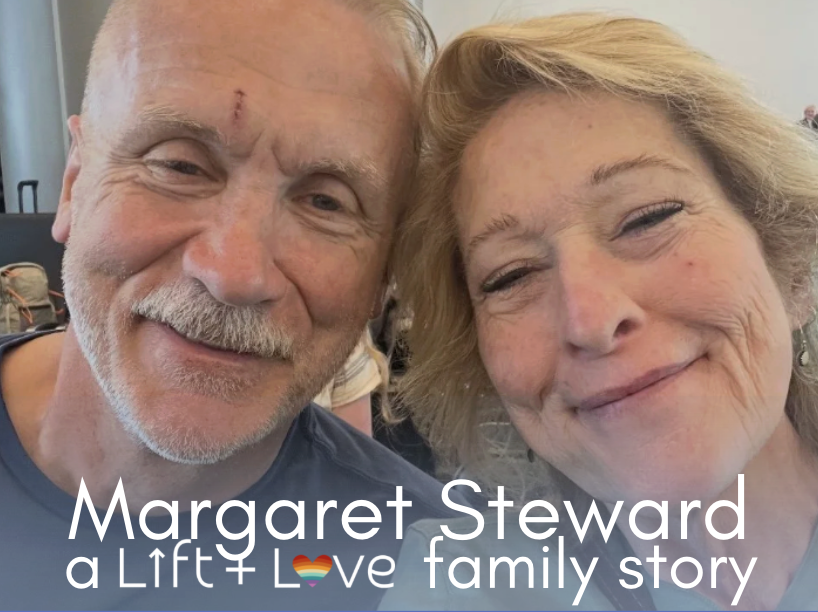
MARGARET STEWARD
Margaret Steward didn’t grow up imagining she’d one day be the wife of a mission president, or the woman quietly fielding whispers after her husband came out as gay…
At first, romance was the furthest thing from Margaret’s mind. She was on a dating break and says she liked hanging out, but not like that. She wasn’t exactly leaning in. But Travis liked being with Margaret and said he could see himself marrying her, though he’d never had a girlfriend before. “I thought he was just a shy and inexperienced guy,” she says. “But being together felt comfortable. He’d always wanted to be married and have a family. And we enjoyed each other…”
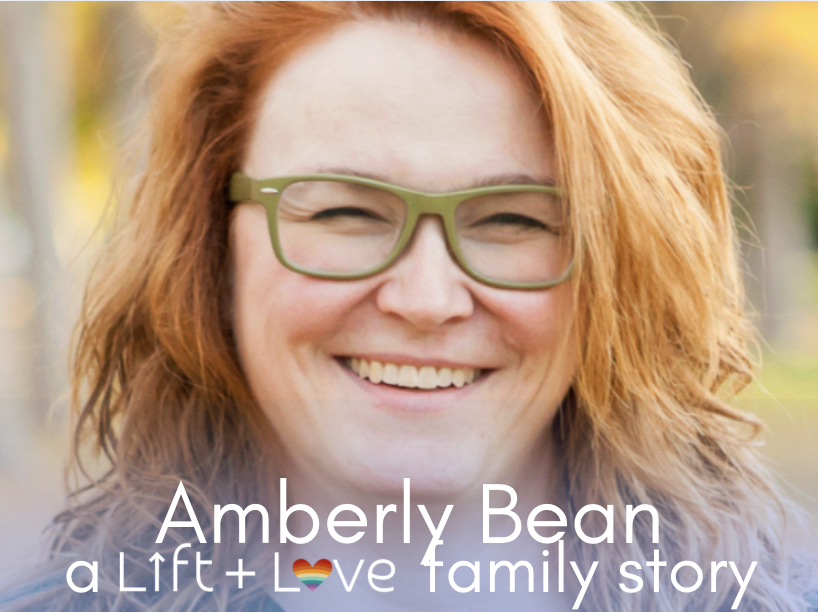
We previously shared Travis Steward’s story of being a gay man and former mission leader who came out after many decades of marriage. To read that story, click here
This is Margaret’s Steward’s story…
Margaret Steward didn’t grow up imagining she’d one day be the wife of a mission president, or the woman quietly fielding whispers after her husband came out as gay. She was born in Nephi, Utah, into what she calls “a super LDS community,” but her family stood slightly off-center from the mold. Her father was a 36-year-old small-town bachelor and partygoer when he met her mother, a 27-year-old schoolteacher. “They hooked up, got pregnant, and married. My mom didn’t want to be married,” Margaret recalls. “My sister always suspected my mom was a lesbian. Their whole marriage was a struggle.”
From a young age, Margaret understood what it felt like to live on the margins—not active LDS, raised in a turbulent household, constantly aware of difference. “My mom was a true original feminist who loved being in her skin—confident, capable,” she says. “My dad was a traditional white guy from small-town Utah. They were always going to get divorced, but they didn’t. They found a way to acclimate to each other.”
After high school, Margaret earned her associate’s degree from Snow College and—like “all good Snow College Badgers”—headed to Utah State. A friend asked if she’d ever thought about serving a mission. She resisted, having a boyfriend already out on a mission. But the minute she actually considered it, she felt the idea implant into her heart—while equally terrifying her. Despite that fear, she submitted her papers and was called to serve in Denmark—later learning through 23andMe that she was 55% Danish. “It felt divine. I had ancestors who served there in the 1800s. I was the fifth sister missionary sent to Denmark in over 20 years. It was an amazing experience.”
When she returned, Margaret moved to Provo, low on funds but full of momentum. She was living with former roommates and a mission companion while working retail when she met Travis Steward. Her former mission companion fell madly in love with one of his roommates, so the two got thrown together.
At first, romance was the furthest thing from Margaret’s mind. She was on a dating break and says she liked hanging out, but not like that. She wasn’t exactly leaning in. But Travis liked being with Margaret and said he could see himself marrying her, though he’d never had a girlfriend before. “I thought he was just a shy and inexperienced guy,” she says. “But being together felt comfortable. He’d always wanted to be married and have a family. And we enjoyed each other.”
The two got engaged and married within a few months. Travis worked at the MTC, and Margaret continued working at a department store. She got pregnant right away. “I wanted to be married but was terrified of kids,” she now admits. “It was just me and my sister growing up—no nieces or nephews. Little kids terrified me.” But Travis stepped in so naturally. “He was amazing with them. A great helper.”
Over the next four decades, they raised six children and served in high-level church callings, including three years as mission leaders in Houston. They took along their kids ages 18 to 4. Of that experience, Margaret says, “It was exhilarating and exhausting. But we loved it. We mourned every time a month would conclude knowing we had that much less time with the missionaries.” Their youngest children became immersed in Texas life, where they said their own version of a state pledge and made lots of friends and core memories.
Though she embraced the church callings that came their way, Margaret felt she never quite fit the “homemaker” mold. She says, “It was thrust upon me. I loved adventuring with my family, and I was irreverent at times. I paid attention to the way other mothers were doing things and worried that I was not doing it right. But the kids are alive. They survived.”
Margaret has taught in a range of church capacities—institute, Relief Society, Gospel Doctrine—and always approached those roles with thoughtfulness. But after they served as mission leaders and then as bishop for five years upon their return, when Travis came out publicly, things shifted. “There was a quietness after,” she said. “I was teaching seminary. He was in a student stake high council. People didn’t know what to do with us. Mostly because of what they’ve been taught—what it means to be gay or bi or whatever—and that you can’t lead if you are. Too risky. As if we aren’t all a risk at any given time.”
Still, she saw that most of it wasn’t rooted in malice. “I appreciate that people just don’t know what to do. It’s what they’ve picked up from the culture, not from a desire to be cruel.”
When asked what it was like to learn that her husband was gay after decades of marriage, Margaret says, “I’m an open book, sometimes to a fault. Some people don’t need to hear it all. I didn’t know what was there with Travis. There was just… a bit of a gap. Like I couldn’t fully see him. When he came out, I realized: that was it. That was the gap. He couldn’t show me all of who he was.”
She remembers the day clearly. Travis had been carrying the truth silently for some time. “He related that he felt the strong impression to tell me, but he didn’t want to. One Sunday morning, he closed our bedroom door and said, ‘I need to talk to you.’ Usually, it was me confessing something,” she laughs. “But I looked at him and the thought came, ‘Whatever comes out of his mouth, just hear it and accept it. Don’t assign meaning’.”
When he told her, she didn’t flinch. “I saw the man I’d loved for 30 years,” she says. “And I thought, I want to help hold this.”
There were complexities, of course. Travis was deeply closeted and had internalized years of shame. “He was terrified,” Margaret remembers. “But I had received this clear directive from the Holy Ghost: Here’s what you can do to help.”
The following two years were some of the hardest. Their shared life had been tightly interwoven through church service, callings, and community. But Travis lost his career after decades of devoted effort and investment. The loss was devastating. “Everything he feared came true,” Margaret says. “But eventually it got better. He was able to accept the truth of his experience without making it mean something dark.”
For Margaret, acceptance came more easily. “I didn’t have a lot of narratives to unravel. I’ve always believed that any person can find themselves on the margins at any time,” she says. “Our brains crave simplicity, but real life is more nuanced. God’s creation is expansive.”
Margaret also never defined herself as an “ally,” and still doesn’t. “Let me explain my thinking with that. Truth stands on its own merits I wonder when I hear someone speak of defending the truth. In my opinion, the truth doesn’t require defending. Simply because it is the truth. What our LGBTQ+ brothers and sisters experience is a lived truth. Exactly like our own. Nuanced, varying, and ever evolving as we experience and learn. No one has the answers as to how we arrive at the manifold attractions we experience.”
Her views on identity are similarly fluid. “While I recognize the need to orient ourselves in this mortal experience, we far too often simplify that process by sticking to polarities. Righteous-wicked, gay-straight, female-male, strong-weak, etc. Labels can be helpful for some, but for others, they become cages. I want people to be free to define themselves—and to change as they learn more about who they are.”
She also doesn’t lead with the term “mixed-orientation marriage,” yet because she recognizes there are more resources out there for parents of LGBTQ+ than for spouses, she tries to be a resource when asked. She and Travis remain married, still deeply connected. They spend much of their time adventuring together, also sharing those adventures with their kids and grandkids, especially at their off-the-grid cabin. One of their sons is gay, and Margaret’s sister is a lesbian married to a woman. Several others in their extended family fall along the LGBTQ+ spectrum. “From a young age, I just knew LGBTQ people were normal,” she says. “Growing up with friends and neighbors in my own small town, and my mission and college experiences only confirmed that.”
She recalls reading The Miracle of Forgiveness as a teen and bristling at President Kimball’s framing of homosexuality as "deep, dark sin." “I remember thinking of my sister and others I loved and just knowing: that wasn’t true.”
Margaret now works part-time as a receptionist at a therapy clinic for children and families. “I’ve always loved therapy,” she says. “Didn’t get a degree in it, but I’ve learned a lot just by being around it.”
She has been to a few LGBTQ conferences over the years, including one where she remembers looking around and thinking, “I will rejoice in the day when people don’t need a conference to legitimize their existence. Similarly, I never felt I needed a man in my life to feel whole. I haven’t viewed myself as half of anything. Nor have I had interest in attending events solely for women.” Still, she’s grateful those spaces exist. “I know not everyone was raised by strong women like I was,” she says. “Some people need those spaces to heal from their trauma.”
Margaret’s hope is for more curiosity and less programming. “Recently on the beach in Mexico, we met a beautiful trans woman and her wife,” Margaret recalls. “She was testing the waters to see if we were safe. When she learned we were still married after Travis came out, she was shocked. Even within LGBTQ+ spaces, we carry assumptions. We pick up narratives and use verbiage that is fraught with restricted thinking. I wish we could all be more open, more curious. More humble.”
At 64, Margaret has shed the need to define things too rigidly. “Life is too complex for boxes,” she says. “I thank my Heavenly Father for giving me the life experiences I’ve had. I don’t have to understand everything. I just need to love people. That’s enough.”
AMBERLY BEAN
Every month, Amberly Bean, 30, leads the Lift and Love youth support group on Zoom. She opens each session of new attendees with the same introductory joke, “I identify as lesbian but I’m married to a man but we’re not going to get into that tonight, it’s a long story.” Amberly and her husband Kendall have known each other since childhood. In fact, he was the name she’d throw out every time her middle school friends talked about the boys they liked, feeling he was a “safe crush because nothing would ever happen.” She laughs that, “Even when Kendall would hear that, there were no moves made—which felt really safe for me.”
content warning - sexual assault
Every month, Amberly Bean, 30, leads the Lift and Love youth support group on Zoom. She opens each session of new attendees with the same introductory joke, “I identify as lesbian but I’m married to a man but we’re not going to get into that tonight, it’s a long story.” Amberly and her husband Kendall have known each other since childhood. In fact, he was the name she’d throw out every time her middle school friends talked about the boys they liked, feeling he was a “safe crush because nothing would ever happen.” She laughs that, “Even when Kendall would hear that, there were no moves made—which felt really safe for me.”
After serving her mission and attending college, Amberly now lives with Kendall once again in Idaho Falls, ID, where she was raised in a devout and loving Latter-day Saint family. The oldest of three children, from the outside, her upbringing looked textbook—kind and faithful parents, an active church life, a close-knit community. But Amberly always knew there was something about her that was different.
She had come out to a close group of friends in her teens. But nearing the end of her high school years, the inner tension she felt with her faith reached its peak. “It was all or nothing,” she believed, rationalizing she could either be a lesbian or a member of the Church. There was no in-between. While she continued to attend church with her family, she said mentally, “for all intents and purposes, I was out.” During her senior year, Amberly experienced a tough break-up with a girl that felt like it was destroying her. She finally felt it was time to come out to her family and all her friends who cared about her.
Grateful to no longer hide so much of herself with her mom, whom she had always felt close with, she remembers her reaction as being as supportive as she could be at the time. Her mom’s words made her intentions clear: “I’ll love you no matter what you do, you’ll always be a part of our family. Nothing will change. But I know the Book of Mormon and gospel is where you’ll find guidance.” Determined to prove her wrong, Amberly asked herself, “How can any part of this faith guide me when it doesn’t even believe I exist?” But two weeks later after finishing the whole book, Amberly’s heart was moved in a way she didn’t expect. “I felt God with me. I didn’t know what would happen with my dating life or my future, but I knew I could figure things out if I had the gospel.”
That conviction led Amberly to prepare for a mission, in the second wave of 19-year-old sister missionaries. She was honest with her local leaders about past relationships with women, which initially led to the direction to wait a year before serving. The delay devastated Amberly, who felt unsure whether a straight person would have been given the same edict. But a week later, she was asked to meet with her stake president again, assuming there had been a logistical error.
Instead, her stake president shared an experience he’d had in the celestial room of the temple, where he distinctly envisioned her kneeling in a small room (which she recognized as her personal oasis where she spent time journaling, playing guitar, etc.). He felt she was ready to serve, and needed to go right away. Her mission papers were submitted that night.
That was the first time Amberly says she felt a confirmation that there is a lot of misunderstanding with how the church deals with queer members and their “sins and transgressions” and “what Heavenly Father actually feels about His queer children.” She says, “It was a big milestone moment for me.” She felt a very strong impression from above that her queerness is a gift. She does not believe her Heavenly Parents sent their kids down and said, “You guys get to be queer because it’s a trial and hard, so good luck.” Instead she has felt, “this is too pure of a thing to be bad.”
Serving in 2014, Amberly felt a deep desire to tell her story, but at the time, there were few visible LGBTQ+ Church members speaking openly—let alone affirmatively—about their identity and faith. She was worried that her news getting out on the mission “might not be kosher” while she was away from home sleeping in bedrooms with girls. She shared her story with one of her companions who then took it upon herself to tell someone else which started whispers around the mission which, later in her mission, resulted in Amberly getting emergency transferred under the pretense that she was gay and had a crush on the companion. Amberly said, “That’s hilarious. The first part is true, but this has been the hardest companionship I’ve had. Even trying to like her as a friend was hard.”
By the time she returned home, Amberly was emotionally exhausted and unsure how to navigate church life again. Once again, she took a break. Dating girls at BYU–Idaho was difficult, but something she ended up doing. Then came another heartbreak. A woman she’d believed she would spend her life with ended things, saying she was bisexual and thought she could make a relationship with a man work—something she didn’t think Amberly could do.
Feeling conflicted and reminded of painful past feelings, Amberly committed to being the best celibate member she could be. She tried dating men, but after coming out to one—her only serious attempt—he sexually assaulted her under the false belief that it was his duty to “fix her.”
The experience was traumatic and left Amberly certain she would never date a man again. The aftermath was confusing as she initially sought the support of leadership but instead felt blame. But transferring her records to a YSA branch back home in Idaho Falls was a turning point. This branch president was operating off of a reliance on the spirit about Amberly’s past romantic relationships with women. Through this branch president, Amberly found healing and increased trust for leadership, and men in general.
Amberly slowly rebuilt her sense of safety and belonging in the Church. She got her temple recommend back and committed to being “the best celibate lesbian ever,” convinced it was the only faithful path for someone like her.
Then Kendall, her “safe crush” who she’d known since elementary school, re-entered the picture. Amberly ran into Kendall’s mom and joked again about any of the handful of her boys being marriage potential. Amberly retorted, “I’d marry any of your boys.” Her number was passed along, and Kendall reached out during a spring break visit home. When she suggested hanging out, he declined and said instead that he’d love to take her on a date. Their first date lasted hours—they couldn’t stop talking. “It was the first time I actually liked a boy for real,” she says. “And it freaked me out.”
She laughs as she reflects that, “As Mormon dating goes, after two weeks, he said, he didn’t want to date anyone else. You?” Two weeks in, Kendall asked Amberly to be his girlfriend. She knew she had to “ruin it and tell him,” and feared the impending break-up. “I’m a lesbian,” she said over the phone. “I’ve only dated women.” Kendall didn’t miss a beat. “Do you still like me?” he asked. Upon her affirmative reply, he said, “Then I don’t see a problem if you don’t.”
Kendall’s steady support has become a hallmark of their relationship. They started dating in March of 2017 and married that August, though they’d known each other forever. Kendall finished his studies in physics at the University of Utah, while Amberly moved to Utah with him to work.
Now, nearly eight years later, they are raising two children—a five-year-old son and a toddler daughter—and building a life grounded in honesty, humor, and mutual respect. “It hasn’t always been a walk in the park,” Amberly admits. “We’ve done counseling. But in the past few years, it HAS been a walk in the park.”
“Kendall is pretty chill and secure,” says Amberly. “He sees this as just a part of who I am. He doesn’t need a ton of outside support, though we’ve connected with other mixed-orientation couples. We talk enough to be each other’s support.”
The couple used to be involved with Northstar but now mostly affiliate with their Lift & Love community, where Amberly loves leading her monthly groups with Kelly Cook. “We usually have four or five kids show up, sometimes more. We chat, do icebreakers, let them go for it and they talk. I love it. It’s something I would have loved to have as a youth in the church.” She says, “Out of the queer kids who attend, they’re mostly still active in the Church, trying to navigate that. Their hope and optimism is contagious.”
Post-COVID and postpartum, four years ago, Amberly felt she wanted to be more authentic about her identity in their “very small, very Mormon community.” Coming out in her current ward was a process. For some time, she’d hidden behind her role as Kendall’s wife, struggling to feel like her authentic self. “I felt like a shell,” she says. “It festered.” She knew something had to shift.
“I told Kendall I needed to come out,” she says. “And he said, ‘Then let’s figure out the best way to do that for you.” With his support and the encouragement of a few trusted friends in her ward, including a YW president she served with who promised solidarity, Amberly began telling her story.
The result? “Not much changed,” she says. Her bishop came over to chat, and it was a good experience. She felt well supported. She says, “Even though I’m not talking all the time about how gay I am, it hardly comes up actually… But if it does in context, I feel the freedom to say something. I can be authentic.” She continues, “People in church don’t realize—coming out in church is not so I can talk about being gay, but so I can feel my friends know me. This is a big part of me.”
She wants her kids to grow up seeing the full range of possibilities, and will talk to them about it someday. “I want them to see that you can be queer and have a happy, fulfilled life in the Church. And I want them to see that people outside the Church can be happy too.” Amberly believes more people need to see both sides of the coin.
MONICA, HORACIO, & CAYLIN
Monica Bousfield met her husband Horacio Frey in the fortuitous aisles of Babies R Us, where they both worked in the early 2000s. At first, they were just friends. Then best friends. Then after about a year of hanging out constantly, they surmised they must be dating. A year later, Monica nudged Horacio that it was probably time for them to go ahead and get married. After an eight-month engagement, they did, and while they eventually both left Babies R Us, their commitment to each other later resulted in two babies they would together raise. Through all this, Monica kept her maiden name—primarily because she’d never known of another couple like her and Horacio to last, and she didn’t want to complicate legal paperwork around having to undergo name changes twice. Monica had never heard of a woman marrying a gay man and having it not end in divorce. While she’d known Horacio was gay from their early days of hanging out, there were two other things she knew about Horacio: he was her best friend, and she wanted to marry him. Over two decades later, the couple is still making it work in Westminster, Colorado, where they have two children—Caylin, who is 17 and also identifies as queer, and Dominic—13.
While Horacio has known he’s gay since a young age, this is the first time he has come out publicly. His childhood was marked with hardships, having suffered abuse and being adopted at age eight, which created abandonment issues. He came out to a few friends and his parents in high school, but very few people knew he was gay when he married Monica. He had been raised in a Christian church community in Santa Fe, New Mexico. While it was an open affirming congregation, Horacio opted for the white picket fence and kids route that was so highly encouraged. When he met Monica, she was not active in the LDS faith of her family of origin, but after their daughter was born, Monica says, “I realized I had this amazing, super special kid, and started going back to church gradually and then more actively.” After about five or six years of attending by herself with Caylin, Horacio converted. Monica laughs that she has the kind of mom who, every time they went to her house for dinner, would make sure the missionaries just happened to be there. Finally, Monica says, “She had a set there with the right personality at the right time.”
Horacio’s bachelor’s degree in Information Systems Security brought him to Colorado. After receiving her bachelor’s at what is now UVU, Monica started a graduate school program in counseling at CU Denver. But three years into the program and then married, she found while she loved learning about counseling, she had no desire to go into the practice. Instead, Monica went into management at Babies R Us, and then got her masters in HR. Now she works for a local municipality in compensation and benefits, a job she loves. Horacio works as a tech manager for a solar company.
Monica says, “if you’re going to marry someone who’s gay and you’re not, you need to be pretty confident, but we figured we’d never know if our marriage would work out unless we got married.” The beginning of their union felt lonely for Monica, having no one she could talk to who could relate to her variety of issues. “I internalized a lot, which is probably not healthy. But I didn’t want to out him. When others would talk about how great their marriage was, I was like, ‘Um, yeah…’” Monica didn’t actualize that hers was not the only mixed orientation marriage in existence until a few years ago. But of her almost-exclusive status, she says, “It doesn’t go away and it’s not easy. I’m not going to say it’s not worth it, but it’s not easy.” Horacio agrees it’s been difficult as well from his perspective with the couple talking about it, then not talking about it, when perhaps they should have more often. But after lots of counseling, he says, “We’re committed to making it work and have no interested in getting divorced or not making it work.” Monica appreciates how Horacio is still her best friend, despite the complexity of their issues.
Five years ago, new information about their children brought the two even closer together. Around the same time that Dominic (at age 8) was identified as being on the autism spectrum, Caylin revealed that she’s queer. Of their kids, Monica says, “She’s very creative, and he’s very, very logical. It’s two extremes, and definitely makes things interesting.”
While Monica was shocked about Caylin’s admission, Horacio was not as surprised, after Caylin had recently played Christina Aguilera’s “You are Beautiful” at the dining room table and asked her dad if he’d still love her if she came out. It was 2020 during the pandemic, and the family had spent much of their time together in quarantine. One afternoon, while on her way to her first outing to a friend’s house in a long while, Caylin sat in the back of her parent’s car, quietly drafting a text. She didn’t hit send until she’d safely entered her friend’s front door, and Monica and Horacio drove home in shock, processing. Besides the blindsiding of the information itself, they were now also apparently “old” because they had no idea what Caylin meant by: “I’m coming out as pansexual.” Monica googled it on their drive, while her heart stung with the second half of Caylin’s text: “I hope you still love me after this is over and done with.” Of course they did, she says.
However, needing more time to process as she hadn’t heard of a 12-year-old coming out that young before, Monica sent Horacio to pick up their daughter. When he pulled up to the house in a slight rainfall, he saw a rainbow in the sky behind Caylin’s friend’s roof. A scene that felt “picture perfect.” Caylin got in the car and Horacio abruptly revealed he was mad at his daughter--only because she had told him in a text and not in person. The two went and got ice cream at Chic-fil-A (Monica now laughs at the irony of that), and Horacio explained to his daughter that he was in a position to understand what Caylin was feeling. He revealed, “Not that I want to steal your story, but I understand because I identify as gay.” Horacio went on to explain how Caylin could still have church values, even though there is a lot of stigma in church communities about how to act. Horacio clarified, “You don’t have to do anything you don’t want to. Your mother and I still love you and will navigate with you, and you’ll get through it.”
Caylin says she’d known she “was some flavor of gay” since age nine, just growing up in the internet age, though she didn’t always have words for what she felt. She now prefers to identify as queer instead of pansexual, and says it has been hard to “figure out what I actually am and to surround myself with people who would accept me, especially in the church where a lot of people don’t necessarily agree with all of that.” Now a senior in high school, the church is still a part of Caylin’s life as she attends sacrament meetings on Sundays, but she prefers to go to Relief Society with her mom over Young Women’s. She also prefers to avoid seminary and youth activities, and keeps quiet about how she identifies at church. The family’s ward is small and skews a bit older and more conservative. With few youth, there are fewer opportunities for friendships. Caylin says her school has its ups and downs, but she has a good friend group and likes to do art and read fiction and romance books--the Caraval book series being a favorite. She also participates in theater, and is on the costume crew for the school’s current production of Chicago. While dating has been a part of her teen years, she’s not currently seeing anyone.
Shortly after Caylin came out to her parents at age 13, she was sitting at a stoplight with her mom. Monica remembers her saying, “Mom, I don’t know why God hates gay people.” Monica asked what she meant by that, reiterating that God loves everybody. Caylin replied, “I don’t know why gay people can’t get married in the temple, have kids, and do all the things.” Monica feels this messaging kids receive while sitting in the pews is important to share, as the words hit hard and create more harm than some may intend. While it took Monica herself time to process the news Caylin shared via text that day, she now feels protective “like a mama bear” and wears a rainbow pin and speaks up when it feels appropriate, which can be hard to gage in their ward. Horacio also wears some sort of rainbow every Sunday.
The family has attended some of the events sponsored by their local ally group Rainbow COnnection, which was started by members of their stake. While Monica’s an introvert, she values the gatherings. In her extended family circle, people tend to more quietly share big news to avoid big reactions. Monica has appreciated how talking with her relatives about Caylin has strengthened her relationship with her family members who were raised in a world where their family “looked good on the outside but weren’t that close.” Nowadays, they’re working on being closer at home.
Caylin says sharing a unique identifier alongside her dad has helped her to feel less alone. She now focuses on not letting others’ opinions bother her. One Sunday, after a lesson in which someone expressed how they had a kid “struggling with LGBTQ issues,” Caylin walked out into the hall and toward their car, confidently telling her mom, “I’m not struggling with LGBTQ issues. I’m quite good with them.”
For Monica, who has kept much close to her heart over the 20+ years of her marriage, she longs for a day when it feels more comfortable for people to share what they’re experiencing at church in a real way, instead of trying to present the image of “being perfect.” She says, “Wouldn’t it be wonderful if people could say, ‘I’m really struggling with this,’ instead of ‘Life is great’! I’ve dealt with a lot on my own, which is probably not the best way to handle things.” She continues, “It’s good more people have been talking about this in the last few years. It’s important to get out there and hear about it and share, so you don’t feel so alone.”
MARY ANN ANDERSEN
Mary Ann Andersen had always believed that love was unconditional, yet nothing could have prepared her for the totally unexpected revelation that would reshape her life and her marriage. For years she had built a life with Dave, a man she knew as a devoted husband, caring father of four, and committed member of the Church of Jesus Christ of Latter-Day Saints. Their days were marked by shared routines: family dinners filled with laughter, lively discussions, the typical demands of raising kids, and the steady pressure of church and community service. Yet, beneath this familiar rhythm lay a secret that would eventually alter the contour of their relationship…
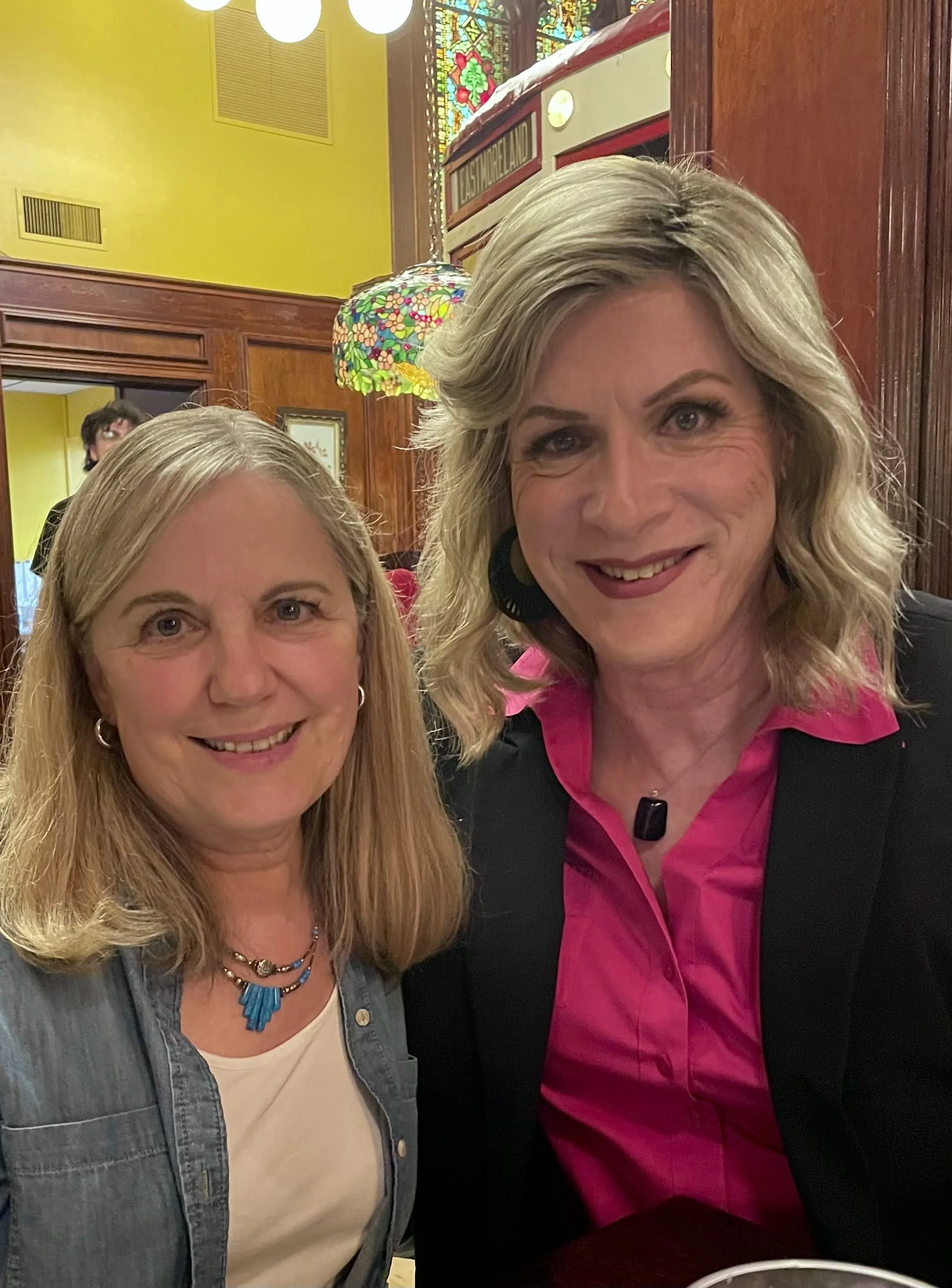
Mary Ann Andersen had always believed that love was unconditional, yet nothing could have prepared her for the totally unexpected revelation that would reshape her life and her marriage. For years she had built a life with Dave, a man she knew as a devoted husband, caring father of four, and committed member of the Church of Jesus Christ of Latter-Day Saints. Their days were marked by shared routines: family dinners filled with laughter, lively discussions, the typical demands of raising kids, and the steady pressure of church and community service. Yet, beneath this familiar rhythm lay a secret that would eventually alter the contour of their relationship.
It began 14 years into their marriage in 1993, when Dave confided in Mary Ann about the inner conflict he had carried since youth—a dissonance born of a desire to express a feminine side he had long kept hidden. At the time, Mary Ann was busy raising four kids and managing a farm and bed and breakfast while Dave worked full-time and served as the bishop of their ward. Dave had always gone to great lengths to keep his feminine interests and clothing hidden, though Mary Ann had observed how complementary Dave was about how she did her own hair and makeup. “It didn’t make a lot of sense back then, but I just thought what a goldmine of a husband I had that he even noticed. But really Jennifer was living her life through me.” While some wives might have loved having their husbands encourage more facials and makeovers, Mary Ann started to resent this, wondering if she wasn’t attractive enough for her husband.
Back then the term “transgender” was nearly unknown, and the idea that the man she loved might also be the woman he felt inside was as bewildering as it was painful for Mary Ann. She remembers that Dave’s first hesitant admission was filled with both fear and hope for understanding. As Dave revealed that he carried within him a longing to be seen as female, Mary Ann felt shock, confusion, and an aching vulnerability. She wondered if her husband was gay and wouldn’t admit the truth to her. “And why didn’t he tell me this before we got married?” Back then, they both didn’t fully understand the difference between sexual orientation, gender identity, and gender dysphoria. After a difficult month of trying to process this news and wandering the aisles of local bookstores and libraries to pour over whatever literature she could find in search of answers, Mary Ann informed Dave, “I can’t change who I am, and I’m not attracted to women. This isn’t going to work for our marriage.” She figured he would do the “right thing” because he had always done so in the past. Being raised in the church, and being a teenager during the 70’s, it was taught that being gay was a choice, it was so black and white. This is something you can choose not to do. So the two shelved the topic for over two decades, never bringing it up or discussing Dave’s confession. She figured he had control over it.
Yet over the last ten years, as Mary Ann began meeting people from the LGBTQ+ community and hearing their lived experiences, her perspective began to shift. She learned that transgender identity was not a flaw or a choice, but an aspect of human diversity. Slowly, her heart softened. The realization eventually came that the hidden part of Dave’s soul—Jennifer—was not a betrayal of their love but a long-suppressed truth that needed to be acknowledged. It was in 2018 that Dave came forward a second time, revealing his authentic self as Jennifer. This time, the revelation carried with it both shock and sorrow—as Mary Ann recognized the pain Dave had suffered suppressing this side of him for so many years. It also caught her by surprise and many conversations ensued. She did a lot of soul searching to understand her own feelings and how to make things work in her marriage.
In 2020, when they felt it was time to tell their children and their spouses, Mary Ann was concerned how they would receive the news. She knew they would be surprised and shocked because she remembered feeling that way the first time she found out about Jennifer. It took time for their children to process the news and to their credit they led with love, acceptance, and curiosity. Each child was concerned with how their mom was coping with this change. Mary Ann appreciated their checking in with her. The Andersen grandchildren, accustomed to the familiar image of their granddad gradually were introduced to Jennifer and soon began to accept this new reality.
Their oldest son, Blaine, shares this insight about his journey. “Prior to my father revealing to me that he was part of the transgender community, I had recently chosen to leave the comfort and security of my Mormon-influenced worldview. Part of this process involved the painful re-evaluation of what I once believed to be etched in stone. My soul dragged my mind to a state of intrepid curiosity. This beautiful ‘hell’ I found myself in was the ideal climate for learning that my parent had far more dimension than what was previously known. Knee jerk, black and white thinking had been replaced with an ability to see nuance and adjust focus, which I had control over. I was able to give myself permission to explore the world through his/her eyes without the crippling fear that I was on the wrong side.” Knowing that her family continued to love and support them lifted a huge burden from Mary Ann’s soul.
Blaine continued, “When a person comes out as trans, it’s important for all affected parties to have compassion. My initial reaction was that of acceptance, love and curiosity. But to be sure, I have dealt with feelings of loss and second guessing along the way. I admittedly have many more miles to cover on this journey and I have made peace with the idea that it's okay to feel a range of emotions. Patience, humility, love, and curiosity have been effective checks and balances for me. My father and Jennifer are both amazing. They are incredibly courageous and loving. Members of the LGBTQ+ community add a depth and spirit that is badly needed in our world.”
Mary Ann says that, “Now that Jennifer is out, we laugh more. We can be ourselves, and are more relaxed. We definitely communicate better.” Mary Ann laughs at how with her spouse alternating throughout the week between presenting as Dave and Jennifer, she avoids name confusion by calling her spouse “Babe.”
Mary Ann has found that the outside world, particularly the church and some segments of their broader community, have been slow to offer support. In church circles, Mary Ann was often asked hurtful questions like, “Why do you stay in your marriage?” Or “What’s wrong with you?” instead of questions she’d prefer like, “How do you make it work?” She does appreciate some LDS friends and others who have remained loyal and caring, and who often open conversations with her and others by modeling the welcoming words, “Tell me more.”
In their former stake, where news of Jennifer’s emergence spread like wildfire, some of those who the Andersens once considered friends began to distance themselves, and invitations to gatherings dwindled. For a variety of reasons, Mary Ann stopped attending church services altogether. This happened well before Dave began attending church as Jennifer in 2022. Now, neither attend LDS services, instead preferring to attend another more welcoming congregation in town.
Mary Ann’s decision to step away from the church, largely due to their LGBTQ+ policies, was met with a reticence from many who remained. She says, “I’ve noticed when I let people know I no longer attend, they’re almost a little fearful of me. They don’t want to engage with me. I don’t hold any weight anymore; when you leave, you’re no longer believable nor credible.”
As Mary Ann has listened to the stories of other spouses of trans individuals and engaged with the broader LGBTQ+ community, she’s come to understand Dave’s struggle was never a denial of her worth, but rather a reflection of the rigid expectations imposed upon them by doctrine and culture. She says, “I now understand that this isn’t a choice, this is who these people are and they’re not broken. It’s made me open my arms to humanity and not just our little church world.” This realization has been liberating for Mary Ann, paving the way for a profound redefinition of what it means to love and be loved.
A voracious reader and talented seamstress, and as one who genuinely enjoys learning from and listening to others’ stories, Mary Ann loves to engage with those around her, and has always pursued her own passions and interests. Her organic skincare business, formed due to her own experiences having sensitive skin, flourished for a decade as an online business. In sharing her creative pursuits with Jennifer—offering alterations, fashion advice, and collaborating on projects—their lives have become interwoven in new, dynamic ways.
The evolution of their marriage also brought changes in how Mary Ann and Jennifer spend their time together. While Mary Ann doesn’t like to shop as much as Jennifer does, she loves to go out to dinner and to the beach with their friends. Mary Ann cherishes any time spent with their four children, their spouses, and their 11 grandkids, 5 of whom live nearby in their Oregon community. And Mary Ann has observed how Jennifer, now free to be her authentic self, has become much more social. They both enjoy attending dinners with their friends in the Rose City transgender group (including spouses), and participating in Affirmation, Gather, and other trans-affirming conferences where they both feel well understood.
While Mary Ann did not know this part of her spouse before they married, she understands Dave’s former presumption that it would all go away if he just “married a good wife.” She recognizes now that Dave didn’t have the words for what he was experiencing. Mary Ann has always appreciated how her spouse has been “such a wonderful, kind, thoughtful person and very much a team member with raising our kids, and still is.” As Jennifer emerged, their relationship was tested and ultimately transformed but Mary Ann embraces the belief that no marriage remains static.
“Having always enjoyed people and hearing their stories, I like this version of me so much better. It’s so much healthier. There’s a whole new world out there, with amazing, wonderful people. This has all made me more friendly, and more able to depart from my comfort zone.” Mary Ann acknowledges, “I didn’t sign up for this, and it’s not what I agreed to. But on the other hand, if you thought your spouse would never change and will always be the same person you married, that’s a grave misconception. The key is to grow and change together—to support each other, give each other space, and let them be who they are.”
Jennifer Thomas
Born as a biological male and raised in the conservative milieu of the Church of Jesus Christ of Latter-Day Saints, Jennifer Thomas spent much of her early life navigating a path dictated by strict cultural and religious expectations. In her late 60s now, and having been married for over 45 years to Mary Ann Andersen with whom she’s raised four children, Jennifer’s life has been predicated with duty, love, and a quiet yearning for authenticity. But behind the familiar roles of husband, father, and devoted church member lingered a deeply personal struggle—a battle to reconcile the masculine identity imposed by society with a more gentle, unacknowledged feminine soul.
From an early age, Jennifer was drawn to what many would label as “feminine.” In a world where boys were not expected to be curious about the styles and hobbies reserved for girls, she found herself captivated by women’s fashion magazines and the allure of makeup and hairstyles. Yet in an environment where exploration of one’s gender identity was discouraged, if not outright condemned, she learned quickly that expressing even a hint of her proclivities was equivalent to admitting to a profound brokenness. For years, she suppressed this part of herself. But as she grew into the expected roles of dutiful spouse, father, and eventually as a respected leader serving as bishop and later in a stake presidency—Jennifer’s dissonance persisted. The man known as Dave Andersen carried a secret internal world, where the desire to express a feminine identity was a source of intense guilt.
It was during a period of solo travel that Jennifer (as Dave) wandered into a second-hand store and purchased a pair of high heels and a few pieces of women’s clothing—a small act of defiance. In the seclusion of a hotel room, Dave (who interchanges names and pronouns) dressed as a woman. But the exhilaration was short-lived, replaced swiftly by a torrent of guilt and shame. Soon after, he revealed his secret to his wife Mary Ann, a revelation that pre-internet, took her by complete surprise. She assumed the revelation indicated that he was gay—and also made it very clear she was not attracted to women. Dave conceded and discarded his hidden stash of feminine clothing. For over 20 years, the conversation was shelved.
Throughout the intervening decades, Dave’s internal struggle deepened. Despite outward success in his software career and the accolades of leadership within the church, the man behind the title wrestled continuously with the guilt of having surrendered to the feminine inclinations he could no longer silence completely. He sought therapy from a psychologist who specialized in gender issues, and who explained that his experiences were not a pathology but rather a natural variation of human identity—a perspective that, though liberating in theory, was too difficult for Dave to accept at the time so he quit therapy. As bishop, he confided his grappling with gender dysphoria to his stake president, who assured him all bishops have something with which they struggle.
Over time, however, the framework of Dave’s early, more rigid beliefs began to crumble under the weight of new insights as he and Mary Ann encountered a stage of reflective, critical engagement with their faith and its teachings. They began to explore church history through gospel topic essays that revealed a more complex and sometimes contradictory narrative than the one they had previously been taught. This awakening paved the way for Dave to confront many other longstanding positions. He says, “Though I had spent my entire adult life believing and teaching that homosexuality was ultimately a sinful choice and that it was contagious (as the Church had forcefully taught in earlier times), my wife and I felt a need to reexamine those beliefs.” In his discovery, the realization that the feminine aspects of his identity were not a flaw to be cured but an essential part of his human experience began to take root.
More than two decades after that initial, painful confession, Dave once again opened up about his transgender feelings to Mary Ann. He explained that his inner experience had never truly dissipated, and recounted the recurring cycle of secret dressing, the inevitable purges, and the intense internal battles waged between the desire for authenticity and the fear of societal and ecclesiastical rejection. Though taken aback by the revelation, this time Mary Ann, who had evolved in her own beliefs about the LGBTQ+ community and come to understand that gender identity is separate from sexual orientation, was more open to her husband’s revelation. Though it was still not an easy thing for her. But her reassurance that she still loved him and valued the qualities that made him who he was became a turning point in their marriage and in his journey toward self-acceptance.
Mary Ann wondered if Dave might approach a time in which he’d fully transition. Of that reasonable fear, Dave said, “While nobody can know for sure that feelings will never change, the passage of time has led to both of us being more confident that, in my particular case, full-time transition is neither needed nor desired. Even so, we understand that for many transgender individuals, full-time transition appears as the only viable path for relief from debilitating gender dysphoria.” The couple extends compassion to all who “travel this often-challenging path.”
Emboldened by Mary Ann’s support, Dave began to more fully embrace the identity of Jennifer. But at first, her reticence to be seen as Jennifer in town included well-plotted escapades. For instance, Mary Ann would sometimes drive Jennifer (hunkered down in the backseat of the car under a blanket) past their adult son’s family’s house a mile away, whereafter Mary Ann would get out of the car at a secluded park and run home, while Jennifer continued into town to run errands. Nowadays, both Dave and Jennifer are roles their family embraces openly. In 2020, when Dave and Mary Ann individually met face-to-face with each of their adult children to share some important news, the kids anticipated they might hear of a divorce or cancer diagnosis. But of being introduced to Jennifer, their daughter said, “You couldn’t have picked a better year to tell us this, because nothing surprises us anymore.” The kids were all very loving in their responses, though it’s certainly been a process as some have expressed they were worried about losing the dad they once knew. There have been a lot of questions, including curious ones asked by the grandkids who have met Jennifer. Some even eagerly anticipate Jennifer being the one they will see when visiting.
Of her dad’s revelation, daughter Aubrey says, “It was a very big shock for sure. Wrapping my head around it was difficult; it was an emotional roller coaster. But in that moment, I knew that I still loved my dad very much… I was not going to disown him for being his true self. I couldn’t imagine what he had been through, with all the years of torment and feeling broken because he couldn’t be his authentic self. I could sense the relief and freedom he felt once he told me about his journey and how he’s been able to accept himself.” Another daughter, Melinda, credits her parents’ own example throughout life of leading with curiosity and love rather than with fear and defensiveness as instrumental to their acceptance of their dad’s news. She says, “It was so meaningful to witness all of us prioritize that when learning about my dad's journey - that you don't have to fully relate to or understand someone's own journey to love and support them; that maintaining safety and support among family members matters more than a perfect comprehension of someone's life path.”
In the equally supportive environment of local transgender groups, such as the Rose City group, Jennifer has found a community of kindred spirits who understand her experience. She recalls with vivid clarity the first time she walked into a restaurant dressed as a woman—nervous, yet buoyed by the welcoming smiles and greetings of others there facing similar struggles. Mary Ann often accompanies her to these dinners, where she enjoys meeting the other spouses and partners and “has no qualms about being out in public with me when I’m presenting as Jennifer.”
Living in Forest Grove, Oregon—a place celebrated for its open, accepting community—Jennifer has also become an active participant in local civic life. Serving on several boards and commissions, she’s open about her dual presentation, sometimes appearing as Dave and at other times as Jennifer. She says the response from the community has been overwhelmingly positive. In a gesture of recognition of her unique identity, the mayor even presented her with two separate name placards in acknowledgment of her contributions and affirmed her authenticity. A school board member, impressed by her forthrightness, invited her to join a budget committee. Such affirmations contrast starkly with some of the institutional barriers Jennifer has encountered within the church space.
Determined to foster a greater understanding of transgender realities among church leaders, Jennifer eventually began the delicate process of coming out within her local congregation. Initially, she met with the bishop and the stake president to explain her experience—not as an act of repentance, but as a candid disclosure of her truth. In August 2021, with cautious support, she addressed her ward during a sacrament meeting, affirming her identity as part of the LGBTQ+ community. The response was mixed; some members expressed gratitude for her vulnerability, while others remained silent or visibly uncomfortable. For nearly a year thereafter, she continued to attend church services in “male mode” as Dave, until the growing dissonance between her internal self and her public persona became unbearable. In July 2022, after much prayer and reflection, she made the courageous decision to attend church services as Jennifer, explaining that worshiping in her authentic self allowed her to experience a deeper, more complete connection with God. That first Sunday as Jennifer came with a blend of hope and trepidation—while the bishop greeted her with warmth and several sisters offered genuine support, many in the congregation were hesitant, unsure how to reconcile this new facet of the person they thought they knew.
Soon after, however, institutional boundaries reasserted themselves. The stake president and bishop, who had initially shown support, determined that presenting as Jennifer at church was crossing handbook-stipulated lines. Membership restrictions were imposed, including the cancellation of her temple recommend and she was barred from holding certain callings and participation in priesthood ordinances. These limitations were a difficult reminder of the church’s ongoing struggle to accommodate transgender members. Despite these setbacks, Jennifer’s local congregation continued to offer small gestures of acceptance—occasional invitations to offer prayers in sacrament meeting, with her female name announced as a subtle nod of respect. After the policies announced in August 2024 banning transgender individuals from attending second hour meetings if presenting contrary to their gender assigned at birth, Jennifer and Mary Ann have decided to attend church elsewhere at a more welcoming church in their town where Jennifer is welcomed and has been invited to share her story.
Outside of church, Jennifer’s life has flourished in unexpected ways. In her community in Forest Grove, she maintains a balanced schedule that honors both sides of her identity. Typically, Sundays and Wednesdays are dedicated to living as Jennifer—on Sundays, she attends church in her true form, and on Wednesdays, she and Mary Ann often go out to dinner with friends. She says, “For most of my adult life at church, I would contemplate, ‘Am I being a good person or not?’ One way I would determine that is if I had caved into feminine inclinations. But now, to show up as, ‘Here I am, God – it’s me, Jennifer. I‘m not hiding anything anymore…’ I feel amazing, whole, complete, and the closest to God than I’ve ever felt before. So I don’t like to worship as Dave anymore. I prefer worshipping as Jennifer now.” But on other days, she presents as Dave, a nod to the past that still informs her understanding of herself. Even in retirement, after a long career as a software engineer at Intel—a role in which she was known as much for her innovative spirit as for her playful, entrepreneurial flair—Jennifer continues to seek out new spaces for self-expression.
Through thoughtful posts on social media where she contributes to Facebook groups (as Dave in Richard Ostler’s Ministering Resources group and as Jennifer in the Transactive LDS Support group), and in writing reflective articles—such as the one she published in Exponent 2 recounting her transformative experience of worshiping as Jennifer, she invites others to reconsider their own assumptions about gender, authenticity, and the nature of spiritual connection. She also reflects how recent policies have pushed so many friends in the transgender space out of the LDS faith.
With the recent administration coming into power, Jennifer recounts how the trans community is largely reeling from multiple shocks in quick succession. She says, “It’s more important than ever to maintain a sense of community. These are very difficult, tumultuous, trying times. It’s been even more than we anticipated and worse than we imagined, and it’s happening so fast.” Jennifer also reflects, “As horrible as what’s happening right now at a national level, sadly, there’s a case that the Mormon church got there first and did it worse, with the August 18, 2024 trans policy. While the government won’t let us serve in the military or acknowledge we exist, the church essentially declared us a danger and threat to youth and children. I can’t even be in a Relief Society classroom with cisgender women.” Jennifer is confident a lot of members still don’t even know about the recent LDS church policy affecting the trans community.
In sharing her journey, Jennifer hopes to show that there is beauty in the fluidity of identity—that the interplay between the masculine and the feminine need not be a source of shame, but rather a celebration of the full spectrum of the human experience. Whether known as Dave or recognized as Jennifer, she hopes the essence of who she is remains unchanged: a person of depth, courage, and grace committed to living truthfully in a world that often demands conformity. She hopes her lived experience serves as a quiet revolution—a daily act of defiance against a legacy of repression, and a hopeful step toward a future where every individual is free to be their authentic self.
LIV MENDOZA HAYNES
Liv laughs that no, Matthew does not get nervous when she goes away for a weekend with her lesbian friends. “I feel that if my husband didn’t trust me to be alone with someone of the same gender, we have a bigger problem. It’s about integrity, faithfulness, and values.” Matthew was not as familiar with the LGBTQ+ community before Liv, but she laughs he now has several lesbian friends of his own. Liv does not recommend a mixed orientation marriage for everyone, and says it took her years to figure out what works for her. “We’ve both grown a lot from being together… It’s a mixed relationship in many degrees – culture, orientation, language. I’m social sciences, he's exact sciences. We have enough in common to have a path together – but enough diversity to learn from each other every day – which is key to our marriage.”
Liv Mendoza Haynes claims she fits the birth order stereotype. As the last of three kids, she was the much younger spoiled baby of the family who could convince her parents to cook an alternate meal if the initial wasn’t to her liking. But being raised in a Catholic home with high expectations, she adapted accordingly as she grew. Her mother was in and out of hospitals with illness, leaving Liv’s much older sister to care for her and her brother when they were not at Catholic school. Once Liv began to notice the family had financial struggles, she minimized her special requests.
Though Liv and her brother were born in America, they were raised in Tijuana, Mexico, where her father worked long shifts as a police officer, and her mother often left the kids to be babysat with a good friend who was a known drag queen. Liv remembers it being no big deal that the babysitter would have peers from his drag community stop by for wardrobe fittings while Liv was there. She was told it was no big deal for men to be gay, but her parents spoke negatively about women who were lesbian. Her father would also express distaste for women who joined the police force or who became “manly, lost their attractiveness, and didn’t know their place.” Liv was taught that one of the worst things she could do would be to be with a woman or to not be feminine.
This presented a problem as, while Liv was extremely close to her mom and sister, she did not share their love for makeup, high heels, and feminine things. Liv preferred her daily jeans, t-shirt, and Converse. She developed her first technical crush on a boy in the first grade, but strategically chose a boy who was mean to her, knowing it would never work out although it would help disguise the way she felt about girls from an early age. As her mother’s health declined, Liv sensed she needed to not add to the family burden by disappointing them with her attractions. She shared her mother’s and sister’s strong personality and kept her friend group small, having the same small cluster of three or four friends throughout her school years.
In high school, Liv dated an LDS young man, but was his last girlfriend, and he is now married to a man. He would often joke with her about LDS myths. Around this same time, Liv’s ex’s brother decided to go on a mission[LM8] , and told Liv to keep an eye on his parents. While he was gone, he referred the missionaries to her door while she was baking a cake. One elder mentioned it was his companion’s birthday that Thursday and Liv said, “What do you want me to do about it? You can come back for food or water, but that’s it.” The elders left, and Liv followed a prompting to run after them and offer them cake at 2pm on Thursday—assuming they wouldn’t be able to come then. But they did, and Liv began taking lessons. One day, she invited a handful of missionaries over and made popcorn so they could all watch a Joseph Smith video, per her request. After they asked if she had any questions, and she asked why they hadn’t yet challenged her to be baptized? She sidestepped telling her parents until the following May, but was baptized that December. And yes, there was cake.
Throughout her teens and young adulthood, Liv noticed her feelings for women even more, and did have a relationship with a woman. When her mother felt it was time for her to have “the talk,” she handed Liv a VHS tape and told her if she had any questions, to ask her sister. But as the tape shared no tips about orientation, rather it was a childbirth video, Liv only walked away from that experience traumatized, thinking “I’m never going to have intimacy if it leads to that.” But it cemented the expectation in her mind that the expectation was for her to have a family. While in high school, Liv’s mom teased she had a “type” of guy she’d go on dates with (those into the arts and cooking who had more androgynous, scrawny body types). Around age 17, Liv started struggling with health conditions of her own, and found out she had a higher chance of getting cancer than becoming a mom. Doctors recommended she get a hysterectomy, with her unusual gynecological issues. Liv’s self-esteem plummeted, feeling a lack of worth as if she was “defective” if unable to have children. While always expected to achieve, the messaging she received was, “It doesn’t matter if you excel. At the end of the day, your expectation is to have a family. If you’re infertile, no guy will fall in love with you.”
These insecurities possibly propelled Liv into developing an unhealthy relationship with a man in Mexico City who “looked perfect on paper,” but over time revealed himself to be controlling (even ordering for her at restaurants) and ultimately, physically abusive. When he slapped her across the face at a party in front of their friends, Liv was stunned, and even more so that none of her friends they were with did or said anything about it. A casual friend nearby noticed it, and took Liv away from the scene to recover. Liv ended up going back to the boyfriend some time later, partly because of outside pressures she was receiving, including a man at church telling her no man would want her because she was broken goods. A few months later, the relationship turned even more physical, and after an especially violent attack, a friend thankfully found Liv in her apartment and took her to a hospital where she stayed for a couple days to recover. When she was released, her first thought was to go to the temple. While she felt less than worthy to go inside, she knew just being on the grounds might bring her peace. She felt like she couldn’t tell her parents about the abuse, thinking her father would cause harm to the guy and she didn’t want to bring them shame. Liv says, “Before that, I would have said, ‘I don’t know how strong, educated women let men do this.’ But then, I became the person I’d judged.”
On the temple grounds, Liv had a breakdown that led to a security guard helping her call a local bishop who led her to talk to a counselor from back home in Tijuana. She blurted out she needed to go on a mission, which she did at age 22—partly to get away from the abusive boyfriend and partly because she felt she had to serve (having been raised under the motto, “If you’re not living to serve, you don’t deserve to live.”) Ironically, Liv was called to serve her mission in Mexico City, near the temple where she had her breakdown as well as close to her ex, but she managed to avoid running into him. While her mission was healing, it also opened her eyes to just how much emotional and psychological support missionaries need.
Liv began to feel like two people—the Tijuana Liv, who was strong and powerful, and the Mexico City Liv—who wanted to date girls and was in some ways, more submissive. After completing her mission, Liv’s commitment level to the church was high, and she struggled for a couple years with whether sharing her feelings about girls would be best for her spiritual and emotional journey.
One night, Liv decided to confide in a friend with a trans brother, which turned out to be a good instinct. The friend knocked on Liv’s door with a Little Caesar pizza. When Liv opened it, she blurted out, “I’m attracted to women. I really like women a lot!” Without missing a beat, Liv’s friend replied, “Well, I like eating my pizza hot—can I come in?” Liv now says, “I don’t think people understand how comforting her response was. It was like, ‘Oh, I learned something about you—let’s talk.’ The best kind of reaction.” The two talked all night and Liv’s friend shared many resources. Liv says she wishes she could say “it was all bliss” after, but Liv spent the next nine years rediscovering herself and toggling with her identity. She finally settled on “queer,” as she was introduced to thousands on a well-known stage she shared with Sister Sharon Eubanks who asked her questions about her reality at BYU’s Women’s Conference several years ago. It was a moment that surprised many, and made Liv feel a sense of validation and acceptance after feeling like she’d grown up at constant intersections: “You’re not American enough, not Mexican enough, not a citizen, not feminine, you don’t like makeup.”
Recognizing it’s not the preferred term of generations past, the term “queer” still works best for Liv as she says, “It helps me feel happy, and also respectful of the person I’m sharing this journey of life with.” That person happens to be her husband, Matthew, who she met six years ago while playing Two Truths and a Lie on an app. Matthew had just moved to Utah from Montana and was looking to make friends. He handled her Harry Potter banter with humor, and their first date was eating brownies together that Matthew had made. They haven’t spent a day without talking since, and Liv says Matthew is in every sense her best friend. Her prior attempt at online dating had ended quickly after she told a guy with whom she had good chemistry about her attractions and he in turn shared his wife had just left him for her ministering sister. Liv quipped, “Well, at least you have a type.” They went on a couple more dates until his demeanor started to remind her of her ex. A therapist then told Liv just to focus on making friends, which is when Matthew appeared.
When people criticize Liv for being in a relationship with a man just to comply to the church standards, Liv says, “Honestly, that hurts because that person doesn’t know my whole story. My relationship with my husband, as public as it may be, is still our relationship. It’s hard when people have preconceptions. The reality is I fell in love with Matthew. The only way our dating happened is I stopped looking at marriage as something on a checklist and more of an opportunity to be with someone who knows and loves me. We respect each other, and he met me knowing I was open to dating men, women, and anything in between. It’s my reality, my experience, and what works for us. Every day, I choose him, and he chooses me.”
Liv laughs that no, Matthew does not get nervous when she goes away for a weekend with her lesbian friends. “I feel that if my husband didn’t trust me to be alone with someone of the same gender, we have a bigger problem. It’s about integrity, faithfulness, and values.” Matthew was not as familiar with the LGBTQ+ community before Liv, but she laughs he now has several lesbian friends of his own. Liv does not recommend a mixed orientation marriage for everyone, and says it took her years to figure out what works for her. “We’ve both grown a lot from being together… It’s a mixed relationship in many degrees – culture, orientation, language. I’m social sciences, he's exact sciences. We have enough in common to have a path together – but enough diversity to learn from each other every day – which is key to our marriage. Plus, I get to learn random dinosaur names.”
After undergoing three IVF treatments, the two share their son Lucian as well as an angel baby in heaven, and are expecting a new baby they will call Elijah, due November 25th. Throughout their prenatal care, they’ve become aware this baby will be born with challenges, and being open about that has helped Liv cope and “be human.” She says, “As Christ had outbursts, I’m allowed to have moments where I say, ‘This sucks’.”
If life’s taught Liv anything, it’s that she can take moments to have her cake and eat it, too. Shortly after exiting the relationship wherein she experienced domestic violence, it was Liv’s birthday, and a friend asked what she wanted. Liv requested a certain cake from a certain bakery because it was her favorite. The friend brought the cake Liv requested to a restaurant to celebrate with friends. After the wait staff brought out the cake and everyone sang to Liv, she instructed the server to wrap up the cake. Baffled, the group questioned her decision not to share it. Liv replied, “It might sound selfish, but this gift is my cake and I’m taking it home.” She continues, “It might sound silly but it’s symbolic—we are conditioned that if you’re not constantly happy and thankful for the trials you’re going through, you’re not a good person. But the reality is you need to know your boundaries. I had to work for years to learn to find power in my voice and use it. These boundaries are the only way I’ve been able to stay alive. You can’t show gratitude if you’re not here. Where’s the progress if you’re not truly loving yourself? I’m not willing to risk not being my full self.”
THE CASE FAMILY
“We both love live music, the Utah Symphony, college sports, and theater. That’s one of the joys of the relationship we have—she doesn’t drag me to ballet and I don’t drag her to football,” says Jeff Case of Pleasant Grove, UT, sharing that loving going to these things together is just one of the perks of their mixed orientation marriage. Both Jeff and his wife Sarah are classically trained musicians, owning that, “Music is a gigantic part of our lives.” It’s a passion they’ve passed down to their three kids, Andrew—25, Danae—22, and Moth—18, though the younger ones may gravitate toward different genres. “We don’t always get what they listen to, but it seems like that’s just par for the parenting course,” says Jeff...
“We both love live music, the Utah Symphony, college sports, and theater. That’s one of the joys of the relationship we have—she doesn’t drag me to ballet and I don’t drag her to football,” says Jeff Case of Pleasant Grove, UT, sharing that loving going to these things together is just one of the perks of their mixed orientation marriage. Both Jeff and his wife Sarah are classically trained musicians, owning that, “Music is a gigantic part of our lives.” It’s a passion they’ve passed down to their three kids, Andrew—25, Danae—22, and Moth—18, though the younger ones may gravitate toward different genres. “We don’t always get what they listen to, but it seems like that’s just par for the parenting course,” says Jeff.
After staying at home with their kids for 15 years, for the past seven, Sarah has been teaching junior high. She teaches family consumer science which includes sewing, interior design, and behavioral health. Jeff, who leads the Lift & Love mixed-orientation marriage group for men, had originally joined the National Guard as a musician in ’95 before being sponsored by the Army to do his doctoral work in psychology at BYU. He was then commissioned as a psychologist in the Army for eight years. He is a veteran of the war in Iraq. Since getting out of the Army, he continues to work with veterans and their families as the director of the Provo Vet Center (a nationwide organization with 300 centers around the country).
Raised LDS on military bases while his dad served in the Air Force, the culture and era in which Jeff grew up did not feel conducive to coming out, though he knew he was gay by the end of high school. He was one of six kids who had to pay out of pocket for his own college and rely on military scholarships so it felt safest not to rock the boat. He went to BYU freshman year, then served a mission where he finally came out to himself after feeling “tightly boxed up and unsure what to do.” Jeff laughs, “God sent me on a mission to South Beach, Miami, which was a gay mecca in 1993. Two contrasting lifestyles were in my face—the BYU/LDS path, or South Beach gay life of the early 90s. I had a strong testimony, and still do—though it’s evolved over the years. I decided to come back to BYU.”
Jeff met Sarah the first day of class that year. Both music ed majors, she sat behind him, and they quickly became best friends. Jeff knew he wanted to get married and have kids—and his patriarchal blessing said as much. After a couple years of their friendship, Sarah was preparing to go on a mission herself. But suddenly they went from being best friends to getting married, without really dating. Sarah laughs, “I didn’t want to be one of those BYU couples who got engaged after four minutes, but essentially we got in the car one day and decided to date, and got out of the car engaged.”
Sarah had told Jeff first she had feelings, actually having fallen in love with him a year prior. At first, Jeff felt panicky—unsure of how to be a boyfriend, and he didn’t want to ruin the friendship, but says, “A lot of things happened that led to me falling in love with her.” He found her beautiful, and when she started completing her mission papers, he started having romantic inklings. “I had a series of small miracles happen that showed me we could get married,” says Jeff. He told Sarah he loved her but didn’t want to stop her from going on her mission. Sarah replied, “What mission?”
After meeting in 1995, they were married in 1997. While Jeff served in the Army, they lived in Washington, Germany, and Texas, before moving to Utah, where their kids completed high school. His military service was during the peak of “Don’t ask, don’t tell,” and Jeff had become accustomed to not telling. In fact, he did not even tell Sarah about his attractions to men until after they’d been married for six months. He says, “I thought it might have just been a phase and would go away, that I just needed to take a leap like Indiana Jones stepping out into the chasm. But it didn’t go away (with getting married).” And a lot was on the line—at that time, one could get kicked out of BYU just for being gay. He could lose his scholarships and get kicked out of the military. And he really didn’t want to lose Sarah. But as things “were bubbling and that tight box called ‘Jeff’s sexuality’ opened and spilled out,” Jeff finally broke down and said, “Sarah, I need to tell you this—I’m attracted to guys.” Sarah asked, “So what’s the plan, are you leaving? Will we work this out?” They decided to see where it would go, just the two of them. They navigated it quietly for a couple years, with no additional support.
After their first son was born, they each confided in their best friends, and started to talk to their friends in the music department—many of them who understood themselves. “There wasn’t really a way for gay people to connect back then; all of us were afraid to speak openly.” Talking seemed to help, and over the years, they opened up to their parents and siblings. When Jeff got out of the army in 2014, they felt it was time to speak openly about their story. “We experienced a number of moments in the temple and felt sharing our story could be a gift back to God who’d shown us how to live in this world,” he says. In 2014, Jeff published an essay for North Star’s Voices of Hope website. Then they made a video together. (Jeff now spends most of his volunteer time working with Emmaus and Lift & Love.)
After their bishop attended a North Star conference with them in 2017, the bishop asked Jeff what the temperature was in their ward about LGBTQ+ topics. Jeff replied, “There is no narrative. The only comment I’ve ever heard at church was that, ‘Modern day Korihors are the gays and feminists’.” The bishop asked the Cases to facilitate a fifth Sunday lesson on LGBTQ+ latter-day saints in 2017, saying a number of ward members had grandkids coming out and he wanted people to be willing to talk. Jeff says, “That got a narrative going, and our ward has been accepting, loving, never hostile to our faces.” As there has been some turnover since Covid, they’re unsure if everyone knows, but Jeff does talk about LGBTQ+ issues in priesthood and Sunday School lessons from time to time.
When Jeff’s essay was about to come out, Jeff and Sarah told their oldest kids (then 14 and 12) that he was gay, feeling it might still be too complex of a topic for their 8-year-old. Their 12-year-old replied, “I thought you loved mom.” Jeff confirmed that that was the case and made sure it was clear nothing in their family dynamic would be changing.
Many years later, it was their youngest, Moth (his preferred name), who chose to come out at age 15—first as pansexual, then lesbian, then nonbinary attracted to women, then as trans male. The Cases found an affirming therapist whom Moth adores, which Sarah says is “an important step to Moth being able to work through their transition in a safe environment.” Sarah continues, “Moth is interesting—he’d like to be seen as a fem boy. He likes makeup and dying hair, wearing skirts. He’s very fun.” Moth’s parents have been supportive during the medical process, which they did have to pause a few years ago when Utah passed a law that wouldn’t allow trans-affirming medical care for minors. Sarah says, “We’re trying to be present and supportive wherever Moth is at.” Their middle child, Danae, has also come out as bisexual, though doesn’t love labels.
The two younger Case children no longer attend church, and Jeff and Sarah have made it clear to them and others that, “Being gay and in a mixed-orientation marriage and active in the church is our path. You figure out your path, what works for you.” Jeff likes to view the long game, and has seen that the church offers value for him, but that their adult children need to find their own values related to spirituality. “That’s fine,” he says, “I don’t want to drive them away. I want them to still be around and look to us. They only get that if they sense we love them where and how they are.” The Cases asked all their kids to join them at church one year for Christmas Sunday, and one child had a near panic attack. Jeff now reflects, “Why’d we do that? Are we trying to punish them? I now say, ‘Come if you want. I want to know where and how you see yourself on a spiritual level and just be present with you wherever you’re at’.” As to what advice he’d give other parents, he quotes his friend Bennett Borden who says, “You only have influence on people you have access to.” Jeff also advises parents to remember the Hitchhiker’s Guide to the Galaxy and to not panic if their kids come out—”Parents who panic often drive their kids away.”
Jeff says, “Being in the closet as long as I was, I never heard the bad types of advice from well-meaning parents and leaders (that was common during those years). We want to show up for our kids, but let them do the work.” Their parenting approach has been to focus on teaching their kids to be good people and to move themselves as parents into more of a consultant role. He values how Elder Neal A. Maxwell spoke of the need for individualized curriculum. “We’re not too worried about the box-checking outcomes; we don’t need our kids to be like the Israelites who checked so many boxes but didn’t recognize Christ when He came. Just because they don’t believe in our same religion doesn’t mean they can’t be spiritual or have a relationship with Deity—they just have to figure out what that means for them.”
As to how she experiences being in a mixed orientation marriage, Sarah says, “It comes with its own set of trials and obstacles, but every marriage has something others don’t have to deal with. I believe you choose your trial by who you marry; you choose your tough parts. We decided these are worth it. I also believe if he wasn’t gay, that might take away parts of him that are really important and lead him to being a sensitive person, considerate, kind. I love who he is and wouldn’t take that part away. Him being gay is an important part of Jeff.” On the other hand, Sarah and Jeff are quick to say it’s really important that people know they would never prescribe their path for others. Sarah says, “It works for us, but I’d never suggest it should work for anyone else. It’s not going to work for everyone.”
The Cases love to travel, and Sarah and Jeff just completed a 3,400-mile road trip during which Jeff visited his 50th state right before turning 50. It was a long and winding road (or roads) that not everyone may experience, much like their journey together, but it’s one they’ve decided to keep navigating together.
LINKS:
THE JENKINS FAMILY
Content warning: suicidal ideation
Kathryn and Jare (rhymes with “care”) Jenkins had been married for eight years and were expecting their third child when Jare handed Kathryn an eye-opening letter. Kathryn opened it to read that the husband who she had met and fell in love with and married in the Salt Lake City LDS temple was now coming out to her as transgender. Kathryn was in complete shock: “It was a lot to process. I was emotional. It was a hard time for both of us.” Further complicating things, as soon as Jare (they/them) came out to Kathryn, they immediately went back into the closet, not ready to talk about it…
Content warning: suicidal ideation
Kathryn and Jare (rhymes with “care”) Jenkins had been married for eight years and were expecting their third child when Jare handed Kathryn an eye-opening letter. Kathryn opened it to read that the husband who she had met and fell in love with and married in the Salt Lake City LDS temple was now coming out to her as transgender. Kathryn was in complete shock: “It was a lot to process. I was emotional. It was a hard time for both of us.” Further complicating things, as soon as Jare (they/them) came out to Kathryn, they immediately went back into the closet, not ready to talk about it.
That was in 2015, and the not talking about it continued for another five or six years. Whenever Kathryn would ask Jare how they were doing, Jare would reply everything was fine, they could handle it. But downplaying it only elevated Kathryn’s concerns. She says, “Jare was used to hiding a lot of things and good at playing a part. We were happy in many ways, but this part of our lives was always hard.”
Around 2021, everything fell apart. Jare let Kathryn know they had been battling suicidal ideation for the past several years among hiding other significant things throughout their marriage. Feeling that Jare needed to seek outside help and support, she asked for a separation and Jare moved out for awhile. Jare remembers this as a time they felt like two different people. Jare says, “I was happy with certain things in life, like my relationship and family. But on my own, I focused a lot on negativity, feeding on any negative articles and comments I could find. I felt a lot of resentment and anger.” Jare credits Kathryn as being an immense support, saying, "Even though my life was caving in, Kath really saved me during that time. We separated but she still helped see me through a mental health crisis as I had to face everything I had been hiding; she didn't give up on me."
Having grown up in a conservative, southern California, LDS household, Jare had experienced a lot of shame with the way they’d felt since age three or four when they first knew they were different but didn’t have a word for it. There were a few instances in Jare’s youth when they dressed up in feminine clothing or attempted to deal with body parts in a way deemed socially unacceptable, and it was made clear through comments from family or church members that it was not okay to identify as LGBTQ. Instead, Jare threw themselves into sports to throw people off, “trying to be the best athlete possible so no one would ever realize I was transgender.” Their efforts resulted in Jare in fact becoming a national punt pass kick champion, and their team won the Little League World Series against Venezuela. As a teen in the ‘90s, Jare saw a Jerry Springer episode about transgender people, and even though the trans guests were not talked about positively, it was helpful for Jare to know they were not the only person in the world experiencing these feelings. But when Jare told a few close friends as a teen about their feelings, the friends never spoke to Jare again.
While coming of age, Jare says, “I figured I had three choices: 1- to take my life, which I considered a number of times; 2- to run away--leaving my old life behind and letting go of past relationships, and transition, or 3 – to hide and not let anyone know, which is what I tried to do.” Because of all the shame they’d suffered as a child, Jare never considered a fourth option as even possible: to come out and be accepted.
While it took some time for Jare to talk about it with Kathryn after that initial letter, because of the couple’s love for each other and their four sons, they came back together after their separation to try and work it out. They would go on long walks each evening, in which Jare opened up and shared earlier life experiences and all those pent-up feelings of shame. These conversations gave Kathryn time to listen, ponder, and process. She says, “I saw how much pain there was going on underneath, and just how long Jare had handled this alone… Jare was also responsive to me—how hard this was to have a relationship with someone who had lied for over 15 years in our marriage about what was going on. But still, we shared a lot of love and wanted to be together, which is why we are.” Kathryn says now they focus “a lot on the day to day, making the right decisions for us now, and knowing there are a lot of things we don’t have full control over. We’re working our way through that.”
As the parents of four young boys, two of whom are on the autism spectrum, Kathryn felt it was important to increase conversations about inclusion and kindness. In 2016, she had started her company the @inclusion_project, to not just shine a light on LGBTQ inclusion but toward anyone living with differences. This afforded her opportunities to participate in PRIDE parades and get to know those in other marginalized. She and Jare have adopted three mantras to guide their household: 1- Love should lead. 2- Be a good human. 3- Be careful who you hate; it could be someone you love. Embracing these themes helped their kids come to terms quickly with Jare’s identity, which at first was deemed “a little weird” by one of the boys, but now the Jenkins say their kids are very accepting and loving and they all talk openly about it. Jare appreciates how all the fears and worst-case scenarios they once had about how things would go if they came out have turned out to be much easier than imagined.
Most Sundays, Jare attends sacrament meetings with Kathryn and the boys, but goes home after, while they stay for their classes. Jare says, “I’ve had a complicated relationship with the church over the years--how things have been taught and the shame it brought me, especially in my youth. It was hard for me to see the differences between my relationship with God and His feelings about me, and with the church leaders and policies I’d hear. I felt God must hate me to have made me this way. But now, I’m working through these feelings. Now I believe that if there is a God, He loves everyone. I’m able to feel much more love now that I’m able to be who I am and how I feel.”
Kathryn’s spiritual journey is one that brings her to tears when she considers how “Heavenly Father loves me, and He equally loves Jare.” While she has a calling at church and says she gets something out of it often when she goes, she feels, “It’s not a safe place for everyone. I’ve had to adjust how I participate to preserve my relationship with God and my family.” Doing this has allowed her to have a lot of empathy for those going through difficult things and to give hugs to many at church as she realizes, “We’re all going through hard things—but there’s a lot I have questions about.”
One youth leader from Jare’s past who was “pretty awesome” made a real difference in their life, and was one of the only people in 2021 who Jare came out to, besides family. Many of the both Jare and Kathryn’s extended family have also been “incredibly kind and accepting,” though there have been some who haven’t been so supportive. Jare came out publicly last New Year’s Eve on Kathryn’s Instagram account, and the couple watched in trepidation after they pressed post. They were pleasantly surprised to see a steady stream of supportive comments, without anyone saying anything negative. Jare dresses differently now to match how they feel and they do participate in some gender affirming care that they say has helped a lot, but they haven’t fully socially or physically transitioned at this point. At church and in their neighborhood, Kathryn says they feel the eyes on them, and are nervous about sensitive questions some might ask about what this means for the Jenkins’ relationship, but feel they have mostly been met with kindness during Jare’s coming out.
In their ward, Kathryn says more people reach out to her to ask about Jare than to Jare directly, but, “In all fairness, Jare is very shy. They might get a little nervous about how best to approach.” Kathryn feels the weight of this and wishes sometimes she could just be Jare’s partner, a role she loves, rather than feeling like she has to be an educator or advocate all time. But those are also roles she owns as the mother of two kids with autism—she often wants to lead with introductory information, so people don’t say something offensive first. It helped when Kathryn and Jare recently recorded their story on their Spotify podcast; the link is available at their bio on their @inclusion_home IG site.
While Kathryn and Jare were worried about what Jare’s public coming out would look like, they have both felt “an incredible peace that has been freeing,” says Kathryn. “Seeing Jare as someone who is loved, who matters, who has these feelings and can still be valued, has also allowed me a chance to love and receive love and support from others.” Kathryn continues, “Even if it hadn’t gone well, we both feel giant relief and were able to take a deep breath for the first time.” For Jare especially, it’s been a long-awaited deep breath.
THE COONS FAMILY
Achievement and distraction. These were the coping techniques that have proved both useful and life-saving for Dr. Kristine Coons, who has struggled with gender dysphoria for as long as she can remember. Now happily married to her wife of 20 years, and working as an internal medicine physician at a hospital among supportive coworkers, Kristine has found her stride…
Achievement and distraction. These were the coping techniques that have proved both useful and life-saving for Dr. Kristine Coons, who has struggled with gender dysphoria for as long as she can remember. Now happily married to her wife of 20 years, and working as an internal medicine physician at a hospital among supportive coworkers, Kristine has found her stride.
Growing up in western Washington in the ‘80s as a middle child of five was especially complicated for Kristine. An older brother had contracted HIV from a bad blood transfusion, and as it was the height of the AIDS crisis, Kristine’s parents frequently moved jobs and homes to get their son the care he needed while trying to give all their kids enough fresh starts in new schools that they could overcome the stigma of being “the family of the kid with AIDS.” Kristine, who with Laura is now a parent of four kids ages 18 to 8 (Ben, Rachel Lizzy and Alex), marvels at all her parents endured.
As a young child, Kristine sensed her parents didn’t need one more thing to worry about, so she tried to lay low and battle her gender dysphoria alone. But every day, she experienced an intense quandary of wondering why she felt like she was a girl in a boy’s body. She says it felt “like a pressure cooker in which you’d stuff your emotions, lock them in place, and watch as the steam built to the point you felt like exploding.” Not wanting to cause trouble, she worked really hard in school while also striving to minimize the static coursing through the headphones of negative self-talk she endured. Sometimes the static is louder than others, sometimes softer, but Kristine says, “Never being able to take off those headphones with the constant noise drains you. It’s absolutely exhausting.”
Kristine’s hard work in school paid off, and she went on to a semester at BYU Provo where she met her future wife, Laura, before leaving for her mission to Phoenix, Arizona. While serving, she and Laura faithfully wrote to each other; the two married shortly after Kristine returned. Of their marriage, Kristine says, “Laura’s amazing, we are head over heels for each other. I love my wife.” As a newlywed, Kristine quietly negotiated her dysphoria, rationalizing something might fix it or make it go away—she trued prayer, fasting and study. She even attempted herbal remedies she’d heard might dampen the emotions, but found no fix. Alas, she threw herself into what she knew best—hard work.
While Laura and Kristine started having children, Kristine graduated in food science with minors in chemistry and business. She then entered medical school. Though she promised Laura they would not return to Phoenix after her mission because of the heat, the Coons moved back so Kristine could attend the Arizona College of Osteopathic Medicine. They eventually moved to Ohio for her to continue her training and residency. There, Kristine balanced working 24-hour shifts, moonlighting on her one night off at an urgent care, serving as chief resident which required scheduling duties and teaching interns, and helping rewrite training manuals once it was decided the osteopathic and medical world would merge. Kristine now calls this harried time “a perfect distraction from myself.” On their rare down time vacation, the Coons would take road trips during which Kristine would insist on driving so she could keep her mind focused on the road and elaborate math problems or mind games she’d play so her brain stayed busy—distracted away from the gender dysphoria.
As Kristine’s graduation day approached, it hit her that all the distractions she created were about to disappear. With a pending fresh schedule and new start, Kristine would have to face all she’d been battling and it scared her. In March 2014, standing alone in her kitchen, Kristine recalls an overwhelming spiritual impression wash over her. She felt the words, “Have you ever considered accepting this as part of yourself?” No, she hadn’t. Instead, Kristine says she’d spent years trying to pray, fast, wish, read, and study her gender dysphoria away, hoping it would just disappear. While the idea of acceptance had seemed foreign thus far, suddenly it felt right, even intentional. At that moment, Kristine had the strong impression to go confide in Laura—right then.
This was terrifying, as the few times her parents had found her cross-dressing as a child had been very bad experiences, as had reading what happened to relationships with a transgender spouse. Laura found Kristine on their couch, shaking and trembling as Kristine admitted she couldn’t keep up the secret any further. She had to tell someone—for the first time ever, at age 32. Laura listened patiently as Kristine shared two very important truths: 1) that she wanted to follow God as much as possible, and 2) she didn’t want to do anything to hurt the family. Those confessions opened up communication lines between the couple, as they both aligned with wanting to keep their family together, continuing their relationship, and working together to figure out what were the right next steps.
Kristine did not transition right away. Instead, this was a time of the self-reflection of navigating a difficult course. How does one manage gender dysphoria, maintain a marriage relationship, follow guidelines arranged by The Church of Jesus Christ of Latter-day Saints, and interact with a world and community? For Kristine, abruptly transitioning felt drastic and even overwhelming, but she knew it was important to work it out. The course of understanding herself and her family relationships required a significant amount of thought, prayer, and communication with Laura about what felt right and what didn’t. As the Coons moved to Spokane, WA for Dr. Coons to start her first official job in the fall of 2014, she began hormone therapy. She fondly remembers Laura saying it felt like Kristine had finally come alive, suddenly more present and engaging with their children and family life. Kristine concurs that this awakening allowed her to feel more authentic and able to bond with those in their family. In the midst of these transitional years, Laura was thoughtful, loving, kind and patient. However, Kristine’s transition still had its difficult moments for the relationship. In the end, they found working together and with God helped them most in navigating uncharted waters.
Starting hormone therapy has its physical side effects. As Kristine wasn’t trying to work toward transition or reveal herself to the world yet, it became necessary to hide the effects of hormone therapy under a daily uniform of baggy scrubs at work. There were occasional glances from co-workers Kristine noticed which made her wonder, “Do they know?” One observant nurse suggested maybe she should get her hormones checked, while another patted her on the back in a way she could sense the nurse was checking for a bra strap. Kristine laughs, “Yep, she found it.” Over time it became harder and harder to hide the effects of hormone therapy.
After coming out to Laura, Kristine and Laura slowly expanded the circle of who she told. Laura needed someone to confide in and share her feelings and Kristine needed to work to overcome her fear. Sensing they would be the most accepting, Kristine opened up to Laura’s family first, and they proved supportive. She mustered the courage to eventually tell her parents via an email and was grateful to have her parents accept her. After receiving the email, her dad called immediately and stated, “First thing, we love you.” Eventually, Kristine, with the support of Laura by her side, explained her gender dysphoria to the bishop and stake president. During these initial encounters with church leaders, Kristine stated she was trying to do her best to balance her reality with the recommendations from church policy (which currently prevent transitioned individuals from holding the priesthood and entering the temple). Unfortunately, that attempt at balancing turned into a “massive list of do’s and do not’s.” The constant worry of potentially doing something wrong intensified and depression led Kristine to a dark place. “I felt trapped. I felt stuck between a rock and a hard place with the pressure of maintaining policy and trying to be myself.” The pressure and depression became so intense she considered taking her life. She recalls, “The thought came, ‘There is a way out, why don’t you take it?,’ which scared me as for so many years I’d prided myself on never getting to that point.” But the feeling became palpable one day while dressing for work. In her closet, Kristine found medication from a past surgery and thought, “All I had to do was take those pain meds and it would all go away.” She lay there looking at the medications, thoughts racing. One of the things that helped her finally get up was her patients in need at that very moment.
As Kristine worked through her morning shift, the floods of thoughts of all the other people who would be affected entered her mind--her wife, her family. She realized something needed to change. She went out to her car, “cried a lot,” and tearfully called the suicide hotline. She says it was a very encouraging call that led her to go home and talk with Laura about what had happened and figure out how to make this work. Kristine continued to get help from her doctor, and her mental health improved. Both Kristine and Laura knew some things needed to change. Through continued work together and through prayer, there were intense spiritual experiences that offered Kristine assurance. “I sensed He knows me, sees me, and that my task was to continue to try as hard as I could to negotiate this pathway; and that through the spirit, it could work.” In 2022, with the help of Laura and spiritual guidance, Kristine decided to transition. The morning after she made this decision, Kristine woke up feeling a “huge weight off my shoulders.” The mental clarity allowed her to think and feel; gone were the suppressed emotions of anger, happiness, and sadness. Kristine says, “To start feeling those emotions and have them mean something was incredible.” Kristine stated she knew the struggle would continue, but this was her first glimpse at feeling real.
Kristine began the process of changing her name and markers, and lauds her medical community of bosses, coworkers, and patients who have in all but one or two cases been extremely kind and supportive. When she walks into a hospital room, she says, “Most patients don’t even bat an eye.” Using her medical experience, Kristine became curious about her own genetics and obtained a whole genome sequencing study. Using prior abnormal hormone levels before transition along with journal articles linking abnormal congenital bone growths, leading to eight hip surgeries, Kristine was able to link a diagnosis of congenital hypogonadotropic hypogonadism to her gender dysphoria, with the help of her primary care doctor. The results fascinated Kristine and she delved into an intense study of our genetics and human development. This work demonstrated gender dysphoria and even intersex conditions don’t always derive from one gene. Often, it’s multiple genes working in concert in a massive orchestration of hundreds of genes that lead to a clinical effect.
As Kristine has expanded her research, she started joining online forums where people discuss gender dysphoria, transgender concerns, and intersex conditions. She has even helped others study and decipher their own genetic testing. At the forefront of her mind, Kristine teaches that the problem is not that a child is born intersex or with gender dysphoria, but how do we care for that child so they can grow and be respected and loved in a way that’s meaningful? Kristine now regularly gives presentations to medical students, residents, medical schools and conferences. She shares her own story with colleagues and church members, educating others about our incredible genetic makeup and development that leads to an amazing human diversity to be loved and respected.
Because Kristine works every other Sunday, she tries to be as active in her ward as possible, where she is called “Sister Coons” (as is Laura). Kristine serves as ward organist. She says, “My prior spiritual experiences have helped me navigate muddy waters, and they are muddy. I find some policies hurtful, but I also know I need to keep going. My faith has grown as I see so many who have been wonderful, kind and thoughtful. I am grateful for my stake president who has said he’s seen a huge change in our stake just from me being present. The vast majority are open and curious in a good way.”
The Coons family lives near many relatives who they enjoy spending summers with, boating on the lake or skiing during the winter. Kristine says, “My kids like to brag they have two moms. Laura goes by ‘mom,’ I go by ‘madre.’ My kids are amazing. They stand up for me. I stand up for them. We have a great family.” All four of the Coons’ children are on the autism spectrum and Kristine says, “Their spirituality differs from what you’d expect from many other people. They believe in God and know their Savior… whether they keep going or not, I think they’ll navigate that while having a relationship with Christ.” Kristine has become involved with the political scene in states like Florida and Utah among others, contributing her medical research and opinions to policymakers. Because of laws in certain states, Kristine has been hesitant and even fearful of traveling to other states where things are not favorable for the transgender community. But she asks, “How do you negotiate or interact with a group of people who are fighting against you? The perspective I’ve found to be the most successful is to just do the next right thing. One step at a time. A lot of work, a lot of change – one step at a time, along the way – will have positive outcomes. I have to be hopeful with this, look for next right thing, and stand up for what’s right.”
“My work and efforts aren’t finished. I’ve been Kristine Coons now for two years, and I feel and love myself. I love me, I love seeing me, and even more importantly, I love helping others to see themselves.” At work, Dr. Coons has observed that “for some reason,” she is often assigned the transgender patients. “I wonder why,” she laughs. “But every time I interact with these wonderful humans and see what they go through and have to fight for, the more I want to share and work to make sure we have a voice and can stand up for those who don’t.”
JOHANNE PERRY
At age 18, Johanne Perry showed up to Provo as a brand-new convert to the LDS faith, convinced she’d never marry a Utah boy. Born in Montreal, Canada and raised in Monrovia, California, the BYU dating scene was new to Johanne. She remembers looking across the sea of shiny-faced students in her Young Ambassadors performance class as Steve Perry, fresh off his mission, caught her eye when he was the one asked to give the closing prayer. She wondered, “What if I married him?” Seven years later, that’s what happened; and the couple (who has resided in Utah ever since) will celebrate their 36th wedding anniversary this May…
At age 18, Johanne Perry showed up to Provo as a brand-new convert to the LDS faith, convinced she’d never marry a Utah boy. Born in Montreal, Canada and raised in Monrovia, California, the BYU dating scene was new to Johanne. She remembers looking across the sea of shiny-faced students in her Young Ambassadors performance class as Steve Perry, fresh off his mission, caught her eye when he was the one asked to give the closing prayer. She wondered, “What if I married him?” Seven years later, that’s what happened; and the couple (who has resided in Utah ever since) will celebrate their 36th wedding anniversary this May.
Growing up in the 70’s, Johanne says, “I never knew ‘homosexual’ was a thing… the same way I didn’t know what bulimia and anorexia were. People just didn’t talk about it.” Looking back, Johanne says that as a musical theater major, several of her best friends and the young men she had crushes on later came out as gay—including her own husband. “I couldn’t have cared less about sports and big muscles—all I wanted was someone with a good sense of humor who could sing.” That defined Steve.
As they toured together with the Young Ambassadors and other musical performance groups, their friendship grew. After two and a half years, Johanne invited Steve over for dinner and proclaimed her love for him. He said, “Uhhh, we’re just friends.” Johanne resigned herself to the friend zone, but several months later, they tried dating. When they first kissed, she remembers Steve saying, “It’s like kissing my sister.” Johanne says, “Of course I was devastated, but we remained friends.” Johanne moved on to dating someone else, but after a few more months, Steve called to tell her he’d been up all night thinking and he knew he was in love with her. When she told him about her current boyfriend, Steve promised Johanne they didn’t even need to date, they could just get married. After all, they’d spent all those years traveling together, laughing, performing, and Johanne laughs that Steve already knew what she looked like backstage, “in curlers, sweating like a pig.” A week later, Johanne was engaged to the man who has proven the love of her life.
“Everything about Steve attracted me, but the first thing was his sense of humor. He just exudes goodness. You know he’s a good, kind person all the way to the core. And he’s intelligent – my mom always said the person you marry has to be able to talk about anything, and that’s Steve.” Johanne and Steve have raised four kids together and enjoyed decades sharing their love for music in various formats and professions. In their spare time, they love cuddling on the couch while watching YouTube episodes of the UK show, “Escape to the Country,” and dreaming about places they’d love to travel. They recognize their love story is unique.
“I found out about Steve being attracted to men during our first year of marriage,” says Johanne. “Back then, we didn’t know anything about orientation at all. We–like everyone– thought you could pray away the gay as long as you were righteous enough. I knew he loved me enough. And after years and years, it never did go away. But we never really talked about it.” Busy with their kids and careers, Johanne said it likely never really came up, because he gave no indication he was gay. “He was still attracted to me, we had a great life, great friends; I was totally head over heels in love.”
It terrified Johanne when Steve later shared that he wanted to come out publicly. With his public profile and their professions, she wondered if their whole lives would be destroyed. She also worried about personal safety. While Johanne recognized it was essential for his mental health to do so, each time Steve told her he’d opened up to a new friend or loved one, she’d spend the following two days feeling dizzy and trying to breathe. “Looking back, I don’t know what it was that I was afraid of—them judging me or judging him. Maybe I thought people thought we’d been lying to them, but that wasn’t the case.” As a longtime theater teacher at a conservative school, Johanne also feared what her colleagues might think. She was relieved to sense her boss’ and fellow teachers’ support, and actually discovered many teachers and students identified on the LGBTQ+ spectrum and had already been meeting in their own quiet support groups. The school now has assemblies promoting inclusion of various marginalized populations, and Johanne says several students have commented how much they like the rainbow heart pin she wears to class.
At home, Johanne was impressed by her own kids’ reactions to Steve’s orientation when she found out he had taken the liberty to share with each of them at a time when each of them had opened up to him about feeling confused or judgmental about themselves. “It was good for their relationship to know that about him—that he was a good, honorable man who had this thing in his life that wasn’t accepted.” The best thing for Johanne about Steve being more vocal is that now they can have open conversations in which he can reassure her about his love for her and their relationship. “Steve has been very humble about the whole orientation thing which has allowed us to keep a good relationship without either of us feeling defensive. He’s always worried about my needs and wants.”
There are times when Johanne has worried Steve may decide to pursue a relationship with a man, and she admits to feeling terrified every time he wants to go to an event where there will be a lot of gay men, as he is “so likeable. But then I wonder, how is that different from a straight man going to work with a bunch of cute female co-workers?” If given the chance to go back, Johanne says she would do it all over again and marry Steve, “Because it’s Steve. I don’t think ‘I’m married to a gay man.’ I’m just married to Steve. Others in our situation have to ask themselves the same question – is the fact that they’re married to a gay man overshadowing that they’re married to this person they fell in love with? I just got lucky with the guy I married. It’s hard to explain–I couldn’t possibly tell someone what to do. But my motto is always to choose love.”
If she could go back and give advice to her younger self, Johanne would say: “Don’t be afraid to ask hard questions.” She says she kept so much bottled inside for years, but “the not knowing was worse than the knowing. I was too afraid to ask because I didn’t want it to end our marriage, but now that I know it wouldn’t have done that, I wish I’d been more willing to talk about it earlier and be curious.”
After going to a support group for wives in mixed-orientation marriages a few years ago, Johanne saw how many women were still dealing with betrayal that didn’t necessarily characterize her situation, as she’d known about Steve’s attractions for such a long time. She didn’t feel a need to engage in those groups anymore. She also steers away from conversations in which she feels people’s pity. But now, the Perrys have formed a group of mixed-orientation couple friends who they’ve met through North Star and Emmaus gatherings. They regularly enjoy going out to dinner with these couples who get their inside jokes and shared language. “It’s good to just laugh,” she says.
While Steve has sent Johanne many podcasts to listen to about others in their situation, and Johanne has found Richard Ostler’s particularly helpful, she says she prefers to enjoy her dog-walking time focusing on nature and saying “good girl” to their lab-pit bull-boxer mix, Blossom. She is optimistic about her future with Steve, and hopeful the church as a whole will move forward with more loving messages from the pulpit where people make it clear that it’s not ok to kick out or minimize your LGBTQ+ children. As she’s become more fully immersed in the community in the past several years, Johanne has been introduced to “some of the most kind, compassionate people I’ve ever met—no one would choose this just to get attention. The people I have met are so humble, genuine and wonderful.”
STEVEN PERRY
“Dear Friends, In the interest of relating to people I love, I do have something I’m sharing with people one-to-one, no big Facebook announcement. I’ve had a strong spiritual prompting the last year and a half to start coming out to people—so that’s what this note is, me coming out to you as a gay person.” So began the personal letter that Steven Kapp Perry felt compelled to share with close friends, after 35 years of marriage to his wife Johanne. Knowing there’d likely be obvious questions, Steve’s letter addressed them: “(It’s) something I’ve always known since nearly my earliest memories, but sort of squashed down as something to deal with later as I grew up. I do happen to be happily married to the only woman I’ve ever loved and had some attraction for—we can’t explain that—maybe just a miracle? So, nothing is really changing for us, but it has become important for me to invite people we love into our circle...”
Steve was relieved his letter was largely received by friends with grace and love. While some may question his need to come out after all this time, and especially as he was choosing to stay married to Johanne, for Steve, it was imperative that people he loved fully know and love him.
An award-winning playwright, songwriter and broadcaster, Steve now works for BYU Broadcasting as the host of the “In Good Faith” podcast and as an announcer on Classical89.org. Many have benefitted from the musical talents of his family line, and Steve affirms that his mother, renowned composer Janice Kapp Perry, is “just as sweet as you think she’d be.”
Growing up in the Perry’s very musical home, Steve sensed something about him was different and wondered why it felt painful to go on dates. “I think I just buried it; some things felt too hard to know back then.” Steve was born in a different time, within just a few months of the moment BYU’s President at the time Ernest Wilkinson delivered his infamous quote admonishing anyone with homosexual tendencies “to leave the university immediately” so that others may not “be contaminated by your presence.” Ironically, the building named for that president at BYU now hosts the Office of Belonging, where Steve consulted for creating an inclusion event for LGBT student employees and their supervisors at BYU Broadcasting.
As a youth, Steve understood being gay as something not to talk about, that it wouldn’t be safe to share. He’s grateful for moments when God spared him the shame so many others have felt while reading past teachings and edicts. Upon reading President Spencer W. Kimball’s The Miracle of Forgiveness at age 16, when Steve came to the chapter where the author calls homosexual people “abominations, perverts, crimes against nature, etc.,” Steve says, “a little voice in my head spoke up—not audibly, but just the way there is suddenly knowledge in your head that you didn’t put there?—and it said, ‘He doesn’t understand, and this is not you’.”
He again heard that voice when the exclusion policy was announced in 2015. Steve says, “The minute I heard it on the radio, that same voice or knowledge was there and said, ‘This is wrong and it will not stand.’ So I tried not to worry about it and was relieved when it was altered in 2019.” Steve explains, “Since our leaders don’t yet have any doctrine about why God sends us LGBTQ people to earth as we are, that the Lord sometimes sends his Spirit to save us from harm, even if well-intentioned.”
Steve is ever grateful for the guiding hand that nudged him toward marrying Johanne after several years of close friendship. In the coming out letter Steve shared with friends, he says, “When we did fall in love after years and years of friendship, I think I naively thought that I was just a slow bloomer, but while our love is very real, my same-sex feelings never went away.”
The two met as performers in BYU’s Young Ambassadors program and spent many long hours bonding on bus rides across the nation, and while performing together in firesides and in Steve’s family’s musical, “It’s a Miracle.” They married when Steve was 28 and Johanne was 24, and had their first baby within a year. Steve and Johanne have since raised their four children (Emily--who is now married to Skyler, Jason--who is married to Marisa, Alex and Ben) in Utah, and now enjoy two grandchildren. They also laugh that their youngest child, Ben, has continued the musical legacy having received his Masters from the Boston Conservatory at Berklee in Choral Conducting, after also once being their child who shouted, “Everyone stop singing! There’s too much music in this house!” In their young adult years, Steve came out to his kids individually at a time that felt appropriate, and says they were all great about it. He was touched his daughter-in-law said, “This doesn’t change how I feel about you,” and knew he was safe with his son-in-law, who was already an open ally who had marched in Pride parades in Salt Lake. Only one of the four Perry children is still involved with the LDS faith, but Steve says they all are respectful of his and Johanne’s continued activity in the church.
Leaders have fluctuated in response over the years as Steve has felt comfortable opening up about being gay. The first bishop he told, about 15 years ago, immediately released Steve from his calling in the Young Men’s presidency in his ward, saying he couldn’t be around children. Steve says, “I’ve since learned that this is a common misunderstanding, but knowing they thought I was a pedophile triggered years-long major depression. This was especially hard since at the time I had my three boys in the YM program or just about to go into it.”
Since then, he’s witnessed progress. When he and Johanne moved from Cedar Hills back to Provo in 2016, he told his new bishop who only replied, “Ok, fine, but will you accept a calling?” Six months later, that bishop called Steve as one of his counselors. Later when he came out to his stake president, he thanked Steve for trusting him and said, “We are so lucky to have your experience on our high council.” While Steve is often tapped to help with the music, which has included directing a regional choir for general conference, Steve has most recently served in his ward’s Elders Quorum presidency and with Johanne as members of their area Communications Council. When asked to teach an Elders Quorum lesson recently, Steve felt prompted to come out, to which he thought “that’s weird.” But heeding the counsel of the stake president who had that very morning said the stake needs to do better at understanding LGBT members, Steve opened up to his quorum. He’d given his quorum president a heads up, and the president opened the meeting reading the lyrics to the primary song, “I’ll Walk With You.” Steve says this “rolled out the red carpet and just felt right” for the rest of what he shared. Since, he’s had people thank him for his vulnerability and had parents come to him for advice with their own kids.
Steve shares that his need to come out more widely was a life-saving, or at least mental health-saving decision. Several years ago, he began having anxiety and panic attacks at church, and only church. He explains, “Like I’d be in bishopric meeting and suddenly I knew my body was going to stand up and leave the room, so I made excuses as I left and stood outdoors in the breeze and loosened my tie and just breathed… This was causing me to be dangerously depressed, more than the usual low-level depression I’ve always dealt with—not hard to guess why, now that I think about it. So, Johanne and I with a counselor decided that since the box I felt around me was slowly shrinking, that I would just step out of the box.”
The panic attacks stopped as soon as Steve started to come out to close family and friends, and eventually to people he worked with, one by one at a time that felt right. He says, “It’s not that they needed to know, but I needed to know that they knew and that we were still good.” Steve often hears the phrase, “You can never know you are truly loved until you share who you truly are,” repeat in his mind, and also wanted to add his voice to the movement that visibility and representation matter. He feels, “Both our society and our church need to know just how many LGBTQ people are in every congregation and every class and quorum and know that it’s not ‘Us vs. Them’ somehow, but that there is only ‘Us’.”
Eventually, Steve took the initiative to organize an LGBTQ inclusion event at BYU Broadcasting in 2021, during which he introduced a panel of students and employees who are out who all shared their experiences. It was a packed crowd with an overwhelmingly positive response, something that once seemed impossible back when Steve was a Young Ambassador student on that very same campus.
Every time Steve shares his story (which he has also done on Richard Ostler’s Listen, Learn and Love podcast), he and Johanne are quick to recommend that others don’t take their mixed-orientation marriage as a prescription of how to live, recognizing “that usually leads to disaster and broken hearts in about 70% of the cases, from what we’ve read.” But whenever he shares his personal experience, Steve reaffirms that he and Johanne “married for love and are staying married for love. Each of us has offered the other to dissolve the marriage on different occasions, if that was the best thing for the other's happiness, but neither of us has ever wanted to take the other up on that offer. We just are each other’s person.”
(Join us next week when Johanne Perry shares her side of the story.)
The Cooper Family
Jason Cooper’s childhood home was one that tackled hard things with humor. So in hindsight, it was a little comical to his mom that one day while sitting in the living room in the dark in serious discussion with her (gay) husband, he blurted out, “If I have to stay married to you for one more day, I’ll kill myself. Don’t take offense to that.” Jason’s mom, Janet Rawson, had known her husband Farris was attracted to men for over a decade, but not before their wedding day. Back then, in the 60s-70s, Jason says it was common to grow up with the mindset to “do your duty in the church—serve a mission, marry in the temple, have kids.” And that’s what the Coopers did.
Jason Cooper’s childhood home was one that tackled hard things with humor. So in hindsight, it was a little comical to his mom that one day while sitting in the living room in the dark in serious discussion with her (gay) husband, he blurted out, “If I have to stay married to you for one more day, I’ll kill myself. Don’t take offense to that.” Jason’s mom, Janet Rawson, had known her husband Farris was attracted to men for over a decade, but not before their wedding day. Back then, in the 60s-70s, Jason says it was common to grow up with the mindset to “do your duty in the church—serve a mission, marry in the temple, have kids.” And that’s what the Coopers did. Jason was four years old when the dissonance his father was struggling with became too much and he revealed this part of himself to Janet. Another decade later, Jason’s father sat his oldest three kids down to tell them that he’d been excommunicated from the church, but didn’t get into too much detail about why. While Farris told his kids not to let that affect or skew their standing in the church, he encouraged them to find out for themselves whether it was true. He and Janet told their children a few years later that he and Janet were divorcing. The kids also learned they would be staying with their mother, and Jason’s dad warned them not to give her any trouble.
After an atypical divorce, the family dynamic continued in an atypical way, with Jason’s dad “walking in Christmas morning to the house he was no longer a part of to open gifts with us. He was at all the big things he could be, while living 200 hundred miles away in Salt Lake City.” When Jason was 17-years-old, his father finally came out to him. Jason replied, “You’re still my dad and I still love you.” Eventually, Farris introduced his kids to the partner he’d been living with in Salt Lake. From then on, the couple remained an important part of Jason’s and some of his siblings’ lives. Farris’ partner had also grown up LDS in small town Wyoming and served a mission to Mexico City, and Jason fondly remembers him being the one to purchase most of Jason’s mission clothes. Jason met his wife Stephanie on their respective missions to Tucson, AZ. Near the end of Jason’s mission, he developed feelings for Stephanie and he knew he’d need to feel out whether his dad’s relationship would be a dealbreaker for her. Luckily, it wasn’t, and Jason now laughs at how Farris’ partner would leave food for the young couple in the fridge when they’d come over, with notes like, “Remember who you are and why you’re standing. If you’re not standing, you’re not remembering. Signed, love your wicked stepmother.” While Jason’s father passed in 2007, Farris’ partner is still a part of the Coopers’ lives, and they regularly spend holidays together. But when it comes to celebrating his birthday, Janet laments, “It’s hard because I can’t find a card that says, ‘Happy birthday to the man who stole my husband’.”
Jason and Stephanie Cooper have raised their five kids (Tucker—27, who is married to Mikayl—25, Cole—24, Ben—19, Lola—15, and Grace—11) between Salt Lake and Idaho Falls, ID, where they now reside. A special memory for their two oldest boys was getting to run errands with Grandpa Farris and his partner in SLC when they were younger, and Stephanie and Jason were at work and school respectively. Tucker and Cole would join the men on errands as they picked up supplies for their cosmetology practices and took them to restaurants like the Soup Kitchen and Skool Lunch where employees would gush, “Where are your boys?” Later on, these memories of the gay grandpas being mostly accepted (but often not in mostly conservative Utah) would prove a significant impact on Cole, who would later navigate his own orientation.
From a young age, Cole was known as the Cooper family’s second mother and the one appointed caretaker of his siblings when his parents were away. His friends would jokingly call him the “old lady,” because when they’d go swim in the river, he was the one elected to hold their phones and towels and make sure they didn’t do anything too stupid. In high school, Cole played drums and percussion in the band and was involved in student council-- “a typical kid,” says his father, though “remarkably mature.” Cole started to figure out his sexuality around age 12, and by age 14, was texting a friend about how cute a guy was. Stephanie was checking to make sure that Cole’s phone was turned in for the night when the text message came in, and seeing this message sparked a conversation in which he came out to her, but told her “not to tell dad.” Jason’s not sure why this was Cole’s instinct, especially regarding his open acceptance and love for his own father, but wonders if perhaps there was something non-affirming he had said that his son had picked up on? Stephanie agreed Cole should be the one to tell Jason, and Cole waited until he was 18 to deliver what Jason describes as an organic conversation, “nothing like a big gender reveal or mission call opening.” As he had when his father had come out to him, Jason calmly replied, “It’s okay; I still love you—you’re my son.” Jason said his only sorrow expressed in this conversation was that there might be many people in their faith community who would reject the opportunity to get to know how amazing Cole actually is, after learning this one fact about him.
Just as Farris had been raised to do his duty to be faithful in the church, so had Cole. He assured his father, who was the bishop at the time, that while he had spent his life preparing for a mission, out of respect, Cole would not be seeking the Melchizedek priesthood, knowing its associated covenants were not something he would be able to honor. He and his parents now extend a mutual respect to each other’s varied beliefs and church affiliation. Jason says, “Cole knows that if there are things that prick him—policies, procedures—he can talk to us about it. He’s never asked us to choose one or the other, and we would never ask the same of him.”
Cole is now studying Communication Disorders at Utah State University in Logan, and is interested in pursuing a doctorate in audiology after he gains some work experience. His siblings have always proven supportive, especially older brother Tucker, of whom Jason says, “I always wondered if they’d ever become friends, but now Tucker is his fiercest defender.” Jason was also touched when his youngest child, Grace, found out about Cole’s orientation and simply said, “That’s ok. You love who you love.”
As a “fairly sizable introvert” who has been told he comes across as “intimidating,” Jason admits he didn’t ask too many questions about Cole’s personal life until he was called out in this last year. While visiting one weekend, Cole asked, “Is there a reason you never ask about my dating life?” Jason said he just figured if there was something Cole wanted them to know, he’d tell them. Cole then revealed he’d been dating a guy for over nine months. Cole’s boyfriend also has an LDS background, and Jason says the two make a great couple and complement each other very well. Jason also feels he owes a debt of gratitude to the “extremely loving group of like-minded friends in Logan that Cole found—folks in the LGBTQ+ community who I think probably saved his life.” After a camping trip last year, the group spent an evening in the Coopers’ home, and Jason calls them all, “great, great people.”
Jason makes it a point to make his allyship known in his ward, wearing a rainbow pin on his lapel every week. Stephanie does the same. When a Harley-riding, “rough customer type” asked him why they wore the pins, Jason replied, “Why not?” The man responded, “Hmm, okay,” and sauntered off. While still serving as bishop, Jason felt inspired to teach a fifth Sunday lesson in which he could address his congregation’s relation with those who are LGBTQ+. His ward council backed the idea, in the in time between the approval by the ward council and the fifth Sunday lesson, Jason was asked to also speak at an upcoming stake priesthood meeting. He was given cart blanche to talk about whatever he wanted, and while nervous that he felt compelled to share his personal experiences being his father’s son and his son’s father, Jason says his message about making more room at the table was well received. A native of Idaho, there were several men in the audience who had known Jason since his childhood, and he initially worried how they’d react. But several made concerted efforts to reach out afterward and tell him just how much his words mattered. In preparation for the fifth Sunday lesson in his ward, He deliberately let his facial hair grow to a scruffy state before the presentation, so he could feel “just a little uncomfortable—something our LGBTQ+ brothers and sisters likely feel showing up every week.” After Jason’s fifth Sunday lesson which centered on how to more fully embrace any on the margins—including LGBTQ+, divorced, widowed, and single parent members, Jason said a handful of youth and members—including a full-time missionary—privately came out to him, now trusting him as a safe space. Jason and Stephanie likewise cherish the safe space of their local LGBTQ+ support group, appropriately called Open Arms. The organization has recently become a non-profit called Open Arms of Idaho (openarmsidaho.org).
After Jason gave a fifth Sunday lesson in a neighboring ward, there were those, however, who showed they’re still learning or gave a little pushback behind the scenes. The mother of a close friend expressed how her family missed seeing Cole and asked Stephanie to “tell Cole we love him and miss him.” Stephanie replied, “You need to tell.” Now that Jason’s been released as bishop, more people seem to feel safe approaching him. Jason says he likes following Ben Schilaty’s advice to ask the LGBTQ+ person closest to you about their experience and just listen. “We get so caught up with who we think an individual is, and don’t listen to who they are—which is what we should be doing as Christians trying to follow the two great commandments. It’s pretty straight forward–love your neighbor. That doesn’t mean you have to like them all the time; my wife probably feels that way about me--but she always loves me.”
Jason continues, “I know the relationship I had with my father benefitted the relationship I have with my son. I can’t imagine the things my parents went through in the 80s, but I’m grateful for the experience, and have to think it was preparatory and helped foster a better relationship with Cole. I’m glad I didn’t have to start from zero. There’s always room at the table.”
THE JON ROGERS STORY
For any parent, the subject of coming out is a tricky conversation to have with your teen daughters. But for Jon Rogers of Idaho, the person needing to come out was him. Two years ago, the 42-year-old married father of two decided, under the weight of some personal events in his life, that it was finally time for him to share the news that he is gay with his daughters, after having just recently told his wife. In the same family discussion, he also shared that he and their mom would be getting a divorce, making this “the most difficult conversation of my life, seeing the heartbreak and tears in my daughters’ eyes is still so hard to think about today,” says Jon.
The past two years have been “filled with hurt, mourning the loss of our family unit, healing, and also hope” as Jon has come to embrace this part of him and live with a sense of authenticity that he says many others in his situation have never been encouraged to pursue. Jon has observed and admired the many younger LGBTQ+ people who are nowadays often highlighted in social media “which is great, and a product of where we’re at in society, where younger people feel more comfortable being themselves.” Jon also boldly shares his truth and story now, with hopes he can be a support to others like him who were born in a different era.
Growing up in the 80s and 90s, “being gay was very much not accepted,” says Jon. “It was considered a choice, and a wrong one. It was something shunned by church and society in general.” Jon grew up in a very loving, conservative, and active LDS family who “did all the things.” The Rogers went to church and mutual activities every week, watched every session of general conference, and had daily family scripture study and prayer. “I loved it—I still do,” says Jon. He says he’s “always been blessed with the spiritual gift of faith. I’ve never questioned the truthfulness of the church or any leader.” Jon recognizes this could appear confusing, as he is now living as an openly gay man who has gone through a temple divorce, and who now attends church with his boyfriend. But Jon says, “I don’t question the church. There are things we don’t know yet—maybe certain leaders have certain biases or have not had the whole plan revealed yet. We don’t know everything, but I believe there is more to come.” Jon says he has continually felt compelled to have patience through this journey. “It’s hard to understand why Heavenly Father hasn’t revealed more, when you see all the hurt and suffering people go through with this. But I try to rely on faith, trust, and patience. I believe Heavenly Father has so much more mercy than what we give Him credit for. He is more understanding and loving than we know, especially in this space, seeing how His LGBTQ children suffer so. That doesn’t always help in the day to day, but I hope and think everything will work out somehow.”
As a teen and into his adulthood, Jon says he never allowed himself to nurture thoughts that he was gay. He moved forward, believing that his only path was to marry a woman. He pushed away his attractions, and says he felt the shame, guilt, denial, and self-hatred brewing within, but was “scared to death to tell anyone anything and see that disappointment in their eyes.” Like many, Jon would pray nightly, in tears, “to remove this from me.” He wondered, “Why can’t I be normal?” Jon felt like he had the faith to make it happen, but says it never went away.
Jon attended Ricks College and served an honorable mission in Washington D.C. Before and after, he tried dating women, wanting the companionship he saw so many of his roommates and friends find, but he says he faced a lot of rejection while trying to date women. In April of the year he was 26, Jon met a woman he quickly grew to love, and they were married in the temple in December of that year. When his parents questioned the quickness of the romance, he reminded them they got engaged the week they met. “It runs in our family.”
Throughout his 16-year marriage, Jon says he never wanted to put his wife through the torment of his inner thoughts, hoping he could fix it with time. So, he stayed quiet. He says ultimately, it hurt her deeply that he had never felt like he could trust her enough to share. As a husband and father, Jon says he tried so hard to hide any sign he might be gay, trying to carry himself in an “extra manly” fashion. He verbally disparaged any gay themes in tv shows and music thinking if he could distance himself from it all, it would go away. He says this made it additionally hard on his girls, who were so confused when he came out, they had to then re-envision the father who had raised them.
After years of inner torment, before he could get to this place of being truthful about who he was, Jon first had to come clean with himself. This happened one night when he was cooking dinner. He had been listening to an interview with Al Carraway and Charlie Bird in which Charlie shared his coming out story. Jon felt the impulse to pray right there next to the stove to ask what his Heavenly Father thought of him being gay. He says he felt “God tell me He loved me no matter what and that I was created this way on purpose; I was not broken.” Jon dropped to his knees on the kitchen floor and cried. He had never prayed about this before (feeling it would be wrong to even think to do so, knowing the answer would be it’s wrong), and he says in an instant, “all the guilt and self-hatred I’d been carrying for years just vanished. I now have zero issues with being gay. I don’t care who knows it.”
Jon says coming out to his parents shortly after was another “scariest thing imaginable,” but he was overwhelmed with appreciation for their response. They told him several times they loved him and would support him no matter what. His mother mourned that she didn’t know how he could have gone that long, harboring all of this in secret, trying to still live the gospel. While Jon acknowledges waiting so long to come out was certainly difficult on his wife, kids, and parents, he credits the strength of his testimony as a positive byproduct. He’s not sure if that would have been different had he come out sooner. “Everything that’s happened has made me who I am today.” Jon’s two younger sisters and their families have also been supportive. (After coming out to them, one of his sister’s replied that she was not surprised.)
Prayer is now vitally important to Jon, who at age 44, says personal revelation is everything to him. He believes in recording the spiritual impressions he receives, a practice that he says increases the number of impressions that have come. When he doubts the nature of his spiritual confirmations, Jon returns to his notations and says every time, the flood of emotions of the original experiences comes back, confirming what he’s been told is true. One strong impression Jon had came after studying Exodus 14:14 during a Come Follow Me lesson. He was reminded that “the Lord shall fight for you, and you shall find your peace,” just as it had happened when Moses led his people to the Red Sea, which they had no idea how to cross. Jon says, “How often do we come across something so hard we don’t know how to get around it or go through it, and then the unthinkable happens? I’ve had that same experience, being gay in a relationship and in the church. But I’ve had the strong impression the unimaginable will happen.” Jon has had other experiences that confirm somehow, someway, in the next life, everything will work out. He trusts, “I was told to let go of my worries and give it to Him. He’s got this and loves me beyond anything I can comprehend. He is aware of what I’m going through.”
While Jon does not try to be prescriptive in any form to others his age on a similar journey, he encourages the gay friends he has in mixed orientation marriages to pursue personal revelation and follow whatever route is presented to them through prayer.
Jon now cherishes spending time with his girls every other weekend. They all still live in the same town in Idaho, about 15 minutes away from each other. Jon credits his ex-wife with how she has handled everything, though admits it’s understandably been very painful. The two have a cordial relationship now, always trying to put the girls first. Jon says he tries to be loving, patient, and understanding with how hard this has all been for everyone. Recently, the girls agreed to spend a weekend with Jon’s boyfriend and his family, which felt like a huge milestone. Now, he’s excited they’re planning more time and vacations together.
Jon met his boyfriend Nate through Instagram, after letting a friend know he was looking for someone who was of a similar age, background, and career status, and who was equally committed to the LDS faith. Jon says once the friend presented a picture of Nate, “I was done.” Nate had also come out within the last decade. Jon reached out on the same day he saw Nate’s picture and says not a day has gone by since that the two haven’t communicated or spent time together. Nate lives in Salt Lake City, and as Jon works remotely as a customer success manager, it’s easier for him to travel to Nate’s hometown for their dates. He says when they attend church together, “sometimes people fall over the pews to shake our hands and welcome us. They know we’re together; we’re not keeping it a secret. His ward is very welcoming.” Together, the two love traveling, hiking, playing games, doing Spartan Races, and Jon, along with Nate, is very dedicated to weightlifting. They both hit the gym six days a week to stay in good shape.
In his past relationships with women, Jon says it was always hard for him to feel comfortable being affectionate as “it didn’t feel natural,” but now, he says there is a night and day difference, and the two love holding hands and snuggling on the couch. Jon says they’ve each had “spiritual impressions that we’ve been led to each other and to keep going and have faith in this relationship. It’s been amazing.”
Jon appreciates how there is now so much more understanding for people in his situation than there was 20 years ago. “I understand that everyone will have their different paths, and it’s important people find theirs through personal revelation and prayer. For me, I knew I couldn’t be alone post-divorce, and I felt strongly directed in my path to then find companionship. It can be confusing and hard, and it’s easy for someone else to tell others what’s right and wrong. But I’ve come to understand grace and love, and the importance of personal revelation.”
THE FRAZE FAMILY
Mell Fraze’s childhood home was one in which the Bible sat on the bookshelf beside the Dao De Jing, the Pearl of Great Price, and a myriad of philosophy books. Raised by a scientologist mom and a universalist dad who attended a “new agey Christian church,” she was instilled with the ideology that everyone has a different path in life, and it’s the individual’s job to ask the questions and do the research to find which path works for them. Mell was an apt audience. As a neurodivergent individual, her brain is wired to ask questions. Now as a mother of six kids (ages four to 16) with her seventh due in August, she likewise encourages her children to explore how when something’s not working, to consider what might fit better instead…
Mell Fraze’s childhood home was one in which the Bible sat on the bookshelf beside the Dao De Jing, the Pearl of Great Price, and a myriad of philosophy books. Raised by a scientologist mom and a universalist dad who attended a “new agey Christian church,” she was instilled with the ideology that everyone has a different path in life, and it’s the individual’s job to ask the questions and do the research to find which path works for them. Mell was an apt audience. As a neurodivergent individual, her brain is wired to ask questions. Now as a mother of six kids (ages four to 16) with her seventh due in August, she likewise encourages her children to explore how when something’s not working, to consider what might fit better instead.
For Mell, the LDS church entered her orbit in 2007, when she chose to get baptized one month after she married Cliff, who was born and raised in the church in Modesto, CA. 15 years her senior, Cliff was raised at a time when church culture didn’t understand what to make of his family. His three siblings had several Cerebral Palsy and uninformed members often wondered “what sin of the parents brought this upon them.” Cliff was raised with traditional church beliefs, but his family was largely marginalized by their congregation. Mell’s peers asked how she could go from her free-thought upbringing to being Mormon, but Mell said nothing about her inherent belief system actually changed—she just learned a new vocabulary to identify her beliefs. She says, “I finally found the one Christian denomination I could feel comfortable in, that didn’t raise the hackles on my neck and wasn’t teaching something in opposition to my lived experiences.” Their union set the stage for raising their own kids.
The Fraze children are given room to grow and explore in their Sacramento home, where Mell has home schooled them since 2015. Every member of the Fraze household of eight is neurodivergent, with all of them having ADHD and several identifying on the autism spectrum. Mell and her husband Cliff found their children’s various needs, which are often also in opposition to each other, were not all able to be met in traditional school, so they’ve brought the laboratory home. This has resulted in their most significant time with peers taking place at church, which has also proven difficult for many of the children who identify on the neurodivergent and LGBTQIA. While the youngest two find Primary fun, church has proven a challenge for some of the older kids.
Evie, 16, (they/them) identifies as nonbinary, asexual, and panromantic and is not interested in dating and marriage. Liam (15) also does not currently wish to pursue dating. Frequent lessons about temple marriage have repelled them as it’s not something they see in their future. When leaders respond with phrases like, “When you grow up, you’ll feel it,” it further offsets the two and makes them feel misunderstood. As the Fraze’s 10-year-old son’s neurodivergent needs are also not able to be met in the church environment and Mell says “I’m unable to clone myself and be in every classroom where my kids need me,” Mell has found it difficult to make church work. For the past year, while Cliff shows up and fulfills his calling in the Sunday School presidency, Mell stays home with the kids who are most comfortable there. Home has also become the most comfortable place for Mell to feel authentic. She says, “I cannot show up on the defensive all the time, because then I’m not getting anything from church. And my child’s mental health is more important than their body being at church.” A big believer in autonomy and agency, Mell believes in letting her children choose whether attending church or serving missions and the like is what’s best for them. She let her kids choose whether getting baptized at age eight was the right choice for them, and some delayed that until they felt more ready.
The bishop in the Fraze’s ward had served as a high councilman prior where he was tasked with collecting helpful church resources for LGBTQIA families. At the time, he turned to the Frazes for resources, and they engaged in several hours of conversation. While Mell says her bishop has tried to be an ally, and some of the youth leaders are “great people who really try to show love and respect,” others don’t have a frame of reference for how to support kids who don’t fit the norms.
In the summer of 2022, with her bishop’s permission, Mell joined Evie on the stand during a fast and testimony meeting to share how the youth theme statements could be worded to be more inclusive of all gender identities. Evie had expressed to their parents a couple years prior how they felt different in regard to their assigned gender, and a felt a more gender-neutral identity fit them best. Mell supports her oldest in this, while also loving the “Gender is essential” phrase in the Family Proclamation that so many instead use to weaponize against people like Evie. Mell says she sees this idea of gender being essential, combined with Moses 3:7, to mean that everything is created in the spirit form first. “When we speak of bodies being perfected in the resurrection,” she asks, “doesn’t it make more sense that who you are as a spiritual being that your body would be changed to match your spirit, and not the other way around? In the resurrection, we don’t believe everyone’s going to be six feet tall, skinny, and blonde. We understand there will still be a diversity in perfected bodies. So why, when someone who experiences gender dysphoria and feels their body doesn’t fit their spiritual being, why would the spirit change to match the body instead of the other way around?”
Because her kids school at home, Mell shrugs off the current sound byte rhetoric of “LGBTQIA social contagion.” She says, “My kids aren’t hearing, ‘Oh I heard this and that and want to try it out.’ They’re coming to me saying, ‘I’m different and I don’t know why’.”
While their shared testimony bearing was an important moment for the two to honor this part of Evie’s reality, Mell breaks down as she describes how Evie, on the stand, witnessed how the members’ faces in the room turned from engaged smiles to stone-faced, disapproving looks. That, followed by an uncomfortable talk on the Proclamation shortly after, was the last time they attended. In the one year she has stayed home with Evie and younger children who need her, Mell says only three people from their ward have reached out to try to understand the difficulties her family faces with current church doctrine and policies. Hurtful comments have also been said, including one youth leader who said, “Satan is making kindergartners confused” and a primary teacher who told Mell, “Gays cause problems in society.” As such, Mell tries to speak up as much as she can about the extreme mental health duress and increased suicide rates that occur for kids on the LGBTQIA spectrum.
She says, “I would like to be able to stay in the church and be a voice of allyship and safety, but I’ve been called an apostate by a member of my ward for speaking up against rhetoric that’s harmful. I’ve also been told, ‘Sometimes you need to step away from the church,’ but I hate that alternative. When you point out that your choice is to live as a portion of yourself and feel hurt in the church, or to walk away to be able to live as a whole, authentic human being, the response people are conditioned to give is, ‘Don’t leave the church, try to stay, turn toward the Savior.’ But there’s no room or support to do that. I’ve taken to calling myself Schrodinger’s Mormon. Depending on who you ask, I’m either exactly what people hope members can be, or I’m a terrible apostate who should leave because if you don’t believe, why would you stay?” Mell says it goes back to people not understanding the breadth of the perspective she comes from, and the religion, anthropology, and various philosophies she studied as a youth that examine humans holistically. Mell stays in LDS parenting chat groups online, hoping she might be a light in the dark for someone in need, and hopes to help parents new in their journey. While Evie is considering resigning her church membership, Mell says, “They let me in; they’re going to have to kick me out!” of her membership.
“I already knew I was a divine, spiritual being before joining the church. I’m Christian; my philosophy is humanist and unconnected to any particular religion. I care about the environment, social justice, humanity – the same things I cared about before. I get closest to the Savior from listening to people’s lived experiences, and understanding their truths are just as valid as mine. All of that has prepared me for having queer kids, where other parents in the church might struggle. None of my spiritual identity depends on the church, which I recognize is different from my husband’s experience.” She acknowledges their marriage and co-parenting can be a difficult balance, but says, “He knew who I was before we married. He has no interest in changing me, but often doesn’t know how to deal with others’ responses to me being a fierce, vocal advocate for our children.” Mell, who identifies as queer herself, also recognizes she comes from a place of privilege, being in a perceptively cisgender-heterosexual temple marriage, a person “who happened to get lucky that my person is a cishet man.” She thus chooses to first present herself foremost as an ally in the LGBTIA space.
Of the changes she hopes to see in the church, Mell says, “People make choices all the time that slow the ‘in the Lord’s time’ phrase. They can make choices that speed the ‘in the lord’s time’ to be more inclusive and loving. There are stories of wards out there who have done this. And then there are wards who have sacrificed people because they were too afraid to change, to ask questions, to push boundaries.” This is where Mell hopes to make a difference. “It’s a horrible truth but as a church body, members are choosing to sacrifice their children for the sake of tradition. I absolutely refuse to sacrifice my kids because someone would rather follow tradition than the prophetic example we claim to follow of asking prayerfully and seeking inspiration.”
THE AMANDA SMITH FAMILY
On weekday mornings, Amanda Smith of Rancho Mission Viejo, CA can often be found guiding a quiet room of clients through a yoga practice, encouraging them to bend, breathe, and just be as they sort through the stresses and traumas that can bring one to child’s pose—a position she has often needed to fold into herself…
On weekday mornings, Amanda Smith of Rancho Mission Viejo, CA can often be found guiding a quiet room of clients through a yoga practice, encouraging them to bend, breathe, and just be as they sort through the stresses and traumas that can bring one to child’s pose—a position she has often needed to fold into herself.
Amanda’s oldest child, Lynden (now 11), was diagnosed with cancer at age seven in 2019, and luckily survived after a six-month battle of chemo and radiation. In 2020, shortly after Lynden was pronounced cancer-free, Amanda’s mother tragically took her own life, after battling mental health struggles. After processing each of those immense trials during the pandemic, Amanda felt it was time to undergo certification to be a yoga instructor as well as finally reckon publicly with her orientation—something that until now, she had largely eschewed in an attempt to please others. But with remarkable strength, the married mother of three has learned to exhale, and summon the desire to share--if only to make the path slightly less difficult for her fellow sojourners.
Amanda Smith was raised in Idaho and then Minnesota during her teens, where she was surrounded with a conservative mindset both in the church and with her family. They didn’t attend church much, but made it very clear that it was not okay to be gay. Amanda thus grew up in a state of shame, always feeling like “something was wrong with me,” as she had sensed she was attracted to girls from a young age. Of her teen years, she says, “I tried to overcorrect. I had all these boyfriends and was actually quite mean to people who I found out were gay or lesbian—like some sort of defense mechanism.”
When she was 19, Amanda told her family she was gay and would not be hiding it anymore. They refused to meet her girlfriend of nine months at the time said they wanted nothing to do with having a gay child. While living with her girlfriend and another gay male friend, Amanda said she assimilated to “an awesome LGBTQ community” and “finally felt I was being true to who I am.” While Amanda says that felt so good, looking back, this was a sad time because of the guilt and shame she carried and the fact that she couldn’t maintain a relationship with her family who believed this was “just a stage” for Amanda because she had had several boyfriends in high school when she was trying to be something she wasn’t. She’d been raised in a house where she was continually reminded by her mom, “I just want you to marry a nice Mormon boy.” Through this, Amanda maintained a testimony, but it came with “so much guilt and shame.” She started making dangerous decisions and spiraled to a dark place. But once she hit rock bottom, Amanda found her legs and knew she needed to make some changes.
Amanda moved to BYU approved housing where she could start a fresh life on the “straight” and narrow, trying to pass as straight in her newfound anonymity. She wanted a relationship with her family and the church again and felt those both were impossible if she dated women. She’d had several leaders pound in the point that, “As you get closer to Jesus and make correct decisions, it will get easier over time.” Looking back, she now acknowledges they may have meant well, but had no idea or experience in what she was dealing with. She tried to date a few guys in Provo which only made her feel like she’d rather end up alone.
At that time, a family friend casually mentioned she had a brother in California, and she thought he and Amanda might get along. The friend knew of Amanda’s past of dating women, which at the time Amanda outwardly played off as a phase or that she was bi. She says, “I let them believe what they wanted to.” Amanda met the brother, Dan, and something sparked. The two started dating. Eventually she moved to join him in California.
She says, “This was the first guy I’d ever dated who I thought, ‘I really like this person’. My sexuality aside, I knew he was an amazing person.” She thought she could make it work. Dan knew of Amanda’s past with women, but was willing to look past that. So they decided to tie the knot and set up shop in southern California. Four years into their marriage, right after their second child, Ledger (now 9), was born, Amanda became consumed with the thought she was lying to her husband. One night they went out to dinner and she told him, “This isn’t a phase. I’m lesbian—queer.” Dan replied that he figured, and that as long as she wanted to be with him, he didn’t care. That was an aha moment for Amanda, where she finally for the first time felt a brief respite from the shame and self-hatred she had carried for so long, after trying everything to change this part of her. “I’d married a man in the temple, had callings, had leaders say, ‘It’ll get easier as you grow closer.’ But nope, this is who I am.” Amanda has continued to battle those feelings of shame and in the past year, she’s put in a lot of healing work to try to come to a place of full self-acceptance.
Taylor Swift’s song lyric, “Shame never made anyone less gay” played through Amanda’s head as a mantra, and she decided she didn’t like this elephant in the room. She was tired of sweeping it under the rug. She’d have moments where she’d come out to a close friend, and it would make her so emotional she’d started crying. She hated how she’d tried so hard to have this taken away, but she just couldn’t change it.
It was about this time that Lynden was diagnosed with cancer. Amanda says, “During that time, things were so hard—it was terrible, but I had a distraction and didn’t have to think about myself. I got to shelf it for awhile.” After Lynden finished treatment, Covid hit and two weeks into quarantine, Amanda got the devastating call about her mother’s overdose. As the national political fervor also swirled, headlines thrust LGBTQ issues in Amanda’s face, and friends and family often shared their negative views of LGBTQ people while around her. It got to be too much--everything on her shelf came crashing down.
In 2022, Amanda told her husband she needed to open up and publicly share that she was in a mixed-orientation marriage with a man she loved, but her attractions toward women were still an undeniable part of her identity (though she has never pursued an interest in anyone else since being married). The nudges continued, and Amanda started coming out publicly on her social media feed, which had garnered a significant following prior when she had shared the details of Lynden’s cancer treatment and her mother’s death. Adding the words “in a mixed orientation marriage” to her Instagram profile did thrust Amanda in the court of public opinion, and she faced naysayers on all sides. Some friends and family really struggled at first, assuming this meant she was leaving her family and the church. But they’ve since seen nothing’s really changed, now they just know this about Amanda. Some in the LGBTQ community also criticized her for not living “an authentic life,” by choosing to stay with her husband and in the church. And some parents reached out to ask Amanda to speak to their gay kids to try to promote mixed-orientation marriages as an ideal option for their kids, to which she’d reply, “It’s not what I’d prescribe.” She recognizes that Dan is one of a kind, saying, “Most won’t find a spouse who is super loving, supportive, and doesn’t need them to be super sexual. It’s hard. Even for me, who has an awesome marriage and partner, it’s still so hard.” She acknowledges that if she had been a young adult now in today’s climate, some of her decisions might have been different. She appreciates that her bishop and Relief Society president both reached out with support and said they’d have her back if anyone gave her trouble.
Amanda’s also immensely grateful to have the support of Dan, who she says is “the best person I know.” She continues, “Even though I am queer and attracted to women, I feel God put my husband in my life for a reason. He’s the best person in the whole world; he’s so incredible. We have such an amazing relationship and so much trust and love for each other. There are times I’ve wondered is this sustainable when there’s not that passion other marriages have, but there’s a lot of trust, respect, love, and friendship we have that other relationships may not. It’s hard for both of us, and probably harder for me because I perhaps could have more of a passionate relationship with a female. But it’s also hard to think I could ever connect with someone the way I connect with Dan. I have no desire to lose that.”
While the Smith household has made it clear to their kids, which now include another son, Pierson – age 4, what it means to be gay, and that they’d be fine whether they developed crushes on boys or girls, Amanda has only opened up about her orientation to Lynden, who is now 11. One day, she confided that her first crush was Princess Jasmine, to which Lynden replied she only thought that was funny because Jasmine was a cartoon. “She knows, and it’s no big deal—we’ve made it normal.”
Amanda says her extended family is now more supportive of her, but she often wonders if the reason people are so loving is because she’s still going to church and married to a man. While she likes attending church for “the feeling” there, she definitely still struggles with stances on many topics that pressure people to be a certain way. “I just truly believe God is a God of love… If something were to ever happen to Dan, I know I wouldn’t try to go find another man to be with. And I don’t think if I chose to be with a woman, God would say, ‘Well Amanda, you did a great job doing all those things but then this? Sorry, no heaven for you.’ I know He’d know and understand my heart and would embrace me the same.”
While Amanda has married “a good Mormon boy” and did so because she loves him, she now confidently recognizes that she’s not still with Dan just for her family or the church’s expectations. She’s shed the shame cycle that would keep her in a relationship for reasons of expectation and says if she wanted to leave, she would. But Amanda says, “I love my family and I’m at peace with what we have, and I don’t want to tear my family apart. It’s not perfect by any means (as no family is), but my life is so good and I’m happy.”
MEGHAN DECKER
At 11 years old, Meghan Decker was an observant Catholic who loved the faith in which she’d been raised. Then she had a powerful experience with God in which He invited her to “enter into covenant with Him in the LDS Church.” And so she did.
A few years later, as a teen, Meghan recognized she was attracted to girls. It was the late 1970s, a time when some extremely vitriolic dogma about homosexuality was being shared over pulpits and in print. Meghan says, “I knew there was no place or way I could acknowledge my attraction to girls and stay in the Church. But I knew that God wanted me to stay in the Church and close to Him. So I buried my feelings under a mountain of denial and shame for 40 years.”
When she moved to Rexburg, Idaho to attend Ricks College (now BYUI), Meghan observed that her roommates were consumed with getting married, but she lacked the same interest. Guys she’d date would tell her they loved her, and she’d reply with a polite, “Thank you.” And then, “I met David,” Meghan says, “and all of that changed. Here was a man I could love back. When I came out to myself years later, this was hard to understand until I read Lisa Diamond’s book Sexual Fluidity, which explains that people with a fixed sexual orientation can indeed have an unexpected and genuine relationship outside of that fixed orientation, whether it be a lesbian having a relationship with a man or a straight person having a same-sex relationship.” She read that these relationships could be long-lasting and sincere. She realized she was not in denial about her marriage – that she could and did love her husband, David, while also being attracted to women -- and that sexual fluidity is not subject to intent or control; she could not decide to be attracted to a man and make it happen. But the attraction she feels for her husband is real.
Meghan and David raised five daughters (Rachael, Mary Beth, Ruth, Elise, and Rosalind) in the church, and she served in “all the ways Latter-day Saint women serve.” Meghan has been a Relief Society and Primary president, as well as in the Stake Relief Society, a seminary and gospel doctrine teacher, temple ordinance worker and public affairs director. She says, “I was all in. But I always felt I was fundamentally broken even while in denial, refusing to admit my attractions for years. I knew I had a fatal flaw. Whenever someone would compliment a lesson, talk, or presentation I’d given, the narrative I heard on an unending internal loop was, ‘You don’t know me. If you really knew me, you wouldn’t say that’.” As Meghan listened to the voice in her head, she also battled depression that would spiral at times she now traces to moments in which she felt crushes and attraction toward women. Meghan became suicidal on more than one occasion.
These experiences led to Meghan working with Betsy Chatlin to co-author one of Deseret Book’s first books on mental illness, Reaching for Hope: An LDS Perspective on Recovering from Depression. At the time, Meghan says depression was viewed as such a shameful thing in the church culture and society at large. She interviewed other women for the book, one of whom admitted she feared her bishop might excommunicate her because “good Mormon women don’t have depression.” As therapy helped Meghan to recover, she wanted to hide her own diagnosis of depression and leave it behind her forever, but felt “the Lord now invited me to share my experience with others, so that they could know they are not alone and have hope for better days to come.”
Years later, she faced another coming out. After wondering whether a female friend might be gay, and realizing she really hoped so, Meghan wondered why she’d wanted that to be true. In that moment at age 53, the mother of five and now grandmother walked into her bathroom and faced her reflection. She said, “It’s probably time to admit you’re attracted to women.” She settled in with this knowledge, but had no intention to share it with others – especially her husband, as he was the last person she wanted to know about her secret. She pleaded with God to take away the promptings she was feeling to tell her husband, but they persisted.
On Christmas Eve of that year, Meghan found herself sitting on the floor next to David in front of their Christmas tree in their Kalamazoo, Michigan home, enjoying the solid place in life at which they’d arrived. All their kids were grown, and they were spending the holidays elsewhere. David was serving in their Stake Presidency and Meghan was teaching Gospel Doctrine and Institute classes. Their kids were doing well, and there was a feeling of contentment in their lives and relationship. Meghan felt safe enough in that moment to confide, “I have something to share with you – I’m attracted to women.” She says David was blindsided. This was very hard for him to hear, and it took the couple a long time to hold that as part of the reality of their relationship. Shortly after Christmas, Meghan traveled for a month to stay with a daughter having health problems, and after she returned, they seemed to set further discussion aside. In fact, it would be five years until it would later resurface.
At that time, Meghan found a video series called Voices of Hope for Latter-day Saints who experienced same-sex attraction. She found there were other women in the Church with experiences similar to hers. She also credits Laurie Campbell’s book, Born that Way, (about a gay Latter-day Saint woman), as crucial in her journey. She also shared her situation with one close friend, who met her with acceptance and love.
Five years after coming out to herself, Meghan says she “read Brene Brown’s observation that the antidote to shame is to speak our truth and be met with empathy and compassion.” It struck her that was what she needed to do to improve her mental health. Meghan felt compelled to tell two friends about her attraction to women, and they each responded with that essential empathy and compassion. One happened to be her stake president, who was also a close family friend. At the time she was teaching an Institute class for young moms, and it meant a lot to her that as she left her meeting with the stake president, he said, “I trust you; you’re good.” She says that’s the first time she didn’t hear her inner voice creep up and say, “You wouldn’t say that if you really knew me,” because this man, this friend, did know Meghan. She says, “Having one person who knew me fully in the room when I was teaching eliminated the imposter syndrome, because that one person truly saw me, and they still loved and accepted me.”
About this time her second oldest daughter, Mary Beth, offered a confidence of her own: that her female friend she was preparing to move in with was actually her love interest. Mary Beth was in her early 30s and feared she might be rejected by her family if she came out. Over the course of a few conversations, Meghan said, “Mary Beth, there’s something you need to know about me…” She says, “It took that for her to believe that in spite of all my assurances, I wasn’t really disappointed in her. I remember feeling if this is the only reason I’ve ever experienced this, then that would be worth it.”
Shortly after Meghan started opening up to a few people, a friend confessed she’d developed romantic feelings for Meghan. “When she told me, it blew my world apart.” Meghan had depended on weak boundaries—primarily secrecy—and that boundary wasn’t going to work anymore.
At this point, Meghan felt she had to tell the rest of her kids, and all of them, including Mary Beth (who was otherwise supportive and proud of her mom for acknowledging her truth), struggled with the notion that this could break up their family and cause their parents to divorce. Of her husband, Meghan says, “He leveled up to be the husband of a suicidal woman…then me coming out as bi and SSA, then gay – he’s leveled up and responded in an unbelievably supportive way, never pressuring me. We often want to influence others’ behavior to divert our own pain. He could have done that at a couple inflection points, when I was debating ‘Can I stay in my marriage? Should I be with a woman? Is there a place for me in the Church?’ But he gave me absolute space to make my own decision. That space he’s given me to choose for myself without pressure has made it possible for me to stay. My LGBTQ friends think he’s wonderful; they love him. Friends join us for dinner, and occasionally he gives them blessings. He’s opened his heart to this community of women in a kind way. And those are the people who could threaten my marriage, in terms of who I’d potentially get involved with. But he says, ‘I’ve chosen to trust you’ That relieves me from having to hustle for his trust every day, which would become unsustainable. I can focus on me, not trying to manage his feelings.”
Their children were worried about David – especially when Meghan announced her plans to come out publicly, which she first did as a guest speaker at a North Star convention. But before that, her husband encouraged her to share her news face-to-face with the YSA branch in which David was serving as branch president and Meghan as Relief Society president. One week, after church ended, they invited people to stay for a few minutes, and Meghan came out to her branch. “They were amazing,” she says. Her 98-year-old mother’s reaction was also reassuring. Meghan’s mother said when she prayed about it, she heard the Lord say, “Just love her.” After talking to the branch, Meghan came home and started sending emails to many friends and former students, as well as members she had served with in various ways over the past decades. She wanted to tell her story fully and in her own words.
Within a month, she was a guest on the Questions from the Closet podcast. She worried about the impact of a public podcast that her children’s friends might hear, but it ended up being a healing experience for some of her daughters.
As the family adjusted to her feeling called to be open about her experiences, she dropped another bombshell – she’d be writing and releasing a book, Tender Leaves of Hope: Finding Belonging as LGBTQ Latter-day Saint Women (available in paperback, Kindle, or Audible, with links at meghandecker.com). As part of the writing process, Meghan started interviewing women of all backgrounds – single and celibate, women who were dating or in committed relationships, polyamorous and trans women, and women in mixed-orientation marriages (where one partner is straight and the other LGB). As she tried to develop as much understanding as she could of this space, she saw how sharing these stories could help both LGBTQ women and those who love them.
Meghan feels her kids balked because it was so much at once, and they worried about their dad. But she felt a divine hand push her forward. She wanted others to understand they weren’t alone and that they are deeply loved by God. She trusted that God had good intent for her and her children, and if He was asking her to write, He would work in their family’s life for good. As time has passed, relationships have started to heal and strengthen.
Now many women in similar experiences approach Meghan, sharing their reality. She sees that under different circumstances, she might have made choices similar to theirs. “If you change one data point, my life could look completely different. If I’d married another man, my story would be different.” But she feels that she is living an authentic life which includes all of the truths about her: her orientation, her love for her family and her husband, and God’s invitation to join Him in covenant.
In 2020, Mary Beth had plans to marry her girlfriend. The details of their ceremony were altered by the Covid travel restrictions to Canada, where they lived. But Meghan’s family expressed their support of the union, and they enjoyed a large belated celebration in person. At David’s exit interview, when their stake presidency was reorganized, David mentioned his daughter’s upcoming wedding to visiting General and Area Authorities. One of the leaders in the room said, “You are going to that wedding”—more as a statement or instruction than a question. David replied, “Of course.” It was good to have that encouragement, but they didn’t need a leader’s counsel to know they were eager to share that celebration with their daughter and new daughter-in-law. While Meghan and her daughter have made different choices regarding their marriages and religion, they have the ability to hold those differences with love.
Meghan and her husband continue to be engaged with the Church and teach youth Sunday school in their ward. Meghan says, “My therapist said a high percentage of LGBTQ members who grow up in the church experience PTSD. The things I heard about myself as a kid continue to reverberate. I’ll hear something, like a speech at BYU, that knocks me down for a few days and makes me wonder if I’m fooling myself to believe there’s a place for people like me in the Church. After some time in pain, I feel the Lord inviting me to get back up and meet Him in the ward building or temple and to serve his children in this space. My daughter needed to step away – for her well-being. She’s extremely happy. The reason I’m still engaged in the church is because people have made space for me. But a lot of my LGBTQ friends who want to be here have been pushed away.”
Last year, Meghan and David decided to make the move from Michigan to Provo, UT – a move she “never saw coming.” They moved in response to a feeling that God wanted them in Utah. They feel blessed in how they’ve been embraced by their ward. Meghan is now an admin for the women’s LGBTQ community forum at Lift & Love. Since it started last June, she says it has grown into “a vibrant, active community that welcomes women who may have felt they were alone or isolated but want to find people who understand them.” The group has a private Facebook page and meets the second Monday of each month on zoom; those interested can sign up at liftandlove.org. Meghan will also be speaking at the upcoming Gather conference, which is a Christ-centered gathering for Latter-day Saint LGBTQ individuals and those who love them. It will take place in Provo, UT September 15th and 16th, 2023.
Recently, Meghan went to the desert by herself for a few days on a much-needed solo retreat. She was feeling fractured in the church because “it’s not often welcoming to people like me. And I felt fractured in my marriage – a gay woman married to a man. I feel most at ease with my LGBTQ community, yet I still love and embrace my husband and the Church. I tried to empty myself of every expectation of what I thought God would say to me, so I could understand what I really needed. I walked and prayed and asked, ‘Where can I be whole? I’ll go there.’ I came back with the understanding that I’m whole in Christ. Wherever I am, I can have wholeness – whether in the Church, my marriage, or the LGBTQ community. It’s not so much what’s around me as my experiencing Him and being filled with Him and His love.”
She continues, “The constant in my life is coming back to God. When I was 11, He called me into an imperfect place to experience Him and serve His children. I’m still there, and way beyond frustrated sometimes, but I trust in His wisdom and love.“
KEN TAYLOR & LISA ASHTON
When she was four years old, Lisa Ashton and her older brother Joe took a walk around the block with their father. A walk Lisa would never forget. As they circled their Rancho Cucamonga, CA neighborhood, Ken Taylor assured his kids it was in no way their fault, but he would soon be moving out of their home. He and their mother were getting a divorce…
When she was four years old, Lisa Ashton and her older brother Joe took a walk around the block with their father. A walk Lisa would never forget. As they circled their Rancho Cucamonga, CA neighborhood, Ken Taylor assured his kids it was in no way their fault, but he would soon be moving out of their home. He and their mother were getting a divorce. After Ken moved out, Lisa took many walks around the same neighborhood over the years, but often by herself. Her brother was four years older and didn’t want to hang out all the time with his younger sister, and their single mother was often gone at work.
Lisa spent years processing that her life just looked different from that of many of her friends.
When she and Joe spent every other weekend as well as vacations with their father, they observed Ken had a roommate they called “Uncle Ed” who lived with him for many years. Lisa remembers it being a little confusing. Ken and Ed had lots of other male friends they hung out with (some with kids of their own), and she remembers them giving disapproving looks when her brother once said “That’s so gay” in a derogatory manner. When Lisa was 11, Ken finally felt it was time. He told Lisa, “I have a lot of male friends who are attracted to men.” Lisa asked, “Would you be gay?” With a deeply pained sigh of relief, Ken said yes.
When Lisa turned 14, her brother had moved off to college and she was living alone in a big house with her mother, Teresa (who Lisa and Ken agree earned her nickname “Mother Teresa.”) By this time, Ken felt it was his turn to be the full-time parent and all agreed to the arrangement. Ed and Ken broke up shortly after, and Lisa and Ken moved into an apartment in Dana Point, CA. When Joe returned from his LDS mission, both kids lived with Ken for a short time before Lisa went to BYU and her brother returned to college. Of having a gay father, Lisa says, “It was the 90s; things were so different back then.” She knew her childhood was atypical. She wasn’t sure who she could trust with this information. As an adult, she now freely talks about her story and lessons learned along the way about unconditional love and acceptance learned from both of her parents.
Ken’s upbringing was also atypical. He was born in 1950 in Washington D.C., the seventh of eight kids of parents who were married in the temple. Due to his father’s job as a foreign service officer for the state department, they moved around internationally, spending time in Mexico, Austria, and Canada in between stints in the states. Ken said he was always active in the church, but he recognized that something about himself was different. While living in Vienna between the ages of 11-15, Ken was involved in an American scouting program there and dated girls like all the other guys did, but he found it interesting that the most popular boy in school came on to him. Ken did not want to resist and thought, “If he can do that, why can’t I?”
Ken spent ages 15-18 in Montreal, where as a high school student he met a fellow gay peer named Eric from Holland who was active in the LDS church and engaged to marry a girl. They eventually had six kids and later got divorced, then remarried, then divorced again. Eric now lives in Holland with his boyfriend. But back when they were young, Eric had asked Ken to run away with him and forget about everything. At the time (1968), Ken couldn’t fathom doing something like that due to the church culture in which he’d been raised and was trying to make work.
Instead, Ken went to BYU after graduation. His father had just retired and his whole family moved to Salt Lake City. It was 1968, and Ernest Wilkinson was president of BYU. In his “welcome speech” to the university, President Wilkinson uttered those now infamous words:
“We [do not] intend to admit to our campus any homosexuals. We do not want others on this campus to be contaminated by your presence,” and invited them to leave immediately. At the time, Ken felt so deep in the closet, he didn’t admit he fit into that category; rather he was convinced the church would help him “get out of that.” He was surrounded by returned and preparing missionaries and decided he should take the same course. At 19, Ken was called to serve in eastern France and was excited he’d be able to put his Montreal-acquired French and German to good use.
Before his mission, his stake president asked if he was worthy to serve, and Ken said, “I wouldn’t be here if I wasn’t.” But the pressures of the MTC got to him, and feeling guilty, he went to an authority there to confess his history. The man said, “I don’t know much about this but you need to drive up to Salt Lake and see (Elder) Spencer W. Kimball,” who was an apostle at the time. Elder Kimball interviewed Ken in detail about everything he’d been involved with and said he’d still let him serve his mission as long as he promised to write him once a month, and warned that if he ever got involved in anything, he’d be sent home immediately. He also told Ken never to talk about this part of him again with anyone. Ken was petrified, and says he never did anything immoral by the church’s standards on his mission.
On his mission, Ken told just one companion about his attractions, and the companion told Ken that his father was also gay. This young man had gone on a mission hoping his parents would get back together, but his dad didn’t want to because he had a gay partner. He wanted to keep that relationship while still being a father. Subconsciously, Ken recognizes this became the first model for how he would later choose to live his life.
Ken wrote to Spencer W. Kimball month after month and never got a reply or any other type of support, “not that I expected it, knowing he was a busy man.” Shortly after he returned from his mission in France, Ken realized that he had many allies who supported him unconditionally. One was David, an MD, who became Ken’s best friend. When Ken came out as gay to David (they were 21), David’s reply was, “It makes no difference to me. I still love you.“ David and his wife have stood by Ken his whole life, sharing love, friendship, and even some much needed medical advice. When he returned, he went back to BYU. During his second year there, he met Teresa. Ken says he fell in love with her and had never loved any woman like he loved her. “She was very energetic, happy, positive, and I thought several times, ‘If I have to have a woman as a partner it should be her as she’ll be a wonderful mother and partner in so many ways.’ And she was.” But focused on her education and career, Teresa wasn’t looking to get married. It would be six years later of Ken dating some other women but holding out for Teresa until they got married in 1977.
Ken transferred to the University of Utah, where Joe was born. He served in a bishopric while earning degrees in French and Business Management. Ken and Teresa wanted many kids, but were only able to have two. The family lived in Murray, UT and it was in that house that Ken finally came out to Teresa after he started having long talks with a man he’d met while doing business. Ken felt conflicted in many ways – at this time, he was starting to seriously doubt the church after learning various stories about church history. He took a list of ten questions to Charles Didier, who had served as his second mission president, and now was a member of the Seventy. Charles had some written information sent to Ken that attempted to answer his questions about the Book of Mormon origins, first vision, temple, etc., but after the packet came in the mail, there were still holes in his testimony Ken couldn’t fill. Another leader around that time suggested gay conversion therapy, something Ken immediately rejected. As he worked it all out in his mind, he came to the conclusion that per the church teachings of the time, one could not both believe in the truth that they are gay and the truth of the church. He opted with the truth he did inherently know and had painfully tried for years to suppress.
Ken says it was a mix of his pulling away from the church and being gay that ultimately ended his marriage. As this happened, Teresa told their stake president he’d moved out, and he was called in. The stake president said, “It’s been reported that you’ve been involved in homosexual activity.” Ken replied he would not be sharing details, that it was personal. The stake president said that as a high priest, he’d be summoned to a church court. Ken wrote a letter in response saying, “Whatever you do, it’s your choice. But I’m not coming to a court.” Shortly after, Ken received a letter stating he’d been excommunicated. In the first few lines, he was told he could still pay tithing though if he wanted, but only through an active member.
Ken and Teresa kept their divorce amicable, no lawyers. Both the initial distance from his family and the church created a sense of loneliness and isolation. Ken didn’t tell his kids about the rupture of his testimony until they were much older and asked. (Joe eventually also left the church.) One day Ken read a book about Carol Lynn Pearson’s marriage to a gay man, and they began to correspond. Through her, he connected with some other men in similar situations in his area and through an Affirmation conference in Palm Springs, he developed an off-shoot friend group of men who were also fathers and called themselves the “Gamofites” (gay Mormon fathers). Lisa remembers them having family pool parties and exchanging holiday cards as she also got to know her dad’s friends.
The Gamofites ran the gamut of church activity and belief, and took their shared skills of leadership and organization to create something that could uniquely fill their needs for fellowship. They eventually grew to over 400 men, and they had a mission statement, regional retreats, and talent shows (where sometimes church hymns were sung). Ken was the self-appointed librarian and still has binders from their meetings. He says, “Every retreat, the Gamofites came into play as people realized they’re in a safe place, and if we were to have a quorum, this would be one where we could belong to a brotherhood.” While many of them have moved on, he remembers those as “the best of times,” and thinks if to this day he called five of them and said, “Let’s have another retreat,” they’d still come.
Ken has had a couple more relationships since Ed, and currently is “madly in love with the mind” of a man named George who lives in Cyprus. They talk every day, and he has been to visit. While they’re distanced in age and proximity, he says they’re close in many ways and enjoying it for what it is.
Ken recognizes the church instilled many good qualities in him including hard work and service, and says he doesn’t want to throw the baby out with the bath water. He acknowledges he had spiritual experiences on his mission and says, “Whether they were contrived or spontaneous, it doesn’t matter. I take them as treasures from a former life, but don’t want to go back. But I want my kids to make their own choices; that’s free agency. That’s a principle.” He has showed up to support Lisa’s three kids (ages 6, 9, and 11) at baby blessings and baptisms. When Lisa married her husband Rodney in the temple, they also had a civil ceremony so Ken could be a part of it, which was a less common practice at the time.
Lisa says her kids have asked why Papa Ken and Nana aren’t together but haven’t asked a ton of questions yet about why not; Lisa says she explains to them what she thinks they can understand at their individual ages and is appreciative of how times have changed. “For me, growing up in the 90s and 2000s it was a whisper, ‘My dad is gay.’ Now it’s more of a bold, ‘Papa Ken is gay.’ I used to always wonder when it was the right time to tell people about my dad; now it’s just easier to.” Ken and Teresa are cordial and attend holiday dinners together. They’ve taken Lisa to Disneyland together several times on her birthday. When people ask if he has any regrets about his life, he says he has no regrets about marrying Teresa and having his two beautiful children. But he does regret following the advice of church leaders at the time to bury who he was, to not talk about it to women he dated, and not tell Teresa he was gay. For so many years, he was caught between that rock and hard place.
He says, “I realize I should have told her – it’s my responsibility and I was not being forced to not tell her. But in order to be accepted by Mormonism, I needed to marry a woman. When I finally came out to her, she wasn’t bitter or hateful. She said, ‘We’re going to work through this and find a way to get through this.’ I told many Gamofites, ‘If you have to be married, you should be married to someone like Teresa’.” Lisa concurs, “She’s been very Christlike and forgiving and never bad mouthed my dad. The only thing she’s said is ‘I wish he had told me’.”
Other family members did struggle with Ken’s coming out, one even saying she wished Ken had died of AIDS (it was the 80s when he came out). But Ken and Lisa are grateful that in their family unit of four, they accepted things for what they were.
The family members now lead their lives throughout southern California, where they still sometimes take walks around the block--together. Lisa says, “We’re doing the best we can in this situation. We stay close. We all talk every day in some form. We visit often and love each other very much. No one’s on the outskirts. While it hasn’t been easy, we’ve stuck together.”
THE CHRISTENSEN FAMILY
In February of 2021, Mindy Christensen drove cross country from her Tallahassee, FL home to her parents’ house in Orem, UT to bring her third child home. It was a big trip, in many ways. Mindy was driving a brand new car – an SUV in a loud, gorgeous red far from the norm of her typically subtle car palette. And the child she’d be picking up was her soon to be 24-year-old. A month earlier, Mads (nonbinary; they/them) had called their mom, Mindy, to share big news: after two years of marriage to a man, Mads had come to terms with the fact that they were gay, and needed to get divorced. Also, Mads would be bringing their seven-month-old son, Luca, back with them…
In February of 2021, Mindy Christensen drove cross country from her Tallahassee, FL home to her parents’ house in Orem, UT to bring her third child home. It was a big trip, in many ways. Mindy was driving a brand new car – an SUV in a loud, gorgeous red far from the norm of her typically subtle car palette. And the child she’d be picking up was her soon to be 24-year-old. A month earlier, Mads (nonbinary; they/them) had called their mom, Mindy, to share big news: after two years of marriage to a man, Mads had come to terms with the fact that they were gay, and needed to get divorced. Also, Mads would be bringing their seven-month-old son, Luca, back with them.
It was a lot to process. Luckily, Mindy had a long drive to do so. She now admits she did not initially handle it all in a great way, asking Mads several questions other parents might reasonably consider in a similar situation: Are you sure? Could this perhaps just be a sex drive thing? Do you realize you’re married with a kid, and this is a big deal? Mads replied they had carefully considered all of the above. And this was real.
Mads had actually gone through months and months of careful consideration over the seriousness of the situation before coming out to anyone. Though when it truly came down to it, they knew that being the truest and best version of themselves was much more important than maintaining a reputation or relationship. It was more important for Luca to grow up with a parent who was honest about life and true in their identity. Mads knew theirs and Luca’s lives would change drastically, but the overwhelming realization of being queer was more damaging the longer it was held in. So out came the truth, and such led to a handful of changes in the Christensen family.
Having raised seven kids in the church, Mindy says they were “one of those families” – one that others looked to with admiration for their dutiful compliance to the LDS model. One who didn’t question, but believed in the promised fruits of strict obedience. Now they say they have a clearer picture of what obedience really means and the importance of personal revelation.
“There is general counsel from our leaders and personal counsel from the Lord, which trumps everything.”
Tom and Mindy Christensen were in fact a couple who once upon a time had to check themselves for making homophobic comments, upon the realization that they could possibly say something that might someday offend one of their own kids — but they never expected Mads. Blindsided, Mindy realized she had a lot of learning to do. And now she had some time to do it.
As she crossed seven states over her three-day road trip, Mindy listened to podcast after podcast of LGBTQ stories. One particular Listen, Learn and Love (by Richard Ostler) episode hit her the hardest. It featured a married couple whose son had come out, and they were able to express how much they still loved the gospel, and were also totally fine with their son and his gay marriage. An “and” statement. Mindy reflected on how she’d spent her whole life believing that members of the church were taught to follow one direct path to find happiness. She spent her whole marriage wanting her kids to end up happy, and believed there was only one way to do that. That’s how she was taught to teach them. But as she drove across Texas, processing this other family’s story, Mindy had a powerful experience -- a mindshift. She says it was almost as if a ray of light came down from heaven, and she heard the Lord say, “Your kids are going to be happy.” Tears streamed down her face, and an exuberant peace filled her heart. Mindy believed this prompting, and knew everything would be fine. Even if her kids walked different paths than she and Tom had.
In her impression, the word “kids” was plural, which took on new meaning later last year when yet another adult child returned home to live with Tom and Mindy -- with news to share. 27-year-old Emma (she/her) moved back from Idaho after finishing her schooling and shared that she is bisexual and needed therapy. Other feelings were so big at the time that discovering her sexuality was almost an afterthought to her. That’s why she didn’t make a big deal about it. Managing trauma was taking up the most space. Mindy says, “Emma dissociates a lot and so even though leaving the church and coming out queer/coming into her own were/are big things, because of dissociation, those things didn’t seem to take up much space in her mind.”
Now, just three of the Christensen’s seven kids (ages 14-30) are still active in the church, as two other siblings have also chosen to step away. Tom and Mindy understand the need for this, and are grateful that all their children are supportive of and loving to each other, wherever they are at. Recently, their son married a girl who he reassured his parents is totally “on board” with his family dynamic. The Christensens were touched when their new daughter-in-law’s family honored Mads’ wishes and bought them a tie to wear to the wedding. Mindy says, “It was so thoughtful of them to be completely inclusive. It touched my heart.”
Despite these loving wins, Mindy says theirs has not been a journey she would call easy. They have seen friends pull away, continuously had to remind themselves that some family members’ comments were not meant to be as hurtful as they came across, and church has just been… hard. The family has experienced some trauma – including Mindy, who has felt the physical affects of anxiety upon entering the church building. At one point, she had to advocate for her family and ask certain leaders not to talk to her or her kids anymore.
Of her church experience, Mindy says, “I felt like I’d given everything I had to a church that wasn’t there for me when I needed it. Everything I taught my kids, everything I breathed, thought, did -- my whole purpose was the gospel. Then when it came to the point where I really needed it there for me, it wasn’t. No one knew how to talk to us anymore. No one knew what to say. That’s part of my trauma.” And she’s working through it.
Mindy says, “I used to be excited to go to church. It was happy, fun. I had friends, I felt like people wanted to see me. Now I feel like they don’t. The second I go, I feel like I’m… the problem.” She is grateful for those friends who’ve really been there for them, including a new bishop who’s working with her to create a safe space for them, and others like her stake president who are listening and trying to make things better. Something Mindy herself is trying to do. “Unfortunately, it’s too late for us and my children, and that’s what caused me the most trauma. Because when my kids are hurt, I take it personally. I feel it to the depths of my soul. But I know for a fact there are others who haven’t come out yet, who need the support.” She recognizes that she herself once thought she knew everything, and others still live in that mindset now. Mindy suggests we all need to humble ourselves to listen and learn about what we don’t know or personally experience. She finds comfort and guidance in a quote by Elder Dieter F. Uchtdorf: "Brothers and sisters, as good as our previous experience may be, if we stop asking questions, stop thinking, stop pondering, we can thwart the revelations of the Spirit. Remember, it was the questions young Joseph asked that opened the door for the restoration of all things. We can block the growth and knowledge our Heavenly Father intends for us. How often has the Holy Spirit tried to tell us something we needed to know but couldn't get past the massive iron gate of what we thought we already knew?" Mindy now teaches the youth in Sunday School, and she’s grateful she can be there to support this younger generation in any way they need her.
On Mindy’s road trip, she felt the Lord tell her she needed to be that person who is there for others. That she needed to make a difference. Shortly after she went home, Mindy returned to Utah in June to visit family and ended up attending her first Pride event. She wore her Free Mama Bear Hugs t-shirt, and a young person ran up to her and asked her for a hug. This new friend said their mom had died before they were able to come out to them. Mindy remembers standing at the top of the hill near the Utah Capitol Building, surveying all the hundreds of different people who were there, and “the spirit struck me so hard. Tears ran down my face and I knew I was in the right place, helping the right people.”
Mindy now sends LGBTQ+ resources, including Richard Ostler’s books, to others who ask, and volunteers for the Trevor project. As the Vice President of PFLAG Tallahassee, she has a plan to complete, with volunteers, a Pride mural as a beacon of hope to LGBTQ kids. Mindy regularly posts queer content on Facebook, and has even taken her messages to Instagram. She also slapped three LGBTQ+-affirming bumper stickers across the back of her car, which she is now grateful is a bright, flashy color people notice.
At first, Mindy second guessed her efforts, but as she’s learned to recognize the Lord’s hand in her messages of love, she’s come to appreciate that, “I’m a big nuisance. Some of us are willing to shout, and some of us are willing to do things quietly behind the scenes. Both are needed. When you’re the one shouting, you sometimes feel you’re the only one doing that. But even if I help one person or family learn, that’s all that matters. If you don’t like it, you can just move on… That might sound harsh, but I can’t worry about it. The Lord said shout, so I shout!” For everyone who unfollows her, Mindy finds that someone from her past finds her and expresses how much they needed to hear her message that day. She is grateful to be on the path Elder Hugh B. Brown referenced when he said, “There is an incomprehensibly greater part of truth which we must yet discover. Our revealed truth should leave us stricken with the knowledge of how little we really know. It should never lead to an emotional arrogance based upon a false assumption that we somehow have all the answers — that we in fact have a corner on truth. For we do not.”
Of her experiences, Mindy says, “It's a journey. That’s for sure, but I’m grateful. Sometimes I want to go back to being ignorant, it was so peaceful. But then I think: no, I don’t. I was hurting people. Unintentionally, of course, but I was. We used to look so different… Now I know better.“ Being the mother of queer kids who she loves completely has shown Mindy the wider expanse of divine love. “When people talk about the two greatest commandments – the second completes the first. You’re not going to hang out with a mom who doesn’t like your kids; you find people who love all of you, not just part. There’s no way to love God if you don’t love all His children the way He does.”
THE FREW FAMILY / HUSBAND-IN-LAW
Few can claim the privilege of having a husband-in-law. The very label makes you think: how does that work? But for Matt and Jessica Frew, and Jessica’s ex-husband, Steve Stoddard, it’s not only their relationship, but their brand. The trio have made the best of a complex situation since Steve came out to Jessica as gay shortly after they married 17 years ago…
Few can claim the privilege of having a husband-in-law. The very label makes you think: how does that work? But for Matt and Jessica Frew, and Jessica’s ex-husband, Steve Stoddard, it’s not only their relationship, but their brand. The trio have made the best of a complex situation since Steve came out to Jessica as gay shortly after they married 17 years ago. They later divorced and now happily co-parent their daughter Penny, along with Jessica’s new husband, Matt. Somehow, they have made it work -- so much so that they now offer their advice, inside jokes, and positive energy to others in similar situations via their @husband_in_love podcast.
But this modern family’s story first started with a love story back when Jessica and Steve met in college. Steve had shown up to a concert with ten other girls, but wound up separating from them to sit by Jessica. The two hit it off instantly, went out the next day, and were inseparable right up to their marriage just ten months later. Steve was a returned missionary, the two married in the temple, and together, “strived to keep the commandments and do all those things we were raised to believe and that were close to our heart,” says Jess. They had an intense closeness, sharing everything with each other. Shortly before their marriage, Steve opened up to Jess about how he had struggled with pornography since age 10. While a difficult topic, Jess appreciated how this conversation set the tone for their relationship – that they could be honest about everything and still love each other. Six months later, porn started popping up on their home computer; but it was all gay porn. This was the first time Jess realized Steve might be gay. When he got home from work that day, Jess asked a tough question. Still in extreme denial at the time, Steve said, “No, I’m not gay. I just always thought it was more appropriate to look at men than women, so I don’t disrespect women.”
Steve was in therapy at the time for various reasons, and it was his counselor who helped him process that the real issue he was facing is that he was actually gay. Steve finally acknowledged it, and together with Jess and the help of some church-based support resources and therapy, they decided to work to stay married. They were still close, happy, and working toward their mutual goal to become parents. Jess and Steve stayed together another five years after Steve came out, in which time their daughter, Penny, was born. They maintained the same honesty they always had, though Jess recalls, “It wasn’t always easy. He had lots to work through. The fact Steve had shared this most vulnerable part of himself (and the shame and guilt he felt around his true identity against what he’d been taught) helped us connect on so many levels. He was conflicted about himself, what he wanted, and it was hard for him to view himself as a good person. I helped him to reframe how he thought about this – that he was still the wonderful person I loved. This didn’t define him, or take away from his worth. Instead, it increased who he was – it added value of who God created him to be. But it wasn’t easy.”
Shortly before their daughter turned two, Jess went away for the weekend. When she came home, she knew in her gut Steve had had an affair. At first, she felt compelled to search his phone for proof but while scrolling, she froze and thought: “What am I doing? If something has happened, he’ll tell me.” Instead, she went to the temple, and later that night in bed told him, “Steve, I can tell something’s not right. I apologize that I started to go through your phone. But I want to trust that you’ll tell me when you’re ready.” Steve flipped on the light and confessed. He’d had an affair with a man he was still in communication with – a man who had encouraged Steve to stay with his wife once he found out he was married, because having a wife and a child was something this man had always wanted for himself. Jessica and Steve took some time to sort through their new reality. After leaving to spend two weeks away at a friend’s house to think, Jess returned to Oklahoma, where she and Steve had recently moved. She told Steve she had come to terms with getting divorced. She packed her things and returned with Penny to Boise, ID, where they still owned a home. But before leaving, Jess and Steve went to dinner with the man with whom he’d had an affair. Jess says, “I wanted to get to know him, the man who would support him. I needed that. Our lives had both just drastically changed, and we needed time and space to heal. And support.” Jessica ended up really liking the guy, and it gave her comfort to know they could make the space to welcome new relationships as they navigated co-parenting Penny with the back-and-forth between Idaho and Oklahoma.
Eventually, Steve also returned to Idaho to be closer to family, including Jessica’s parents, who still treated him like their own. He took up mountain biking with a group of friends, including a guy named Matt Frew -- a guy who he quickly suspected his ex-wife might like to meet. Sure enough, one week later, Jess said, “I’m going to marry Matt Frew.” This declaration may have included an aggressive nine-month pursuit on Jess’s part in which Matt was dating a different Jessica. But ultimately, Jess won Matt’s heart. Two months after their first date, they were married. Matt brought two kids from a prior relationship into the blend, which now also Includes frequent visits and pool parties, birthday parties, and holidays with Steve and his new (adored by all) partner, who live about a mile away. If that wasn’t quite close enough, Steve and Matt also see each other on the daily as Steve is a manager at the shipping company Matt owns. On occasion, they even take their daughters on double dates.
As their family dynamic has shifted and grown, the closeness Steve and Jess always enjoyed remains, but now feels more like a “sibling-like” bond, says Jess. “We still have struggles, but there is a way for us to love and support each other. It looks so different than 17 years ago when we got married. But this has all opened my heart and eyes to see the expanse of love. How far it can go, how inclusive it is. There’s so much we don’t understand about love, but there’s enough to go around.”
As they have worked hard together to strengthen their own family structure, Jess, Steve, and Matt have found immense reward in now helping others who similarly find themselves in an alternate family dynamic. They teach strategies for rethinking and reworking the lives of those involved when a partner comes out, through their coaching program @theboldlogic. Jess, who still attends the LDS church with Matt and kids, says, “I had never seen a family like ours before. And Steve always says if he had been able to listen to a podcast with story like ours, it would have given him more hope.” While Steve shares his perspectives as a gay man formerly in a mixed orientation marriage, Jess specializes in helping the spouse who is left behind – and often overlooked -- in the wake of the celebration and focus on the freshly out LGBTQ partner. She believes, “If we can do the work on ourselves, then we can help the gay spouse/ex to be who they are -- and both support each other. Whether you stay together or not, there’s a mourning that you’ve lost the relationship you thought you’d have. I help women process those emotions so you can have best relationship you can. So we can all support our LGBTQ fellow brother and sisters.”
Penny has known since age 3 that her dad is gay, and has always loved him for who he is – which Jess says helps Penny in turn love herself. Jess says, “I teach her that God created people how they are for a reason. There is nothing wrong with identifying as an LGBTQ person. It’s a blessing for my daughter to be able to understand to love others. That’s what our Heavenly Parents sent us down here to do.”
Through her unique experience, Jess has come to appreciate that, “All families are valid. There’s no right or wrong way to be a family. They come in all shapes and sizes. The real importance is that we love each other. It just comes down to that -- love and acceptance. I firmly believe that’s all our Heavenly Parents want for us – to know that no matter what, our family loves us.”