lift+love family stories by autumn mcalpin
Since 2021, Lift+Love has shared hundreds of real stories from Latter-day Saint LGBTQ individuals, their families, and allies. These stories—written by Autumn McAlpin—emerged from personal interviews with each participant and were published with their express permission.

THE FRAZE FAMILY
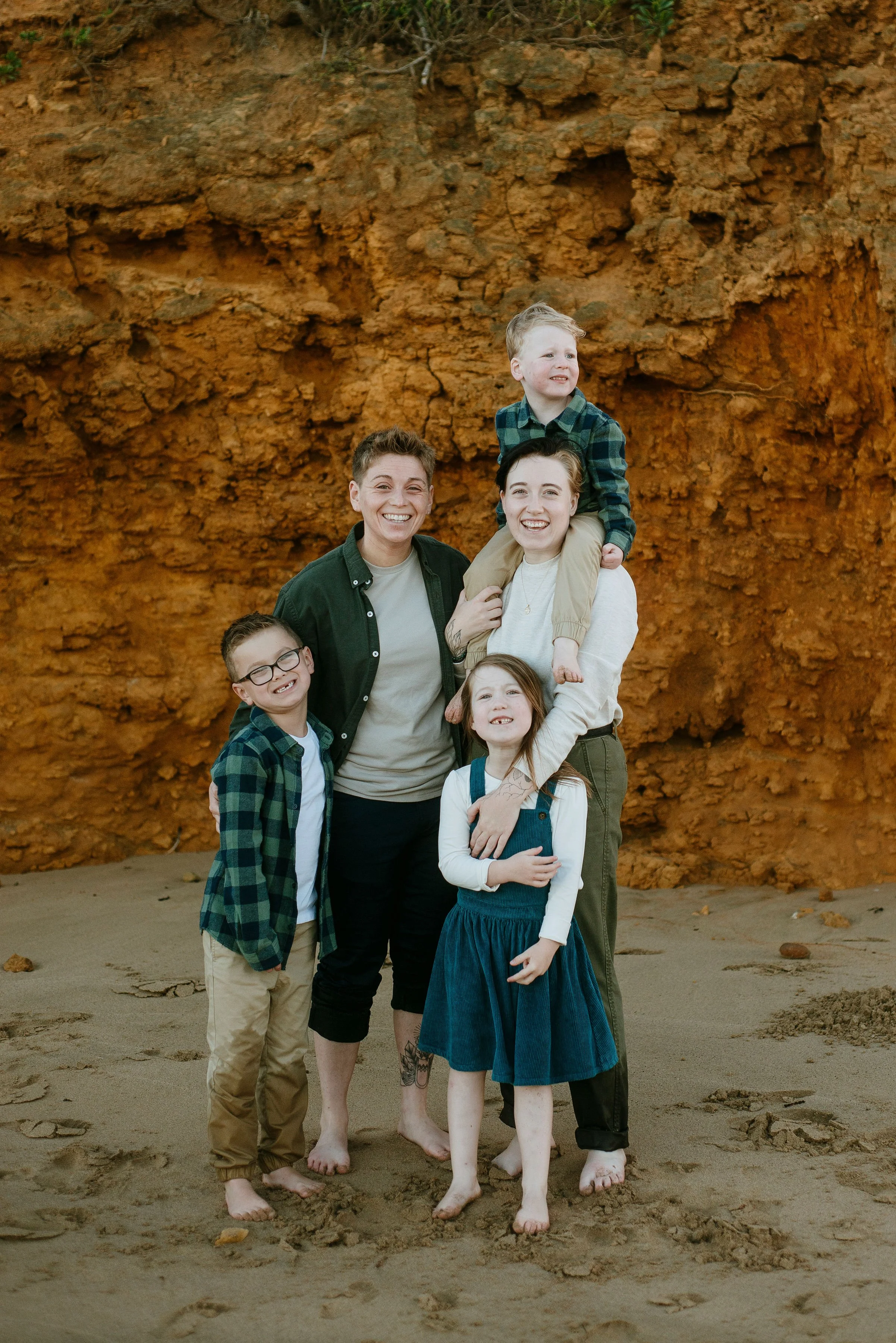
Mell Fraze’s childhood home was one in which the Bible sat on the bookshelf beside the Dao De Jing, the Pearl of Great Price, and a myriad of philosophy books. Raised by a scientologist mom and a universalist dad who attended a “new agey Christian church,” she was instilled with the ideology that everyone has a different path in life, and it’s the individual’s job to ask the questions and do the research to find which path works for them. Mell was an apt audience. As a neurodivergent individual, her brain is wired to ask questions. Now as a mother of six kids (ages four to 16) with her seventh due in August, she likewise encourages her children to explore how when something’s not working, to consider what might fit better instead…
Mell Fraze’s childhood home was one in which the Bible sat on the bookshelf beside the Dao De Jing, the Pearl of Great Price, and a myriad of philosophy books. Raised by a scientologist mom and a universalist dad who attended a “new agey Christian church,” she was instilled with the ideology that everyone has a different path in life, and it’s the individual’s job to ask the questions and do the research to find which path works for them. Mell was an apt audience. As a neurodivergent individual, her brain is wired to ask questions. Now as a mother of six kids (ages four to 16) with her seventh due in August, she likewise encourages her children to explore how when something’s not working, to consider what might fit better instead.
For Mell, the LDS church entered her orbit in 2007, when she chose to get baptized one month after she married Cliff, who was born and raised in the church in Modesto, CA. 15 years her senior, Cliff was raised at a time when church culture didn’t understand what to make of his family. His three siblings had several Cerebral Palsy and uninformed members often wondered “what sin of the parents brought this upon them.” Cliff was raised with traditional church beliefs, but his family was largely marginalized by their congregation. Mell’s peers asked how she could go from her free-thought upbringing to being Mormon, but Mell said nothing about her inherent belief system actually changed—she just learned a new vocabulary to identify her beliefs. She says, “I finally found the one Christian denomination I could feel comfortable in, that didn’t raise the hackles on my neck and wasn’t teaching something in opposition to my lived experiences.” Their union set the stage for raising their own kids.
The Fraze children are given room to grow and explore in their Sacramento home, where Mell has home schooled them since 2015. Every member of the Fraze household of eight is neurodivergent, with all of them having ADHD and several identifying on the autism spectrum. Mell and her husband Cliff found their children’s various needs, which are often also in opposition to each other, were not all able to be met in traditional school, so they’ve brought the laboratory home. This has resulted in their most significant time with peers taking place at church, which has also proven difficult for many of the children who identify on the neurodivergent and LGBTQIA. While the youngest two find Primary fun, church has proven a challenge for some of the older kids.
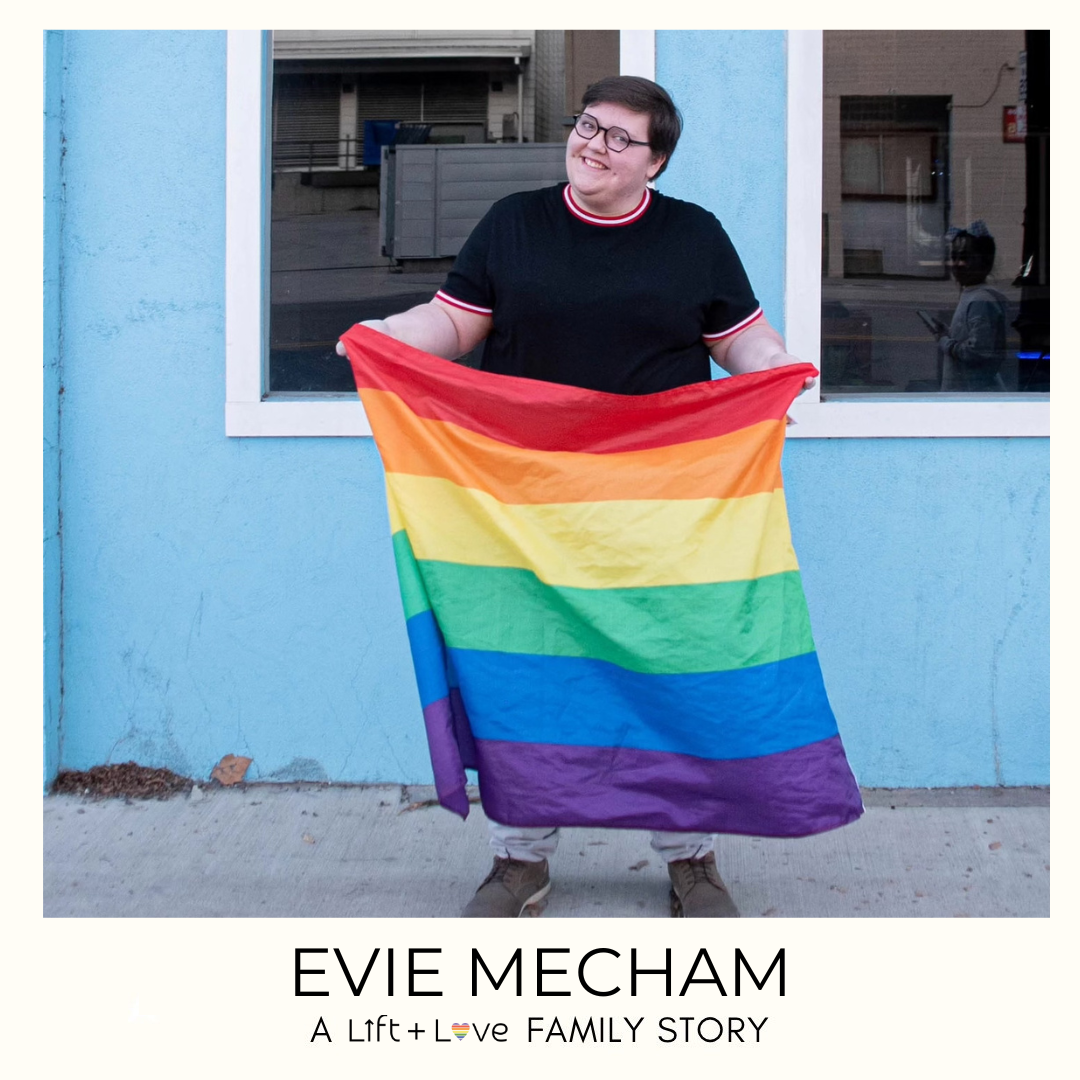
Evie, 16, (they/them) identifies as nonbinary, asexual, and panromantic and is not interested in dating and marriage. Liam (15) also does not currently wish to pursue dating. Frequent lessons about temple marriage have repelled them as it’s not something they see in their future. When leaders respond with phrases like, “When you grow up, you’ll feel it,” it further offsets the two and makes them feel misunderstood. As the Fraze’s 10-year-old son’s neurodivergent needs are also not able to be met in the church environment and Mell says “I’m unable to clone myself and be in every classroom where my kids need me,” Mell has found it difficult to make church work. For the past year, while Cliff shows up and fulfills his calling in the Sunday School presidency, Mell stays home with the kids who are most comfortable there. Home has also become the most comfortable place for Mell to feel authentic. She says, “I cannot show up on the defensive all the time, because then I’m not getting anything from church. And my child’s mental health is more important than their body being at church.” A big believer in autonomy and agency, Mell believes in letting her children choose whether attending church or serving missions and the like is what’s best for them. She let her kids choose whether getting baptized at age eight was the right choice for them, and some delayed that until they felt more ready.
The bishop in the Fraze’s ward had served as a high councilman prior where he was tasked with collecting helpful church resources for LGBTQIA families. At the time, he turned to the Frazes for resources, and they engaged in several hours of conversation. While Mell says her bishop has tried to be an ally, and some of the youth leaders are “great people who really try to show love and respect,” others don’t have a frame of reference for how to support kids who don’t fit the norms.
In the summer of 2022, with her bishop’s permission, Mell joined Evie on the stand during a fast and testimony meeting to share how the youth theme statements could be worded to be more inclusive of all gender identities. Evie had expressed to their parents a couple years prior how they felt different in regard to their assigned gender, and a felt a more gender-neutral identity fit them best. Mell supports her oldest in this, while also loving the “Gender is essential” phrase in the Family Proclamation that so many instead use to weaponize against people like Evie. Mell says she sees this idea of gender being essential, combined with Moses 3:7, to mean that everything is created in the spirit form first. “When we speak of bodies being perfected in the resurrection,” she asks, “doesn’t it make more sense that who you are as a spiritual being that your body would be changed to match your spirit, and not the other way around? In the resurrection, we don’t believe everyone’s going to be six feet tall, skinny, and blonde. We understand there will still be a diversity in perfected bodies. So why, when someone who experiences gender dysphoria and feels their body doesn’t fit their spiritual being, why would the spirit change to match the body instead of the other way around?”
Because her kids school at home, Mell shrugs off the current sound byte rhetoric of “LGBTQIA social contagion.” She says, “My kids aren’t hearing, ‘Oh I heard this and that and want to try it out.’ They’re coming to me saying, ‘I’m different and I don’t know why’.”
While their shared testimony bearing was an important moment for the two to honor this part of Evie’s reality, Mell breaks down as she describes how Evie, on the stand, witnessed how the members’ faces in the room turned from engaged smiles to stone-faced, disapproving looks. That, followed by an uncomfortable talk on the Proclamation shortly after, was the last time they attended. In the one year she has stayed home with Evie and younger children who need her, Mell says only three people from their ward have reached out to try to understand the difficulties her family faces with current church doctrine and policies. Hurtful comments have also been said, including one youth leader who said, “Satan is making kindergartners confused” and a primary teacher who told Mell, “Gays cause problems in society.” As such, Mell tries to speak up as much as she can about the extreme mental health duress and increased suicide rates that occur for kids on the LGBTQIA spectrum.
She says, “I would like to be able to stay in the church and be a voice of allyship and safety, but I’ve been called an apostate by a member of my ward for speaking up against rhetoric that’s harmful. I’ve also been told, ‘Sometimes you need to step away from the church,’ but I hate that alternative. When you point out that your choice is to live as a portion of yourself and feel hurt in the church, or to walk away to be able to live as a whole, authentic human being, the response people are conditioned to give is, ‘Don’t leave the church, try to stay, turn toward the Savior.’ But there’s no room or support to do that. I’ve taken to calling myself Schrodinger’s Mormon. Depending on who you ask, I’m either exactly what people hope members can be, or I’m a terrible apostate who should leave because if you don’t believe, why would you stay?” Mell says it goes back to people not understanding the breadth of the perspective she comes from, and the religion, anthropology, and various philosophies she studied as a youth that examine humans holistically. Mell stays in LDS parenting chat groups online, hoping she might be a light in the dark for someone in need, and hopes to help parents new in their journey. While Evie is considering resigning her church membership, Mell says, “They let me in; they’re going to have to kick me out!” of her membership.
“I already knew I was a divine, spiritual being before joining the church. I’m Christian; my philosophy is humanist and unconnected to any particular religion. I care about the environment, social justice, humanity – the same things I cared about before. I get closest to the Savior from listening to people’s lived experiences, and understanding their truths are just as valid as mine. All of that has prepared me for having queer kids, where other parents in the church might struggle. None of my spiritual identity depends on the church, which I recognize is different from my husband’s experience.” She acknowledges their marriage and co-parenting can be a difficult balance, but says, “He knew who I was before we married. He has no interest in changing me, but often doesn’t know how to deal with others’ responses to me being a fierce, vocal advocate for our children.” Mell, who identifies as queer herself, also recognizes she comes from a place of privilege, being in a perceptively cisgender-heterosexual temple marriage, a person “who happened to get lucky that my person is a cishet man.” She thus chooses to first present herself foremost as an ally in the LGBTIA space.
Of the changes she hopes to see in the church, Mell says, “People make choices all the time that slow the ‘in the Lord’s time’ phrase. They can make choices that speed the ‘in the lord’s time’ to be more inclusive and loving. There are stories of wards out there who have done this. And then there are wards who have sacrificed people because they were too afraid to change, to ask questions, to push boundaries.” This is where Mell hopes to make a difference. “It’s a horrible truth but as a church body, members are choosing to sacrifice their children for the sake of tradition. I absolutely refuse to sacrifice my kids because someone would rather follow tradition than the prophetic example we claim to follow of asking prayerfully and seeking inspiration.”
THE ERVIN FAMILY
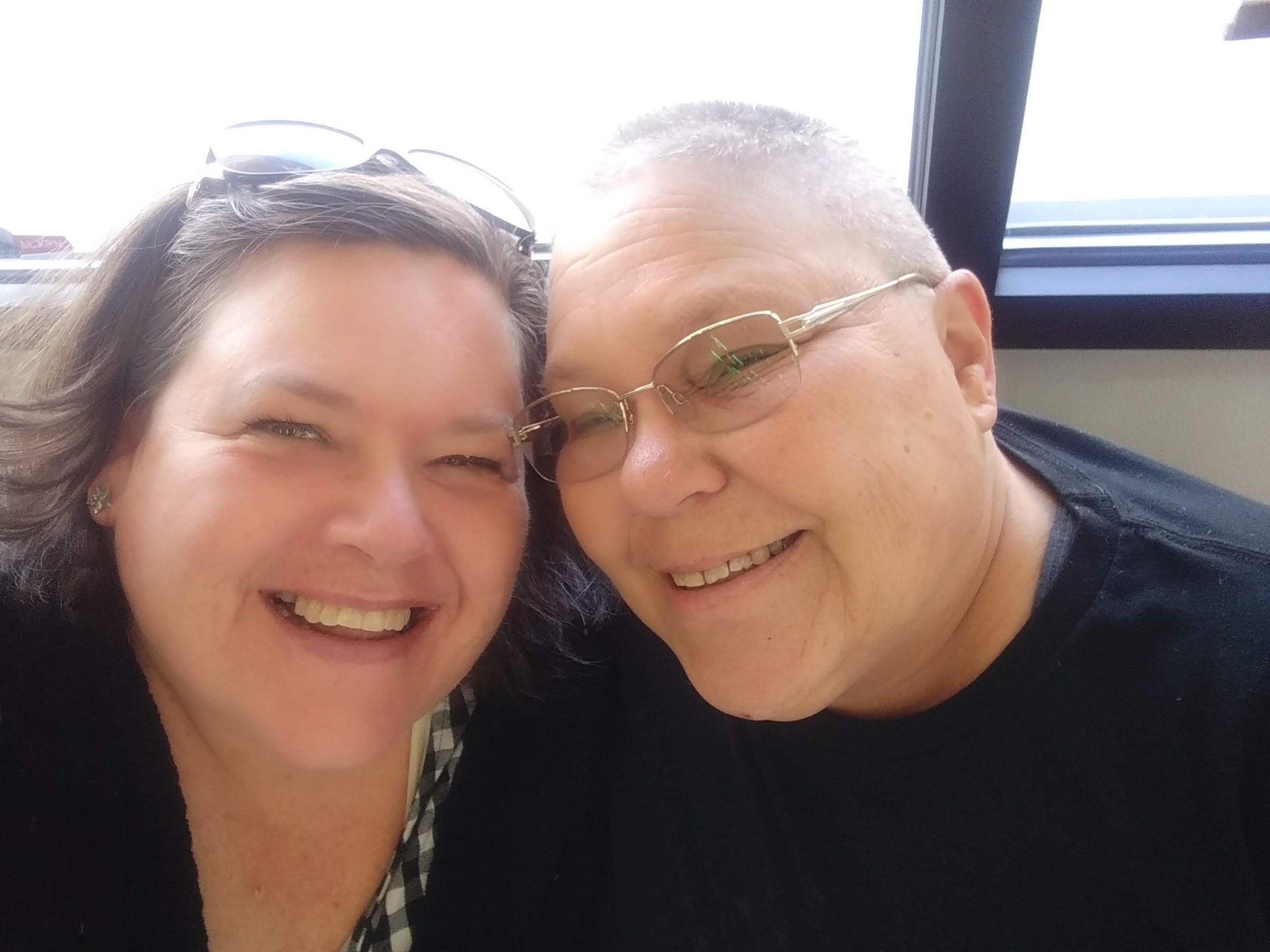
Every month, parents of transgender and nonbinary kids can join a Lift and Love online support circle facilitated by Anita Ervin of Canal Winchester, Ohio. It’s a topic with which she is very familiar. When Oliver—22, and Rome—19, the oldest of her four children, are both home together, the Ervin house is noticeably louder and filled with laughter. While the two say they fought sharing a room as children, they now share an inextricable bond. Rome credits Oliver for making their coming out journey much easier at age 16. Anita admits Oliver put them all through a learning curve when he first identified as queer in 2018. Rome says, “Oliver got the messy; I got the ‘all good’.”
In summer 2018 at age 18, Oliver came home from BYU-Idaho and told their parents he identified as pansexual. This first happened in a car conversation with his mom in which Oliver asked if he would ever be kicked out of the house. When Anita passed the turnoff to their neighborhood and kept driving, Oliver was startled and feared he was about to be dropped off for good anywhere but home. But instead, Anita drove to a nearby park where they could have what turned out to be a complex conversation in peace. Anita assured Oliver that she would never kick him out unless it was something for his own good, not for his orientation. Almost 18 months later in December of 2020, Oliver (who was AFAB) came out as trans-masculine to Anita by sharing a handwritten letter he was going to send to his grandmother for whom he was originally named. Oliver’s coming out process has continued in a manner in which Oliver typically explains things to his mom, who then shares them with his dad, Ben. A couple months later, during a dinner conversation, Oliver explained to his siblings that there is a spectrum of gender identity with males on one side and the females on the other. Oliver shared he falls just left of center, on the male side, and would prefer to use the pronouns he/they and change their name.
“Growing up in a heavily Mormon family, I didn’t have the words for gender or sexuality and didn’t know what gay people were or gay marriage was until I was 12, and they read that letter in church about gay marriage. It just wasn’t discussed. I didn’t know trans people existed until well into high school. So I didn’t have words for it, but I knew I wasn’t the same as everyone else. I felt like an alien, trying to pretend, because I didn’t have the same guide book,” says Oliver. In college, they met their first queer person inside the church. In their time away from home while at school, Oliver explored how he best identified until he settled on what felt authentic. Oliver, who says he didn’t “get the hype” and hasn’t felt a connection to God since the age of eight, has removed his name from church records. He spent most of his adolescence with his family in a conservative ward in Oklahoma, where the Bible Belt climate often compared people like him as akin to murderers. Oliver is now more open in his spiritual practice, believing that actions beget consequences but does not adhere to a specific organized religion.
After spending many years babysitting and later working at a day care center, Oliver is now comfortable being out at their current workplace. He loves movies and TV, reading, painting and customizing black Vans shoes, and does a lot of art. Oliver has been dating Mya (AFAB) for almost three years, and also identifies as unlabeled orientation-wise. Oliver explains that often, LGBTQ humans first have a sexuality crisis, then a gender crisis, then another sexuality re-examination. Of he and Mya (who uses they/she pronouns and is bisexual), who has been with Oliver through his transition, Oliver says, “We’re not pressed on labels; it just is what it is. We both feel a little too old to lie awake at night trying to find a label or a box to put ourselves in. Sleep is already difficult; I’m not losing more over this.” Oliver and Mya also identify as “kitchen table” polyamorous, which they explain as not really a sexual thing, but more like being open to consensual emotional connections with others. The Ervins really like Mya, and Rome has told Oliver more than once they can’t break up because Rome and Mya are “besties.”
Rome, who was also AFAB, identifies as gender queer and bi-curious. (They have no preferred pronouns.) They selected the name Rome awhile ago, and Anita laughs she still hears the B52’s lyric “Roam if you want to” every time she calls her child’s new name. Growing up, Anita says she and her husband Ben were used to pairing off their kids, having two of each, and referred to their brood as “the girls and the boys” (younger siblings include Connor – 14 and Maddox – 12). But now, it’s the “gremlins and the boys.” Oliver laughs that he and Rome “are a little freakish” and so the name suits them well. Anita is very grateful that both of her oldest kids’ anxiety has improved since coming out.
Rome enjoys making jewelry, specifically earrings, out of miniature things, and loves the aesthetic (not the drug) of the mushroom. They also enjoy true crime, creating art, watching Criminal Minds, Minecraft, and claim they have an “unhealthy love of Mexican food.” Rome has done a year of college and is working at a BBQ joint for the summer.
In 2020, after listening in on a conversation Anita had with the Emmaus (LGBTQ and faith-affirming) group, Rome confided in her mom: “Mom, I think I might like girls.” This time, Anita responded more along the lines of, “I’ll love you forever and ever and ever,” laughs Rome. Anita recalls counseling Rome to not rush to label themselves, that they’d figure it out. Rome is grateful Oliver “paved the way for my ability to come out comfortably because he instigated the learning process for our friends and family,” and that they’ve had a family willing to accept them, no matter what. Rome also has benefitted from a more accepting ward in Ohio where several women wear pants to church and it’s easier to blend in. Anita encourages this, after observing Rome’s choice to wear slacks and a vest to prom. She believes Sunday dress is about “dressing your best” as your full self for the Lord, not adhering to some cultural norm.
Before Oliver came out, Anita says she always considered herself a “middle of the road, cliché Mormon.” She went on a mission, married in the temple, never turned down a calling. When Oliver first approached the LGBTQ subject with her, she didn’t know what to do – should she steer him toward the bishop? She didn’t want him living the life of shame she’d seen another close family member endure. Anita says, “As I prayed about what to do the only answer I got was to love him the way God loved him—fully. It was not my job to ‘teach more truth’ in an attempt to ‘fix’ him.” In the beginning, she and Oliver concur things were rocky; there were lots of tears. But Anita emphasized maintaining a strong connection with her child. She has close ally friends in her ward who she says got her on the right supportive path and to a place where she realized she could be all in with her family and all in with the church. “I loved realizing I didn’t have to choose between fully supporting them and being present in their lives, and being committed to my faith as well. I could do both.”
The Ervins have also reassessed how they teach faith at home, focusing more on how to develop a connection with Christ than follow a pamphlet of do’s and don’ts. “If you strip away everything else, at the core, it’s Jesus Christ and His grace that saves us, not going through the motions of church activity. I can’t limit Christ. I can’t say I have to expect my kids to live a certain way to be saved by Christ. I think He’s big enough to handle the complexity of their lives.” Anita says they have definitely moved on from a place of grieving over lost expectations, and now are able to see the humor in things. Their driveway is witness to the frequent “Can you make that straight?” joke, referring to a crooked parking job with a well-received double entendre.
A significant realization that’s helped Anita came from Richard Ostler’s second Listen, Learn, and Love podcast episode in which he deconstructed three partitions of church: the Church of Jesus Christ. The restored gospel. And the organization of the church. Anita likewise deconstructed her testimony and is able to safely linger in the first when things get hard. She can just focus on maintaining a pure connection to Christ. As looming fears of policy changes regarding trans individuals both in the national landscape and at church brew, Anita is choosing to focus on the one thing that won’t change: her faith in Christ.
Anita says, “I have faith and beliefs which haven’t changed, but I can respect where my kids are coming from. If they don’t go down the path I’d hoped, it doesn’t destroy my perspective. It’s okay for them to choose their paths; it’s only complicated because I don’t know the answers yet. But a pain point for me is that I see my kids in their gender journeys and some of the policies towards trans individuals, and I feel like they’re being treated like wolves instead of sheep. I want some recognition that they’re sheep.”
Oliver concurs there’s an untold level of pain kids like him experience. “The first time I thought about ending myself, I was eight years old… If people truly knew the level of discomfort, they would choose to learn. If people knew they could literally save a child’s life by listening and trying, they would.” He says Wrabel’s song “The Village” (lyrics below) perfectly sums up how important it is to listen to the trans experience in religious environments. Anita also laments the suicidality rates of trans individuals, as found at the Trevor Project. She’s had flashes of “What if? What if I had been the parent who’d said, ‘Not in my house’. I probably would not have all of my kids with me today. This isn’t just about us. We all change in our lifetimes; we all grow. People say, ‘What if it’s a phase?’ I respond, ‘So what if it is—this is real to them right now, and so right now I’m showing up 100% on their team. As their mom, I’ll do what I need to do to get them through the next five, ten years.”
What pains Anita most when she leads the parent support group is witnessing the sadness of families whose kids are being othered and excluded. “Too often when the kids don’t stay, the whole family goes. I feel that loss keenly. I understand when families step away. People need to realize that when they have those casual conversations against our kids, they are often sitting next to a parent of a nonbinary or trans child…” She fears the exponential hurt that may come in the near future for many. “Of all the places on earth where people should feel love and acceptance it should be among the followers of Christ and in His church. Unfortunately, that’s not always the case.”
Lyrics
No, your mom don't get it
And your dad don't get it
Uncle John don't get it
And you can't tell grandma
'Cause her heart can't take it
And she might not make it
They say, "Don't dare, don't you even go there"
"Cutting off your long hair"
"You do as you're told"
Tell you, "Wake up, go put on your makeup"
"This is just a phase you're gonna outgrow"
There's something wrong in the village
In the village, oh
They stare in the village
In the village, oh
There's nothing wrong with you
It's true, it's true
There's something wrong with the village
With the village
There's something wrong with the village
Feel the rumors follow you
From Monday all the way to Friday dinner
You got one day of shelter
Then it's Sunday hell to pay, you young lost sinner
Well, I've been there, sitting in that same chair
Whispering that same prayer half a million times
It's a lie, though buried in disciples
One page of the Bible isn't worth a life
There's something wrong in the village
In the village, oh
They stare in the village
In the village, oh
There's nothing wrong with you
It's true, it's true
There's something wrong with the village
With the village
Something wrong with the village
THE CHRISTENSEN FAMILY
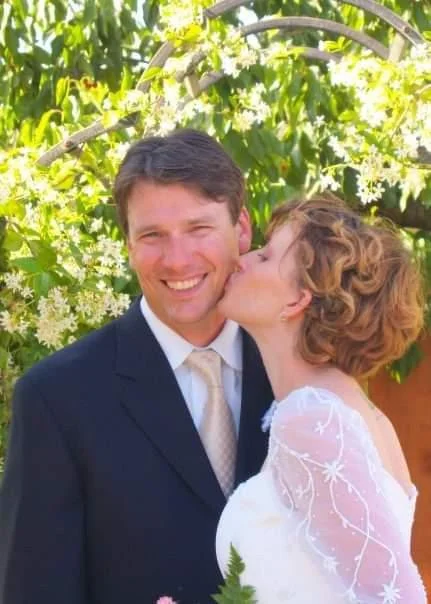
In February of 2021, Mindy Christensen drove cross country from her Tallahassee, FL home to her parents’ house in Orem, UT to bring her third child home. It was a big trip, in many ways. Mindy was driving a brand new car – an SUV in a loud, gorgeous red far from the norm of her typically subtle car palette. And the child she’d be picking up was her soon to be 24-year-old. A month earlier, Mads (nonbinary; they/them) had called their mom, Mindy, to share big news: after two years of marriage to a man, Mads had come to terms with the fact that they were gay, and needed to get divorced. Also, Mads would be bringing their seven-month-old son, Luca, back with them…
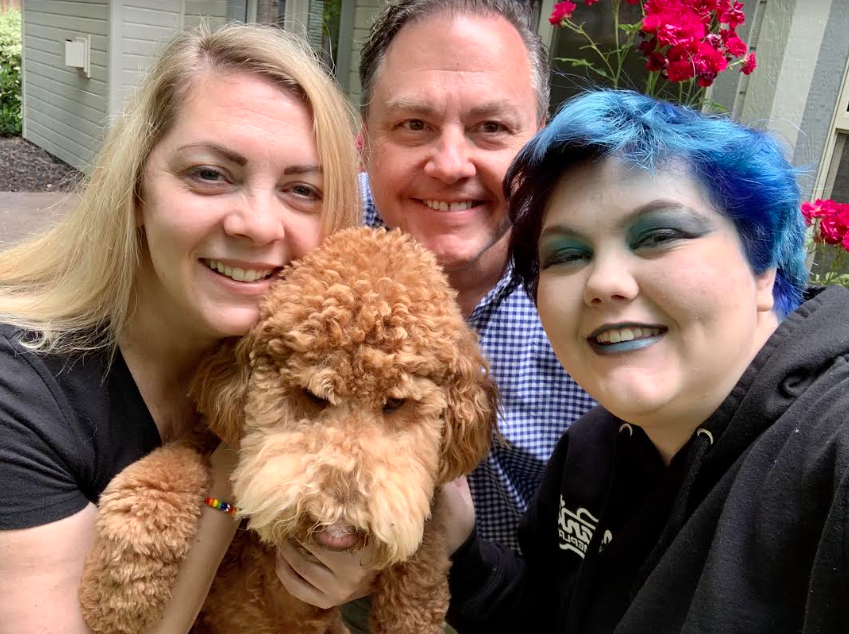
In February of 2021, Mindy Christensen drove cross country from her Tallahassee, FL home to her parents’ house in Orem, UT to bring her third child home. It was a big trip, in many ways. Mindy was driving a brand new car – an SUV in a loud, gorgeous red far from the norm of her typically subtle car palette. And the child she’d be picking up was her soon to be 24-year-old. A month earlier, Mads (nonbinary; they/them) had called their mom, Mindy, to share big news: after two years of marriage to a man, Mads had come to terms with the fact that they were gay, and needed to get divorced. Also, Mads would be bringing their seven-month-old son, Luca, back with them.
It was a lot to process. Luckily, Mindy had a long drive to do so. She now admits she did not initially handle it all in a great way, asking Mads several questions other parents might reasonably consider in a similar situation: Are you sure? Could this perhaps just be a sex drive thing? Do you realize you’re married with a kid, and this is a big deal? Mads replied they had carefully considered all of the above. And this was real.
Mads had actually gone through months and months of careful consideration over the seriousness of the situation before coming out to anyone. Though when it truly came down to it, they knew that being the truest and best version of themselves was much more important than maintaining a reputation or relationship. It was more important for Luca to grow up with a parent who was honest about life and true in their identity. Mads knew theirs and Luca’s lives would change drastically, but the overwhelming realization of being queer was more damaging the longer it was held in. So out came the truth, and such led to a handful of changes in the Christensen family.
Having raised seven kids in the church, Mindy says they were “one of those families” – one that others looked to with admiration for their dutiful compliance to the LDS model. One who didn’t question, but believed in the promised fruits of strict obedience. Now they say they have a clearer picture of what obedience really means and the importance of personal revelation.
“There is general counsel from our leaders and personal counsel from the Lord, which trumps everything.”
Tom and Mindy Christensen were in fact a couple who once upon a time had to check themselves for making homophobic comments, upon the realization that they could possibly say something that might someday offend one of their own kids — but they never expected Mads. Blindsided, Mindy realized she had a lot of learning to do. And now she had some time to do it.
As she crossed seven states over her three-day road trip, Mindy listened to podcast after podcast of LGBTQ stories. One particular Listen, Learn and Love (by Richard Ostler) episode hit her the hardest. It featured a married couple whose son had come out, and they were able to express how much they still loved the gospel, and were also totally fine with their son and his gay marriage. An “and” statement. Mindy reflected on how she’d spent her whole life believing that members of the church were taught to follow one direct path to find happiness. She spent her whole marriage wanting her kids to end up happy, and believed there was only one way to do that. That’s how she was taught to teach them. But as she drove across Texas, processing this other family’s story, Mindy had a powerful experience -- a mindshift. She says it was almost as if a ray of light came down from heaven, and she heard the Lord say, “Your kids are going to be happy.” Tears streamed down her face, and an exuberant peace filled her heart. Mindy believed this prompting, and knew everything would be fine. Even if her kids walked different paths than she and Tom had.
In her impression, the word “kids” was plural, which took on new meaning later last year when yet another adult child returned home to live with Tom and Mindy -- with news to share. 27-year-old Emma (she/her) moved back from Idaho after finishing her schooling and shared that she is bisexual and needed therapy. Other feelings were so big at the time that discovering her sexuality was almost an afterthought to her. That’s why she didn’t make a big deal about it. Managing trauma was taking up the most space. Mindy says, “Emma dissociates a lot and so even though leaving the church and coming out queer/coming into her own were/are big things, because of dissociation, those things didn’t seem to take up much space in her mind.”
Now, just three of the Christensen’s seven kids (ages 14-30) are still active in the church, as two other siblings have also chosen to step away. Tom and Mindy understand the need for this, and are grateful that all their children are supportive of and loving to each other, wherever they are at. Recently, their son married a girl who he reassured his parents is totally “on board” with his family dynamic. The Christensens were touched when their new daughter-in-law’s family honored Mads’ wishes and bought them a tie to wear to the wedding. Mindy says, “It was so thoughtful of them to be completely inclusive. It touched my heart.”
Despite these loving wins, Mindy says theirs has not been a journey she would call easy. They have seen friends pull away, continuously had to remind themselves that some family members’ comments were not meant to be as hurtful as they came across, and church has just been… hard. The family has experienced some trauma – including Mindy, who has felt the physical affects of anxiety upon entering the church building. At one point, she had to advocate for her family and ask certain leaders not to talk to her or her kids anymore.
Of her church experience, Mindy says, “I felt like I’d given everything I had to a church that wasn’t there for me when I needed it. Everything I taught my kids, everything I breathed, thought, did -- my whole purpose was the gospel. Then when it came to the point where I really needed it there for me, it wasn’t. No one knew how to talk to us anymore. No one knew what to say. That’s part of my trauma.” And she’s working through it.
Mindy says, “I used to be excited to go to church. It was happy, fun. I had friends, I felt like people wanted to see me. Now I feel like they don’t. The second I go, I feel like I’m… the problem.” She is grateful for those friends who’ve really been there for them, including a new bishop who’s working with her to create a safe space for them, and others like her stake president who are listening and trying to make things better. Something Mindy herself is trying to do. “Unfortunately, it’s too late for us and my children, and that’s what caused me the most trauma. Because when my kids are hurt, I take it personally. I feel it to the depths of my soul. But I know for a fact there are others who haven’t come out yet, who need the support.” She recognizes that she herself once thought she knew everything, and others still live in that mindset now. Mindy suggests we all need to humble ourselves to listen and learn about what we don’t know or personally experience. She finds comfort and guidance in a quote by Elder Dieter F. Uchtdorf: "Brothers and sisters, as good as our previous experience may be, if we stop asking questions, stop thinking, stop pondering, we can thwart the revelations of the Spirit. Remember, it was the questions young Joseph asked that opened the door for the restoration of all things. We can block the growth and knowledge our Heavenly Father intends for us. How often has the Holy Spirit tried to tell us something we needed to know but couldn't get past the massive iron gate of what we thought we already knew?" Mindy now teaches the youth in Sunday School, and she’s grateful she can be there to support this younger generation in any way they need her.
On Mindy’s road trip, she felt the Lord tell her she needed to be that person who is there for others. That she needed to make a difference. Shortly after she went home, Mindy returned to Utah in June to visit family and ended up attending her first Pride event. She wore her Free Mama Bear Hugs t-shirt, and a young person ran up to her and asked her for a hug. This new friend said their mom had died before they were able to come out to them. Mindy remembers standing at the top of the hill near the Utah Capitol Building, surveying all the hundreds of different people who were there, and “the spirit struck me so hard. Tears ran down my face and I knew I was in the right place, helping the right people.”
Mindy now sends LGBTQ+ resources, including Richard Ostler’s books, to others who ask, and volunteers for the Trevor project. As the Vice President of PFLAG Tallahassee, she has a plan to complete, with volunteers, a Pride mural as a beacon of hope to LGBTQ kids. Mindy regularly posts queer content on Facebook, and has even taken her messages to Instagram. She also slapped three LGBTQ+-affirming bumper stickers across the back of her car, which she is now grateful is a bright, flashy color people notice.
At first, Mindy second guessed her efforts, but as she’s learned to recognize the Lord’s hand in her messages of love, she’s come to appreciate that, “I’m a big nuisance. Some of us are willing to shout, and some of us are willing to do things quietly behind the scenes. Both are needed. When you’re the one shouting, you sometimes feel you’re the only one doing that. But even if I help one person or family learn, that’s all that matters. If you don’t like it, you can just move on… That might sound harsh, but I can’t worry about it. The Lord said shout, so I shout!” For everyone who unfollows her, Mindy finds that someone from her past finds her and expresses how much they needed to hear her message that day. She is grateful to be on the path Elder Hugh B. Brown referenced when he said, “There is an incomprehensibly greater part of truth which we must yet discover. Our revealed truth should leave us stricken with the knowledge of how little we really know. It should never lead to an emotional arrogance based upon a false assumption that we somehow have all the answers — that we in fact have a corner on truth. For we do not.”
Of her experiences, Mindy says, “It's a journey. That’s for sure, but I’m grateful. Sometimes I want to go back to being ignorant, it was so peaceful. But then I think: no, I don’t. I was hurting people. Unintentionally, of course, but I was. We used to look so different… Now I know better.“ Being the mother of queer kids who she loves completely has shown Mindy the wider expanse of divine love. “When people talk about the two greatest commandments – the second completes the first. You’re not going to hang out with a mom who doesn’t like your kids; you find people who love all of you, not just part. There’s no way to love God if you don’t love all His children the way He does.”
THE ANDRUS FAMILY
I am a Child of God,
Their promises are sure;
Queer kids are precious in Their site
If they can but endure.
I am a Child of God,
Their promises are sure;
Queer kids are precious in Their site
If they can but endure.
Lead me, guide me
Walk beside me;
Help me find the way.
Teach me all that I must do -
To help them live today.
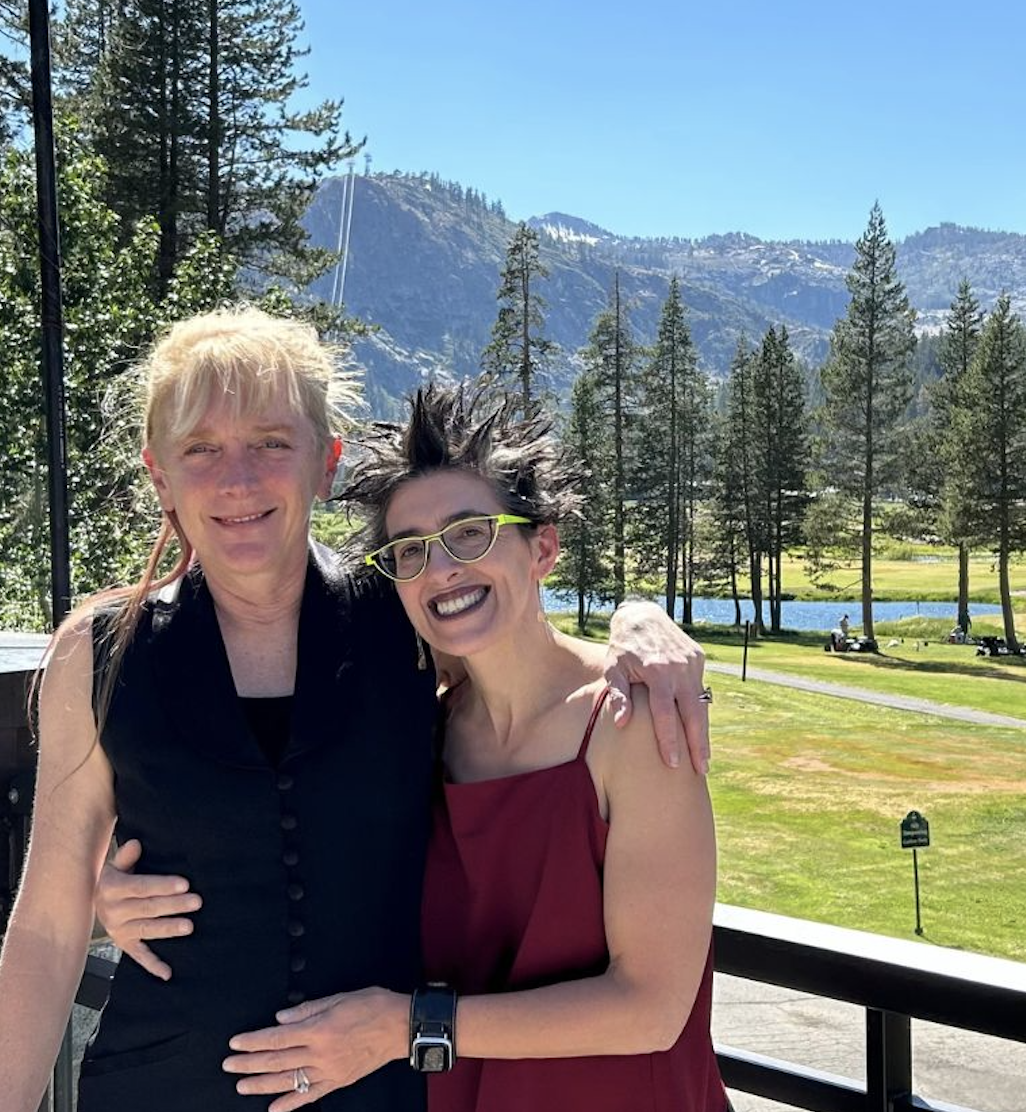
It’s a mantra and a mission for Andrea Andrus, who reworked the words of a favorite hymn to align with her own experience as the mother of Ash (they/them). At 17 years old, Ash identifies as pansexual, nonbinary, and asexual, and was also recently diagnosed with autism. Andrea feels it’s both a calling and a blessing to parent such a beloved child with unique gifts. “Ash is my miracle baby. I want them and the world to know how special they are.” And of the many children like her own who also struggle with their mental health, Andrea says of her advocacy, “We know there are lives on the line. That’s why we do this work.”
Ash was born when Andrea was 35. Andrea and husband Kevin both recognized early on that there was always something extra special about them. Growing up, Andrea says Ash was the “sweetest, sweetest kid -- super smart, top of the class. Ash always wanted to do the right thing and be involved and have fun. They would come home from school all the time and say, ‘This is the best day ever’!” Ash is artistic and gifted musically. They performed with a youth theatre group, taught themselves the ukulele, and after taking piano lessons for several years, now play by ear.
While Ash has always been a delight to their parents, Andrea chokes up at recalling the rough road the Andrus’ faced when they realized the level of suffering their child had endured for years. Around Ash’s 8th grade year, Andrea and Kevin made an unexpected move back to Idaho, where they both were raised. Ash was forced to leave behind their friends and everything they knew. Then Covid hit. Ash seemed to be lost in their own world. Andrea vividly remembers the day she went in to wake up Ash for seminary and she realized there was something more going on – she knew her child was really suffering from major anxiety and depression. As they worked through that for a couple years, there was still something else Andrea felt she was missing. She then found out her child was autistic. Andrea says, “I feel strongly that someone being born with autism is just like being born LGBTQ – it’s how your brain is formed. And it’s great -- autistic people change the world. They think outside the box, they are beautiful and creative, just like our LGBTQ community.”
But Andrea feels that Ash having been undiagnosed that long with autism, and not getting the right support and treatments was very harmful and likely made their depression a lot worse. Right after they found out they were likely autistic, Ash asked Andrea, “Mom, am I broken?” Andrea says, “I had this powerful download of words that were not my own: ‘No, you’re not broken. This is your superpower’.” She told Ash, ‘It’s just like being gay. It’s how you were born. There’s nothing wrong with that, and it’s beautiful.”
Andrea reasons so many children like her own came out during 2020, (or while on their missions), is because in times of deep introspection and isolation with both yourself and God, is when we get real with ourselves. It was the same for Ash, whose coming out was a bit of an evolution of identities as they navigated what felt most authentic. Eventually, they found identifying as nonbinary to feel like a better fit for them than being gender fluid or trans. Andrea reports that in her research, she has found this to be a perfectly normal part of an LGBTQ youth’s journey. While she struggled with Ash’s name and pronoun shifts at first, she values the advice of (Lift and Love Trans Support Group Leader Mama) Anita who says, “Using preferred name and pronouns is another way of saying ‘I love you’.” This got really real for Andrea who, having been married once before, recently saw her former married name printed somewhere and it made her physically ill, which again reiterated to her the importance of believing people when they tell you who they are, and not dead-naming them.
Ash no longer associates with the church, and is unsure if they believe in God. Yet they have a deep connection with and find comfort in nature. Ash loves animals, mountains, the ocean, and forests. Spiritually, Ash leans into mystical things and loves crystals, essential oils, and finds Oracle cards fascinating -- much like a journal prompt. As Andrea has stepped back and watched her child’s interests develop, she has been reminded of the creation story witnessed in the temple, and that all the elements that fascinate Ash and cause them to listen to the divine are the same surrounding elements that God created.
Rather than resist Ash’s affinities, Andrea has made it a conscience choice to lean in and learn what her child is experiencing. She recognizes that a long time ago, she was one of those people who thought being gay was a choice. But when her own child came out, and her daily need became keeping that child alive, Andrea shed some of her past reluctancies and now finds intense peace and joy in allowing her heart to remain cracked open. An early prompting to learn all she could about the LGBTQ space transformed Andrea’s own belief system as she started to see that her personal revelation and insights did not always align with what she’d been taught. At one point, she apologized to Ash for not being better prepared, and now the two have a very strong bond of trust and transparency. Because of the actions Andrea took to educate herself and become a stronger ally, not only does Andrea feel an extreme outpouring of love for Ash, but for all LGBTQ people, including her gay niece and nephew.
She advises others to “Stay curious. To try to accept and love. If something bothers you, ask yourself why.” When Ash first came out to their parents, at the time the Andrus family was living in Twin Falls, ID, where they had a remarkable affirming bishop and his wife – each with a gay sibling of their own. Andrea’s bishop advised her to seek her own personal revelation, while also saying, “Your job is to love them.” At first, she thought, “Of course, I do.” But with time, she learned that love really is a verb.
On her spiritual journey, many things uttered over pulpits have been hurtful to Andrea. “I try to be a stone catcher. But sometimes it feels like stones are being thrown by some of our own.” One recent talk in particular that made it sound like Andrea’s child might “end up in a lesser kingdom” was especially hard. “I reject that,” she says. “I think there’s a VIP section for our LGBTQ siblings in heaven. A special place for special people.” Andrea also embraces the notion of expecting miracles along this journey as we navigate from Point A to Point B. She says, “God loves all His children. If the gospel doesn’t include all God’s children, then it’s not the complete gospel.”
Now residents of Eagle, ID, Andrea is hopeful the church may someday feel like a safer place for her family. But as of now, she says, “We’re hurting. It’s not ok. Such a huge percentage of LGBTQ families leave the church. There are some people and organizations doing great things, but until it comes from the top, it’s not going to change the masses. Unless you’re blessed enough to have an LGBTQ child, it’s a slow process of changing hearts. And in the meantime, we’re losing so many wonderful people. Every ward’s got a few safe ‘come sit by me’ people, but it’s not enough. It’s a huge loss. And it’s lonely.” That being said, Andrea takes great comfort in her knowledge that her child Ash has a divine purpose on earth, and that God will help them succeed.