lift+love family stories by autumn mcalpin

Since 2021, Lift+Love has shared hundreds of real stories from Latter-day Saint LGBTQ individuals, their families, and allies. These stories—written by Autumn McAlpin—emerged from personal interviews with each participant and were published with their express permission.

lgbtq+ stories
family stories
ally stories
FAMILY STORIES Allison Dayton FAMILY STORIES Allison Dayton

MONICA, HORACIO, & CAYLIN

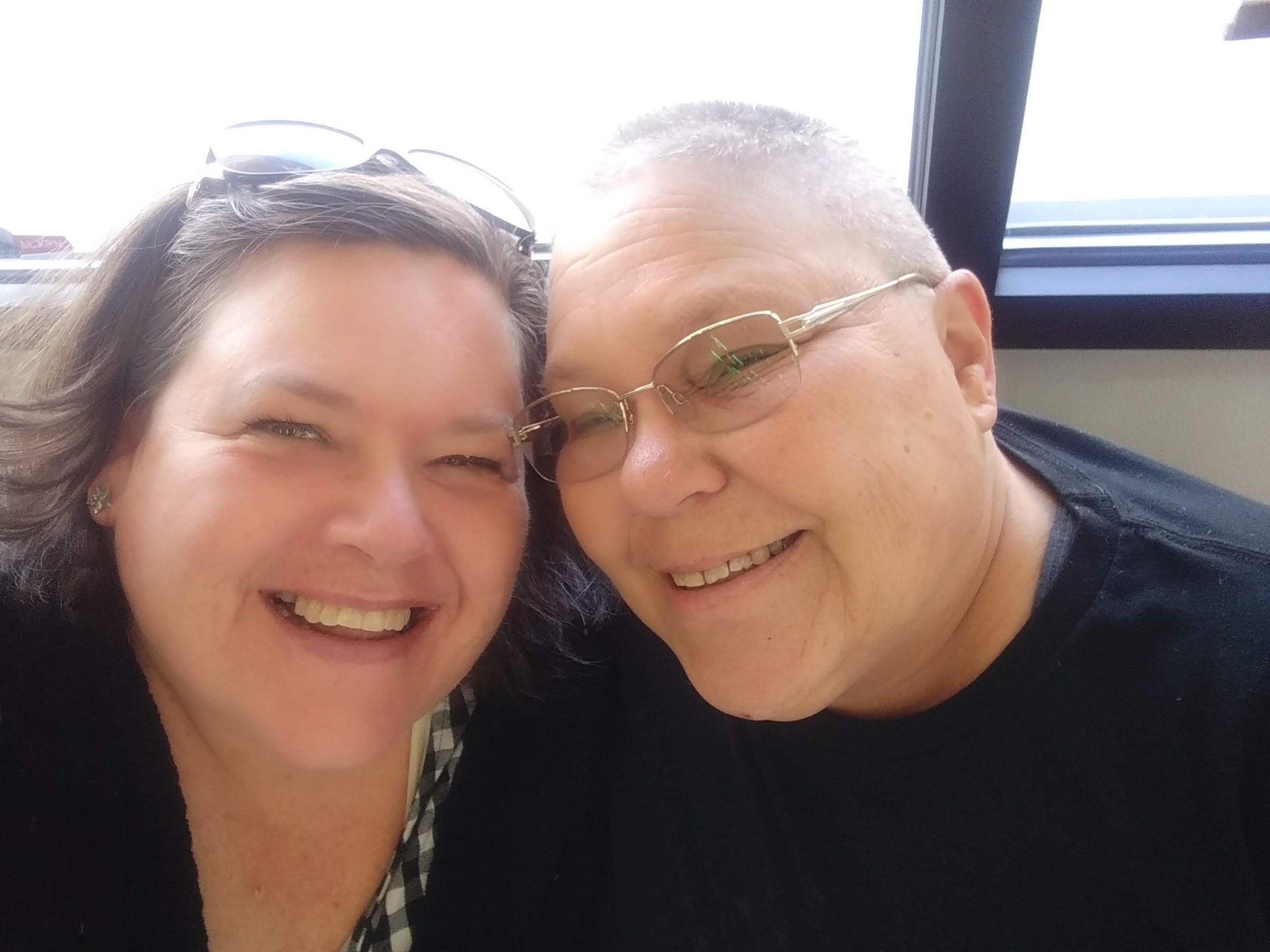
Monica Bousfield met her husband Horacio Frey in the fortuitous aisles of Babies R Us, where they both worked in the early 2000s. At first, they were just friends. Then best friends. Then after about a year of hanging out constantly, they surmised they must be dating. A year later, Monica nudged Horacio that it was probably time for them to go ahead and get married. After an eight-month engagement, they did, and while they eventually both left Babies R Us, their commitment to each other later resulted in two babies they would together raise. Through all this, Monica kept her maiden name—primarily because she’d never known of another couple like her and Horacio to last, and she didn’t want to complicate legal paperwork around having to undergo name changes twice. Monica had never heard of a woman marrying a gay man and having it not end in divorce. While she’d known Horacio was gay from their early days of hanging out, there were two other things she knew about Horacio: he was her best friend, and she wanted to marry him. Over two decades later, the couple is still making it work in Westminster, Colorado, where they have two children—Caylin, who is 17 and also identifies as queer, and Dominic—13.

Monica Bousfield met her husband Horacio Frey in the fortuitous aisles of Babies R Us, where they both worked in the early 2000s. At first, they were just friends. Then best friends. Then after about a year of hanging out constantly, they surmised they must be dating. A year later, Monica nudged Horacio that it was probably time for them to go ahead and get married. After an eight-month engagement, they did, and while they eventually both left Babies R Us, their commitment to each other later resulted in two babies they would together raise. Through all this, Monica kept her maiden name—primarily because she’d never known of another couple like her and Horacio to last, and she didn’t want to complicate legal paperwork around having to undergo name changes twice. Monica had never heard of a woman marrying a gay man and having it not end in divorce. While she’d known Horacio was gay from their early days of hanging out, there were two other things she knew about Horacio: he was her best friend, and she wanted to marry him. Over two decades later, the couple is still making it work in Westminster, Colorado, where they have two children—Caylin, who is 17 and also identifies as queer, and Dominic—13.

While Horacio has known he’s gay since a young age, this is the first time he has come out publicly. His childhood was marked with hardships, having suffered abuse and being adopted at age eight, which created abandonment issues. He came out to a few friends and his parents in high school, but very few people knew he was gay when he married Monica. He had been raised in a Christian church community in Santa Fe, New Mexico. While it was an open affirming congregation, Horacio opted for the white picket fence and kids route that was so highly encouraged. When he met Monica, she was not active in the LDS faith of her family of origin, but after their daughter was born, Monica says, “I realized I had this amazing, super special kid, and started going back to church gradually and then more actively.” After about five or six years of attending by herself with Caylin, Horacio converted. Monica laughs that she has the kind of mom who, every time they went to her house for dinner, would make sure the missionaries just happened to be there. Finally, Monica says, “She had a set there with the right personality at the right time.”

Horacio’s bachelor’s degree in Information Systems Security brought him to Colorado. After receiving her bachelor’s at what is now UVU, Monica started a graduate school program in counseling at CU Denver. But three years into the program and then married, she found while she loved learning about counseling, she had no desire to go into the practice. Instead, Monica went into management at Babies R Us, and then got her masters in HR. Now she works for a local municipality in compensation and benefits, a job she loves. Horacio works as a tech manager for a solar company.

Monica says, “if you’re going to marry someone who’s gay and you’re not, you need to be pretty confident, but we figured we’d never know if our marriage would work out unless we got married.” The beginning of their union felt lonely for Monica, having no one she could talk to who could relate to her variety of issues. “I internalized a lot, which is probably not healthy. But I didn’t want to out him. When others would talk about how great their marriage was, I was like, ‘Um, yeah…’” Monica didn’t actualize that hers was not the only mixed orientation marriage in existence until a few years ago. But of her almost-exclusive status, she says, “It doesn’t go away and it’s not easy. I’m not going to say it’s not worth it, but it’s not easy.” Horacio agrees it’s been difficult as well from his perspective with the couple talking about it, then not talking about it, when perhaps they should have more often. But after lots of counseling, he says, “We’re committed to making it work and have no interested in getting divorced or not making it work.” Monica appreciates how Horacio is still her best friend, despite the complexity of their issues.

Five years ago, new information about their children brought the two even closer together. Around the same time that Dominic (at age 8) was identified as being on the autism spectrum, Caylin revealed that she’s queer. Of their kids, Monica says, “She’s very creative, and he’s very, very logical. It’s two extremes, and definitely makes things interesting.”

While Monica was shocked about Caylin’s admission, Horacio was not as surprised, after Caylin had recently played Christina Aguilera’s “You are Beautiful” at the dining room table and asked her dad if he’d still love her if she came out. It was 2020 during the pandemic, and the family had spent much of their time together in quarantine. One afternoon, while on her way to her first outing to a friend’s house in a long while, Caylin sat in the back of her parent’s car, quietly drafting a text. She didn’t hit send until she’d safely entered her friend’s front door, and Monica and Horacio drove home in shock, processing. Besides the blindsiding of the information itself, they were now also apparently “old” because they had no idea what Caylin meant by: “I’m coming out as pansexual.” Monica googled it on their drive, while her heart stung with the second half of Caylin’s text: “I hope you still love me after this is over and done with.” Of course they did, she says.

However, needing more time to process as she hadn’t heard of a 12-year-old coming out that young before, Monica sent Horacio to pick up their daughter. When he pulled up to the house in a slight rainfall, he saw a rainbow in the sky behind Caylin’s friend’s roof. A scene that felt “picture perfect.” Caylin got in the car and Horacio abruptly revealed he was mad at his daughter--only because she had told him in a text and not in person. The two went and got ice cream at Chic-fil-A (Monica now laughs at the irony of that), and Horacio explained to his daughter that he was in a position to understand what Caylin was feeling. He revealed, “Not that I want to steal your story, but I understand because I identify as gay.” Horacio went on to explain how Caylin could still have church values, even though there is a lot of stigma in church communities about how to act. Horacio clarified, “You don’t have to do anything you don’t want to. Your mother and I still love you and will navigate with you, and you’ll get through it.”

Caylin says she’d known she “was some flavor of gay” since age nine, just growing up in the internet age, though she didn’t always have words for what she felt. She now prefers to identify as queer instead of pansexual, and says it has been hard to “figure out what I actually am and to surround myself with people who would accept me, especially in the church where a lot of people don’t necessarily agree with all of that.” Now a senior in high school, the church is still a part of Caylin’s life as she attends sacrament meetings on Sundays, but she prefers to go to Relief Society with her mom over Young Women’s. She also prefers to avoid seminary and youth activities, and keeps quiet about how she identifies at church. The family’s ward is small and skews a bit older and more conservative. With few youth, there are fewer opportunities for friendships. Caylin says her school has its ups and downs, but she has a good friend group and likes to do art and read fiction and romance books--the Caraval book series being a favorite. She also participates in theater, and is on the costume crew for the school’s current production of Chicago. While dating has been a part of her teen years, she’s not currently seeing anyone.

Shortly after Caylin came out to her parents at age 13, she was sitting at a stoplight with her mom. Monica remembers her saying, “Mom, I don’t know why God hates gay people.” Monica asked what she meant by that, reiterating that God loves everybody. Caylin replied, “I don’t know why gay people can’t get married in the temple, have kids, and do all the things.” Monica feels this messaging kids receive while sitting in the pews is important to share, as the words hit hard and create more harm than some may intend. While it took Monica herself time to process the news Caylin shared via text that day, she now feels protective “like a mama bear” and wears a rainbow pin and speaks up when it feels appropriate, which can be hard to gage in their ward. Horacio also wears some sort of rainbow every Sunday.

The family has attended some of the events sponsored by their local ally group Rainbow COnnection, which was started by members of their stake. While Monica’s an introvert, she values the gatherings. In her extended family circle, people tend to more quietly share big news to avoid big reactions. Monica has appreciated how talking with her relatives about Caylin has strengthened her relationship with her family members who were raised in a world where their family “looked good on the outside but weren’t that close.” Nowadays, they’re working on being closer at home.

Caylin says sharing a unique identifier alongside her dad has helped her to feel less alone. She now focuses on not letting others’ opinions bother her. One Sunday, after a lesson in which someone expressed how they had a kid “struggling with LGBTQ issues,” Caylin walked out into the hall and toward their car, confidently telling her mom, “I’m not struggling with LGBTQ issues. I’m quite good with them.”

For Monica, who has kept much close to her heart over the 20+ years of her marriage, she longs for a day when it feels more comfortable for people to share what they’re experiencing at church in a real way, instead of trying to present the image of “being perfect.” She says, “Wouldn’t it be wonderful if people could say, ‘I’m really struggling with this,’ instead of ‘Life is great’! I’ve dealt with a lot on my own, which is probably not the best way to handle things.” She continues, “It’s good more people have been talking about this in the last few years. It’s important to get out there and hear about it and share, so you don’t feel so alone.”

MONICA HORACIO
MONICA
Read More
LGBTQ STORIES Allison Dayton LGBTQ STORIES Allison Dayton

KATELYN OLIVER

Growing up in Washington State, Katelyn Oliver enjoyed a childhood filled with adventure and exploration. Her hometown of Snohomish is bigger now than it used to be, and Katelyn loved living so close to the beach mountains, desert, and Canada. Youth trips often involved hiking and camping, and weekend family time included jaunts to the San Juan Islands off the Washington peninsula. While there was always a lot to see and do near home, Katelyn’s parents’ Christmas gifts to their four kids were often travel experiences. These trips included visits to Europe, Washington D.C., Arkansas, Utah and Hawaii, and fostered an openness to different cultures and perspectives. “I never felt like I was living in a bubble. For us, it was important to meet different people and have that exposure.” Katelyn says she was “a double minority in Washington – gay and a member of the church.”

Growing up in Washington State, Katelyn Oliver enjoyed a childhood filled with adventure and exploration. Her hometown of Snohomish is bigger now than it used to be, and Katelyn loved living so close to the beach mountains, desert, and Canada. Youth trips often involved hiking and camping, and weekend family time included jaunts to the San Juan Islands off the Washington peninsula. While there was always a lot to see and do near home, Katelyn’s parents’ Christmas gifts to their four kids were often travel experiences. These trips included visits to Europe, Washington D.C., Arkansas, Utah and Hawaii, and fostered an openness to different cultures and perspectives. “I never felt like I was living in a bubble. For us, it was important to meet different people and have that exposure.” Katelyn says she was “a double minority in Washington – gay and a member of the church.” But growing up in a diverse community with friends of all denominations and persuasions, Katelyn never felt the need to tell others they needed to join her church. “We all thought of each other as good people, and had a lot of fun together.”

Now a 23-year-old student at Utah Valley University studying social work and minoring in Brazilian Portuguese, Katelyn says she realized she had crushes on girls from a young age but lacked the vocabulary to express it. A moment of clarity came when she visited her uncle in California and met his partner. Around the age of 10 at the time, she recalls, "I saw them give a kiss goodbye and was like, ‘Oh my gosh, that’s crazy’!" Her father later pulled her into the subway and explained, "So, your uncle is gay…" At that moment, Katelyn had the thought, "Oh, that’s me!" This was a conversation she now understands her parents had been prepared for, suspecting that she might eventually reveal something to them about her own gender or orientation.

As she navigated middle school, Katelyn struggled with the gender binaries that seemed to divide the boys from girls when it came to hanging out, and she always preferred to cut her hair short as a kid. She often expressed disdain at home for losing friends over these things. Navigating her identity within the church she loved could also be complicated, although church was still her favorite place, with most of her closest friends being members of her ward and stake. Katelyn frequently felt a sense of anxiety when approaching her bishop interviews, particularly when asked about supporting any groups or ideologies contrary to church doctrine, because of her strong desire to be honest, which has remained an important value of hers. When she was 15, she brought up a hypothetical, “What if someone was having these kinds of feelings…” to her bishop, a close family friend. He reassured her that, "If you don’t act on it, you’re okay – it’s not a sin. Just having an attraction is okay." This validation lifted a weight off Katelyn’s shoulders, but she continued to keep her feelings private for some time.

The challenges of being openly queer in a church setting quickly became evident at a youth girls’camp when a friend confided with others that she was questioning her sexuality. Another camper overheard and reported it to a leader, leading to the girl being sent home early. Katelyn was deeply upset, and expressed to her mom when she went home from camp that this was why people left the church—that leaders had been so unkind, they basically sent the girl away. "I was so mad because of course, I’m gay and had known." Katelyn’s mom responded, "If it was you, Katelyn, how would you want us to react?" Katelyn replied that she wouldn’t want her parents to change a thing because she was still the same person she’d always been. Later that night, Katelyn texted her mother, asking her to come into her room. "I told her first. I just said, 'I like girls’.” Katelyn’s dad then came in and they both reacted well, having had experience with her uncle. While supportive, the Olivers initially assumed Katelyn was bisexual. It wasn’t until later that she clarified, "No, I’m not bi. It’s 100%." This revelation to her parents and siblings led to months of conversations within her family, with periods of talking about it and then not so much until Katelyn turned 18 and started to tell her close friends. It became refreshing when she finally reached out to a few queer teens from her stake with whom she could really open up. “I started hanging out with queer people for the first time, and got my first playlist of queer music. They were like, ‘You haven’t listened to Girl in Red or Fletcher?’ It was so fun to be around people like me in this one area and be able to talk without a filter.” Katelyn also was able to get together with Ben Schilaty who was from her same stake, and she appreciated the seasoned advice from someone who had been on a mission and experienced similar things.

Deciding to serve a mission herself was one thing Katelyn had always wanted to do, though the reality of it was fraught with anxiety as she wasn’t exactly sure how she would navigate her feelings and be herself. A missionary during COVID, Katelyn was called to the Brazil Brasilia mission but began her service in the Fort Collins, CO mission (serving in Nebraska for six months) due to visa delays. Adjusting to missionary life while grappling with her identity was challenging. "I felt so disconnected and alone," she admits. With encouragement, she confided in her sister training leader (who told her she had never met a gay person before) and later her companion, who responded with tears and unconditional support. "I’m here to take care of you, on your side, here to protect you," her companion replied. Katelyn learned that companion’s best friend back home was also gay, and she had sensed Katelyn had something to share. That reassurance changed everything, and gave Katelyn an easier workaround when there were parts of lessons she didn’t feel comfortable teaching. "It made being able to teach people so much easier – to have someone on my side willing to adjust things with me." After opening up to her companion and making adjustments with how they shared their messages, Katelyn felt she could really feel the spirit when she talked about the Savior.

When she finally arrived in Brazil, Katelyn’s transition proved difficult. Isolated as one of only five American missionaries at the time, she struggled with the language barrier. "For four months, I couldn’t understand them, and they couldn’t understand me." Once she became fluent, things improved, but her relationship with her third mission president became strained. Unlike her two previous mission leaders who she describes as “wonderfully loving” and who had felt prompted about Katelyn’s need to be paired up with someone who would be friendly to a queer person, the new leader had a rigid, numbers-driven approach and a general resistance to anyone nonconforming. In their final interview, he questioned her about cutting her hair and then told her, "I know you’re gay, but if you don’t go home and marry a man in the next six months, you will lose your inheritance in the kingdom of God and destroy your family." He then handed her a certificate and sent her home. Returning from her mission left Katelyn with conflicting emotions. "The mission played a part in where I’m currently at – it showed me what I truly believe. I believe in Jesus Christ. We can never be Him, but He can make us the best version of us we can be. That doesn’t mean I have to deny myself or every part of me that makes me me.” Katelyn also says, “I believe that families are together forever, not that they 'can be’." However, she describes her relationship with the church as iffy. "For me, the LDS church isn’t the biggest focus when it comes to my relationship with God. I’m open to seeing where the future takes me."

Now at UVU, Katelyn is building a life in a way that aligns with her authentic self. She works at the university’s outdoor adventure center, leading camping and skiing trips, and enjoys spending time with her girlfriend. Twice a month, they attend gatherings with other queer Latter-day Saints. "They’re not 100% church-centered, but a good 'how are you doing' check-in. We are there to support each other," she says. Katelyn continues to reflect on her experiences and what they mean for her personal and spiritual development. "There’s a lot of fear in the community about stepping away or questioning," she says. "But I’ve learned that it’s okay to change your path. It’s okay to take breaks and explore what truly brings you peace." Her advice for others navigating similar experiences is simple: "Don’t be so hard on yourself. Regardless of what happens, you’re always capable of changing your course. If you feel you want to try something new, or step away, it doesn’t mean you’ll never come back. You can always change your life. There doesn’t have to be this weight of 'Oh no, if I do this, the consequences if I’m wrong are too grave.' Just be willing to go after the things you want and be kinder to yourself."

Read More
LGBTQ STORIES Allison Dayton LGBTQ STORIES Allison Dayton

VIENNA BOYES

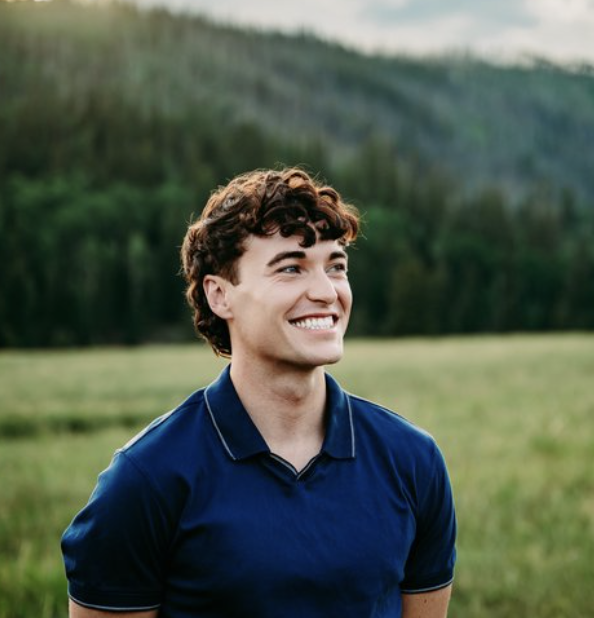
23-year-old artist, musician, and filmmaker Vienna Boyes grew up in a Southern California home most would call a breeding ground for creativity. Every corner of her childhood was infused with art, music, and the permission to dream. “That was how we were taught to cope, express ourselves, aspire,” she says of her family’s ethos… Vienna realized she was gay at 12 years old. Looking back, she remembers experiences as young as first grade where she was drawn to girls and developed early crushes. From a young age, Vienna also observed an older brother experiencing extreme anxiety, mental health problems, and seizures so intense he had to start online school. This brother soon after came out as gay. When young Vienna heard his story, she quietly realized that was her story, too.

23-year-old artist, musician, and filmmaker Vienna Boyes grew up in a Southern California home most would call a breeding ground for creativity. Every corner of her childhood was infused with art, music, and the permission to dream. “That was how we were taught to cope, express ourselves, aspire,” she says of her family’s ethos. Creativity wasn’t just encouraged—it was the language her family used to make sense of the world. 

Each now an artist of their own variety, Vienna and her four older brothers were also brought up in a “super religious” household. Her dad (who works in fashion) has been in a bishopric much of Vienna’s life; and since the family’s move almost a decade ago to Provo, UT, now serves as bishop of a BYU student ward. Vienna’s mother (a painter) was her Young Women’s president both in San Clemente, CA and then again in Provo as soon as they moved during Vienna’s high school years. Vienna says she’s “always felt very sensitive to energy, divinity, and the presence of love in the world. Growing up in a religious family, that aligned well with me and was easy to take in.” 

At the same time, Vienna realized she was gay at 12 years old. Looking back, she remembers experiences as young as first grade where she was drawn to girls and developed early crushes. From a young age, Vienna also observed an older brother experiencing extreme anxiety, mental health problems, and seizures so intense he had to start online school. This brother soon after came out as gay. When young Vienna heard his story, she quietly realized that was her story, too.

“Watching my family navigate that was fascinating, because there hadn’t been anyone else in our family to come out as gay,” says Vienna. Witnessing the difficulties her brother encountered with his mental health and eventually leaving the church also terrified Vienna as to what might happen if she eventually came out, as the only daughter in the family and caboose to a tribe of brothers who “adored me and put me on a pedestal like this life was made for me.” Vienna told her mom about her attractions at age 13, but then dropped it, unsure of what life would look like if she didn’t fulfill expectations or have a husband.

Throughout middle and high school, Vienna knew being gay “was part of my life but I also ran from it so much. I dated a boy for a year, because I was so in love with my best (girl) friend.”  

Vienna decided to go on a mission after high school. Prior, she had watched her mother become a huge ally for her brother, and loved how she spoke of the queer community. At the same time, internally, Vienna was experiencing anxiety, stress, and panic attacks almost weekly, realizing there was a significant something going on she couldn’t run from anymore. She started going to therapy, hoping to avoid going down a path of extreme mental health duress. Quietly, she navigated the juxtaposition of her identity with her religious upbringing in emotional prayers in which she realized she never felt her orientation was a sin or evil part of her; but she carried so much confusion as to whether the shame she felt was doctrine or society-induced. “I felt so broken at the time.” 

Once Vienna realized it was physically damaging her body to not be authentic, she decided to come out to her older brother, and then to a few of her closest friends. She says, “Once I started coming out to people, I felt this thing I’m experiencing and person I am is light and goodness, and my intentions are pure. The way it feels in my soul is beautiful and true to myself.”

Then, Vienna went on a mission. Houston, Texas showed her a whole new world, and an unexpected part of the journey was how many openly gay people she’d encounter. While door knocking one day, one woman said she’d “never convert,” but invited Vienna and her companion over for dinner out of kindness, saying all people deserved to be treated like humans. At that dinner, Vienna got to know someone who’d become very important in her life. K* was queer, married to an ex-Mormon, seemed to already know everything about the church, and taught Vienna lessons she deeply valued, one being, “It’s more important to be honest than kind. Being honest is being kind.” During one interaction, K spoke about being gay, and seeing Vienna’s reaction, pointedly told her how there’s a beauty and joy in humanity in being yourself, and that you can find true joy even outside a religion. This was a new concept for Vienna, but one that allowed a mind shift that would later prove important.

Vienna also experienced some difficult moments in relation to the LGBTQ+ experience on her mission. One of the friends she’d made in the ward (who was gay) tragically died by suicide. In mourning, Vienna told her mission president about it. His offhand reply, “Oh, that’s too bad” felt eye-opening to Vienna, especially as she knew that her mission president had heard she herself was queer. She no longer felt safe turning to him for guidance on personal matters. While Vienna learned much and especially met many people she loved on her mission, she says stepping off the plane felt like “stepping into a new life.” She felt, “I gave the God I grew up knowing everything I possibly could, and it felt like my way of showing I really did try my best to do this. But I knew now was the time to set myself free from all the expectations I realized were not for me.”

In the first six months after her mission, Vienna’s mental health became worse than it ever had before. She says, “I started going to therapy, worried about suicide and so many things… I’d never felt so hopeless or so much loathing for who I potentially was. I felt if I couldn’t live the life I was expected to live, I didn’t want to live.” But luckily, at the same time, Vienna was surrounded by the support of a group of powerful friends. “We are deeply interdependent. Being able to rely on them and witness how their responses when I came out to them were so beautiful and affirming and hopeful and loving took me out of so many difficult situations. Just being able to rely on them in that way--I am grateful.”

Returning to therapy with “some amazing therapists” helped Vienna navigate future decisions, and eventually she started feeling the right one for her mental health was to stop attending church and do a fresh restart of her life. The hopeless abyss of her past was replaced by a hopeful image of what her future could look like, as she began to see representation online and in real life of “happy beautiful lives and homes with two women.” She says, “Finding it was like breathing—I became addicted to it. THIS is what I want. I felt like the lights had been off in portions of my soul, and I got to turn on all the lights and look at myself. And I thought, ‘This resonates. This is what people are talking about when they talk about love.’ All I’d suppressed I now get to have if I claim the autonomy I deserve.”

After her mission, Vienna did date boys and girls to experiment, but she landed on girls. She says, “I dated a really rad girl for a long time who I’d met through mutual friends, and everything slowly healed for me.” In the past two years, she’s solely dated girls and has had several relationships in which each has taught her a vital something about herself or love in general. She is now dating someone special. 

While navigating her own journey, Vienna has also been co-directing and editing a feature documentary film called “Sanctuary,” about creating safe spaces for the LGBTQ+ community in society and religion. Interviewing various subjects who have likewise felt alienated by institutional intolerance proved a cathartic (and at times soul-crushing) experience for Vienna who has in real time been processing everything in her own life. “While doing that project, my other work, and dating girls, it’s felt like I’ve been running. Because everything was so exposed for the first time, tasting that feeling of freedom and authenticity unapologetically right next to excruciating grief – it felt like I was grieving, processing, healing.” But seeing the humanity in those she interviewed was “proof to me that love is boundless and belongs to every human – regardless of their background or anything. Every living thing belongs to it.”

In the process of meeting so many LGBTQ+ friends through PRIDE events, Vienna has developed a new perspective on living out loud. “To me, the queer community is so unbelievable, because to be proud of something society showers shame on and tells you not to be takes so much mindfulness and intention… On the other end of that, I experienced authenticity and joy, and the amount of love I feel in my body now.” 

Coming to this fulness has not been easy in all realms, as while her family loves her and remains a close unit, Vienna has had to navigate tough talks at times. “The most vulnerable of the conversations I’ve experienced are within family – because the worth and value I get is so much more tender and intimate; so if they were to say something horrible it’d be way worse.” One family member in particular said some things that devastated Vienna after she first came out to them. Thankfully, her mother entered the room shortly after and held her while she cried. But since, Vienna has had poignant sit-down conversations with the family member that have been tough, tricky and ultimately healing as Vienna has been able to finally feel she is seen for who she is and not as a broken soul. “I’ve sat and cried, begging for understanding more times than I can count. It’s part of the journey, but so worth it.” Vienna is touched that now, this individual will text Vienna’s girlfriend just to see if she needs anything, and have sit down relationship conversations with and treat them the same as anyone else. Vienna says, “All the pain, shame, hard conversations that happened with family, leaving the religion I  grew up with... All of it was made worth it because of the feeling I get to experience and how I get to live now.”

Vienna’s friend group has remained “so unbelievable.” She says, “Even though most of them are in the church, they are so understanding and seek to be present with my experience even though it’s different than theirs. Maintaining relationships when you believe different things is extremely valuable and does nothing but strengthen friendships, despite the odds.” 

Art remains the centerpiece of Vienna’s life. Beyond her film work, she is in a band with nine of her best girl friends and they “play music constantly.” She says, “Music is my coping mechanism; it’s how I express emotion and navigate life. It’s the greatest blessing and tool in my life.” Their band, Girl Band the Band (aka Hardly Know Her) played in the Marriott Center and won BYU’s Battle of the Bands last year, and has booked other gigs throughout Utah. Vienna sings lead and plays guitar and bass, though she can play just about any instrument. The uniquely talented videographer and filmmaker also loves drawing, sculpting, and photography.  

Always finding the beauty and the beat in the pain, Vienna says these lyrics (from “Life is Hard” by Edward Sharpe and the Magnetic Zeros) best describe the soundtrack of her life right now…

Life is something to behold

But if the truth is to be told

Let us not leave out any part

Do not fear, it’s safe to say it hear…

Come celebrate, life is hard

All life is all we are


Read More
LGBTQ STORIES Allison Dayton LGBTQ STORIES Allison Dayton

LIV MENDOZA HAYNES

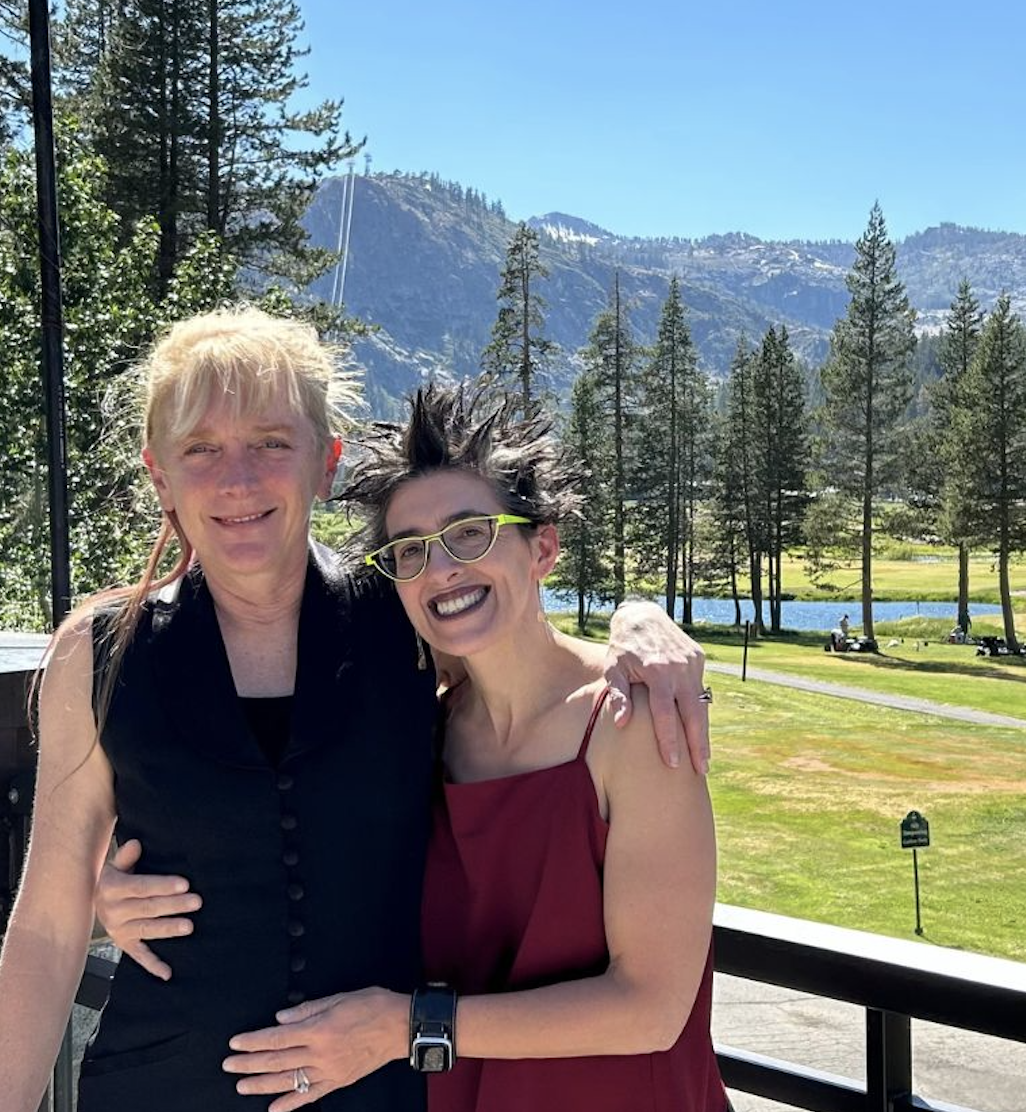
Liv laughs that no, Matthew does not get nervous when she goes away for a weekend with her lesbian friends. “I feel that if my husband didn’t trust me to be alone with someone of the same gender, we have a bigger problem. It’s about integrity, faithfulness, and values.” Matthew was not as familiar with the LGBTQ+ community before Liv, but she laughs he now has several lesbian friends of his own. Liv does not recommend a mixed orientation marriage for everyone, and says it took her years to figure out what works for her. “We’ve both grown a lot from being together… It’s a mixed relationship in many degrees – culture, orientation, language. I’m social sciences, he's exact sciences. We have enough in common to have a path together – but enough diversity to learn from each other every day – which is key to our marriage.”

Liv Mendoza Haynes claims she fits the birth order stereotype. As the last of three kids, she was the much younger spoiled baby of the family who could convince her parents to cook an alternate meal if the initial wasn’t to her liking. But being raised in a Catholic home with high expectations, she adapted accordingly as she grew. Her mother was in and out of hospitals with illness, leaving Liv’s much older sister to care for her and her brother when they were not at Catholic school. Once Liv began to notice the family had financial struggles, she minimized her special requests.

Though Liv and her brother were born in America, they were raised in Tijuana, Mexico, where her father worked long shifts as a police officer, and her mother often left the kids to be babysat with a good friend who was a known drag queen. Liv remembers it being no big deal that the babysitter would have peers from his drag community stop by for wardrobe fittings while Liv was there. She was told it was no big deal for men to be gay, but her parents spoke negatively about women who were lesbian. Her father would also express distaste for women who joined the police force or who became “manly, lost their attractiveness, and didn’t know their place.” Liv was taught that one of the worst things she could do would be to be with a woman or to not be feminine.

 This presented a problem as, while Liv was extremely close to her mom and sister, she did not share their love for makeup, high heels, and feminine things. Liv preferred her daily jeans, t-shirt, and Converse. She developed her first technical crush on a boy in the first grade, but strategically chose a boy who was mean to her, knowing it would never work out although it would help disguise the way she felt about girls from an early age. As her mother’s health declined, Liv sensed she needed to not add to the family burden by disappointing them with her attractions. She shared her mother’s and sister’s strong personality and kept her friend group small, having the same small cluster of three or four friends throughout her school years.

In high school, Liv dated an LDS young man, but was his last girlfriend, and he is now married to a man. He would often joke with her about LDS myths. Around this same time, Liv’s ex’s brother decided to go on a mission[LM8] , and told Liv to keep an eye on his parents. While he was gone, he referred the missionaries to her door while she was baking a cake. One elder mentioned it was his companion’s birthday that Thursday and Liv said, “What do you want me to do about it? You can come back for food or water, but that’s it.” The elders left, and Liv followed a prompting to run after them and offer them cake at 2pm on Thursday—assuming they wouldn’t be able to come then. But they did, and Liv began taking lessons. One day, she invited a handful of missionaries over and made popcorn so they could all watch a Joseph Smith video, per her request. After they asked if she had any questions, and she asked why they hadn’t yet challenged her to be baptized? She sidestepped telling her parents until the following May, but was baptized that December. And yes, there was cake.

Throughout her teens and young adulthood, Liv noticed her feelings for women even more, and did have a relationship with a woman. When her mother felt it was time for her to have “the talk,” she handed Liv a VHS tape and told her if she had any questions, to ask her sister. But as the tape shared no tips about orientation, rather it was a childbirth video, Liv only walked away from that experience traumatized, thinking “I’m never going to have intimacy if it leads to that.” But it cemented the expectation in her mind that the expectation was for her to have a family. While in high school, Liv’s mom teased she had a “type” of guy she’d go on dates with (those into the arts and cooking who had more androgynous, scrawny body types). Around age 17, Liv started struggling with health conditions of her own, and found out she had a higher chance of getting cancer than becoming a mom. Doctors recommended she get a hysterectomy, with her unusual gynecological issues. Liv’s self-esteem plummeted, feeling a lack of worth as if she was “defective” if unable to have children. While always expected to achieve, the messaging she received was, “It doesn’t matter if you excel. At the end of the day, your expectation is to have a family. If you’re infertile, no guy will fall in love with you.”

These insecurities possibly propelled Liv into developing an unhealthy relationship with a man in Mexico City who “looked perfect on paper,” but over time revealed himself to be controlling (even ordering for her at restaurants) and ultimately, physically abusive. When he slapped her across the face at a party in front of their friends, Liv was stunned, and even more so that none of her friends they were with did or said anything about it. A casual friend nearby noticed it, and took Liv away from the scene to recover. Liv ended up going back to the boyfriend some time later, partly because of outside pressures she was receiving, including a man at church telling her no man would want her because she was broken goods. A few months later, the relationship turned even more physical, and after an especially violent attack, a friend thankfully found Liv in her apartment and took her to a hospital where she stayed for a couple days to recover. When she was released, her first thought was to go to the temple. While she felt less than worthy to go inside, she knew just being on the grounds might bring her peace. She felt like she couldn’t tell her parents about the abuse, thinking her father would cause harm to the guy and she didn’t want to bring them shame. Liv says, “Before that, I would have said, ‘I don’t know how strong, educated women let men do this.’ But then, I became the person I’d judged.”

On the temple grounds, Liv had a breakdown that led to a security guard helping her call a local bishop who led her to talk to a counselor from back home in Tijuana. She blurted out she needed to go on a mission, which she did at age 22—partly to get away from the abusive boyfriend and partly because she felt she had to serve (having been raised under the motto, “If you’re not living to serve, you don’t deserve to live.”) Ironically, Liv was called to serve her mission in Mexico City, near the temple where she had her breakdown as well as close to her ex, but she managed to avoid running into him. While her mission was healing, it also opened her eyes to just how much emotional and psychological support missionaries need.

Liv began to feel like two people—the Tijuana Liv, who was strong and powerful, and the Mexico City Liv—who wanted to date girls and was in some ways, more submissive. After completing her mission, Liv’s commitment level to the church was high, and she struggled for a couple years with whether sharing her feelings about girls would be best for her spiritual and emotional journey.

One night, Liv decided to confide in a friend with a trans brother, which turned out to be a good instinct. The friend knocked on Liv’s door with a Little Caesar pizza. When Liv opened it, she blurted out, “I’m attracted to women. I really like women a lot!” Without missing a beat, Liv’s friend replied, “Well, I like eating my pizza hot—can I come in?” Liv now says, “I don’t think people understand how comforting her response was. It was like, ‘Oh, I learned something about you—let’s talk.’ The best kind of reaction.” The two talked all night and Liv’s friend shared many resources. Liv says she wishes she could say “it was all bliss” after, but Liv spent the next nine years rediscovering herself and toggling with her identity. She finally settled on “queer,” as she was introduced to thousands on a well-known stage she shared with Sister Sharon Eubanks who asked her questions about her reality at BYU’s Women’s Conference several years ago. It was a moment that surprised many, and made Liv feel a sense of validation and acceptance after feeling like she’d grown up at constant intersections: “You’re not American enough, not Mexican enough, not a citizen, not feminine, you don’t like makeup.” 

Recognizing it’s not the preferred term of generations past, the term “queer” still works best for Liv as she says, “It helps me feel happy, and also respectful of the person I’m sharing this journey of life with.” That person happens to be her husband, Matthew, who she met six years ago while playing Two Truths and a Lie on an app. Matthew had just moved to Utah from Montana and was looking to make friends. He handled her Harry Potter banter with humor, and their first date was eating brownies together that Matthew had made. They haven’t spent a day without talking since, and Liv says Matthew is in every sense her best friend. Her prior attempt at online dating had ended quickly after she told a guy with whom she had good chemistry about her attractions and he in turn shared his wife had just left him for her ministering sister. Liv quipped, “Well, at least you have a type.” They went on a couple more dates until his demeanor started to remind her of her ex. A therapist then told Liv just to focus on making friends, which is when Matthew appeared.

When people criticize Liv for being in a relationship with a man just to comply to the church standards, Liv says, “Honestly, that hurts because that person doesn’t know my whole story. My relationship with my husband, as public as it may be, is still our relationship. It’s hard when people have preconceptions. The reality is I fell in love with Matthew. The only way our dating happened is I stopped looking at marriage as something on a checklist and more of an opportunity to be with someone who knows and loves me. We respect each other, and he met me knowing I was open to dating men, women, and anything in between. It’s my reality, my experience, and what works for us. Every day, I choose him, and he chooses me.”

Liv laughs that no, Matthew does not get nervous when she goes away for a weekend with her lesbian friends. “I feel that if my husband didn’t trust me to be alone with someone of the same gender, we have a bigger problem. It’s about integrity, faithfulness, and values.” Matthew was not as familiar with the LGBTQ+ community before Liv, but she laughs he now has several lesbian friends of his own. Liv does not recommend a mixed orientation marriage for everyone, and says it took her years to figure out what works for her. “We’ve both grown a lot from being together… It’s a mixed relationship in many degrees – culture, orientation, language. I’m social sciences, he's exact sciences. We have enough in common to have a path together – but enough diversity to learn from each other every day – which is key to our marriage. Plus, I get to learn random dinosaur names.”

After undergoing three IVF treatments, the two share their son Lucian as well as an angel baby in heaven, and are expecting a new baby they will call Elijah, due November 25th. Throughout their prenatal care, they’ve become aware this baby will be born with challenges, and being open about that has helped Liv cope and “be human.” She says, “As Christ had outbursts, I’m allowed to have moments where I say, ‘This sucks’.”

If life’s taught Liv anything, it’s that she can take moments to have her cake and eat it, too. Shortly after exiting the relationship wherein she experienced domestic violence, it was Liv’s birthday, and a friend asked what she wanted. Liv requested a certain cake from a certain bakery because it was her favorite. The friend brought the cake Liv requested to a restaurant to celebrate with friends. After the wait staff brought out the cake and everyone sang to Liv, she instructed the server to wrap up the cake. Baffled, the group questioned her decision not to share it. Liv replied, “It might sound selfish, but this gift is my cake and I’m taking it home.” She continues, “It might sound silly but it’s symbolic—we are conditioned that if you’re not constantly happy and thankful for the trials you’re going through, you’re not a good person. But the reality is you need to know your boundaries. I had to work for years to learn to find power in my voice and use it. These boundaries are the only way I’ve been able to stay alive. You can’t show gratitude if you’re not here. Where’s the progress if you’re not truly loving yourself? I’m not willing to risk not being my full self.”

Read More
LGBTQ STORIES Allison Dayton LGBTQ STORIES Allison Dayton

BLAIRE OSTLER

As a ninth-generation descendant of Mormon pioneer stock, notable author and philosopher Blaire Ostler says, “For me, Mormonism is not just a religion, but part of my culture and identity--it’s almost an ethnicity. It’s how I think and see the world. I joke I couldn’t not be Mormon, even if I didn’t want to be—even my rejection of some parts of it is so Mormon.” Equally, Blaire is bisexual and intersex and identifies as queer, saying, “That’s also always been a part of me; it’s how I see the world and navigate life.” Her landmark book, Queer Mormon Theology (published in ’21 by By Common Consent Press), chronicles the juxtaposition of these unique traits that cast people like her in the margins of most circles. But while Blaire was told these two identities couldn’t coexist together, she absolutely knew both existed inside of her. “As one can imagine, having a conflicting view of self can tear at you.”

As a ninth-generation descendant of Mormon pioneer stock, notable author and philosopher Blaire Ostler says, “For me, Mormonism is not just a religion, but part of my culture and identity--it’s almost an ethnicity. It’s how I think and see the world. I joke I couldn’t not be Mormon, even if I didn’t want to be—even my rejection of some parts of it is so Mormon.” Equally, Blaire is bisexual and intersex and identifies as queer, saying, “That’s also always been a part of me; it’s how I see the world and navigate life.” Her landmark book, Queer Mormon Theology (published in ’21 by By Common Consent Press), chronicles the juxtaposition of these unique traits that cast people like her in the margins of most circles. But while Blaire was told these two identities couldn’t coexist together, she absolutely knew both existed inside of her. “As one can imagine, having a conflicting view of self can tear at you.”

A self-described “military brat,” Blaire grew up attending LDS wards with anywhere from 15-600 congregants, in meetinghouses from Korea to California. Having this wide exposure to “church,” she saw how it means different things to different people. Outside of Utah, she saw the church as the built-in community you find wherever you go. It was about ensuring everyone has access to food, healthcare, language—basic needs. “That was more important than some of the cultural debris that gets mingled with the gospel. For us, the gospel was ‘Love your neighbor; take care of each other’.” She was also raised by a Catholic mother who converted to the LDS faith—somewhat of a universalist who held there is more than one way to find God. Blaire was given tools to deconstruct—a process that for her began around 14.

At this time, she was coming to grips with the fact that she was biologically queer with intersex characteristics, and also bisexual, experiencing sexual attraction and desire towards a diversity of genders. “It’s difficult to overstate how much it messes with your brain to be taught two conflicting messages about yourself as a Mormon woman, that: 1) your most important goal is to have a temple marriage and raise babies to go with you to the celestial kingdom, and 2) queer people destroy families, are promiscuous, die of AIDS, and corrupt society.” Blaire’s most difficult struggle was to get past this engrained dichotomy of being told “You’re supposed to do this,” but “As a queer person, you will fail at it.”

Blaire, who is now on the editorial board at Dialogue, wound up at BYU Provo where she met her husband of 20 years, Drew. After many moves and jobs, they now again call Provo, Utah home--the Y mountain just outside their doorstep. Blaire jokes her 20s were spent either pregnant, in an operating room, or a hospital–having and nursing babies, and having surgeries that would allow her to do so as an intersex person. “It was a decade of trying to be the ideal version of a Mormon woman in every imaginable capacity—from the way I looked, sounded, functioned, existed. It will burn you out—you can only do it for so long.” Blaire and Drew ultimately had three children, now ages 15, 13, and 10. 

In her words, she spent her 30s in a therapist’s office, trying to heal “from all the chaos of trying to fit a narrative that my body—my biology—was not made to create babies. It was a dangerous activity.” She says, “I was convinced I had to prove myself by doing these things, not even caring if I lived or died. That was obviously a low point.” After passing out on the operating room table after having her third child, Blaire chose to get sterilized for her own safety. Her 30s afforded her time to heal her body from the surgeries, her heart from the spiritual trauma, and her mind from the things she’d been told about her purpose. It was during that process that she decided to write her book.

Per Blaire’s educational background, philosophy plus religion equals theology. Via this contextual podium, Blaire ventured into a possibility space where she could be both queer and Mormon? “Queer” is an intentional word for Blaire, who both supports the reclaiming of the word as one with positive connotation (as demonstrated by Queer Nation since 1990), and recognizes how, in its blanket simplicity, it affords many the privacy and legitimacy they seek in a world that sometimes requires labels to consider and afford equitable rights. She also recognizes it as a word similar to “peculiar,” which has likewise been lauded in Mormon philosophy to be a good thing. Further, Blaire reclaims and esteems “Mormon” as a positive term, citing its inclusion in scripture. Her book provocatively explores the inherent coexistence of what it means to be queer, peculiar, and Mormon, and invites the reader to see things that are hidden in plain sight. 

Further propelling her quest to upend presuppositions is her role as a mother of three, with Blaire youngest also identifying as queer. “It’s interesting because as a queer parent, my daughter was essentially raised at a Pride parade. We assumed she was simply reflecting what she saw. But over time, it became apparent that this was her. I have a beautiful, queer, 10-year-old child.” But this made things different, regarding church. Blaire found herself becoming protective and concerned with what her Primary-aged daughter might be exposed to. “It’s one thing to roll the dice with yourself; it’s another to do it with your child.” Blaire’s family has taken a calculated approach to their church activity, choosing to support this activity or class or speaker, but perhaps not show up for those deemed riskier. “I didn’t want her to grow up being taught that she was anything other than a beautiful child of God—and strangely enough, she might be taught otherwise at church.” In this Ostler household (no close relation to Richard Ostler’s), there are a variety of faith transitions going on, and Blaire presumes each may land at different spots as they have varied perspectives on Mormonism, church, and God. But “at the end of the day, Mormonism means family. We all agree to take care of each other, and if we do that, then we did our job… This isn’t necessarily a rejection of the church, but a manifestation of our most sincerely held beliefs.” She explains it as the orthopraxy of her orthodoxy and acknowledges that while some may not understand, Blaire views her best perch as one that respects people where they are.

“The thing I learned from Mormonism and how I was raised is that life was about creating eternal families. At the end of the day, when the church is in conflict with my eternal family, I err on the side of family.” She continues, “The church was started by a man desperately trying to connect families and relationships through sealings. When I pick my family, I’m picking Mormonism, by not letting an institution come before my family. Strangely, some conflate the institution with their beliefs. I see the Church more as like a ship, and Mormonism is the people on the ship working together. But some on that ship (the institution) want to throw the queer people overboard, and if people are getting thrown off the boat, I’m going with them--the least of them. Guess who else did that? Jesus. He went with those who were cast out and left behind. The gospel is so much more than just a ship, even though a ship is useful.”

Blaire feels that even her presence causes some cognitive dissonance for others. “Because what I say is steeped in gospel and scriptures, sometimes people have a hard time coming to grips with it. It’s a view of the scriptures that most aren’t accustomed to.” But she honors religious plurality as found in universal concepts like the Golden Rule. “I feel like we need to take it to the next level in Mormonism and recognize when something on the ship isn’t working. We’re a religion of ‘Is this working?’ And if not, we honor change through ongoing revelation. The monolithic narrative of hetero supremacy isn’t working as so many family structures look different,” she says, addressing the single parent, divorced, widowed, polygamous, adoptive, and never married members now casting the nuclear or “traditional” family as a new minority. “We need to recognize our faith community as much bigger than we thought. We’ll be stronger for our diversity and inclusion. Imagine all the beautiful queer youth, queer missionaries, and rising young adults we’re losing because we looked at their queer gifts and said, ‘No, we don’t want your unique contributions.’ We are missing out.”

Referencing the body of Christ as found in Corinthians, Blaire explains, “We were never meant to be the same. Sometimes we look at our differences as a place of conflict rather than beauty and opportunity. If one’s good at writing and one good at building, wow, what a great opportunity that is to help each other! Is the body of Christ all hands or feet? No, we have different parts that work together cohesively. But we’re afraid, and sometimes we look the other way because we don’t want to see the parts of the body of Christ that are suffering. However, by recognizing suffering and mourning with those that mourn, we take the first step to making things better.” Acknowledging those deficiencies, like when the church changed its priesthood and temple exclusion policies and started the perpetual education fund to further restore equity, brings Blaire hope for further change. “Imagine the powerhouse the church could be if all members were ordained to the priesthood instead of half. Or if we didn’t push out 5%+ for being queer; imagine how much stronger we’d be. When we cut people off for insignificant differences like race, gender, or orientation, we’re undermining ourselves.” She recognizes this awareness is needed outside of the church, as well, especially now as people along the LGBTQIA+ spectrum face a litany of hostile legislation and infighting even in the secular community.

While she considers the gospel of Jesus Christ as her personal guiding faith practice, Blaire says she honors each individual’s ability to choose their own healthy path. “If a queer person is happier in a hetero marriage sealed in temple, or if another no longer affiliates with the church because it’s psychologically traumatizing, I support both. You have to go where your basic needs are being met, and you get to decide what that looks like—especially queer people. I have a hard time believing our Heavenly Parents don’t want our queer kids safe more than anything – I can’t imagine any loving parent thinking that, let alone a godly parent. We need to support each queer person wherever they land.” She has reframed her paradigm of God and now considers the concept of God to be a big heavenly family where all are connected. “God isn’t he, or she, God is they—God is all of us in one big eternal family… When we honor our families, we’re honoring God and the greater heavenly family we’re all a part of. Sometimes we think of God as a monster who wants to punish and harm us…I think we limit God’s compassion through our own imagination. I believe in a God that is more compassionate, loving, and benevolent than we could possibly imagine.” Blaire says as a parent herself, she views her role as “a heavenly parent in-training, trying my best to care for my children. Will I send them to a room, activity, or meeting that’s harming them and causing panic attacks? No, I’d rather say, ‘You are that you might have joy.’ This is what we’re doing as a family—prototyping a heavenly family. We stick together; we don’t kick people out on account of our differences.”

Of her faith practice, Blaire especially loves taking the sacrament as it symbolizes the “breaking of bread with my people, especially when we disagree. That’s when we need it the most.” She continues, “We’re all members of the body of Christ and this equates our commitment to each other and to adhering to His gospel.” Again, she is taken back to meeting the primal needs she identified in childhood: does everyone have food? Housing? Care? Health? “That is what Jesus did. Here, our basic needs are met.”

“In Primary, we are taught to love one another. Loving one another is how we find our way home,” says Blaire. “Our queer mantra is ‘Love wins.’ And I truly believe that. Love wins. Or in other words, charity never faileth.” 

**If you would like to learn more about the intersex population and what it means to identify as genderqueer, Blaire recommends the books Sex and Gender: Biology in a Social World by Anne Fausto-Sterling and Evolution’s Rainbow: Diversity, Gender and Sexuality in Nature and People by Joan Roughgarden. Blaire’s book, Queer Mormon Theology, is available on Amazon and Audible.

Read More
FAMILY STORIES Allison Dayton FAMILY STORIES Allison Dayton

THE LESUE FAMILY

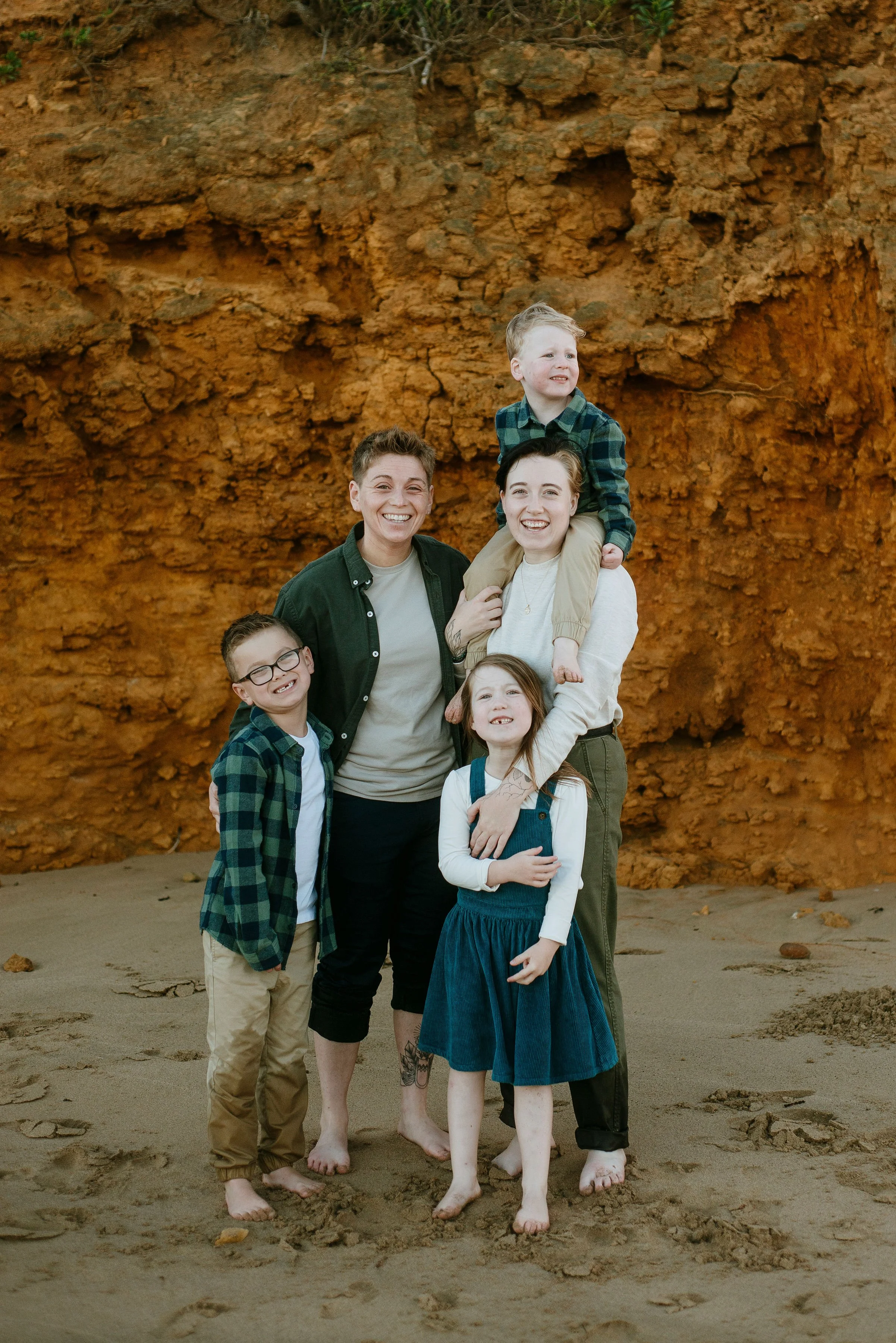
In a small town in southwest Missouri, about an hour from where the new Springfield, MO temple will be built, there’s a busy, bustling home wherein you can find the Lesue (pronounced le-sway) party of 11. Ben and Rebecca Lesue’s nine kids range from ages seven to 23. Rebecca home schools on top of teaching group piano lessons to 36+ students from the community, so rare is the quiet moment. But they’re used to happy noise…

In a small town in southwest Missouri, about an hour from where the new Springfield, MO temple will be built, there’s a busy, bustling home wherein you can find the Lesue (pronounced le-sway) party of 11. Ben and Rebecca Lesue’s nine kids range from ages seven to 23. Rebecca home schools on top of teaching group piano lessons to 36+ students from the community, so rare is the quiet moment. But they’re used to happy noise. Rebecca’s the oldest of 12 kids, and Ben’s the oldest of four. They met in the middle, plus one, when their grand finale was, surprise – twins! “Our lives are measured by before twins, and after twins; they rocked our world,” laughs Rebecca. Luckily, Ben, an English teacher as well as an officer in the Army National Guard, is often around to help manage the chaos at home as well as take the older kids along on outdoor adventures as he strives to meet his goal of climbing the highest peak in every state.

The peaks and valleys of the past few years have also included a pre- and post-2020 mindset for Ben and Rebecca as devoted LGBTQ+ allies and advocates. In April of that year, one of Rebecca’s younger brothers, a returned LDS missionary, came out as gay.

“Immediately, this changed our hearts,” says Rebecca, of her family’s views on LGBTQ. “Before, there had been cousins and nieces who identified as LGBTQ, but they lived far away. When it’s someone in your immediate family who you know up close, then you realize how many stereotypes aren’t true.” Rebecca’s entire family responded with love toward her brother. About a year later, after Elder Holland’s address to BYU in August of 2021, both Rebecca and Ben felt compelled to increase their understanding of LGBTQ issues. They binged books and podcasts including Tom Christofferson’s book, That We May Be One and the Questions from the Closet and Listen, Learn and Love podcasts. The Lesues were especially moved with how the Christofferson family resolved that nothing would take Tom (or his partner) out of their family circle of love.

In November of 2021, Rebecca started reading Charlie Bird’s book, Without the Mask. Out of nowhere, she felt impressed that their daughter Ana also needed to read the book but Rebecca didn’t know why. Ana had moved about an hour away to attend a community college, and her parents knew she had been struggling with some anxiety for a few years, but they could never pinpoint the source. Rebecca says she felt inspired to write Ana an email in which she asked, “Is there a reason I should be worrying about you?” The next day, Ana replied that Rebecca’s worries weren’t baseless because she had been feeling “a little more sad than usual… I was reflecting on how many times it has felt like God has stood me up… I’ve accepted myself as part of the LGBTQ+ community.” More specifically, Ana identified herself as nonbinary and queer. She said she didn’t want to go to church anymore because “the church doesn’t make a place for those who are queer.”

Rebecca admits she had to google the words “nonbinary” and “queer.” She says, “Truthfully, it might have been easier if she’d come out as gay or trans, because I had zero context for ‘nonbinary’ or ‘queer’.” When asked what those terms mean to her, Ana replies, “In the simplest terms possible, being non-binary and queer just means I don’t identify with gender or sexuality as society has defined them… For me, gender is complicated. I feel connected to it very deeply, yet I don’t at the same time. I’ve experienced a lot of dysphoria in the past about being seen as a woman, but I like being a woman sometimes. Other times, I know I’m not just a woman. Gender is fluid and ever changing to me, so narrowing it down to one very specific label didn’t work. It’s the same way with my sexuality. Being non-binary and queer just means I’m pushing away what I thought I knew about gender and sexuality, and I’m letting my feelings be my guide.”

Of their learning curve, Rebecca says, “Ana was patient with us, and gave us the benefit of the doubt that our questions were because we wanted to understand and not because we were trying to attack her.” Ben observed that after Ana came out, she was much happier, as if a weight had been lifted. “Her great smile, which we hadn't seen for a long time, was back. It was a relief to see her being herself again. It occurred to me how awful we are as a society that we don't allow people to be their authentic selves -- that we force the LGBTQ community to live lies. It's an integrity thing--we expect people to be honest, yet we don't allow them to live their truth by shaming, criticizing, discriminating, and othering people who don't fit the mold. That is why I work for inclusivity now, especially in the church.”

After Ana came out, Ben was 100% ready to be an ally, an activist, and a protector for Ana. But Rebecca was worried about pushing Ana to define herself too soon or blocking her into a corner by being public. And Rebecca needed more time to process the whole situation. She says, “For me, our daughter leaving the church was harder than her coming out.”

At the time, Ben was serving as a counselor in the bishopric and he was moved by how supportive their bishop, a close friend, was and how often he consulted Ben on LGBTQ+ issues that arose in the ward. With their stake president’s support, they planned a ward LGBTQ-themed fireside to educate the members in order to create more safe and inclusive spaces. They faced pushback from some ward members, but they concluded that was just more evidence they needed to move forward.

That bishopric has since been released, but Ben wears his Dragon Dads pin to church, which sometimes leads to uncomfortable conversations. But Ben says, “That confirms it’s important for me to wear it.”

Besides loving to hike and climb with her dad, Ana, who describes herself as a shy kid who “talked more to (herself) than to friends growing up,” loves reading fantasy, romance, mystery and sci-fi novels and comics and storytelling, as well as communicating with sticker covered letters to several pen pals. She also loves “watching zombie TV shows, obsessing over stationary and little trinkets, and thrifting Hawaiian shirts that are much too big for me.” Ana started homeschooling in high school, after being bullied through middle school. In hindsight, her parents feel the choice to home school may have saved their daughter’s life.

Before coming out to her parents, Ana had already confided in some online friends, an LGBTQ+ cousin, and two of her sisters. She says while her parents seemed “blindsided,” they have been supportive and she says she “never had to question whether I’d be safe, accepted, and loved, and for that, I’m very privileged, but my anxiety still made it hard to talk about it.” She came out publicly in a social media post on October 11, 2022, National Coming Out Day, and says she received many heartfelt messages of love and support from extended family and friends. Ben and Rebecca remained on standby to field any unkind responses.

Ana stopped going to church in 2021, which felt complicated considering her roots. She says, “My mother's family has members going back generations and my father's mom was one of the first members ever in her small community in Mexico. My family and the church seemed inseparable. That saddened me deeply... I didn't know how to reconcile my blooming identities and shifting testimony with the picture-perfect plan I had made with God in mind. I prayed a lot without any answer, so I learned to figure it out on my own… I can of course appreciate some of the good values I got from the church, but at this point, I don't know that I'll ever revisit it. That is, not until God decides gay couples aren't an attack on the family and lets them get married in the temple at the very least.”

The rest of the Lesue family still attends church and their oldest son is preparing to serve a mission. But Ben says, “This all caused me to question a lot about the church for a while; it was pretty negative and caused some strife. But as I continued to read, I learned about faith transitions and recognized that as what I was experiencing. I think I’m coming out on the other end of that process now with a deeper, albeit a different faith that’s more strongly rooted in Heavenly Father and Jesus Christ than maybe the church itself. I am active, though, and feel I need to stay in to advocate and hopefully bring about some change – which is easier to do from the inside.”

Rebecca says she is more careful to honor the personhood of each of her children and tries to parent by principles rather than arbitrary rules. She focuses on leading with love with their kids. She advocates for LGBTQ+ by sharing positive comments and experiences, and by speaking up if someone says anything negative. She says, “I think we can quietly be an advocate to one person at a time.” Rebecca’s also received the prompting to “Stand ye in holy places,” and has found comfort in increasing her temple attendance and trusting the Lord will work out all the details of where everyone fits into the plan. “I believe it’s beautiful; we just need more revelation”.

Rebecca says that for a long time before Ana came out, she had wanted to put a tag on her Facebook profile that she supported LGBTQ+, but she wasn’t sure how it would be perceived – would it be offensive to her conservative friends and piano clients, and/or possibly to her LGBTQ+ friends who might sense that she was posturing but not actively advocating? But after a podcast episode on which Charlie and Ben spoke about how meaningful it was to them if someone wore a rainbow pin, she decided to add that support sticker to her profile. She says, “Ana came out to us just a few weeks later, and I was so glad I had added it. And since then, several of my LGBTQ+ friends have told me they feel happy and supported whenever they see it. It is a small thing, but it is meaningful.”

Of this experience, Ben says, “I’ve grown to be more compassionate, whereas before, empathy and compassion weren’t big strengths for me. Our family is more openly loving toward each other. We realize that having an LGBTQ child wasn’t a curse or a trial , but a gift that teaches us how to love better, in a more Christlike way. We’re more unified as a family – our kids are each other’s best friends. The older four especially hang out together, go shopping and attend KPOP concerts.” Rebecca adds, “You can tell when Ana is home because there’s so much happy noise in the house – laughter, jokes. She’s such a gentle, loving soul and a great big sister. I know she needed to move out to grow up and all, but I miss her – the spirit she brings into the home. She’s a gift to our family. If anything, we just feel honored that God trusted us with her and blessed our family with her.”

Read More
FAMILY STORIES Allison Dayton FAMILY STORIES Allison Dayton

THE ROGERS FAMILY

Lynell and John Rogers first met in 1998, at a single adult church activity in Washington state. John was a returned missionary who had served in Arizona and Lynell was a recent convert who had just returned from a mission to Minnesota that week. After a very short engagement, they were married in the Portland Oregon Temple. Today they have been married for over 25 years and have four daughters, Kendall (age 23), WakeLee “Wake” (age 14), Stevie (age 12), and Hero (age 7).

Oldest daughter Kendall (she/her) was always a bit of an overachiever - she finished the Personal Progress program as a Beehive, graduated from high school with an associates degree at 16 (and her Bachelor degree at age 18) and usually has multiple ward & stake callings. “Kendall has always had a strong sense of justice. People feel drawn to her and many have been comfortable coming out to her over the years. She will stand up for anyone and she will speak up if something isn’t right. She has made our family more aware of how LGBTQ people are hurting - not because of who they are, but because of how people treat them”.

John and Lynell had “mostly been around an attitude (among many church members) of ‘well, the doctrine is the doctrine, so take it or leave it’ and it seemed like that was how it had to be,” says Lynell. “I did feel sorry for people & families who were hurting because of policy or being personally mistreated by other members, but I felt like I had a responsibility, especially in the capacity of leadership callings, to ‘tell it like it is’ when it came to doctrine and policy, with kind of a ‘throwing up my hands’ attitude, like ‘sorry - it’s out if my control!’… because it felt like it was out of my control. What could I do? I had an obligation to ‘teach the doctrine’.”

During her teenage years, Kendall had many conversations with her parents, patiently trying to help them understand the point of view of LGBTQ people. Lynell & John had many common questions like, “Why do LGBTQ people even have to come out? It’s nobody’s business who they are attracted to!” and “Why do they have to put gay characters in every tv show now?”

It wasn’t until John & Lynell actually got to know more LGBTQ people in their area that their hearts began to open up. Kendall was involved in the local single adult branch after college, and as the family got to know many of those individuals, John and Lynell began to realize that there were a lot more LGBTQ people in the area than they had assumed. However, “most of were afraid to come out to their parents, church members, employers, etc. It didn’t seem right.” 

One person who did come out publicly was family friend Bethany, who had been in the young women program along with Kendall, while Lynell was serving as Young Women President in their ward. “After that, I started thinking a lot about what I had said during those years that might have been insensitive to her and the other youth who I had just assumed were all straight & cisgender”

John and Lynell’s attitudes began to change over time. Instead of continuing to be upset about “supposedly being inconvenienced by LGBTQ people” or some perceived social agenda, “we became more concerned about actual people. Not lumped together as a faceless group, but as individuals that we knew and cared about. We started worrying about things like, is anyone sitting alone? Does everyone have a safe place to go tonight? Who doesn't have a family to go home to for the holidays? When you focus on people and not making assumptions about entire groups of people, you start to see what is actually going on”

Kendall was called to serve a full-time proselyting mission in Salt Lake City, Utah. While serving in SLC, she covered many wards and stakes, working very briefly with a certain ward Relief Society President by the name of Allison Dayton (founder of the Lift+Love Foundation). Kendall began following Lift+Love on social media.

Meanwhile, back in Washington state, stay-at-home mom Lynell had followed a prompting to return to college. She attended BYU-I online through the PathwayConnect program but had no real plan for a major. Ultimately, she felt impressed to get a degree in Web Design & Development (computer programming with an emphasis in design for websites & social media). “Programming was very difficult for me. I had to take one especially tough class three times before I passed it! But I couldn’t give up, because again & again I felt that there was a specific job that the Lord wanted me to do that was very important to Him and would impact many people. I couldn’t fathom that something I would be able to do could possibly be that impactful, but if it was that important to the Lord, there was no way I was going to give up”. After graduation, Lynell applied for some jobs that didn’t go anywhere and did some freelance work. Every day she wondered - what was this important job she’d felt inspired about, and how would she find it? 

Shortly after Kendall returned from her mission,  she moved to the East Coast for work. One day, she called Lynell with important news. “Mom,” she said excitedly, “stop whatever you’re doing! This is more important!”. Kendall told Lynell about Allison and Lift+Love. “I just saw online that Lift+Love needs someone to help with social media, and you need to contact her RIGHT NOW!” Allison and Lynell soon met over Zoom and hit it off. “I immediately knew the work Allison was doing with Lift+Love was inspired by the Lord. I don’t say that lightly. Her personal experiences with her brother and her son put her in a unique position to be able to help LGBTQ Latter-day Saints and their families who need resources and support, but aren’t sure where they can find them. She sees the (sometimes awkward) space where many parents are - they love the Lord, and they are faithful members of the church, but they also know that their children are beloved of God - that they aren’t bad and they weren’t created by mistake. It can be a difficult place to navigate, especially when you are first starting out. I wanted to help, too” 

Lynell has been working remotely for Lift+Love since 2021, managing the website and social media accounts. “I feel really lucky to be able to use my education to be able to contribute in some way. Every single day, I am excited to do this work”

Working remotely from Washington state, Lynell was able to do her work for Lift+Love through video calls, texts, and other online resources without ever being in the same room as Allison. “The first time I met Allison and Jenie (Hunter) in person was at the 2022 Lift+Love Mother’s Retreat in Utah. I had gone to the retreat just to help, but it was so great to meet many of the women I’d admired, especially those from the Lift+Love Family stories. I did feel a bit of ‘imposter syndrome’ because I was asked many times by the attendees about my own queer kid(s) - which was to be expected at a retreat for moms of LGBTQ kids”, Lynell realizes, “but I felt a little strange for being there when I didn’t have any queer kids myself. Which is funny to me now, because I actually DID have queer kids, but I just didn’t know it at the time”. 

John had also felt prompted to learn more about the LGBTQ community. He read a lot of books and articles, and instead of listening to his usual sports radio or political podcasts, he started listening to the “Questions from the Closet” podcast. “For me, listening to Charlie Bird and Ben Schilaty explain things helped a lot. I instantly respected them both, and I found it very easy to understand things that I couldn’t understand before, through their perspective.” John began making small changes, like adding his pronouns to his email signature at work and putting LGBTQ-affirming stickers on his water bottles. 

Between John’s research and Lynell’s work at Lift+Love, they found themselves discussing LGBTQ issues on a daily basis, from an ally perspective. They would excitedly share things they had learned and discuss questions like, “If one of our kids were LGBTQ, how would we want to handle it?” “It gave us many opportunities to talk things through and get on the same page. We didn’t have the urgency of having a ‘horse in the race’ like many parents do when they’re first navigating these issues, so we were able to be more objective than we might have been if we'd had a kid come out to us first.”

While Kendall (she/her, age 22 at the time) was visiting her family for Easter a few months ago, she and her sister Wake (she/her, age 13 at that time) gave their parents Easter eggs that contained a picture. The picture was a screenshot from the NSYNC ‘Bye Bye Bye’ video, with three of the singer's faces replaced by the (hilariously photoshopped-on) faces of Kendall, Wake, and family friend Bethany. The caption read “Bi Bi Bi.”  “I didn’t get it,” says Lynell, “I thought they were teasing me because someone recently told me that I seemed like the kind of person who would like boy bands. So I’m like, “That’s great, guys. Hilarious.” Then (ironically) I went right back to working on something I was doing for Lift+Love, without giving it any thought. Kendall and Wake just sat there, staring. It finally started to dawn on me, and I said, ‘Wait, are you making fun of me, or are you trying to say something?’”

They were trying to say something... 

As they had planned together, Kendall and Wake both came out to their parents as bisexual (Kendall now identifies as queer). John and Lynell replied that this was fine with them, that they love and support them, etc. John says, “We feel like we were very fortunate because we had been prepared and we were able to answer sincerely in a supportive way. I don’t know exactly what our initial responses would have been if the girls had come out much earlier, but there definitely would have been fear and concern on our end. Today, our only concerns are that they are safe & happy.”

Kendall and Wake didn’t come out publicly right away, telling only a few close friends and continuing to attend the Lift+Love online support groups for young adults & youth. It wasn’t until the last weekend in August 2022 that both sisters decided to come out together (from opposite sides of the country) to their other relatives and the general public. Wake (13) is an award-winning thespian, who says she came out because she was “tired of trying to hide” who she is. “When I was with my friends who knew, like at theater camp, I could relax and be happy. The rest of the time, I was so stressed and could never feel comfortable being myself.”

John and Lynell have received mixed reactions from people about the news that two of their daughters are queer. “A few people have expressed surprise that we ‘allow’ our kids to be bisexual, since we are active members of the Church of Jesus Christ of Latter-day Saints. We didn’t ‘allow’ it, that is how they were created. It honestly never occurred to us to try to change who they are. They don’t need to change. It is NOT a sin to be LGBTQ.”

“Our kids are not stereotypes or characters on a tv show. They haven’t ‘fallen in with the wrong crowd’. They are not confused. When they say that this is how they were created, and have always been, we believe them. Our daughters are respected for their intelligence, kindness, and leadership skills. If you respected them before you found out they were LGBTQ, that shouldn’t change. They haven’t changed, but your perception of them may have changed. Who they are attracted to is their own business, same as it has always been.”

“We don’t have all the answers to every gospel question. None of us do,” says Lynell, “but I do know that God’s plan is perfect. I believe that we understand a lot less than we think we do. I believe in the continuing restoration spoken of by President Russell M. Nelson. There is more knowledge coming. We don’t have it all figured out. We don’t even know what it is that we don’t know, so how can we say that the information we have about LGBTQ people is all there is going to be? God isn’t lazy and he isn’t going to just leave a bunch of loose ends and unanswered questions with no solutions. He knows what He is doing. He created these kids - they are exceptional kids. I know how to receive revelation for myself and my family, I will continue to do what He asks, the same as I have done all of these years, even if it doesn’t make sense to other people”

“There is a place for everyone. The church is for LGBTQ people, just as much as it is for anyone else. I’m starting to understand why some people don’t feel safe or welcome at church, and I respect those who need to step away. But if you ever worry that you’re not welcome and you do want to be there, we’ve got a spot for you in the pew right next to us! We will always squeeze in to make more room.” 

“Getting to know LGBTQ people & their families is the key to understanding,” says Lynell. “Listen to their experiences. Open your heart to people in real life - watching a gay character on tv or having a gay co-worker (that you’ve never actually spoken to) doesn’t count as knowing LGBTQ people. You can’t hope to understand people if you don’t actually get to know them. It’s not exaggerating to say that many of the best people I know are LGBTQ, and I’m so glad I’m not missing out on that”

“I feel like I’ve actually learned more about how to be Christlike in the past year than I had in all my previous years in the church. I understood the doctrine. I could answer any gospel question. But now I’m learning how to better apply Jesus’ example to how I treat people. If we’re missing that, we’re missing the point,” says John.

You can watch Lynell’s presentation given during the Parents/Family breakout session of Gather Conference 2023 on the Gather Conference Youtube Channel here

*some names have been changed for privacy

lgbtq siblings

Kendall and Wake

lds mormon lgbtq family rogers
lgbtq missionary rogers
bi bi bi
mothers retreat lynell

Lift+Love Mothers Retreat 2022

rogers siblings
Read More
FAMILY STORIES, LGBTQ STORIES Allison Dayton FAMILY STORIES, LGBTQ STORIES Allison Dayton

CORA JOHNSON

Cora Johnson grew up in Snowflake, AZ -- a small town so predominately LDS it’s been dubbed “Little Utah.” But she’s grateful to have also grown up in an open-minded household with parents who taught her from an early age to ask questions and to explore other cultures and ideas. Having prioritized global travel above “just about everything else,” Cora says her parents, Cooper and Cameo Johnson, have instilled their “vagabond genes” in each of their four kids: Cora – 21, Granger – 19, Jonah – 17, and Ezra – 13. While balancing a full and hectic life, through good and bad financial times, whether it be starting a business or pursuing higher education and trying to meet the needs of all members of the family, they always prioritized travel. Together, the family embarked on adventures everywhere from Morocco to Malaysia. Cora managed to visit 32 countries and all 50 states before her LDS mission to Santa Rosa, CA, and upon her recent return, just squeezed in a trip to Europe, the Middle East, and Africa. It’s this broader perspective that Cora credits as having helped her navigate her inner journey of being queer with confidence…
Cora Johnson grew up in Snowflake, AZ -- a small town so predominately LDS it’s been dubbed “Little Utah.” But she’s grateful to have also grown up in an open-minded household with parents who taught her from an early age to ask questions and to explore other cultures and ideas. Having prioritized global travel above “just about everything else,” Cora says her parents, Cooper and Cameo Johnson, have instilled their “vagabond genes” in each of their four kids: Cora – 21, Granger – 19, Jonah – 17, and Ezra – 13. While balancing a full and hectic life, through good and bad financial times, whether it be starting a business or pursuing higher education and trying to meet the needs of all members of the family, they always prioritized travel. Together, the family embarked on adventures everywhere from Morocco to Malaysia. Cora managed to visit 32 countries and all 50 states before her LDS mission to Santa Rosa, CA, and upon her recent return, just squeezed in a trip to Europe, the Middle East, and Africa. It’s this broader perspective that Cora credits as having helped her navigate her inner journey of being queer with confidence.

 Cora was in tune with who she was from a young age. A self-proclaimed tomboy, most of her friends were boys, partly because she was more interested in their pastimes, and partly because she didn’t like to have girls as close friends because she’d end up developing crushes on them. While Cora’s attraction to girls was clear to her, she didn’t talk about it often – figuring it didn’t matter that much.

 From about the age of 10 or 11, Cora resolved she wanted to serve a mission, a notion that didn’t go away, even as she started to come out to others around age 17. She didn’t make a public announcement, but told her family and friends, who largely responded positively – even a line-up of extended family members who she feared might not due to their traditional LDS mindsets. As she suspected, Cora’s parents were very supportive and loving, though Cooper did advise his daughter to be cautious about coming out in the church. Worried it might end up hurting her, he warned her that the church might not always be a safe and secure space.

 A couple years passed and as Covid changed the landscape of the nation, Cora decided she was ready to leave Arizona to serve that mission. She’d come out as bisexual already to her bishop and stake president, both of whom were very affirming and supportive of her desire to serve. But they both advised her to keep her sexuality on the downlow, reminding her “your mission is not about that/you.” Cora reasoned she could keep things under wraps. Off she went to Santa Rosa, CA.

 While her mission was a lot harder than expected (especially regarding the need to harbor any mention of her orientation), Cora loved every minute of her 18 months in the field. She felt nothing else she had ever done had grown her relationship with and love for the Savior more. As she began to draw close to her fellow missionaries, one day she found herself in a conversation with a group in which another sister expressed how she’d recently come out and was struggling with emotions Cora herself had faced. Feeling a strong desire to be of service, Cora said, “I know how hard coming out can be – I’ve done a lot of research and can help if needed.” In this one statement, Cora felt a renewed purpose as she discovered another pocket in which she could be of service. Over the course of her mission, she ended up meeting many other missionaries who were also trying to navigate being queer in the church. Cora found her peers to be affirming for the most part, particularly one companion she had for half her mission who was “amazingly supportive and open to learning.”

 Still, Cora tried to keep it all on the downlow, reasoning that when you’re on a mission, your romantic life shouldn’t be your focus. But as so often happens with sisters and elders who serve in the same area, Cora met a sister missionary in a nearby area for whom her feelings were undeniable. Word somehow got back to her mission president, who was not pleased and made sure to keep them assigned as far away from each other as possible. And Cora now had a new dilemma on her hands – she knew that when she’d return home from her mission, she would have to come to terms with the fact that the church she loved so much and had dedicated her life to had teachings in direct conflict with the future she now knew she’d be pursuing. While she tried to maintain focus on the work, Cora began to fear that the hope of the Atonement she was so committed to teaching to others wouldn’t extend to her unless she was willing to give up a romantic relationship. For the first time, Cora didn’t know whether she’d be able to authentically remain a member of the church while being queer.

 Cora turned to her parents for advice; ever loving, they lifted her spirits. Her mom assured her, “What you’re doing right now is good. God loves you as you are. What you do or don’t do when you get home will not diminish the value of the experiences you’re having right now, and the help you’re providing people.” Cora recalls it was still of course difficult, but without the positive encouragement from her mom, she wouldn’t have been able to push through. Cora finished strong, and returned home to Arizona, where she is now working at the Phoenix airport while completing prerequisites to apply to nursing school. The adventure seeker still loves traveling “more than anything else in the world,” and also enjoys hiking, camping, being outside, concerts, snowboarding, and longboarding.

 To any other queer youth considering the mission field, Cora advises: “Definitely pray about it a lot. Consider all the possibilities, because temple covenants are a big deal – and that’s one thing that gives me a lot of anxiety. Missions are amazing, and I’m so glad I went on mine. But they can be very difficult.” Especially for LGBTQ members. Cora says, “Going into my mission, I knew I was bi and queer, but I assumed when I came home, I’d probably try to get into a relationship with a guy and marry in the temple. I did not anticipate falling for a girl.”

Since coming out and coming home, Cora has maintained her church activity while also becoming much more vocal and active in the LGBTQ community. During Pride month, she posted an invitation on her Facebook profile (@hna.colocha) for followers to ask her (anonymous) questions about the reality of being LGBTQ in the church. Her answers have continued to shed light to a mostly kind and receptive audience, including many extended family members who Cora didn’t anticipate would be so open to hearing more about her experiences.

The Johnson’s home stake recently asked Cameo to give a talk on inclusion in stake conference, which Cora says was “amazing.” Cora appreciates how her parents have both chosen to be so open about their family’s journey. Her brother Granger is now serving a mission in Colorado Springs, where he, too, has had opportunities to speak up and speak out about having a queer family member. “It’s been really, really good,” says Cora. It’s this kind of familial love and support that Cora credits for being the reason she has been able to adjust so well as her journy has taken her all over the world. And always, back to a loving home.


Read More