lift+love family stories by autumn mcalpin
Since 2021, Lift+Love has shared hundreds of real stories from Latter-day Saint LGBTQ individuals, their families, and allies. These stories—written by Autumn McAlpin—emerged from personal interviews with each participant and were published with their express permission.

the gruwell family
Just after Christmas, on January 13, 2021, our Elli told us that she is bisexual. She was 16 years old. A series of events led me to feel impressed by the Spirit to ask Elli if she experiences an attraction to women. She opened up and shared that she doesid. Sitting across from me on my bed, she shared that she experiences a stronger attraction to women than men, and that she has a desire to embrace and explore this part of her life. This part of who she is.
Just after Christmas, on January 13, 2021, our Elli told us that she is bisexual. She was 16 years old.
A series of events led me to feel impressed by the Spirit to ask Elli if she experiences an attraction to women. She opened up and shared that she doesid. Sitting across from me on my bed, she shared that she experiences a stronger attraction to women than men, and that she has a desire to embrace and explore this part of her life. This part of who she is.
Life changed. We have put our arms around her and told her that we love her, and we always will;, she will always be a part of us. We told her we would navigate this road with her and walk with her wherever it took her. I told her if she married a woman, I'd throw a beautiful wedding for her, and we'd stand by her side.
But inside. my heart ached. Because I knew this would be a long road. Because I knew others wouldn’t understand like I do. Because I knew this road may take her away from the very thing that gives me breath.
The Lord prepared my husband, Matt, and I, and we were carried in His love during those first days. On the night she told us, I had a very strong, distinct impression from the Spirit that this experience would bless us. That this is what the Lord has always had planned for us. That this would cause us to dig deep and access places in our heart that we wouldn't be able to access otherwise. That we would become more like the Savior than we ever could in any other way imagined. That our life was always meant to be this way. Almost like there was something in our family,, in our reality and our space that was missing, that would now help us become more whole.
But somehow, it felt so deeply hard. Hard to reconcile emotions and feelings and dreams. Not hard to love her. Not hard to make our family a safe space. Not even hard to tell someone I have a gay child. It was just so hard as a parent to know what to do next, for her. What to do to help her be healthy and happy in this world of discrimination and fear. There's no map for this. It's really lonely.
I learned long ago that life doesn't follow a "plan,", or an expected path. It's an individual journey for each of us, and a lifetime of wrestling with a variety of realities that we each inevitably face. Elli's journey is no different, and she will work with the Lord to determine what that journey will be. Not me. I've learned to relinquish that role as a parent. My job is to love her and teach her that the Lord loves her. Our love for her will never change. W, we will love and accept whatever choices she makes and whatever path she chooses. We feel peace with that. And we are handing it over to the Lord. I think we often try to take on the role of the Savior in our children's lives. It's not our job. We can't fix or heal. We can't convince or change. That is His job.
We can love. That's all we have been asked to do. And if our children choose a journey that takes them on a twisting, winding path to find that light and that love, that is simply ok. It was always meant to be that way.
I have had multiple experiences over the last decade that have caused me to wrestle with the Lord and have given me deep love and gratitude for His love and His doctrine. There is so much I don't understand, but hasn't it always been that way? Weren't we told that there would be mysteries that we don't understand? Haven't we been told that we would have to wait upon the Lord? Isn't that why faith is what it is? We are asked to walk into the dark and trust Him. To have faith that what we don't know;, He knows. It's a different kind of faith -- deep faith. The kind of faith that only comes when we are blind.
The Lord has asked me to relinquish control over and over and over (and over) again in my life. I'm grateful for that repeated lesson that was preparing me, in ways I didn't know I'd need --, to do it again now.
I believe the Lord knows each one of us personally and intimately. No tear is unseen. In the months that followed Elli’s coming out, my husband and I immersed ourselves in learning more, and in listening. We talked with Elli often, asking a lot of questions, both to show support and a willingness to learn and understand. It was no coincidence that I decided, through a series of heaven-led moments, to return to graduate school for my Master of Social Work degree not long before Elli came out. As bishop, my husband and I both felt impressed to start listening to how we could better minister to the LGBTQ+ community the year prior, with no real comprehension as to why. It is no coincidence that we live in a beautiful, small corner of Pennsylvania where the Young Women’s leaders have loved Elliher and asked her to share her thoughts and experiences in lessons, in her small class of six young women. It is no coincidence that she was part of a 13-year career in competitive gymnastics with a team that knows her and would love her and accept her. Elli, who has always had the biggest and kindest heart, is happier and healthier than she has ever been, and she believes her Heavenly Father knows her and He loves her. She knows we love her. I wouldn’t trade the love and joy in those relationships for any guaranteed outcome.
We have learned and grown so much on this journey. I have felt inadequate every step of the way, but I have heard the Lord whisper to me -- sometimes moment to moment, day byto day -- what to say, what to do, and where to turn. He has been guiding us, strengthening us, and reminding us that the conduit to heaven is real. I have felt my relationship with my Savior strengthen and my heart expand. We want to help others as they navigate this path. We want to say, “Wwe see you, we know it’s real,, sit with us., Yyou can talk about it and you can be open about it, and you can share the reality of it in this space. And you will be safe.” This cultural change is not only needed in the church;, it is needed everywhere. In our homes, in our schools, in our streets. From both a spiritual, personal, and professional space, I can tell you it is needed everywhere. It will save lives. Invalidating the core of a person’s identity has lasting effects that cannot be measured, causing deep trauma and deep wounds. It is such an important thing to humanize the unknown. The more stories we hear, the more we clarify and dispel the single story often defined and communicated to us through society. We must love, and leave the rest to the Lord.
Often in my conversations with people, I wrestle with the irreconcilable aspects of this road. What is right or wrong, what the doctrine says, what the future will be like, where God stands. I honor and respect that for some, the healthy choice is to step away from the church. I have a heart wide open in love for both those who stay and those who can’t.
I don’t know the answers. But for me, believing that God knows things that we don’t, that understanding can change and be increased over time, that things can be revealed, that there is so much we do not know, and that … saying “as we know it” to an array of topics and questionss… ..is foundational to having hope and faith, and being able to trust despite all the questions. I don’t say “as we know it” to dictate or even assume what changes will happen. I don’t claim to know the answers. I just know I can’t make sense of it right now, and I pray more clarity comes along the way. “As we know it” doesn’t represent doubt;, it represents faith. My role is not to determine or change doctrine. That is the Lord’s job -- and His alone. I will leave that to Him and trust Him. But I can change the way I love. I can change me. I can change my home. I can change my pew.
I have had so many moments of asking, as Emily Belle Freeman doesays, “Where is God and can He be trusted?” Are all the impressions I’ve had my whole life real? How does this fit into that picture? Am I wrong? Are they wrong? Maybe none of us are. Maybe all of us are. Am I understanding my impressions correctly? Are these Gods’ thoughts, or just my own? The list goes on. Faith is hard work. And sometimes I am tired. But then I feel the Savior give me strength from both seen and unseen sources, and I remember that it’s ok not to have the answers. That my life’s story -- Elli’s life story -- is young. Sometimes we put limits on the Lord and his timing with our expectations. Who is to say all our dreams won’t come true? I love the principle of not having our faith based on particular outcomes.
Sometimes I look around and realize that what is happening is exactly what I asked for. I asked to be stretched and molded to become more like my Savior. I asked for doors to be open where I could serve Him. I asked to be broken open, and made new. I promised long ago that I would listen to the Lord’s whisperings and try to do His will. Every step of our lives has been in hopes of serving and sacrificing for our Savior, in an effort to love all His children. This step will be no different. I love my Savior, Jesus Christ. I’m here, both in this church and in this space, because of Him. And because I’ve also knelt in the Sacred Grove. And in the temple. And I’ve had the heavens open in my life. I have had experiences I cannot deny. And I also have questions I cannot reconcile. That’s when I lay it at the Lord’s feet. Despite all that is unanswered, there are also answers to other deep questions of my heart that I cannot find anywhere else.
The loneliness and confusion I experienced, sitting in my corner of the world in those first moments on that January day, were stark and overwhelming. It's amazing how alone you can feel... ..until all of a sudden you realize you are not. That's my hope. That I can help another mother who feels alone in her corner of the world, feel less heartache, and less loneliness. We want to carry these burdens together. We want to share our deep love of the gospel and desire to love and support our daughter at the same time. We want to share that we do believe those two realities can exist. We have access to heaven’s power. We are not alone. You are not alone. Your family was always meant to be this way.
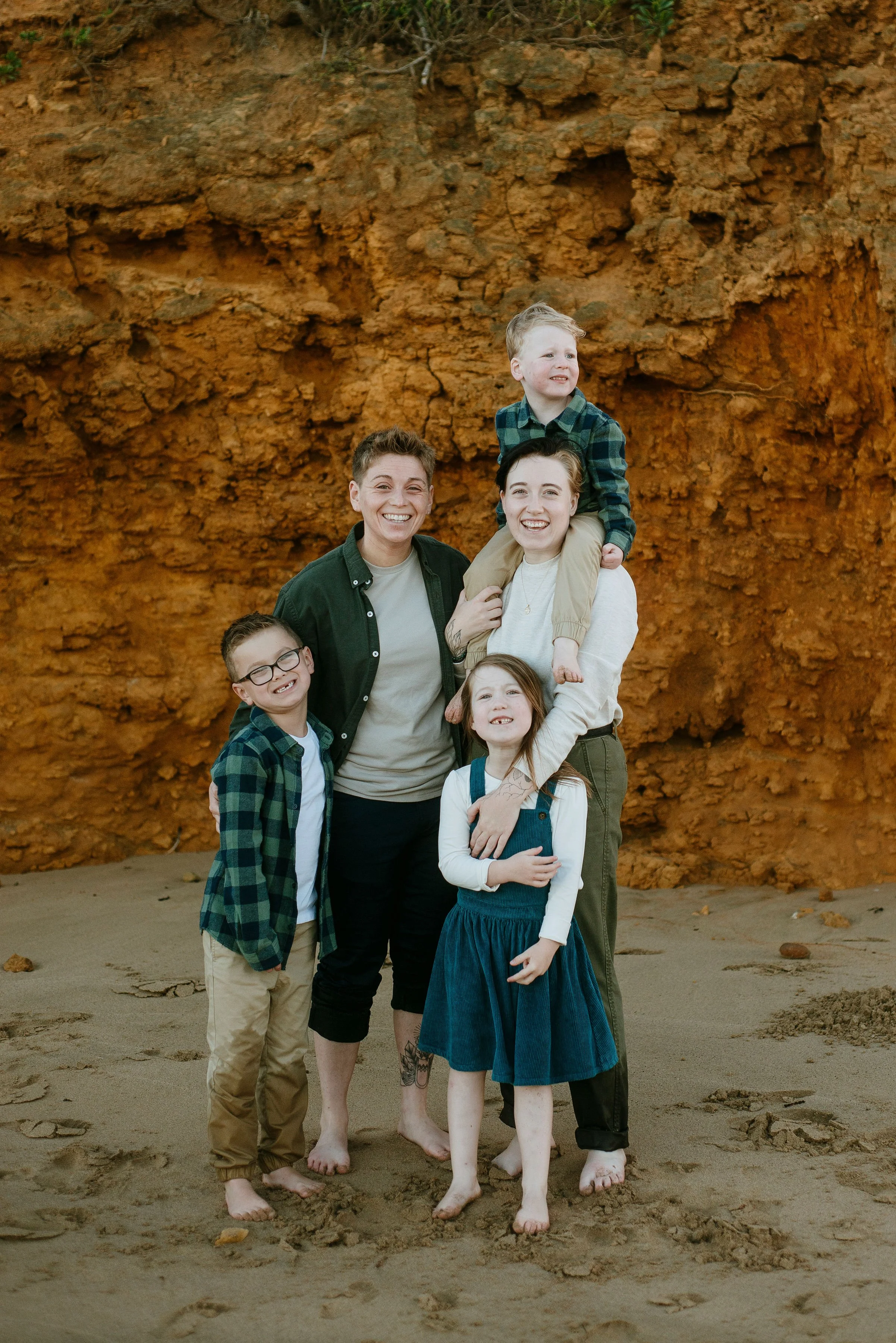
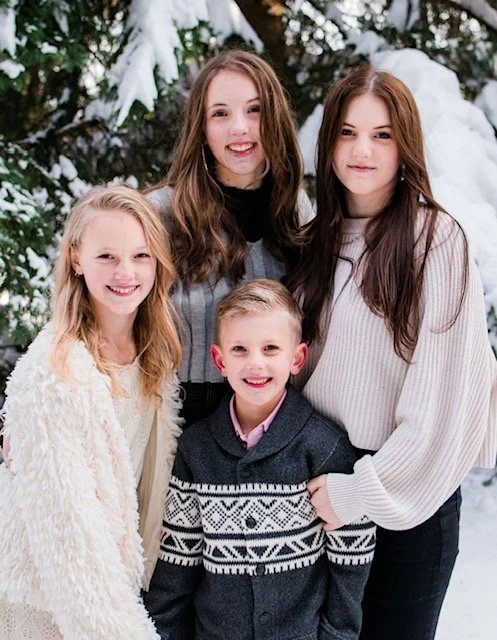
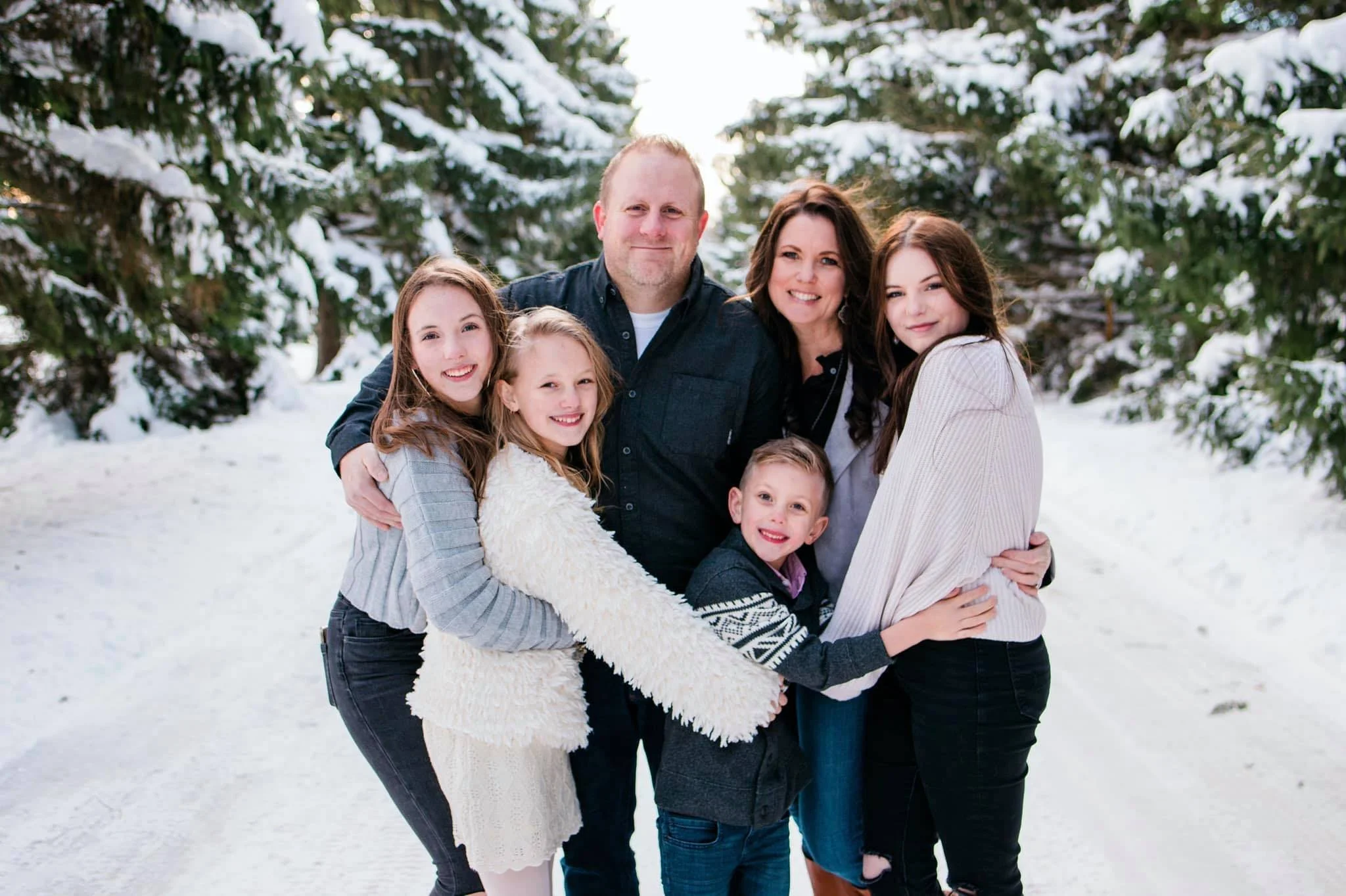
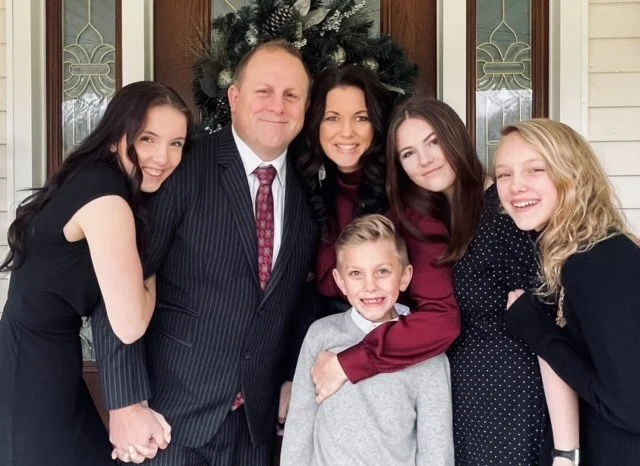
The Gruwell Family consists of Stacie and Matt and their four children: Ashlan (21), Elli (18), Kate (13), and Monty (8). They live in Harborcreek, PA, where Matt is a professor of genetics and evolution at Penn State University, and Stacie works in mental health at a junior high school.
Elli will be attending Utah State University on a scholarship with the Huntsman School of Business Scholar Program this coming Fall. She looks forward to coaching gymnastics, and continuing her passions in vocal performance and digital art.


THE TALBOT FAMILY
Last Saturday night, 42 parents met at the base of Y Mountain in Provo, UT. Industrial-strength flashlights in hand, they were ready to hike to the top. To get there, they’d need to circumvent BYU’s newly installed orange fencing and prohibitive signage, as well as bypass two patrol cars parked at the path’s entrance. The night was cold, but they were on fire with the fervor of their mission – to shine a rainbow of light that would remind their LGBTQ kids that they’re seen and loved. Charalece Talbot helped distribute the lights (that have lived in her garage over the past year) to the other parents – many anonymous, all willing to risk arrest and fines to complete their mission. Some might call it a protest, but for these parents, Saturday night’s hike to the Y was part of a movement…
Last Saturday night, 42 parents met at the base of Y Mountain in Provo, UT. Industrial-strength flashlights in hand, they were ready to hike to the top. To get there, they’d need to circumvent BYU’s newly installed orange fencing and prohibitive signage, as well as bypass two patrol cars parked at the path’s entrance. The night was cold, but they were on fire with the fervor of their mission – to shine a rainbow of light that would remind their LGBTQ kids that they’re seen and loved. Charalece Talbot helped distribute the lights (that have lived in her garage over the past year) to the other parents – many anonymous, all willing to risk arrest and fines to complete their mission. Some might call it a protest, but for these parents, Saturday night’s hike to the Y was part of a movement.
This would be the third rainbow-themed lighting of the 380-foot-tall Y that has become the nationally recognized insignia for BYU, a campus that as of late has had a complicated relationship with its LGBTQ population due to various policies and speeches bestowed by its leadership. The lighting of the Y events, initiated in March of 2021 by Charalece’s son, Brad, has garnered national attention, and BYU’s finger wagging.
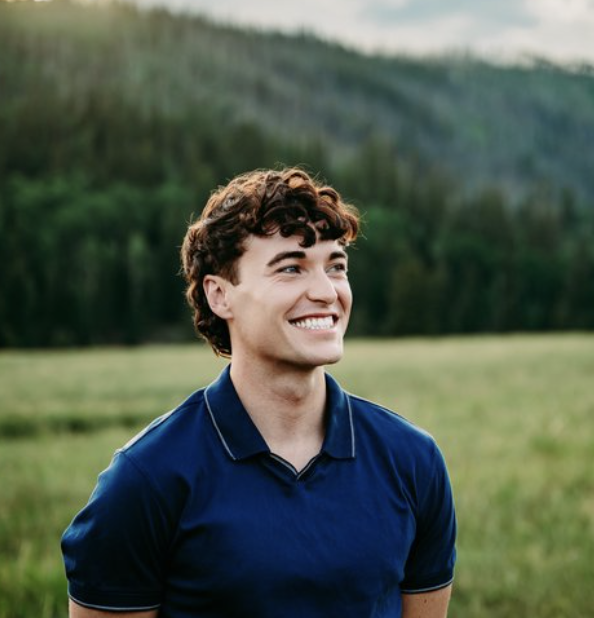
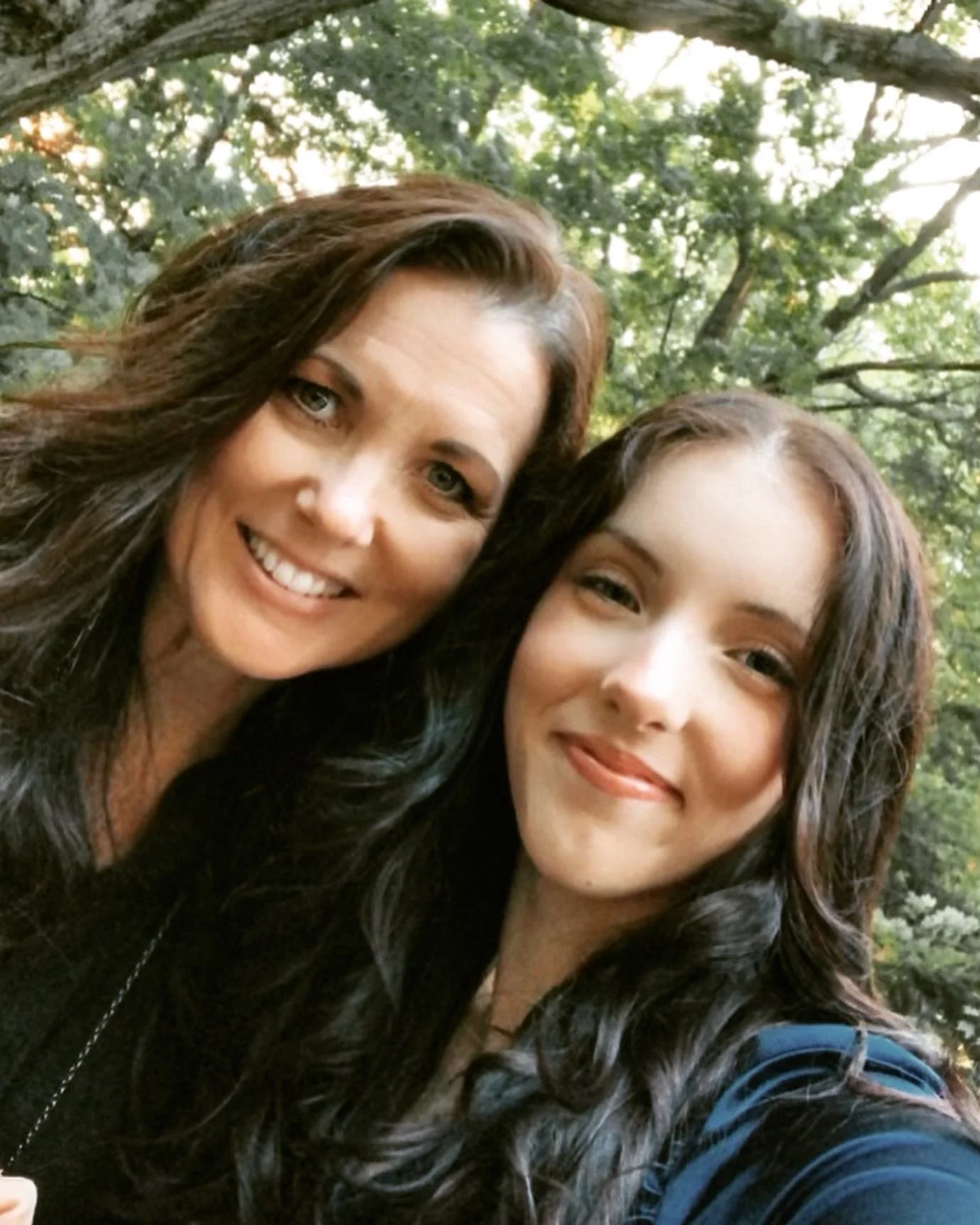
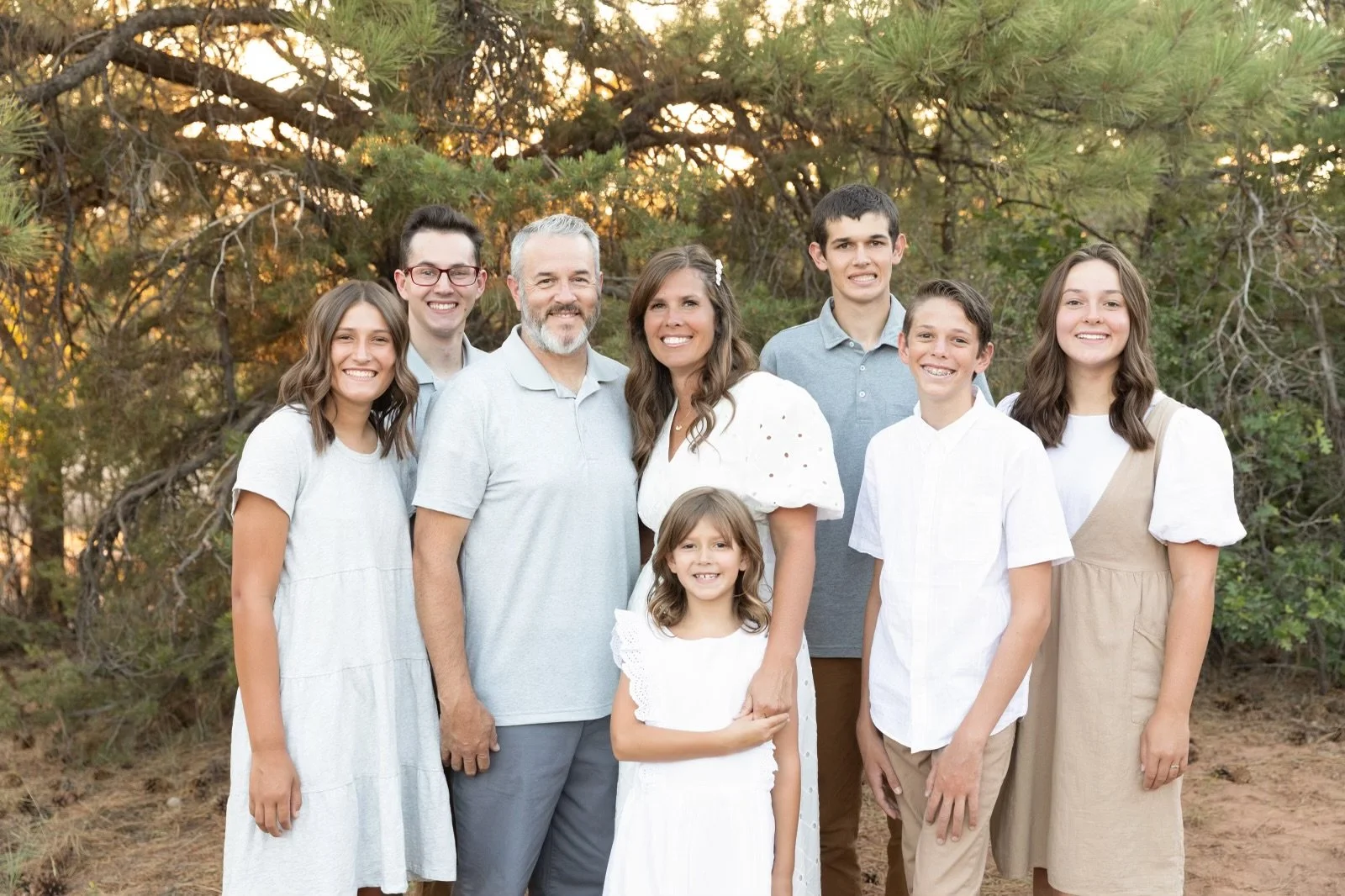
Charalece never predicted any of this would be her path when her firstborn entered her and husband Paul’s world in Pleasant Grove, UT 24 years ago. Brad is the oldest of their six children (which also include Preston – 21, Kailene – 19, Breanna – 17, Sterling – 14, and Aliza – 9). When he was younger, Charalece only had mild suspicions Brad might be gay, but she never asked. It wasn’t until he was serving a mission in Winnipeg, Canada that Brad finally emailed his parents to tell them about his orientation. Charalece appreciated this approach, as it gave her time to process and study before he returned home nine months later, and most importantly, to “not say something stupid I would later regret.” Charalece turned to church resources for guidance and was a little surprised at how little she found, so she turned via blogs to “the experts” – i.e. the parents in this space, much as she had sought out forums of a different kind when her son Preston was diagnosed with autism as a toddler. Charalece was dismayed to find how rare it was for a gay member to stay in the church. She mourned a bit as she came to terms with the notion that her son, who was serving a mission, “might not always be a part of the church I love in the way I thought.” But Charalece clung to her faith that, “The Lord has been a part of our whole journey; I knew I could not do this without Christ.”
Once back from Canada in 2018, Brad started his education at BYU, from where he would later graduate in 2021. (He’s headed to Boston College this fall to pursue a MSW). During Brad’s junior year at the Y, he decided he needed to do something to help his fellow LGBTQ peers feel a little less alone – a common reality for many he’d met. He started Color the Campus, an initiative asking allies to show up to campus in rainbow colors twice a year, once in September and once on March 4 – the anniversary of BYU’s Honor Code policy reversal in 2020 that confused and angered many LGBTQ students. A day he wanted to make something positive. Brad’s @colorthecampus IG handle states his mission: “We will support, protect, befriend, and love members of the LGBTQ+ community at all CES schools.”
The Talbots’ extended family has always shown enthusiastic support for Brad, and Charalece was touched when all his BYU cousins showed up in full rainbow gear to support his first event. She was even more moved when on the first two “Rainbow Days,” it rained in Provo, casting beautiful rainbows across the sky and visible from campus. “Sometimes you just want God to give a sign – and sometimes he does it in such simple ways,” she says.
But Brad’s movement was not without backlash. A protest was advertised by alt-right group DezNat, though its showing was paltry, and Charalece says Brad has received countless cruel messages from keyboard warriors. While the Rainbow Days can be hard for Brad, she admires his dedication to the cause.
The first lighting of the Y (on 3/4/21) was carried out by 42 well-organized allies. After receiving a copy of Brad’s detailed instructions via Google docs, Charalece summoned her like-minded sister to join her for the hike, needing her own arm of support. Charalece was much more nervous than Brad was about repercussions, fearing it could affect his ability to graduate. But Charalece remembers that first lighting as a deeply spiritual experience. When everyone took their posts and first turned on their screen-tinted lights, they let out a cheer. And then a stillness set over the mountain, as they basked in their solidarity and this symbol of love. Charalece began getting texts from family members across the valley, imploring her to look out her window at the rainbow Y. She laughed, realizing the success of their secrecy – no one knew she was actually at the foot of the Y, holding a purple light herself. After an hour, their legs shaking from their awkward slanted perch and cold, the participants made their way down the mountain, only to be met by a crowd of 8-10 students running up, eager to relieve them of their posts and offering to take a turn themselves. “That was when I realized we’d made an impression, we’d done something. Others wanted to be involved. And it was a life lesson. Right when we were thinking, ‘I can’t do this anymore,’ someone showed up to say, ‘Let me take that burden.’ Sometimes we have to pass the baton.”
There were no repercussions from the event, besides a tweet BYU sent clarifying they had not authorized the event. But that night was a turning point for Charalece. She felt, “I’m just a mom, but I just did something that mattered. Being a mom isn’t always tangible. That night I saw I actually did something good. I didn’t just say, ‘I love you;’ I showed my love. I made a difference.” Her participation was also a turning point for Charalece’s relationship with her son, Brad, who she says now has no doubt she fully supports him.
After the lighting, it took days for Charalece to read through the hundreds of messages of support on social media. She remembers bawling, so caught up in the emotion of all the kids saying they felt seen, heard, and loved. “I want them to remember that. When they feel lonely, that there’s no one, I want them to remember the night we lit the Y. They have people, allies, those who love them unconditionally. Hopefully that will carry them as long as they need it.”
The next lighting in the fall was not a secret and approximately 100 people came to hold flashlights, this time many of them LGBTQ+. Again, there were no repercussions. But as both the online support (and backlash) for the lighting events grew, last weekend’s event remained undercover (yet anticipated). When the No Trespassing signs went up, Charalece started to wonder if maybe they should skip it this year, hoping not to put any BYU students or faculty at risk of disciplinary action. But then, a father called her to say, “I think your son did the lighting of the Y. I’ve been talking to some other dragon dads and we want to do it this time. Moms can come, too. I’m not asking permission – I just need to know the logistics and if we can borrow the lights.”
Due to weather, the date shifted three times, and with each change, the pit in Charalece’s stomach grew. “I’ve never felt more anxiety,” she says. Traditionally a quiet and reserved rule follower, Charalece feared having to help summon 42 rounds of bail money from a county jail, or worse. The night before the lighting, she barely slept. But then she felt a strange prompting that brought to mind scripture heroes who had defied the norms: Rebecca regarding her sons’ blessings, Nephi smiting Laban’s head. She heard the words, “Their rules are not my rules. Have courage. I need you to do this.” And she did.
Charalece and Brad were followed last weekend by a film crew from HULU, for a 20/20 segment they’re shooting on LGBTQ LDS members. Much of the series follows church members who (understandably) leave because of their orientation, but reps from the show have told Brad they admire how he is trying to stay and make it work. Charalece herself says she often envies Brad’s relationship with the Savior. “He goes through a lot of crap, and he follows his heart.” As to the naysayers who speak against Brad’s Color the Campus or lighting the Y efforts, Charalece replies, “If you can show me something as good as this or better, I’ll do it. It’s a simple nonviolent thing that has a huge impact.”
Besides the film crew and potentially the police, the Talbots were also nervous DezNat might be on their tail Saturday night as they’d been tipped off, so tensions were high Saturday night. After handing out the final lights, Charalece and Brad were the last to approach the entrance to the path. They walked toward the BYU police, then past them. Like the parents who had hiked up before them, they were not stopped. Once at the top, Brad told the participants their demonstration might be short-lived, knowing the cops could quickly reach them via ATV. He cued the crowd and they each hit the on switch to commence lighting the Y with first the pink and blue hues of the trans flag, to show support to the many suffering from various recent national and local policies. They waited, but no one came to stop them. After 15 minutes, they switched their lights to rainbow colors. Again, no one came to shut them down.
But soon after, Charalece looked up and saw a lone BYU policeman making his way up to the top of the Y and talking to each of the light holders in a non-threatening way. She overheard he offered some water. Still, her anxiety returned as she waited for him to descend down the Y, where she held her blue light. As he neared, she realized she recognized the man. He was a family friend. They softened as they faced each other. She asked, “What’s going on? Why the fences this year?” He replied, “I just think they’re trying to keep this a neutral place so people don’t get too carried away.” He continued, “I don’t want all this to happen. You guys are doing a good thing and what BYU is doing isn’t helping. I’m sorry this is happening. I wish it wouldn’t. I just have to do my job and remind you you’re on private property and ask you to leave.” Charalece replied, “I respect that this is your job and that you’re treating us so respectfully. I’m a mom of a gay son and I’m just doing my job.” As she said this, she noticed her friend tear up, in a moment of shared understanding. This is how Charalece believes real change will come – one heart, one connection at a time.
Charalece and Brad were the last to leave the mountain, making sure nothing was left behind. On their descent, Brad told his mom if their group was arrested at the bottom, he wanted to take full responsibility so none of the parents would end up in jail. She responded, “Brad, you do not need to take this all on your own. Give it to me.” Saying this brought to light so much she had felt over the years as Brad’s mom. “What parent doesn’t want to take away their child’s pain? Their heartache and sadness? Every parent would in a heartbeat. But we realize our kids have to go through what they do to grow, to turn to Christ.” Charalece recalled that shortly after Brad told her he was gay, she too offered a desperate prayer in which she told the Lord she couldn’t do this anymore. She said, “This is too hard for me, so I know it will be too hard for him. I’m giving it to you. I need you to do this.” And she felt the Lord take away the burden of worry to lighten her load.
When Charalece and Brad finally hit the bottom of the trail, they were shocked to see there was no one lying in wait to arrest them. In fact, the police cars were gone. Later, they were told that the police had not come that night to stop them but to protect them from any potential harm.
“That’s when I realized the Lord was right – I was going to be okay; I was doing just what I needed to be. Sometimes our rules are not His. He is in the details,” says Charalece. “I want to be brave, because I need these kids to know I’m willing to do something out of my comfort zone to show them love. They live in fear daily. I want them to not be afraid. I’m just trying to be the best I can, and if I have to go to jail to show people I love them, I can’t think of a better reason to go to jail then for shining a light that tells people ‘I love you’.”


THE CARPENTER FAMILY
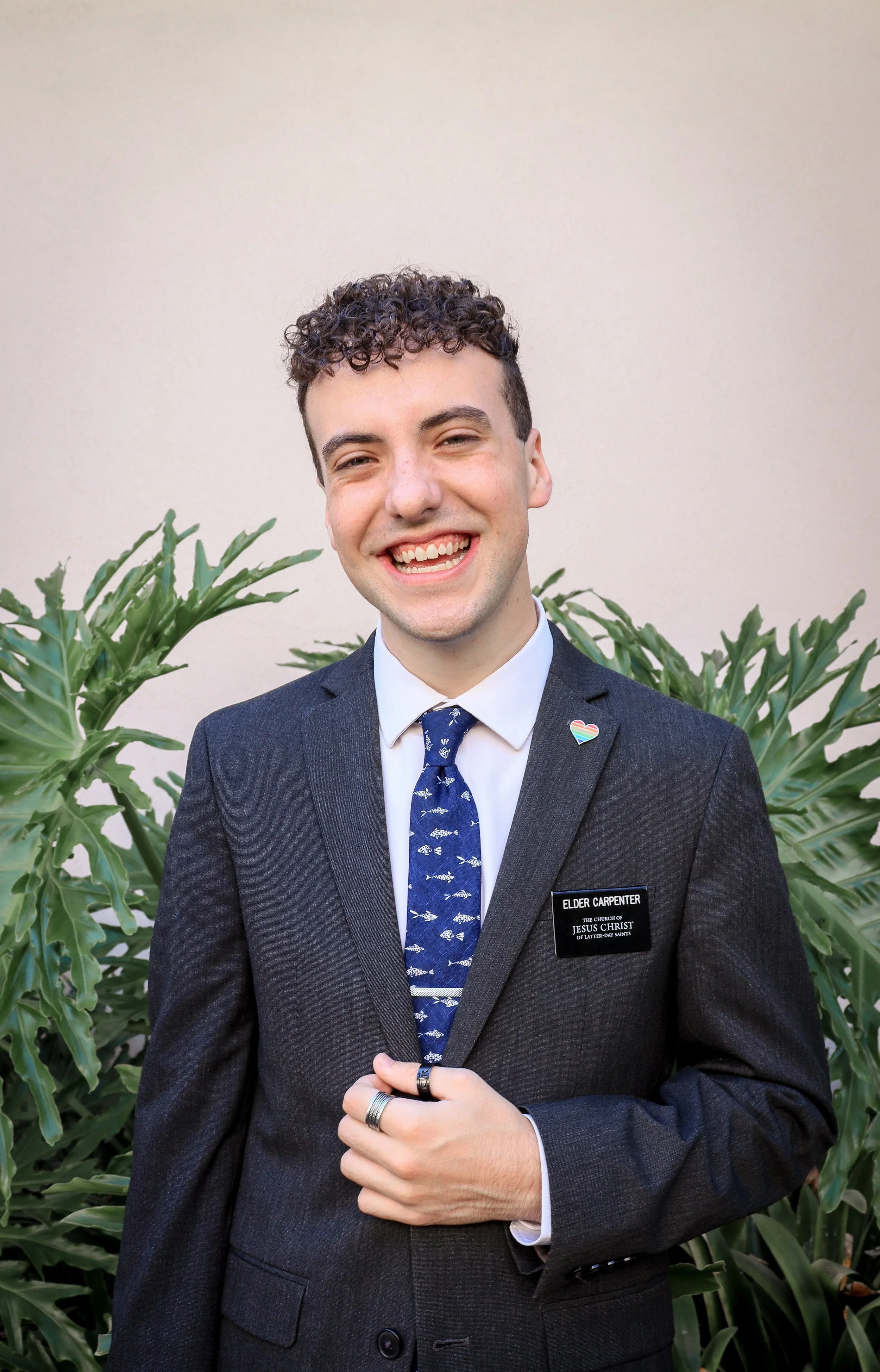
An openly gay missionary. Most people have yet to meet one. Some may wonder if it’s even possible. But Elder Shane Carpenter’s smile shines brightly above his missionary tag and the rainbow heart pin he wears while serving full-time within the circumference of “the happiest place on earth,” in Anaheim, CA…
An openly gay missionary. Most people have yet to meet one. Some may wonder if it’s even possible. But Elder Shane Carpenter’s smile shines brightly above his missionary tag and the rainbow heart pin he wears while serving full-time within the circumference of “the happiest place on earth,” in Anaheim, CA. Elder Carpenter is beloved among his fellow missionaries, and most importantly, by his mission president, who has seen closeted missionaries struggle. The president committed not to let that experience repeat and has thus made it a priority to make his mission a zone of safety and love for all. He even did a mission wide training with Elder Carpenter’s help on how to best minister to our LGBTQ+ community.
While Shane is loving his mission, getting him there wasn’t the rote just send in your papers and wait two weeks for your call process many experience. Shane had always had a very firm testimony of his Savior and desire to serve in this capacity, but due to his unique circumstances, his parents did not want him to sign up for a mission unless he was really ready, and his application included the words “Openly gay” at the top. It was full authenticity or bust. Knowing it could be a really tough situation, his mom Diane says, “Until he could own who he was, we didn’t support it. I didn’t want to send him on a mission hiding in a closet.”
Shane had come out publicly in 2019 via a middle-of-the-night Instagram post his parents woke up to. But this wasn’t a surprise for his parents. In fact, Diane had known since his preschool years. When he was about four, she counts it as a blessing that she felt the Spirit speak the words, “He is gay.” While she was comforted to have this tip off of a revelation so early in the game, it was still a lot to process “for the LDS mom in me,” she says. She was raised in an open-minded family who wholly loved her gay cousins. While talk of their gay family members had always been positive in her home, Diane says, “That doesn’t mean I fully understood at the time what that really meant in the big picture.”
Diane kept this knowledge about their son quiet for about four more years, and then told her husband, “I think Shane’s gay, honey.” Together, they kept it on the down low, especially as Shane himself wasn’t aware yet. But around the time he turned 10, he started to notice he was… different. From his friends. From his twin brother, Logan. From most of the kids in his classes. And by this time, his parents were prepared to help him find the words to vocalize it. Shane didn’t come out publicly, and he certainly struggled for many years harboring a quiet depression. Diane says she’s sure many of the kids at school could have guessed he was gay – “It’s something you might kind of pick up on when you meet Shane.” At the time, the family lived in Austin, TX, where Shane had lots of friends and he’d often go on group dates with friends from church. Diane says, “Every girl loved him.” He continued to be the bright, bubbly boy on the outside he always was (“To know Shane is to love him”), but at home he was dealing with major depression and suicidal ideation. For Diane and husband Scott, it was a really hard time. They felt they’d lost their boy.
They prioritized counseling, and Diane felt a glimmer of hope one day when she was driving Shane home from a session and he expressed a realization: “Mom, this is just part of me. It’s not all of me.” Diane says, “As it sank in that this was just one beautiful part of him, he was able to stop feeling like it had to control him.” That is when Diane said he began to make progress with his mental health. The Carpenters moved to West Jordan, UT right before Shane’s senior year, and she was pleasantly surprised that this ended up being great timing for him. As he moved into a new high school, he was able to just be himself and let go of the years of trying to hide or sort through complex feelings. He finally fully embraced he was gay, and Diane says she felt, “I had my son back.”
After high school, Shane went to BYU-I where he had a remarkably positive experience. He befriended some other gay students who were all supportive of each other. It was during this time Shane came out publicly on Instagram, then started to speak of going on a mission. With his parents’ encouragement, he took it slow. First, he went to the temple. A year later, he started his mission papers. He was 20 by the time he turned them in, enough time for him to be able to embrace his authentic self. He started the process with his BYU bishop, then continued when he came home. All were cautious. Diane and Scott didn’t want him going to a country where being gay was punishable by crime, thus the “openly gay” note on his papers. But it took a while for Shane to get his call. SLC church headquarters had called his stake president with a few more questions, and he was called back in for another interview. None of this bothered Shane, but Diane said the extra scrutiny was hard for her, who’d already sent two children on missions. “This is a gay kid choosing to go out for the Lord,” she says. She didn’t understand why it needed to be made harder with the stigma of extra questioning that could have been part of the initial process. Luckily, Shane had already been evaluated by LDS Services for his mental health, because if not, that would have added an extra delay.
But the added delays in all this did make it easier for Shane to enter the Anaheim mission field at the same time as his mission president, who has been exceptionally understanding and supportive from start to finish. Right when he arrived, the president told Shane, “I have your back. No one’s going to treat you in a negative way because you’re gay.” And he has kept his word. Diane says Shane’s setting apart blessing from his stake president was beautiful. It advised that he would affect even more people outside his mission than in it, something that has proven true as Shane has been able to share his unique experience on various forums with other LGBTQ missionaries, investigators, and friends throughout the world.
Elder Carpenter does not tell people that this path in the church is easy, but shares truths he learned at home from his mom. Diane says, “We didn’t vocalize to our kids the need to say, ‘We know the church is true.’ Rather we say, ‘We know the gospel of Jesus Christ is true. The church is a vehicle to teach that. Even prophets are fallible men, mistakes can happen. But Christ is perfect, and we can lean on that.’ This knowledge is vital for us and probably why my son is on a mission today.”
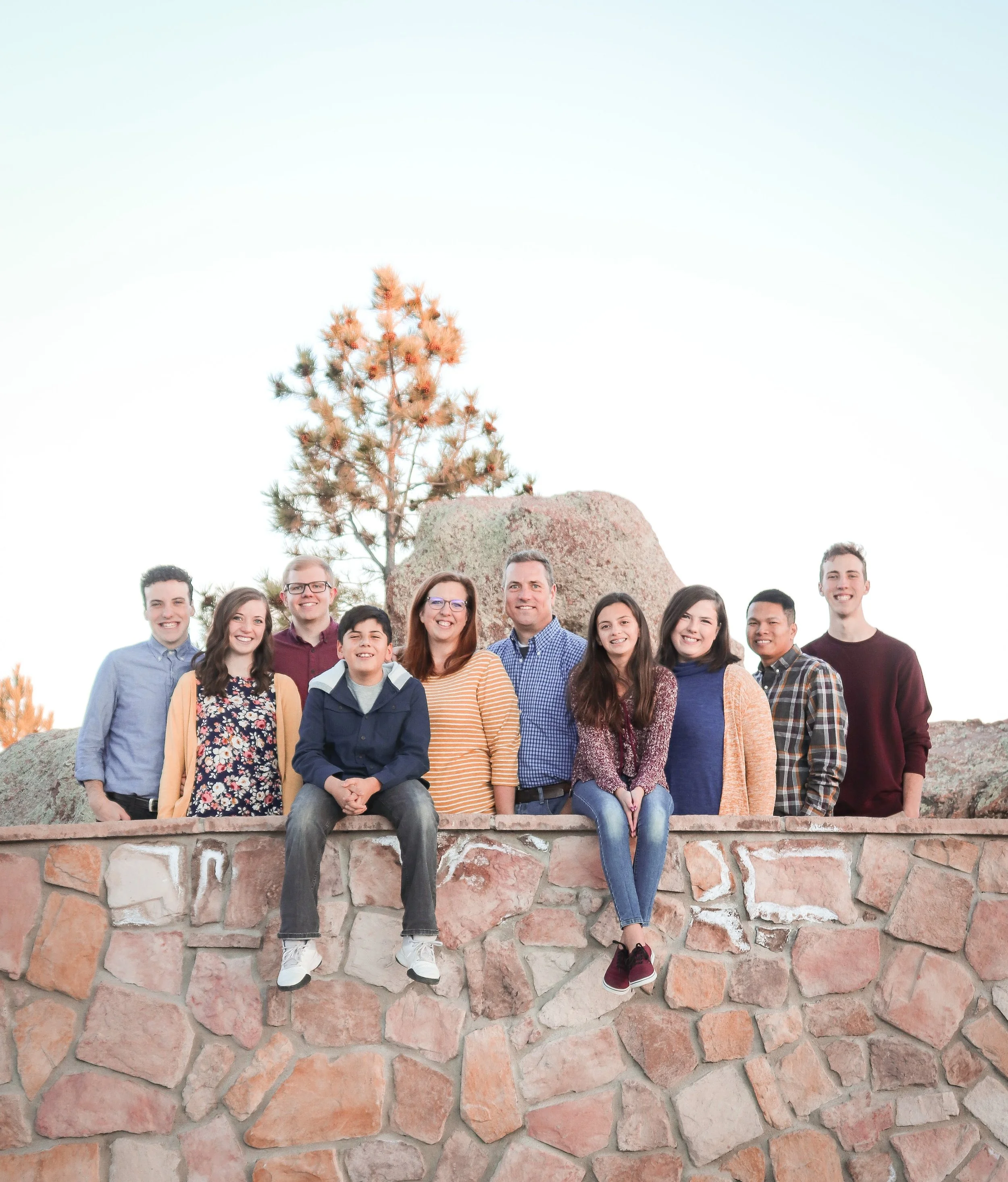
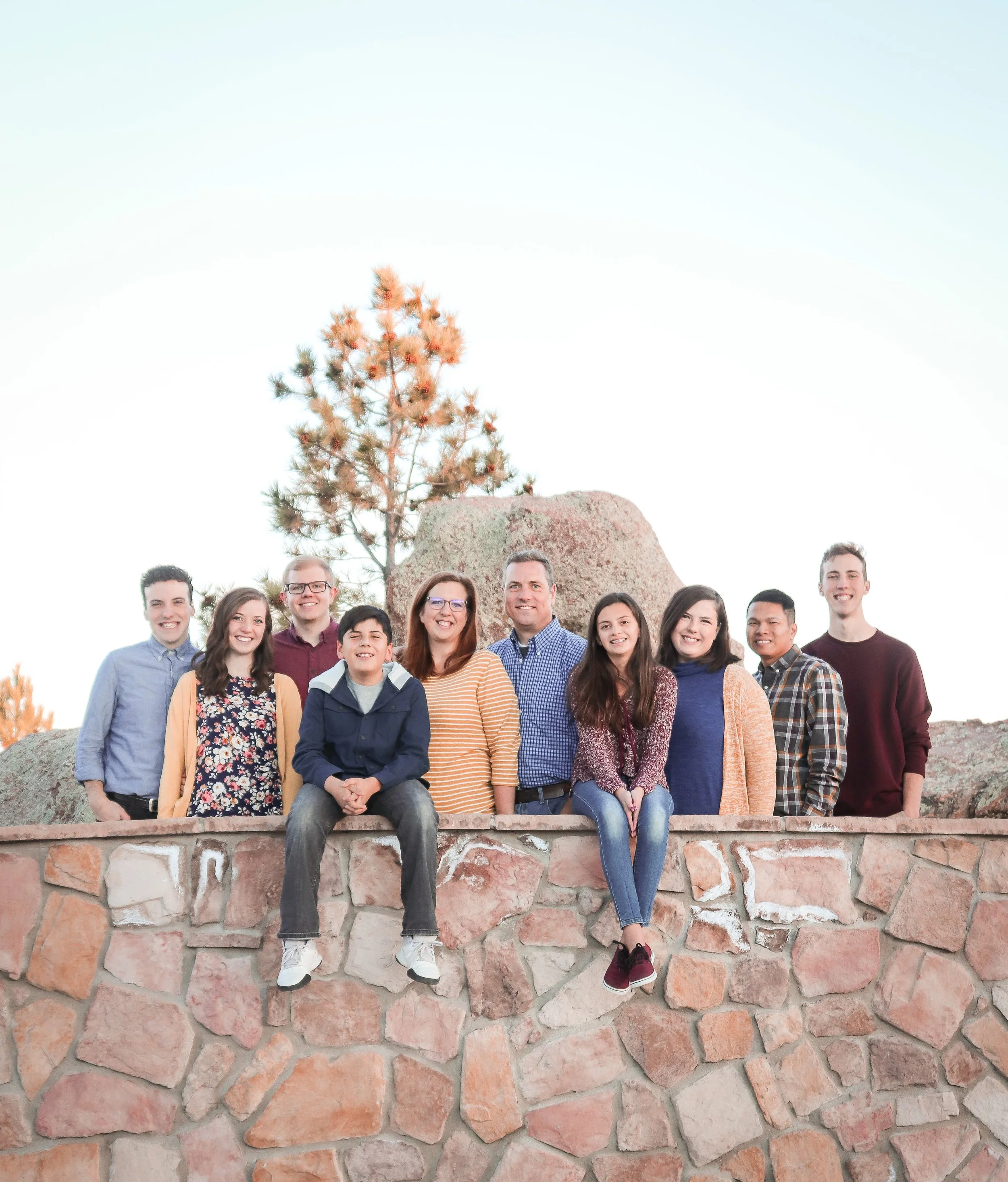
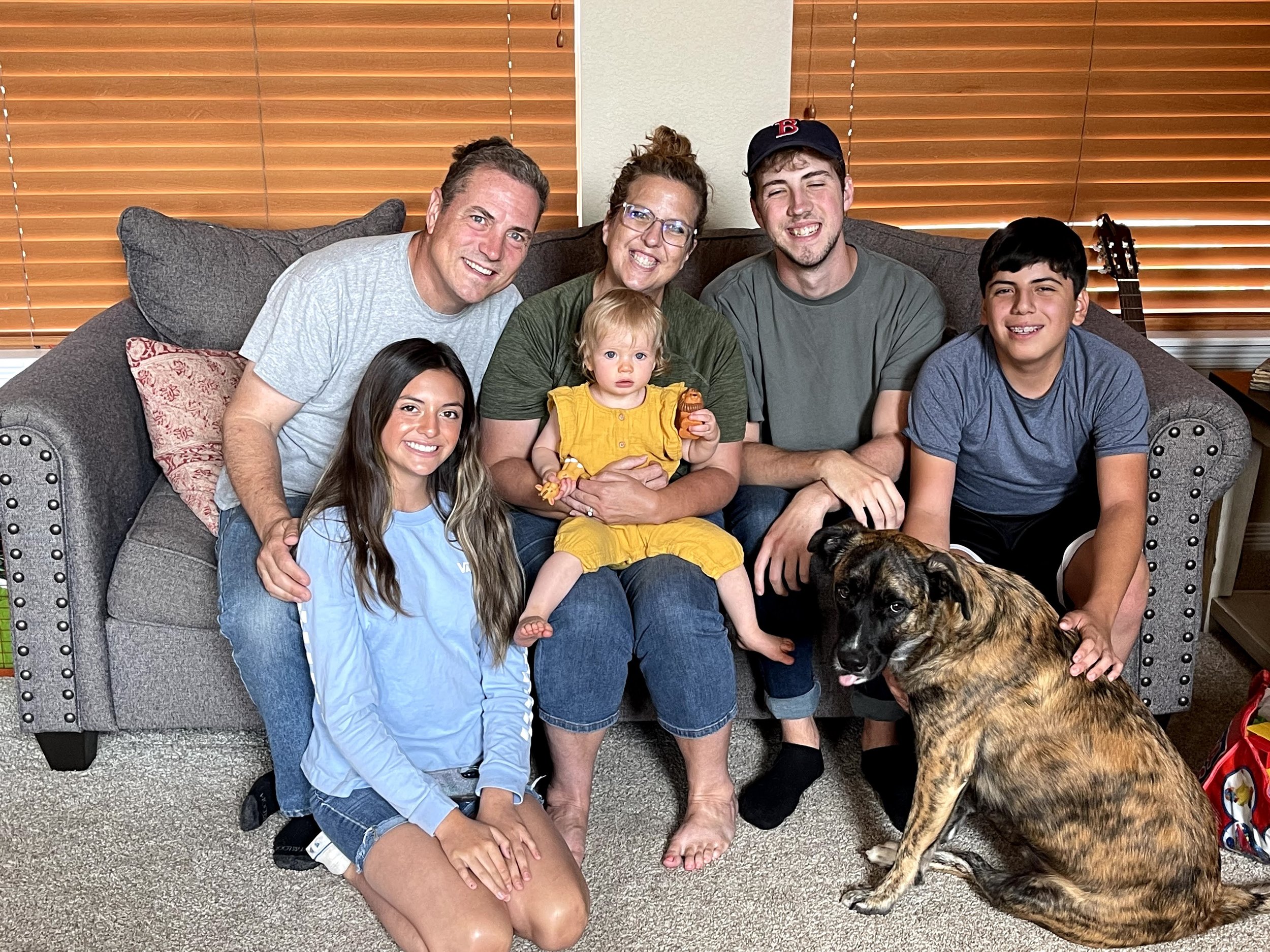
Shane is very aware that there are many paths to God and recognizes that there are various ways to return to Him. He was open with his stake president about the fact that he had dated men before his mission, and his family (and stake president) believe that the law of chastity is and should be the same for everyone. “It’s not the law of ‘you can’t hold hands, date, or kiss someone’,” says Diane. She recognizes that human connections and relationships are key to securing the happiness of all her children. The Carpenter kids include Whitney Graham – now 27, and married to Andrew Graham, and the mother of Kennedy; Jordyn Watson – 26 and married to Miles; twins Shane and Logan – 22; and Joshua – 14, and Abigail – 14 who completed the family through the gift of adoption. Diane says many of her kids have struggled with their mental health, so recently she got a semicolon tattoo as a symbol of the mental health awareness movement: “Wait, there’s more.” Diane filled the punctuation mark with the rainbow colors – one for each of her six children. (And to represent the LGBTQ community.)
Recently, the Carpenters’ second oldest, Jordyn, came out as nonbinary gender-fluid (pronouns they/them), and they have been wholly embraced by their family through the process. When Jordyn initially came out as bi at age 17, Diane says she didn’t handle it quite as well as she wishes she had, acknowledging at the time she was caught up in Shane’s mental health issues. But now she is grateful for the extreme grace and forgiveness Jordyn shows her. Diane is also so impressed by the love and support from Jordyn’s husband, Miles, saying, “I love, love, love him!”
Diane says her family loves the gospel of Jesus Christ. The Carpenters have since moved to Castlerock, CO, where they host a monthly FHE for ALL (LGBTQ, allies, and leaders) out of their home, hoping to “provide a safe place where everyone can be authentic and share their love of the Savior.”
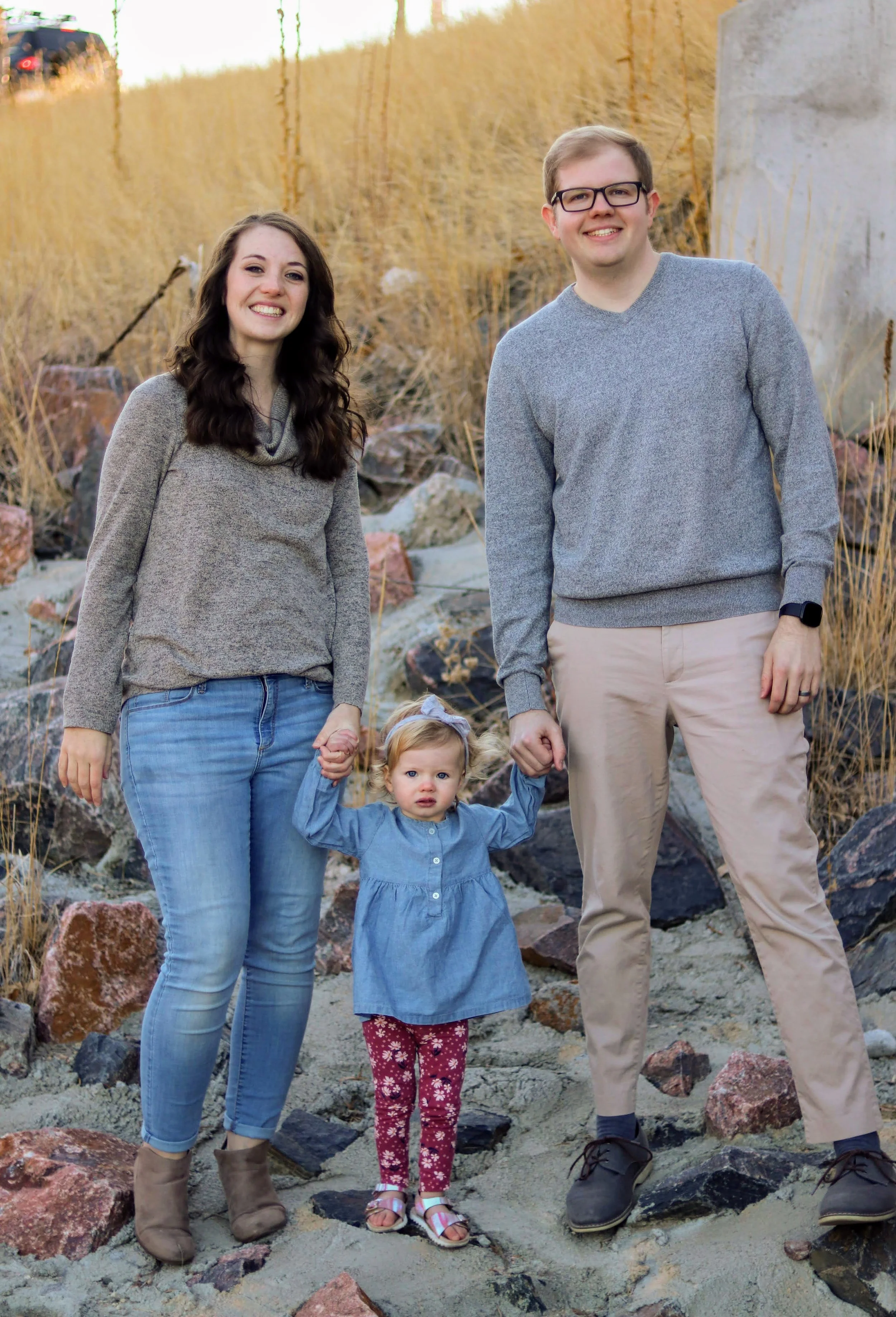
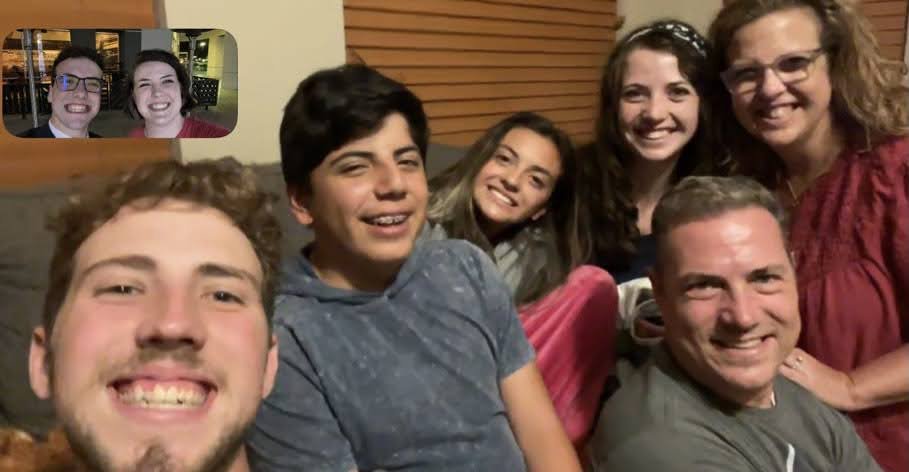
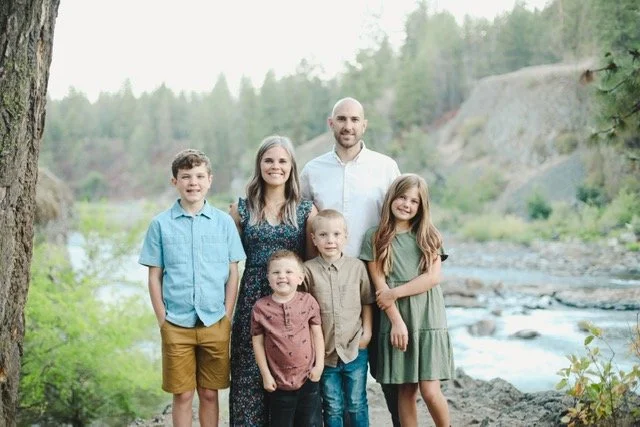
THE BENCH FAMILY
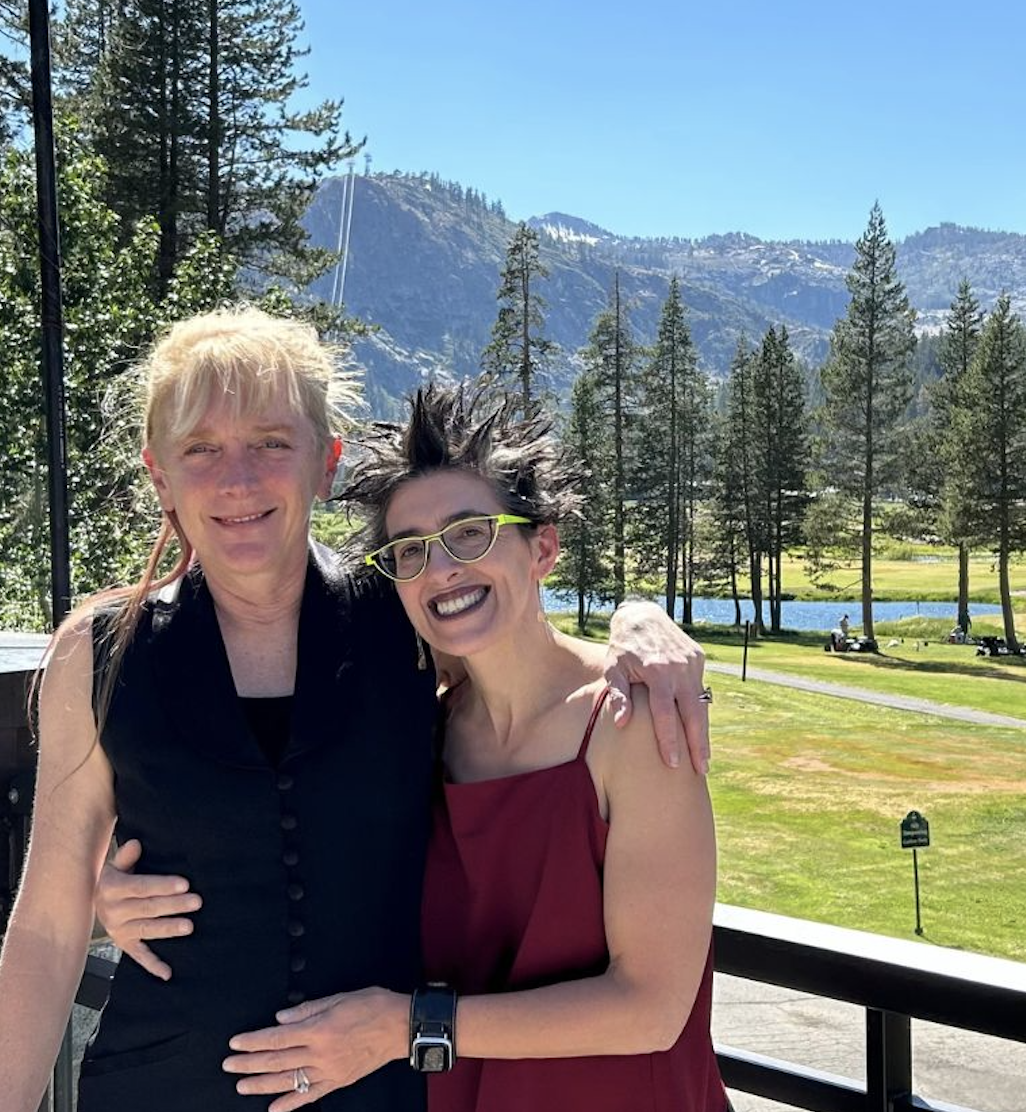
After 14 years of marriage, Lindsey and Keegan Bench of Spokane, WA have defined their role in their church and community as strong allies willing to speak up in love for the marginalized. Because this was a found path for them, rather than an inherent one, they bring the added asset of understanding where others are coming from who might still struggle to be stone catchers in a world filled with stone throwers. But Lindsey and Keegan are the first to admit, it took time to get here. In fact, when Lindsey’s brother first came out as gay over a decade ago, they weren’t even on the same page with each other when it came to understanding LGBTQ issues. Now, united in their quest to break down the fortresses that prevent us from fully embracing God’s love for all, Lindsey and Keegan Bench are grateful to have glimpsed what it means to expand the tent of Zion…
After 14 years of marriage, Lindsey and Keegan Bench of Spokane, WA have defined their role in their church and community as strong allies willing to speak up in love for the marginalized. Because this was a found path for them, rather than an inherent one, they bring the added asset of understanding where others are coming from who might still struggle to be stone catchers in a world filled with stone throwers. But Lindsey and Keegan are the first to admit, it took time to get here. In fact, when Lindsey’s brother first came out as gay over a decade ago, they weren’t even on the same page with each other when it came to understanding LGBTQ issues. Now, united in their quest to break down the fortresses that prevent us from fully embracing God’s love for all, Lindsey and Keegan Bench are grateful to have glimpsed what it means to expand the tent of Zion.
Lindsey says she was born and bred in the “typical, picture-perfect Mormon family.” But their Utah county home was rocked when Lindsey’s brother came out while in high school. Without proper resources to support him, the family struggled to know what to do. Some local church leaders advised Lindsey’s parents they were not to let her brother take the lead of his life, and tried to give counsel as to how he could try to be straight and dismiss this aspect of himself. But all this did was make her family sense that perhaps they could not trust their priesthood leaders. Newlyweds Lindsey and Keegan were living at home at the time with her parents and brother, and they sadly watched as some ward members who had always embraced her brother quietly pulled away. Lindsey reasons, “I know it wasn’t malicious; they didn’t know how to respond. But it was painful watching my family end up on an island. A community that once felt safe and sacred suddenly didn’t feel so safe.”
Even some extended family members distanced themselves, and Lindsey was hurt when they’d ask about every family member except her brother, as if they’d erased him from their lives. It hurt even worse when years later, they would avoid the topic of his wedding altogether, as if it never happened. But all along, inside Lindsey’s home, each of her immediate family members had the same personal revelation: to just love their brother, and to each figure out what that meant for them. For Lindsey, she felt something like the cracking of a shell -- a pull to deconstruct and break down everything she had been taught about the heteronormative, gender-focused, family-centric “plan” as she reevaluated where her family now fit.
Lindsey’s shell continued to crack as she would sit through talk after talk in church that would “remind me my brother’s desire for true companionship was a ‘sin.’ But as I watched him pursue that desire, it didn’t look and feel like a sin to me. This was hard for me to reconcile.” As she reflected on the future of her promised eternal family unit, Lindsey realized that a kingdom that excluded gay family members was no heaven at all. She says, “I’d rather be in a lesser place with my whole family than with a God who wouldn’t allow some of them in because of their desire for the wholeness found in committed, intimate relationships. So many things started to not make sense.” As the church evolved in their teachings (by eventually acknowledging that people don’t choose to be gay, and can’t change it), Lindsey continued to question. “Policies created ‘in the name of God’ that excluded people from saving ordinances in the church were SO painful. Then, we saw the same policies rescinded in the name of God. It was like… is God homophobic, or are they not? Why can’t God make up their mind? It was then I realized this isn’t God’s problem; it’s ours. When we as humans put our own prejudices and faults on God, people give up on God. And that’s on us. It’s painful.”
Lindsey had moments when she found herself telling others, “We’re just so grateful my brother doesn’t have a testimony of the church because he doesn’t have to reconcile who he is.” One day, she says she realized how absurd that felt – knowing her family member was healthier, safer, and happier because he was no longer in the church. At the same time, she was watching one of her close, LDS gay friends struggle with depression and suicidal thoughts while he tried to stay in the church. “The happiness we are promised if we do what we’re told – which for them at the time would be to enter a mixed-orientation marriage – does not only NOT bring happiness, but destroys lives. It was hugely problematic and eye-opening for me.”
As Lindsey internally processed all this, she struggled with her construct of God. Rather than trusting God, she started to fear Him. But ironically, she says it was attending her brother’s wedding that started to reverse that. She’d grown up hearing “the gay agenda” would destroy families, but as she watched the happiness of her brother and his adored-by-all husband as they committed their lives to each other, Lindsey no longer believed that. She officially realized his marriage in no way hurt her own. Lindsey says it was “a holy, joyous experience watching my brother and his husband find each other, and the healing that took place. He came alive; we had our brother back.” Her family describes the wedding as a beautiful day and they were pleased so many from their ward and his life did show up to celebrate.
Lindsey admits she had never actually asked God if gay marriage was wrong until her brother’s wedding – “probably out of fear.” But now she says she’s “so grateful for the personal revelation I received that God would not ask people to forgo companionship in this life. Honestly, the sweet fruits of my brother's beautiful love with his husband are what introduced me to the real God for the first time. This opening has healed me, taught me about my own worth, and the worth of all souls.”
Keegan says he’s now on the same page as his wife, though he took a more circuitous path to get there. In the early days of their marriage, Keegan faithfully embraced the religious dogma of the time that led him to believe that homosexuality was wickedness and could never bring happiness. He admits, “Like Elder Packer, I refused to believe that a loving God would allow anyone to be born ‘that way’ and as a result there would be a way to reverse those ‘innate tendencies’ while in this life.” But over time, that quandary took on new weight. Keegan explains, “As I began looking inward at my own sexual and gender identity and how it had developed naturally over time, I began to imagine being asked to reverse that process by any means possible. The prospect was sobering. I felt that if I was unwilling to give up my current relationship with Lindsey and my children, as a sacrifice for ‘something better’ in the eternities, then I could no longer ask others to do the same. I began to be haunted by the way I had dismissed the pain felt in the LDS-LGBTQ community. How I had assumed it was all natural consequences of sinful behaviors – God’s way of inviting them to repent. I realized it was actually me who needed to repent.” He began to transition from his allegiant obedience to “infallible church leaders” and instead began taking responsibility for his own actions and beliefs. “I began asking myself why I believed what I did, was I actually using the Spirit to guide my life or the words of select leaders? If I open my ears to some but close them to others, am I allowing the Spirit to testify of ALL TRUTH or just the stuff I’m willing to listen to? Using this newfound curiosity to seek out the lived experiences of all those around me has flooded my life with witness after witness that there is a loving God weeping with their LGBTQ children and not because of them, that their happiness is not in fact wickedness.”
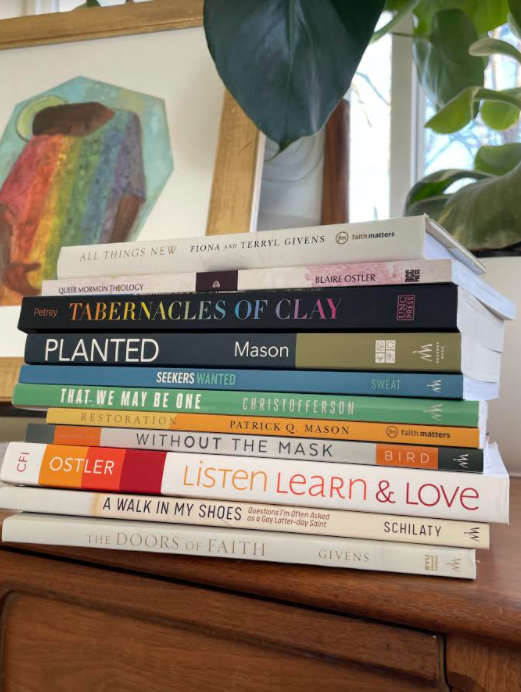
It was then that Keegan began the painful process of repentance and educating himself. He credits the brave voices of the LGBTQ+ community found in books and podcasts for helping to prepare him for a profound spiritual experience he had while “walking in Ben Schilaty’s shoes,” via his book of a similar title. Having tasted the fruits of charity, he felt an urgency to better listen to, learn from, and love all who’ve distanced themselves from the church for any reason. Through calls and texts, Keegan reached out to over 50 friends and family members with differing beliefs in an attempt to ask forgiveness, mourn with those that mourn, celebrate their newfound joy, acknowledge the validity of their concerns, and share those concerns with other church members in hopes that we can do better. Keegan’s own role as a parent and desire for his kids to prioritize their relationships with each other helps him now better understand that as we focus on the first two commandments, that it’s the second one of loving our neighbors – all of them -- that helps us to more fully obey the first. “If we can really love those who we see and know, we can work toward loving a God we don’t exactly see every day. The reverse order is how we actually come to love God.“ Lindsey adds, “Sometimes I think about things in context and it becomes laughable. It’s silly to conceptualize God saying – ‘Oh dang, you loved others too much’.
As the floodgates of understanding broke open for Keegan, too, he and Lindsey came to a reckoning and committed to becoming dedicated allies. They joined Richard Ostler’s Ministering Resources for LGBTQ Facebook group, where they are vocal, and now encourage others to listen to the stories and voices willing to share on sites like Listen, Learn, and Love and Lift & Love. After their efforts to help their stake leaders plan events to increase LGBTQ+ understanding lost momentum, the couple started their own Spokane-area ally group, which has now met twice this year. The Bench family, along with their four children (Asher – 12, Ruby – 10, Milo – 7, and Luca – 4) “hardcore celebrated” last June’s Pride month, which they say may have put off some in their circles, while other relationships were strengthened or formed anew. But they concur they’re prepared to take hits along the way. They warn, “Stone catching is painful and resisting the urge to return fire is hard. Highlighting the stones and the wounds in charitable ways can help soften the hearts and lower the arms of those who continue to feel the need to defend themselves from those who they do not understand. As a church, we are not whole without these marginalized voices.” As Keegan and Lindsey have together embarked on the work of encouraging all to just love the many LGBTQ children coming to earth, they say they’ve also felt their own marriage strengthen. “We feel better prepared to approach the future with informed and unconditional love as stewards of the next generation – in our home, ward, and community at large.”
Lindsey says she is gratefully now at a place where, “I refuse to hurt people in the name of God anymore. In fact, God has asked me to do the opposite. When we put our shortcomings on God and hurt people in the name of God, that is taking Gods’ name in vain. It’s worshiping a false God. God has beckoned me over and over again to learn to just love, love, love. Letting go of the conditions placed on ‘God’s love’ has allowed me to remove those same conditions of love that I put on others and myself. This has been the most freeing, healing, sacred work of my life and I’ve been humbled to experience it. I look forward to a lifetime of continual learning and big, bold love.”

THE ROWELL FAMILY
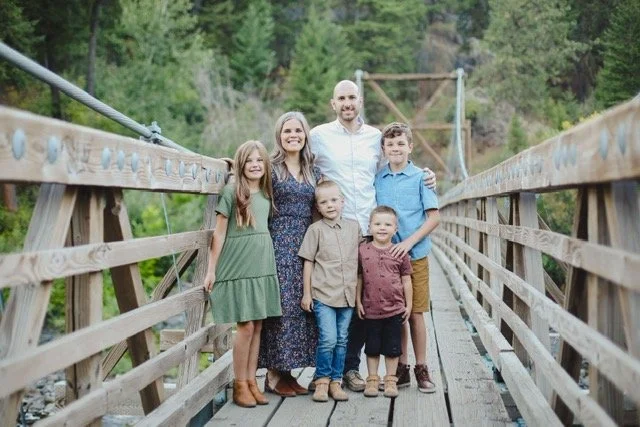
To this day, it’s still hard for Penny Rowell to talk about without emotions resurfacing. It’s been almost a decade since her son Trevor, now 27, first came out to his parents, but he only felt safe coming out publicly in the past couple years. While his parents are so proud of him and optimistic for Trevor’s future, sometimes they wish they could go back and get a redo. To rewind and shield him from so many painful things heard at church. A decade ago, many in their circle – including Todd and Penny – were operating off limited understanding about what it means to be gay. But now, they are grateful for the plethora of resources available, and thus choose to be one themselves through sharing their story…
To this day, it’s still hard for Penny Rowell to talk about without emotions resurfacing. It’s been almost a decade since her son Trevor, now 27, first came out to his parents, but he only felt safe coming out publicly in the past couple years. While his parents are so proud of him and optimistic for Trevor’s future, sometimes they wish they could go back and get a redo. To rewind and shield him from so many painful things heard at church. A decade ago, many in their circle – including Todd and Penny – were operating off limited understanding about what it means to be gay. But now, they are grateful for the plethora of resources available, and thus choose to be one themselves through sharing their story.
When Trevor was about 18, Penny recalls sitting in a sacrament meeting when abruptly, her husband Todd got up with Trevor and left her and their other three boys (Brandon – now 25 and married to Kieryae, Tyler – 22, and Nathan – 18) behind. Penny texted her husband: “What’s going on?” Shortly after, Todd replied she needed to come home. Trevor was due to receive the Melchizedek priesthood in preparation for serving a mission, but something was weighing heavy on him. Penny and Todd don’t recall their oldest child ever saying, “I’m gay,” but that day was the first time he opened up to his parents and shared he had an attraction to guys.
Because of what she’d been raised to believe in a predominately LDS culture, Penny says they replied with support but also thought this was something they could “work through” as a family and made an appointment for Trevor to meet with the bishop. Trevor talked with 3 different bishops as well as his mission president over the years, and the advice was always the same. That if he said his prayers, read scriptures, conference talks, remained faithful through his mission, everything would be okay – in fact, this could even go away. Trevor’s mission president even suggested that when he came home from his mission that he should marry a woman right away, and not delay. After meeting with a BYU bishop, Trevor himself had to point the bishop to the church’s mormonandgay.org website of the time and implore him to stop telling other gay kids errant information – that reading a conference talk would not offer a magic cure for changing one’s orientation.
Trevor served a mission to Fortaleza, Brazil. But of course, nothing changed about his orientation, and Penny now says they feel stupid for ever thinking that might be a possibility. Trevor came home and resumed his schooling at BYU, where the climate endorsed his notion to keep his sexuality under wraps until that diploma was in hand. The weight of the secrecy bore on his parents, who together realized how much worse must be the burden their son carried, having to keep such a huge part of himself secret. Penny remembers driving Trevor to work one day, after he returned from his mission and him just breaking down. Later, he opened up that on that day in the car, he realized he could never marry a girl – he could never do that to someone. And he no longer wanted to give his parents any false hope. He was gay.
While BYU was a difficult place to be for Trevor and he often contemplated transferring to another university that would be better for his mental health, he stayed to complete his studies in graphic design. He loved the program there and felt more comfortable in that environment, with those teachers and people, than any other time at BYU. While in Provo, he received counseling at BYU and at Flourish therapy. (He decided to start therapy after meeting with that BYU bishop.) Penny said she started to see a weight being lifted a bit when he started going. Trevor says that going to therapy is what finally started to change things for him. He graduated in April of 2020, and the lack of the closure of a graduation ceremony during the pandemic felt like yet another defeat. But once Trevor finally received that diploma in the mail (that was unfortunately delayed through a shipping error), he was finally ready to come out publicly. And so were his parents.
Along the way, through the quiet years, Penny felt guided and buoyed by support resources that would show up in just the right time and just the right way. Penny remembers one late night when she was lamenting the pain her son was experiencing. She got up from bed and went into her (literal) closet where she stumbled on Becky Mackintosh’s video on the lds.org site. She went to Facebook and happened to connect immediately with Becky. Later, Becky and her husband both became great confidantes and mentors for Penny and Todd. Penny also found a great lifeline through the Facebook group I’ll Walk With You. Not only did she cherish meeting like minds who got her family, but she feels she’s benefited from learning about other identities in the LGBTQ space as others share their experiences.
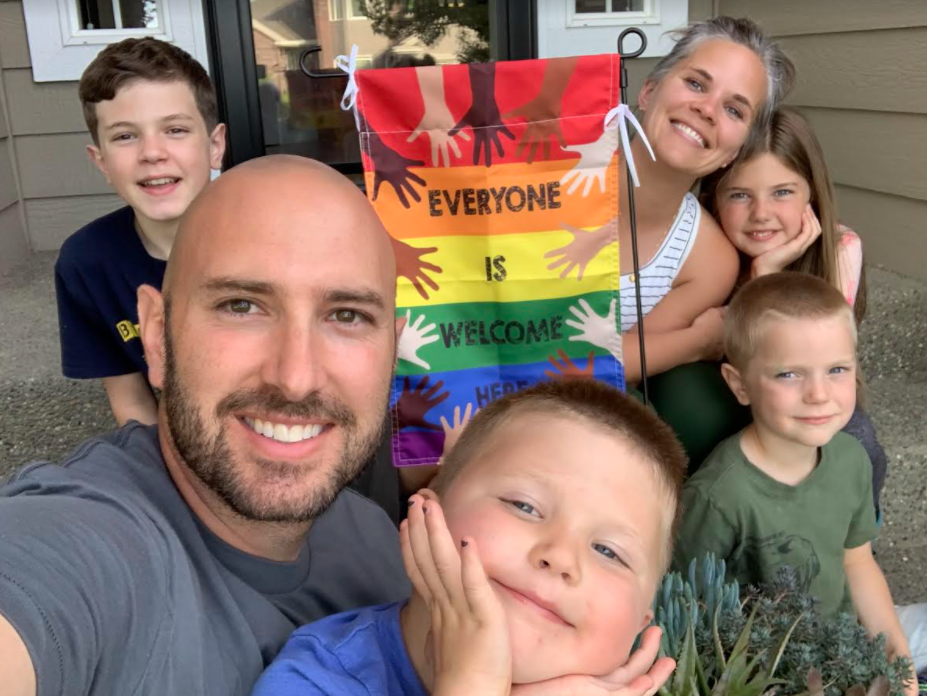
Penny now feels it’s vital that more training is offered in the church, as such a huge population of LDS members identify as LGBTQ. She says, “It’s a crapshoot of what kids will hear. And you’re playing with their mental health. I think all bishops, youth leaders, and seminary teachers should undergo necessary training so they’ll stop saying things that might give our kids a reason to not want to be here anymore.” In her own corner of the world in Liberty Lake, WA, Penny works to be a visual ally by hanging a Pride flag at her house so others know she offers an open heart and listening ear. Something her family needed. Todd also hangs a rainbow-themed “All are welcome here” sign in his high school AP history and government classroom to let his students know he is a safe space. They both encourage other LGBTQ parents to just love their kids, and draw boundaries if and when necessary with others to maintain a healthy support system for their kids.
Trevor is no longer affiliated with the church, which Penny says, “I’m 1000% okay with because I know it’s not a safe place for him. He’s now able to be comfortable with who he is. When you hear your kid say they grew up feeling like they’d rather have a terminal disease than be gay, you know there’s something wrong there. I hate that we subjected him (unknowingly) to that.”
Trevor is now living his best life as a graphic designer in Seattle, working from home, hanging out with friends, going to museums, and dating. Penny is eager for him to find the love of his life, just as she hopes for all her kids, (and maybe, if not more for Trevor). She hopes that one day, he “has a family, happiness, success in his job, feels loved and cherished, makes a difference, and most of all she hopes for him to feel healed – not from being gay but from the hurt and pain caused by those who don’t accept that. I don’t want him to carry this stuff with him forever. I’d much rather my son be here (on earth) and in a happy relationship and feel love than alone in the church.”
Of the new perspective Penny has gained since her oldest son came out, she says one pivotal realization has been that, “I truly in my soul don’t think a loving Heavenly Father would create a gay kid then expect them to fight it and live alone. With everything I am, as a parent myself, I just don’t believe that.”
Penny and Trevor share a special mother-son bond, loving their time spent together watching reality shows like Project Runway, shopping, and on occasion, learning Tiktok dances. Penny describes Trevor as an amazing and caring man, a fun guy to be around, a great friend who gives good advice, and a loving and supportive big brother and son. She loves how Trevor stands up for himself and for what’s right.
Church can now be a hard place for the Rowells, especially after recent painful talks and policies stemming out of Utah. They try to practice patience for those who have not yet experienced what their family has in this realm, and hope better resources and education from church headquarters are offered soon. In the meantime, Penny says her family relishes watching “The Chosen” series and often finds that to be the Sunday School lesson they crave. She says, “I can’t picture the Christ of The Chosen turning away a whole body of people.”
The love Penny bears for all her children runs deep, and of the tears she’s shed while reflecting on the pain Trevor’s experienced, Penny wants all in her circle to know, “This is an emotional topic for me, I would never want someone to mistake my tears for sadness because my son is gay. I’m not sad because I have a gay kid; I’m sad (and cry) because of how they’re sometimes treated. I’m really grateful I have a gay son; I know it’s a blessing. We’ve grown in ways we never would have, if not for him. And we feel so very blessed.”
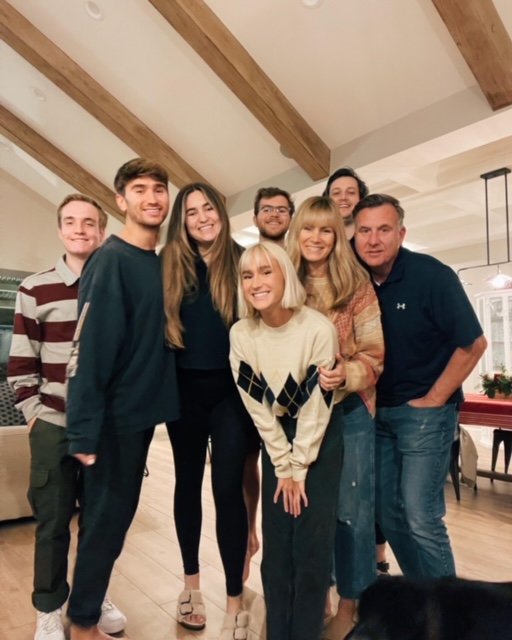
THE MACDONALD FAMILY
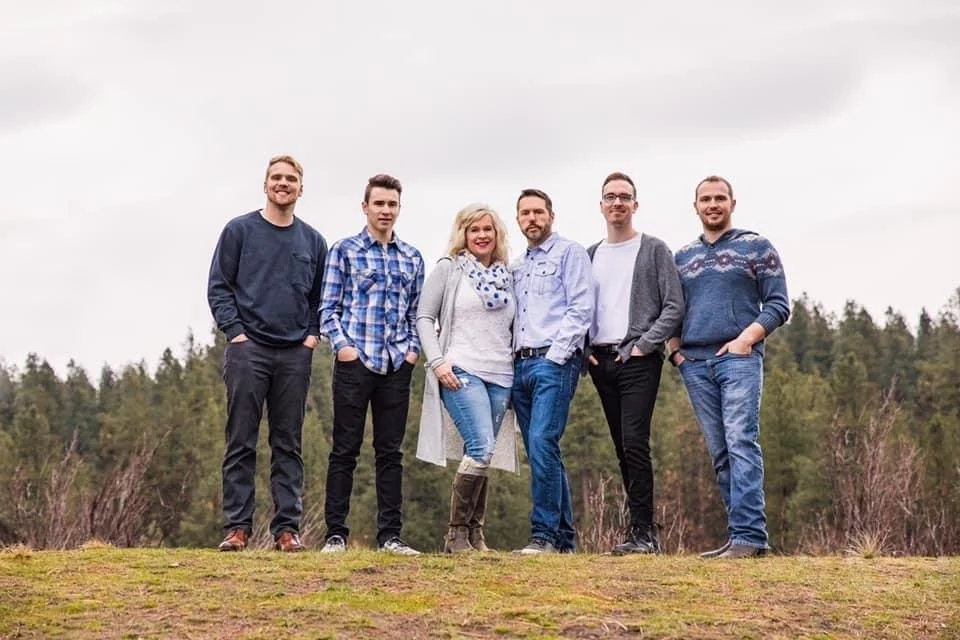
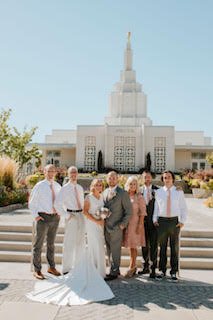
“We had wonderings, when he was young. But you know, we’re LDS. We didn’t quite know how to fit that in,” says Liz Macdonald, of her 27-year-old son, Matt, who is gay. “In my mind, I figured he’d probably be able to marry a woman and make it work.” While Liz and Eric Macdonald are fairly progressive in their religious and political beliefs, when they were raising young kids, Liz said they operated more off an “it’s probably not my child” mentality in terms of LGBTQ issues, and put them on the shelf…
“We had wonderings, when he was young. But you know, we’re LDS. We didn’t quite know how to fit that in,” says Liz Macdonald, of her 27-year-old son, Matt, who is gay. “In my mind, I figured he’d probably be able to marry a woman and make it work.” While Liz and Eric Macdonald are fairly progressive in their religious and political beliefs, when they were raising young kids, Liz said they operated more off an “it’s probably not my child” mentality in terms of LGBTQ issues, and put them on the shelf.
Now, Liz is so grateful it’s her child, as her journey as Matt’s mom has infused her life with a tremendous amount of additional love, education, and perspective. “My heart has been blown wide open. We talk about a broken heart. I had no idea what that really meant. But because of these experiences and the people we’ve met, my heart has expanded to sizes and places I didn’t know existed. And it’s only because my heart was broken open.”
The Macdonalds call Mesa, AZ home, along with their high school senior son, Zach – 18. Their adult children are spread across the country with oldest, Katie - 30, in NY with her husband Rick; Matt – 27, in dental school in Seattle; Andrew – 24, in law school in Tucson; and Rachel –22, finishing her degree at BYU.
When Matt was 16, Liz asked him if he was gay, and he vehemently denied it. She told him, “If you are, just know we love you, no matter what.” Matt went on to have a girlfriend and go to BYU before serving a mission to Mexico City. As her first missionary child out, Liz was “dying to get him home.” But she could tell he wasn’t that excited to come back, and she took it personally. Now she realizes he was likely delaying the inevitable. Something she didn’t always envision at the time as he was always the “perfect LDS child.” She remembers, “We’d walk by his room at night and he was reading his scriptures or his patriarchal blessing. He was always going to temple… In retrospect, we realize he was bloodying his knees to change himself. It’s heartbreaking as a parent to realize.”
When Matt finally returned from his mission, the Macdonalds were in the midst of “a hellacious two years of stress.” Liz was busy planning oldest child Katie’s wedding, and their youngest, Zach, was experiencing health problems and had been undergoing a bone marrow transplant. But still, Liz observed “the light was going out of Matt. He was troubled about something.”
When Matt came home for his sister’s wedding, even Liz’s sisters noticed and expressed their concern for him. Now in hindsight, Liz knows Matt was likely thinking, “If I tell mom one more thing, she might break.”
Soon after, Matt texted his dad, Eric: “Hey, I wanna come home. I have some things I want to talk about.” He was finally ready. That was six years ago. Liz says Matt is no longer engaged with the church, a decision that they think is wonderful for the sake of his mental health. “The shame and loathing he felt for 22 ½ years – that has to be dealt with. We are here to walk with him as he does that.” When Matt came out to his parents, he was a student at BYU and they knew that could jeopardize his standing. Liz says, “We had people tell us, ‘Oh if I knew of a gay kid graduating from BYU, paid by my tithing dollars, I’d have him kicked out’.” And they knew people who had been kicked out. So they encouraged their son to stay quiet.
He did. And finally, the Saturday following Matt’s Friday graduation was Liz’s coming out. She spoke at an ALL (Arizona LDS-LGBTQ) conference. It was liberating. “While those two years of staying quiet were excruciating for me, it was just a tiny taste of what he was going through. The inauthenticity I felt every time someone asked, ‘Oh is Matthew dating anyone?’ Imagine how he felt.” Liz says most of their friends and family have been great since he’s come out, though some just don’t want to talk about it. And sometimes she’s surprised by who falls in each category. Of those who are unsupportive, she reasons, “That’s fine, everyone gets to walk the path they want to. But it’s painful.”
While Matthew is now thriving in Seattle where he’s making friends as his authentic self, his parents have increased their activism back in Mesa. Operating off the motto, “All are alike unto God,” they’ve helped organize ALL gatherings and parent nights at which the likes of Richard Ostler, Tom Christofferson, and the Givens have come to speak in their home. The evenings consist of a dinner, a speaker, then families share their stories and connect. The Macdonalds also assisted with Mesa’s non-discrimination ordinance which just passed and now allows equal opportunities for employment, housing, and accommodations to all. They were pleased to see many friends, community leaders, and the church itself get behind the ordinance for equality, though Liz said it was quite stressful and disappointing to also see so much vitriol.
Liz has held just about every church calling one can, and is now the gospel doctrine teacher in her ward. As someone who also holds a nuanced perspective, she appreciates the opportunity to balance how to teach Noah and Sodom and Gomorrah without sending people on their own faith crisis, while focusing on how to exemplify Christlike love to all of God’s children. Liz has observed how it can be really easy to marginalize people you don’t know and see. “But once those people are in your face and you see the pain, your heart can never be the same,” she says. Liz embraces Brene Brown’s philosophy, “People are hard to hate up close.”
Up close, Liz is active in the LGBTQ-resource space. She serves as a moderator on the parent support site, I’ll Walk With You, and regularly goes to lunch with moms whose kids have just come out and who are seeking a safe space to process. Liz feels, “This is where we should be ministering as a church, instead of stopping gender speech therapy.” Liz really hopes church leaders will heed Elder Uchtdorf’s wise words, when considering healthy prospects for people in the church like her son: “How often has the Holy Spirit tried to tell us something we needed to know, but couldn’t get past the massive iron gate of what we thought we already knew?”
Most of the Macdonald kids still attend church, but Liz isn’t sure what the future holds. “They’re all thinkers. I just trust that wherever they end up is exactly where they’re supposed to be.” Liz’s husband Eric has told their bishop he’ll serve in any calling a gay married couple could also hold. In the meantime, he has stepped up as the ward’s “self-appointed candy man.” Eric’s convinced candy is the best medicine, and the bishop knows he can call up Eric at any time to take candy bars to anyone who may need it.
Together, Liz and Eric have loved their time on the frontlines of LGBTQ advocacy as they regularly witness hearts soften and minds change, including those of their own family members and friends. A father of four daughters recently asked Eric, “Can’t he just marry a woman and make it work?” in reference to their son, Matt. Eric replied, “Which of your beautiful daughters would you like to marry him?” Then watched his friend’s wheels turn, and he said, “Oh, no I get that. I get it now.”


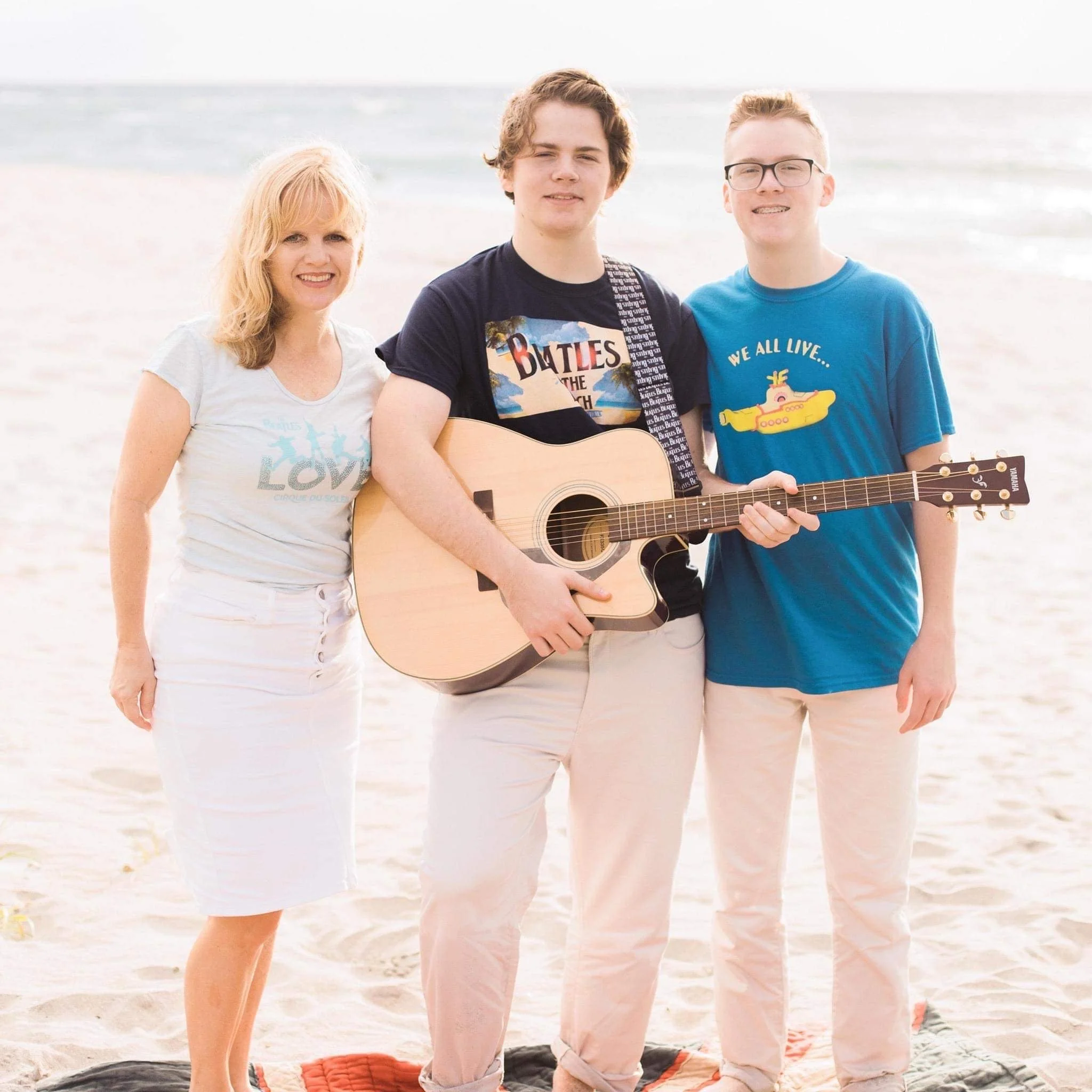
THE DEAN FAMILY
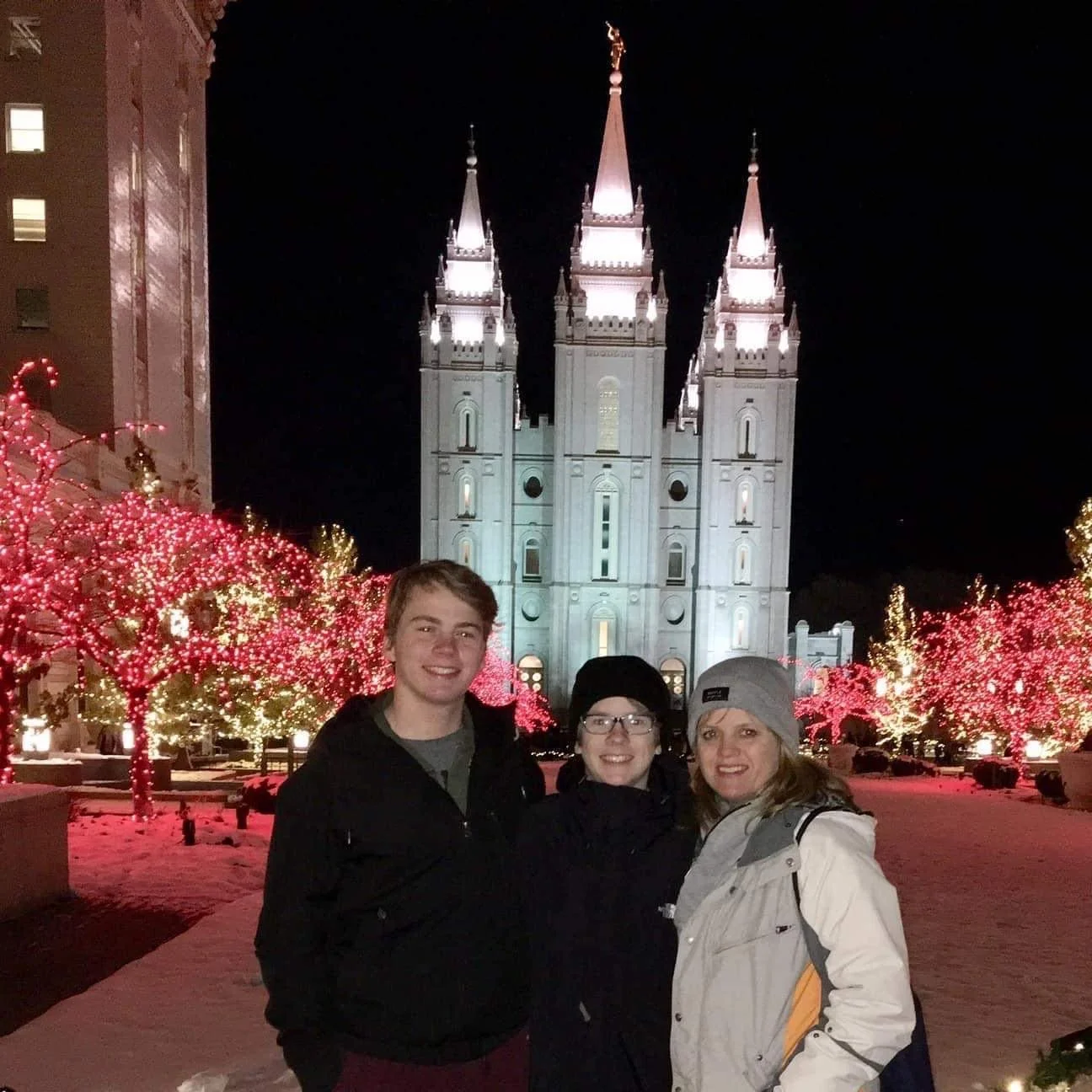
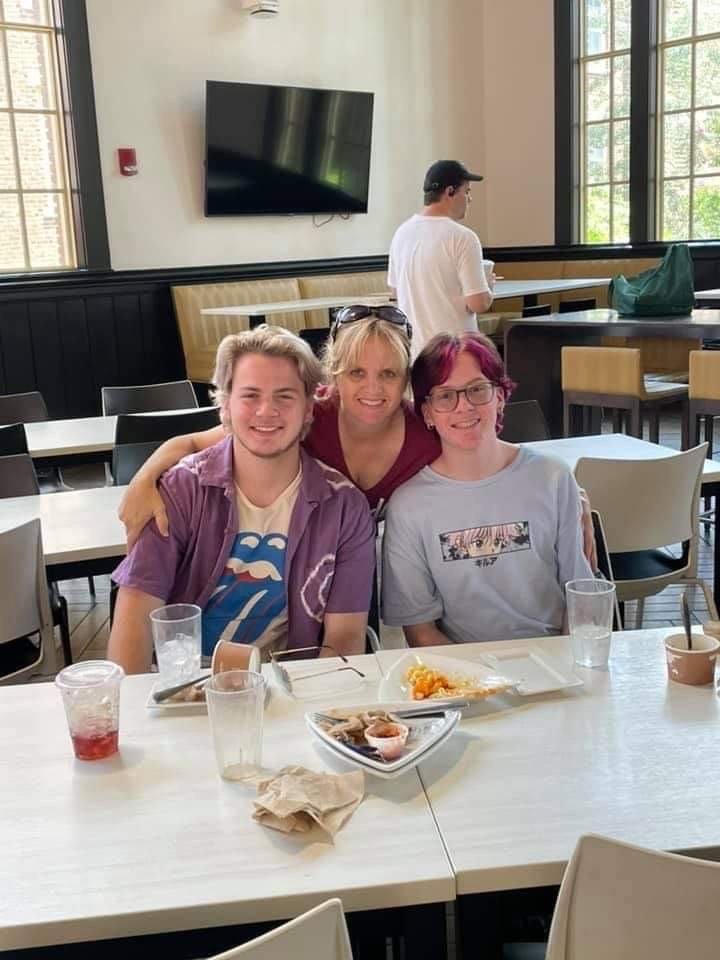
Annika Dean’s life hasn’t exactly followed the idyllic path she remembers seeing displayed on a felt board in Primary at a young age. She was the only child in her row raised by divorced parents, and she would later go through a divorce herself. Both of her children identify as LGBTQ. And Annika and her oldest son have each survived a separate mass shooting. Annika Dean’s life redefines the concept of “All these things shall give thee experience.” And it is with an admirable amount of strength and resilience that she excavates through the rubble to share the rainbows of her past decade with us…
Annika Dean’s life hasn’t exactly followed the idyllic path she remembers seeing displayed on a felt board in Primary at a young age. She was the only child in her row raised by divorced parents, and she would later go through a divorce herself. Both of her children identify as LGBTQ. And Annika and her oldest son have each survived a separate mass shooting. Annika Dean’s life redefines the concept of “All these things shall give thee experience.” And it is with an admirable amount of strength and resilience that she excavates through the rubble to share the rainbows of her past decade with us.
Annika grew up in Utah County, the middle of five children. She remembers hearing the kids around her at church sing “Families Can Be Together Forever,” while knowing her family was breaking apart. Her youngest brother was just an infant at the time. Both of her parents moved on and remarried within two years, which eventually brought a total of nine siblings into her world. She was mostly raised by her mother and stepfather in Orem, and when she reflects on her childhood, the word chaos comes to mind. While she loved her family, she dreamed of having “the ideal” someday.
LGBTQ issues weren’t even on Annika’s radar as a youth, except for being slightly frustrated on occasion that so many popular musicians were gay. Annika remembers a speaker at a morningside giving a whole talk about how evil Mick Jagger was, after which she lividly protested to all around her. “Maybe because I adore the Stones,” she laughs. “But I’ve always considered it one of my most important duties as a mother to teach my children the ABCs of rock-n-roll.”
Seeing the movie Philadelphia while in college marked a defining point for Annika. She loved the way the family supported Tom Hanks’ character and his partnership. She pledged if she ever had a gay child, she’d love them the same way.
At BYU, Annika studied Art Education while long-distance dating a non-LDS Georgia Tech engineering student who she’d met at a summer job. At the Chili’s in Orem, Annika shared with a friend she’d probably marry her boyfriend, and her friend started bawling, and even enlisted their server in her breakdown. Both the server and Annika’s boss at work (who was like a third father to her) warned her of the severe consequences of marrying outside the temple. Annika contemplated their advice, but really wished those closest to her had respected her ability to make her own choices.
She later ended up marrying the friend of one of her closest childhood friends in the Mesa, Arizona temple. That marriage lasted 14 years and Annika’s grateful it resulted in two sons who were ages 9 and 11 at the time of Annika’s divorce. She shared 50/50 custody with her ex, and during a solo winter break, Annika went on a vacation. She ended up in the middle of a mass shooting at the Ft. Lauderdale, FL airport on January 6, 2017. As shots were fired, Annika dropped down in prayer, and said a hero literally shielded her from the gunfire that would take five lives and injure many more. It was a miracle she survived.
The following year, Annika’s son Austin was a freshman at Marjory Stoneman Douglas High School in Parkland, FL (and son Brandon attended the middle school next door) when yet another shooter took to the halls and ultimately took the lives of 17 students and staff and injured 17 more. Austin survived the February 14, 2018 massacre, though five of his close friends and his beloved cross country coach did not. “Watching my child suffer from the tragedy was hard. My experience at the airport had already impacted and changed him. He once was carefree, but he grew up overnight.”
After these incidents, Annika struggled with survivor’s guilt. The life of Alaina Petty, the beautiful daughter of one of her close LDS friends, was taken in the school shooting, but it was ultimately Alaina’s parents who helped Annika heal. When Annika first hugged Alaina’s mom as they mourned together, the first words out of her friend’s mouth were “I’m glad Austin survived.” Annika still wears a blue band to honor Alaina’s memory; on it is printed her name and “Forever in our hearts.”
After this second tragic incident, Annika joined a survivors’ support group called The Rebels Project. She attended one of their gatherings in Colorado where she met fellow Florida survivors from the Pulse nightclub shooting. They bonded through sharing their experiences. “They were my first transgender friends,” she says. A middle school art teacher, Annika has always taken great effort to make her classroom an inclusive, loving place, and ultimately, her sons knew she would be a safe person for them as they each came out over subsequent years.
Her oldest, Austin, had participated in Scouts and his ward youth group, and had saved $4,000 toward a mission. But last year, he came out to his mom as bisexual and has decided not to participate anymore. Annika says Austin really struggled at first to come out to her, so nervous she might not love him – which was definitely not the case. He is now thriving as a student at Florida State University. Austin says he wishes the LDS church made more space for people who don’t fit the “straight mold” as it’s difficult to sit and listen to ideals that don’t pertain to you.
His younger brother, Brandon, now a 16-year-old junior at MSD, had wanted to stop attending church years ago. Not a fan of organized religion in general, his discomfort grew in church settings as he started to question his own sexuality. Brandon says he feels more comfortable now “just chilling with myself.” Brandon identifies as pansexual, and looks forward to a future serving in the Marine Corps and then studying psychology. He hopes to someday be a therapist and helicopter pilot.
Annika says she remembers shielding her boys from LGBTQ characters in entertainment when they were younger, but she later happily took them multiple times to see Adam Lambert front Queen in concert, as well as the Bohemian Rhapsody film about Freddie Mercury’s life. “I was slowly turning to be more empathetic to the LGBTQ community before I knew my sons were a part of it. We watch It’s a Wonderful Life every Christmas. This year we added an extra movie about a gay man falling in love,” she says.
While her sons no longer attend church, Annika still tunes in via Zoom weekly and happily feeds the sister missionaries whenever she can, out of gratitude for the many who fed her “the food of the gods” in Hong Kong when she was a missionary there 25 years ago. Annika says that right now, it’s too painful to imagine walking into a church building for her, but she’s grateful for those who do show her and her family support, like her dear friend who ministers to her, as well as her minister’s husband, who serves as a loving stake president.
Recently while at work, Annika told a gay colleague about her sons. “That’s great!” he replied, and his elated reaction shocked her. “I’m so used to the opposite reaction, like mourners at a funeral.” She’s realizing that words mean a lot. Words matter. While Annika has always felt comforted by the words of Elder Jeffrey R. Holland, who has often delivered much needed messages about mental health and a quote that once echoed her heart as he stated, ”May we hope for schools where students are taught – not terrified they will be shot,” recent talks have been quite painful for Annika. Especially one by the same apostle that referenced taking up figurative musket fire against people like her sons. “Those words hurt,” she says. “It’s kind of hard – impossible, really – to be all in when we’re not loving our children the way I believe God wants us to.”
As the tragiversary of the Parkland shooting approaches next week, and she reflects on all the various aspects of her life that did not go quite as planned, Annika envisions a new hopeful future for her sons. While life can still be quite difficult at times, Annika says she is grateful now more than ever for support groups. “The formulaic idea that if you do this, you get this – it just doesn’t happen for everybody. Over half the church is single. But sometimes church can feel like an MLM. For some at the top -- temple recommend holders, married – being in church is easy. But if you’re at the bottom – divorced, widowed, LGBTQ, etc., it’s kind of painful. People don’t leave the church because they don’t believe, but often because they don’t belong.”
Annika continues, “I’m just grateful for the support I got from people who understand what it’s like to be in a mass shooting, and what it’s like to raise LGBTQ kids in a devout religious environment. I’m grateful for the wisdom and support of people who really know and have been there.”
Annika recently attended an art exhibit during which unexpected gunfire went off, as part of the production design. Hearing the shot triggered her, and after, she wrote a note to the museum. Within a day, they had posted signage to provide a heads up to those who might likewise be startled. Annika felt so grateful they didn’t minimize or ignore her feelings. She appreciated feeling heard. And she hopes that by sharing her story, others will feel the same.





THE SARAH DAVIS FAMILY
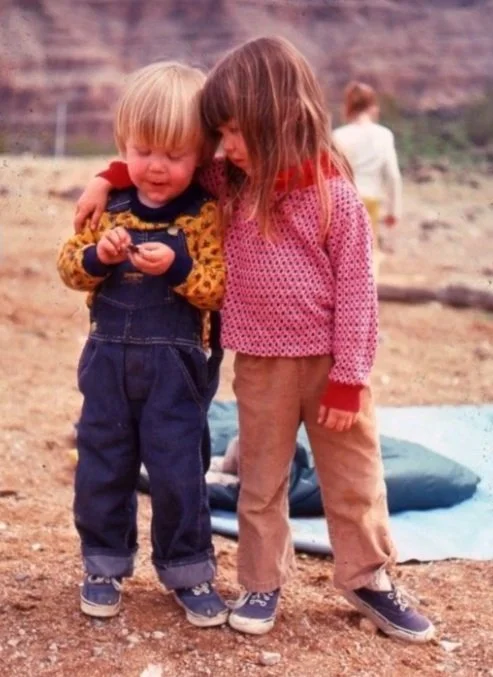
As a child, every morning, Ehren Clark got put on a special bus and shuttled off to the Gifted and Talented school. He was handsome. A charmer. Artistic and fashion forward. He’d grow to be 6’4, a great swimmer and excellent student, and the manager of a bakery while still in high school. He graduated from college, got his masters, and began a successful career. He had all of the brains, talent, and charisma to do whatever he wanted in life, but according to his big sister, Sarah, “The world crushed it out of him. It’s kinda not fair.”…
As a child, every morning, Ehren Clark got put on a special bus and shuttled off to the Gifted
and Talented school. He was handsome. A charmer. Artistic and fashion forward. He’d grow to
be 6’4, a great swimmer and excellent student, and the manager of a bakery while still in high
school. He graduated from college, got his masters, and began a successful career. He had all
of the brains, talent, and charisma to do whatever he wanted in life, but according to his big
sister, Sarah, “The world crushed it out of him. It’s kinda not fair.”
Sarah Clark Davis is the oldest of six siblings who grew up in Houston, TX. She always shared
a special closeness with second-in-line, Ehren, even when things got complicated toward the
end of his life. Their dad came from LDS pioneer roots; their mother, Joanne, was a convert
who jumped in headfirst and embraced everything about her newfound faith. Joanne’s kids’
aptitude for art and fashion trickled down from her side, which included several LGBTQ
members: a brilliantly creative artist and gay uncle who died of AIDS when Sarah was 14, a
lesbian aunt, and a trans cousin. Growing up, Sarah says Ehren, “was always the good kid,
mom’s favorite. He made us all look bad. If we ran out to play, he’d stay back to clean the
kitchen. It was obnoxious -- he always did the right thing in church, school, home. Until he
didn’t.”
Around age 15, things fell apart. Ehren started failing school and failing to come home. He loved
music and dancing and would go out to clubs all night with an older crowd, returning home in
Depeche Mode-esque eyeliner. Sarah says, “There was never a moment he sat me down and
said, ‘Sarah, I’m gay.’ I would have been like ‘Yeah, I know.’ He was just open with himself in a
way that everyone knew this guy was gay. And he wasn’t afraid to be his flamboyant self.”
Growing up in Texas, Sarah remembers defending Ehren against name-callers who made fun of
the way he ran. He gravitated toward safer pursuits and really found his people in the theatre
community. There was never really a conversation about him going on a mission – by that age,
Ehren was out on his own path. He remained close to his family, especially his mom, but longed
for a family himself. Sarah noticed a grief she assumes was impacted by his inability to
reconcile his life with church teachings.
All of Ehren’s siblings went to BYU, while he went to the U. Shortly after, he backpacked
through Europe, where his troubles escalated and he had a substance abuse-related
breakdown. “The drugs were not helpful to the issues he already had going on in his brain,”
says Sarah. He was admitted into a hospital, where he was diagnosed with drug-induced
schizophrenia and bipolar, what's often referred to as schizoaffective disorder.
Ehren returned to Utah, where he found the church’s addiction recovery program useful in
helping get his substance abuse under control. After earning a masters in art history from
University College London, Ehren became very active in Salt Lake’s arts community – teaching
at Westminster College, and befriending artists and gallery owners alike while working as an art
critic for City Weekly. Sarah says, “He loved that life and community so much.”
All the while, Ehren’s family focused on loving and supporting him with zero unrealistic
expectations. They adopted the “we don’t know how this will work out in the church, but it will”
approach. Even after he stepped away at age 18, Sarah was always comforted by the many
people on various ward rosters who continued to reach out to Ehren throughout his life and
show him love. “I realize it’s a lottery and not everyone has that in the church, but I want to do
what I can to provide that where I attend – to leave the doors as wide open as possible so
people feel wanted.”
To his family’s shock, after nearly two decades of being out of the church, around age 36, Ehren
was ushered back in by a faith community Sarah describes as his “angels.” She says he lived in
this “funky little branch in Salt Lake that was filled with diversity, artists, and he found his people.
The bishop just loved him, and Ehren went back and became the assistant executive secretary.
Then he called us up one day to invite us to his endowment exactly thirty years from the date of
his baptism.” Sarah still marvels that her brother chose to quit drinking, smoking and even
coffee to go to the temple especially since all of that was part of his social circle. But she says
his complicated mind longed for a peace he somehow found in the temple -- where he worked
weekly up until he died.
Toward the end of his life, Ehren also worked at the enterprise Sarah founded, Fashionphile,
where he’d pen product descriptions for resale luxury goods. Loving fashion the way he did,
Ehren had a flare for the words that described it, though his mental health sometimes impeded
his productivity. Of his output, Sarah laughs, “We just figured, it is what it is. At the end of the
day, we’re going to get something, even if it may need a little editing!”
Sarah had a startling dream one night in which both she and Ehren had died, and he joined her
at the pearly gates in the form of the handsome, smart, witty, cool guy she’d known when he
was younger and before his mental break. He said, “What happened? Right when I needed you
most, you backed away.” Sarah woke up in a sweat and thought if Ehren had cancer, she would
have moved him in with her family. From that moment, she made a concerted effort to strip any
boundaries that might prevent her from being there for him, even when he was difficult.
As Ehren lived alone, Sarah and her sister initiated daily FaceTime calls with him. His mood
swings were extreme. In the same call, he might put them on a pedestal, then start swearing
and call them she-devils. Sarah mastered the art of, “Ehren, I love you. I can tell this isn’t a good
time. Let’s talk later.” And they would. To this day, Sarah is still triggered by the sound of a
FaceTime call, remembering the beautiful face and complex mind of the brother she loved.
2017 was not a good year for Ehren or the Clarks, especially on the tail of their father’s
diagnosis with brain cancer and onset of their mother’s dementia. In an attempt to convince
them he was okay, Ehren had pulled away a bit from the family, while also exhibiting extreme
mood swings and weight fluctuation – his meds out of balance. But Sarah and siblings thought if
they could just get him through their annual 4th of July gathering at their family cabin, they could
work together to get him admitted somewhere and get his meds regulated.
Right before the gathering, Sarah called, but Ehren didn’t answer. Their brother, Jesse, went
over to check on him and Sarah says as he walked up the stairs, he says he felt a heaviness.
He just knew. They all did. At 42 years old, Ehren was gone. Jessie found him in bed in his pj’s
and his slippers at the bedside. His room was tidy and his cat was curled up next to him. Ehren
had overdosed on the wrong medicine cocktail – his dosage off. It still plagues Sarah how easy
it is for some to overdose on prescription medicine.
Reflecting on the tragic loss of her brother, Sarah says, “It’s all interconnected – part of his
mental illness and personal tragedy was his never being able to accept that constant tension in
his brain – his sexuality against his testimony. He loved being ‘a Mormon.’ What does that mean
for your brain if you love that, and you’re gay?” Sarah acknowledges there are many things
about Ehren’s life she doesn’t know. She guarantees there was likely a plethora of hard stories
involving bullying and nastiness that she wasn’t privy to. She reckons, “I’m sure it was there. I’m
sure there were people who weren’t nice. But I also know he was blessed with a lot of angels
who loved him.”
Meanwhile, Sarah is grateful for her lesbian aunt who lives a great life in Poway as a diehard
Dodgers fan and successful, contributing member of society. But most importantly, she’s always
been a friend and support to Sarah. She has modeled a loving openness that has inspired the
Davis family. She freely shares her own mission stories and has always been encouraging to
Sarah and her kids when they've embarked on their missions. And in turn Sarah and her family
have done their best to follow her example, showing love and support to their trans cousin after
having top surgery. “Post-surgery, my aunt thought it was cool their Mormon family was doing
what they do best, and sending over dinner.”
Sarah regrets that Ehren’s path was more difficult as he battled a series of heavy things -- his
eating disorder, his schizo-affective diagnosis, his drug addiction. “Maybe if just one of those
things wasn’t there, he could have just been himself and done anything.”
Every December, Sarah’s family now decorates a Christmas tree in rainbow décor in her
brother’s honor. “He loved attention - for his amazing outfits, for who he is. And he’s in heaven
right now loving that we’re talking about him.”





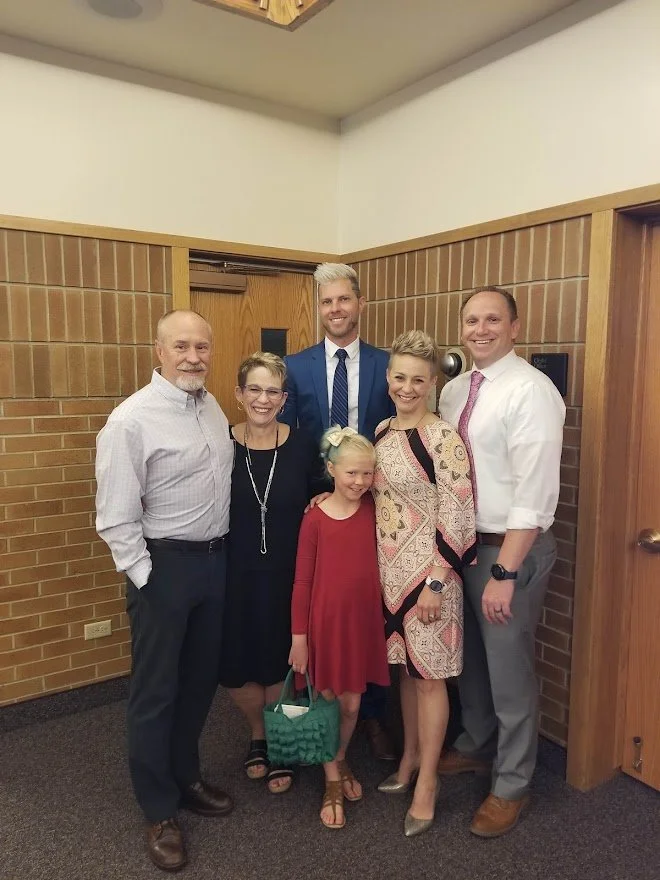
THE FREW FAMILY / HUSBAND-IN-LAW
Few can claim the privilege of having a husband-in-law. The very label makes you think: how does that work? But for Matt and Jessica Frew, and Jessica’s ex-husband, Steve Stoddard, it’s not only their relationship, but their brand. The trio have made the best of a complex situation since Steve came out to Jessica as gay shortly after they married 17 years ago…
Few can claim the privilege of having a husband-in-law. The very label makes you think: how does that work? But for Matt and Jessica Frew, and Jessica’s ex-husband, Steve Stoddard, it’s not only their relationship, but their brand. The trio have made the best of a complex situation since Steve came out to Jessica as gay shortly after they married 17 years ago. They later divorced and now happily co-parent their daughter Penny, along with Jessica’s new husband, Matt. Somehow, they have made it work -- so much so that they now offer their advice, inside jokes, and positive energy to others in similar situations via their @husband_in_love podcast.
But this modern family’s story first started with a love story back when Jessica and Steve met in college. Steve had shown up to a concert with ten other girls, but wound up separating from them to sit by Jessica. The two hit it off instantly, went out the next day, and were inseparable right up to their marriage just ten months later. Steve was a returned missionary, the two married in the temple, and together, “strived to keep the commandments and do all those things we were raised to believe and that were close to our heart,” says Jess. They had an intense closeness, sharing everything with each other. Shortly before their marriage, Steve opened up to Jess about how he had struggled with pornography since age 10. While a difficult topic, Jess appreciated how this conversation set the tone for their relationship – that they could be honest about everything and still love each other. Six months later, porn started popping up on their home computer; but it was all gay porn. This was the first time Jess realized Steve might be gay. When he got home from work that day, Jess asked a tough question. Still in extreme denial at the time, Steve said, “No, I’m not gay. I just always thought it was more appropriate to look at men than women, so I don’t disrespect women.”
Steve was in therapy at the time for various reasons, and it was his counselor who helped him process that the real issue he was facing is that he was actually gay. Steve finally acknowledged it, and together with Jess and the help of some church-based support resources and therapy, they decided to work to stay married. They were still close, happy, and working toward their mutual goal to become parents. Jess and Steve stayed together another five years after Steve came out, in which time their daughter, Penny, was born. They maintained the same honesty they always had, though Jess recalls, “It wasn’t always easy. He had lots to work through. The fact Steve had shared this most vulnerable part of himself (and the shame and guilt he felt around his true identity against what he’d been taught) helped us connect on so many levels. He was conflicted about himself, what he wanted, and it was hard for him to view himself as a good person. I helped him to reframe how he thought about this – that he was still the wonderful person I loved. This didn’t define him, or take away from his worth. Instead, it increased who he was – it added value of who God created him to be. But it wasn’t easy.”
Shortly before their daughter turned two, Jess went away for the weekend. When she came home, she knew in her gut Steve had had an affair. At first, she felt compelled to search his phone for proof but while scrolling, she froze and thought: “What am I doing? If something has happened, he’ll tell me.” Instead, she went to the temple, and later that night in bed told him, “Steve, I can tell something’s not right. I apologize that I started to go through your phone. But I want to trust that you’ll tell me when you’re ready.” Steve flipped on the light and confessed. He’d had an affair with a man he was still in communication with – a man who had encouraged Steve to stay with his wife once he found out he was married, because having a wife and a child was something this man had always wanted for himself. Jessica and Steve took some time to sort through their new reality. After leaving to spend two weeks away at a friend’s house to think, Jess returned to Oklahoma, where she and Steve had recently moved. She told Steve she had come to terms with getting divorced. She packed her things and returned with Penny to Boise, ID, where they still owned a home. But before leaving, Jess and Steve went to dinner with the man with whom he’d had an affair. Jess says, “I wanted to get to know him, the man who would support him. I needed that. Our lives had both just drastically changed, and we needed time and space to heal. And support.” Jessica ended up really liking the guy, and it gave her comfort to know they could make the space to welcome new relationships as they navigated co-parenting Penny with the back-and-forth between Idaho and Oklahoma.
Eventually, Steve also returned to Idaho to be closer to family, including Jessica’s parents, who still treated him like their own. He took up mountain biking with a group of friends, including a guy named Matt Frew -- a guy who he quickly suspected his ex-wife might like to meet. Sure enough, one week later, Jess said, “I’m going to marry Matt Frew.” This declaration may have included an aggressive nine-month pursuit on Jess’s part in which Matt was dating a different Jessica. But ultimately, Jess won Matt’s heart. Two months after their first date, they were married. Matt brought two kids from a prior relationship into the blend, which now also Includes frequent visits and pool parties, birthday parties, and holidays with Steve and his new (adored by all) partner, who live about a mile away. If that wasn’t quite close enough, Steve and Matt also see each other on the daily as Steve is a manager at the shipping company Matt owns. On occasion, they even take their daughters on double dates.
As their family dynamic has shifted and grown, the closeness Steve and Jess always enjoyed remains, but now feels more like a “sibling-like” bond, says Jess. “We still have struggles, but there is a way for us to love and support each other. It looks so different than 17 years ago when we got married. But this has all opened my heart and eyes to see the expanse of love. How far it can go, how inclusive it is. There’s so much we don’t understand about love, but there’s enough to go around.”
As they have worked hard together to strengthen their own family structure, Jess, Steve, and Matt have found immense reward in now helping others who similarly find themselves in an alternate family dynamic. They teach strategies for rethinking and reworking the lives of those involved when a partner comes out, through their coaching program @theboldlogic. Jess, who still attends the LDS church with Matt and kids, says, “I had never seen a family like ours before. And Steve always says if he had been able to listen to a podcast with story like ours, it would have given him more hope.” While Steve shares his perspectives as a gay man formerly in a mixed orientation marriage, Jess specializes in helping the spouse who is left behind – and often overlooked -- in the wake of the celebration and focus on the freshly out LGBTQ partner. She believes, “If we can do the work on ourselves, then we can help the gay spouse/ex to be who they are -- and both support each other. Whether you stay together or not, there’s a mourning that you’ve lost the relationship you thought you’d have. I help women process those emotions so you can have best relationship you can. So we can all support our LGBTQ fellow brother and sisters.”
Penny has known since age 3 that her dad is gay, and has always loved him for who he is – which Jess says helps Penny in turn love herself. Jess says, “I teach her that God created people how they are for a reason. There is nothing wrong with identifying as an LGBTQ person. It’s a blessing for my daughter to be able to understand to love others. That’s what our Heavenly Parents sent us down here to do.”
Through her unique experience, Jess has come to appreciate that, “All families are valid. There’s no right or wrong way to be a family. They come in all shapes and sizes. The real importance is that we love each other. It just comes down to that -- love and acceptance. I firmly believe that’s all our Heavenly Parents want for us – to know that no matter what, our family loves us.”


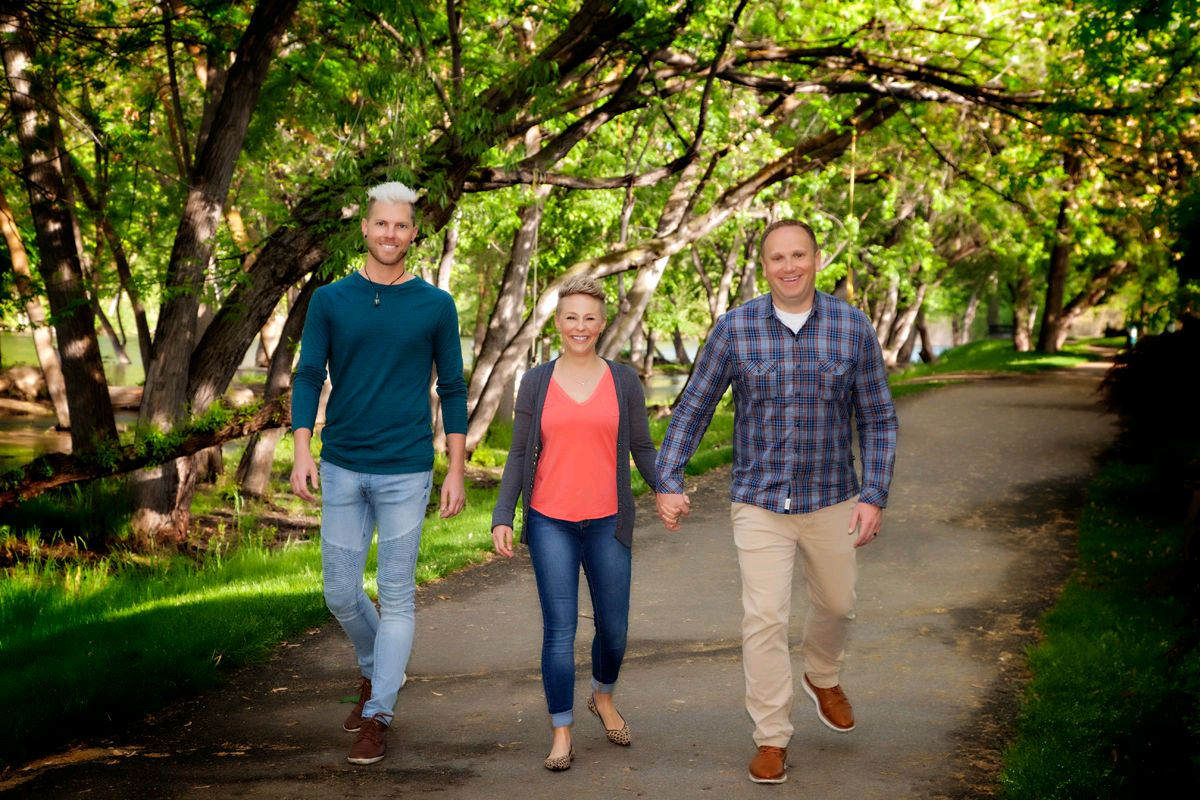


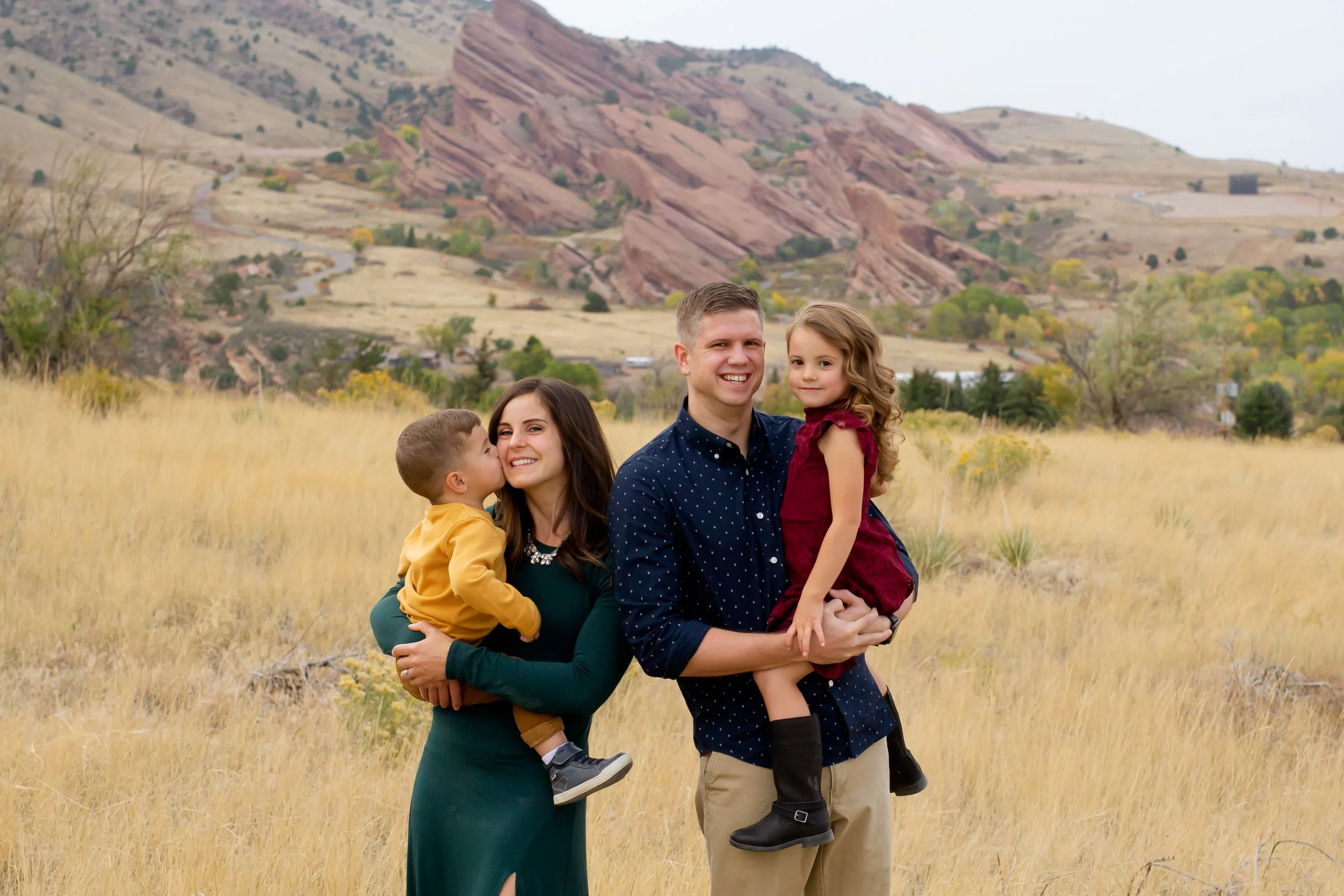
THE MCEWEN FAMILY
There are many things Liz McEwen knows about herself: that she is madly in love with her husband, Jason. She adores her kids, Scarlett – 5, and Leo – 3. And that she has found tremendous relief since last summer when she came out publicly as bisexual. One added nugget that has helped Liz adapt since she first realized this unique part of herself decades ago: Liz knows she was created by Heavenly Parents who fully understand and love her for who she is. That doesn’t mean it’s always been easy.
There are many things Liz McEwen knows about herself: that she is madly in love with her
husband, Jason. She adores her kids, Scarlett – 5, and Leo – 3. And that she has found
tremendous relief since last summer when she came out publicly as bisexual. One added
nugget that has helped Liz adapt since she first realized this unique part of herself decades ago:
Liz knows she was created by Heavenly Parents who fully understand and love her for who she
is.
That doesn’t mean it’s always been easy.
Liz grew up in Idaho Falls, ID, which she describes as a “mini Provo: very conservative and very
LDS.” She recalls knowing as young as eight years old that while other friends entered puberty
and developed crushes on a boy or girl, she was attracted to both boys and girls. In the 90s, she
felt the reality of a less enlightened generation and social norms and remembers hearing
countless anti-LGTBQ slurs, jokes, and teachings – even in her own home. “It was normal to
hear bad things said about queer people.”
Like most kids, Liz explored different romantic experiences as a tween and teen – with boys and
girls alike, and she remembers feeling so scared. “I would lie down at night and look up at the
lace canopy over my bed and imagine it being on fire because I thought I was going to hell. Gay
people were bad, according to everyone I knew. As a result of these beliefs, I had many mental
health issues due to the stress. And I had no one to talk to.”
She made an appointment to confide in her bishop at one point. She remembers him as a kind
and understanding man, but he let her know her attractions and relationships with girls were
wrong. So Liz went back into the closet and carried her thoughts silently in shame for many
years.
Liz chose to pursue relationships with men and fell in love with Jason, her husband of ten years.
On the 4th of July, the two met at a party hosted by one of Liz’s roommates. Literal and
figurative fireworks were present that night, and Liz and Jason fell for each other. Liz describes
their marriage as a happy one, and she was honest with Jason from the beginning of their union
about her bisexuality. It was a relief that she could be completely open about the reality and
trauma she had been carrying alone. She appreciates how kind and understanding Jason was
from the start: “more so than I was,” says Liz, who began working with a licensed professional
counselor who helped her work through some of the internalized homophobia she had accrued
since childhood. “The more I learned, the more I realized how badly this was eating me up
inside – the secrecy and guilt and shame of it all.”
The progress Liz has found through counseling inspired her to become one herself, and she is
now pursuing her master’s degree in clinical mental health. As she has continued to study
LGBTQ issues, Liz has come to more fully understand the trauma many face, especially in a
religious context. She looks forward to soon helping others who’ve experienced a similar path
find peace with who they are. In the meantime, Liz encourages anyone struggling with their
mental health for similar reasons “to pray to Heavenly Father and ask what He thinks about
you. And get some professional help, too – especially if you have overwhelming thoughts of
suicide. I promise there is love and support out there.”
Looking at Liz’s family photo, some may wonder, wouldn’t it be easier to keep this part of you
away from the public eye? But many in the know, including Liz, have found tremendous relief
and healing from authenticity, both at home and beyond. After opening up about this part of
her in her marriage, Liz says, “For Jason and I, I’m not sure it changed anything for us. I’m
attracted to him and vice versa. We both know the truth of who the other is, and it is freeing. If
I struggle or hear hurtful comments at church, now I can talk more freely about it. Keeping that
secret to yourself, is REALLY difficult. It’s such a big part of who you are – I like being able to
share all of me with my husband, and he feels the same.”
And since she came out publicly on Facebook last summer, Liz says many women – including
some married to men – have in turn confided in her that they face the same reality of being bi.
“It feels like a big heavy burden they’re keeping, too, and just being able to talk about it helps.”
But it hasn’t been all sunshine and rainbows. Liz has also faced disappointment and rejection
from many in her inner circle. Even her parents have made it clear that they do not understand
or support Liz’s reality and infer she’s been brainwashed by her educational pursuits. And
things did not get easier for Liz when after coming out last July, she (like many in this space) felt
betrayed by Elder Holland’s August address to BYU faculty. Liz says, “I felt like his talk paid lip
service to how much they love people in the LGBTQ community, and then said, ‘But don’t love
them too much. Don’t advocate for anybody.’ So I don’t know where I stand with the church
right now. Part of me loves a lot of the teachings – about eternal families and serving your
community. But I have a hard time reconciling the good things with hurtful things.”
Liz says her future hopes for the church’s treatment of queer members are not high as “there is
a lot of entrenched thinking about how things should be and what’s true and what isn’t.” She
wonders if some people hold so tightly to some of their “traditional family” ideals because
having to grapple with the cognitive dissonance of what LGBTQ people go through is too
difficult. So she realigns her focus: “What I’m doing, for me, is just working on my relationship
with God and being there for others in this community. Because that’s the only real control
anyone who’s a member and has these nuanced beliefs can do. If me staying and being there
for one queer person makes a difference, that’ll be good enough.”
Luckily, in her hometown of Parker, CO, Liz has been met with love by local leadership since she
came out. Her bishop immediately reached out, wanting to know what he could do for queer
people in general, and what helpful resources are already available -- a gesture that meant a lot
to Liz. “I’ve decided the church is true in my ward,” Liz laughs. “And Jason’s made it very clear
that even if they excommunicate me, he’s still with me. But I’m not sure what my future will
look like in the church. All I know is God loves me. He loves all queer people. I hope someday
the church can see that as well.”
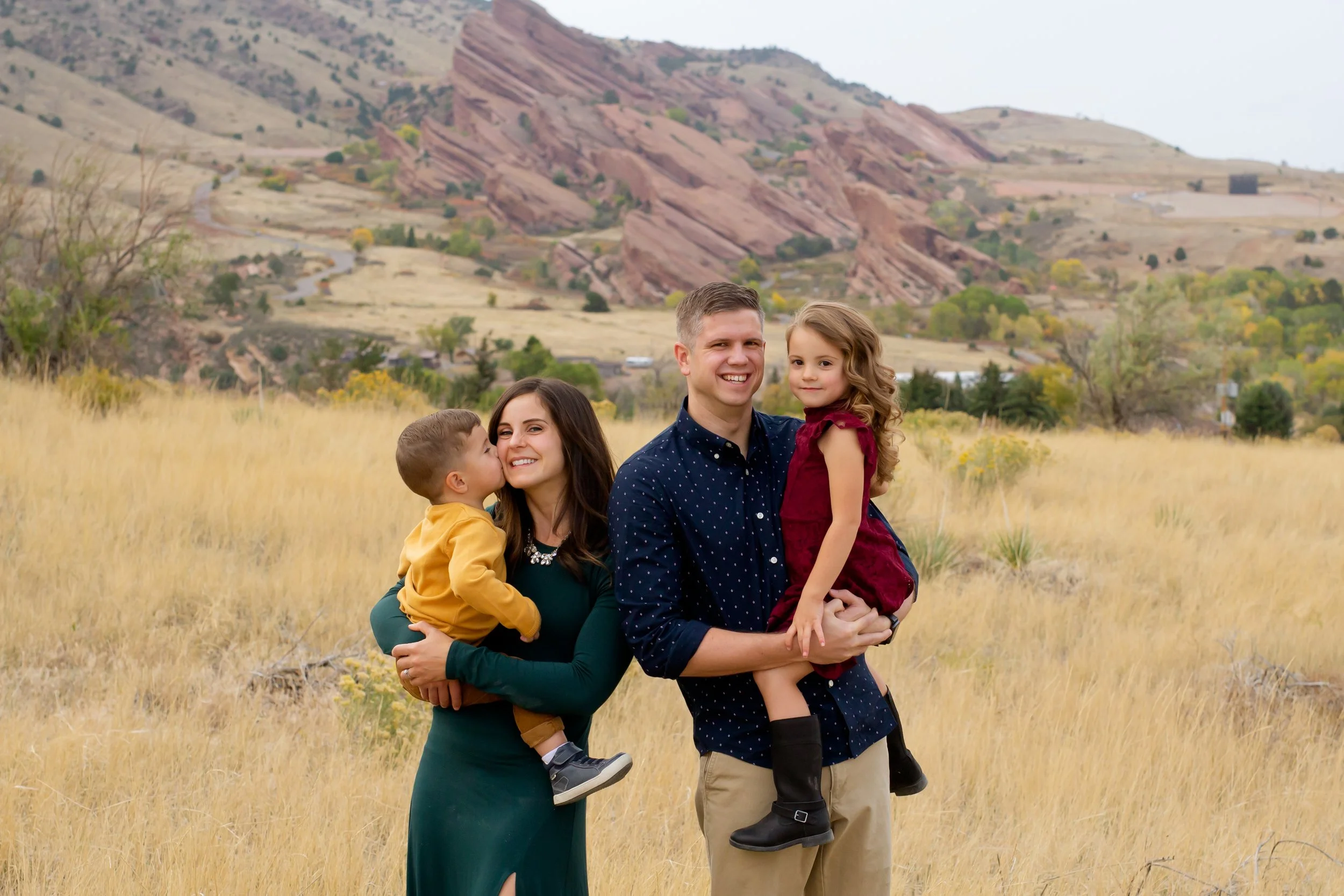


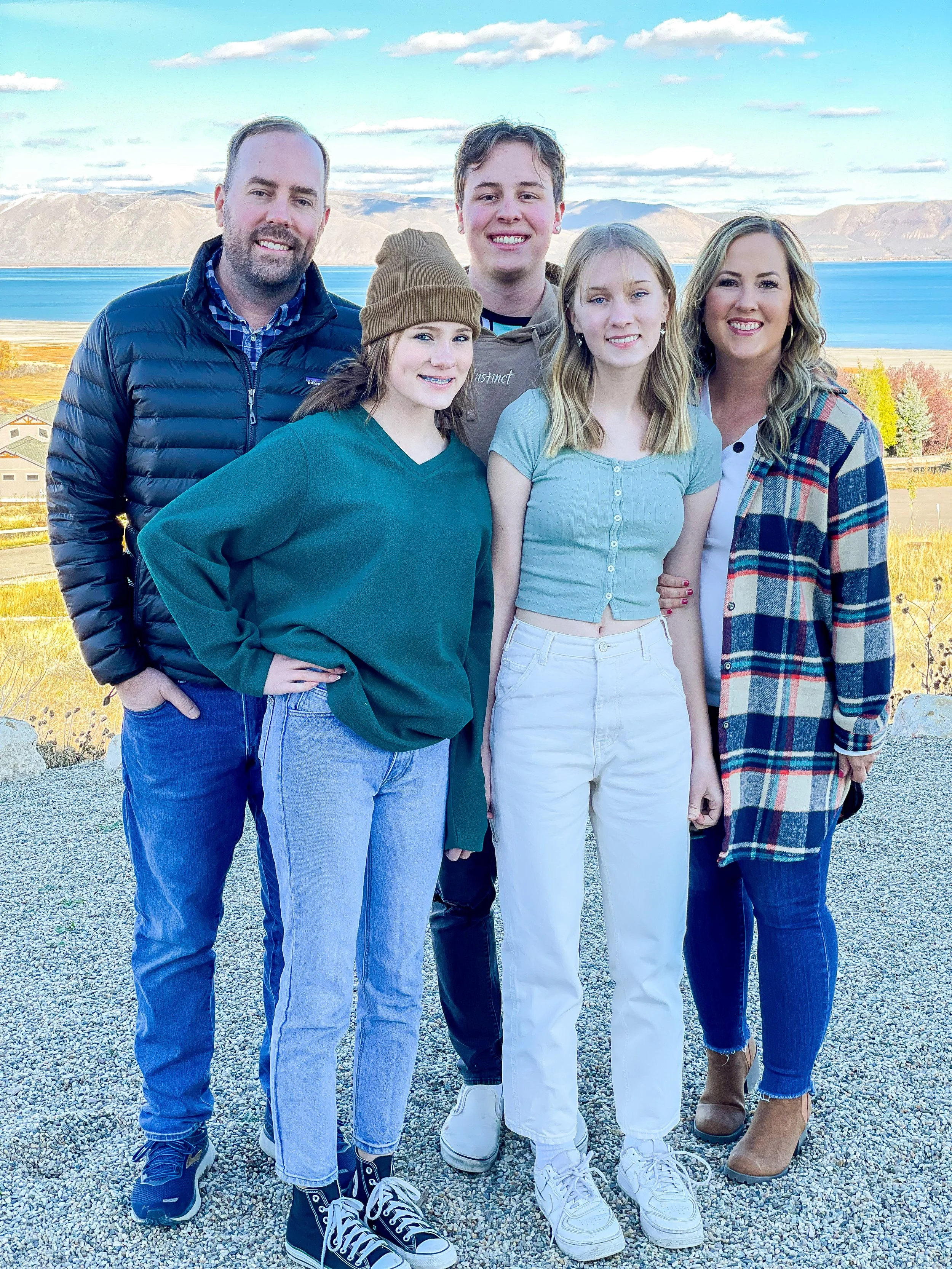
THE HANCEY FAMILY
As TV chef and food blogger @charlotte.shares, Charlotte Hancey is known and loved for sharing her “bold Texas taste” culinary delights with the world. She’s now also thrilled to publicly share her love and support for her 19-year-old son, Ethan, who recently joined her in an Instagram post in which she came out as the mother of a gay son. As Ethan is Charlotte’s firstborn, fellow in-house foodie, and favorite mouth to feed, it felt natural that they would also share this side-by-side…
As TV chef and food blogger @charlotte.shares, Charlotte Hancey is known and loved for sharing her “bold Texas taste” culinary delights with the world. She’s now also thrilled to publicly share her love and support for her 19-year-old son, Ethan, who recently joined her in an Instagram post in which she came out as the mother of a gay son. As Ethan is Charlotte’s firstborn, fellow in-house foodie, and favorite mouth to feed, it felt natural that they would also share this side-by-side.
But first, let’s rewind to December 10, 2020 -- an otherwise normal day in the Hancey’s North Ogden, UT home. Charlotte had two on-air cooking segments for Good Things Utah the following day, so the family knew that was their cue to stay out of the kitchen wherein frazzled, she prepped. Only, Ethan entered and said, “Mom, I need to talk to you and dad.” “Can it wait?” she replied. But there was something about his “I guess” coupled with the look in his eyes that jolted Charlotte’s heart. It was time to put on a different apron. She left the room with him to have a conversation – one she felt she had quietly (and gratefully) been prepared for for years.
Behind the closed door of his parents’ bedroom, Ethan shared his journey of discovering his truth over the years. Charlotte and her husband Ben embraced their son and cried with him. “No other option or feeling came to us. Just lots of love.” Charlotte says there had been many moments since Ethan was 12 that made them wonder if their son might be gay. Together, the couple would talk and conclude, “No, no…” but they still privately wondered, so it wasn’t a huge shock.
The family love fest continued as over the Christmas holidays, Ethan rallied his nerves to tell his two youngest sisters, Clara – 16, and Meredith – 14 -- who mean the world to him. They, too, embraced him, cried with him, and said it would all be okay. Ethan’s relief was immediate and all-encompassing as he now realized he had the full support of his family and his closest friends, who he’d already told. Charlotte recalls the depth of his exhale: “At that moment, all his people loved him, and knowing this, perhaps loved him even more. The love in that room was tangible – one of the most beautiful moments we’ve experienced as a family.”
This moment came at the culmination of 2020, a hard year for the world, and in particular the Hanceys as it had also included a seven-month overseas deployment for Ben, who serves in the Air Force. And now at year’s end, Charlotte found herself sorting through a new transition. “While we were fully on board, it still felt like a death in a way. I had to let go of this dream, and all these ideas I had for his future – marrying a woman in a temple marriage, having biological kids with a spouse. I think it’s okay to feel sadness in incidents like this – like I’d feel sad when a child moves out, goes on a mission, or gets married – just sad at the change or transition it is. As a parent, you just don’t want your kid’s life to be hard.” Charlotte recalls her own traumatic upbringing, having experienced a difficult childhood herself. “I had always fought so hard for my kids to not have to go through that. Even though I know they’ll all have hard times.”
Charlotte describes Ethan as the sweetest, kindest, most empathetic, warm, and wonderful person. The thought of the church and world being against him just felt like too much at times. She feels grateful to have had Ben on board with her, internally processing all the same emotions and fears. Typically known for being an outspoken, open book who wears her heart on her sleeve, during those early months, Charlotte found herself closing up, unsure how to talk to anyone. And she certainly didn’t feel ready to come out of the gates with this new information to her social media audience. She was told by a wise friend, “You will know when it’s time.” She’s grateful several trusted family members and friends were there for her, and connected her to a network of other LGBTQ moms, including those at Lift and Love. “It was a God thing the way the connections happened.” She also took comfort in finding and devouring Charlie Bird’s book, A Walk in My Shoes -- which she now widely recommends.
Since his coming out, there’s “a new light in Ethan’s eyes. He’s thriving.” Highly artistic and musical by nature, Ethan’s now applying his talents to the graphic design program at UVU in Provo, UT. “He’s always been the sweetest kid, and now he’s sharing more of his true personality. He just got his ears pierced, and I love it. He’s coming out of his shell and it’s beautiful to see.” Charlotte continues, “One thing I’ve reiterated over and over is every person is born with worth. You don’t have to earn it. We need to live our lives so we can see it for ourselves. To live worthy of happiness and love, and recognizing that worth in others, is life changing. This experience has increased my capacity to love everybody.”
Regarding Ethan’s future, Charlotte wants him to feel happy and worthy of love: “not just from a romantic point of view, but from everybody – family, friends, those he meets. I want him to feel he has a place in this world and can contribute to it. Where he can love people and feel loved back.”
Ethan no longer feels there’s a healthy place for him at church and does not attend, but Charlotte says he supports them still going. She personally feels more reasons to stay and be a voice for him than leave. “I’m there to speak up. I want families like ours to be able to feel completely comfortable going to church, and not have to brace ourselves for comments that might be said. I feel like the culture and doctrine can get mixed up a lot when it comes to loving and accepting. I feel like we should focus more on what God and Christ did – and what did they do? Love unconditionally.”
By sharing their story, both online and with those whose paths they cross, Charlotte feels she is closer to fulfilling her life’s purpose. “Over the last year, I’ve realized there are a lot of things in our lives we’re afraid to talk about. For years, I was scared to talk about my childhood, but the more I talk about that or this, it brings human connection. We shouldn’t be afraid to share hard things. Since Ethan came out, people have come out of the woodwork to also share with me that their children are gay. And talking and sharing brings people together. Human stories connect us and help us feel seen, worthy, and loved.”
This kind of connection is a gift Charlotte has cherished since that night in December of 2020 when Ethan first shared this part of his story with her. The next day, she boldly carried her culinary perfections into Good Things Utah along with a new ingredient: she was now the proud mom of a gay son. Charlotte walked right up to a host who had become a good friend. Knowing already she was a loving ally, Charlotte whispered her news about Ethan, and melted into the huge hug of support she received in return. Being able to share it this way just felt right.


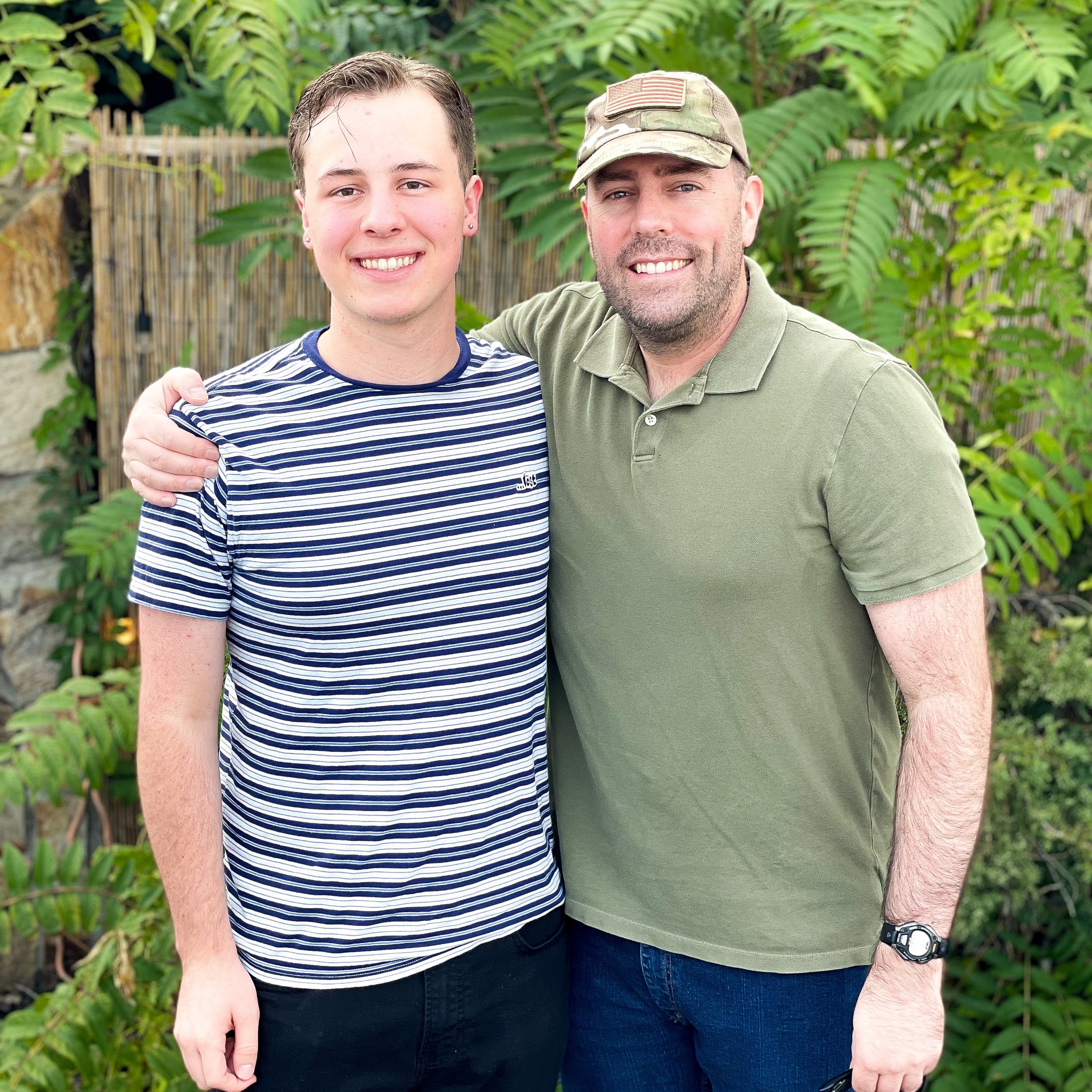


A LIFT+LOVE FAMILY STORY
My brother is gay…
My brother is gay.
We are both now in our mid-50s, so that means our journeys started in the 1960s. Here is a bit of a retrospective:
As kids, I never thought anything was different about Joe. We were brother and sister, and that was that. Joe was Joe. He was, however, the cutest. The family landed on that word - “cutest” - because it summed up everything about him: his kind nature, wit, charm, musical gifts, insights, and intelligence, not to mention his good looks or that he was always followed by a flock of adoring friends. It was evident everywhere we went, not just in our family. I’d hear people tell my parents how extraordinary he was. People would stop me on the street and tell me. Once I even overheard a complete stranger exclaim, “I travel every year from Sioux City just to see Joe!” This became easier to hear as I got older - when I could finally discern that, truly, Joe really is the cutest. It worked its way into the family lexicon: “Why did Joe beat us in Monopoly?... get the extra slice of pie? ... get chosen as valedictorian speaker?” “Because Joe is the cutest, naturally.” The saying was a joke rooted in truth.
All this cuteness never occurred to me to be anything more than just outrageous luck.
In those times (the 70s), the only references that I ever heard publicly about gay people were very negative. Very negative. Vulgar and fear-based. But at home, if the topic were to come up, we heard a much different story. Being gay was just different - no better, no worse - but because it affected such a small minority of people, we should always be kind and loving - they were vulnerable. Mom spoke of San Francisco with respect. Wasn’t it wonderful that a city opened its doors wide to people that had been rejected by family and society? A place where everyone could live peaceably?
What a dichotomy of perspectives!
So I went on my merry way and landed at BYU. Joe went to a small liberal arts school in the Midwest. I couldn’t understand his choice. We had grown up with so few church members that I was DYING to get to the land of the Mormons. He hadn’t enjoyed the scouting program at church and was often the only boy there his age. Church was just awkward for him - except for the music, where he was in a regular rotation of providing the special musical numbers in sacrament meeting.
Finally, after graduation (now the 80s), Joe came out to me. What? I never once connected the dots. Never.
That was certainly a different time. Joe wasn’t like the negative words that I had heard on the street. Not one bit. He was great. He was the best. I was lucky he was on my team. And although our family had a more loving and broad description of the complexities of homosexuality, I still hadn’t considered it being that close to me. Willful ignorance?
Here’s the part of the story where I now hang my head in shame: I tried to talk him out of it. “Your life would be so much easier if you just wouldn’t be gay. OK?” He was very patient with me. Explained a TON about it not just being a sex thing, but a worldview thing. And that it wasn’t a choice, it simply was. These conversations went on for many years as he worked to educate me. Back then the word “ally” was only a WWII reference for the good guys. It would have been a useful word for me to understand.
So we went on. He left the church after the church left him.
We hit bumps along the way, but we always managed to put each other first over differing views or allegiances. Most of that grace was on his part, and sadly, not on mine. With more exposure and learning, more growth came. Meanwhile, I knew in my gut that what I heard at church was incorrect. I chalked it up to old-school ideas. (I mean, face cards? Really?) So it was an easy step to see that “the words” were not infallible. Also, as I matured in the gospel and spent more time in the scriptures, I became more and more troubled - good trouble - that a lot of our commonly held beliefs are not grounded in scriptures or in Christ at all. Then came the explosion of light as online resources, including Lift+Love, created a wellspring and repository of archived lived experiences. Open conversations here and there. T and this created a calm strength. All of this has helped me to articulate my views more clearly and to more openly disagree with lessons, casual conversations, and off-hand comments that wander into hurtful paths. I am at once grateful for this, while also ashamed that I couldn’t get there on my own. But still, I am here now.
Joe and I remain close still. Very close. My husband and I attended and participated in his beautiful wedding. Our kids love spending time with Joe and his husband, sending them outlandish Happy Guncles’ Day cards. All is well between us.
Except. Except for the church aspect. He is very supportive of our affiliation and our work in the church, but he is sharp and direct about many of the church’s actions, comments, and inconsistencies. I have grown to love this. It is real. It challenges me. It is not an echo chamber.
I am also aware that this is my version of the story. Joe would likely have more and different things to say. I work hard to keep positivity between us because there can still be hot spots that sting, and that is exactly why I share this anonymously. I was and remain a witness - an evolving witness - to this story.
In summary, Joe remains the cutest. I have changed. A lot. I still worry about being a crummy big sister at a very important time and for a very long time. But grace is beautiful. On my end, I try to do better because I know better. I advocate calmly and firmly for others. I keep an open door. I seek to love my neighbor --as my highest ideal. I keep an open door. And from where I stand, I can see light, and it is beautiful.!
** We’d like to thank our (anonymous) contributor this week for sharing your heart and wisdom. Artwork: Anselm Kiefer’s “The Renowned Orders of the Night”
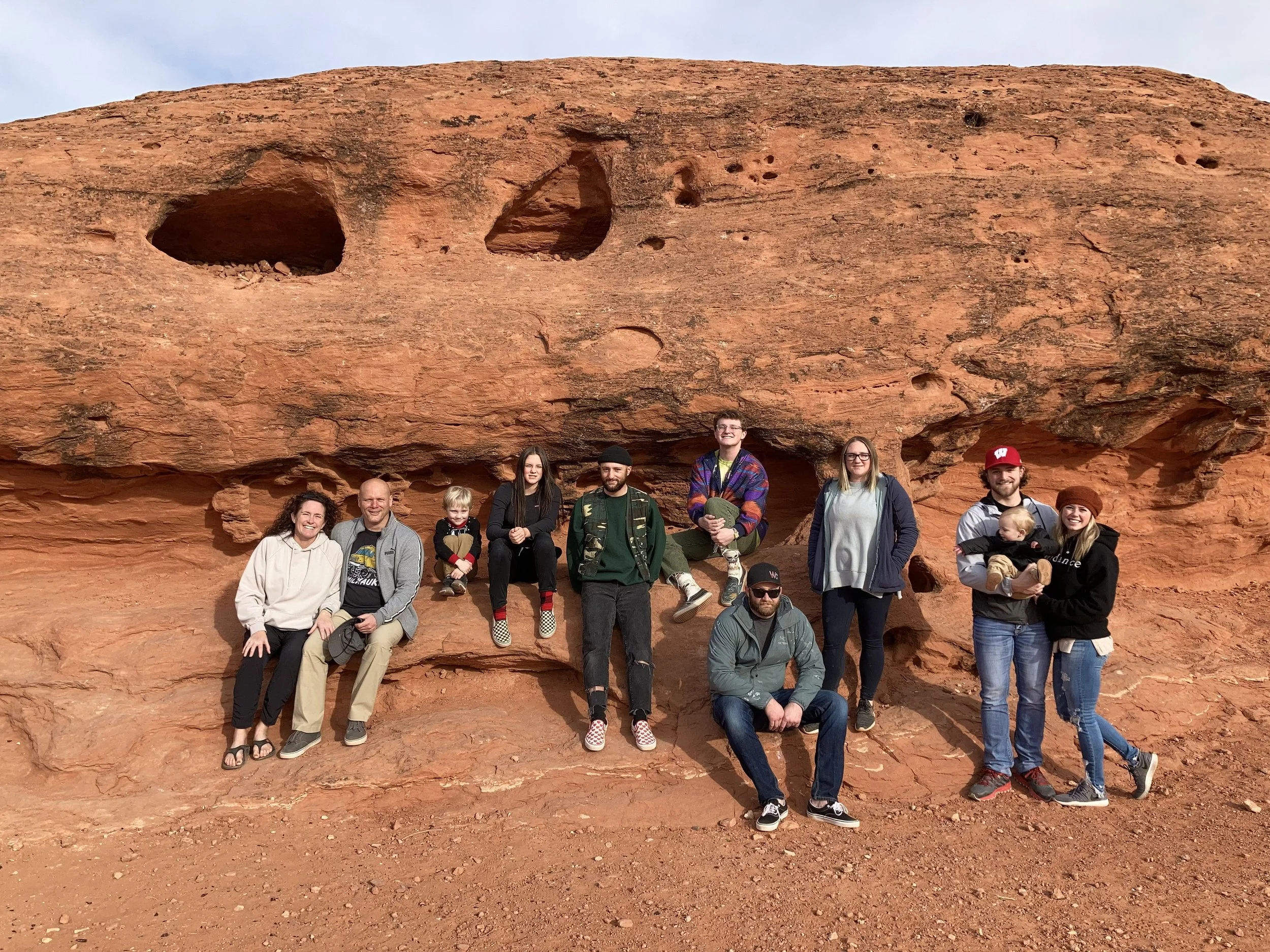
THE STEPHENSON FAMILY
Every Christmas Eve, you can find the Stephenson family ice skating with their cousins near their hometown of South Jordan, UT, then eating dinner at Red Robin, a tradition that began several years ago when dinner plans were abruptly canceled and they found themselves with nowhere to eat.
Every Christmas Eve, you can find the Stephenson family ice skating with their cousins near their hometown of South Jordan, UT, then eating dinner at Red Robin, a tradition that began several years ago when dinner plans were abruptly canceled and they found themselves with nowhere to eat. The tradition stuck. As did that of the Stephenson kids decorating their tree and the house each year while their mom, Kelli, acts as holiday music DJ on the couch after hanging her one and only decoration – a Bah Humbug wreath on the front door. Additional (more traditional) holiday week festivities include looking at lights, shopping, a Chic-fil-A run, opening sibling and grandkid gifts on Christmas Eve, and movie nights featuring several holiday classics: Elf, Christmas Vacation, A Christmas Story, Family Man, and Daddy’s Home 2. But one thing that sets the Stephenson apart from many families is that Kelli and Scott have not one but two LGBTQ+ sons in their line-up of five kids: Ashly (a 28-year-old married mother of two), Colby – 23, Eli – 21, Zach – 19, and Emma – 16.
Kelli says that while she sensed Zach was gay since he was very young, older brother’s Eli coming out really shocked her. He was 15 and the revelation came at a stressful time for the family. Their oldest daughter was living with them and expecting a baby any day, their youngest daughter had just been diagnosed with diabetes, and middle child Eli had been struggling with sibling dynamics and mental health issues for some time. But Kelli had just experienced a small victory, coming in third place Masters at the Utah Valley Marathon. After the race, she climbed into the car with Scott, eager to celebrate, but it was clear he was in a grumpy mood. He abruptly shared that Zach had texted him and told him that Eli was gay. It was a long drive home.
When Scott and Kelli got home, they asked Eli about his brother’s text. Eli said he was bisexual and that it was a big reason he had been struggling so much the past couple of years. A few months later, Eli shared that he was actually gay, then a few years later, pansexual, and now, along with his partner, identifies as nonbinary using the pronouns they when with friends and he at home. Kelli says Eli’s life has been marked with a series of struggles over the years – well beyond his sexuality. He started seeking counseling shortly after coming out, and still sees the same wonderful counselor who has helped both him and Zach over the years. Kelli says, “At first he thought he’d try to stay in the church and marry a woman. But that idea was fleeting as he learned to love and embrace his true self.” Eli’s branched out of his SLC family’s turf to Provo of all places, where he enjoys visiting Encircle with his partner, and finds the BYU culture rather affirming. Kelli was also pleasantly surprised to find the Utah Valley community largely loving when she marched in her first Pride event this summer near BYU’s campus. While she expected slurs and bottles to be thrown, she says instead, they received supportive honking and loving cheers.
Eli currently attends an Episcopalian church in Provo, where he enjoys lighting the unity candles and listening to sermons given by a female Deacon whom he respects and connects with. His parents recently joined him for a Sunday Service and they felt a very strong and affirming spirit and knew their son had found a good place to feed his spirit and feel God’s love and acceptance. They are pleased that he has found a faith home: “Everyone needs a place where they feel like they belong.” While Eli doesn’t agree with LDS doctrine in its entirety and has struggled with some policies, Kelli says he always felt loved and accepted by the people in the ward in which he was raised. Recently he called her to find out what time church was in their previous ward because he wanted to go visit the people he loved – including some “prickly pears” that other congregants found hard to connect with.
While Eli has held many jobs trying to find his place in the world, and has taken his time with his schooling, he recently took a criminal justice class at SLCC taught by his police officer father, and Scott told Kelli, “He’s so smart. One of the best writers I’ve ever taught.” His final paper was on transgender rights in the prison system. Eli would like to be an English teacher someday, like his mom.
While Zach was also outed at age 15, ironically by Eli (sibling revenge cycle complete), his experience has been different in that he has always felt an affinity for the gospel. But Kelli says he struggled to feel accepted by some of the young men in the ward and experienced incessant bullying from a group of girls while in high school. He was always the Stephenson’s most religious child, and had excelled with school, always maintaining a 4.0 until the bullying began. His last two years of high school were difficult, but he did eventually find his place. He also was a spiritual giant in seminary where, according to his teacher, “he practically taught the class” until he abruptly quit at the end of his senior year due to a group of “toxic friends” who talked him into it. He still regrets this choice as it left his seminary teacher wondering what he could have done better. Zach now works every Sunday and no longer attends church, but Kelli says he will still defend the gospel and hopes to find a partner who has an LDS background and hopes one day to be able to attend an affirming ward together with his spouse.
Kelli says, “Zach’s testimony is stronger than mine, by mountains. When he first came out, he was adamant he’d marry a woman instead of a man, until a year later when he realized that marrying a woman might end up destroying a family 20 years later. He won’t do that.” From 16, he knew he needed to be true to who he was in order to find peace and happiness. He hopes to be able to do that within the church somehow. None of the Stephenson’s five children attend church anymore for various reasons. Kelli and Scott still attend and take their grandson. They appreciate that their new neighbors and the bishopric of their new ward seem to prioritize love and acceptance for all. So far, they have been met with kindness, and every lesson taught and conversation with those in leadership has been inclusive and kind.
Scott wasn’t raised in the church, but grew up in Utah, where he recounts some childhood neighbors were told to steer clear of his non-LDS family. Kelli was raised in the church but many of her friends and neighbors were not LDS. She was taught to love and accept everyone, regardless of their religion. Kelli says Scott (who serves in YM while she teaches the five-year-olds in Primary) now definitely knows the scriptures better than she does and has a testimony that awes her. His life was not easy, but he had the example of amazing convert grandparents who were a pillar of strength for him.
Of her testimony, Kelli says, “I have the faith of a child. I just know that the church is true, and I don’t know why. I do not question the gospel, although sometimes I may question an individual within the gospel. I have this strange ability to dismiss things I don’t agree with,” says Kelli. “I can hear something troubling at conference or church and think, ‘Well, that doesn’t seem right,’ and just move on. I generally talk to God in my head and simply say, ‘I don’t understand this, but I know you do and will help me understand.’ This is what I did with the Exclusion Policy in 2015. God guided my research and helped me understand the intent, even though I believed the policy would not accomplish this purpose the way it was written, and I didn’t agree with it. This always worked until that one talk at BYU -- that one was hard because the message was incongruent with the past messages of this apostle.” Referencing Elder Holland’s August 2021 talk to the school’s faculty, Kelli posted on her Facebook account: “My faith is not wavering. My testimony has not been shaken. I am as strong in the church as ever. It’s ok to question and/or be hurt by a talk from a prophet or an apostle. It says nothing about my faith and does not mean I do not sustain my leaders and the leaders of the church. Jesus taught us to go after the one when the ninety and nine are safe and together. That’s what flying a pride flag or wearing a rainbow pin or putting up a welcome sign for LGBTQ+ youth who are brave enough to go to seminary does — it goes after the one. The ninety and nine have been safe and welcomed all along; the one has been made to feel unwhole, wrong, and often cast out as a sinner when they are just being who God made them. I will continue to rainbowfy every part of my life that I can to call back and welcome the one. I see them, I hear them, I love them, they are my children (literally and figuratively).”
Indeed, Kelli shows her LGBTQ+ support visually in her middle school English classroom and is co-chairing the first GSA club at her school this year. The district doesn’t allow Pride flags to be hung and Kelli’s own kids would prefer not to have that visual announcement hung at all times in their own home. But her sons love that Kelli does what she can within district policy and uses rainbows in her classroom décor, from stickers on her always present Swig cup, to the rainbow mug that holds the rainbow popsicle sticks used to randomly call on students, to a 3-D rainbow butterfly mural on one wall, as well as a sign that greets every student at the door: “All are welcome here.” “I survive each day because my kids tell me they love me. I’m not a perfect parent, but I apologize when I make mistakes, so they know I’m trying. And Zach and Eli have told me they’re glad they have me so that gives me peace.” In turn, Kelli’s grateful that things are now easier for her kids than they were 30 years ago for her close friend’s mother who was gay, and even 10 years ago for another family member who came out as gay in a family steeped in LDS tradition and culture. “I know it’s cliché, but we need to just love. That’s all. No judgement or casting stones or questioning, just love.” She is very grateful that extended family has shown nothing but love and acceptance for her children. That love goes a long way in allowing them to live authentic lives without fear of repercussions from family, the ones they need the most.
Right before the Stephenson family moved this summer, Zach approached the pulpit to bear his testimony in the ward in which he’d been raised. He pulled a card out of his scriptures that Kelli thought he’d lost a long time ago. It was a note his bishop had given him when he was 15 and feeling he was unworthy to be ordained a priest because he was gay. But Zach had kept that card, which contained the scripture D&C 18:10 and the simple words “You are loved” -- three words he really wanted to share. Three words that say it all.


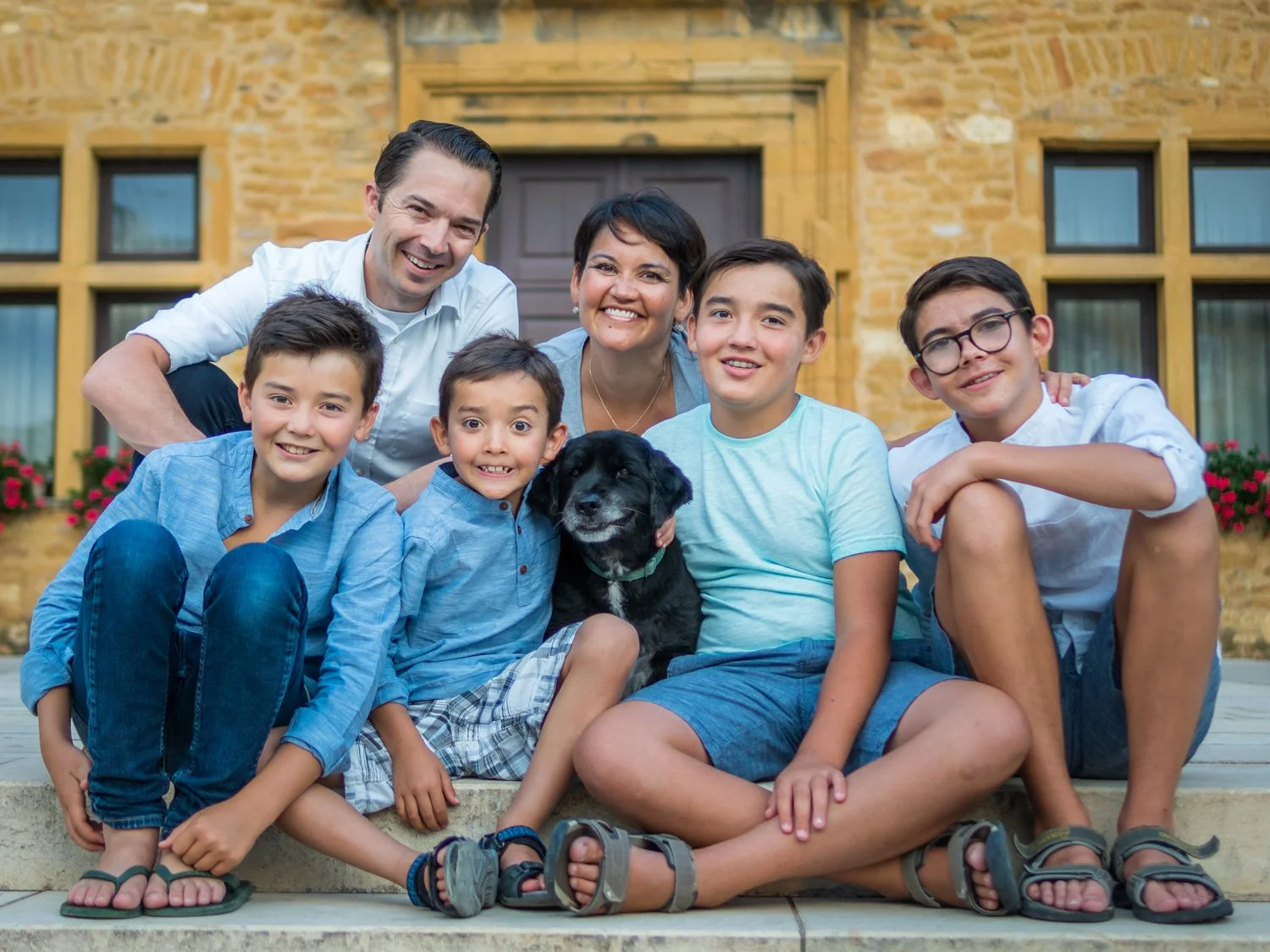
DAVID SMURTHWAITE
“One afternoon when everyone was out of the house, I snuck into the back of my mother’s closet,” says David Smurthwaite of Salt Lake City, UT, recalling his childhood. “There was a really old dress tucked away I’d never seen my mom wear – and rightfully so – and I stole it away to my room along with collected dregs of makeup rejects from our guest bathroom. And there, behind a locked bedroom door, I first experimented with expression….
“One afternoon when everyone was out of the house, I snuck into the back of my mother’s closet,” says David Smurthwaite of Salt Lake City, UT, recalling his childhood. “There was a really old dress tucked away I’d never seen my mom wear – and rightfully so – and I stole it away to my room along with collected dregs of makeup rejects from our guest bathroom. And there, behind a locked bedroom door, I first experimented with expression.”
This coming-of-age discovery at age 11 was how gender dysphoria first manifested in David’s life – decades before he understood what the term actually meant. But he vividly remembers that early wrestle with body image and feeling uncomfortable in his own skin. Envisioning himself in feminine form was “an exciting, comforting thought,” David says. “It brought with it a flood of emotions I didn’t know how to process at the time, but I knew I felt them.”
David now has compassion for that 11-year-old boy who felt he “was doing something wrong because it was not discussed in church.” His experience of gender dysphoria up until that point had only been what he had witnessed on Ricki Lake or Jerry Springer. From a moral standpoint, even at a young age he felt he needed to sort it out so he made an appointment with his bishop, who he remembers as a loving, grandfather-type. The bishop was loving and listened compassionately before advising, “That’s probably something we shouldn’t be doing.” David left with a reinforced standpoint that it was wrong to explore this side of himself. He snuck the dress back in his mother’s closet, threw away the makeup, and tried to bury this perceived “moral defect” for decades. As cyclical feelings would resurface, he’d shove them down with remorse. And while balancing this silent cycle on his own, he proceeded to get married, have four kids and “raise an amazing family with amazing experiences. But there was always an underlying situation I wasn’t giving attention to.”
Business took the Smurthwaite family around the world. They spent several years living abroad while raising sons Noah – now 17, Sam – 15, Oliver – 13, and Eliot – 11. While living outside Lyon, France, another wave of feeling arose for David. At this point exhausted, David finally decided to explore the why behind what he’d been living with for three decades. This time an online search of “why do I feel like a woman sometimes?” unveiled a wealth of information and new vocabulary. “It was scary, intimidating, yet somewhat comforting to know there was a world out there with medical and psychological explanations for what I’d been feeling for decades. I was drowning in data. But when I searched in an LDS context, I was bombarded by stories of many broken homes and those struggling with faith.”
In an hour and a half, David went from decades-long repression to a full exposure to a world that might belong to him. The effect was overwhelming. He had to step away from his computer and go for a run to escape a sudden sensation of drowning.
When he returned, his wife Marisa could sense something was wrong. They’d enjoyed 16 years of blissful marriage in which they’d always shared everything, except this one thing, which David says he’d kept from her out of shame, guilt and fear. Upstairs in their bedroom, David took Marisa by the hands and had the most difficult conversation of their marriage. “It was like telling the love of my life I’d been diagnosed with an incurable disease, and had no idea what to do about it. It felt so new, fresh, raw – and there were no answers. Just a lot of fear, uncertainty and sadness.”
After a long night of little sleep, the next morning, David slipped out of bed and went to his home office. And there, the former returned missionary, bishop, and temple worker dropped to his knees and prayed to know how to reconcile these two very separate parts of himself that seemed to be in direct contradiction to each other. He was overwhelmed by a simple yet sacred response from his Heavenly Parents: “It doesn’t matter.” Not that he nor his experience of gender dysphoria didn’t matter, but that the eternal being he was didn’t change based on outward appearance. That the things that would keep him grounded were the covenants he’d made to the people he cherished the most. “It was such a beautiful moment,” David recounts. In an instant, I was shown a glimpse of my eternal existence in contrast to my mortal experience – which is wrought with cultural norms and man-made influences. It planted a seed of my divine identity that I’ve been able to nourish over the years. I continue to recognize it as I move through this experience.”
David is immensely grateful for a supportive wife who gave him space to explore his gender dysphoria. Together, they started trying to learn from healthy resources. They’d often end up in tears as they read stories of transition that at times brought up feelings of fear, loss, and uncertainty.
The Smurthwaites were living in Rwanda when David decided it was time to tell his four boys, prior to following a prompting to go public with his story. It was also important to David for his kids to know any complex feelings they might be experiencing in their own lives were valid and worthy of expression. “True to their nature, and that of most youth, they were remarkably unphased by the conversation. Just so loving and accepting.” Now, he says they’ll often come home from school (in Utah) and share that a kid introduced themselves as nonbinary or trans in a no big deal kind of way.
David cherishes his roles as Marisa’s husband and a father of four. However, even in the midst of their love and support, it’s hard to not feel alone at times. “The reality is that when you’re dealing with a gender experience and how to navigate that, there are still some things that are wholly private. I got married and raised a family of boys under certain terms of conditions – part of that was that I look the part of a loving husband and father. And while I love those roles and am comfortable expressing as male, there is a part of me that craves a fuller expression than the norm. Some things I have to shoulder on my own outside of these relationships I treasure the most.”
David is grateful for an extended family who also fully embraced his news when he shared it two years ago. His family had returned from France to visit Utah and while sitting in a circle at a gathering, several family members also shared things they were dealing with at the time and David felt comfortable sharing his news. He describes it as a beautiful moment as they acknowledged there are times when lines blur between trials becoming blessings and vice versa.
As a former bishop, David recognizes that while one of the things leaders want to offer their ward families most is comfort and answers, that one of the most valuable pieces of advice leaders can recognize is that we don’t know everything. As a writer by trade, David recently surveyed 100+ LGBTQIA+ youth and young adults and asked what advice they’d offer a church leader. The resonating response was that they’d want to hear more phrases like “You’re loved and I want you here.” Or “I don’t know right now but I’d love to hear more.” David says, “The second you say ‘I don’t know all the answers but I’m really grateful for who you are and that you’ve come to me with this info and we can walk together,’ you build that safe space of love and inclusion where people feel welcome.”
David continues, “I have been so inspired by the exchanges I’ve had with people in the LGBTQIA+ space when it comes to their spirituality. A lot have had to leave their religion behind, but still have a much deeper understanding of the divine. This should be celebrated. There should be zero shame in this part of the journey because this is discipleship. Discipleship is not following the herd, believing what everyone else believes. Discipleship can be lonely; there’s often anguish and hard work involved. That’s because it’s where we develop and forge a relationship with both ourselves and divine parents.”
David also hopes that in some ways, we can return to an 1830s mindset where our religion intersects with truth. “There are so many big questions still out there. The beauty of our faith is our strong belief that more light and knowledge will be made known as we have the courage to implore and plead with divine parents. The answers will be given. And those answers will become canon. And hopefully our posterity will just inherit them as truth.”


THE OSTERMILLER FAMILY
“It was just an average Tuesday, and probably the millionth time I’d picked Nicole up from soccer practice,” says Mike Ostermiller of Kayesville, UT. Driving home, they were stuck in traffic, trying to make conversation. On Mike’s mind was a recent experience his wife Kristy had shared, after walking into Nicole’s room and finding her watching a video of two girls kissing. Mike decided it was time to bring it up. Nicole, who was 15 and struggling with depression at the time, didn’t come out and say the words “I’m gay” directly, but she made it clear to her dad that she was attracted to girls instead of boys. Mike says, “I had this moment that I don’t know that any parent plans for. I hadn’t.” But following his gut, Mike turned to his daughter and said, “Nicole, I appreciate you sharing that. I can tell that took a lot of bravery on your part. I love you, and we’re going to figure this out. I don’t know that I’m ready to have this conversation with you today. You’ve trusted me with this information, and I only get one chance to respond. I don’t want to screw it up.” With that, both exhaled and shelved the conversation….
“It was just an average Tuesday, and probably the millionth time I’d picked Nicole up from soccer practice,” says Mike Ostermiller of Kaysville, UT. Driving home, they were stuck in traffic, trying to make conversation. On Mike’s mind was a recent experience his wife Kristy had shared, after walking into Nicole’s room and finding her watching a video of two girls kissing. Mike decided it was time to bring it up. Nicole, who was 15 and struggling with depression at the time, didn’t come out and say the words “I’m gay” directly, but she made it clear to her dad that she was attracted to girls instead of boys. Mike says, “I had this moment that I don’t know that any parent plans for. I hadn’t.” But following his gut, Mike turned to his daughter and said, “Nicole, I appreciate you sharing that. I can tell that took a lot of bravery on your part. I love you, and we’re going to figure this out. I don’t know that I’m ready to have this conversation with you today. You’ve trusted me with this information, and I only get one chance to respond. I don’t want to screw it up.” With that, both exhaled and shelved the conversation.
For Mike and Kristy, the next couple days were a blur of reading, praying, and scouring sites for any personal experiences they could get their hands on. Mike says, “For two days, I couldn’t eat or work or sleep well. I just studied every piece of information I could get. I was so struck and embarrassed by how little I knew about the subject. I think of myself as a well-read person, and thought I knew something about this, but it became abundantly clear, I didn’t.” One of the most common pieces of advice Mike read was that when your child comes out, it’s time to stop worrying about church, school, neighbors, etc. – what anyone else thinks. The most important thing is to focus on saving your child’s life. He says, “I remember thinking, ‘Well, that’s ridiculous, I can see how that applies to others, but Nicole’s a straight A student, she’s been raised by a loving family in an upper-middle class household. There’s no way she could be suicidal’.” But after Mike finally continued the conversation with Nicole later that week – which was a pleasant one once Nicole realized she’d have both of her parents’ support, Mike turned back while leaving her room and said, almost as an aside, “Nicole, you’ve never thought about hurting or killing yourself over this, have you?” And in that moment, he watched as his tough, strong-willed, typically dry-eyed daughter’s eyes now welled with tears as she said, “Daddy (a name she never uses), I’ve thought about that every single day for the last two years. Every night, I go to bed and think ‘I’m not sure I’ll be around tomorrow night. I’ll just wake up and see how it goes’.”
With that, a switch flipped in Mike’s brain. A successful CEO and attorney, he has since incorporated lobbying the UT legislature for LGBTQ equality into his advocacy efforts, as well as serving on the board at Encircle, where Nicole also now works as a program assistant. Mike says, “Now, five years later, I no longer have anxiety about my daughter coming out, but instead over the notion: what if I didn’t have this experience? Where would I be? I now understand unconditional love so much better. Sure, it’s been challenging and complicated, but it’s been such a beautiful journey for our family. Whatever curves and bumps lie ahead, I’m sure our whole family will benefit from them.”
For Kristy, her daughter’s coming out was a different journey, as it took her a bit longer to wrap her head around how to reconcile her church’s teachings with the love for a child whose path might now look different. She now laughs at the cluelessness she showed toward the “clues” Nicole had left along the way for her parents, hinting at her orientation. Like the video, which Kristy says she still didn’t equate with being gay at the time. Once Kristy realized that was the case, she turned toward a respected therapist and friend who told her, “It’s ok if you grieve and mourn the path you’d set up for Nicole to take. Now she’s going to be on a different path. It’s okay to take some time to process. And then, it’s time to pick up the pieces and help Nicole, even though she’s not going down the same mission and temple marriage journey you envisioned in the LDS faith. You need to still be her parent and her friend and help her. What’s most important is her core values.”
With this, Kristy encouraged Nicole to maintain the same structure and values with which they’d raised their other kids (Bryan – now 24, Sarah – 18, and Spencer – 15). She still had a curfew and was expected to be honest, avoid alcohol, keep the law of chastity. And while her parents understood and supported her aversion to attending church activities, at first, they asked her to attend Sunday services with them until after a few months when the anxiety got to be too much for Nicole, who said she’d do fine all week long, but then crack under the pressure of Sundays. “We made course corrections,” says Kristy, “as together we learned what worked best for her.” Like when Nicole was ready to start dating. Kristy says, “I remember thinking ‘Ok, here we go. I’m not sure if I’m ready for this’,” but the two would have frank conversations in which Nicole told her mom how she could make things easier for her. “I appreciated that. We’re now in a good place. She’s very patient and understanding, and this experience has taught me to be more patient and understanding as well. I wouldn’t trade it for the world.”
Nicole was also going to counseling at the time, and after several months finally felt ready to tell her siblings. Kristy says they all had cute reactions, especially younger brother Spencer who said, “Nicole, that’s fine if you’re gay – I love you, but you’re still not taking my X-box.” In reality, Kristy says, “Our kids have more unconditional love, and realize that no one’s higher or lower on the scale of human hierarchy. Everyone deserves to be loved. There’s nothing wrong with anyone; no one’s broken. They’ve all wanted to support Nicole in whatever she’s doing, and they’ve also gotten involved with Encircle and other LGBTQ support groups. Now, Nicole’s doing great; our whole family’s doing great.”
Nicole is now 20 and lives with her girlfriend and their cat Milo in Salt Lake, where in addition to working at Encircle, she’s studying psychology at the University of Utah. The Ostermillers are grateful their community of friends and family have all shown them support in the best ways they respectively know how. Kristy says, “It’s interesting because I’ve observed that often non-religious people are often more immediately accepting of our LGBTQ+ brothers and sisters whereas those of us brought up in religious paradigms often have to think for a minute first when presented with something contrary to what we perceived was the prescribed path. It was the same for me at first. Loving and accepting Nicole has never been hard. It has taken some time to reconcile my beliefs because I love my religious beliefs. I’ve had to study, think and pray about it. There are certain aspects of my church’s teachings regarding LGBTQ issues that I now struggle to understand, and I’m okay with that. I feel that I can still love and accept my daughter and be a member of my church.”
The Ostermillers strongly feel that by sharing stories like theirs, hearts will be softened as understanding is increased. And then, we can move closer to their goal to “not just accept but CELEBRATE people who are LGBTQ.” Mike believes, “It’s really important that we have these conversations and listen to our LGBTQ family members and friends. And for any who have an opportunity to teach or preach in any religious setting, I hope people are mindful of the fact that what they say and how they say it has real impact on people’s well-being and emotional health, sometimes in a life-threatening way. Let’s all take a minute before speaking to ask: ‘does this need to be said? Is there a better way to say it?’ Let’s all love better, more. It comes down to that. Let’s just love each other.”


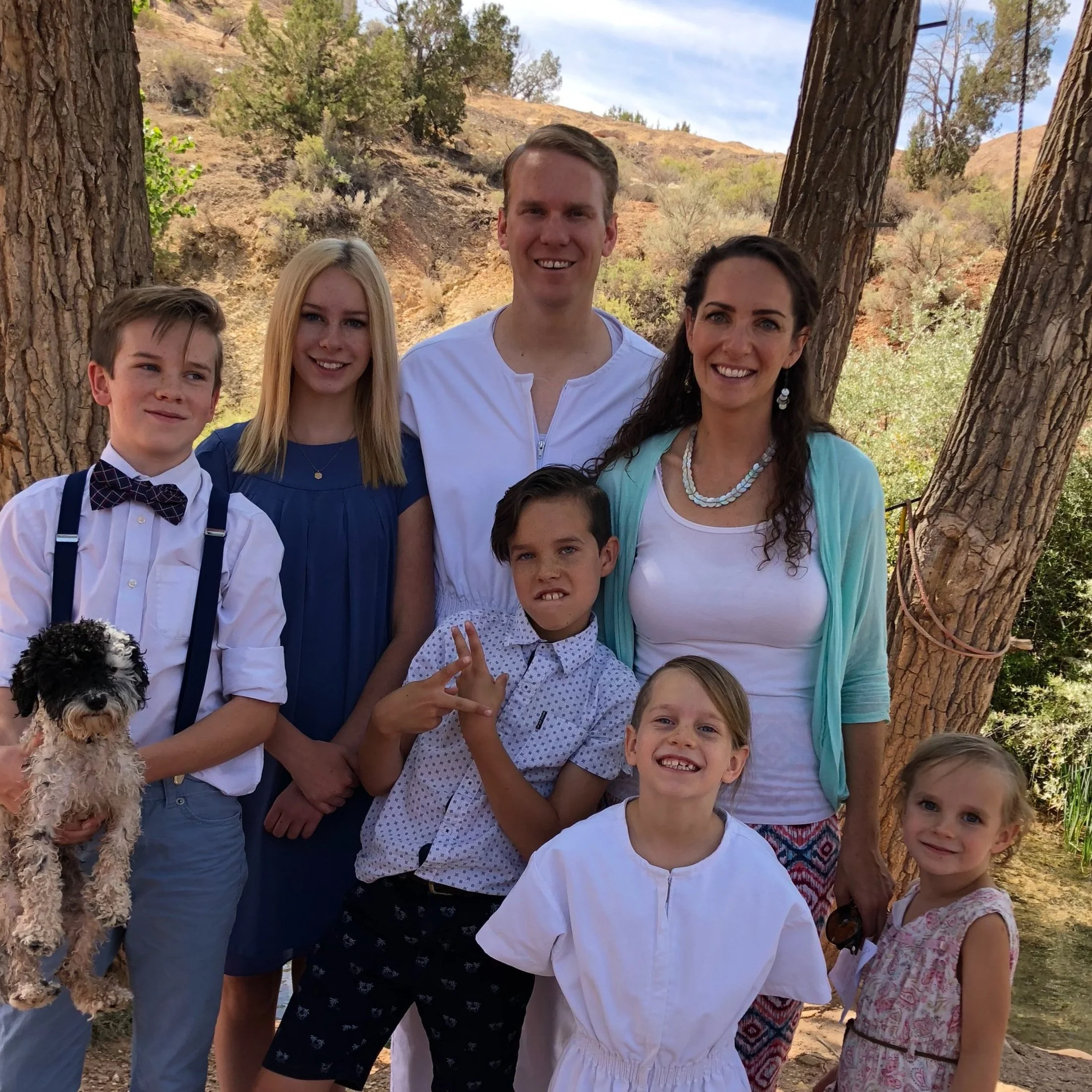
THE HIGGINBOTHAM FAMILY
“As soon as Lu was born, my husband and I were sitting on our bed and looking at this cute little baby with black hair that stuck up in every direction, and we both felt that there was something about this child that we couldn’t quite put our finger on,” says Leah Higginbotham of Highland, Utah. She and husband Dylan are the parents of Olivia – 19, Gage – 17, Nash – 14, Lu – 11, and Lila – 8. Leah says that as Lu (birth name: Lucy) grew, as soon as they could express a preference, Lu was always in boy clothes and wanted their hair cut short. One of Lu’s first sentences when Leah tried to put her toddler in something pink was, “No, I a boy,” as Lu pushed her mother away. Every Sunday was a struggle trying to get Lu into a dress for church. The rest of the week, the Higginbothams allowed Lu to dress as preferred, which frequently attracted comments like, “Oh she’s a tomboy. I used to be a tomboy…” But as Lu grew, instead of leaning away from being a boy, Lu leaned into it even more….
“As soon as Lu was born, my husband and I were sitting on our bed and looking at this cute little baby with black hair that stuck up in every direction, and we both felt that there was something about this child that we couldn’t quite put our finger on,” says Leah Higginbotham of Highland, Utah. She and husband Dylan are the parents of Olivia – 19, Gage – 17, Nash – 14, Lu – 11, and Lila – 8. Leah says that as Lu (birth name: Lucy) grew, as soon as they could express a preference, Lu was always in boy clothes and wanted their hair cut short. One of Lu’s first sentences when Leah tried to put her toddler in something pink was, “No, I a boy,” as Lu pushed her mother away. Every Sunday was a struggle trying to get Lu into a dress for church. The rest of the week, the Higginbothams allowed Lu to dress as preferred, which frequently attracted comments like, “Oh she’s a tomboy. I used to be a tomboy…” But as Lu grew, instead of leaning away from being a boy, Lu leaned into it even more.
Lu’s parents always let them just wear the clothes. For Leah and Dylan, it was not a big deal. Lu also played on all-boy baseball teams. They were obsessed with all sports, actually, as well as Star Wars, playing Lego, and Lu excels at martial arts. “Anything a typical boy would be into, Lu loves doing it.” But for Leah, there was always a hang up with Lu’s hair. She says, “Lu has shiny hair with a white streak – ‘a ghost spot’ -- that runs through it. I kept Lucy’s hair long, and it was always a fight. One time we compromised with a side shave, and I added in a side lightning bolt. As I first shaved Lu’s hair, I started to cry; Lu started to cry. We hugged, and it was a beautiful moment.” Shortly after, Lu turned eight and was baptized, and Leah incorporated the letters CTR into Lu’s hairstyle. A few months later, they shaved Lu’s full head – a big moment for Leah. “And I was okay with it. When I took that buzzer to Lu’s head, I felt a release of emotions. Those golden locks held all those hopes and dreams… and here was a real moment when I could let go of expectations, and let Lu be the person he is.”
The Higginbothams are in a homeschool co-op, and their kids meet twice a week with 30 other families. One week, Lu asked Leah if they could be called Luca at the co-op -- just to try it out. Leah sent the request to the other co-op families who responded with a positive, “Great! Let us know how we can support you.” Leah was touched when a teacher also reached out to say, “Sorry, I’ve slipped up a couple times, but please let me know how I can help.”
Leah says, “That’s where we’re at – this trial period. A grey zone. I usually call them Luca. A lot of cousins and others still say Lucy. Lu doesn’t seem to care. Lu’s middle name is Love, and that 100% embodies this child. They want to be friends with everyone, they love everyone. Lu is generally an easygoing kid. When I ask if they’re bothered by being called Lucy at times, they shrug and say, ‘It’s the name you gave me’.”
Lu’s older sister Olivia, who is heavily involved in theatre, left the LDS church a couple years ago because it was too hard for her to reconcile the stance on LGBTQ issues, having so many LGBTQ friends. Leah says, “She’s a real warrior for Lu and ready to honor any name/pronoun changes.” Leah says, “I’m also now having a harder time going to church and listening to people’s unkind, uninformed comments in classes, but I really want to build a bridge instead of a wall. I want to be in the church to fight for Lu. Lu’s baptism was the most spiritual experience any of us have ever had -- we kind of expected angels to come down singing. It took place on a crystal clear day outdoors in a fresh water stream in a tiny town called Fayette, UT, where my ancestors are from. Right after the baptism, Lu asked, “When can I go in the baptismal font in the temple?” Leah says Lu has been looking forward to that day since, but now is asking – “Wait, I have to get baptized for girls? Why not boys? And why can’t I baptize others like Gage can?” Leah hates that she has to say, “Sorry, because you were born with girl parts.”
But still, this hasn’t dampened Lu’s desire to go to the temple, now just a month away. Leah herself feels both “excited and nervous” for that same moment. Lu wears a three-piece suit to church and “looks so sharp” every week, says Leah. For Dylan, it’s been more of a struggle as his fourth child’s identity doesn’t align with a lot of his firmly held beliefs. But Leah has seen more understanding as of late. She says, “Just this week, for the first time Dylan called Lu by his chosen name of Luca. It was just a ‘Luca, put on your shoes to get into the car’ kind of thing but it was a big deal for me.” Leah says Dylan used to watch a lot of political commentary that was very black-and-white about gender issues, but lately he has tried to “turn off the noise.” Recently, a pundit made a comment that ruffled Leah, and she was happy to hear her husband say, “That guy obviously hasn’t had a gay kid.” Now, Dylan also listens to Listen, Learn and Love and Latter Gay Stories podcasts, and Leah says he practices more of a “the older I get, the less I know” mindset about things.
Leah’s awareness as to the different paths some face started at an early age. She grew up with a younger brother with special needs, including a deformed body and severe speech impediment. Leah says, “I know his spirit is fully intact. And because of him, I’ve worked with lots of special needs people – and I see all these people with temporary mortal bodies that do not match up with their spirits. I think it can sometimes be easy for people to see that some disabled bodies don’t match. But when I look at Lu, I feel the same – not that Lu has a physical handicap, but that Lu’s temporal body does not match up with their spirit. I know that someday everything will be reconciled. In the meantime, I hope people will be kind, and that Lu will find happiness and hope.”
The Higginbotham kids all love and embrace each other, though for some it’s easier than others to understand what Lu’s experiencing. Older brother Gage has experienced moments of discomfort adjusting to Lu’s new name and gender identity, but remains staunchly defensive of Lu regardless. Once, when the Higginbothams were in Arizona visiting family, they had gone to walk around the grounds of the Mesa temple, and to a nearby park. After Leah and Dylan circled the pond, they returned to find Gage with his arm around Lu, both walking to the car. Lu was visibly upset. A mom from the playground ran up to tell Leah “You’re raising your kids right. They stuck up for your kid.” Once inside the quiet sanctuary of their car, the kids shared that a girl on the playground started throwing rocks and screaming profanities at Lu because she’d heard the Higginbotham kids calling Lu “Lucy” while wearing “boy clothes.” Lu’s siblings quickly came to their defense, circling and protecting Lu from the bully. In the car, Lu broke down sobbing, “Why would someone say that? Why would someone do that? I didn’t do anything to her.” Riled, Leah later posted about the incident on Facebook, saying, “You’ve got to choose a side. Are you going to be on the side that’s throwing rocks or standing on the side that’s protecting? This is what our LGBTQ kids face every day. Pick a side.”
When the Higginbothams returned from their trip, their house was covered with hearts, posters, plates of treats, and positive messages that filled Lu’s tank for weeks after in a “Gee Mom, people sure do love me” kind of way. Many of the sentiments still hang today in Lu’s room.
As Leah reflects on what it’s been like to raise Lu, she says, “I had someone tell me once that gay people can’t feel the Holy Ghost, and I have never been so close to punching someone in the face. I was so hurt by that because as I think back on my 21 years as a wife and mother, my top five spiritual experiences all involve Lu. I have seen miracles surrounding this child. I have seen angels protecting this child. I have been given visions that have literally saved Lu’s life. So I know for a fact that God is very much involved in Lu’s life. Lu feels the Holy Ghost. Lu knows they’re a child of God. This is what reassures me as I face all the fears and the unknown future.”



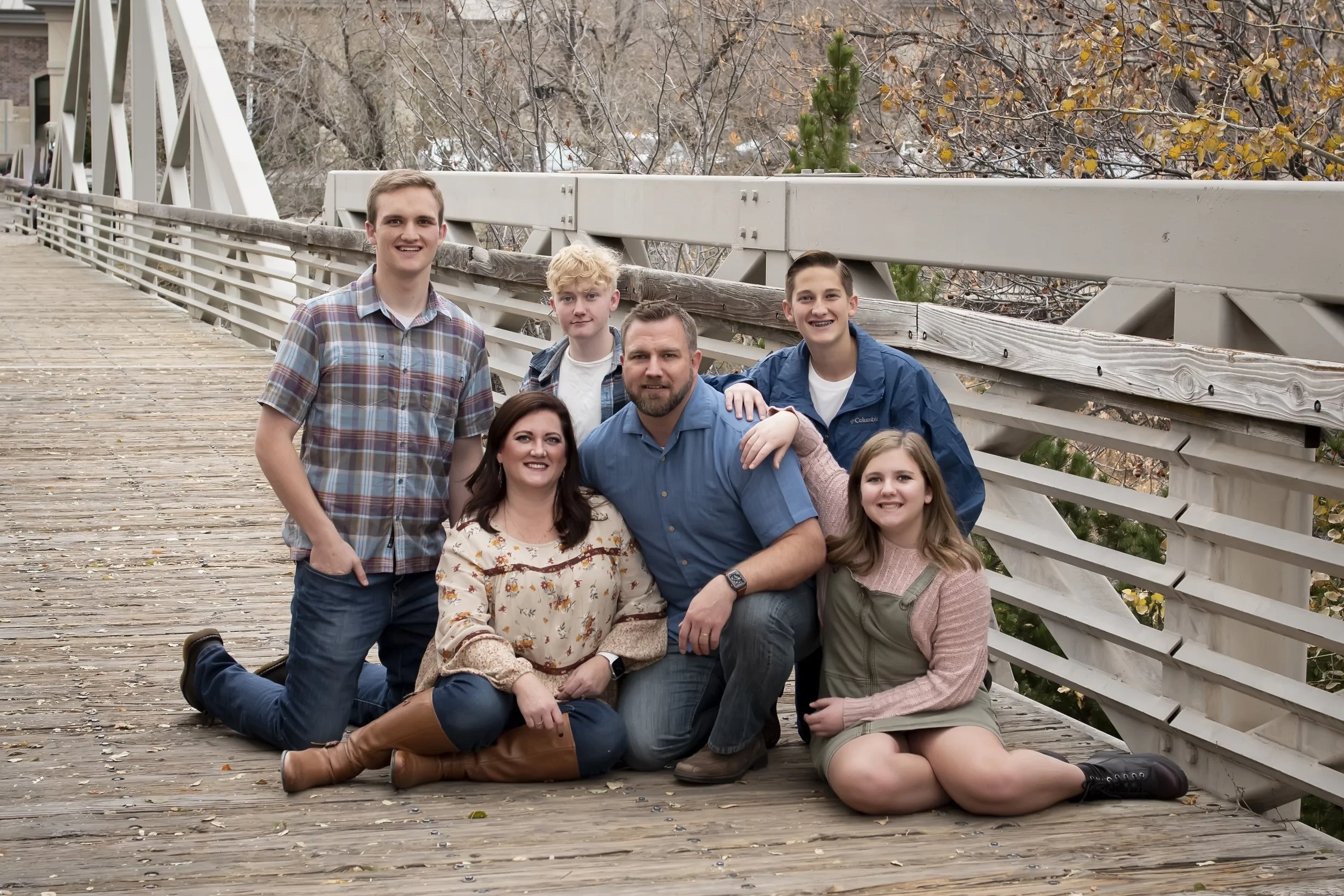
THE KELLY FAMILY
“When he was 13, Aiden, (who went by Emma at the time), came to me on a mundane Saturday morning, with a ghostlike expression and journal in hand. I was working in the kitchen; my husband Joseph was folding laundry. Emma said, ‘Mom, I need you to look at something. Can we go somewhere private’?” Annalee was then led outside where she silently read the confessions of her second born child who had she had always known as her little girl. She read Emma’s words that she had “no attraction to boys whatsoever,” and confession that she was gay. Annalee read all this silently, but inside felt like she was screaming. “I didn’t see this coming.” (continued)
“When he was 13, Aiden, (who went by Emma at the time), came to me on a mundane Saturday morning, with a ghostlike expression and journal in hand. I was working in the kitchen; my husband Joseph was folding laundry. Emma said, ‘Mom, I need you to look at something. Can we go somewhere private’?” Annalee was then led outside where she silently read the confessions of her second born child who had she had always known as her little girl. She read Emma’s words that she had “no attraction to boys whatsoever,” and confession that she was gay. Annalee read all this silently, but inside felt like she was screaming. “I didn’t see this coming.”
Annalee and Joseph watched as Emma soon after cut her hair and expressed a desire to dress in a more masculine way. As they grieved the loss of the future they anticipated their child would have, Annalee went to a Northstar conference. New in her journey, she wondered what they had done wrong, and how could they help their child feel their love. At the time, Annalee and Joseph had no idea that another unexpected announcement would be coming. A few years later, (then) Emma stayed home from school, feeling sick, and confessed that, “My brain does not match my biological sex. I want to use he/him pronouns; I like the name Aiden.”
Annalee says “I had just digested him being gay; I didn’t fathom he might also be transgender.” For LDS-raised Annalee, everything up until that point had fit into neat little boxes. She was a returned missionary, college graduate, married in the temple to another RM, two-time Young Women’s president and mother of four: Josh – now 21, Aiden – 19, Caleb – 16 and Lizzy – 14. She says she had always been the type of person who saw things as black and white, and “used to feel being gay or trans was a choice.” Annalee has a gay sister who she always believed had chosen this -- to the extent that she didn’t invite her sister’s girlfriend into her house, saying she “didn’t want that modeled for the kids.” Before it was her own child who had come out, Annalee used to wonder, “Why would anything go against the plan God has for His children?”
But it wasn’t until Annalee saw Aiden writhing on the floor, clawing at his chest, hating his body and assigned gender, that it hit her – why would anyone choose this?
Ever since Aiden first came out as gay, the Kellys have always been on the same page as a couple, in putting their family first. When their son told them he’s transgender, they did wonder if it might be a phase. But as it became clear it was more than that, together they mourned the loss of their child’s given pronouns, name and identity, and moved into full love and support mode. She says, “I hate that it was Aiden’s suffering that finally softened my heart. I’ve learned line upon line that Aiden is who he says he is, and I know him now fully as my second born son. We know that him leaving church is what it is, and he needed to do that to find peace. Through his suffering, I have grown closer to Jesus Christ more than I have from any other element. Jesus has walked with me as I’ve walked with Aiden, and He’s taken me to other beautiful, lesser-known corners of His vineyard.”
From Aiden’s perspective, he says his childhood experience probably sounds similar to those of most queer kids. “I knew I was different from a young age; I just didn’t have the language to describe why, having grown up in the environment I did.” After Aiden came out as gay, he still continued to question his identity, and it was through social media that he finally figured out exactly what he was experiencing. “I found an account of a transgender person and scrolled through posts from their history to their transition to their current state and something finally felt so right. I thought, that’s me! That’s who I am. Once I learned the term ‘transgender,’ I KNEW I was a boy.”
As a child, Aiden says he loved to play pretend, and always cast himself in a male role. He loved action figures, and always chose playing with Ken over Barbie. He’s grateful his friends at the time just went with it. But around the age of 15, Aiden says, “Once I realized what I was, it wasn’t something I could keep to myself if I wanted to keep living. I felt so dark, and knew if I couldn’t be myself, I would die. I just felt that way. Today, if I had to live as a girl, I’d be dead.” And indeed, it was a loving bishop who reassured Annalee back when the family was struggling with everything that “I’d rather have a transgender son than a dead daughter.”
Once Aiden’s parents got on the same page with him, he began transitioning. In his sophomore year, he had to leave high school for a trimester for mental health reasons; and when he returned, he found his former friends weren’t there for him anymore. He reasons that this drifting away partly had to do with him also stepping away from their church community. But Aiden quickly became involved in his school’s drama program, and for the next three years, he says, “That was my home, and I made the best friends I’ve ever had. They didn’t even hesitate when I said I was trans. They loved me for me. It felt so nice to be loved without a second thought. It will always mean so much to me.”
After high school graduation, Aiden moved to West Jordan, UT, where he is now thriving. He loves the bigger town atmosphere. “I’m happier than I’ve ever been,” he says, and he laughs that he now often sings along to Billie Eilish’s song “Happier Than Ever” with authenticity. Aiden loves working both at the box office at the U of U, and Culvers. He has reconnected with some friends he made at Northstar, and they share an affinity for filmmaking -- a career he’d like to pursue someday. He has dated a few girls, and would like to find a relationship in the future, but says he understands that, “It’s complicated to find girls attracted to a transgender male. But someday I hope to find a girl who likes me for me.”
In retrospect, Aiden says he is grateful for the good times he experienced at church – girls’ camp, friends, and some especially kind and loving Young Women’s leaders who really showed up for him during hard times. “There was nothing anyone could have done differently – I just couldn’t be there anymore. At first, I didn’t want to leave, but some of the teachings were really harmful. I wouldn’t go back; but it wasn’t all bad,” Aiden says.
Aiden respects the relationship and involvement his parents still have with the church, and they admire the maturity he shows in not questioning their faith as a lack of respect or love for him. Annalee says, “He knows I have questions about the LDS culture and stuff, but he know this is where we need to be.” And Aiden also knows they are always there for him.
For many years, the Kellys have co-hosted a monthly support group for LGBTQ+ people and families in their Idaho Falls area along with the (recently featured) Taylor family. Open Arms typically welcomes a standing room only-sized crowd as dozens come each month to hear and share stories and find acceptance and love. Aiden lauds the attendees as “some of the kindest people in the LDS community – I wish everyone was that loving.”
Annalee takes great comfort in the Open Arms group who has embraced them while creating an equally safe space for others. She also appreciates that she has come to a place where she can maintain a firm faith in God and also understand her son’s divinity. “I celebrate that I have my Aiden – he’s taught me so much, and I wouldn’t trade those tears of the past for anything. I’m so grateful for everything I’ve learned.”
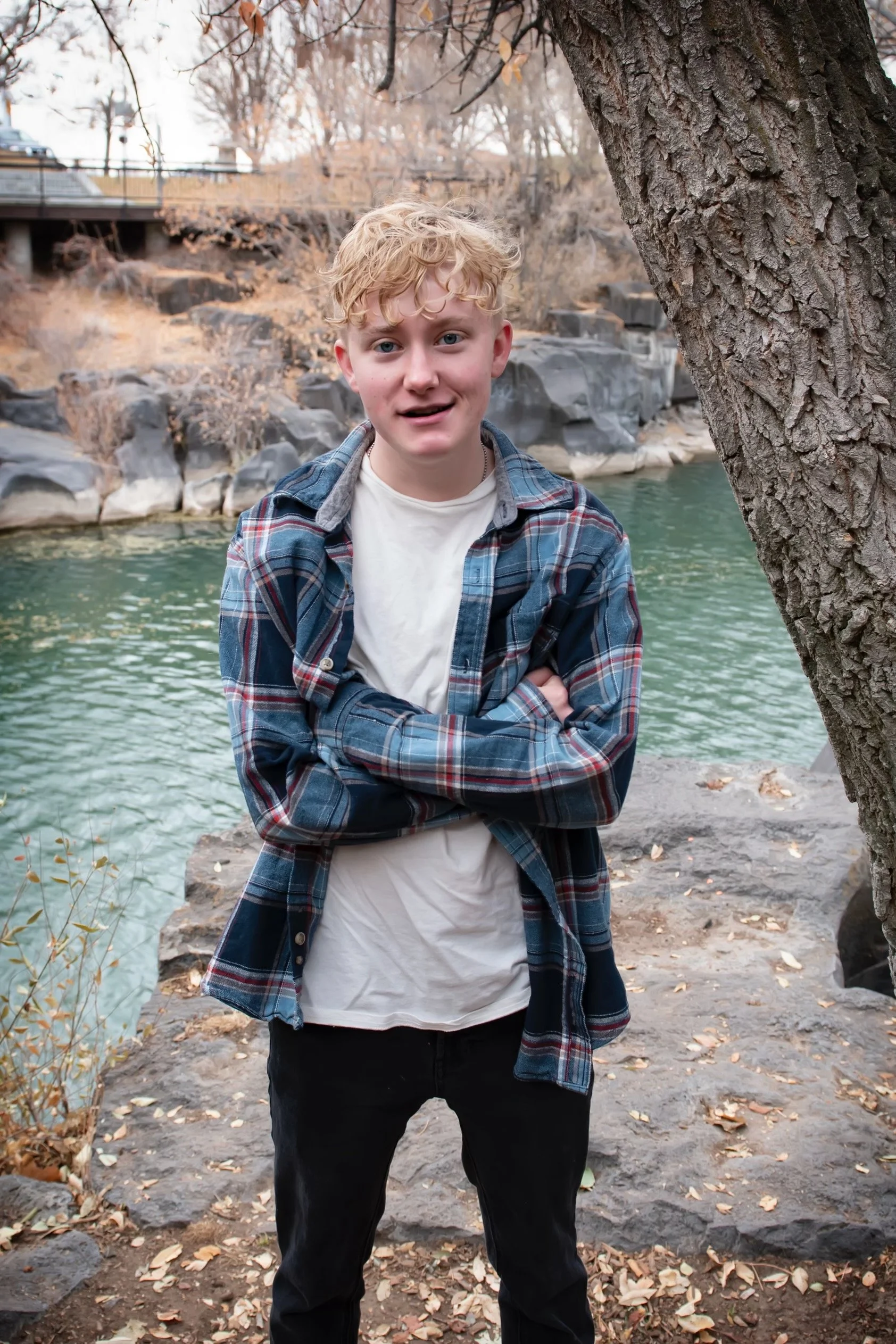

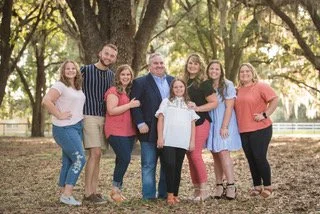
THE HUNTER FAMILY
John and Jenie Hunter of Brandon, FL had been trying to have children for some time when the opportunity presented itself to adopt a baby boy from a teen mom in Tennessee. They were ecstatic to bring their son Nicholas (now 24) home, and further thrilled when they were able to later have five biological daughters, Grace – 21, twins Ellie and Sarah Jane – 19, Mary – 17, and Kate – 12. As they raised their kids, John and Jenie noticed other differences about Nick -- besides being the oldest and only boy. They wondered how much nature vs. nurture played into things. “He was always exceptionally artistic,” says John. “He’d come to me and say, ‘Dad, draw me the ship from Star Wars,’ and I was like ‘Uh…,’ and then he’d proceed to draw it out with incredible detail. He saw the whole world in lines and shapes. He was always so creative. We love that about him.”…
John and Jenie Hunter of Brandon, FL had been trying to have children for some time when the opportunity presented itself to adopt a baby boy from a teen mom in Tennessee. They were ecstatic to bring their son Nicholas (now 24) home, and further thrilled when they were able to later have five biological daughters, Grace – 21, twins Ellie and Sarah Jane – 19, Mary – 17, and Kate – 12. As they raised their kids, John and Jenie noticed other differences about Nick -- besides being the oldest and only boy. They wondered how much nature vs. nurture played into things. “He was always exceptionally artistic,” says John. “He’d come to me and say, ‘Dad, draw me the ship from Star Wars,’ and I was like ‘Uh…,’ and then he’d proceed to draw it out with incredible detail. He saw the whole world in lines and shapes. He was always so creative. We love that about him.”
Nick also went through phases of becoming consumed with random passions – tractors, diamonds, skeletons, Faberge eggs. As he grew, his parents noticed more differences between him and their other kids and they started to wonder if he might be gay. When Nick was 14, Jenie could tell something was weighing on him and they started going to counseling. Shortly after, she says, “I went to the temple and had an impression where the Lord told me, ‘Nick’s gay.’ I came home and told John, and he believed me.” They decided Jenie would take Nick on a date to discuss it. They went to a museum, and at lunch, Jenie asked her son, “Nick, is this something you’re dealing with?” Nick started crying and said he was so relieved Jenie had asked him, and was so accepting of his affirmative response. He then shared he’d been so nervous his parents would kick him out of the house, based on what had happened to other kids who he had read about online. Jenie went home to John that night and confirmed their impressions were real. John says, “While it didn’t hit us out of the blue like it does for some families, it was still hard. Life was difficult. You could tell Nick was in emotional pain. We were just happy we could have a real discussion about it all.”
Growing up the only son in an LDS household, John says there were built-in expectations that your kid would do this or that, or hit this benchmark, that he’s sure Nick felt the pressure of. The family pivoted as they realized some of those things might not lie in Nick’s future. Jenie says, “We didn’t know a lot of people with gay children and how we should handle everything. We were making it up as we went. We made a lot of rookie mistakes. One time, we even suggested a weekend camp he could go to and maybe he’d come back differently.” John acknowledges there’s both a learning and grieving process all parents of LGBTQ+ go through as they readjust their expectations and preconceived notions of what parenting their kid might be like. Jenie says in hindsight, she’s not sure whether it was the chicken or the egg, but when Nick turned 16, he really started struggling with emotional issues. He started self-medicating with drugs and spent a year in a residential treatment center that initially was a very difficult thing for all the family, but he now credits the experience with saving his life.
The Hunters are very open with their family’s journey, and they say their Florida ward family has been supportive and accepting. Back in high school, Nick started dating guys and his parents were fine with this, as long as he adhered to the same standards they expected of their daughters, many of which were from the For the Strength of Youth pamphlet. They laugh, remembering one time Jenie drove an hour away to meet a guy Nick had a date with just because they had a family rule that they had to first meet all their kids’ dates. John says, “Just because you’re gay, it doesn’t mean you have a different set of standards.”
Jenie was an early morning seminary teacher, and Nick was her best student. Now, as a student at UVU, he attends church “occasionally.” He says things are a little harder culturally for him in Utah, but likes to go back to his home ward in Florida with his family. His parents are impressed how Nick is as much an ally as LGBTQ himself. He’s open with sharing his story as he believes, “If I can help anyone, I’ll do it.” The Hunters have always maintained a strong relationship with lots of love and support, even during his tough years. “Our love is not transactional.” And John and Jenie love that their daughters are the biggest allies and maintain a close relationship with Nick. Both Grace and Sarah Jane, who now attend BYU, are in the same town with him and get together often.
Nick loves his Savior Jesus Christ but chose not to serve a mission because he didn’t feel comfortable teaching all the doctrine. He wants a happy marriage partnership like his parents, and they likewise want him to find his person. Jenie says it’s “heart-breaking” to imagine him living his whole life alone. While Nick’s told his parents a dream of his is to have all his future kids baptized and to have his family in the LDS church, his parents say he still finds it challenging to balance his testimony and beliefs versus other positions of the church. Counseling has been a positive addition to his life, and he is now studying psychology to become an art therapist for kids. He’d like to specialize in helping LGBTQ+ kids.
Currently, while attending school, Nick works as a preschool teacher in Park City, and his parents say he loves the unconditional love the children he teaches show him. They also say he continues to be an amazing artist: “He can turn garage junk into a sculpture we could sell. He can build a robot out of a pool noodle and a broken chair.” John admits it’s a continual process for he and Jenie to build Nick up and reassure him they love him. “We tell him we’re here to support him on his journey and can’t even begin to understand how hard it is. But no matter what, we’ll stand with him. We loved the part in Tom Christofferson’s book about how Tom’s mother said that how the family treats Tom and his partner (of the time) will let all the family members know that nothing can ever change the way their parents feel about them. I’ve had to learn and grow to be able to recognize there’s not just one way, or perhaps my way is not always the only way. There are lots of paths – some zigzag, some have a lot of detours and scenic overlooks, but you eventually make it there.”
John says he loves all the things that are different about Nick, because they help John himself to be a better person. “I’m changing, I’m learning, I’m growing. I have more charity, more understanding, more empathy. This all impacts my journey, too. He’s helping me become who the Lord wants me to be. Having an LGBTQ child allows us a great canvas to grow with. You learn more how the Savior treats everyone. I’m a better person because Nick’s my son.” These lessons have helped John greatly through his current service as stake president as he counsels others who are met with various challenges and growth experiences. He strongly agrees with President Nelson that anytime we show love to another, we are helping people feel the love of their Savior and assisting the work of exaltation.
Jenie also says being Nick’s parent has been a privilege, and she encourages other mothers in her position to “embrace the calling.” When she first understood this was to be her path, Jenie said she barely knew anyone else in her same position, so she went to a good life coach who helped her navigate. She then got certified to coach herself, and she felt the Lord pushing her toward helping other LGBTQ families. You may now recognize Jenie as a familiar face at Lift and Love where we are lucky to have her help Allison run the podcast, support groups, and coaching program. In 2019, when Jenie first stumbled upon @liftandloveorg, she says, “I was impressed that here was a place I can work to keep people tethered to the Savior while navigating their journey as an LGBTQ family. These are some of the most amazing moms I’ve ever met. I want to help people stay connected to Christ and the gospel; He’s our partner in this.”
The Hunters have helped start an LGBTQ FHE group in their Tampa, FL-area stake. John is buoyed by the thought that “there is room in the choir for everyone.” He says, “We have to continue to make everyone feel more welcome at church. It should be diverse. We need and want everyone. Anytime someone wants to make Christ a part of their life, we want them.”
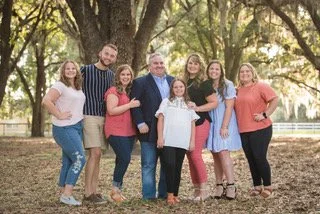
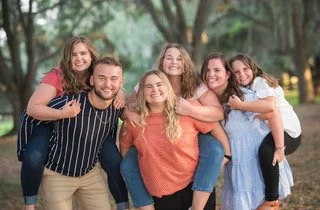

THE TAYLOR FAMILY
“Our story starts with my brother’s, really,” says Amy Taylor of Idaho Falls. It was a cold Christmas Eve night in 2003. Amy’s husband Brooks was working the night shift at the sheriff’s office, so her fresh off his mission brother, Jamison came over to help Amy prep Christmas for her young kids. Once the kids had gone to bed, Jamison opened up to Amy. “He confided he’d been experiencing what he, at the time, called same sex attraction. I was completely surprised; it’s nothing I had ever considered. But in that moment, it changed everything I’d ever thought about gay people. I just felt bad he’d been living alone with this for so long. It made me feel closer to him and I appreciated him telling me. He asked me not to say anything because he planned to change his orientation, and didn’t want anyone knowing he had struggled with SSA,” Amy says.
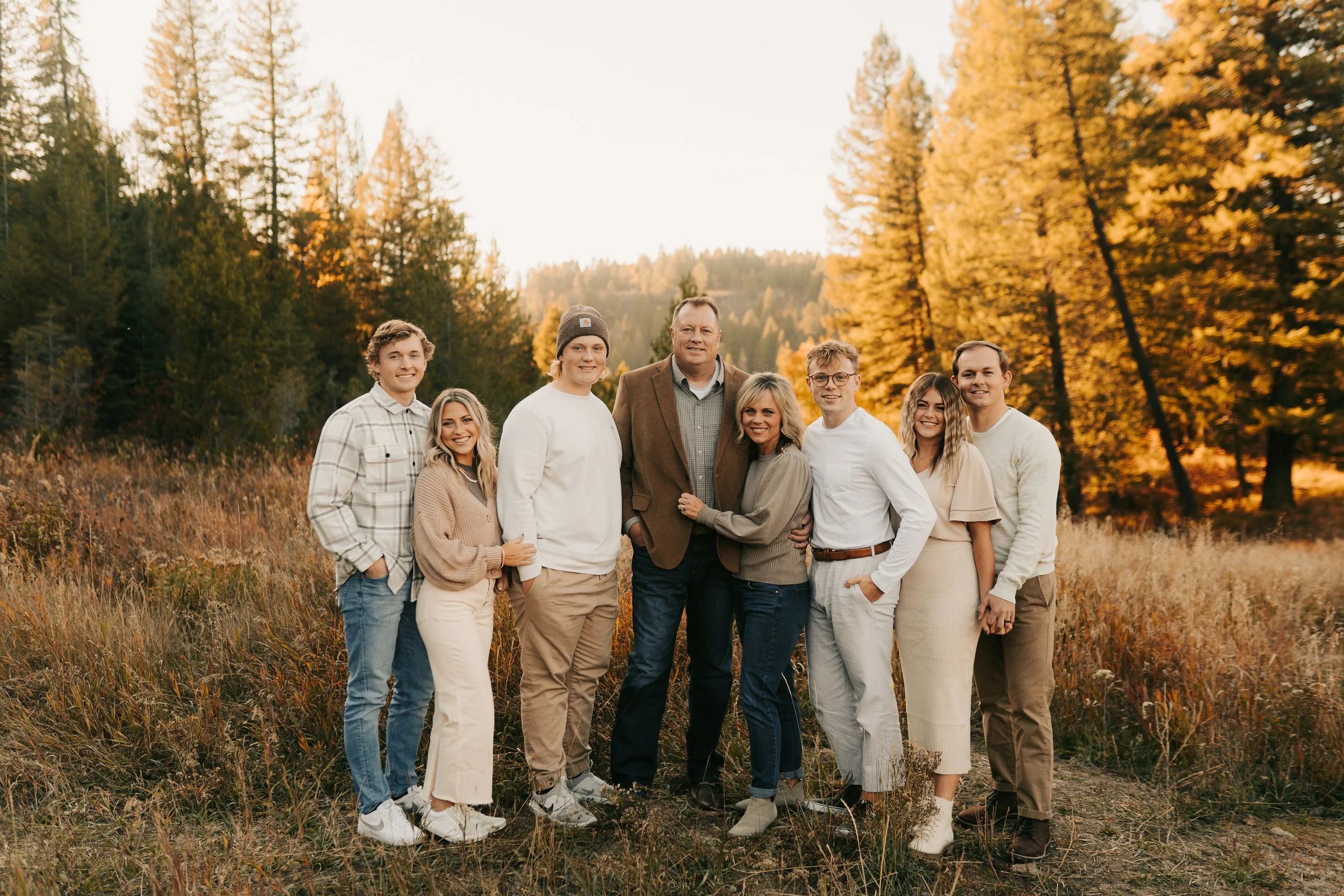
“Our story starts with my brother’s, really,” says Amy Taylor of Idaho Falls. It was a cold Christmas Eve night in 2003. Amy’s husband Brooks was working the night shift at the sheriff’s office, so her fresh off his mission brother, Jamison came over to help Amy prep Christmas for her young kids. Once the kids had gone to bed, Jamison opened up to Amy. “He confided he’d been experiencing what he, at the time, called same sex attraction. I was completely surprised; it’s nothing I had ever considered. But in that moment, it changed everything I’d ever thought about gay people. I just felt bad he’d been living alone with this for so long. It made me feel closer to him and I appreciated him telling me. He asked me not to say anything because he planned to change his orientation, and didn’t want anyone knowing he had struggled with SSA,” Amy says.
That’s when Amy first defined herself as an ally. She watched her overachiever brother who owned his own business pay his way through therapy, intent on changing his orientation because he was intent on having a wife and family. She watched as he systematically dated women, and he even became engaged. But finally one day, he approached Amy and Brooks and said, “This isn’t working. I don’t think I can be with a woman. I don’t think this therapy works. The more I learn about others’ stories, the more I realize therapy might work for awhile, but people rarely change their orientation. And if they do… well, it’s not working for me.” Jamison decided to be celibate – dating women was too stressful. Amy says, “And he didn’t want to do that to a woman, make her live in a relationship where he’s not attracted to her.” But that goal took Jamison down a dark path of hopelessness. It wasn’t until he came out via video, started dating men, and learned to accept himself that they saw his burdens lift. Amy says, “We were learning as he was. I was reading everything I could get my hands on in the LDS-LGBTQ world. I thought there was a path for him in the church because I thought there was a path there for everyone.”
Simultaneously, the Taylors’ extended family were watching Amy and Brooks’ two-year-old son, Jackson, develop an affinity for the performance stage they had built in their home. Following the lead of older sisters Abby (now 24) and Hally (now 22), Jackson would don their dance costumes and prance around with them. “And he was so good at it!” Amy exclaims. Several of their relatives were quite humored by his performances, but their laughter did not sit well with Brooks. The truth is, he and Amy (and Jamison) already sensed what this might mean – Jackson’s preference for tutus over the superhero costumes they had bought him – and Brooks didn’t want anyone mocking his child.
At the time, Jamison shared something he was being told in therapy: that boys benefit from the masculine influences of their fathers. Eventually, Brooks eased back on working two jobs while Amy stepped back into the workplace so Brooks could spend more quality time with Jackson (now 20) and younger brother Lincoln (now 15) camping, motorbiking, hunting “and other guy stuff.” But all along, as Jackson grew, his parents noticed his struggles to assimilate with his peers. Something was just different.
While Jackson liked active activities like climbing, tumbling, and gymnastics, he turned to dressing in his sister’s costumes while they were away, so they wouldn’t become upset. He didn’t really fit in with the guys in their area, but young girls also didn’t always want to play with boys. When Jackson was six, he asked his mom, “Is it bad because I think a boy is cute?” At the time, Amy tried to steer him away from this train of thought by calling it admiration and emulation, not attraction. Looking back, she understands why her reframing bothered her son at the time.
A stake in the area was hosting a special meeting for LGBTQ members and their families, with Ty Mansfield and Fred and Marilyn Matis speaking. With some trepidation, Amy and Brooks decided to go. Their son was not out – not even to them yet – but as they walked into the packed building, Amy said she had one of the most spiritual impressions of her life: “This is where you need to be. These people belong here, and you belong here.” She was deeply moved in a breakout session as the Matises, who had lost their gay son to suicide, reiterated the importance to “just love our kids!” When Amy asked, “How can we do this, when they teach it’s wrong?” The Matises said, “You just do.”
That was Amy’s first moment of cognitive dissonance. At the meeting, they happened to sit behind a group of extended family members who had a gay sibling who had died of AIDS. It was a surprise when the closing prayer was announced, they realized it was another gay family member, their son and nephew, and they were all there to show support. From that moment on, the Taylors felt strongly, “This is our place. This is where we need to be advocating.”
Now in high school, Jackson went through a phase where he tried to boost his masculinity by hanging out with football players. “It was like his last stand of trying to be straight,” says Amy. “We didn’t know until later he was making deals with God and pleading things like, ‘I’ll do anything you ask if you make me not gay…’ and setting arbitrary deadlines for taking his life if it didn’t work out.” Finally, at 14 years old, Jackson came out to his mom first, sobbing, “I don’t want to be gay.” She just held him and said, “I know, but it’s going to be okay.” He then told Brooks and his siblings, knowing his entire family would be supportive and loving. And they were. It was another year before he came out to friends via a video, much like his uncle’s. That was the last night many of his so-called friends ever spoke to him. Others would still talk to him, as long as he avoided speaking of his orientation. Of their ultra-conservative, LDS community, Jamison advised the Taylors, “You need to move if you want him to have normal teen years.” But because of their jobs and because nothing is a given anywhere, moving wasn’t really an option.
They took Jackson to an Affirmation conference, where for the first time he felt he fit in and made instant friends. They went back to other events, and as Jackson realized the kids around him were amazing, awesome, cool people, that maybe nothing was wrong with him either. In high school, he joined the cheer team, which he loved, but the culmination of his senior year competitions and graduation was diminished by the effects of the 2020 Covid-19 shutdown. Jackson is now a sophomore at UC Berkeley, studying molecular and cellular biology with plans to be a neurosurgeon.
At Berkeley, he has maintained his love for the Savior, saying, “Real Christlike love is freely given and never conditional. It’s hard for me to wrap my head around why church leaders would cause harm to individuals. Hopefully they can try to empathize more, to understand.” Jackson recognizes his upbringing was unique in many ways, namely in that he had “the gold standard of parenting.” He says he never felt anything but love and support from his family, and knew even if church and school were torture chambers, he could go home and feel safe. He doesn’t resent his parents’ activity now, saying, “If they can make church a safe place for kids who don’t have that at home, that’s amazing. Sometimes I wish I could do that, and I’ve felt guilty for not being there – but I just can’t. I have a big pain-baby where the church is concerned, lots of trauma. But at the end of the day, it’s about the doctrine, and not the people, who I struggle with.”
He has now found his tribe in a place where he says people value people and are against any organization that spreads hate or harms others. The Berkeley LDS ward even dedicated a whole month this summer to LGBTQ lessons and support. “I went from an organization-first mentality, to a people-first mentality.”
Meanwhile back home, Amy is now her ward’s Relief Society President and Brooks serves on the High Council. They feel church leaders need LGBTQ families to train them, and have embraced opportunities to offer their leaders advice. Amy says she “probably brings up Jackson weekly, and it probably drives everyone crazy, but I don’t care. I’ve sat in church so many times, so angry, and I’ve thought before, why am I here? And then I got called to be the RS President. And I figured, maybe this is my time to serve; maybe they need me.”
The Taylors have since built a new home, with a specially designed space for a new kind of gathering: Open Arms, their monthly LGBTQ support group. Now five years strong, it’s modeled after a similar one their family members run in Arizona. Open Arms has attracted speakers including Tom Christofferson, Ben Schilaty, Charlie Bird, Richard Ostler, and audiences of over 100. The group started when a family friend - a stake YW president - called Amy for advice, as her daughter had just come out. Amy’s words to her now resonate regularly with so many other parents in their position, “Just love her. Just do whatever it takes to keep your child alive.”



THE CHAPMAN FAMILY
“It wasn’t a shock,” Susan Chapman says of her 21-year-old daughter, Sarah, coming out earlier this year. In fact, when Sarah was in high school, Susan tried to broach the subject herself with a “Hey, so…” Sarah would laugh and tell her friends, “My mom thinks I’m gay.” Susan now knows Sarah wasn’t ready to admit it just yet. Brought up LDS, Sarah was under the impression that perhaps it was something that might go away after she served a mission. But during her mission, Sarah realized this is who she is and it isn’t going anywhere. When she returned, she thought she might date guys, but quickly realized that also wasn’t going to work out. Shortly after, Susan visited her daughter for her birthday, and Sarah shared a particular Questions from the Closet podcast episode with her mom. Susan says she isn’t proud of how she responded at the time, and the next day apologized for not being as open as she would have liked. “When I went home from that trip, I really realized: my daughter is gay. Heavenly Father was preparing me.” She asked Sarah if anything was troubling her. Sarah replied, “I’m just dealing with some stuff.” Susan said, “You might as well tell me because I think you’ll feel better once you do. I already know, but you’re going to have to tell me.” Sarah said, “How did you know?” Susan said, “God told me.”…
The truth is, they were both dealing with a lot of really heavy stuff. In November of 2020, Susan’s husband Ryan had been diagnosed with colon cancer. He had lost his own father to a different form of cancer a year prior, and Ryan’s prognosis also did not look good. Sarah asked her mom not to tell her dad about her orientation, but Susan did – an action that upset her daughter, and the two did not speak for a few days, which was very out of character for them. But Susan needed the support of her spouse – her best friend, and most importantly, she knew that Sarah would need to know she had her dad’s support while he was still with them, if things were to go south.
Indeed, Ryan instantly expressed unconditional love for his daughter, and his own previous ideologies about what it meant to be gay changed on a dime once it hit home with his own daughter. Susan says he told her that up until that point, he wanted to believe it was a choice -- that if someone did not want to be gay, they could choose not to be. To each his own. But now, he knew that he had misunderstood…
“It wasn’t a shock,” Susan Chapman says of her 21-year-old daughter, Sarah, coming out earlier this year. In fact, when Sarah was in high school, Susan tried to broach the subject herself with a “Hey, so…” Sarah would laugh and tell her friends, “My mom thinks I’m gay.” Susan now knows Sarah wasn’t ready to admit it just yet.
Brought up LDS, Sarah was under the impression that perhaps it was something that might go away after she served a mission. But during her mission, Sarah realized this is who she is and it isn’t going anywhere. When she returned, she thought she might date guys, but quickly realized that also wasn’t going to work out. Shortly after, Susan visited her daughter for her birthday, and Sarah shared a particular Questions from the Closet podcast episode with her mom. Susan says she isn’t proud of how she responded at the time, and the next day apologized for not being as open as she would have liked. “When I went home from that trip, I really realized: my daughter is gay. Heavenly Father was preparing me.” She asked Sarah if anything was troubling her. Sarah replied, “I’m just dealing with some stuff.” Susan said, “You might as well tell me because I think you’ll feel better once you do. I already know, but you’re going to have to tell me.” Sarah said, “How did you know?” Susan said, “God told me.”
The truth is, they were both dealing with a lot of really heavy stuff. In November of 2020, Susan’s husband Ryan had been diagnosed with colon cancer. He had lost his own father to a different form of cancer a year prior, and Ryan’s prognosis also did not look good. Sarah asked her mom not to tell her dad about her orientation, but Susan did – an action that upset her daughter, and the two did not speak for a few days, which was very out of character for them. But Susan needed the support of her spouse – her best friend, and most importantly, she knew that Sarah would need to know she had her dad’s support while he was still with them, if things were to go south.
Indeed, Ryan instantly expressed unconditional love for his daughter, and his own previous ideologies about what it meant to be gay changed on a dime once it hit home with his own daughter. Susan says he told her that up until that point, he wanted to believe it was a choice -- that if someone did not want to be gay, they could choose not to be. To each his own. But now, he knew that he had misunderstood.
Susan said that while their community rallied around them through Ryan’s public battle with cancer, she was also privately processing the confirmation of Sarah’s reality. During those first few days, Susan got her hands on every source of information she could and listened to many Audible books to help her understand and prepare. She had a strong impression that this was something her daughter had signed up for in the pre-existence: primarily to advocate for others and create change. The family always joked about their daughter’s leadership and pioneering vision: “Sarah for President,” they’d say. Sarah is the second oldest of siblings Jared -23 (who is married to Brooke), Emma – 19, Joseph – 17, Joshua – 15, and Jacob – 12. As a child, she was very athletic, loving volleyball and basketball, and very intelligent. “I cannot match wit with her. She’s always going to win an argument, so I’ve learned not to argue with her,” laughs Susan.
Her mother also lauds her genuine compassion for others. The Chapman family had two foster kids, ages 4 and 9, when Sarah was in high school and Susan watched Sarah develop an immense compassion for them and frustration with “the system.” Now she’s seeing that compassion shift to another cause: LGBTQ+ equality. “I’m excited to see what she does with it, because she genuinely feels called to help others.” And in turn, so does Susan as her mother. “I guess I must have signed up for this, too.”
Susan is grateful for a predominately supportive local church community who have reached out with love. She is grateful a friend in her Tuscon, AZ ward is now trying to start an LGBTQ support group. Susan’s nephew is gay, so it was “a moot point” for her side of the family, who’ve already been down this road and fully support Sarah. Susan says it’s been nice to see Ryan’s side of the family also show love.
When deciding to come out publicly in a recent Instagram post (@s.chappity), Sarah first consulted Ben Schilaty for advice, and she appreciates those like him who have been open about their orientation. Sarah longs for positive, LGBTQ female role models in the church, and is on track to be one herself. She is employed by the LDS church in a teaching capacity, and is grateful she has been told by her supervisors that she should live her life with authenticity.
Susan says that Sarah has a deep understanding that she is a child of God and that He loves her immensely. She loves sharing this knowledge with her classroom, and hopes to make others in similar positions feel God’s love for them. The first time she acknowledged she’s gay to a class, Sarah said she felt like she was going to throw up, but she felt comforted seeing that a few in the room gave her subtle thumbs up signs. She’s not sure what the future holds, but for now, she feels called to stay in the church and share the message that people like her are loved completely and unconditionally by their Heavenly Parents.
By fully supporting her daughter, Susan says she is also on board to fully support whatever actions and life steps Sarah takes down the road. “I don’t want her to ever be afraid to tell me if she starts dating, or kisses someone. I want us always to be open and close.” Susan, who is crafty, was more than happy to make a fall rainbow wreath that hangs on their door with pride. Several of her friends (of other Christian faiths) have told her how impressed they are with her daughter sharing her truth, and how the family’s love and support have been positively modeled by them as members of the LDS faith. “I think we’ve come a long way, but we’re still learning,” she says. For other parents who may be struggling, Susan offers the wise advice, “Your child is still your child; they didn’t change. They’re the exact same person they were before they told you. So this shouldn’t change anything. I know some parents might feel shocked at first – and I try to remember that. Though, I’m grateful I was prepared and wasn’t totally shocked.”
Susan says there is some learning she observes that needs to take place with certain leaders so that they might be more inspired to create a safe space for our LGBTQ brothers and sisters. “The leadership sets the tone for the ward. So as leaders, we must show love and support. The youth are always listening, and when you’re gay, you’re on hyper alert – you know where you’re safe, and where you’re not. You want to create a ward, stake, and seminary class where you know you’re safe. I worked with the youth, and they knew they were always safe with me.” Susan also wants people to know there is a better way to respond when someone comes out to you. Before Sarah hit send on her post, Susan was comforted knowing she had friends on standby ready to respond with, “We love you. We support you. Thank you for sharing this part of you with us.” She also said there were those who didn’t respond at all and who seemed to avoid Susan the Sunday after her daughter’s post. “You notice.” But overall, they are very optimistic about Sarah finding her place and making change.
On August 23, 2021, Ryan Chapman succumbed to cancer, with his loving family at his side. Susan says that in hindsight, both she and Sarah are grateful that Susan told Ryan what she did when she did, because when he followed up with Sarah shortly after, he was still in strong enough health that their conversation was deep and meaningful. And now, Sarah will forever know she has her father’s full love and support. Susan is also grateful to know that Ryan can and will support Sarah in more ways than they will ever know from the other side.