lift+love family stories by autumn mcalpin
Since 2021, Lift+Love has shared hundreds of real stories from Latter-day Saint LGBTQ individuals, their families, and allies. These stories—written by Autumn McAlpin—emerged from personal interviews with each participant and were published with their express permission.
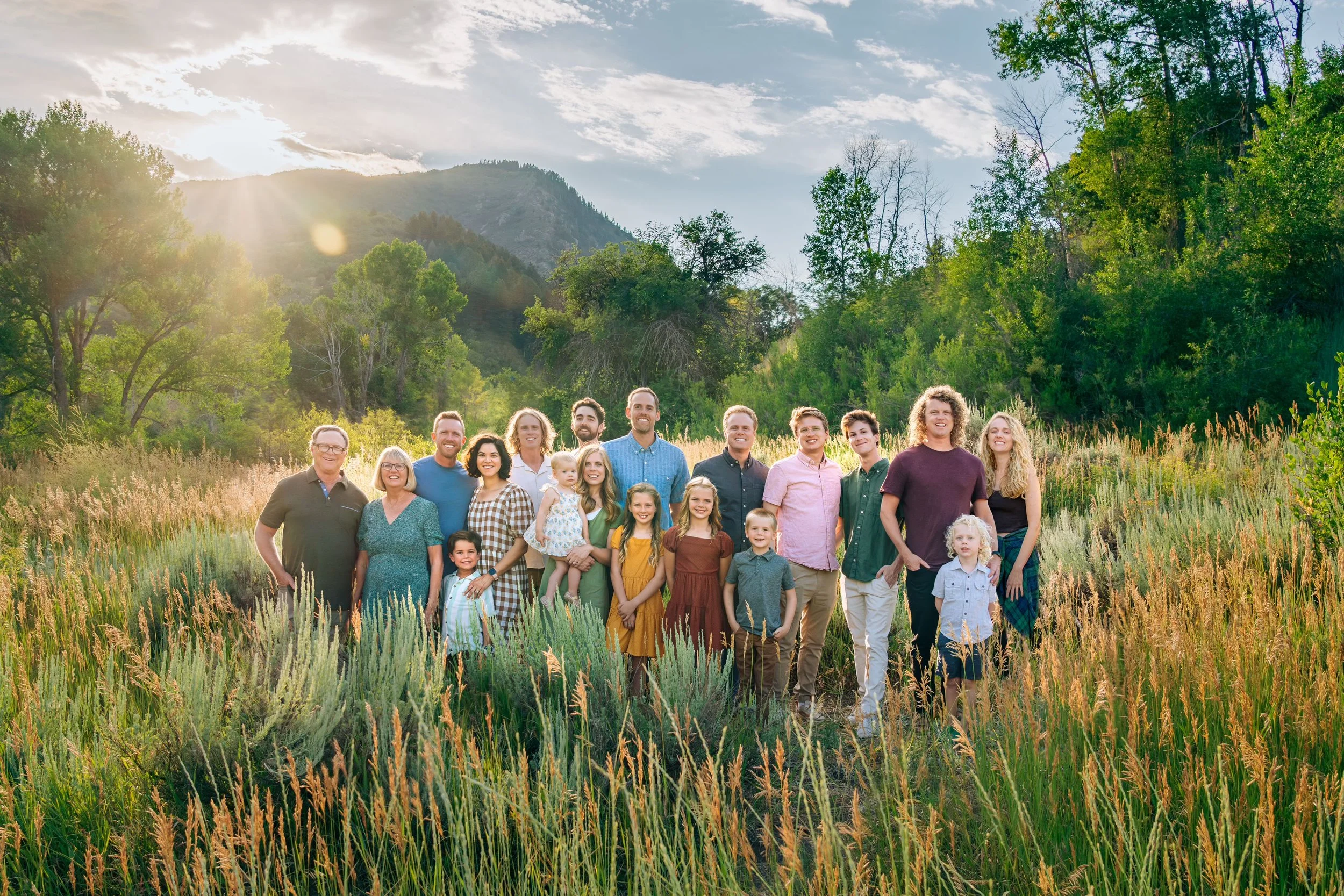
THE AHLSTROM FAMILY
Char Ahlstrom of Los Alamitos, CA knows what it feels like to “do all the things.” She and her husband Tom had devotedly raised their six kids in the LDS faith where they both served faithfully in the church. In fact, Tom was serving as their stake president and Char was teaching early morning seminary in 2014, the year they found out their fourth child, Kyle, was gay. Soon after, Char read a message on an open computer screen that made her wonder if her youngest son might be gay. Char is the first to admit they perhaps did not initially handle these news flashes as well as they should have. But she now often shares her story of growth and shifting perspective, hopeful it may ease others on similar journeys who realize doing “all the things” means nothing if they lose sight of what it really means to love.
Char Ahlstrom of Los Alamitos, CA knows what it feels like to “do all the things.” She and her husband Tom had devotedly raised their six kids in the LDS faith where they both served faithfully in the church. In fact, Tom was serving as their stake president and Char was teaching early morning seminary in 2014, the year they found out their fourth child, Kyle, was gay. Soon after, Char read a message on an open computer screen that made her wonder if her youngest son might be gay. Char is the first to admit they perhaps did not initially handle these news flashes as well as they should have. But she now often shares her story of growth and shifting perspective, hopeful it may ease others on similar journeys who realize doing “all the things” means nothing if they lose sight of what it really means to love.
When Kyle, now 32, first told his mom (six months after returning home from his mission) that he was bisexual, she says she wasn’t entirely surprised. She’d had inklings, but never talked about it. She observed he liked girls in high school, but never had a girlfriend. Whenever other possibilities presented, Char says, “I always pushed it away, believing, ‘I could never have a gay child because we are doing all the things in church’.” She’s embarrassed now to admit that at the time Kyle came out, she and her husband told him to just “keep up the façade”--that if he was bisexual, he could still remain active in the church, marry a woman, and pursue that path.
A few months later, when Kyle revealed he was actually gay, not bi, he still wanted them to believe he intended to marry a woman and stay in the church. In the months after his mission and during what he calls “the days of growing darkness in my soul,” Kyle visited the Salt Lake Temple often. He says, “I did as Nephi had done, ‘I arose and went up into the mountain, and cried unto the Lord.’ I did not go to ask anything particular of God, I wasn’t looking for permission to come out; no such endeavor was in my mind. I knew the path and the promises I had made and was committed to keep them even unto death, which with suicidal ideation, was coming quicker than it should. I simply went to the temple to cry, knowing I needed the Lord’s strength to carry on.”
While participating in an endowment session, Kyle says his mind wandered to a place it hadn’t before. He clearly saw his own wedding day, and to his surprise it wasn’t in the temple and it wasn’t to a woman. Kyle says, “It was to a talk dark haired man; we stood hand in hand under an oak tree near a pond. Feeling this fantasy must be a temptation from the enemy, I cast the thought out of my mind, trusting it had no place in the Lord’s house.” But the vision came back two more times. Kyle dutifully pushed the thought out a second time but by the third, he says, “The scene had rested upon my mind so gently, the way a parent’s guiding hand might lightly aid a child learning to walk, that I didn’t notice the delight of a smile, pure and powerful, had stretch across my face for the first time in months. And I heard a voice say only the word ‘Yes’.” That permission through revelation received in the mountain of the Lord’s House softened and sustained Kyle’s heart. He says, “I had been visited three times, and knowing what happens when you deny the Lord three times, I determined I would no longer bitterly weep; I had made enough of that noise. I knew from that moment on with the conviction of Moses taking off his shoes before the burning bush that my promise and my path now was to put off the shame I had been steeped in for years, was to welcome this new and everlasting vision for my life, and was to say only ‘Yes’ to love.”
Other facets of his story are “his to tell,” says Char, but this was a time in which they worried about his mental health as he struggled with depression, anxiety and suicidal ideation. An eye-opening, life changing moment for Char was when one of her sons said to her, “I’d rather have a gay brother than a dead brother.” That’s when Char started to realize as much as she loved her son, she needed to find a way to accept and support him better. Kyle started seeing a psychologist and started medication. Soon after, he started making his way out of church. The family started noting positive changes in Kyle as he seemed happier and more at peace with himself. As he started dating men, Char remembers “kind of wanting to know” details about his dating life, but feeling too scared to ask. One day, Kyle said, “Mom, if you want to know something, you’ve gotta come straight out and ask.” For her, it wasn’t easy, but she did. Since, she’s been able to have open conversations with both of her gay sons about everything from dating concerns to HIV prevention best practices, which she appreciates.
While Kyle opened Char’s mindset, it was still very hard for her when she discovered the boy her youngest son, Keith, had been messaging was actually his boyfriend. She admits she “did not handle things very well. At the time, I thought, I’m dealing with one son who is gay who I’m loving and supporting, though not happy with all his choices. And now I have another?” Char remembers trying very hard to push both her gay sons to stay active in the church, believing that while the Savior wouldn’t change this part of them, that He would “lead them in a better direction than I thought they were heading. I was so scared and worried for them and couldn’t believe this was happing to us. We were that typical, conservative Mormon family.”
The night Keith told Tom and Char that he was gay, she opened her scriptures to D&C 78:18 and read: “You cannot bear all things now, nevertheless, be of good cheer for I will lead you along.” Char says it was such a comfort that “God did know how hard it was for me!” She struggled with how to be of good cheer when it seemed like things were falling apart. But, as a seminary teacher, when she learned that in some translations “good cheer” meant “have courage,” she says, “then I realized that’s what He was telling me – to have courage and He would lead me along and I wouldn’t lose my eternal family, which I was worried about. He did lead me along; he led me to new thoughts and ideas and people to reach me. After many years, I see very clearly how God has led me along.” Later in the temple, Char contemplated another rift in testimony she’d experienced, now believing that her children were gay and that wouldn’t change with any amount of therapy. So if that was true, and knowing what the church taught, she wondered if God actually did make mistakes. But in the temple that day, she was told the only thing she needed to do was to love her children and trust that God loved them.
At the time, Char was experiencing turbulence with all her kids – including some moving around the world and three of the six leaving the church. One day, she was listening to a podcast on which Tom Christofferson shared that what children need is for parents to both love them and accept them where they are. That was a switch in Char’s thinking, having believed people needed to do certain things to be met with approval. She explains, “So I didn’t feel I could love them where they were because it wasn’t where I wanted them to be. But the Spirit said, ‘No, you need to see them where they are and love and trust that they’ll make decisions for their life that are best. They’re not alone.’ The biggest change for me was to accept them and their decisions.”
Char says she was taught by the Spirit and came to understand that Kyle and Keith were not some kind of mistake. “I was taught that who they are, who they love, is exactly how God made them. Their sexual orientation is not something they need to endure in this life, and it will be gone in the next. That was a huge revelation to me and changed everything going forward. That understanding, for me, took much of the fear away. I personally came to understand that a loving God will include ALL. So when he said, ‘It is not good for man to be alone,’ it meant ALL humans in this world. I think eternity is going to look much different, way more expansive than we are taught. I have asked in prayer many times if I am wrong, deceived even, and every time, I get the same answer: ‘No, you are not deceived’.” Char loves that so many other parents express they’ve been taught the same about their LGBTQ kids. “I’m not alone!”
Around this time, Char’s husband was released as stake president, and despite Keith no longer participating in church after a rough semester at BYU-Idaho, he was invited to lunch by the new Long Beach stake president, Emerson Fersch, who said he just wanted to get to know him. Char says President Fersch was so kind and loving in response to Keith telling him he was gay, and asked him to speak at stake conference and share his experience. Keith didn’t want to do that, but after receiving a warm, knowing hug from their new leader in the hallway at church, Char suddenly had an impression she should speak at stake conference. Turns out that inkling manifested when she was soon after asked to speak about her journey as the mom of two gay kids.
In front of her stake, Char shared the nuance and cognitive dissonance she’d developed, and afterwards, many confided in her that that was also their experience. One man reached out to say, “I have a daughter who’s a lesbian and I don’t speak to her anymore. What do I do?” Char replied, “Call her! Still today, people call me for advice.” When asked to speak in Elders Quorum a few years ago about her experiences, an 85-year-old man raised his hand and acknowledged, “If I’m understanding this correctly, you’re saying WE need to change, that our hearts need to change and we need to be more loving?” Afterward, another man came up and said, “I understand what you’re saying but that’s not what the church is teaching.” Char replied, “Welcome to my world.”
Under President Fersch’s leadership and efforts by families like the Ahlstroms to have LGBTQ+ FHE and ally nights, the Long Beach stake became known as a friendly place for members who’d been pushed out of other congregations. When Covid shut things down, the groups stopped and they unfortunately have not restarted with a new stake presidency. While they still attend church as visible allies, Char says most of her and her husband’s interactions with other parents in their situation happen one-on-one.
While living in Utah, Kyle started to date one young man in particular. At first, Char felt scared to meet Chandler because she knew Kyle really liked him, but after she got to know him, she had no doubts this man was good for Kyle and she says she could see him as a “part of our family.” The shock of this realization made Char reflect, “What an interesting journey I’m on.” After dating for five years, in 2020, Kyle and Chandler married not under an oak tree by a pond but under the redwoods by a stream, with all the Ahlstroms in attendance. Char knew she supported it financially and emotionally, but wondered how she’d feel spiritually. She’d read an article about a BYU professor who wrote about how he’d felt the spirit at his daughter’s wedding to a woman, and Char says at her own child’s ceremony, she also “felt God’s love there.” Now when she looks back on the rhetoric she used to believe, how gay marriage would be “the downfall of our society and wreck traditional marriage,” Char reflects on all she’s learned watching Kyle and Chandler, who “go to work, come home, plant a garden, take care of their house, go for walks with their dogs” as they build a life and family. Kyle works as a photographer and Chandler is an event planner who has worked at Sundance. They love living near the mountains and getting outside in Utah where they reside.
Back in California, Keith and his partner of four years, Derek, live in Los Angeles, where Keith works for a production company, and Derek is a “very talented” filmmaker and director. Their relationship started as roommates when they both moved into an apartment with a woman. While Char was first apprehensive about who Keith might date in LA, she now says, “Derek is part of our family.”
Of her growth, Char says, “One thing I look back on now is how I was scared to be curious, to ask questions, because I didn’t want to hear answers. But now I see how wrong I was. They wanted me to ask questions, to want to know. I advise parents not to be afraid to be curious, to ask questions and try to understand where they’re coming from. Your kids are still the same people they were yesterday or before you found out they were LGBTQ+. Love them, accept them as best as you can. Trust them.” Recently, a man approached Char for advice about his trans daughter. She put him in touch with other friends with trans kids and advised him to “accept her, call her by her preferred pronouns, do all you can to love and accept her for who she is right now. God will give you peace about that.”
As most parents do, Tom and Char think that all of their children are wonderful people and greatly respect each of them. What was once fear and worry about Kyle and Keith has grown to a vast appreciation for everything those two in particular have taught them about love for everyone.
The exclusion policy of 2015 was the first time Char had ever questioned a prophet, and she says this has all made her look at leaders differently, and taught her it’s okay to question things. Now she has three children out of the church who maybe sometimes wish their parents weren’t so active (one of them jokes, “hate the sin, love the sinner” regarding his parents’ attendance at a church he finds non-affirming). But the Ahlstroms remain close, and siblings Kevin and his wife Bree, Krista and her husband Tallon, Kasey and his wife Didi, and Kenny, as well as Char and Tom’s seven grandchildren, all embrace Keith and Kyle. They gather every year for a reunion, where Char says they enjoy being around each other and she especially likes the brothers’ fun competitiveness. Nowadays, the Ahlstroms’ list of doing “all the things” prioritizes love, togetherness, and inclusion.
After her kids first stepped away from the church, Char learned how to respect their various journeys and to trust they’d all find their best paths forward. But she worried that first year about how to handle things like holidays and mealtime prayer and family Christmas traditions, which had once been so spiritually centered in their home. She didn’t want to offend or alienate anyone. Recently though, when Char talked to Kyle about coming home for Christmas this year and which traditions she could incorporate to “not make it weird,” he assured her, “I’m better with that stuff now. We can do the Nativity. I kinda like that story.”


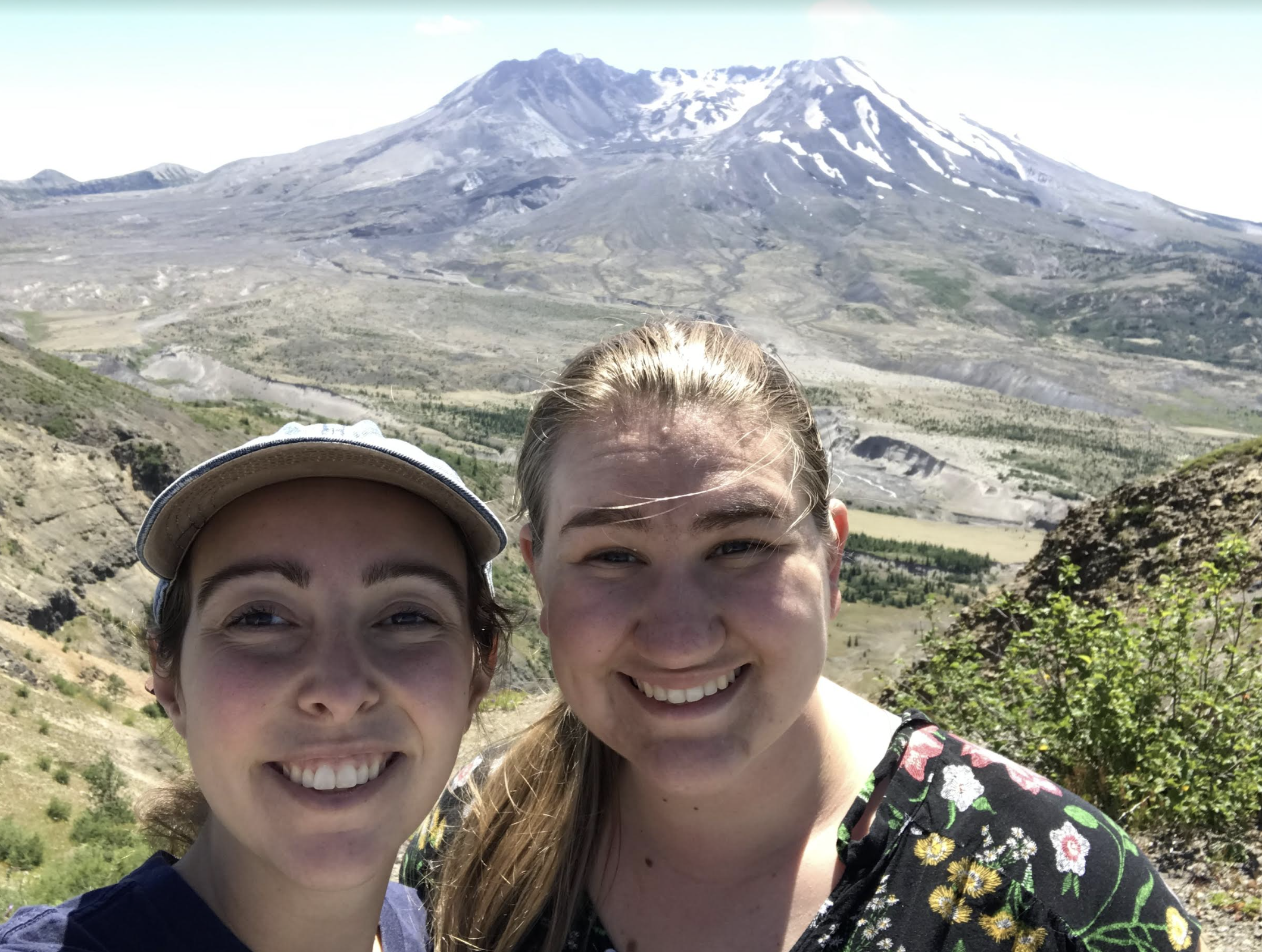
THE GILES FAMILY
The crux of the LDS-LGBTQ+ dilemma is most frequently characterized by the perception of three limiting life paths when one comes out as gay: 1) Stay in the church and live a celibate life. 2) Enter a mixed orientation marriage. Or 3) Date and allow yourself to fall in love according to your attractions, and necessarily leave a church you may still love and value. But what about when none of these options feels like the right fit? What if you choose to carve out your own way by entering a same sex marriage while still showing up to your faith community of choice, even when its underlying teachings seek to minimize your union? For Liz and Ryan Giles of Yakima, WA, that is the exact path they’re navigating right now, and their new Instagram account @the.fourth.option’s rapidly growing following suggests many others are also intrigued by this option.
The crux of the LDS-LGBTQ+ dilemma is most frequently characterized by the perception of three limiting life paths when one comes out as gay: 1) Stay in the church and live a celibate life. 2) Enter a mixed orientation marriage. Or 3) Date and allow yourself to fall in love according to your attractions, and necessarily leave a church you may still love and value. But what about when none of these options feels like the right fit? What if you choose to carve out your own way by entering a same sex marriage while still showing up to your faith community of choice, even when its underlying teachings seek to minimize your union? For Liz and Ryan Giles of Yakima, WA, that is the exact path they’re navigating right now, and their new Instagram account @the.fourth.option’s rapidly growing following suggests many others are also intrigued by this option.
Like much of their relationship, Liz and Ryan’s wedding was off the beaten path—literally. In August of 2021, about 100 of their close friends and family joined them in the Washington wilderness at Camp Dudley—a summer camp Liz had been involved with since 2009 as a camper and later counselor and teen director. Ryan had always felt typical wedding receptions were “boring,” so they offered their guests the option to go boating, rock climbing, ziplining, and do archery during their special weekend. After their ceremony, Liz and Ryan stole 15 minutes for themselves, and stepped away from the crowd to a secluded place on the shore to pray together and have their own form of a covenant making ceremony in nature, an experience they loved.
It was the perfect setting for former high school English teacher, Liz—25, who now runs year-round outdoor education programs for fifth graders. Ryan—28, and originally from South Jordan, UT, is an EMT and was just accepted into an occupational therapy program after which she hopes to work in pediatrics helping kids to navigate the emotional and physical connectivity of their health. Together, the two love to do puzzles and play board games like Parcheesi and Scrabble, as well as go rock climbing, explore parks, and “chronically rewatch TV shows” like Schitt’s Creek, the Fosters, Gilmore Girls, The Good Place, Jane the Virgin, and Grace & Frankie. Currently pup parents of dogs Kevin and Casper, Liz and Ryan are currently finishing up their home evaluation to become foster parents. They say they would love to foster-to-adopt sibling pairs who often struggle to stay together, and are also supportive of the reunification track for kids who benefit most from that route.
Liz and Ryan have realized a love that over the past seven years has at times felt complicated. For some in the wards they’ve attended as a gay married couple, their union does complicate some’s sense of “how we do things.” But Liz and Ryan hope that their openness about their marriage will help others, especially LGBTQ+ youth or closeted adults who want similar things, to view it as a possibility, while also helping those for whom gay marriage is uncomfortable to warm to the idea that “their agenda” in attending church doesn’t vary from the average person’s objective to show up to find community and draw closer to Christ.
The Giles’ story started with a meet-cute in 2016. Liz was a freshman at BYU and her roommate had gone to high school with Ryan--who had just returned from her mission and moved in next door. For months, they were just friendly-ish neighbors, but Ryan had never fully caught Liz’s name and after three months, she says, “It felt too late to ask.” Ryan didn’t think she’d see Liz enough for it to matter, but Liz says, “Like a Whacamole, I just kept popping up.” As the friend group continued to hang out, the following semester they all moved into an apartment together where game nights frequently involved improv comedy skits in which Liz and Ryan would draw scenes from a hat and have to act them out. Liz says, “But we’d always draw scenes in which we had to act like a couple. So then as a joke, we started calling each other babe like we were a fake couple within a roommate context.” Ryan adds, “And then, it became less fake than we thought it was.”
The next few years were filled with navigation as the two individually figured out their orientation, their attraction to each other, and their other life plans. As Ryan headed to Paris for a study abroad, and Liz left several months later to serve a mission, they both tried to convince themselves that this was all just a fluke, that they were still straight (Liz thinking this more so than Ryan), and that maybe, sometimes these kinds of things just happened with roommates? Nine months into her mission, Liz came to the realization that her feelings for Ryan (and, on a bigger scale, her same-sex attraction) were not a fluke. After Ryan returned from her internship in Paris, and while Liz was still on her mission, they came out to each other and acknowledged that what they’d felt was real. This didn’t exactly make Liz’s church service easier. At the time, Liz was spending her days with a mission companion who loved to recite the Family Proclamation while they drove around their (very large) area. Although she loved many things about this companion and their several transfers together, she knew that kind of setting was definitely not a safe place to come out. Yet it still took her nearly a year after her mission to realize that she did not want to pursue option one or two in her life—that while she longed to have a family and be a mother, Liz did not want to deny herself a relationship filled with chemistry and deep love.
When Liz returned, Ryan was patient and careful not to put any pressure on Liz. Ryan had already come out to her parents “accidentally” after she was watching general conference with her brother and dad and a speaker focused on what to do when you feel “the Lord is asking too much of you.” Seeing his daughter become upset by this, Ryan’s dad prodded her to be more specific about what hardships she was facing in a big, long discussion of which Ryan says, “My dad was amazing.” This was a welcome surprise, and the next day she came out to her mom who had a harder time at first, but who she says has also been amazing. Ryan remembers fondly that one of the first questions she asked Ryan was, “Does that mean you’re going to have to cut off all your hair?” Ryan laughed and replied, “That’s not required anymore; we’ll leave that be.” As Ryan continued her schooling at BYU, she felt it wouldn’t be safe to risk her diploma by coming out publicly, so she quietly considered her future options, none of which felt right. Before she’d come out to her parents, Ryan says she’d felt sick to her stomach for months before getting a priesthood blessing from her dad in which he talked about how she’d live “an uncommon life.” He didn’t say directly what that meant, and he had no idea the reality she was mulling, but through personal revelation, this cracked open the possibility that perhaps she would be able to marry someone she loved while “doing all the things I find most important and affirming regarding my relationship with God and participating in a faith community. Maybe none of that had to change.” She says, “That’s when I decided to pursue this option and try to find someone willing to do it with me. I was hoping that person might be Liz, but I didn’t express that yet.”
After returning to BYU from her mission, Liz also planned to stay closeted but admits she had “holy envy for Ryan’s plan because it sounded like such a better plan than the trajectory I was on. I felt a lot of depression and hopelessness deconstructing my faith because I didn’t see a future that was truly happy for me. I’ve always known I was meant to fall in love with a life companion, share my life, be a mother… things that didn’t feel possible to me with a man. It was tough at that point, so I was grateful to ultimately get guidance from Heavenly Father the other way.”
The two remained just friends for about a year, respecting Liz’s process and the BYU Honor Code they’d each signed, until the combination of COVID and botched travel plans placed them both in quarantine together. Liz had just flown to Washington DC to present at a teaching conference when she landed and learned the world had essentially shut down. She spent the next five days alone, reflecting on how unsettled she’d felt about not dating women when she knew where her attractions lied. Considering the “divine plan” intended for her, that week she even wrote a 30-page letter in her journal to her Heavenly Parents to weigh her options. By the end of the week, she felt she had a strong answer she was supposed to be with Ryan and that she could do a lot of good in the world if in that companionship. Liz returned a week later to Provo which had become a ghost town. The rest of their roommates had returned home, leaving Liz and Ryan to spend time together and the freedom to openly express their love. When Liz shared her feelings, Ryan says, “I don’t think I‘ve ever been so happy in my life.”
Ryan graduated that spring, and Liz had one more year that proved a roller coaster for many for LGBT students with the fluctuating “bait and switch” BYU Honor Code regulations regarding public displays of affection and dating allowances. Both women felt the frustration of feeling they had no say in how they were able to live their lives. For Ryan, this felt like the 2015 exclusion policy then 2019 reversal, but in reverse. “It caused so much damage to begin with and a lot of fear for people as a lot had started to come out and be open, then they had to go back into the closet in fear.” Like many, transferring schools wasn’t a realistic option for the women so close to graduation, with the added reality that many of their religious credits wouldn’t transfer at all.
But as quarantine became a defining factor of 2020, both Liz and Ryan say they benefited greatly from home church where they could think about what their identities meant in relation to the Plan of Salvation as they fully came out to their families and many of their loved ones.
After Liz graduated from BYU in April of 2021, she came out publicly, then drove home to Washington. Two weeks after coming out online, Liz posted she and Ryan were dating, then two weeks later, posted they were engaged. Although Ryan had been showing up in her Instagram feed since 2016, the announcements created some whiplash for Washington ward members who had known Liz since she was in diapers. One said, “I didn’t know Liz was gay or dating or engaged, then suddenly, she was getting married.” As they’ve been more public with their relationship, responses have run the gamut from one relative writing them a letter expressing disappointment that Ryan and Liz had “decided to let go of the rock of the gospel” and that they “would never find peace on this path,” to another relative holding a family intervention behind their back to decide “how to handle the situation.” Attending Ryan’s family ward alongside her family as well as the Instagram trend of “Ask me anything” presented opportunities for the women to publicly share their continued beliefs and why they were choosing to stay in the church. They appreciate when people ask them directly, rather than talk around or about them in ward councils.
The Giles have attended two wards since their marriage a little over two years ago. Of their Houston, Texas congregation, they say, “The people overall were welcoming to us, but most of them never talked about our queerness. It was the elephant in the room they never discussed, but they loved us. In Washington, people acknowledge the wholeness of who we are but it’s more complex—some keep us at arm’s length while others noticeably honor the intersectionality of us being here.” When they left Texas, they were touched when an older woman in the ward threw them a big, fancy going away party that was even announced over the pulpit. Attendees included their bishop and stake president. They appreciated these gestures after they had to carve out their own callings as the “go-to service people,” feeding the missionaries every other week and helping with lots of service projects. This was after their bishop mentioned he'd find a calling for them but never did, besides a ministering assignment. While they have not been sent to a disciplinary council or had their membership records removed, as was the case recently for a gay married couple they’re friends with, their leaders in Washington have reminded them they can’t partake of the sacrament, give talks, bear their testimonies, or have callings on the roster. But they haven’t been told they can’t participate in lessons, so they do that, and Ryan is relearning how to play the piano because she heard their Primary often needs a pianist and she wants to be ready—just in case.
Many in their current ward knew Liz growing up. She says, “One of my former Young Women’s leaders made our wedding cake. The Primary and Relief Society presidents have really stood in for the Savior for us, too, advocating so we can participate as much as we can. It’s so comforting because even though we don’t have a voice at those tables… they are making an attempt for us and telling the ward council we want to be here and serve and be members of this community.” She continues, “As a queer member, it’s really painful being seen as less faithful or more sinful to some. Seeing we’re married, some discount our testimonies or how we can build Zion. As someone who’s just trying to live her most authentic life and follow the Savior, it's hard to see how people treated me then versus now. Even though my beliefs are deeper and I’m so much happier, and in a position to do so much more good, I’m seen somehow as weaker or as an apostate by some. It’s hurtful.”
Of their newfound online following, the Giles have been overwhelmed by how many people have reached out from places spanning from West Africa to Australia to Utah, sharing similar desires and experiences of trying to find their place. They also recognize that while they’ve been able to find a somewhat safe space to occupy at church for now, that could change, and they express that their path is not always the best option for others. There are days when Ryan recognizes, “Going to church might not keep me close to God today; maybe today we go to the mountains instead.” Ryan adds, “We’re showing up because we want to be closer to Christ and connect with our community. If we accomplish nothing else externally (knowing that internally, we do accomplish more) other than showing that LGBTQ+ people do want to be there to stay connected and desire to be Christlike and closer to our Heavenly Parents, I hope that us continuing to go helps people see that.”


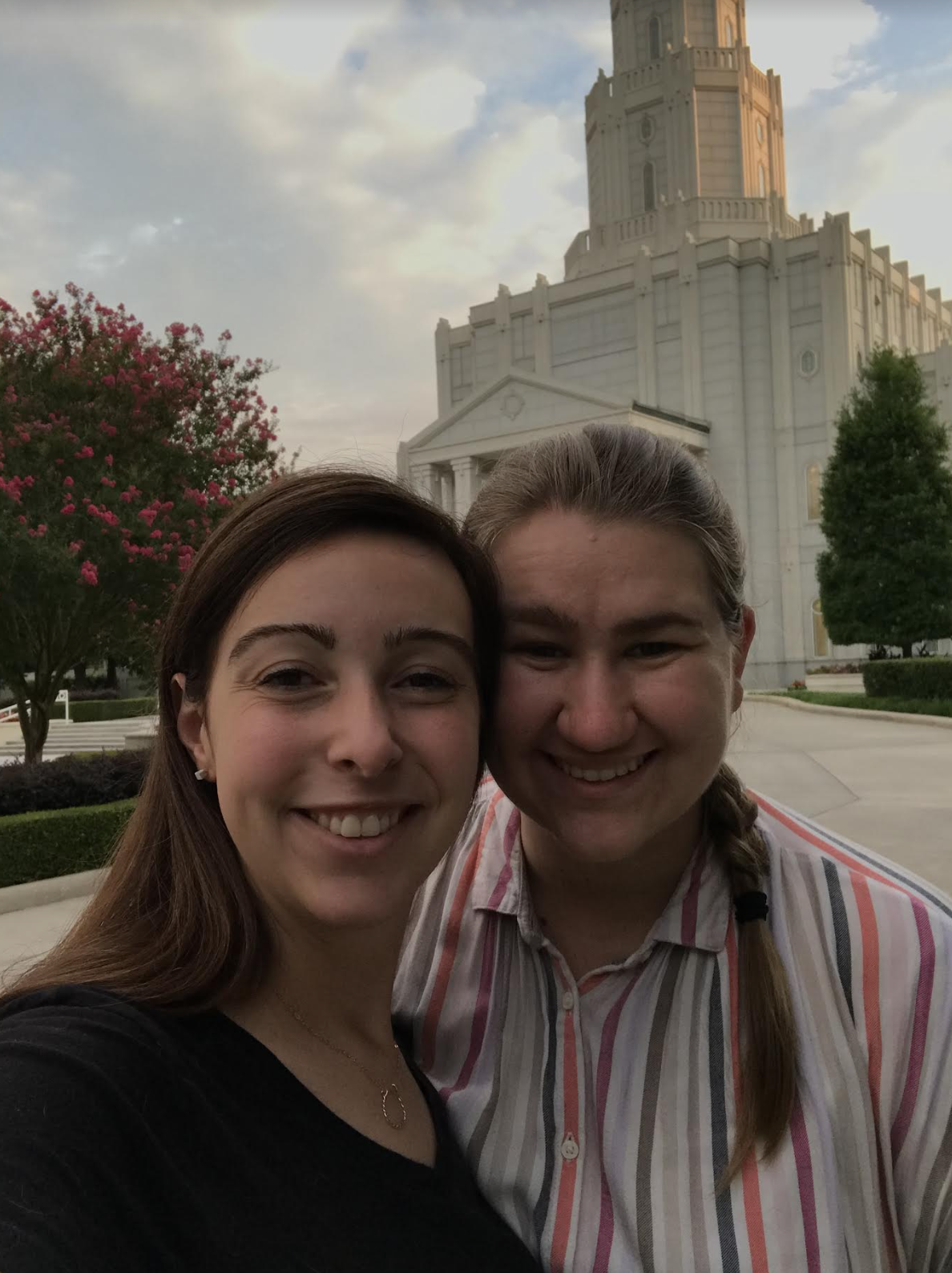


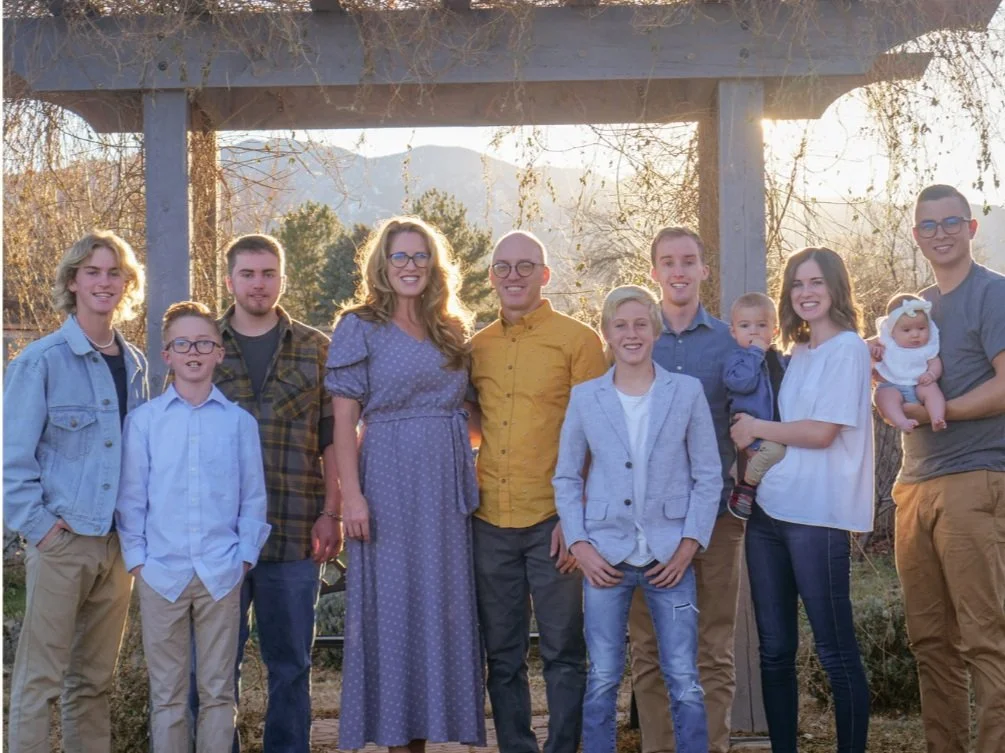
THE SMITH FAMILY
For 20-year-old Kyle Smith, life’s a journey—and quite literally, as right now he’s culminating eight months of adventure spent working in Alaska and backpacking through Europe, before taking a month-long cruise through Hawaii and Polynesia with his boyfriend, Ethan. The sense of freedom he now feels seems apropos for a high achieving young man who earned it, after excelling during four years of varsity soccer and his state-champion show choir as a teen, while also being elected his high school student government’s head boy and earning a 4.0 GPA. But discoveries and admissions along the way did result in misunderstandings and challenges in Kyle’s church community and even among his loved ones, that thankfully, with the support of his family, he was largely able to overcome…
For 20-year-old Kyle Smith, life’s a journey—and quite literally, as right now he’s culminating eight months of adventure spent working in Alaska and backpacking through Europe, before taking a month-long cruise through Hawaii and Polynesia with his boyfriend, Ethan. The sense of freedom he now feels seems apropos for a high achieving young man who earned it, after excelling during four years of varsity soccer and his state-champion show choir as a teen, while also being elected his high school student government’s head boy and earning a 4.0 GPA. But discoveries and admissions along the way did result in misunderstandings and challenges in Kyle’s church community and even among his loved ones, that thankfully, with the support of his family, he was largely able to overcome.
Back at home, receiving virtual postcards of his adventures, awaits the Smith family (mom Ashley, dad David, sister Hannah and her husband Matt Herron and their children, and brothers Jamison—25, Spencer—23, Cedric—16, and Levi—13), who just four years prior had undergone quite a transition. Just as David was being released as bishop—ironically being told that “someone in the ward needed some things addressed that might go better if he wasn’t bishop,” Ashley had just completed a victorious campaign and was elected mayor of their Cañon City, Colorado town, after serving four years on city council. Over the years of serving and campaigning in the community, she had been struck by how many wonderful LGBTQ+ citizens she’d met who, despite what she’d been taught while being raised in a conservative religious climate, seemed to want the same things as her family. It was at this time, at age 16, that Kyle told his parents something he’d known since age 11.
Ashley now laughs how she’d unassumingly made Kyle a rainbow cake with eight layers of colors for his eighth birthday, not knowing the significance that symbol would later take. As Kyle sat in primary as a child, he’d hear that everyone is a child of God and loved, while knowing he was different and didn’t seemingly fit the mold of what an “acceptable” child of God was “supposed” to be. In high school, he finally opened up to Ashley and David saying, “I just can’t keep getting hurt so much; I need you to know where I’m at.” His parents had watched him shun recent pressures from friends to get a girlfriend, saying things like, “I just want to be friends with everybody!” But at 16, Kyle was ready to tell his family he was gay, after which he subsequently broke down and asked, “Am I destined for a life of misery and grief?” This launched a re-examination into what his parents had been taught and taught themselves for many years. When Ashley told Kyle’s two youngest brothers Kyle was gay, she said the look on their faces was as if he’d been killed in an accident. “I thought, ohmygosh, what kind of hole have we dug for ourselves?”
This was the launch of many conversations for the Smith family. Ashley says the first two years were messy. It was not like a like switch of understanding instantly turned on, but rather a slow process of searching for understanding. She credits Kyle’s patience, saying, “He was really gracious and said, ‘I know this is the culture you were raised in, but I can see you are making an effort and trying’.” The Smiths are grateful Kyle also made efforts and they still have a close relationship. Ashley and David’s children and several immediate family members have also embraced Kyle. But many did not.
When the Smiths first approached their bishop at the time with Kyle’s news, he firmly responded that “the world” will tell them it’s okay for Kyle to be gay, but that it actually wasn’t. “That was NOT helpful,” says Ashley. A few years later, the same bishop said he thought the ward “handled Kyle’s coming out pretty well.” While allowing the bishop the same grace Kyle offered them, Ashley felt that perhaps it would have been better for the bishop to have replaced the discomfort of that conversation with curiosity. A more useful conversation would have been to instead ask questions like, “How has this affected your life? What do you wish people understood? What would you like us to know?” Luckily, their stake president was more understanding and shared his belief that Kyle could be gay and still be a happy person and even a productive member of the church.
The first Sunday after Kyle came out publicly, the whole family was very nervous about attending church. But a Sunday School teacher came right up and gave him the biggest hug, which brought some relief. So did the pandemic shortly after, as home church became the norm. Kyle found he appreciated the reprieve and Ashley says she likewise loved feeling like she could experience church “without getting stabbed in the heart. It gave us time do our own healing in home church. Kyle never went back after that.” Even pulling into a church parking lot to play a game of basketball now gives Kyle PTSD reminiscing the many times he’d come home from church or seminary and declare to his parents, “Well, I was told I’m going to hell again today.” While all of the other Smith children still attend church and several have or are currently serving missions, Kyle feels closest to God in nature. His first summer spent working in Alaska as a zip line guide gave him a lot of time hiking in the mountains with wildlife, “a chance to heal.” He’s now dating Ethan, a young man he met while working at Breckenridge. Ethan was also raised in the LDS faith in Utah, and the Smiths love that both families “just get it” with their commonalities and support their sons’ union.
Living in a rural community, Ashley says they’ve felt like they’ve been pushed to the outskirts even by some close friends, “not fitting that tribe anymore.” She currently serves as a Primary teacher which she loves, calling the kids “her happiest constituents.” Ashley’s stake president made it very clear that her main calling was to be her tenure as mayor, a role she feels God also called her for and has given her a voice to broader audiences. After the article she wrote in a 2021 issue of LDS Living about what to say when a loved one comes out as gay was published, Ashley had people reach out hoping they hadn’t played a role in alienating her family (which they didn’t). Some were grateful to find better words to start conversations, and other church members either further distanced themselves or pushed back with even more open prejudice. In the end, friendships have been lost.
Ashley says, “I don’t feel we’re in that warm, fuzzy, cozy circle anymore, but we’re there because we believe in Christ, our kids need to have a relationship with God, and we need consistent reminders of all the things that help us become good human beings.” She recognizes that things are different based on where you live and when recently asked to give a presentation to a stake Relief Society gathering in Denver about their journey, Ashley was pleasantly surprised to learn of an openly gay member of a bishopric in the area. Grateful for the resources she was able to turn to when Kyle first came out, Ashley now tries to point others to the same as well as be a resource herself, with her article and also having been interviewed on both Richard Ostler’s podcast and Kurt Francom’s Leading Saints podcast.
Four years later, David says, “I like the person I am so much more now.” Ashley concurs, “I am so grateful to have a gay son… I’ve experienced a lot of spiritually profound experiences from God. I’ve found peace in not knowing everything and just having a foundation of Jesus Christ.” As a member of many civic committees for different issues in which she tries to make voices from all sides heard, Ashley prioritizes “having resiliency, especially while watching all that’s going on in the country (politically, socially and within schools and church walls)… including contentious school board meetings with people fighting against the supposed ‘satanic evils of those grooming children to be LGBTQ’.” Ashley just wants a world where one can have a gay kid who can go to school to learn math and reading, not be bullied, and live their best life. While she is not running for another term, Ashley believes, “We still need to have forces for positive change and leaders to challenge old assumptions and prejudices.
Of her own journey, Ashley loves how being Kyle’s mother has taught her to “double check my assumptions, and have more compassion as I listen to other stories and seek to understand on many levels.” She frequently reflects on a quote from Darius Gray, a prominent Black member of the church who headed the Genesis group of the 1970s, which has largely been credited as being instrumental in the reversal of the priesthood exclusion policy. Darius said, “If we endeavored to truly hear form those we consider as ‘the other,’ and our honest focus was to let them share of their lives, histories, their families, their hopes and their pains, not only would we gain a greater understanding, but this practice would go a long way toward healing wounds.” Ashley reflects, “This is a mantra I hold to now, as I try to be more open to hearing and understanding those who are different from me. When I do this, I realize we have a lot in common.”




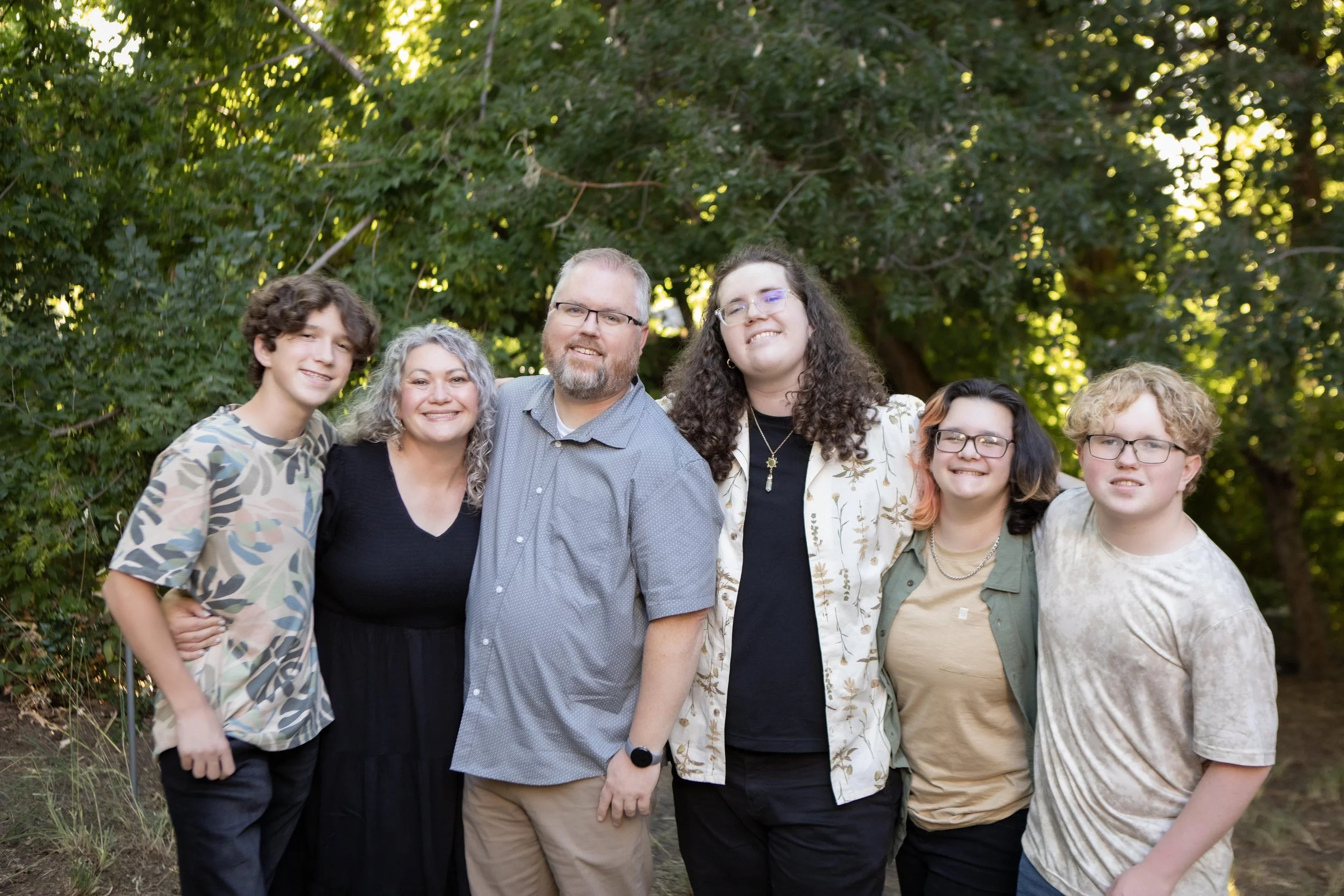
The Ence Family
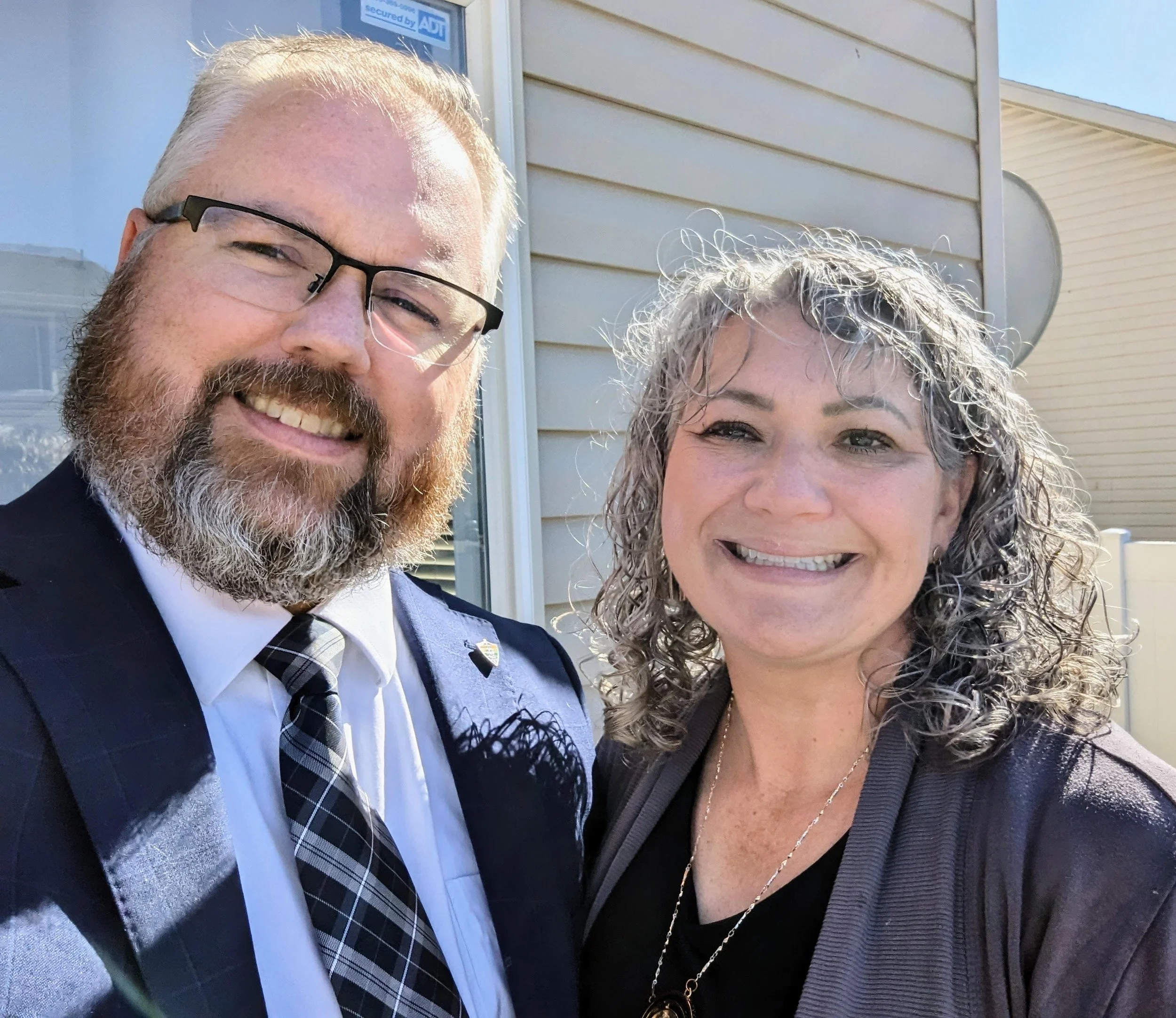
In February of 2020, Andrew and Tiffany Ence of Stansbury Park, UT were preparing for a trip to Italy, where Andrew had served a mission for the LDS church. It was the first time they’d be leaving their three kids (Winter—now 20, Matthew—17, and AJ-13) for an extended period. Tiffany went downstairs one Sunday morning to see if they were ready for church, and to talk to her oldest about expectations while they were gone. Winter started crying and said, “I don’t want to go to church.” Then and there, Winter dropped the bombshell that they were bisexual. Winter begged Tiffany not to tell Andrew. Tiffany reassured Winter their dad would be more understanding than they thought, while silently fearing what Andrew might actually say about the situation. She delayed the conversation, but a few days before their flight to Italy, Andrew told his wife he’d seen a text on Winter’s phone that she should be aware of. Responding to a girl who’d texted, Winter replied, “I feel like I need to tell you—I know you like me, but I’m bisexual.” Tiffany looked at her husband with trepidation and said, “What do you think?” Andrew’s reply was a massive relief: “We just need to love him.” (Winter, who is nonbinary, now prefers they/them pronouns)…
In February of 2020, Andrew and Tiffany Ence of Stansbury Park, UT were preparing for a trip to Italy, where Andrew had served a mission for the LDS church. It was the first time they’d be leaving their three kids (Winter—now 20, Matthew—17, and AJ-13) for an extended period. Tiffany went downstairs one Sunday morning to see if they were ready for church, and to talk to her oldest about expectations while they were gone. Winter started crying and said, “I don’t want to go to church.” Then and there, Winter dropped the bombshell that they were bisexual. Winter begged Tiffany not to tell Andrew. Tiffany reassured Winter their dad would be more understanding than they thought, while silently fearing what Andrew might actually say about the situation. She delayed the conversation, but a few days before their flight to Italy, Andrew told his wife he’d seen a text on Winter’s phone that she should be aware of. Responding to a girl who’d texted, Winter replied, “I feel like I need to tell you—I know you like me, but I’m bisexual.” Tiffany looked at her husband with trepidation and said, “What do you think?” Andrew’s reply was a massive relief: “We just need to love him.” (Winter, who is nonbinary, now prefers they/them pronouns.)
Unsure of what their next steps should be, Tiffany simply asked Winter, who was 16 at the time, to wait until they turned 18 to fully express their true self. She was terrified of what the response would be from their very conservative community. She says, “A lot of that had to do with our impression of how the church would respond.”
Then the pandemic happened, and the whole world shut down.
Winter was an essential worker as a cashier at a grocery store and struggled having to deal with difficult people at work all day, then come home and only be with their family, no friends. They fell into a depression. It was around this time that Winter came out as pansexual, saying “I love everyone,” and changed their name from the birth name they’d been called for 17 years to their preferred name, Winter. Andrew says, “As much as I said previously ‘Let’s just love him,’ I found myself pushing back on this, thinking how hard it would be, personally, to make those changes. We argued with each other and against each other as a couple.” Tiffany concurs, “It took us awhile to realize we were overreacting.” But it was hard for them to hear the phrase “dead name” be used to identify what they prefer to call the “birth name” they’d given Winter. Tiffany says, “All our kids have family names. When you say ‘dead name,’ you’re talking about the name of my Grandpa William.” It took Tiffany and Andrew some time to understand that Winter didn’t feel the same way about the name.
Tiffany now laughs when she hears people talk about how wonderful home church was during the pandemic. “For us, it was not fun. It was like pulling teeth, it was so hard to get our kids together.” Tiffany found herself inwardly struggling as well, unsure of whether she could support the church anymore, feeling that the church didn’t support her child. Tiffany had been raised by parents who she felt never chose her—her mom was a recovering addict, and her dad died by suicide. “When I became a mother, I knew I would always choose my children, no matter what,” she says. Andrew, too, was wondering if he needed to put some distance between himself and the church. It was at this time, in the fall of 2020, that Andrew got called into a new bishopric. Tiffany says, “I felt like that was Jesus grabbing the back of my shirt and saying, ‘Nope, we’re going to keep you here’.” Andrew, too, was comforted by the bishop saying he was aware of what the Ences were going through at home and thought they would have valuable experiences to share. These feelings were confirmed quickly by multiple friends and neighbors who were also experiencing similar challenges.
Andrew recalls Winter’s last couple years of high school being rough, with them starting to push back on the typical rules parents place on teens. It felt like every weekend was a battle with Winter. Sundays during this time just didn’t rejuvenate them the way they once had. Andrew remembers one such Sunday during this time, where a friend on the high council greeted him and asked about his weekend. The friend saw through Andrew’s, “It’s fine,” response and recommended a Liahona article that had come out a year before in July of 2020 called “You Love, He Saves” by Krista Rogers Mortensen.
Andrew and Tiffany say that article changed everything for them. They’d go on their nightly walks and talk about all they were experiencing and that they were in agreement of what to do but unsure how to do it. That article taught the concept that their only duty as parents was to love their children; it’s Christ the Savior who saves. Andrew says, “It changed our perspective. We didn’t have to stress anymore over them going or not going to church. We could just be in the right place to show love. That’s what has driven us since.”
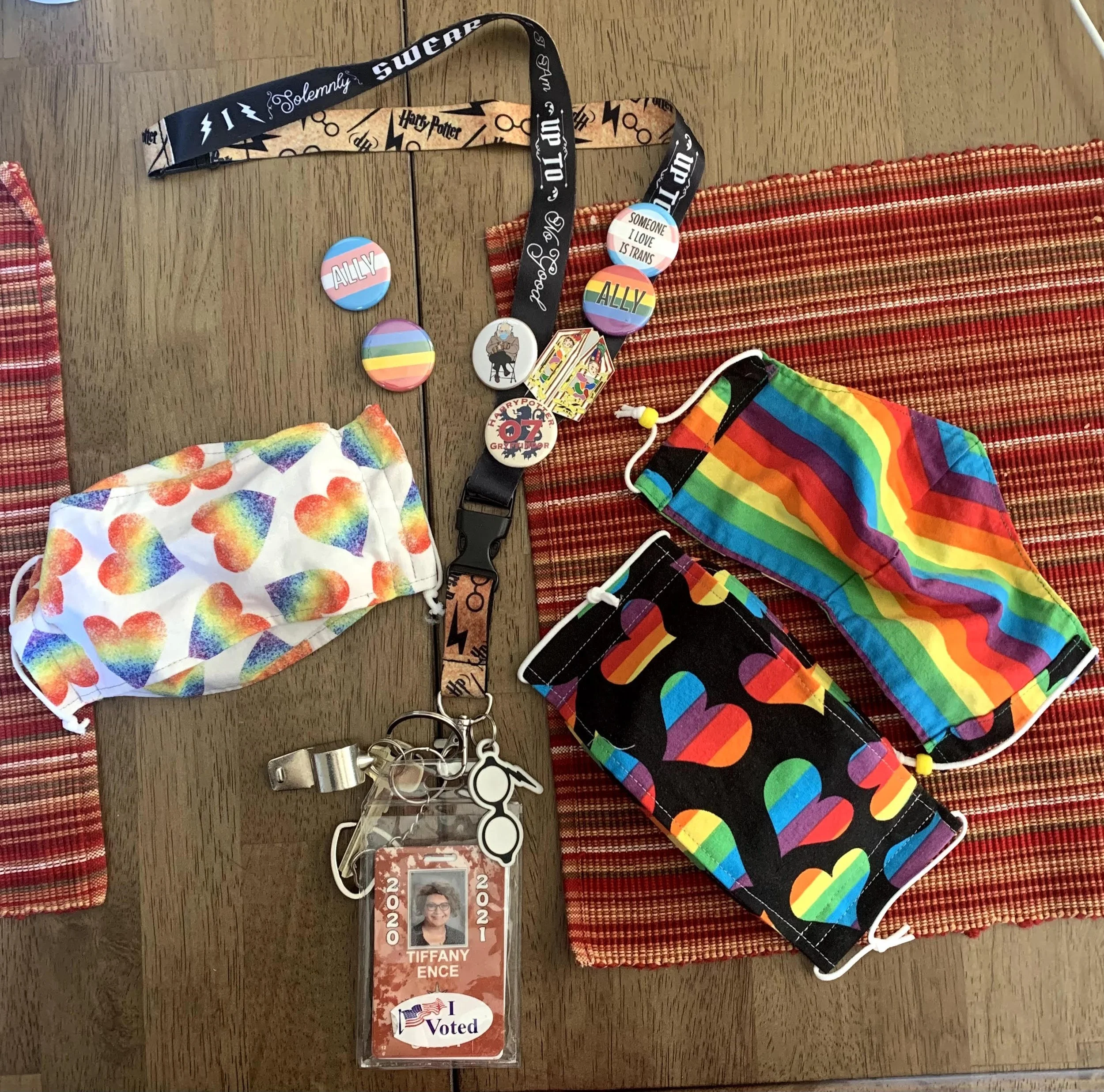
In her work life, Tiffany started to wear rainbow pins on her lanyard at the charter school where she taught, indicating she was a safe space. She freely shared her experiences about Winter to her coworkers. After hearing some troubling comments about LGBTQ+ kids from teachers at her school, she asked if she could give a ten-minute presentation at a staff meeting to educate others about the trans and nonbinary community and preferred pronouns, and the importance of being open to just listening and not inserting your religious or political opinions. This opened a lot of conversations she feels have been productive. One coworker, whose child had just come out as trans, was struggling because her husband had responded with an, “I will choose my temple recommend first.” The friend asked if the couples could go to dinner, and Tiffany’s friend was so relieved that Andrew was able to speak to her husband about how he had been processing everything in a more supportive way. The husband was able to learn what the Ences had learned – he just needed to love his child.
Tiffany now teaches first grade in a public school, and feels she has to be more subtle about her advocacy, but she still wears rainbow earrings and hair clips. Tiffany feels, “If you can’t be a safe space for all, that’s a sad thing as an educator. By all means, send those kids to me. Like if a kid has disabilities, you wouldn’t say, ‘That person just needs to learn how to talk or walk differently.’ Why would you make any negative comments about anyone on the margins?” As her county has lost more than a few LGBTQ+ kids to suicide, Tiffany feels strongly about speaking out and would love to turn that into a career.
Tiffany and some friends went to a presentation Ben Schilaty did at a library, and afterward, asked Ben if he’d come speak to their stake. He said he would as long as their stake president was on board. Tiffany feared it would be a flat out no from the stake president, but was surprised when he considered the prospect, saying in the seven years he had been in his role, no one had ever approached him about having a presentation like this before. After thinking about it, he said he’d like to start by having the Ences be the ones to share their experiences with the high council to gauge their feelings on the topic. The high council agreed, and the next step was for the Ences to present their story with the stake leadership at large. Right before this plan was executed, the stake presidency was released, and a new stake president was called. Tiffany approached the new stake president a couple months ago to ask whether he was aware of the plan and was told to send an email. Every time he sees her, he says, “Waiting for your email, Sister Ence.” She still feels it’s an important endeavor to help educate people so families like theirs don’t feel alone the way they have, but hesitates at the process of putting herself out there, knowing the opposition she may encounter: “Even me five years ago would have judged me, ‘Well, she must not have been doing this with her kids…’ I used to think that way, too, but I’ve learned a lot.”
Reflecting on when Winter first came out, Tiffany says her mama bear heart just wanted to protect them. Winter had a few negative experiences at church and with a seminary teacher who said something, which led to them walking away. “They feel like an enemy of the church, that they are not wanted there.” But both Winter and their partner Jo, have expressed support of Tiffany and Andrew’s efforts to share their story and be there for others. Andrew has worn an “I’ll Walk With You” CTR-shaped pin every week to church for the last two years. When he was asked to remove it once after the bishop received complaints, Andrew responded, “If this is sparking conversation, then that’s a good thing.” The Ences’ younger two sons have also stopped attending church. They say, “Sometimes we feel like we’ve failed as LDS parents; but we’re just going to love our kids.” A friend at church once told Tiffany, “Don’t worry, someday we’re going to get a letter in the mail about Winter’s mission call.” Tiffany says she thought, “You can live in that fantasy world, but I’m choosing to love my kid. I’ll support them whether this is a phase or not. I just hope they can look back and know ‘my parents loved me’.”
Andrew and Tiffany say Winter has always been a loving and loyal child who stands up for what they believe. When they were in elementary school, the Ences got a call that Winter had gotten into a playground brawl because a kid was making fun of their cousin. Andrew says, “I know it’s one of those experiences where I’m supposed to be upset, but I was so proud of Winter standing up for their cousin.” After school, Winter’s uncle rewarded them with a Gamestop run. Musically inclined, Winter’s fourth grade teacher taught them the viola which expanded when a middle school band teacher encouraged Winter to also learn the clarinet, saxophone, guitar, and banjo. Winter always had an easy time making friends, and Tiffany wonders if this is what made them first identify as pansexual, feeling they wanted to love everyone across the LGBTQ+ friend group in which they identified.
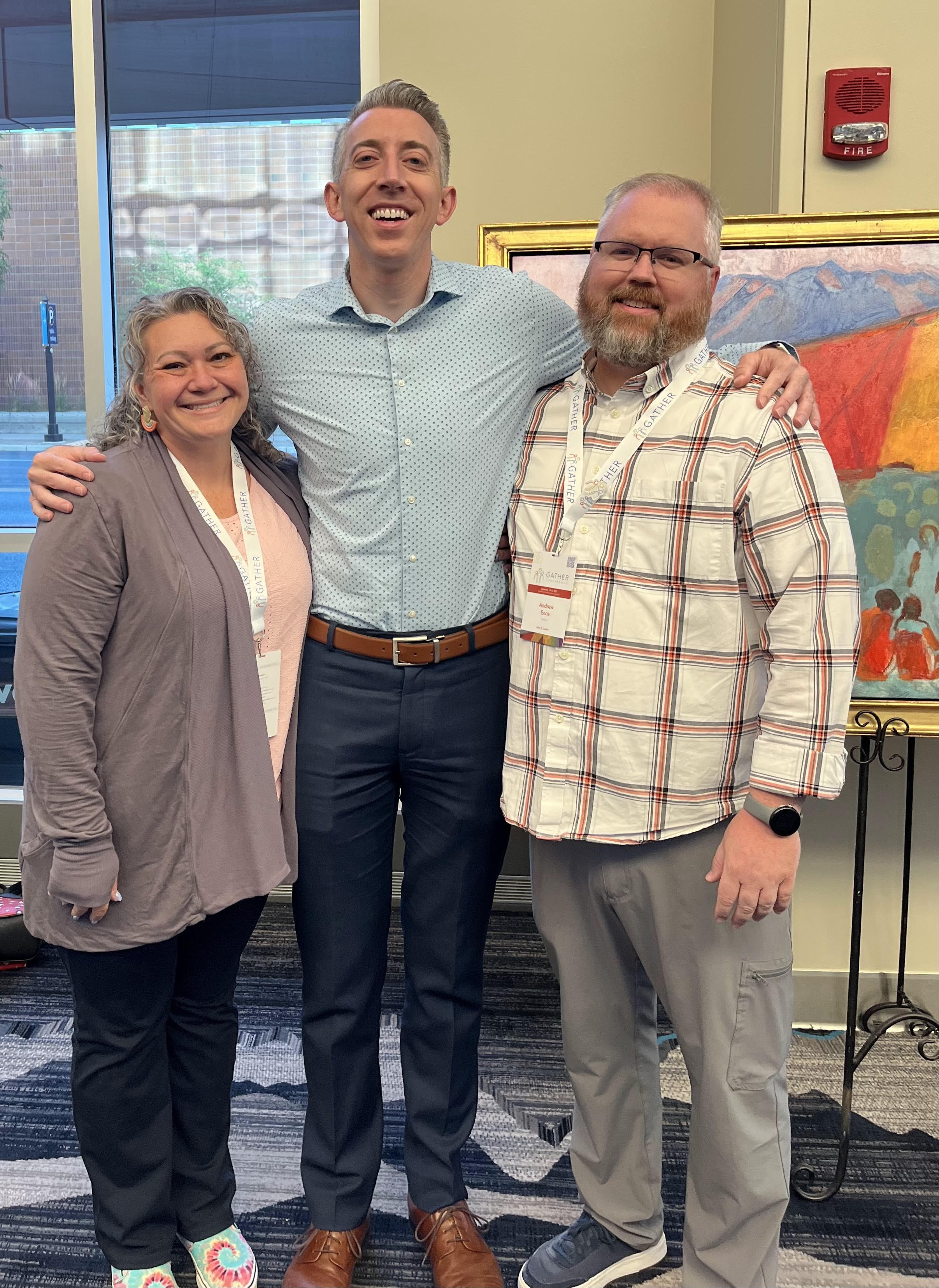
The Ences recently attended the Gather conference and appreciated meeting other people who are in their same boat, and not just on social media. They were especially touched by Bree Borrowman’s presentation about what it takes to look in the mirror and get to a place where you like what you see. Andrew says, “To hear Bree’s experience and then to see the challenges the world puts on people just trying to do that. They are just trying to be happy within themselves. Four or five years ago, I might have thought that was silly, but now, I get it.”
Reflecting on their experience and progress, Andrew and Tiffany say, “We think we understand the path and game we’re playing of ‘holding to the rod.’ But there are still potholes that come. You can still twist your ankle. We may have felt that the church couldn’t support us in our choice to love our child and who they are becoming; but now, we see our experiences have value and a purpose and that’s why we’re here. That we as parents in the Church of Jesus Christ of Latter-Day Saints will love our children through the challenges and changes.”
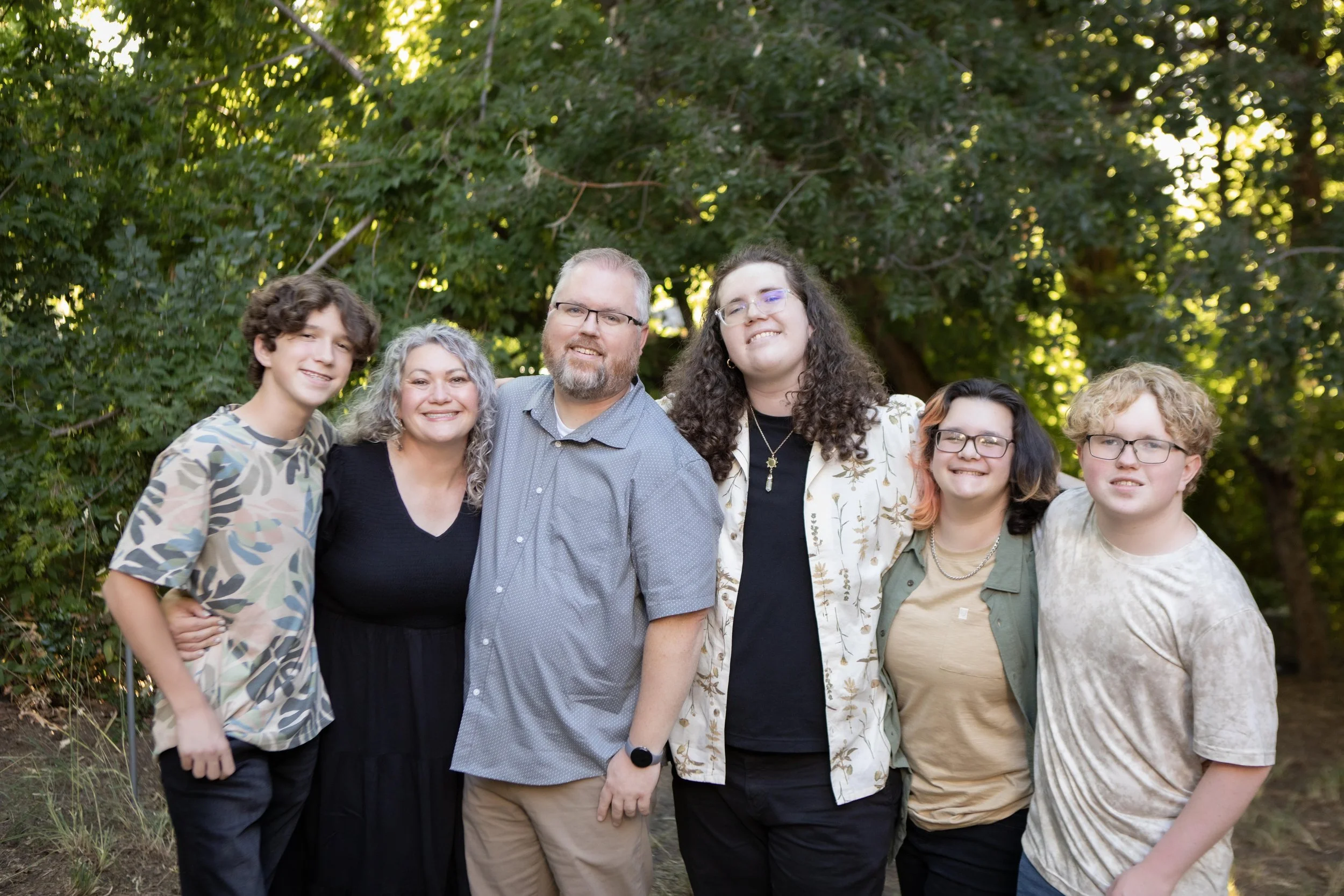
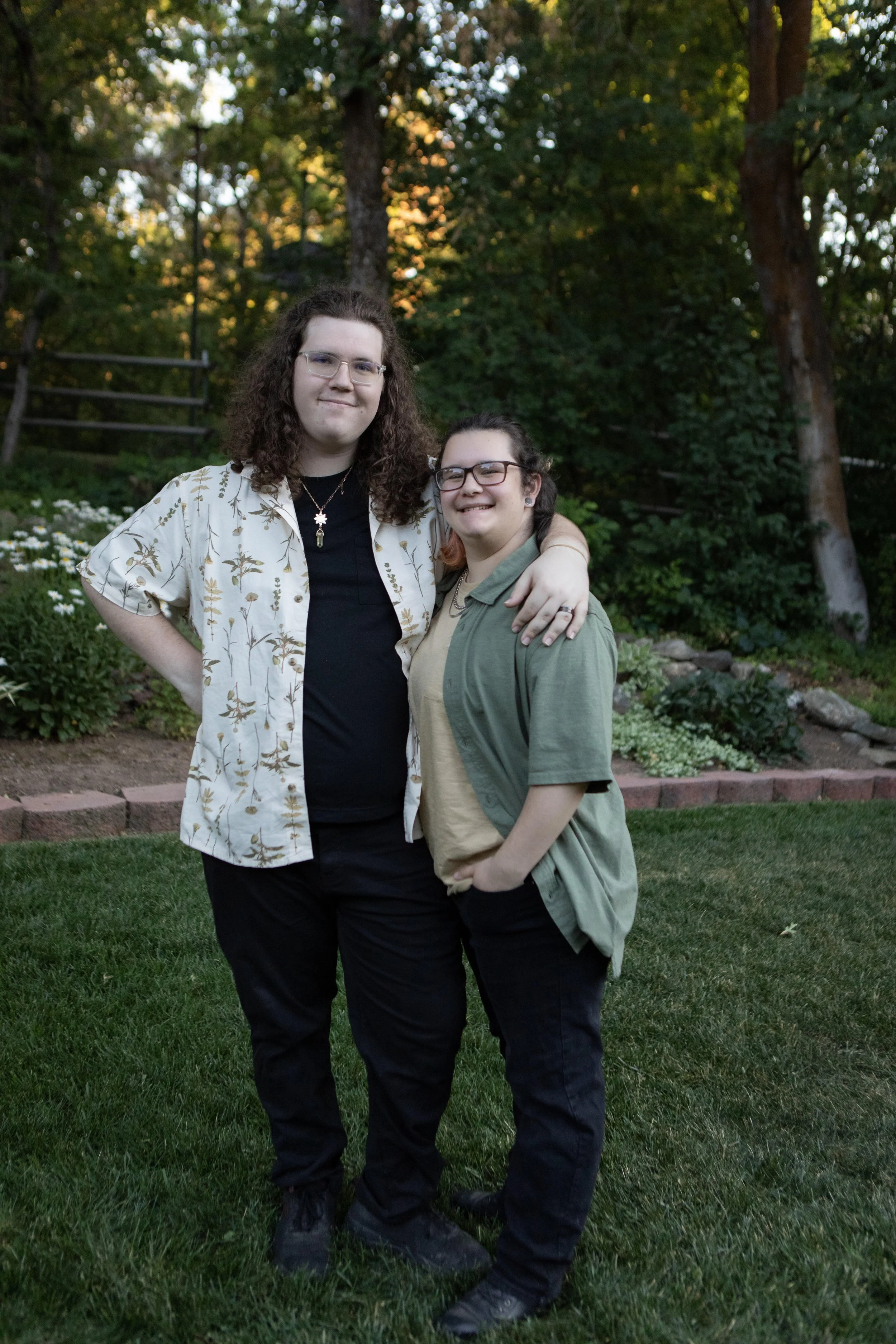
THE JEAN & ALLISON MACKAY STORY
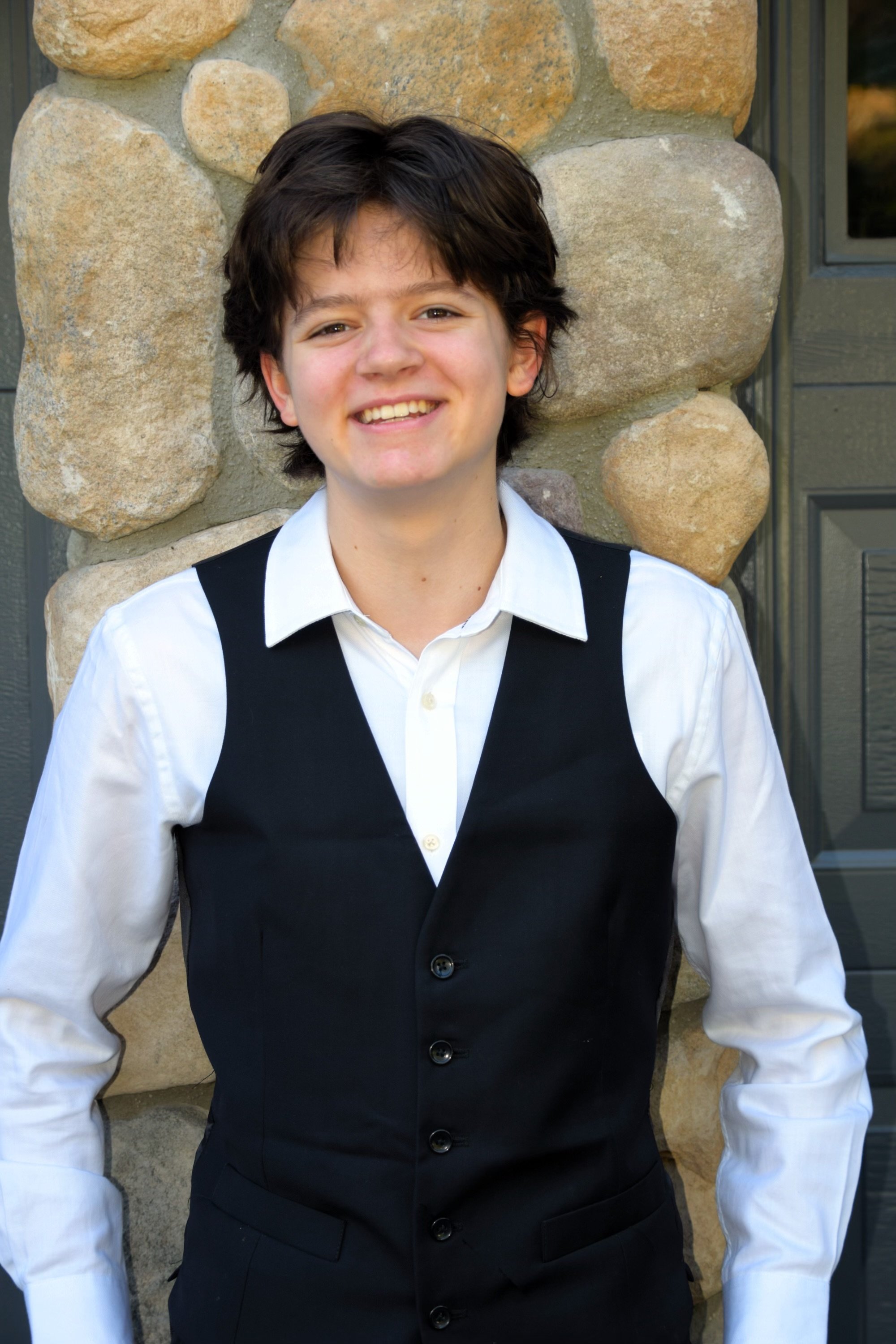
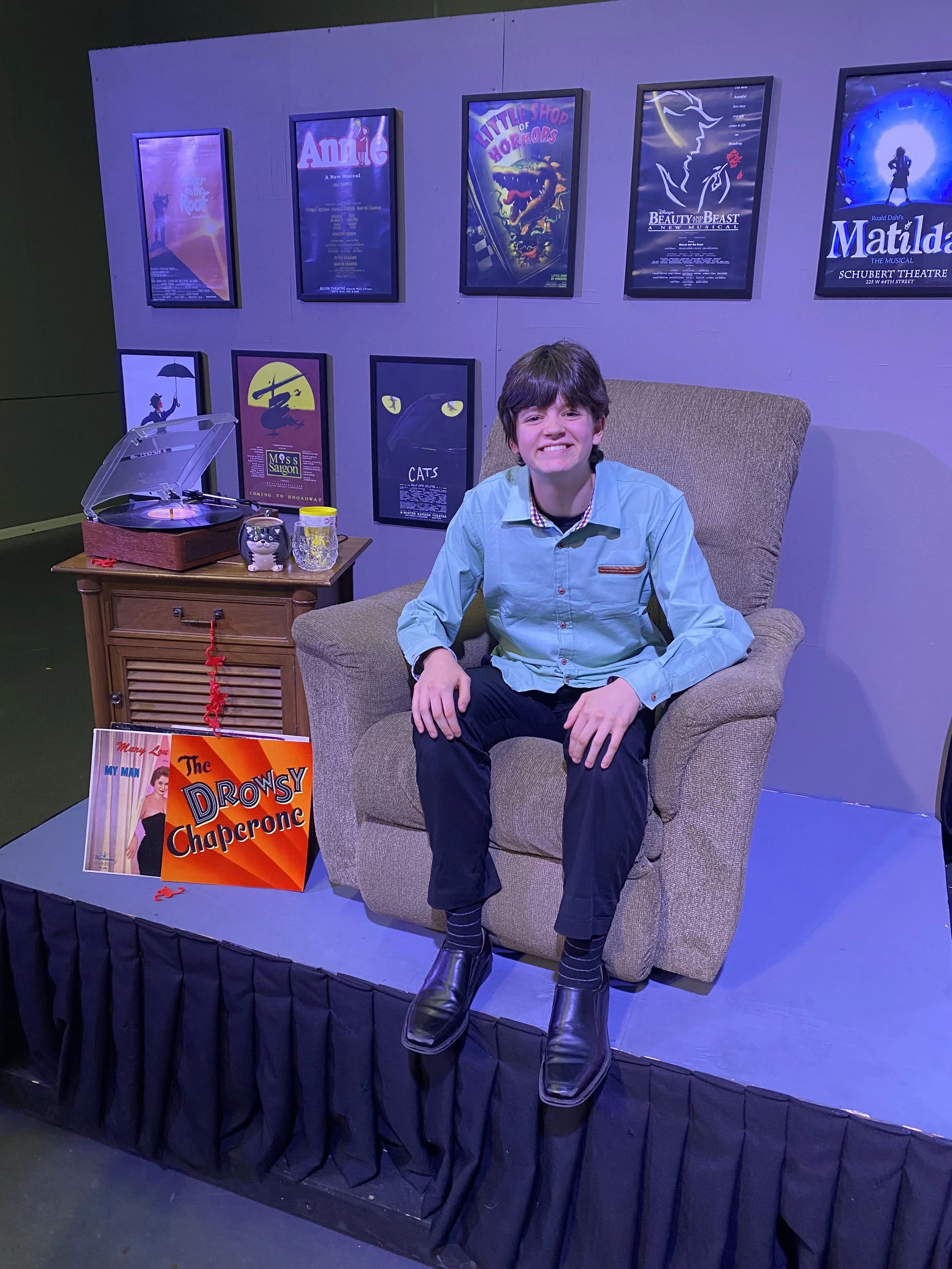
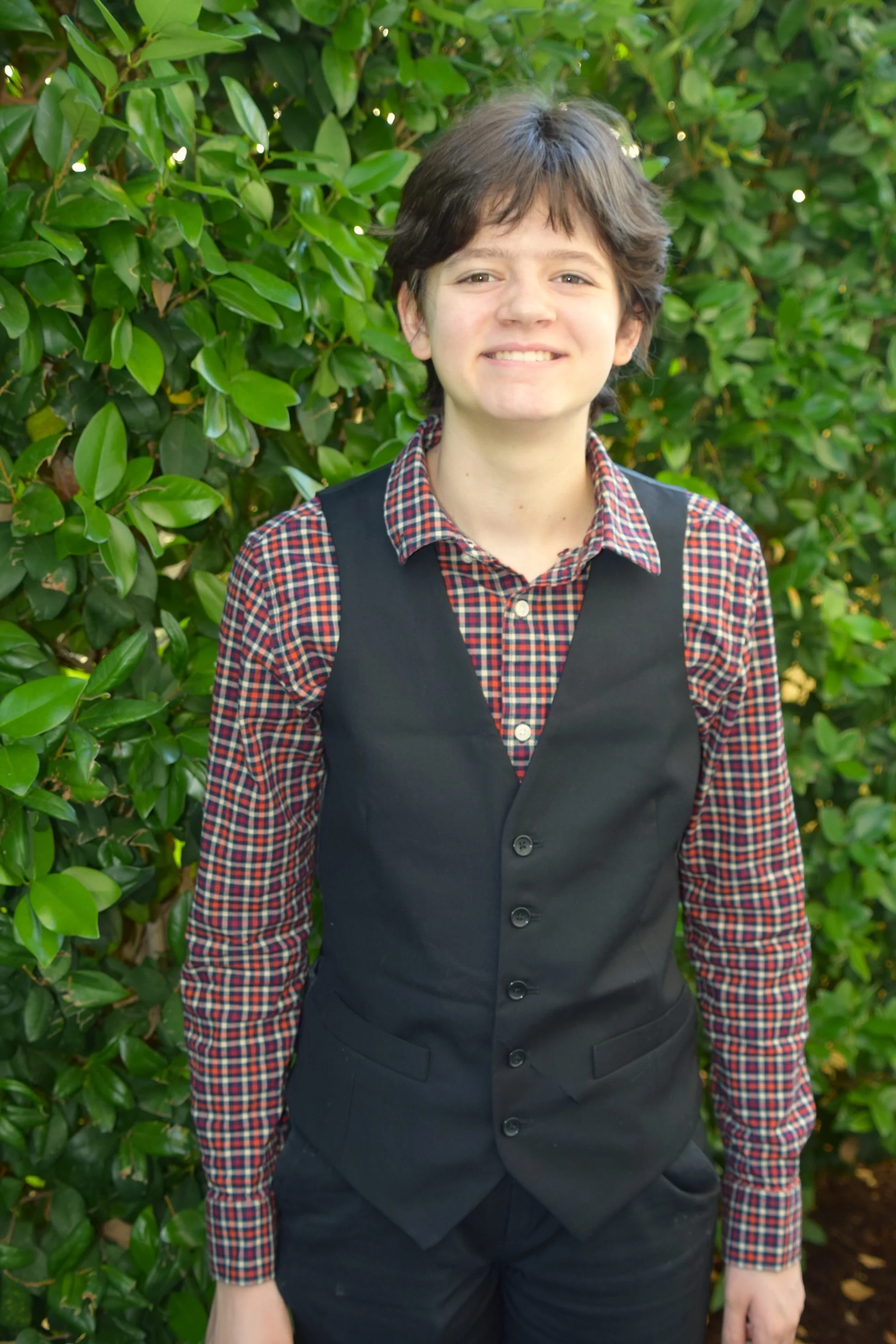
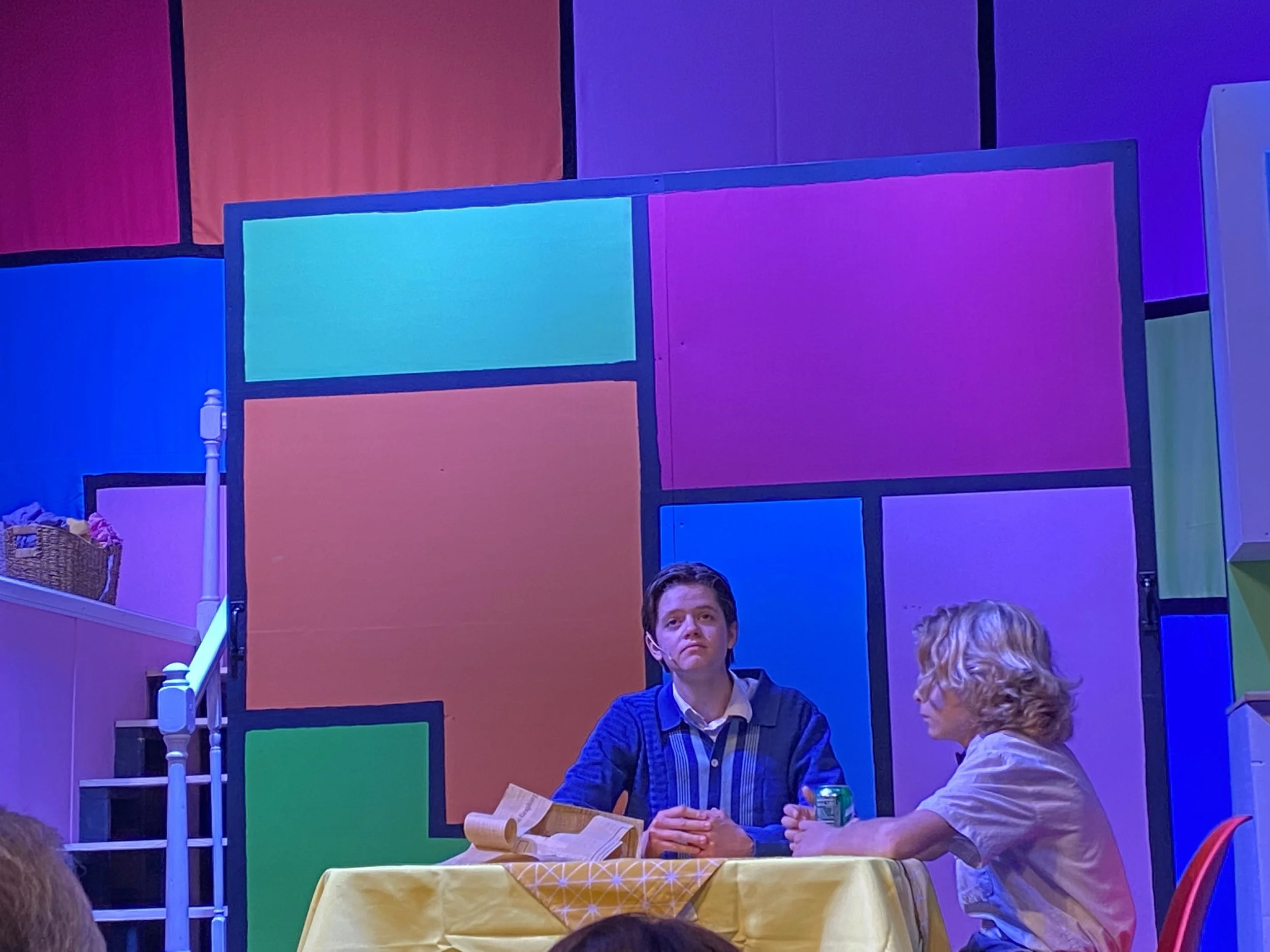
At 16, Jean MacKay is already an accomplished pianist, singer, and composer. He’s also a stage actor who played Mr. Macafee in Bye, Bye Birdie as well as the challenging role of Man in Chair in The Drowsy Chaperone. A serious academic, Jean has been taking college courses through ASU, and will graduate early from high school later this year. Intrigued by the bio-medical side of psychology, Jean hopes to become a forensic psychiatrist and study how various substances affect the brain to hopefully help rehabilitate people who have gone through the criminal justice system...
At 16, Jean MacKay is already an accomplished pianist, singer, and composer. He’s also a stage actor who played Mr. Macafee in Bye, Bye Birdie as well as the challenging role of Man in Chair in The Drowsy Chaperone. A serious academic, Jean has been taking college courses through ASU, and will graduate early from high school later this year. Intrigued by the bio-medical side of psychology, Jean hopes to become a forensic psychiatrist and study how various substances affect the brain to hopefully help rehabilitate people who have gone through the criminal justice system.
Considering all these remarkable attributes, Jean (he/him) says he becomes frustrated with often being reduced to his identity as a trans person. “That’s a facet of me, but it’s not all of me. It’s okay to celebrate one’s identity—that’s fun, but try to see the person before you see the label.”
Jean grew up in a family that moved around a lot. When asked about his home life as the oldest of six kids who homeschool, he smirks, “There’s a lot of screaming.” An early childhood illness kept Jean out of the first grade for an extended time, and he realized he preferred doing school independently. This kickstarted his online/charter educational path. As the MacKays would move for his father’s job, Jean says he often felt like an outsider navigating the social hierarchy of places like Utah and southern California, where his family now resides. But he says while his social development has perhaps been stunted, charter school has been worth the tradeoff.
For Jean, being trans was “never really a thing for me—I always just thought, ‘I’m a person’.” Jean first heard the word “trans” at age 10. When he looked it up, he thought, “Oh yeah, that’s me,” then didn’t think about it for awhile. Jean’s mother, Allison, said that even as a young child, Jean never gravitated toward baby dolls and playing house like their other children assigned female at birth. He always preferred to dress up like characters like Lightning McQueen, Indiana Jones, or Anikan and play with a Mickey Mouse doll. “He was never on the path of ‘I’m going to be a parent someday’.” But it wasn’t until puberty that Jean began to feel very uncomfortable in his body. Allison says that first he came out as aromantic, then nonbinary, then queer. “It’s a process. He’s still in process. I’m trying to hold space and be open for that to happen.” In the meantime, she marvels at his academic interests and ambition that so strongly juxtapose what she was most interested in at that age: “I was having way too much fun to want to graduate early,” she laughs.
Allison says that each time a new aspect of Jean’s identity comes up, like when he decided to change his name, she’s gone into her prayer closet and pleaded, “Show me how I can relate to this and understand. And every time I’m shown—oh yeah, this was always that way. I just imposed my belief system onto it. Or I just never thought of it that way, but it is true.” Allison says she’s now able to better navigate a journey of endless possibilities “because we let them be.” When Jean was younger, he cut off his really long hair to donate it to a foundation for leukemia. A few years ago, he chose to do the same; and this time for Allison, it felt like an important milestone, like, “I’m never going back to that little girl; I’m leaving her behind. It felt like layer after layer of cultural and familial expectations were removed.”
Many members of the MacKay’s extended family first expressed that calling Jean by Jean seemed to come out of left field. But Allison would clarify, “No, Jean’s been doing this since he was eight. Jean’s always had issues with clothes. Now, he has his own style and everyone comments how much they love how Jean dresses.” She’s grateful he’s shed the black, baggy clothes that seemed to characterize his mood for awhile.
Jean says, “I used to be part of a church that was not necessarily accepting of people like me, and I didn’t like what puberty was doing to my body. Those two things made me spiral, and I was pretty depressed for about a year.” Now Jean is more comfortable expressing his identity as both trans and asexual. He says when his parents first gave him the traditional “sex talk,” he thought, “Yeah, I never want to do that.” Being asexual while being raised in the LDS church environment was “not the worst thing in the world because with the law of chastity, people were constantly telling you, ‘Don’t do this’,” says Jean. “But what bothered me was the expectation I had to get married and be a mother and have kids. Most of the stuff they taught focused on marriage and family, which are not bad things, but they’re not for me. This expectation was frustrating—I felt like I was being diminished. To have my worth identified by things I don’t identify with was not interesting to me.” Jean says the things that interest him most in life—career and music—are what he wishes to be the most identifying parts of his life.
Allison embraces a set of beliefs and practices about the divine feminine and Godhead that differentiate her from many mainstream members of the LDS faith. Being verbal about this as well as some aspects of church history that troubled her led to her excommunication several years ago, which she now sees as a blessing because it gave Jean a safer place to land at home when he made it obvious the church didn’t work for him. “Jean saw me going through that process publicly, and it allowed him to have a safer space to talk about it at home. So in some ways, I see how the experience I went through made it safer for Jean to leave – and I would take the flack for anyone needing to do that. Because there were months we didn’t know if Jean was going to be able to stay here (on earth), if I can even make that one thing easier, then that’s ok.”
Allison was raised in a traditional LDS home and has learned unique lessons with raising each of her kids. But regarding Jean, she says, “I’m so grateful God would soften my heart to this child so that he could teach me who he is, and open this sphere of possibilities of who we are as humans, because before, I wouldn’t look. I was just doing and believing what I was told. I wouldn’t look and ask for myself. That was so wrong. I am so grateful Jean was courageous enough to show me that, and preserve our relationship. And I know Jean will teach me so much for the rest of my life.”
Jean’s father and some of his siblings still attend church, and Jean himself was expected to go until age 14 when the family realized it was in no one’s best interests to mandate that anymore. He had struggled to connect with many of the church milestones over the years, including at age 11, going to the St. Louis temple for the first time with his dad, which was not quite the experience he had anticipated it would be. But Jean says, “The thing that broke my shelf was going to seminary. I got it into my head that I could tear down all the things in my head by tearing down my seminary teachers and their classes. But I realized trying to tear down a religion by mercilessly tormenting seminary teachers isn’t going to help—or produce anything besides tormented seminary teachers. I don’t have a problem with people being a part of the church—it’s not a bad thing; it’s just not for me.”
Nowadays, Jean says he’s in remission from any religious PTSD he may have faced, but says spirituality isn’t really a part of his life anymore. While he considers the term “atheist” as useful shorthand and lets people know he’s not really interested in those discussions, he says he’s probably more agnostic, though he doesn’t love how that term essentially “puts him on the bench, and that’s not it.” Jean says, “What does matter is the things we do in this life and how we treat others.” Jean says he’d like religious people to know that the reason so many may perceive atheists as “angry” is perhaps misguided. “They’re not angry at you, the religious person, but angry at themselves. They feel tricked. Now that they see closer to their truth, they’re frustrated by harm they faced. They’re not trying to tear down your faith nor are they possessed by the devil, but frustrated because they don’t want others to be hurt anymore, the same way they have.”
Regarding the current political landscape, Jean advises, “No amount of anti-trans legislation will stop people from being trans; but it is going to result in dead children. So if you’re really pro-family or pro-life, please stop it. We need to foster understanding. I get it, if you’re unaware of what being trans means, it can sound scary or confusing. But my advice would be to talk to trans people and see how and why they feel the way they do.”
Upon reflecting on her experience getting to raise a child as unique and special as Jean, Allison advises, “Parents, set aside what you ‘know’ and listen – our kids are such amazing teachers. They are so smart.” Allison now believes Jean’s bravery might be paving the way as one of the oldest of 40 cousins. She wonders, “How many of those kids might one day say, ‘Ok, Jean did that; I can do this.’ And how many will sleep on our couch if their parents kick them out? Those who come after Jean won’t have to be alone. Jean can shine that light.”


THE ELLSWORTH FAMILY
(Content warning: suicidal ideation)
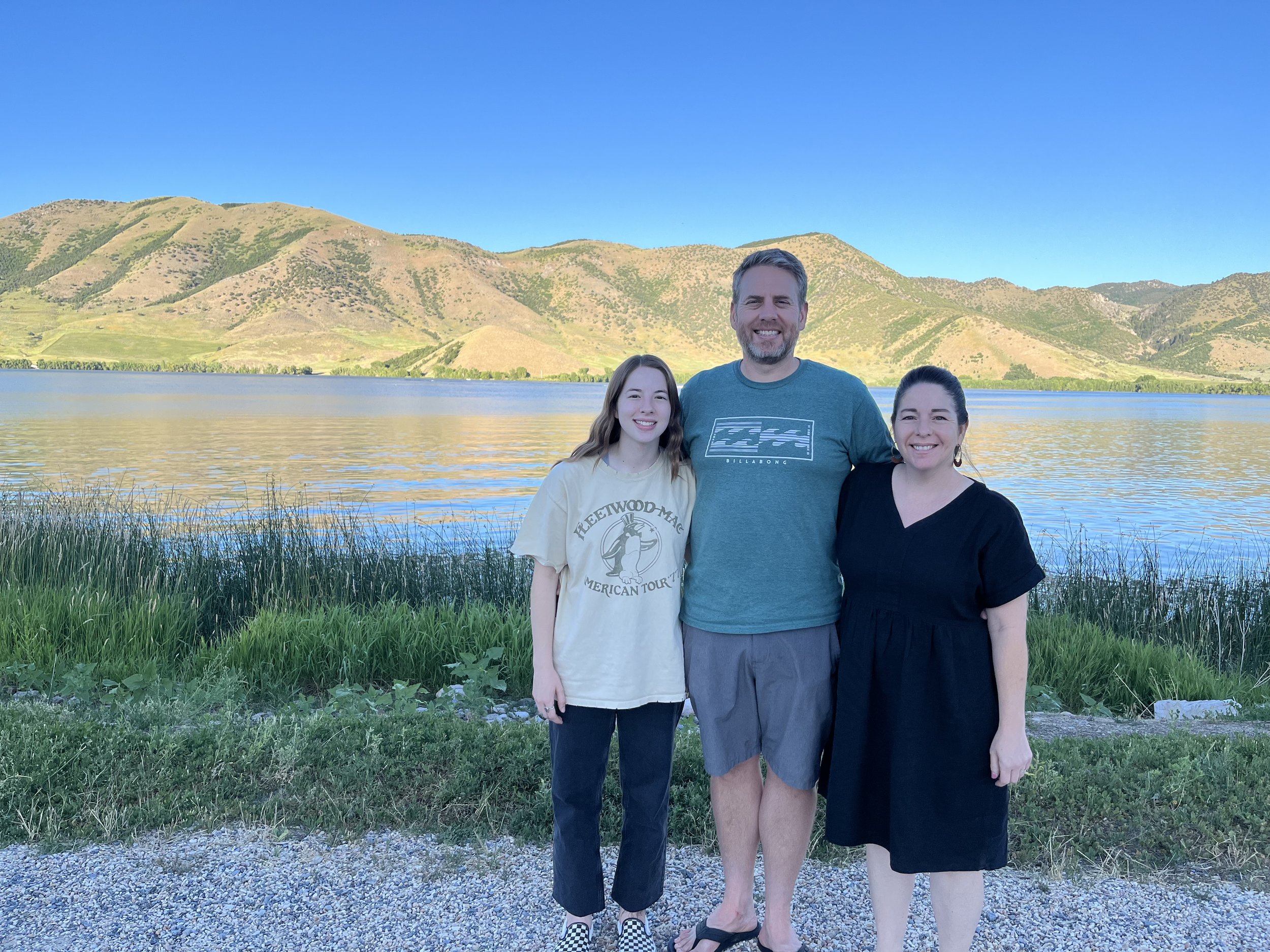
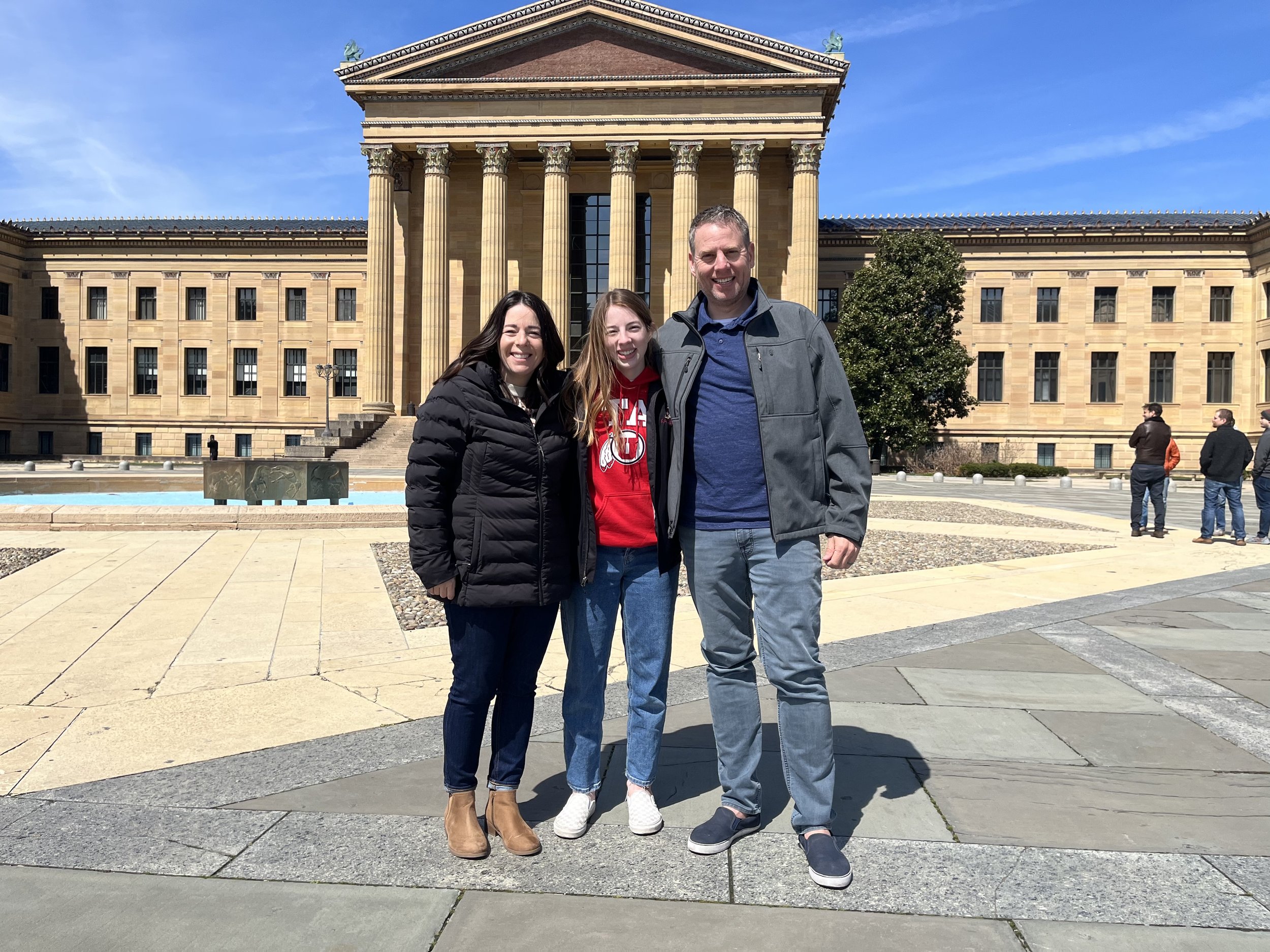
Gina Ellsworth’s first tip-off occurred when she and her daughter Lila were leaving to go to church. Lila’s phone connected through bluetooth to Gina’s car, subsequently streaming the “Questions from the Closet” podcast episode entitled “Am I Gay?” into the quiet space of their garage. Lila quickly fumbled to shut it off. Sensing her panic, Gina didn’t press. But Lila offered that her seminary teacher had recently recommended the class listen to such podcasts to try to have an open mind and understand different perspectives—something Gina found refreshing and “pretty cool.” But when Gina soon after emailed the seminary teacher to say as much, his “not sure exactly what you’re talking about?” response revealed that perhaps Lila had discovered this podcast on her own.
(Content warning: suicidal ideation)
Gina Ellsworth’s first tip-off occurred when she and her daughter Lila were leaving to go to church. Lila’s phone connected through bluetooth to Gina’s car, subsequently streaming the “Questions from the Closet” podcast episode entitled “Am I Gay?” into the quiet space of their garage. Lila quickly fumbled to shut it off. Sensing her panic, Gina didn’t press. But Lila offered that her seminary teacher had recently recommended the class listen to such podcasts to try to have an open mind and understand different perspectives—something Gina found refreshing and “pretty cool.” But when Gina soon after emailed the seminary teacher to say as much, his “not sure exactly what you’re talking about?” response revealed that perhaps Lila had discovered this podcast on her own.
Shortly after, Gina was again in her car leaving the house when once again Lila’s phone connected to the car while Lila was up in her room. This time, another podcast episode started playing that proved Lila had a vested interest in the LGBTQ space. Gina didn’t say anything to Lila, but later brought up the incident to her husband, Matt, who reminded his wife about the times in middle school when Lila had obsessed that if she phoned or invited her female friends over too often that they might think she liked them in a “different way” – a fear they found odd. As Lila struggled with anxiety and intrusive thoughts at the time, they just assumed this was her way of worrying too much.
A few months later, Gina decided to make her and Lila’s upcoming road trip from their home in Gilbert, AZ to Salt Lake City, UT one in which they could really talk. Lila, who was 17 at the time, was being recruited to play ice hockey at the University of Utah and was excited to go meet the coaches with her mother. Gina was anticipating this alone time in the car to hopefully ease her
daughter’s mind and reassure her that she was a safe space—with whatever might need sharing. Once on the long stretch of highway, Gina told Lila she wanted to ask her something. Lila had a look of fear in her eyes but said ok. Hesitantly, Gina asked “Are you gay?”
Lila was quiet for a moment, then her face turned bright red and tears filled her eyes. She said yes. Gina immediately reached for her hand and held onto her tightly. Gina told her how much she loved her and that love would never change. Lila had just finished her junior year of high school, but had planned to wait to tell her parents until she had left home for college. Gina was relieved she finally knew the truth, but also heartbroken to know that Lila had carried this all by herself for so many years. Gina says, “She had the mentality that if she did everything perfectly with the church, this would be taken away from her.”
For the rest of the road trip, Gina and Lila were able to finally talk openly. When they got to Utah, Lila asked if they could go to Deseret Bookstore and get some books. They took turns reading Ben Schilaty’s and Charlie Bird’s first memoirs about LGBTQ inclusion. When Gina called her husband to confirm Lila’s news, he simply said, “Tell her I love her.”
The following year, Lila’s senior year, was probably her hardest, Gina says, having to deal with conflicting views as her parents and only one extended family member knew she was gay—a relative Lila said her mom could tell because, “Being sweet, she wanted me to have some support.” Lila would go to seminary and church where several peers would say things about LGBTQ+ people that “only amplified how she was feeling and made it hard for her to feel good in her own skin.” Terrified what might happen if she revealed that their comments were directed at her, Lila remained quiet. Gina was also struggling at church and in their community with things people would say, and she often deliberated whether speaking up about how she really felt would subsequently out their daughter before she was ready.
Lila asked her mother if she’d be okay with her dating, and Gina replied with support: “As long as they’re a good person and they respect you, then of course.” Matt was more quiet about things, which was sometimes perceived as a lack of support, but when he did have a heart to heart with Lila, he assured her again he loved her and was proud of who she is.
During her sophomore to senior years of high school, Lila played on the only girls’ travel hockey team from Arizona, and they achieved their goal to make it to Nationals. Gina loved going on hockey trips with her. It was a great bonding opportunity for the two of them and they had a blast together. “But then we’d come home and I’d be up all hours of the night with her as she’d curl up in the fetal position, sobbing that she’d rather be dead than gay. She was terrified people at school and church would find out who she was,” says Gina. “When we were on those trips, Lila had one focus and that was hockey. When we would come home, the reality of being gay would set in. Lila never attempted, but she was scared she’d hurt herself. Luckily, she’d reach out to me and talk about it.” On one particularly dark night right after coming home from an amazing hockey trip where Lila’s team qualified for Nationals, they were both exhausted after an especially long breakdown. Gina says, “I remember her crying and saying that she didn’t want to live anymore. That broke my heart to hear. I replied that ‘I could never be mad at you, but I would be so sad if you took your life, because I’d miss you so much’.” Lila replied, “Then I’m going to live for you this week.” Gina remembers feeling like, “That was a win. But that that’s all she felt she had to live for was so sad.”
Attending church had been hard for Lila long before her parents knew she was gay. She especially felt her dad’s pressure to go, but they had no idea they were pushing her into an unsafe space. Gina says, “It was hard to see that in a place she should feel safe, she wasn’t.” Despite the off-putting comments of peers in seminary, during her senior year, the Ellsworths were given a gift by way of Lila’s first female seminary teacher--one who was remarkably helpful and understanding. Lila’s attendance had been pretty sparse, but Gina felt she could only tell the teacher that she just wasn’t doing well and struggling with some things. The teacher was concerned and expressed love for Lila. Lila felt prompted to tell her teacher that she was gay. The teacher helped Lila by switching her scripture buddy when her first one said too many hurtful comments, and then later helped facilitate Lila being able to complete many of the assignments online so she could graduate. This same teacher invited them to attend their first ALL Are Alike Unto God LGBTQ+-affirming conference in Arizona, something the teacher also attended and supported. Gina says, “It was amazing to be in a room with that many people striving for the same thing.” Lila wasn’t out and Gina asked her how she’d feel if they ran into someone they knew, to which she replied, “At least we’ll know they're a safe person.” They loved the conference, which overlapped with their stake conference that weekend, and Gina says, “I felt the spirit and love so much more at ALL than at the stake conference, where some of the talks at the Saturday adult session put me in tears. But at ALL, we all belonged.”
Lila was accepted at the U where she now plays on the women’s hockey team along with her girlfriend, who was also on her travel team in Arizona. While her girlfriend is not religious, she has attended the YSA ward and activities a few times in Salt Lake to support Lila so she doesn’t have to show up alone. Her girlfriend recently attended the Gather Conference with Lila. She has been a huge support to Lila on this difficult journey. Gina says, “It’s amazing that Lila is able to date and feel what it’s like to love somebody, but she still battles the shame that she’s ‘acting on it.’ Trying to stay affiliated with the church has been hard for her.”
Since day one, Gina has found support through listening to the Listen, Learn and Love, Questions from the Closet, and Lift and Love podcasts, and more recently, she’s been touched that her husband has agreed to tune in here and there. This last year, he was eager to attend ALL with her and made it a priority. They’ve been able to join a quarterly parent group, where she has smiled with affection, listening to him proudly introduce them: “Hi, we’re Matt and Gina Ellsworth. We have a daughter who’s 19 and gay.” Gina is so grateful for this group where they can openly discuss their lives with people who understand both their painful and positive experiences. Too many other things have proven difficult for Gina, like most recently watching general conference where she had a hard time with some talks, but could find hope in others. Gina has also felt the need to pull back from some people to try to preserve her sense of safety and minimize the feelings that her family is being judged. “It’s hard to be in this space and explain it to those who haven’t—it’s hard to feel understood. It just feels very heavy and isolating.”
Recently, Gina has decided to pull back from attending church. “It’s been really hard going and seeing things through a different lens now. Yet, I’ve gotten so close to God because I truly feel like I don’t have anyone. Even though my husband and I are on the same journey, we deal with it differently. He still goes, saying the gospel is what keeps him strong and reckoning he can
support the church and his daughter. I feel a lot of sadness; I don’t know where Lila fits in all of it. I have the belief that when we’re done on earth, God will be gracious enough to know Lila’s heart and mine and things will work out in the end – but I have a hard time feeling it at church now.”
Gina has had unique experiences of peace at the temple where she has had strong confirmation that Lila is perfectly made just the way she is. Overall, she recognizes her daughter’s coming out as a blessing, saying, “I do feel like my love for people in this space has expanded so much because of Lila. Stepping into these spaces with conferences, parent nights, and support groups, we’ve gotten to hear all walks of life speak of their experiences. We’re better for it. I have a lot of peace about who Lila is. I wish the rest of the world could have that love and peace. The most important thing I can do is love.”



THE BRYCE AND SARA COOK STORY
Bryce Cook is a name many in this space may recognize after having stumbled upon his 2017 landmark work, which can be found at mormonlgbtquestions.com. His comprehensive essay impressively details the history and evolution of LGBT policies in the LDS church and presents the rationale for a more inclusive path forward. His personal experience, along with that of his wife Sara, as the parents of not one but two gay sons, only lends to the family’s credibility on the topic…
Bryce Cook is a name many in this space may recognize after having stumbled upon his 2017 landmark work, which can be found at mormonlgbtquestions.com. His comprehensive essay impressively details the history and evolution of LGBT policies in the LDS church and presents the rationale for a more inclusive path forward. His personal experience, along with that of his wife Sara, as the parents of not one but two gay sons, only lends to the family’s credibility on the topic.
Bryce and Sara are founding members of ALL (Arizona LDS LGBT) Friends and Family and co-directors of the annual “ALL Are Alike Unto God” conference held every April in Mesa, AZ, that has before included guest speakers such as Steve and Barb Young, Terryl and Fiona Givens, and Richard and Claudia Bushman. But when Bryce considers the parents they were two decades ago, the parents who were stunned in disbelief at their oldest son’s admission to them that he was gay, and sadly acknowledges that up to that point he was “homophobic,“ his story provides hope that all have the potential to evolve on this issue.
“Mom and Dad, I know this will come as a shock to you, but I am same-sex attracted,” were the words that first launched the Cooks on their journey. Penned in a letter by their oldest son, Trevor, who was a freshman at BYU in Provo at the time, Bryce and Sara were completely stunned. Bryce thought, “How could this be? We were a faithful Mormon family, we had regular family prayer and scripture study, we had a very loving relationship with all our six children. And how could this happen to Trevor, a young man as honest, upright and moral as any young man I knew? It just wasn’t possible!”
But as he kept reading, Bryce saw the great turmoil his son had endured for years—feelings of guilt, self-loathing, failure and shame. Bryce’s mind then clouded with the painful reality that their son had not felt he could trust his parents with this information sooner. “He wanted to bear the burden alone, to spare us the grief.” Trevor had been afraid to admit he was a “failure” as a son, to acknowledge he was “one of those awful gays” he had heard his father reference. Bryce admits that until that moment, he’d held very un-Christlike views toward gay people and had likely contributed to the silent agony his son had suffered for so long. Bryce reflects, “By the grace of God, he had not been driven to suicide, as too many gay LDS youth have.”
While the Cooks were initially shocked and saddened by their son’s news, they let him know that no matter what, they loved him. Bryce confesses that at the time, they secretly held the hope that somehow, some way, he might be able to change. “The change, however, occurred in us.” An immediate change was the Cooks’ attitudes about gay people, thanks to their deep dive study into scientific research, evolving statements by church leaders, and the numerous experiences of LDS gay men and women. Their conclusions were threefold: 1) Being gay is not a choice. 2) Sexual orientation doesn’t change. And 3) Being gay is not just about sex—any more than being heterosexual is just about sex.
As the Cooks became more familiar with their newfound knowledge, they became more comfortable with who Trevor was, and no longer felt a need to hope for things that were not meant to be. They watched in wonder as Trevor chose to serve an honorable mission and finish his studies at BYU, and then continue to live a closeted life for 11 years before he opened up to anyone outside of his parents. During that time, Trevor watched as countless roommates loved life, dating, and making out with girls while he silently struggled to understand their heteronormative affections, knowing it wouldn’t be fair to force a relationship with a woman. On a trip to China to visit Trevor where he was working at the time, Bryce and Sara listened as their son said, “Mom, Dad, I want the same thing you two have—a companion, love, a family. I want that with someone who I can love, and that’s what I intend to do.” While they expressed their support, on their nightly couple walks, Bryce and Sara continued to ruminate on the “why us? Why our family?”—recognizing those thoughts now as just what their culture had taught.
Finally, at the age of 26, Trevor felt ready to share his news with his siblings and extended family. They all gathered together at the appointed time, wondering what it was that Trevor wanted to tell them, and in such a formal way. Sara remembers noticing that their youngest son, Tanner (a recently returned missionary who was attending BYU Provo and who joined the gathering via Facetime), had a “deer in the headlights” look upon hearing Trevor’s big announcement. Within a few weeks, Tanner told his parents that he, too, was gay and only had the courage to tell them after seeing the family’s positive response to Trevor’s announcement. When asked if Trevor and Tanner have a special connection, Bryce says that actually, all six of their children (who range from ages 32-38 and include Carly, Lindsay, Tyler, and Kristen, as well as several in-laws and seven grandchildren) share a close bond. Most of the Cook kids live near their parents and still gather for weekly Sunday dinners, where Bryce does most of the cooking. The Cooks are eager to have their family grow with two new official members. Trevor is marrying his partner of eight years, Ben, this November, and Kristen is marrying her longtime boyfriend in Cancun next year. Tanner is working as a physician’s assistant.
After Trevor opened up to his family, and soon thereafter, to his YSA ward, Bryce and Sara, initially wanted to keep this personal family information on the down low—especially in their ward. But Bryce could not ignore the persistent, strong impression that they must use their voice and the knowledge they’d gained to help those in their church who didn’t have a voice and who were facing a similar situation. Frustrated with the lack of resources they’d been able to find, Bryce began to research and compile all he could. The couple did a big Facebook post in 2011 in which they “came out” as the parents of a gay son. They helped start the ALL Arizona support group, they attended LGBTQ conferences, worked for anti-discrimination legislation, and came to know and love hundreds of LGBTQ people both in and out of the church. After being immersed in this world for several years, Bryce kept thinking someone needed to write a thorough treatise, from an LDS perspective, of all the arguments for inclusion that could be made. He kept hoping and expecting that someone would do it, but as time kept passing without anything emerging, he decided to take on the task himself. And with that decision, a creative muse showed up that guided and inspired his thoughts and writing over the course of a year as he worked an hour or two each evening until he completed his work in 2017.
Before making the essay public, Bryce sent drafts to various LGBTQ friends and church leaders he knew to obtain their feedback. Although he believed the essay took a respectful and even-handed tone with respect to the church, he was concerned that some church leaders still might find it critical, and thus faced a possible risk of church discipline. However, the initial feedback was uniformly positive, with one progressive stake presidency member telling him, “We’ve been waiting for something like this!” The essay went live on the website in March 2017 and was also published in the summer 2017 edition of Dialogue, a Journal of Mormon Thought. The website and essay garnered lots of attention and positive feedback, with Bryce being asked for interviews on a number of Mormon-themed podcasts. But in addition to the positive responses, he learned that the essay had also come to the attention of the church’s highest leaders, some of whom were displeased with it and thought it required an opposing response. Bryce couldn’t help but wonder whether the October 2017 general conference talk of a certain apostle (who spoke pointedly on the family proclamation) was directed his way.
Over their many years in the church, the Cooks had served in most of their ward’s leadership positions and were looked up to as strong, faithful members. But as they continued to speak out on behalf of their LGBTQ family and friends, they began to sense an uneasiness from some of their fellow members (even though the Cooks were never confrontational or disrespectful of the church or those members). On one occasion, after Sara opened up to her visiting teaching companion (a member of the primary presidency and the wife of a stake presidency member), sharing her heartfelt concerns and questions about how church leadership was dealing with our LGBTQ members, Sara was quickly released from her primary teacher calling without any explanation. From other experiences like this, the Cooks began to feel more and more like they didn’t fit in, which ultimately led to their deciding to move out of their very politically and religiously conservative ward to a less-LDS-concentrated area with a little more diversity.
Like many families in their situation, the Cooks’ children have also had to grapple with their relationship with the church, with five of the six deciding to no longer participate. While Bryce and Sara’s relationship to the institutional church has evolved over the years (particularly after the 2015 exclusion policy), they enjoy their local ward and serving in Primary (where he’s the pianist and she’s a teacher).
As a forensic accountant who testifies as an expert witness on financial and economic issues, Bryce is grateful for what he’s learned from his other role as an advocate for LGBTQ rights and inclusion, and most especially for the many friends he and Sara have come to know and love. Although six years have passed since he published his groundbreaking essay, it still attracts new viewers every month and continues to be widely shared. When asked if he thinks the church might change its position on LGBTQ issues in the future, Bryce can only offer a “Who knows?” but says, “You’d think if the church is going to survive, both in terms of attracting new members and in retaining the younger generations, it will have to change at some point. Where would the church be now if there was no 1978 revelation that overturned the race-based ban on priesthood and temple? It would probably be a strange little sect that no one paid any attention to. If it wants to grow and remain relevant in the world, I think it will have to change with respect to both its position on LGBTQ issues and on giving women an equal voice in leadership.” But he doesn’t think anything will happen under the church’s current senior leadership.
Given where Bryce and Sara are in their lives with respect to the institutional church, they are no longer bothered by what happens in Salt Lake, except to the extent it hurts their fellow LGBTQ members and their families. For that reason, they still try to share their voice and do what they can to bring about positive change among the members. Despite the difficulties and challenges they faced in their early years as orthodox members with gay kids, they say they wouldn’t change a thing about how their life has unfolded. Bryce says their hearts and minds have expanded far beyond what would have ever been possible had they not embarked on this journey.
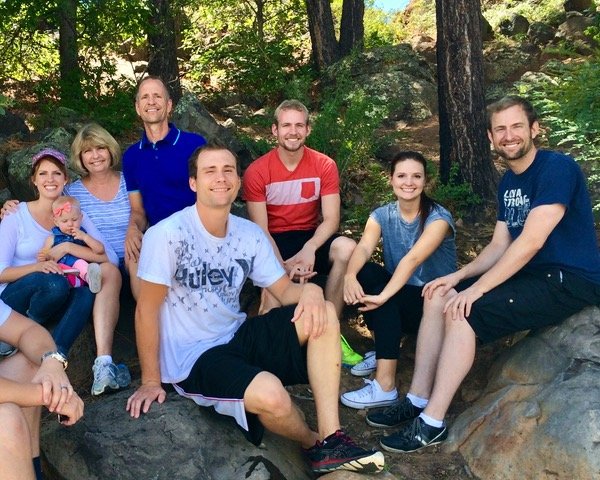
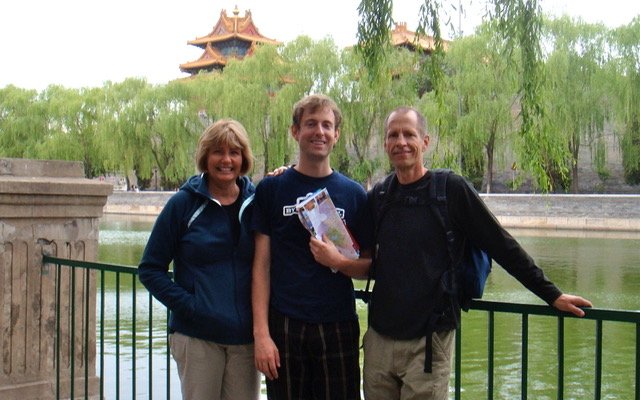

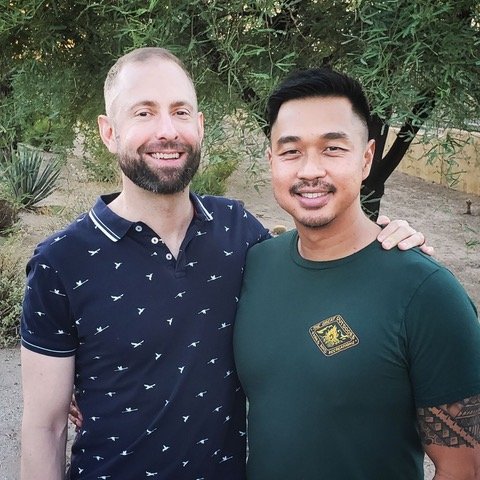

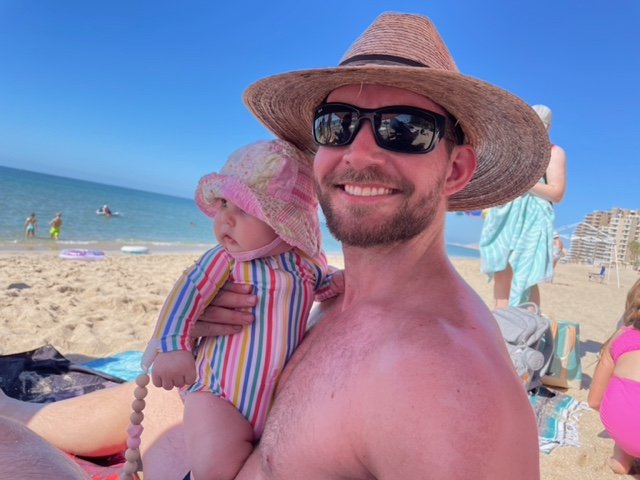

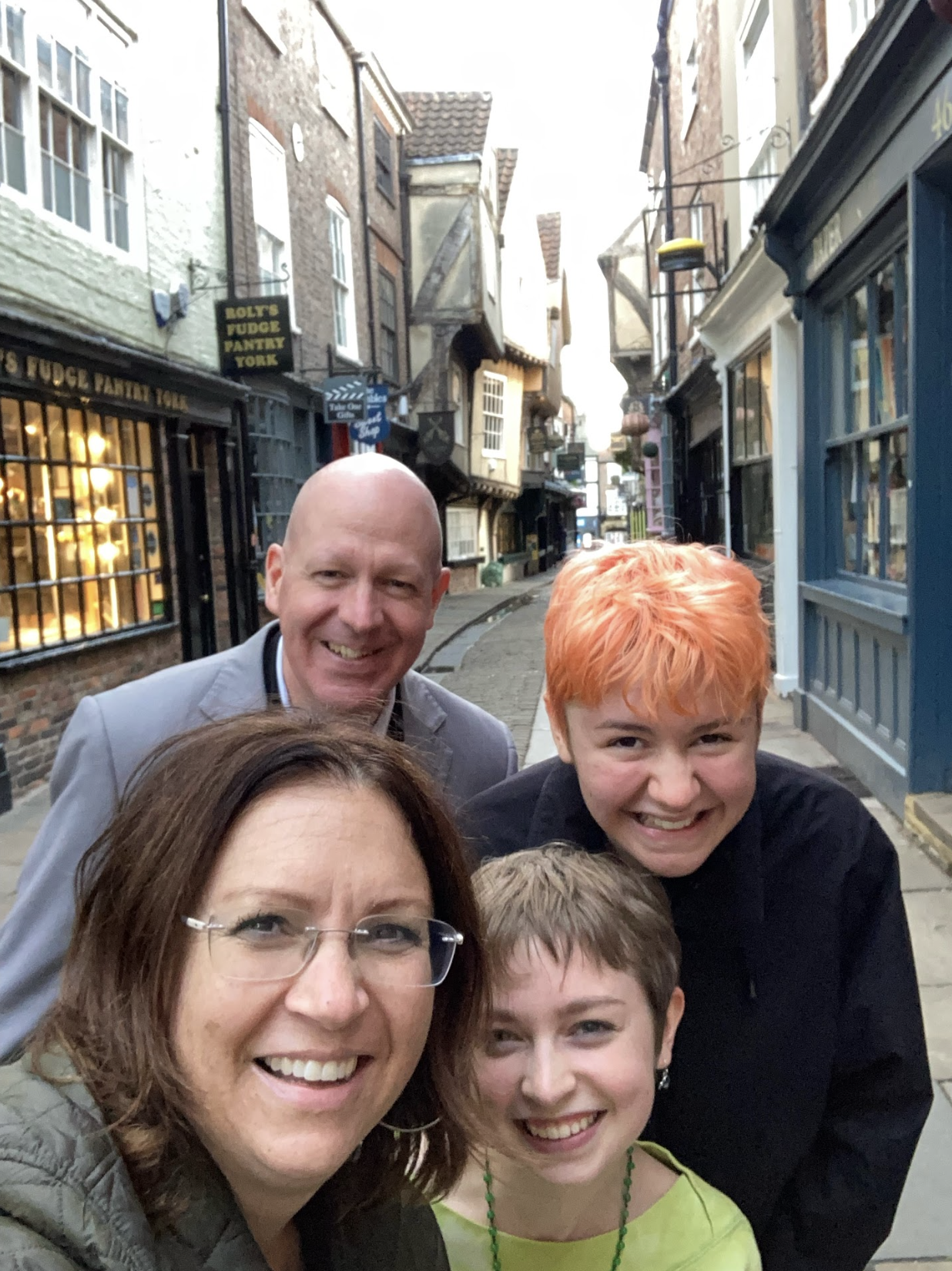
THE MEAGAN SKIDMORE STORY
Meagan Skidmore has carved out her space in the hope and healing industry. With her podcast Beyond the Shadow of Doubt™ and work as a Life Transition Coach, she specializes in helping queer youth and their families of conservative faith backgrounds cultivate their inner authority and move forward with confidence, clarity, and compassion. As the mother of a trans masculine son, Meagan has a personal stake in the field and knows it is often difficult terrain…
Meagan Skidmore of has carved out her space in the hope and healing industry. With her podcast Beyond the Shadow of Doubt™ and work as a Life Transition Coach, she specializes in helping queer youth and their families of conservative faith backgrounds cultivate their inner authority and move forward with confidence, clarity, and compassion. As the mother of a trans masculine son, Meagan has a personal stake in the field and knows it is often difficult terrain.
Meagan comes from deeply rooted pioneer stock. Parley P. Pratt is her 3rd great maternal grandfather; paternal 3rd great grandmother, Jane Johnson Black, was a midwife who helped deliver eight or nine babies the night the Nauvoo saints were forced to cross the Mississippi, an event that triggered labor for many women. Meagan was baptized at eight, president of her Young Women’s classes, served a Spanish-speaking mission to Houston, attended BYU, and met her husband while getting her master’s degree in school counseling. After her husband, Micah, finished his second year of BYU Law School, an internship took them and their two-week-old, Abi out of state. A year later, he accepted a full-time offer. AJ was born almost three years after Abi, and Meagan enjoyed staying home, raising her kids and staying active through 12 years of service on the PTA board.
When he was in the seventh grade, Meagan noticed AJ gravitated toward anime shows where the characters seemed ambiguous in gender. That year for Halloween, AJ requested his visiting grandmother sew him a gender-neutral character costume. Meagan didn’t want to make it a bigger deal than it was, but she continued to notice some curious clothing preferences and photos AJ would upload to the cloud. One day, Meagan saw a text to a friend that indicated her youngest (during a time where he was not yet aware of his trans identity) identified as lesbian. Meagan was in shock and shared it with her husband. She recalls this as the beginning of “a terrifying journey. I felt so lost, all I had to go on was what I had been taught. I had access to personal revelation from God, but it was really hard to give myself permission to feel okay about it when stuff would come up that seemed contradictory. It was a really confusing, painful time.”
Meagan says, “I had always felt compassionate for those who identified as LGBTQ+ and were faced with the reality of having to spend life alone without companionship. It didn’t sit well with me. It didn’t align inside. I remember thinking I’d never wish that on anyone. I’m someone who’s suffered from depression since my teens, and one of the antidotes to depression is companionship, relationships, intertwining your life with others who care. It sounded like a lonely, torturous existence to me.” As she prayed for guidance, Meagan remembers feeling the divine impression to “Just take it one day at a time. Or if you need to, one hour at a time. Or one minute at a time. That was the beginning of a completely different vantage point in both my spiritual and mental space.”
That summer, Abi went away for three weeks to hike Philmont, and it was often just Meagan and AJ home alone at the house, working on a painting project for a bed for their loft. Meagan remembers having moments of being unable to catch her breath, so overcome with fear and panic. She says AJ also remembers this as a traumatic time in which he felt he couldn’t rely on his parents. Much of Meagan’s emotions came from the realization that this information put their family at risk, as they lived in a state with increasingly strict anti-LGBTQ+ laws. She did not know any other families with LGBTQ+ children and was unsure how to navigate it all in the Bible belt. Sure enough, a group text chain with AJ’s rec volleyball team which included most of his close friends became problematic after he announced his news, and felt the friends trickle away. Some close friends and families also made painful comments like, “We can still love them even if we don’t agree with their choices.”
As AJ slipped further into the “othered” category, he really began to struggle with his mental health. About three weeks before school closed due to the pandemic, when AJ was in 8th grade, Meagan got a call from the school counselor asking her to pick AJ up. Some texts had been turned in to the assistant principal that revealed AJ had shared some self-harming thoughts with a classmate. He would need to seek professional help before being able to return to school. Luckily, Meagan was close with her own therapist and they were able to get him in for a session that same day. That relationship continued throughout the pandemic via telehealth, which Meagan credits as being a life-line. She is also grateful for the quiet of the pandemic where they could process in relative privacy. She could find solace and have one-on-one time with AJ since salons were closed, so she’d often dye his hair and they’d talk.
One day, Meagan learned AJ had been self-harming when he refused to wear a short-sleeved shirt. Once school opened up again, AJ decided to remain virtual, to better monitor his mental health. In spite of this, the rest of his high school experience was difficult. He especially struggled after his older sister went to college. This was right as AJ officially came out as trans male, at the start of his sophomore year. While Meagan had noticed signs in his dress and appearance, this time she waited for him to share the words.
Meagan says a gradual name and pronoun transition helped ease her in to their new reality. But several of AJ’s teachers and classmates refused to honor his new name and he/him pronouns. Meagan’s heart dropped when she received a text from AJ that said, “How do you share you really feel like a boy on the inside?” Meagan says, “I KNEW to my core, though I didn’t understand what this all meant and felt like, but I knew my kid wasn’t making this up.” The Skidmores continued to work with the school counselor, and it was decided AJ should graduate a year early. AJ was more than ready to be done with high school—and the church, as was his sister Abi, who said, “I can no longer associate with an institution that continues to hurt the people I love,” referring to AJ as well as several queer relatives. After a rocky few years, Meagan feels so grateful AJ earned his diploma, and has opted to have a little more time at home this fall as he’s still 17. He will begin college in January.
During the beginning of the pandemic, Meagan discovered life coaching through Jody Moore’s program, and began certification through the Life Coach School in September of 2020. This became a mental health lifeline for her. She created her own LLC in spring of ’21, and it’s been growing since. She has found her niche working with LGBTQ+ families of a conservative faith background, both in her area and online. In a highly conservative area, with laws that now mandate reporting for any child under 18 who begins the transitioning process, Meagan has her work cut out for her. She says several of the Christian churches in her area advise parents to kick their kids out if they come out. As such, many people do not talk openly about being queer. Even some allies are afraid to post a bumper sticker or wave a flag.
Meagan volunteers and now considers herself a “hope dealer,” donating her 6-week course program to kids who need the support. She also works with the Cathedral of Hope (the self-described “largest affirming church in the world”) which is led by gay pastor Dr. Rev. Neil Thomas who was raised LDS in the UK and also made his way to Texas, feeling called to the ministry. Through these links, Meagan works with families with the goal of reaching a mutual understanding so the kid can move back home, and the parents can feel good about loving and supporting both self and child. “That doesn’t mean there isn’t a lot of work and mindset shifts needed; there’s often some grieving and mourning to do,” she says. “I’m doing my best to navigate a nebulous space. I’ve learned through my own experience and study that it’s easier to lean into uncertainty and leave it up to God to fill in blanks I used to try to fill in. I’ve learned how to better separate religion from spirituality.”
For Meagan, God can be found in so very many spaces. She feels religion/church is a manmade construct that helps people grow closer to God and their own spirituality within a community where ideally one feels belonging. She views her journey as more of a pivot than a faith crisis that she now actually labels as a faith expansion, saying, “I deeply feel we have so much more we have yet to know and understand about God and this world. I go back to the two great commandments—to love God and love our fellow man, like ourselves. This is impossible if we do not first love ourselves. When I lead with love, I can feel good about the steps I take, knowing my intentions are in the best place. This journey has forced me to stop looking on the external to interpret, classify and label…all the things we use to define ourselves, and instead to see the heart. I like to say I’ve learned how to put on my eternal eyes and see people as God would—as the blessing they are to self, their family, community, the world. I would never trade where I’m at.”
One thing Meagan has learned to be aware of through her evolution is to identify the emotions driving her thoughts and behaviors. “If it’s fear, that’s an immediate red flag for me to stop, step back, and assess what’s going on in each situation. I don’t have to rush to figure out all the answers. I break it down to figure out what’s going on right now and how can I see it through a more loving God-lens. I’ve learned more about the nature of God and it’s not the hellfire damnation god so many grow up believing in. God is so much more all-loving than I ever realized.”
She continues, “I used to think I was a good Christian and knew how to love and not judge. I served my brains out, was a self-defined member missionary, I tried to do all the things… I’ve learned living a Christlike life has a lot less to do with all that than I thought. Very little, actually. Living a Christlike life is just loving. Love is an all-encompassing God-energy. It’s what we’re all striving to find and connect with, but so many things in this mortal life get in the way. On this road less travelled, my path has brought me closer to knowing and understanding the Savior than anything else. Scripture says he was often alone and acquainted with grief. I get that.”


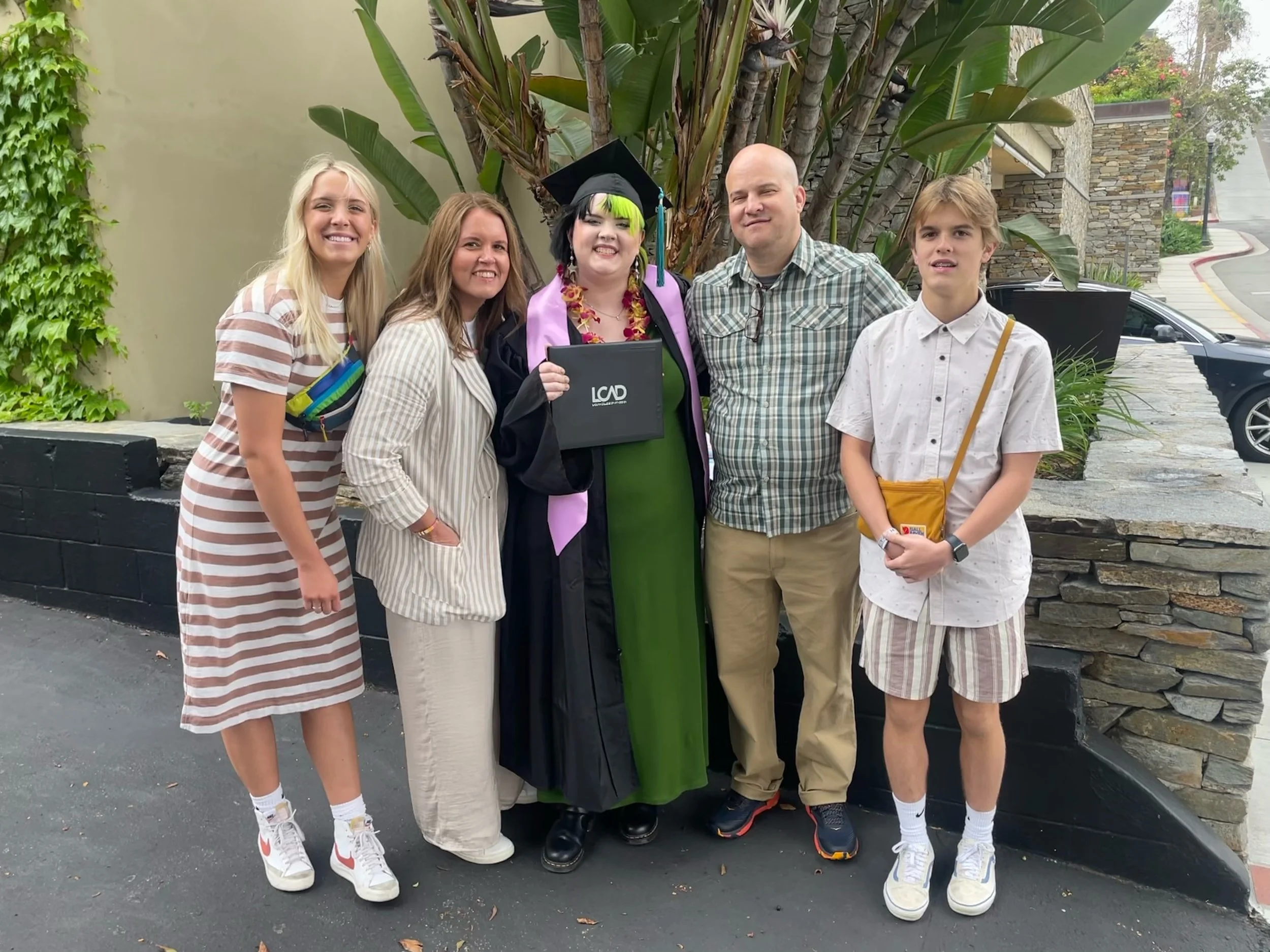
THE GEARHART FAMILY
On Sundays, Jolene Gearhart of Colorado Springs is typically on call for a job that demands she sit with people undergoing unspeakable trauma..
(Content warning: references to the Club Q+ mass shooting and advocacy for victims of sexual assault and violence)
On Sundays, Jolene Gearhart of Colorado Springs is typically on call for a job that demands she sit with people undergoing unspeakable trauma—people who have found themselves suffering not in a church foyer, but in an emergency room or shelter or police car. As a volunteer victims’ advocate, it is Jolene’s duty to hold the hand of those who are often experiencing their very worst day—assuming they let her. As many of Jolene’s clients have just been rescued from domestic violence or sexual assault, physical touch is often the last thing they want. But Jolene makes it her mission to at least seek a moment where she can look them in the eye long enough to say, “This is hard work, but you are worth it. You deserve freedom, happiness, safety.” Jolene believes, “I can’t change the world, but I can try to give people hope.”
Last November, Jolene was called onto the scene of a horrific tragedy that hit too close to home. There had been a mass shooting at Colorado Springs’ only LGBTQ+ nightspot, Club Q, the night before Transgender Awareness Day. Three emergency rooms were swarming with people hoping to identify their loved ones on the lists of survivors. Jolene steeled herself to provide support to numerous families asking the toughest of questions. One family was unsure how to answer whether they were looking for a Jane Doe or a John Doe as their child identified as transgender—which ended up being an important distinguishing marker that night. Unfortunately, that family, along with four others, received the worst news—among the 24 injured by gunfire, their loved ones would not be coming home. It was a long week for Jolene as she worked alongside the care staff, hoping to do whatever she could to help her community heal. As a victims’ advocate, and the mother of an LGBTQ+ child, Jolene was uniquely qualified to serve in that unpleasant space—a role she says has only brought her closer to her Savior.
The Jolene Gearhart of six years ago might not recognize who she is today—an evolved figure of strength who works as an ally and advocate in spaces she once found foreign and uncomfortable. But when she looks back on all she’s learned since her oldest daughter came out, Jolene recognizes how far one can come to inhabit a space of love that also demands action. Just as she serves as a victims’ advocate, Jolene has taken it upon herself to speak out about how we can better love and serve the LGBTQ+ community--something she says she initially struggled to do, having been raised in an extremely by-the-book, LDS family.
Jolene and Thomas Gearhart’s oldest daughter, Alli (almost 24), broke the expectations of her conservative upbringing by choosing to not attend a church school after high school. Instead, she flew over Utah and further west to Laguna Beach, California, where she enrolled in the Laguna College of Art and Design. While Thomas was supportive of whatever school Alli chose, Jolene was anxious about who she might be surrounded by while taking comfort that at least, she’d have relatives nearby. Alli’s parents said they were thrilled to see her seemingly thriving in college. They were much less thrilled when Alli called them during spring break of her freshman year to tell her parents, “I think I’m bi.” (Alli now identifies as lesbian.) Jolene says Thomas was very calm about it, but that she “cried and cried; I spent a week in bed. I definitely said some things I wish I hadn’t—I know so much more now.”
Jolene spent those initial moments reflecting on her daughter’s high school years—chalking up her lack of dating interest to the fact there were few LDS options, and anything else would defy Alli’s strict “only date LDS members” upbringing. But Jolene considered how Alli also hadn’t seem very interested in church dances, or girls’ camp. Her mother had always figured that was because she was a little more introverted. Now, this same daughter was telling them she’d seen a movie she really identified with that had helped her come to terms with her orientation.
Jolene says, “I felt like I was grieving like a kid had died. It was hard for me to navigate.” Alli had told her siblings (Claire—now 21 and married to Brandyn, Ainsley—20, and Rainier—15) her news six months prior to telling her parents, and the kids all reacted well and were supportive of Alli, though they were upset at the tumultuous homelife they experienced navigating their parents’ emotions at the time. But her siblings were the first to say they’d understand if Alli left the church if it caused too much pain. Jolene says, “We asked dumb questions about LGBTQ issues, and wondered if her coming out might be because she was hanging out with other LGBTQ people—myths we had trained ourselves to believe to get away from accepting the community.” But as their new reality settled in, Jolene decided she needed to learn a little more, and began to look for resources. She says she remembers feeling like “a dirty kid” buying Richard Ostler’s book, Listen, Learn and Love. But as she read it, something sank in—the feeling that Ostler’s approach of listening, learning, and loving made common sense. Now it’s a book she recommends wholeheartedly and often.
When she asked her daughter why she didn’t say something sooner, Alli told her that due to the faith in which she’d been raised, it was all so off their radar, she never even thought she could know or explore something different than a heterosexual relationship. This is why Jolene tries to be an outspoken ally now and openly tell their story so hopefully, other LGBTQ+ kids will be able to learn and grow and process this part of them in their homes, under their parents’ tutelages, and not “after they’ve moved 800 miles away. Why are we sending kids out into the world to figure these things out? Adulthood is hard enough. I would have loved to have Alli by my side, and not having to figure this out on her own.” Jolene appreciates that in her former ward, there was a gay young man who the bishop took under his wing and designated as a quorum leader, embracing his authenticity. It’s sad to her Alli didn’t have a similar experience.
After facing a few tough years, Jolene is so proud that Alli has since graduated from college and is now working a “grown up job and can pay all her bills and live on her own. I never thought I’d be so thrilled to have a kid working, but I am. I love that she’s happy and busy working.” Alli tried to attend the singles ward near her college for a few months, but after a particularly painful talk on the Family Proclamation “broke her,” she ran out of the building crying and hasn’t been back since. Jolene says she’s fine with this now, but it saddens her how Alli’s at times struggled alone in California to figure things out. While shunning the idea of a loving God and sometimes struggling to share the interests of her family, Alli has joked she’s the “black sheep” of the family, having developed an affinity for crystals, tattoos, and is independently spiritual. Jolene says, “To me, to not believe in a Savior and Redeemer in life is heart-shattering and I worry. But she has a good head on her shoulders.”
Jolene says that now that Alli’s out of the church, she still recalls how “we judge people and what we think of people like her. Alli rightfully still fears that people discount what she has to say because she presumably ‘is following Satan.’ Alli grew up in it and says she values it, though it’s not for her.” Alli had always maintained a close relationship with her sister Ainsley, but things became a little awkward when Ainsley prepared to leave to serve an LDS mission to Mongolia in June of 2021. Jolene also felt a “ton of anxiety and conflicting feelings about Ainsley going. I’ve questioned why I’m sending a daughter out—though it was her choice—to preach and share the gospel when we now have very conflicting ideas? We say one thing and do another.”
Jolene found much comfort, though, and “felt seen by God” when Ainsley was called to a nametag-free mission to Mongolia where, rather than a proselytizing one, her mission emphasizes Christlike love through service. Ainsley is currently teaching English to kids and can only “missionary” if someone asks. Ainsley spends a couple hours each P-day on Facebook messenger with her mom and sisters, a time the women cherish. But church-centered experiences like these can still be hard for Alli—like when Claire recently got married in the temple and she had to wait outside. Jolene is very grateful more couples like Claire and Brandyn now prioritize civil wedding ceremonies in addition to temple services that can feel exclusive. She loves how both Alli and their son (who was 12 at the time) got to stand up and watch their sister exchange vows.
Claiming she “wears my emotions on my sleeve,” Jolene has found much comfort in talking with other mothers in this space about the best ways to support their LGBTQ kiddos. In the beginning of her journey, she frequented the Lift & Love online support meetings and still regularly recommends them to other friends and most recently a family member so they can join in community with others from across the nation and “be honest about how we’re feeling. In this space, we can find our way, preserve our authenticity, stay in our religion if we choose, and really help educate others so our kids can be who they are.” Jolene also reveres an experience she had visiting the St. George Encircle house with friends on a rainbow moms retreat and feels church should be more like that—a place where people can “be honest about who they are, bear each other’s burdens, and mourn with those who mourn. You can skip over the fluff and really connect on a deeper level in this space. People respond so much more to real experiences.”
Jolene has seen how being Alli’s mom has brought her much closer to the Savior and what really matters to her, which no longer includes the do’s and don’ts of shame-inducing outward behaviors like “overemphasizing dressing modestly and whether or not you smoke or drink coffee or tea”—practices that may just be a part of one’s upbringing or culture, and policies she has observed that in her past serving as a Relief Society president have led friends she’s deeply admired away from a church that should have been there to embrace and love them fully. “What kills me is we’re denying good people temple blessings because they smoke.”
While continuing to volunteer as a victims’ advocate, Jolene is concurrently working to become a Licensed Clinical Social Worker. After learning she could study religious trauma and work as a therapist on a sliding pay scale so all could afford her services at places like Encircle, she resolved, “This is one thing I can do to help out in this space.” Jolene recently worked with a beautiful young woman Alli’s age who is an unhoused drug addict who’d lost custody of her young daughter. When Jolene handed the young woman a blanket, the woman looked at her and said, “You’re weirding me out because you’re being so nice to me.” Jolene says the woman had been raised on the streets and “couldn’t take an ounce of kindness.” Jolene realized that, for so many in privileged circumstances with support systems, how “blessed and ignorant we can be as to what’s really going on out there. Functioning people with healthy families are the minority.” Jolene says, “Both in respect to my job and institutions like church, I often wonder, how many do we exclude because they don’t meet our criteria? They don’t talk like us or do what we want them to, so we push them away. We can’t change the world, but I can try to give people hope and bring them in.”
Jolene often thinks of how her daughter must feel, being pushed out of a system that has no place for her. It’s a similar feeling to when she holds the hands of some of the victims she works with when authorities come in and force them to “answer ridiculous questions” as part of their investigation, shortly after a survivor has suffered assault. Jolene says, “The Savior wants us all to be victims’ advocates. We may not all have huge traumas, and I hope we don’t; but the Savior is there for all. He wants us to be there for each other.”


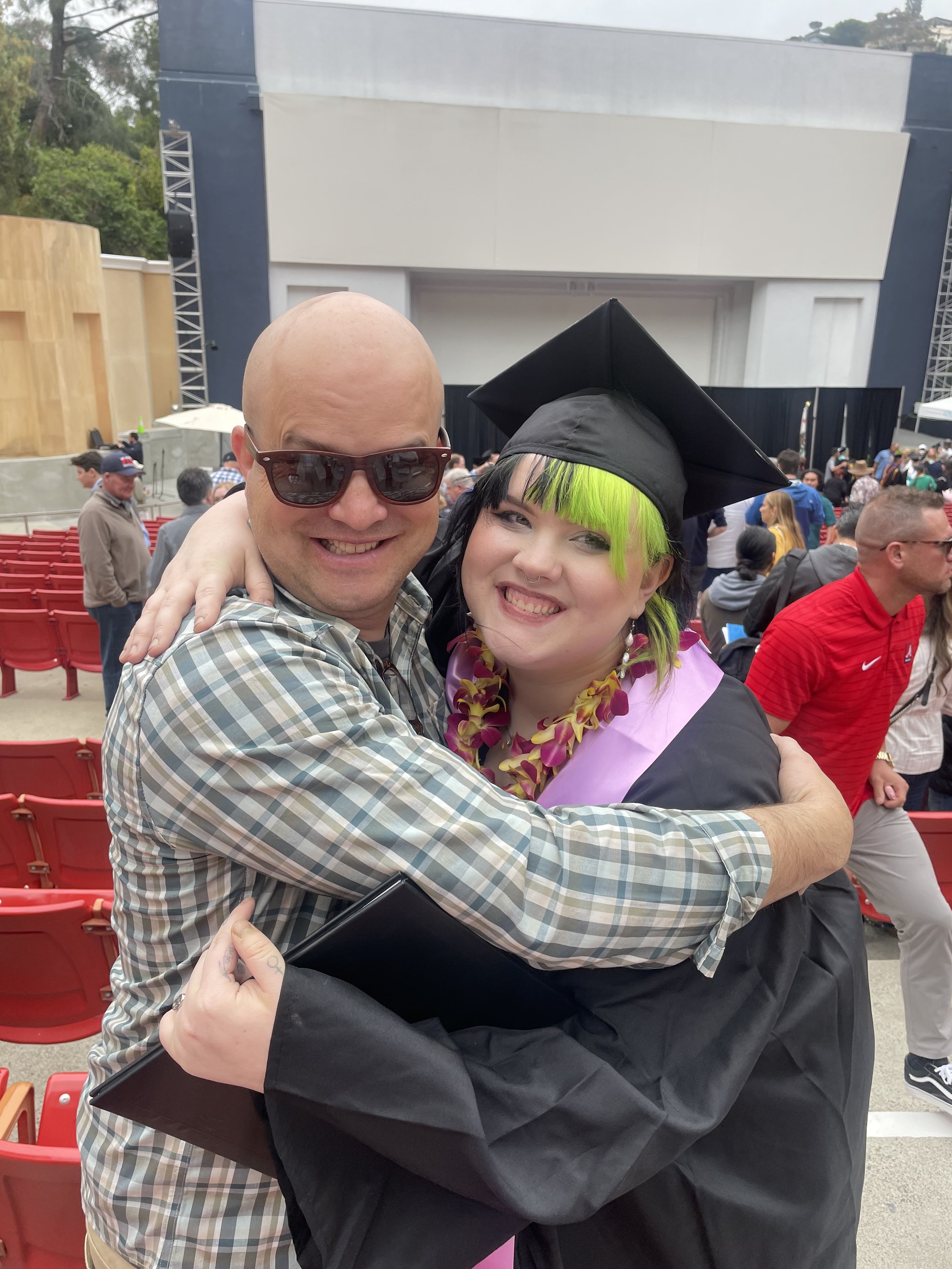
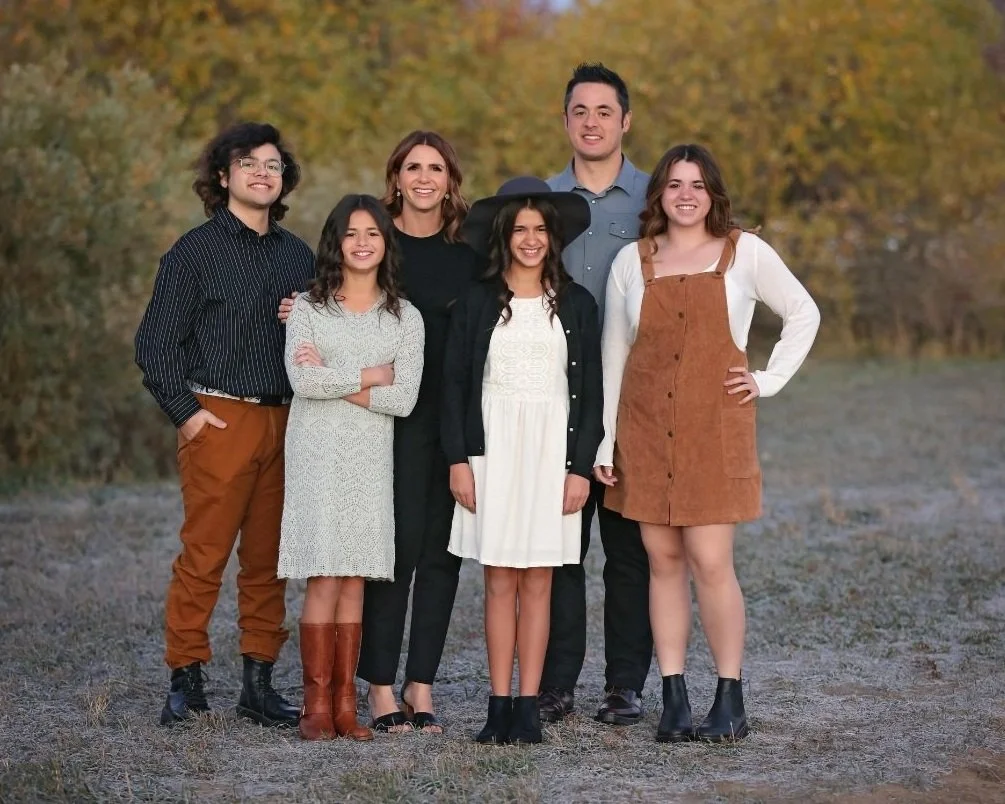
THE AUSTON FAMILY STORY
Darice and husband Darryl lead with love, and prioritize making their home a safe space for their girls (Bazel—20, Scout—17, Harper—15, and Sawyer—11) and all who enter there. With a professional background in communications and PR, Darice delights in connecting with people. When it comes to her passion of creating affirming environments for kids like her own, Darice is a pioneer armed with resources and personal experience, who works diligently to make her area of Colorado a more inclusive space.
We are thrilled to introduce Darice Auston as our new Lift & Love Family Stories Coordinator and we are excited for her to share her story with us.
Darice and husband Darryl lead with love, and prioritize making their home a safe space for their girls (Bazel—20, Scout—17, Harper—15, and Sawyer—11) and all who enter there. With a professional background in communications and PR, Darice delights in connecting with people. When it comes to her passion of creating affirming environments for kids like her own, Darice is a pioneer armed with resources and personal experience, who works diligently to make her area of Colorado a more inclusive space.
In middle school, Darice and Darryl observed that Bazel gravitated toward an LGBTQ friend group. They let Bazel know, “Hey, if you’re afraid to tell us this is where you belong, don’t be. We completely love and support you.” Bazel assured them this was just her friend group, not her identity. It wasn’t until after high school graduation that Bazel told her parents she was bi, which Darice says she understands can often be considered a “gateway identity,” for kids to test the waters. At this same time, in May of 2021, Darice was called to be her stake’s Relief Society president, which she feels was no coincidence. “It felt very much like God’s timing--that there are others also on this journey who need me to advocate for them through my service in this capacity. I felt such a strong call to reach out to those on the edge and champion belonging.”
That October, Darice and Darryl got a text from Bazel saying, “I’m trans and I want to go by she/her pronouns.” They were shocked. Darice says, “I was a very vocal ally—in and out of the church and on social media, but I felt we had a lot of work to do. For me, it took a huge leap as working with gender identity is a different ballgame than just attraction. There were a lot of questions I hadn’t thought to ask.”
Darice has always relied on her husband to help process things and feels grateful they are generally always on the same page. The evening of Bazel’s text, she and Darryl laid side by side, staring at the ceiling and thinking, “How did we not see this?” She says, “It never crossed our minds not to affirm our child. Acknowledging the complexities our child would face and how best to address them became our first priority.” As Bazel was away at college, they were grateful for the grace period they had to process this information together before welcoming Bazel home from college. It gave them time to get up to speed about how to affirm their trans child.
Especially with the current climate of hate toward the trans community, they worried about Bazel’s safety and how she would be accepted by her peers and by their friends and family. They never tried to talk her out of it, but instead accepted her pronoun and eventual name change. Bazel was no longer participating in church, which made things easier in that they weren’t having to navigate the youth program with a trans child. They did, however, take their time sharing with family members and friends. To their relief, both sides of their families have been incredibly loving and inclusive of Bazel and her partner. And although some friends have shied away since this change, others have stepped in, eager to show love and support not only to their daughter but also to Darice and Darryl as parents.
Bazel chose to come home after a semester at school. Although her time there was brief, it turned out to be fruitful because it was there she met her partner Bugs (they/them), who Darice says is a perfect fit and welcome addition to their family. Darice says, “It’s been amazing to have these two in our lives, teaching us about loving others and loving oneself.” In a recent family discussion, they observed that being trans can be a way of honoring your body—helping it become something you love rather than something you hate.
Through experience, Darice knows that parents of LGBTQ kids go through all sorts of emotions when a child comes out, including grief as you mourn the child it feels like you’ve known and lost, “but it’s not the kind of grief people bring you a casserole for.” Darice found this to be true—although friends were loving and supportive, many just didn’t know what to say. She doesn’t fault anyone for that. Darice just does not yet feel like we’ve have developed a good vocabulary for responding to news that someone has come out. She says the best reaction her family received when she shared Bazel’s news was when someone replied with how much love they had for her child and for their family. Darice also appreciates when people felt comfortable asking about pronouns and name changes, signaling they love and respect her child enough to honor these changes. Darice says that hearing how friends express how they admire the Auston’s advocacy and acceptance of their child’s choices has meant more than she thinks people know.
Darice has spent countless hours in discussions with local church leaders on the topic of LGBTQ inclusion and creating safe spaces. She’s found it is evident that many still feel uncomfortable talking about this subject. In hopes of demystifying the subject and signaling to anyone that they are welcome in her congregations, Darice wears a rainbow pin to church every Sunday. In talks and lessons, she’s shared openly about the complexity of having an LGBTQ child and although that has upset some, for others it has signaled a move away from shame and harmful rhetoric they unfortunately hear sometimes in church settings. Taking what is sometimes considered a “taboo” topic and normalizing discussion of it has been a focus of hers during this journey. Darice hopes to always advocate for belonging and reaching out to the marginalized.
But the lack of church-supported resources for LGBTQ families has been a source of concern for Darice. She’s observed, “In the church, we offer a lot of support for families and individuals impacted by addiction, but when it comes to support for LGBTQ families, there is nothing (not to equate the two, except to show the contrast in church-run support). In the absence of church resources, we do our own work and build our own communities.”
Together, Darice and her friend, Carey Baldwin, formed the support group Rainbow COnnection to kick off Colorado-based inclusion events. Their inaugural speaker was Dr. Ben Schilaty, who traveled from Provo to speak this summer. The event was successful, with a large turnout. Darice says, “Anyone who attended was so moved by Ben’s words and his spirit. You can’t listen to him and not feel uplifted.” Many in attendance, both LGBTQ individuals and their family members, shared how they are suffering in silence, desperate for support from their church community. Darice sees the lack of resources as an opportunity to grow as a faith community and advocates for better training for leaders and members to feel comfortable showing love to all.
Darice says this year’s Come Follow Me studies in the New Testament have been eye-opening. “As I study Christ’s ministry, the parallels between the work of inclusion and Christ reaching out to the marginalized are everywhere. I also can’t unsee the parallels of leaders both then and now focusing on ‘the law’ over love of ‘the one.’ Having a trans child has brought a new perspective to gospel teachings that has been expansive and beautiful. I’m thankful for the faith expansion I’ve experienced on this journey. I love the people I’ve meet while doing the work of advocacy and inclusion. Creating connections with people is my love language.”
Darice is “encouraged by the progress we are making as a faith community and anxious to accomplish more in building God’s kingdom—one that reflects the divinely-designed diversity that is united (not uniform) in our Savior Jesus Christ.”
(For any willing to share their family story, reach out to @dariceauston or email darice@liftandlove.org)
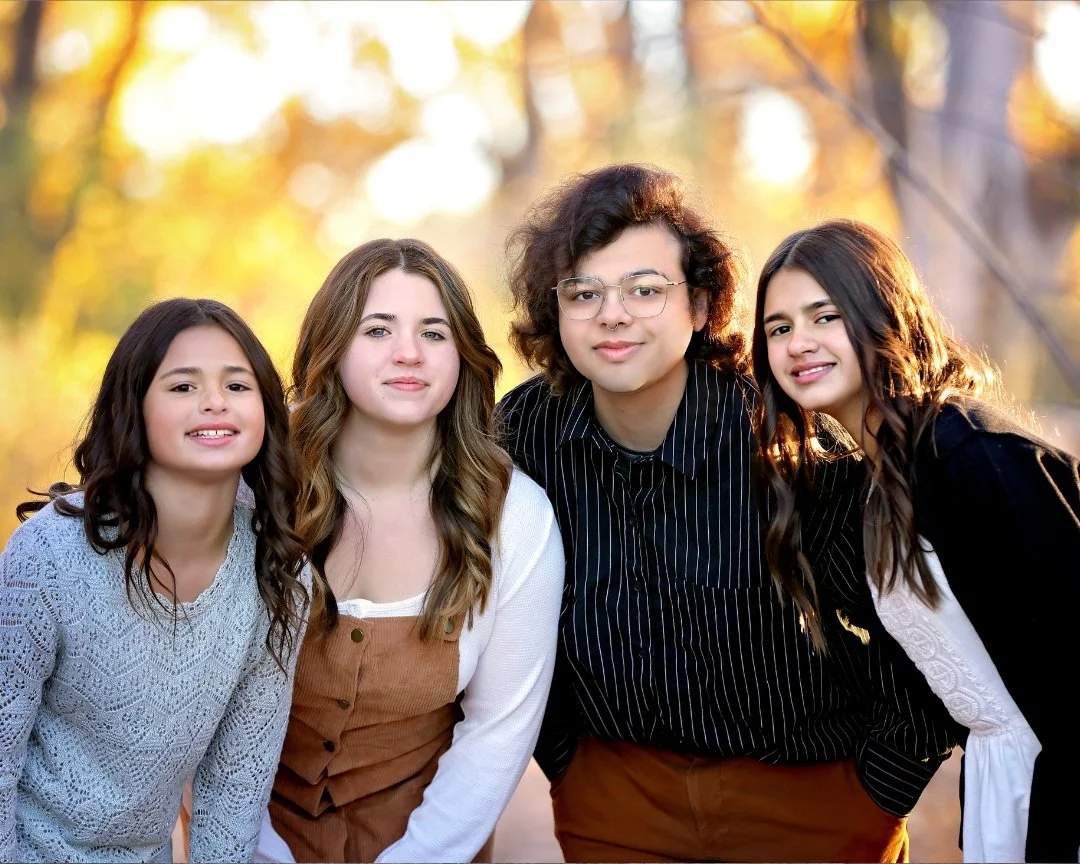

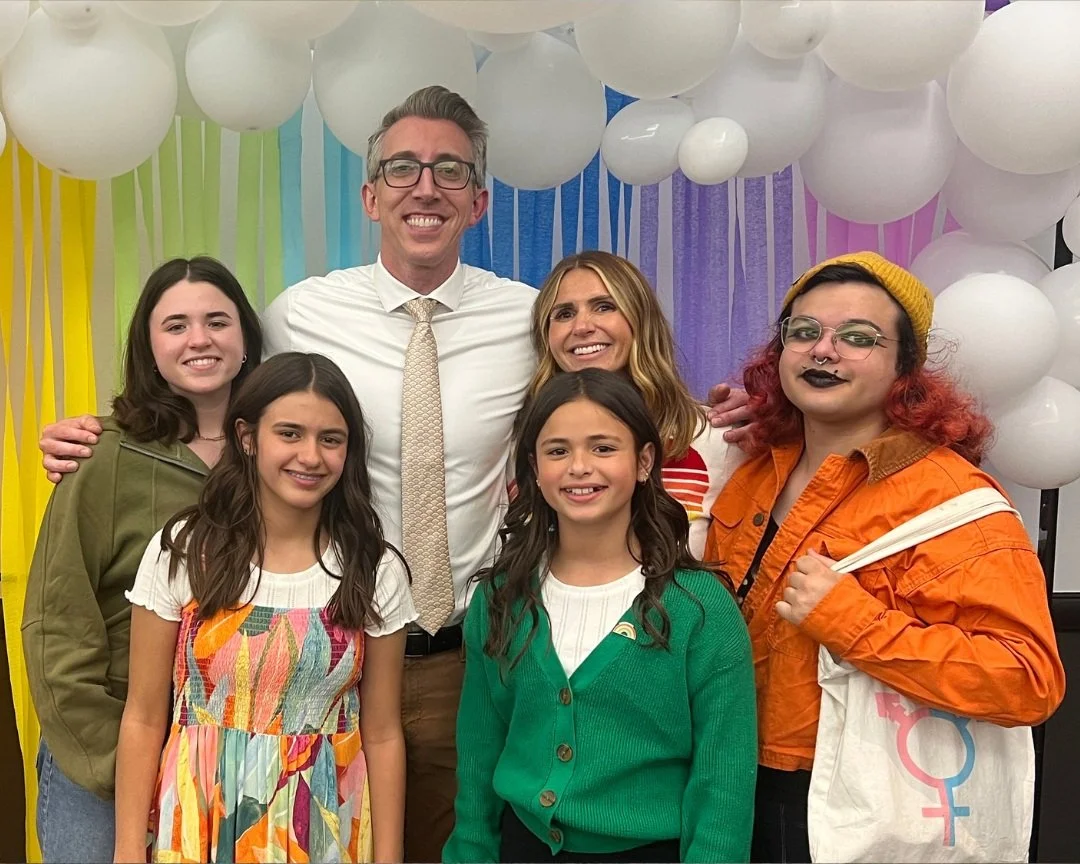
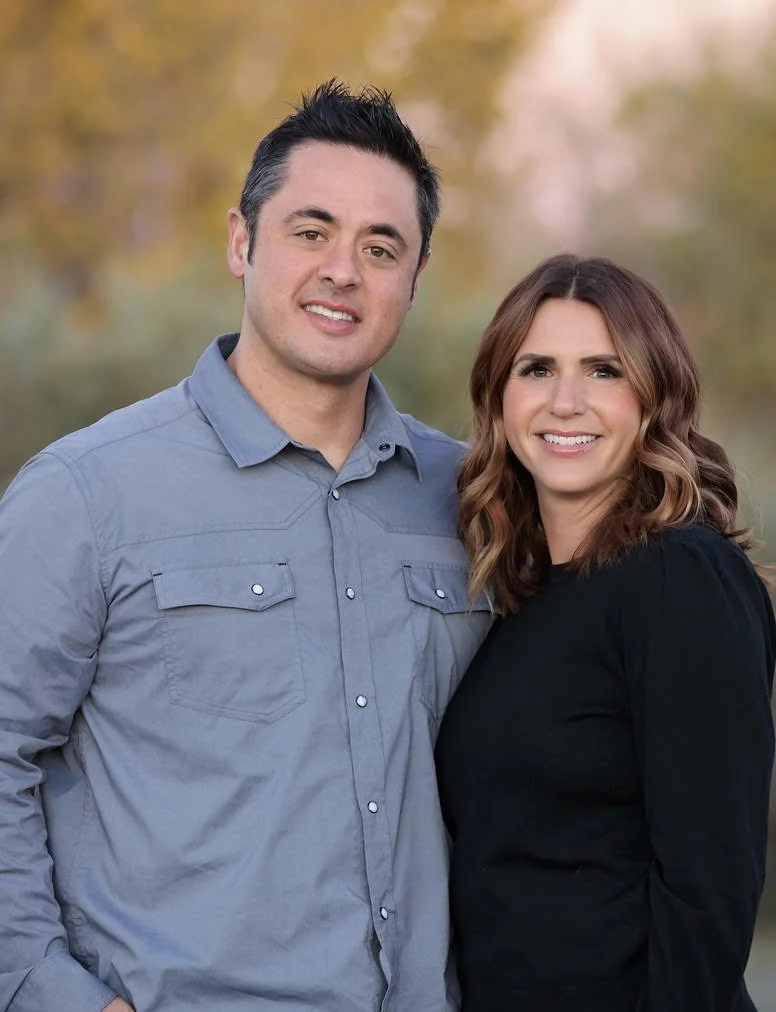
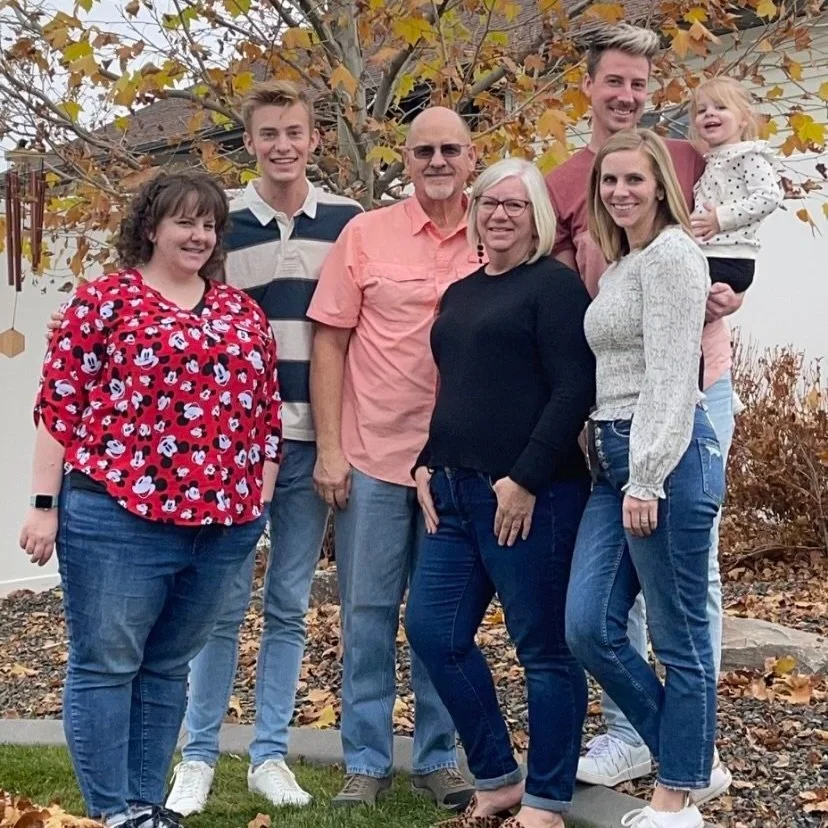
THE SORENSEN FAMILY
Eli Sorensen grew up the favorite (and only) baby brother in his Idaho Falls-based childhood home. His two older sisters were 10 and 14-years-old when he was born, but his mom Joy says, “Eli was not an oops or a mistake, just a long-awaited blessing. He always has been.” …
Eli Sorensen grew up the favorite (and only) baby brother in his Idaho Falls-based childhood home. His two older sisters were 10 and 14-years-old when he was born, but his mom Joy says, “Eli was not an oops or a mistake, just a long-awaited blessing. He always has been.” Growing up, Eli was active and successful in cross country, swimming, and school. He had plenty of friends. Joy now laughs that her biggest concern was that he “might end up in a relationship with an unwanted pregnancy situation because he had so many girls flocking to him.”
Just before eighth grade, Eli and his mom were watching TV one night when he turned to her and said, “Mom, I need to tell you something. I might be gay.” Instead of feeling shock or surprise, Joy says instead she just felt an overwhelming surge of how much she loved her son. She felt her only priority at that moment was to resolve to showing him the proper love and support moving forward. Her husband Phillip was their ward’s bishop at the time, and Eli wasn’t sure how his dad would take the news. But Joy encouraged Eli to go upstairs and tell him. Joy joined him and the three had a positive conversation in which his parents said they’d follow his lead and help him along whatever path he’d choose, whether that be counseling or keeping it quiet. Eli said he was still trying to come to grips with it all, and told his parents he wouldn’t need his parents to come out for him—ever, even to his older sisters. He would handle that.
Joy remembers a peaceful feeling that night as she went to bed. In her personal prayer, she says she pled, “Heavenly Father, tell me what to do.” The answer she received was to “always love your child, support him, and keep him alive. I love him and I’ll take care of him. Don’t worry.” Over the next few years, Eli remained active in the church and “lived his life as a typical kid.” While the Sorensens didn’t completely put the conversation behind them, Joy acknowledges they didn’t bring it up much.
Later in high school, Eli made a few close friends in cross country who he felt comfortable opening up to. Unfortunately, one of these “friends” took it upon himself to spread Eli’s news with others, which turned out both “horribly and perfectly,” according to Joy. It was hard for Eli to fear how his friendships would shake out, and to hear certain unwelcome comments from some, like that he “must not deserve a miracle or God would have taken this away” or to “just live your baptismal covenants and then in the eternities God will take care of this.” But largely, the response of his peers was positive and supportive. Joy says, “I love to see kids just accept other kids these days.” Joy says Eli had a wise, supportive English teacher at the time who assigned her class to write an essay about something they wanted to share. While knowing his essay would be peer-reviewed by someone in the class, Eli still felt the need to finally share his news in his own words. One of his close, female friends from cross country was assigned to read his story, which made Eli’s heart drop, not knowing how she might respond. But she and her family have since become some of his biggest allies. Joy says, “I can’t say enough for the friends and teachers in the school who encouraged him to be who he is.”
Still, many in the Sorensen’s ward were unaware Eli was gay as he attended high school outside their stake boundaries. But during his senior year, right around his birthday, Joy discovered Eli had come out on Instagram while sitting at her desk at work. Her phone started to blow up with supportive texts. She realized her son was finally ready for his burden of secrecy to be lifted, and she felt so grateful. Eli continued to attend church with his parents, “more out of respect for us,” says Joy, but his parents observed it was not in his heart, and they weren’t sure where he’d land. He didn’t feel the need to attend the local LGBTQ+ support group for families (not organized by the LDS church, but consisting of several of its members), but Joy and Phillip found great support walking into a room of familiar faces who were willing to open up and share similar experiences about their own kids who had come out. The Sorensens also say they found support through resource providers like Questions from the Closet, Listen, Learn and Love, and Lift and Love.
His own son coming out was a turning point for Phillip, who had grown up experiencing a more painful reality many in the LGBTQ+ community have faced. Phillip’s brother Randy was gay, and both he and his partner succumbed to AIDS and passed away in the 90s in Seattle. Joy says, “Back then in the 80s and 90s, it seemed being gay was a lot about casual sex. A lot of men got sick and died. I don’t think we’re at that point anymore.” Joy met Randy before he passed and remembers him being “such a nice man. He was brilliant. He had a doctorate in Chinese geography, though he was also a bouncer at a gay bar, even with his fancy degree. Now, things are different, and he would have been known as just a really smart, gay man.” Joy says, “I think we have to have pioneers in the field. He would have been one if he were still alive. I believe we have help from both sides. I know Randy’s so proud of his nephew.” Joy says it took some time for Phillip to get over his fears that things would be different for his own son.
Indeed, Eli is off to a great start in his early adulthood. After high school, Eli went to Boise State, where he is now a 21-year-old senior studying computer science. Having just completed an internship in Virginia, he loves coding and plans to work in tech. Eli designed an app called Mixtaper which was recently released on the Apple App Store and helps users create cover art for their Apple Music and Spotify playlists. Joy says, “He’s wonderful; he’s amazing. When he wants something, he goes for it, and we support him.” Eli looks forward to starting a family of his own one day, and his mom laughs that he wants to make a lot of money first so he can adopt some kids. “He’s the best uncle ever,” says Joy.
Eli’s in a happy relationship with a young man who attends his same college. Eli’s older sisters (Whitney-35, and Cassidy-32, who is married to Cody Jardine, and they are the parents of Baylor-4) are both very supportive of him, after each discovering he was gay several years ago in separate instances. Joy’s parents and their relatives have also been very supportive, which has been made easier as Joy has several LGBTQ cousins and family friends. “It’s been eye-opening to see how many of us have this connection, all being linked through these awesome kids of ours.” Joy works at a school where she proudly wears a rainbow wristband, giving a safe visual token to students who may worry and wonder things about themselves similar to what she imagines Eli once considered. While Eli is no longer affiliated with the church, he supports the activity level of his parents, who have taken it upon themselves to speak out when needed to promote messages of love and inclusion.
Before Eli was out, when Phillip was serving as bishop, a woman in the ward approached him with her suspicions that there were two lesbians in their ward. She wanted to know what they should do about their relationship. Phillip replied in the gist of, “What we should do is make them feel welcome here; where else should they be?” Joy says while she knows Eli has a great life purpose, whether in or out of the church, she wants the church to become a place where people like him would feel comfortable coming back. Joy currently serves as her Twin Falls (specifically Kimberly), ID ward’s Relief Society president, where she says “I’m never ashamed to talk about my son being gay. I bring it up; I want people to know.” Whenever she posts affirming messages online, Joy says she inevitably gets a private message from someone in her church community who says, “Thank you so much, I need to talk to you. I need someone.” Joy says, “I know a lot of people leave the church. We feel super strong about staying in the church, but I still speak out on my soapbox. So many people don’t know what do with it.”
The Sorensens are grateful for other trailblazing rainbow families in their area as well as past missionaries who have served in their ward before later coming out and showing up to dinner with their eventual husbands/partners. She appreciates how they’ve paved the way and give advice when needed. While Eli did not serve an official LDS mission, Joy feels their family has been called to serve a different type of ministry to those in their midst.
“None of us knows what eternity looks like. Growing up in my generation, it was about wearing white in the temple. But my eternity will have some color – and I hope it does. I don’t need to change doctrine. I just love all of God’s children. No one should be denied that for any reason. The God I know and believe in loves everyone.”


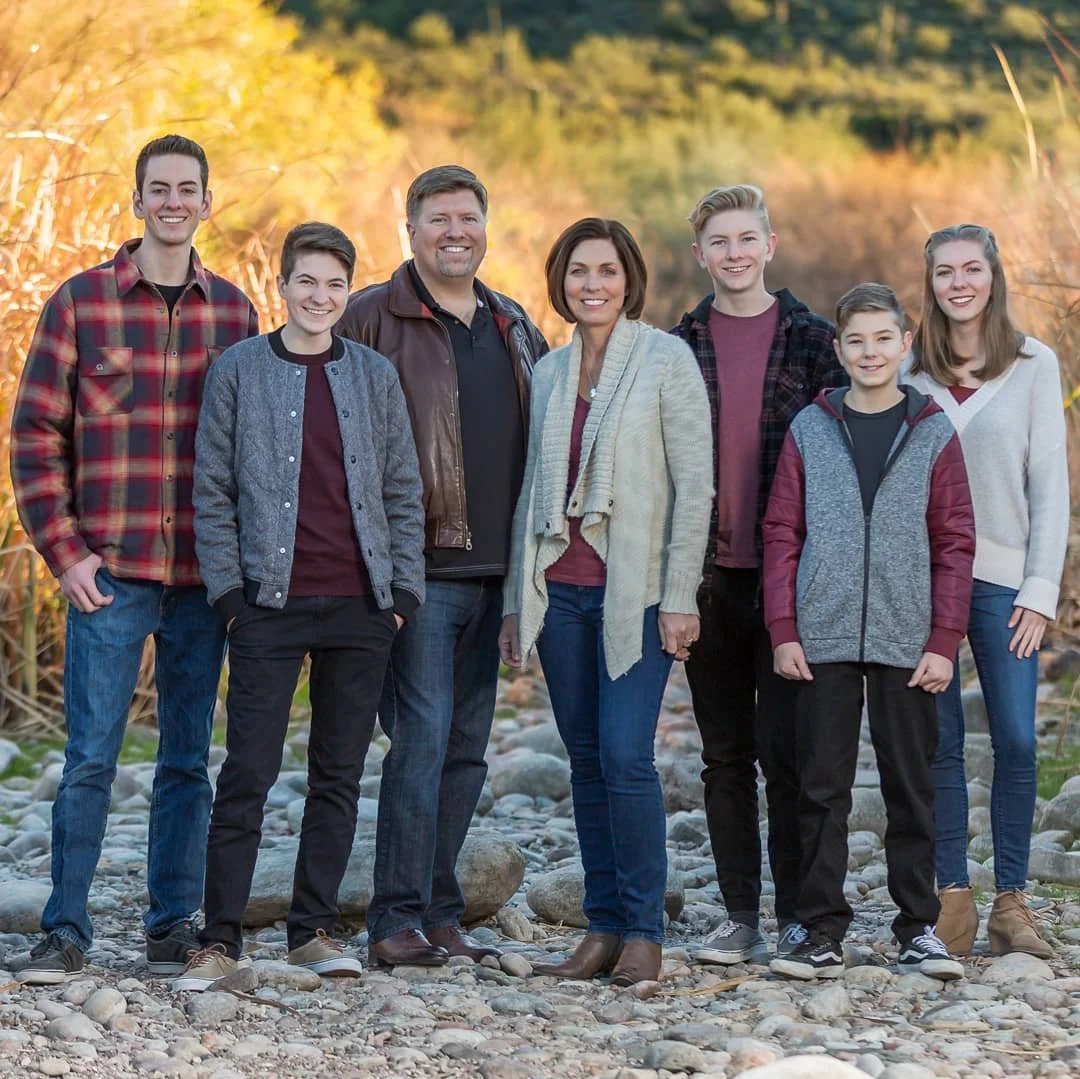
THE PHILLIPS FAMILY STORY
When Landon Phillips was an 18-year-old freshman at BYU Provo, he told his parents he was experiencing gender dysphoria. But first, he had to explain to them what that was…
When Landon Phillips was an 18-year-old freshman at BYU Provo, he told his parents he was experiencing gender dysphoria. But first, he had to explain to them what that was. This was new territory. Landon was the second oldest child in Monica and James Phillips’ line-up of five kids (Luke – 28, married to Lindee, Landon – now 26, Anya – 22, AJ – 20, and Zach –16). Monica and James grew up in different regions of California and met while attending institute classes as students at Cal Poly, San Luis Obispo. Raised Catholic in a part-member family, Monica didn’t get baptized until she was in college. She and James married in the Los Angeles temple 30 years ago and raised their family in Orange County, CA. Landon realized he felt different than his peers at a young age, but it wasn’t until he went to college that he finally had the vocabulary and insight to realize he was experiencing gender dysphoria.
In the winter of his freshman year, Landon put in his mission papers. It was while he was waiting for his mission call to arrive that he finally came out to himself. He remembers looking in the mirror and saying to himself for the first time, “I’m transgender.” Being assigned female at birth, Landon had to decide if serving an 18-month mission where he would have to wear dresses daily was something he could manage. He decided he could and considered his dresses his daily missionary uniform. He knew the Lord was in the details when he got to the MTC and received a name badge that said “Soeur Phillips” (pronounced Sir Phillips), which in French means Sister Phillips. Landon served in the French-speaking islands off the coast of Madagascar.
Monica says that during Landon’s mission was the time in their journey that she and her husband “stuck their heads in the sand,” hoping and praying that Landon’s complex feelings might change. As Landon wasn’t out to anyone else yet besides his parents and sister Anya, Monica said that those 15 months were lonely and scary. She had no one to talk to and no trusted resources to turn to.
When Landon returned from his mission, his parents quickly recognized his feelings had not gone away. They took him to LDS social services where he met with one of the only therapists who was considered an LGBTQ specialist. She referred the Phillips to the upcoming North Star conference, and a few short weeks later, Landon and Monica found themselves sitting in a venue with hundreds of other LGBTQ+ individuals who openly shared their experiences of what it was like to navigate their same-sex attraction and gender identity within the framework of the gospel. Monica recalls both she and her son stepping into the elevator at the conference’s conclusion with smiles on their faces, filled with hope for the first time in a long time—thinking they may not have to choose between their faith and Landon’s health. Monica also felt a sharp rebuke from above, imploring her to reexamine her thoughts about LGBTQ people and to consider whether she’d “unintentionally added to their burden.” She remembers feeling, “This is something I needed to learn about because something’s not right here. It was a pivotal moment in my journey.”
After returning from the conference, Landon shared that he didn’t want to have to continue to live in secret in their own home—he was ready to come out to the rest of his siblings. At the time, their youngest was just a fifth grader. Monica put Landon in charge of their family night that week. She loved how Landon was able to share his reality with his siblings, saying, “It was the most beautiful thing to see the acceptance of his siblings; it wasn’t even a problem. They hugged and accepted Landon and went off to bed.”
But Anya lingered behind. With Landon there for support, Anya opened up and shared that she was attracted to women. Monica says Anya remembers the evening a little differently than she does. Monica recalls asking her daughter if she experienced gender dysphoria, too, to which Anya replied no. Monica said, “Oh good, so you’re just gay? We can handle this then,” which she now recognizes as “not my proudest mom moment.” Monica says, “At the time, I could not imagine navigating anything harder than gender dysphoria in the church. But now, I recognize they’re different, but equally tough to navigate.” Anya was 17 when she came out to her parents, but did not publicly come out until a few years later.
Not long after Anya’s announcement, Landon had decided to begin socially transitioning and the Phillips announced they’d be moving to Mesa, AZ. While their “extremely loving, supportive, and kind ward and stake” in Orange lamented their move, worried they might not find the same support elsewhere for Landon who they’d all loved since birth, Landon was looking forward to starting fresh in a new environment with his new name and pronouns. While Monica acknowledges some of Anya’s story coming out as lesbian gets overshadowed by the complexities of Landon’s experience with gender dysphoria, she marvels at her daughter’s strength and the extremely tight bond the two siblings share.
Anya has since finished her associate degree in floral design. Now, she and Landon are roommates (with another transgender friend), and the brother and sister work in different departments at a floral wholesale business in Mesa. All five of the Phillips kids have stepped away from the church for various reasons, but Monica appreciates how they still support their parents’ activity. Monica believes that families need to “stick together,” feeling that “Our Heavenly Father put us together to do life and that’s what we’re going to do. That includes the good, the bad and everything in between. We love our kids and honor their agency. We want our kids to honor our agency as well, which they do.” Regarding her children’s paths that have led them outside the church, Monica says that as she converted at age 21, she feels, “I’d be a hypocrite if I didn’t allow them their own journey for their own growth. We’ve had mutual respect in that area.”
The Phillips family has become involved in the political scene on a small scale, as they spoke out last year in favor of equality and fairness for all as part of a coalition that has advocated both in Washington DC and Arizona—the same coalition the church showed support for, equally seeking religious freedom. The Phillips attended a VIP tour of the DC temple with a bevy of religious leaders and LGBTQ advocacy groups, and one thing that stood out to Monica was when Elder Gordon Smith, then a member of the 70, encouraged all of them to “keep up their ministries.” She says, “I loved how he was talking to me as a parent, as well as to a Jewish rabbi, and to a representative from the Trevor Project. Every individual there had an important role in a ministry to love and respect others and to create rights for as many humans as we can. It felt validating to have a church leader consider what I do a ministry.” Monica and James were both able to meet with the White House’s representatives over LGBTQ and religion, who they say were moved to tears seeing religious parents advocating for their LGBTQ children’s rights. At that time, Landon, who worked with the Equality and Fairness for All Coalition, would take various sets of parents (many who were LDS) of LGBTQ+ kids on tours to legislators’ offices to share their stories and why they needed and deserved equal rights. “This whole thing has taken us on an adventure, doing things we’ve never dreamed we’d do. We never imagined our life would be like this. I’ve met the most amazing people,” says Monica.
Landon’s story took a different turn last Christmas when his mom bought him a Nebula Deep Dive DNA kit after Landon said it might be fun to try. While the tests returned all types of health-related results, it was the gender finding that most shocked the Phillips: Landon’s test showed he had XY (male) chromosomes and an intersex condition. They consulted with a friend who is a doctor and who also happens to be intersex, who helped them decipher the results and check the genes affiliated with sexual development. (The Phillips family explains more about their genetic testing experience on the recent episode #673 of Richard Ostler’s Listen, Learn and Love.) Monica acknowledges that they were excited to find a cause that explains Landon’s experience with gender dysphoria, but that they didn’t need to have this piece of information for Landon’s transgender experience to be valid.
Monica currently serves on the board of directors at North Star, representing parents and the transgender community. Monica and James recently gave a presentation on gender identity, geared towards church leaders. They shared how we can improve our ministry and create spaces of belonging through increased understanding.
As they reflect on their journey, Monica says they’d like people to know, “Families can navigate this together with love. Over the years, I have sat with many parents who are trying to figure out how to stay true to doctrines and teachings and also love their kids – it’s an inner wrestle. I encourage parents to stay in the wrestle until they find the way. Heavenly Father will make that possible.”
Monica and James both agree that their journey with their LGBTQ kids has expanded their faith in beautiful ways. “We thought we knew what it meant to love, to mourn with those who mourn, and to comfort those who stand in need of comfort, but we realized how much room we had to grow. We feel like we’ve leveled up in these areas. If we could, we’d take all the pain and heartache away from our kids, but we wouldn’t change anything for ourselves. We love who we are becoming and feel like we have become better disciples of Jesus Christ.”

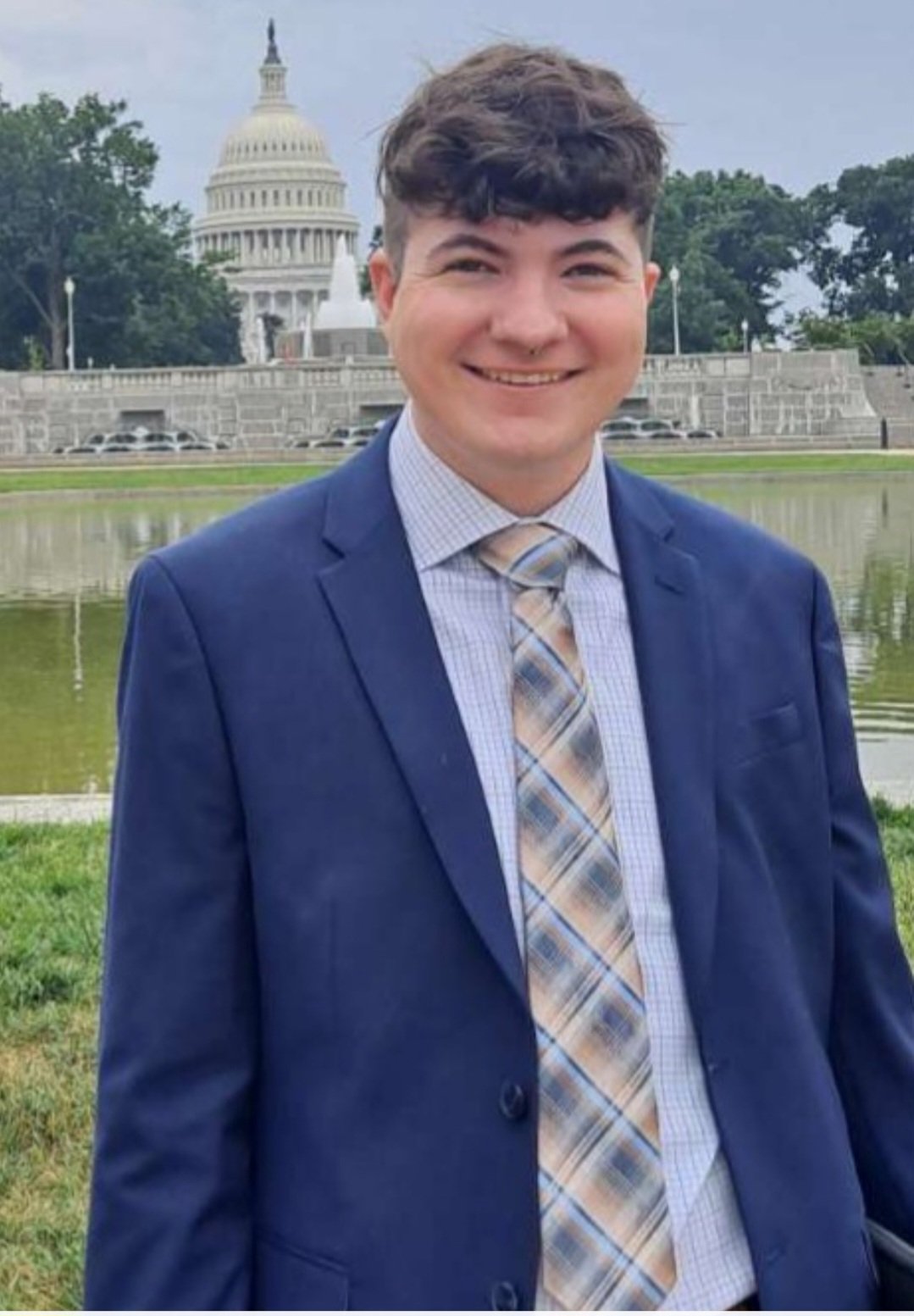



THE FRAZE FAMILY
Mell Fraze’s childhood home was one in which the Bible sat on the bookshelf beside the Dao De Jing, the Pearl of Great Price, and a myriad of philosophy books. Raised by a scientologist mom and a universalist dad who attended a “new agey Christian church,” she was instilled with the ideology that everyone has a different path in life, and it’s the individual’s job to ask the questions and do the research to find which path works for them. Mell was an apt audience. As a neurodivergent individual, her brain is wired to ask questions. Now as a mother of six kids (ages four to 16) with her seventh due in August, she likewise encourages her children to explore how when something’s not working, to consider what might fit better instead…
Mell Fraze’s childhood home was one in which the Bible sat on the bookshelf beside the Dao De Jing, the Pearl of Great Price, and a myriad of philosophy books. Raised by a scientologist mom and a universalist dad who attended a “new agey Christian church,” she was instilled with the ideology that everyone has a different path in life, and it’s the individual’s job to ask the questions and do the research to find which path works for them. Mell was an apt audience. As a neurodivergent individual, her brain is wired to ask questions. Now as a mother of six kids (ages four to 16) with her seventh due in August, she likewise encourages her children to explore how when something’s not working, to consider what might fit better instead.
For Mell, the LDS church entered her orbit in 2007, when she chose to get baptized one month after she married Cliff, who was born and raised in the church in Modesto, CA. 15 years her senior, Cliff was raised at a time when church culture didn’t understand what to make of his family. His three siblings had several Cerebral Palsy and uninformed members often wondered “what sin of the parents brought this upon them.” Cliff was raised with traditional church beliefs, but his family was largely marginalized by their congregation. Mell’s peers asked how she could go from her free-thought upbringing to being Mormon, but Mell said nothing about her inherent belief system actually changed—she just learned a new vocabulary to identify her beliefs. She says, “I finally found the one Christian denomination I could feel comfortable in, that didn’t raise the hackles on my neck and wasn’t teaching something in opposition to my lived experiences.” Their union set the stage for raising their own kids.
The Fraze children are given room to grow and explore in their Sacramento home, where Mell has home schooled them since 2015. Every member of the Fraze household of eight is neurodivergent, with all of them having ADHD and several identifying on the autism spectrum. Mell and her husband Cliff found their children’s various needs, which are often also in opposition to each other, were not all able to be met in traditional school, so they’ve brought the laboratory home. This has resulted in their most significant time with peers taking place at church, which has also proven difficult for many of the children who identify on the neurodivergent and LGBTQIA. While the youngest two find Primary fun, church has proven a challenge for some of the older kids.
Evie, 16, (they/them) identifies as nonbinary, asexual, and panromantic and is not interested in dating and marriage. Liam (15) also does not currently wish to pursue dating. Frequent lessons about temple marriage have repelled them as it’s not something they see in their future. When leaders respond with phrases like, “When you grow up, you’ll feel it,” it further offsets the two and makes them feel misunderstood. As the Fraze’s 10-year-old son’s neurodivergent needs are also not able to be met in the church environment and Mell says “I’m unable to clone myself and be in every classroom where my kids need me,” Mell has found it difficult to make church work. For the past year, while Cliff shows up and fulfills his calling in the Sunday School presidency, Mell stays home with the kids who are most comfortable there. Home has also become the most comfortable place for Mell to feel authentic. She says, “I cannot show up on the defensive all the time, because then I’m not getting anything from church. And my child’s mental health is more important than their body being at church.” A big believer in autonomy and agency, Mell believes in letting her children choose whether attending church or serving missions and the like is what’s best for them. She let her kids choose whether getting baptized at age eight was the right choice for them, and some delayed that until they felt more ready.
The bishop in the Fraze’s ward had served as a high councilman prior where he was tasked with collecting helpful church resources for LGBTQIA families. At the time, he turned to the Frazes for resources, and they engaged in several hours of conversation. While Mell says her bishop has tried to be an ally, and some of the youth leaders are “great people who really try to show love and respect,” others don’t have a frame of reference for how to support kids who don’t fit the norms.
In the summer of 2022, with her bishop’s permission, Mell joined Evie on the stand during a fast and testimony meeting to share how the youth theme statements could be worded to be more inclusive of all gender identities. Evie had expressed to their parents a couple years prior how they felt different in regard to their assigned gender, and a felt a more gender-neutral identity fit them best. Mell supports her oldest in this, while also loving the “Gender is essential” phrase in the Family Proclamation that so many instead use to weaponize against people like Evie. Mell says she sees this idea of gender being essential, combined with Moses 3:7, to mean that everything is created in the spirit form first. “When we speak of bodies being perfected in the resurrection,” she asks, “doesn’t it make more sense that who you are as a spiritual being that your body would be changed to match your spirit, and not the other way around? In the resurrection, we don’t believe everyone’s going to be six feet tall, skinny, and blonde. We understand there will still be a diversity in perfected bodies. So why, when someone who experiences gender dysphoria and feels their body doesn’t fit their spiritual being, why would the spirit change to match the body instead of the other way around?”
Because her kids school at home, Mell shrugs off the current sound byte rhetoric of “LGBTQIA social contagion.” She says, “My kids aren’t hearing, ‘Oh I heard this and that and want to try it out.’ They’re coming to me saying, ‘I’m different and I don’t know why’.”
While their shared testimony bearing was an important moment for the two to honor this part of Evie’s reality, Mell breaks down as she describes how Evie, on the stand, witnessed how the members’ faces in the room turned from engaged smiles to stone-faced, disapproving looks. That, followed by an uncomfortable talk on the Proclamation shortly after, was the last time they attended. In the one year she has stayed home with Evie and younger children who need her, Mell says only three people from their ward have reached out to try to understand the difficulties her family faces with current church doctrine and policies. Hurtful comments have also been said, including one youth leader who said, “Satan is making kindergartners confused” and a primary teacher who told Mell, “Gays cause problems in society.” As such, Mell tries to speak up as much as she can about the extreme mental health duress and increased suicide rates that occur for kids on the LGBTQIA spectrum.
She says, “I would like to be able to stay in the church and be a voice of allyship and safety, but I’ve been called an apostate by a member of my ward for speaking up against rhetoric that’s harmful. I’ve also been told, ‘Sometimes you need to step away from the church,’ but I hate that alternative. When you point out that your choice is to live as a portion of yourself and feel hurt in the church, or to walk away to be able to live as a whole, authentic human being, the response people are conditioned to give is, ‘Don’t leave the church, try to stay, turn toward the Savior.’ But there’s no room or support to do that. I’ve taken to calling myself Schrodinger’s Mormon. Depending on who you ask, I’m either exactly what people hope members can be, or I’m a terrible apostate who should leave because if you don’t believe, why would you stay?” Mell says it goes back to people not understanding the breadth of the perspective she comes from, and the religion, anthropology, and various philosophies she studied as a youth that examine humans holistically. Mell stays in LDS parenting chat groups online, hoping she might be a light in the dark for someone in need, and hopes to help parents new in their journey. While Evie is considering resigning her church membership, Mell says, “They let me in; they’re going to have to kick me out!” of her membership.
“I already knew I was a divine, spiritual being before joining the church. I’m Christian; my philosophy is humanist and unconnected to any particular religion. I care about the environment, social justice, humanity – the same things I cared about before. I get closest to the Savior from listening to people’s lived experiences, and understanding their truths are just as valid as mine. All of that has prepared me for having queer kids, where other parents in the church might struggle. None of my spiritual identity depends on the church, which I recognize is different from my husband’s experience.” She acknowledges their marriage and co-parenting can be a difficult balance, but says, “He knew who I was before we married. He has no interest in changing me, but often doesn’t know how to deal with others’ responses to me being a fierce, vocal advocate for our children.” Mell, who identifies as queer herself, also recognizes she comes from a place of privilege, being in a perceptively cisgender-heterosexual temple marriage, a person “who happened to get lucky that my person is a cishet man.” She thus chooses to first present herself foremost as an ally in the LGBTIA space.
Of the changes she hopes to see in the church, Mell says, “People make choices all the time that slow the ‘in the Lord’s time’ phrase. They can make choices that speed the ‘in the lord’s time’ to be more inclusive and loving. There are stories of wards out there who have done this. And then there are wards who have sacrificed people because they were too afraid to change, to ask questions, to push boundaries.” This is where Mell hopes to make a difference. “It’s a horrible truth but as a church body, members are choosing to sacrifice their children for the sake of tradition. I absolutely refuse to sacrifice my kids because someone would rather follow tradition than the prophetic example we claim to follow of asking prayerfully and seeking inspiration.”
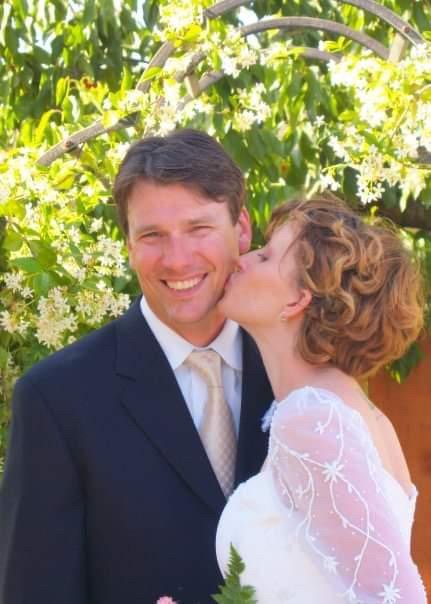


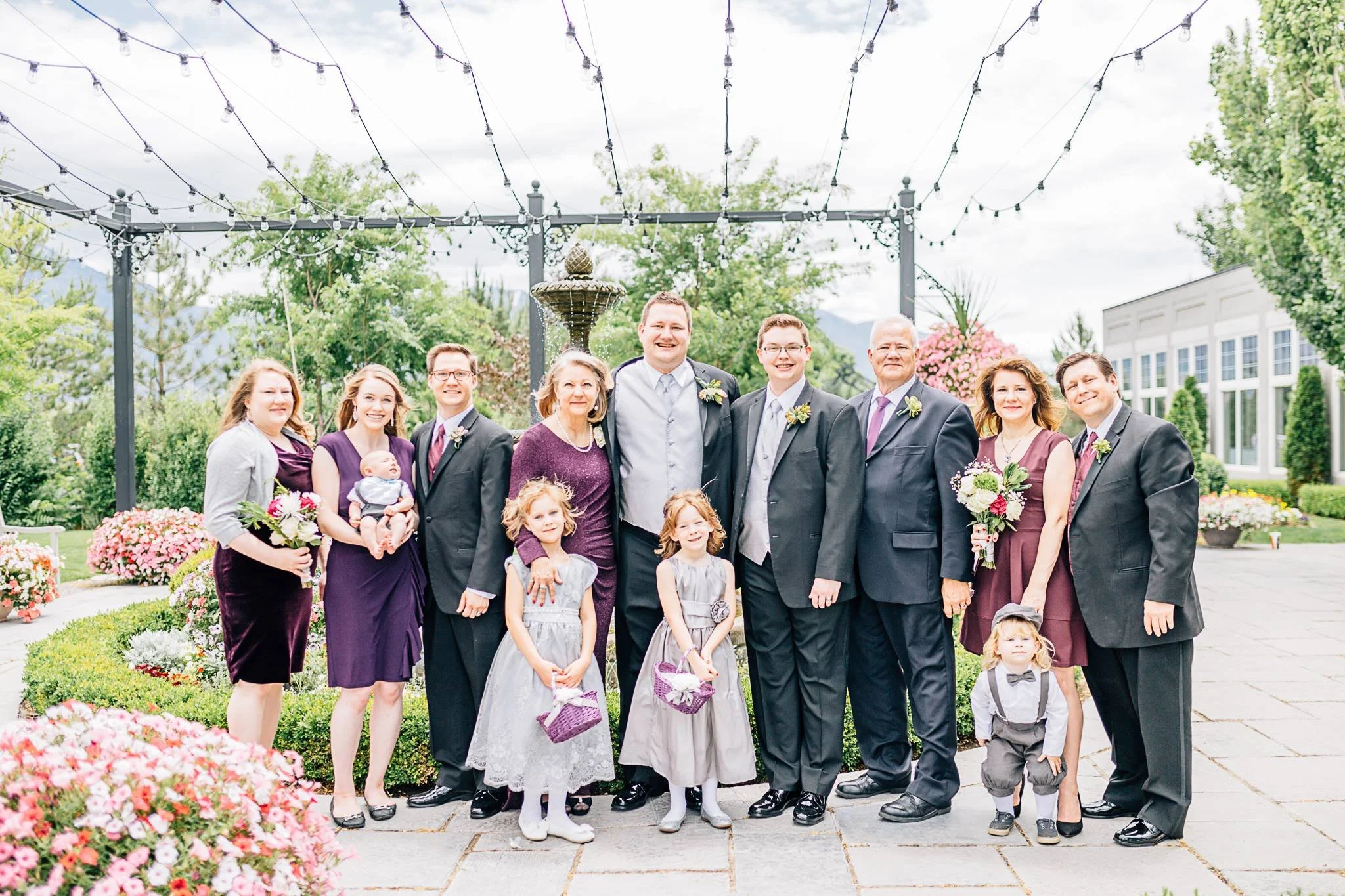
THE DEBRA OAKS COE STORY
I always considered myself a good Latter-day Saint Mom who taught her children to “choose the right.” Among other things, I taught them not to drink, not to smoke, and not to be gay…
This week’s family story is written by Debra Oaks Coe, who works as a volunteer on suicide prevention and is the founder of Of-Worth.com. Her husband Don Coe is a retired Army Officer, and the two are the parents of 5 children and 8 ½ grandchildren. Thank you, Debra, for sharing your story.
I always considered myself a good Latter-day Saint Mom who taught her children to “choose the right.” Among other things, I taught them not to drink, not to smoke, and not to be gay.
My husband, Don, has always had a strong sense of seeing everyone as deserving of the same respect, dignity, and compassion. It was important to him to treat everyone as equals. Over time he began reading about LGBTQ issues such as the higher suicide rates, the minors rejected by family, neighbors, and members of their church congregations, and the disproportionately high percentage of homeless minors that are LGBTQ, etc. He began to understand the huge need to include and love them.
He shared this information with me, and I started doing some of my own research. But we did not know anyone who was LGBTQ, nor did we know anyone with an LGBTQ family member so it was easy to stay uninvolved.
By the summer of 2014, Don felt strongly that both of us needed to reach out to the LGBTQ community simply because it was the right thing to do. It went with his strong belief that all are loved and valued by God. I had no interest in adding to the other things I was already busy with my master’s degree, helping our oldest son who was chronically ill, and in the process of getting my elderly parents moved out of their home and into assisted living care.
I did reluctantly agree to attend a documentary being shown at BYU’s film department about what it was like to be an openly gay student at BYU. It was my first exposure to hearing a gay person’s lived experience. That documentary was eye-opening to me and tore at my heartstrings. For the first time, I became aware of the numerous unique challenges they faced. Over the next several weeks we had the opportunity to hear several more personal stories of pain and agony because of how they were treated. Many had attempted suicide, and many had friends who had completed suicide.
While we had been reading peer-reviewed, scientific research on many aspects of being LGBTQ, these personal stories had the most powerful impact on us.
Soon we became involved with LGBTQ students at BYU and Utah Valley University. Their off-campus support group was comprised mainly of returned missionaries wanting to find their place in the church. We began hosting monthly dinners to provide better emotional support. Our conversations during those dinners and the gratitude we experienced confirmed the importance of treating all of God’s children with respect and love.
Not long after we had gotten involved, a woman told my husband, “If you don’t know anyone who is LGBTQ, it is because they don’t trust you enough to tell you.” Two months later, our youngest son came to us privately and said, “I can’t believe you are supporting me, and you don’t even know that I am gay.” Some parents suspect one of their children might be gay, but we did not. It was a complete surprise for both of us.
We had already educated ourselves enough to know that our initial reactions were critical. We knew not to blame him, not to blame ourselves, and not to blame each other. We spoke only of our love for him. We realized that he was the exact same outstanding son we had always loved and were proud of. As I hugged him, I felt his body trembling inside and recognized that I had hurt him as a young vulnerable teen – this very child I was given the responsibility to protect and nurture. I loved him more than my own life, yet my words had taught my son to hate himself.
Throughout his life, our son had done everything he could to be worthy of God’s love. His behavior was nearly perfect – unusually so. As a teenager, we called him “Mr. G-Rated” because of how careful he was with his viewing habits. When driving, he followed all the rules and would not drive even one mile over the speed limit no matter how late he was. He was like this in every aspect of his life.
I wish someone had told me years earlier that you cannot just teach your children not to be gay. It is not a choice. I wish I had always shown unconditional love toward LGBTQ people, been less judgmental, and reached out much sooner. I had no idea it was my own son I was hurting.
Although our son was out to our family, hardly anyone else knew he was gay and he remained a faithful member of the church.
In the summer of 2015, in reaction to the Supreme Court decision on same-sex marriage, things were said in our son’s ward and stake that went well beyond supporting “traditional marriage.” Thoughtless, hurtful words that demonized LGBTQ people were said to our son and others. These were things none of us would have said directly to someone we knew was LGBTQ, especially not an active faithful member of the church.
Hoping for less hateful comments at church, our son finally moved to a new area to change the ward and stake he lived in. Sadly, it was no less painful and he realized that he need to protect his mental health. Our son then stopped attending church because of so many painful things being said in his ward and stake that vilified and marginalized LGBTQ people. He didn’t step away from the church--he was shoved out of the church by people who did not understand.
The biggest problem seemed to be people simply not being aware of all the church statements and information that has been provided. Our son’s experience, along with the experiences of the students we helped and some of our own experiences, caused us to start looking up all the positive quotes we could find from church leaders. We then started sharing those with parents and with our own local priesthood leaders. We’ve found these invaluable in helping Latter-day Saint families stay unified.
Fortunately, our stake president offered to start meeting with us periodically. He did not know our son was gay, but he did know that we reached out to the LGBTQ students from BYU and UVU. We cannot overstate how helpful these meetings with him were. It gave us needed support and a safe space to talk about the difficulties we faced. Following Church leaders and doctrine, our stake president worked to help our stake be more Christlike.
As mentioned earlier, our oldest son, Marshall, was chronically ill. He knew his time on earth was limited to only a few more years. He hoped to be worthy of the Celestial Kingdom. During this time, he was confused as to how best to react to his brother. The confusion increased in the spring of 2016 when our gay son announced his engagement to a man at a family dinner. After the announcement, Marshall stormed out of the room upset. Navigating this was truly a whirlwind of enormous velocity for our family.
Later that week, we met with our stake president and bishop. This was the first we told them that our son was gay. They both expressed great love for our son and the desire to help. Our stake president said he wanted to make sure our son knew that he would always be welcome in his home ward whenever he was visiting. I teared up when he followed that with, “How do we ever expect him to want to come to unto Christ if we can’t be Christlike to him now?”
Several of us consulted with our bishops and stake presidents and shared their positive counsel with Marshall, but nothing changed.
A few weeks later at stake conference, our stake president gave an exceptional talk based on the story of the sick man’s bed being lowered through the roof so Christ could heal him. He used the analogy of “tearing the roof off” to make room in our chapels for everyone since we all need the Savior’s healing power.
Our visiting authority also gave a beautiful talk stating that God loves all His children, and we should, too. Afterward, I shook his hand and shared some of our story. He then took several minutes to give me positive counsel I knew would be helpful I went home and shared everything with Marshall.
The next Sunday was Mother’s Day and the whole family came for dinner. Marshall continued to stay distanced. But he must have thought about what I had shared. After dinner, his brother and his fiancée were the first to leave. Just as he was getting in his car, Marshall jumped up, bolted out the front door, and gave his brother a hug, telling him how much he loved him. Then he said, “You can’t leave without me hugging my new little brother,” and gave our son’s fiancé a big hug. It was a unifying moment for all of us.
Exactly one week later, Marshall unexpectedly passed away from his chronic illness. That hug was the last moment he saw his youngest brother and his fiancé. The peace that last hug brought our family is immeasurable.
Our son was engaged for about a year. Over the next twelve months our stake presidency shared many messages of love from Jesus Christ’s teachings such as the parable of the Good Samaritan. These were done in both ward sacrament meetings and in stake conference. While seemingly small, this emphasis had a huge impact.
When our son did marry, we had a huge outpouring of love from our ward and stake leaders. A surprising number came to the wedding reception to express their love for our son. We are sure none of them thought gay marriage was acceptable in our doctrine, but they understood the importance of reaching out to our son and his husband by showing the Christlike love that we talk so much about. All who attended expressed their love for our family and made it one of our best experiences in the church. It drew us closer to our ward family and to Christ’s teachings.
Sadly, not everyone has such a positive experience. My husband and I long for the day that as members we first practice “loving one another.” We pray that we will all remember who our neighbor is just as in the parable of the Good Samaritan. Demonizing and marginalizing people, for any reason, are not part of our gospel and have never been part of Christ’s teachings.
I now work on suicide prevention, education, and helping people learn what it means to love your neighbor as yourself. I do this in several ways including writing articles and through my website of-worth.com.
I have also come to realize that there were better ways that I could have taught my children instead of just emphasizing all the things not to do such as smoking and drinking. I now see the importance of emphasizing the positive instead. I now focus on healthy living and that loving yourself and others is the most important part of mental, physical, and spiritual health.


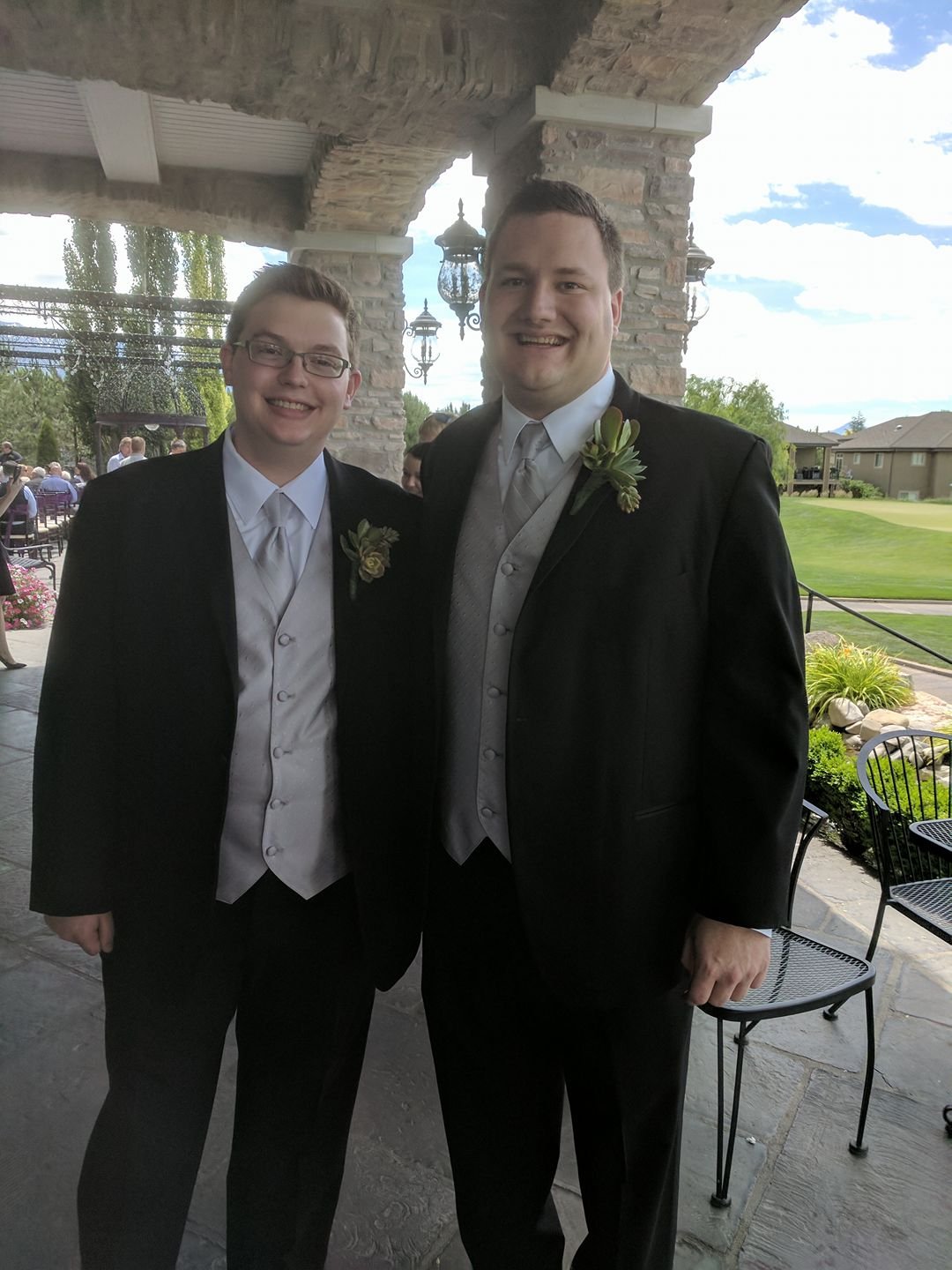


THE SHARP FAMILY
Jordon and Liz Sharp of St. George, UT, will never forget the day they stopped to pick fresh raspberries. It was a day that felt intentional, and in hindsight—inspired. A day that would ultimately affect the trajectory of their lives. At the time, Jordon had just been called as a young bishop for their ward while going to school to get his doctorate and working full time, while Liz was working part time as a registered nurse and raising their family. As the parents of then four young children, there were literally not enough hours in their day to check all the required boxes of duty. So, Liz was surprised at Jordon’s invitation to join him for a spontaneous and rare day date to go on a drive and hand deliver items to city leadership in the nearby town of Enterprise, UT. On their way back, they saw a sign advertising fresh raspberries and stopped to buy a flat. Upon arriving, the farmers shared that they could simply purchase the raspberries or pick their own. Per usual, Jordon was in a hurry and wanted to quickly buy the fruit and go, but Liz convinced him to pick up a basket and start picking, feeling this would be a peaceful and worthwhile experience to share together. Jordon begrudgingly complied.
trigger warning: suicide attempt
Jordon and Liz Sharp of St. George, UT, will never forget the day they stopped to pick fresh raspberries. It was a day that felt intentional, and in hindsight—inspired. A day that would ultimately affect the trajectory of their lives. At the time, Jordon had just been called as a young bishop for their ward while going to school to get his doctorate and working full time, while Liz was working part time as a registered nurse and raising their family. As the parents of then four young children, there were literally not enough hours in their day to check all the required boxes of duty. So, Liz was surprised at Jordon’s invitation to join him for a spontaneous and rare day date to go on a drive and hand deliver items to city leadership in the nearby town of Enterprise, UT. On their way back, they saw a sign advertising fresh raspberries and stopped to buy a flat. Upon arriving, the farmers shared that they could simply purchase the raspberries or pick their own. Per usual, Jordon was in a hurry and wanted to quickly buy the fruit and go, but Liz convinced him to pick up a basket and start picking, feeling this would be a peaceful and worthwhile experience to share together. Jordon begrudgingly complied.
While walking through the rows, they got to know the farmers who owned the field and turned out to be the grandparents of the Sharps’ longtime neighbors, the Mitchells. The discussion quickly turned to the Mitchells’ teen daughter, also named Jordyn, who often worked with her grandparents on the farm. Jordyn (14 at the time) was a spunky, vibrant, “tomboy type” who grew up with the Sharp kids. It was a serendipitous meeting that would soon become significant. As soon as Jordon and Liz returned home, they were met in the kitchen by their distraught daughter Chloe and Jordyn’s sister, Jocelyn, who ran in and said that Jordyn had fallen in the garage—possibly from her skateboard. She was hurt and “there was blood everywhere.” Jordyn’s parents weren’t home, and the kids told Liz to bring her nursing bag.
Liz ran over and encountered a much more dire scene. Jordyn was unconscious from a self-inflicted gunshot wound to the mouth with blood quickly pooling around her. Jordon secured the gun and removed the children from the scene while Liz aided Jordyn and called 911. As the ambulance took Jordyn, Liz stayed behind with the kids and Jordon met the family at the hospital. While kneeling and praying with the Sharp and Mitchell children in their living room, Liz remembers a peculiar, yet piercing thought entering her mind: “If this has anything to do with my church, we have a real problem that needs to be fixed.”
Reflecting on the day, Jordon recalls the evident hand of a loving Heavenly Father facilitating certain events: allowing them to know and appreciate Jordyn and her great spirit from a young age; meeting Jordyn’s extended family the day of the incident; enjoying an unexpected moment of peace with his wife right before the terrible episode; and most importantly, arriving home early from work, and placing the Mitchells’ bishop and a nurse first on the scene. Before heading back to surgery, there was a small window to offer Jordyn a priesthood blessing. Amid the chaos, Jordyn’s father asked Bishop Sharp to offer a blessing of healing. Jordon remembers sharing specific and powerful phrases directly from a loving Heavenly Father for Jordyn and her parents to hear, some of which did not make sense at the moment—that she would live, that she would fully recover, that she was made exactly as He intended her to be, and that she didn’t need to change. At the time, the Sharps didn’t realize Jordyn was a closeted gay youth and they personally “didn’t have a dog in the fight,” but this experience seared in their minds and hearts a desire to be a part of the change they wished to see in the church to prevent further tragedy. Sadly, this would not be the only suicide attempt of a loved one close to the Sharps stemming from being an LGBTQ member of the church and the feeling of not belonging.
Yet, this experience prepared the Sharps for the moment a few years later when their oldest son, Sam, who was 14 at the time, sent his parents a text that laid it all out: he was gay. He had shortly before tested the waters, telling his mom, “I have a friend who might be coming out, and she’s scared to talk to her parents.” Luckily, Liz replied that it would be a good thing for their family. Jordon says of Sam’s coming out, “We knew our son, so we completely understood his profound desire to do what is right, keep the rules, and never disappoint. We recognized if Sam was telling us this, it came from a deep, real, and honest place. It was something he would never have chosen for himself due to the perceived harm, judgment, and challenges it could cause. But his coming out has brought the pure love of Christ into our home in a way that nothing else could have.”
The Sharp family has experienced many difficult times including losing Liz’s mom unexpectedly, a niece being diagnosed with terminal brain cancer, the death of a nephew, another nephew suffering a traumatic brain injury, and suicide attempts by loved ones. However, Liz says what she loves most about the church is how their faith community shows up for families—providing service, delivering meals, and mourning and praying with those in need. But with Sam’s coming out, they quickly realized this experience would be different. It became clear that many members, despite their greatest intentions, did not know how to include LGBTQ people in God’s plan. Liz, a former Relief Society president, says, “We are told to love all people, but due to our church policies and traditions, many members feel it might be against our religion to fully embrace LGBTQ people in our lives. It is common for members to discuss if LGBTQ members should be allowed into our homes, if they can associate with our kids, or if we can attend LGBTQ weddings. But we have learned how embracing the LGBTQ community has greatly enhanced our life and strengthened our love for Christ’s Gospel.”
Jordon says, “If we truly believe in the Golden Rule, everything we hold dear for ourselves—family, religion, healthcare, children, freedom—we are commanded to desire for all people, regardless of if we agree with them or not.”
Embracing their own growth in this and other areas, Jordon, who’s the VP of Marketing and Communication at Utah Tech University, says that through the recent rebranding of the university (formerly Dixie State University), they were able to witness the growth that comes from listening and striving to understand others’ experiences. “But the most important part,” Jordon says, “is to then believe the experiences and insights being shared. There is great power in realizing none of us has all the answers, but as we open our hearts and minds to other perspectives, our lives will be greatly enriched and blessed.”
Jordon says, “When I found out Sam was gay, I first thought, ‘Is Sam sure about this? How can we make this work within the church? How can I change him to fit this box?’ But that didn’t work, and he quickly spiraled downward. It wasn’t until Sam truly opened his heart to me one night, that a loving Heavenly Father corrected me, speaking deep into my soul, saying: ‘Don’t do anything to place shame on my son. Don’t try to change him. This is who he is. This is how I made him.’ I realized when you try to change people or force them to bury who they are and their talents, they can’t multiply them. As we get to know each other through telling our stories, we find proximity and clarity. It expands our tent and allows us to learn.” Jordon continues, “Research shows that this next generation is rejecting religion, but not because they’re unrighteous or unspiritual. They are service-oriented, kind, and long for spirituality and community; but they refuse to make anyone a second-class citizen. They won’t do it. If the door is not open for all, they don’t want to walk through it.”
The Sharps have had unique opportunities to share their experiences with church authorities at the highest level, and they feel they were met with a sincere desire to learn and to do better. But their most sincere request for church leaders is to simply give members permission to love our LGBTQ brothers and sisters and share that they belong. Liz says, “Currently, to belong in the church, LGBTQ people are required to change their very being in order to fit in. However, true belonging is coming as you are and knowing you are welcome just the same.” At the local level, the Sharps say they have felt immense support and compassion from their leadership, which they recognize is not the case for everyone. They credit this support, which includes their stake president wearing a rainbow pin to church, as the reason they have been able to continue to show up.
Although Sam was the kind of kid who got up early every Sunday to help dress and prepare the other kids for church, his cognitive dissonance between the church and his identity increased. Even after Sam came out, he served faithfully in his quorum leadership, ministered to his assigned families, and played the organ in Sacrament Meeting and Primary. Sadly, however, due to the constant focus on areas that didn’t apply to him, weren’t achievable for him, and didn’t include him, Sam began to experience panic attacks at church. After many years of attempting to find the balance between his spiritual and mental health at church, Sam met with his parents and shared that he would no longer be attending with them on Sundays.
Although the Sharps expressed how the gospel and their faith community have been everything to them, they likewise understand it’s best for Sam to not attend a non-affirming space if he so chooses. Liz says, “And sadly, our other children (Chloe—15, Phoebe—12, Charles—8, and Annie--4) have become acutely cognizant that our family does not fit into the typical church box, causing discomfort for them as well.” Liz explains how Sam’s siblings look to him as a beacon for goodness and consider him the “glue” of their family. Liz continues, “What we hope for our other children, we hope for Sam. His desires are just as worthy as those of his straight siblings—to have a family, give back to the community, and embody honesty and integrity with who he is. Those are righteous desires that we don’t want him to stifle. We feel that’s what God wants for everyone. Our communities would thrive if we supported all people in their desires to grow, connect, and give back.”
Jordon concurs, “If our family wants to feel love and goodness, we turn to Sam. If you were to tell one of my kids that Sam is broken or doesn’t qualify for certain blessings, their hearts and souls would reject that—they’d know it’s untrue. When we deny people love and companionship, which are the building blocks of humanity, it doesn’t help them fulfill the measure of their creation. Exiling people to a life alone doesn’t build their faith, doesn’t build the church, and doesn’t build society. I know the love I feel for my children, and I can only hope Heavenly Father’s love is much greater, and I am confident our Heavenly Parents desire love and connection for all of us.”
At 17 years old, Sam has now found a completely safe and loving environment at the Utah Arts Academy he attends, whose motto “You Belong” on a billboard screamed out “This is the place!” to his father when he first passed it on the freeway. Sam joins many peers in a positive and inviting atmosphere in which all types of kids are given space to thrive both academically and creatively as they are encouraged to be themselves. Jordon loves how the school asks, “Who are you? What talents do you bring to the table? Which tools can you add to the sandbox? It’s an experiment for how life should be—how every church should be. The church sandbox should be the most welcoming of all if we’re truly applying Christ’s teachings.” The Sharps believe that because Sam is accepted both at his school and in his family, he will reach his full potential. They regret that some of the brightest minds have been squashed “as we’ve forced them to hide and bury their talents.”
Having never been a part of a marginalized group themselves, Jordon says they’ve relished witnessing the love of the LGBTQ+ community, which “has been placed so far on the margins, that their capacity to love and accept others is like nothing we’ve ever experienced. I didn’t know that kind of love existed. It strips out all the things that don’t matter and gets to the root of what does, which is loving and supporting each other. Liz says, “I want people to know that I’m not sad that Sam is gay. I’m sad that the church and others are sad that Sam is gay. He wouldn’t be the person he is without these unique, God-given qualities.
As they have studied the New Testament in Sunday School this year, Jordon loves how one can apply almost any Jesus parable to turn LGBTQ discrimination on its head. “Christ shares these great examples of love, inclusion, and forgiveness to illustrate that He came to heal and love all, and ultimately, was killed in large part defending His radical form of inclusion. As we celebrate Pride month, I hope we can understand the idea of pride is to simply turn shame and exclusion into hope and belonging. When you know better, you do better, and now that we’ve met some of these (proverbial) women at the well—who are different and have something to teach us—our lives have been forever blessed and enriched.”


THE CRUMP FAMILY
Kim Crump of Hooper, Utah was a foot soldier in the LDS faith she embraced as a youth. She attended seminary and many times took herself to church alone as a teen. Kim married her high school sweetheart in the Logan Temple while her parents stood outside, waiting. A few years later, they followed the tried-and-true path of bringing three children into the world who went to Primary every Sunday, were baptized at 8 years old, and did temple baptisms for the dead as soon as they turned 12. Kim and Justin Crump paid their tithing monthly, accepted every calling asked of them, and were diligent in holding FHE, family prayer, and doing genealogy. General conference weekend was a special event in the Crump household, complete with treat bags, blanket forts, and a countdown until the prophet would take the podium. Kim valued her testimony and the church’s positions on family, saying, “If there was a model of an active, strong LDS family out there, we were it.”
Kim Crump of Hooper, Utah was a foot soldier in the LDS faith she embraced as a youth. She attended seminary and many times took herself to church alone as a teen. Kim married her high school sweetheart in the Logan Temple while her parents stood outside, waiting. A few years later, they followed the tried-and-true path of bringing three children into the world who went to Primary every Sunday, were baptized at 8 years old, and did temple baptisms for the dead as soon as they turned 12. Kim and Justin Crump paid their tithing monthly, accepted every calling asked of them, and were diligent in holding FHE, family prayer, and doing genealogy. General conference weekend was a special event in the Crump household, complete with treat bags, blanket forts, and a countdown until the prophet would take the podium. Kim valued her testimony and the church’s positions on family, saying, “If there was a model of an active, strong LDS family out there, we were it.”
So during 2008, when Prop 8 was on the ballots and blowing up talk radio airwaves, Kim had an unexpected experience while sweeping the sidewalk one afternoon. Contemplating the pundit she had just heard saying, “What are we going to do about ‘the gays’? What are we going to do to protect marriage?”, she felt a clearly articulated voice in her mind speak to her heart the words, “Kim, what if someday you have a child who is gay? What will you do?” Kim stopped sweeping and stared at the sidewalk. After some thought, she came to the conclusion that of course she would go on loving them. That moment was added to her file box to be brought to remembrance later.
Fast forward to December of 2018, when Kim’s middle child, Ben, who was 15 at the time, told his parents he was gay. At the time, they were heartbroken and full of worry. When Kim first sat down with Justin after Ben’s confession, she remembers the confused tears in her husband’s eyes as he talked of them not being a forever family anymore if Ben “pursued that path.” As Ben had not come out publicly yet, Kim found herself spiraling into a dark hole as she wrestled the news alone and plunged into a faith crisis. But she remembered that experience on the sidewalk, and the seed that was planted by the clear words whispered to her and the feeling to “just love them.” That experience helped her to understand Ben’s choice to walk away from the church because of his hurt and anger as members spoke of people like him as being “an abomination, broken, or less-than.” Kim also began to experience this hurt for herself and often found church meetings to be full of pain that often felt “like daggers to the heart.”
Nowadays, Kim is infinitely grateful for the experience of being Ben’s mother, and to have learned all that she has. She fully supports him in his path and rejoices with his happiness. She says she and Justin will eagerly welcome his future partner into their home much like Elder Christofferson’s parents unconditionally welcomed their son, Tom, and his partner to their home. Kim recognizes that she now feels a closeness and greater discipleship to Christ and a stronger faith in her Heavenly Parents but at the same time knows how church can be a place of continued hurt. Her testimony and beliefs have changed over the years and she has had to let go of things that she says just did not bring her or her family good fruits. She firmly believes that having Ben in their family is a gift that has allowed them to learn and love more than they ever felt possible.
Kim has found many things to help her along her journey including community and support on the Facebook LGBTQ parent support site, “I’ll Walk With You,” where she joins thousands of other families in what they feel is a great work coming to pass. While Kim, Justin, and their youngest child, Kelsey—13, still attend church, their oldest child, Kaylee—22, has joined Ben in stepping away due to her feelings about the church’s discriminatory LGBTQ and patriarchal policies. Kim, who has volunteered at the Mama Dragons booth before at the SLC Pride March and offered mama hugs to kids who needed them, says, “Hate and fear are real and people resort to extremes. All we can do is advocate for our children, pray, and educate those in our neighborhoods, congregations, and families as we strive to be latter-day stone catchers.”
While Kim waves a Pride flag near her sidewalk this month, she says going to church can be really hard. “I get treated differently. Some friends don’t talk to me anymore. I’ve made peace with it but that doesn’t mean it doesn’t hurt me most days. If conversations go sideways in church classes, I’ll bring it back around. I always bear testimony that Ben is one of the greatest blessings in our lives, which usually leaves perplexed looks on members’ faces.”
Most important to Kim is that Ben knows how she feels and that she would choose him first if it came down to it. A few years ago, after reading the Trevor Project’s statistics on suicide (that children with at least one accepting family member are 40% less likely to die by suicide), Kim realized her own son was experiencing psychological turmoil and needed to know that he had her full support. “Once I let him know that, he completely did a 180. The tormented Benjamin I was seeing, who wasn’t acting like the son I knew, melted away and he became himself again.” As Ben came back to life, Kim says he was able to have a wonderful high school experience as a near 4.0 student who excelled on the debate team. He found a tribe of supportive friends and attended his prom with another LGBTQ student. Kim was surprised but supportive as he chose to wear a dress and heels to the dance. Her Facebook post after helping him apply his make-up for prom included a proud picture along with the words, “I’ve come a long way.”
Ben just finished his first year at the University of Utah and is excited to pursue his dream of becoming a lawyer. He loves shopping and often has more friends that are girls than guys. He keeps his dating life on the downlow, but Kim says, “I’m very interested and want to hear about it when he’s ready to share.” She credits him as being one of the most thoughtful and loving people she knows, the type of kid who would sew her stuffed hearts as a child and who buys Valentine's gifts for all his friends and gets his Christmas shopping done in July—“always thinking of others.”
Because of her own history of being deeply entrenched in LDS doctrine and practices, Kim tends to understand when others are slower to learn or grasp what she’s experienced. Justin is on his own path with Ben. Even though his path looked different from Kim’s, she says he is coming along nicely, step by step. Kim says, “I think it can sometimes be harder for dads than moms when their sons come out, and I recognize that it may not be easy for them, and they just need grace and time.”
Regarding her congregation, she says, “Sometimes people show up ready and expecting to mourn with me, but I don’t want them to feel sorry for me. I want them to know the amazing Ben that I know--that he’s a fantastic person and is going to do wonderful things. I’m so happy and proud to be his mom.” She recognizes that even five years ago, there weren’t the resources that are available now in the church and online to help people learn and understand.
For parents in similar situations who may be struggling to process, Kim highly recommends seeking the help of a life coach. After hearing Jana Spangler on a podcast, she knew that’s what she needed—the help of someone affiliated with the church who could help her build a productive tool box to navigate a faith crisis. She says going through a faith crisis “is about as wanted as someone on an island wanting a tsunami to hit their town. No one wants it or searches for it, but it comes and shakes your world.”
Now Kim recognizes new meaning in the scripture, “A little child shall lead them.” She was pleasantly surprised at her youngest daughter’s response of acceptance and love to Ben coming out. After taking then 8-year-old Kelsey to a gay cousin’s wedding in 2018, Kelsey seemed surprised and a little disappointed to not see a dolled-up bride at the end of the aisle. This was a discussion that Kim was not ready to have but felt clearly it needed to happen. She explained to Kelsey that sometimes two boys fall in love and decide to get married. Because of this discussion and experience, Kim was later able to more easily explain to Kelsey that Ben was also gay and that he might have a similar wedding like the one we went to previously. But by then, Kelsey’s response was along the lines of, “Oh ok, what’s for breakfast?” Kim says, “My kids are leading me in ways I never imagined. Others might look and think, ‘That’s not from God’. But I think my kids are taking me by the hand and saying, ‘Mom, this is how you do this or that, this is how you love and accept people. I’m in debt to them for having patience with me on this journey and answering my questions. They know my heart and are so willing to help me along.”
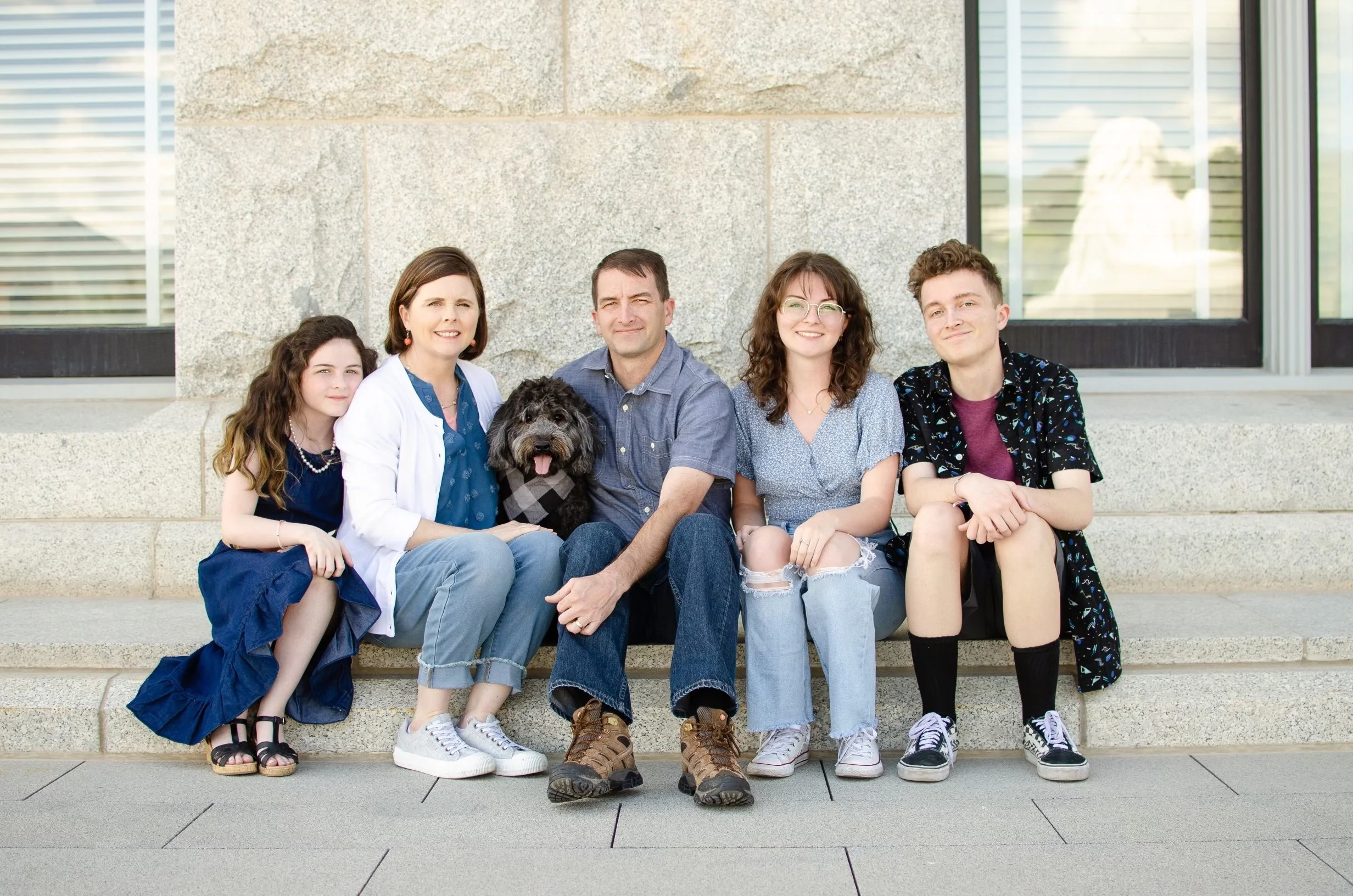

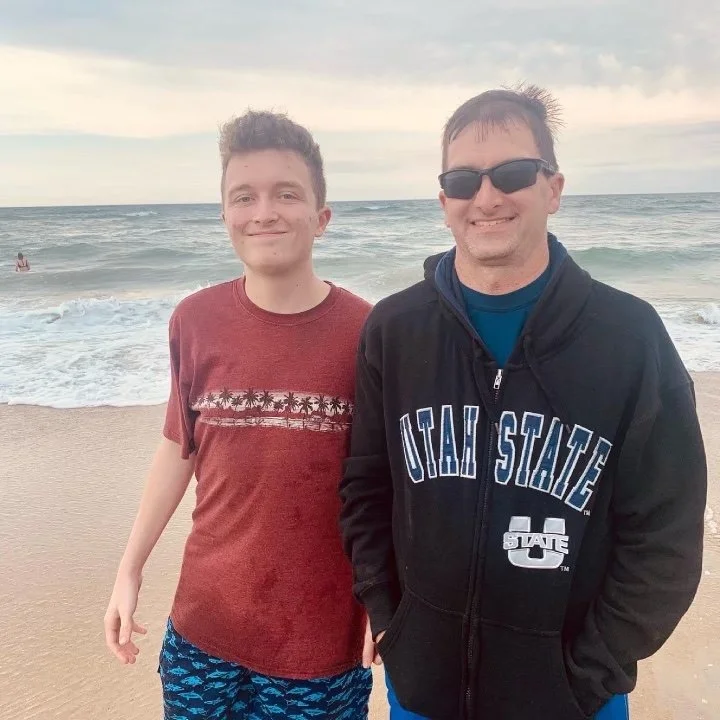
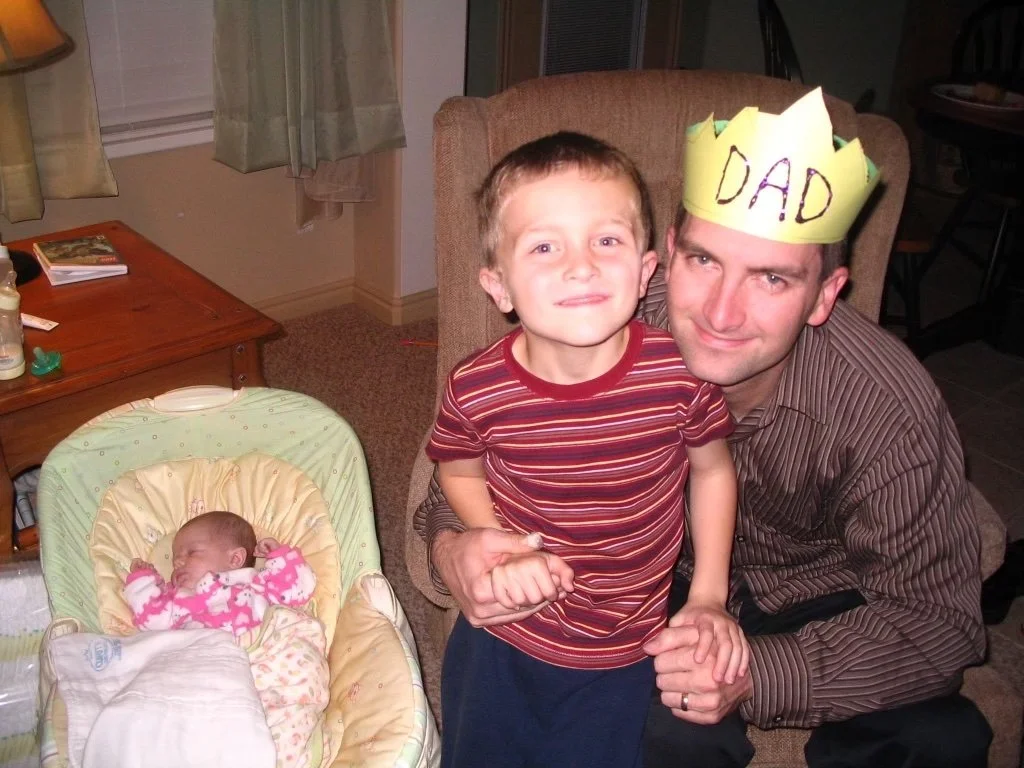
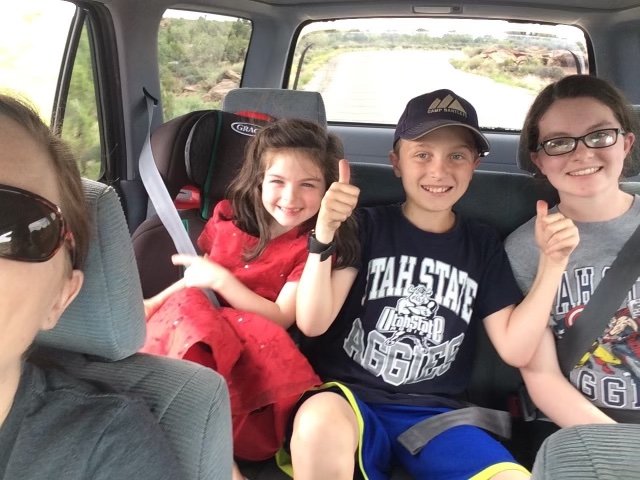

THE HONG FAMILY
We reached out to the Hong family after their father posted a talk he gave in their ward on how doubt and having a gay son helped him become closer to God. Here is their story…
We reached out to the Hong family after their father posted a talk he gave in their ward on how doubt and having a gay son helped him become closer to God. Here is their story.
There are some perks to being a rule follower. People generally heap praises and smiles upon you as you check the boxes: seminary graduation, leadership callings, BYU, institute, mission, scripture reading 30 minutes a day, all while praying morning and night you’ll find a woman to marry and promising God you won’t do anything wrong IF… because you know the levity of that ask. Isaac Hong (now 30) did it all well in his southeastern Idaho, predominately LDS hometown, and later in Provo, because as he says, “I’m a really good rule follower.” He came home from that mission ready to obey his next task: to find a woman and marry her within a year of his homecoming. And then… reality hit.
Isaac remembers the moment he realized, “Oh shoot; this is not working. I cannot get myself to do it.” Several difficult conversations he had with himself resulted in a journal entry in which for the first time he acknowledged, “I think I’m gay.” As time passed, Isaac spiraled and knew he needed to talk to someone. As he tried to lose himself in service and distraction, he realized he was at risk of actually losing himself. “I was exhausted, trying so hard to do good. It got to a point I was breaking. I would drive to work and hope something might happen to me along the way, because no matter how hard I tried, I couldn’t change this thing about me.”
Wanting to engage with his parents while home visiting, late one night, Isaac went into their room and asked if they could talk. And they did. He recalls there was a lot of listening and a lot of asking what things meant, and for him, a huge sense of feeling overwhelmed and relieved at putting it out there, but also actualizing that he didn’t know exactly what this would look like—especially if he left the church. At the time he thought he’d stay highly active. His dad, Don, serving as bishop then, also envisioned that possibility, and even imagined his son gracing one of the Mormonads circulating at the time. Don could see his son in the interview chair, saying, “I’m gay and I’m a Mormon.” Don’s wife, Jenny, didn’t see Isaac’s future quite the same.
As the mom of four kids she calls “amazing,” Jenny was just coming off a parenting payday. Isaac had come home to join family in supporting his sister as she received her endowments. “It’s amazing how prideful we can be,” Jenny laughs. “I went to bed thinking three down, one to go. Wow, what a day…” But there had been many days—or years—since Jenny had first sensed her second oldest child might be gay. She remembers observing special qualities back in kindergarten as Isaac would reach out and befriend those who needed it. She continued to watch through high school, wondering when he’d say something. After his mission, she wondered if she might have been wrong; but she always sensed that behind his bright, overachieving smile there was a sense of loneliness and misery. She says, “I’d pray—whatever this is, please let him be able to be open about this.” The night he finally opened up, Jenny remembers telling him, “I love you, I’ll support you, whatever your journey looks like.” Her memory of that night also included Isaac sitting on the foot of the bed, with a giant canvas of a bedspread between them. She says she wishes she’d done more--invited him to sit next to them, maybe said, “give me just two minutes to put sweats on so I can give you a hug.”
Jenny assures they weren’t the picture-perfect family, but says, “We were guilty of trying to check the boxes. We tried to do daily scriptures, evening prayer, and family home evening—even taking a stand that Monday night basketball practices had to end by 7pm so we could have FHE. But maybe we should have focused more on making sure our kids simply knew we loved them no matter what. Focusing on checking the boxes probably sent the wrong message.”
The Hongs acknowledge they endured some ungraceful moments. When Isaac told his dad he was going to start dating men, Don remembers saying, “Well, if I’m being honest, I’m not as excited for this as I would be about your sister seriously dating someone.” That comment hurt Isaac and he said, “Why wouldn’t you want me to find someone to share my life with and be happy?” Don looks back now with regret, and reflects he was just trying to process everything. “I was probably 50 steps behind Isaac and spent a lot of those early days trying to catch up.” But as time passed, Isaac credits his dad for being a genuine, curious person. When Isaac would say, “Hey Dad, you hurt me; this hurts,” Don wouldn’t take it personally, but instead would say, “Help me to understand why.” That approach allowed the two to develop an open and honest relationship in which Isaac offered his dad a lot of patience as they tried to come to a place of understanding. Referencing BYU professor and author Jared Halverson’s first stage of faith in Don’s talk, he says, “I was stuck in the creation stage.”
Don says Jenny, who had grown up with a more open mindset, was way ahead of the curve in understanding and supporting their son. So it was a punch to the gut when Isaac called her one day, sounding happier than he had in a long time. He said he had the perfect solution to the current family crisis. A close family member had recently received a severe liver disease diagnosis and would need a transplant within the next five years. Isaac volunteered, “When that day comes, I’ll just figure out a way to give him mine.” That result would be fatal; Jenny fell apart. She says, “Obviously, that’s not an option—we wanted them both to live the healthiest, happiest lives possible; they deserved that. That day, I knew we had to find a way for Isaac to know he deserved to experience joy and happiness. Whatever road that was, we’d go down together.”
She and Isaac would call each other every day. On one of those calls, she could tell he was having an especially hard day. Jenny remembers starting to cry and telling him her heart was breaking. She remembers it made him feel bad he had upset her, but at the same time, it healed him to know she was mourning with him. It was easy for Jenny to cheer him on. When Isaac called her to say he was going to start dating, Jenny was elated. She loved hearing the refreshing excitement in his voice as he’d talk about a guy he found to be “super good looking.” She says, “I’d been waiting so many years to hear giddiness in his voice; I loved it.”
When he first started dating, Isaac was still attending church. After a couple of years, Isaac met his now partner of three and a half years, Brock. A Utah native, Brock had also grown up in the LDS faith, and in his coming out journey, had been negatively impacted by religion. Isaac says, “Brock was able to clearly express it in ways I hadn’t heard it articulated before. So much resonated, and my heart hurt for him... I was upset how the church had hurt him and no longer wanted to be active.” Isaac says that disaffiliation almost felt like another coming out, which was another gradual process for his family. But as they had worked to develop a relationship of being honest, curious, and compassionate, Isaac would vocalize a heads up to his parents–whether it was that he wouldn’t be wearing his garments on the next family vacation, or that he and Brock would prefer to share a room.
Don says, “I love Brock! Both he and Isaac are some of the most thoughtful people you will meet. Brock’s very good at sharing a fair perspective on many topics, whereas I often come at them with my biases. He has helped me see things in an atonement stage way. It’s very humbling.” After graduating from BYU, Isaac got an MBA at the University of Utah and now works as a product manager for Mastercard. He and Brock met at a Utah gathering of like-minded friends. Together they love getting out and exploring Utah via paddleboards, lakes, reservoirs, the mountains, their swim team, and they also enjoy playing pickleball, and “chilling and watching TV.”
Isaac says he is the extrovert of his siblings, but his siblings are all “loud supporters” who have also wholeheartedly welcomed Brock into their family. Older brother Jacob (who’s married to Stephanie, and father to their kids Ella, Gracie, and Simon) is likely the most reserved sibling, but made it loud and clear that Isaac and his partner are always welcome into their family’s Minnesota home. Isaac’s sister Calie, 27, lives in the lower portion of Isaac and Brock’s townhome in American Fork, and the Hong’s youngest, Lacy—19, is going to UVU and getting married this summer.
“Having a gay son has been a gift,” says Don. “It has opened my eyes to just how many people don’t feel like they have a place at the table, and I want to do my part in making that table full.” Don recently gave a talk in his ward’s sacrament meeting that’s been widely shared online about ways people can do better to honor those on their faith expansion journeys. They’ve been warmed by the response in their town as many who had been silent from the margins have connected with the message and shared their stories with them. Jenny hopes people realize the church does not take the place of your family and “we should never feel it’s one or the other. There is infinite grace, and I look to a day when everyone can simply love. Love people exactly where they are and without judgement.” Isaac says he and Brock no longer attend church, and doubts it could ever become a place where he would feel safe or want to return.
While sitting beside his parents, it’s clear the three have worked hard to come to a place of understanding and unconditional love. Of the journey he’s taken alongside his parents, Isaac says, “We may have different perspectives, but at the end of the day, there’s grace and beauty in what each is trying to do. It’s an ongoing dialogue.”
Don’s talk can be found here: https://www.facebook.com/don.hong.56/posts/pfbid02TEg3BLtu9Ec7WTYZpPu4YEza6oAcNG7V44T2CzYEy2ebFTZABaa5DgPM8ZicGnjsl


THE ERVIN FAMILY
Every month, parents of transgender and nonbinary kids can join a Lift and Love online support circle facilitated by Anita Ervin of Canal Winchester, Ohio. It’s a topic with which she is very familiar. When Oliver—22, and Rome—19, the oldest of her four children, are both home together, the Ervin house is noticeably louder and filled with laughter. While the two say they fought sharing a room as children, they now share an inextricable bond. Rome credits Oliver for making their coming out journey much easier at age 16. Anita admits Oliver put them all through a learning curve when he first identified as queer in 2018. Rome says, “Oliver got the messy; I got the ‘all good’.”
Every month, parents of transgender and nonbinary kids can join a Lift and Love online support circle facilitated by Anita Ervin of Canal Winchester, Ohio. It’s a topic with which she is very familiar. When Oliver—22, and Rome—19, the oldest of her four children, are both home together, the Ervin house is noticeably louder and filled with laughter. While the two say they fought sharing a room as children, they now share an inextricable bond. Rome credits Oliver for making their coming out journey much easier at age 16. Anita admits Oliver put them all through a learning curve when he first identified as queer in 2018. Rome says, “Oliver got the messy; I got the ‘all good’.”
In summer 2018 at age 18, Oliver came home from BYU-Idaho and told their parents he identified as pansexual. This first happened in a car conversation with his mom in which Oliver asked if he would ever be kicked out of the house. When Anita passed the turnoff to their neighborhood and kept driving, Oliver was startled and feared he was about to be dropped off for good anywhere but home. But instead, Anita drove to a nearby park where they could have what turned out to be a complex conversation in peace. Anita assured Oliver that she would never kick him out unless it was something for his own good, not for his orientation. Almost 18 months later in December of 2020, Oliver (who was AFAB) came out as trans-masculine to Anita by sharing a handwritten letter he was going to send to his grandmother for whom he was originally named. Oliver’s coming out process has continued in a manner in which Oliver typically explains things to his mom, who then shares them with his dad, Ben. A couple months later, during a dinner conversation, Oliver explained to his siblings that there is a spectrum of gender identity with males on one side and the females on the other. Oliver shared he falls just left of center, on the male side, and would prefer to use the pronouns he/they and change their name.
“Growing up in a heavily Mormon family, I didn’t have the words for gender or sexuality and didn’t know what gay people were or gay marriage was until I was 12, and they read that letter in church about gay marriage. It just wasn’t discussed. I didn’t know trans people existed until well into high school. So I didn’t have words for it, but I knew I wasn’t the same as everyone else. I felt like an alien, trying to pretend, because I didn’t have the same guide book,” says Oliver. In college, they met their first queer person inside the church. In their time away from home while at school, Oliver explored how he best identified until he settled on what felt authentic. Oliver, who says he didn’t “get the hype” and hasn’t felt a connection to God since the age of eight, has removed his name from church records. He spent most of his adolescence with his family in a conservative ward in Oklahoma, where the Bible Belt climate often compared people like him as akin to murderers. Oliver is now more open in his spiritual practice, believing that actions beget consequences but does not adhere to a specific organized religion.
After spending many years babysitting and later working at a day care center, Oliver is now comfortable being out at their current workplace. He loves movies and TV, reading, painting and customizing black Vans shoes, and does a lot of art. Oliver has been dating Mya (AFAB) for almost three years, and also identifies as unlabeled orientation-wise. Oliver explains that often, LGBTQ humans first have a sexuality crisis, then a gender crisis, then another sexuality re-examination. Of he and Mya (who uses they/she pronouns and is bisexual), who has been with Oliver through his transition, Oliver says, “We’re not pressed on labels; it just is what it is. We both feel a little too old to lie awake at night trying to find a label or a box to put ourselves in. Sleep is already difficult; I’m not losing more over this.” Oliver and Mya also identify as “kitchen table” polyamorous, which they explain as not really a sexual thing, but more like being open to consensual emotional connections with others. The Ervins really like Mya, and Rome has told Oliver more than once they can’t break up because Rome and Mya are “besties.”
Rome, who was also AFAB, identifies as gender queer and bi-curious. (They have no preferred pronouns.) They selected the name Rome awhile ago, and Anita laughs she still hears the B52’s lyric “Roam if you want to” every time she calls her child’s new name. Growing up, Anita says she and her husband Ben were used to pairing off their kids, having two of each, and referred to their brood as “the girls and the boys” (younger siblings include Connor – 14 and Maddox – 12). But now, it’s the “gremlins and the boys.” Oliver laughs that he and Rome “are a little freakish” and so the name suits them well. Anita is very grateful that both of her oldest kids’ anxiety has improved since coming out.
Rome enjoys making jewelry, specifically earrings, out of miniature things, and loves the aesthetic (not the drug) of the mushroom. They also enjoy true crime, creating art, watching Criminal Minds, Minecraft, and claim they have an “unhealthy love of Mexican food.” Rome has done a year of college and is working at a BBQ joint for the summer.
In 2020, after listening in on a conversation Anita had with the Emmaus (LGBTQ and faith-affirming) group, Rome confided in her mom: “Mom, I think I might like girls.” This time, Anita responded more along the lines of, “I’ll love you forever and ever and ever,” laughs Rome. Anita recalls counseling Rome to not rush to label themselves, that they’d figure it out. Rome is grateful Oliver “paved the way for my ability to come out comfortably because he instigated the learning process for our friends and family,” and that they’ve had a family willing to accept them, no matter what. Rome also has benefitted from a more accepting ward in Ohio where several women wear pants to church and it’s easier to blend in. Anita encourages this, after observing Rome’s choice to wear slacks and a vest to prom. She believes Sunday dress is about “dressing your best” as your full self for the Lord, not adhering to some cultural norm.
Before Oliver came out, Anita says she always considered herself a “middle of the road, cliché Mormon.” She went on a mission, married in the temple, never turned down a calling. When Oliver first approached the LGBTQ subject with her, she didn’t know what to do – should she steer him toward the bishop? She didn’t want him living the life of shame she’d seen another close family member endure. Anita says, “As I prayed about what to do the only answer I got was to love him the way God loved him—fully. It was not my job to ‘teach more truth’ in an attempt to ‘fix’ him.” In the beginning, she and Oliver concur things were rocky; there were lots of tears. But Anita emphasized maintaining a strong connection with her child. She has close ally friends in her ward who she says got her on the right supportive path and to a place where she realized she could be all in with her family and all in with the church. “I loved realizing I didn’t have to choose between fully supporting them and being present in their lives, and being committed to my faith as well. I could do both.”
The Ervins have also reassessed how they teach faith at home, focusing more on how to develop a connection with Christ than follow a pamphlet of do’s and don’ts. “If you strip away everything else, at the core, it’s Jesus Christ and His grace that saves us, not going through the motions of church activity. I can’t limit Christ. I can’t say I have to expect my kids to live a certain way to be saved by Christ. I think He’s big enough to handle the complexity of their lives.” Anita says they have definitely moved on from a place of grieving over lost expectations, and now are able to see the humor in things. Their driveway is witness to the frequent “Can you make that straight?” joke, referring to a crooked parking job with a well-received double entendre.
A significant realization that’s helped Anita came from Richard Ostler’s second Listen, Learn, and Love podcast episode in which he deconstructed three partitions of church: the Church of Jesus Christ. The restored gospel. And the organization of the church. Anita likewise deconstructed her testimony and is able to safely linger in the first when things get hard. She can just focus on maintaining a pure connection to Christ. As looming fears of policy changes regarding trans individuals both in the national landscape and at church brew, Anita is choosing to focus on the one thing that won’t change: her faith in Christ.
Anita says, “I have faith and beliefs which haven’t changed, but I can respect where my kids are coming from. If they don’t go down the path I’d hoped, it doesn’t destroy my perspective. It’s okay for them to choose their paths; it’s only complicated because I don’t know the answers yet. But a pain point for me is that I see my kids in their gender journeys and some of the policies towards trans individuals, and I feel like they’re being treated like wolves instead of sheep. I want some recognition that they’re sheep.”
Oliver concurs there’s an untold level of pain kids like him experience. “The first time I thought about ending myself, I was eight years old… If people truly knew the level of discomfort, they would choose to learn. If people knew they could literally save a child’s life by listening and trying, they would.” He says Wrabel’s song “The Village” (lyrics below) perfectly sums up how important it is to listen to the trans experience in religious environments. Anita also laments the suicidality rates of trans individuals, as found at the Trevor Project. She’s had flashes of “What if? What if I had been the parent who’d said, ‘Not in my house’. I probably would not have all of my kids with me today. This isn’t just about us. We all change in our lifetimes; we all grow. People say, ‘What if it’s a phase?’ I respond, ‘So what if it is—this is real to them right now, and so right now I’m showing up 100% on their team. As their mom, I’ll do what I need to do to get them through the next five, ten years.”
What pains Anita most when she leads the parent support group is witnessing the sadness of families whose kids are being othered and excluded. “Too often when the kids don’t stay, the whole family goes. I feel that loss keenly. I understand when families step away. People need to realize that when they have those casual conversations against our kids, they are often sitting next to a parent of a nonbinary or trans child…” She fears the exponential hurt that may come in the near future for many. “Of all the places on earth where people should feel love and acceptance it should be among the followers of Christ and in His church. Unfortunately, that’s not always the case.”
Lyrics
No, your mom don't get it
And your dad don't get it
Uncle John don't get it
And you can't tell grandma
'Cause her heart can't take it
And she might not make it
They say, "Don't dare, don't you even go there"
"Cutting off your long hair"
"You do as you're told"
Tell you, "Wake up, go put on your makeup"
"This is just a phase you're gonna outgrow"
There's something wrong in the village
In the village, oh
They stare in the village
In the village, oh
There's nothing wrong with you
It's true, it's true
There's something wrong with the village
With the village
There's something wrong with the village
Feel the rumors follow you
From Monday all the way to Friday dinner
You got one day of shelter
Then it's Sunday hell to pay, you young lost sinner
Well, I've been there, sitting in that same chair
Whispering that same prayer half a million times
It's a lie, though buried in disciples
One page of the Bible isn't worth a life
There's something wrong in the village
In the village, oh
They stare in the village
In the village, oh
There's nothing wrong with you
It's true, it's true
There's something wrong with the village
With the village
Something wrong with the village


THE HOWARTH FAMILY
When it comes to reflecting on the life of their 26-year-old daughter, Ellery, Holly and Robert Howarth of Holladay, Utah credit one milestone day that changed everything: Thursday, September 2, 2021…
When it comes to reflecting on the life of their 26-year-old daughter, Ellery, Holly and Robert Howarth of Holladay, Utah credit one milestone day that changed everything: Thursday, September 2, 2021.
Before that Thursday, the Howarths knew their only daughter to be a feisty go-getter who “liked to do everything and who was good at everything.” That hasn’t changed. As a young toddler, Ellery loved “typical girly things,” especially the color pink; but she also had mastered the monkey bars by age three, and really loved and excelled at sports and playing with the boys, including her four brothers (Spencer—now 34, married to Casey, William – 23, married to Hannah, Benjamin –20, and Christian, aka “Boo” -- 17). When she was six, her birthday party was made when her best friend bestowed her gift wish—a light saber, which she gleefully ran off with, hollering to all the little girls and gifts she left behind: “You all can play with all the Polly Pockets!”
In high school, Ellery was junior class president and had many dates and boyfriends. After, she went to BYU and served an LDS mission to Guatemala, which she loved. Her going on a mission surprised her dad a little, as Ellery had expressed some concerns with church doctrine over the years. But when she came home, “something felt different.” Holly says she slept in the same room as her daughter the first couple of nights because Ellery seemed so off. She cried all night and seemed so sad that her parents thought she might be sick from exhaustion.
Ellery proceeded in her schooling and with her plans to be a lawyer. A few years later when her brother got married in the temple, Ellery approached her dad, sobbing, saying this was something that would never happen for her. Looking back, Robert says he was clueless and shrugged it off, joking, “Get outta here; I gotta go to bed.” Continuing to build her resume, Ellery went to Texas to get a Masters in Education from SMU and work for the Teach for America program in a Dallas Title 1 school. Back at home in Utah, Holly acted on the rumblings in her heart and expressed to her brother, “Sometimes I think Ellery might be gay.” To her shock, he replied, “Of course she is; I’ve known that since she was little.” Holly asked why he’d never said anything, to which he replied he’d promised his wife he’d never bring it up unless the Howarths said something first. When Holly broke down crying, her brother said, “Why are you reacting like this? That poor girl, she’s the one who’s been navigating this on her own. If you can’t love her for who she is, then let me love her and parent her.” That statement shocked Holly into an entirely new mindset. She felt her maternal instinct surge, and she said and knew, “No, she’s my daughter. Of course I’m going to love her!” It was Thursday, September 2, 2021.
Holly immediately called Ellery, who was about to walk into class in Texas. She said, “Ellery, you know how you always say I’m your very best friend in the whole world? Sometimes, I think you lie to me.” Ellery replied, “What are you talking about?” Holly said, “I’m going to ask you a question and you have to tell me the truth. Are you gay?” Ellery broke down sobbing and said, “Yes, I am.” Then she angrily yelled, “How can you ask me something like this right now? I have class!” Right after class, she called her dad Robert, who’d already been filled in. She began to profusely apologize. He asked why she was saying sorry, and Ellery replied, “Because I’m an abomination.” Robert said, “I just love you.” Her siblings echoed that sentiment, with her brother Benjamin, who was doing home MTC at the time saying he had prayed all day for inspired words to share with his sister, and the words that came were also just how much she was loved. Holly says this revelation unraveled a decade of torment their daughter had been enduring alone. In those early days, after that Thursday, Ellery continuously called herself an abomination, feeling like she was the reason her family “wouldn’t be together forever.” It turns out she had been working hard to get her finances in order, feeling as if her parents would cut her off if they found out.
After that Thursday night, as the truth came out, it set Ellery free. She revealed she’d figured out she was gay right after breaking up with her tenth grade boyfriend, and realizing her mom’s admonitions to “don’t make out, and keep your feet on the floor” were no problem at all if you weren’t feeling those urges for the opposite sex. While her going on a mission had shocked her dad, Ellery revealed that was an attempt on her part to make a plea bargain with God to change this part of her. Her monumental depression on her return was due to the fact that this hadn’t worked--she was still the same. Ellery had beat herself up over the years, internalizing every phrase ever uttered against people like her, including when her mom once found out a girl they knew came out and she said, “Oh, her poor mom.” Or the times Holly used to say, “I have a lot of single friends and they have to stay celibate, so gay people can do the same.”
After that Thursday night, Holly actualized she would never want a life of loneliness or celibacy for her daughter. She had recently gone to lunch with a 68-year-old female friend who had never been married and asked her, “Do you still have hope there may still be someone out there for you?” The friend replied, “I absolutely do.” Holly now says, “Why are we telling these gay children, ‘There’s no hope for you’?”
The night after Ellery came out, she told her parents, “If you leave the church over this, I will be angry at you and never forgive you. If it was true before you knew this about me, it still better be true after… Although it’s not for me right now, because there’s no place for me, I know that my God is good.” Holly and Robert went back with Ellery to visit the people of Guatemala whose lives she had impacted on her mission and they loved seeing the pure love and gratitude the people expressed for their daughter. One particular woman who Ellery had helped find the gospel proudly showed them her temple endowment certificate and is a temple worker now. Holly says, “She felt all that; it’s real. Ellery believed all that. That’s where the pain comes from – her not being able to be who she is and have all that. People will say, ‘Oh there’s a place for her in this church,’ and I’ll say, ‘No there’s not, not right now; she can’t have a girlfriend and be a part of the church. That’s hard. It’s heartbreaking for those who want to remain a part.”
While at BYU, Ellery had begun seeing a counselor for her depression and anxiety who helped her work through her own faith progression, after realizing she would need to weigh the pros and cons of staying in an organization that didn’t support her finding a companion. Up until then, she had tormented herself, battling suicidal urges to take her life by the age of 25 so no one would ever “have to know.” Eventually, the therapist helped her identify the church wasn’t servicing her anymore, and she needed to write down those pros and cons and have a ceremony and burn them and say goodbye. One of the hardest pills for Ellery’s parents to swallow was when she asked them why God didn’t love her, saying, “Why would he make me this way if he knew I’d never be able to return to live with Him?” Since Ellery has stepped away from church activity, she has not experienced any more suicidal breakdowns.
Holly reflects that if she hadn’t had that conversation with her brother on that Thursday and immediately called her daughter, she might not have seen her in this life again. Ellery’s 25th birthday was the following December 18th. But instead, Ellery returned home to celebrate and put on a beautiful new dress and went out with friends. Just before she walked out the door, she told her parents, “I never realized I could be this happy.” Ellery currently lives with her girlfriend of a year, Madeline, and one day looks forward to getting married and having kids. She loves knowing she’ll have her family’s support.
As she prepares to welcome their first two grandbabies this summer (each of the Howarth’s daughters-in-law are expecting), Holly has also been on a faith journey, re-examining her belief system. She’s dug into reading the book, Jesus the Christ, to really try to come to understand pure Christianity. She questions why a church would be called after someone who embraces all, but currently as an institution causes so much suffering as there isn’t a safe place for all. She wonders, “Why is it people would rather die than be who they are—those who were born this way? Sometimes I feel like I’ve been punked… The gospel was always so black and white and easy: ‘Do all these things and everything will work out. Unless you’re gay; then it’s not.’ I’m trying to put the work in, so I don’t feel punked. I’m putting in the effort to get to know the Savior again, so I don’t carry these feelings of anger, sadness and heartache. I’ve used the Atonement in my life probably as much as anyone; I’ve needed it. But I’ve been hurt. I have a testimony, but I’m struggling.”
Robert has maintained his LDS faith with the caveat, “I just have to have a testimony that I don’t know everything, and I won’t while here on earth. I’ve got to take what I know to be true and run with that because I don’t like the alternative.” Both Holly and Robert concur that heaven would not be heaven without all their kids; and Robert says, “Ellery, wherever you are, I will find you.” Holly agrees, “She’s our whole world; she’s everything to us. Nothing’s changed in that regard. But a lot of things have been put into perspective since that Thursday, when everything changed.”


THE MCINTIER FAMILY
Since their oldest son, Max, was a young toddler, Abby and Jeff McIntier always wondered if him being gay was a possibility. But they never wanted anyone to label him before Max himself was ready. Abby says, “In my heart, only he knows who he is. And God.” But, they admit several friends may have wondered.
Since their oldest son, Max, was a young toddler, Abby and Jeff McIntier always wondered if him being gay was a possibility. But they never wanted anyone to label him before Max himself was ready. Abby says, “In my heart, only he knows who he is. And God.” But, they admit several friends may have wondered.
While the McIntiers were in grad school in Buffalo, NY, their close network of friends all had young daughters Max’s age, and he loved playing princesses right along with them. After one particular playdate resulted in a fight (led by Max) over who would wear the Cinderella dress and who would be Rapunzel, Abby’s friend called her and joked, “You’d think this wouldn’t happen with the boy who’s over.” But even at home, Max gravitated toward stereotypically girl things. Abby says, “It wasn’t what I thought raising a boy would be like. My husband and I always thought, ‘Huh’.”
Fast forward to 2015, when Max entered middle school. Abby was about to pop with their fourth child when a friend called and said that one of their kids’ friends had called Max gay, and Max didn’t really seem to know what that meant. Abby thought, “Here it is. I sensed this might come. And I knew I needed to create an environment for him to know he was safe being whoever he is—and only he will know who that is. It’s not ok for anyone else to tell him.” At that time, the political climate was quite negative regarding LGBTQ issues in the McIntier’s Richmond, Kentucky hometown, and middle school can be quite harsh in general, so Abby would often find herself engaging in late night conversations with Max about “so and so in their youth group who’s gay and their parents won’t accept them.” Occasionally, Abby would ask, “Are you?” Max would always reply, “No, I’m not.” Abby would quickly follow that with, “Well you know it's ok, right?”
Finally, in the summer of 2020, Max was ready to come out. He told his dad first, after Jeff said, “You know, if there’s something you want to tell us...” Later with his mom, while sitting on the couch, Max blurted out, “You know I’m gay, right?” Abby nonchalantly replied, “I didn’t, but that’s cool.” Their late night, supportive talks continued into that fall, and one evening, Max was talking about how excited he was to be out, to date someone, to post it on social. Abby felt something inside her want to verbally gush about the prescriptive life her son could have – still in the church, still going on a mission, “the best uncle ever, and he wouldn’t even have to marry a woman!” He could be like a famous performer Abby had known in her younger days as a performer who was now openly gay and still actively LDS (and presumably celibate). Of that night, Abby says, “Max had just turned 16, and luckily, the spirit shoved a sock in my mouth, and I stopped presupposing and just listened. And I realized there’s got to be more to his life than that. I couldn’t tell him to go on a mission so he could go to the temple so he could go to the celestial kingdom and check all those boxes. Call it spirit, intuition, whatever, but nope, something stopped me, saying, ‘That’s not what you’re going to say’.”
The following Valentine’s Day, in 2021, Max decided to come out publicly on social media to mark the one year anniversary of the first time he’d come out to anyone (a close friend). Abby says that everyone saw his post, including a bishop of another ward who’d called Max’s seminary teacher to warn him. The timing couldn’t have been worse. On the very next day, the lesson in seminary was on Sodom & Gomorrah, and it took an anti-LGBTQ direction as “homosexuality” was written on the board as one of the reasons why the lands were destroyed. People in the class compared it to active sins and things like addiction—but being gay was something Max didn’t choose. Friends called Abby who, now pregnant with her sixth baby, was on the treadmill fielding calls telling her that Max had left seminary quite mad. “He felt just awful—so embarrassed.” Abby read the lesson, and then did a deep dive into the Family Proclamation.
She says, “I had my own personal revelations that the proclamation feels incomplete to me. There’s nothing in there that says you cannot get married to a man and still live with God. There’s more knowledge to be received on this subject. I think that Heavenly Father is not withholding info, thinking, ‘Oh, you’re not ready to be non-racist or non-exclusive.’ I believe our biases, cultures, and dogmas stop us from receiving further revelation. We think we get an answer and move on, but there’s probably a lot more that Heavenly Father is trying to tell us.”
Abby emailed the two seminary teachers and the bishop of the other ward who happened to be at that lesson and told them, “Whatever was taught at best was naïve, misinformed, ignorant; at best, it was false doctrine.” Up until that point, both Abby and Max had grown very comfortable with who he was. That seminary lesson was the first time Abby realized her son might be ostracized and considered a sinner for something he didn’t choose. She thought, “There’s nothing wrong with him, and I didn’t like that someone would say that. I turned to Lift and Love and found resources to prove my point that I was right, and that everyone else was wrong… Now, I’m on a journey. I have conversations and sometimes get my feelings hurt. This can be just such a taboo topic.”
Jeff says, “I haven’t always had the best relationship with Max, but thankfully it’s never been because of his sexuality. One time, before he ever came out, I was really pleading to God about what to do about him and our relationship, and I remember distinctly feeling, thinking, and hearing, ‘He’s not yours, he’s mine. You’re just a steward over him for a short time. Your job is to love him.’ I never would have thought that on my own. I think I’m too prideful. But that’s how I know it was from God. All this is not my journey or my story. It’s his."
Shortly after Jeff and Abby had their last baby (their six kids now include Max—18, Perry—15, Nora—11, Freddie—1, Oscar—3, and Charlie Quinn—18 mos.), the McIntiers, who own a couple preschools as well as a dance performance company, were a little surprised when they got a visit from their friend, who now serves as their stake president, and his wife. He was a counselor at the time, and he was feeling out whether she might up for serving as the stake Young Women’s president—with a four-week-old baby. His wife said, “No, don’t do that to her.” Abby says there were probably others in their stake who also might find that appointment jarring. (Abby says, “I’m loads of fun, but rough around the edges. The kind of person who’d wear the t-shirt that says, ‘I’m not drunk, this is just my personality’.”) But Abby accepted the call and continued serving with the youth she’d grown to love as ward YW president. She felt she’d found her niche in encouraging Max and others to invite their friends to church activities—including those who might feel on the margins. Something Max can relate to.
Max has found his crowd in the theatre, and he still keeps in touch with a great group of friends he met in a six-week theatre program last summer. There he met a handful of somewhat closeted kids who live in fear of their families’ responses. Abby says, “I don’t think I’m good at anything, but in hearing about that, I realize I handled this well.” Max is excited to head to the BFA theatre program at Coastal Carolina University this fall. While he usually opts to work at the job “he loves” on Sundays (Dunkin Donuts), Abby says Max will occasionally still come to church with his family because he knows she likes having him there.
Recently, Max attended a sacrament meeting in which someone gave a talk about the law of chastity and temple work. Abby says, “Nothing about LGBTQ was mentioned, just that families can be together through Heavenly Father’s plan.” Yet Abby, as well as their stake president friend who was in attendance, heard and felt what Max and people like him must be hearing and feeling during talks like that. Abby watched Max keep his arms crossed tightly across his chest, triggered. Later their friend acknowledged that while there are so many great things about the church, the way Max must hear things like that is, ‘I will never be enough because of how I was born’.”
Abby jokingly calls herself an agnostic Mormon even though she very much believes in Heavenly parents that we are created in their image specifically. She just realizes there are so many things we don’t know and God may not be exactly how she understood as a child and young adult. “For us to think we know all the things right now and to claim this won’t change, it seems naïve. The eternities are vast – I think this is just a blip.” Abby says people ask her how she does it, how she stays in. When she was 15, her brother passed away and she says that likely out of fear, she decided then to assume the church was true so she could see her brother again. But that experience, along with other family challenges, make it impossible for her to “go back to putting her head in the sand because now, I have such a bigger heart. I think about things differently than the way I was raised. I see all people now more as my peers.” Her family often teases her about her plethora of “gay things” which includes rainbow pins, ribbons, books, etc. she collects to give to others. She says, “I wear the rainbow pin not as a protest, but as a symbol of inclusivity and safety to anyone of the LGBTQ+ community, whether they are out or not. I believe when I bear my testimony, particularly in my calling when working with the youth or leaders, my testimony rings differently, albeit the same, when there is evidence I’m an ally. I want all the youth to know they’re loved, they’re wonderful, and that they matter, are needed, and have a divine purpose.”
In her calling, Abby says she tries to share her personal experiences when she gets asked about things, especially when people present being inclusive as an antidote to “teaching the truth.” She says, “There’s always that clause. So while I’ve thought we might disagree on what the truth is, and my personal revelations might be different than yours, we can all agree we are called to love and not judge. And that the plan is a personal journey between us and God; that’s it. We tend to ostracize and get uncomfortable with people in church who don’t fit the mold. We feel like we have to save them, or they’re evil or done or have crossed that line, and can’t come back. But that takes away our agency and thus makes the Atonement null. Throughout history and scriptures, that’s not the case; Christ died for us all so that all of us can come back.”