lift+love family stories by autumn mcalpin
Since 2021, Lift+Love has shared hundreds of real stories from Latter-day Saint LGBTQ individuals, their families, and allies. These stories—written by Autumn McAlpin—emerged from personal interviews with each participant and were published with their express permission.
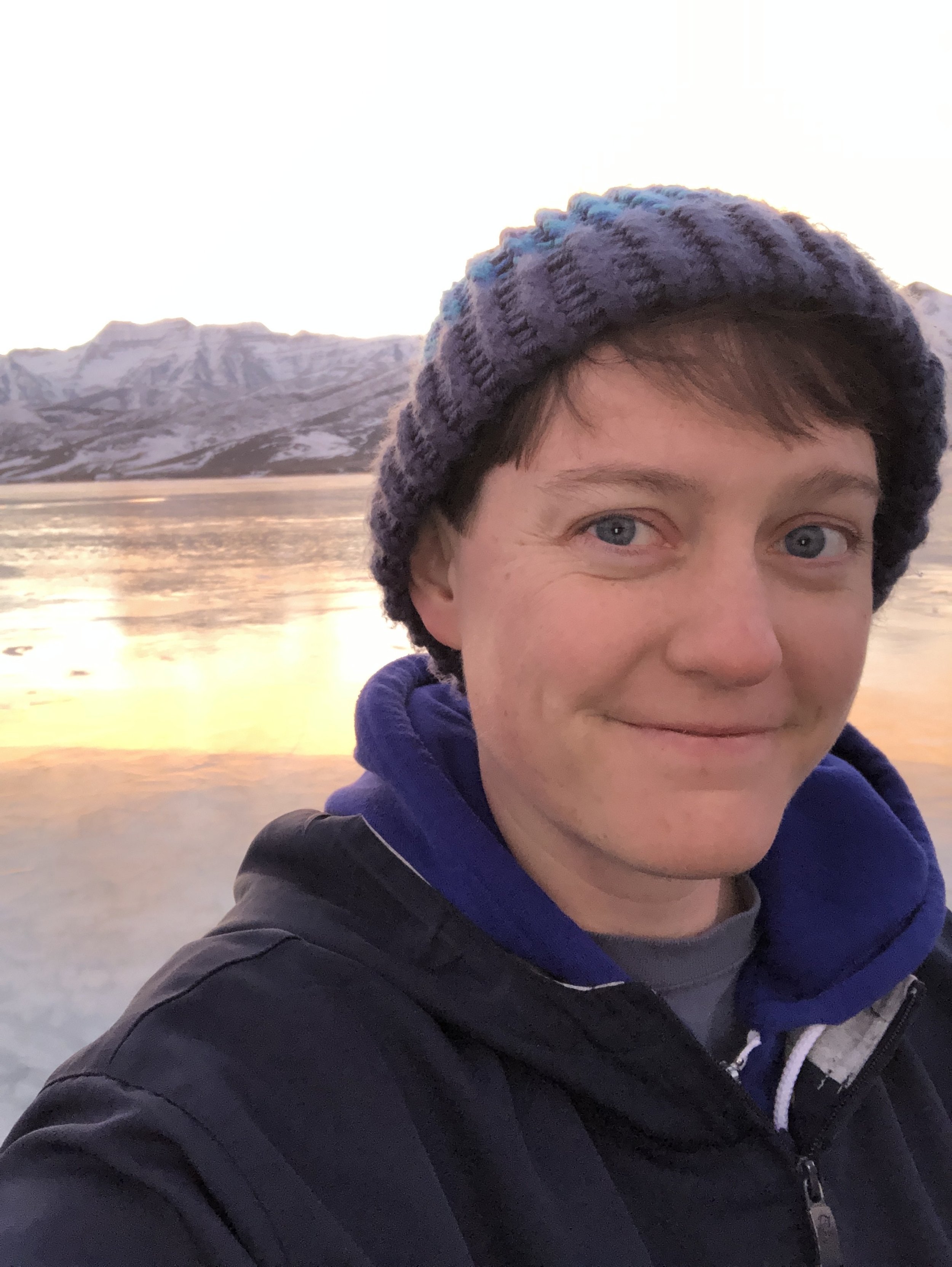
JILLIAN ORR
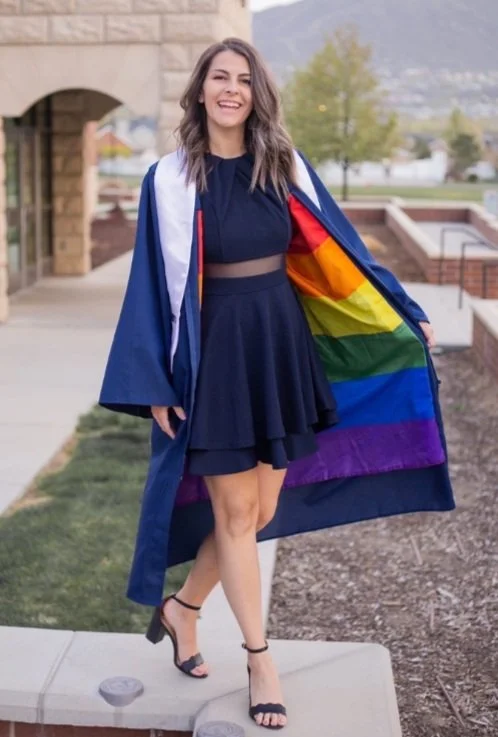
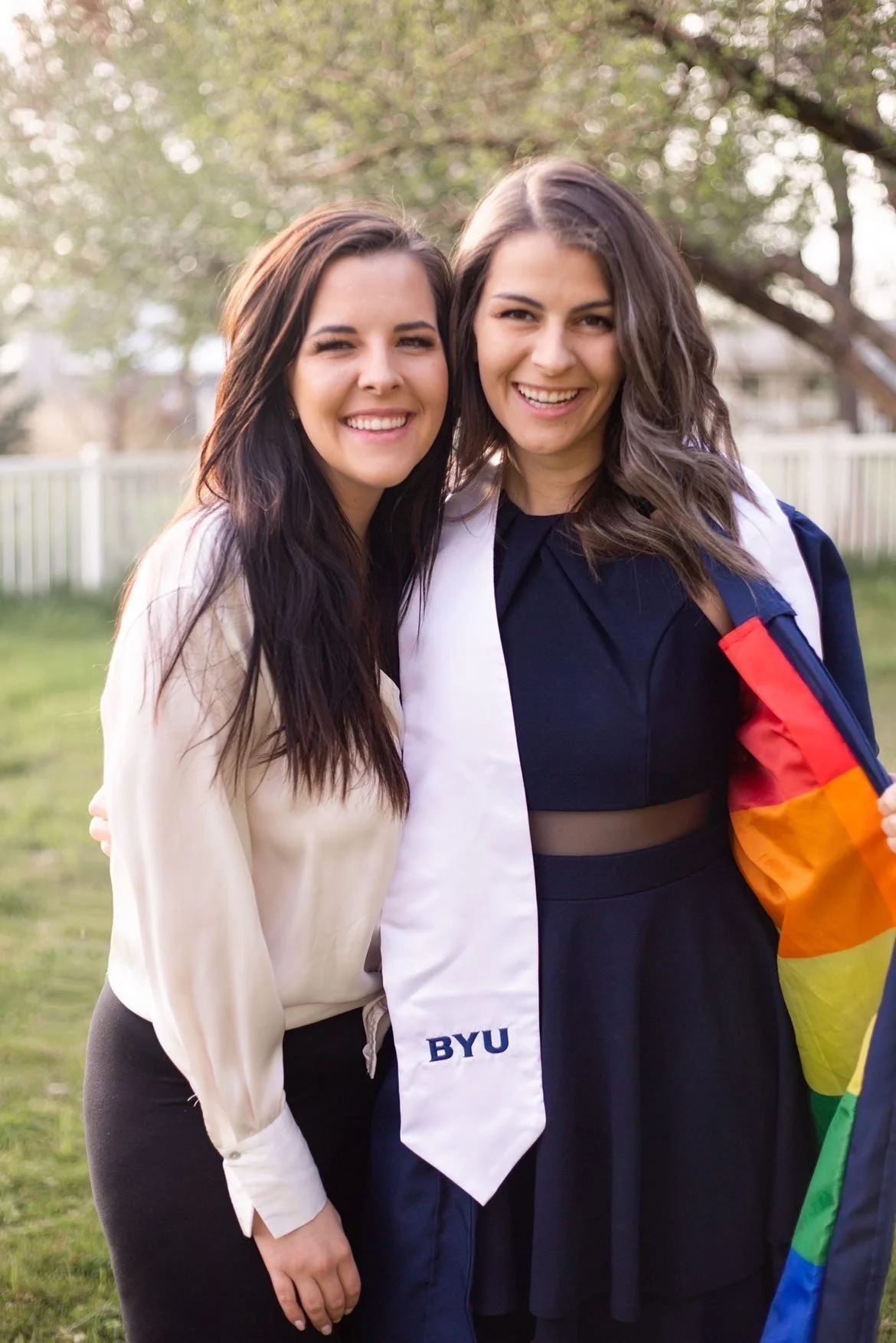
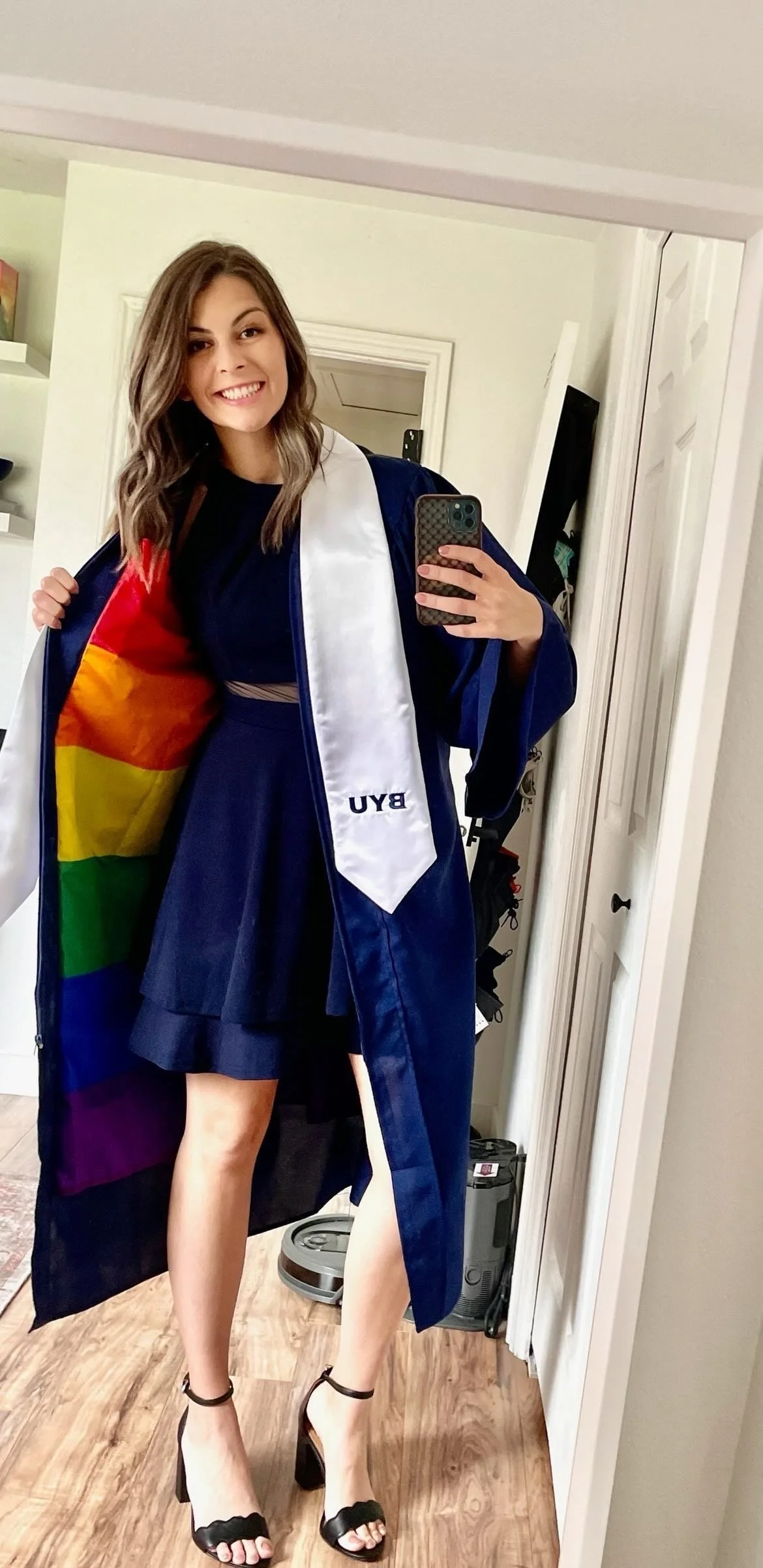
“I didn’t commandeer this,” says Jillian Orr, the BYU graduate who recently made national headlines after flashing the rainbow-flagged lining of her Cougar-blue robe as she accepted her diploma. “I made a statement, and the world picked it up, because what is going on at the university is clearly unacceptable.”
Jillian’s now viral robe reveal was intended to be a civil protest of policies that made her experience at BYU less than comfortable, and at times downright painful as an LGBTQ+ student.
It was Jillian’s younger sister who first came up with the idea for the subtle statement. After seeing Jillian break down in tears after a troubling survey she took in a BYU marriage and family class in which her multiple choice answer of “loving our LGBTQ brothers and sisters unconditionally and accepting whatever they want as what is best for them” as the appropriate way to behave was marked wrong, Jillian’s sister suggested she wear a rainbow dress to graduation. “Nah, not my style,” Jillian thought. But she was intrigued by the idea of a Katniss Everdeen girl on fire/Cruella Deville at the party-esque reveal in which one’s wardrobe did the talking. “Kind of an, ‘I will stand against you, and you can’t do anything about it because everyone’s looking at me’ kind of way.”
The day before commencement, Jillian’s older sister dug out her sewing machine to do the handiwork. Jillian admits she was nervous, wondering if she’d be tackled or escorted offstage. But instead, it was a quick, quiet moment that all became worth the risk shortly after graduation when another female student approached Jillian and said, “My girlfriend saw you do that, and she wanted me to thank you.” Since, Jillian’s moment has gained momentum as a Tik Tok video attracted the eye of national news syndicates including CNN, People, Good Morning America, The Today Show, Teen Vogue, NBC, ABC, and every news station in Utah (besides Deseret), who have since covered the story. Which, diploma in hand, Jillian is now ready to tell.
The 28-year-old graduate in psychology was born and raised in Farmington, UT, the fifth of seven children. Her parents met at BYU, and her mother – a once orthodox Catholic who converted to the LDS faith – applied her music major to making every morning in the Orr household a music-filled devotional, complete with scripture reading, prayer, and song.
Jillian was a driven, ambitious, assertive kid who questioned things and sought out challenges.
“When something scares me, I want to run at it. That’s how I handle things that frighten me.” As a young child in Primary and into Young Women’s, Jillian offered to teach lessons, and frequently told her bishops she’d be happy to fill in as a last minute speaker, if needed. Jillian served a mission in Eugene, Oregon where she had multiple leadership roles, and later served in the temple for two years. She became an institute teacher, and once thought she’d end up a mission president’s wife, which would provide her more opportunities for public speaking and working with youth – her passions.
Career would come first for Jillian in her 20s, and she took early steps to go into the field of change and empowering people. Along the way, she worked with youth in rehab centers, where she discovered she was more interested in preventive care than rescue/rehab work. She worked at an after-school program, and after saving enough money to go to college, she entered BYU because they had “the best psychology program.” Indeed, she loved her studies including many “awesome psychology teachers” she met with in person before COVID required her studies to go mostly online.
It was during the pandemic that Jillian started to recognize that the feelings she had for her long time best friend – a girl – were more than platonic. And they were mutual. And that’s when some cognitive dissonance began to set in. She relates, “We both recognized what this was, but we’d been taught it was wrong, a sin. My understanding, being raised in the church, was as long as I don’t act on this, I’m not wrong; I’m not homosexual. Like if you don’t drink, you can’t be an alcoholic.” Jillian began meeting with a mentor who helped her see that her feelings weren’t something to be avoided, but were in fact a part of who she was. Jillian came to recognize that, “These so-called ‘demonic temptations’ had become a beautiful part of who I was. And it would be a gift I could later empower other people with.”
As she became more in tune with her bisexuality, Jillian began to more clearly identify the harmful toll some of her classes were taking, particularly her marriage and family courses. Of the way some professors spoke of LGBTQ people in a “They will never be as happy as the rest of us” manner, Jillian internalized how that felt for her and other LGBTQ students around her. While she’s grateful for some professors who introduced themselves as allies and safe spaces, others made it clear they would not be teaching any form of LGBTQ inclusivity if it contradicted church teachings – even if it meant being misaligned with the current ethical standards of the American Psychological Association. At one point, Jillian refused to write an assigned paper on why marriage is only between a man and a woman, instead taking the fallout of a failing grade. “The professor didn’t say anything; they just moved on.”
In contrast, Jillian’s entire family has been extremely supportive and affirming, for which she’s grateful. “They’re riding the roller coaster with me.” Her older brother came out as gay five years before, and the family acknowledges that when it was Jillian’s turn, things were handled better. “Props to him for being the maverick,” she laughs. The entire Orr clan, her “pit crew,’ travelled in to Salt Lake for Jillian’s recent graduation party, hosted by her and her girlfriend. Festivities included a mechanical bull and a lot of laughter.
Jillian has now resumed her career by overseeing the largest nonprofit after school program in Utah, working as the area director for the Boys and Girls Club. She’s grateful to work at a place that values inclusivity and positivity. As for her church affiliation, she’s finding comfort in letting things go and moving on. “In reflecting on the covenants between God and I and what He’s taught me about my sexuality, I’ve realized so many things I was once taught don’t line up with His truths. If I got married to my girlfriend, even if I begged to stay, I’d be kicked out of the church. It doesn’t seem like something Christ would do.” After two rounds of discovery, both with LGBTQ issues and some troubling bouts of church history, Jillian has felt it best to step away, saying, “I can no longer affiliate with an organization that treats people like me this way.”
When asked how others can implement best practices in the mental health space, Jillian says, “I want people to be able to hold space for others and ask what’s important to them, and not have an alternative narrative about what they think it should be. If you hold space for someone in love, they will navigate where they’re supposed to be faster. For those trying to navigate, find the next right thing for you and do it. Live it. Authentically. Allow your mess to be your message. And understand you’re going to use it to help other people.”
Her public journey started with the seemingly subtle lining of a graduation robe. But now, Jillian Orr is ready to take the podium to spread her message of inclusivity. “I’m meant to be a voice, and I can take a hit for those who need me to. I’m meant to stand for this.”
photo credit: Hope Orr


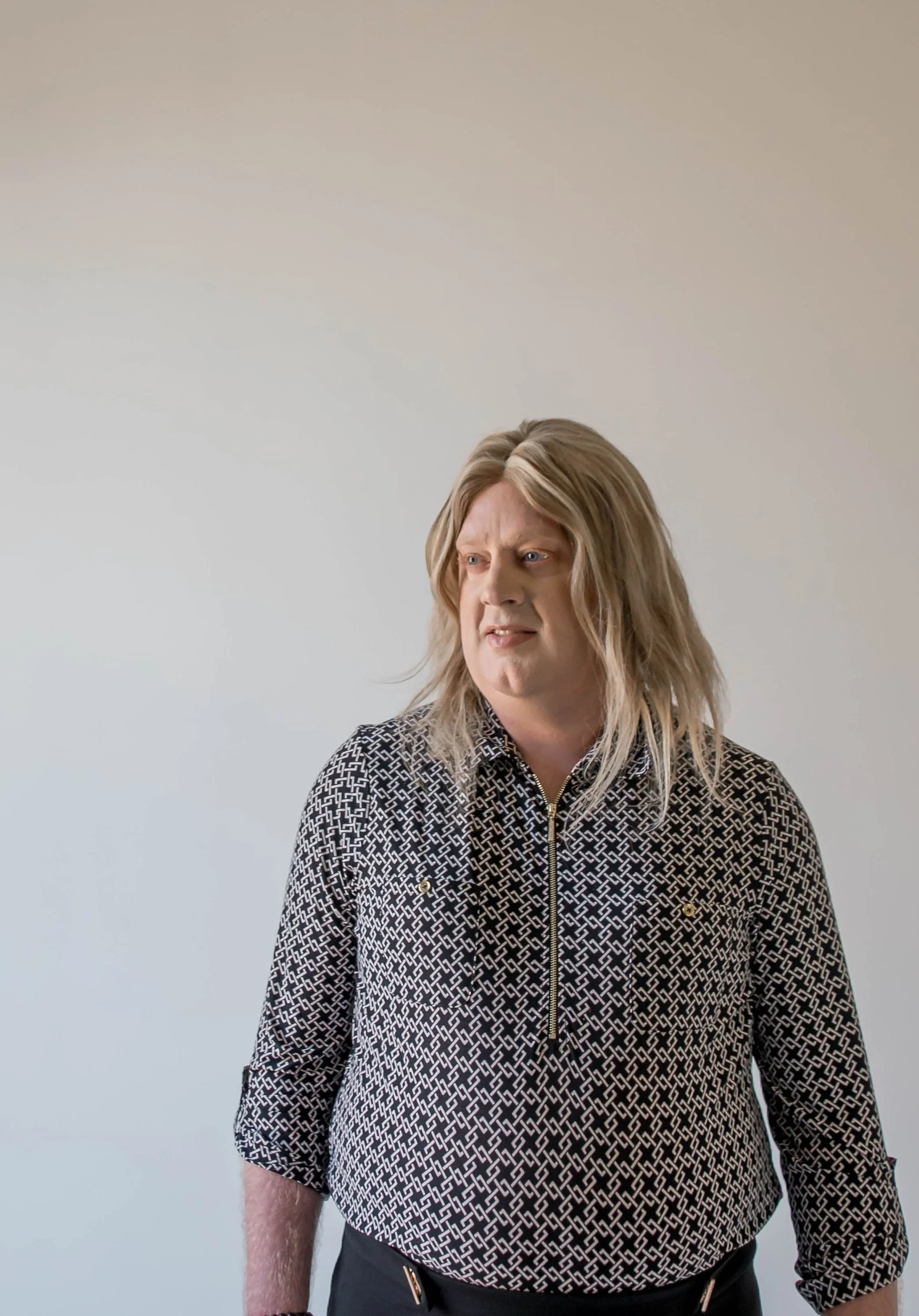
JERRY CHONG - ADVOCATE WITHIN THE CHURCH
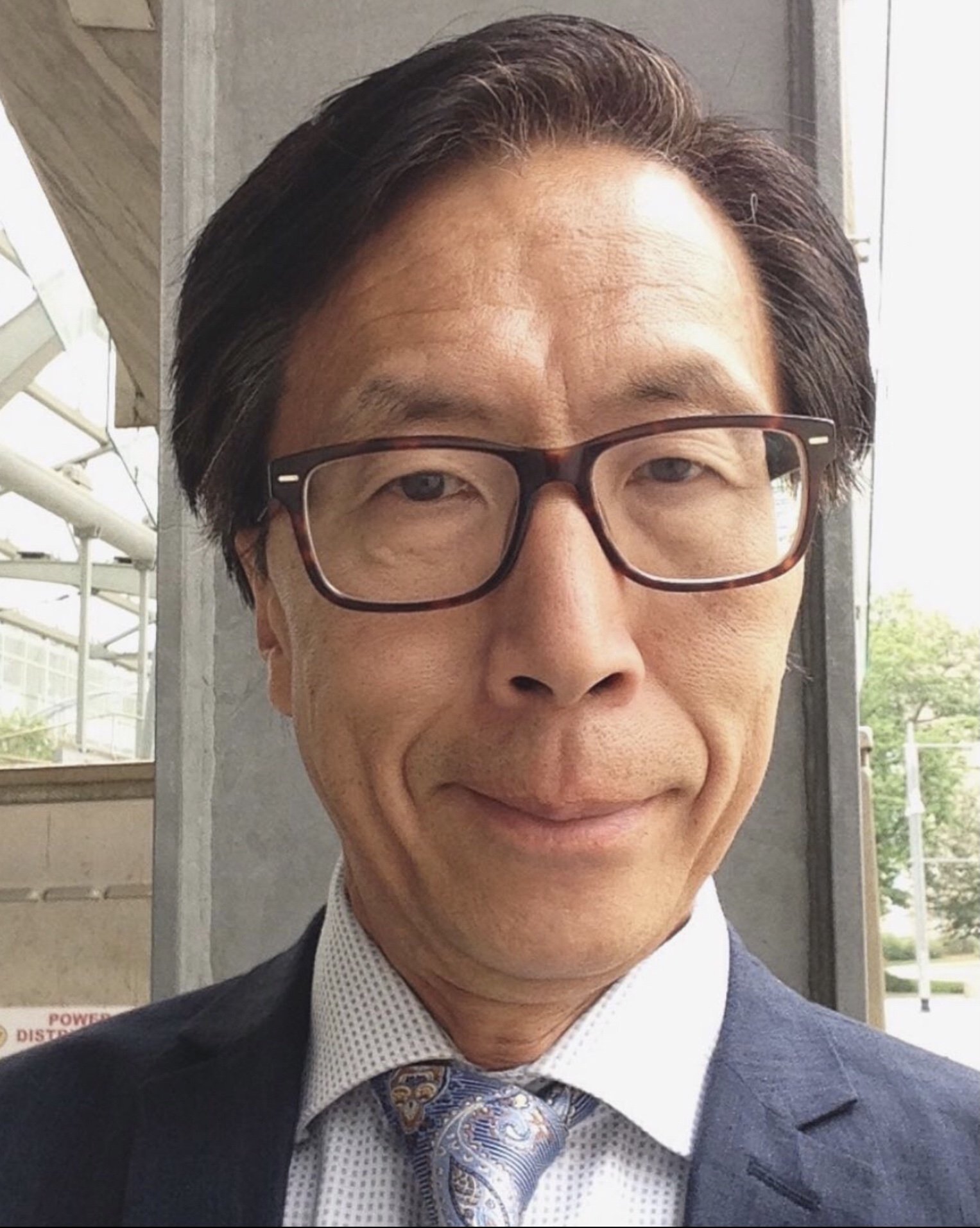
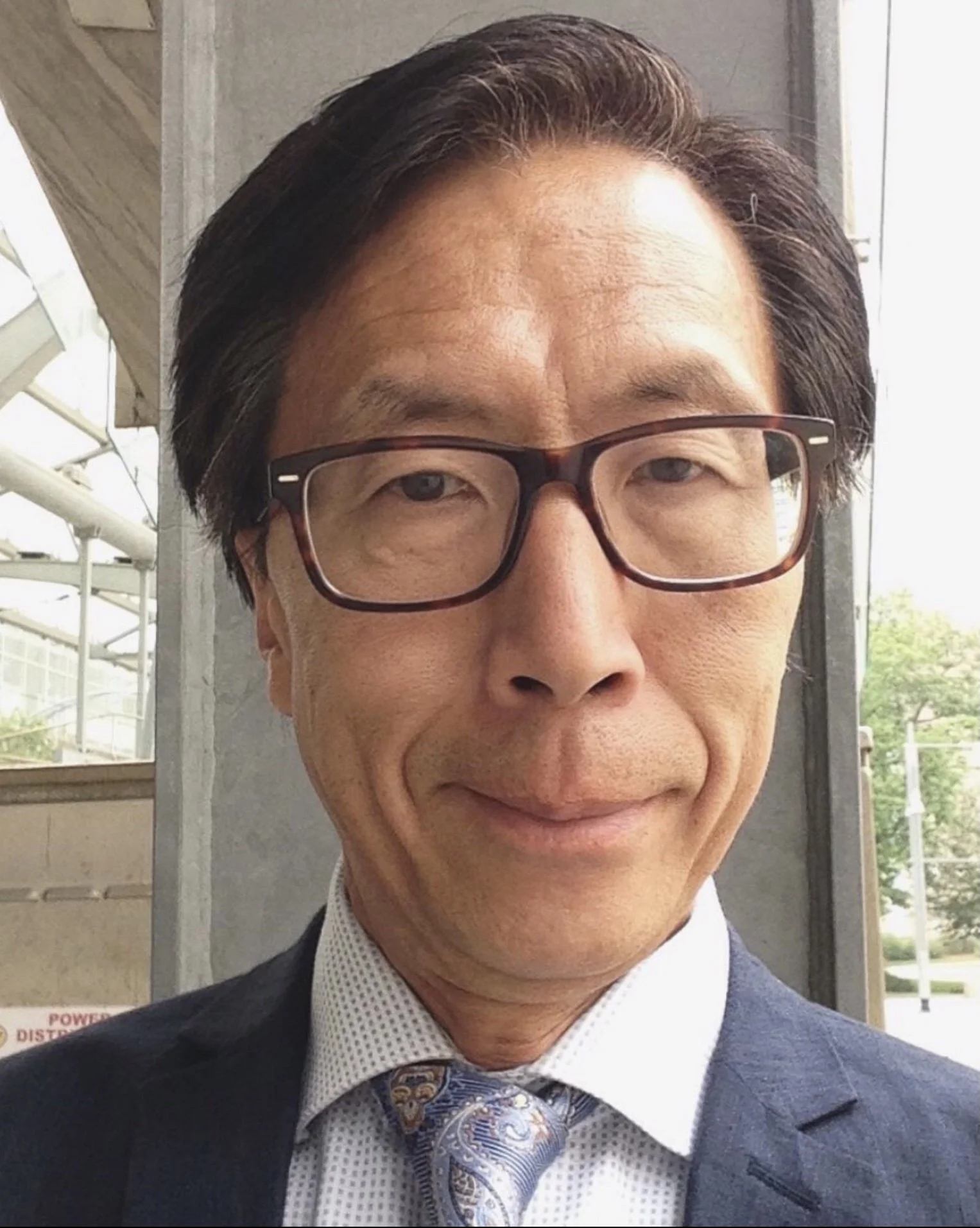
Jerry Chong from Calgary, Alberta has been an active member of the Church of Jesus Christ of Latter-Day Saints for 17 years. He is the first to admit that living as a single, celibate, gay man in the Church has not been easy, but that it is worth it.
“What are the chances that two missionaries would find someone at home midday on a Tuesday willing to let you in and teach a full first lesson?” Jerry muses. But at the age of 42, Jerry noticed two young men in suits knocking doors in his neighborhood. They introduced themselves and said they were there to share a good message. Jerry had had no previous encounters with missionaries or the church. But he invited them in and that is where his journey began. The missionaries invited him to church and gave him the address to the chapel, but no directions on how to get there. Jerry attempted to go, but knew it was going to be too hard to find the building and decided to go back home. Jerry laughs, remembering, “If someone you just met told you that a complete stranger would show up on your doorstep and offer you a ride to church the next week, would you get in their car?”
Jerry’s first church experience was “clumsy and awkward, but at the same time, it felt comfortable,” he says. Jerry met with the elders and attended church weekly, and was invited to be baptized at least 45 times over the next couple of months. His turning point was when he truly recognized the spirit for the first time during a baptismal service and felt the love of his Savior and Heavenly Father in a personal way. Jerry was ready to commit for the long haul.
After his baptismal interview, Jerry came out to the missionaries and told them he was gay. They arranged a special meeting with the mission president during which the mission president asked Jerry, “Who molested you to turn you gay?” Jerry was horrified by this line of questioning and quickly explained he was born this way and had known since early childhood he was different. Jerry said he easily could have called off his baptism and thrown out his interest in the gospel. But his bishop reassured him that he would protect him and be his shepherd, and that what the mission president said wasn’t any part the gospel of Jesus Christ, but his own opinion.
After Jerry was baptized, he asked his bishop if there was an LGBTQ member who had navigated their way through the gospel. The bishop admitted there were some, but none willing to come forward to talk with him. Jerry has since made this his mission: to help ease the path for LGBTQ people of all ages seeking to find their place and purpose in the gospel.
In 2005, Canada passed the same-sex marriage bill. This was the subject for church nationwide in Canada. It was a tough day at church as sacrament speakers and teachers shared messages from the first presidency about how wrong gay marriage was. Jerry spent most of those meetings quietly weeping. During the Elders Quorum lesson, the instructor asked the class, “Why is it that the vocal minority is being heard louder than the quiet majority when it comes to the same sex marriage bill?” Jerry says he felt an impression to speak up. He took a deep breath, raised his hand and said, “I can provide an answer. In the last year, some of you have gotten to know me. Some of you have come to love me. There is more I want you to know about me. I’m gay. I love the gospel. It’s challenging to be part of this church, and it’s been a tough day so far. I’ve been crying all morning without letting anyone see it. Those who are choosing to be legally married by this new law have put in the same amount of thought as you have. We are committing to love and support another person. We want to be a family. We want to be parents.” Jerry recalls he had their undivided attention, and many thanked him afterwards for speaking up and helping them understand the new law. After he got home from church, a young couple called and asked Jerry if they could come over and ask a few more questions. They wanted to know what it’s like to be gay in the church, and what are the hardest things that people sometimes say. They remain Jerry’s close friends to this day.
For the most part since, Jerry said his experiences at church with bishops and stake presidents (many whom he considers friends) have been positive as they have supported him as he’s served in leadership and missionary service callings and currently as a temple ordinance worker. But during his first temple recommend interview in 2005 with his stake president, Jerry came out to him. The leader replied, “You can’t be gay; I know you.” Jerry replied he’d only shared the part of him he felt the stake president could understand. The stake president thanked Jerry for his honesty and signed his recommend.
The November 2015 exclusion policy was a time marker when Jerry felt he needed to speak up and become an advocate within the church. He reached out to his stake president about how hurtful the policy was for LGBTQ individuals and their families. The stake presidency invited him to share his thoughts with them shortly after.
In the last six years, Jerry has found great success in meeting with leaders throughout Calgary, including six of the eight stake presidencies and over 35 bishops in his area. He has conducted LGBTQ Inclusion and Sensitivity training for bishops. Only one stake president has said he wasn’t interested in having these discussions, claiming that “there were no gay members in his stake.”
Jerry says, “Many bishops I speak with are concerned about saying the wrong things because they have not had any experiences counseling LGBTQ members in their ward. They truly want to get it right the first time. The goal is to help them understand how they can support their ward members in feeling included and safe in the gospel. They value my input and my willingness to be vulnerable.” Jerry typically shares his own story and then personal accounts of other families, making it real for leaders to understand. He tries to balance the positive and negative experiences that members face.
Jerry recognizes the tremendous impact of mothers who speak up for their LGBTQ children and the influence of the ward Relief Society presidencies in helping these leadership conversations come together. He feels the grassroots approach has made a real difference in some geographical areas in the church.
Jerry has also been asked hard questions in his leadership trainings; the toughest being what advice would he give to a 12 or 14-year-old confronted with the idea that in order to be faithful and true, they must live a celibate life. Jerry says, “What we are asking LGBTQ members to do and sacrifice is not asked of any other groups or individuals in the church. I realize there are no simple answers to each person's situation. All we can do is try every day to cope and discover what Heavenly Father has in store for us.” Jerry continues, “Humans were never meant to live alone. Giving up any possibility of finding someone to truly say I love you to. Accepting the destiny that you will be living alone for the rest of your life. Not everyone will marry in this life, but you have taken away any possibility of companionship.”
Jerry first came out at the age of 20, but says he still comes out to new people 40 years later. He still takes a deep breath each time, and says he only opens up to them when he feels safe and that he can be truly honest with the people around him. “It’s a matter of learning to be comfortable in your own skin. For some, this is a long, difficult process. Self-esteem and self-confidence take time to develop.” Jerry feels fortunate to have a positive experience each time he comes out and realizes this is not the same for everyone.
Jerry is often asked how he can be a member of the church and still be true to himself. He replies, “I carry myself with dignity and understand the varying levels of acceptance in the Church… We receive constant reminders that we do not fit in. We stay silent, putting on a brave front, uneasy of how people will react, especially in a classroom setting. I have gone home many Sundays asking myself, ‘Is it worth it? Why do I continue to try?’ The answer is always because the Savior and Heavenly Father love me and I know it.”
Jerry recognizes that the church is not the safest place for everyone. He doesn’t hesitate to suggest taking a break from church if it is harming one’s mental wellness. He acknowledges that, “Remaining single, celibate, and obedient to the standards of the church has left me hollow at times. My motivation to be a LGBTQ advocate within the church is driven by the unbalanced requirements and judgments we face. No other group of people are asked to give up and sacrifice so much to be rewarded with the blessings of the gospel. The commentary and questions required of us before baptism is unfathomable for most to comprehend. Speaking up with our collective voices will make a difference in the pursuit of fairness and equality.”
Jerry feels we need to teach and re-teach members to be more kind, patient, empathetic and understanding with one another. “Heavenly Father loves all of His children more than we can comprehend. That we all have a place in the gospel. The love of the Saviour is what keeps me motivated to speak up and make a difference where I can.”
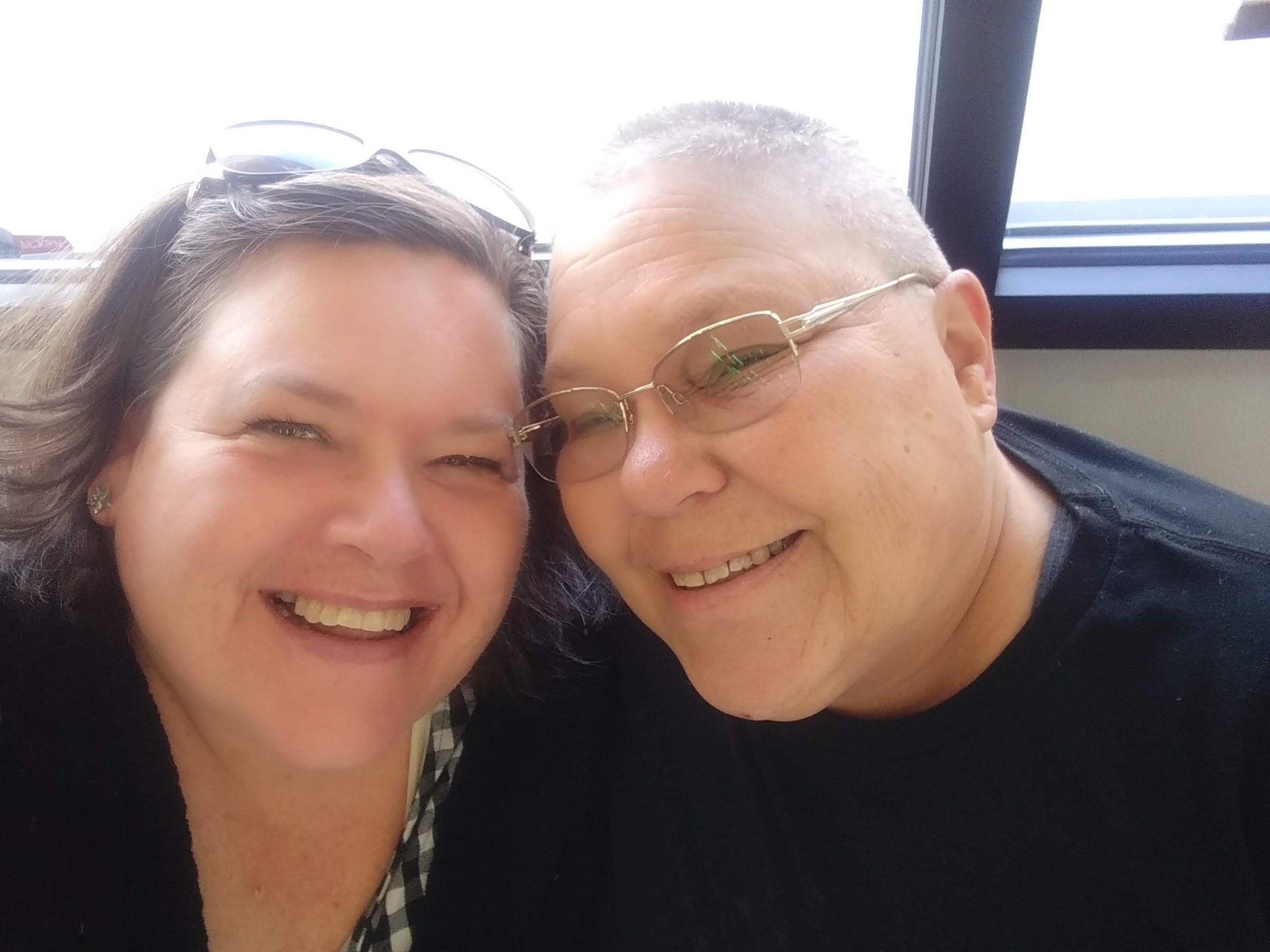
THE MCEWEN FAMILY
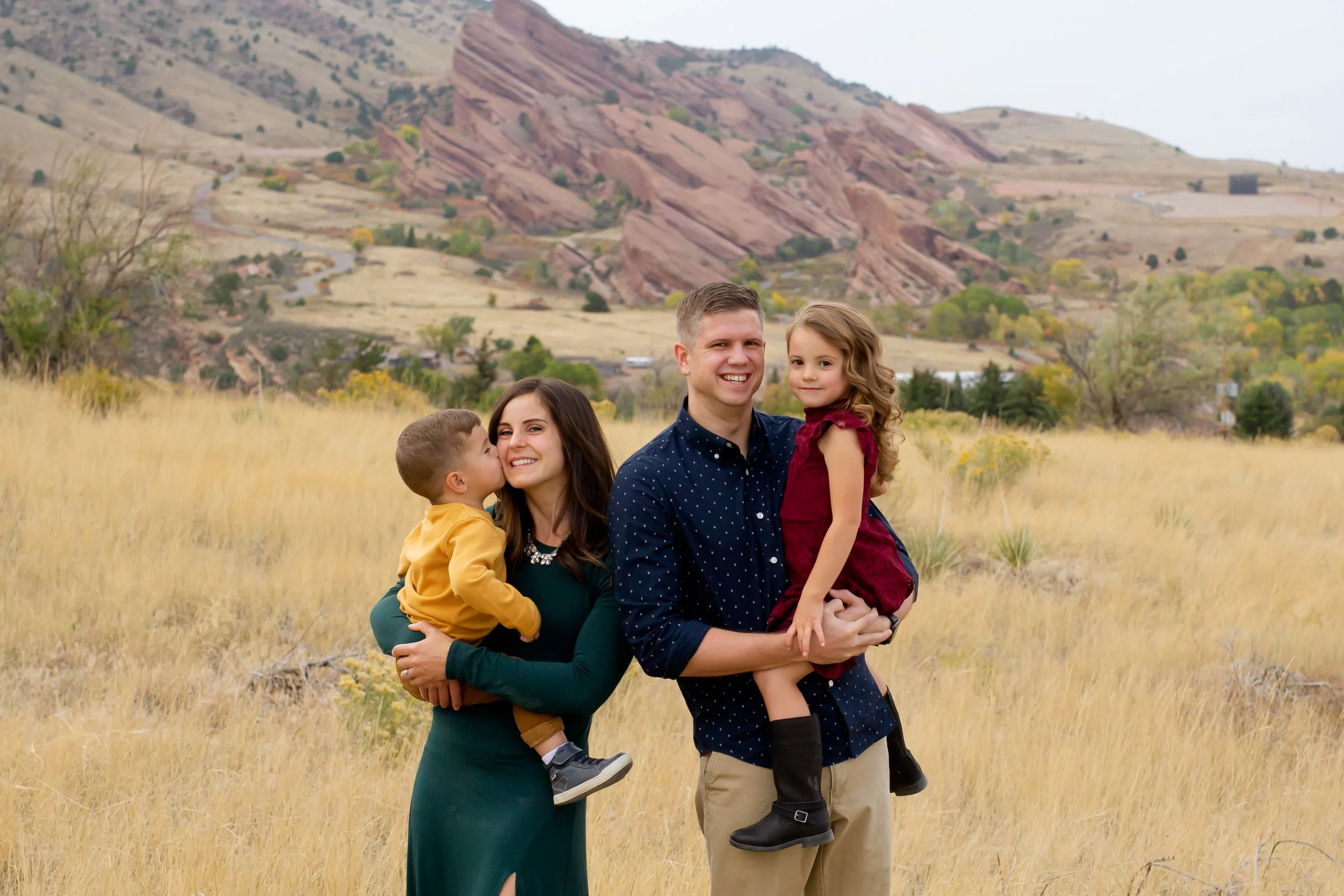
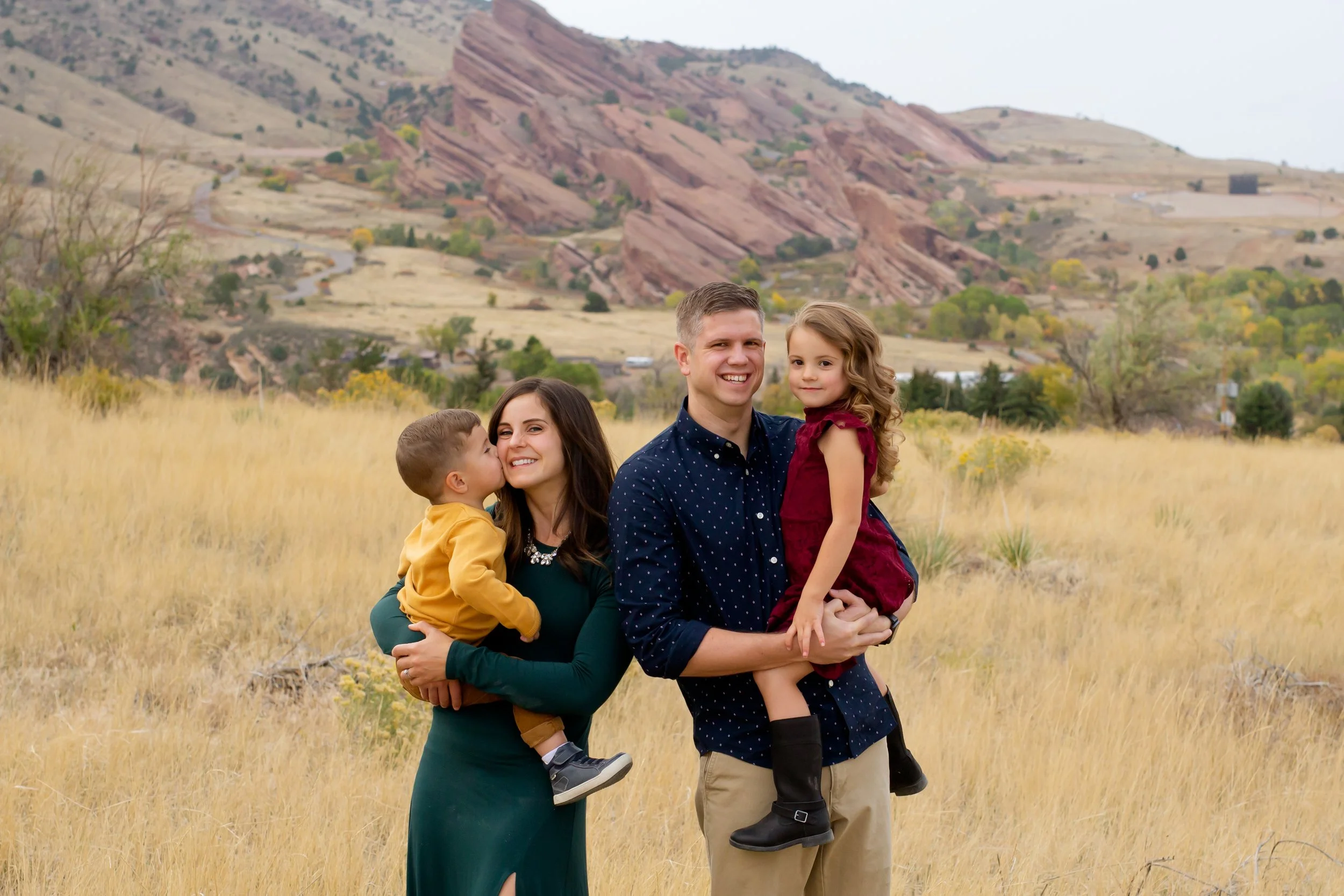
There are many things Liz McEwen knows about herself: that she is madly in love with her husband, Jason. She adores her kids, Scarlett – 5, and Leo – 3. And that she has found tremendous relief since last summer when she came out publicly as bisexual. One added nugget that has helped Liz adapt since she first realized this unique part of herself decades ago: Liz knows she was created by Heavenly Parents who fully understand and love her for who she is. That doesn’t mean it’s always been easy.
There are many things Liz McEwen knows about herself: that she is madly in love with her
husband, Jason. She adores her kids, Scarlett – 5, and Leo – 3. And that she has found
tremendous relief since last summer when she came out publicly as bisexual. One added
nugget that has helped Liz adapt since she first realized this unique part of herself decades ago:
Liz knows she was created by Heavenly Parents who fully understand and love her for who she
is.
That doesn’t mean it’s always been easy.
Liz grew up in Idaho Falls, ID, which she describes as a “mini Provo: very conservative and very
LDS.” She recalls knowing as young as eight years old that while other friends entered puberty
and developed crushes on a boy or girl, she was attracted to both boys and girls. In the 90s, she
felt the reality of a less enlightened generation and social norms and remembers hearing
countless anti-LGTBQ slurs, jokes, and teachings – even in her own home. “It was normal to
hear bad things said about queer people.”
Like most kids, Liz explored different romantic experiences as a tween and teen – with boys and
girls alike, and she remembers feeling so scared. “I would lie down at night and look up at the
lace canopy over my bed and imagine it being on fire because I thought I was going to hell. Gay
people were bad, according to everyone I knew. As a result of these beliefs, I had many mental
health issues due to the stress. And I had no one to talk to.”
She made an appointment to confide in her bishop at one point. She remembers him as a kind
and understanding man, but he let her know her attractions and relationships with girls were
wrong. So Liz went back into the closet and carried her thoughts silently in shame for many
years.
Liz chose to pursue relationships with men and fell in love with Jason, her husband of ten years.
On the 4th of July, the two met at a party hosted by one of Liz’s roommates. Literal and
figurative fireworks were present that night, and Liz and Jason fell for each other. Liz describes
their marriage as a happy one, and she was honest with Jason from the beginning of their union
about her bisexuality. It was a relief that she could be completely open about the reality and
trauma she had been carrying alone. She appreciates how kind and understanding Jason was
from the start: “more so than I was,” says Liz, who began working with a licensed professional
counselor who helped her work through some of the internalized homophobia she had accrued
since childhood. “The more I learned, the more I realized how badly this was eating me up
inside – the secrecy and guilt and shame of it all.”
The progress Liz has found through counseling inspired her to become one herself, and she is
now pursuing her master’s degree in clinical mental health. As she has continued to study
LGBTQ issues, Liz has come to more fully understand the trauma many face, especially in a
religious context. She looks forward to soon helping others who’ve experienced a similar path
find peace with who they are. In the meantime, Liz encourages anyone struggling with their
mental health for similar reasons “to pray to Heavenly Father and ask what He thinks about
you. And get some professional help, too – especially if you have overwhelming thoughts of
suicide. I promise there is love and support out there.”
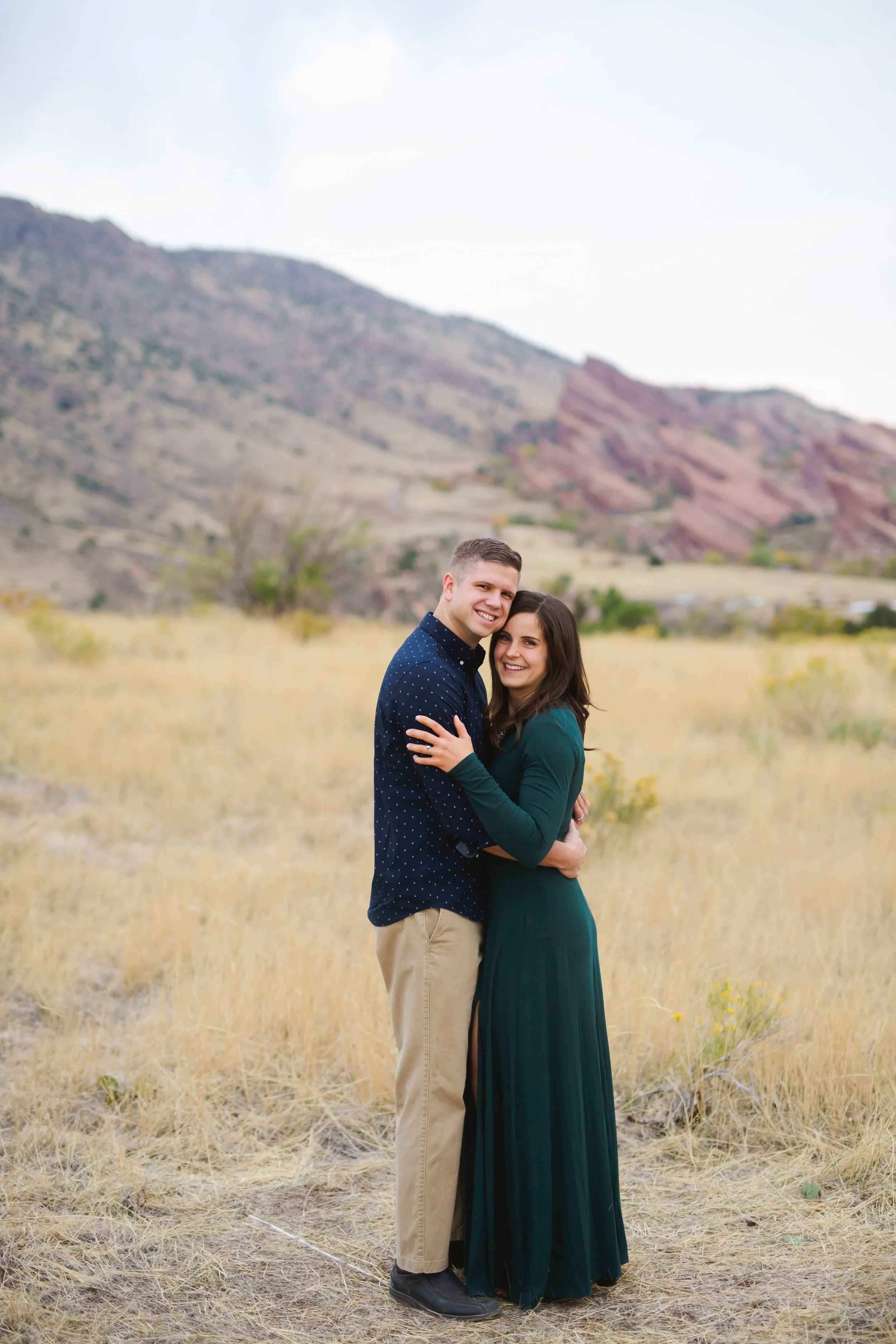
Looking at Liz’s family photo, some may wonder, wouldn’t it be easier to keep this part of you
away from the public eye? But many in the know, including Liz, have found tremendous relief
and healing from authenticity, both at home and beyond. After opening up about this part of
her in her marriage, Liz says, “For Jason and I, I’m not sure it changed anything for us. I’m
attracted to him and vice versa. We both know the truth of who the other is, and it is freeing. If
I struggle or hear hurtful comments at church, now I can talk more freely about it. Keeping that
secret to yourself, is REALLY difficult. It’s such a big part of who you are – I like being able to
share all of me with my husband, and he feels the same.”
And since she came out publicly on Facebook last summer, Liz says many women – including
some married to men – have in turn confided in her that they face the same reality of being bi.
“It feels like a big heavy burden they’re keeping, too, and just being able to talk about it helps.”
But it hasn’t been all sunshine and rainbows. Liz has also faced disappointment and rejection
from many in her inner circle. Even her parents have made it clear that they do not understand
or support Liz’s reality and infer she’s been brainwashed by her educational pursuits. And
things did not get easier for Liz when after coming out last July, she (like many in this space) felt
betrayed by Elder Holland’s August address to BYU faculty. Liz says, “I felt like his talk paid lip
service to how much they love people in the LGBTQ community, and then said, ‘But don’t love
them too much. Don’t advocate for anybody.’ So I don’t know where I stand with the church
right now. Part of me loves a lot of the teachings – about eternal families and serving your
community. But I have a hard time reconciling the good things with hurtful things.”
Liz says her future hopes for the church’s treatment of queer members are not high as “there is
a lot of entrenched thinking about how things should be and what’s true and what isn’t.” She
wonders if some people hold so tightly to some of their “traditional family” ideals because
having to grapple with the cognitive dissonance of what LGBTQ people go through is too
difficult. So she realigns her focus: “What I’m doing, for me, is just working on my relationship
with God and being there for others in this community. Because that’s the only real control
anyone who’s a member and has these nuanced beliefs can do. If me staying and being there
for one queer person makes a difference, that’ll be good enough.”
Luckily, in her hometown of Parker, CO, Liz has been met with love by local leadership since she
came out. Her bishop immediately reached out, wanting to know what he could do for queer
people in general, and what helpful resources are already available -- a gesture that meant a lot
to Liz. “I’ve decided the church is true in my ward,” Liz laughs. “And Jason’s made it very clear
that even if they excommunicate me, he’s still with me. But I’m not sure what my future will
look like in the church. All I know is God loves me. He loves all queer people. I hope someday
the church can see that as well.”

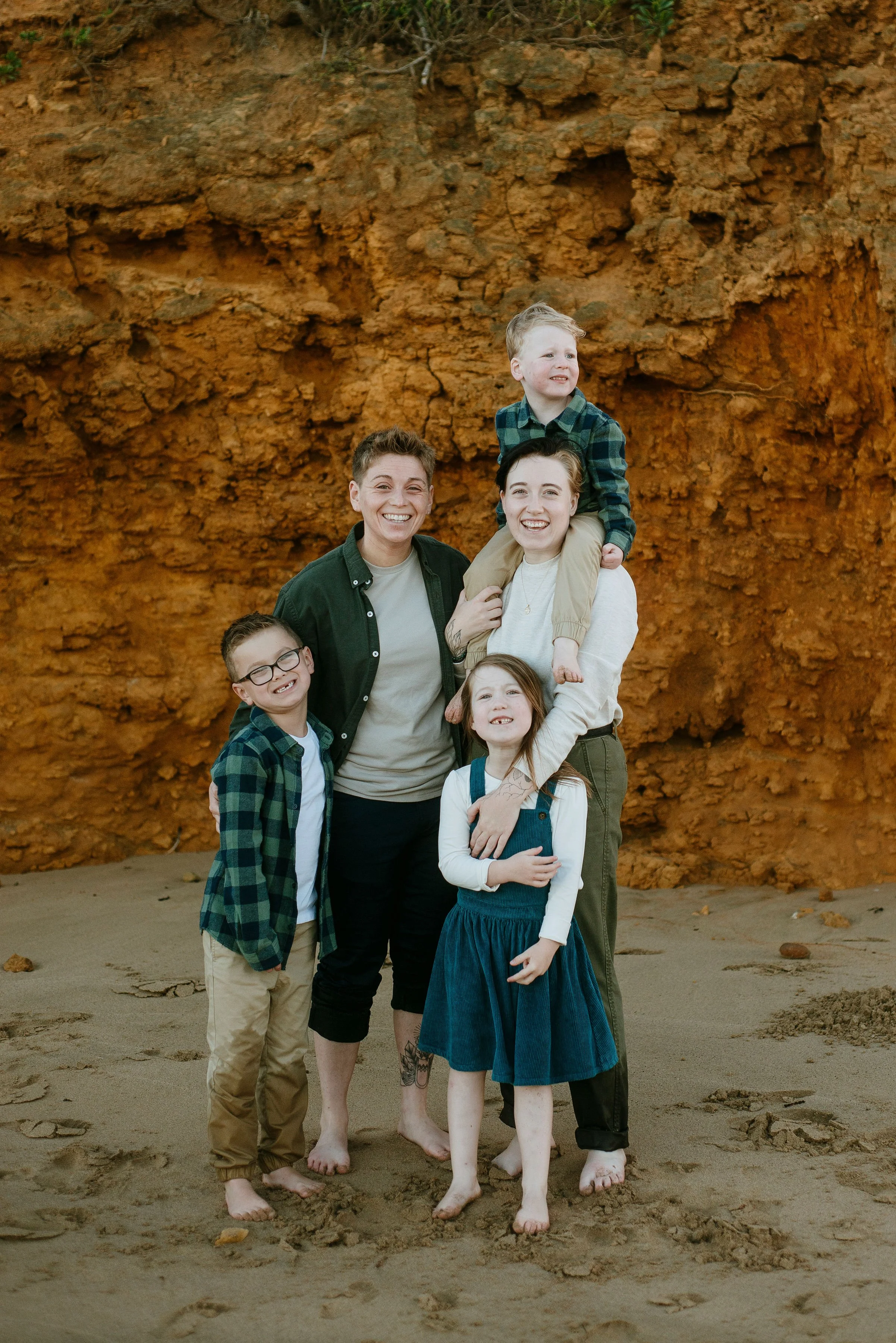
DAVID SMURTHWAITE
“One afternoon when everyone was out of the house, I snuck into the back of my mother’s closet,” says David Smurthwaite of Salt Lake City, UT, recalling his childhood. “There was a really old dress tucked away I’d never seen my mom wear – and rightfully so – and I stole it away to my room along with collected dregs of makeup rejects from our guest bathroom. And there, behind a locked bedroom door, I first experimented with expression….
“One afternoon when everyone was out of the house, I snuck into the back of my mother’s closet,” says David Smurthwaite of Salt Lake City, UT, recalling his childhood. “There was a really old dress tucked away I’d never seen my mom wear – and rightfully so – and I stole it away to my room along with collected dregs of makeup rejects from our guest bathroom. And there, behind a locked bedroom door, I first experimented with expression.”
This coming-of-age discovery at age 11 was how gender dysphoria first manifested in David’s life – decades before he understood what the term actually meant. But he vividly remembers that early wrestle with body image and feeling uncomfortable in his own skin. Envisioning himself in feminine form was “an exciting, comforting thought,” David says. “It brought with it a flood of emotions I didn’t know how to process at the time, but I knew I felt them.”
David now has compassion for that 11-year-old boy who felt he “was doing something wrong because it was not discussed in church.” His experience of gender dysphoria up until that point had only been what he had witnessed on Ricki Lake or Jerry Springer. From a moral standpoint, even at a young age he felt he needed to sort it out so he made an appointment with his bishop, who he remembers as a loving, grandfather-type. The bishop was loving and listened compassionately before advising, “That’s probably something we shouldn’t be doing.” David left with a reinforced standpoint that it was wrong to explore this side of himself. He snuck the dress back in his mother’s closet, threw away the makeup, and tried to bury this perceived “moral defect” for decades. As cyclical feelings would resurface, he’d shove them down with remorse. And while balancing this silent cycle on his own, he proceeded to get married, have four kids and “raise an amazing family with amazing experiences. But there was always an underlying situation I wasn’t giving attention to.”
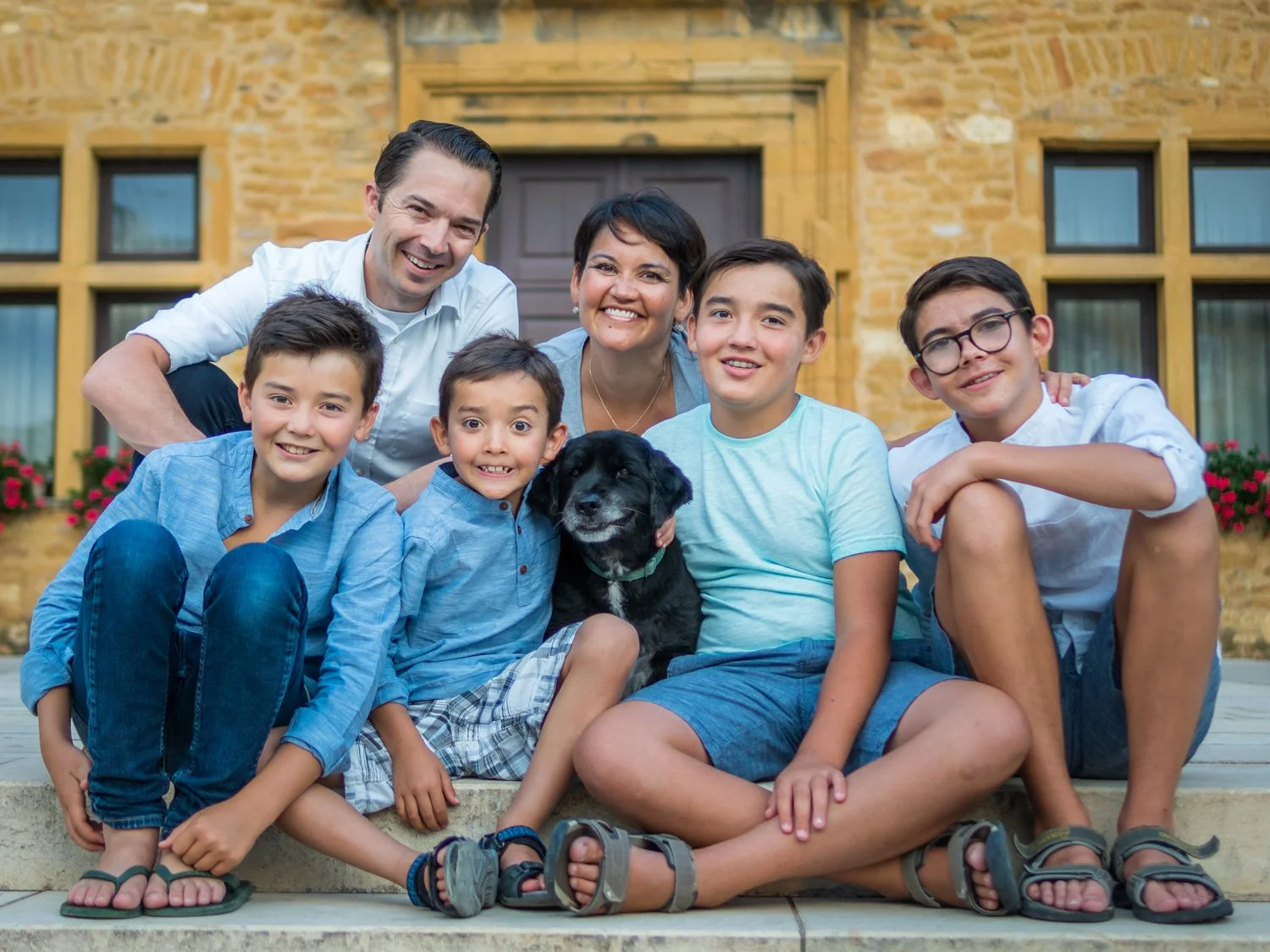
Business took the Smurthwaite family around the world. They spent several years living abroad while raising sons Noah – now 17, Sam – 15, Oliver – 13, and Eliot – 11. While living outside Lyon, France, another wave of feeling arose for David. At this point exhausted, David finally decided to explore the why behind what he’d been living with for three decades. This time an online search of “why do I feel like a woman sometimes?” unveiled a wealth of information and new vocabulary. “It was scary, intimidating, yet somewhat comforting to know there was a world out there with medical and psychological explanations for what I’d been feeling for decades. I was drowning in data. But when I searched in an LDS context, I was bombarded by stories of many broken homes and those struggling with faith.”
In an hour and a half, David went from decades-long repression to a full exposure to a world that might belong to him. The effect was overwhelming. He had to step away from his computer and go for a run to escape a sudden sensation of drowning.
When he returned, his wife Marisa could sense something was wrong. They’d enjoyed 16 years of blissful marriage in which they’d always shared everything, except this one thing, which David says he’d kept from her out of shame, guilt and fear. Upstairs in their bedroom, David took Marisa by the hands and had the most difficult conversation of their marriage. “It was like telling the love of my life I’d been diagnosed with an incurable disease, and had no idea what to do about it. It felt so new, fresh, raw – and there were no answers. Just a lot of fear, uncertainty and sadness.”
After a long night of little sleep, the next morning, David slipped out of bed and went to his home office. And there, the former returned missionary, bishop, and temple worker dropped to his knees and prayed to know how to reconcile these two very separate parts of himself that seemed to be in direct contradiction to each other. He was overwhelmed by a simple yet sacred response from his Heavenly Parents: “It doesn’t matter.” Not that he nor his experience of gender dysphoria didn’t matter, but that the eternal being he was didn’t change based on outward appearance. That the things that would keep him grounded were the covenants he’d made to the people he cherished the most. “It was such a beautiful moment,” David recounts. In an instant, I was shown a glimpse of my eternal existence in contrast to my mortal experience – which is wrought with cultural norms and man-made influences. It planted a seed of my divine identity that I’ve been able to nourish over the years. I continue to recognize it as I move through this experience.”
David is immensely grateful for a supportive wife who gave him space to explore his gender dysphoria. Together, they started trying to learn from healthy resources. They’d often end up in tears as they read stories of transition that at times brought up feelings of fear, loss, and uncertainty.
The Smurthwaites were living in Rwanda when David decided it was time to tell his four boys, prior to following a prompting to go public with his story. It was also important to David for his kids to know any complex feelings they might be experiencing in their own lives were valid and worthy of expression. “True to their nature, and that of most youth, they were remarkably unphased by the conversation. Just so loving and accepting.” Now, he says they’ll often come home from school (in Utah) and share that a kid introduced themselves as nonbinary or trans in a no big deal kind of way.
David cherishes his roles as Marisa’s husband and a father of four. However, even in the midst of their love and support, it’s hard to not feel alone at times. “The reality is that when you’re dealing with a gender experience and how to navigate that, there are still some things that are wholly private. I got married and raised a family of boys under certain terms of conditions – part of that was that I look the part of a loving husband and father. And while I love those roles and am comfortable expressing as male, there is a part of me that craves a fuller expression than the norm. Some things I have to shoulder on my own outside of these relationships I treasure the most.”
David is grateful for an extended family who also fully embraced his news when he shared it two years ago. His family had returned from France to visit Utah and while sitting in a circle at a gathering, several family members also shared things they were dealing with at the time and David felt comfortable sharing his news. He describes it as a beautiful moment as they acknowledged there are times when lines blur between trials becoming blessings and vice versa.
As a former bishop, David recognizes that while one of the things leaders want to offer their ward families most is comfort and answers, that one of the most valuable pieces of advice leaders can recognize is that we don’t know everything. As a writer by trade, David recently surveyed 100+ LGBTQIA+ youth and young adults and asked what advice they’d offer a church leader. The resonating response was that they’d want to hear more phrases like “You’re loved and I want you here.” Or “I don’t know right now but I’d love to hear more.” David says, “The second you say ‘I don’t know all the answers but I’m really grateful for who you are and that you’ve come to me with this info and we can walk together,’ you build that safe space of love and inclusion where people feel welcome.”
David continues, “I have been so inspired by the exchanges I’ve had with people in the LGBTQIA+ space when it comes to their spirituality. A lot have had to leave their religion behind, but still have a much deeper understanding of the divine. This should be celebrated. There should be zero shame in this part of the journey because this is discipleship. Discipleship is not following the herd, believing what everyone else believes. Discipleship can be lonely; there’s often anguish and hard work involved. That’s because it’s where we develop and forge a relationship with both ourselves and divine parents.”
David also hopes that in some ways, we can return to an 1830s mindset where our religion intersects with truth. “There are so many big questions still out there. The beauty of our faith is our strong belief that more light and knowledge will be made known as we have the courage to implore and plead with divine parents. The answers will be given. And those answers will become canon. And hopefully our posterity will just inherit them as truth.”