lift+love family stories by autumn mcalpin
Since 2021, Lift+Love has shared hundreds of real stories from Latter-day Saint LGBTQ individuals, their families, and allies. These stories—written by Autumn McAlpin—emerged from personal interviews with each participant and were published with their express permission.
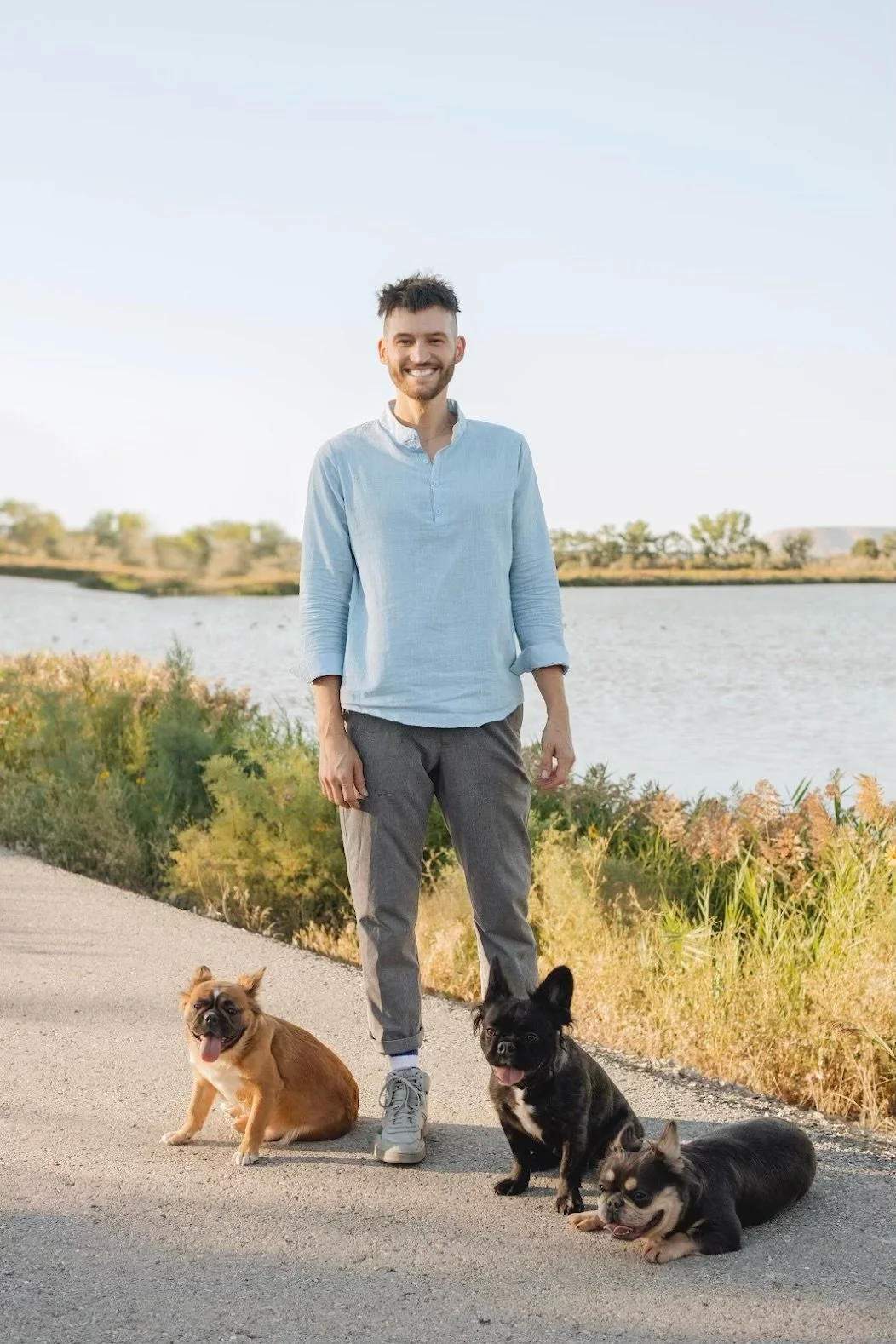
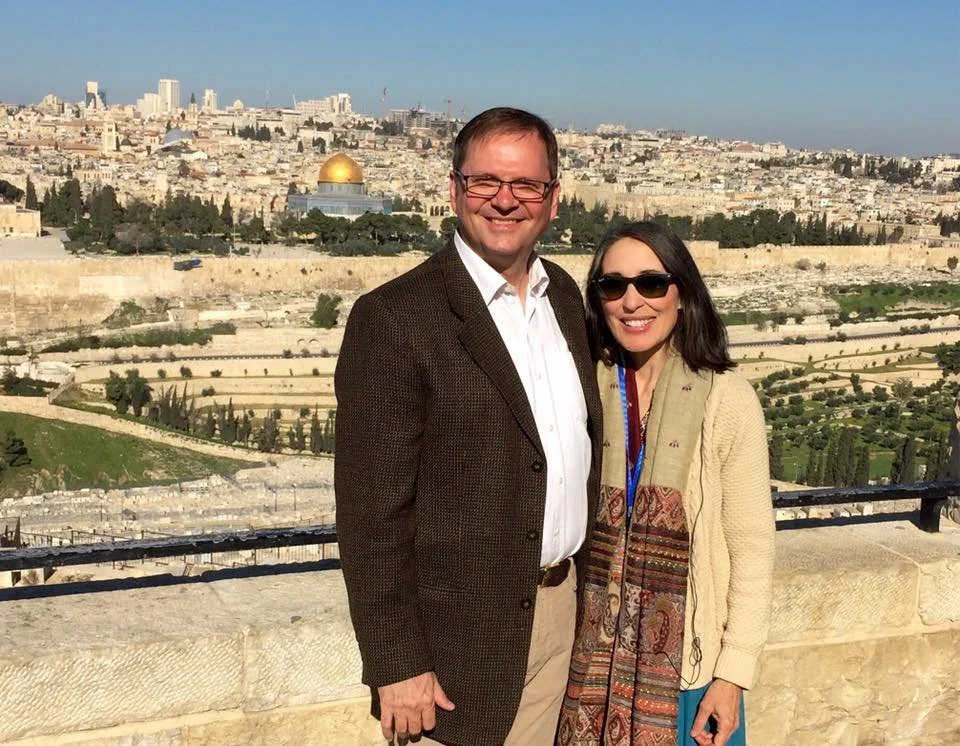
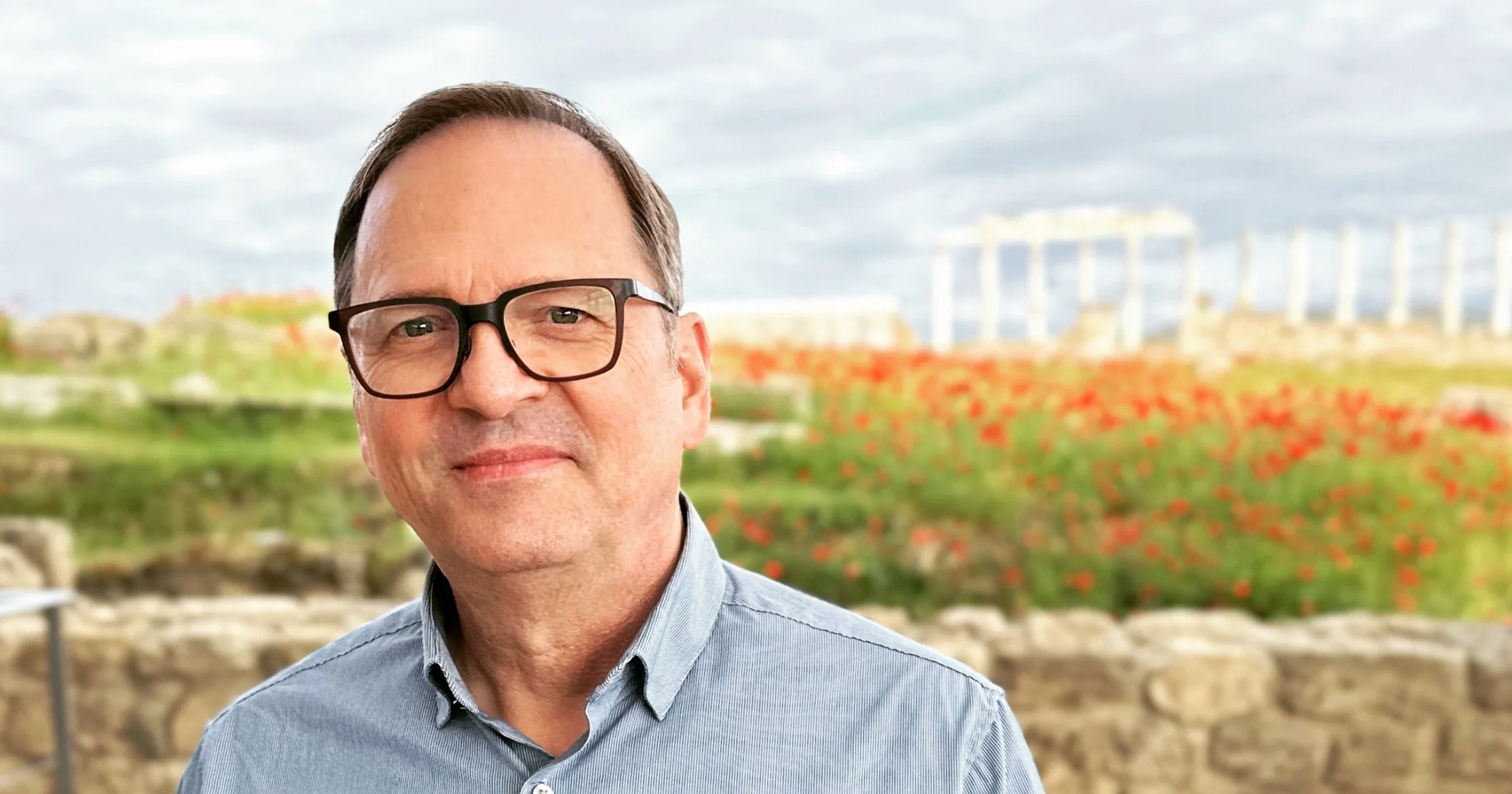
STEVEN PERRY
“Dear Friends, In the interest of relating to people I love, I do have something I’m sharing with people one-to-one, no big Facebook announcement. I’ve had a strong spiritual prompting the last year and a half to start coming out to people—so that’s what this note is, me coming out to you as a gay person.” So began the personal letter that Steven Kapp Perry felt compelled to share with close friends, after 35 years of marriage to his wife Johanne. Knowing there’d likely be obvious questions, Steve’s letter addressed them: “(It’s) something I’ve always known since nearly my earliest memories, but sort of squashed down as something to deal with later as I grew up. I do happen to be happily married to the only woman I’ve ever loved and had some attraction for—we can’t explain that—maybe just a miracle? So, nothing is really changing for us, but it has become important for me to invite people we love into our circle...”
“Dear Friends, In the interest of relating to people I love, I do have something I’m sharing with people one-to-one, no big Facebook announcement. I’ve had a strong spiritual prompting the last year and a half to start coming out to people—so that’s what this note is, me coming out to you as a gay person.” So began the personal letter that Steven Kapp Perry felt compelled to share with close friends, after 35 years of marriage to his wife Johanne. Knowing there’d likely be obvious questions, Steve’s letter addressed them: “(It’s) something I’ve always known since nearly my earliest memories, but sort of squashed down as something to deal with later as I grew up. I do happen to be happily married to the only woman I’ve ever loved and had some attraction for—we can’t explain that—maybe just a miracle? So, nothing is really changing for us, but it has become important for me to invite people we love into our circle...”
Steve was relieved his letter was largely received by friends with grace and love. While some may question his need to come out after all this time, and especially as he was choosing to stay married to Johanne, for Steve, it was imperative that people he loved fully know and love him.
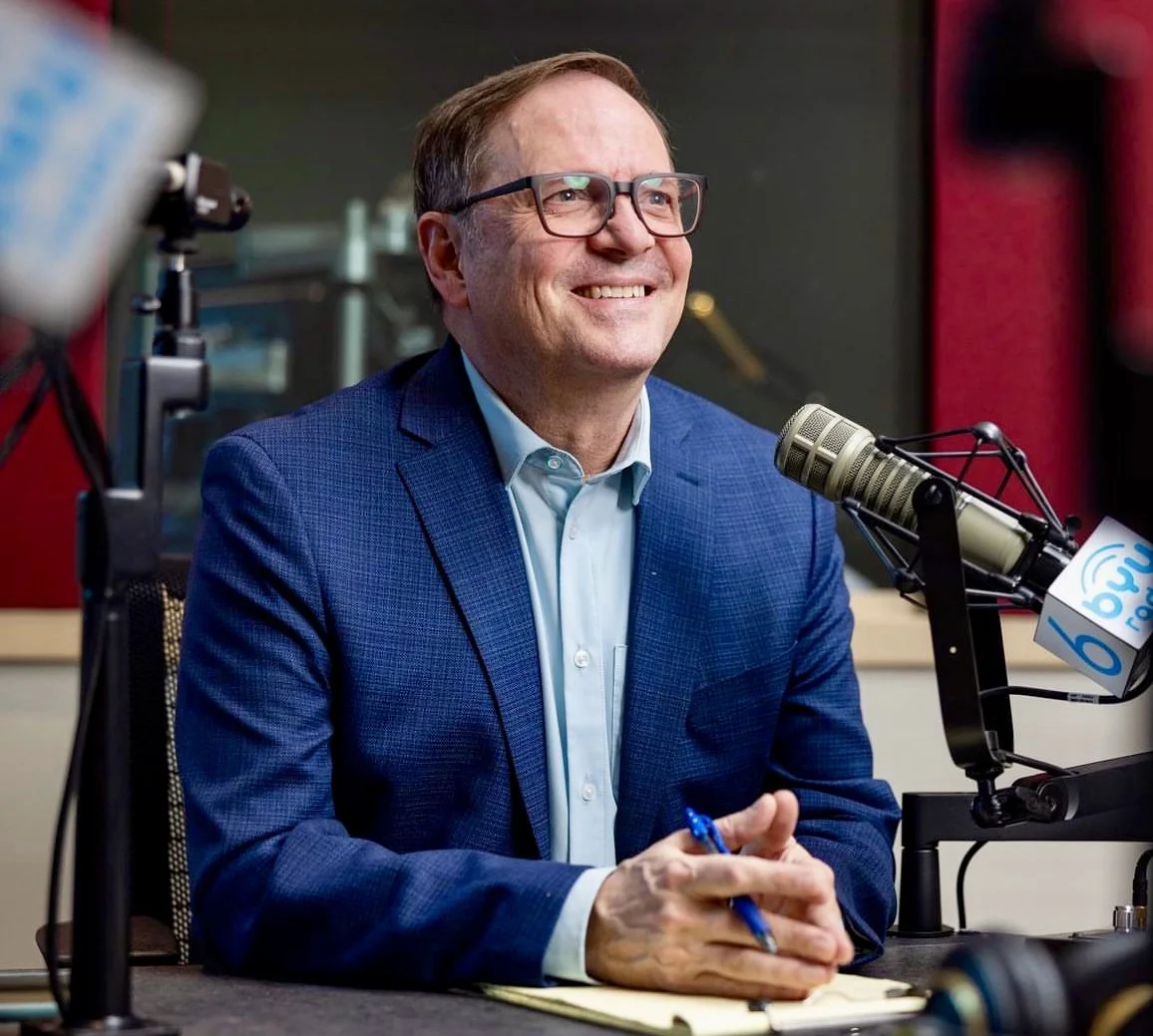
An award-winning playwright, songwriter and broadcaster, Steve now works for BYU Broadcasting as the host of the “In Good Faith” podcast and as an announcer on Classical89.org. Many have benefitted from the musical talents of his family line, and Steve affirms that his mother, renowned composer Janice Kapp Perry, is “just as sweet as you think she’d be.”
Growing up in the Perry’s very musical home, Steve sensed something about him was different and wondered why it felt painful to go on dates. “I think I just buried it; some things felt too hard to know back then.” Steve was born in a different time, within just a few months of the moment BYU’s President at the time Ernest Wilkinson delivered his infamous quote admonishing anyone with homosexual tendencies “to leave the university immediately” so that others may not “be contaminated by your presence.” Ironically, the building named for that president at BYU now hosts the Office of Belonging, where Steve consulted for creating an inclusion event for LGBT student employees and their supervisors at BYU Broadcasting.
As a youth, Steve understood being gay as something not to talk about, that it wouldn’t be safe to share. He’s grateful for moments when God spared him the shame so many others have felt while reading past teachings and edicts. Upon reading President Spencer W. Kimball’s The Miracle of Forgiveness at age 16, when Steve came to the chapter where the author calls homosexual people “abominations, perverts, crimes against nature, etc.,” Steve says, “a little voice in my head spoke up—not audibly, but just the way there is suddenly knowledge in your head that you didn’t put there?—and it said, ‘He doesn’t understand, and this is not you’.”
He again heard that voice when the exclusion policy was announced in 2015. Steve says, “The minute I heard it on the radio, that same voice or knowledge was there and said, ‘This is wrong and it will not stand.’ So I tried not to worry about it and was relieved when it was altered in 2019.” Steve explains, “Since our leaders don’t yet have any doctrine about why God sends us LGBTQ people to earth as we are, that the Lord sometimes sends his Spirit to save us from harm, even if well-intentioned.”
Steve is ever grateful for the guiding hand that nudged him toward marrying Johanne after several years of close friendship. In the coming out letter Steve shared with friends, he says, “When we did fall in love after years and years of friendship, I think I naively thought that I was just a slow bloomer, but while our love is very real, my same-sex feelings never went away.”
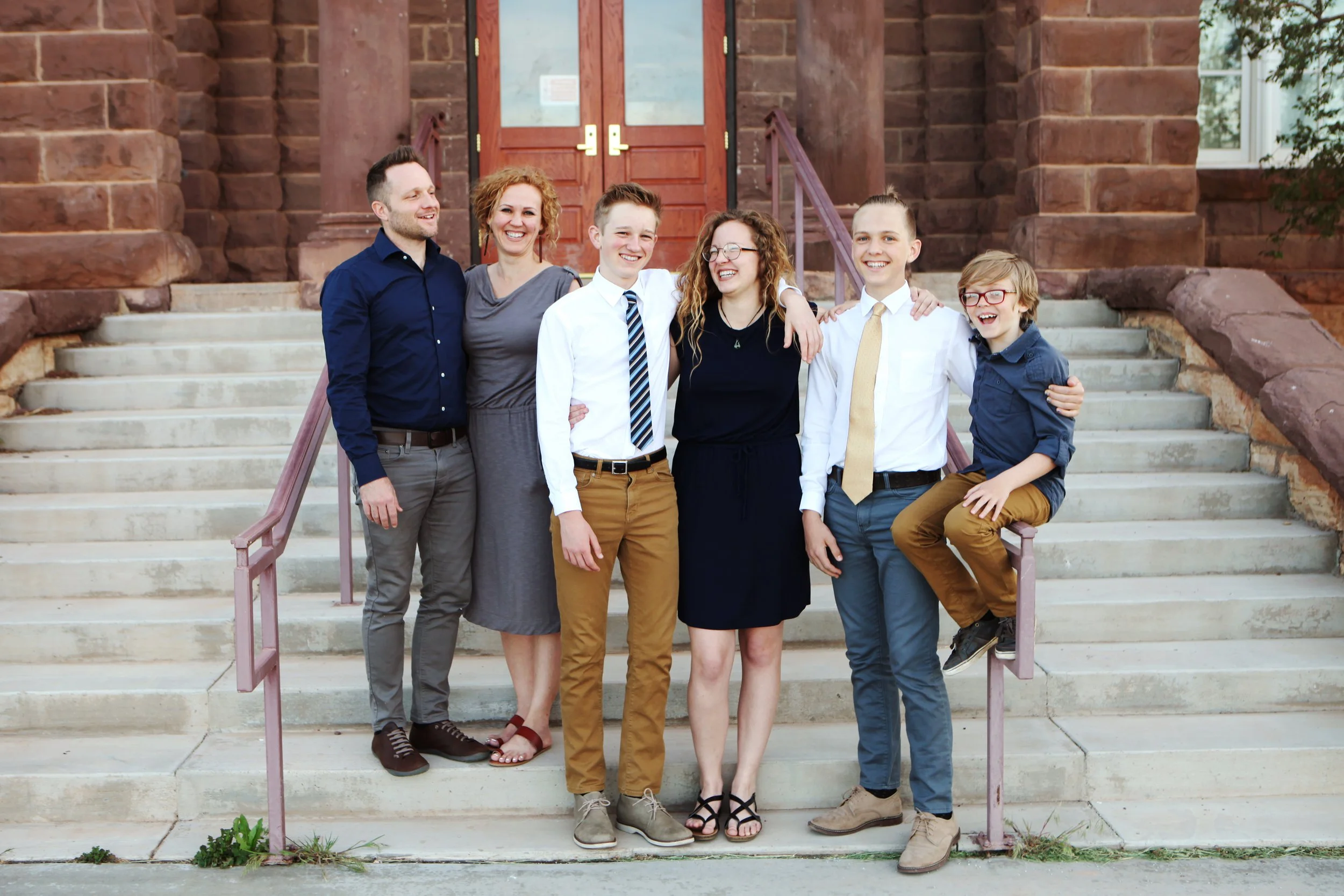
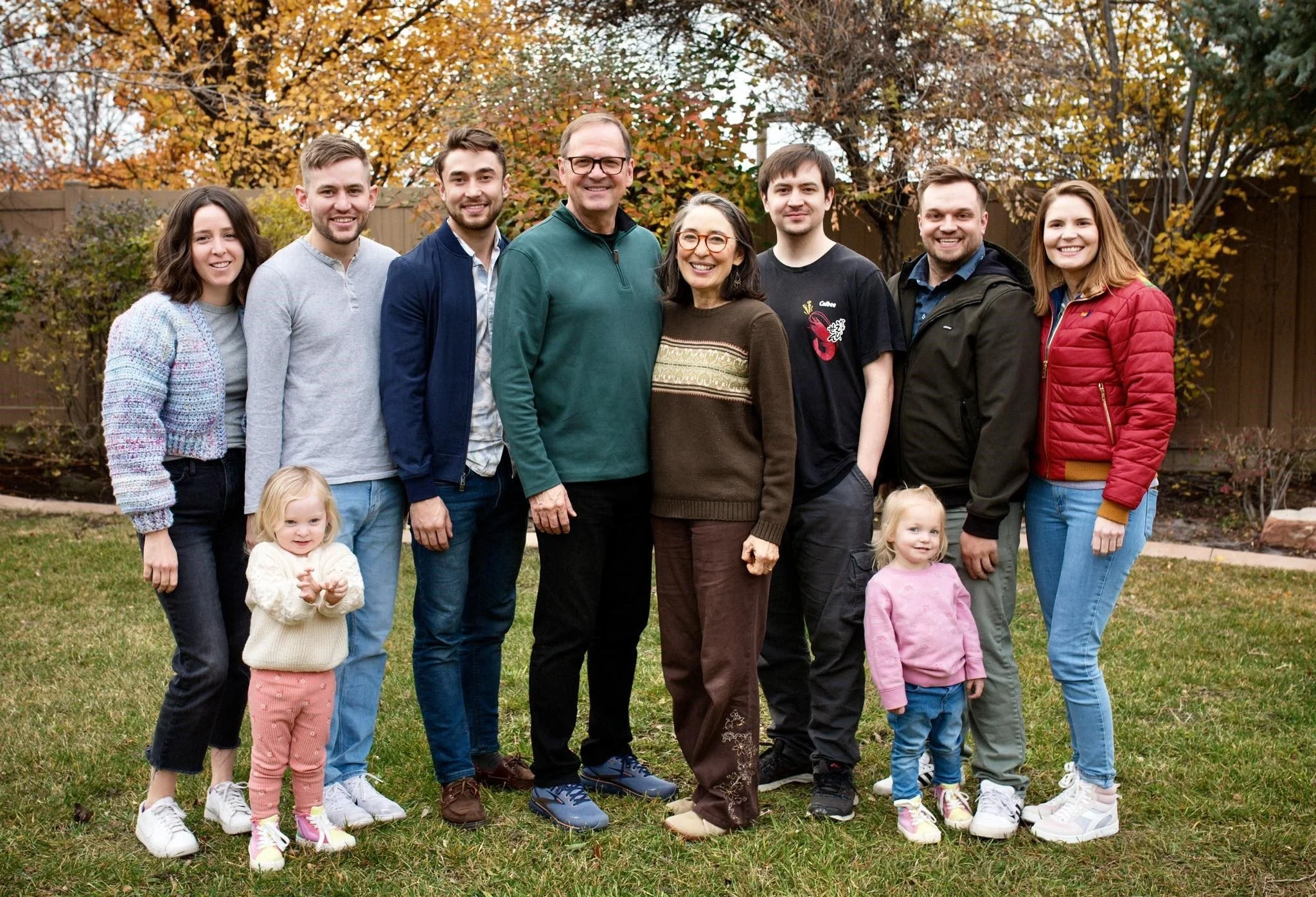
The two met as performers in BYU’s Young Ambassadors program and spent many long hours bonding on bus rides across the nation, and while performing together in firesides and in Steve’s family’s musical, “It’s a Miracle.” They married when Steve was 28 and Johanne was 24, and had their first baby within a year. Steve and Johanne have since raised their four children (Emily--who is now married to Skyler, Jason--who is married to Marisa, Alex and Ben) in Utah, and now enjoy two grandchildren. They also laugh that their youngest child, Ben, has continued the musical legacy having received his Masters from the Boston Conservatory at Berklee in Choral Conducting, after also once being their child who shouted, “Everyone stop singing! There’s too much music in this house!” In their young adult years, Steve came out to his kids individually at a time that felt appropriate, and says they were all great about it. He was touched his daughter-in-law said, “This doesn’t change how I feel about you,” and knew he was safe with his son-in-law, who was already an open ally who had marched in Pride parades in Salt Lake. Only one of the four Perry children is still involved with the LDS faith, but Steve says they all are respectful of his and Johanne’s continued activity in the church.
Leaders have fluctuated in response over the years as Steve has felt comfortable opening up about being gay. The first bishop he told, about 15 years ago, immediately released Steve from his calling in the Young Men’s presidency in his ward, saying he couldn’t be around children. Steve says, “I’ve since learned that this is a common misunderstanding, but knowing they thought I was a pedophile triggered years-long major depression. This was especially hard since at the time I had my three boys in the YM program or just about to go into it.”
Since then, he’s witnessed progress. When he and Johanne moved from Cedar Hills back to Provo in 2016, he told his new bishop who only replied, “Ok, fine, but will you accept a calling?” Six months later, that bishop called Steve as one of his counselors. Later when he came out to his stake president, he thanked Steve for trusting him and said, “We are so lucky to have your experience on our high council.” While Steve is often tapped to help with the music, which has included directing a regional choir for general conference, Steve has most recently served in his ward’s Elders Quorum presidency and with Johanne as members of their area Communications Council. When asked to teach an Elders Quorum lesson recently, Steve felt prompted to come out, to which he thought “that’s weird.” But heeding the counsel of the stake president who had that very morning said the stake needs to do better at understanding LGBT members, Steve opened up to his quorum. He’d given his quorum president a heads up, and the president opened the meeting reading the lyrics to the primary song, “I’ll Walk With You.” Steve says this “rolled out the red carpet and just felt right” for the rest of what he shared. Since, he’s had people thank him for his vulnerability and had parents come to him for advice with their own kids.
Steve shares that his need to come out more widely was a life-saving, or at least mental health-saving decision. Several years ago, he began having anxiety and panic attacks at church, and only church. He explains, “Like I’d be in bishopric meeting and suddenly I knew my body was going to stand up and leave the room, so I made excuses as I left and stood outdoors in the breeze and loosened my tie and just breathed… This was causing me to be dangerously depressed, more than the usual low-level depression I’ve always dealt with—not hard to guess why, now that I think about it. So, Johanne and I with a counselor decided that since the box I felt around me was slowly shrinking, that I would just step out of the box.”
The panic attacks stopped as soon as Steve started to come out to close family and friends, and eventually to people he worked with, one by one at a time that felt right. He says, “It’s not that they needed to know, but I needed to know that they knew and that we were still good.” Steve often hears the phrase, “You can never know you are truly loved until you share who you truly are,” repeat in his mind, and also wanted to add his voice to the movement that visibility and representation matter. He feels, “Both our society and our church need to know just how many LGBTQ people are in every congregation and every class and quorum and know that it’s not ‘Us vs. Them’ somehow, but that there is only ‘Us’.”
Eventually, Steve took the initiative to organize an LGBTQ inclusion event at BYU Broadcasting in 2021, during which he introduced a panel of students and employees who are out who all shared their experiences. It was a packed crowd with an overwhelmingly positive response, something that once seemed impossible back when Steve was a Young Ambassador student on that very same campus.
Every time Steve shares his story (which he has also done on Richard Ostler’s Listen, Learn and Love podcast), he and Johanne are quick to recommend that others don’t take their mixed-orientation marriage as a prescription of how to live, recognizing “that usually leads to disaster and broken hearts in about 70% of the cases, from what we’ve read.” But whenever he shares his personal experience, Steve reaffirms that he and Johanne “married for love and are staying married for love. Each of us has offered the other to dissolve the marriage on different occasions, if that was the best thing for the other's happiness, but neither of us has ever wanted to take the other up on that offer. We just are each other’s person.”
(Join us next week when Johanne Perry shares her side of the story.)

CLARE DALTON
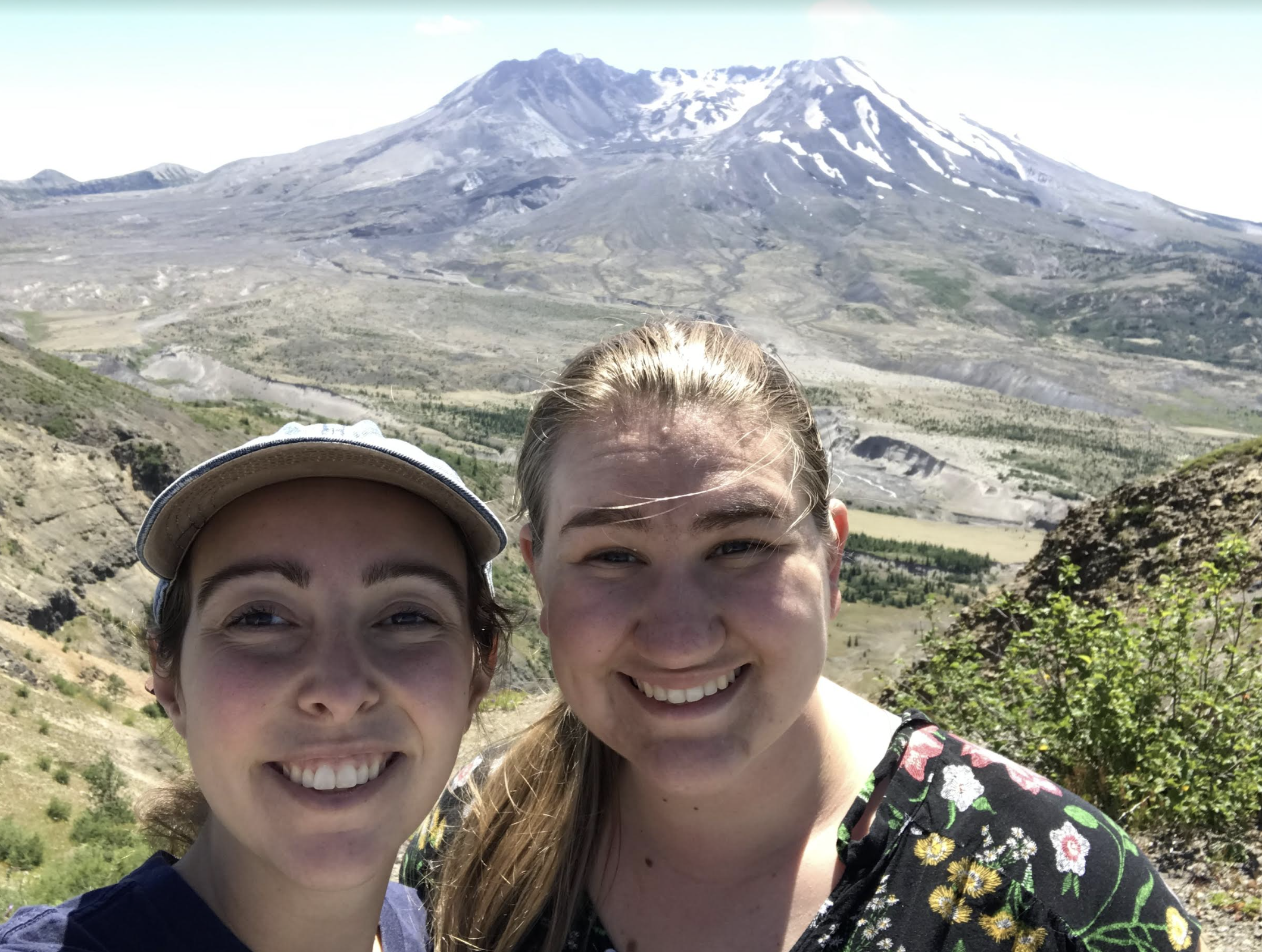
As a child, Clare Dalton would watch her dad go off to teach seminary or institute and ask if she, too, might be able to do that one day. His answer was no, as back then, the church encouraged women to stay home with their families. “That made sense,” Clare says, considering all she’d observed at the time. But after growing up in Arizona, Clare would pursue many opportunities. She served an LDS mission in Barcelona, studied linguistics at the University of Arizona while coaching high school girls’ basketball and a variety of middle school sports, worked at a group home, used her bilingual skills to teach driver’s ed, did door to door sales—which she says is everything they say it is (lots of money, lots of crazy), then ultimately ended up back in her parents’ basement, wondering what was next. One day, her father asked her to substitute teach a seminary class. This time, there was space for a woman in that classroom and Clare had an awakening—finally able to combine her two passions of teaching and working with kids. Clare spent the next eight years being called Sister Dalton in Gilbert, Arizona high schools where parents and students regularly asked for their kids to be placed in her seminary class. That is, until she came out as gay…
As a child, Clare Dalton would watch her dad go off to teach seminary or institute and ask if she, too, might be able to do that one day. His answer was no, as back then, the church encouraged women to stay home with their families. “That made sense,” Clare says, considering all she’d observed at the time. But after growing up in Arizona, Clare would pursue many opportunities. She served an LDS mission in Barcelona, studied linguistics at the University of Arizona while coaching high school girls’ basketball and a variety of middle school sports, worked at a group home, used her bilingual skills to teach driver’s ed, did door to door sales—which she says is everything they say it is (lots of money, lots of crazy), then ultimately ended up back in her parents’ basement, wondering what was next. One day, her father asked her to substitute teach a seminary class. This time, there was space for a woman in that classroom and Clare had an awakening—finally able to combine her two passions of teaching and working with kids. Clare spent the next eight years being called Sister Dalton in Gilbert, Arizona high schools where parents and students regularly asked for their kids to be placed in her seminary class. That is, until she came out as gay.
Clare had known since she was a child she was different, most consistently feeling “like an alien.” It wasn’t until the pandemic in 2020, at age 32, that Clare finally felt the courage to ask God: “Hey, this SSA stuff I’ve been researching and keep finding my way back to… this topic? Is this me?” She felt the affirmative answer she received didn’t need to be anyone else’s business, and fought God hard on that. Clare laughs, “God and I are good at fighting. I felt strongly prompted by God to come out on social media, and it took us months of back and forth to get me ready to take that leap of faith.” She was perplexed by the timing of it all, and taken aback by the immense outpouring of people in the space seeking connection. “People were starving to be seen and heard, as this affects so many lives.”
Soon, Clare understood the urgency of her prompting to be more open. A former seminary student reached out and said that on the day they planned to take their life, a friend had forwarded them a screenshot of Clare’s post, which ultimately proved life-saving. They told Clare her example made them realize, “This could be a part of my life that might not ruin everything. Maybe I can stay here.” Clare says, “That gave me added perspective of what God means by the invitation, ‘Come, labor in my vineyard and be an instrument in my hands.’ Now, I feel called to this space. It’s worth standing here, even if it feels lonely, to hold space for others coming along so we can make the space even bigger.” Clare credits Charlie Bird, Ben Schilaty, Meghan Decker and Tom Christofferson as some of the pioneers who first helped open that space publicly.
After her public announcement, Clare immediately noticed a shift in her seminary classes. Some students and families started behaving differently towards her. She started hearing secondhand conversations about her, initiated by parents and local leaders who had never actually met her. She says, “It hurt that those with accusations and even just questions didn’t have the courage or integrity to talk to me face-to-face. As a religious culture, we believe in the phrase ‘to stand for truth and righteousness.’ So when we feel we’re on the moral high ground, we like our faces to be seen. But when we don’t have that, we turn into middle schoolers and tattle up the chain to take care of uncomfortable situations we don’t want to face ourselves.” Clare saw “really awful” emails and texts that were passed around about her as she was accused of horrific things that were utterly untrue. She offered to meet with parents, to no avail. “The things I was accused of have left scars, and they’re from parents who had no valid ammunition—just fear. The scary problem is that they don’t need any. I didn’t have to ever actually do anything wrong to be perceived and painted as a threat. Just being gay was enough.” In contrast, Clare will forever remember how some families reached out and some colleagues stepped up to show how much they needed someone like her in this space—an LGBTQ voice who’s connected with God and the church.
Clare wanted to continue to help people, but started to feel the pushback and belittlement as if “I was being patted on the head, like, ‘You can be here, but don’t make any waves.’ But I kept seeing parents and students who were hurting and who didn’t want to come into a church building because of their experiences. The seminary and institute programs have done so many amazing things for years and can be helpful, but I can’t unsee the broken hearts who don’t fit into that system. Who’s helping those kids and families?” Clare says her faculty would look at the lists every year of students not registered or attending, and consider the tools they were trained and instructed to use to “rescue Israel.” But, “Those tools can be perceived as weapons to people who don’t fit in. Tools like, ‘Let’s go over to someone’s house and invite them to seminary and to read the Book of Mormon.’ What does that tool feel like to someone who was called a slur by someone in their seminary class, and they step into our building and hear that slur again? Or a person of color who studies 2 Nephi and their class discussion isn’t nuanced or sensitive? And in class, when we double down on weaponizing the Family Proclamation, are we gathering Israel, or inflicting wounds that lead to hemorrhaging faith and testimony? People say, ‘We need LGBTQ people in the church,’ but it is so hard to stay when everything from the overt to the subconscious message is ‘You don’t belong here’.”
A lifelong athlete, Clare’s sports brain recognizes the best change can come if we recognize that humans do feel the difference between being “allowed” and being “needed,” or between feeling “welcome” versus “essential.” She likens it to a team on which a coach says, “Here’s a jersey, get used to sitting and watching” versus, “We need what you have. We’re going to build this team and offense around you.” Clare decided that since God had called her, she didn’t need to just sit there, she needed to do something. And if that space didn’t exist, she needed to help create it. She credits many others as being part of the “explosion of people right now wanting to create spaces (books, podcasts, support groups, etc.) with God that haven’t been created before. God isn’t just allowing it, God is inspiring it,” says Clare.
Now on the advisory board for the Gather conference, Clare says it’s been so eye-opening to work in a space without a manual; just a connection to God in which one can ask, how can we do this? With this newfound flexibility, Clare’s been able to tap into part of her spirit that she says has felt dormant to channel the Christlike attribute of creativity. She says, “When we move into the unknown with God, we sample what it’s like to be a creator. We get to accept the invitation to create with God.” Along with a committee of four (including Allison Dayton, Ben Schilaty and Austin Peterson), Clare is now developing the Gatherings curriculum (the free curriculum is available on gather-conference.com under “Gatherings”), a companion study for Come, Follow Me, designed for “the population of those who might find church to be unrelatable, painful, or unsafe. It’s for those who may nervously anticipate General Conference, awaiting the next ‘you’re no longer welcome here’ stone to hit. The team hopes that with the Gathering curriculum, someone can jump into scripture with a different perspective and find themselves in the sacred text … and say, ‘Oh, I’m more like Nephi than I thought’.” Clare reasons, “Constantly deflecting stones from friendly fire takes such an emotional toll and can be a barrier to spiritual growth. When you’re ready for a blow to come, it’s hard to have a soft heart that can be receptive.”
Reflecting on the recent inaugural Gather conference in which she was the second speaker, Clare says she arrived two hours early, stepped into a giant meeting hall with 1200+ chairs waiting to be filled, and had this moment of, “This is unreal… I didn’t even know to dream on this level. No part of me as a little kid was like ‘I want to get up on a stage and talk about the thing that makes me different.’ But I had this moment of awe—how good God is to be able to move so many things and people. I was able to stand at one of those connection points where so many lines come together and connect you to everyone else. That’s what Gather was—seeing people friendly, happy, smiling, using different pronouns or clothes or for the first time, trying something they had not been able to before. And we all fit in the family of God, in a future that had been described with so much uncertainty for us…” Clare continues, “It doesn’t take away our problems, but it does give us a foundation so we have a place to stand for all the things to come. That’s what I see and want; that’s what Gather is doing… It’s a beautiful sentiment to feel we’re not just taking up space in Zion, but that we literally cannot build Zion without this essential part-us. As we move closer to the Second Coming, God’s moving more and more people.”
A self-proclaimed introvert who is a voracious reader of fantasy and YA fiction, Clare is now happily dating her girlfriend and figuring out what their path in the church looks like together. They are active in their local ward, and Clare says that living the gospel for them is “more focused on trying to become like Christ and less focused on checking all the to-do boxes. While I hope every week that Sacrament meeting and second hour will be the sacred renewal that I crave, there are times that I have to leave the church building and find that connection with God elsewhere.”
But Clare says, “What gets me out of bed and keeps me going is faith. I don’t know how else to say it. It’s the first principle of the gospel. We have too many cultural patterns that have become patterns of fear. And God is trying to root out that fear. In order to do that, we have to check our patterns, assumptions, and mindsets.” Clare says she did all she could to live a life where she “moved within those patterns and fit in and looked really good on paper, but that wasn’t where God was guiding me. I hope that every member of God’s family remembers that God invites us to talk to Them and find out our individual purpose together with the divine.” As for Clare right now, she is focused on the gathering to come.
THE GILES FAMILY
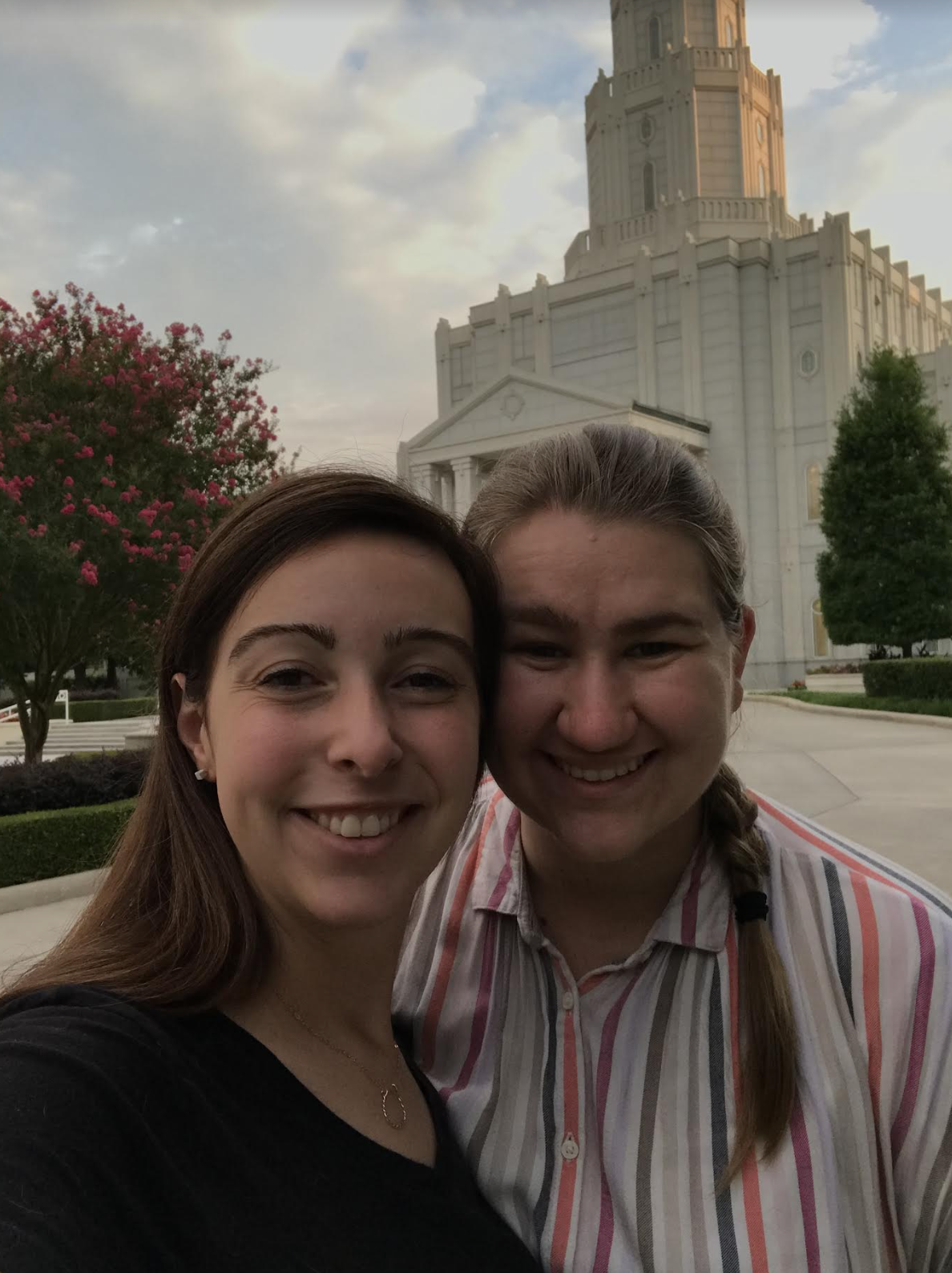
The crux of the LDS-LGBTQ+ dilemma is most frequently characterized by the perception of three limiting life paths when one comes out as gay: 1) Stay in the church and live a celibate life. 2) Enter a mixed orientation marriage. Or 3) Date and allow yourself to fall in love according to your attractions, and necessarily leave a church you may still love and value. But what about when none of these options feels like the right fit? What if you choose to carve out your own way by entering a same sex marriage while still showing up to your faith community of choice, even when its underlying teachings seek to minimize your union? For Liz and Ryan Giles of Yakima, WA, that is the exact path they’re navigating right now, and their new Instagram account @the.fourth.option’s rapidly growing following suggests many others are also intrigued by this option.
The crux of the LDS-LGBTQ+ dilemma is most frequently characterized by the perception of three limiting life paths when one comes out as gay: 1) Stay in the church and live a celibate life. 2) Enter a mixed orientation marriage. Or 3) Date and allow yourself to fall in love according to your attractions, and necessarily leave a church you may still love and value. But what about when none of these options feels like the right fit? What if you choose to carve out your own way by entering a same sex marriage while still showing up to your faith community of choice, even when its underlying teachings seek to minimize your union? For Liz and Ryan Giles of Yakima, WA, that is the exact path they’re navigating right now, and their new Instagram account @the.fourth.option’s rapidly growing following suggests many others are also intrigued by this option.
Like much of their relationship, Liz and Ryan’s wedding was off the beaten path—literally. In August of 2021, about 100 of their close friends and family joined them in the Washington wilderness at Camp Dudley—a summer camp Liz had been involved with since 2009 as a camper and later counselor and teen director. Ryan had always felt typical wedding receptions were “boring,” so they offered their guests the option to go boating, rock climbing, ziplining, and do archery during their special weekend. After their ceremony, Liz and Ryan stole 15 minutes for themselves, and stepped away from the crowd to a secluded place on the shore to pray together and have their own form of a covenant making ceremony in nature, an experience they loved.
It was the perfect setting for former high school English teacher, Liz—25, who now runs year-round outdoor education programs for fifth graders. Ryan—28, and originally from South Jordan, UT, is an EMT and was just accepted into an occupational therapy program after which she hopes to work in pediatrics helping kids to navigate the emotional and physical connectivity of their health. Together, the two love to do puzzles and play board games like Parcheesi and Scrabble, as well as go rock climbing, explore parks, and “chronically rewatch TV shows” like Schitt’s Creek, the Fosters, Gilmore Girls, The Good Place, Jane the Virgin, and Grace & Frankie. Currently pup parents of dogs Kevin and Casper, Liz and Ryan are currently finishing up their home evaluation to become foster parents. They say they would love to foster-to-adopt sibling pairs who often struggle to stay together, and are also supportive of the reunification track for kids who benefit most from that route.
Liz and Ryan have realized a love that over the past seven years has at times felt complicated. For some in the wards they’ve attended as a gay married couple, their union does complicate some’s sense of “how we do things.” But Liz and Ryan hope that their openness about their marriage will help others, especially LGBTQ+ youth or closeted adults who want similar things, to view it as a possibility, while also helping those for whom gay marriage is uncomfortable to warm to the idea that “their agenda” in attending church doesn’t vary from the average person’s objective to show up to find community and draw closer to Christ.
The Giles’ story started with a meet-cute in 2016. Liz was a freshman at BYU and her roommate had gone to high school with Ryan--who had just returned from her mission and moved in next door. For months, they were just friendly-ish neighbors, but Ryan had never fully caught Liz’s name and after three months, she says, “It felt too late to ask.” Ryan didn’t think she’d see Liz enough for it to matter, but Liz says, “Like a Whacamole, I just kept popping up.” As the friend group continued to hang out, the following semester they all moved into an apartment together where game nights frequently involved improv comedy skits in which Liz and Ryan would draw scenes from a hat and have to act them out. Liz says, “But we’d always draw scenes in which we had to act like a couple. So then as a joke, we started calling each other babe like we were a fake couple within a roommate context.” Ryan adds, “And then, it became less fake than we thought it was.”
The next few years were filled with navigation as the two individually figured out their orientation, their attraction to each other, and their other life plans. As Ryan headed to Paris for a study abroad, and Liz left several months later to serve a mission, they both tried to convince themselves that this was all just a fluke, that they were still straight (Liz thinking this more so than Ryan), and that maybe, sometimes these kinds of things just happened with roommates? Nine months into her mission, Liz came to the realization that her feelings for Ryan (and, on a bigger scale, her same-sex attraction) were not a fluke. After Ryan returned from her internship in Paris, and while Liz was still on her mission, they came out to each other and acknowledged that what they’d felt was real. This didn’t exactly make Liz’s church service easier. At the time, Liz was spending her days with a mission companion who loved to recite the Family Proclamation while they drove around their (very large) area. Although she loved many things about this companion and their several transfers together, she knew that kind of setting was definitely not a safe place to come out. Yet it still took her nearly a year after her mission to realize that she did not want to pursue option one or two in her life—that while she longed to have a family and be a mother, Liz did not want to deny herself a relationship filled with chemistry and deep love.
When Liz returned, Ryan was patient and careful not to put any pressure on Liz. Ryan had already come out to her parents “accidentally” after she was watching general conference with her brother and dad and a speaker focused on what to do when you feel “the Lord is asking too much of you.” Seeing his daughter become upset by this, Ryan’s dad prodded her to be more specific about what hardships she was facing in a big, long discussion of which Ryan says, “My dad was amazing.” This was a welcome surprise, and the next day she came out to her mom who had a harder time at first, but who she says has also been amazing. Ryan remembers fondly that one of the first questions she asked Ryan was, “Does that mean you’re going to have to cut off all your hair?” Ryan laughed and replied, “That’s not required anymore; we’ll leave that be.” As Ryan continued her schooling at BYU, she felt it wouldn’t be safe to risk her diploma by coming out publicly, so she quietly considered her future options, none of which felt right. Before she’d come out to her parents, Ryan says she’d felt sick to her stomach for months before getting a priesthood blessing from her dad in which he talked about how she’d live “an uncommon life.” He didn’t say directly what that meant, and he had no idea the reality she was mulling, but through personal revelation, this cracked open the possibility that perhaps she would be able to marry someone she loved while “doing all the things I find most important and affirming regarding my relationship with God and participating in a faith community. Maybe none of that had to change.” She says, “That’s when I decided to pursue this option and try to find someone willing to do it with me. I was hoping that person might be Liz, but I didn’t express that yet.”
After returning to BYU from her mission, Liz also planned to stay closeted but admits she had “holy envy for Ryan’s plan because it sounded like such a better plan than the trajectory I was on. I felt a lot of depression and hopelessness deconstructing my faith because I didn’t see a future that was truly happy for me. I’ve always known I was meant to fall in love with a life companion, share my life, be a mother… things that didn’t feel possible to me with a man. It was tough at that point, so I was grateful to ultimately get guidance from Heavenly Father the other way.”
The two remained just friends for about a year, respecting Liz’s process and the BYU Honor Code they’d each signed, until the combination of COVID and botched travel plans placed them both in quarantine together. Liz had just flown to Washington DC to present at a teaching conference when she landed and learned the world had essentially shut down. She spent the next five days alone, reflecting on how unsettled she’d felt about not dating women when she knew where her attractions lied. Considering the “divine plan” intended for her, that week she even wrote a 30-page letter in her journal to her Heavenly Parents to weigh her options. By the end of the week, she felt she had a strong answer she was supposed to be with Ryan and that she could do a lot of good in the world if in that companionship. Liz returned a week later to Provo which had become a ghost town. The rest of their roommates had returned home, leaving Liz and Ryan to spend time together and the freedom to openly express their love. When Liz shared her feelings, Ryan says, “I don’t think I‘ve ever been so happy in my life.”
Ryan graduated that spring, and Liz had one more year that proved a roller coaster for many for LGBT students with the fluctuating “bait and switch” BYU Honor Code regulations regarding public displays of affection and dating allowances. Both women felt the frustration of feeling they had no say in how they were able to live their lives. For Ryan, this felt like the 2015 exclusion policy then 2019 reversal, but in reverse. “It caused so much damage to begin with and a lot of fear for people as a lot had started to come out and be open, then they had to go back into the closet in fear.” Like many, transferring schools wasn’t a realistic option for the women so close to graduation, with the added reality that many of their religious credits wouldn’t transfer at all.
But as quarantine became a defining factor of 2020, both Liz and Ryan say they benefited greatly from home church where they could think about what their identities meant in relation to the Plan of Salvation as they fully came out to their families and many of their loved ones.
After Liz graduated from BYU in April of 2021, she came out publicly, then drove home to Washington. Two weeks after coming out online, Liz posted she and Ryan were dating, then two weeks later, posted they were engaged. Although Ryan had been showing up in her Instagram feed since 2016, the announcements created some whiplash for Washington ward members who had known Liz since she was in diapers. One said, “I didn’t know Liz was gay or dating or engaged, then suddenly, she was getting married.” As they’ve been more public with their relationship, responses have run the gamut from one relative writing them a letter expressing disappointment that Ryan and Liz had “decided to let go of the rock of the gospel” and that they “would never find peace on this path,” to another relative holding a family intervention behind their back to decide “how to handle the situation.” Attending Ryan’s family ward alongside her family as well as the Instagram trend of “Ask me anything” presented opportunities for the women to publicly share their continued beliefs and why they were choosing to stay in the church. They appreciate when people ask them directly, rather than talk around or about them in ward councils.
The Giles have attended two wards since their marriage a little over two years ago. Of their Houston, Texas congregation, they say, “The people overall were welcoming to us, but most of them never talked about our queerness. It was the elephant in the room they never discussed, but they loved us. In Washington, people acknowledge the wholeness of who we are but it’s more complex—some keep us at arm’s length while others noticeably honor the intersectionality of us being here.” When they left Texas, they were touched when an older woman in the ward threw them a big, fancy going away party that was even announced over the pulpit. Attendees included their bishop and stake president. They appreciated these gestures after they had to carve out their own callings as the “go-to service people,” feeding the missionaries every other week and helping with lots of service projects. This was after their bishop mentioned he'd find a calling for them but never did, besides a ministering assignment. While they have not been sent to a disciplinary council or had their membership records removed, as was the case recently for a gay married couple they’re friends with, their leaders in Washington have reminded them they can’t partake of the sacrament, give talks, bear their testimonies, or have callings on the roster. But they haven’t been told they can’t participate in lessons, so they do that, and Ryan is relearning how to play the piano because she heard their Primary often needs a pianist and she wants to be ready—just in case.
Many in their current ward knew Liz growing up. She says, “One of my former Young Women’s leaders made our wedding cake. The Primary and Relief Society presidents have really stood in for the Savior for us, too, advocating so we can participate as much as we can. It’s so comforting because even though we don’t have a voice at those tables… they are making an attempt for us and telling the ward council we want to be here and serve and be members of this community.” She continues, “As a queer member, it’s really painful being seen as less faithful or more sinful to some. Seeing we’re married, some discount our testimonies or how we can build Zion. As someone who’s just trying to live her most authentic life and follow the Savior, it's hard to see how people treated me then versus now. Even though my beliefs are deeper and I’m so much happier, and in a position to do so much more good, I’m seen somehow as weaker or as an apostate by some. It’s hurtful.”
Of their newfound online following, the Giles have been overwhelmed by how many people have reached out from places spanning from West Africa to Australia to Utah, sharing similar desires and experiences of trying to find their place. They also recognize that while they’ve been able to find a somewhat safe space to occupy at church for now, that could change, and they express that their path is not always the best option for others. There are days when Ryan recognizes, “Going to church might not keep me close to God today; maybe today we go to the mountains instead.” Ryan adds, “We’re showing up because we want to be closer to Christ and connect with our community. If we accomplish nothing else externally (knowing that internally, we do accomplish more) other than showing that LGBTQ+ people do want to be there to stay connected and desire to be Christlike and closer to our Heavenly Parents, I hope that us continuing to go helps people see that.”




THE JEAN & ALLISON MACKAY STORY
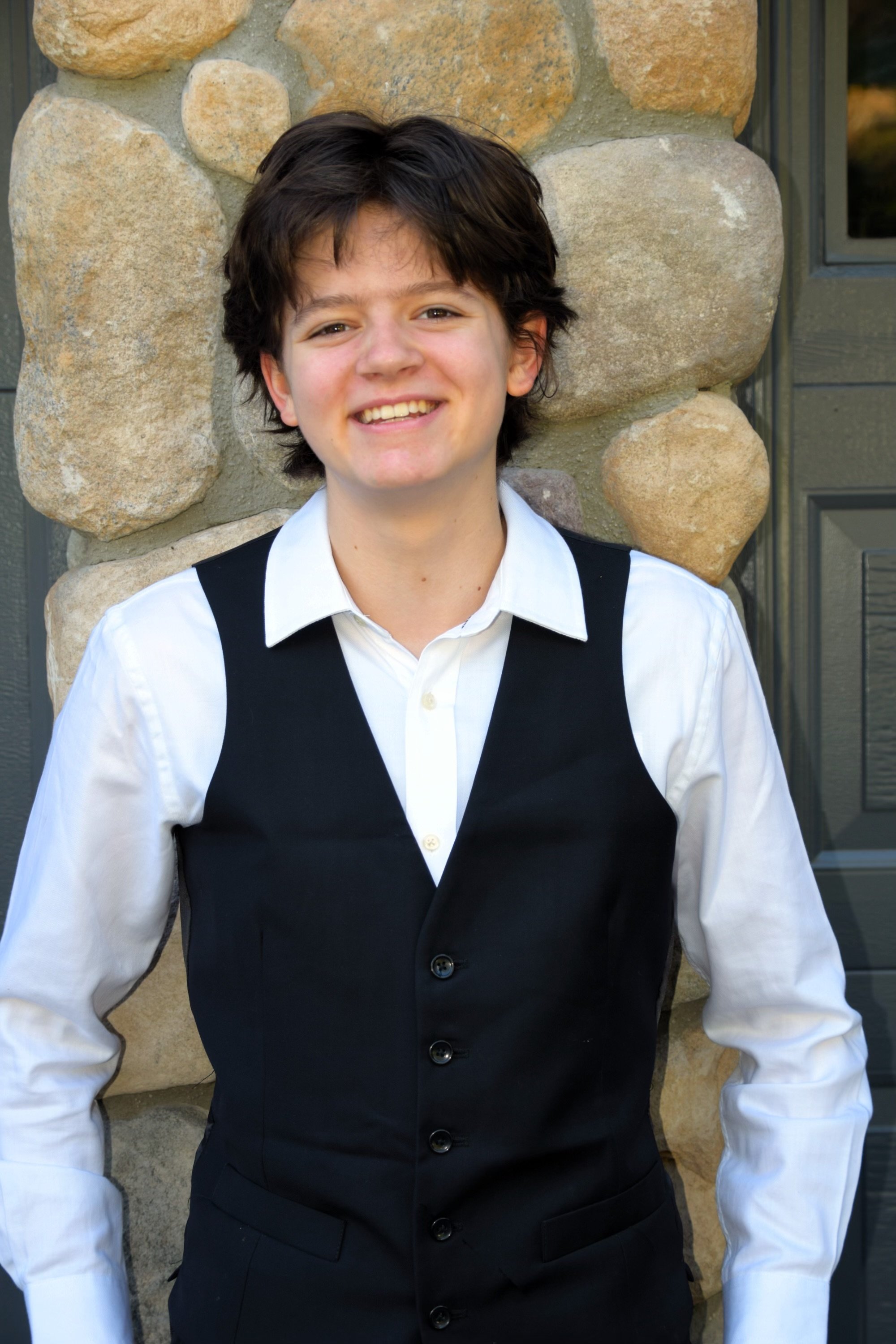
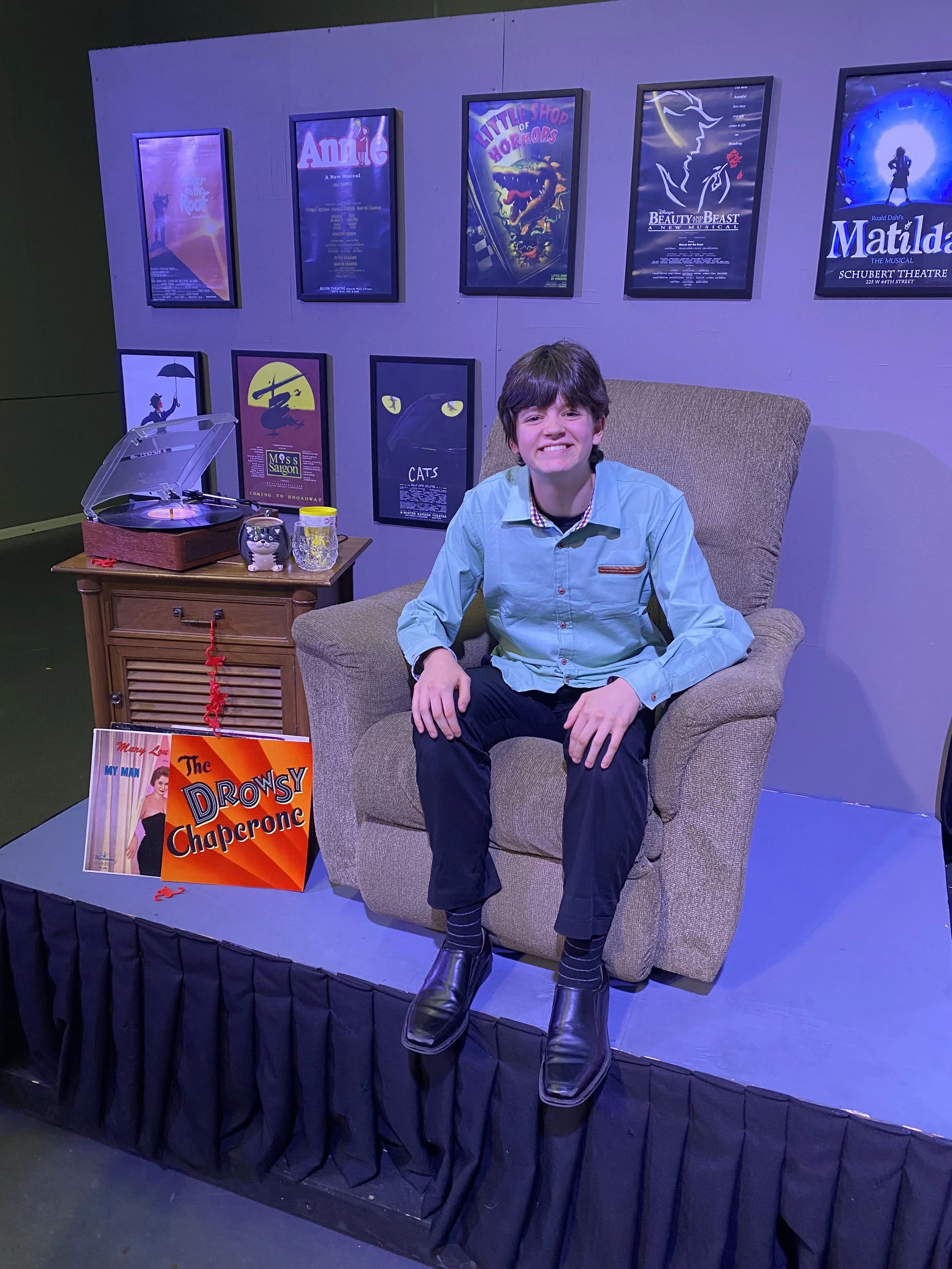
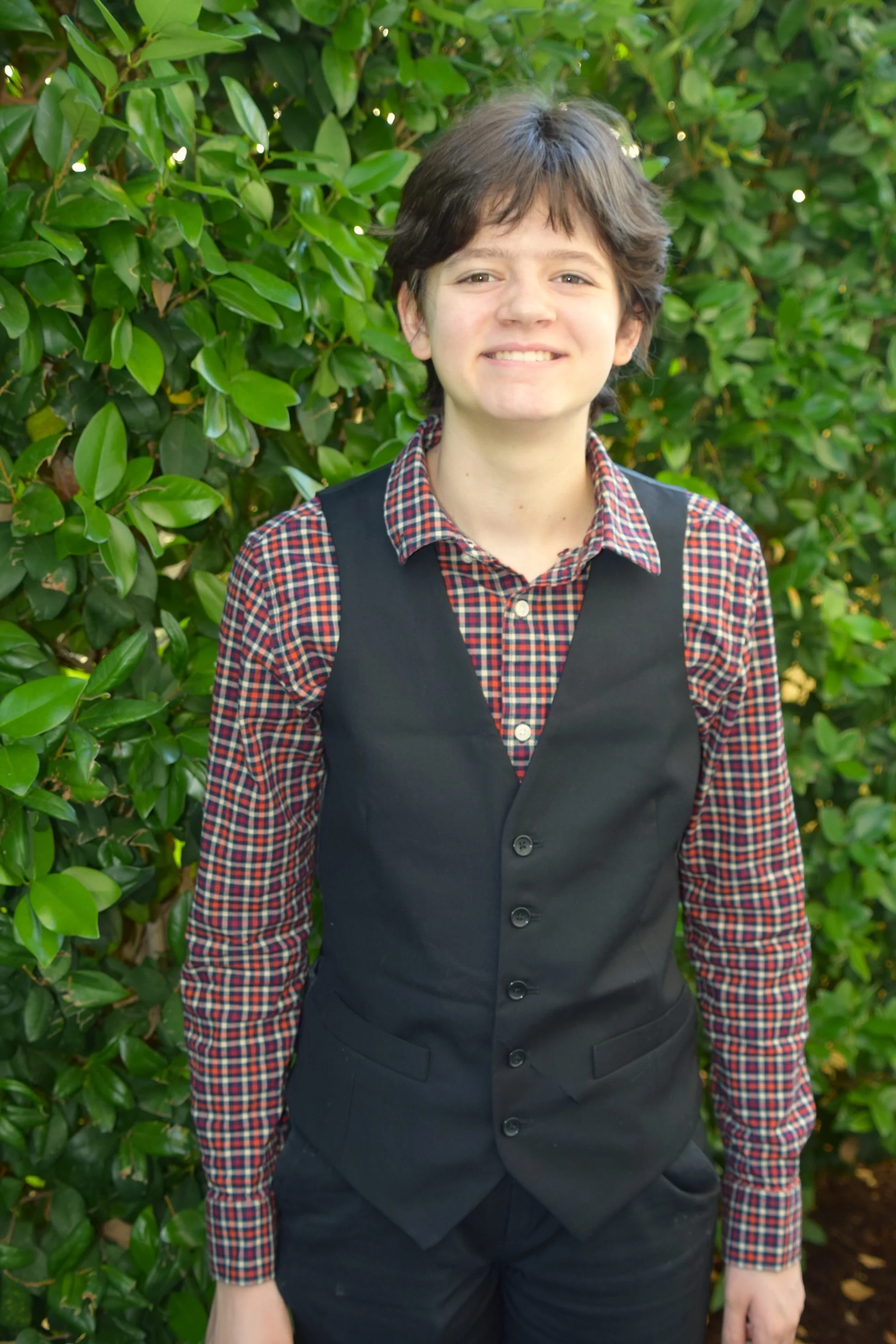
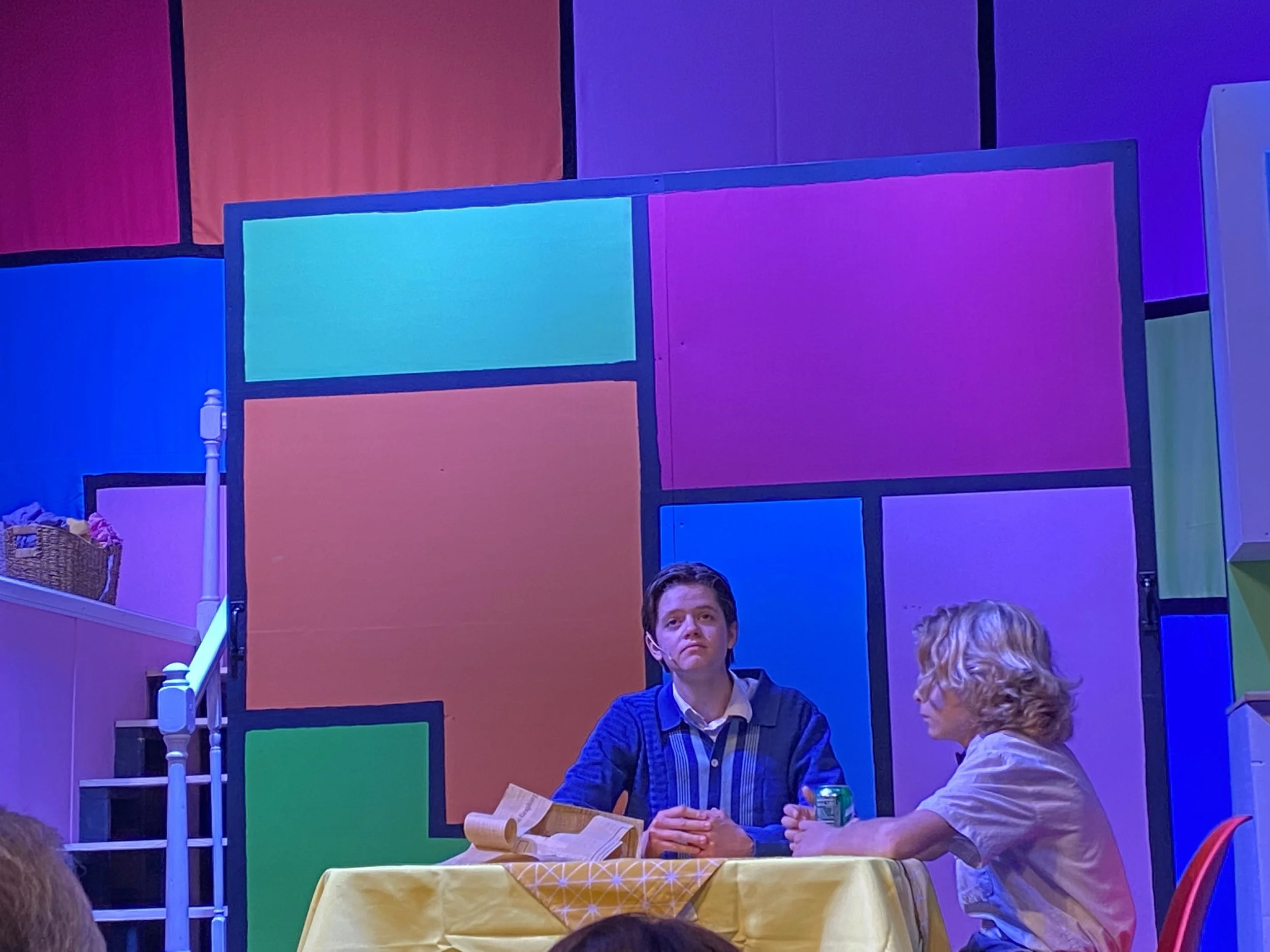
At 16, Jean MacKay is already an accomplished pianist, singer, and composer. He’s also a stage actor who played Mr. Macafee in Bye, Bye Birdie as well as the challenging role of Man in Chair in The Drowsy Chaperone. A serious academic, Jean has been taking college courses through ASU, and will graduate early from high school later this year. Intrigued by the bio-medical side of psychology, Jean hopes to become a forensic psychiatrist and study how various substances affect the brain to hopefully help rehabilitate people who have gone through the criminal justice system...
At 16, Jean MacKay is already an accomplished pianist, singer, and composer. He’s also a stage actor who played Mr. Macafee in Bye, Bye Birdie as well as the challenging role of Man in Chair in The Drowsy Chaperone. A serious academic, Jean has been taking college courses through ASU, and will graduate early from high school later this year. Intrigued by the bio-medical side of psychology, Jean hopes to become a forensic psychiatrist and study how various substances affect the brain to hopefully help rehabilitate people who have gone through the criminal justice system.
Considering all these remarkable attributes, Jean (he/him) says he becomes frustrated with often being reduced to his identity as a trans person. “That’s a facet of me, but it’s not all of me. It’s okay to celebrate one’s identity—that’s fun, but try to see the person before you see the label.”
Jean grew up in a family that moved around a lot. When asked about his home life as the oldest of six kids who homeschool, he smirks, “There’s a lot of screaming.” An early childhood illness kept Jean out of the first grade for an extended time, and he realized he preferred doing school independently. This kickstarted his online/charter educational path. As the MacKays would move for his father’s job, Jean says he often felt like an outsider navigating the social hierarchy of places like Utah and southern California, where his family now resides. But he says while his social development has perhaps been stunted, charter school has been worth the tradeoff.
For Jean, being trans was “never really a thing for me—I always just thought, ‘I’m a person’.” Jean first heard the word “trans” at age 10. When he looked it up, he thought, “Oh yeah, that’s me,” then didn’t think about it for awhile. Jean’s mother, Allison, said that even as a young child, Jean never gravitated toward baby dolls and playing house like their other children assigned female at birth. He always preferred to dress up like characters like Lightning McQueen, Indiana Jones, or Anikan and play with a Mickey Mouse doll. “He was never on the path of ‘I’m going to be a parent someday’.” But it wasn’t until puberty that Jean began to feel very uncomfortable in his body. Allison says that first he came out as aromantic, then nonbinary, then queer. “It’s a process. He’s still in process. I’m trying to hold space and be open for that to happen.” In the meantime, she marvels at his academic interests and ambition that so strongly juxtapose what she was most interested in at that age: “I was having way too much fun to want to graduate early,” she laughs.
Allison says that each time a new aspect of Jean’s identity comes up, like when he decided to change his name, she’s gone into her prayer closet and pleaded, “Show me how I can relate to this and understand. And every time I’m shown—oh yeah, this was always that way. I just imposed my belief system onto it. Or I just never thought of it that way, but it is true.” Allison says she’s now able to better navigate a journey of endless possibilities “because we let them be.” When Jean was younger, he cut off his really long hair to donate it to a foundation for leukemia. A few years ago, he chose to do the same; and this time for Allison, it felt like an important milestone, like, “I’m never going back to that little girl; I’m leaving her behind. It felt like layer after layer of cultural and familial expectations were removed.”
Many members of the MacKay’s extended family first expressed that calling Jean by Jean seemed to come out of left field. But Allison would clarify, “No, Jean’s been doing this since he was eight. Jean’s always had issues with clothes. Now, he has his own style and everyone comments how much they love how Jean dresses.” She’s grateful he’s shed the black, baggy clothes that seemed to characterize his mood for awhile.
Jean says, “I used to be part of a church that was not necessarily accepting of people like me, and I didn’t like what puberty was doing to my body. Those two things made me spiral, and I was pretty depressed for about a year.” Now Jean is more comfortable expressing his identity as both trans and asexual. He says when his parents first gave him the traditional “sex talk,” he thought, “Yeah, I never want to do that.” Being asexual while being raised in the LDS church environment was “not the worst thing in the world because with the law of chastity, people were constantly telling you, ‘Don’t do this’,” says Jean. “But what bothered me was the expectation I had to get married and be a mother and have kids. Most of the stuff they taught focused on marriage and family, which are not bad things, but they’re not for me. This expectation was frustrating—I felt like I was being diminished. To have my worth identified by things I don’t identify with was not interesting to me.” Jean says the things that interest him most in life—career and music—are what he wishes to be the most identifying parts of his life.
Allison embraces a set of beliefs and practices about the divine feminine and Godhead that differentiate her from many mainstream members of the LDS faith. Being verbal about this as well as some aspects of church history that troubled her led to her excommunication several years ago, which she now sees as a blessing because it gave Jean a safer place to land at home when he made it obvious the church didn’t work for him. “Jean saw me going through that process publicly, and it allowed him to have a safer space to talk about it at home. So in some ways, I see how the experience I went through made it safer for Jean to leave – and I would take the flack for anyone needing to do that. Because there were months we didn’t know if Jean was going to be able to stay here (on earth), if I can even make that one thing easier, then that’s ok.”
Allison was raised in a traditional LDS home and has learned unique lessons with raising each of her kids. But regarding Jean, she says, “I’m so grateful God would soften my heart to this child so that he could teach me who he is, and open this sphere of possibilities of who we are as humans, because before, I wouldn’t look. I was just doing and believing what I was told. I wouldn’t look and ask for myself. That was so wrong. I am so grateful Jean was courageous enough to show me that, and preserve our relationship. And I know Jean will teach me so much for the rest of my life.”
Jean’s father and some of his siblings still attend church, and Jean himself was expected to go until age 14 when the family realized it was in no one’s best interests to mandate that anymore. He had struggled to connect with many of the church milestones over the years, including at age 11, going to the St. Louis temple for the first time with his dad, which was not quite the experience he had anticipated it would be. But Jean says, “The thing that broke my shelf was going to seminary. I got it into my head that I could tear down all the things in my head by tearing down my seminary teachers and their classes. But I realized trying to tear down a religion by mercilessly tormenting seminary teachers isn’t going to help—or produce anything besides tormented seminary teachers. I don’t have a problem with people being a part of the church—it’s not a bad thing; it’s just not for me.”
Nowadays, Jean says he’s in remission from any religious PTSD he may have faced, but says spirituality isn’t really a part of his life anymore. While he considers the term “atheist” as useful shorthand and lets people know he’s not really interested in those discussions, he says he’s probably more agnostic, though he doesn’t love how that term essentially “puts him on the bench, and that’s not it.” Jean says, “What does matter is the things we do in this life and how we treat others.” Jean says he’d like religious people to know that the reason so many may perceive atheists as “angry” is perhaps misguided. “They’re not angry at you, the religious person, but angry at themselves. They feel tricked. Now that they see closer to their truth, they’re frustrated by harm they faced. They’re not trying to tear down your faith nor are they possessed by the devil, but frustrated because they don’t want others to be hurt anymore, the same way they have.”
Regarding the current political landscape, Jean advises, “No amount of anti-trans legislation will stop people from being trans; but it is going to result in dead children. So if you’re really pro-family or pro-life, please stop it. We need to foster understanding. I get it, if you’re unaware of what being trans means, it can sound scary or confusing. But my advice would be to talk to trans people and see how and why they feel the way they do.”
Upon reflecting on her experience getting to raise a child as unique and special as Jean, Allison advises, “Parents, set aside what you ‘know’ and listen – our kids are such amazing teachers. They are so smart.” Allison now believes Jean’s bravery might be paving the way as one of the oldest of 40 cousins. She wonders, “How many of those kids might one day say, ‘Ok, Jean did that; I can do this.’ And how many will sleep on our couch if their parents kick them out? Those who come after Jean won’t have to be alone. Jean can shine that light.”


THE LAUREN JONES STORY
Lauren Jones has spent much of her life running. “Running always felt like a safe place for me,” she says. “I was always the skinny kid who was never picked for other sports, but who could run fast. I never felt like I belonged with the boys. Once I started running, I no longer felt lost.” With a father in the military, high school was spent in Germany and then Norway where Lauren first signed up for a cross-country team. In a 2018 feature story on athleteally.org, she shared, “I fell in love with running because I’ve always been an independent person, and I love that running is all about doing my best as an individual”...
Lauren Jones has spent much of her life running. “Running always felt like a safe place for me,” she says. “I was always the skinny kid who was never picked for other sports, but who could run fast. I never felt like I belonged with the boys. Once I started running, I no longer felt lost.” With a father in the military, high school was spent in Germany and then Norway where Lauren first signed up for a cross-country team. In a 2018 feature story on athleteally.org, she shared, “I fell in love with running because I’ve always been an independent person, and I love that running is all about doing my best as an individual.”
During that time, Lauren was struggling with her identity, and while she did not yet understand what being trans meant, she knew she felt more comfortable with the girls’ team. “I kept feeling like I wasn’t competing in the right category as a boy. My race performance was affected, because I was not racing as myself and instead with a mask I never wanted to wear.” Despite that, Lauren was fast enough to sign with New Mexico State University’s men’s team where she competed in the 5k, 8k, and 10k. Lauren has run six marathons, her fastest at 2 hours 52 minutes. She hopes to qualify for the Olympic trials one day.
In college, Lauren struggled with her mental health, saying she found joy when winning races or doing well in school, but that she never felt truly happy. She began exploring her identity in secret, but was scared to come out because she wasn’t sure if or how she’d compete as a trans athlete. “The last thing I wanted was to lose access to the sport I loved.” Toward the end of her sophomore year, Lauren injured her knee around the same time her beloved dog passed away from cancer. Not being able to run, her depression worsened, and Lauren says she’d cry herself to sleep every night and considered ending her life. When she was finally able to run again, she summoned the courage to find community with the LGBTQ group on campus. After meeting a nice friend who listened to her story, Lauren finally realized, “Yes, this is me; I should do me.” She started to come out to her close friends, all of whom were supportive. Valuing her integrity as “an honest person above all else,” Lauren told her friends she would never race without knowing her hormone levels and making sure they were within the required range for trans athletes.
Lauren had grown up Catholic, and when she expressed her desire to transition to her parents, they were not supportive. Their response, “Go to church and pray about it,” turned her off from religion for a long time. Lauren says she suffered a lot of physical and emotional abuse and trauma in her development years, which likely affected her choice of career path. After studying counseling and minoring in history, Lauren completed her undergrad and moved to Arizona for grad school to work toward a masters in general counseling. There, she found a group of trans runners who helped her find confidence in her ability to compete “as who I truly am.” Lauren has found most competitive runners to be open-minded, saying, “They really don’t care too much about what one’s orientation is. Whenever there’s a competitive sector, more pressure exists on where one’s hormone levels stand.” During this time, ASU did a research project and documentary segment on Lauren, as one of the first competitive runners to transition. They found that her heartrate did indeed drop from circulating 140mL of blood to 80mL on testosterone blockers. (link to doc available in stories) This important study revealed much about trans athletes and how hormones affect performance. Of transitioning from male to female, Lauren says, “You lose so much strength and speed—you are not the same at all.”
Around 2019, Lauren was working as a counselor and had undergone HRT (hormone replacement therapy) for quite some time. Battling her eating disorder, Lauren was put into a residential treatment center where she met a Christian woman who she says, “didn’t understand LGBTQ, and I didn’t understand religion and why she’d read the Bible all the time in the common area, but we became friends. We’d wake up every morning and sing ‘Do You Want to Build a Snowman’ together and would laugh and joke so hard at the dinner table until the employees had to tell us to stop.” After they exited the program in 2020, the two stayed close friends, and Reagan invited Lauren to church. But when she told that church she’d like to be baptized, Lauren was told, “Well, you know what the Bible says about this and this…” She, “Okay, no.”
After visiting the University of Utah for a doctor’s appointment for a gender-affirming surgery, Lauren fell in love with mountains similar to the ones she’d loved as a teen in Europe. She decided to move to Herriman, Utah in 2020. Lauren got a job working as a therapist in Logan, UT and had her surgery in 2021. Everywhere, her friends and coworkers would tell her about the LDS faith. “All the people I met were so nice and had similar values—they were kind, cared about others, wanted to help. They weren’t into cussing or substance abuse and all that, and they didn’t just go to church, but maintained what they learned in church. They weren’t hypocritical.”
Lauren asked a physical therapist whether she should look into the church and requested some missionaries. Elders came and said they’d send sisters, but they never did. Finally, Lauren went on the church’s website and requested sister missionaries. Two came and Lauren is still friends with them today. “There was no talk of LGBTQ, they just handed me a book.” Lauren read the first few pages that night and thought it was just what she needed. After having a “deep talk about LGBTQ stuff” with the Relief Society president who Lauren loved, she says they “tried to get me into a building.” Lauren was too scared the first few times, and a job transfer moved her back to Arizona where she met with new sister missionaries. They invited her to be baptized, but church policies required Lauren (who had transitioned) meet with the mission president and bishop who would have to write the first presidency of the church a letter for approval for her to be baptized.
Lauren waited from January until June to hear back. “It was radio silence.” All that time, Lauren says she spent with her new “chosen family” (of close friends who love and treat her well), reading her Book of Mormon, going to church, eating Korean food, and listening to her beloved KPOP and Taylor Swift music. The wait became too much for Lauren’s mental health and she had to go to the hospital for a few days. There, the sister missionaries and Relief Society president visited her, and Lauren was touched by their desire to help. One day, Lauren got a text from the missionaries telling her to call them, they had some news: “Guess what, you’re going to be baptized!” Lauren didn’t want to wait any longer and chose to do it that Friday. She says, “It was really cool to know the prophet knows who I am and accepted me.” Lauren bought a white dress, and was baptized by the bishop, who she says was “a sweet older man” (who unfortunately has since passed away). He gave her a calling on the activities committee, and then met with the stake president to be able to get a patriarchal blessing. Lauren finds her blessing very helpful and affirming.
The church honored Lauren’s name and pronouns on their records when she was baptized. While she says she’d like to go through the temple and serve a mission, she says she doesn’t want to bring it up because of the anxiety she’d endure, not knowing if it’s even possible. “I had to wait six months just to be baptized. I think I know the answer to whether I could go inside, and it’s not upsetting to me because I feel church with friends and people, not with buildings. But I do like to drive to the Mesa temple grounds just to read, which is nice.” Of joining the YSA ward, Lauren says, “I knew this was my group of people and still do, but sometimes it’s really hard. I’d go every Sunday, to all the events with a group of friends. Everyone wants to hang out with me and go to lunch and get Swig. I can talk to anyone, I picked the right profession,” Lauren laughs. “It was hard having to wait, but in the end, it worked out and the prophet heard me, God heard me; they felt my testimony.”
Lauren currently lives back in Las Cruces, New Mexico where she got a job working as a therapist with kids via telehealth. She is on the records in a family ward, where she is the first trans person in their ward. She wants a calling and hopes they will give her one soon.
She often travels to Tempe, AZ where her “found family” and YSA friends live and is currently there recuperating. After a long morning run, Lauren suffered a heart attack a few weeks ago, so she is taking some time now to get healthy. While she was in the hospital for a week, she was again touched by the many LDS members who came and visited.
If Lauren could go back and offer advice to her younger self, she’d say, “Don’t be afraid to be you; just be yourself. Try not to worry about what people think.” She reflects, “If I hadn’t been so worried about how transitioning would affect my running career, or worried about my parents’ reaction, I would have transitioned sooner. But also… things happen when they happen. I just want people to know me as a genuine, honest, loving, and kind person. I’m so grateful for all the friends I’ve had through all this. There were moments I wanted to give up, but life is better just being myself. I’m tired of hiding.”



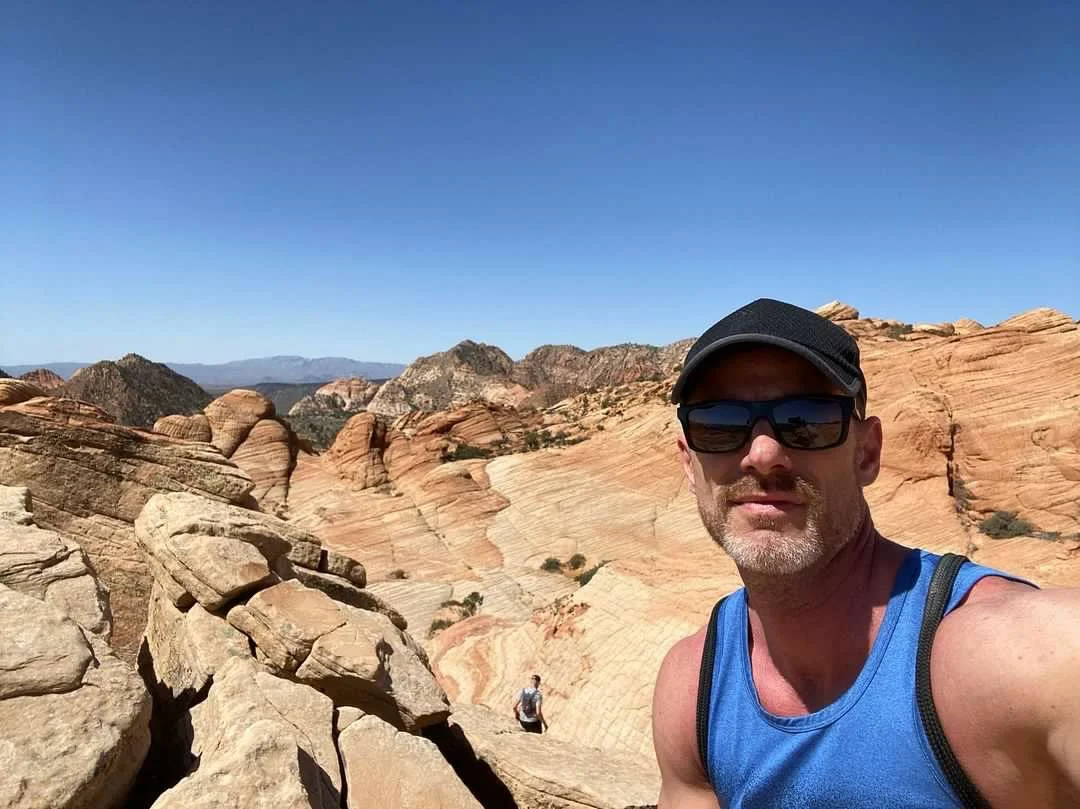
THE JON ROGERS STORY
For any parent, the subject of coming out is a tricky conversation to have with your teen daughters. But for Jon Rogers of Idaho, the person needing to come out was him. Two years ago, the 42-year-old married father of two decided, under the weight of some personal events in his life, that it was finally time for him to share the news that he is gay with his daughters, after having just recently told his wife. In the same family discussion, he also shared that he and their mom would be getting a divorce, making this “the most difficult conversation of my life, seeing the heartbreak and tears in my daughters’ eyes is still so hard to think about today,” says Jon.
For any parent, the subject of coming out is a tricky conversation to have with your teen daughters. But for Jon Rogers of Idaho, the person needing to come out was him. Two years ago, the 42-year-old married father of two decided, under the weight of some personal events in his life, that it was finally time for him to share the news that he is gay with his daughters, after having just recently told his wife. In the same family discussion, he also shared that he and their mom would be getting a divorce, making this “the most difficult conversation of my life, seeing the heartbreak and tears in my daughters’ eyes is still so hard to think about today,” says Jon.
The past two years have been “filled with hurt, mourning the loss of our family unit, healing, and also hope” as Jon has come to embrace this part of him and live with a sense of authenticity that he says many others in his situation have never been encouraged to pursue. Jon has observed and admired the many younger LGBTQ+ people who are nowadays often highlighted in social media “which is great, and a product of where we’re at in society, where younger people feel more comfortable being themselves.” Jon also boldly shares his truth and story now, with hopes he can be a support to others like him who were born in a different era.
Growing up in the 80s and 90s, “being gay was very much not accepted,” says Jon. “It was considered a choice, and a wrong one. It was something shunned by church and society in general.” Jon grew up in a very loving, conservative, and active LDS family who “did all the things.” The Rogers went to church and mutual activities every week, watched every session of general conference, and had daily family scripture study and prayer. “I loved it—I still do,” says Jon. He says he’s “always been blessed with the spiritual gift of faith. I’ve never questioned the truthfulness of the church or any leader.” Jon recognizes this could appear confusing, as he is now living as an openly gay man who has gone through a temple divorce, and who now attends church with his boyfriend. But Jon says, “I don’t question the church. There are things we don’t know yet—maybe certain leaders have certain biases or have not had the whole plan revealed yet. We don’t know everything, but I believe there is more to come.” Jon says he has continually felt compelled to have patience through this journey. “It’s hard to understand why Heavenly Father hasn’t revealed more, when you see all the hurt and suffering people go through with this. But I try to rely on faith, trust, and patience. I believe Heavenly Father has so much more mercy than what we give Him credit for. He is more understanding and loving than we know, especially in this space, seeing how His LGBTQ children suffer so. That doesn’t always help in the day to day, but I hope and think everything will work out somehow.”
As a teen and into his adulthood, Jon says he never allowed himself to nurture thoughts that he was gay. He moved forward, believing that his only path was to marry a woman. He pushed away his attractions, and says he felt the shame, guilt, denial, and self-hatred brewing within, but was “scared to death to tell anyone anything and see that disappointment in their eyes.” Like many, Jon would pray nightly, in tears, “to remove this from me.” He wondered, “Why can’t I be normal?” Jon felt like he had the faith to make it happen, but says it never went away.
Jon attended Ricks College and served an honorable mission in Washington D.C. Before and after, he tried dating women, wanting the companionship he saw so many of his roommates and friends find, but he says he faced a lot of rejection while trying to date women. In April of the year he was 26, Jon met a woman he quickly grew to love, and they were married in the temple in December of that year. When his parents questioned the quickness of the romance, he reminded them they got engaged the week they met. “It runs in our family.”
Throughout his 16-year marriage, Jon says he never wanted to put his wife through the torment of his inner thoughts, hoping he could fix it with time. So, he stayed quiet. He says ultimately, it hurt her deeply that he had never felt like he could trust her enough to share. As a husband and father, Jon says he tried so hard to hide any sign he might be gay, trying to carry himself in an “extra manly” fashion. He verbally disparaged any gay themes in tv shows and music thinking if he could distance himself from it all, it would go away. He says this made it additionally hard on his girls, who were so confused when he came out, they had to then re-envision the father who had raised them.
After years of inner torment, before he could get to this place of being truthful about who he was, Jon first had to come clean with himself. This happened one night when he was cooking dinner. He had been listening to an interview with Al Carraway and Charlie Bird in which Charlie shared his coming out story. Jon felt the impulse to pray right there next to the stove to ask what his Heavenly Father thought of him being gay. He says he felt “God tell me He loved me no matter what and that I was created this way on purpose; I was not broken.” Jon dropped to his knees on the kitchen floor and cried. He had never prayed about this before (feeling it would be wrong to even think to do so, knowing the answer would be it’s wrong), and he says in an instant, “all the guilt and self-hatred I’d been carrying for years just vanished. I now have zero issues with being gay. I don’t care who knows it.”
Jon says coming out to his parents shortly after was another “scariest thing imaginable,” but he was overwhelmed with appreciation for their response. They told him several times they loved him and would support him no matter what. His mother mourned that she didn’t know how he could have gone that long, harboring all of this in secret, trying to still live the gospel. While Jon acknowledges waiting so long to come out was certainly difficult on his wife, kids, and parents, he credits the strength of his testimony as a positive byproduct. He’s not sure if that would have been different had he come out sooner. “Everything that’s happened has made me who I am today.” Jon’s two younger sisters and their families have also been supportive. (After coming out to them, one of his sister’s replied that she was not surprised.)
Prayer is now vitally important to Jon, who at age 44, says personal revelation is everything to him. He believes in recording the spiritual impressions he receives, a practice that he says increases the number of impressions that have come. When he doubts the nature of his spiritual confirmations, Jon returns to his notations and says every time, the flood of emotions of the original experiences comes back, confirming what he’s been told is true. One strong impression Jon had came after studying Exodus 14:14 during a Come Follow Me lesson. He was reminded that “the Lord shall fight for you, and you shall find your peace,” just as it had happened when Moses led his people to the Red Sea, which they had no idea how to cross. Jon says, “How often do we come across something so hard we don’t know how to get around it or go through it, and then the unthinkable happens? I’ve had that same experience, being gay in a relationship and in the church. But I’ve had the strong impression the unimaginable will happen.” Jon has had other experiences that confirm somehow, someway, in the next life, everything will work out. He trusts, “I was told to let go of my worries and give it to Him. He’s got this and loves me beyond anything I can comprehend. He is aware of what I’m going through.”
While Jon does not try to be prescriptive in any form to others his age on a similar journey, he encourages the gay friends he has in mixed orientation marriages to pursue personal revelation and follow whatever route is presented to them through prayer.
Jon now cherishes spending time with his girls every other weekend. They all still live in the same town in Idaho, about 15 minutes away from each other. Jon credits his ex-wife with how she has handled everything, though admits it’s understandably been very painful. The two have a cordial relationship now, always trying to put the girls first. Jon says he tries to be loving, patient, and understanding with how hard this has all been for everyone. Recently, the girls agreed to spend a weekend with Jon’s boyfriend and his family, which felt like a huge milestone. Now, he’s excited they’re planning more time and vacations together.
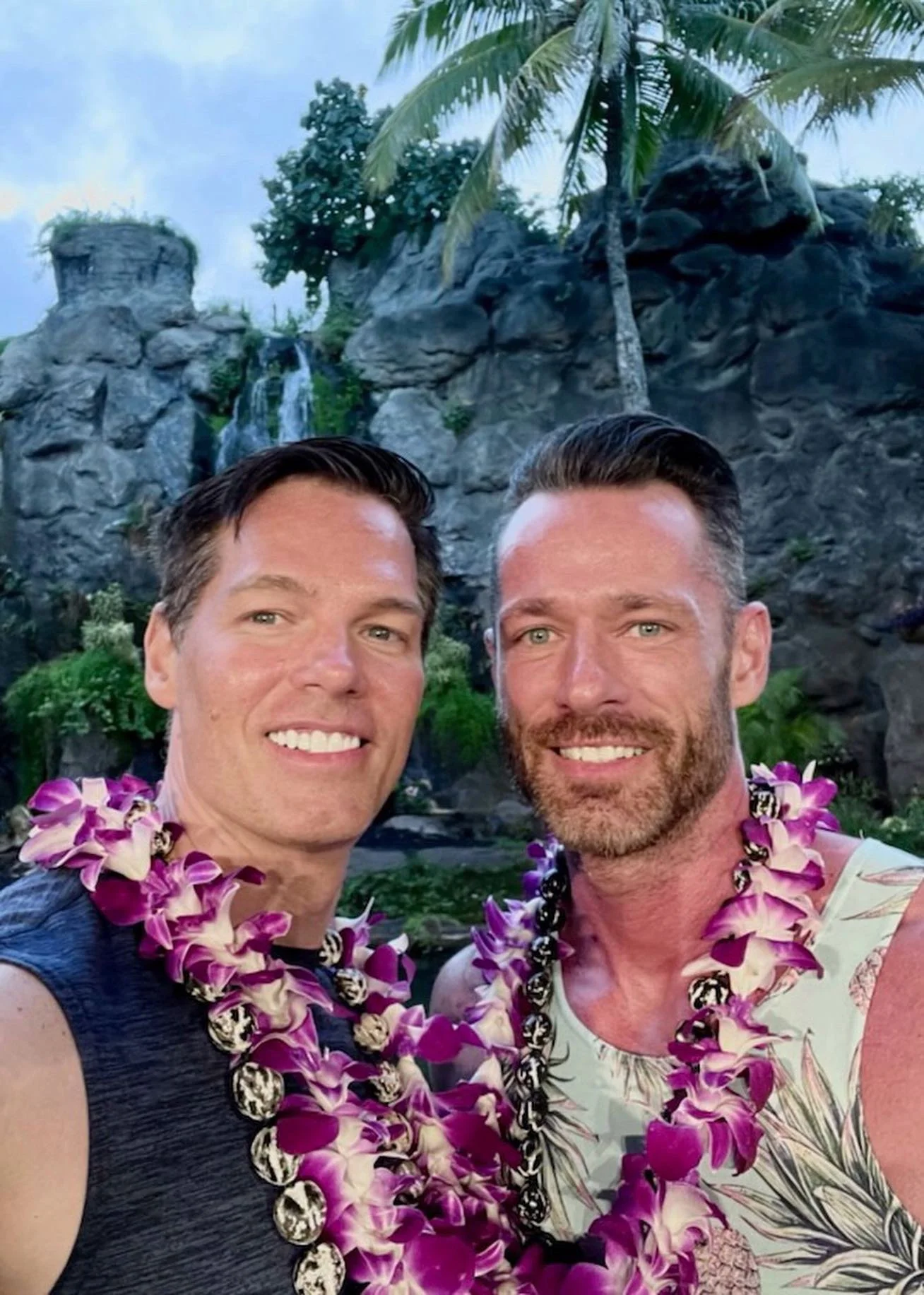
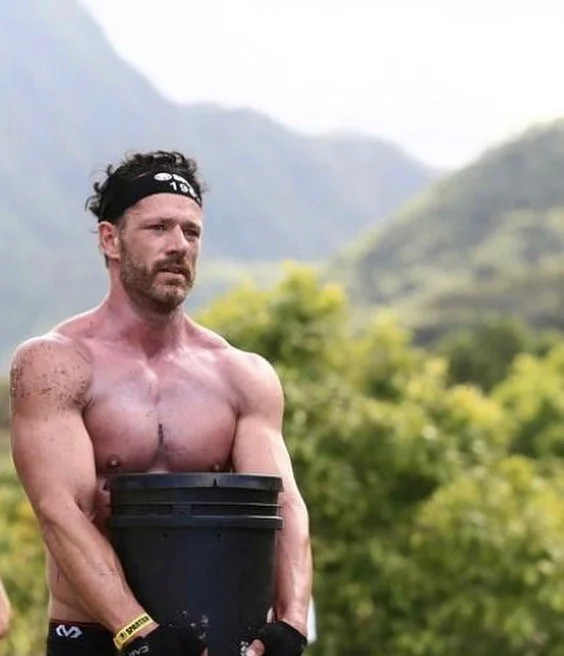
Jon met his boyfriend Nate through Instagram, after letting a friend know he was looking for someone who was of a similar age, background, and career status, and who was equally committed to the LDS faith. Jon says once the friend presented a picture of Nate, “I was done.” Nate had also come out within the last decade. Jon reached out on the same day he saw Nate’s picture and says not a day has gone by since that the two haven’t communicated or spent time together. Nate lives in Salt Lake City, and as Jon works remotely as a customer success manager, it’s easier for him to travel to Nate’s hometown for their dates. He says when they attend church together, “sometimes people fall over the pews to shake our hands and welcome us. They know we’re together; we’re not keeping it a secret. His ward is very welcoming.” Together, the two love traveling, hiking, playing games, doing Spartan Races, and Jon, along with Nate, is very dedicated to weightlifting. They both hit the gym six days a week to stay in good shape.
In his past relationships with women, Jon says it was always hard for him to feel comfortable being affectionate as “it didn’t feel natural,” but now, he says there is a night and day difference, and the two love holding hands and snuggling on the couch. Jon says they’ve each had “spiritual impressions that we’ve been led to each other and to keep going and have faith in this relationship. It’s been amazing.”
Jon appreciates how there is now so much more understanding for people in his situation than there was 20 years ago. “I understand that everyone will have their different paths, and it’s important people find theirs through personal revelation and prayer. For me, I knew I couldn’t be alone post-divorce, and I felt strongly directed in my path to then find companionship. It can be confusing and hard, and it’s easy for someone else to tell others what’s right and wrong. But I’ve come to understand grace and love, and the importance of personal revelation.”
THE SCOTT MENA STORY
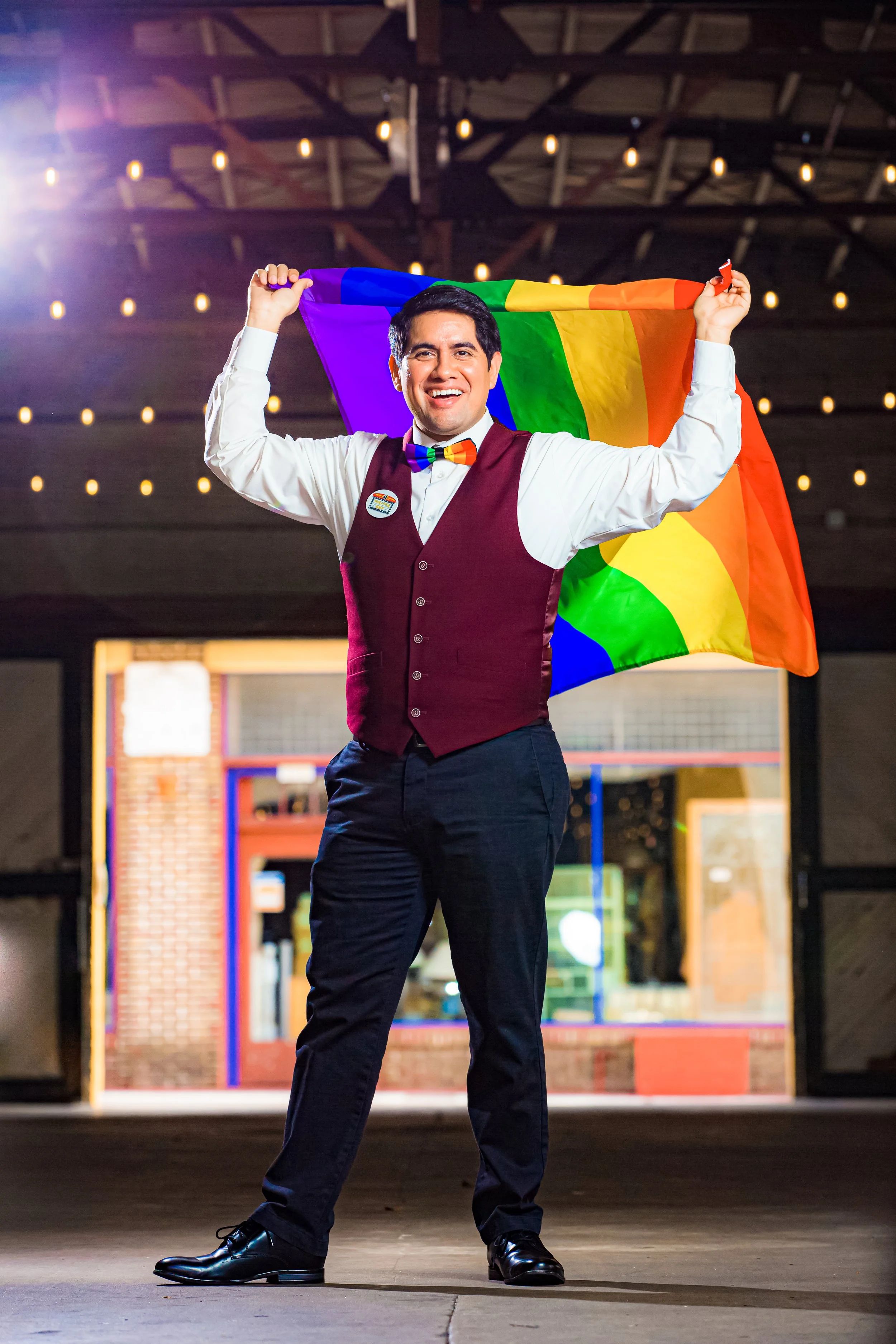
It was the 90s, and he didn’t have words for it quite yet, but Scott Mena remembers the first time he had a feeling that he was “different.” While six-years-old, he looked at a two years older boy at his Cortlandt Manor, NY elementary school and felt a little funny inside. As he continued to grow, Scott knew something about his childhood crushes didn’t line up with the majority of his peers. It wasn’t until a few years later when a girl said, “Why are you so gay?” that Scott asked, “What’s that?”
It was the 90s, and he didn’t have words for it quite yet, but Scott Mena remembers the first time he had a feeling that he was “different.” While six-years-old, he looked at a two years older boy at his Cortlandt Manor, NY elementary school and felt a little funny inside. As he continued to grow, Scott knew something about his childhood crushes didn’t line up with the majority of his peers. It wasn’t until a few years later when a girl said, “Why are you so gay?” that Scott asked, “What’s that?” She explained “gay is when two boys like each other.” At age 10, Scott finally heard a label to describe how he felt. And one year later, at age 11, he was handed a pamphlet at church full of labels that indicated that how he was feeling was wrong.
Hoping (and praying) it might just be a phase, Scott rejected the pamphlet’s advice to talk to his bishop. He did open up to one of his two younger sisters, who asked him how he knew he was gay. He confided he had a crush on one of the Backstreet Boys, largely because of the “Quit Playing Games with My Heart” music video. He swore his sister to secrecy, but the next day, their mother called him in and mentioned Denise had said something about Scott liking boys. Scott went into immediate denial mode, saying, “Why would she say something so disgusting?” Hurt by this breach of trust and still committed to this part of him going away, Scott didn’t confront his sister or broach the topic again for some time.
But once Scott hit puberty, he realized nothing was changing. His family moved to Florida, where he submersed himself into pursuing theatre and film and tried to stay as busy as possible as a distraction. “The good thing about theatre is I was able to have an outlet for what I was feeling, and I could pretend to be someone else.” But that escapism was only a temporary fix. As Scott avoided his actual issues, he found himself also distracting himself with a new fixation: pornography. Ultimately, he says this habit just made him even more closeted and fearful. During his final year of high school as he began to think about the mission he’d soon be serving, he harbored a terrifying thought: what would he do if one of his companions was also gay and they ended up being attracted to each other and getting excommunicated? These types of ruminations plagued Scott and resulted in stress-induced eczema, and at one time a crying fit in the literal closet, where his mother found him curled up in despair.
After high school, Scott says, “I prayed to Heavenly Father—you’ve done miracles for Noah, Moses, all these people. Can you please give me a miracle of making me straight?” He didn’t know what to do anymore. After another prayer in which he surmised, “I’ll leave this in your hands,” Scott remembers hearing a very clear voice tell him he needed to talk to his bishop and to his mom. The bishop was brand new, and remembering his former lie to his mom about this topic, neither option seemed appealing; but Scott finally decided it was time to open up. After leaving a voicemail for his bishop with a request to meet, he called his mom into his room where they ensued a guessing game until she finally asked if what was troubling her son was that he might be gay. Scott confirmed and explained how he’d tried so hard to change, to date girls, to do all the things to get on the track of being straight. He says his mom didn’t recall their earlier conversation from years prior, having trusted what her son had said to be true. Now she said she didn’t understand everything but said she loved him, was there to help, and asked if he’d talked to the bishop.
After that conversation, Scott was feeling immensely lighter until he heard wails of sorrow coming from the room nearby. While knowing why his mom was crying, he ran out and acted as if he didn’t in fear his grandma might ask about the source of her tears. Scott found his grandmother comforting his sobbing mother—who had just shared his news. Scott was worried his devout Catholic grandmother might sprinkle some holy water on him as a cure, but instead she hugged him and said, “You know what, Scott, I don’t care if you’re gay or not. And I won’t even share this with your uncles.” Scott laughs at this, saying his grandma could be quite the gossip. His mom then said the bishop had called back, wanting to talk, but they decided to give it a day.
The next day, Scott’s mom joined him at the bishop’s office. The conversation started with the bishop commending Scott’s recent performance as the character “Mrs. White” in a community theater production of the play, CLUE: The Musical. He said, “You played such a convincing woman.” Scott laughed and replied, “About that…” He continued to spill. Scott’s mom then had a front row seat to the deleted scenes about his past with pornography and concerns about being able to serve a mission as a gay young man. The bishop replied it would be best to hold off on the mission until Scott had sorted through some of his mental health struggles and his pornography addiction—which Scott says he had also been treating with a little denial. But with the recommended help and resources provided by two different therapists and faithful attendance at the Addiction Recovery Program, Scott embarked on a path that culminated with five years of processing and healing until his therapist finally asked, “Scott, do you still want to go on a mission?” It had seemed so long since he first started his mission papers that it didn’t even feel possible, but Scott replied yes, he would. The counselor sent along her recommend to the stake president and a few weeks later, Scott was opening his mission call to the Denver, CO North mission in front of a few friends.
Scott left for the MTC with a sense of guilt as he had relapsed with his addiction, but with the help of his MTC leader, he was reminded how to get things off his chest and to move forward with faith and conviction. He says he felt his burdens lift and continued on his mission, though he said his five years of therapy and ARP certainly came in handy as he was often tasked with supplying communication and support skills with other missionaries who were struggling with their mental health.
Scott had come out to his father and sister Denise a few months after he told his mom and bishop. Denise also didn’t remember his earlier confession. While Denise was very supportive during all his years of therapy, Scott says his father adheres to some traditional views and it has been more difficult. But Scott says he is “trying to understand.” After his mission, Scott told his younger sister Kimberly, who at first didn’t believe him but then became a great support as well, and the two would talk about their crushes together. After his grandma passed away in 2019, Scott became closer with his mom. One day after church, she suggested his feelings of being gay would be temporary and to keep brushing them away. This sounded like something his father might say, and it hurt Scott. He cried in his room, and the next day his mom apologized. With time, Scott was able to work with his mom to create a more open conversational flow where they now can talk about everything including his dating. Scott also eventually opened up to some current as well as former high school friends.
While living in Florida, Scott visited a couple gay dance clubs there with friends including the Parliament House before his mission and later, after his mission, the Pulse Night Club in Orlando--shortly before the mass shooting there that took 49 lives and wounded 53 more. He had moved to the Bronx with his sisters when it happened, and he remembers the devastation he felt, thinking of what had happened at a place where he remembers having a good time out with his friends. Before his mission, Scott told his therapist he hoped to one day work in a way where he could help other people who’ve walked similar paths. Now he had even more resolve.
Scott made a short film that received an award in Spain, and his mother and grandmother encouraged him to go and attend, which took him on a trip through Europe. There, he loved seeing how LGBTQ+ people could openly be themselves. When Scott returned to Florida, he faced a deep depression and dealt with suicidal tendencies as he considered how he could live his life in a church where he could never be with anyone, or leave the church he loved and be with someone but always feel guilty for leaving the church. His mom advised him to speak with his bishop, who recommended he return to the ARP meetings. At one meeting, Scott felt a strong impression that his days of being in the closet would soon be over, and he needed to start sharing his story. So, he did. Those early experiences largely went well, as he received support from family, friends, even his former seminary teacher who in turn shared things with him. Through sharing, Scott saw that many also opened up about their own experiences with having LGBTQ family members and friends, and their own encounters with suicidal ideation.
In 2020, Scott joined PFLAG online and for the first time, in a zoom chat, told a room of strangers that he is gay. This was a “Wow, I’m saying it out loud” moment. After his mission, Scott had started his Scott Mena YouTube Channel to post his short films and projects. In 2017, he used it to introduce himself as Theater Guy, and there, he reviewed movies, books, and concerts as a likeable, relatable character. On June 1, 2021, Scott decided to use his Theater Guy persona to come out to the virtual world, saying he wanted to be there for his community and help all of God’s children feel comfortable being who they are. He was met with hundreds of comments of support, including many from church members.
A year ago, Scott was asked to be his ward’s mission leader. He felt good about accepting the calling but also felt he needed to share some of his journey about being gay over the pulpit. He expected the bishop to turn off the mic midstream, but “thankfully that didn’t happen.” When one member of the congregation later told him he felt his announcement was inappropriate, Scott took it as an opportunity to explain he had felt led by the spirit to say as much, even though he wasn’t sure why. The man seemed to soften at this.
As Scott has become more active with both his LGBTQ+ and LDS communities, he has experienced a variety of unique experiences. He went to Tallahassee two times, most recently to film and photograph the Drag Queen March and stand together with performers showing their support against bills targeting Drag shows. Prior to that, he went to support gender-affirming care legislation, and found a hot mic in front of his face as he was given 30 seconds to share his thoughts on the issue, pleading with the legislature to recognize that real people with unique needs are affected by their blanket proposals. He also has had the experience of inviting the missionaries serving in his area with him to help with the Deland Youth Social for their PRIDE Prom. He said when the elders walked in with their tags, some of his peers questioned, “Who brought them?” But in the end, it was a positive experience for all. Scott frequents drag shows and has become friends with many drag performers who have shown him that for the most part, drag is a longstanding artform and a chance for people with complicated backstories to express themselves artistically and find community.
Recently, Scott himself was called up onstage to perform as a contestant in the Deland Pride pageant. Encouraged by his peers to compete after a year of filming such events for the organization, Scott agreed. He rallied the help of several friends (with backup dancer potential) and drew upon his numerous years of experience with production design and musical performance skills to put together a moving talent performance in which Scott reenacts his complex feelings as an LDS missionary for two years before trading in his tag for his “theater guy” costume and persona. He ends by sharing how he ultimately came to learn that God loves him for who he is and it’s best to let your true self shine. After his brave and authentic performances throughout the night, Scott was awarded first place and crowned Mr. Deland Pride. “It was a really special moment.”
The next day, Scott went to church where he didn’t expect to be singled out for his achievement as he had kept posting to a minimum, but he was touched when his bishop’s wife, among others, came up and whispered “congrats.” For Scott Mena, life remains a complex balance between the gospel that he loves and the unique communities he now boldly embraces, but his favorite character to now perform is himself.


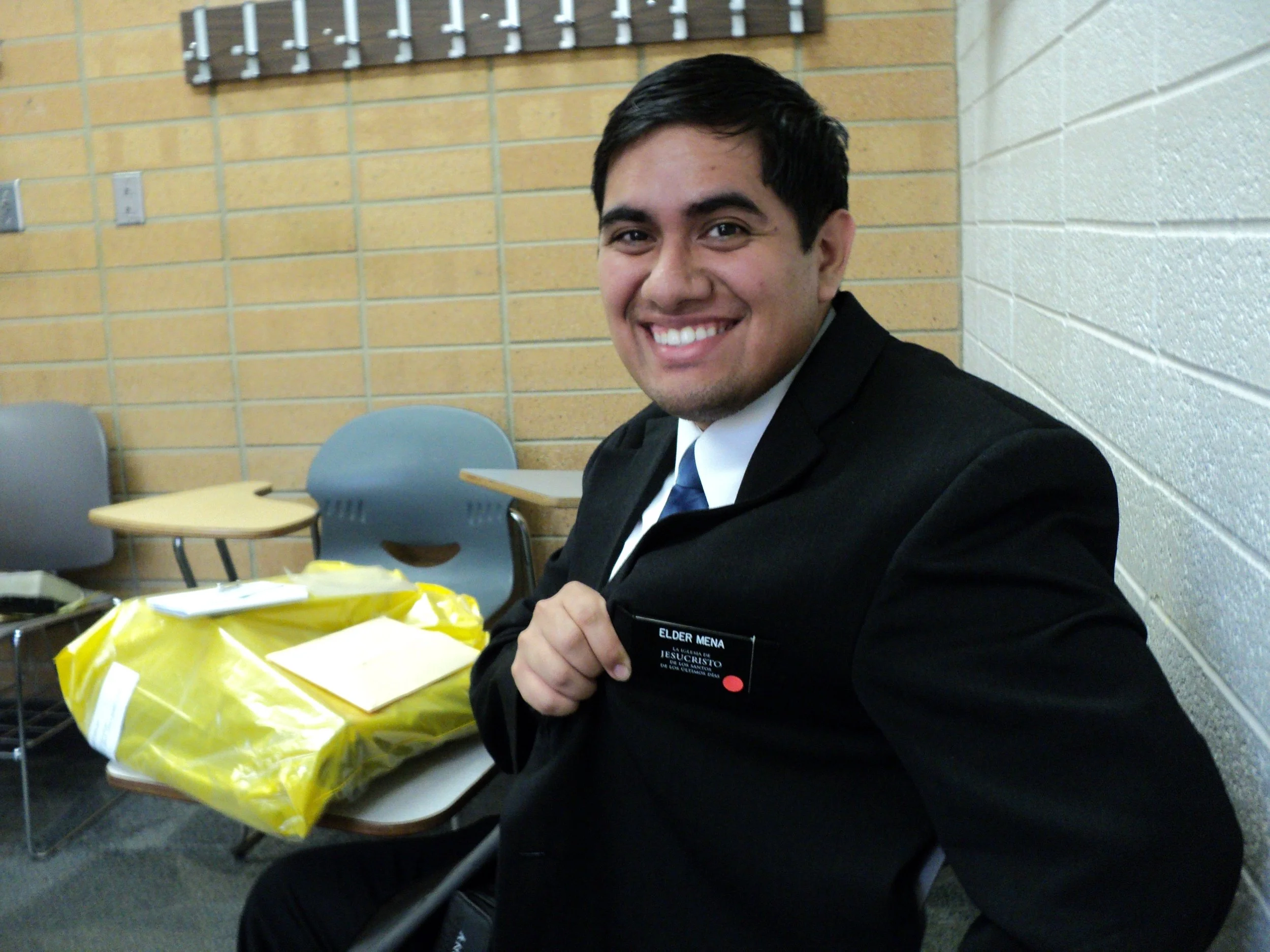
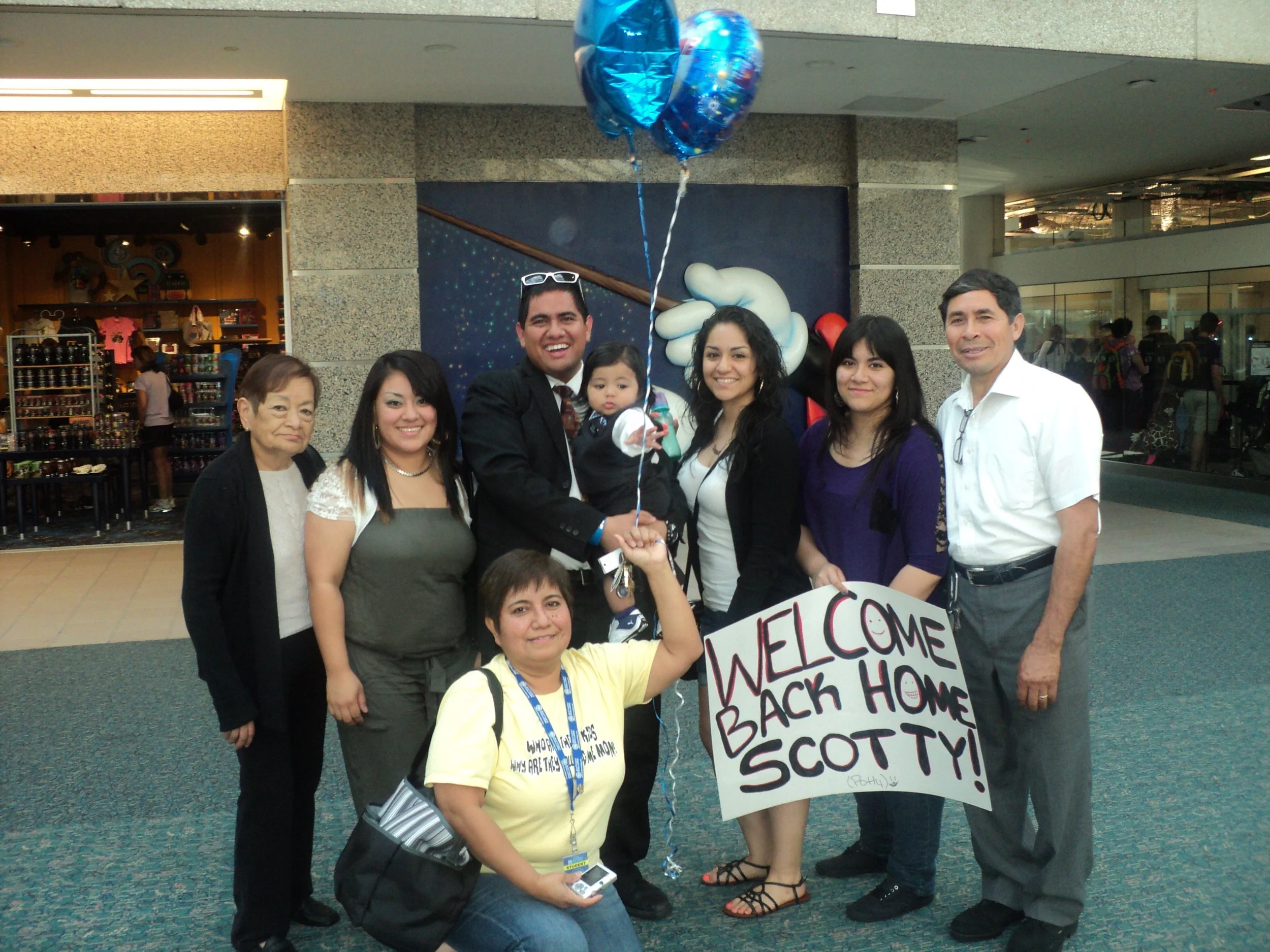
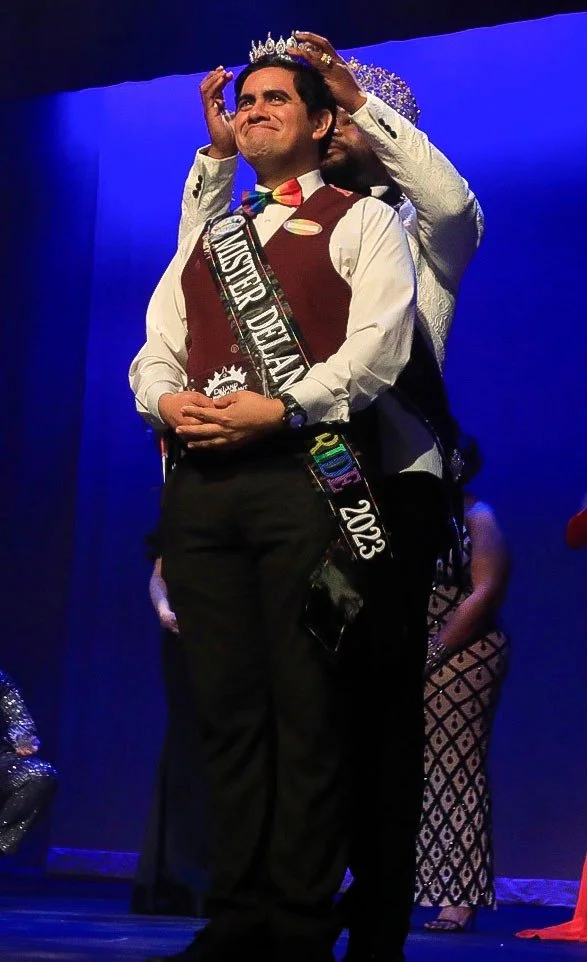
THE DAVID DOYLE STORY
David Doyle has become a familiar name at the LDS-LGBTQ intersection. Some may have heard his poignant thoughts as a guest on a gamut of podcasts or at his Instagram site, @nerdygaymormon. Many have read his essay about how to better support the marginalized in Christian Kimball’s recent book, Living on the Inside of the Edge. And Lift and Love followers may recognize him as the facilitator of the Over 30 LGBTQ+ monthly support group. As a 52-year-old single gay man who serves as his Florida stake’s executive secretary, David appreciates that his unique status has granted him a plethora of interactions with general authorities—some after stake meetings, and some via invitation for David to meet them at church headquarters. While he doesn’t lead such introductions with his orientation, he says it doesn’t take long for it to come up when he’s typically asked about his lack of a wife and kids. And he doesn’t hold back when asked to share his thoughts about being asked to walk an extra difficult path in the church…
David Doyle has become a familiar name at the LDS-LGBTQ intersection. Some may have heard his poignant thoughts as a guest on a gamut of podcasts or at his Instagram site, @nerdygaymormon. Many have read his essay about how to better support the marginalized in Christian Kimball’s recent book, Living on the Inside of the Edge. And Lift and Love followers may recognize him as the facilitator of the Over 30 LGBTQ+ monthly support group. As a 52-year-old single gay man who serves as his Florida stake’s executive secretary, David appreciates that his unique status has granted him a plethora of interactions with general authorities—some after stake meetings, and some via invitation for David to meet them at church headquarters. While he doesn’t lead such introductions with his orientation, he says it doesn’t take long for it to come up when he’s typically asked about his lack of a wife and kids. And he doesn’t hold back when asked to share his thoughts about being asked to walk an extra difficult path in the church. David recognizes these interactions seem to be beneficial for both parties as he is able to share his unique perspective, and in turn often feels ministered to. He’s grateful that most with whom he speaks grant permission for him to share his notes from these “sacred conversations” in an effort to improve understanding.
David did not come out publicly until a 2017 blog post went viral that he now calls “the most important moment of my life.” In it, he shared that when he first came out to Elder Joaquin Costa, he was told, “Dear Brother, the church has much to offer you, and you have much to contribute to the church.” David decided one thing he could offer was his personal experience. While speaking to member of the Seventy, Elder Vern Stanfill, David explained how he is not able to complete the covenant path, and that has affected how he worships. He explained his observation that many in the church see Jesus as a secondary means to an end who allows them to be sealed to their spouse and see grandma again. But David shared, “For me, since I can’t be sealed and have those promises made to other members, I focus on Jesus. Seeking a relationship with Him first has been transformational for me. I also shared that queer people in the church hear a lot of negative, rejecting messages. We’re children of God and we deserve to feel hope and love and hear good news; that doesn’t happen enough.”
When Elder Kevin Hamilton asked David what he thinks his life and eternity will look like, David expressed that people seek answers to questions like that by coming to church, but queer people find far fewer answers. “I believe I’m included in God’s plan, but not so much the church’s version of that plan.” When David was then told that authority knew several people who “changed and no longer experience same-sex attraction,” David explained how he, too, had grown up being taught that if he had enough faith, God would change him. “I tried my very best, but my best was never good enough… I was always deficient, and it felt so defeating. I felt like if I couldn’t be good enough, then what was the point? That was very damaging. But fortunately, I got an answer to my prayer: ‘You are not broken’.”
David has always been impressed by the loving heart of Elder Dale Renlund, and how he invites his wife to join him at many speaking engagements--even turning the mic over to her entirely when the audience is predominately female. David is related to Sister Renlund, and at a recent lunch with the two when David asked their opinions on supporting LGBTQ friends and family members, Elder Renlund replied, “I can go to a gay wedding to show I love and support them. I’m not there to participate in that choice--I’m not marrying a man; he is. I’m going to show up as my authentic self, and I expect them to be their authentic self. I prefer to meet with people who are being authentic and not pretending to be someone they aren’t.”
Of all his conversations with general authorities, David says perhaps his favorite happened when one top church leader excitedly told him how a distraught father had approached the leader and said he didn’t know what to do when his daughter came out as a lesbian. The leader proudly told David he responded to the father by saying, “It’s going to be alright. I have a friend named David who taught me that love is what’s important. Keep loving her as you always have. She’s the one who has to make hard choices. Don’t make your relationship and love another difficult choice for her.”
While opening up to leaders and his very affirming stake president (who is the father of a gay son and hosts a bimonthly LGBTQ support group at his home) have been positive experiences, David says it hasn’t always been sunshine and rainbows. David’s parents met at BYU, married in the temple, and raised their seven kids in the church. His family moved often in David’s youth, forcing him to rely on family over friends as constants. While David sensed his attractions from a young age, he says his family never said anything supportive of gay people and tended to not talk about hard things. To keep his sense of safety intact, he stayed quiet, only confiding in a handful of people.
When David finally came out publicly at age 46, some family members were immediately supportive, while others expressed more conditional love, saying that David’s continued church attendance would affect his affiliation with their individual families. David’s parents are supportive of his life in many ways, but this is still a subject they tend to avoid. David thinks this is probably because his mother sees his orientation as an upset to her vision of eternal families. Several of David’s nieces and nephews have engaged in conversations and asked him questions, especially as they have queer friends; and he loves to be there for them.
After earning his MBA from the University of Florida, David took as a as a research administrator at the University of South Florida in Tampa, where he has been for 18 years. David says, “It’s fun to work at a beautiful campus with a fight song, mascot, and team to cheer for,” and he likes knowing that what he does goes to the greater good of acquiring and spreading knowledge. But living in Florida, David has felt the political tension as of late as the governor has championed anti-LGBTQ legislation. He says, “The last two years, it’s felt like we’re moving backwards and many don’t feel safe… if we continue on this path (of stripping DEI programs and minimizing rights and protections), I worry what the future holds. I feel like we have to be on guard now.” David joined friends at a drag show recently, and for the first time, saw protestors outside, and observed his friends were checking out evacuation routes at the venue, just in case.
David recognizes that the church can be a wonderful community for those who fit the mold but, “being a queer member is a hard space in which to exist.” He says this is why it took so long to come out and begin exploring his identity. “Before being out, I spent a lot of energy and time worrying about if I said or did this or that, would people pick up that I’m gay. But now I can choose clothes I actually like to wear or do activities I never would have considered before. I used to experience a lot of dissonance because of how differently I presented myself to others compared to how I viewed myself, but once I was out – that difference went away. I became more confident, and people seemed to notice. Also, now I know people like me for me, and that’s a huge relief and blessing. I used to worry that if people knew the real me, they would reject me, which meant even the friendships and love I had from others always felt tenuous. Being able to authentically be me and express my thoughts and feelings is so freeing.” David also values now being able to meet with health professionals to seek help for a variety of conditions he’s suffered over the years including low self-esteem, self-harm, suicidal thoughts, internalized homophobia, a social anxiety disorder, and an eating disorder. “Being out meant I could begin healing.”
David takes seriously his role as an unofficial consultant to several ward leaders in his stake who have asked how they can be more inclusive and sensitive to the needs of LGBTQ members. When queer members contact David directly, he says, “I do my best to try to be the person I wish I had in my life when younger. I try to express God’s love for them, and encourage them in their path forward, whatever that looks like. Sometimes just having a person who truly knows what its like to be you is important.” David feels his stake’s LGBTQ support group is an exceptional strength and opportunity to commune with others who understand. The group includes gay members even in their 70s and 80s who have chosen to remain active in the church, and is an opportunity for the stake’s queer members to feel seen and supported and to find friends who understand their experience in a way few others do.
When David was processing his internalized homophobia in therapy, he consulted with his stake president about the possibility of dating men while maintaining his calling and temple recommend. Together they went through the church handbook to be clear which lines, if crossed, could alter his church status. They determined that the same opportunities and limits extended to an unmarried straight couple apply to David. But with dating, David says he has often felt “like a teen in a man’s world because it’s not LDS-land here in Florida, so I tend to just stick to first and maybe second dates.” David says if he did find love one day, he would pursue it.
Through all this, David says, “I’ve become more and more certain the two great commandments are what’s really important in life. Being vulnerable and seen, binding hearts together and treasuring each other, building each other, being there for hard times – that’s the hard work. We need to see the humanity and divinity in each other. Zion is a community, and we need to extend the borders of our community to be welcoming and inclusive of all our Heavenly Parents’ children.”
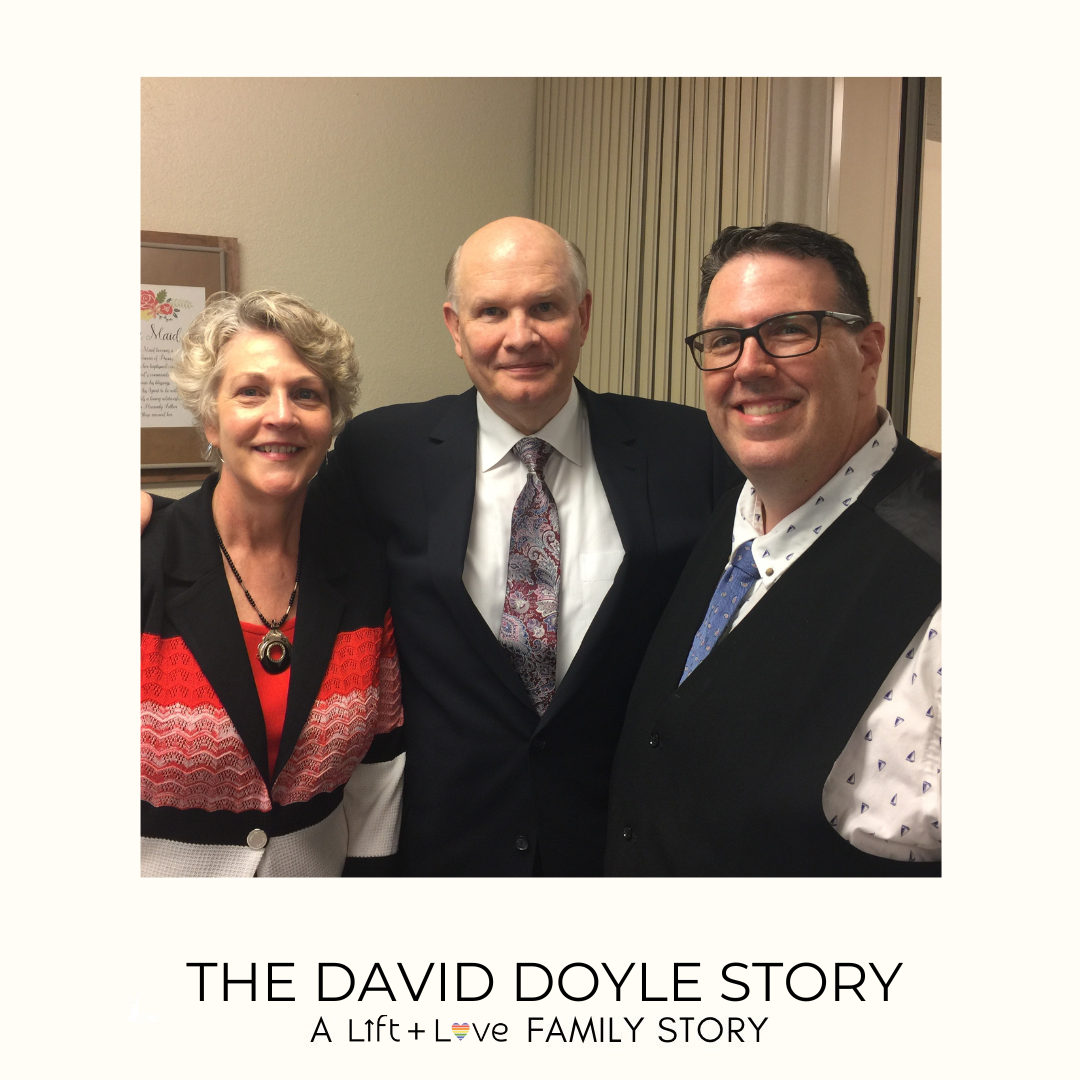
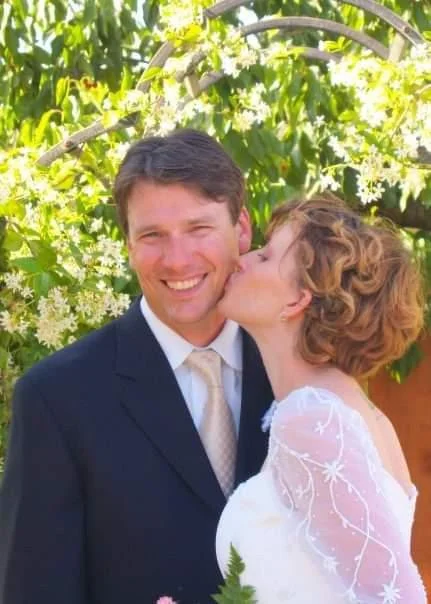
THE FRAZE FAMILY
Mell Fraze’s childhood home was one in which the Bible sat on the bookshelf beside the Dao De Jing, the Pearl of Great Price, and a myriad of philosophy books. Raised by a scientologist mom and a universalist dad who attended a “new agey Christian church,” she was instilled with the ideology that everyone has a different path in life, and it’s the individual’s job to ask the questions and do the research to find which path works for them. Mell was an apt audience. As a neurodivergent individual, her brain is wired to ask questions. Now as a mother of six kids (ages four to 16) with her seventh due in August, she likewise encourages her children to explore how when something’s not working, to consider what might fit better instead…
Mell Fraze’s childhood home was one in which the Bible sat on the bookshelf beside the Dao De Jing, the Pearl of Great Price, and a myriad of philosophy books. Raised by a scientologist mom and a universalist dad who attended a “new agey Christian church,” she was instilled with the ideology that everyone has a different path in life, and it’s the individual’s job to ask the questions and do the research to find which path works for them. Mell was an apt audience. As a neurodivergent individual, her brain is wired to ask questions. Now as a mother of six kids (ages four to 16) with her seventh due in August, she likewise encourages her children to explore how when something’s not working, to consider what might fit better instead.
For Mell, the LDS church entered her orbit in 2007, when she chose to get baptized one month after she married Cliff, who was born and raised in the church in Modesto, CA. 15 years her senior, Cliff was raised at a time when church culture didn’t understand what to make of his family. His three siblings had several Cerebral Palsy and uninformed members often wondered “what sin of the parents brought this upon them.” Cliff was raised with traditional church beliefs, but his family was largely marginalized by their congregation. Mell’s peers asked how she could go from her free-thought upbringing to being Mormon, but Mell said nothing about her inherent belief system actually changed—she just learned a new vocabulary to identify her beliefs. She says, “I finally found the one Christian denomination I could feel comfortable in, that didn’t raise the hackles on my neck and wasn’t teaching something in opposition to my lived experiences.” Their union set the stage for raising their own kids.
The Fraze children are given room to grow and explore in their Sacramento home, where Mell has home schooled them since 2015. Every member of the Fraze household of eight is neurodivergent, with all of them having ADHD and several identifying on the autism spectrum. Mell and her husband Cliff found their children’s various needs, which are often also in opposition to each other, were not all able to be met in traditional school, so they’ve brought the laboratory home. This has resulted in their most significant time with peers taking place at church, which has also proven difficult for many of the children who identify on the neurodivergent and LGBTQIA. While the youngest two find Primary fun, church has proven a challenge for some of the older kids.
Evie, 16, (they/them) identifies as nonbinary, asexual, and panromantic and is not interested in dating and marriage. Liam (15) also does not currently wish to pursue dating. Frequent lessons about temple marriage have repelled them as it’s not something they see in their future. When leaders respond with phrases like, “When you grow up, you’ll feel it,” it further offsets the two and makes them feel misunderstood. As the Fraze’s 10-year-old son’s neurodivergent needs are also not able to be met in the church environment and Mell says “I’m unable to clone myself and be in every classroom where my kids need me,” Mell has found it difficult to make church work. For the past year, while Cliff shows up and fulfills his calling in the Sunday School presidency, Mell stays home with the kids who are most comfortable there. Home has also become the most comfortable place for Mell to feel authentic. She says, “I cannot show up on the defensive all the time, because then I’m not getting anything from church. And my child’s mental health is more important than their body being at church.” A big believer in autonomy and agency, Mell believes in letting her children choose whether attending church or serving missions and the like is what’s best for them. She let her kids choose whether getting baptized at age eight was the right choice for them, and some delayed that until they felt more ready.
The bishop in the Fraze’s ward had served as a high councilman prior where he was tasked with collecting helpful church resources for LGBTQIA families. At the time, he turned to the Frazes for resources, and they engaged in several hours of conversation. While Mell says her bishop has tried to be an ally, and some of the youth leaders are “great people who really try to show love and respect,” others don’t have a frame of reference for how to support kids who don’t fit the norms.
In the summer of 2022, with her bishop’s permission, Mell joined Evie on the stand during a fast and testimony meeting to share how the youth theme statements could be worded to be more inclusive of all gender identities. Evie had expressed to their parents a couple years prior how they felt different in regard to their assigned gender, and a felt a more gender-neutral identity fit them best. Mell supports her oldest in this, while also loving the “Gender is essential” phrase in the Family Proclamation that so many instead use to weaponize against people like Evie. Mell says she sees this idea of gender being essential, combined with Moses 3:7, to mean that everything is created in the spirit form first. “When we speak of bodies being perfected in the resurrection,” she asks, “doesn’t it make more sense that who you are as a spiritual being that your body would be changed to match your spirit, and not the other way around? In the resurrection, we don’t believe everyone’s going to be six feet tall, skinny, and blonde. We understand there will still be a diversity in perfected bodies. So why, when someone who experiences gender dysphoria and feels their body doesn’t fit their spiritual being, why would the spirit change to match the body instead of the other way around?”
Because her kids school at home, Mell shrugs off the current sound byte rhetoric of “LGBTQIA social contagion.” She says, “My kids aren’t hearing, ‘Oh I heard this and that and want to try it out.’ They’re coming to me saying, ‘I’m different and I don’t know why’.”
While their shared testimony bearing was an important moment for the two to honor this part of Evie’s reality, Mell breaks down as she describes how Evie, on the stand, witnessed how the members’ faces in the room turned from engaged smiles to stone-faced, disapproving looks. That, followed by an uncomfortable talk on the Proclamation shortly after, was the last time they attended. In the one year she has stayed home with Evie and younger children who need her, Mell says only three people from their ward have reached out to try to understand the difficulties her family faces with current church doctrine and policies. Hurtful comments have also been said, including one youth leader who said, “Satan is making kindergartners confused” and a primary teacher who told Mell, “Gays cause problems in society.” As such, Mell tries to speak up as much as she can about the extreme mental health duress and increased suicide rates that occur for kids on the LGBTQIA spectrum.
She says, “I would like to be able to stay in the church and be a voice of allyship and safety, but I’ve been called an apostate by a member of my ward for speaking up against rhetoric that’s harmful. I’ve also been told, ‘Sometimes you need to step away from the church,’ but I hate that alternative. When you point out that your choice is to live as a portion of yourself and feel hurt in the church, or to walk away to be able to live as a whole, authentic human being, the response people are conditioned to give is, ‘Don’t leave the church, try to stay, turn toward the Savior.’ But there’s no room or support to do that. I’ve taken to calling myself Schrodinger’s Mormon. Depending on who you ask, I’m either exactly what people hope members can be, or I’m a terrible apostate who should leave because if you don’t believe, why would you stay?” Mell says it goes back to people not understanding the breadth of the perspective she comes from, and the religion, anthropology, and various philosophies she studied as a youth that examine humans holistically. Mell stays in LDS parenting chat groups online, hoping she might be a light in the dark for someone in need, and hopes to help parents new in their journey. While Evie is considering resigning her church membership, Mell says, “They let me in; they’re going to have to kick me out!” of her membership.
“I already knew I was a divine, spiritual being before joining the church. I’m Christian; my philosophy is humanist and unconnected to any particular religion. I care about the environment, social justice, humanity – the same things I cared about before. I get closest to the Savior from listening to people’s lived experiences, and understanding their truths are just as valid as mine. All of that has prepared me for having queer kids, where other parents in the church might struggle. None of my spiritual identity depends on the church, which I recognize is different from my husband’s experience.” She acknowledges their marriage and co-parenting can be a difficult balance, but says, “He knew who I was before we married. He has no interest in changing me, but often doesn’t know how to deal with others’ responses to me being a fierce, vocal advocate for our children.” Mell, who identifies as queer herself, also recognizes she comes from a place of privilege, being in a perceptively cisgender-heterosexual temple marriage, a person “who happened to get lucky that my person is a cishet man.” She thus chooses to first present herself foremost as an ally in the LGBTIA space.
Of the changes she hopes to see in the church, Mell says, “People make choices all the time that slow the ‘in the Lord’s time’ phrase. They can make choices that speed the ‘in the lord’s time’ to be more inclusive and loving. There are stories of wards out there who have done this. And then there are wards who have sacrificed people because they were too afraid to change, to ask questions, to push boundaries.” This is where Mell hopes to make a difference. “It’s a horrible truth but as a church body, members are choosing to sacrifice their children for the sake of tradition. I absolutely refuse to sacrifice my kids because someone would rather follow tradition than the prophetic example we claim to follow of asking prayerfully and seeking inspiration.”


BLAIRE OSTLER
As a ninth-generation descendant of Mormon pioneer stock, notable author and philosopher Blaire Ostler says, “For me, Mormonism is not just a religion, but part of my culture and identity--it’s almost an ethnicity. It’s how I think and see the world. I joke I couldn’t not be Mormon, even if I didn’t want to be—even my rejection of some parts of it is so Mormon.” Equally, Blaire is bisexual and intersex and identifies as queer, saying, “That’s also always been a part of me; it’s how I see the world and navigate life.” Her landmark book, Queer Mormon Theology (published in ’21 by By Common Consent Press), chronicles the juxtaposition of these unique traits that cast people like her in the margins of most circles. But while Blaire was told these two identities couldn’t coexist together, she absolutely knew both existed inside of her. “As one can imagine, having a conflicting view of self can tear at you.”
As a ninth-generation descendant of Mormon pioneer stock, notable author and philosopher Blaire Ostler says, “For me, Mormonism is not just a religion, but part of my culture and identity--it’s almost an ethnicity. It’s how I think and see the world. I joke I couldn’t not be Mormon, even if I didn’t want to be—even my rejection of some parts of it is so Mormon.” Equally, Blaire is bisexual and intersex and identifies as queer, saying, “That’s also always been a part of me; it’s how I see the world and navigate life.” Her landmark book, Queer Mormon Theology (published in ’21 by By Common Consent Press), chronicles the juxtaposition of these unique traits that cast people like her in the margins of most circles. But while Blaire was told these two identities couldn’t coexist together, she absolutely knew both existed inside of her. “As one can imagine, having a conflicting view of self can tear at you.”
A self-described “military brat,” Blaire grew up attending LDS wards with anywhere from 15-600 congregants, in meetinghouses from Korea to California. Having this wide exposure to “church,” she saw how it means different things to different people. Outside of Utah, she saw the church as the built-in community you find wherever you go. It was about ensuring everyone has access to food, healthcare, language—basic needs. “That was more important than some of the cultural debris that gets mingled with the gospel. For us, the gospel was ‘Love your neighbor; take care of each other’.” She was also raised by a Catholic mother who converted to the LDS faith—somewhat of a universalist who held there is more than one way to find God. Blaire was given tools to deconstruct—a process that for her began around 14.
At this time, she was coming to grips with the fact that she was biologically queer with intersex characteristics, and also bisexual, experiencing sexual attraction and desire towards a diversity of genders. “It’s difficult to overstate how much it messes with your brain to be taught two conflicting messages about yourself as a Mormon woman, that: 1) your most important goal is to have a temple marriage and raise babies to go with you to the celestial kingdom, and 2) queer people destroy families, are promiscuous, die of AIDS, and corrupt society.” Blaire’s most difficult struggle was to get past this engrained dichotomy of being told “You’re supposed to do this,” but “As a queer person, you will fail at it.”
Blaire, who is now on the editorial board at Dialogue, wound up at BYU Provo where she met her husband of 20 years, Drew. After many moves and jobs, they now again call Provo, Utah home--the Y mountain just outside their doorstep. Blaire jokes her 20s were spent either pregnant, in an operating room, or a hospital–having and nursing babies, and having surgeries that would allow her to do so as an intersex person. “It was a decade of trying to be the ideal version of a Mormon woman in every imaginable capacity—from the way I looked, sounded, functioned, existed. It will burn you out—you can only do it for so long.” Blaire and Drew ultimately had three children, now ages 15, 13, and 10.
In her words, she spent her 30s in a therapist’s office, trying to heal “from all the chaos of trying to fit a narrative that my body—my biology—was not made to create babies. It was a dangerous activity.” She says, “I was convinced I had to prove myself by doing these things, not even caring if I lived or died. That was obviously a low point.” After passing out on the operating room table after having her third child, Blaire chose to get sterilized for her own safety. Her 30s afforded her time to heal her body from the surgeries, her heart from the spiritual trauma, and her mind from the things she’d been told about her purpose. It was during that process that she decided to write her book.
Per Blaire’s educational background, philosophy plus religion equals theology. Via this contextual podium, Blaire ventured into a possibility space where she could be both queer and Mormon? “Queer” is an intentional word for Blaire, who both supports the reclaiming of the word as one with positive connotation (as demonstrated by Queer Nation since 1990), and recognizes how, in its blanket simplicity, it affords many the privacy and legitimacy they seek in a world that sometimes requires labels to consider and afford equitable rights. She also recognizes it as a word similar to “peculiar,” which has likewise been lauded in Mormon philosophy to be a good thing. Further, Blaire reclaims and esteems “Mormon” as a positive term, citing its inclusion in scripture. Her book provocatively explores the inherent coexistence of what it means to be queer, peculiar, and Mormon, and invites the reader to see things that are hidden in plain sight.
Further propelling her quest to upend presuppositions is her role as a mother of three, with Blaire youngest also identifying as queer. “It’s interesting because as a queer parent, my daughter was essentially raised at a Pride parade. We assumed she was simply reflecting what she saw. But over time, it became apparent that this was her. I have a beautiful, queer, 10-year-old child.” But this made things different, regarding church. Blaire found herself becoming protective and concerned with what her Primary-aged daughter might be exposed to. “It’s one thing to roll the dice with yourself; it’s another to do it with your child.” Blaire’s family has taken a calculated approach to their church activity, choosing to support this activity or class or speaker, but perhaps not show up for those deemed riskier. “I didn’t want her to grow up being taught that she was anything other than a beautiful child of God—and strangely enough, she might be taught otherwise at church.” In this Ostler household (no close relation to Richard Ostler’s), there are a variety of faith transitions going on, and Blaire presumes each may land at different spots as they have varied perspectives on Mormonism, church, and God. But “at the end of the day, Mormonism means family. We all agree to take care of each other, and if we do that, then we did our job… This isn’t necessarily a rejection of the church, but a manifestation of our most sincerely held beliefs.” She explains it as the orthopraxy of her orthodoxy and acknowledges that while some may not understand, Blaire views her best perch as one that respects people where they are.
“The thing I learned from Mormonism and how I was raised is that life was about creating eternal families. At the end of the day, when the church is in conflict with my eternal family, I err on the side of family.” She continues, “The church was started by a man desperately trying to connect families and relationships through sealings. When I pick my family, I’m picking Mormonism, by not letting an institution come before my family. Strangely, some conflate the institution with their beliefs. I see the Church more as like a ship, and Mormonism is the people on the ship working together. But some on that ship (the institution) want to throw the queer people overboard, and if people are getting thrown off the boat, I’m going with them--the least of them. Guess who else did that? Jesus. He went with those who were cast out and left behind. The gospel is so much more than just a ship, even though a ship is useful.”
Blaire feels that even her presence causes some cognitive dissonance for others. “Because what I say is steeped in gospel and scriptures, sometimes people have a hard time coming to grips with it. It’s a view of the scriptures that most aren’t accustomed to.” But she honors religious plurality as found in universal concepts like the Golden Rule. “I feel like we need to take it to the next level in Mormonism and recognize when something on the ship isn’t working. We’re a religion of ‘Is this working?’ And if not, we honor change through ongoing revelation. The monolithic narrative of hetero supremacy isn’t working as so many family structures look different,” she says, addressing the single parent, divorced, widowed, polygamous, adoptive, and never married members now casting the nuclear or “traditional” family as a new minority. “We need to recognize our faith community as much bigger than we thought. We’ll be stronger for our diversity and inclusion. Imagine all the beautiful queer youth, queer missionaries, and rising young adults we’re losing because we looked at their queer gifts and said, ‘No, we don’t want your unique contributions.’ We are missing out.”
Referencing the body of Christ as found in Corinthians, Blaire explains, “We were never meant to be the same. Sometimes we look at our differences as a place of conflict rather than beauty and opportunity. If one’s good at writing and one good at building, wow, what a great opportunity that is to help each other! Is the body of Christ all hands or feet? No, we have different parts that work together cohesively. But we’re afraid, and sometimes we look the other way because we don’t want to see the parts of the body of Christ that are suffering. However, by recognizing suffering and mourning with those that mourn, we take the first step to making things better.” Acknowledging those deficiencies, like when the church changed its priesthood and temple exclusion policies and started the perpetual education fund to further restore equity, brings Blaire hope for further change. “Imagine the powerhouse the church could be if all members were ordained to the priesthood instead of half. Or if we didn’t push out 5%+ for being queer; imagine how much stronger we’d be. When we cut people off for insignificant differences like race, gender, or orientation, we’re undermining ourselves.” She recognizes this awareness is needed outside of the church, as well, especially now as people along the LGBTQIA+ spectrum face a litany of hostile legislation and infighting even in the secular community.
While she considers the gospel of Jesus Christ as her personal guiding faith practice, Blaire says she honors each individual’s ability to choose their own healthy path. “If a queer person is happier in a hetero marriage sealed in temple, or if another no longer affiliates with the church because it’s psychologically traumatizing, I support both. You have to go where your basic needs are being met, and you get to decide what that looks like—especially queer people. I have a hard time believing our Heavenly Parents don’t want our queer kids safe more than anything – I can’t imagine any loving parent thinking that, let alone a godly parent. We need to support each queer person wherever they land.” She has reframed her paradigm of God and now considers the concept of God to be a big heavenly family where all are connected. “God isn’t he, or she, God is they—God is all of us in one big eternal family… When we honor our families, we’re honoring God and the greater heavenly family we’re all a part of. Sometimes we think of God as a monster who wants to punish and harm us…I think we limit God’s compassion through our own imagination. I believe in a God that is more compassionate, loving, and benevolent than we could possibly imagine.” Blaire says as a parent herself, she views her role as “a heavenly parent in-training, trying my best to care for my children. Will I send them to a room, activity, or meeting that’s harming them and causing panic attacks? No, I’d rather say, ‘You are that you might have joy.’ This is what we’re doing as a family—prototyping a heavenly family. We stick together; we don’t kick people out on account of our differences.”
Of her faith practice, Blaire especially loves taking the sacrament as it symbolizes the “breaking of bread with my people, especially when we disagree. That’s when we need it the most.” She continues, “We’re all members of the body of Christ and this equates our commitment to each other and to adhering to His gospel.” Again, she is taken back to meeting the primal needs she identified in childhood: does everyone have food? Housing? Care? Health? “That is what Jesus did. Here, our basic needs are met.”
“In Primary, we are taught to love one another. Loving one another is how we find our way home,” says Blaire. “Our queer mantra is ‘Love wins.’ And I truly believe that. Love wins. Or in other words, charity never faileth.”
**If you would like to learn more about the intersex population and what it means to identify as genderqueer, Blaire recommends the books Sex and Gender: Biology in a Social World by Anne Fausto-Sterling and Evolution’s Rainbow: Diversity, Gender and Sexuality in Nature and People by Joan Roughgarden. Blaire’s book, Queer Mormon Theology, is available on Amazon and Audible.


THE AMANDA SMITH FAMILY
On weekday mornings, Amanda Smith of Rancho Mission Viejo, CA can often be found guiding a quiet room of clients through a yoga practice, encouraging them to bend, breathe, and just be as they sort through the stresses and traumas that can bring one to child’s pose—a position she has often needed to fold into herself…
On weekday mornings, Amanda Smith of Rancho Mission Viejo, CA can often be found guiding a quiet room of clients through a yoga practice, encouraging them to bend, breathe, and just be as they sort through the stresses and traumas that can bring one to child’s pose—a position she has often needed to fold into herself.
Amanda’s oldest child, Lynden (now 11), was diagnosed with cancer at age seven in 2019, and luckily survived after a six-month battle of chemo and radiation. In 2020, shortly after Lynden was pronounced cancer-free, Amanda’s mother tragically took her own life, after battling mental health struggles. After processing each of those immense trials during the pandemic, Amanda felt it was time to undergo certification to be a yoga instructor as well as finally reckon publicly with her orientation—something that until now, she had largely eschewed in an attempt to please others. But with remarkable strength, the married mother of three has learned to exhale, and summon the desire to share--if only to make the path slightly less difficult for her fellow sojourners.
Amanda Smith was raised in Idaho and then Minnesota during her teens, where she was surrounded with a conservative mindset both in the church and with her family. They didn’t attend church much, but made it very clear that it was not okay to be gay. Amanda thus grew up in a state of shame, always feeling like “something was wrong with me,” as she had sensed she was attracted to girls from a young age. Of her teen years, she says, “I tried to overcorrect. I had all these boyfriends and was actually quite mean to people who I found out were gay or lesbian—like some sort of defense mechanism.”
When she was 19, Amanda told her family she was gay and would not be hiding it anymore. They refused to meet her girlfriend of nine months at the time said they wanted nothing to do with having a gay child. While living with her girlfriend and another gay male friend, Amanda said she assimilated to “an awesome LGBTQ community” and “finally felt I was being true to who I am.” While Amanda says that felt so good, looking back, this was a sad time because of the guilt and shame she carried and the fact that she couldn’t maintain a relationship with her family who believed this was “just a stage” for Amanda because she had had several boyfriends in high school when she was trying to be something she wasn’t. She’d been raised in a house where she was continually reminded by her mom, “I just want you to marry a nice Mormon boy.” Through this, Amanda maintained a testimony, but it came with “so much guilt and shame.” She started making dangerous decisions and spiraled to a dark place. But once she hit rock bottom, Amanda found her legs and knew she needed to make some changes.
Amanda moved to BYU approved housing where she could start a fresh life on the “straight” and narrow, trying to pass as straight in her newfound anonymity. She wanted a relationship with her family and the church again and felt those both were impossible if she dated women. She’d had several leaders pound in the point that, “As you get closer to Jesus and make correct decisions, it will get easier over time.” Looking back, she now acknowledges they may have meant well, but had no idea or experience in what she was dealing with. She tried to date a few guys in Provo which only made her feel like she’d rather end up alone.
At that time, a family friend casually mentioned she had a brother in California, and she thought he and Amanda might get along. The friend knew of Amanda’s past of dating women, which at the time Amanda outwardly played off as a phase or that she was bi. She says, “I let them believe what they wanted to.” Amanda met the brother, Dan, and something sparked. The two started dating. Eventually she moved to join him in California.
She says, “This was the first guy I’d ever dated who I thought, ‘I really like this person’. My sexuality aside, I knew he was an amazing person.” She thought she could make it work. Dan knew of Amanda’s past with women, but was willing to look past that. So they decided to tie the knot and set up shop in southern California. Four years into their marriage, right after their second child, Ledger (now 9), was born, Amanda became consumed with the thought she was lying to her husband. One night they went out to dinner and she told him, “This isn’t a phase. I’m lesbian—queer.” Dan replied that he figured, and that as long as she wanted to be with him, he didn’t care. That was an aha moment for Amanda, where she finally for the first time felt a brief respite from the shame and self-hatred she had carried for so long, after trying everything to change this part of her. “I’d married a man in the temple, had callings, had leaders say, ‘It’ll get easier as you grow closer.’ But nope, this is who I am.” Amanda has continued to battle those feelings of shame and in the past year, she’s put in a lot of healing work to try to come to a place of full self-acceptance.
Taylor Swift’s song lyric, “Shame never made anyone less gay” played through Amanda’s head as a mantra, and she decided she didn’t like this elephant in the room. She was tired of sweeping it under the rug. She’d have moments where she’d come out to a close friend, and it would make her so emotional she’d started crying. She hated how she’d tried so hard to have this taken away, but she just couldn’t change it.
It was about this time that Lynden was diagnosed with cancer. Amanda says, “During that time, things were so hard—it was terrible, but I had a distraction and didn’t have to think about myself. I got to shelf it for awhile.” After Lynden finished treatment, Covid hit and two weeks into quarantine, Amanda got the devastating call about her mother’s overdose. As the national political fervor also swirled, headlines thrust LGBTQ issues in Amanda’s face, and friends and family often shared their negative views of LGBTQ people while around her. It got to be too much--everything on her shelf came crashing down.
In 2022, Amanda told her husband she needed to open up and publicly share that she was in a mixed-orientation marriage with a man she loved, but her attractions toward women were still an undeniable part of her identity (though she has never pursued an interest in anyone else since being married). The nudges continued, and Amanda started coming out publicly on her social media feed, which had garnered a significant following prior when she had shared the details of Lynden’s cancer treatment and her mother’s death. Adding the words “in a mixed orientation marriage” to her Instagram profile did thrust Amanda in the court of public opinion, and she faced naysayers on all sides. Some friends and family really struggled at first, assuming this meant she was leaving her family and the church. But they’ve since seen nothing’s really changed, now they just know this about Amanda. Some in the LGBTQ community also criticized her for not living “an authentic life,” by choosing to stay with her husband and in the church. And some parents reached out to ask Amanda to speak to their gay kids to try to promote mixed-orientation marriages as an ideal option for their kids, to which she’d reply, “It’s not what I’d prescribe.” She recognizes that Dan is one of a kind, saying, “Most won’t find a spouse who is super loving, supportive, and doesn’t need them to be super sexual. It’s hard. Even for me, who has an awesome marriage and partner, it’s still so hard.” She acknowledges that if she had been a young adult now in today’s climate, some of her decisions might have been different. She appreciates that her bishop and Relief Society president both reached out with support and said they’d have her back if anyone gave her trouble.
Amanda’s also immensely grateful to have the support of Dan, who she says is “the best person I know.” She continues, “Even though I am queer and attracted to women, I feel God put my husband in my life for a reason. He’s the best person in the whole world; he’s so incredible. We have such an amazing relationship and so much trust and love for each other. There are times I’ve wondered is this sustainable when there’s not that passion other marriages have, but there’s a lot of trust, respect, love, and friendship we have that other relationships may not. It’s hard for both of us, and probably harder for me because I perhaps could have more of a passionate relationship with a female. But it’s also hard to think I could ever connect with someone the way I connect with Dan. I have no desire to lose that.”
While the Smith household has made it clear to their kids, which now include another son, Pierson – age 4, what it means to be gay, and that they’d be fine whether they developed crushes on boys or girls, Amanda has only opened up about her orientation to Lynden, who is now 11. One day, she confided that her first crush was Princess Jasmine, to which Lynden replied she only thought that was funny because Jasmine was a cartoon. “She knows, and it’s no big deal—we’ve made it normal.”
Amanda says her extended family is now more supportive of her, but she often wonders if the reason people are so loving is because she’s still going to church and married to a man. While she likes attending church for “the feeling” there, she definitely still struggles with stances on many topics that pressure people to be a certain way. “I just truly believe God is a God of love… If something were to ever happen to Dan, I know I wouldn’t try to go find another man to be with. And I don’t think if I chose to be with a woman, God would say, ‘Well Amanda, you did a great job doing all those things but then this? Sorry, no heaven for you.’ I know He’d know and understand my heart and would embrace me the same.”
While Amanda has married “a good Mormon boy” and did so because she loves him, she now confidently recognizes that she’s not still with Dan just for her family or the church’s expectations. She’s shed the shame cycle that would keep her in a relationship for reasons of expectation and says if she wanted to leave, she would. But Amanda says, “I love my family and I’m at peace with what we have, and I don’t want to tear my family apart. It’s not perfect by any means (as no family is), but my life is so good and I’m happy.”




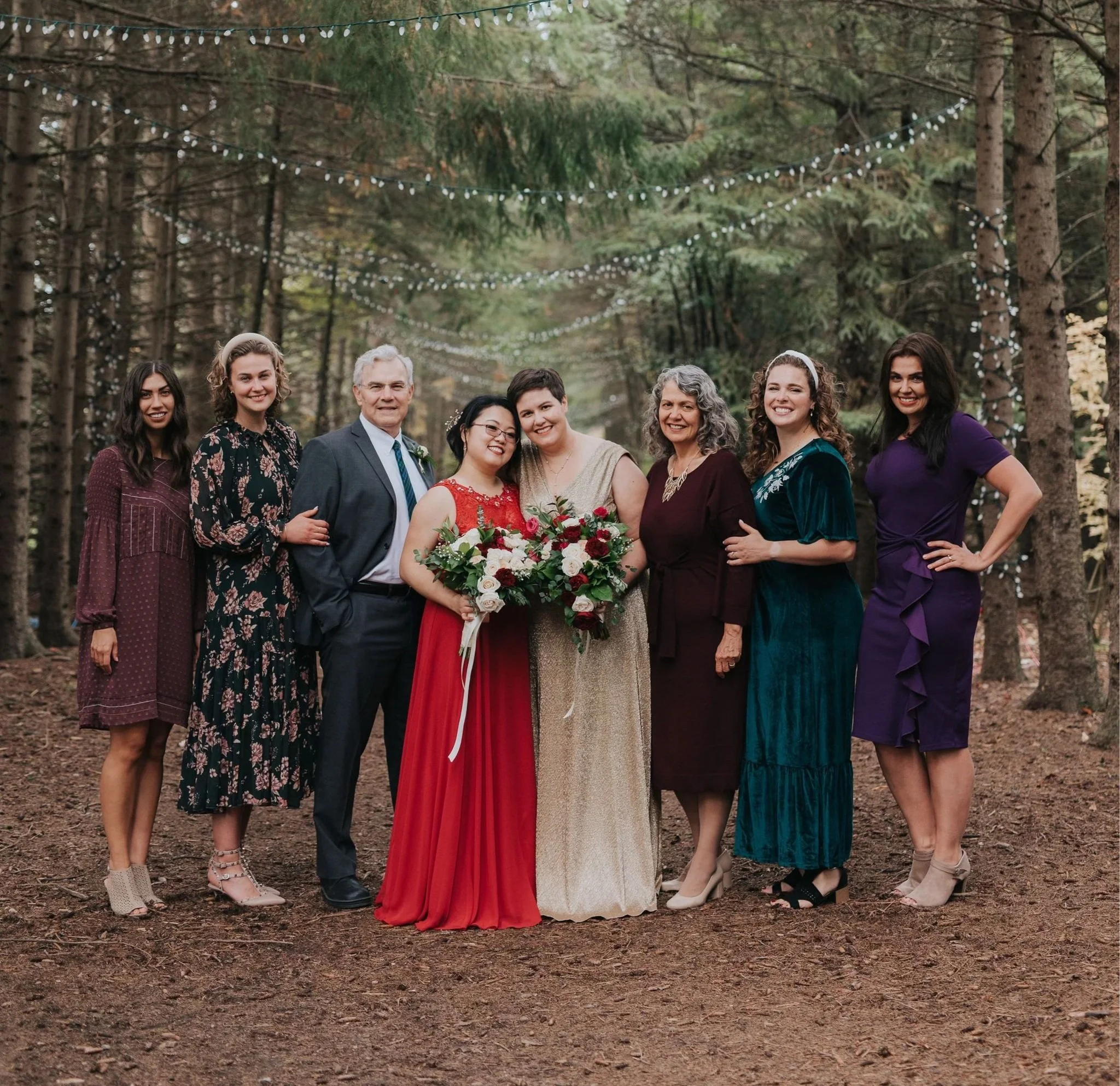
MEGHAN DECKER
At 11 years old, Meghan Decker was an observant Catholic who loved the faith in which she’d been raised. Then she had a powerful experience with God in which He invited her to “enter into covenant with Him in the LDS Church.” And so she did.
At 11 years old, Meghan Decker was an observant Catholic who loved the faith in which she’d been raised. Then she had a powerful experience with God in which He invited her to “enter into covenant with Him in the LDS Church.” And so she did.
A few years later, as a teen, Meghan recognized she was attracted to girls. It was the late 1970s, a time when some extremely vitriolic dogma about homosexuality was being shared over pulpits and in print. Meghan says, “I knew there was no place or way I could acknowledge my attraction to girls and stay in the Church. But I knew that God wanted me to stay in the Church and close to Him. So I buried my feelings under a mountain of denial and shame for 40 years.”
When she moved to Rexburg, Idaho to attend Ricks College (now BYUI), Meghan observed that her roommates were consumed with getting married, but she lacked the same interest. Guys she’d date would tell her they loved her, and she’d reply with a polite, “Thank you.” And then, “I met David,” Meghan says, “and all of that changed. Here was a man I could love back. When I came out to myself years later, this was hard to understand until I read Lisa Diamond’s book Sexual Fluidity, which explains that people with a fixed sexual orientation can indeed have an unexpected and genuine relationship outside of that fixed orientation, whether it be a lesbian having a relationship with a man or a straight person having a same-sex relationship.” She read that these relationships could be long-lasting and sincere. She realized she was not in denial about her marriage – that she could and did love her husband, David, while also being attracted to women -- and that sexual fluidity is not subject to intent or control; she could not decide to be attracted to a man and make it happen. But the attraction she feels for her husband is real.
Meghan and David raised five daughters (Rachael, Mary Beth, Ruth, Elise, and Rosalind) in the church, and she served in “all the ways Latter-day Saint women serve.” Meghan has been a Relief Society and Primary president, as well as in the Stake Relief Society, a seminary and gospel doctrine teacher, temple ordinance worker and public affairs director. She says, “I was all in. But I always felt I was fundamentally broken even while in denial, refusing to admit my attractions for years. I knew I had a fatal flaw. Whenever someone would compliment a lesson, talk, or presentation I’d given, the narrative I heard on an unending internal loop was, ‘You don’t know me. If you really knew me, you wouldn’t say that’.” As Meghan listened to the voice in her head, she also battled depression that would spiral at times she now traces to moments in which she felt crushes and attraction toward women. Meghan became suicidal on more than one occasion.
These experiences led to Meghan working with Betsy Chatlin to co-author one of Deseret Book’s first books on mental illness, Reaching for Hope: An LDS Perspective on Recovering from Depression. At the time, Meghan says depression was viewed as such a shameful thing in the church culture and society at large. She interviewed other women for the book, one of whom admitted she feared her bishop might excommunicate her because “good Mormon women don’t have depression.” As therapy helped Meghan to recover, she wanted to hide her own diagnosis of depression and leave it behind her forever, but felt “the Lord now invited me to share my experience with others, so that they could know they are not alone and have hope for better days to come.”
Years later, she faced another coming out. After wondering whether a female friend might be gay, and realizing she really hoped so, Meghan wondered why she’d wanted that to be true. In that moment at age 53, the mother of five and now grandmother walked into her bathroom and faced her reflection. She said, “It’s probably time to admit you’re attracted to women.” She settled in with this knowledge, but had no intention to share it with others – especially her husband, as he was the last person she wanted to know about her secret. She pleaded with God to take away the promptings she was feeling to tell her husband, but they persisted.
On Christmas Eve of that year, Meghan found herself sitting on the floor next to David in front of their Christmas tree in their Kalamazoo, Michigan home, enjoying the solid place in life at which they’d arrived. All their kids were grown, and they were spending the holidays elsewhere. David was serving in their Stake Presidency and Meghan was teaching Gospel Doctrine and Institute classes. Their kids were doing well, and there was a feeling of contentment in their lives and relationship. Meghan felt safe enough in that moment to confide, “I have something to share with you – I’m attracted to women.” She says David was blindsided. This was very hard for him to hear, and it took the couple a long time to hold that as part of the reality of their relationship. Shortly after Christmas, Meghan traveled for a month to stay with a daughter having health problems, and after she returned, they seemed to set further discussion aside. In fact, it would be five years until it would later resurface.
At that time, Meghan found a video series called Voices of Hope for Latter-day Saints who experienced same-sex attraction. She found there were other women in the Church with experiences similar to hers. She also credits Laurie Campbell’s book, Born that Way, (about a gay Latter-day Saint woman), as crucial in her journey. She also shared her situation with one close friend, who met her with acceptance and love.
Five years after coming out to herself, Meghan says she “read Brene Brown’s observation that the antidote to shame is to speak our truth and be met with empathy and compassion.” It struck her that was what she needed to do to improve her mental health. Meghan felt compelled to tell two friends about her attraction to women, and they each responded with that essential empathy and compassion. One happened to be her stake president, who was also a close family friend. At the time she was teaching an Institute class for young moms, and it meant a lot to her that as she left her meeting with the stake president, he said, “I trust you; you’re good.” She says that’s the first time she didn’t hear her inner voice creep up and say, “You wouldn’t say that if you really knew me,” because this man, this friend, did know Meghan. She says, “Having one person who knew me fully in the room when I was teaching eliminated the imposter syndrome, because that one person truly saw me, and they still loved and accepted me.”
About this time her second oldest daughter, Mary Beth, offered a confidence of her own: that her female friend she was preparing to move in with was actually her love interest. Mary Beth was in her early 30s and feared she might be rejected by her family if she came out. Over the course of a few conversations, Meghan said, “Mary Beth, there’s something you need to know about me…” She says, “It took that for her to believe that in spite of all my assurances, I wasn’t really disappointed in her. I remember feeling if this is the only reason I’ve ever experienced this, then that would be worth it.”
Shortly after Meghan started opening up to a few people, a friend confessed she’d developed romantic feelings for Meghan. “When she told me, it blew my world apart.” Meghan had depended on weak boundaries—primarily secrecy—and that boundary wasn’t going to work anymore.
At this point, Meghan felt she had to tell the rest of her kids, and all of them, including Mary Beth (who was otherwise supportive and proud of her mom for acknowledging her truth), struggled with the notion that this could break up their family and cause their parents to divorce. Of her husband, Meghan says, “He leveled up to be the husband of a suicidal woman…then me coming out as bi and SSA, then gay – he’s leveled up and responded in an unbelievably supportive way, never pressuring me. We often want to influence others’ behavior to divert our own pain. He could have done that at a couple inflection points, when I was debating ‘Can I stay in my marriage? Should I be with a woman? Is there a place for me in the Church?’ But he gave me absolute space to make my own decision. That space he’s given me to choose for myself without pressure has made it possible for me to stay. My LGBTQ friends think he’s wonderful; they love him. Friends join us for dinner, and occasionally he gives them blessings. He’s opened his heart to this community of women in a kind way. And those are the people who could threaten my marriage, in terms of who I’d potentially get involved with. But he says, ‘I’ve chosen to trust you’ That relieves me from having to hustle for his trust every day, which would become unsustainable. I can focus on me, not trying to manage his feelings.”
Their children were worried about David – especially when Meghan announced her plans to come out publicly, which she first did as a guest speaker at a North Star convention. But before that, her husband encouraged her to share her news face-to-face with the YSA branch in which David was serving as branch president and Meghan as Relief Society president. One week, after church ended, they invited people to stay for a few minutes, and Meghan came out to her branch. “They were amazing,” she says. Her 98-year-old mother’s reaction was also reassuring. Meghan’s mother said when she prayed about it, she heard the Lord say, “Just love her.” After talking to the branch, Meghan came home and started sending emails to many friends and former students, as well as members she had served with in various ways over the past decades. She wanted to tell her story fully and in her own words.
Within a month, she was a guest on the Questions from the Closet podcast. She worried about the impact of a public podcast that her children’s friends might hear, but it ended up being a healing experience for some of her daughters.
As the family adjusted to her feeling called to be open about her experiences, she dropped another bombshell – she’d be writing and releasing a book, Tender Leaves of Hope: Finding Belonging as LGBTQ Latter-day Saint Women (available in paperback, Kindle, or Audible, with links at meghandecker.com). As part of the writing process, Meghan started interviewing women of all backgrounds – single and celibate, women who were dating or in committed relationships, polyamorous and trans women, and women in mixed-orientation marriages (where one partner is straight and the other LGB). As she tried to develop as much understanding as she could of this space, she saw how sharing these stories could help both LGBTQ women and those who love them.
Meghan feels her kids balked because it was so much at once, and they worried about their dad. But she felt a divine hand push her forward. She wanted others to understand they weren’t alone and that they are deeply loved by God. She trusted that God had good intent for her and her children, and if He was asking her to write, He would work in their family’s life for good. As time has passed, relationships have started to heal and strengthen.
Now many women in similar experiences approach Meghan, sharing their reality. She sees that under different circumstances, she might have made choices similar to theirs. “If you change one data point, my life could look completely different. If I’d married another man, my story would be different.” But she feels that she is living an authentic life which includes all of the truths about her: her orientation, her love for her family and her husband, and God’s invitation to join Him in covenant.
In 2020, Mary Beth had plans to marry her girlfriend. The details of their ceremony were altered by the Covid travel restrictions to Canada, where they lived. But Meghan’s family expressed their support of the union, and they enjoyed a large belated celebration in person. At David’s exit interview, when their stake presidency was reorganized, David mentioned his daughter’s upcoming wedding to visiting General and Area Authorities. One of the leaders in the room said, “You are going to that wedding”—more as a statement or instruction than a question. David replied, “Of course.” It was good to have that encouragement, but they didn’t need a leader’s counsel to know they were eager to share that celebration with their daughter and new daughter-in-law. While Meghan and her daughter have made different choices regarding their marriages and religion, they have the ability to hold those differences with love.
Meghan and her husband continue to be engaged with the Church and teach youth Sunday school in their ward. Meghan says, “My therapist said a high percentage of LGBTQ members who grow up in the church experience PTSD. The things I heard about myself as a kid continue to reverberate. I’ll hear something, like a speech at BYU, that knocks me down for a few days and makes me wonder if I’m fooling myself to believe there’s a place for people like me in the Church. After some time in pain, I feel the Lord inviting me to get back up and meet Him in the ward building or temple and to serve his children in this space. My daughter needed to step away – for her well-being. She’s extremely happy. The reason I’m still engaged in the church is because people have made space for me. But a lot of my LGBTQ friends who want to be here have been pushed away.”
Last year, Meghan and David decided to make the move from Michigan to Provo, UT – a move she “never saw coming.” They moved in response to a feeling that God wanted them in Utah. They feel blessed in how they’ve been embraced by their ward. Meghan is now an admin for the women’s LGBTQ community forum at Lift & Love. Since it started last June, she says it has grown into “a vibrant, active community that welcomes women who may have felt they were alone or isolated but want to find people who understand them.” The group has a private Facebook page and meets the second Monday of each month on zoom; those interested can sign up at liftandlove.org. Meghan will also be speaking at the upcoming Gather conference, which is a Christ-centered gathering for Latter-day Saint LGBTQ individuals and those who love them. It will take place in Provo, UT September 15th and 16th, 2023.
Recently, Meghan went to the desert by herself for a few days on a much-needed solo retreat. She was feeling fractured in the church because “it’s not often welcoming to people like me. And I felt fractured in my marriage – a gay woman married to a man. I feel most at ease with my LGBTQ community, yet I still love and embrace my husband and the Church. I tried to empty myself of every expectation of what I thought God would say to me, so I could understand what I really needed. I walked and prayed and asked, ‘Where can I be whole? I’ll go there.’ I came back with the understanding that I’m whole in Christ. Wherever I am, I can have wholeness – whether in the Church, my marriage, or the LGBTQ community. It’s not so much what’s around me as my experiencing Him and being filled with Him and His love.”
She continues, “The constant in my life is coming back to God. When I was 11, He called me into an imperfect place to experience Him and serve His children. I’m still there, and way beyond frustrated sometimes, but I trust in His wisdom and love.“



LEVI'S STORY
Levi is our intersex, transgender, gay son who was assigned female at birth. While he was raised as a girl, we didn't know that his DNA was male. He had a condition called Swyer's Syndrome.
We’d like to thank Dave and Kimi Martin for graciously sharing the precious life and story of their child, Levi, with us this week. Levi would have turned 18 on March 19th 2023.
*CONTENT warning: suicide*
Levi is our intersex, transgender, gay son who was assigned female at birth. While he was raised as a girl, we didn't know that his DNA was male. He had a condition called Swyer's Syndrome.
Levi's death by suicide had many reasons - a major one was his terror over how society treated transgender people. The recent actions of several states to ban transgender care for minors validates the fear he felt. Unless you have proximity, you have no understanding of how awful these bans are and how many precious lives will be lost.
Kimi and I share Levi's story, (he was too afraid to come out in his mortal life), in the hope that those without proximity to transgender people might gain understanding, and thus, compassion. Our call as humans is to learn to love better, not judge better.
Here is Levi’s story as given in his eulogy:
I want to tell you a story. A love story. And nothing to do with a Taylor Swift song about Romeo and Juliet, but about our son Levi. Like any good love story, it begins with love and in the middle, there is difficulty, hard times, and even tragedy. But like any good love story, it ends in love. With a love that doesn’t end but keeps growing and moving forward.
We hoped we were done after six kids. We were pretty sure. Not totally sure. Surely God would agree that six completed our family. We were tired, busy, and old (in our 40’s). However, the thought our family was not complete was constant, even though Kimi did her best to ignore it. We had to pray about it. And we did. And then we weren’t sure. So we decided to move forward with faith.
Well into Kimi’s pregnancy, we had a very bad week and all got sick. Following the admonition of James, we sent for the elders, in this case our friend, Quinn Millington. to receive a blessing by the laying on of hands. He gave each family member a blessing. Then he began to bless Dave, and part way through the blessing, he fell silent, a silence that went on and on. When he concluded the blessing, he explained that he had been overcome by a feeling, that it was almost like a massive wall or building that descended on him, that it was so large he couldn’t put it into words for a long, long time.
Quinn shared with us what he could at that time, and recently shared even more. He said, “There was a sense of deep gratitude and love that burned in my heart. I believe the Lord wanted to express His deep trust, gratitude and love for you and Kimi for your willingness to bring another of his precious children to earth. I also believe he wanted you to know of his deep love for Levi.”
On March 19, 2005, in Montgomery, Alabama, this child was born. We named the child Emma. Because we didn’t know. Our son Garrett had older sisters and one younger sister, and he desperately wanted a brother. He and our newest bonded quickly.
The child was different from the first day. Most babies are loose, relaxed, uncoordinated, and need a lot of support. This baby was tense and triggered by stimuli. As early as the second day of life, he could tense up so thoroughly that holding him was like holding a stiff board. He showed early signs of anxiety, even as a newborn. If Kimi held him facing out while walking down the stairs, his little body would tense up until his arms were raised above his head.
He was so loved. His siblings fought over who got to hold him. We weren’t sure he would ever learn to walk.
When Levi was eighteen months, we moved to Massachusetts. Our surroundings are information, and too much happens in them for us to take it all in. But this child seemed to take in far more than average. He would not wear jeans nor new clothes—everything had to be used, broken in, smooth. We later learned that one of Levi’s challenges was Sensory Modulation Disorder which basically means a condition in which non-painful stimuli such as types of touch or certain sounds or volume are perceived as abnormally irritating, unpleasant, or even painful.
We lived in a house with an in-ground pool, and he loved the pool, loved swimming, loved the feel of cool water against hot skin on a steamy summer day. He wrote these words at age 13: “Swimming, to me, is very peaceful. When you go fully submerged underwater, you feel warm and comforted from all the pressure around you. Most of the time it is very quiet underwater, if not completely silent, and you can make sounds that nobody can hear. Because I love music so much, I sing songs and vocalize songs from shows and movies and games. Whenever I get out of the pool, all that I want to do is go back into the peaceful water. It is almost like nothing exists.” As he grew older and his body began to change, he did not like swimming in front of other people—he was self-conscious and felt the eyes of other people on him.
He learned to read at a young age—not sight words and picture books. Kimi recognized that he was ready, she had taught his siblings to read, but with Levi’s independent nature, he didn’t want any help. She set him up on a computer program and he was reading within a matter of hours, prior to starting kindergarten. He learned to read deeply, and it became critical to how he processed the world. In fourth grade, he read Huckleberry Finn. In Sunday School, his teachers gave each child chances to read. He grew impatient with those who could not read big words, struggled to sound out words, measured their words awkwardly. His mind raced and chased ideas in circles and spirals. We could not name a topic on which he hadn’t researched and for which he had no opinion.
He took piano lessons from various teachers, and he gained a sound early mastery, but he came to hate performing. In time, he asked to be able to stop taking lessons even though he loved to play. His social anxiety made them too difficult. When he gave up piano lessons, he continued to teach himself piano on his own. Sometimes, we would leave the house and come back to find him playing beautifully on his own. We hated to announce our presence because he would stop—he did not perform.
Yet, for all his reluctance to perform and to be seen, in school and elsewhere, he was a constant chatterbox, and one with no filter. The words he inhaled from reading books and articles online had to find their outlet, and he spoke them without regard to the audience. In school, he talked constantly to whoever was seated next to him, and frequently, the two of them got into trouble. Further, even at the earliest ages, he challenged everyone on everything if he was convinced he was right. He pushed teachers with incisive questions, argued with points he believed to be false, almost never backed down.
In third and fourth grades, it was too much, and we home schooled him. Academically, he soared, and he was relieved without the social strain, but keeping pace with him and giving him social opportunities to develop generated new challenges in the family, and eventually, he returned to public school. Whether at home or at school, his grades were impeccable: straight A’s. But socially, everything was a strain. His constant chattering ultimately led to people shutting him down and out. It hurt, and he withdrew and became more suspicious of people.
And then, seventh grade.
We did not know, and we could not see the big picture. When you live with someone, changes creep up on you, and you amalgamate them into your understanding of a person without necessarily seeing how dramatically something has shifted. In seventh grade, he began to struggle to complete homework. He appeared uninterested and unmotivated even though the work was intellectually easy for him. One would not think that B’s would signify much—they typically don’t. But what did was the apparent lack of effort, the tendency to have assignments slide by with no recognition that finishing them was important.
What do we think now? Based on what we now know, what should be happening in puberty was not, and the disconnects in identity were probably starting to create foundational strains.
In Church, he remained talkative and challenging. One of his Sunday School teachers described him as “savagely smart” and “the smartest kid I’ve ever taught” (to the chagrin of his siblings whom this teacher also taught). This teacher emphasized that students must try to stay ahead of him, and he sometimes sent home subjects to research. He needn’t have bothered—our child had been researching everything all along, and Levi didn’t bother with these.
In eighth grade, we were finally able to find him a therapist. After a few months, the therapist indicated that he might be a threat to himself. We had him admitted to a psychiatric hospital, and he enjoyed it—played Phase 10, talked openly, did outdoor activities. He came home with a series of medical appointments and diagnoses. He was ADHD, prone to severe depression and anxiety, capable of dissociation. He went back to school, took on medicine and therapies and disliked all of it. He spent much of his time in the counselor's office, completing school work there. Kimi also spent a lot of time there, working with the counselor to determine which classes could be dropped, and which needed to be continued to avoid a failing grade.
He was convinced he would die young. He read up on all his diagnoses and added his own—he became convinced he was on the autism spectrum. Later, another doctor would diagnose him with borderline personality disorder.
One day, a friend’s mother called to tell us that he had been cutting and had drunk a small amount of nail polish remover. We explained to him that he had to be admitted to a psychiatric hospital again. This time, the experience was a slog in a drab building with lots of boredom.
No, he told them, he wasn’t suicidal. Yes, the program was helping. No, he was not a threat to himself. No, he would never cut again. Yes, he would seek out therapy and ask for help and take his medicine and talk to his parents and do stress relief and exercise and meditate and journal and relax. Could he go home now and not come back? Of course.
His ninth-grade year started out well. Because of his poor grades in the spring, the school wanted to lower the rigor a bit, but he argued with the school to let him take honors classes, showing that he was impossibly bored in standard classes, and that he could manage honors classes. He wanted to handle it himself, seeking out the guidance counselor without letting Kimi know what he was doing. He had to argue hard and long for honors classes. He prevailed. And then, he didn’t or couldn’t keep pace. We did not understand. We wondered if it was lack of willpower, failure to manage mental illness, lack of desire. Meanwhile, his ever-bright brain burned hot, and he researched and researched, endlessly chasing ideas. There were no definitive answers to the questions he asked because there were always more questions beyond them.
When he was in tenth grade and just as the pandemic was developing, a friend of ours had a son come out publicly as gay. This friend stepped away from Church leadership positions. On Sunday one day, this friend went to the pulpit and gave his witness of the love of God and the need to love all our brothers and sisters. He affirmed the dignity of LGBTQ+ people. As our friend walked away from the pulpit, our youngest looked at him with a huge smile and made two huge thumbs up. We should have known something. But changes creep on us. We fail to connect details to the narratives of our lives. Or we shape the details to fit the narrative we have formed.
“Emma” should have started having her period but hadn’t. So doctors resorted to hormone therapy to help trigger them. Sure enough, we found our youngest wasn’t taking the medicine. Kimi challenged him and insisted that the medicines had to be taken because failure to do so could be dangerous. The performative non-performer looked at Kimi and said, “Well, the thing is, ha ha, I’m trans.” Kimi was unmoved. “Throwing something like that at me isn’t going to change the fact that you have to take the medicine.” This time he was more serious, “Mom, really, I’m trans.”
Kimi accepted him. He didn’t want Dave to know. Dave had been a Latter-day Saint bishop and a member of stake presidencies. He followed rules and obeyed Church authority.
Dave proved to be surprising. He accepted our youngest as he was, and he began to read and research. He was a Sunday School teacher, and soon he was giving lessons on what the Bible had to say about helping the marginalized.
A few months later, when developmental changes were still not happening, our youngest underwent a battery of tests, and soon, much greater information emerged. Through genetic testing, we gained an understanding we never had.
All of us are both profoundly similar to each other and all of life, and yet, we are also completely unique. This is a duality, and dualities exist everywhere.
Our youngest had Swyer Syndrome. Swyer Syndrome describes a series of genetic mutations that cause an individual to express female anatomy, while the person is genetically male. In other words, our youngest had all the body parts associated with females except he wasn’t female. He had XY chromosomes—if he were to die and have to be identified via DNA, a medical examiner would say he was male. In our youngest’s case, he was his own special brand of unique: doctors at Boston Children’s Hospital had never seen his particular mutation in the portfolio of Swyer cases they had dealt with. Ours was literally a sample size of 1.
Levi reacted by doing what he always did—he researched. In short order, he was more expert on intersex conditions than most medical professionals. Doctors would begin to discuss something with him at a simpler level, then say, “Wait. I forget that you are you,” and they would switch and begin to speak with him as a peer, as if he were a medical resident.
DNA is what makes us both unique and similar. It should not be a surprise that it is a duality of sorts, itself. In 1953, Dr. James Watson struggled to understand DNA’s shape until he had a dream in which he saw intertwining snakes with heads at opposite ends (other accounts indicate he also saw a double-sided staircase).
We asked our youngest how he identified himself, and he said that he was “intersex, leaning toward male, and gay.” We asked what name he should go by, and he originally selected “Twine.” We didn’t understand and thought it a curious choice. He never explained, and in short order, he came to dislike the name and would eventually discard it. Intersex individuals with Swyer often select the direction they wish to go, and many choose to honor the anatomical presentation and proceed with female-related hormone therapy. Our youngest did not feel female and did not believe he had ever been meant to be female. He began early steps toward transition.
We asked if he might wish to cut his hair, and he declined. We asked if he might wish to discard his dresses, and he said, “No, I might still wear them.” The duality was powerful and also almost entirely misunderstood by everyone.
When we are born, we begin to die. And most faiths view death as a birth into a new life. These, too, are dualities. When we felt that there must be another child, we accepted, as well, that we were birthing a child into both life and death.
On Sunday, December 18, 2022, we had finished preparing dinner and we called to our youngest, our only child at home. No response. Dave went to the basement. The door was closed tightly, and a note had been placed there. It began, “Don’t open Door. Call Police.” It was a small act of grace that preceded the pouring out of the years of pain and fears that he had experienced. He apologized and expressed his love. He feared turning eighteen and trying to navigate as an adult. He explained that he could not get himself to do anything and couldn’t see being able to do so. He couldn’t live as a woman but be a man; he couldn’t bear to come out even to some family members, though he knew he was loved. In his words, “I … can’t take living like a girl, being the way I am, yet I am too much of a coward to come out to my siblings, or to do anything to make my body match my mind more. I am terrified of how society treats transgender persons.” He made clear that the decision was his and no one was at fault; he indicated that the media and what he read or saw should not be blamed. His final sentences state that “This is not the fault of any of you. My brain is just faulty. I’m excited to finally be free.”
Ultimately, he signed his letter. His signature is clear, certain, and confident. For it, he used a name he had recently come up with and had asked his parents to use. Its origins are Hebrew, and in the same way that twine’s first dictionary definition is “a strong string of two or more strands twisted together,” his new name means, “united, joined, adhered to, joined together, or joined in harmony.”
We don’t know if he chose it deliberately, but Levi is the perfect name.
We are here today to celebrate the life of Levi. He was spunky, sassy, feisty, and confident, until he wasn’t. He was funny, intelligent, quirky, argumentative, loving, stubborn, and kind, always.
We are here to mourn Levi. This is a tremendous loss in so many ways, not just for our family or for all those who knew him, but for the world. He had so much potential. His future contributions, whatever they would have been, are lost to us now.
We are here to acknowledge Levi’s pain. Being transgender in this world was too heavy a burden for him to bear. He suffered tremendously until he just couldn’t suffer any longer. We like to think of him as happy now, something that we haven’t seen in a very long time.
This story of Levi reminds me of sentiments expressed in a song from the musical, Wicked. These words have proven true in my life and I think in each life we connect with, especially with those that are different from us.
I’ve heard it said
That people come into our lives
For a reason
Bringing something we must learn
And we are led
To those who help us most to grow
If we let them
And we help them in return
I know I’m who I am today
Because I knew you
We will never meet again
In this lifetime
So let me say
So much of me
Is made of what I learned from you
You’ll be with me
Like a handprint on my heart
And now whatever way my story ends
I know you have re-written mine
By being my dear child
Who can say if I’ve been changed for the better?
But because I knew you
I have been changed for good
Who can say
If I’ve been changed for the better?
I do believe I have been changed for the better
Because I knew you
I hope the world has been changed
For good
Now we are at the end of our story. But the ending goes on…
We are here to show our love for Levi, forever and always. And keep sharing that love so other racial, sexual orientation and gender minorities in our path will not endure the same pain Levi did.
Conveying to each of us a greater ability to love one another as they are and be less judgmental is Levi’s legacy. Be free and live on in peace, Levi.


GRACEE PURCELL
It was fall of 2022 and Gracee Purcell had just arrived in Provo, UT to begin her first year at BYU. Not only was she excited about pressing play on life in a college town, but she was also feeling a bit safer after discovering the RaYnbow Collective—an LGBTQ+ coalition and resource provider wherein she could exhale and be herself. Their first initiative that fall was to fold and distribute 5,000 small booklets advertising LGBTQ+-friendly resources (therapists, safe housing, scholarship and event info, etc.) in the welcome bags that would be given to incoming students at New Student Orientation (NSO) with the hopes that the info would prove helpful to the (reportedly 13%) of BYU students who identify as LGBTQ+. But the day before NSO, the RaYnbow Collective received word that a unilateral decision was made against their contract with BYU and their booklets would be pulled and thrown away…
It was fall of 2022 and Gracee Purcell had just arrived in Provo, UT to begin her first year at BYU. Not only was she excited about pressing play on life in a college town, but she was also feeling a bit safer after discovering the RaYnbow Collective—an LGBTQ+ coalition and resource provider wherein she could exhale and be herself. Their first initiative that fall was to fold and distribute 5,000 small booklets advertising LGBTQ+-friendly resources (therapists, safe housing, scholarship and event info, etc.) in the welcome bags that would be given to incoming students at New Student Orientation (NSO) with the hopes that the info would prove helpful to the (reportedly 13%) of BYU students who identify as LGBTQ+. But the day before NSO, the RaYnbow Collective received word that a unilateral decision was made against their contract with BYU and their booklets would be pulled and thrown away.
Gracee says, “It was disappointing and disheartening to hear about the decision, especially when a lot of the council remembers how isolated, lonely, and unsupported they felt when starting at BYU. I know I personally felt a loss of hope. I had come to BYU hoping for a fresh start somewhere I could do more. Having this happen on day three at BYU for me was hard. I took time to process and the next day when I went to NSO, I definitely thought about the missed opportunity to support the incoming queer students.”
However, Gracee says this provided her with her “why” and a renewed passion for advocacy, especially at BYU, “as well as the realization that maybe there’s nothing wrong with us. Maybe it’s just really difficult to exist within a system that was not designed to support spirits like ours. No student should feel alone. No student should feel rejected by their university because of their identity. I chose right then that I was going to lead with love.” While Gracee says she’d rather have seen those resources end up in the NSO bags, she’s grateful for the experience it gave her. Impressive wisdom for a 19-year-old who only came out as gay to her closest friends and a few family members one year ago.
Gracee’s life thus far has likewise been rather impressive. She graduated from high school in Eagle, ID in 2021, and by that point, had already achieved her Associate’s degree from Boise State. Her father, Brandon Purcell, says she was a born leader. The oldest of six kids, Brandon says Gracee was just two when her first sibling was born and he remembers telling her she had a super power as the oldest child—that people were going to follow her. “In hindsight, that’s a lot to put on a young person. But we noticed in her toddler years, her future would be as a leader… I think one of the reasons she went to Provo was because there was an opportunity for her to both grow and lead. This year she’s found those. I see her doing a lot of fantastic, important and impactful things—not only for herself, but for others.”
After high school, Gracee spent the first semester of a gap year in Mexico teaching English part-time at a school through an International Language Program. As a first-year student at BYU, she is now a junior credit-wise, and studying Psychology with plans to become a physical therapist for athletes. Gracee’s always had a heart for helping those in need, and since the age of 15, has helped train seeing eye dogs. Throughout childhood and her high school years, Gracee’s also loved sports. She played soccer, lacrosse, and even tried pole vaulting for a season to overcome her fear of heights.
She also overcame her fear of coming out by doing so for the first time to her travel group in Mexico, six days in, which in hindsight she says was maybe not the best idea. But in a surprising turn of events, she was embraced and loved wholeheartedly by the girls in her group. She came home and went back into the closet but then started an Instagram and blog (@to_all_the_latter_day_gays) in which she shared her truth of being attracted to women. Soon after, she was invited to go on Richard Ostler’s podcast as a guest, at which point she felt it was time to tell her parents.
When she came out to her parents, Gracee says there were a lot of tears on her mom’s end. She had never considered this might be a possibility. Later that night, she came out to her dad privately and he thanked her for telling him. Brandon says he recalls thinking this was a moment with a lot of gravity and he didn’t want to say something that would come across as unsupportive or unloving. “I think I expressed something to the effect that I was grateful she had shared this with me, and I’d like to just think on it for a bit and talk about it after I’d collected my thoughts.” Gracee says she knew it would take some time for her parents to wrap their heads around everything due to their strong faith in the church. She senses their faith has always been straight forward and that this was a nuance they perhaps didn’t fully understand quite yet. But she appreciates how they listened to podcasts like Listen, Learn and Love and Questions from the Closet and read recommended books. Still, there wasn’t a lot of conversation about her orientation at home in that time before she started at BYU, and it was Gracee’s choice to not tell her younger siblings or extended family members quite yet.
Brandon concurs it took more than a minute for him to process that the future he’d envisioned for his daughter might look a little different, but that ultimately both his and his wife’s love for and hopes for their daughter to be happy and fulfilled haven’t changed one bit. Brandon hopes Gracee will “be everything she can be and have the types of connections that are important to all of us.” He appreciates the broadened experience he’s gained from listening to the experiences of others from the LGBTQ community. And he’s expressed to Gracee an impression he felt through the Spirit that while he doesn’t have all the answers to life’s complex questions, he knows one person who does. Brandon encourages his children to, “Stay close to the answers. Stay close to Heavenly Father, and He’ll guide you.”
Gracee had offers to attend other universities, but chose BYU for a particular major and to be closer to family. While she didn’t initially plan to come to BYU as such a vocal representative of the LGBTQ community, she has since realized the importance of the work that needs to be done there and is willing to be in the public eye, even under criticism, to try to create the changes necessary to make it safer for others—especially those who are not quite ready yet to be out. Gracee recognizes how important it is to find a support system and was very intentional about doing so, and thus joined the RaYnbow Collective as soon as she arrived in Provo. About 50 people serve on the council; Gracee has served as the website and design graphic design lead, and was just asked to take over as President in April.
Gracee acknowledges the climate at BYU is hard, and prospects for dating as a queer student even harder as there is always a fear that permeates. She says LGBTQ students are aware of the different messages given to different students based on who their bishop might be—there have been instances where bishops have required students self-report to the Honor Code for any attempts to date. “It’s so variable between bishops. Some are allies, some aren’t. You just have to choose what you tell them.” There’s also the constant fear that fellow students may rally against your very existence, as a group of protestors did at a Back to School Pride event held just off campus. Gracee is grateful her psychology program is filled with wonderful, supportive peers and professors.
“I think that the ultimate path forward will be with compassion and curiosity. If we move forward in that way, I think hearts and minds will be more open, and there will be more understanding. It’s not about policy change, but people changing,” says Gracee. “There’s always hope. I don’t think God should be confined to one religion or a set of practices. You can find God anywhere. I don’t think we should put God in boxes. In the end, the ultimate problem we’re having is in the core teaching of Jesus, which is to love your neighbor as yourself. The designation of who your neighbor is has nothing to do with geography or orientation or our differences, but rather with our ability to see our shared humanity.”
In high school, Gracee started training guide dogs as a strategic way she could negotiate bringing an animal into a pet-free home. She has since brought up three dogs in the program and currently has a lab puppy living and training with her in Provo. The dog attends classes and events with Gracee at BYU, and is a visible reminder to many students that some people walk through life differently. Some have different needs. And sometimes, it just takes a little training and some resources to get there. Gracee Purcell is one young adult willing to make the personal sacrifices to help others to get there. To help others to see.


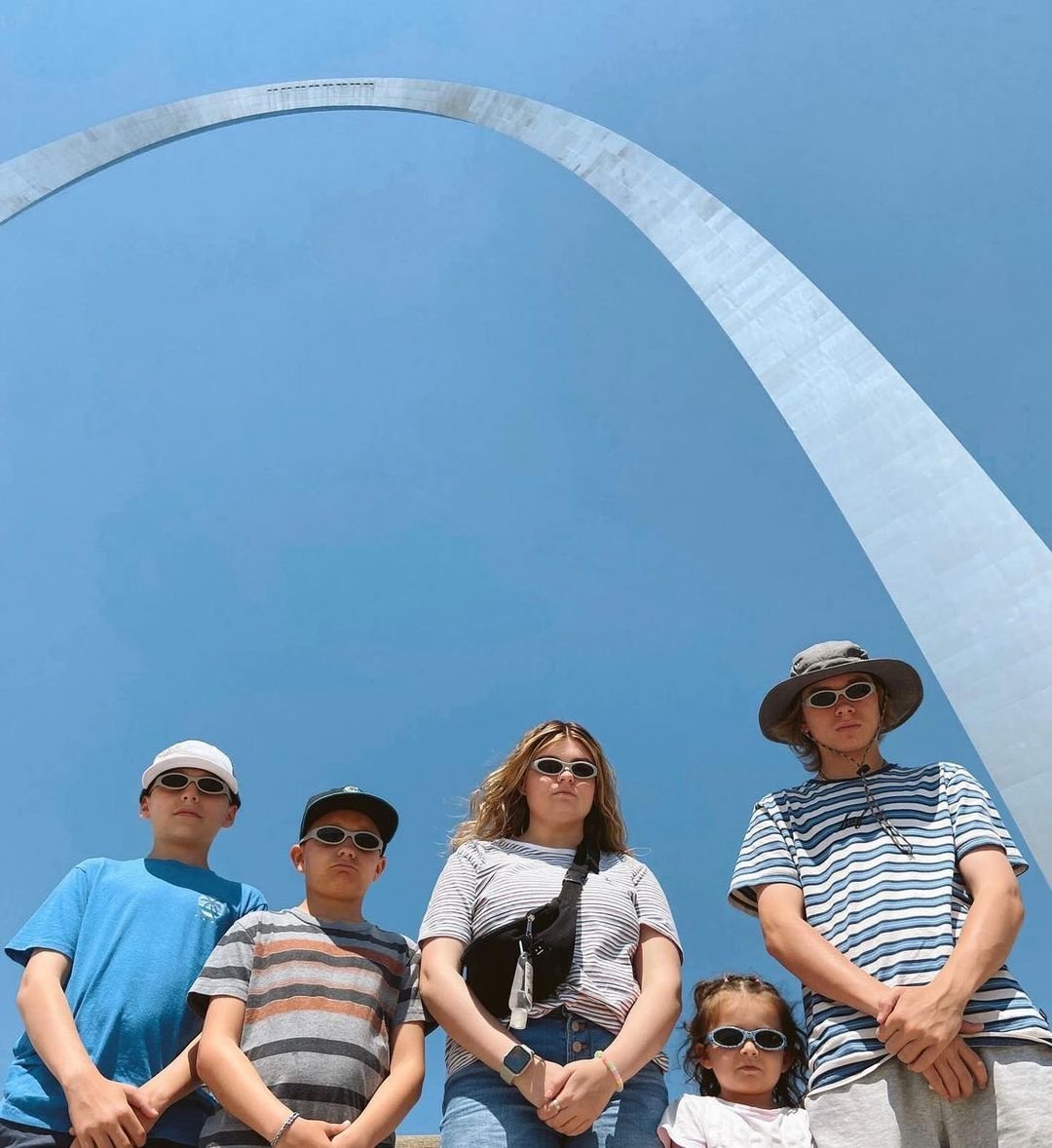


BEN SCHILATY (Part 2)
After receiving his PhD in Tucson, Ben Schilaty’s path veered north, back to Utah, when he felt the timing was right to apply for the MSW program at BYU. And it was; he was accepted. While there in 2017-2018, Ben reached out to the BYU administration and said he wanted to be involved in LGBTQ causes. While initially guarded, they agreed to meet with Ben. Ultimately, BYU formed a working group of nine administrators and LGBTQ nine students who met once a week to talk about inclusion and the climate at BYU. This is where Ben met Charlie, and they became truly good friends. He also met Steve Samberg, the general counsel at BYU, who also became a good friend and set Ben apart as a High Priest…
Welcome back for part 2 of Ben Schilaty’s story. (See story posted on 2/16/23 for first half.)
After receiving his PhD in Tucson, Ben Schilaty’s path veered north, back to Utah, when he felt the timing was right to apply for the MSW program at BYU. And it was; he was accepted. While there in 2017-2018, Ben reached out to the BYU administration and said he wanted to be involved in LGBTQ causes. While initially guarded, they agreed to meet with Ben. Ultimately, BYU formed a working group of nine administrators and LGBTQ nine students who met once a week to talk about inclusion and the climate at BYU. This is where Ben met Charlie, and they became truly good friends. He also met Steve Samberg, the general counsel at BYU, who also became a good friend and set Ben apart as a High Priest.
Ben says he felt safe at BYU. In this working group, he was able to open up and have raw, emotional conversations. He felt everyone cared, and knew he wouldn’t get kicked out. One time in a meeting, Steve made a comment, saying “I’m dating myself here,” to which Ben replied, “I’m a gay BYU student, I’m only allowed to date myself.” He says the group laughed; they got it.
In 2018, the group planned a campus-wide LGBTQ forum and a few thousand people came. Ben spoke on the panel, and at the end, one of the moderators told the group, “If any of you who are LGBTQ feel comfortable standing, we’d like to recognize your presence.” Charlie had said the opening prayer at the event, and now Ben looked down and watched him stand, for the first time timidly coming out publicly. Ben says, “Charlie watched that forum and said, ‘Maybe one day I could be brave,’ and now Charlie is braver than all of us.” Ben concluded, “I don’t want to do ten things, I want to get ten people to do one thing. If I can inspire someone like Charlie to have more courage, and people to be themselves, to share their lives and hearts, then that’s success.”
And now the big question: what is it like to work at the BYU Honor Code Office as an openly gay man? Ben says, “Life is really good; things are complicated. But I’m very secure in my life. People don’t like me on many fronts, but I have a really good life. When Sunday night would roll around when I was teaching middle school Spanish, I’d dread the week. But I’ve never felt that way here at BYU. My boss especially lets me soar.” Ben also works as an adjunct professor, teaching a class called Understanding Self and Others: Diversity and Belonging.
In 2021, Ben had the idea to plan a big concert and call it BYU Belong. Kind of a LoveLoud, BYU style. Ben hoped as people came back to campus that fall, they could have a good time and celebrate their diversity. Eight video vignettes featured students and faculty who represented diverse experiences: international students, a woman of the Muslim faith, and a student grappling with mental health challenges. Each of them came up on stage after to a standing ovation. Performers included David Archuleta, Vocal Point, Charlie Bird (with the Cougarettes), and after Noteworthy performed, two of their members came out publicly. Three weeks prior, BYU had created the Office of Inclusion and Belonging, and the timing of all this at the university felt especially right and needed.
Ben says he knew LGBTQ students were afraid of the Honor Code, and he thought if he worked there, it might be less scary for them. He says, ”I love BYU, and I actually really like the Honor Code and the mission of BYU. I wanted to be a part of it. I have queer students come visit me – and on purpose, I ask them to meet me in my office so it’s less scary, and they can meet everyone. I take them to lunch. The Honor Code Director, Kevin, is the best. I find that queer kids fear the Honor Code because they don’t understand the process, who’s safe and who isn’t. But I experience no fear here in saying I’m gay because I follow the honor code.” Ben recognizes he’s speaking from a perspective of privilege. He continues, “I’m super confident and old and tall – I’m an authority figure here, which comes with safety – a freshman doesn’t have that. If someone’s unkind to me, I can call general counsel immediately and meet with dean. But the students can’t necessarily, so I understand their fear. I hope they know they have allies in the Office of Belonging and in me and many professors. Campus is a lot better than it used to be.”
Ben does occasionally field an off-putting comment or question, and he’s become known for the grace he offers back. “For example, a kid might say, ‘People are choosing to be gay because it’s cool.’ What I would say to that is, ‘Thank you for having the confidence to share that. Elder Ballard said the experience of same sex attraction is a complex reality for many people,’ or ‘According to this church leader these attractions aren’t chosen,’ and in my experience, that has been the case. I know hundreds of people who are LGBTQ, and this was not a choice for them. Having those quotes in your back pocket, and sharing your personal experience – people can’t discount that. If you share yours or your brother’s experience, at least they might walk away knowing this person didn’t choose.”
When LGBTQ families ask, is BYU safe?, Ben is in a unique position to offer perspective. “Physically, almost definitely. Will people say rude things? Totally. Can. You live in a world where people are rude? Yep, that’s the world. There are jerks. There are 30k students here, you can find your crew. There’s the Office of Belonging, and a gay man works there, and he is amazing. And there are off campus organizations that are not affiliated with BYU, but they can provide support–like USGA, Rainbow Collective, Cougar Pride.”
None of this negates the fact that it is still difficult to be an openly gay man in the LDS church, and under the public lens Ben now lives under constantly as BYU faculty and a popular public speaker and author. Most weekends, Ben can be found doing a fireside or speaking on a panel, when not producing his podcast with Charlie. During Q&A’s, many ask the obvious questions: do you think the church’s policies will change? (Likely, as they always have.) Do you think your path is for everyone facing a similar reality? (Not at all. I encourage you to get to know the stories of the LBGTQ people in your life and support them as needed.) Will love lie in your future, as it did once in your past with a man you almost left the church for? (Remains to be seen. The details of this are also in his book.)
While some may not understand how Ben does it, the path he’s forged and the trails he’s blazed to make it easier for others who might one day be taking a walk in similar shoes is rather remarkable. And in the midst of where the church sits now on this issue, Ben has found a way to be content with the in between. He says, “I live in this world where there hasn’t been resolution – the Holy Saturday – but I love living with hope. I love working in the temple weekly, I love living with my housemate Charlotte (Eugene England’s widow). I love reading scriptures. I love feeling God’s love. In the first verse of Book of Mormon – we read that Nephi feels he’s been highly favored, though he feels many afflictions. Things sometimes suck, but God is always there for me.”


BEN SCHILATY (Part 1)
At least once a week, there’s one particular professor at BYU who meets a student on campus for lunch. He’s exceptionally extroverted for an academic, and considers these lunches the highlight of his week. Over Cougar Eat confections, they discuss how to navigate life, love, and quite possibly, how to survive being gay at BYU. His is a story you may already know; his life is one most likely do not. But Ben Schilaty’s invited all to join him for a walk on his path in his memoir, A Walk in My Shoes: Questions I’m Often Asked as a Gay Latter-day Saint. Many wonder how does Ben do it? How does he live as an openly gay member of the LDS faith who not only observes the BYU Honor Code, but works within its office. But he does; and many who get to know him up close do walk away convinced he’s found a way to be content with a complex reality…
At least once a week, there’s one particular professor at BYU who meets a student on campus for lunch. He’s exceptionally extroverted for an academic, and considers these lunches the highlight of his week. Over Cougar Eat confections, they discuss how to navigate life, love, and quite possibly, how to survive being gay at BYU. His is a story you may already know; his life is one most likely do not. But Ben Schilaty’s invited all to join him for a walk on his path in his memoir, A Walk in My Shoes: Questions I’m Often Asked as a Gay Latter-day Saint. Many wonder how does Ben do it? How does he live as an openly gay member of the LDS faith who not only observes the BYU Honor Code, but works within its office. But he does; and many who get to know him up close do walk away convinced he’s found a way to be content with a complex reality.
Every week, from a fancy Provo, UT studio (aka Ben’s basement), Ben joins his friend Charlie Bird on their podcast, Questions from the Closet, to discuss the unique paths they walk as openly gay men who try to stay tethered to the church they both served missions for (Charlie in CA, Ben in Mexico), and the gospel that they love.
Ben Schilaty was the youngest of four kids born to Seattle, WA-based parents who were active--both in the LDS church and in sports. His dad was a track star, his mom was a PE coach. His older brothers were basketball stars, and his older sister played three sports. Ben laughs that he preferred to play with My Little Ponies and watch TV. He appreciates that his parents supported his interests, and he remembers getting My Little Ponies for his birthdays and Christmas, and no one in his family heckled him for it. He was a child of the 80s-90s, and he also loved hot pink, but he would get teased by others for this, so he didn’t wear many hot pink things, besides a particular pair of pink and white-striped shorts he had to retire by age five when the heckling got too loud. Ben says, “My interests were different, but I don’t remember having crushes on boys as a kid. You were supposed to have crushes on girls, so I’d say I did. I had feminine tendencies and interests, but it wasn’t until I was around 11 that I noticed I was attracted to guys.”
In middle school, Ben would admire handsome, athletic guys, and at the time, he convinced himself he wanted to look like them or be like them, not like them. He was jokingly called Ben Gay (because of the commercial), and says, “That was terrifying to me; I didn’t want anyone to think that.” He says, “In middle school, guys are typically jocks or jerks, and I didn’t fit in with either.” As a youth, Ben loved animals and, going to the zoo, and he was an organizer “builder,” and the president of many clubs including a recycling club he started in his neighborhood. His family lived near the ocean, though they could barely see it through the Seattle trees, but Ben loved exploring his surroundings and going on hikes.
In high school, Ben was convinced he was just extra good and righteous, as he watched his friends around him having chastity issues with girls, and issues with porn—things that weren’t a problem for him. He found a friend group in the “brainy kids” he’d latched onto in eighth grade, and stuck with kids who were invested in learning throughout high school. He didn’t fit in as well with the guys at church, mainly because he didn’t like playing basketball in the church gym with them, but sometimes they’d hang out and play video games.
Ben flew through his worthiness interview with his stake president to go on his mission, and served in Chihuahua, Mexico. He recalls on his mission having minor attractions to one or two guys but says, “I didn’t let myself believe it was a real thing.” After he’d been home for one day, he was watching a reality TV show with a “bunch of hot guys and it hit me. Oh no, I am attracted to guys and my mission didn’t fix it.” That first night, Ben prayed, “Heavenly Father, I’m gay, I don’t want to be. Can you fix this?”
Ben found his way to Provo, UT, the land of plenty for dating and decided he would do all he could do find a woman to fall in love with—he only needed to find one. For two years, he tried and says he “felt pretty normal. I went on tons and tons of dates.” At one point, he found a woman he liked and after going on many dates, wanted her to be his girlfriend. She came over to watch a movie on their first date and during the last ten minutes of the movie, he held her hand. He was convinced that meant she was his girlfriend, but the next day she had to correct him and say that she felt they were just really good friends. She didn’t feel a spark. Ben laments, “I wanted a girlfriend so bad for the optics, and now I didn’t have one.” In his 20s, Ben says he went on 27 blind dates, went out with at least 100 women, and had a relationship with three women. None of these resulted in a wife. Ben says, “Outside, my life looked normal. But I was praying every day, fasting every month that God would help me be attracted to the daughters of God (and not the sons of God). After a few years, I prayed I could just be attracted to one girl. I was constantly thinking, how can I fix this. But I wasn’t in turmoil, it was an okay time.”
He says he’s one of the lucky ones. Ben has no recollection of being teased or bullied for being gay, and says that largely in part of the healthy sense of confidence his parents instilled in him, he didn’t experience any anxiety or depression which would make things worse. As his prospects for temple marriage stalled out, Ben invested himself in his education and career. After graduating from BYU in Latin America Studies in 2008, Ben taught high school Spanish in Washington for a year. Then he came back to BYU for a Master’s in Spanish Linguistics minor, then after another gap year in Washington, Ben moved to Arizona to attend one of the best PhD programs in the nation for second language acquisition in and teaching at the University of Arizona.
It was in Arizona that Ben for the first time faced the reality of his orientation. He says, “I lived in denial in my teen years. At 21-22, I thought I can fix this. Then, I can’t fix this, this is going to be part of me and that’s when I got depressed. The acceptance of that was real, and led to depression and passive suicidal ideation. I thought the only way out of this was death. That went away once I finally came out and accepted myself and was accepted by others.”
Ben details his full coming out story in his book, and he says it was a moment that was so important to him, he dedicated his book to his best friend from high school and his roommate who were both there. “People need to realize if you’re one of the first someone is coming out to, you never realize how important that moment will be forever. Even though my friends didn’t know that would be a moment I’d talk about the rest of my life, they were prepared for it. People don’t know when these life changing moments are coming–we need to just love people, and take them where they’re at because these moments come out of nowhere. We need to prepare before.”
After he came out, he wasn’t too concerned about his orientation, knowing he had the support of his family and friends, but still convinced he’d find a way to marry a woman. This was the time of the viral Josh and Lolly Weed story, and Ben says that post was sent to him probably two dozen times. He even recalls going to a wedding in Seattle and running into them in the temple marriage waiting room and fangirling a little.
But Ben chose to come out on a need-to-know basis, primarily from the desire to educate others. His first year in Tucson was the worst year of his life. At age 29, he felt he did not yet have the career or family life he thought he would, he lived in a bad part of town, and “everything was bad and I thought it would stay bad.” But the following year, Ben felt compelled to come out publicly. This terrified him because he was the only Ben Schilaty on the internet, and he knew the story would follow him forever and possibly impede his then-goal to work in admin at the MTC.
“That coming out blog post shifted the entire course of my life. What happened because of that--all these people who reached out and who had been struggling. I’d been doing it alone, with no window. Once I saw how many were alone, I realized, I can’t change the world, but I can change my town. I reached out to my stake president and said I want to start a support group. He assigned a high councilman to meet with me – we planned monthly meetings. We started a group and three dozen joined. The institute director asked me to speak and 50 people came. This changed my life. Kelly Bower was on board for creating a place of inclusion. My last semester in Tucson, he pulled me in and wanted to thank me for all the work I’d done. He said a freshman had just come in to thank me for creating a safe place for people to be out and gay and active. I don’t know if people understand how important it is that leaders do those things, and create those spaces.” By the time he moved, Tucson had become Ben’s favorite place. The institute banner there now shows someone with a nose ring, people of color, and advertises that “everyone’s welcome here,” and they are. Ben says, “Tucson is not the most beautiful place, but it is to me because that was where I was able to be me for the first time – I thought, ‘This is my home. I can spend the rest of my life here’.”
But Ben didn’t. Next week, we’ll continue with part 2 of Ben’s story and follow him back to Provo where he’ll share about the work he now does as an author, speaker, BYU professor, and employee at the Honor Code Office.




THE NIEMANN FAMILY
The Niemann family spent the holidays together enjoying their family tradition of planning without over planning. Katherine and Brand Niemann were glad to skip out on the East Coast single-digits cold front to join their four Utah-based adult sons for Christmas. Activities included shopping, sledding, skiing, pickleball, playing Age of Mythology, and painting the trim in Michael’s basement. They spent Christmas Eve playing music and sharing stories. On Christmas Sunday, after banana pancakes at Jeff’s, they all went to church—albeit two of their adult sons wore pajamas…
The Niemann family spent the holidays together enjoying their family tradition of planning without over planning. Katherine and Brand Niemann were glad to skip out on the East Coast single-digits cold front to join their four Utah-based adult sons for Christmas. Activities included shopping, sledding, skiing, pickleball, playing Age of Mythology, and painting the trim in Michael’s basement. They spent Christmas Eve playing music and sharing stories. On Christmas Sunday, after banana pancakes at Jeff’s, they all went to church—albeit two of their adult sons wore pajamas.
Their oldest, Jeff, 29, is married and has two children. Michael, 26, lives in Vineyard and works for a Dublin-based software company. Brandon, 24, also lives in Vineyard and sells windows and solar. Daniel, 22, a recent BYU grad, lives in Sandy, but frequently commutes to the Provo Art Studio where he models for sculptors. Both Michael (who was independently featured in our most recent L+L story) and Daniel are gay.
Katherine appreciates how her sons support and respect each other’s very diverse ideas and perspectives, no matter how intense conversations may become about politics or the way the world turns. “I am successful as a mother because my adult sons value their relationships with each other. They can have strong differing opinions and still be able to talk to each other and maintain close family ties.”
On raising four sons, she says, “I’m straight, so I raised my kids straight. Then I found out two were gay. I had to deal with something I hadn’t dealt with before. But they’re my kids and I love them and that comes first. I cannot imagine breaking off my connection to my children because they did something I don’t agree with or experience something I don’t experience. Christ doesn’t do that. He says, ‘Come unto me all ye that are heavy laden and I will give you rest.’ I think Christ’s statement can be interpreted as great parenting advice: ‘Come to me and tell me what you’re experiencing, what you’re doing, and how you feel, and I will accept you and figure out how to navigate through this with you.’ I want my sons to be able to talk to me about anything. I want to be first to know about what they’re doing and experiencing rather than find out second-hand from someone else.”
Katherine advises parents to listen to and accept what their kids have to say. “Don’t think you know better–you haven’t experienced this. They’re as much God’s children as yours or mine. If God wanted to do something about them being gay, he could. If God can deal with it, so can we. In fact, he can help us deal with it. We can look to Him, the one whose thoughts and ways are higher than our thoughts and ways, to learn how best to love our children.”
While Michael is older, Katherine says they knew about Daniel being gay before Michael. “We discovered Daniel was attracted to guys as a teen, and later he told us he was aware of his orientation around age 12 or 13. Daniel, however, was not ready to address it and didn't want to be labeled as gay during high school. Michael was not aware of being gay until much later on his mission. Michael told me he was gay after his dad told him about Daniel being gay. I had wondered about Michael so I wasn’t surprised, but I had hoped he wasn’t gay so he didn’t have to work through those life complexities." Michael recalls his mom responded, “Michael, I already knew.” Michael appreciates that his mom “handles stuff like this really well. She doesn’t freak out. She’s not a traditionalist, and is very open minded. This was not world-shattering.”
Daniel started seeing a guy during his freshman year at BYU and is now comfortable being open about being gay. Michael, who has only more recently come out publicly, says he wanted to be settled within himself before dealing with the emotions other people express when you tell them you’re gay. Michael says his dad, Brand, a data scientist, doesn’t want to jump into as many deep, emotional conversations about things, but “he made it clear in the way he knows how to say ‘I love you.’ He also realizes having us in the family is more important than who we’re dating.” Michael and Daniel’s straight brothers have also made it clear they are “all good,” and the guys are welcome to invite their boyfriends to family gatherings anytime.
All but Daniel went on a mission. Daniel started the process, but it became complicated and then maddening when his orientation seemed to cause unfair delays. “The experience was difficult,” says his mom. Katherine respects Michael’s and Daniel’s choices to distance themselves from church activity. However, she says, “I go to church. I’m able to talk about religious things with both. They grew up in my home and have shared my beliefs.”
She does acknowledge there is definitely room for improvement for people who attend church. “We bring unconscious bias to whatever we do. As a result, we resist or take more time to adapt to new ways of doing things. We get stuck in traditional patterns and don’t always do our own thinking or immediately change our behavior when an issue has been addressed in a conference talk. I think sometimes we’re more worried about being held accountable to God for not teaching His laws effectively than in making sure the people we are teaching feel our love for them. Moroni says it best, ‘If ye have not charity, ye are nothing, for charity never faileth. Wherefore, cleave unto charity, which is the greatest [gift] of all’. (Moroni 7:46)”
Katherine appreciates how the gospel she believes in allows room for making mistakes in the learning process. “I think a significant lesson from the Garden of Eden experience is that even when you are giving your best effort, you will make mistakes in the learning process and that’s OK, because God’s got your back.” Katherine appreciates how having two gay sons has broadened her perspective as to just what this life is about—learning and growing together as families. She hopes church members will rally to support all those navigating the LGBTQ journey.
It breaks Katherine’s heart to hear of other parents of her kids’ gay friends who choose not to support their kids, blame them for “choosing” to be gay, or call them sinners for being gay. “It’s emotional abandonment to withhold love. Not being emotionally available to your kid is the sin. Not them being gay. Parents are covenantly bound to help their children. Don’t burden them with figuring out how to help you work through your stuff when they’re struggling just to work through their own stuff. You need to work through your stuff and be available to help them work through their stuff. And it’s OK if you’re both figuring it out together. Where’s your kid going to go if not to their own parents?”
Katherine says, “To sum it all up, what’s the fun of a holiday if you can’t spend it with family? What’s the point of being a family if you can’t enjoy each other’s company? Where’s the adventure in life if everything always goes according to some rigid plan? Since families are forever, I’d leave the below-freezing emotional temperatures any day to enter the emotional warmth of acceptance and love with my family.”


MICHAEL NIEMANN
Michael Niemann, 26, had just left a blissful week at Lake Powell, enjoying time with friends off the grid, when his phone blew up. Now that he had reception again, he quickly picked up on the fact he had missed something big. It was August of 2021, and messages of “Are you okay?” and “Here for you” poured in. He wondered what had happened…
Michael Niemann, 26, had just left a blissful week at Lake Powell, enjoying time with friends off the grid, when his phone blew up. Now that he had reception again, he quickly picked up on the fact he had missed something big. It was August of 2021, and messages of “Are you okay?” and “Here for you” poured in. He wondered what had happened. He quickly pieced together that a talk by an apostle had been given to BYU administration and faculty that was uncharacteristically hurtful as Elder Holland had encouraged figurative “musket fire” to be taken up against those who advocated for their LGBTQ loved ones. The talk had hit hard for many on campus and beyond, and this was a painful time for many LGBTQ individuals and their families trying to decipher whether they could still make the church work.
On BYU campus, an impromptu path of sidewalk-chalked, rainbow hued messages of love and support had been created by a multitude of students nightly. As Michael caught up on all he’d missed, one storyline, in particular, shocked him. A BYU student had arrived one night at the rainbow row and squirted a water bottle on the messages of love and hurled offensive accusations including the f-slur toward the LGBTQ population. It had been caught on camera and gone viral, even making headline news. Michael’s heart dropped when he saw that the young man on camera was his neighbor, and in fact, his assigned minister in his LDS student ward.
Michael is known among his friends and family for his bright smile, his effervescent energy, his kind, upbeat demeanor. But this hurt. While everything in him wanted to retreat, he still felt a pull that he needed to check on this neighbor. And he did. He called him up and offered to bring over a Brick Oven pizza. The neighbor acquiesced. Michael entered a space that felt dark and lonely, and found his neighbor in a very dark and lonely headspace. He had understandably been ostracized by many, and was in hiding and facing expulsion from the university for his behavior. While Michael definitely understood the anger many were feeling against the young man, he says a different impression overpowered him--the image of Christ on the cross offering up compassionate words for the accused who hung on either side of Him: “Father, forgive them for they know not what they do.”
In that profound moment, Michael felt an immense love enter his heart, as he saw his neighbor as a fellow hurting, broken soul. Michael says this love he felt was limitless, and fueled from an outside, spiritual source. “There was no part of me that questioned if I was loving too much, by not condemning his behavior.” He sensed the student had not had many personal interactions with gay people, and indeed, the neighbor confirmed that he thought he had only been doing what was right, and what he had been taught. When Michael sensed the dark frame of mind of his neighbor as he awaited Friday’s hearing to determine whether he’d be expelled from the university, Michael left with the impression to continue to check on him that week. He did, every day. When Friday came, the student found out he was suspended, and prepared to leave campus. As he did, Michael went over for one final face-to-face, during which he finally asked his neighbor a question: if he had known that he (Michael) was gay. The neighbor seemed surprised and said no, he hadn’t. He then apologized for what he’d done, for everything.
The two still remain in touch today.
Michael tries to live by the Marianne Williamson quote, “The way of the miracle-worker is to see all human behavior as one of two things: either love, or a call for love.” Obviously, Michael is exceptionally capable of realizing the depths and breadth of that statement. And he has taken his gifts to the public, as one of the original creators of Provo’s Treehouse Talks speaking forum, which is now spreading to other college campuses. Along with his close friends Hollis and Mio, who he credits for being the best of friends and instrumentally supportive to him in every way, the trio started the Treehouse events to lend a microphone to young adults to share the stories and experiences that make them uniquely them. The 9pm bi-weekly gatherings are popular, bustling with diverse crowds who equally embrace diversity and the bonds that come through sharing vulnerable experiences.
Michael, a graduate of BYU’s Masters in Information Systems program who now works for a Dublin, Ireland-based software company, is fascinated by people, and has always enjoyed a wide circle of friends. It took him some time to understand his sexuality as in high school, he mostly enjoyed hanging out with large groups of friends. He dated a girl for seven months as a freshman and was much more worried about whether he was “breaking the rules” dating at the age of 14 than the fact that he wasn’t feeling a strong physical attraction to a girl. He’s always preferred the company of male friends, which never crossed any lines into romantic connections, but as his preference for hanging out with guys continued into his mission, he started to wonder about his attractions. He says he’d hear people joke that with your mission goggles on, your high standards of attraction decrease until the point that you might even find your companion attractive. But for him, he started to wonder, as around this time, as he realized he didn’t find girls appealing in that way. He credits an extremely astute, compassionate mission president as being the first person he came out to when he asked him, “President, what would you say to someone who’s gay?” The President responded, “I’d let them know I still love them and I know God loves them… Elder Niemann, is this you?” Michael says his president offered him meetings with a mission psychologist but never asked insensitive questions or offered any forms of disrespect. This is something Michael really appreciates, and says lent to him not feeling anger or hatred toward people in the church.
After Michael returned home, he tried to date girls, but there was no romantic desire. As three relationships lasted long enough where there should have been one, he ultimately felt it wasn’t fair for them to be partnered with someone who had to fake attraction. These realizations forced Michael to ask tougher questions about how who he was fit into God’s plan, and whether or not God knew and loved him for who he was. He became very deliberate about prayer and scripture reading. Then when Covid hit and in-person church stopped, Michael says it felt like a breath of fresh air in which he could step back and not have to try so hard. That period of reevaluation became the “darkest period of (his) life” as he questioned whether his life had a purpose and was worth continuing. He realized he needed to be more authentic with his struggles, which brought a lot of healing. At this time, he turned to his friends Hollis and Mio and threw himself into the Treehouse Talk endeavor. By connecting deeply with others, he realized his life would be best lived if he connected authentically with himself.
For Michael, attraction is more of a cerebral thing. When someone asks who is his celebrity crush or who he finds “hot,” he responds, “Let me meet them first, then I’ll know more.”
Michael now dates men, and considers himself a spiritual person who wholly believes in compassion and trying to be Christlike, but who has a lot of questions about the church. On October 11 of 2021, he decided to share his thoughts with friends who had been asking, and his own words best convey the conflict so many in this space feel:
“Today is National Coming Out Day and has been the cause of reflection on my journey. Nothing has challenged my self-worth more than being a gay member of the church.
When I first began the journey of coming out to myself as gay, it started as a personal investigation on my attractions and what the church said about it. Being a member of the church added additional layers of complexity to coming out as gay.
I would read things emphasizing that homosexuality was a sin and comparable to murder. It was a perversion of agency, unnatural and disgusting. But it was also curable. As an impressionable 19-year-old, I absorbed all of this.
With the understanding that I could ‘control’ or change my ‘perversions,’ I made every effort to fix my sexuality. When this did not work, I began to detest myself for my wickedness and inability to overcome my sin. I woke up each morning disgusted with myself. I hated myself more than I have ever hated another person. Suicide became more appealing than being gay and alive. I desperately wanted to escape my sin and what it meant to be gay. I felt very alone during this time and despised my friends who were enjoying dating.
During my journey of coming out, the church continued to convey mixed messages. I was told that I belonged but not to label myself as gay. I was told that I was loved and that God had a plan for me, yet leaders and members made homophobic comments and God’s plan for happiness only involved heterosexual partnerships. Today, any statements around God’s plan and love for his children (even gay-affirming statements) are triggering because the repeated incongruity leaves me unsure about ‘real messages’ and how God honestly feels about me (and every time I say this people instinctively want to confirm that God loves me, adding to the mix of messages). It is really hard to feel peace, love or joy in this environment.
Today, the church has come a long way in emphasizing respectful language (though I do believe there is a lot of ground to cover when it comes to empathy and understanding). Often, I feel like the church talks ABOUT LGBTQ+ members but not TO LQBTQ+ members. I feel like I have been hurt by the church and the church has not apologized or even acknowledged its history of hurtful messages. It leaves me wondering if the church cares about me.
While a lot of healing has occurred, today I cry for the heaviness and darkness of this experience. I cry for the boy who fought daily to be someone else in order to be accepted and loved. But mostly I cry for a boy who struggled to understand his value and self worth, but had no reason to do so.”
It is this well from which Michael must have drawn on that day in August of 2021 when he was able to see past his neighbor’s hurtful actions to the hurting soul within that drove them. Some may still ask, how did he do it? How did he forgive—and love—so easily? Michael says that in that space, he saw two hurting souls sitting in the same room. Through his own past experiences in therapy, Michael had committed to wanting to stay in a place where he can take care of himself emotionally so he would never have to take out his feelings on others.
Michael sees humankind as people who are all touching a different part of an elephant—one may touch the ear, and call it a leaf. One may hold on to the tusk and call it a spear. For some, the tail may feel like a rope. Michael acknowledges people can touch the same thing, but have very different experiences, and challenges all to zoom out and find the bigger picture and recognize that various people’s experiences regarding a situation may be true.
Reflecting back on that dark night in Provo when two troubled souls connected at a time of hurt for many, it was feeling the immense love that God had for Michael’s neighbor who had wronged him that Michael was able to finally recognize the love that God also had for him. Michael felt it, and it was incomprehensible, just as his story of compassion has been for many who have heard it. It’s a story of love that can only be defined as a miracle.
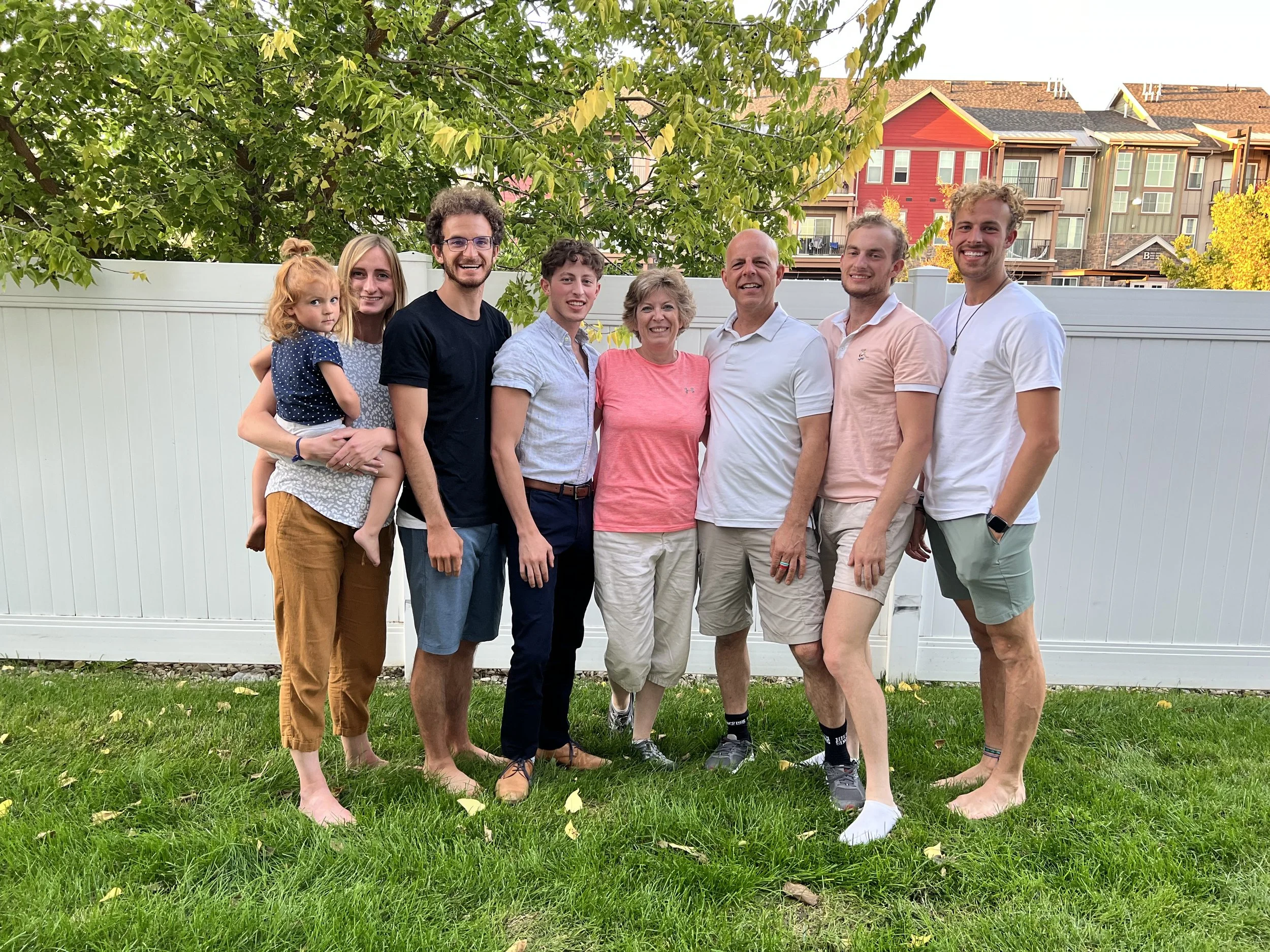
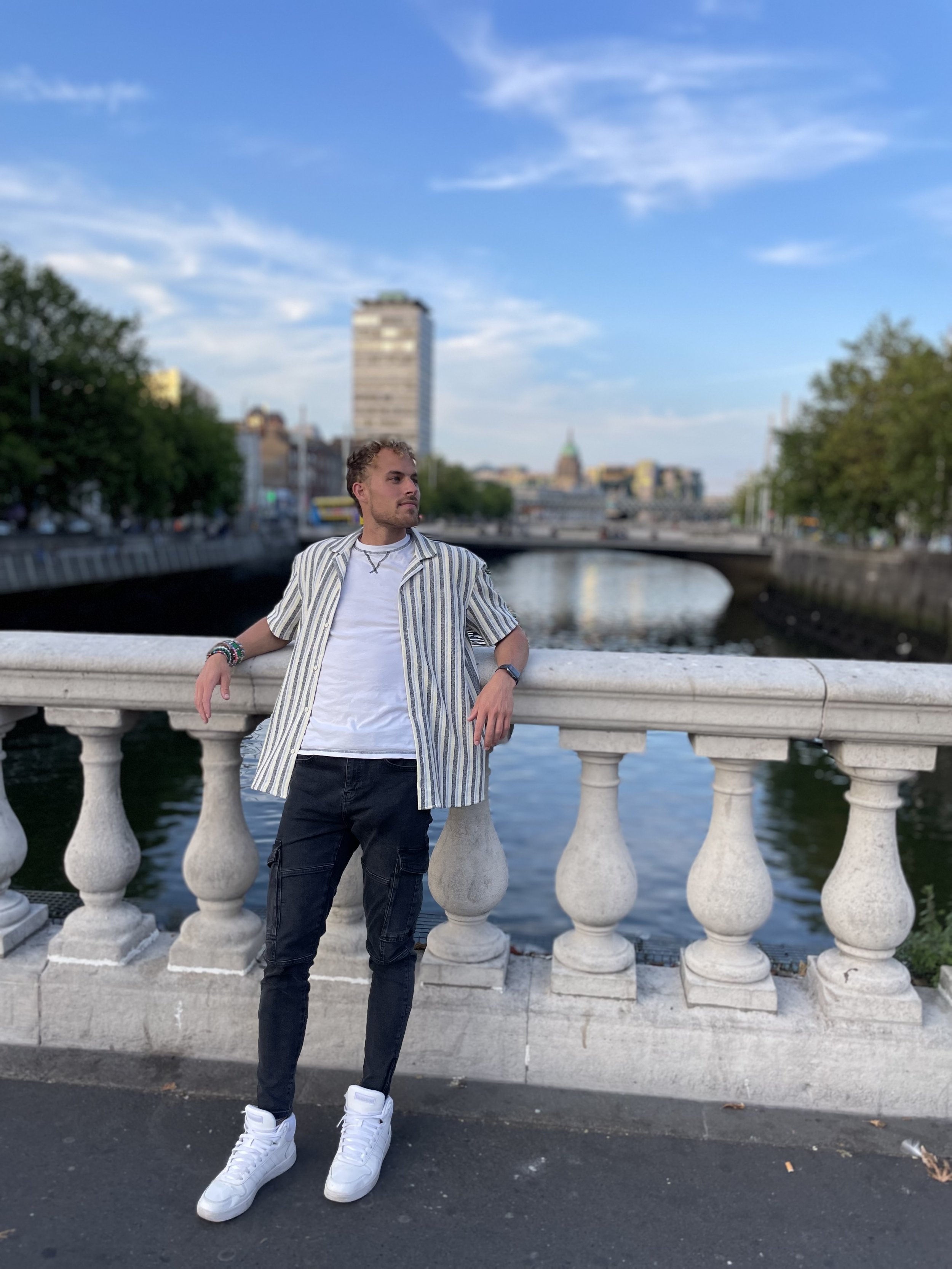

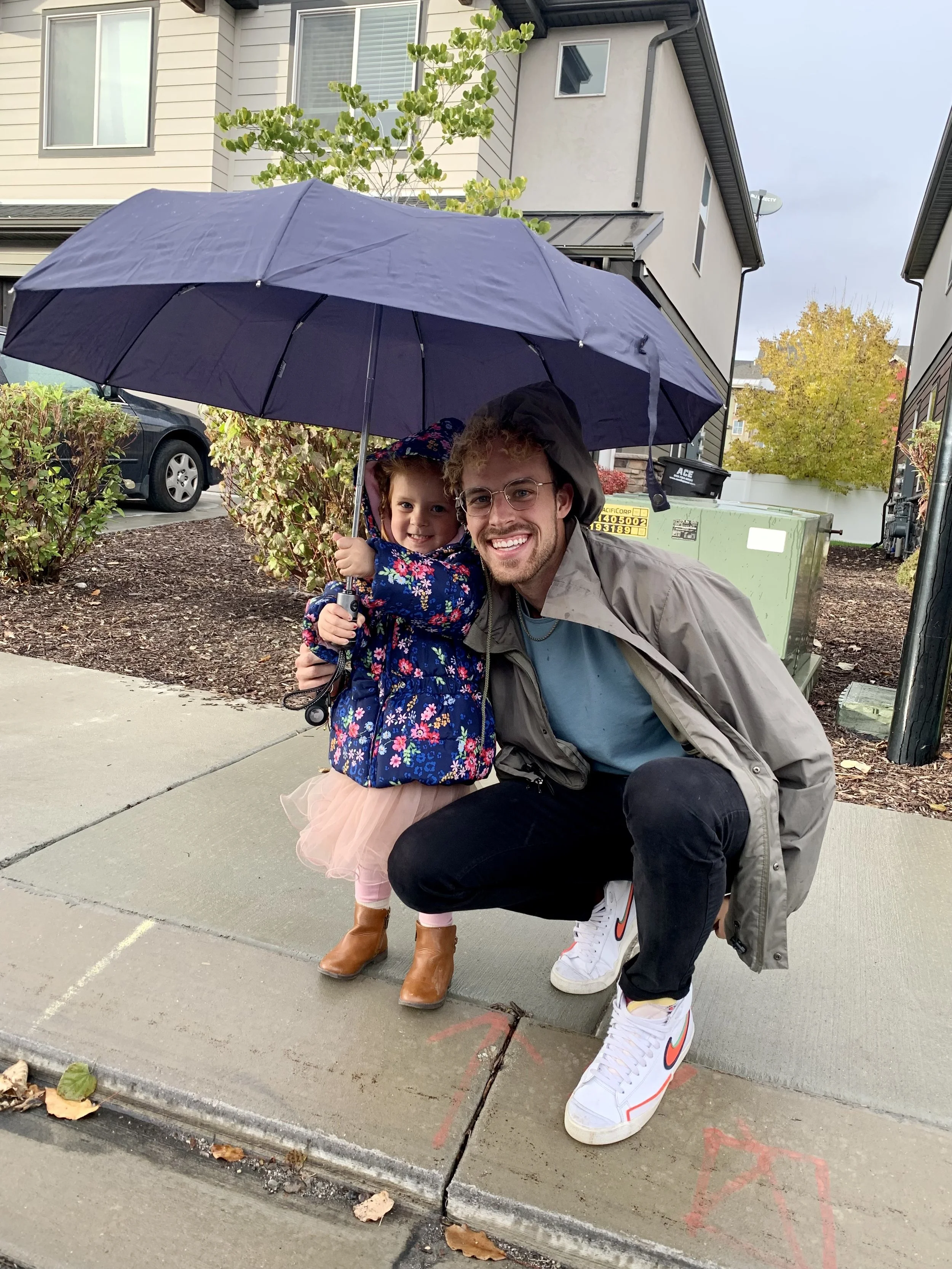
JENNIFER WEST
For Jennifer West, 34, of Cottonwood Heights, UT, there was a time when she was told she couldn’t teach, speak, or pray in the church in which she had grown up. She was the oldest of 6 kids born into an active LDS family, and Jennifer says that as a youth, she “had no idea I was gay—none at all.” When she was at BYU she noticed all her roommates seemed really into dating, but she recalls, “I didn’t get it. I wondered if that might mean I was gay… I had always been a tomboy, liked sports, etc. But I thought the idea of kissing a girl was just as weird as the idea of kissing a guy, so I decided that wasn’t it.”
For Jennifer West, 34, of Cottonwood Heights, UT, there was a time when she was told she couldn’t teach, speak, or pray in the church in which she had grown up. She was the oldest of 6 kids born into an active LDS family, and Jennifer says that as a youth, she “had no idea I was gay—none at all.” When she was at BYU she noticed all her roommates seemed really into dating, but she recalls, “I didn’t get it. I wondered if that might mean I was gay… I had always been a tomboy, liked sports, etc. But I thought the idea of kissing a girl was just as weird as the idea of kissing a guy, so I decided that wasn’t it.”
It was during this time that Jennifer stopped going to church. She didn’t love how singles wards turned church into a social event, and didn’t feel any sense of spiritual connection so she drifted away. After seven years of inactivity, at the age of 26, Jennifer decided to give the church one more shot. She says she told Heavenly Father, “Ok, I’m going to really gives this one last try - if there’s something you want me to do, I’ll try to do it.” She decided to meet with her bishop about getting a temple recommend, and he suggested she should prepare to receive her endowment. She says, “I was like, ‘Whoa, buddy, let’s start with just doing baptisms again’.” But next thing she knew, Jennifer shocked her parents by announcing that not only was she now attending church again, but she was selling her townhouse and quitting her job to go on a mission.
The same week she got her call to Cleveland to serve in the Kirtland Visitor’s Center, a longtime female friend said she had feelings for Jennifer. This friend had been romantically involved with a woman before, but was committed to staying connected to the church. Things evolved in their relationship past the point of friendship, but Jennifer didn’t worry much about what it might mean. She just thought she loved this friend--she loved a specific person; it wasn’t about gender, and she was about to leave for 18 months. But just three months into her mission, Jennifer was in a terrible car accident that forced her to return home and live in her parents’ basement for eight months of recovery. Friends from her mission had told Jennifer there must have been a reason Heavenly Father wanted her back home. Most assumed or implied it must be to get married, so she threw herself into dating apps and going on dates with men. At the same time, she found her romantic interest in her friend started to pick up again.
Still, Jennifer was unsure about her orientation until a friend described attraction to her in a way that finally clicked. Her friend summarized attraction as feeling that the more time you spend with someone, the more time you want to spend with them. Jennifer says this understanding “blew my mind,” and she realized that she had absolutely experienced that with some of her female friendships, but never with men. She also realized that once she was able to recognize the emotional attraction, the physical kicked in pretty quickly and kissing was not, in fact, weird or gross, but wonderful. It was then, at age 28, that Jennifer came to terms with the fact that she is gay.
She then had to figure out what to do. She started seeing a therapist, doing mostly unhelpful Google research, and spent hours and hours in prayer. She remembers getting to the point where she was just asking Heavenly Father to help her feel some sort of guilt if this was wrong, because she didn’t know how to repent and change if she didn’t feel that remorse. She didn’t know how to choose between two core parts of herself. As a result of her return to church activity and subsequent mission and car accident, she had a real conviction about the power and importance of the gospel in her life.
As she opened up to friends, Jennifer was met with many opinions—most along the lines that it would not be possible for her to both date women and stay in the church, with one friend saying being gay and staying in the church was like being “a German Jew in the Nazi party.” Most suggested she just needed to let the church go and “be happy.” But as she puts it, “I didn’t feel like I could choose to dis-believe in the church or not care about it any more than I could choose who I was attracted to.”
For awhile, she decided she just had to be ok with being alone for the rest of her life. She wanted to feel needed, and to have some warm bodies to come home to, so she filled her life with animals. Jennifer had cats, then fulfilled a lifelong dream of having pigs, and now three large dogs she adores. But animals couldn’t quite fill the void.
She ultimately arrived at a place where she felt peace about doing both - staying committed to the church and also dating and trying to find her person. As Jennifer considers her own spirituality and relationship with her Heavenly Father, she says, “I think it’s entirely possible that I’ll get to judgment day and learn I made wrong decisions. But I also know that if I do my best to try and be the person God wants me to be, things will work out. For me, it feels like that path includes a life with someone. The sacrifice and growth I experience in a relationship make me a better, happier, kinder person, in all the ways I think God wants.”
Jennifer knew there might be ramifications when she first prepared to come out to her church leaders while dating. She says, “I knew I likely would lose my recommend, but the temple had never been my favorite thing so I thought I could give that up.” She met with a local church leader who told her he indeed needed to take away her recommend. This meant she couldn’t go to her brother’s wedding, but she wasn’t ready to tell her family why, so she just told them she couldn’t go to the ceremony but would be waiting outside.
When she finally decided to come out, Jennifer sat her parents, Will and Lisa, down but found she couldn’t really talk. They said, “Do you want us to guess what’s going on?” She said, “Yeah.” The first thing they asked was if she was pregnant, which she laughs about, saying, "That wasn't where I expected them to go.” “Do you have a new job?” they asked. Finally, they guessed she was gay. She told them about her relationship at the time and her dad’s first reaction was to ask if her girlfriend wanted to join them on their next family trip to Lake Powell. Her mom followed with, “Have you thought about having kids? Because I’ll totally babysit.”
When Jennifer was 21, she got a tattoo and her mom had cried. She says, "Coming out seemed like a way bigger deal than a tattoo but there were no tears about this." She asked her mom about it and Lisa replied, “That was you defiling your body; this is just you telling us something about yourself!” She was so grateful her parents handled everything as well as she could have ever hoped.
Jennifer continued to attend church and serve in whatever callings she was allowed to hold, “It has been far harder to navigate being out and staying connected to the church than I expected it to be, or maybe just hard in different ways than I expected. I didn’t miss the temple, but it was hard to be met with church policies that seemed to say I wasn’t wanted at all (no teaching, speaking or praying).”
Jennifer chose to stay and find a spiritual outlet through music. Hymns and gospel songs have remained an uncomplicated way to stay connected to the spirit. Since she couldn’t teach at church, she made up and started teaching a class about hymns in the evenings after her day job for anyone who was interested. Policies have since changed (in 2020) where members are no longer disallowed from teaching or speaking in church just for dating someone of the same sex. She is out to her ward where she teaches Relief Society, and says her ward “is awesome.” But it was a bumpy journey to get to this place.
After Jennifer’s first relationship ended, she proceeded to date more intentionally and again found ‘doing both’ harder than she expected it to be. She learned the gay dating scene in Utah was not very accepting of people still wanting to be in the church. “It seemed like the best I could hope for would be to find someone who could at least tolerate my church participation.” There were a few relationships over the next few years and she learned how challenging it could be to have different beliefs than the person she was dating. She started to lose hope, thinking maybe everyone had been right about it not being possible to make dating and the church work.
Jennifer just needed a place where she felt a sense of belonging. She says, “All the groups or associations I was aware of seemed to prescribe one right path. They were either people who had left the church and thought that was the only way to find peace, or people who thought I should just stay single or try to marry a man.” Jennifer was eventually persuaded to attend a Zoom meeting of an LDS LGBTQ women’s group where she finally felt seen and understood. She says she sobbed as she realized here, she could be her whole self. She felt a sense of hope and spiritual renewal that inspired her to meet with her Bishop to get a temple recommend.
While she wasn’t looking for a girlfriend, she met a woman through the LDS LGBTQ group and they are now dating. They are both committed to the church and to holding temple recommends, which puts limits on what their future might look like but they are enjoying their developing relationship and the idea of having someone “to just do life with.” A lots people are vocally skeptical that this type of relationship can work but Jennifer appreciates the people who are supportive and trust her to navigate things. “It’s a really hard thing to figure out. I don’t know if a lifelong, romantic companionship like this can work. But I’m optimistic and I know God is good with me. As long as I’m trying, He’s going to be on my side and help me figure it out.”
Jennifer recognizes, “If you’re going to be a gay member of church, there isn’t an easy path. You have to pick your hard and figure out what works for you. I knew I’d have to give up something - in my current situation the biggest thing I’m having to give up is sex and that feels doable. If I chose to give up dating and be alone, that would be hard every single day. If I chose to leave the church, I would feel the lack of goodness and spiritual connection in my life constantly. Keeping the law of chastity definitely means some hard moments, but it’s not an every-day hard.” She continues, “I believe this path of staying in the church, having a temple recommend, and having a person in my life, allows me to be the best version of myself, which is what I believe God wants. I feel lucky to have landed here, for a long time I didn’t think this was possible. Whether it’s possible for the duration of life, I don’t know. But I’m sure grateful for all the joy and peace in my life right now and hope other LGBTQ church members can find the same peace, whatever their path looks like.”
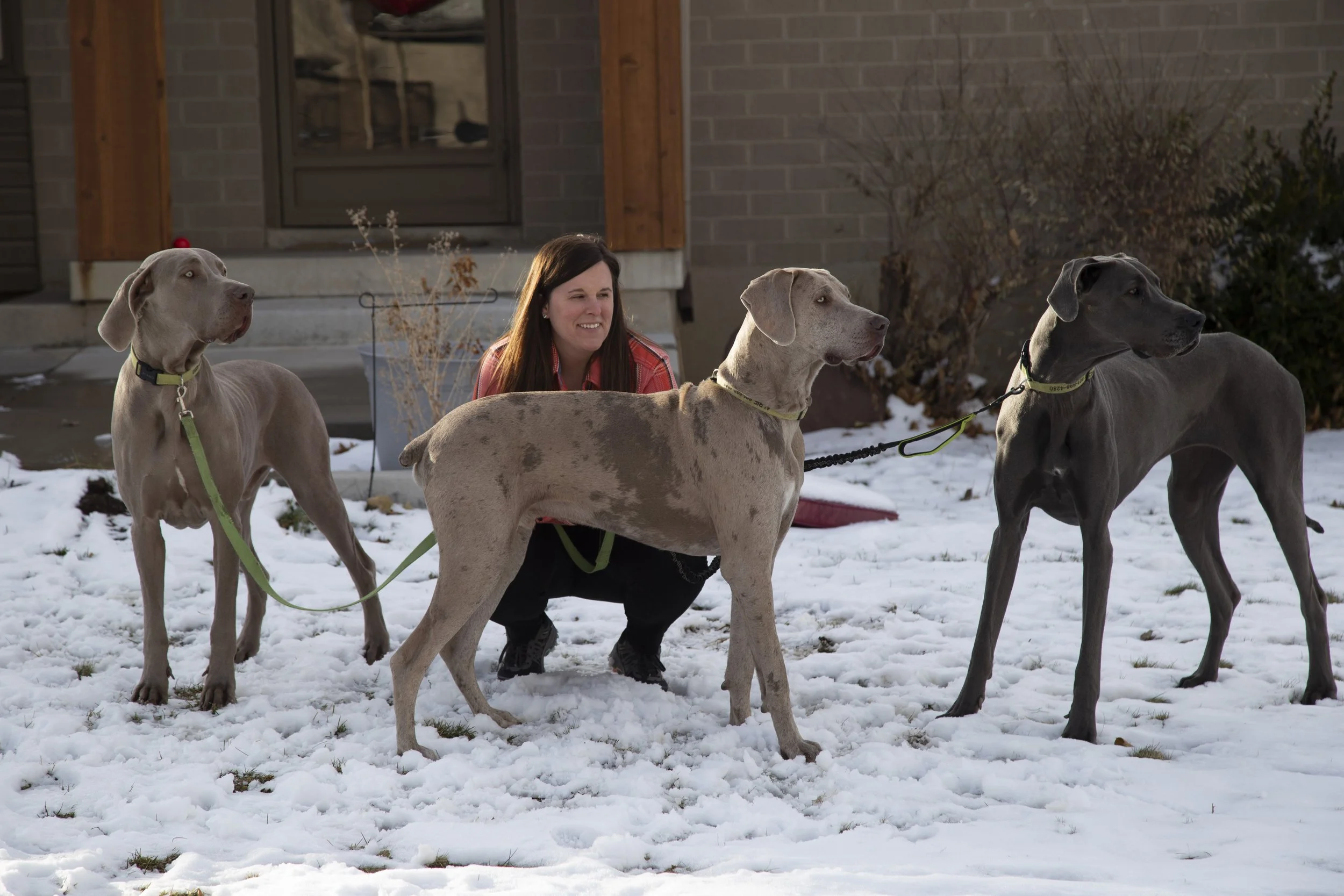


CORA JOHNSON
Cora Johnson grew up in Snowflake, AZ -- a small town so predominately LDS it’s been dubbed “Little Utah.” But she’s grateful to have also grown up in an open-minded household with parents who taught her from an early age to ask questions and to explore other cultures and ideas. Having prioritized global travel above “just about everything else,” Cora says her parents, Cooper and Cameo Johnson, have instilled their “vagabond genes” in each of their four kids: Cora – 21, Granger – 19, Jonah – 17, and Ezra – 13. While balancing a full and hectic life, through good and bad financial times, whether it be starting a business or pursuing higher education and trying to meet the needs of all members of the family, they always prioritized travel. Together, the family embarked on adventures everywhere from Morocco to Malaysia. Cora managed to visit 32 countries and all 50 states before her LDS mission to Santa Rosa, CA, and upon her recent return, just squeezed in a trip to Europe, the Middle East, and Africa. It’s this broader perspective that Cora credits as having helped her navigate her inner journey of being queer with confidence…
Cora Johnson grew up in Snowflake, AZ -- a small town so predominately LDS it’s been dubbed “Little Utah.” But she’s grateful to have also grown up in an open-minded household with parents who taught her from an early age to ask questions and to explore other cultures and ideas. Having prioritized global travel above “just about everything else,” Cora says her parents, Cooper and Cameo Johnson, have instilled their “vagabond genes” in each of their four kids: Cora – 21, Granger – 19, Jonah – 17, and Ezra – 13. While balancing a full and hectic life, through good and bad financial times, whether it be starting a business or pursuing higher education and trying to meet the needs of all members of the family, they always prioritized travel. Together, the family embarked on adventures everywhere from Morocco to Malaysia. Cora managed to visit 32 countries and all 50 states before her LDS mission to Santa Rosa, CA, and upon her recent return, just squeezed in a trip to Europe, the Middle East, and Africa. It’s this broader perspective that Cora credits as having helped her navigate her inner journey of being queer with confidence.
Cora was in tune with who she was from a young age. A self-proclaimed tomboy, most of her friends were boys, partly because she was more interested in their pastimes, and partly because she didn’t like to have girls as close friends because she’d end up developing crushes on them. While Cora’s attraction to girls was clear to her, she didn’t talk about it often – figuring it didn’t matter that much.
From about the age of 10 or 11, Cora resolved she wanted to serve a mission, a notion that didn’t go away, even as she started to come out to others around age 17. She didn’t make a public announcement, but told her family and friends, who largely responded positively – even a line-up of extended family members who she feared might not due to their traditional LDS mindsets. As she suspected, Cora’s parents were very supportive and loving, though Cooper did advise his daughter to be cautious about coming out in the church. Worried it might end up hurting her, he warned her that the church might not always be a safe and secure space.
A couple years passed and as Covid changed the landscape of the nation, Cora decided she was ready to leave Arizona to serve that mission. She’d come out as bisexual already to her bishop and stake president, both of whom were very affirming and supportive of her desire to serve. But they both advised her to keep her sexuality on the downlow, reminding her “your mission is not about that/you.” Cora reasoned she could keep things under wraps. Off she went to Santa Rosa, CA.
While her mission was a lot harder than expected (especially regarding the need to harbor any mention of her orientation), Cora loved every minute of her 18 months in the field. She felt nothing else she had ever done had grown her relationship with and love for the Savior more. As she began to draw close to her fellow missionaries, one day she found herself in a conversation with a group in which another sister expressed how she’d recently come out and was struggling with emotions Cora herself had faced. Feeling a strong desire to be of service, Cora said, “I know how hard coming out can be – I’ve done a lot of research and can help if needed.” In this one statement, Cora felt a renewed purpose as she discovered another pocket in which she could be of service. Over the course of her mission, she ended up meeting many other missionaries who were also trying to navigate being queer in the church. Cora found her peers to be affirming for the most part, particularly one companion she had for half her mission who was “amazingly supportive and open to learning.”
Still, Cora tried to keep it all on the downlow, reasoning that when you’re on a mission, your romantic life shouldn’t be your focus. But as so often happens with sisters and elders who serve in the same area, Cora met a sister missionary in a nearby area for whom her feelings were undeniable. Word somehow got back to her mission president, who was not pleased and made sure to keep them assigned as far away from each other as possible. And Cora now had a new dilemma on her hands – she knew that when she’d return home from her mission, she would have to come to terms with the fact that the church she loved so much and had dedicated her life to had teachings in direct conflict with the future she now knew she’d be pursuing. While she tried to maintain focus on the work, Cora began to fear that the hope of the Atonement she was so committed to teaching to others wouldn’t extend to her unless she was willing to give up a romantic relationship. For the first time, Cora didn’t know whether she’d be able to authentically remain a member of the church while being queer.
Cora turned to her parents for advice; ever loving, they lifted her spirits. Her mom assured her, “What you’re doing right now is good. God loves you as you are. What you do or don’t do when you get home will not diminish the value of the experiences you’re having right now, and the help you’re providing people.” Cora recalls it was still of course difficult, but without the positive encouragement from her mom, she wouldn’t have been able to push through. Cora finished strong, and returned home to Arizona, where she is now working at the Phoenix airport while completing prerequisites to apply to nursing school. The adventure seeker still loves traveling “more than anything else in the world,” and also enjoys hiking, camping, being outside, concerts, snowboarding, and longboarding.
To any other queer youth considering the mission field, Cora advises: “Definitely pray about it a lot. Consider all the possibilities, because temple covenants are a big deal – and that’s one thing that gives me a lot of anxiety. Missions are amazing, and I’m so glad I went on mine. But they can be very difficult.” Especially for LGBTQ members. Cora says, “Going into my mission, I knew I was bi and queer, but I assumed when I came home, I’d probably try to get into a relationship with a guy and marry in the temple. I did not anticipate falling for a girl.”
Since coming out and coming home, Cora has maintained her church activity while also becoming much more vocal and active in the LGBTQ community. During Pride month, she posted an invitation on her Facebook profile (@hna.colocha) for followers to ask her (anonymous) questions about the reality of being LGBTQ in the church. Her answers have continued to shed light to a mostly kind and receptive audience, including many extended family members who Cora didn’t anticipate would be so open to hearing more about her experiences.
The Johnson’s home stake recently asked Cameo to give a talk on inclusion in stake conference, which Cora says was “amazing.” Cora appreciates how her parents have both chosen to be so open about their family’s journey. Her brother Granger is now serving a mission in Colorado Springs, where he, too, has had opportunities to speak up and speak out about having a queer family member. “It’s been really, really good,” says Cora. It’s this kind of familial love and support that Cora credits for being the reason she has been able to adjust so well as her journy has taken her all over the world. And always, back to a loving home.