lift+love family stories by autumn mcalpin
Since 2021, Lift+Love has shared hundreds of real stories from Latter-day Saint LGBTQ individuals, their families, and allies. These stories—written by Autumn McAlpin—emerged from personal interviews with each participant and were published with their express permission.

THE LESUE FAMILY
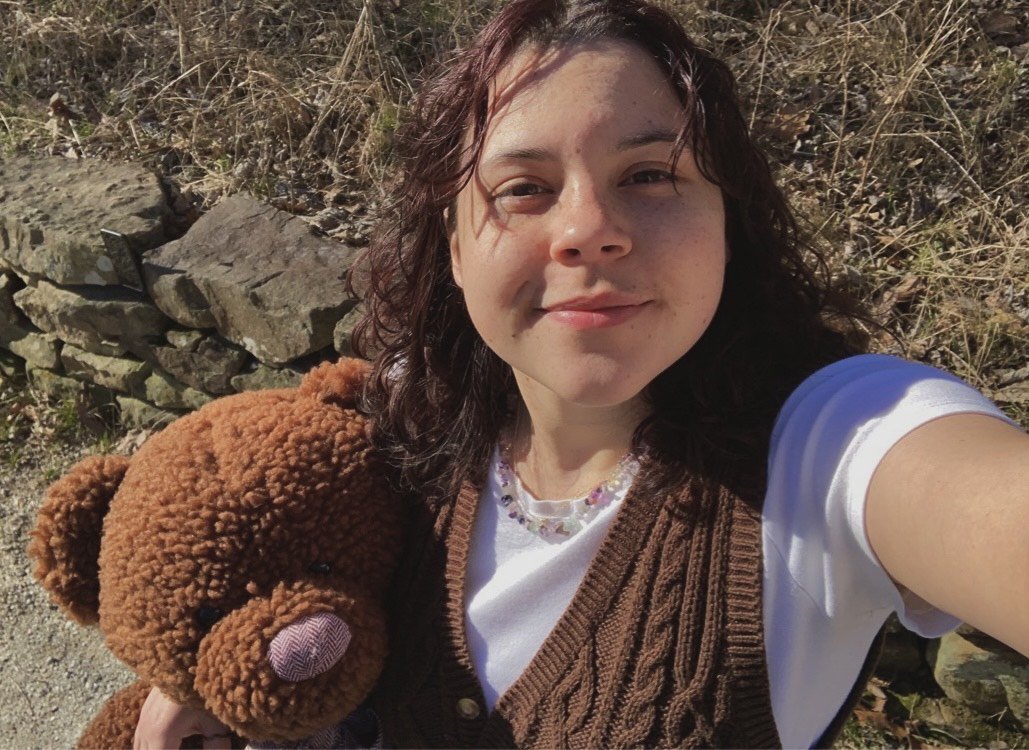
In a small town in southwest Missouri, about an hour from where the new Springfield, MO temple will be built, there’s a busy, bustling home wherein you can find the Lesue (pronounced le-sway) party of 11. Ben and Rebecca Lesue’s nine kids range from ages seven to 23. Rebecca home schools on top of teaching group piano lessons to 36+ students from the community, so rare is the quiet moment. But they’re used to happy noise…
In a small town in southwest Missouri, about an hour from where the new Springfield, MO temple will be built, there’s a busy, bustling home wherein you can find the Lesue (pronounced le-sway) party of 11. Ben and Rebecca Lesue’s nine kids range from ages seven to 23. Rebecca home schools on top of teaching group piano lessons to 36+ students from the community, so rare is the quiet moment. But they’re used to happy noise. Rebecca’s the oldest of 12 kids, and Ben’s the oldest of four. They met in the middle, plus one, when their grand finale was, surprise – twins! “Our lives are measured by before twins, and after twins; they rocked our world,” laughs Rebecca. Luckily, Ben, an English teacher as well as an officer in the Army National Guard, is often around to help manage the chaos at home as well as take the older kids along on outdoor adventures as he strives to meet his goal of climbing the highest peak in every state.
The peaks and valleys of the past few years have also included a pre- and post-2020 mindset for Ben and Rebecca as devoted LGBTQ+ allies and advocates. In April of that year, one of Rebecca’s younger brothers, a returned LDS missionary, came out as gay.
“Immediately, this changed our hearts,” says Rebecca, of her family’s views on LGBTQ. “Before, there had been cousins and nieces who identified as LGBTQ, but they lived far away. When it’s someone in your immediate family who you know up close, then you realize how many stereotypes aren’t true.” Rebecca’s entire family responded with love toward her brother. About a year later, after Elder Holland’s address to BYU in August of 2021, both Rebecca and Ben felt compelled to increase their understanding of LGBTQ issues. They binged books and podcasts including Tom Christofferson’s book, That We May Be One and the Questions from the Closet and Listen, Learn and Love podcasts. The Lesues were especially moved with how the Christofferson family resolved that nothing would take Tom (or his partner) out of their family circle of love.
In November of 2021, Rebecca started reading Charlie Bird’s book, Without the Mask. Out of nowhere, she felt impressed that their daughter Ana also needed to read the book but Rebecca didn’t know why. Ana had moved about an hour away to attend a community college, and her parents knew she had been struggling with some anxiety for a few years, but they could never pinpoint the source. Rebecca says she felt inspired to write Ana an email in which she asked, “Is there a reason I should be worrying about you?” The next day, Ana replied that Rebecca’s worries weren’t baseless because she had been feeling “a little more sad than usual… I was reflecting on how many times it has felt like God has stood me up… I’ve accepted myself as part of the LGBTQ+ community.” More specifically, Ana identified herself as nonbinary and queer. She said she didn’t want to go to church anymore because “the church doesn’t make a place for those who are queer.”
Rebecca admits she had to google the words “nonbinary” and “queer.” She says, “Truthfully, it might have been easier if she’d come out as gay or trans, because I had zero context for ‘nonbinary’ or ‘queer’.” When asked what those terms mean to her, Ana replies, “In the simplest terms possible, being non-binary and queer just means I don’t identify with gender or sexuality as society has defined them… For me, gender is complicated. I feel connected to it very deeply, yet I don’t at the same time. I’ve experienced a lot of dysphoria in the past about being seen as a woman, but I like being a woman sometimes. Other times, I know I’m not just a woman. Gender is fluid and ever changing to me, so narrowing it down to one very specific label didn’t work. It’s the same way with my sexuality. Being non-binary and queer just means I’m pushing away what I thought I knew about gender and sexuality, and I’m letting my feelings be my guide.”
Of their learning curve, Rebecca says, “Ana was patient with us, and gave us the benefit of the doubt that our questions were because we wanted to understand and not because we were trying to attack her.” Ben observed that after Ana came out, she was much happier, as if a weight had been lifted. “Her great smile, which we hadn't seen for a long time, was back. It was a relief to see her being herself again. It occurred to me how awful we are as a society that we don't allow people to be their authentic selves -- that we force the LGBTQ community to live lies. It's an integrity thing--we expect people to be honest, yet we don't allow them to live their truth by shaming, criticizing, discriminating, and othering people who don't fit the mold. That is why I work for inclusivity now, especially in the church.”
After Ana came out, Ben was 100% ready to be an ally, an activist, and a protector for Ana. But Rebecca was worried about pushing Ana to define herself too soon or blocking her into a corner by being public. And Rebecca needed more time to process the whole situation. She says, “For me, our daughter leaving the church was harder than her coming out.”
At the time, Ben was serving as a counselor in the bishopric and he was moved by how supportive their bishop, a close friend, was and how often he consulted Ben on LGBTQ+ issues that arose in the ward. With their stake president’s support, they planned a ward LGBTQ-themed fireside to educate the members in order to create more safe and inclusive spaces. They faced pushback from some ward members, but they concluded that was just more evidence they needed to move forward.
That bishopric has since been released, but Ben wears his Dragon Dads pin to church, which sometimes leads to uncomfortable conversations. But Ben says, “That confirms it’s important for me to wear it.”
Besides loving to hike and climb with her dad, Ana, who describes herself as a shy kid who “talked more to (herself) than to friends growing up,” loves reading fantasy, romance, mystery and sci-fi novels and comics and storytelling, as well as communicating with sticker covered letters to several pen pals. She also loves “watching zombie TV shows, obsessing over stationary and little trinkets, and thrifting Hawaiian shirts that are much too big for me.” Ana started homeschooling in high school, after being bullied through middle school. In hindsight, her parents feel the choice to home school may have saved their daughter’s life.
Before coming out to her parents, Ana had already confided in some online friends, an LGBTQ+ cousin, and two of her sisters. She says while her parents seemed “blindsided,” they have been supportive and she says she “never had to question whether I’d be safe, accepted, and loved, and for that, I’m very privileged, but my anxiety still made it hard to talk about it.” She came out publicly in a social media post on October 11, 2022, National Coming Out Day, and says she received many heartfelt messages of love and support from extended family and friends. Ben and Rebecca remained on standby to field any unkind responses.
Ana stopped going to church in 2021, which felt complicated considering her roots. She says, “My mother's family has members going back generations and my father's mom was one of the first members ever in her small community in Mexico. My family and the church seemed inseparable. That saddened me deeply... I didn't know how to reconcile my blooming identities and shifting testimony with the picture-perfect plan I had made with God in mind. I prayed a lot without any answer, so I learned to figure it out on my own… I can of course appreciate some of the good values I got from the church, but at this point, I don't know that I'll ever revisit it. That is, not until God decides gay couples aren't an attack on the family and lets them get married in the temple at the very least.”
The rest of the Lesue family still attends church and their oldest son is preparing to serve a mission. But Ben says, “This all caused me to question a lot about the church for a while; it was pretty negative and caused some strife. But as I continued to read, I learned about faith transitions and recognized that as what I was experiencing. I think I’m coming out on the other end of that process now with a deeper, albeit a different faith that’s more strongly rooted in Heavenly Father and Jesus Christ than maybe the church itself. I am active, though, and feel I need to stay in to advocate and hopefully bring about some change – which is easier to do from the inside.”
Rebecca says she is more careful to honor the personhood of each of her children and tries to parent by principles rather than arbitrary rules. She focuses on leading with love with their kids. She advocates for LGBTQ+ by sharing positive comments and experiences, and by speaking up if someone says anything negative. She says, “I think we can quietly be an advocate to one person at a time.” Rebecca’s also received the prompting to “Stand ye in holy places,” and has found comfort in increasing her temple attendance and trusting the Lord will work out all the details of where everyone fits into the plan. “I believe it’s beautiful; we just need more revelation”.
Rebecca says that for a long time before Ana came out, she had wanted to put a tag on her Facebook profile that she supported LGBTQ+, but she wasn’t sure how it would be perceived – would it be offensive to her conservative friends and piano clients, and/or possibly to her LGBTQ+ friends who might sense that she was posturing but not actively advocating? But after a podcast episode on which Charlie and Ben spoke about how meaningful it was to them if someone wore a rainbow pin, she decided to add that support sticker to her profile. She says, “Ana came out to us just a few weeks later, and I was so glad I had added it. And since then, several of my LGBTQ+ friends have told me they feel happy and supported whenever they see it. It is a small thing, but it is meaningful.”
Of this experience, Ben says, “I’ve grown to be more compassionate, whereas before, empathy and compassion weren’t big strengths for me. Our family is more openly loving toward each other. We realize that having an LGBTQ child wasn’t a curse or a trial , but a gift that teaches us how to love better, in a more Christlike way. We’re more unified as a family – our kids are each other’s best friends. The older four especially hang out together, go shopping and attend KPOP concerts.” Rebecca adds, “You can tell when Ana is home because there’s so much happy noise in the house – laughter, jokes. She’s such a gentle, loving soul and a great big sister. I know she needed to move out to grow up and all, but I miss her – the spirit she brings into the home. She’s a gift to our family. If anything, we just feel honored that God trusted us with her and blessed our family with her.”



THE RIDDLE FAMILY
“Absurd times call for absurd amounts of love.” This quote is prominently displayed on Piper Riddle’s Facebook page and it only takes about two minutes with Piper, a school principal in Heber City, UT, to see that she is expertly trained and positioned to deliver the absurd amount of love needed in her home and community.
CONTENT WARNING- SUICIDE AND SELF-HARM
“Absurd times call for absurd amounts of love.” This quote is prominently displayed on Piper Riddle’s Facebook page and it only takes about two minutes with Piper, a school principal in Heber City, UT, to see that she is expertly trained and positioned to deliver the absurd amount of love needed in her home and community.
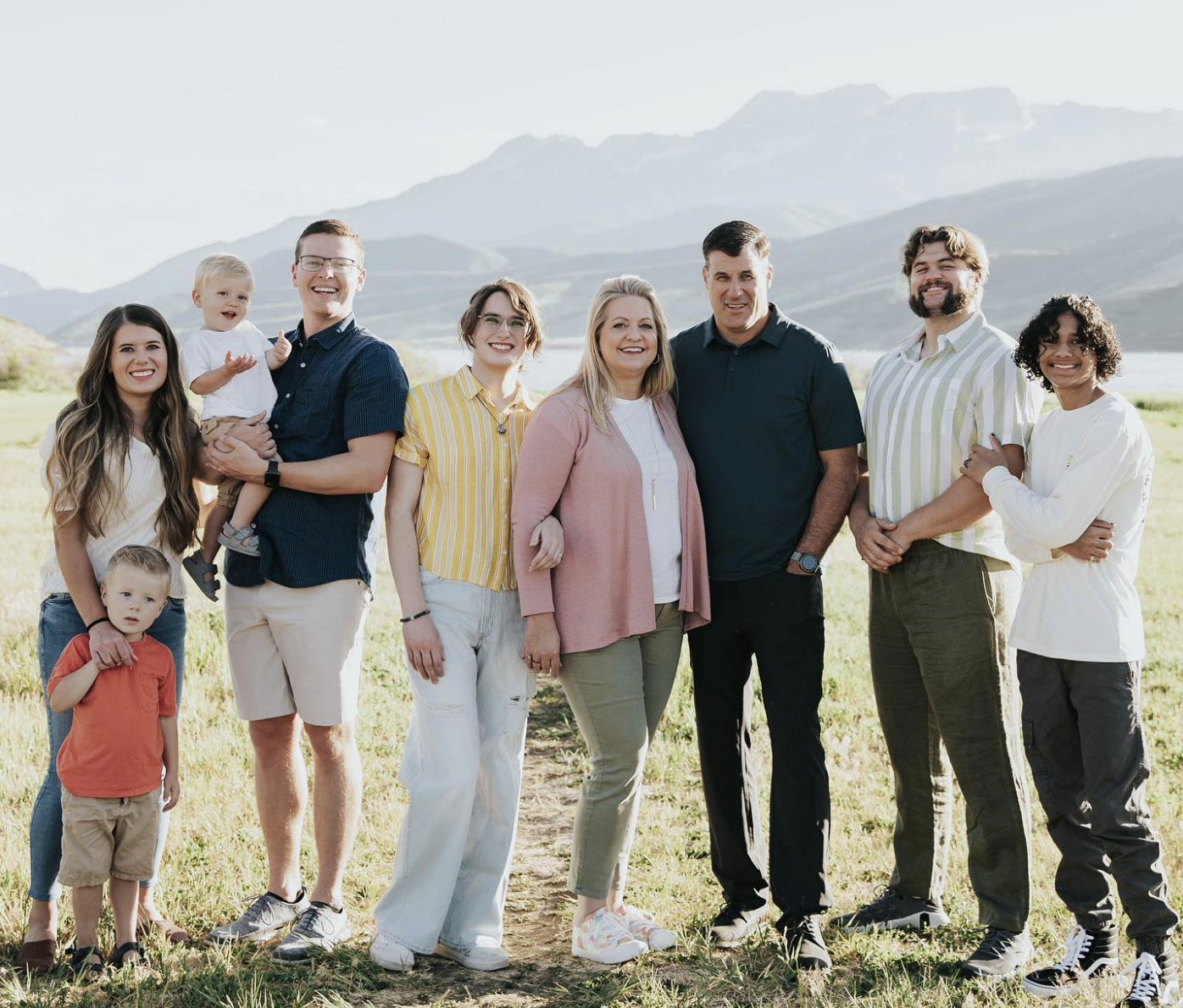
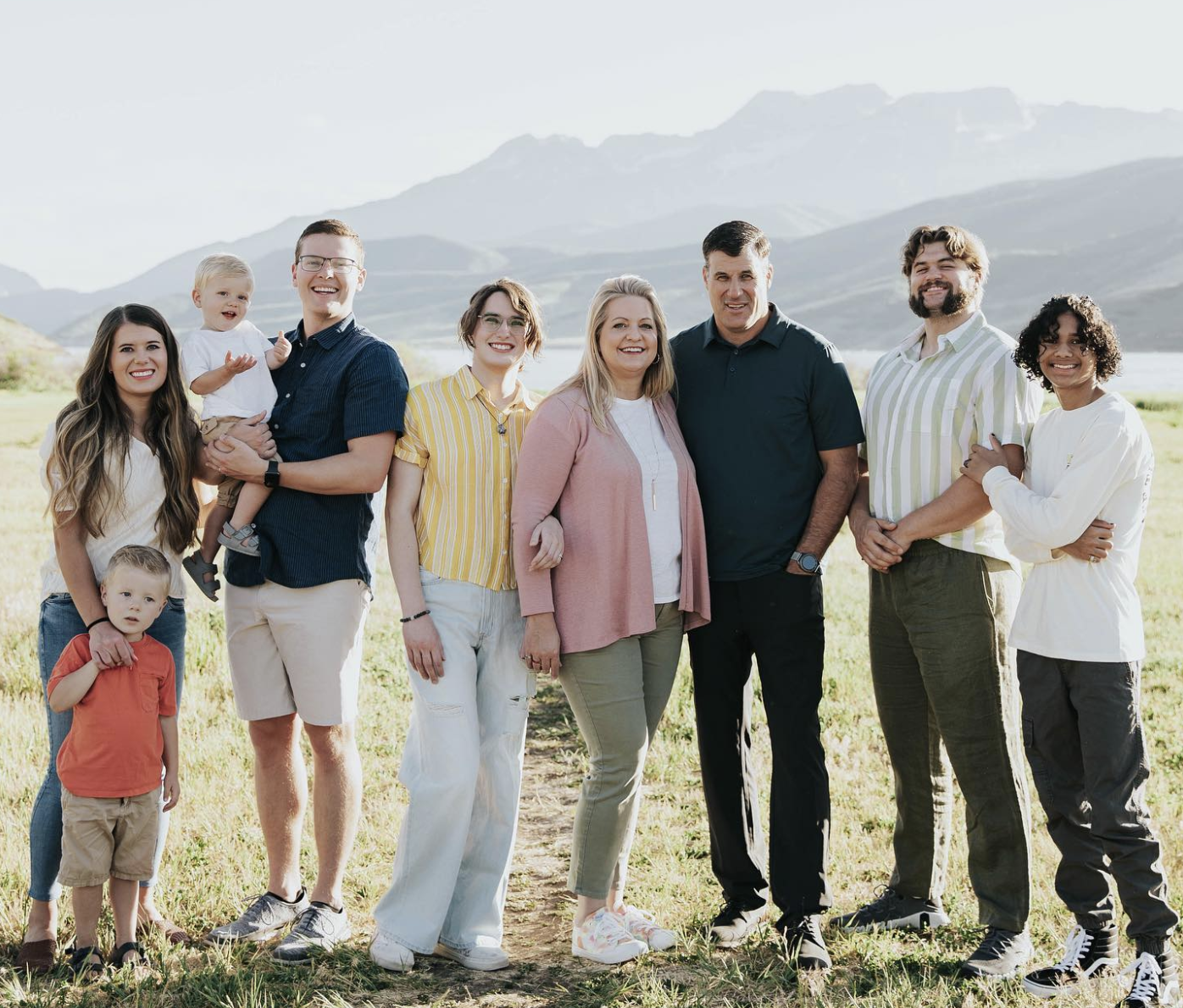
Piper and her husband, Rod, have four children who have opened their hearts to the many hues of expansive love. Their oldest daughter, McKay (26) is married to Aaron and they are the parents of two little boys. On being a grandma, Piper gleams, “You cannot oversell it. It’s the best.” Piper and Rod’s oldest son, Lander (24), was diagnosed with Asperger’s in elementary school and was the first to expand the family’s views on many concepts including mental health, neurodiversity, and their family’s place in the church when he expressed his doubts regarding the faith in which he was raised. He has since sought truth and meaning in many religious ideologies. The Riddles’ third child, Lucy (she/her, 21) came out as transgender right before the age of 20 and is now “a brilliant and brave substitute teacher” in the very Wasatch County high school she struggled to attend as a teen herself as she battled anxiety, depression, and loneliness. Calvin (14) is a newer addition to the family; his adoption just became final in December 2022. The Riddles became his surprise foster parents over three years ago after getting to know him during Piper’s tenure as his principal at Heber Valley Elementary. Calvin had lived with many foster families in the county before Piper felt nudged to bring him home. “Raising Calvin has created an opportunity to expand our parenting skills, particularly for children who have experienced neglect and trauma.” The Riddle parents have come to an understanding that, while they continue to teach and guide their children to make healthy decisions, their children may not choose traditional paths. And the Riddle kids have indeed taken their parents on various paths they did not foresee.
Piper and Rod have been married for 29 years and raised their children in the same church in which they were both raised. Around the age of 15, Lander approached them and admitted he no longer believed the church was true and he was going to disengage. Piper says, “Lander is a really good kid; he’s kind and quirky, and has always struggled with depression and anxiety. The church just wasn’t working for him.” This was the beginning of Piper and Rod seeing the church and its membership in a broader context, which helped prepare them for what would happen eight years later.
In 2021, Lucy, who was assigned male at birth, approached her parents and said, “I’m a girl; I know it doesn’t make sense to others, but it does to me.” They didn’t necessarily see this coming, though they knew she had struggled over the years with depression and body issues. Once Piper learned about body dysmorphia, she finally understood. Piper says Lucy had friends in elementary and middle school, but as high school came and people sorted out their social cliques, Lucy found herself alone and struggling. “She was a sharp dresser and people assumed she was a gay male; this was frustrating to her.” Lucy’s depression peaked through her teen years.
Though Lander had stopped attending church, Lucy was actively engaged in church activities throughout high school. Piper says, “She was a believer. And she was doing all the things she thought everyone wanted her to do.” This included getting her patriarchal blessing from her grandfather, as well as being set apart as an Elder in the church. She was following the track. Piper describes the moment their child stood to be sustained in their ward as an Elder as an awkward moment, because quietly, they knew she was starting hormone therapy. Piper admits thinking, “Oh my gosh, we’re going to get struck down. Yet, Lucy really wanted to do this and she knew it was important to Rod and she didn’t want to disappoint him.“ Rod had been excited about this progression for their child in the church, as their oldest two children had not prepared to serve missions. Piper describes Rod as pretty traditional and says it takes him time to not see things as so black-and-white. Of Lucy’s transition, Piper suggests Rod may have wondered whether Lucy was going through a phase or if this would stick—maybe getting the priesthood would change her mind?
The same Sunday that Lucy was set apart as an Elder, she gave one priesthood blessing—to her father, at his request. Piper said it was very emotional, as Lucy was able to express some powerful sentiments that would have been difficult to say face-to-face. Of witnessing the blessing, Piper thought, “I don’t know if this is right or wrong, but it is what it is. I thought at that moment, if nothing else – for Lucy to have this heart to heart with her dad and express things that were tender to her and to give assurances that Rod needed to hear, then perhaps this is what they both needed. After that blessing, Lucy said, ‘That’s the only blessing I’ll ever give.’ People at large might judge us for Lucy’s ordination, but we navigated the situation as best we knew how, given the timing of the circumstances.”
Lucy’s transition has taken the Riddles on an educational path together as Lucy is now transitioning under the medical oversight of doctors at the University of Utah transition clinic where Lucy says the “doctors have been amazing.” She also has “a great therapist” through Flourish. Piper says, “It’s important to Lucy and to us that she is fully informed as she works through this. I’ve been glad she has taught Rod and me so much about gender and gender identity – the various layers and how gender and sexuality are separate and more complex than we first understood. She’s learned a lot and we’ve learned a lot through her. It’s helped us be more accepting of everybody.”
Piper continues, “When people say, ‘I don’t know how you support a child who is transitioning; that must be so hard,’ I think, no–hard is going to bed every night not knowing whether your child will be alive in the morning. In high school, Lucy experienced cutting and suicide attempts. This space, where our daughter is finding joy and self-acceptance, is way better than the many years of worrying about her self-harm.”
Piper grew up in Boise, Idaho where she felt people could be loved for showing up as themselves in her home ward, and she says the Utah culture in which they’ve raised their kids for the past 24 years has been different than the acceptance she felt as a youth at church in Boise. While Piper and Rod have both had leadership callings over the past 18 years they have been in their ward, they now sense they are the subject of ward council conversations. The bishopric recently asked the Riddles if they would like to include Lucy’s “preferred name” on the church roles. Piper thought, “Lucy is not her ‘preferred name,’ it’s now her legal name. And if I asked Lucy her thoughts, she’d probably say, ‘Just take my name off the rolls.”
Piper continues, “This has all made me want to carve space for people not having to define where they’re at in regard to their church membership. I can have a close relationship with my Heavenly Parents and Jesus Christ that may or may not be reflected in my attendance at church. Currently we attend church sporadically and get a lot of ‘Oh, I’ve missed you,’ which is nice, but it can sometimes be a lot.” She explains there are moments at church that trigger sensitivity, like a deacon passing the sacrament, which draws the memory of the first time Lucy, as a young deacon, passed the sacrament to President Uchtdorf, who was visiting their ward—an experience the family always thought was so neat and cool. But this memory now pains Piper, knowing there is no longer a place for Lucy in the church. “And then there’s those well-meaning friends who say, ‘That’s not true. Have you read this? There are so many things ‘they’ can do.’ And I think, but there are so many things ‘they’ can’t. And the fact that they will always be ‘they’… in a gospel that’s all about change and evolving progression, it seems ironic that we can be so absolute about mortal things… I feel there’s so much we simply don’t know.”
Many in Piper and Rod’s extended families have also struggled to understand Lucy’s transition. Both Rod’s and Piper’s parents have questioned their parenting choices and one has linked their children’s depression to being in the “grips of Satan.” This has obviously been painful.
At the same time, there are also members of the extended families that do understand: Piper’s aunt is a lesbian and the Riddle children have nonbinary and bisexual cousins. Of those who don’t understand, Piper says, “There are those who might say that ‘so many LGBTQ coming out is a fad.’ I think the truth of the matter is that this generation is willing to be brave and authentic, even if it’s uncomfortable for themselves and other people.”
Coming from a difficult background of his own, Lucy’s adopted brother Calvin had no problem accepting her transition and was one of the first to start using her preferred name and pronouns regularly. Calvin has questioned the existence of God before to Rod and Piper, by asking how a loving God would have allowed him to go through all the difficult things he did as a child. Piper replied, “I know there is a God, because how else would you have become part of our family?” She believes God’s hand was involved in Calvin’s placement and adoption, just as His hand has been felt in many of their unique experiences as a family.
Of their approach to parenting a variety of children with different viewpoints and experiences, Piper says, “Rod and I didn’t do anything but provide a safe space for people to live authentically. I’m not going to have a missionary child and I’ve made peace with that. I have kind children who make positive contributions to the world. The expectations we once had while raising our kids in the church might not come to fruition, and that can’t be where I find my self-worth. Rod and I believe that our children’s worth and our value as parents cannot be dependent on our children’s outcomes. Yes, we love seeing them do good, but we also love them when they take unexpected paths – much as we believe our Heavenly Parents do.”
She continues, “I go back and forth in regards to whether I want to leave the church. I know I don’t want to distance myself from Christ’s gospel. What’s sure for me is my relationship with my Heavenly Parents and my Savior. I believe Christ’s gospel aligns with our family values… At the end of day, our call is to love. Our responsibility is to leave space for people to be present and not have to question whether or not they’re an accepted member of a ward family. I yearn for a space where people aren’t labeled inactive or falling away--a space in which it’s ok for people to be in these undefined spaces in relation to their church membership, and that the only definition they need is to be a child of God.”


MEGHAN DECKER
At 11 years old, Meghan Decker was an observant Catholic who loved the faith in which she’d been raised. Then she had a powerful experience with God in which He invited her to “enter into covenant with Him in the LDS Church.” And so she did.
At 11 years old, Meghan Decker was an observant Catholic who loved the faith in which she’d been raised. Then she had a powerful experience with God in which He invited her to “enter into covenant with Him in the LDS Church.” And so she did.
A few years later, as a teen, Meghan recognized she was attracted to girls. It was the late 1970s, a time when some extremely vitriolic dogma about homosexuality was being shared over pulpits and in print. Meghan says, “I knew there was no place or way I could acknowledge my attraction to girls and stay in the Church. But I knew that God wanted me to stay in the Church and close to Him. So I buried my feelings under a mountain of denial and shame for 40 years.”
When she moved to Rexburg, Idaho to attend Ricks College (now BYUI), Meghan observed that her roommates were consumed with getting married, but she lacked the same interest. Guys she’d date would tell her they loved her, and she’d reply with a polite, “Thank you.” And then, “I met David,” Meghan says, “and all of that changed. Here was a man I could love back. When I came out to myself years later, this was hard to understand until I read Lisa Diamond’s book Sexual Fluidity, which explains that people with a fixed sexual orientation can indeed have an unexpected and genuine relationship outside of that fixed orientation, whether it be a lesbian having a relationship with a man or a straight person having a same-sex relationship.” She read that these relationships could be long-lasting and sincere. She realized she was not in denial about her marriage – that she could and did love her husband, David, while also being attracted to women -- and that sexual fluidity is not subject to intent or control; she could not decide to be attracted to a man and make it happen. But the attraction she feels for her husband is real.
Meghan and David raised five daughters (Rachael, Mary Beth, Ruth, Elise, and Rosalind) in the church, and she served in “all the ways Latter-day Saint women serve.” Meghan has been a Relief Society and Primary president, as well as in the Stake Relief Society, a seminary and gospel doctrine teacher, temple ordinance worker and public affairs director. She says, “I was all in. But I always felt I was fundamentally broken even while in denial, refusing to admit my attractions for years. I knew I had a fatal flaw. Whenever someone would compliment a lesson, talk, or presentation I’d given, the narrative I heard on an unending internal loop was, ‘You don’t know me. If you really knew me, you wouldn’t say that’.” As Meghan listened to the voice in her head, she also battled depression that would spiral at times she now traces to moments in which she felt crushes and attraction toward women. Meghan became suicidal on more than one occasion.
These experiences led to Meghan working with Betsy Chatlin to co-author one of Deseret Book’s first books on mental illness, Reaching for Hope: An LDS Perspective on Recovering from Depression. At the time, Meghan says depression was viewed as such a shameful thing in the church culture and society at large. She interviewed other women for the book, one of whom admitted she feared her bishop might excommunicate her because “good Mormon women don’t have depression.” As therapy helped Meghan to recover, she wanted to hide her own diagnosis of depression and leave it behind her forever, but felt “the Lord now invited me to share my experience with others, so that they could know they are not alone and have hope for better days to come.”
Years later, she faced another coming out. After wondering whether a female friend might be gay, and realizing she really hoped so, Meghan wondered why she’d wanted that to be true. In that moment at age 53, the mother of five and now grandmother walked into her bathroom and faced her reflection. She said, “It’s probably time to admit you’re attracted to women.” She settled in with this knowledge, but had no intention to share it with others – especially her husband, as he was the last person she wanted to know about her secret. She pleaded with God to take away the promptings she was feeling to tell her husband, but they persisted.
On Christmas Eve of that year, Meghan found herself sitting on the floor next to David in front of their Christmas tree in their Kalamazoo, Michigan home, enjoying the solid place in life at which they’d arrived. All their kids were grown, and they were spending the holidays elsewhere. David was serving in their Stake Presidency and Meghan was teaching Gospel Doctrine and Institute classes. Their kids were doing well, and there was a feeling of contentment in their lives and relationship. Meghan felt safe enough in that moment to confide, “I have something to share with you – I’m attracted to women.” She says David was blindsided. This was very hard for him to hear, and it took the couple a long time to hold that as part of the reality of their relationship. Shortly after Christmas, Meghan traveled for a month to stay with a daughter having health problems, and after she returned, they seemed to set further discussion aside. In fact, it would be five years until it would later resurface.
At that time, Meghan found a video series called Voices of Hope for Latter-day Saints who experienced same-sex attraction. She found there were other women in the Church with experiences similar to hers. She also credits Laurie Campbell’s book, Born that Way, (about a gay Latter-day Saint woman), as crucial in her journey. She also shared her situation with one close friend, who met her with acceptance and love.
Five years after coming out to herself, Meghan says she “read Brene Brown’s observation that the antidote to shame is to speak our truth and be met with empathy and compassion.” It struck her that was what she needed to do to improve her mental health. Meghan felt compelled to tell two friends about her attraction to women, and they each responded with that essential empathy and compassion. One happened to be her stake president, who was also a close family friend. At the time she was teaching an Institute class for young moms, and it meant a lot to her that as she left her meeting with the stake president, he said, “I trust you; you’re good.” She says that’s the first time she didn’t hear her inner voice creep up and say, “You wouldn’t say that if you really knew me,” because this man, this friend, did know Meghan. She says, “Having one person who knew me fully in the room when I was teaching eliminated the imposter syndrome, because that one person truly saw me, and they still loved and accepted me.”
About this time her second oldest daughter, Mary Beth, offered a confidence of her own: that her female friend she was preparing to move in with was actually her love interest. Mary Beth was in her early 30s and feared she might be rejected by her family if she came out. Over the course of a few conversations, Meghan said, “Mary Beth, there’s something you need to know about me…” She says, “It took that for her to believe that in spite of all my assurances, I wasn’t really disappointed in her. I remember feeling if this is the only reason I’ve ever experienced this, then that would be worth it.”
Shortly after Meghan started opening up to a few people, a friend confessed she’d developed romantic feelings for Meghan. “When she told me, it blew my world apart.” Meghan had depended on weak boundaries—primarily secrecy—and that boundary wasn’t going to work anymore.
At this point, Meghan felt she had to tell the rest of her kids, and all of them, including Mary Beth (who was otherwise supportive and proud of her mom for acknowledging her truth), struggled with the notion that this could break up their family and cause their parents to divorce. Of her husband, Meghan says, “He leveled up to be the husband of a suicidal woman…then me coming out as bi and SSA, then gay – he’s leveled up and responded in an unbelievably supportive way, never pressuring me. We often want to influence others’ behavior to divert our own pain. He could have done that at a couple inflection points, when I was debating ‘Can I stay in my marriage? Should I be with a woman? Is there a place for me in the Church?’ But he gave me absolute space to make my own decision. That space he’s given me to choose for myself without pressure has made it possible for me to stay. My LGBTQ friends think he’s wonderful; they love him. Friends join us for dinner, and occasionally he gives them blessings. He’s opened his heart to this community of women in a kind way. And those are the people who could threaten my marriage, in terms of who I’d potentially get involved with. But he says, ‘I’ve chosen to trust you’ That relieves me from having to hustle for his trust every day, which would become unsustainable. I can focus on me, not trying to manage his feelings.”
Their children were worried about David – especially when Meghan announced her plans to come out publicly, which she first did as a guest speaker at a North Star convention. But before that, her husband encouraged her to share her news face-to-face with the YSA branch in which David was serving as branch president and Meghan as Relief Society president. One week, after church ended, they invited people to stay for a few minutes, and Meghan came out to her branch. “They were amazing,” she says. Her 98-year-old mother’s reaction was also reassuring. Meghan’s mother said when she prayed about it, she heard the Lord say, “Just love her.” After talking to the branch, Meghan came home and started sending emails to many friends and former students, as well as members she had served with in various ways over the past decades. She wanted to tell her story fully and in her own words.
Within a month, she was a guest on the Questions from the Closet podcast. She worried about the impact of a public podcast that her children’s friends might hear, but it ended up being a healing experience for some of her daughters.
As the family adjusted to her feeling called to be open about her experiences, she dropped another bombshell – she’d be writing and releasing a book, Tender Leaves of Hope: Finding Belonging as LGBTQ Latter-day Saint Women (available in paperback, Kindle, or Audible, with links at meghandecker.com). As part of the writing process, Meghan started interviewing women of all backgrounds – single and celibate, women who were dating or in committed relationships, polyamorous and trans women, and women in mixed-orientation marriages (where one partner is straight and the other LGB). As she tried to develop as much understanding as she could of this space, she saw how sharing these stories could help both LGBTQ women and those who love them.
Meghan feels her kids balked because it was so much at once, and they worried about their dad. But she felt a divine hand push her forward. She wanted others to understand they weren’t alone and that they are deeply loved by God. She trusted that God had good intent for her and her children, and if He was asking her to write, He would work in their family’s life for good. As time has passed, relationships have started to heal and strengthen.
Now many women in similar experiences approach Meghan, sharing their reality. She sees that under different circumstances, she might have made choices similar to theirs. “If you change one data point, my life could look completely different. If I’d married another man, my story would be different.” But she feels that she is living an authentic life which includes all of the truths about her: her orientation, her love for her family and her husband, and God’s invitation to join Him in covenant.
In 2020, Mary Beth had plans to marry her girlfriend. The details of their ceremony were altered by the Covid travel restrictions to Canada, where they lived. But Meghan’s family expressed their support of the union, and they enjoyed a large belated celebration in person. At David’s exit interview, when their stake presidency was reorganized, David mentioned his daughter’s upcoming wedding to visiting General and Area Authorities. One of the leaders in the room said, “You are going to that wedding”—more as a statement or instruction than a question. David replied, “Of course.” It was good to have that encouragement, but they didn’t need a leader’s counsel to know they were eager to share that celebration with their daughter and new daughter-in-law. While Meghan and her daughter have made different choices regarding their marriages and religion, they have the ability to hold those differences with love.
Meghan and her husband continue to be engaged with the Church and teach youth Sunday school in their ward. Meghan says, “My therapist said a high percentage of LGBTQ members who grow up in the church experience PTSD. The things I heard about myself as a kid continue to reverberate. I’ll hear something, like a speech at BYU, that knocks me down for a few days and makes me wonder if I’m fooling myself to believe there’s a place for people like me in the Church. After some time in pain, I feel the Lord inviting me to get back up and meet Him in the ward building or temple and to serve his children in this space. My daughter needed to step away – for her well-being. She’s extremely happy. The reason I’m still engaged in the church is because people have made space for me. But a lot of my LGBTQ friends who want to be here have been pushed away.”
Last year, Meghan and David decided to make the move from Michigan to Provo, UT – a move she “never saw coming.” They moved in response to a feeling that God wanted them in Utah. They feel blessed in how they’ve been embraced by their ward. Meghan is now an admin for the women’s LGBTQ community forum at Lift & Love. Since it started last June, she says it has grown into “a vibrant, active community that welcomes women who may have felt they were alone or isolated but want to find people who understand them.” The group has a private Facebook page and meets the second Monday of each month on zoom; those interested can sign up at liftandlove.org. Meghan will also be speaking at the upcoming Gather conference, which is a Christ-centered gathering for Latter-day Saint LGBTQ individuals and those who love them. It will take place in Provo, UT September 15th and 16th, 2023.
Recently, Meghan went to the desert by herself for a few days on a much-needed solo retreat. She was feeling fractured in the church because “it’s not often welcoming to people like me. And I felt fractured in my marriage – a gay woman married to a man. I feel most at ease with my LGBTQ community, yet I still love and embrace my husband and the Church. I tried to empty myself of every expectation of what I thought God would say to me, so I could understand what I really needed. I walked and prayed and asked, ‘Where can I be whole? I’ll go there.’ I came back with the understanding that I’m whole in Christ. Wherever I am, I can have wholeness – whether in the Church, my marriage, or the LGBTQ community. It’s not so much what’s around me as my experiencing Him and being filled with Him and His love.”
She continues, “The constant in my life is coming back to God. When I was 11, He called me into an imperfect place to experience Him and serve His children. I’m still there, and way beyond frustrated sometimes, but I trust in His wisdom and love.“



LEVI'S STORY
Levi is our intersex, transgender, gay son who was assigned female at birth. While he was raised as a girl, we didn't know that his DNA was male. He had a condition called Swyer's Syndrome.
We’d like to thank Dave and Kimi Martin for graciously sharing the precious life and story of their child, Levi, with us this week. Levi would have turned 18 on March 19th 2023.
*CONTENT warning: suicide*
Levi is our intersex, transgender, gay son who was assigned female at birth. While he was raised as a girl, we didn't know that his DNA was male. He had a condition called Swyer's Syndrome.
Levi's death by suicide had many reasons - a major one was his terror over how society treated transgender people. The recent actions of several states to ban transgender care for minors validates the fear he felt. Unless you have proximity, you have no understanding of how awful these bans are and how many precious lives will be lost.
Kimi and I share Levi's story, (he was too afraid to come out in his mortal life), in the hope that those without proximity to transgender people might gain understanding, and thus, compassion. Our call as humans is to learn to love better, not judge better.
Here is Levi’s story as given in his eulogy:
I want to tell you a story. A love story. And nothing to do with a Taylor Swift song about Romeo and Juliet, but about our son Levi. Like any good love story, it begins with love and in the middle, there is difficulty, hard times, and even tragedy. But like any good love story, it ends in love. With a love that doesn’t end but keeps growing and moving forward.
We hoped we were done after six kids. We were pretty sure. Not totally sure. Surely God would agree that six completed our family. We were tired, busy, and old (in our 40’s). However, the thought our family was not complete was constant, even though Kimi did her best to ignore it. We had to pray about it. And we did. And then we weren’t sure. So we decided to move forward with faith.
Well into Kimi’s pregnancy, we had a very bad week and all got sick. Following the admonition of James, we sent for the elders, in this case our friend, Quinn Millington. to receive a blessing by the laying on of hands. He gave each family member a blessing. Then he began to bless Dave, and part way through the blessing, he fell silent, a silence that went on and on. When he concluded the blessing, he explained that he had been overcome by a feeling, that it was almost like a massive wall or building that descended on him, that it was so large he couldn’t put it into words for a long, long time.
Quinn shared with us what he could at that time, and recently shared even more. He said, “There was a sense of deep gratitude and love that burned in my heart. I believe the Lord wanted to express His deep trust, gratitude and love for you and Kimi for your willingness to bring another of his precious children to earth. I also believe he wanted you to know of his deep love for Levi.”
On March 19, 2005, in Montgomery, Alabama, this child was born. We named the child Emma. Because we didn’t know. Our son Garrett had older sisters and one younger sister, and he desperately wanted a brother. He and our newest bonded quickly.
The child was different from the first day. Most babies are loose, relaxed, uncoordinated, and need a lot of support. This baby was tense and triggered by stimuli. As early as the second day of life, he could tense up so thoroughly that holding him was like holding a stiff board. He showed early signs of anxiety, even as a newborn. If Kimi held him facing out while walking down the stairs, his little body would tense up until his arms were raised above his head.
He was so loved. His siblings fought over who got to hold him. We weren’t sure he would ever learn to walk.
When Levi was eighteen months, we moved to Massachusetts. Our surroundings are information, and too much happens in them for us to take it all in. But this child seemed to take in far more than average. He would not wear jeans nor new clothes—everything had to be used, broken in, smooth. We later learned that one of Levi’s challenges was Sensory Modulation Disorder which basically means a condition in which non-painful stimuli such as types of touch or certain sounds or volume are perceived as abnormally irritating, unpleasant, or even painful.
We lived in a house with an in-ground pool, and he loved the pool, loved swimming, loved the feel of cool water against hot skin on a steamy summer day. He wrote these words at age 13: “Swimming, to me, is very peaceful. When you go fully submerged underwater, you feel warm and comforted from all the pressure around you. Most of the time it is very quiet underwater, if not completely silent, and you can make sounds that nobody can hear. Because I love music so much, I sing songs and vocalize songs from shows and movies and games. Whenever I get out of the pool, all that I want to do is go back into the peaceful water. It is almost like nothing exists.” As he grew older and his body began to change, he did not like swimming in front of other people—he was self-conscious and felt the eyes of other people on him.
He learned to read at a young age—not sight words and picture books. Kimi recognized that he was ready, she had taught his siblings to read, but with Levi’s independent nature, he didn’t want any help. She set him up on a computer program and he was reading within a matter of hours, prior to starting kindergarten. He learned to read deeply, and it became critical to how he processed the world. In fourth grade, he read Huckleberry Finn. In Sunday School, his teachers gave each child chances to read. He grew impatient with those who could not read big words, struggled to sound out words, measured their words awkwardly. His mind raced and chased ideas in circles and spirals. We could not name a topic on which he hadn’t researched and for which he had no opinion.
He took piano lessons from various teachers, and he gained a sound early mastery, but he came to hate performing. In time, he asked to be able to stop taking lessons even though he loved to play. His social anxiety made them too difficult. When he gave up piano lessons, he continued to teach himself piano on his own. Sometimes, we would leave the house and come back to find him playing beautifully on his own. We hated to announce our presence because he would stop—he did not perform.
Yet, for all his reluctance to perform and to be seen, in school and elsewhere, he was a constant chatterbox, and one with no filter. The words he inhaled from reading books and articles online had to find their outlet, and he spoke them without regard to the audience. In school, he talked constantly to whoever was seated next to him, and frequently, the two of them got into trouble. Further, even at the earliest ages, he challenged everyone on everything if he was convinced he was right. He pushed teachers with incisive questions, argued with points he believed to be false, almost never backed down.
In third and fourth grades, it was too much, and we home schooled him. Academically, he soared, and he was relieved without the social strain, but keeping pace with him and giving him social opportunities to develop generated new challenges in the family, and eventually, he returned to public school. Whether at home or at school, his grades were impeccable: straight A’s. But socially, everything was a strain. His constant chattering ultimately led to people shutting him down and out. It hurt, and he withdrew and became more suspicious of people.
And then, seventh grade.
We did not know, and we could not see the big picture. When you live with someone, changes creep up on you, and you amalgamate them into your understanding of a person without necessarily seeing how dramatically something has shifted. In seventh grade, he began to struggle to complete homework. He appeared uninterested and unmotivated even though the work was intellectually easy for him. One would not think that B’s would signify much—they typically don’t. But what did was the apparent lack of effort, the tendency to have assignments slide by with no recognition that finishing them was important.
What do we think now? Based on what we now know, what should be happening in puberty was not, and the disconnects in identity were probably starting to create foundational strains.
In Church, he remained talkative and challenging. One of his Sunday School teachers described him as “savagely smart” and “the smartest kid I’ve ever taught” (to the chagrin of his siblings whom this teacher also taught). This teacher emphasized that students must try to stay ahead of him, and he sometimes sent home subjects to research. He needn’t have bothered—our child had been researching everything all along, and Levi didn’t bother with these.
In eighth grade, we were finally able to find him a therapist. After a few months, the therapist indicated that he might be a threat to himself. We had him admitted to a psychiatric hospital, and he enjoyed it—played Phase 10, talked openly, did outdoor activities. He came home with a series of medical appointments and diagnoses. He was ADHD, prone to severe depression and anxiety, capable of dissociation. He went back to school, took on medicine and therapies and disliked all of it. He spent much of his time in the counselor's office, completing school work there. Kimi also spent a lot of time there, working with the counselor to determine which classes could be dropped, and which needed to be continued to avoid a failing grade.
He was convinced he would die young. He read up on all his diagnoses and added his own—he became convinced he was on the autism spectrum. Later, another doctor would diagnose him with borderline personality disorder.
One day, a friend’s mother called to tell us that he had been cutting and had drunk a small amount of nail polish remover. We explained to him that he had to be admitted to a psychiatric hospital again. This time, the experience was a slog in a drab building with lots of boredom.
No, he told them, he wasn’t suicidal. Yes, the program was helping. No, he was not a threat to himself. No, he would never cut again. Yes, he would seek out therapy and ask for help and take his medicine and talk to his parents and do stress relief and exercise and meditate and journal and relax. Could he go home now and not come back? Of course.
His ninth-grade year started out well. Because of his poor grades in the spring, the school wanted to lower the rigor a bit, but he argued with the school to let him take honors classes, showing that he was impossibly bored in standard classes, and that he could manage honors classes. He wanted to handle it himself, seeking out the guidance counselor without letting Kimi know what he was doing. He had to argue hard and long for honors classes. He prevailed. And then, he didn’t or couldn’t keep pace. We did not understand. We wondered if it was lack of willpower, failure to manage mental illness, lack of desire. Meanwhile, his ever-bright brain burned hot, and he researched and researched, endlessly chasing ideas. There were no definitive answers to the questions he asked because there were always more questions beyond them.
When he was in tenth grade and just as the pandemic was developing, a friend of ours had a son come out publicly as gay. This friend stepped away from Church leadership positions. On Sunday one day, this friend went to the pulpit and gave his witness of the love of God and the need to love all our brothers and sisters. He affirmed the dignity of LGBTQ+ people. As our friend walked away from the pulpit, our youngest looked at him with a huge smile and made two huge thumbs up. We should have known something. But changes creep on us. We fail to connect details to the narratives of our lives. Or we shape the details to fit the narrative we have formed.
“Emma” should have started having her period but hadn’t. So doctors resorted to hormone therapy to help trigger them. Sure enough, we found our youngest wasn’t taking the medicine. Kimi challenged him and insisted that the medicines had to be taken because failure to do so could be dangerous. The performative non-performer looked at Kimi and said, “Well, the thing is, ha ha, I’m trans.” Kimi was unmoved. “Throwing something like that at me isn’t going to change the fact that you have to take the medicine.” This time he was more serious, “Mom, really, I’m trans.”
Kimi accepted him. He didn’t want Dave to know. Dave had been a Latter-day Saint bishop and a member of stake presidencies. He followed rules and obeyed Church authority.
Dave proved to be surprising. He accepted our youngest as he was, and he began to read and research. He was a Sunday School teacher, and soon he was giving lessons on what the Bible had to say about helping the marginalized.
A few months later, when developmental changes were still not happening, our youngest underwent a battery of tests, and soon, much greater information emerged. Through genetic testing, we gained an understanding we never had.
All of us are both profoundly similar to each other and all of life, and yet, we are also completely unique. This is a duality, and dualities exist everywhere.
Our youngest had Swyer Syndrome. Swyer Syndrome describes a series of genetic mutations that cause an individual to express female anatomy, while the person is genetically male. In other words, our youngest had all the body parts associated with females except he wasn’t female. He had XY chromosomes—if he were to die and have to be identified via DNA, a medical examiner would say he was male. In our youngest’s case, he was his own special brand of unique: doctors at Boston Children’s Hospital had never seen his particular mutation in the portfolio of Swyer cases they had dealt with. Ours was literally a sample size of 1.
Levi reacted by doing what he always did—he researched. In short order, he was more expert on intersex conditions than most medical professionals. Doctors would begin to discuss something with him at a simpler level, then say, “Wait. I forget that you are you,” and they would switch and begin to speak with him as a peer, as if he were a medical resident.
DNA is what makes us both unique and similar. It should not be a surprise that it is a duality of sorts, itself. In 1953, Dr. James Watson struggled to understand DNA’s shape until he had a dream in which he saw intertwining snakes with heads at opposite ends (other accounts indicate he also saw a double-sided staircase).
We asked our youngest how he identified himself, and he said that he was “intersex, leaning toward male, and gay.” We asked what name he should go by, and he originally selected “Twine.” We didn’t understand and thought it a curious choice. He never explained, and in short order, he came to dislike the name and would eventually discard it. Intersex individuals with Swyer often select the direction they wish to go, and many choose to honor the anatomical presentation and proceed with female-related hormone therapy. Our youngest did not feel female and did not believe he had ever been meant to be female. He began early steps toward transition.
We asked if he might wish to cut his hair, and he declined. We asked if he might wish to discard his dresses, and he said, “No, I might still wear them.” The duality was powerful and also almost entirely misunderstood by everyone.
When we are born, we begin to die. And most faiths view death as a birth into a new life. These, too, are dualities. When we felt that there must be another child, we accepted, as well, that we were birthing a child into both life and death.
On Sunday, December 18, 2022, we had finished preparing dinner and we called to our youngest, our only child at home. No response. Dave went to the basement. The door was closed tightly, and a note had been placed there. It began, “Don’t open Door. Call Police.” It was a small act of grace that preceded the pouring out of the years of pain and fears that he had experienced. He apologized and expressed his love. He feared turning eighteen and trying to navigate as an adult. He explained that he could not get himself to do anything and couldn’t see being able to do so. He couldn’t live as a woman but be a man; he couldn’t bear to come out even to some family members, though he knew he was loved. In his words, “I … can’t take living like a girl, being the way I am, yet I am too much of a coward to come out to my siblings, or to do anything to make my body match my mind more. I am terrified of how society treats transgender persons.” He made clear that the decision was his and no one was at fault; he indicated that the media and what he read or saw should not be blamed. His final sentences state that “This is not the fault of any of you. My brain is just faulty. I’m excited to finally be free.”
Ultimately, he signed his letter. His signature is clear, certain, and confident. For it, he used a name he had recently come up with and had asked his parents to use. Its origins are Hebrew, and in the same way that twine’s first dictionary definition is “a strong string of two or more strands twisted together,” his new name means, “united, joined, adhered to, joined together, or joined in harmony.”
We don’t know if he chose it deliberately, but Levi is the perfect name.
We are here today to celebrate the life of Levi. He was spunky, sassy, feisty, and confident, until he wasn’t. He was funny, intelligent, quirky, argumentative, loving, stubborn, and kind, always.
We are here to mourn Levi. This is a tremendous loss in so many ways, not just for our family or for all those who knew him, but for the world. He had so much potential. His future contributions, whatever they would have been, are lost to us now.
We are here to acknowledge Levi’s pain. Being transgender in this world was too heavy a burden for him to bear. He suffered tremendously until he just couldn’t suffer any longer. We like to think of him as happy now, something that we haven’t seen in a very long time.
This story of Levi reminds me of sentiments expressed in a song from the musical, Wicked. These words have proven true in my life and I think in each life we connect with, especially with those that are different from us.
I’ve heard it said
That people come into our lives
For a reason
Bringing something we must learn
And we are led
To those who help us most to grow
If we let them
And we help them in return
I know I’m who I am today
Because I knew you
We will never meet again
In this lifetime
So let me say
So much of me
Is made of what I learned from you
You’ll be with me
Like a handprint on my heart
And now whatever way my story ends
I know you have re-written mine
By being my dear child
Who can say if I’ve been changed for the better?
But because I knew you
I have been changed for good
Who can say
If I’ve been changed for the better?
I do believe I have been changed for the better
Because I knew you
I hope the world has been changed
For good
Now we are at the end of our story. But the ending goes on…
We are here to show our love for Levi, forever and always. And keep sharing that love so other racial, sexual orientation and gender minorities in our path will not endure the same pain Levi did.
Conveying to each of us a greater ability to love one another as they are and be less judgmental is Levi’s legacy. Be free and live on in peace, Levi.


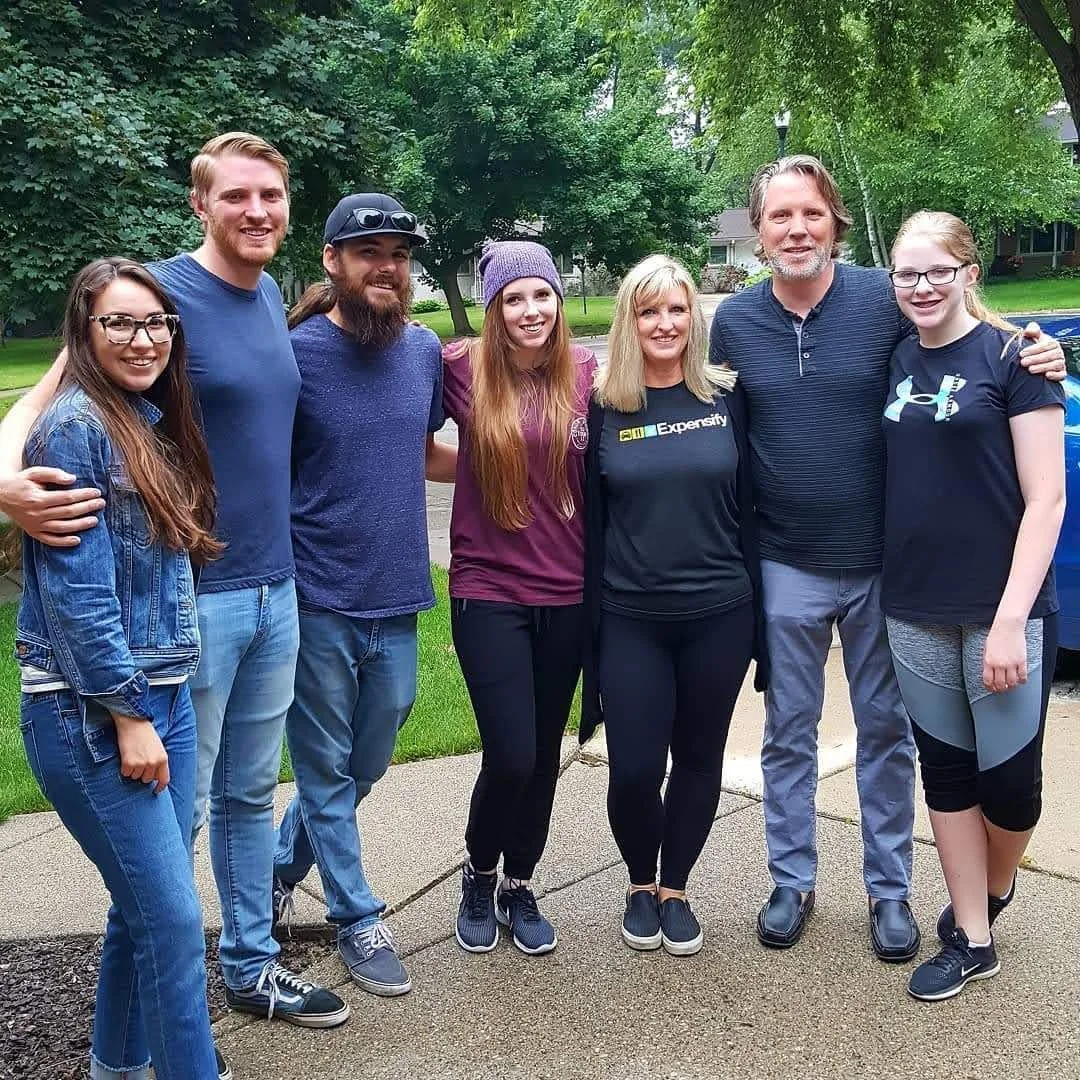
THE PEPER FAMILY
In 2019, Michelle Peper was called to teach early morning seminary in her hometown just north of Spokane, WA. Colville is a small town of about 5,000 mostly conservative residents, and Michelle’s class included 20 high schoolers, one being her youngest daughter, Madi – then 15. Almost immediately after receiving the calling, Michelle felt impressed that it would be important for her to ensure that any LGBTQ youth in her class felt loved and included…
In 2019, Michelle Peper was called to teach early morning seminary in her hometown just north of Spokane, WA. Colville is a small town of about 5,000 mostly conservative residents, and Michelle’s class included 20 high schoolers, one being her youngest daughter, Madi – then 15. Almost immediately after receiving the calling, Michelle felt impressed that it would be important for her to ensure that any LGBTQ youth in her class felt loved and included. Just as she had a few years prior when the Black Lives Matter movement initially surged and Michelle felt compelled to dig into resources that shared human experiences different from her own, Michelle likewise felt it was time to learn about the LGBTQ community to better support them. As such, she dove into resources including Richard Ostler’s Listen, Learn and Love podcast and book, as well as the podcasts Questions from the Closet, Beyond the Block, and Called to Queer. Michelle committed herself to making her classroom a safe space. Both she and her husband Bob also stumbled upon Lift and Love, from whose online store they bought rainbow pins and began wearing them to church, signifying to all they were a safe space.
Michelle says, “My quest to listen, learn and love this community was powerful and I was all in. I was so vested in loving them that I started thinking there must be a more personal reason God had guided me on this journey.” Michelle and husband Bob’s two oldest children (Delaney – almost 30, and Riley – now 32) had both already married and she felt confident that Madi, who ended up being in her seminary class all three years, was also straight. Michelle thought, “Maybe one of my grandchildren would be? All I knew was that I had received a powerful witness that LGBTQ people were treasured children of our Heavenly Parents and I didn't doubt that.”
One morning in December of 2021, as Michelle was cleaning up the classroom and preparing to head home, she noticed all the students had left but one. Madi had stayed back and was just watching her mom scurry around. A senior with just six months left before graduation, Madi finally stepped in front of Michelle and said, “Mom, I need to tell you something… I think I might be gay.”
Thinking back on her youngest daughter’s affinity for all things ballet, girly girl, and pink since the time she was a toddler, Michelle says she could point to none of the stereotypical clues or signs her daughter might be lesbian. This was not the coming out Michelle had expected, but as she shared in an Instagram post, “Because I was already prepared to love and accept her, the conversation was fairly easy and quite beautiful. We both shed a couple of tears, but I think they were tears of joy more than anything. The spirit filled that classroom and we both felt peace and love. My husband and I fully embraced her from the second she came out, as did her older siblings. Nothing in our family has changed in any way. Our family is still intact, and each member feels honored, respected, and whole.”
Michelle appreciated the promptings that prepared her for that moment; they reminded her God is in the details. That Christmas season, after Madi shared her news, Michelle fondly remembers her joining Bob and Michelle on the couch to watch the new Christmas comedy, “The Happiest Season” (which features a gay couple), and together the three of them laughed and bonded over a story line they could now relate to.
The Pepers are grateful Madi (now 18) sidestepped internalized shame and trauma and experienced a soft landing when she came out, both at home and at her high school where there was a very accepting LGBTQ community. Michelle loves that, “She has been able to live a healthy, normal, adolescent life. She never had to hide in the closet or be ashamed, which is what I want for every LGBTQ kid.” Madi started dating girls her senior year, and found with her newly announced orientation, her parents became open to the idea of coed sleepovers, but Michelle joked that the ones with girls had to stop.
Madi graduated at age 17, then took a gap year in which she headed off to Santaquin, UT to live with her older sister and her husband and work as an electrician’s apprentice until the Deer Valley ski resort opened, which is where she now works as a ski instructor. “She is living her best life, thriving. She has a group of about ten friends she hangs out with, and she’s out and proud and doesn’t hide. She also doesn’t wear all the pink, frilly tutus anymore,” Michelle laughs. Madi will begin her college studies in the fall at the University of Utah with an academic scholarship.
Soon after Madi came out, she opted to step back from attending church besides the one Sunday a month she was asked to play the organ for her ward’s sacrament meetings, which she still “sweetly agreed to do.” Pivotal in that decision for the family was a December 2021 Sunday School lesson on the Proclamation, in which Bob and Michelle took Madi to the adult Sunday School class with them, fearing the youth one might prove uncomfortable. It turns out the adult class stirred up a buzz of its own as the teacher spared no punches in making it clear she felt that gay people were “an attack on the family.” While the Pepers had pre-planned to stay quiet throughout the meeting, Michelle found herself shaking while Madi cried quietly next to her in her seat, and Bob was unable to resist going head to head several times with the teacher. “It got ugly real fast; it was so awkward and uncomfortable.”
That was the last time the Pepers attended Sunday School in their ward. Soon after, Michelle also replaced Relief Society for self-study via podcasts or reading the lesson on her own, realizing that she couldn’t sit through some lessons given by and for orthodox members without feeling that if she expressed her own thoughts she’d be upsetting everyone, which was not her intent at church. A former Relief Society, Young Women’s and Stake Primary president, Michelle now solely attends Sacrament meeting to be with Bob, who serves as the stake executive secretary. She is now ready to be more open about the spiritual journey she’s been on, as she’s decoupled all she’s been taught with certain aspects of church history and policy agitating her conscience. In a ward that for so many years she was extremely active in leadership roles, Michelle now laughs that she feels like “the project,” as well-meaning people invite her to church-centric activities that she doesn’t really feel like attending. “People know we’re not ‘all in,’ and surmise that we’re probably ‘lazy learners’ and ‘lost to the world’.”
In this new phase of life as empty nesters who are also preparing to transition from the business they’ve owned for 25 years, Michelle is carefully considering her next chapter as she faces a “new freedom.” She’s grateful for a coed “clandestine book club” she and Bob have joined with like-minded friends from their ward, many who are in leadership and some who have stepped away. All in that group know Madi is gay and are supportive, though Michelle says they haven’t exactly told their whole ward yet. While her bishop and Relief Society president know and are kind, Michelle has faced open criticism from other local leaders who have commented or otherwise shown opposition to her Facebook or Instagram posts (@edge_of_inside_lds) that support LGBTQ. But Michelle says, “I would never let an institution let me know how to love my kid.” Bob, who recently served as bishop, has also faced criticism for his open support of the LGBTQ community.
Michelle said in her last year as a seminary teacher she began to feel a bit like a fraud, knowing she was bound to a manual that she felt was heavy on temple marriage and transactional living and allowed no room for her to share some of her more nuanced developing beliefs. She decided to accept a new calling, working at the call center for The Trevor Project (a hotline for suicidal LGBTQ youth). Michelle completed the 40-hour training, and now fulfills her shift each week as a digital counselor on chat and text. She admits the work can be emotionally draining, as she frequently chats with youth for whom suicide feels imminent, and she stays online with them until she can guide them to safety. She used to work the night shift, but afterwards found she couldn’t sleep, feeling fury over the callers’ struggles, so now she works in the afternoons. Before each shift, she prays: “Please guide me, tell me what to say. I need Him, we need Him. He loves those kids.”
In her deconstruction, Michelle admits there was a period she wasn’t sure anymore about God, but she built that belief back and now feels guided and inspired in her advocacy. “Sometimes when I finish a post, I feel that all this transitioning going on is intentional. I’m grateful.”
Upon reflection, Michelle says, “I may be frustrated with many things about the LDS Church, but I credit the Church with giving me many good things, including teaching me how to receive and embrace personal revelation. I will never doubt that the Lord’s guiding hand is in my life.”





THE HOLTRY FAMILY
“I’ll walk with you.” It started with a sticker stating those powerful words. The sticker was given to Brent and Jen Holtry by their close friends and neighbors, Monty and Annie Skinner. Brent had been tasked with coming up with the theme for their stake youth trek adventure that summer of 2020, and he loved the concept of “I’ll walk with you.” But like most great things, what would eventually become a revolutionary trek and movement for their Fair Oaks, CA stake was not without its growing pains and delays. In hindsight, the Holtrys are grateful: they needed more time. As the year 2020 progressed, it quickly became clear that the trek was not going to happen anytime soon with the shifting guidelines of the global pandemic. This gave Brent more time to think and cull and create the needed trek plan. It also gave Brent and Jen more hallowed time at home to tend to their youngest child, Jackson, who as it turns out, would need his parents to walk alongside him that summer of 2020, when he came out.
“I’ll walk with you.” It started with a sticker stating those powerful words. The sticker was given to Brent and Jen Holtry by their close friends and neighbors, Monty and Annie Skinner. Brent had been tasked with coming up with the theme for their stake youth trek adventure that summer of 2020, and he loved the concept of “I’ll walk with you.” But like most great things, what would eventually become a revolutionary trek and movement for their Fair Oaks, CA stake was not without its growing pains and delays. In hindsight, the Holtrys are grateful: they needed more time. As the year 2020 progressed, it quickly became clear that the trek was not going to happen anytime soon with the shifting guidelines of the global pandemic. This gave Brent more time to think and cull and create the needed trek plan. It also gave Brent and Jen more hallowed time at home to tend to their youngest child, Jackson, who as it turns out, would need his parents to walk alongside him that summer of 2020, when he came out.
The Holtrys were enjoying backyard s’mores with some friends on a summer night when Jackson, who was 14 at the time, texted Jen and said, “Mom, come to my bedroom, we need to talk.” There, he told both his parents he was gay. Jen recalls they said, “Great, that’s fine, we’re supportive.” Jen had sensed this might be the case as early as when Jackson was in the seventh grade and first expressed a possible crush on a boy. At the time, Jen told him there was no need to label himself that young, and Jackson immediately said, “No, never mind.” And the conversation was forgotten. But now, Jackson knew he had his parents’ full support. He still felt worried to tell his siblings, Joshua – now 25 and in law school in Arizona and married to Lauren, and Hannah – who is now 20 and coming home from her Spanish-speaking mission to Orem, UT today (March 9, 2023). But both Joshua and Hannah were attentive to their brother and very supportive.
As were the Holtry’s friends, the Skinners, who had also introduced them to Richard Ostler’s podcast, Listen, Learn and Love, to Ben Schilaty’s and Charlie Bird’s podcast, Questions from the Closet, and encouraged Brent to read Charlie’s book, Without the Mask and Ben’s memoir, A Walk in My Shoes. The Holtrys had had some personal experience with gay family members prior to their own son coming out. Jen’s brother Joe had come out at age 20 when Jen’s parents were serving a mission and he had immediately left the church. That was Jen’s conception of what happened when someone is gay – that they naturally decide the church isn’t for them. So reading Charlie’s and Ben’s books opened them to a new possibility as they reconciled how to have a gay child and stay in the church themselves.
Digging into these resources opened Brent’s mind to new knowledge and ideas. He was surprised to learn that the church’s current position acknowledges that being gay isn’t a choice. He says, “Before we read those books, Jen and I were both loving and accepting but I don’t think we understood a lot of things. Before reading, I had no problem with gay people, but I didn’t like when they came out publicly. Those books helped me understand – now I welcome and celebrate when people come out.” Brent said he was filled with a desire to help LGBTQ people understand that they are loved and wanted, no matter what.
As Brent now had an extra year to consider the details of the stake youth conference and which mantra would keep the kids walking a Christlike path both on the trek and in life, he said a lightbulb went on: with statistics showing that so many youth and young adults are now leaving the church, what if there was a way they could instill a message that no matter what, they could always come back? That no matter how difficult life became, there would always be a place for them, and someone to walk alongside them, much like what the pioneers of the 1800s experienced. The Primary song “I’ll Walk with You” took on a new meaning. It all made sense.
Brent felt inspired to invite speakers to the trek who might not fit the perceived mold of an LDS congregation. As his research showed most people left the church over perceived misogyny, racism, and homophobia, he decided to invite a speaker who had been ex-communicated and later rebaptized and welcomed back into the church. He’d also invite a person of color who would not have been given the priesthood before 1978, as well as a single woman, and a gay man to speak. Jen wondered if they could possibly get Charlie or Ben to come and was shocked when Ben replied within an hour via social media that while Charlie had a conflict, he would happily join them on their trek. But Ben also mentioned that he would patiently wait until their stake approved it because while he is invited to come speak often, he is also often “disinvited” by stake leadership.
The Holtrys assumed it would be no problem for their stake to continue with this plan. Brent says he naively thought, “All would be on board with these Christlike principles of inclusion and love.” In reflection, he says he had no idea what he was walking into. His idea to invite marginalized voices to share loving messages of how they felt included in the gospel was met with fear, murmurings, and a lot of worries from the top down. Brent heard some people were complaining and even crying about the event; he heard the term “the woke trek” being thrown around with disdain. Most shocking to the Holtrys was how only one person in the stake ever addressed their concerns about a possible “agenda” to their faces – they wondered what all was being said behind their backs. But after a conversation with the stake president and his wife to dispel any fears, the leadership got on board. And once they were on board, the stake president worked hard to get the rest of the stake there. At an introductory fireside, he expressed his support for the idea, and with that, the trek, “I’ll Walk with You,” marched forward. Planning commenced, and the Holtrys were touched that Papa Ostler took the time to give them a 90-minute pep talk before the trek commenced.
And it was a beautiful experience – better than the Holtrys ever dreamed. All of the speakers came and were excellent, but one – Ben Schilaty -- stayed all three days and marched along with the kids. The Holtrys were amazed by Ben’s genuine interest in getting to know everyone, and were touched when they saw him form bonds of friendship with many – including the kids of some of the toughest adult critics.
Brent says, “After the trek, no one complained at all, about anything that had happened. Ben gave an amazing concluding fireside to the entire stake and the stake president said, ‘We have more people here than we do at stake conference.’ It was so packed, and so powerful.” Ben concluded his fireside by saying, “I don’t live here – I won’t be here every day. I’m passing the torch to you, to listen to each other’s stories.” With that wise advice, Brent and Jen, along with the Skinners, decided to start an LGBTQ support group, @learn_of_me_lgbtq.
In November of 2021, they held the inaugural “Learn of Me” LGBTQ gathering. They call it a fellowship and ally group. Jen says, “We probably have mostly allies attend, and we have had such wonderful success.” 20-30 people come and while they have not yet been able to convince their stake to advertise it, they have had a member of the stake presidency come, and a bishop has come just to check out what they’re doing. “It’s been positive. We have a 5-10 minute lesson about Christ first, and then open it up so whoever wants to can share their problems, concerns, positive things.” Sometimes they have guest speakers who are LGBTQ, and it is these meetings that Jackson, now 16, is most interested in attending.
They’ve also recently started a gathering for LGBTQ youth called S’more Love and Support Youth Hangout. The parents step out of that group, welcoming the Skinners’ daughter and her husband and a local gay couple to run it. In that circle, they invite the kids to talk and share a hurt they recently experienced. It’s been brought up that some hurts can’t be fixed, and just how hard it is to attend church. Brent and Jen acknowledge this and have told their son it’s up to him what he attends. Jen told him, “Even if you leave, you can come back. Even if you stay, you can always leave. We will support you whatever you decide.”
Jackson is now a junior in high school, and just got his driver’s license. Jen says he likes being on the swim team and “is a typical teen – he likes to hang out with friends. He has a lot of church friends, and is comfortable with a lot of kids in the ward – moreso the girls. He’s comfortable with some boys in the stake, but most of his friends are girls. At school, he has a diverse group of really nice kids, and travels from friend-to-friend group. He’s very social.” Brent laughs that he recently had an interesting conversation with a dad from their ward as they talked about the irony of allowing the other dad’s daughter to have a sleepover with Jackson and how that dad said, “I never thought I’d be advocating for my daughter to sleep over at a guy’s…” Brent says, “Everything is so different. Growing up, we told our kids. ‘When you live here, you go to church, you’re active,’ but we’ve had to rethink things.” Jen says, “I’m definitely known for speaking up now. People probably roll their eyes now when we speak. I don’t care anymore. I’m over it. I feel so much closer to Christ and my Heavenly Father -- moreso than I ever have over the past three years.”
The Holtrys have experienced love and support from friends and family, though they say they’ve learned that many want to draw a line as to what they will support. Some are less interested in hearing how the church should change policies or how leaders could be more sensitive. Brent says he’d love for leadership to understand that, “Many members are incapable of separating between loving and condoning – that message backfires, because it’s impossible to do that. What’s heard by the marginalized is they’re not accepted. That message is so very damaging. They need to know – we just love like Christ did. When people say, ‘Christ loved but didn’t condone.’ Nope, that’s not true. He just loved them.”
And in Fair Oaks, CA, that is the trek the Holtrys still walk as they invite others to “Learn of Me” and invite all into their circle where they commit to a mantra that now holds extra meaning: “I’ll walk with you.”
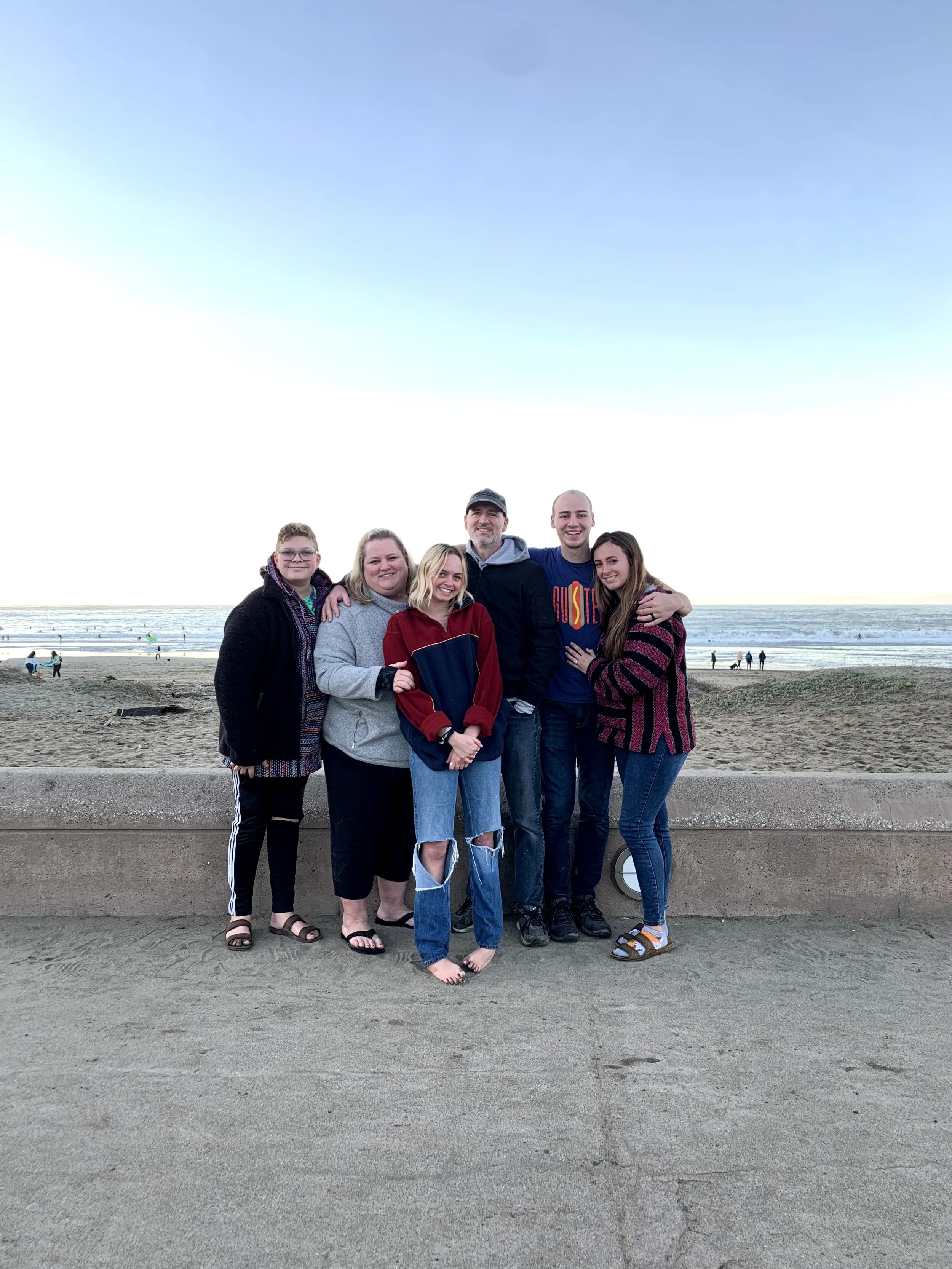
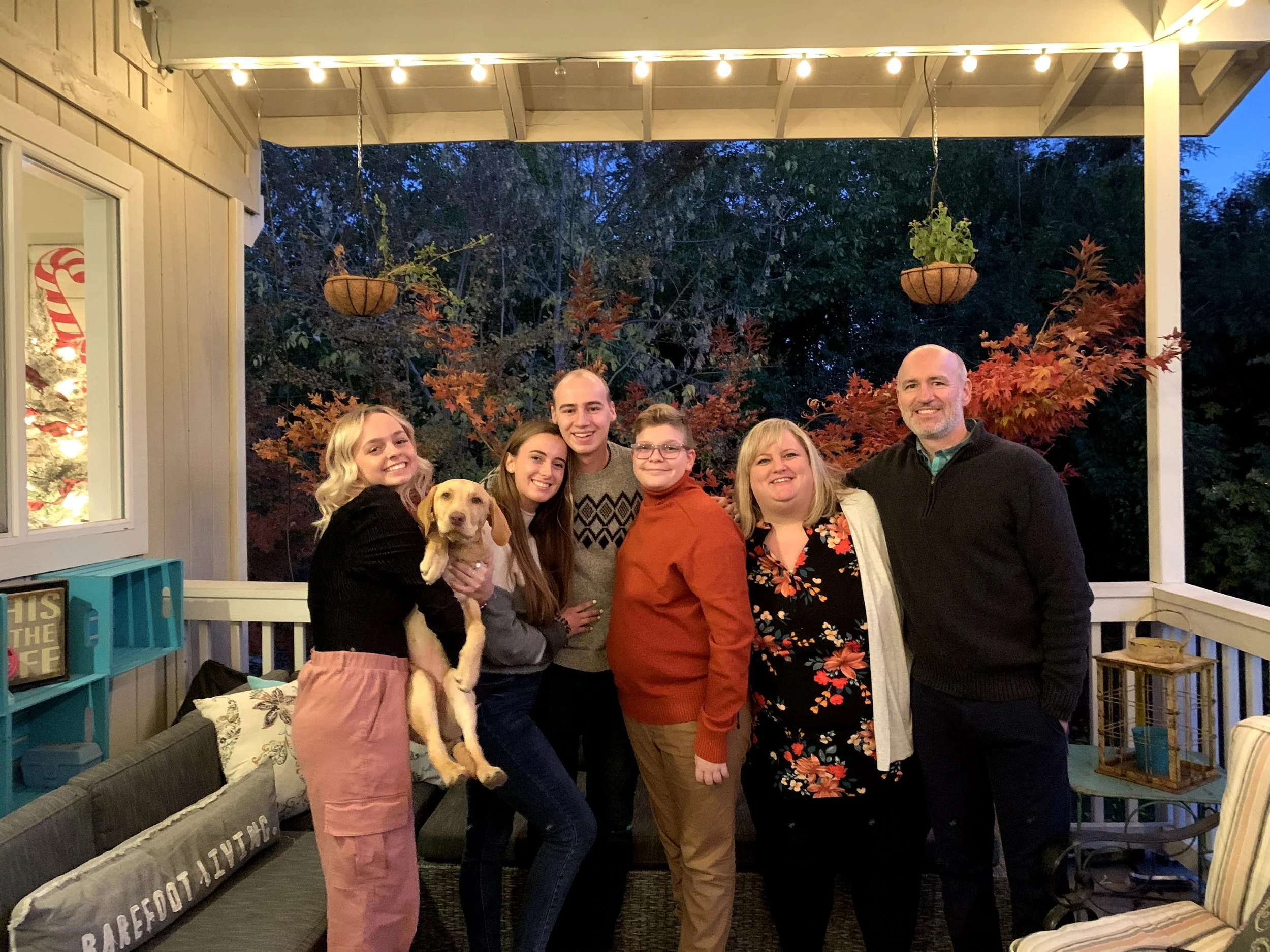
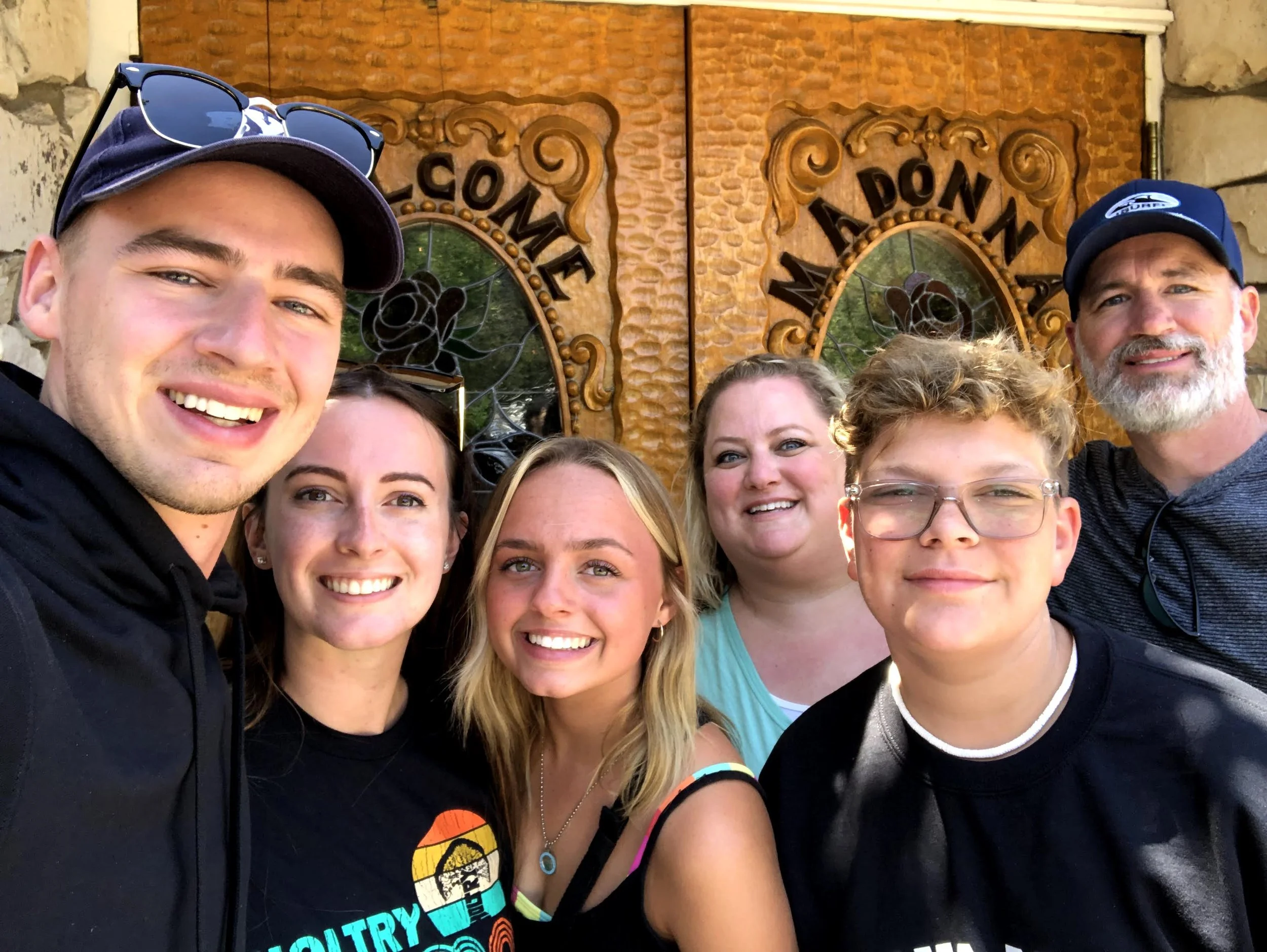
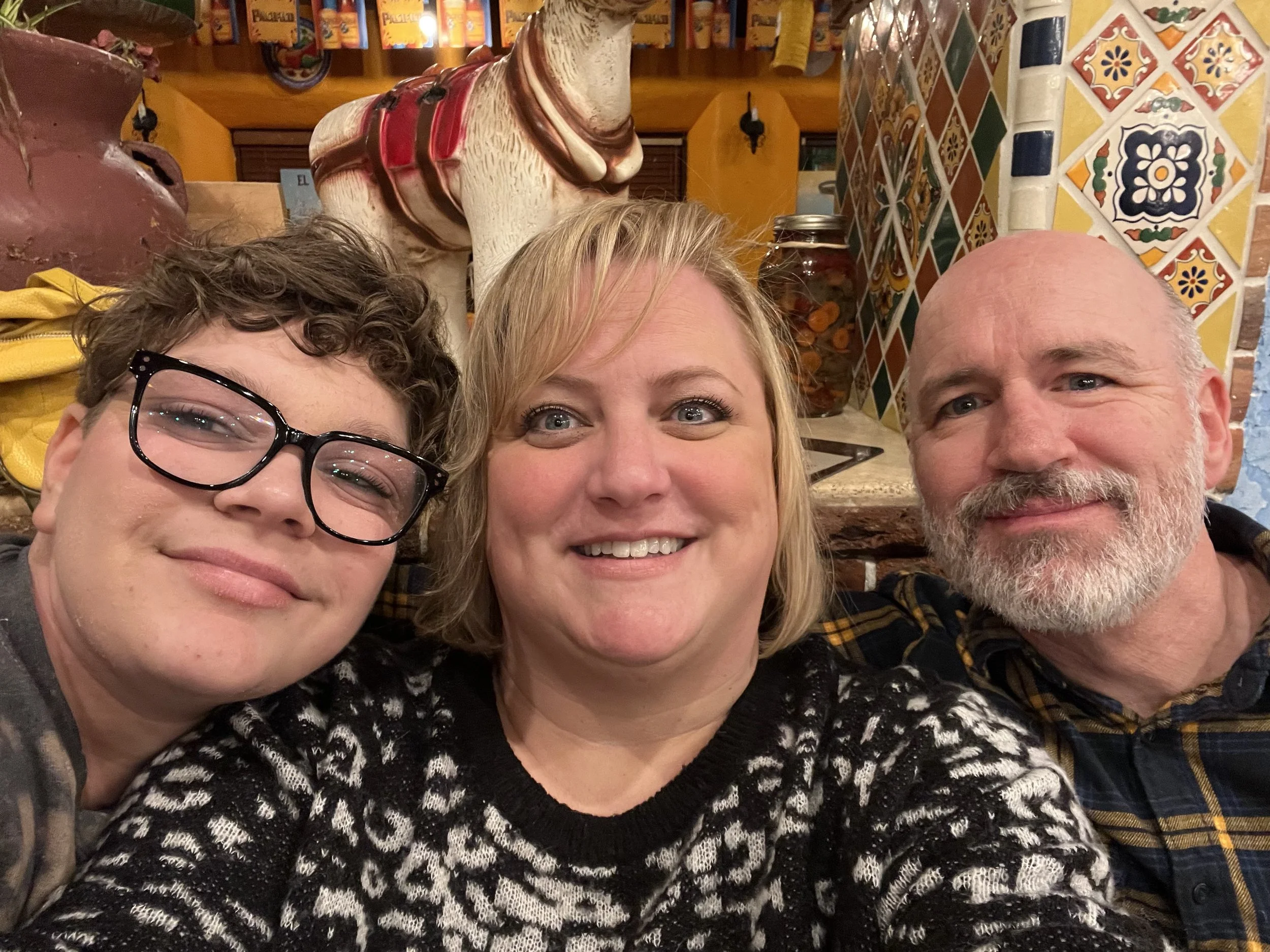
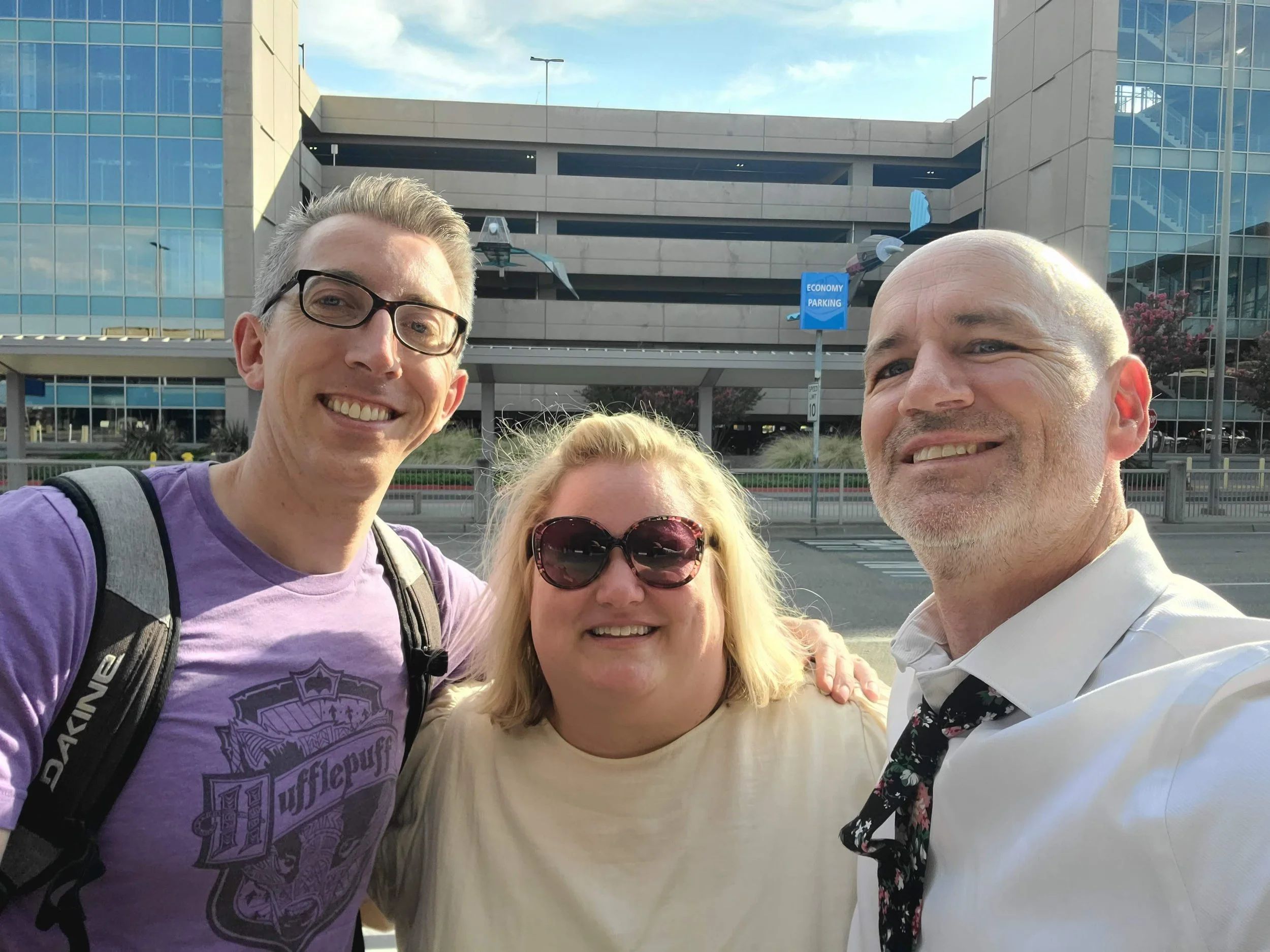
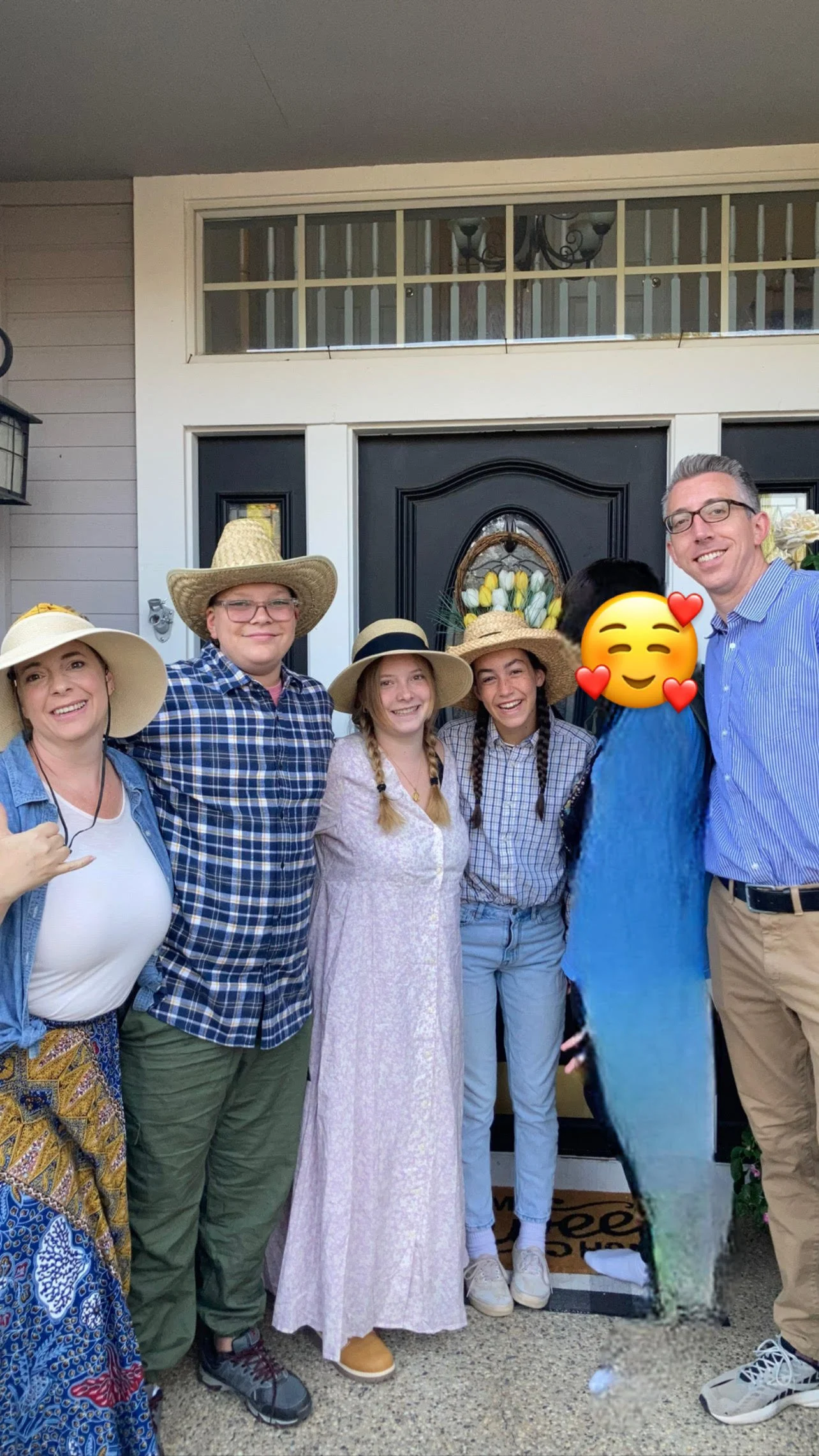


GRACEE PURCELL
It was fall of 2022 and Gracee Purcell had just arrived in Provo, UT to begin her first year at BYU. Not only was she excited about pressing play on life in a college town, but she was also feeling a bit safer after discovering the RaYnbow Collective—an LGBTQ+ coalition and resource provider wherein she could exhale and be herself. Their first initiative that fall was to fold and distribute 5,000 small booklets advertising LGBTQ+-friendly resources (therapists, safe housing, scholarship and event info, etc.) in the welcome bags that would be given to incoming students at New Student Orientation (NSO) with the hopes that the info would prove helpful to the (reportedly 13%) of BYU students who identify as LGBTQ+. But the day before NSO, the RaYnbow Collective received word that a unilateral decision was made against their contract with BYU and their booklets would be pulled and thrown away…
It was fall of 2022 and Gracee Purcell had just arrived in Provo, UT to begin her first year at BYU. Not only was she excited about pressing play on life in a college town, but she was also feeling a bit safer after discovering the RaYnbow Collective—an LGBTQ+ coalition and resource provider wherein she could exhale and be herself. Their first initiative that fall was to fold and distribute 5,000 small booklets advertising LGBTQ+-friendly resources (therapists, safe housing, scholarship and event info, etc.) in the welcome bags that would be given to incoming students at New Student Orientation (NSO) with the hopes that the info would prove helpful to the (reportedly 13%) of BYU students who identify as LGBTQ+. But the day before NSO, the RaYnbow Collective received word that a unilateral decision was made against their contract with BYU and their booklets would be pulled and thrown away.
Gracee says, “It was disappointing and disheartening to hear about the decision, especially when a lot of the council remembers how isolated, lonely, and unsupported they felt when starting at BYU. I know I personally felt a loss of hope. I had come to BYU hoping for a fresh start somewhere I could do more. Having this happen on day three at BYU for me was hard. I took time to process and the next day when I went to NSO, I definitely thought about the missed opportunity to support the incoming queer students.”
However, Gracee says this provided her with her “why” and a renewed passion for advocacy, especially at BYU, “as well as the realization that maybe there’s nothing wrong with us. Maybe it’s just really difficult to exist within a system that was not designed to support spirits like ours. No student should feel alone. No student should feel rejected by their university because of their identity. I chose right then that I was going to lead with love.” While Gracee says she’d rather have seen those resources end up in the NSO bags, she’s grateful for the experience it gave her. Impressive wisdom for a 19-year-old who only came out as gay to her closest friends and a few family members one year ago.
Gracee’s life thus far has likewise been rather impressive. She graduated from high school in Eagle, ID in 2021, and by that point, had already achieved her Associate’s degree from Boise State. Her father, Brandon Purcell, says she was a born leader. The oldest of six kids, Brandon says Gracee was just two when her first sibling was born and he remembers telling her she had a super power as the oldest child—that people were going to follow her. “In hindsight, that’s a lot to put on a young person. But we noticed in her toddler years, her future would be as a leader… I think one of the reasons she went to Provo was because there was an opportunity for her to both grow and lead. This year she’s found those. I see her doing a lot of fantastic, important and impactful things—not only for herself, but for others.”
After high school, Gracee spent the first semester of a gap year in Mexico teaching English part-time at a school through an International Language Program. As a first-year student at BYU, she is now a junior credit-wise, and studying Psychology with plans to become a physical therapist for athletes. Gracee’s always had a heart for helping those in need, and since the age of 15, has helped train seeing eye dogs. Throughout childhood and her high school years, Gracee’s also loved sports. She played soccer, lacrosse, and even tried pole vaulting for a season to overcome her fear of heights.
She also overcame her fear of coming out by doing so for the first time to her travel group in Mexico, six days in, which in hindsight she says was maybe not the best idea. But in a surprising turn of events, she was embraced and loved wholeheartedly by the girls in her group. She came home and went back into the closet but then started an Instagram and blog (@to_all_the_latter_day_gays) in which she shared her truth of being attracted to women. Soon after, she was invited to go on Richard Ostler’s podcast as a guest, at which point she felt it was time to tell her parents.
When she came out to her parents, Gracee says there were a lot of tears on her mom’s end. She had never considered this might be a possibility. Later that night, she came out to her dad privately and he thanked her for telling him. Brandon says he recalls thinking this was a moment with a lot of gravity and he didn’t want to say something that would come across as unsupportive or unloving. “I think I expressed something to the effect that I was grateful she had shared this with me, and I’d like to just think on it for a bit and talk about it after I’d collected my thoughts.” Gracee says she knew it would take some time for her parents to wrap their heads around everything due to their strong faith in the church. She senses their faith has always been straight forward and that this was a nuance they perhaps didn’t fully understand quite yet. But she appreciates how they listened to podcasts like Listen, Learn and Love and Questions from the Closet and read recommended books. Still, there wasn’t a lot of conversation about her orientation at home in that time before she started at BYU, and it was Gracee’s choice to not tell her younger siblings or extended family members quite yet.
Brandon concurs it took more than a minute for him to process that the future he’d envisioned for his daughter might look a little different, but that ultimately both his and his wife’s love for and hopes for their daughter to be happy and fulfilled haven’t changed one bit. Brandon hopes Gracee will “be everything she can be and have the types of connections that are important to all of us.” He appreciates the broadened experience he’s gained from listening to the experiences of others from the LGBTQ community. And he’s expressed to Gracee an impression he felt through the Spirit that while he doesn’t have all the answers to life’s complex questions, he knows one person who does. Brandon encourages his children to, “Stay close to the answers. Stay close to Heavenly Father, and He’ll guide you.”
Gracee had offers to attend other universities, but chose BYU for a particular major and to be closer to family. While she didn’t initially plan to come to BYU as such a vocal representative of the LGBTQ community, she has since realized the importance of the work that needs to be done there and is willing to be in the public eye, even under criticism, to try to create the changes necessary to make it safer for others—especially those who are not quite ready yet to be out. Gracee recognizes how important it is to find a support system and was very intentional about doing so, and thus joined the RaYnbow Collective as soon as she arrived in Provo. About 50 people serve on the council; Gracee has served as the website and design graphic design lead, and was just asked to take over as President in April.
Gracee acknowledges the climate at BYU is hard, and prospects for dating as a queer student even harder as there is always a fear that permeates. She says LGBTQ students are aware of the different messages given to different students based on who their bishop might be—there have been instances where bishops have required students self-report to the Honor Code for any attempts to date. “It’s so variable between bishops. Some are allies, some aren’t. You just have to choose what you tell them.” There’s also the constant fear that fellow students may rally against your very existence, as a group of protestors did at a Back to School Pride event held just off campus. Gracee is grateful her psychology program is filled with wonderful, supportive peers and professors.
“I think that the ultimate path forward will be with compassion and curiosity. If we move forward in that way, I think hearts and minds will be more open, and there will be more understanding. It’s not about policy change, but people changing,” says Gracee. “There’s always hope. I don’t think God should be confined to one religion or a set of practices. You can find God anywhere. I don’t think we should put God in boxes. In the end, the ultimate problem we’re having is in the core teaching of Jesus, which is to love your neighbor as yourself. The designation of who your neighbor is has nothing to do with geography or orientation or our differences, but rather with our ability to see our shared humanity.”
In high school, Gracee started training guide dogs as a strategic way she could negotiate bringing an animal into a pet-free home. She has since brought up three dogs in the program and currently has a lab puppy living and training with her in Provo. The dog attends classes and events with Gracee at BYU, and is a visible reminder to many students that some people walk through life differently. Some have different needs. And sometimes, it just takes a little training and some resources to get there. Gracee Purcell is one young adult willing to make the personal sacrifices to help others to get there. To help others to see.


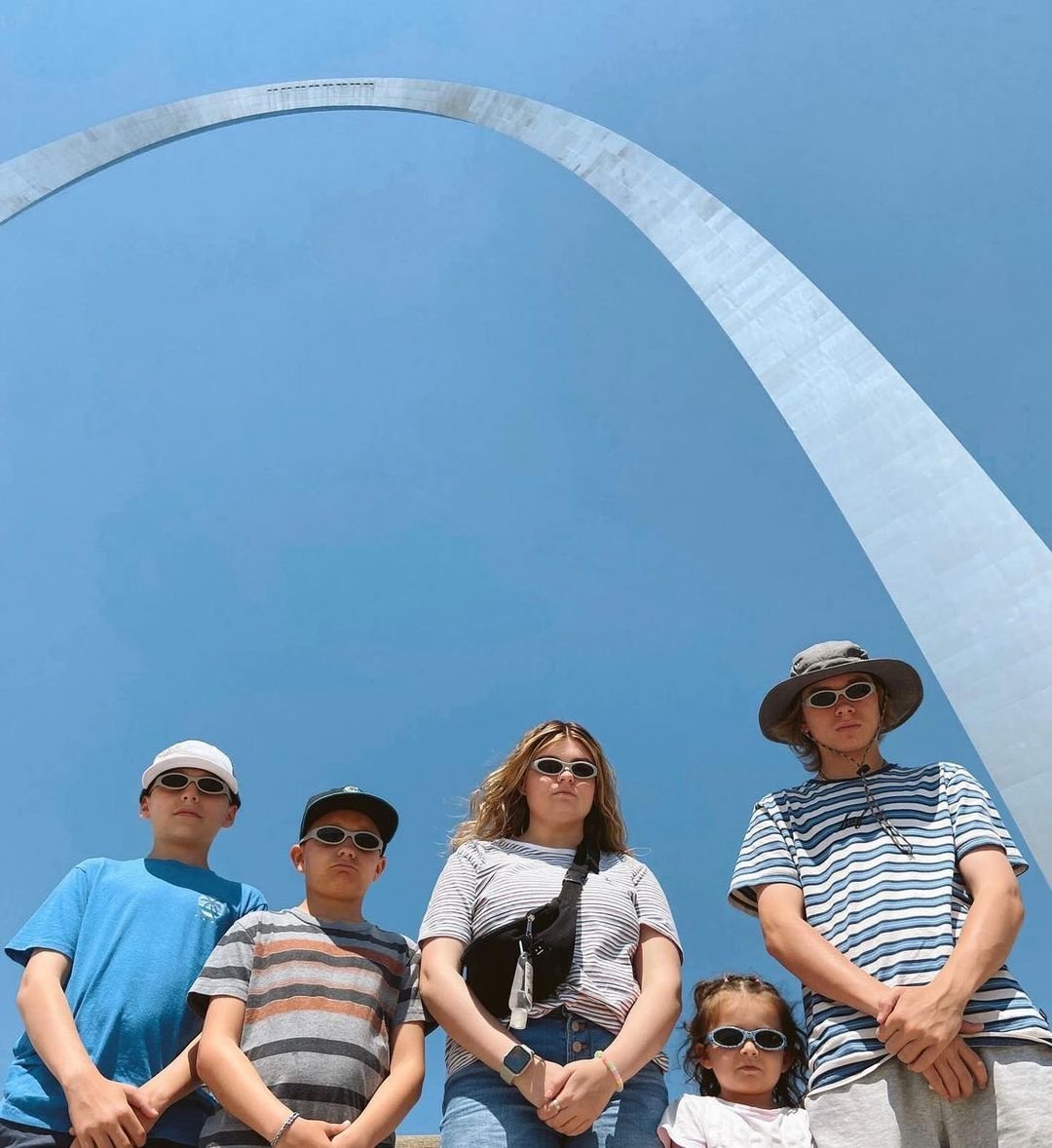


BEN SCHILATY (Part 2)
After receiving his PhD in Tucson, Ben Schilaty’s path veered north, back to Utah, when he felt the timing was right to apply for the MSW program at BYU. And it was; he was accepted. While there in 2017-2018, Ben reached out to the BYU administration and said he wanted to be involved in LGBTQ causes. While initially guarded, they agreed to meet with Ben. Ultimately, BYU formed a working group of nine administrators and LGBTQ nine students who met once a week to talk about inclusion and the climate at BYU. This is where Ben met Charlie, and they became truly good friends. He also met Steve Samberg, the general counsel at BYU, who also became a good friend and set Ben apart as a High Priest…
Welcome back for part 2 of Ben Schilaty’s story. (See story posted on 2/16/23 for first half.)
After receiving his PhD in Tucson, Ben Schilaty’s path veered north, back to Utah, when he felt the timing was right to apply for the MSW program at BYU. And it was; he was accepted. While there in 2017-2018, Ben reached out to the BYU administration and said he wanted to be involved in LGBTQ causes. While initially guarded, they agreed to meet with Ben. Ultimately, BYU formed a working group of nine administrators and LGBTQ nine students who met once a week to talk about inclusion and the climate at BYU. This is where Ben met Charlie, and they became truly good friends. He also met Steve Samberg, the general counsel at BYU, who also became a good friend and set Ben apart as a High Priest.
Ben says he felt safe at BYU. In this working group, he was able to open up and have raw, emotional conversations. He felt everyone cared, and knew he wouldn’t get kicked out. One time in a meeting, Steve made a comment, saying “I’m dating myself here,” to which Ben replied, “I’m a gay BYU student, I’m only allowed to date myself.” He says the group laughed; they got it.
In 2018, the group planned a campus-wide LGBTQ forum and a few thousand people came. Ben spoke on the panel, and at the end, one of the moderators told the group, “If any of you who are LGBTQ feel comfortable standing, we’d like to recognize your presence.” Charlie had said the opening prayer at the event, and now Ben looked down and watched him stand, for the first time timidly coming out publicly. Ben says, “Charlie watched that forum and said, ‘Maybe one day I could be brave,’ and now Charlie is braver than all of us.” Ben concluded, “I don’t want to do ten things, I want to get ten people to do one thing. If I can inspire someone like Charlie to have more courage, and people to be themselves, to share their lives and hearts, then that’s success.”
And now the big question: what is it like to work at the BYU Honor Code Office as an openly gay man? Ben says, “Life is really good; things are complicated. But I’m very secure in my life. People don’t like me on many fronts, but I have a really good life. When Sunday night would roll around when I was teaching middle school Spanish, I’d dread the week. But I’ve never felt that way here at BYU. My boss especially lets me soar.” Ben also works as an adjunct professor, teaching a class called Understanding Self and Others: Diversity and Belonging.
In 2021, Ben had the idea to plan a big concert and call it BYU Belong. Kind of a LoveLoud, BYU style. Ben hoped as people came back to campus that fall, they could have a good time and celebrate their diversity. Eight video vignettes featured students and faculty who represented diverse experiences: international students, a woman of the Muslim faith, and a student grappling with mental health challenges. Each of them came up on stage after to a standing ovation. Performers included David Archuleta, Vocal Point, Charlie Bird (with the Cougarettes), and after Noteworthy performed, two of their members came out publicly. Three weeks prior, BYU had created the Office of Inclusion and Belonging, and the timing of all this at the university felt especially right and needed.
Ben says he knew LGBTQ students were afraid of the Honor Code, and he thought if he worked there, it might be less scary for them. He says, ”I love BYU, and I actually really like the Honor Code and the mission of BYU. I wanted to be a part of it. I have queer students come visit me – and on purpose, I ask them to meet me in my office so it’s less scary, and they can meet everyone. I take them to lunch. The Honor Code Director, Kevin, is the best. I find that queer kids fear the Honor Code because they don’t understand the process, who’s safe and who isn’t. But I experience no fear here in saying I’m gay because I follow the honor code.” Ben recognizes he’s speaking from a perspective of privilege. He continues, “I’m super confident and old and tall – I’m an authority figure here, which comes with safety – a freshman doesn’t have that. If someone’s unkind to me, I can call general counsel immediately and meet with dean. But the students can’t necessarily, so I understand their fear. I hope they know they have allies in the Office of Belonging and in me and many professors. Campus is a lot better than it used to be.”
Ben does occasionally field an off-putting comment or question, and he’s become known for the grace he offers back. “For example, a kid might say, ‘People are choosing to be gay because it’s cool.’ What I would say to that is, ‘Thank you for having the confidence to share that. Elder Ballard said the experience of same sex attraction is a complex reality for many people,’ or ‘According to this church leader these attractions aren’t chosen,’ and in my experience, that has been the case. I know hundreds of people who are LGBTQ, and this was not a choice for them. Having those quotes in your back pocket, and sharing your personal experience – people can’t discount that. If you share yours or your brother’s experience, at least they might walk away knowing this person didn’t choose.”
When LGBTQ families ask, is BYU safe?, Ben is in a unique position to offer perspective. “Physically, almost definitely. Will people say rude things? Totally. Can. You live in a world where people are rude? Yep, that’s the world. There are jerks. There are 30k students here, you can find your crew. There’s the Office of Belonging, and a gay man works there, and he is amazing. And there are off campus organizations that are not affiliated with BYU, but they can provide support–like USGA, Rainbow Collective, Cougar Pride.”
None of this negates the fact that it is still difficult to be an openly gay man in the LDS church, and under the public lens Ben now lives under constantly as BYU faculty and a popular public speaker and author. Most weekends, Ben can be found doing a fireside or speaking on a panel, when not producing his podcast with Charlie. During Q&A’s, many ask the obvious questions: do you think the church’s policies will change? (Likely, as they always have.) Do you think your path is for everyone facing a similar reality? (Not at all. I encourage you to get to know the stories of the LBGTQ people in your life and support them as needed.) Will love lie in your future, as it did once in your past with a man you almost left the church for? (Remains to be seen. The details of this are also in his book.)
While some may not understand how Ben does it, the path he’s forged and the trails he’s blazed to make it easier for others who might one day be taking a walk in similar shoes is rather remarkable. And in the midst of where the church sits now on this issue, Ben has found a way to be content with the in between. He says, “I live in this world where there hasn’t been resolution – the Holy Saturday – but I love living with hope. I love working in the temple weekly, I love living with my housemate Charlotte (Eugene England’s widow). I love reading scriptures. I love feeling God’s love. In the first verse of Book of Mormon – we read that Nephi feels he’s been highly favored, though he feels many afflictions. Things sometimes suck, but God is always there for me.”


BEN SCHILATY (Part 1)
At least once a week, there’s one particular professor at BYU who meets a student on campus for lunch. He’s exceptionally extroverted for an academic, and considers these lunches the highlight of his week. Over Cougar Eat confections, they discuss how to navigate life, love, and quite possibly, how to survive being gay at BYU. His is a story you may already know; his life is one most likely do not. But Ben Schilaty’s invited all to join him for a walk on his path in his memoir, A Walk in My Shoes: Questions I’m Often Asked as a Gay Latter-day Saint. Many wonder how does Ben do it? How does he live as an openly gay member of the LDS faith who not only observes the BYU Honor Code, but works within its office. But he does; and many who get to know him up close do walk away convinced he’s found a way to be content with a complex reality…
At least once a week, there’s one particular professor at BYU who meets a student on campus for lunch. He’s exceptionally extroverted for an academic, and considers these lunches the highlight of his week. Over Cougar Eat confections, they discuss how to navigate life, love, and quite possibly, how to survive being gay at BYU. His is a story you may already know; his life is one most likely do not. But Ben Schilaty’s invited all to join him for a walk on his path in his memoir, A Walk in My Shoes: Questions I’m Often Asked as a Gay Latter-day Saint. Many wonder how does Ben do it? How does he live as an openly gay member of the LDS faith who not only observes the BYU Honor Code, but works within its office. But he does; and many who get to know him up close do walk away convinced he’s found a way to be content with a complex reality.
Every week, from a fancy Provo, UT studio (aka Ben’s basement), Ben joins his friend Charlie Bird on their podcast, Questions from the Closet, to discuss the unique paths they walk as openly gay men who try to stay tethered to the church they both served missions for (Charlie in CA, Ben in Mexico), and the gospel that they love.
Ben Schilaty was the youngest of four kids born to Seattle, WA-based parents who were active--both in the LDS church and in sports. His dad was a track star, his mom was a PE coach. His older brothers were basketball stars, and his older sister played three sports. Ben laughs that he preferred to play with My Little Ponies and watch TV. He appreciates that his parents supported his interests, and he remembers getting My Little Ponies for his birthdays and Christmas, and no one in his family heckled him for it. He was a child of the 80s-90s, and he also loved hot pink, but he would get teased by others for this, so he didn’t wear many hot pink things, besides a particular pair of pink and white-striped shorts he had to retire by age five when the heckling got too loud. Ben says, “My interests were different, but I don’t remember having crushes on boys as a kid. You were supposed to have crushes on girls, so I’d say I did. I had feminine tendencies and interests, but it wasn’t until I was around 11 that I noticed I was attracted to guys.”
In middle school, Ben would admire handsome, athletic guys, and at the time, he convinced himself he wanted to look like them or be like them, not like them. He was jokingly called Ben Gay (because of the commercial), and says, “That was terrifying to me; I didn’t want anyone to think that.” He says, “In middle school, guys are typically jocks or jerks, and I didn’t fit in with either.” As a youth, Ben loved animals and, going to the zoo, and he was an organizer “builder,” and the president of many clubs including a recycling club he started in his neighborhood. His family lived near the ocean, though they could barely see it through the Seattle trees, but Ben loved exploring his surroundings and going on hikes.
In high school, Ben was convinced he was just extra good and righteous, as he watched his friends around him having chastity issues with girls, and issues with porn—things that weren’t a problem for him. He found a friend group in the “brainy kids” he’d latched onto in eighth grade, and stuck with kids who were invested in learning throughout high school. He didn’t fit in as well with the guys at church, mainly because he didn’t like playing basketball in the church gym with them, but sometimes they’d hang out and play video games.
Ben flew through his worthiness interview with his stake president to go on his mission, and served in Chihuahua, Mexico. He recalls on his mission having minor attractions to one or two guys but says, “I didn’t let myself believe it was a real thing.” After he’d been home for one day, he was watching a reality TV show with a “bunch of hot guys and it hit me. Oh no, I am attracted to guys and my mission didn’t fix it.” That first night, Ben prayed, “Heavenly Father, I’m gay, I don’t want to be. Can you fix this?”
Ben found his way to Provo, UT, the land of plenty for dating and decided he would do all he could do find a woman to fall in love with—he only needed to find one. For two years, he tried and says he “felt pretty normal. I went on tons and tons of dates.” At one point, he found a woman he liked and after going on many dates, wanted her to be his girlfriend. She came over to watch a movie on their first date and during the last ten minutes of the movie, he held her hand. He was convinced that meant she was his girlfriend, but the next day she had to correct him and say that she felt they were just really good friends. She didn’t feel a spark. Ben laments, “I wanted a girlfriend so bad for the optics, and now I didn’t have one.” In his 20s, Ben says he went on 27 blind dates, went out with at least 100 women, and had a relationship with three women. None of these resulted in a wife. Ben says, “Outside, my life looked normal. But I was praying every day, fasting every month that God would help me be attracted to the daughters of God (and not the sons of God). After a few years, I prayed I could just be attracted to one girl. I was constantly thinking, how can I fix this. But I wasn’t in turmoil, it was an okay time.”
He says he’s one of the lucky ones. Ben has no recollection of being teased or bullied for being gay, and says that largely in part of the healthy sense of confidence his parents instilled in him, he didn’t experience any anxiety or depression which would make things worse. As his prospects for temple marriage stalled out, Ben invested himself in his education and career. After graduating from BYU in Latin America Studies in 2008, Ben taught high school Spanish in Washington for a year. Then he came back to BYU for a Master’s in Spanish Linguistics minor, then after another gap year in Washington, Ben moved to Arizona to attend one of the best PhD programs in the nation for second language acquisition in and teaching at the University of Arizona.
It was in Arizona that Ben for the first time faced the reality of his orientation. He says, “I lived in denial in my teen years. At 21-22, I thought I can fix this. Then, I can’t fix this, this is going to be part of me and that’s when I got depressed. The acceptance of that was real, and led to depression and passive suicidal ideation. I thought the only way out of this was death. That went away once I finally came out and accepted myself and was accepted by others.”
Ben details his full coming out story in his book, and he says it was a moment that was so important to him, he dedicated his book to his best friend from high school and his roommate who were both there. “People need to realize if you’re one of the first someone is coming out to, you never realize how important that moment will be forever. Even though my friends didn’t know that would be a moment I’d talk about the rest of my life, they were prepared for it. People don’t know when these life changing moments are coming–we need to just love people, and take them where they’re at because these moments come out of nowhere. We need to prepare before.”
After he came out, he wasn’t too concerned about his orientation, knowing he had the support of his family and friends, but still convinced he’d find a way to marry a woman. This was the time of the viral Josh and Lolly Weed story, and Ben says that post was sent to him probably two dozen times. He even recalls going to a wedding in Seattle and running into them in the temple marriage waiting room and fangirling a little.
But Ben chose to come out on a need-to-know basis, primarily from the desire to educate others. His first year in Tucson was the worst year of his life. At age 29, he felt he did not yet have the career or family life he thought he would, he lived in a bad part of town, and “everything was bad and I thought it would stay bad.” But the following year, Ben felt compelled to come out publicly. This terrified him because he was the only Ben Schilaty on the internet, and he knew the story would follow him forever and possibly impede his then-goal to work in admin at the MTC.
“That coming out blog post shifted the entire course of my life. What happened because of that--all these people who reached out and who had been struggling. I’d been doing it alone, with no window. Once I saw how many were alone, I realized, I can’t change the world, but I can change my town. I reached out to my stake president and said I want to start a support group. He assigned a high councilman to meet with me – we planned monthly meetings. We started a group and three dozen joined. The institute director asked me to speak and 50 people came. This changed my life. Kelly Bower was on board for creating a place of inclusion. My last semester in Tucson, he pulled me in and wanted to thank me for all the work I’d done. He said a freshman had just come in to thank me for creating a safe place for people to be out and gay and active. I don’t know if people understand how important it is that leaders do those things, and create those spaces.” By the time he moved, Tucson had become Ben’s favorite place. The institute banner there now shows someone with a nose ring, people of color, and advertises that “everyone’s welcome here,” and they are. Ben says, “Tucson is not the most beautiful place, but it is to me because that was where I was able to be me for the first time – I thought, ‘This is my home. I can spend the rest of my life here’.”
But Ben didn’t. Next week, we’ll continue with part 2 of Ben’s story and follow him back to Provo where he’ll share about the work he now does as an author, speaker, BYU professor, and employee at the Honor Code Office.


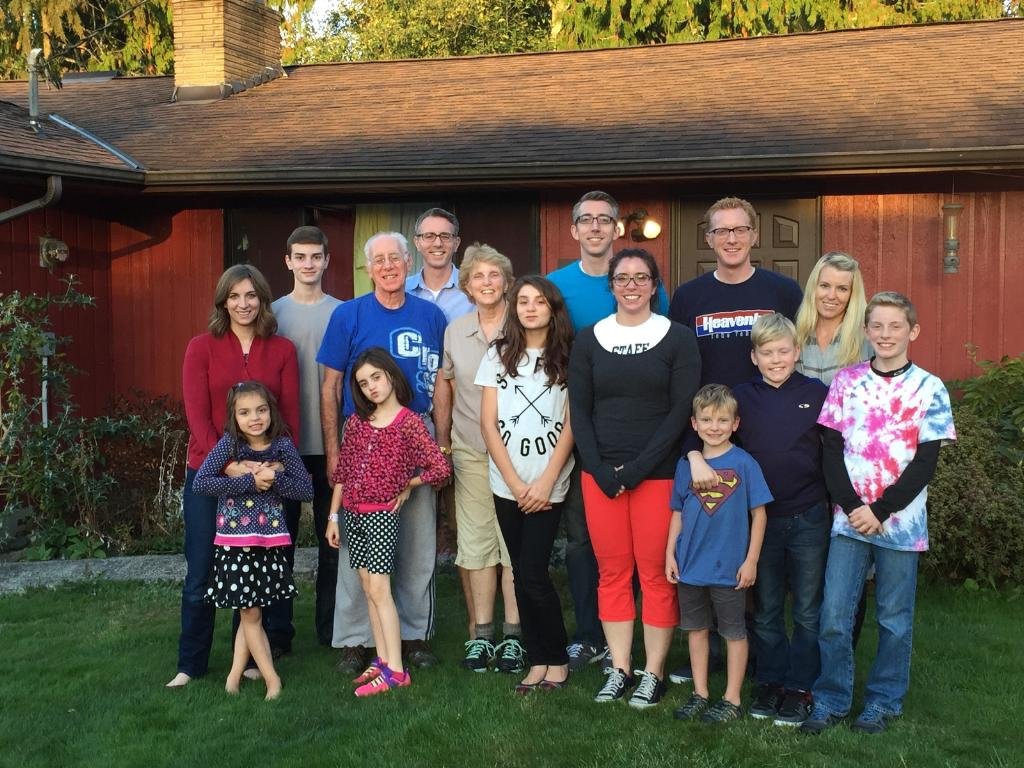


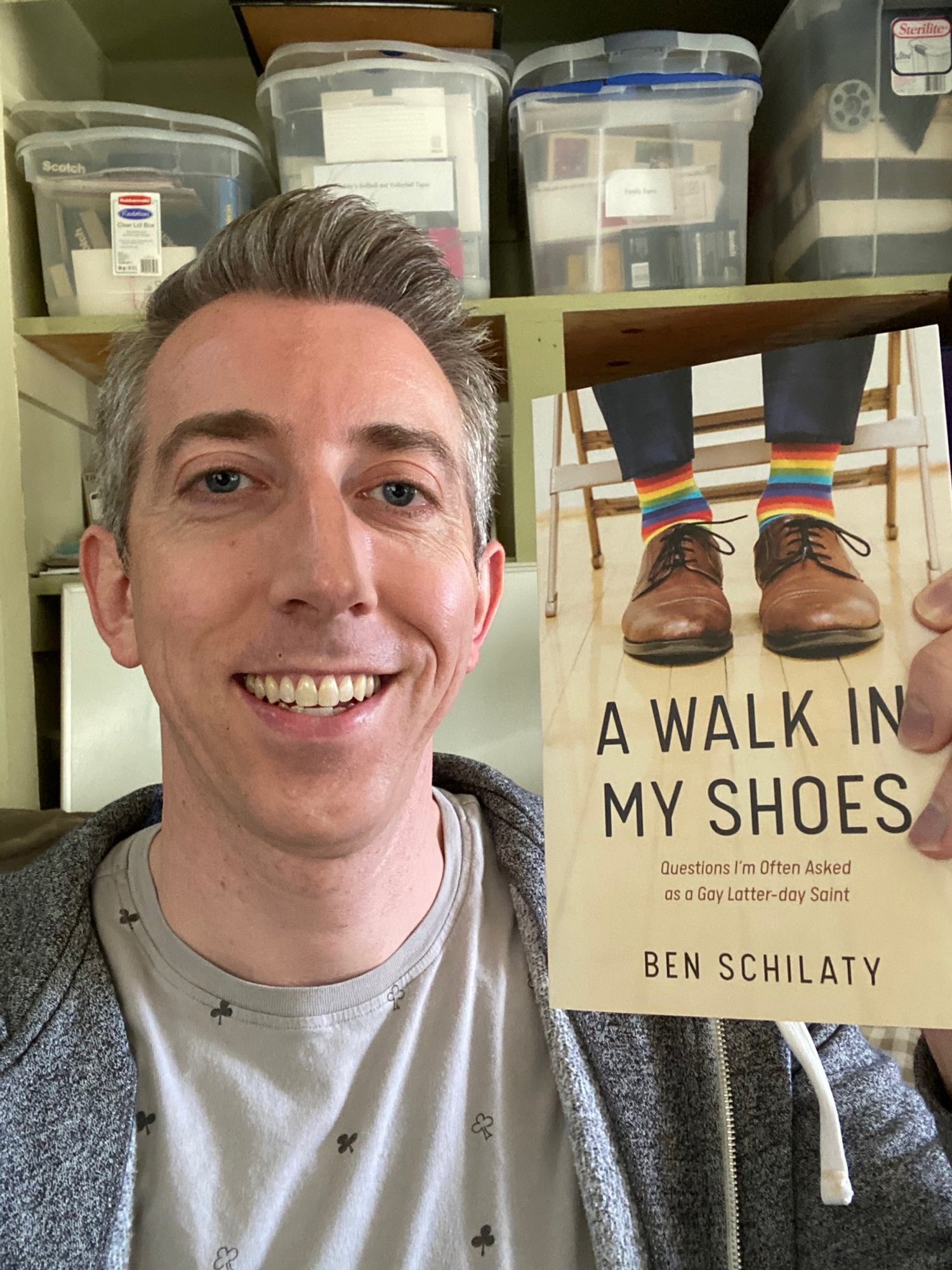
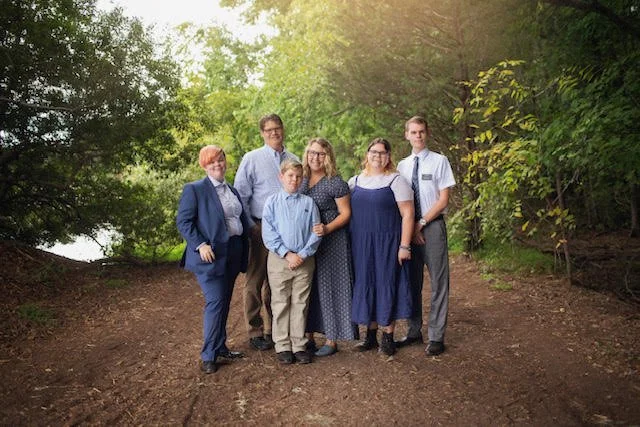
THE PRIEST FAMILY
Growing up in Idaho, Gwen Priest spent more time at the racetrack with her family than at church. Her parents sometimes took her and sometimes didn’t. They sometimes drank, and sometimes didn’t. Because of this so-called “sinner” status, she felt a tension within her largely-LDS community. Some families wouldn’t let their kids play with Gwen and her siblings. But Gwen always loved the gospel teachings and the sense that when her family life wasn’t stable, the gospel was…
Growing up in Idaho, Gwen Priest spent more time at the racetrack with her family than at church. Her parents sometimes took her and sometimes didn’t. They sometimes drank, and sometimes didn’t. Because of this so-called “sinner” status, she felt a tension within her largely-LDS community. Some families wouldn’t let their kids play with Gwen and her siblings. But Gwen always loved the gospel teachings and the sense that when her family life wasn’t stable, the gospel was.
One thing she absolutely learned from her parents was that Christ loves all equally. Her family hosted foster siblings, alcoholics, the homeless and other “lost souls” on their property through her younger years. Her dad had had a rough upbringing himself and taught her, “That’s what we do as Christians. If someone needs something, you help them.”
After moving out on her own, Gwen had a successful IT career in Utah. At 21, she was single, owned two cars and loved her job. People would constantly ask if she was going to serve a mission and she’d think why? I love my life. The older she got, the more she observed church felt like a competition; and eventually, she quit going.
In 2000, she moved to New York City with a friend from Utah and decided to give the Manhattan ward a try. She walked in and saw a man wearing a dress and full make-up. In the chapel, someone pointed out someone who was gay, someone who was trans, and in the corner, a group of BYU interns who looked scared and lost. Observing the diversity in the room, Gwen finally felt, “THIS is my church. This is how it should be, anyone and everyone showing up as who they are. I felt welcome and comfortable. It saved my testimony of the church as an organization.”
Gwen got married, had her first baby, and laughed when her parents said she became a “flaming liberal.” Soon she and her young family moved to North Carolina, where one became four kids. When Gwen’s third child, Maggie, was 10 years old, Gwen found her in her room crying. Maggie had always struggled with anxiety, but this time she could hardly talk when her mom asked her what was wrong. Finally, Maggie said, “Mom, I think I like girls—am I going to hell?” Gwen says, “I had so many feelings and worries, it was like a dam opened. I immediately started praying for the right words, knowing damage can happen in those initial moments. I asked God, ‘What does my daughter need to hear’?” The answer came immediately and Gwen replied, “Of course you’re not going to hell, where did you get that idea?” Maggie shared she had “heard some things” at church. Gwen thought of a few gay friends the family had and said, “What about (this person). Do you think they are going to hell? No? Well neither are you!”
When Gwen left the room and shut the door, her first thought was that her daughter was so young, only 10 years old. She hadn’t even really started puberty yet, how could she know this? But the answer Gwen received to her prayer was, “Just trust her and listen.” Gwen told her daughter she had a lot of changes coming up with her body, friends, and school. She advised Maggie to just take one day at a time and always remember that she had a loving Heavenly Father. She just wanted her daughter to be loved and happy.
Gwen says Maggie’s effervescent, open, and loving personality drove her to want to be honest with a few close friends, even at her young age. Suddenly, Gwen observed Maggie experiencing the same thing she had as a child—other church families pulling away and ostracizing her. Someone in the ward told the Primary president to not let their daughter sit by Maggie. After getting her rage in check, Gwen spoke with the bishop and requested he be prayerful about the Primary teacher they chose for her daughter as she was still dealing with some depression and anxiety. Even with this setback, most of the ward, including the bishop, were kind and quiet about the situation, if not accepting.
Maggie’s coming out to her siblings went well. She was put in charge of a Family Home Evening night where she got up and said, “Well, everyone, I’m gay.” Her older brother and firstborn sibling, Evan—now 19, said, “What?! I’m so confused. How can a member of the church be gay?” As a family, they all talked about what this meant and the fact that Maggie was still young. Gwen told her kids, “You’re still figuring out who you are. Stay close to God, say your prayers, and hopefully we’ll all stay close so we can support each other. We just want you to be happy.”
In 2018, Gwen and the kids’ father divorced, and Gwen decided it was time to live out her dream. She packed up the kids and they set off to backpack through Europe for six weeks. A friend who had LGBTQ kids of her own joined them for part of the trip. Gwen recalls one morning in Toulouse where at 5am she was packing up the car so they could quickly leave for their next stop. While shoving everything in the tiny trunk and looking for George’s missing shoe, Wren approached Gwen and said, “Guess what… I’m gay.” Gwen had no idea how to process this information, which she needed to do on a dime as they had to quickly depart. She looked at Wren and said, “Ok, um, let’s hug. Help me load the car and can we go for a walk as soon as we get to our next stop? I don’t want you to think this isn’t important but… uh….”
Wren (they/them) had been off on their own at a study abroad language immersion program and had just met up with the family. On Wren’s study abroad, they had fallen for another girl in the program. Upon learning this breaking news, oldest brother Evan said, “What is going on? Why are all my siblings gay?”
A year later, Wren approached Gwen and said, “Actually I’ve felt for a long time I’m nonbinary and want to change my name.” Gwen says, “Of all the coming out that’s happened in our family, that was the hardest. As a mom, having raised this child from pregnancy, I didn’t realize how invested I was in their gender. In spite of how open you try to be, you still end up with these subconscious hopes and dreams for your kids. I didn’t even realize they were there until Wren sat me down that day and I had to start adjusting.” Gwen thought, “What does this mean for my baby? That was the hardest for me⎯letting go of my gender expectations for my child. I still have a lot of questions about gender identity, but I love the person Wren is growing into and I’m so proud of their resilience and strength.”
Gwen prioritized core principles throughout her children’s upbringing since they were tiny, including daily scripture study. When Come Follow Me was changed to “Come Follow Me Home” thanks to the pandemic quarantine, Gwen’s family started having tough discussions about how women were treated in the Bible, non-traditional marriage, racism, and how the scriptures talk about women who are divorced. It became a ping pong match between Gwen’s oldest, Evan, who took things seriously and supported the black-and-white policies of the church, and others waving the rainbow flag who made it clear they are loud and proud. “Some of those conversations were very scary. I didn’t want my kids to fight about these issues. I wanted there to be support and love in our home, but through these debates and discussions we made some major breakthroughs in our relationships, learned a lot about the scriptures, tolerance and love, and we are stronger for it.”
In 2021, Gwen, who now works as an author and poet (@leighstatham), married a wonderful man named Blake who had never been married and has no biological children of his own “but took us, and all of this, on without flinching.” Blake became a front-line witness to their very confused, elderly bishop seeing Wren walk into church in a fresh suit for the first time. Gwen says many in their congregation have been very supportive. The temple is the hardest thing for them, because of the gender policies. Wren says, “Basically, because I wear pants to church, I can’t go to the temple.”
When Gwen’s youngest, George, was first able to go to the temple, the whole family—including Blake and Gwen’s ex-husband—decided to go together. Even Wren came and sat in the waiting room. Gwen was touched by the fact that a couple of key people from Wren’s life just happened to be there that day and stopped in to say hi and make them comfortable. Still, this exclusion reminded Gwen of how many of her family members who aren’t in the church couldn’t be in her own temple wedding. “It’s poignant, painful, and makes you stop and wonder why you are doing this when it hurts those you love most. But then you remember, you’re doing it FOR those you love most.”
Wren only comfortably attended combined youth activities and avoided gender divided ones after coming out. One time, they didn’t want to go to an activity and Gwen did something she normally didn’t and nudged Wren out of the car for it. When she returned for pick up, Wren jumped in the car, excited, and told their mom there had been a 12-year-old trans kid present and if Wren hadn’t been there, they would have been all alone. Wren now lives in western North Carolina where they attend college and a family ward. They’re likely the only non-binary LDS member for 150 miles, but Gwen is so proud of how Wren walks a mile in the snow, then carpools with a friend from their university to get to church each week.
Gwen told Wren, “If you’re not there for people to see and meet and get to know, then who will be? It’s hard because everyone usually leaves, but someone has to stay if we want anything to get better.” She continues, “Both of my LGBTQ kids have read the Book of Mormon their whole lives, prayed about it, they love the gospel, they know the scriptures, and they went to seminary. But they rightfully say ‘Where do I fit in?’ I tell them they’re the new generation of pioneers. I say, ‘Think of your ancestors in New England, Britain, Missouri, and Ireland in the 1800’s saying, where does our new faith fit into Christianity? I trust you’re following the path you need to follow. I love you, God loves you, we’ll see what happens. Because we never know.”
Evan’s very strong black and white sense of morality was thrown into an environment at home and at his arts school he couldn't have imagined. But from there, he learned that good friends can grow even if there are major differences of opinion and even within his family. He is currently serving a full-time mission and is applying his experiences to teaching in the field. Evan says, “Loving one another does not mean that you have to agree with every part of life with others. Loving one another means showing respect for others’ decisions or opinions regardless if you agree with them, and voicing concern if necessary.”
Gwen knows and wants her children to know, “Christ is eternal, and he loves us all. In the long run, everything will get worked out–whether you’re active in church or not, living in truth or not, Christ understands us, loves us, and it will be ok, as long as you stay close to Him in the way that is best for you.”
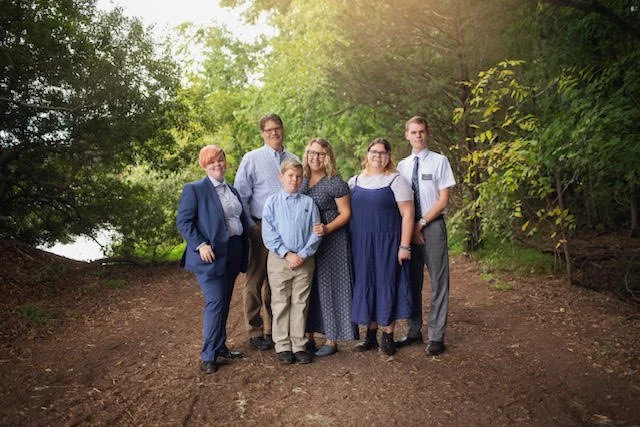
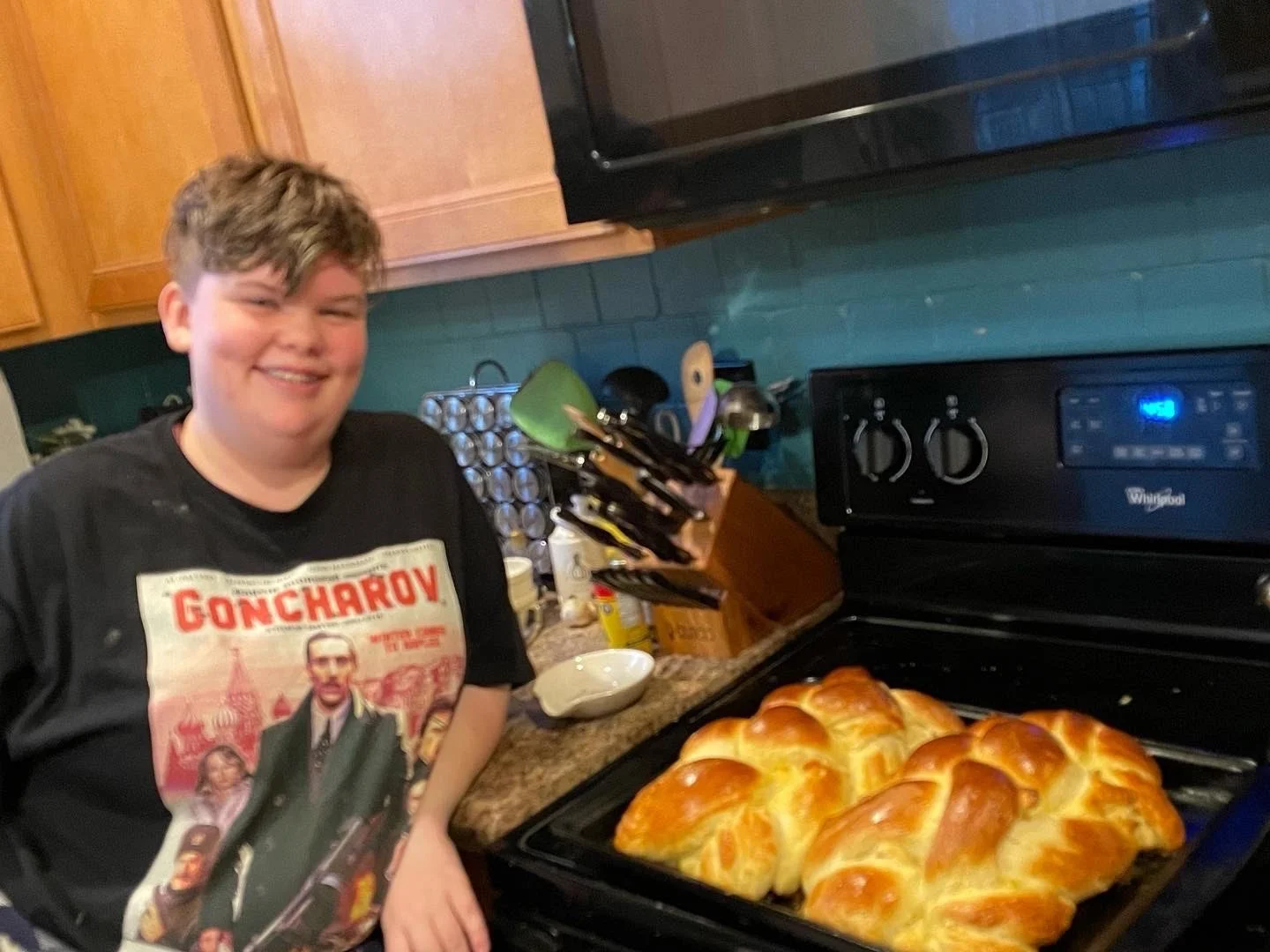
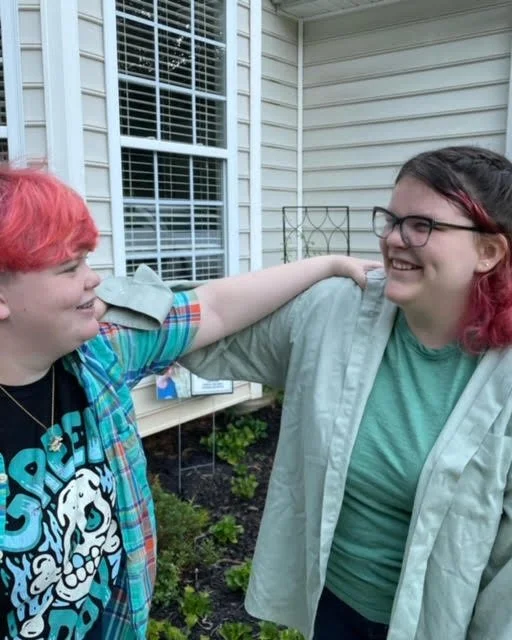
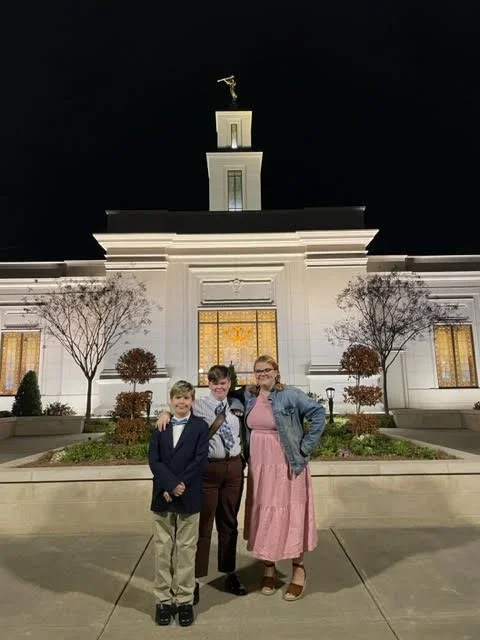

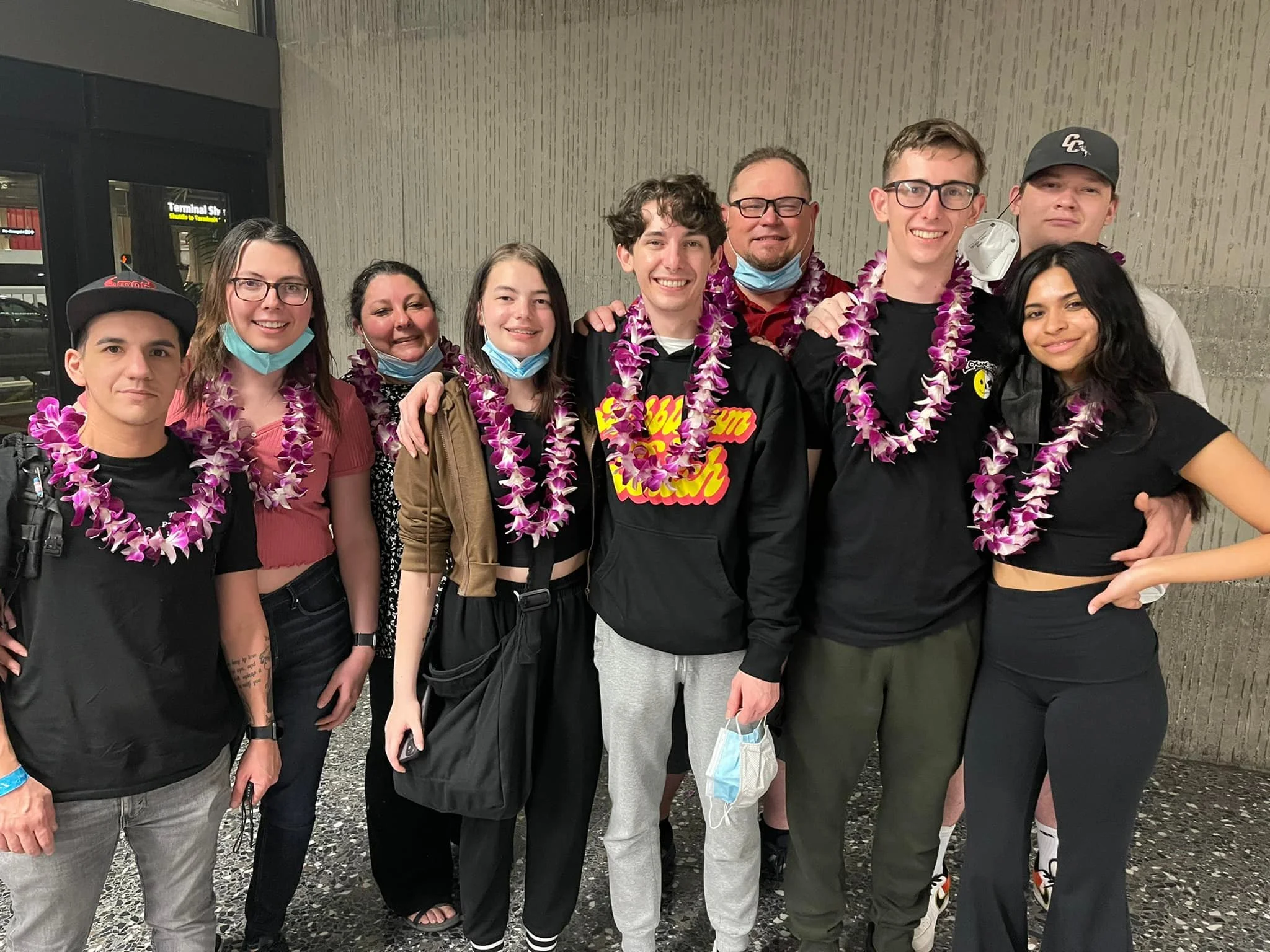
THE SMITHSON FAMILY
Nikki Smithson’s upbringing looked a little different from most of the LDS families who surrounded hers in the pews. In the 1970s, most couples at church were not interracial like her parents, but she has nothing but fond memories of the “great childhood” she experienced and of her “great parents” who are still married (and active in the church today). Nikki was very aware of the controversy mixed-race couples like her parents endured, but she says she has no recollection of learning about the LGBTQ community back then. It was something she was sheltered from, largely because her parents didn’t know too much about it themselves.
Nikki Smithson’s upbringing looked a little different from most of the LDS families who surrounded hers in the pews. In the 1970s, most couples at church were not interracial like her parents, but she has nothing but fond memories of the “great childhood” she experienced and of her “great parents” who are still married (and active in the church today). Nikki was very aware of the controversy mixed-race couples like her parents endured, but she says she has no recollection of learning about the LGBTQ community back then. It was something she was sheltered from, largely because her parents didn’t know too much about it themselves.
Until one day. While at her aunt’s house in her teens, Nikki made a comment about lesbians and watched as her two aunts, Abby and Cindy, gracefully stood up and left the room. Her mom said, “Nikki!” Suddenly 2+2 made sense. Realizing she had lesbian aunts was her only experience with the LGTBQ community until adulthood.
Nikki was sealed in the temple to her high school sweetheart and they had three kids in a row. They bought a house, a Suburban, and as “babies having babies,” almost felt like they were playing house. But quickly, Nikki realized this marriage was one she would need to exit, which proved more difficult than she thought. She was advised by various church leaders that she needed to “stay with her eternal companion.” But Nikki knew she had to make the best decision for herself and her three small children (six years and under); she knew she’d have to navigate this alone.
This experience presented the first cracks in her testimony—not of the Savior, but of church culture. She put her three young boys in Cub Scouts and held callings and “did it all 110% if we couldn’t do it 150%” as a single mom. There were years of inactivity and many Sundays, including every Mother’s Day, where Nikki opted out, unwilling to listen to another lesson about eternal family ideals. Nikki says, “I did what I could to heal and progress forward and not be put in a box where I’d feel fear or judgment. But I always maintained my testimony of Christ.”
Eventually, she married Kurt, who was not a member of the church yet, and “our blended family grew to a total of six boys and one little princess, all under 18 years old at that time.” As her oldest biological child neared puberty, Nikki noticed a constant state of malcontent on their part. There was crying, depression, expressions of wanting to die, and overall, an inability to live an authentic life. Nikki didn’t know what to do, but was willing to explore any measures to help “fix” her child. She says, “Now I know there wasn’t a problem, per se. It was just a matter of discovering the right tools and resources to address their needs.”
The first step for Nikki was to call her ever-so-inclusive aunts, Abby and Cindy, who led her to PFLAG, one of the only LGBTQ support systems at the time near their heavily-LDS Gilbert/Mesa, Arizona hometowns. Nikki went to all the meetings, while Kurt held the fort down with the kids. At PFLAG, the Smithsons were thrilled to find amazing resources and support, though no trans-specific groups. They noticed there were other transgender kids showing up who had no support at all at home. Kurt frequently had to remind Nikki they already had seven kids already, and she couldn’t bring them all home with them.
After finally visiting a pediatric endocrinologist and gender identity counselor (as well as experiencing an affirming Halloween night spent dressed as a female), Nikki’s oldest (AMAB) child understood that their diagnosis of gender dysphoria entailed more–they were trans. Casey was ready to identify as female. The Smithson’s youngest, who was six at the time, was so excited and said, “I have always wanted a sister!!”
Now 15, Casey began her process of transitioning—first working on her pitch through voice lessons, then hormone replacement therapy, and later taking surgical steps to achieve the feminine form that brought her a strong sense of peace with her identity. Almost instantly, while still a teen, her parents noticed an instant sense of confidence and happiness in Casey that had been missing for years. At age 25, @theCaseyblake is now a very vocal leader in the trans community and advocate for other trans youth.
About a year into Casey’s journey, Nikki’s son, Michael, came out to his mom as gay. At 14, he was just starting high school. Nikki replied, “I love you unconditionally, I will support you no matter what. I’m sure I’ll make mistakes, but I’m here for you.” Once again, she turned to PFLAG for support. They advised not to ask too many questions, because sometimes kids don’t know just yet. Nikki says, “I wanted a checklist, wanted to ask, ‘What do you need baby?’ Because his path looked so different from his sister’s. I haven’t been perfect, but we’ve definitely tried to support each other.”
One year later, Nikki’s next biological child, Spencer, came to her and said, “Mom, I need to talk about my sexuality.” Nikki sat down and thought, “Ok. What else do I need to learn? Then, it was the sweetest thing – he was hemming and hawing, and I thought, ‘Baby just tell me, I’m going to love you no matter what.’ And he said, ‘Fine. Mom, I’m straight’.” Nikki laughed and said, “Let me tell you what I told your siblings – I’ve never had a straight son come out to me before, but I am here for you, and support you.’ And I wondered, ‘Where’s the checkboxes to have a straight son? I had no resources for any of these things’.” All this happened in just three short years, when Nikki’s kids were ages 13-15. She says, “I know how to be loud and proud for a trans daughter, a gay son, and now a straight son. We are all happy and living our authentic lives.”
Nikki considers herself a very black and white person. Accepting her kids for who they are came naturally for her, but she was very clear with their friends and family that there would be no level of “grey” tolerance allowed. After Casey first began transitioning, she presented an ultimatum: “You can continue to unconditionally love this child with the Christlike love you’ve always shown, or you can cause problems, stir up hate, and all the kids and I walk together. The choice is yours – run with it or not. It’s ok to have questions and to ask me questions, but don’t address them to my minor child. Come to me. I’ll look up the answers; I’m still learning as well, and I need you to allow that for myself.”
Most of their family chose to show love, and Nikki says that over the years, they have only experienced a few painful hate crime instances in their community. One being when someone drove by Casey at a gas station and yelled a derogatory phrase and threw something at her. The other being when Casey was called out by a security guard after entering the female bathroom at high school with a friend. This was during the height of the transgender bathroom debate, and Casey had been advised to use the gender-neutral nurse’s bathroom in the office. Casey was humiliated by this experience, and never ventured into any bathroom at school again. Nikki became more staunch in her support of Target, one of the first corporations to state that patrons could use whichever bathroom aligns with their gender identity.
Nikki’s family has expanded in love and diversity: Casey’s partner is a trans male, and her gay son, Michael, is polyamorous and has had a partner who continues to perform drag. The Smithsons are outspoken supporters of the drag community in several cities, especially as of late when so much national attention has been thrust toward the St. George, Utah community, in which they now live, due to political debate over HBO’s recent filming of a drag show there. Along with “the most amazing ally couple,” Pam and Gregg, Nikki co-hosts a parent ally group at the St. George Encircle house. Nikki stands united with the LGBTQIA community in their small town and supports several organizations including (but not limited to) Pride of Southern Utah, Mama Dragons, LGBTQ+ Chamber of Commerce, Affirmation, Southern Utah DragStars, Equality Utah, and the family has a side business on Instagram, @OurFamilyDesign, which creates merch for drag performers and other items.
“I have a deep love for the LGBTQ community and I’m passionate about inclusion. We will keep fighting and seeking a fair and just community everywhere, not just St. George. I tell my kids, ‘I want you to be happy, healthy and safe – whatever that looks like for you’,” says Nikki. Her youngest daughter is 16, and “still figuring her authentic self out. I tell her, ‘Whatever it is, just do it and do it well. Be honest, safe, and we’re good.”
Religiously, Nikki has dreaded the question, “Are you LDS?” since she was first a single mom. She recalls, “I knew I’d need to define the religious journey for me and the kiddos. I originally said, ‘Yeah, but don’t judge the church off me or family,’ or, ‘I was raised LDS and kinda’… or ‘I’m kinda inactive’.” But recently, in the last couple years, Nikki has felt more confident saying, “I am unapologetically LDS.” She says this causes people to look at her and think “Ok, do I want to have a meaningful conversation or walk on...”
But Nikki knows, “My Savior’s love has never changed; I’m not worried about my eternal family. Our bishops have been really good to me because I tell them, ‘This is who we are and I choose Christlike love–I don’t have to worry about the whole eternal perspective and who’s sealed to who. I just need to worry about what I’m dealing with now. In my perception, my family is forever because I know we are the same good people. I love our Savior, and I know our God is a just God.”
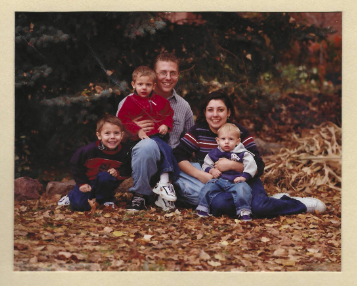


THE CRONIN FAMILY
Decades ago as Kaci neared high school graduation, her dad would often think back on her childhood and say, “Some people would say Kaci thinks outside the box, but I’m not even sure she knows there is one.” While being raised in an active LDS family with a father who was later called as a patriarch characterized her childhood, Kaci Cronin has always had an adventurous spirit open to new ideas. “The balance of that and being rooted in the gospel can be a great contradiction, but I try to minimize that. Even if you have strong traditions, you can accept the new.”
Decades ago as Kaci neared high school graduation, her dad would often think back on her childhood and say, “Some people would say Kaci thinks outside the box, but I’m not even sure she knows there is one.” While being raised in an active LDS family with a father who was later called as a patriarch characterized her childhood, Kaci Cronin has always had an adventurous spirit open to new ideas. “The balance of that and being rooted in the gospel can be a great contradiction, but I try to minimize that. Even if you have strong traditions, you can accept the new.”
While Kaci was attending a ward for the deaf 25 years ago, learning the ASL she now uses daily as an ASL interpreter at a Mississippi School for the Deaf, she crossed paths with a Deaf ASL missionary. Kevin had also been raised in the church, and the two met, married, and eventually had six kids: Shea-22, Mylee-21, Liam-18, Tierney-16, Maelin-15, and Kennilee-11. The church has continued to be an important part of their family experience in the small town in which they now live, located “just far enough outside Jackson, MS that we don’t lose water all the time” (regarding the recent water crisis affecting the area).
After moving away to Alabama for five years, a couple years ago the Cronins moved back to Mississippi and into a new ward dynamic in which they found they had differing opinions with leadership that were initially hard to navigate. They chose to speak up. For the Cronins, having a Deaf dad means communication has to be deliberate—they don’t holler from the other room and all calls are FaceTime calls. When they feel something, they say something. The Cronins operate off a spirit of the law philosophy and choose to get excited by kids who choose to go to church. During their move, they experienced growing pains with other leaders who prefer more of a letter of the law mentality with strict modesty and morality policing. Rather than step away, Kaci and Kevin leaned in to try to make this environment better, not knowing yet how much their family would soon need it, when one of their own children revealed she, too, didn’t exactly fit in the box.
Back while mothering her first three young kids, Kaci figured she could write a book on expert parenting. All three were soft spoken, clean-faced, shy--the type of kids you could confidently take out of a high chair at a restaurant. She on occasion questioned why other peoples’ kids were bossy terrors. “Then I had my fourth and by necessity had to become an ‘Oh my gosh, I’m sorry, I’m her mom and I’m coming right now’ kind of person.”
Kaci explains, “Tierney was wired differently from the beginning in all facets. As a child, she loved all things scary and intense, including shark attack books and her favorite flip flops with sharks on them.” Kaci says, “She’s still super fun and fills a lot of space wherever she goes.” Tierney loved sports—like, really loved them—and Kaci spent an extreme amount of time bonding with her daughter as she drove her to softball tournaments and basketball and track events.
When Tierney was around 10 or 11, Kevin asked Kaci if she thought their daughter might be gay. Kaci now recognizes Kevin may have been more intuitive in this regard, as Kaci shut down those early thoughts. When Tierney was around 13, she confided in her mom that she was indeed uncertain about her attractions. She thought she’d had crushes on boys, but she wasn’t sure. Kaci observed Tierney didn’t seem to feel or act the same as her older (and later younger) sister did, but Kaci advised they put a pin in it, and just see what happens.
When Tierney was 15, her parents noticed she was spending a lot of time with a particular female friend. She’d come home with a new ring or stuffed animal, and when asked its origin would reply, “My friend gave it to me.” When Tierney wanted to go to dinner with her “friend” and Kaci asked if she needed money, Tierney replied her friend would be picking her up and paying for her. After a few months of this, Tierney said, “Mom, I need to talk to you. I have been dating…” Kaci chuckled and said, “Yeah, I’ve been waiting for you to tell me—it’s kind of obvious.” Later that day, Tierney also opened up to her dad over an ice cream date.
Kaci felt gratitude their daughter felt comfortable with both telling her parents without fearing being looked down upon, and in pursuing a relationship in an authentic way. In a very short time, Kaci and Kevin had many conversations with each other and other supportive family members who all made rapid progress in understanding that they could support Tierney as they believe in a loving Heavenly Father whose gospel promotes hope and happiness. While being the parents of a gay child triggered more concerns related to the church culture and traditions (though not necessarily the gospel itself) for Kevin, Kaci says she came to the realization that, “If the church doesn’t bring us increased hope and peace, then I’m doing it wrong or someone else is.”
Determined to let this mantra both enhance and drive her spirituality, Kaci started to analyze various approaches and opinions to others’ perceptions about raising a gay child. While her family is also supportive of the couple’s dating, Tierney’s girlfriend was initially more hesitant to share her orientation with peers because of her Bible belt surroundings and different Christian faith that delegates some to hell for certain practices. Kaci appreciates that in her religion, at the very worst, anyone considered a dedicated sinner (not that she considers any of her kids as being in this category) would still achieve the lowest degree of celestial glory which, according to LDS doctrine, is “wonderful beyond imagination.”
The Cronins’ oldest son had a brief marriage around the time Tierney came out, which was also instrumental in causing the Cronins to reevaluate religious presuppositions. As the LDS couple was married with a plan to be sealed in the temple asap, from outside appearances, some would say they’d achieved something close to “the ideal.” But as the young couple lived with the Cronins, Kaci was a frontline witness to a toxic, difficult relationship that ended by necessity. In contrast, they simultaneously watched their daughter dating a girl, an LDS cultural taboo, but saw the sweet happiness in that relationship. Through this, Kaci has surmised, “You can find happiness, health and beauty in places you never thought to look. I’ve realized some of my goals are now much more primal for my children, in considering what is necessary on a human level to be able to function well. In the end, I want them to be happy, cared for, and to feel supported.”
During the pandemic lockdown, Tierney further surprised her parents by requesting a school and extracurricular change. Rather than continuing with her intense athletic commitments and the small, rural Christian school she’d attended thus far, Tierney wanted to shift to singing and playing the guitar and other instruments and to transfer to a nearby large public school where she’d audition for theatre. Kaci says, “Is there a box? No. When I posted about her not playing her lifelong sports the next year, it was kind of funny because that got more of a surprised response than her coming out. I’m proud that she’s grown and matured enough in her life already to make decisions for her own path, even beyond her sexuality. She’s realizing, ‘What do I want to invest my energy into to become what I want to become?’ I love her example that we have these things inside of us that we might not tap into if we’re not willing to try something new and go to new places to discover who we are. Because of this part of her personality, we all get to have these adventures with her.”
Tierney ended up landing the lead in the school play and when her school’s production advanced to state, she was personally named as part of the regional All-Star cast. She is still dating her girlfriend 16 months later.
When Tierney came out, Kaci was her ward’s Relief Society President. Since, their son Liam has gone on a mission where in the MTC, he was one of the trainees in his class who was unphased and supportive when their Spanish instructor opened up to the class about being gay. Kevin has since taken a job in Boston where he has surprised his progressively minded colleagues as “the guy from Mississippi who shows up wearing a rainbow bracelet.” The Cronin family are still part of the same ward, and they appreciate that their bishop has reached out to ask how they can make Tierney feel welcome, and no one has been confrontational or contentious about Tierney’s orientation or attendance at events (FSY, girls camp, etc.) that require bunkmates.
Tierney recently did attend FSY and had an intense spiritual experience she was eager to share at the first opportunity she had to bear her testimony. Over the pulpit, she told her ward she went into FSY wanting to know if she was really loved by her Heavenly Father, as is. Tierney reported that she received a testimony that, “He loves me, He still communicates with me, he hears my prayers. I’m not cut off at all.”
The entire Cronin family has shifted their beliefs to center on the personal relationship they each can receive with divinity and the foundation that comes with that. Kaci says, “FSY was a turning point for my daughter as she received a personal testament that she has a place and is valued. My prayer as her mother is she’ll always carry that with her regardless of her standing and involvement with the church.”
When it comes to parenting, the Cronins acknowledge that some out-of-the-box adventures their children have brought to their world are as unpredictable as the state of the Jackson, MS water supply. Some adventures are hard, and some are great. But Kaci says, “At the end of the day, that’s where the joy and connection come in our family–through continuing to show up for one another.”





KEN TAYLOR & LISA ASHTON
When she was four years old, Lisa Ashton and her older brother Joe took a walk around the block with their father. A walk Lisa would never forget. As they circled their Rancho Cucamonga, CA neighborhood, Ken Taylor assured his kids it was in no way their fault, but he would soon be moving out of their home. He and their mother were getting a divorce…
When she was four years old, Lisa Ashton and her older brother Joe took a walk around the block with their father. A walk Lisa would never forget. As they circled their Rancho Cucamonga, CA neighborhood, Ken Taylor assured his kids it was in no way their fault, but he would soon be moving out of their home. He and their mother were getting a divorce. After Ken moved out, Lisa took many walks around the same neighborhood over the years, but often by herself. Her brother was four years older and didn’t want to hang out all the time with his younger sister, and their single mother was often gone at work.
Lisa spent years processing that her life just looked different from that of many of her friends.
When she and Joe spent every other weekend as well as vacations with their father, they observed Ken had a roommate they called “Uncle Ed” who lived with him for many years. Lisa remembers it being a little confusing. Ken and Ed had lots of other male friends they hung out with (some with kids of their own), and she remembers them giving disapproving looks when her brother once said “That’s so gay” in a derogatory manner. When Lisa was 11, Ken finally felt it was time. He told Lisa, “I have a lot of male friends who are attracted to men.” Lisa asked, “Would you be gay?” With a deeply pained sigh of relief, Ken said yes.
When Lisa turned 14, her brother had moved off to college and she was living alone in a big house with her mother, Teresa (who Lisa and Ken agree earned her nickname “Mother Teresa.”) By this time, Ken felt it was his turn to be the full-time parent and all agreed to the arrangement. Ed and Ken broke up shortly after, and Lisa and Ken moved into an apartment in Dana Point, CA. When Joe returned from his LDS mission, both kids lived with Ken for a short time before Lisa went to BYU and her brother returned to college. Of having a gay father, Lisa says, “It was the 90s; things were so different back then.” She knew her childhood was atypical. She wasn’t sure who she could trust with this information. As an adult, she now freely talks about her story and lessons learned along the way about unconditional love and acceptance learned from both of her parents.
Ken’s upbringing was also atypical. He was born in 1950 in Washington D.C., the seventh of eight kids of parents who were married in the temple. Due to his father’s job as a foreign service officer for the state department, they moved around internationally, spending time in Mexico, Austria, and Canada in between stints in the states. Ken said he was always active in the church, but he recognized that something about himself was different. While living in Vienna between the ages of 11-15, Ken was involved in an American scouting program there and dated girls like all the other guys did, but he found it interesting that the most popular boy in school came on to him. Ken did not want to resist and thought, “If he can do that, why can’t I?”
Ken spent ages 15-18 in Montreal, where as a high school student he met a fellow gay peer named Eric from Holland who was active in the LDS church and engaged to marry a girl. They eventually had six kids and later got divorced, then remarried, then divorced again. Eric now lives in Holland with his boyfriend. But back when they were young, Eric had asked Ken to run away with him and forget about everything. At the time (1968), Ken couldn’t fathom doing something like that due to the church culture in which he’d been raised and was trying to make work.
Instead, Ken went to BYU after graduation. His father had just retired and his whole family moved to Salt Lake City. It was 1968, and Ernest Wilkinson was president of BYU. In his “welcome speech” to the university, President Wilkinson uttered those now infamous words:
“We [do not] intend to admit to our campus any homosexuals. We do not want others on this campus to be contaminated by your presence,” and invited them to leave immediately. At the time, Ken felt so deep in the closet, he didn’t admit he fit into that category; rather he was convinced the church would help him “get out of that.” He was surrounded by returned and preparing missionaries and decided he should take the same course. At 19, Ken was called to serve in eastern France and was excited he’d be able to put his Montreal-acquired French and German to good use.
Before his mission, his stake president asked if he was worthy to serve, and Ken said, “I wouldn’t be here if I wasn’t.” But the pressures of the MTC got to him, and feeling guilty, he went to an authority there to confess his history. The man said, “I don’t know much about this but you need to drive up to Salt Lake and see (Elder) Spencer W. Kimball,” who was an apostle at the time. Elder Kimball interviewed Ken in detail about everything he’d been involved with and said he’d still let him serve his mission as long as he promised to write him once a month, and warned that if he ever got involved in anything, he’d be sent home immediately. He also told Ken never to talk about this part of him again with anyone. Ken was petrified, and says he never did anything immoral by the church’s standards on his mission.
On his mission, Ken told just one companion about his attractions, and the companion told Ken that his father was also gay. This young man had gone on a mission hoping his parents would get back together, but his dad didn’t want to because he had a gay partner. He wanted to keep that relationship while still being a father. Subconsciously, Ken recognizes this became the first model for how he would later choose to live his life.
Ken wrote to Spencer W. Kimball month after month and never got a reply or any other type of support, “not that I expected it, knowing he was a busy man.” Shortly after he returned from his mission in France, Ken realized that he had many allies who supported him unconditionally. One was David, an MD, who became Ken’s best friend. When Ken came out as gay to David (they were 21), David’s reply was, “It makes no difference to me. I still love you.“ David and his wife have stood by Ken his whole life, sharing love, friendship, and even some much needed medical advice. When he returned, he went back to BYU. During his second year there, he met Teresa. Ken says he fell in love with her and had never loved any woman like he loved her. “She was very energetic, happy, positive, and I thought several times, ‘If I have to have a woman as a partner it should be her as she’ll be a wonderful mother and partner in so many ways.’ And she was.” But focused on her education and career, Teresa wasn’t looking to get married. It would be six years later of Ken dating some other women but holding out for Teresa until they got married in 1977.
Ken transferred to the University of Utah, where Joe was born. He served in a bishopric while earning degrees in French and Business Management. Ken and Teresa wanted many kids, but were only able to have two. The family lived in Murray, UT and it was in that house that Ken finally came out to Teresa after he started having long talks with a man he’d met while doing business. Ken felt conflicted in many ways – at this time, he was starting to seriously doubt the church after learning various stories about church history. He took a list of ten questions to Charles Didier, who had served as his second mission president, and now was a member of the Seventy. Charles had some written information sent to Ken that attempted to answer his questions about the Book of Mormon origins, first vision, temple, etc., but after the packet came in the mail, there were still holes in his testimony Ken couldn’t fill. Another leader around that time suggested gay conversion therapy, something Ken immediately rejected. As he worked it all out in his mind, he came to the conclusion that per the church teachings of the time, one could not both believe in the truth that they are gay and the truth of the church. He opted with the truth he did inherently know and had painfully tried for years to suppress.
Ken says it was a mix of his pulling away from the church and being gay that ultimately ended his marriage. As this happened, Teresa told their stake president he’d moved out, and he was called in. The stake president said, “It’s been reported that you’ve been involved in homosexual activity.” Ken replied he would not be sharing details, that it was personal. The stake president said that as a high priest, he’d be summoned to a church court. Ken wrote a letter in response saying, “Whatever you do, it’s your choice. But I’m not coming to a court.” Shortly after, Ken received a letter stating he’d been excommunicated. In the first few lines, he was told he could still pay tithing though if he wanted, but only through an active member.
Ken and Teresa kept their divorce amicable, no lawyers. Both the initial distance from his family and the church created a sense of loneliness and isolation. Ken didn’t tell his kids about the rupture of his testimony until they were much older and asked. (Joe eventually also left the church.) One day Ken read a book about Carol Lynn Pearson’s marriage to a gay man, and they began to correspond. Through her, he connected with some other men in similar situations in his area and through an Affirmation conference in Palm Springs, he developed an off-shoot friend group of men who were also fathers and called themselves the “Gamofites” (gay Mormon fathers). Lisa remembers them having family pool parties and exchanging holiday cards as she also got to know her dad’s friends.
The Gamofites ran the gamut of church activity and belief, and took their shared skills of leadership and organization to create something that could uniquely fill their needs for fellowship. They eventually grew to over 400 men, and they had a mission statement, regional retreats, and talent shows (where sometimes church hymns were sung). Ken was the self-appointed librarian and still has binders from their meetings. He says, “Every retreat, the Gamofites came into play as people realized they’re in a safe place, and if we were to have a quorum, this would be one where we could belong to a brotherhood.” While many of them have moved on, he remembers those as “the best of times,” and thinks if to this day he called five of them and said, “Let’s have another retreat,” they’d still come.
Ken has had a couple more relationships since Ed, and currently is “madly in love with the mind” of a man named George who lives in Cyprus. They talk every day, and he has been to visit. While they’re distanced in age and proximity, he says they’re close in many ways and enjoying it for what it is.
Ken recognizes the church instilled many good qualities in him including hard work and service, and says he doesn’t want to throw the baby out with the bath water. He acknowledges he had spiritual experiences on his mission and says, “Whether they were contrived or spontaneous, it doesn’t matter. I take them as treasures from a former life, but don’t want to go back. But I want my kids to make their own choices; that’s free agency. That’s a principle.” He has showed up to support Lisa’s three kids (ages 6, 9, and 11) at baby blessings and baptisms. When Lisa married her husband Rodney in the temple, they also had a civil ceremony so Ken could be a part of it, which was a less common practice at the time.
Lisa says her kids have asked why Papa Ken and Nana aren’t together but haven’t asked a ton of questions yet about why not; Lisa says she explains to them what she thinks they can understand at their individual ages and is appreciative of how times have changed. “For me, growing up in the 90s and 2000s it was a whisper, ‘My dad is gay.’ Now it’s more of a bold, ‘Papa Ken is gay.’ I used to always wonder when it was the right time to tell people about my dad; now it’s just easier to.” Ken and Teresa are cordial and attend holiday dinners together. They’ve taken Lisa to Disneyland together several times on her birthday. When people ask if he has any regrets about his life, he says he has no regrets about marrying Teresa and having his two beautiful children. But he does regret following the advice of church leaders at the time to bury who he was, to not talk about it to women he dated, and not tell Teresa he was gay. For so many years, he was caught between that rock and hard place.
He says, “I realize I should have told her – it’s my responsibility and I was not being forced to not tell her. But in order to be accepted by Mormonism, I needed to marry a woman. When I finally came out to her, she wasn’t bitter or hateful. She said, ‘We’re going to work through this and find a way to get through this.’ I told many Gamofites, ‘If you have to be married, you should be married to someone like Teresa’.” Lisa concurs, “She’s been very Christlike and forgiving and never bad mouthed my dad. The only thing she’s said is ‘I wish he had told me’.”
Other family members did struggle with Ken’s coming out, one even saying she wished Ken had died of AIDS (it was the 80s when he came out). But Ken and Lisa are grateful that in their family unit of four, they accepted things for what they were.
The family members now lead their lives throughout southern California, where they still sometimes take walks around the block--together. Lisa says, “We’re doing the best we can in this situation. We stay close. We all talk every day in some form. We visit often and love each other very much. No one’s on the outskirts. While it hasn’t been easy, we’ve stuck together.”
THE NIEMANN FAMILY
The Niemann family spent the holidays together enjoying their family tradition of planning without over planning. Katherine and Brand Niemann were glad to skip out on the East Coast single-digits cold front to join their four Utah-based adult sons for Christmas. Activities included shopping, sledding, skiing, pickleball, playing Age of Mythology, and painting the trim in Michael’s basement. They spent Christmas Eve playing music and sharing stories. On Christmas Sunday, after banana pancakes at Jeff’s, they all went to church—albeit two of their adult sons wore pajamas…
The Niemann family spent the holidays together enjoying their family tradition of planning without over planning. Katherine and Brand Niemann were glad to skip out on the East Coast single-digits cold front to join their four Utah-based adult sons for Christmas. Activities included shopping, sledding, skiing, pickleball, playing Age of Mythology, and painting the trim in Michael’s basement. They spent Christmas Eve playing music and sharing stories. On Christmas Sunday, after banana pancakes at Jeff’s, they all went to church—albeit two of their adult sons wore pajamas.
Their oldest, Jeff, 29, is married and has two children. Michael, 26, lives in Vineyard and works for a Dublin-based software company. Brandon, 24, also lives in Vineyard and sells windows and solar. Daniel, 22, a recent BYU grad, lives in Sandy, but frequently commutes to the Provo Art Studio where he models for sculptors. Both Michael (who was independently featured in our most recent L+L story) and Daniel are gay.
Katherine appreciates how her sons support and respect each other’s very diverse ideas and perspectives, no matter how intense conversations may become about politics or the way the world turns. “I am successful as a mother because my adult sons value their relationships with each other. They can have strong differing opinions and still be able to talk to each other and maintain close family ties.”
On raising four sons, she says, “I’m straight, so I raised my kids straight. Then I found out two were gay. I had to deal with something I hadn’t dealt with before. But they’re my kids and I love them and that comes first. I cannot imagine breaking off my connection to my children because they did something I don’t agree with or experience something I don’t experience. Christ doesn’t do that. He says, ‘Come unto me all ye that are heavy laden and I will give you rest.’ I think Christ’s statement can be interpreted as great parenting advice: ‘Come to me and tell me what you’re experiencing, what you’re doing, and how you feel, and I will accept you and figure out how to navigate through this with you.’ I want my sons to be able to talk to me about anything. I want to be first to know about what they’re doing and experiencing rather than find out second-hand from someone else.”
Katherine advises parents to listen to and accept what their kids have to say. “Don’t think you know better–you haven’t experienced this. They’re as much God’s children as yours or mine. If God wanted to do something about them being gay, he could. If God can deal with it, so can we. In fact, he can help us deal with it. We can look to Him, the one whose thoughts and ways are higher than our thoughts and ways, to learn how best to love our children.”
While Michael is older, Katherine says they knew about Daniel being gay before Michael. “We discovered Daniel was attracted to guys as a teen, and later he told us he was aware of his orientation around age 12 or 13. Daniel, however, was not ready to address it and didn't want to be labeled as gay during high school. Michael was not aware of being gay until much later on his mission. Michael told me he was gay after his dad told him about Daniel being gay. I had wondered about Michael so I wasn’t surprised, but I had hoped he wasn’t gay so he didn’t have to work through those life complexities." Michael recalls his mom responded, “Michael, I already knew.” Michael appreciates that his mom “handles stuff like this really well. She doesn’t freak out. She’s not a traditionalist, and is very open minded. This was not world-shattering.”
Daniel started seeing a guy during his freshman year at BYU and is now comfortable being open about being gay. Michael, who has only more recently come out publicly, says he wanted to be settled within himself before dealing with the emotions other people express when you tell them you’re gay. Michael says his dad, Brand, a data scientist, doesn’t want to jump into as many deep, emotional conversations about things, but “he made it clear in the way he knows how to say ‘I love you.’ He also realizes having us in the family is more important than who we’re dating.” Michael and Daniel’s straight brothers have also made it clear they are “all good,” and the guys are welcome to invite their boyfriends to family gatherings anytime.
All but Daniel went on a mission. Daniel started the process, but it became complicated and then maddening when his orientation seemed to cause unfair delays. “The experience was difficult,” says his mom. Katherine respects Michael’s and Daniel’s choices to distance themselves from church activity. However, she says, “I go to church. I’m able to talk about religious things with both. They grew up in my home and have shared my beliefs.”
She does acknowledge there is definitely room for improvement for people who attend church. “We bring unconscious bias to whatever we do. As a result, we resist or take more time to adapt to new ways of doing things. We get stuck in traditional patterns and don’t always do our own thinking or immediately change our behavior when an issue has been addressed in a conference talk. I think sometimes we’re more worried about being held accountable to God for not teaching His laws effectively than in making sure the people we are teaching feel our love for them. Moroni says it best, ‘If ye have not charity, ye are nothing, for charity never faileth. Wherefore, cleave unto charity, which is the greatest [gift] of all’. (Moroni 7:46)”
Katherine appreciates how the gospel she believes in allows room for making mistakes in the learning process. “I think a significant lesson from the Garden of Eden experience is that even when you are giving your best effort, you will make mistakes in the learning process and that’s OK, because God’s got your back.” Katherine appreciates how having two gay sons has broadened her perspective as to just what this life is about—learning and growing together as families. She hopes church members will rally to support all those navigating the LGBTQ journey.
It breaks Katherine’s heart to hear of other parents of her kids’ gay friends who choose not to support their kids, blame them for “choosing” to be gay, or call them sinners for being gay. “It’s emotional abandonment to withhold love. Not being emotionally available to your kid is the sin. Not them being gay. Parents are covenantly bound to help their children. Don’t burden them with figuring out how to help you work through your stuff when they’re struggling just to work through their own stuff. You need to work through your stuff and be available to help them work through their stuff. And it’s OK if you’re both figuring it out together. Where’s your kid going to go if not to their own parents?”
Katherine says, “To sum it all up, what’s the fun of a holiday if you can’t spend it with family? What’s the point of being a family if you can’t enjoy each other’s company? Where’s the adventure in life if everything always goes according to some rigid plan? Since families are forever, I’d leave the below-freezing emotional temperatures any day to enter the emotional warmth of acceptance and love with my family.”


MICHAEL NIEMANN
Michael Niemann, 26, had just left a blissful week at Lake Powell, enjoying time with friends off the grid, when his phone blew up. Now that he had reception again, he quickly picked up on the fact he had missed something big. It was August of 2021, and messages of “Are you okay?” and “Here for you” poured in. He wondered what had happened…
Michael Niemann, 26, had just left a blissful week at Lake Powell, enjoying time with friends off the grid, when his phone blew up. Now that he had reception again, he quickly picked up on the fact he had missed something big. It was August of 2021, and messages of “Are you okay?” and “Here for you” poured in. He wondered what had happened. He quickly pieced together that a talk by an apostle had been given to BYU administration and faculty that was uncharacteristically hurtful as Elder Holland had encouraged figurative “musket fire” to be taken up against those who advocated for their LGBTQ loved ones. The talk had hit hard for many on campus and beyond, and this was a painful time for many LGBTQ individuals and their families trying to decipher whether they could still make the church work.
On BYU campus, an impromptu path of sidewalk-chalked, rainbow hued messages of love and support had been created by a multitude of students nightly. As Michael caught up on all he’d missed, one storyline, in particular, shocked him. A BYU student had arrived one night at the rainbow row and squirted a water bottle on the messages of love and hurled offensive accusations including the f-slur toward the LGBTQ population. It had been caught on camera and gone viral, even making headline news. Michael’s heart dropped when he saw that the young man on camera was his neighbor, and in fact, his assigned minister in his LDS student ward.
Michael is known among his friends and family for his bright smile, his effervescent energy, his kind, upbeat demeanor. But this hurt. While everything in him wanted to retreat, he still felt a pull that he needed to check on this neighbor. And he did. He called him up and offered to bring over a Brick Oven pizza. The neighbor acquiesced. Michael entered a space that felt dark and lonely, and found his neighbor in a very dark and lonely headspace. He had understandably been ostracized by many, and was in hiding and facing expulsion from the university for his behavior. While Michael definitely understood the anger many were feeling against the young man, he says a different impression overpowered him--the image of Christ on the cross offering up compassionate words for the accused who hung on either side of Him: “Father, forgive them for they know not what they do.”
In that profound moment, Michael felt an immense love enter his heart, as he saw his neighbor as a fellow hurting, broken soul. Michael says this love he felt was limitless, and fueled from an outside, spiritual source. “There was no part of me that questioned if I was loving too much, by not condemning his behavior.” He sensed the student had not had many personal interactions with gay people, and indeed, the neighbor confirmed that he thought he had only been doing what was right, and what he had been taught. When Michael sensed the dark frame of mind of his neighbor as he awaited Friday’s hearing to determine whether he’d be expelled from the university, Michael left with the impression to continue to check on him that week. He did, every day. When Friday came, the student found out he was suspended, and prepared to leave campus. As he did, Michael went over for one final face-to-face, during which he finally asked his neighbor a question: if he had known that he (Michael) was gay. The neighbor seemed surprised and said no, he hadn’t. He then apologized for what he’d done, for everything.
The two still remain in touch today.
Michael tries to live by the Marianne Williamson quote, “The way of the miracle-worker is to see all human behavior as one of two things: either love, or a call for love.” Obviously, Michael is exceptionally capable of realizing the depths and breadth of that statement. And he has taken his gifts to the public, as one of the original creators of Provo’s Treehouse Talks speaking forum, which is now spreading to other college campuses. Along with his close friends Hollis and Mio, who he credits for being the best of friends and instrumentally supportive to him in every way, the trio started the Treehouse events to lend a microphone to young adults to share the stories and experiences that make them uniquely them. The 9pm bi-weekly gatherings are popular, bustling with diverse crowds who equally embrace diversity and the bonds that come through sharing vulnerable experiences.
Michael, a graduate of BYU’s Masters in Information Systems program who now works for a Dublin, Ireland-based software company, is fascinated by people, and has always enjoyed a wide circle of friends. It took him some time to understand his sexuality as in high school, he mostly enjoyed hanging out with large groups of friends. He dated a girl for seven months as a freshman and was much more worried about whether he was “breaking the rules” dating at the age of 14 than the fact that he wasn’t feeling a strong physical attraction to a girl. He’s always preferred the company of male friends, which never crossed any lines into romantic connections, but as his preference for hanging out with guys continued into his mission, he started to wonder about his attractions. He says he’d hear people joke that with your mission goggles on, your high standards of attraction decrease until the point that you might even find your companion attractive. But for him, he started to wonder, as around this time, as he realized he didn’t find girls appealing in that way. He credits an extremely astute, compassionate mission president as being the first person he came out to when he asked him, “President, what would you say to someone who’s gay?” The President responded, “I’d let them know I still love them and I know God loves them… Elder Niemann, is this you?” Michael says his president offered him meetings with a mission psychologist but never asked insensitive questions or offered any forms of disrespect. This is something Michael really appreciates, and says lent to him not feeling anger or hatred toward people in the church.
After Michael returned home, he tried to date girls, but there was no romantic desire. As three relationships lasted long enough where there should have been one, he ultimately felt it wasn’t fair for them to be partnered with someone who had to fake attraction. These realizations forced Michael to ask tougher questions about how who he was fit into God’s plan, and whether or not God knew and loved him for who he was. He became very deliberate about prayer and scripture reading. Then when Covid hit and in-person church stopped, Michael says it felt like a breath of fresh air in which he could step back and not have to try so hard. That period of reevaluation became the “darkest period of (his) life” as he questioned whether his life had a purpose and was worth continuing. He realized he needed to be more authentic with his struggles, which brought a lot of healing. At this time, he turned to his friends Hollis and Mio and threw himself into the Treehouse Talk endeavor. By connecting deeply with others, he realized his life would be best lived if he connected authentically with himself.
For Michael, attraction is more of a cerebral thing. When someone asks who is his celebrity crush or who he finds “hot,” he responds, “Let me meet them first, then I’ll know more.”
Michael now dates men, and considers himself a spiritual person who wholly believes in compassion and trying to be Christlike, but who has a lot of questions about the church. On October 11 of 2021, he decided to share his thoughts with friends who had been asking, and his own words best convey the conflict so many in this space feel:
“Today is National Coming Out Day and has been the cause of reflection on my journey. Nothing has challenged my self-worth more than being a gay member of the church.
When I first began the journey of coming out to myself as gay, it started as a personal investigation on my attractions and what the church said about it. Being a member of the church added additional layers of complexity to coming out as gay.
I would read things emphasizing that homosexuality was a sin and comparable to murder. It was a perversion of agency, unnatural and disgusting. But it was also curable. As an impressionable 19-year-old, I absorbed all of this.
With the understanding that I could ‘control’ or change my ‘perversions,’ I made every effort to fix my sexuality. When this did not work, I began to detest myself for my wickedness and inability to overcome my sin. I woke up each morning disgusted with myself. I hated myself more than I have ever hated another person. Suicide became more appealing than being gay and alive. I desperately wanted to escape my sin and what it meant to be gay. I felt very alone during this time and despised my friends who were enjoying dating.
During my journey of coming out, the church continued to convey mixed messages. I was told that I belonged but not to label myself as gay. I was told that I was loved and that God had a plan for me, yet leaders and members made homophobic comments and God’s plan for happiness only involved heterosexual partnerships. Today, any statements around God’s plan and love for his children (even gay-affirming statements) are triggering because the repeated incongruity leaves me unsure about ‘real messages’ and how God honestly feels about me (and every time I say this people instinctively want to confirm that God loves me, adding to the mix of messages). It is really hard to feel peace, love or joy in this environment.
Today, the church has come a long way in emphasizing respectful language (though I do believe there is a lot of ground to cover when it comes to empathy and understanding). Often, I feel like the church talks ABOUT LGBTQ+ members but not TO LQBTQ+ members. I feel like I have been hurt by the church and the church has not apologized or even acknowledged its history of hurtful messages. It leaves me wondering if the church cares about me.
While a lot of healing has occurred, today I cry for the heaviness and darkness of this experience. I cry for the boy who fought daily to be someone else in order to be accepted and loved. But mostly I cry for a boy who struggled to understand his value and self worth, but had no reason to do so.”
It is this well from which Michael must have drawn on that day in August of 2021 when he was able to see past his neighbor’s hurtful actions to the hurting soul within that drove them. Some may still ask, how did he do it? How did he forgive—and love—so easily? Michael says that in that space, he saw two hurting souls sitting in the same room. Through his own past experiences in therapy, Michael had committed to wanting to stay in a place where he can take care of himself emotionally so he would never have to take out his feelings on others.
Michael sees humankind as people who are all touching a different part of an elephant—one may touch the ear, and call it a leaf. One may hold on to the tusk and call it a spear. For some, the tail may feel like a rope. Michael acknowledges people can touch the same thing, but have very different experiences, and challenges all to zoom out and find the bigger picture and recognize that various people’s experiences regarding a situation may be true.
Reflecting back on that dark night in Provo when two troubled souls connected at a time of hurt for many, it was feeling the immense love that God had for Michael’s neighbor who had wronged him that Michael was able to finally recognize the love that God also had for him. Michael felt it, and it was incomprehensible, just as his story of compassion has been for many who have heard it. It’s a story of love that can only be defined as a miracle.
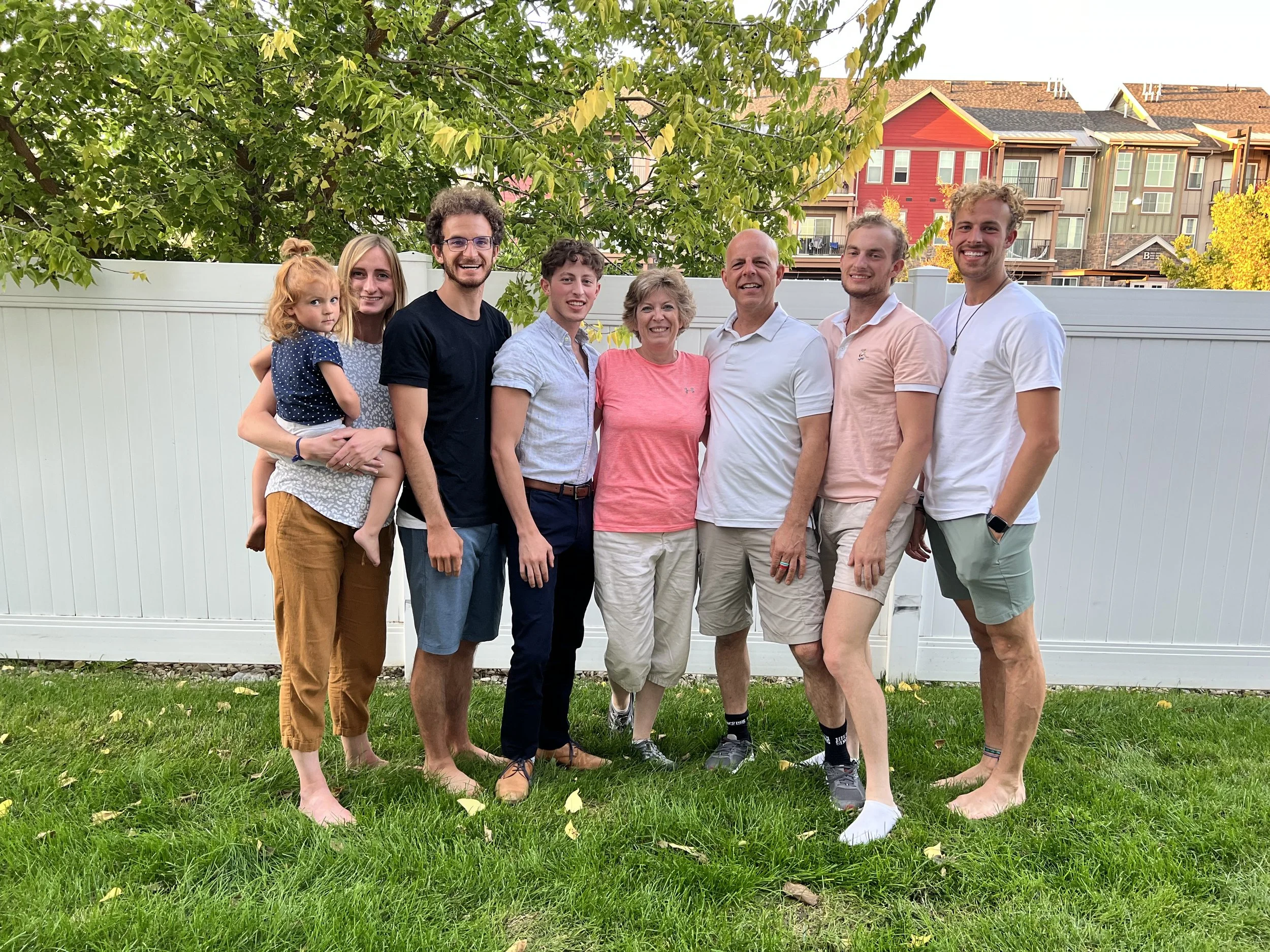


JENNIFER WEST
For Jennifer West, 34, of Cottonwood Heights, UT, there was a time when she was told she couldn’t teach, speak, or pray in the church in which she had grown up. She was the oldest of 6 kids born into an active LDS family, and Jennifer says that as a youth, she “had no idea I was gay—none at all.” When she was at BYU she noticed all her roommates seemed really into dating, but she recalls, “I didn’t get it. I wondered if that might mean I was gay… I had always been a tomboy, liked sports, etc. But I thought the idea of kissing a girl was just as weird as the idea of kissing a guy, so I decided that wasn’t it.”
For Jennifer West, 34, of Cottonwood Heights, UT, there was a time when she was told she couldn’t teach, speak, or pray in the church in which she had grown up. She was the oldest of 6 kids born into an active LDS family, and Jennifer says that as a youth, she “had no idea I was gay—none at all.” When she was at BYU she noticed all her roommates seemed really into dating, but she recalls, “I didn’t get it. I wondered if that might mean I was gay… I had always been a tomboy, liked sports, etc. But I thought the idea of kissing a girl was just as weird as the idea of kissing a guy, so I decided that wasn’t it.”
It was during this time that Jennifer stopped going to church. She didn’t love how singles wards turned church into a social event, and didn’t feel any sense of spiritual connection so she drifted away. After seven years of inactivity, at the age of 26, Jennifer decided to give the church one more shot. She says she told Heavenly Father, “Ok, I’m going to really gives this one last try - if there’s something you want me to do, I’ll try to do it.” She decided to meet with her bishop about getting a temple recommend, and he suggested she should prepare to receive her endowment. She says, “I was like, ‘Whoa, buddy, let’s start with just doing baptisms again’.” But next thing she knew, Jennifer shocked her parents by announcing that not only was she now attending church again, but she was selling her townhouse and quitting her job to go on a mission.
The same week she got her call to Cleveland to serve in the Kirtland Visitor’s Center, a longtime female friend said she had feelings for Jennifer. This friend had been romantically involved with a woman before, but was committed to staying connected to the church. Things evolved in their relationship past the point of friendship, but Jennifer didn’t worry much about what it might mean. She just thought she loved this friend--she loved a specific person; it wasn’t about gender, and she was about to leave for 18 months. But just three months into her mission, Jennifer was in a terrible car accident that forced her to return home and live in her parents’ basement for eight months of recovery. Friends from her mission had told Jennifer there must have been a reason Heavenly Father wanted her back home. Most assumed or implied it must be to get married, so she threw herself into dating apps and going on dates with men. At the same time, she found her romantic interest in her friend started to pick up again.
Still, Jennifer was unsure about her orientation until a friend described attraction to her in a way that finally clicked. Her friend summarized attraction as feeling that the more time you spend with someone, the more time you want to spend with them. Jennifer says this understanding “blew my mind,” and she realized that she had absolutely experienced that with some of her female friendships, but never with men. She also realized that once she was able to recognize the emotional attraction, the physical kicked in pretty quickly and kissing was not, in fact, weird or gross, but wonderful. It was then, at age 28, that Jennifer came to terms with the fact that she is gay.
She then had to figure out what to do. She started seeing a therapist, doing mostly unhelpful Google research, and spent hours and hours in prayer. She remembers getting to the point where she was just asking Heavenly Father to help her feel some sort of guilt if this was wrong, because she didn’t know how to repent and change if she didn’t feel that remorse. She didn’t know how to choose between two core parts of herself. As a result of her return to church activity and subsequent mission and car accident, she had a real conviction about the power and importance of the gospel in her life.
As she opened up to friends, Jennifer was met with many opinions—most along the lines that it would not be possible for her to both date women and stay in the church, with one friend saying being gay and staying in the church was like being “a German Jew in the Nazi party.” Most suggested she just needed to let the church go and “be happy.” But as she puts it, “I didn’t feel like I could choose to dis-believe in the church or not care about it any more than I could choose who I was attracted to.”
For awhile, she decided she just had to be ok with being alone for the rest of her life. She wanted to feel needed, and to have some warm bodies to come home to, so she filled her life with animals. Jennifer had cats, then fulfilled a lifelong dream of having pigs, and now three large dogs she adores. But animals couldn’t quite fill the void.
She ultimately arrived at a place where she felt peace about doing both - staying committed to the church and also dating and trying to find her person. As Jennifer considers her own spirituality and relationship with her Heavenly Father, she says, “I think it’s entirely possible that I’ll get to judgment day and learn I made wrong decisions. But I also know that if I do my best to try and be the person God wants me to be, things will work out. For me, it feels like that path includes a life with someone. The sacrifice and growth I experience in a relationship make me a better, happier, kinder person, in all the ways I think God wants.”
Jennifer knew there might be ramifications when she first prepared to come out to her church leaders while dating. She says, “I knew I likely would lose my recommend, but the temple had never been my favorite thing so I thought I could give that up.” She met with a local church leader who told her he indeed needed to take away her recommend. This meant she couldn’t go to her brother’s wedding, but she wasn’t ready to tell her family why, so she just told them she couldn’t go to the ceremony but would be waiting outside.
When she finally decided to come out, Jennifer sat her parents, Will and Lisa, down but found she couldn’t really talk. They said, “Do you want us to guess what’s going on?” She said, “Yeah.” The first thing they asked was if she was pregnant, which she laughs about, saying, "That wasn't where I expected them to go.” “Do you have a new job?” they asked. Finally, they guessed she was gay. She told them about her relationship at the time and her dad’s first reaction was to ask if her girlfriend wanted to join them on their next family trip to Lake Powell. Her mom followed with, “Have you thought about having kids? Because I’ll totally babysit.”
When Jennifer was 21, she got a tattoo and her mom had cried. She says, "Coming out seemed like a way bigger deal than a tattoo but there were no tears about this." She asked her mom about it and Lisa replied, “That was you defiling your body; this is just you telling us something about yourself!” She was so grateful her parents handled everything as well as she could have ever hoped.
Jennifer continued to attend church and serve in whatever callings she was allowed to hold, “It has been far harder to navigate being out and staying connected to the church than I expected it to be, or maybe just hard in different ways than I expected. I didn’t miss the temple, but it was hard to be met with church policies that seemed to say I wasn’t wanted at all (no teaching, speaking or praying).”
Jennifer chose to stay and find a spiritual outlet through music. Hymns and gospel songs have remained an uncomplicated way to stay connected to the spirit. Since she couldn’t teach at church, she made up and started teaching a class about hymns in the evenings after her day job for anyone who was interested. Policies have since changed (in 2020) where members are no longer disallowed from teaching or speaking in church just for dating someone of the same sex. She is out to her ward where she teaches Relief Society, and says her ward “is awesome.” But it was a bumpy journey to get to this place.
After Jennifer’s first relationship ended, she proceeded to date more intentionally and again found ‘doing both’ harder than she expected it to be. She learned the gay dating scene in Utah was not very accepting of people still wanting to be in the church. “It seemed like the best I could hope for would be to find someone who could at least tolerate my church participation.” There were a few relationships over the next few years and she learned how challenging it could be to have different beliefs than the person she was dating. She started to lose hope, thinking maybe everyone had been right about it not being possible to make dating and the church work.
Jennifer just needed a place where she felt a sense of belonging. She says, “All the groups or associations I was aware of seemed to prescribe one right path. They were either people who had left the church and thought that was the only way to find peace, or people who thought I should just stay single or try to marry a man.” Jennifer was eventually persuaded to attend a Zoom meeting of an LDS LGBTQ women’s group where she finally felt seen and understood. She says she sobbed as she realized here, she could be her whole self. She felt a sense of hope and spiritual renewal that inspired her to meet with her Bishop to get a temple recommend.
While she wasn’t looking for a girlfriend, she met a woman through the LDS LGBTQ group and they are now dating. They are both committed to the church and to holding temple recommends, which puts limits on what their future might look like but they are enjoying their developing relationship and the idea of having someone “to just do life with.” A lots people are vocally skeptical that this type of relationship can work but Jennifer appreciates the people who are supportive and trust her to navigate things. “It’s a really hard thing to figure out. I don’t know if a lifelong, romantic companionship like this can work. But I’m optimistic and I know God is good with me. As long as I’m trying, He’s going to be on my side and help me figure it out.”
Jennifer recognizes, “If you’re going to be a gay member of church, there isn’t an easy path. You have to pick your hard and figure out what works for you. I knew I’d have to give up something - in my current situation the biggest thing I’m having to give up is sex and that feels doable. If I chose to give up dating and be alone, that would be hard every single day. If I chose to leave the church, I would feel the lack of goodness and spiritual connection in my life constantly. Keeping the law of chastity definitely means some hard moments, but it’s not an every-day hard.” She continues, “I believe this path of staying in the church, having a temple recommend, and having a person in my life, allows me to be the best version of myself, which is what I believe God wants. I feel lucky to have landed here, for a long time I didn’t think this was possible. Whether it’s possible for the duration of life, I don’t know. But I’m sure grateful for all the joy and peace in my life right now and hope other LGBTQ church members can find the same peace, whatever their path looks like.”


BLAKE & ALEC
When it came to raising their son, Alec, Holly and Jeff Fowler of Orem, UT tried to do everything right. Alec grew up the oldest of four kids in the church, checking the boxes, and was by all accounts a mama’s boy and delight to raise…
When it came to raising their son, Alec, Holly and Jeff Fowler of Orem, UT tried to do everything right. Alec grew up the oldest of four kids in the church, checking the boxes, and was by all accounts a mama’s boy and delight to raise. After graduating from Orem High School, he served an LDS mission in upstate New York, then attended LDS Business College in Salt Lake City and got a job working as an event manager for the Color Run.
When it came to raising their six children, Gary and Karen McDougal of Sandy, UT also strove to teach their kids what was right. Their youngest, Blake, certainly embodied that. Diligently obedient, Blake also checked the boxes—scouts, high school, mission, college, career. His parents never had trouble getting him to go to school or church or to choose good friends.
When the two young men met each other, they knew it was right. And their respective immediate families chose to do what was right by their sons and support their union.
Alec and Blake had matched on Tinder on St. Patrick’s Day in 2017. After talking for a couple months while Blake was on a global travel sabbatical, their first date was a sushi dinner flanked by four hours of talking and playing Nintendo. They quickly determined they had a lot in common including similar upbringings, and they both wanted kids and a family someday. Alec then travelled to Seaside, FL for a family trip and invited Blake to come join them. That was a success, and shortly after Blake returned the favor of introducing his family when they all went to ride Razors and motorcycles, one of the McDougal’s favorite past times.
About two years after their first date, Blake and Alec married on June 8, 2019 at a beautiful ceremony in Park City, UT, that still makes Holly tear up at the memory of it. While they first contemplated doing a quick courthouse ceremony, the men ended up flipping a coin that landed face up, determining that they’d be doing a bigger wedding. A built-in benefit was they wanted to throw a celebration to honor all the many people who had supported them in their love. Dressed in black tie, the guests rode the ski lift up and the alpine slide down as part of the three-day celebration.
Not only did Holly’s experience as a wedding planner lend to the beauty of the event, but she said it was the first gay wedding most in the Fowler family had attended--including Alec and Blake. Some family members chose not to come, and for those who did, Holly wasn’t sure how attendees would react. But she says, “I still have friends who talk about how special it was. Blake’s dad gave the sweetest toast at the ceremony. They exchanged the most beautiful vows. It was the most amazing day; it touched a lot of hearts. A perfect day of love and unity.” After the ceremony, Alec and Blake threw a huge backyard party at their home the next weekend and later, took a delayed honeymoon to the Dominican Republic. Blake and Alec discussed having kids on that trip, and thanks to a friend who volunteered to become a surrogate, are now parents of a beautiful 16-month-old baby boy, Halston.
Alec and Blake are dedicated to their family and to raising their son with strong values of service and kindness they both appreciated from their own upbringing. While they have both stepped away from the church, they say that losing their church community as a gay couple was even harder than coming out. But currently, there is not a place of full acceptance for families such as theirs on the pews.
Both men had known they were gay since their youth. For Blake, he had crushes on boys at school as early as six or seven. For Alec, he was closer to 11 or 12. They each spent their teen years trying to date girls, and thinking they’d probably try to marry one. They both rationed if they served faithful missions and followed all the steps, this would likely be their path.
About three months in the MTC, Blake’s leaders recommended he go home due to extreme anxiety issues that led to him coming out. When he came home, Blake told his parents he was gay but he says he “quickly put himself back into the closet.” He signed himself up for conversion therapy, never telling his parents who “would not have supported that.” Blake says he “tried to be perfect and follow the program. My plan was to find a girl, get married, have a family, and stay really active in the church.” He tried dating a few but it was his dad, Gary, who encouraged him to hold out for someone he’d be more compatible with.
When Blake was growing up, Gary had been his scoutmaster, and there were two gay young men in their troop of 20 who passed through the program. Gary had no idea one more had been hiding: his son, who he had been told for years “struggled with anxiety.” When Blake came out to him at age 20, Gary says, “It was a relief. Everything made sense. Blake would be ok. There was nothing to fix! I felt so clueless and light.” Gary realized it would be hard for his son because he loved the LDS church and cared deeply about family. He says, “Acceptance would never be unanimous and that would be hurtful to Blake. For myself, I didn’t care what other’s thought. To my surprise, all of my friends and family immediately showed their support without hesitation. Again: clueless! Many were concerned how I would act. I will fly two flags. I love Blake and I could not be more proud. I thank God every day that I didn’t lose my son.”
While his dad is less active in the church these days, Blake’s siblings and mom are still very much involved. Karen says, “I wish the church could see that we all need love and God is not a respecter of persons. I know we will all answer to God for our choices and decisions. It is not for us to judge but to be judged by that Creator who created us all.” The McDougal family is all very loving and supportive of Blake and Alec, though it was an adjustment for some when Blake first came out. He had been nervous about telling his family because he didn’t want to lose the love of his siblings, being so family oriented. And he didn’t. The McDougal siblings all live within a few miles of each other, and family togetherness is frequent and important. The same goes with the Fowler family.
Holly Fowler says she had begun a personal reflection with the church a few years before Alec came out, in which she was able to take what felt right to her and focus on the parts that work in her faith journey. As such, there was no large doomsday moment when Alec came out. “As a mom, I just felt if he’s happy, then great. A mom is only as happy as her saddest child.”
Alec’s coming out launched his father Jeff on a more introspective path. Jeff says he’d always subscribed to the scripted model of the church, which brought on additional questions when his son told them he was gay. Jeff credits a personal conversation with Richard Ostler, prayer, and other resources as instrumental in his faith journey. Jeff says he remains anchored in the LDS faith, and is seeking answers from within. He also says, “I feel like I’m a better person because of my experience with Alec and Blake. I love the fact that they give us grace and respect to live our lives and don’t put us in a position of choosing. They’ve chosen to be a part of our family, and we want to be a part of theirs. They’ve made me a better person—nicer, softer, more accepting of all.”
Alec definitely still considers himself a spiritual person, and believes in a “higher power” and afterlife with his loved ones, figuring he’s got nothing to lose. Reflecting on how he hopes to raise Halston without the religious community he grew up in, Alec concedes, “I’m not upset at all about how I was raised; I recognize the good. But I’m also grateful Halston won’t be raised with some of the guilt and shame cycles I experienced.” Rather, Alec is looking forward to creating a safe space in which he can have open conversations with his kids about everything.
Blake says he experienced more religious trauma that has affected his mindset. “I definitely don’t consider myself Mormon anymore,” he says. “I go between all the spectrums with my spirituality; some days I’m more atheist than others.” The church is still a triggering place for Blake, who has experienced panic attacks even entering a church building. But the couple is grateful for many in their conservative Riverton, UT neighborhood who have tried to make them feel welcome. Some have joined them in flying rainbow flags. Their bishop’s daughter is Halston’s favorite babysitter. And after Halston was born, Holly says they were touched how the Relief Society president brought over a very generous basket of gifts.
Alec and Blake frequently hang out with a friend group of about ten other gay couples in the Salt Lake area who have all become parents through adoption or surrogacy. They laugh at the looks they all get when they go out to dinner together with their friend group and their toddlers, as they watch passersby try to break down who goes with who.
When they decided surrogacy was the path for them, Alec and Blake registered with an agency to select an egg donor and carrier, but were soon after approached by one of Blake’s close friends from high school. It turns out his wife, after hearing of their plans to pursue surrogacy, felt called for the role and volunteered (well, adamantly insisted) that she be the one to help them out, despite having had prior difficult pregnancies with her own biological children. Her husband told Alec and Blake, “Accept it or you’ll have to be the ones to break her heart.” They all remain close friends to this day. Due to the pandemic, Alec and Blake were not able to attend the surrogacy appointments, but they were able to be present at the OBGYN appointments and childbirth.
In reflecting on their lives, both Blake and Alec feel they each came out at the right time for them. They recognize high school was a different place back then, but now, “You can have whatever life you want to live. It’s achievable now more than ever.” If they could go back in time and tell their younger selves anything, Blake says he would tell his 21-year-old self, “not to do conversion therapy.” The program he participated in is still being run by a stake president who enrolls people under the guise of “sexual addiction.”
When asked what she’d like to see improved upon in the church in relation to LGBTQ, Holly says she’d like to feel more love behind the “All are welcome here” sign that hangs at LDS church buildings. Jeff says that he’d like to remind some of the leaders that as a parent, there are no directions or manuals for people in his position—that he’s doing the best he can, and would appreciate some understanding and support.
In the meantime, both the Fowler and McDougal families have grown in size and love from the union of their two sons. Karen McDougal says, “Families come in all shapes, sizes, and types. Blake and Alec have helped me to be more sensitive to those around me and more accepting. I could never not love one of my children and I do not understand how some can discard them because they don’t live up to their expectations. Maybe this is our trial: to be more loving to those we don’t understand or who don’t think as we do.”


THE FREI FAMILY
In St. George, UT, there are places where the LGBTQ community can feel extremely comfortable—places like Dutchman’s Market where you can pick up a tank of gas, a delectable cookie, and a bevy of rainbow-themed jewelry, cards, and home décor. Places like Encircle, where each Tuesday, parents and other allies can join a lunch group and share their stories and support. And there is the Frei family’s living room and backyard--where throughout the year, a variety of speakers and guests including Dr. Gregory Prince and Pastor Stan Mitchell cycle through for ally nights. While she is often joined with her fellow army of angels, all of these spaces have one thing in common—the open heart of Liisa Frei…
In St. George, UT, there are places where the LGBTQ community can feel extremely comfortable—places like Dutchman’s Market where you can pick up a tank of gas, a delectable cookie, and a bevy of rainbow-themed jewelry, cards, and home décor. Places like Encircle, where each Tuesday, parents and other allies can join a lunch group and share their stories and support. And there is the Frei family’s living room and backyard--where throughout the year, a variety of speakers and guests including Dr. Gregory Prince and Pastor Stan Mitchell cycle through for ally nights. While she is often joined with her fellow army of angels, all of these spaces have one thing in common—the open heart of Liisa Frei.
When her son Jordan came out as gay in 2012, Liisa wasn’t entirely surprised, but she was transformed. The fourth of her six children, Jordan was 23, and a college student who had just come back home to run the St George Marathon. The day after the race, he knocked on his mom’s bedroom door and sat down on her bed with something important to say. But this wasn’t the first time she’d heard it. Back when Jordan was four, Liisa was outside playing with him when she heard a voice distinctly say, “Jordan is gay.” It was so loud and clear that she actually turned to see its source and said out loud, “No, he’s not – and where did that come from?”
Back then, while it wasn’t the idea that Jordan might be gay that bothered her, Liisa admits what she couldn’t imagine was trying to raise a gay son in the LDS community in which she lived. As a convert herself, she was still adjusting to the new culture, and the thought terrified her. She kept the revelation of that afternoon quiet–even from her husband, and tried for years to convince herself it was just an interior thought. She watched Jordan grow but never really had a clear indication if was gay or not, but she did take it upon herself to study everything she could get her hands on from various sources—just in case.
Liisa was an avid runner. She’s completed 20 St. George marathons with her running partner, Lisa Mitchell. They have logged thousands of miles over the years. Lisa Mitchell happens to have worked in endocrinology for 41 years, and she spent many morning runs teaching Liisa about the complexity of the human body. In those early days, Liisa’s friend taught her about the wide spectrum of variations from a clear division between male and female. Liisa says, “This made me think that if all human bodies did not develop exactly the same way physically, then there were probably things happening in the development of brains that were not as easy to see. I learned that fitting in the category of either male or female simply isn’t the reality for many people… I also became aware there were many people in my own faith who did not fit the typical view of sexuality—and that far too often these people did not feel welcome and loved within our community.” Over time, Liisa came to the critical realization that she had no doubt that being LGBTQ was not a choice. She watched as her son Jordan grew up playing sports and dating girls and serving an honorable mission in California—things his two older brothers had done; and even though she did not know if Jordan was gay or not, someone’s child was and it was important for her to learn how to support them.
When Jordan came into his mom’s room that day, he asked her to keep his news quiet. Always the selfless and considerate one, he felt he didn’t want to burden anyone with additional stress. His father Nick had been battling colon cancer, and a few weeks earlier their family business was destroyed as a result of a dam break that flooded Dutchman’s Market. Under tremendous financial strain with medical bills and loss of income, Nick was working day and night to get the store reopened, so Liisa agreed to keep the information to herself.
Five months later, Liisa was visiting her daughter, Cassidee, in Texas, who had been struggling to make peace with the church’s stance on LGBTQ issues, but had been encouraged by her bishop to stay in and ally from within. Cassidee point blank asked Liisa if Jordan was gay; Liisa caved and said yes. She asked Cassidee to call Jordan and say she knew, and luckily, this acknowledgement buoyed Jordan and encouraged him to come out to the rest of his family via an email that night. The next day, Jordan allowed his family to share the email with other family and friends—all concurring his coming out should be in his own words.
Jordan’s letter is poignant, humble, and yet laced with a heart-warming confidence that reveals he knew his family would love him just as much if not more so. (It’s available in a 01/04/15 post along with his family’s responses and Liisa’s thoughts on nomorestrangers.org). In it, Jordan admits he’d suspected he was gay for a long time but in high school managed to convince himself otherwise. On his mission, he was able to shelve those thoughts and assumed he’d come home and try to marry a girl. But upon his arrival back, he quickly realized that wasn’t going to work out. On the night of his brother Tanner’s wedding to his wife, Jordan says he remembers looking at the way they looked at each other and how perfect they were for each other, and he just knew he would never find that with a girl. At that moment, Jordan says, “The battle that I had been fighting in my mind was finally over, and even if it didn’t turn out the way that I wanted, at least there was peace.”
In those early days, Jordan bore an added concern, worrying that his coming out might have some sort of negative effect on the family he loved. He ended his letter with the heart-breaking admission: “I worry that for the rest of forever, this is what I will be remembered for when people bring up my name, not all of the other things I have worked so hard to accomplish. Some of these things worry me a lot, some of these things worry me a little, but they all worry me.”
It turns out Jordan had nothing to worry about. A couple days later, he compiled and shared the responses he received—pages and pages of effusive love and support that drew the close family even closer. The first reply he had received was from his sister-in-law Brynne, who was the daughter of the general RS President of the Church at the time. Brynne responded immediately after receiving the email because she couldn't imagine letting Jordan wonder for one minute longer how his family would accept this news. Even though she didn’t have all of the answers, she led with love.
Jordan threw himself into getting into medical school, saying “because it [was] something that I [didn’t] have to give up.” As he immersed himself in his studies, he was able to distract himself from his reality and conversations about his reality, but slowly began talking to and then dating guys. His brother Berk would tease he was living life as either a “superhero or secret vigilante,” which Jordan would laugh off. When Jordan first came out, he explained the inevitability that despite his strong faith in God and appreciation for the gospel in which he’d been raised, he couldn’t predict what his future might look like, (and now he has stepped away from the church). After graduating from the U of U in biology, Jordan moved to San Antonio to attend medical school and later did his residency in Portland, Oregon.
Jordan came out ten years ago, at age 23, and now at age 33, he is working as a pediatrician, living in Draper, UT with his boyfriend, Michael. When one of his siblings’ kids gets sick, he is their first call. And there are a lot of them. The Frei family includes parents Nick and Liisa, Cassidee and Tyler Torres--both 40, their kids Max--17, Tessa--14, Ella—12; Berkley--38 and Chandra--33 Frei and their kids, Willow-3 and Ever—1; Tanner and Brynne--both 35—Frei and their kids, Morris--9, Ett--6, Leo--4, and Penelope-1; Jordan Frei & Michael Knudson--both 33; Maddison—30, and Tyler--29, Dickerson and their kids, Alta—2 and Gwen--11 months, and Lincoln Frei--27. Liisa feels lucky that all her kids live “within a tank of gas,” and maintain a special closeness.
Reflecting on her own journey, she says, “I look at what’s transpired over the past 10 years–how grateful I am for so many things. The difference between the young mom who heard that voice saying Jordan’s gay and being so worried how the community would accept him and how his life would be if it turned out to be true. And now I think I’m so fortunate to have a gay child–and all the beautiful people who’ve come into our lives from this. I am so grateful for the parents who’ve walked this road so much longer than I have, when there was so little understanding and so few resources. They have taught me what it looks like to show up and do the work.”
Liisa counts her fellow rainbow moms as some of her best friends. She’s also witnessed parents who've kicked their kids out of their homes, telling them to never return. She says her original post opened the floodgates and people reached out from all over, both in their community and across the country. She had no idea how many people were living in fear. Liisa says even now, often at Dutchman’s, she’ll be approached my someone with tears in their eyes, saying, “We need to talk,” and she knows why they’re there. Liisa’s grateful there are now so many more public resources than there were ten years ago.
Liisa’s also immensely grateful for the diverse circle she leads each week with Sherine Smith at “Lunch with Liisa” at Encircle. She says, “Without the politics of it all, we celebrate the struggles and triumphs–it’s just a small example of what things could be.” She wishes all church and community leaders would take the opportunity to listen to others’ stories, as that is where we best learn. After recent troubles in the St. George city council stemming from homophobic reactions to a drag show, Liisa is grateful for those leaders who are willing to lean in and listen to the lived experiences of the LGBTQ community. Her Encircle community of friends is vast and includes people of all ages--parents, grandparents, LGBTQ individuals and allies. Some of her favorite days are when someone steps through the doors just because they felt it was time for them to learn more about the LGBTQ community. She’s grateful these people have taken a step towards learning how they can make our community a safe and welcoming place for all people to thrive.
Recently, Liisa’s heart has been especially broken open to the transgender community, as she’s become more aware of parents doing everything they can to convince their child they’re worthy to live. She says, “People who think that posting demeaning jokes and memes is a funny thing to do, need to understand the power these words have to do real harm to someone’s child. The old saying, ‘Sticks and stones can break your bones’ is only partially true because words really do hurt—sadly, these words can be soul-crushing. If those same people understood how harmful their statements can be, to a child trying to find a reason to stay on this earth, they’d never say those things. I believe that if they took the time to really get to know our transgender brothers and sisters they would do what they could to offer love and support, instead of pain and ridicule. There are now so many opportunities with the multiple podcasts and books available, to hear their stories– you just have to be willing to look and do a little work.”
After the flood that wiped out Dutchman’s, the Frei family was deeply touched by the flood of community members who came out to help them rebuild. “It didn’t matter what religion, background, or orientation they were. We were overwhelmed with support. Our store is a place for everybody, and it became a store full of love again.” This kind of unity and love is what Liisa feels blessed to feel every day at home, at work, and at Encircle. Her greatest desire is that it can one day be something that is felt everywhere.

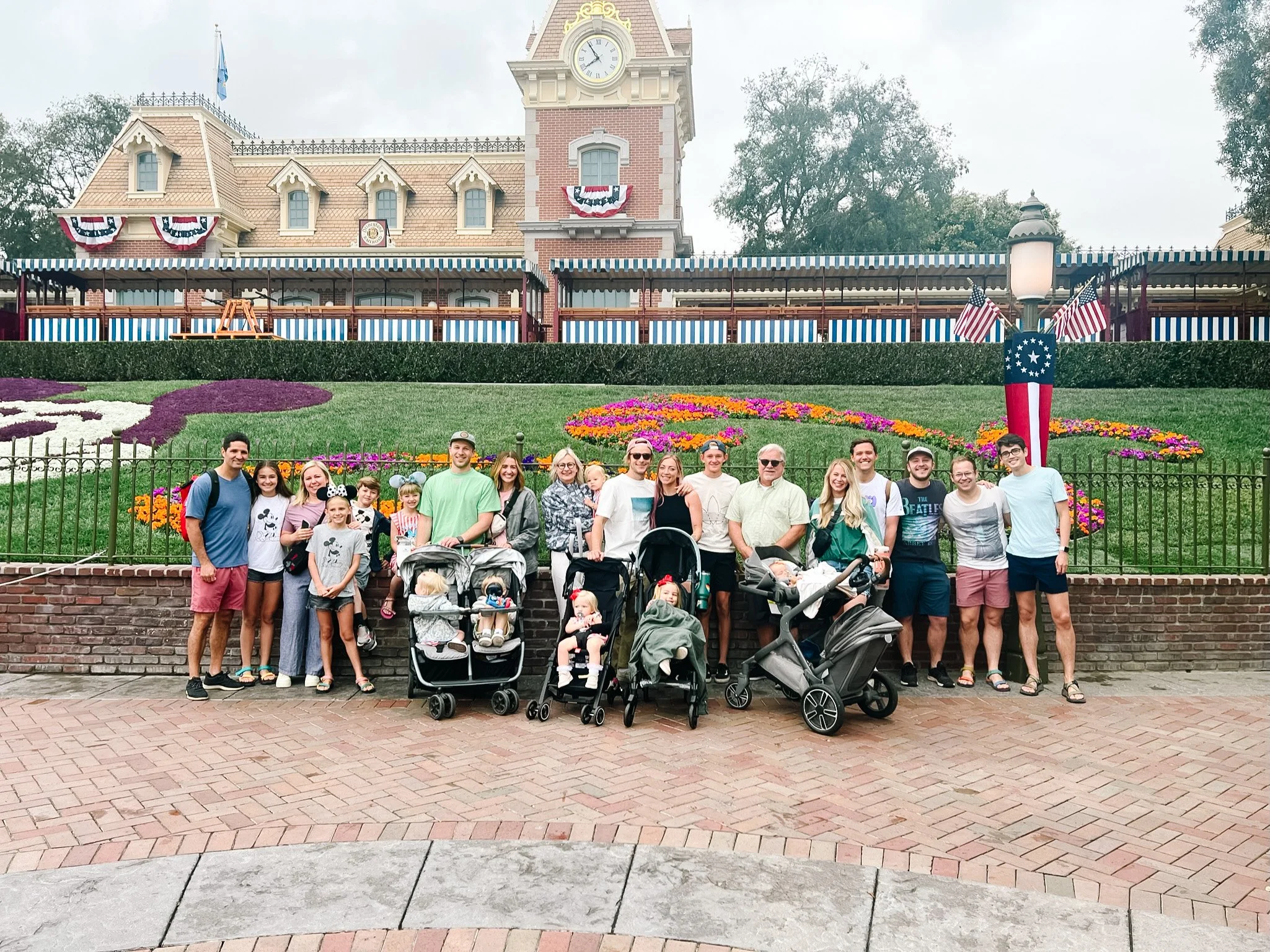


Nathalie & Pierre
Trigger Warning: suicide, drug abuse
In the south of France, church looks different. The religious are rare, and LDS members even more so. And if you happen to find yourself an LGBTQ family in an LDS ward in France, you likely have earned the title of pioneer…
Trigger Warning: suicide, drug abuse
In the south of France, church looks different. The religious are rare, and LDS members even more so. And if you happen to find yourself an LGBTQ family in an LDS ward in France, you likely have earned the title of pioneer. Such is the case for Nathalie* and Paul*, who raised their three (now young adult) boys, Etienne*, Pierre* and Jules*, in a congregation of about 120 people. They live in a very large city whose residents wonder why they dress up on Sundays. But for Paul, who was raised LDS in Belgium, where his father was in a stake presidency for 36 years, and Nathalie, who converted to the church at 18 after letting missionaries in to talk to her and her sister “just to be polite,” the two value their religion. They also claim that their individual missions (his to Salt Lake City, her to London) cemented their foundational spiritual beliefs.
Paul and Nathalie met at a young adult conference when he was 22, and she was 26. They defied European norms, marrying young and raising three children. They have always been active in the church and were serving as stake YW and YM presidents when their middle son, Pierre, came out as gay. Pierre was 16, and when his parents talked to him about going on a mission, he broke down in tears. He begged them not to hang their hopes on him. Pierre revealed he had known since he was four or five that he was gay, but had been afraid if his parents found out, they would kick him out of the house. This broke his parents’ heart; they considered themselves a loving family. His parents took him in their arms and cried with him, saying, “We love you, you are our son and we will always love you for who you are.”
Nathalie says she was surprised Pierre was gay because he had always been into “boyish games and fighting.” She says, “We couldn’t make the connection and thought this wasn’t possible. We actually almost didn’t talk about it for a year.” When they finally did, Nathalie decided to read all the resources she could and requested her father-in-law translate some of the books about LDS-LGBTQ that had been printed in English, including Ty Mansfield’s In Quiet Desperation, Carol Lynn Pearson’s Goodbye, I Love You, and Voices of Hope (various authors), which she found most hopeful due to all the various perspectives it offered.
“We didn’t know one other family in the church with a gay kid at the time,” says Nathalie. They were driving blind, and Nathalie is convinced that Pierre having to live with burying his fear and shame for so long contributed to his depression. But he still strived to maintain his spirituality. Even after Pierre came out, he maintained a desire to serve a mission, which made his mom nervous. She had become friends with two women who both had gay sons who came out on their missions, and ultimately each young man took his own life. This was obviously devastating. Nathalie told Pierre, “If you go on a mission, it’s because you’re deciding that. If you don’t, it’s fine. If you serve just one month, or two or six, that’s fine. Whenever you feel you can’t stand it anymore, you come back.” Nathalie was happy to receive notes from members in Pierre’s mission in California telling her how much they loved him, and things seemed to be going well.
But one day, Pierre revealed his struggles of rooming with homophobic companions who said “bad stuff all day about gay people and he was fed up,” Nathalie says. “He’d tell me, ‘I’m teaching the Plan of Salvation, but I don’t know if I have a place. Where’s God putting me in the plan’?” And then he shared, “Today I had the thought that if a truck passes by my bike, I might turn into it.” Nathalie immediately called the mission president, and shared her son’s orientation and suicidal ideation struggles. The president “very lovingly” gave Pierre permission to call his parents every day if needed, and emotionally released him from feeling the obligation to stay if it was not what was in his best interests.
Pierre went home one week later, and Nathalie said, “That was the beginning of our hell.” Struggling to feel like he belonged in the LDS community (in which he couldn’t see a future, feeling like living a life alone would never fulfill him), nor feeling compatible with the gay community in France, who were more promiscuous than he wanted to be, Pierre expressed he wanted to go to the states – and in particular, Utah – where he felt he could meet more people like himself: gay men with LDS backgrounds. His parents signed Pierre up for BYU Provo and bought him a plane ticket. It took one week for him to decide it was not the place for him, but his parents made him stick with his commitment for six months. In Provo, he ultimately met a “community of gay LDS—some single, some not. Some went to church; some didn’t.” Nathalie says Pierre felt he’d found his family. He’d say, “These people were raised exactly like me and have the same scars.”
But after the six months, Pierre went back to France, where he was met with incredulity by gay friends who couldn’t see why he’d want to stay in a church that made him feel dead inside. He fell into a deeper depression. Nathalie noticed that he seemed to do better when he was reading scriptures and praying, and told him as much. “Even if you reject the church, you don’t have to throw out all spiritual things. Don’t kill the light which is your relationship with the divine.” But as things transpired, the church began representing everything painful for Pierre, and he would lash out at his parents, asking how they could remain a part of an organization that hurt him. Nathalie held up eight fingers and responded, “I have ten fingers. These eight are all these things that I love in the church, and there are maybe two I don’t understand or agree with. But I need the other eight for balance in my life. It’s not that I love the church more than you, I just need to stay balanced.” Pierre processed this and said he understood, and Nathalie says he no longer challenges her beliefs. As Pierre has continued to struggle with his mental health, Nathalie tells him, “I’d rather have my son alive than a dead Mormon.”
She has observed that the church has made minor progress in the 11 years since Pierre came out. She says, “I believe they’re good people wanting to do something about the suffering. And what could they do? Allowing gay couples to marry and participate in the chapel, that would feel better.” Pierre has expressed the sentiment that, “Either way, they make it where they need to fix me or fix the church; you cannot believe in a society where you’re the wrong people.” Nathalie continues, “He believes God made him the way he is – I believe that, too. They don’t want to hear they’re wrong, or have to be fixed to be comfortable with church. They want to be in world where they’re accepted for how they are because they didn’t choose this. Young kids have prayed years and years with no results. They’ve prayed so much – nothing’s changed.”
Pierre began to use drugs around the age of 24 and his parents worried as they slowly picked up on odd behavior. In the past year, Pierre has become addicted to a drug that’s growing in popularity in Paris, especially in the LGBTQ community. It’s highly addictive, relatively cheap, enhances one’s sex drive, and is hard to come down from. In the spring, Nathalie intercepted Pierre at an especially down time and was able to get him into a psychiatric hospital for the summer, which required him to take a leave from his workplace. He has continued to seek treatment, including hypnotherapy, over the past several months, and as of late, has been coming home some weekends to help remove the temptation to party. Nathalie is hopeful, yet realistic. She has tried her best to advocate for their son, and helped secure the placement of different certified therapists to help improve the mental health situations in the LDS space throughout France. She admits she is hopeful to attend therapy herself, as she still feels quite alone in this, often wondering each week if he’ll make it through another weekend with his addiction. While she wanted to protect the privacy of her family for this story (and thus names* have been changed), Nathalie feels, “It’s less heavy when you talk about it.”
“Parenting is so hard when you don’t know how to save your son from all the bad stuff. Being gay is not a problem. But being gay plus being depressed and on drugs is hard – it becomes very hard.” Nathalie and Paul’s oldest son, Etienne, has also struggled with the situation, feeling somewhat responsible for being the first son to “quit church.” When he recently vented to his mom about his frustration with Pierre’s addictions, his father said his duty was to be Pierre’s best friend and to show loving, positive behavior. Etienne created a group chat with cousins in which they take turns sending encouraging messages every day. Nathalie notes that since they began, Pierre has managed to stay off drugs for the past few weeks. She believes, “Love is the key!”
Nathalie and Paul are also trying to address the reality of the LDS LGBTQ youth in their area who still feel they must hide. They have offered firesides and trainings throughout various wards to share their experience and resources, but Nathalie says she feels not everyone has yet caught their vision or reality. She says, “Most are more open-minded and understand the need to open our hearts and our spaces to gay people, but the idea of gay couples in the church is still difficult.” She feels each ward should call someone—a stone catcher--whose sole job is to take care of the LGBTQ members to ensure they feel comfortable. While optimistic about the future, Nathalie feels that now, “France is just at the beginning of the beginning.”
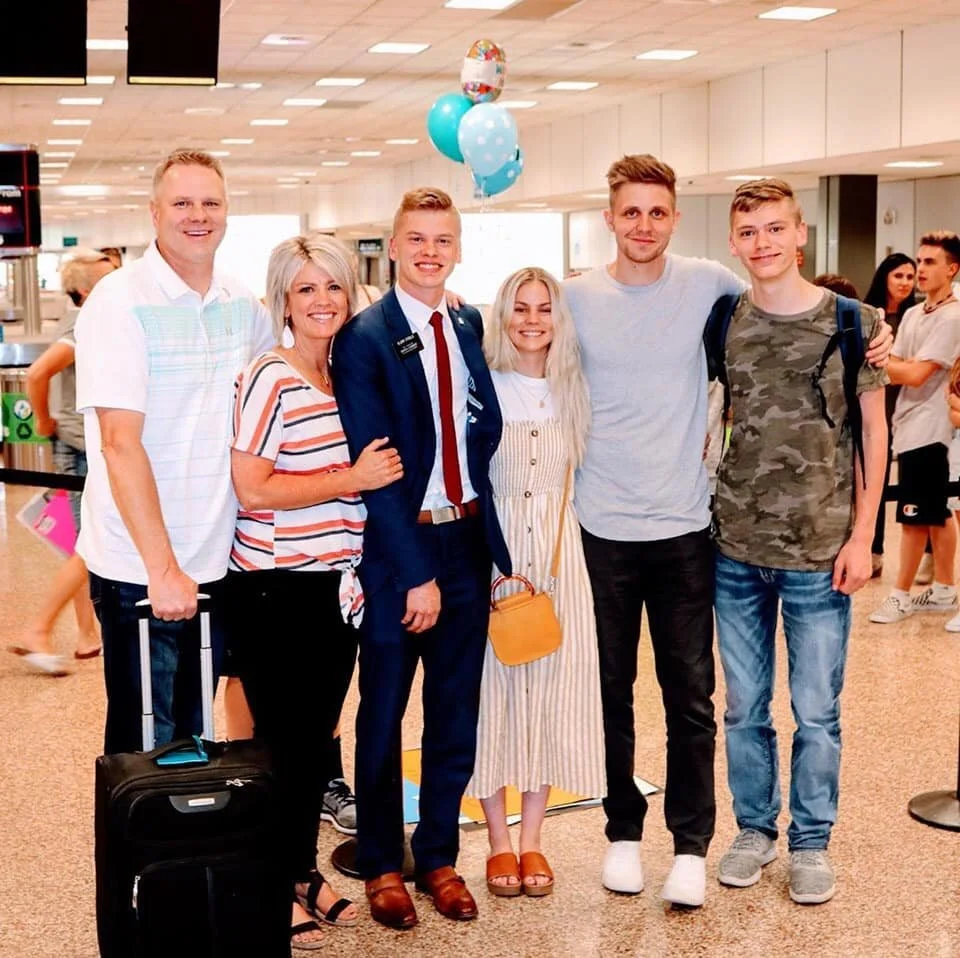
THE STEELE FAMILY
It’s been a big two weeks for the Steele family of Nephi, UT. After her son Hunter’s Oct. 30th coming out Instagram post went viral throughout their community and beyond, Amie Steele says, “I feel like I’m now out of the closet.” While Amie had a couple years to process her son’s news privately, she is grateful to see him now standing taller after revealing a part of himself he’d kept hidden for so long. She’s also grateful for the past two years she’s had to process and learn…
It’s been a big two weeks for the Steele family of Nephi, UT. After her son Hunter’s Oct. 30th coming out Instagram post went viral throughout their community and beyond, Amie Steele says, “I feel like I’m now out of the closet.” While Amie had a couple years to process her son’s news privately, she is grateful to see him now standing taller after revealing a part of himself he’d kept hidden for so long. She’s also grateful for the past two years she’s had to process and learn.
Reflecting on Hunter’s upbringing, Amie says, “I honestly had no clue” about his sexual orientation. “Looking back, I can see little things. He cared about what he wore and liked to go shopping. He had an interest in modeling and my photography side business--he was different than our younger son, Presley (20), in those ways. But I didn’t really see any signs.”
Hunter (22) also loved to go hunting and camping with his father, Randy. He loved sports – basketball, football, and especially baseball. Level-headed and someone who “can always see both sides of an issue,” Hunter excelled at speech and debate. He was student body president of his high school and Amie, who teaches Special Ed there, says she loved watching him lead the school. “He was awesome. Hunter was always happy. He liked to please; he’s a giver.”
Toward the end of his senior year, Hunter received a mission call to Kennewick, WA and left that August. He loved his mission, and everything was going fine until about six months before he was supposed to come home. Suddenly, he found himself experiencing bad depression and anxiety, which Amie found strange as he was serving as AP in a trio with two of his favorite companions and in an area he loved. On his mission, he started therapy and then medication, but things only got worse. He ended up coming home three months early, and subsequently started school at BYU and got a job at the MTC. “He loved turning his mind to teaching; it was so good for him,” says Amie.
Still struggling with depression, Hunter began seeing a counselor and while he had no intention to come out, soon into his first session, he felt a nudge and that’s exactly what he did. He says, “It was one of the most healing experiences I have ever had. This was the first time I let down my walls with God and fully acknowledged that this part of me is real and something I cannot change.” Hunter then felt ready to tell his parents. He told Randy first while running an errand. Then he came home and said, “Mom, I need to talk to you.” Lying on his parents’ bed, Hunter revealed to Amie he’s gay. At the time, he said, “I don’t plan on sharing this with anyone else. I still want to marry a girl in the temple and have a family.” Amie says, “I think I reacted as good as one can – like ‘ok, I still love you.’ But I was shocked.”
Amie says afterwards they didn’t talk about it for three months, and she used that time to dig into books and podcasts and to study various research and viewpoints. This was a complex time, as she couldn’t tell anyone, including their oldest child, Rylie (26), who along with her husband Spencer and sons Harvey and Walter, were living with Amie and Randy at the time. After three months, Hunter was riding in the truck with his mom and said, “If you want to ask me any questions, I’m good to talk about it?” Amie says, “That opened the door to a lot of long, really good conversations about what he’d been going through and what it was like.”
Hunter had been trying to date girls, and before one blind date, he’d called his mom crying and said, “Will you pray for me?” Amie says, “That’s how traumatic the experience of trying to go on a date was.” Hunter had slowly confided to a few close friends at BYU, and they offered positive perspectives. Amie applauds the younger generation for being so understanding and nonjudgmental.
About six months later, Hunter felt ready to tell his siblings. Right before his brother Presley was about to leave for his mission, he and Hunter took a drive, and Amie recalls they returned, laughing. “Presley was good with it all; nothing changed.” Shortly after that, while the family was sitting around in their living room, Hunter texted his mom that he wanted to tell Rylie and Spence. Amie felt a blip of fear, wanting to protect him, but they, too, were so loving and protective. “Every time he tells someone the anguish he’s been going through hiding this, it’s so emotional and eye opening to me. I think it’s good for me to experience it with him so I can empathize,” says Amie.
While Hunter was gradually feeling more comfortable in his own skin, he still had low moments. In a very low recent dip, Hunter laid on the bed sobbing, thinking about his future. He could handle the day to day, but when he evaluated the big picture and what his life would like, it overwhelmed him. Amie says, “Hunter came to the conclusion that as badly as he didn’t want to share this publicly, he felt like God wanted him to. And he had to hit a low to see that. His motto all along was ‘With God.’ He’d say, ‘I don’t know how this is going to go or look, but as long as I do it with God, it will be okay’.”
Hunter felt it was time to go public, hoping his story might help someone else. But first, he wanted to tell their large extended family, who are close in proximity and socially. While riding to a monthly family dinner, he felt the presence of his deceased Grandpa Denny nudge him to tell his Grandma Linda, that “she’d be good with it.” While Amie says she’s the sweetest lady, she worried what she may say, being from an older generation. Amie and Randy joined Hunter in the living room and were so pleased to see Hunter’s grandma cover over and hug him and say, “Hunter, I love you. I’ll love anyone you love.”
“Before, I used to think, ‘Why do people have to tell?’ But that experience made me realize why – they’re hiding and pretending. I saw and felt the literal weight that lifted each time Hunter shared this,” says Amie. The Steele family went to dinner that Friday night at Cubby’s, and in a calculated move so he didn’t have to stand and make an in-person announcement once again, through his parents, Hunter shared a coming out video he’d made with all the relatives on both sides of the family. As his parents pushed send on the text, tears flowed from Hunter’s face. Amie asked, “Hunter, do you regret it?” He replied, “This person I’ve been (pretending) to be for 22 years—I feel like I’m saying goodbye.”
Riley was ready to pounce if anyone showed a lack of support for her brother, but gradually loving messages flooded in. Hunter was finally ready to fulfill his mission to be fully open. The following Sunday, Hunter gathered with his immediate family at home and said, “I want you to know how grateful I am for all your love and support–this is all I need, right in this room. But if this can help anyone, that’s why I’m sending it.” And then he hit send on his Instagram post.
“Hunter’s patriarchal blessing says he’ll influence people all over the world–but he was called to serve a stateside mission. And now we see—the messages he’s received, that I’ve received from moms. He’s had such a positive influence on so many people, including hundreds of missionaries he’s taught at the MTC. He shares his light, and has had nothing but positive reactions. But he has friends with stories of their families disowning them in the same situation. But then I see there are so many people reaching out, wanting to connect. Why don’t we talk about this more?” says Amie.
While Amie says she would not trade these experiences, there are times she has to battle an anger as far as the church goes. “It can be hard, like reading David Archuleta’s story. I don’t blame people who don’t stay–I can’t imagine how hard it would be.” Regarding the leadership of the church, Amie says, “They’ve come a long way. But these kids who love the gospel and Jesus and church and have gone on missions and served the church – there’s not a clear healthy path for them. You’re either alone your whole life or you break the commandments and leave. We need some answers and direction.”
When Hunter first told his mom about his orientation, she believed he might try to marry a girl and not tell anyone. But now she says, “I want Hunter to be happy. I hate the thought of him being alone. We are A-OK if he finds someone. We’ve seen with his mental health issues that the biggest cure has been him being able to be open about who he is. That’s been the best medicine.”
Amie advises all parents to watch how they communicate to their kids from a young age--to make it clear before ever necessary that their love is unconditional and to build a relationship of open trust. She says, “I wish Hunter could have come to us sooner, and we’ve always had a good relationship. I've had many times through this experience where I have been frustrated and went to God in prayer with a lot of questions. Although I haven't received all of the answers I would like, the one reassurance that I've received from God, and the thing I cling to is that God loves Hunter. That is the one piece of knowledge that helps me get through those hard, frustrating times. I've learned it's okay to have questions. it's okay to be frustrated. I've had to dig deep and really look at my testimony and what I know to be true. Because of this experience, my testimony is now more rooted in Jesus Christ. As a family we all try to live by Hunter's motto "with God" as we navigate this experience. God loves us unconditionally... The most important thing we can do as parents is to let our kids know that we love them, no matter what.”