lift+love family stories by autumn mcalpin
Since 2021, Lift+Love has shared hundreds of real stories from Latter-day Saint LGBTQ individuals, their families, and allies. These stories—written by Autumn McAlpin—emerged from personal interviews with each participant and were published with their express permission.

DR. GREG PETERSON
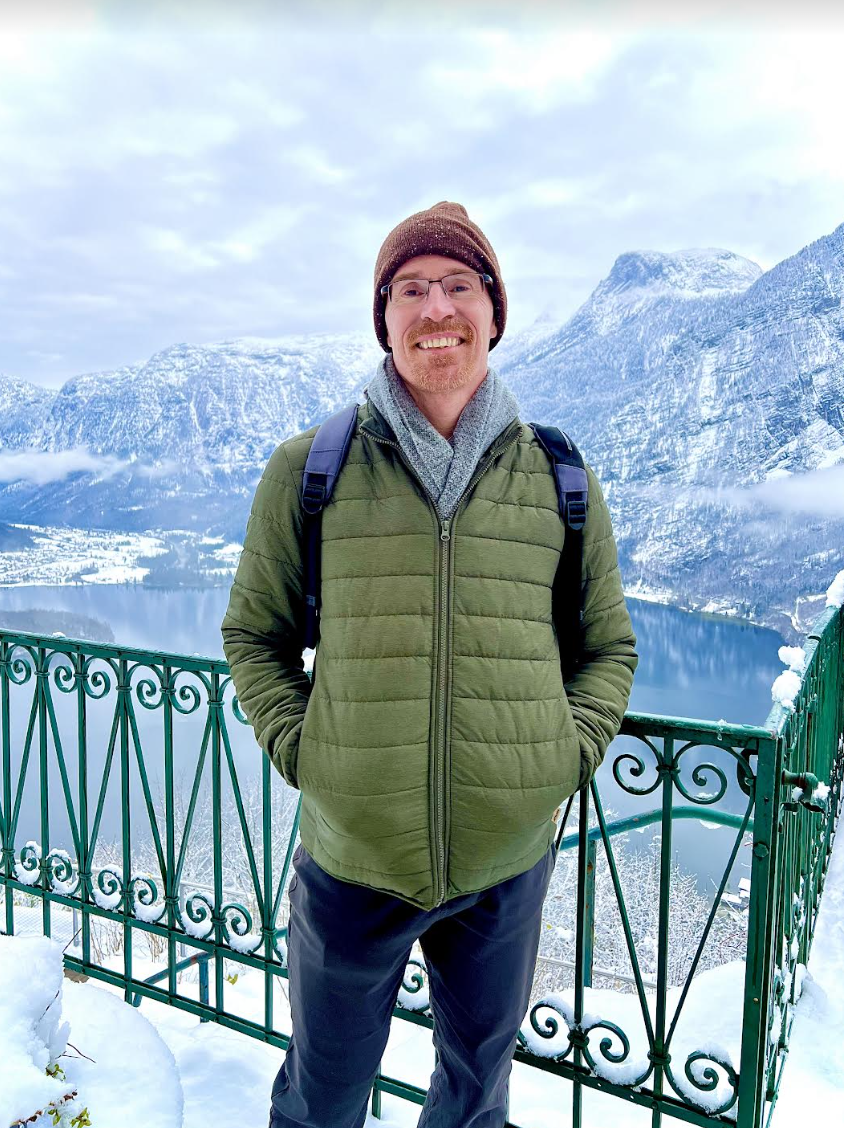
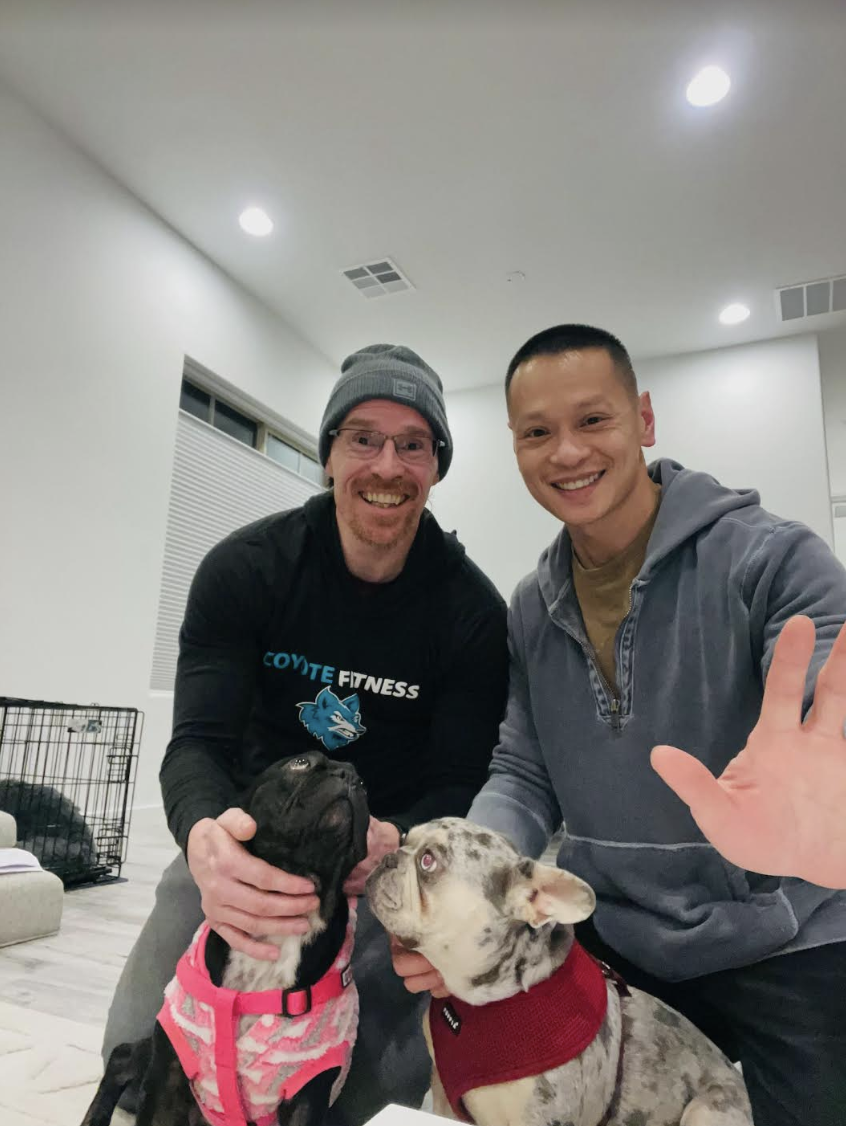
Dr. Greg Peterson spent the first month of this summer in an empty house, sleeping on an air mattress, and shopping at Kohl’s for his day-to-day wardrobe needs to start his new job. He didn’t know when he moved to Salt Lake City that he’d be arriving a month before the moving truck with all his belongings. But he chooses to look on the bright side, saying: “We’ve got air conditioning, running water, Wi-Fi, a couple barstools, and we’re together. It will all work out. It’s an adventure.”
Dr. Greg Peterson spent the first month of this summer in an empty house, sleeping on an air mattress, and shopping at Kohl’s for his day-to-day wardrobe needs to start his new job. He didn’t know when he moved to Salt Lake City that he’d be arriving a month before the moving truck with all his belongings. But he chooses to look on the bright side, saying: “We’ve got air conditioning, running water, Wi-Fi, a couple barstools, and we’re together. It will all work out. It’s an adventure.”
It's a life the Greg Peterson of ten years ago never anticipated possible: living in a committed relationship with a man he loves in Utah, where he has recently been named the president of Salt Lake Community College. The new job position surprises few, considering Greg’s longtime academic career passions and success. But a self-described “late bloomer in the love department,” it wasn’t until Greg’s late 30s that he allowed himself to finally explore the need to accept his orientation and pursue a relationship.
Growing up in Oregon City, Greg was always an academic. As a young student, he loved to sing, draw, play soccer and most of all, read. When Greg entered adulthood and became a first-generation community college student, he had an opportunity to teach ESL to adults who’d migrated to the States and saw up close how much they were able to improve their lives because of language acquisition. Greg’s eyes opened further when he worked in a furniture warehouse for a summer, “which was horrible but I had to,” and met co-workers who would have been doctors and professionals in their home countries but were stuck in difficult, menial jobs. These bonds inspired him to try to provide opportunities for all, with education as the change agent. Greg felt this could best be done by pursuing a career in the community college space.
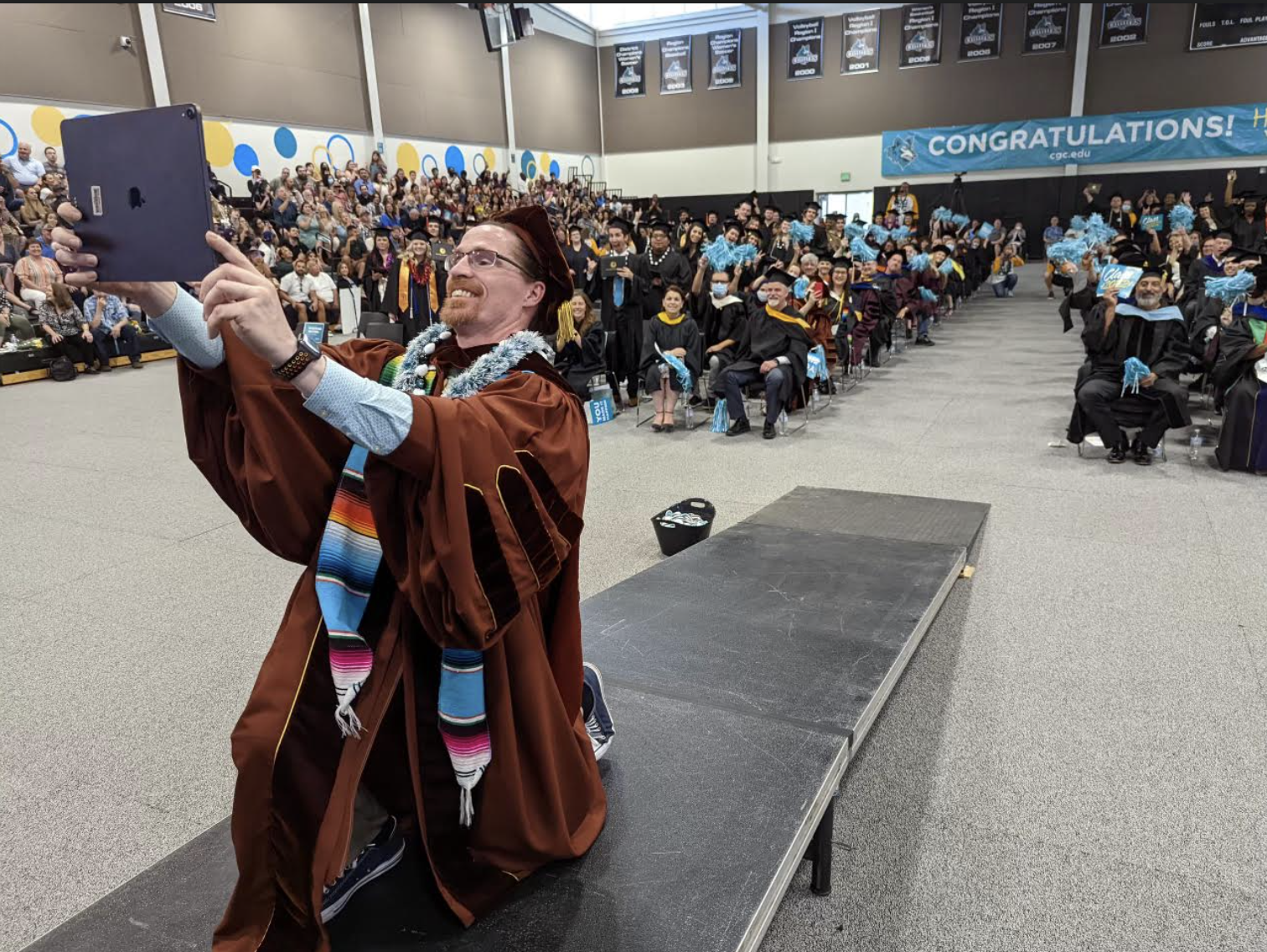
Greg went on to earn a bachelor’s degree in English from BYU, a master’s in adult learning from Portland State University, a doctorate in educational administration from the University of Texas Austin, and an MBA from Kaplan University. As he studied, he initially worked as an ESL teacher, but gradually began to move into administration roles. Selected as an Aspen New President Fellow and recently recognized as East Valley Man of the Year by Positive Paths, throughout his career, Dr. Peterson has led key efforts in student learning and success that have impacted over 100,000 students through developing transfer partnerships and college promise programs at various institutions as well as launching the first community college Artificial Intelligence program in the nation.
Now recognized in his field, there was a time when one of Greg’s superiors noticed things weren’t going so well. While employed at Long Beach City College, Greg was battling dark emotions and trying his best to keep his personal life separate from the professional, as he’d done for decades. Feeling deep duress and isolation one night in which he was contemplating taking his life, he decided to call his parents. He wasn’t able to voice the source or extent of his despair on the phone, but the time and nature of the call concerned his parents and he felt it. “The worry I would hurt them if I were to do something made me think differently. That was a turning point to accepting this part of me.” Greg’s boss at work had also noticed something was off, that Greg wasn’t the happy, open person he’d once been. Greg says, “I came out to him, and he was really supportive.” That led to the beginning of Greg’s coming out journey.
Throughout his many years as a rising academic, Greg had been used to “living in my head,” so he had heretofore turned off his emotions and tried to stay there to avoid it all. He says, “I tried to be as obedient and as Christlike as I could be. All that emotion—the natural man—I tried to keep it locked away.” He recalls times in hiding in which people would ask him how his morning had gone, and he’d shut down and find himself debating whether it was safe to say what he’d had for breakfast. “I was managing everything, so worried about people finding this out about me and how bad I was.”
Finally one day, Greg decided to turn to God, and says he “really prayed.” In return, he says he felt God’s love and the divine confirmation that he was ok. After coming out to his boss, Greg wrote a letter to his parents, then told a couple brothers, then a couple friends in a “really slow process” in which Greg says, “I felt like I needed to know all the answers so I could answer all the questions I might get asked. I didn’t want to get pinned down and not know where I was, nor do or say something that would be held against me later or harm others. It took me longer to accept that where I am today might not be where I am tomorrow. I felt like people wanted me to be static, but that’s not how life works.”
The past few years reflect the opposite, with active changes for Greg. He remembers taking a survey at last fall’s Gather conference in which respondents were asked if five years ago, they knew where they’d be today on a scale of 1 to 5. Greg says he was in the 1 territory of never anticipating he’d be in a relationship or moving to Utah. But now, he’s in a wonderful live-in relationship with his formerly long-distance partner after making the move to accept the promotion at Utah’s top community college. It was a job interview process that also revealed how far things have come, as Dr. Peterson was able to openly talk about his own personal relationship as he expressed his commitment to honoring the best interests of the diverse student population at SLCC as both gay and a member of the Church.
Greg also stays active by working out at the gym almost daily, and he still loves to sing. The former college where he worked offered a Broadway music solos class that Greg took a few times both to observe student perspectives and for a chance to sing onstage himself. At one semester-end concert, he took on “You’ll Be Back” from Hamilton. Over the years, Greg’s also loved to sing in church, saying, “It’s one of the things I like best about going.”
While Greg maintains a belief in God and trusts the church is “a tool of our Heavenly Parents to guide us back and feel their love,” he says, “I don’t know that the church knows where I fit or has a place for me right now.” To expound, Greg says, “The church wants me, but not the full me. There’s an expectation I’d have to sacrifice parts of me to become like the Savior, and as a disciple, I believe this is true, but I can’t draw nearer to my Savior by sacrificing this authentic part of me. I can’t do that.” For now, Greg is most interested in focusing on walking with the Savior, day by day. Similar to the patience he embodied while waiting for the moving truck with his furniture to finally arrive (and it did), Greg says, “I can’t think about where I fit in the eternities in our church, but I do know that my Savior will provide a way for me, and I don’t have to have all the answers. I’ll just keep moving forward, trusting Him as I navigate where I feel His love, and where I need to be.”
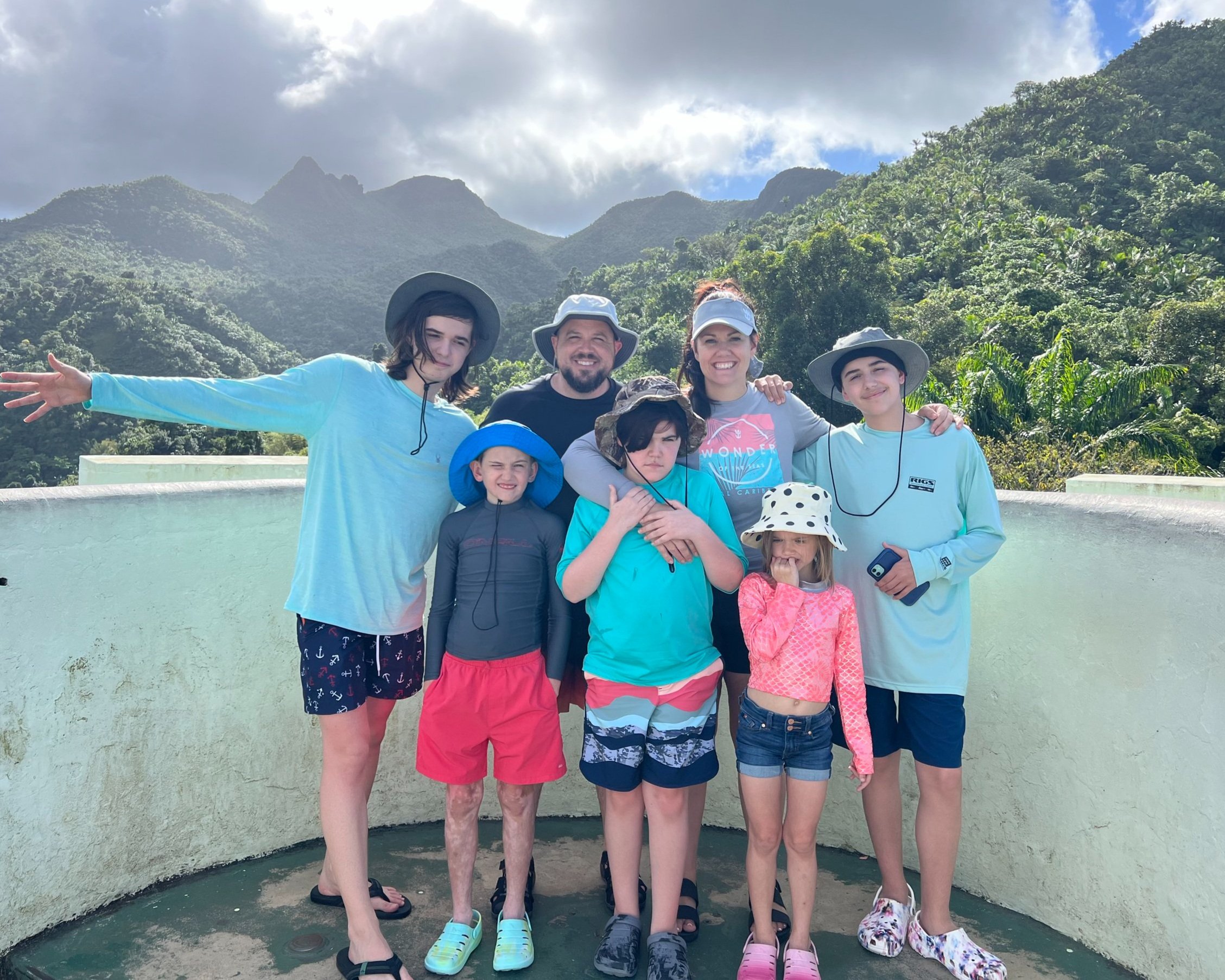
THE DAVIS FAMILY
“All great spirituality is about what we do with our pain. If we do not transform our pain, we will transmit it to those around us.” This was the Richard Rohr quote TeriDel Davis opened with at a recent presentation at an ally night in her Gilbert, AZ hometown. Joined by her husband, Tad, TeriDel then passed the mic to their 17-year-old trans daughter Kay to expand on the pain she thought she’d be able to bury until after high school, when it might be a better time to “figure it out.” But Kay explained, “This didn’t work out very well for me, as the only way I could bury the pain was to try and make myself numb to (it).” Citing Brene Brown, she continued, “When you numb your pain, you numb your joy.”
“All great spirituality is about what we do with our pain. If we do not transform our pain, we will transmit it to those around us.” This was the Richard Rohr quote TeriDel Davis opened with at a recent presentation at an ally night in her Gilbert, AZ hometown. Joined by her husband, Tad, TeriDel then passed the mic to their 17-year-old trans daughter Kay to expand on the pain she thought she’d be able to bury until after high school, when it might be a better time to “figure it out.” But Kay explained, “This didn’t work out very well for me, as the only way I could bury the pain was to try and make myself numb to (it).” Citing Brene Brown, she continued, “When you numb your pain, you numb your joy.”
The desire to teach their kids to pursue rather put off joy is what has propelled the Davis family to share their journey.
For TeriDel, the import of the call to be Kay’s mother started while she was pregnant with her oldest and being set apart for a calling. After the standard calling-related language, TeriDel was given specifics about the child she carried, that she would “find being his mom hard because it would be very difficult, but if I raised him unto God that he would then bring me the greatest joy I would ever know.” Anticipating her child would be born with severe special needs, TeriDel was surprised when Kay was born a healthy, happy newborn. As a toddler, Kay proved to be quite advanced, demonstrating high intelligence. But as she continued to grow, TeriDel says it was indeed difficult to raise and connect with Kay. The Davis family learned Kay was autistic, which propelled TeriDel to adjust her parenting style so that she could better connect with and teach Kay.
When Kay was baptized at eight years old, her parents felt immense joy and gratitude that despite the challenging years, they had gotten to a good place and that Kay was “a kind, loving, smart kid who had proven very dedicated to pleasing her Heavenly Father.” About five years later of growth opportunities for the family, which now included younger siblings Gibson aka “Gibby” – now 16, Langston aka “Badger”—14, Cliff—12, Lilah—9, and an older foster child, Cynthia, Kay asked if she could talk about something that had been weighing on her. She wanted to know if TeriDel thought her younger brother Gibby had ever shown signs of being gay. TeriDel initially was upset Kay had asked this, thinking Kay might be agreeing with the school bullies who had been teasing Gibby for some time. She firmly replied that they’d had many conversations with Gibby and his therapist and that he wasn’t gay and that these kinds of questions were hurtful to Gibby.
The conversation initiated several months of heated conversations between TeriDel and Kay about LGBTQ issues, until one day, Kay approached her mother and again asked the same question about Gibby. Upset at her persistence, TeriDel turned from the dishes she was washing to scold Kay but saw a pained look in her eyes. TeriDel replied she needed a moment before she could answer. She went to her room to pray, where she was prompted that Kay was asking these questions about herself, and that TeriDel needed to become okay with Kay being gay or transgender very quickly and go talk to her about it. TeriDel says, “It was made very clear to me that Heavenly Father would not be okay with me doing anything other than loving Kay and supporting her.”
TeriDel called her husband Tad at work, who concurred. She then called Kay into her room and point blank asked her if she was gay. Panicked, Kay mumbled in return that no, but she was experiencing feelings of gender dysphoria. TeriDel had to ask what that meant. Tad explains, “It’s like you don’t even know the questions to even ask until you have to.” He explains that over the next several months in their research, things would come up that proved unsettling to his theretofore reliance on binary, black-and-white church doctrines. “It was unsettling in the sense I thought I could put everything in the right place on the bookshelf. But this was like someone had knocked over the whole shelf, and some of the books on the floor I didn’t need anymore, and I realized I needed some new books, too.”
While this was the first time they were able to talk about it as a family, Kay had been quietly battling complex thoughts and emotions for sometime privately. When returning from a family party with cousins on her 13th birthday, Kay sat in the back of the family van pondering her reality and future. Asking herself questions about how she might avoid typical teenage pitfalls and drama, Kay identified that she’d never felt an attraction to boys and thus must not be gay, nor did she desire to get into a romantic relationship as she felt “I’m not very romantic, impulsive, or charming.” A new question emerged: “Am I trans?” A sense of dread settled in as Kay realized she could not say no to this, as she had never been comfortable being labelled, grouped with, or seen as a boy. She preferred to be known by other labels such as “smart, creative, kind.” This new thought induced terror as Kay presumed her firmly conservative Christian family would hurt her mentally or emotionally if they found out—which is why she shrouded her initial questions about the topic as a concern about her brother. But Kay says, “Without any guidance, I could never come to an answer.” She had searched on social media, but struggled to find anyone who likewise didn’t see being trans as a testimony-breaker. As the sun set in the horizon outside the van, she knew it was time to pray and ask God her question: “Am I trans?” The answer she received was “not a declaration of my identity but just a comforting message that, ‘either way is okay’.” Kay says, “It was in that moment that any worry of God’s judgment or wrath dissipated, and while it didn’t answer my original question, it released a weight I didn’t realize I was carrying. It seemed like my inner conflict was much more manageable with the knowledge of God’s love for me.”
The new knowledge of her daughter’s identity and struggles opened TeriDel’s eyes to a heightened awareness of how she had been getting all her information “from straight people” and “somehow thought I had an accurate view on what would cause gender dysphoria.” She also realized how hard church can be when harmful rhetoric about the LGBTQ+ community is shared. While in the temple and privately she relied on the spirit to personally guide and direct her to a state of joy and enlightenment in her journey, it became difficult to hear comments like that of one woman in Sunday school: “The fastest growing tool of the devil is suggesting that having tolerance and love for other people means that we should be supportive of people who don’t follow the gospel. We need to rid the church members of any behavior or persons that prohibit us entering the temple.”
While Kay has not gone public with a social transition yet, not wanting to deal with the social or political consequences, she has found herself in many uncomfortable situations in which she has struggled with anxiety, deep pain, and fear of rejection. Even after initially telling her parents, Kay says she didn’t really know how they felt for a while as it took them time to be more open to talking about it. “They didn’t know how painful it was to sit and wonder who I was all by myself, especially because it had been much easier to ignore and sideline it.” She has also experienced a state of stasis and abstract dread, as if feeling stuck in a swamp. Even her favorite hobbies like art projects can feel like hopeless wastes of time. Kay credits conversations with her mom and an excellent therapist for helping pull her out of these funks.
TeriDel says with her new lens, church has become a hard place for her with the “random comments and misguided lessons.” She’s uncomfortable in any calling other than serving in the nursery, and is grateful that having a relationship with God has remained the priority of Kay, saying, “Hopefully we’ve helped her understand as long as she has that relationship with God either in or out of the church, we’re ok with that.” Tad often finds himself reflecting on Joseph Smith’s adage to “teach them correct principles and let them govern themselves,” deferring to prayer and personal revelation and his belief that God judges us on a curve tailored to us.
Church can be unwelcoming at times according to Kay, “though our ward does its best to be welcoming and respectful, which is appreciated.” It meant a lot to Kay while attending seminary last year that she had a teacher who was inspired to gently answer the prescient question, “What should I do if I feel what the spirit is telling me and the teachings of the church contradict?” The teacher said that when Kay is conflicted, she should continue to make that a conversation between God and her, and to continue to pray about it until she feels peace. Kay says, “I think it’s hard for my seminary teacher to understand how much his answer meant to me. That answer allowed me to let go of my mental image and went leaps and bounds in allowing me to feel more comfortable in seminary. It even meant that when the lesson turned to the topic of how we must treat LGBTQ individuals with kindness even if we don’t approve of them, that I could at least be in that space and rely on my own personal answers to prayer.” Kay continues, “Even though it stings to hear that I am the person they don’t approve of, I believe that at some level my seminary teacher believes that God knows me and accepts me as I am.”
When their son, Gibby, recently asked why the nature of God seemed to change so much across different books of scripture, Tad explained that explaining the grand plan of God would be like explaining all the complex levels, tricks, lore and Easter eggs of his favorite video game to his five-year-old cousin and expecting her to understand. TeriDel says, “That is what God is dealing with. He has this amazing, beautiful, complex, and fulfilling plan, and then he goes to his children (who are metaphorically five-year-olds) and tries to explain things to them and then has to deal with whatever they thought they heard. So it’s not surprising that God might sound a little different over time. God is limited by us.”
While Kay remains grateful for her reliance on personal revelation in discovering her own identity, TeriDel is increasing appreciative of a Christ-centered perspective and the grace and love that has come into her life by “not worrying about all of that stuff and just focusing on the very basic principle of showing love to those around me. In the end, God’s plan is just love.” Tad appreciates how their close-knit family, in which their kids are all each other’s best friends, can now have healthier conversations about the long term because they trust Kay to make good decisions for herself. He says, “Kay is such a good kid and has always wanted to be a good person and do her best to make her Heavenly Father and Savior happy. I’ve realized I needed to take a backset and trust she’ll make good decisions. She’s proved us right.”

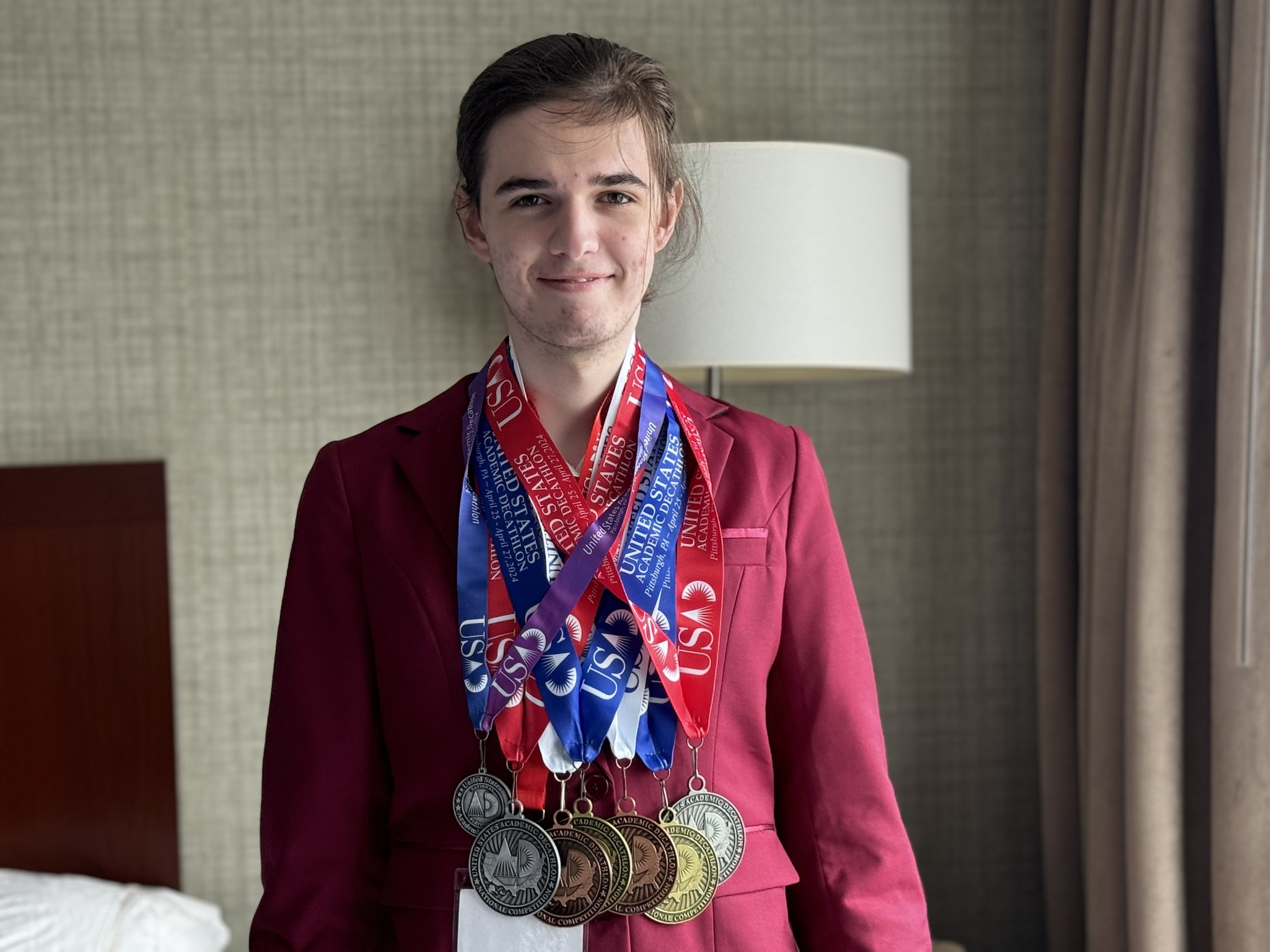


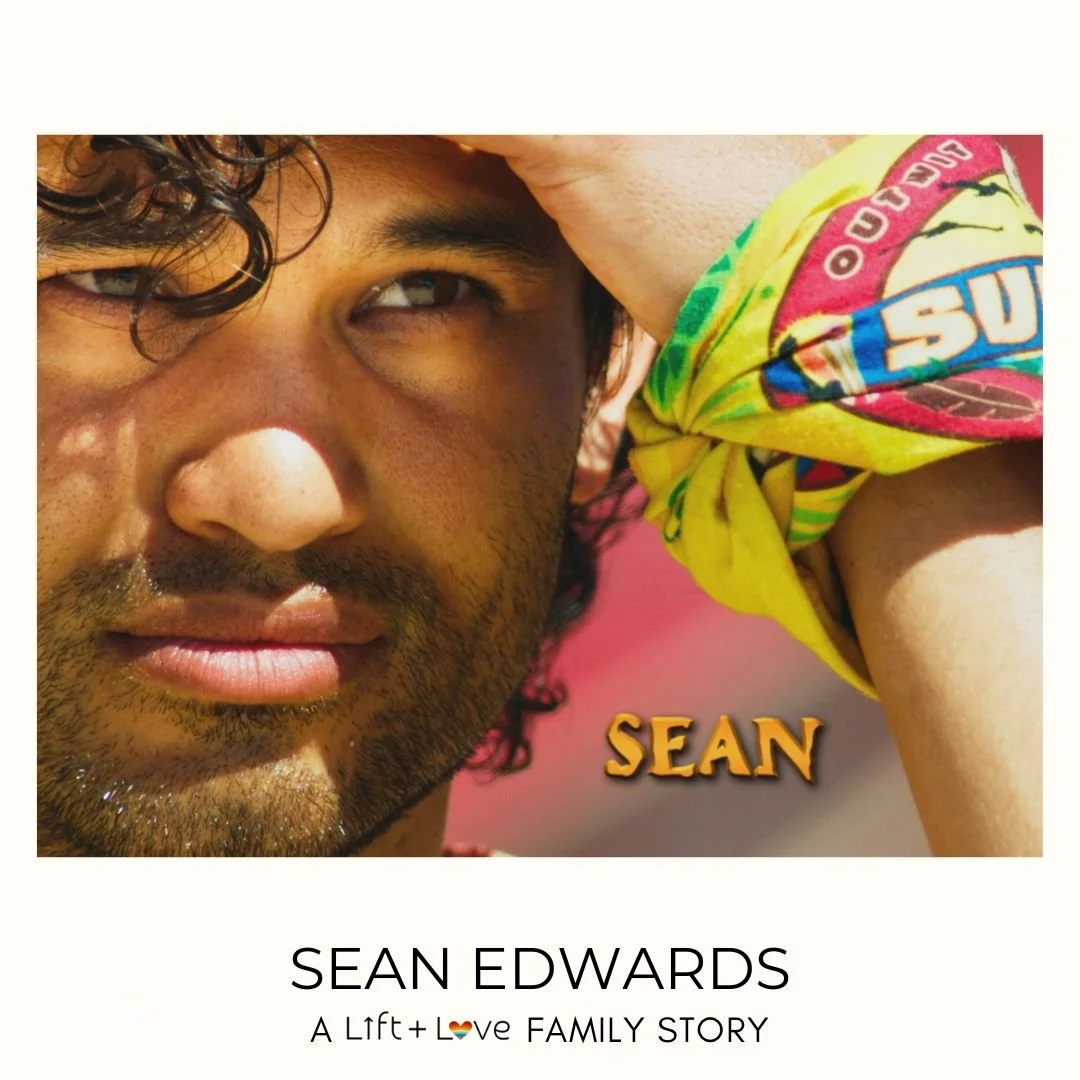
SEAN EDWARDS
Being voted out of your tribe is rarely the goal. But sometimes when difficulties arise, people elect to leave on their own. Such was the case for amiable, Provo-based elementary school principal, Sean Edwards, whose recent stint as a contestant on CBS’s Survivor Season 45 was cut short when he nominated himself to leave early after just four episodes. Originally a player on last fall’s most defeated tribe in Survivor history, the “Lulu Tribe,” after some initial setbacks, Sean moved to the opposing “Reba” tribe where he admitted he was ready to be done with the game at tribal council. While Sean later expressed regret at his decision to leave prematurely, he remains a huge fan of the show, and now with hindsight, honors the initial intention he had as a competitor looking to reclaim lost time—time he used to spend trying to be something he wasn’t…
Being voted out of your tribe is rarely the goal. But sometimes when difficulties arise, people elect to leave on their own. Such was the case for amiable, Provo-based elementary school principal, Sean Edwards, whose recent stint as a contestant on CBS’s Survivor Season 45 was cut short when he nominated himself to leave early after just four episodes. Originally a player on last fall’s most defeated tribe in Survivor history, the “Lulu Tribe,” after some initial setbacks, Sean moved to the opposing “Reba” tribe where he admitted he was ready to be done with the game at tribal council. While Sean later expressed regret at his decision to leave prematurely, he remains a huge fan of the show, and now with hindsight, honors the initial intention he had as a competitor looking to reclaim lost time—time he used to spend trying to be something he wasn’t.
Sean grew up in New Jersey, the son of a Chinese mom and a Caucasian dad. He greatly admires his younger sister, Krista, and his older sister, Elaine--who has autism and cannot live independently. As such, the family moved from their western state roots to settle in the Princeton, New Jersey area for his father’s work and the excellent healthcare facilities for neurodivergent individuals.
Growing up, Sean always relied on the solid foundation of trust he had with his parents, believing they had his best interests at heart. But he was terrified in high school to tell them he was gay, especially after an LDS friend from California he’d met on Myspace revealed when he shared the same news with his parents, they’d kicked him out of the house. But Sean’s mom quickly assured him they would never do that. She promised they would “figure this out together,” and Sean felt willing to follow her lead. While she expressed her love, Sean remembers two emotions surpassing the others that day as he could tell she felt sad and worried. He asked that she be the one to tell his dad, who Sean was afraid to disappoint, as the only son in the family. Rather, Sean recalls his father didn’t overreact, saying, “He is pretty pragmatic, but it took him time to process.”
The three decided to keep Sean’s news just between them as they considered the best next steps. His parents dug into what limited resources there were at the time and came back with a solution: conversion therapy. Or seemingly, therapy that seemed promising as it was led by an LDS man who claimed he had “overcome his gayness through a particular process.” Sean says, “As someone who’d grown up living the typical LDS lifestyle, I wanted more than anything to be straight, so I tried it, beginning at age 17.” He endured the therapy off-and-on for another five years, which he says ultimately engrained in him “that I needed to change a fundamental part of who I am to be considered good and kind and accepted by God and others. It messed with my mind, trying to seek approval from God by trying to change who I am.”
BYU Provo proved to not be a cultural fit for Sean. He was called into the Honor Code Office at one point and put on probation for a year because someone had snapped a picture of him at a gay club in Salt Lake City, where he would go dancing. “I needed that community of people like me so badly.” That trauma resulted in him swearing off all gay clubs in Utah out of fear. He remembers another time of being especially hurt when, as his ward’s gospel doctrine teacher (a calling often assigned to people like him working toward teaching degrees), he found out a selection of his peers came to his class and sat in the back just so they could make fun of his charismatic mannerisms and animated disposition. He had experienced something similar before – having been bullied in middle school and high school where people called him the f slur and one time, threw a garbage can at him and called him “gay trash.” But now, at “the Lord’s university,” it felt like his tribe had spoken. Sean says, “It was really unfortunate to think that people who were part of my community were attending my Sunday School class to make fun of me.”
Back home in Jersey, his two best friends from high school, Ivana and Shannon, had the opposite response when, after his freshman year of college, Sean came out to them. “They were so supportive of me being gay, but when I told them I didn’t know what direction this was taking me because having been raised LDS, I wanted to do that path, they were like, ‘Why? You’re gay; be authentic to who you are’.” Sean says, “It was such a diverse perspective from the first time I’d come out to my parents. I was glad they didn’t have the LDS lens so they could help me understand the full spectrum of support I needed.”
As Sean proceeded with his schooling, which culminated in him graduating from BYU and then, while simultaneously being a high school vice principal, earning a doctorate degree from the University of Utah where he did his dissertation on LGBTQ+ students and perceptions of connectedness in school communities, Sean realized that his experiences being marginalized had also led him to developing resilience, empathy, true compassion to others, and had provided him a growth mindset in which he could choose to be confident while also looking out for others who suffer along their way. They are all gifts that have helped Sean buoy the young students who now walk the halls at the school where they call him Dr. Edwards, their principal.
“Living in Orem and working in Provo as a public-facing person can be tricky. There have been multiple occasions where people have called the school secretary to express their concerns about their kids having a gay principal. It’s difficult because I love the students I work for and want them to have incredible experiences learning math, reading, STEM, all those great things. It’s hard to have people question my integrity.” Because of this fear, Sean didn’t come out to his professional peers until after he was working in an administration position.
Nowadays, Sean sees being gay as a huge blessing. Not only did his life story of navigating the challenges of being LGBTQ+ in a conservative religion contribute to him being selected to be a contestant on his favorite show, but he appreciated the fresh air Survivor island gave him to completely be himself and meet new people in a context in which he didn’t have to assume they were going to call the office on him. He says, “Even though it’s a competitive environment, the humanity is still there. I made really meaningful connections.” The bonds he created with all the players still linger via a vibrant, 18-person text chain, and Sean laughs that one of his closest friends from the show, Sabiyah, is a lesbian and Black former Marine turned truck driver from the south. He says, “We’re worlds apart in life experience and upbringing, but she became my #1 ally and best friend out there.”
However, the greatest gift being authentic has allowed Sean was meeting his husband on Facebook back in 2016, because “Who meets in real life these days?” Sean laughs. Matt also grew up in the LDS faith tradition, one of seven kids from Draper, UT. The two instantly connected. Their first date was a scary movie, and one of their initial connection points was their shared love for you guessed it: Survivor. (Matt had auditioned previously.) After a year of dating, Sean made it clear that he’d be ready to get engaged, and Matt proposed not once, but twice—the first time via a scavenger hunt around Provo guided by meaningful clues leading to places that meant a lot to the two of them, and then, very publicly onstage at a Naked & Famous concert in Aspen, CO, where Matt had pre-arranged with the band to be called up for the big event. They were married August 1, 2018 in Orem, and bought their first house together a year later. Matt now works for the U as a researcher for K-12 issues across the state, where he crosses paths with many professors from Sean’s graduate program.
While the two no longer participate regularly in the LDS faith, Sean loved his Las Vegas mission (where he had the opportunity to connect with several members of his dad’s side of the family), and will now occasionally attend a friend or former student’s mission farewell or homecoming church service. He says he and Matt are “very consistent” in their daily prayer: “Having a strong relationship with our Heavenly Father and Jesus is important to us.” Affected by the positive and not so positive influences of the church community within which they were raised, they choose to bring aspects of their faith into their relationship, though try to create a safe space with their spirituality. At 5’6, with “not an athletic bone in my body,” Sean remembers not fitting into his ward youth group’s frequent basketball nights. If he could pass along any lived experience to church members and leaders, Sean says, “I wish church leaders knew how to love LGBTQ+ people. I’ve heard so many say that the decisions I was making were wrong or bad, much more than I’ve heard the message, ‘I love you’ or ‘The Savior loves you’. As LGBTQ+ people who grow up LDS, we know the church position on LGBTQ+ topics; we don’t need leaders reminding us again and again. What we need to know is our leaders and Heavenly Father and Jesus love us. I think because they tell us how we live is wrong or bad, they think it’s an expression of their love for us, but I want to be so clear in saying it’s not. You might think that, but if it’s not being received in that way, it does not resonate and is not a message of love.”
Luckily, Sean and Matt are able to fill their lives with the friends and family they love and who love them, which are plenty. Living so close to Matt’s family, who Sean says he adores, they see many local family members often. Sean believes he will also frequently continue to see members of his Survivor family. “I absolutely loved my Survivor experience. It was fun, inspiring, complex, challenging, beautiful—every emotion wrapped into one experience… What’s so interesting though is how it became this great metaphor for my life in general. I had prepared for years and years and wanted it for such a long time, since I was 11 or 12, but never had the confidence to try. Then, in 2020, I started submitting applications and after three years, got on. I had all these dreams of what might happen, but my tribe lost nearly every challenge and I did not win the game. And that’s life, you have all these expectations and convictions of how life will go, but it can go the opposite. Even though it’s not what you might have thought it would be, it can be beautiful. I wouldn’t be who I am today if I didn’t go through all the experiences I did, and it's the same with Survivor.”
Sean admits that he wishes he could have approached the moment of his departure differently, but after not eating anything but coconut and papaya (having no fire) and experiencing difficulty sleeping for nine days, “I wasn’t firing on all cylinders.” He concludes, “Sometimes we’re human, sometimes we make mistakes, and sometimes it’s on a national platform. I didn’t have to leave; I could have lived out my dream. But instead of allowing regret to drive me, I need to find a way to own it and learn valuable lessons from my mistakes. We must have the resilience to move forward.”
While he may not have ultimately won at Survivor, Sean was asked to emcee this June’s Utah PRIDE parade, where he recruited his husband and sister Krista to join him. As part of his celebration, he went to a Salt Lake City gay club for the first time since his BYU days, which he says, “felt like a reclamation. I’ve decided, I’m going to do me.” Having recently turned 36, Sean says if he could go back a couple decades to that teenage boy who dreamed about being on a reality competition show, he’d give him some valuable advice: “Prioritize connections with people who matter; find your tribe. You will be successful, happy, and you’ll find partnership and companionship. You won’t be lonely. It’s ok to take risks, try new things, and embrace failure. Who you are is beautiful.”


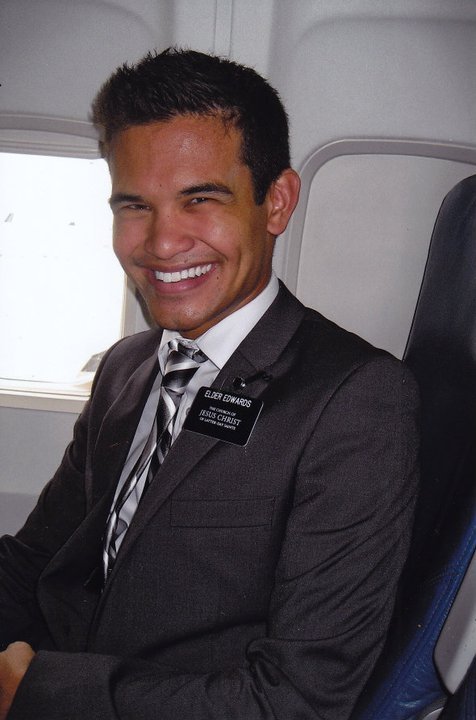


Photo credit CBS

Photo credit Robert Voets/CBS


Selected photos courtesy of CBS and Robert Voets/CBS, as noted above
DAN McCLELLAN
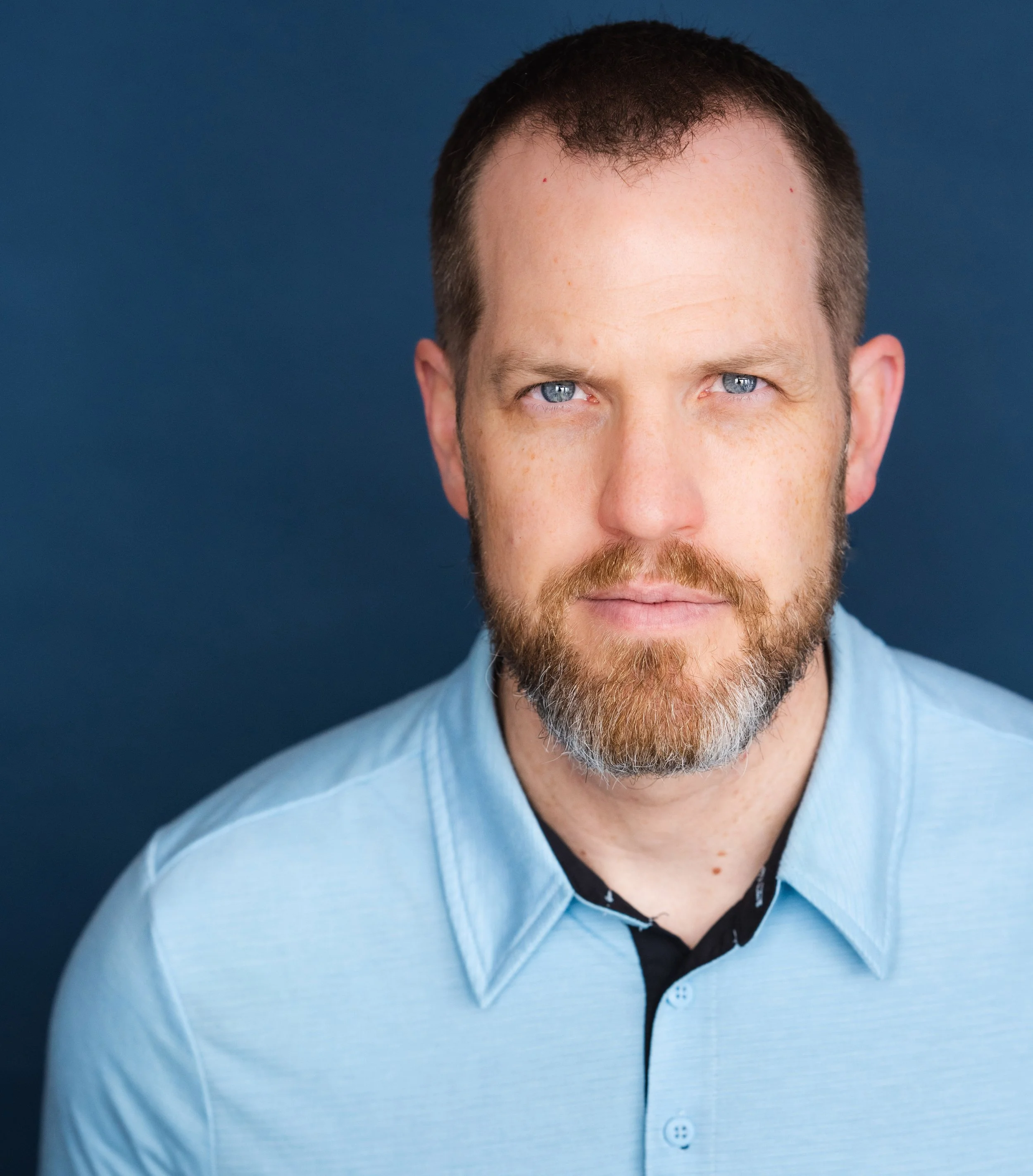
For all those who’ve used The Word as a weapon against the LGBTQ+ community, it’s time to holster your Bibles and go on social media. There, you’re likely to encounter the reel-explanations of Dr. Dan McClellan, aka @maklelan, where nearly a million followers on Tik Tok, Instagram and Twitter tune in to find out what the Bible actually says, from an actual Bible scholar. Dan explains there is a difference between a theologian, whose work is to teach how a religious group should incorporate or interpret Biblical teachings, versus a critical Biblical scholar, whose job is to evaluate and explain the historical and social context of the actual written work at the time it was written. Dan says studying it this way removes the common proclivity to consider the Bible as univocal—meaning the text speaks as one universal voice and thus can’t disagree with itself, as all parts should harmonize with the others. This deeper study brings to light the need to consider data over dogma, which is exactly what Dan now does with his online break-it-downs and popular podcast, Data over Dogma…
For all those who’ve used The Word as a weapon against the LGBTQ+ community, it’s time to holster your Bibles and go on social media. There, you’re likely to encounter the reel-explanations of Dr. Dan McClellan, aka @maklelan, where over a million followers on Tik Tok, Instagram, YouTube and Twitter tune in to find out what the Bible actually says, from an actual Bible scholar. Dan explains there is a difference between a theologian, whose work is to teach how a religious group should incorporate or interpret Biblical teachings, versus a critical Biblical scholar, whose job is to evaluate and explain the historical and social context of the actual written work at the time it was written. Dan says studying it this way removes the common proclivity to consider the Bible as univocal—meaning the text speaks as one universal voice and thus can’t disagree with itself, as all parts should harmonize with the others. This deeper study brings to light the need to consider data over dogma, which is exactly what Dan now does with his online break-it-downs and popular podcast, Data over Dogma.
The problem with dogma, according to Dan, is that it can be painful for certain populations like the LGBTQ+ community when exclusive ideologies are favored by the power structures that find them beneficial. This social identity politicking underlies so many of the philosophies and interpretations Dan started to see floating across the social media landscape around 2020, when he decided to put his degrees to work online to join the conversation. When it comes to the scholastic frames hanging on his wall, there are four of them—including a bachelor’s from BYU in ancient Near Eastern studies, a masters in Jewish studies from the University of Oxford, a master of arts in biblical studies from Trinity Western University, and a doctorate from the University of Exeter, where Dan defended his thesis on the cognitive science of religion and the conceptualization of deity and divine agency in the Hebrew Bible in 2020. Along the way, he’s become well-versed in 12 languages. When people like to challenge whether he is really a “scholar,” he laughs, and insists that dealing with so much negativity is actually job security.
Biblical scholarship was not a job Dan envisioned until he began his Biblical Hebrew studies at BYU and thought, “If I could make a living out of studying the scriptures, that would be the coolest thing in the world.” He was not the typical BYU student. Raised in West Virginia, Maryland, Colorado, and Texas, he was not brought up particularly religious, and in his late teens, made several friends in the LGBTQ+ and other marginalized communities while waiting tables. Dan joined the LDS church at age 20, and quickly realized he brought along a different world view than many of those raised with “the primary answers.” For instance, he understood evolution to be true, that the earth is not a mere 6,000 years old. He was always fortunate enough to find himself around other likeminded members of the church, even if they were in the minority.
He served a mission a year after joining the church and there says he found himself “compelled to be a representative of a more conservative perspective. At the time, I was willing to toe the line, but it never sat well with me.” Afterwards, he observed that conservative-mindset population multiply at BYU, where most of his peers had a very black-and-white, binary view of the world. He hoped to find more nuance, more compassion and charity for those who got the proverbial short end of the stick. And then he met the Soulforce Equality Riders, who in the vein of the Civil Rights’ Movement Freedom Riders of the 60s, were a group of young people who went on a seven-week bus tour to protest discrimination against LGBTQ+ students on college campuses. This was something Dan could get behind. Knowing people who had family members and friends who’d taken their lives because of oppression from church and the broader conservative community due to their orientation and gender identity, Dan got in touch with Soulforce and asked them to come speak at a gathering at his apartment complex which included several student wards. He felt this was work that mattered.
Dan met his wife at BYU and as they began to raise their three daughters, he further contemplated what kind of world he was bringing his children into. When his oldest daughter approached him at age seven and asked, “What sports are girls allowed to play?” Dan acknowledged that was a question he’d never had to ask as a boy. “But the fact that had occurred to her already, and she had accepted it, brought me to tears. I knew I needed to do more to try to change the world for the generation we’re raising. I couldn’t be on the sidelines.”
This was 2016, around the time where Dan was deeply troubled at the seemingly mass acceptance from his Utah-based community of a political candidate who proudly boasted about sexual assault. The fact that this wasn’t a deal breaker for voters, and the peripheral surge of homophobia in the political space, ignited something in Dan, who then says he “chose to put my privilege on the line and speak up for those who didn’t have accessible privilege.” He became the Democratic party’s precinct chair for Herriman, UT from 2016-2020, was the Salt Lake County Chair of the LDS Democrat Caucus from 2018-2020, and ran for the Utah House of Representatives in 2018 and the Utah Senate in 2020. He didn’t win either race but impressively minimized the blue-red margins. Along the way, he clearly let people around him know he would be speaking out against the hostile actions he was witnessing to let people in minority communities know he was safe, saying, “If my work makes some feel uncomfortable, then good.”
As the pandemic of 2020 continued to incite and divide the country, Dan decided to peek into the Tik Tok space to see what people were sharing. He was surprised at the amount of religious chatter; this was a conversation he had a right to and interest in joining. “I saw a robust community talking Bible and religion from all sides—from very conservative Christian and Jewish creators to those styled as deconstructionists and those overcoming religious trauma. But I didn’t see a lot of credentialed experts. I thought I might be able to position myself not to join anyone’s team, but to call balls and strikes when I see them. To my great surprise, there was a lot of interest.”
When it comes to data vs. dogma, Dan says, “If there’s a dogma I stick with consistently, it’s that all other things being equal, we should give the benefit to the less powerful group. It’s interesting, the fact that doing this infuriates so many people who explain why it’s ok for them to hate… When people challenge my bias recognizing how power structures govern so much of the world around us, and why so many experience the world so differently from someone like me, that’s why I work at the intersections, trying to amplify women, immigrants, LGBTQ, and root out Islamophobia and Antisemitism.”
Dan has worn a Pride-themed watchband for years that his wife bought for him because “he likes colorful stuff.” (A talented sketch artist, he’s also an avid comic book character fan.) He tells those who ask that he wears his watchband as a signal that he’s hopefully a safe space and is going to stand up for people who are often disenfranchised. Interestingly, over the ten years he recently worked for the LDS church as a scripture translation supervisor, he’s worn it in meetings with members of the Quorum of the Twelve when he was often brought in as a Bible expert. “I never got one word about my watch… It's interesting the people who run the church haven’t rejected my expertise, when people on Twitter have so much objection.”
The evangelist community gives Dan the most heat online, and he feels is the largest foe right now to the LGBTQ+ community as many are “inserting their dogmas into the political sphere.” He's always been impressed (though not surprised) by the amount of atheists, agnostics, “none’s” and deconstructionists who follow and laud his work, but occasionally an atypical fan presents themselves, as was the case when someone recently recognized Dan in a grocery store and confessed not only was he in the extremist group DezNat, but he’s also a Dan fan. “I didn’t see that one coming,” laughs Dan.
Having traveled all over the world for his career and seeing the church operate everywhere, Dan is often asked his views on a variety of Bible topics. He has a project in the works via St. Martin’s Press entitled, The Bible Says So—a book that includes the greatest hits of Dan’s social media, with each chapter taking on a different claim of what the Bible says about abortion, Jesus as God, homosexuality, the mark of the beast, etc. As Dan’s online presence has grown, it has become his number one focus and income source, though he still occasionally teaches online courses, and currently has an honorary fellowship with the University of Birmingham Cadbury Centre for the Public Understanding of Religion.
As to what the Bible says about homosexuality, Dan says, “It’s a reflection of where their societies stood at the time and what they understood about sexuality. And it’s different between the Old Testament and the New Testament, based on the ideas of social hierarchies or domination.” He explains that the ancient concepts of gender and sex don’t line up with our concepts today if you allow them to operate on their own terms. “Early Judaism talks about six or seven gender identities, some that could line up with trans and nonbinary. Early Christianity was more conservative and still doesn’t line up perfectly. Everything in the Bible represents a certain framework and set of conventions that are much different from today. Pretending what people said 2,000 years ago ought to be authoritative today gets tricky when it comes to their unflinching endorsement of buying, selling and owning other human beings—it puts the lie to anyone who claims to fully subordinate all their interests to the biblical texts.”
Dan continues, saying, “You have to ask, what are your priorities and agendas with the interpretive lenses you bring to the text?” In regard to structuring power, he says you’ll come up with a certain set of conclusions if you prioritize that over loving God and loving your neighbor. “The Bible is a story about the transition from an insular small group to the whole world. For Christians who read it to understand everyone to be if not a child of God at least their neighbor, they should see it’s about maximizing the success of the whole group, not our domination over a certain group. If people read the Bible and find a God who loves all, that should be the priority. But human nature often retreats to prioritizing the protection of one’s standing and access to power.” But Dan argues that the Bible teaches us to fight against human nature to put what God wants above what we want. “If your Bible is telling you to do the opposite, you should reevaluate your faith.”
Concluding that many Biblical teachings are “outdated, harmful, and have long been irrelevant,” Dan says, “But people have turned their opposition to homosexuality into an identity marker for the social identities important to them. They leverage what the Bible says to authorize and legitimize that identity marker to structure their power and values in favor of their identity politics.” A point Dan reiterates “so often that people are probably sick of it” is that “everyone negotiates with the Bible, so much so that what it actually says is no longer relevant in terms of social monitoring. Polygamy, slavery from the start of the book until its end, the objectification of women—we’ve jettisoned it all as it no longer serves our social identities. I think the Bible-induced homophobia will ultimately go away just like slavery. It’s just a question of how long it will take for people to prioritize children’s safety.”
Dan pointed out that evangelical scholar Richard Hayes (who wrote a book in the 90s that took a hardline stance against homosexuality) will soon come out with a new book in which he claims he was wrong and now argues from a theological point of view for full inclusion of LGBTQ+. Dan recognizes that his first book did a lot of harm for which Hays has not yet had to face accountability, but anticipates more and more people will come around in the future. Dan closes out his own book with the fact that again, “Everything is negotiable. As more people realize they know people who are LGBTQ+ and choose to respect and love them, there will be no choice but to negotiate those prejudices out of our lives.”
Here are some of Dan McClellan’s videos that we especially recommend:
https://www.tiktok.com/@maklelan/video/7375917733050977582
https://www.tiktok.com/@maklelan/video/7369580573762850094


THE JOHNSON FAMILY
Cameo and Cooper Johnson knew they wanted their children to have a different kind of upbringing: one that expanded outside of Mesa, Arizona, where they were both raised. As such, after marrying, they took their four children, Cora-now 23, Granger-21, Jonah-19, and Ezra-15, for most of their young lives to live in various parts of the world. These travels were not always luxurious—rather, the family worked hard all year to save and sometimes barely broke even as they moved about--living and learning with the locals along the way…
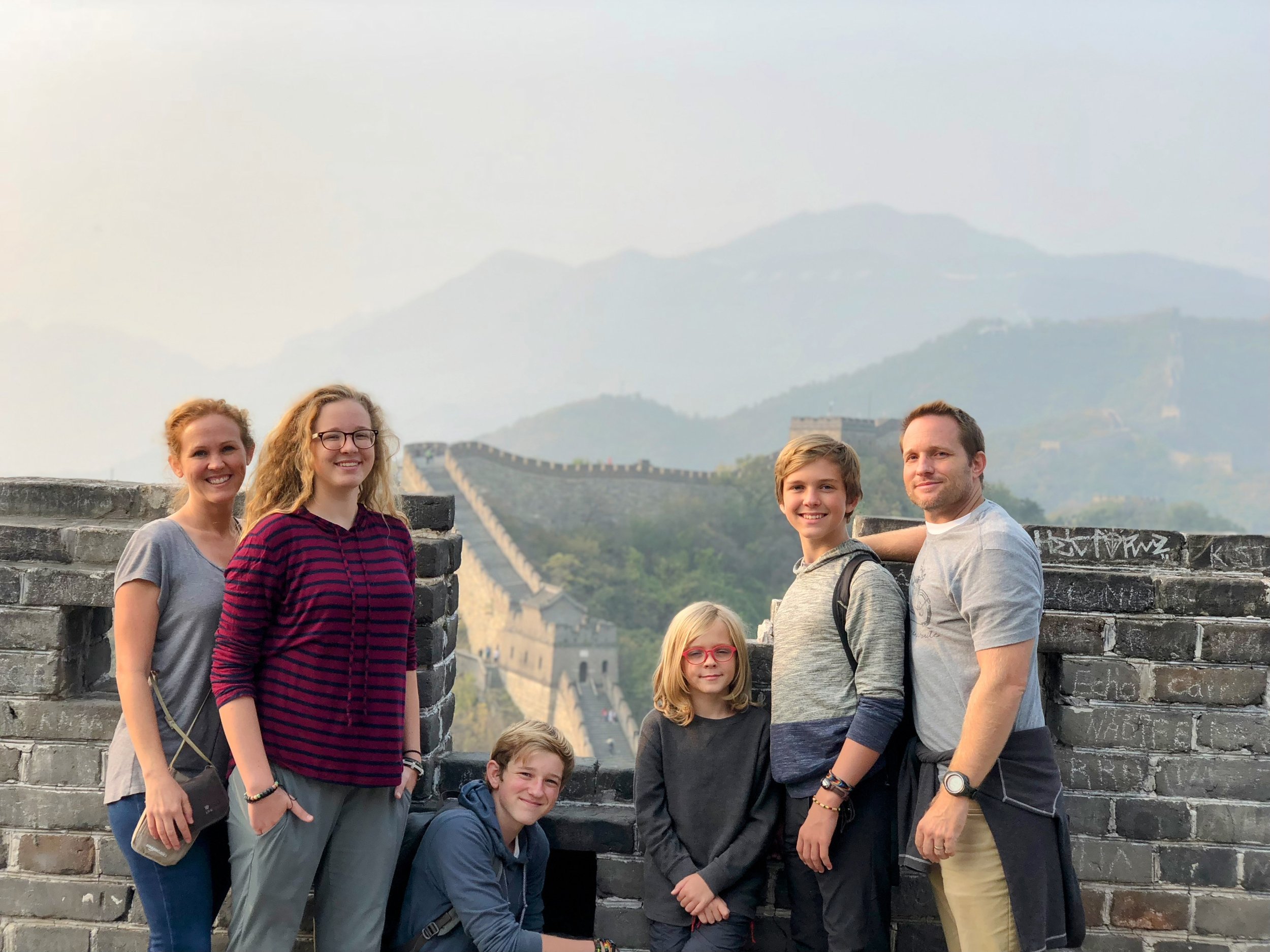
Cameo and Cooper Johnson knew they wanted their children to have a different kind of upbringing: one that expanded outside of Mesa, Arizona, where they were both raised. As such, after marrying, they took their four children, Cora-now 23, Granger-21, Jonah-19, and Ezra-15, for most of their young lives to live in various parts of the world. These travels were not always luxurious—rather, the family worked hard all year to save and sometimes barely broke even as they moved about--living and learning with the locals along the way.
They lived in Guatemala for four months, where they were involved in various service projects including distributing food to locals for Christmas, building a sustainable tilapia pond with and for their branch president, and assembling stoves for indigenous villagers so the residents could have warmth and a way to cook food. In Petra Jordan, their young son gave his own shoes to a barefoot indigenous child whom he had befriended, after learning that the children there don’t have the opportunity to go to school but must work in order to provide support to their families. In Spain, they met an artist on the street without arms who drew beautiful works of art with his feet and inspired their young son to overcome all obstacles. In downtown Philadelphia, they often passed unhoused residents in the streets to walk into church, and on a fast Sunday, later watched as those same people from the streets entered the building as well and bore the “most gorgeous testimonies” after which their fellow congregants (many of whom were new to the LDS faith) would shout out “Hallelujahs” and “Amens.” In Cambodia, the Johnsons lived with a local family. “Ten of us shared the same pit toilet bathroom without plumbing or hot water and had to pour cold water on ourselves to bathe,” says Cameo. “While there, we were invited to the funeral of the village leader and also invited to be blessed by a Buddhist monk. We honored these other traditions and beliefs. We were constantly exposing our children to other spiritualities and ways of thinking with love being the unifying focus.” This experience happened during the senior year in high school for their eldest child, Cora, and Cameo largely credits the priority on family closeness and emphasis on Christ-focused service and doctrine through their travels rather than building a social network as the reason each of her four kids have chosen to cling to the gospel in which they were raised. “Because we were only in many of our wards and communities temporarily, we didn’t worry about ostracization… and once we returned to Utah and Arizona, we really saw the diversity of the places and people we’d met with such unique needs and wants than what I’d understood growing up.”
On June 1st of this year, the family traveled together to California, where Cora married her girlfriend of over a year, Ady, in a beautiful ceremony in the Redwoods, near where they had both met while serving as LDS missionaries. The two were never companions, but after admitting to having feelings for each other on their mission, they put those feelings aside to focus on serving until they came home. The service was simple, only attended by their parents and siblings. Cora’s returned missionary brother had received a ministerial license to perform the nuptials. Cameo says as the simple ceremony was just “focused on them, we didn’t have to worry about the extraneous. It was beautiful.” She continues, “Both families had come a long way in the last year to process, change, and grow, but because we all know them and what beautiful humans they both are, you can’t help but see the genuine love they have for each other and desire their well-being and happiness. Their pure love is just evident on their faces.”
A week later, the couple had a reception in Flagstaff near the Johnson’s home, in which there was a bounty of music, dancing, acceptance and love. It was a party attended by many family members and friends from near and far, including many from the girls’ missions who they had served. “It was a happy, happy time,” says Cameo, “and because they chose to already be married by the time people arrived at the reception, there were no worries about feeling judged. It was already done.”
While such a warm reception to the marriage of two females from the LDS faith may come as a surprise to some, it was no surprise to Cameo and Cooper when Cora finally came out as queer at age 16. “We always knew, and had had conversations between us as a couple since Cora was three or four years old, like, ‘Hey, what are we going to do if she tells us she’s gay or that she wants to be a ‘he’?” says Cameo. Cora previously shared her own story on Lift & Love, and her mother Cameo concurs her daughter never fit the gender norms as a child. People gave her dolls she didn’t want, and she cried every time she was told to put on a church dress. When she’d play house with her fellow school girls, Cora always cast herself in the role of “husband.”
When she was younger, Cameo admits she didn’t know anyone in the queer community two decades ago and was quite fearful of what might happen due to how she had been raised, saying, “Anything new is scary for me.” But through many conversations, Cooper assured Cameo that they could just wait and see, that they didn’t need to anticipate everything right then. So a decade later when Cora finally came out, Cameo was not a bit surprised or scared as she’d had a decade to work on her own feelings. She says, “I felt comfortable because I knew who she was—the most kind, nonjudgmental person I’ve ever met, and I’ve met a lot. This is Cora—she’s not sinful or someone who cares more about herself and material desires. She’s a very spiritual person, making It hard for anyone to continue in any preconceived notions about the community. Because I know her worth and value and how amazing she is, and had been prepping for ten years, it wasn’t hard for me. I know I’m lucky in that regard.”
What did worry Cameo a bit was that when Cora came out, in the same sentence, she said, “I’m gay and I want to stay in the church and go on a mission.” Cameo had experienced enough of their Arizona culture to know how the church at large perceives the LGBTQ population, but she also chose to respect her daughter’s decision and support what she needed to do. Cameo again figures that the family’s emphasis on core principles of Christ-centered living is what drove Cora to see the divine purpose in serving a mission for a church that would later not allow her marriage in their temple.
Cameo also reflects on the efforts they had made to create a safe space in their home when Cora was a young child after they witnessed a neighborhood child who was perceived to be gay often be referenced by derogatory slurs, including in their own home. Cameo sat down one of her young children who had repeated the word and in very certain terms, made it clear, “That is not a word we use, because people are born this way—lovely, beautiful, and often more kind and gentle than the rest of us. We have something to learn from them, and I never want you to say anything that would make us seem better than them. We all have differences.”
When Cora later came out, she told her mother she remembered that experience and knew her home would always be a safe space. Cameo reminds parents, “Our children are always watching us, including our interactions and the phrases we say. It’s important we remember that they are listening to the jokes we laugh at. Our kids are watching, and determining whether we’ve created a safe space for them to later become whoever they may be.”
While the Johnsons traveled, both Cameo and Cooper pursued their masters’ degrees. Using her training as a Psychiatric Mental Health Nurse Practitioner, and after selling their first mental health practice, Cameo recently started a new one called Ponderosa Psychiatry in Flagstaff. She has found that by word-of-mouth referrals, she largely serves individuals at the LGBTQ+ and LDS intersection, including those serving or having served missions, and those who love them, to help them have a place to process their thoughts and emotions. “There’s an intersection between how we love and how we’re told we’re supposed to love and obey that can come across as not very loving to our children… It’s important to remember that incongruence is much more fabricated than our spirits and bodies believe. Love is love, and we know that in our hearts. When we don’t feel we’re being loving or when we’re being judgmental, it doesn’t feel right.”
Cameo again credits her family’s unique life experiences and current luck in having a very supportive bishop and stake president, who both came to Cora’s and Ady’s wedding reception, as part of the reason they’ve been able to join their kids in their desires to serve and stay in the church. She says, “I love my bishop and stake president. I have had leadership in other areas of the world who weren’t so understanding, but I’ve come to understand that they don’t define my relationship with Heavenly Father and Jesus. It’s just me; there’s no intermediary. Those people are called for a reason, but are also humans struggling with the human experience, and I’m ok with that. That’s the beautiful thing about the church—personal revelation. I love having my direct line.”
Read Cora’s Lift+Love family story here
Wedding photo credits to Anna Naylor Photography


IESE WILSON
After earning two degrees in music performance, Iese Wilson, 30, now holds his dream job as a high school choir director. The conductor role he’s assumed in advocacy work has also proven a dream come true for many of his LGBTQ+ Latter-day Saint peers around the world who have benefitted from his efforts…
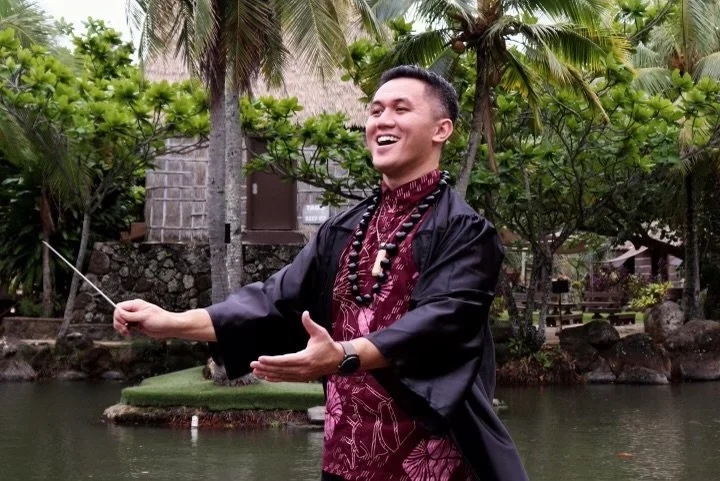
After earning two degrees in music performance, Iese Wilson, 30, now holds his dream job as a high school choir director. The conductor role he’s assumed in advocacy work has also proven a dream come true for many of his LGBTQ+ Latter-day Saint peers around the world who have benefitted from his efforts.
But it first took Iese (pronounced eeYESeh) years of coming to terms with his own identity as a gay believer in his faith, which ultimately happened in a prayer in which Iese was told he was to come out to his family and to also help take care of the LGBTQ+ population at BYU Hawaii, where he was a student. At first, he argued with God, feeling this went against everything he’d been taught. But when Iese pulled out his patriarchal blessing “to prove God wrong,” he read words in a new light that confirmed his life mission would include full-time ministry work in this space.
It all started with a church talk he gave at BYU Hawaii in 2019, when he was 25 years old. While speaking about faith, Iese felt prompted to come out to his ward. Some students approached him afterwards about starting a support group, which led to him helping create the first LGBTQ+ support group for members off campus. Iese anticipated he might be bullied for these efforts, but that didn’t happen. Instead, he had people coming to him left and right, eager to confide and share the isolation they’d experienced, with desires to build community. “It was mind-blowing how many there were who needed to connect. I realized I had to do something about this.”
Over a couple years, Iese says an estimated 200 people reached out to him for support from across campus and from around the world via social media, including those hailing from the Phillipines, Samoa, Fiji, Taiwan, Japan, Tonga, areas of southeast Asia as well as those in the United States. Often, Iese would agree to meet with the students in secure locations, as so many of them were experiencing intense fear under Honor Code policies. Iese organized these stories and compiled a summary of the experiences of 36 students (while protecting their identity), and shared the document with BYU Hawaii’s President, John Kauwe III. He was blown away by the university’s president support and desire to learn more. A globally renowne researcher on Alzheimer’s disease as well as a recently called Area Seventy, President Kauwe was someone Iese found highly impressive. Iese was further impressed as President Kauwe looped university VP Jonathan Kau into the conversation. Together, along with the support of Iese’s uncle and stake president Kinglsey Ah You, Iese was invited to organize the university’s first LGBTQ+-themed fireside.
Having seen their video about being supportive parents of a gay son (and BYUH alum) named Xian on the LDS church website, Iese reached out to the Mackintosh family of Utah to see if they might be willing to zoom in to speak at the fireside. They happily obliged. In the days leading up to the event, Iese was also asked to sit on the panel. As he shared his desperate plea for students and faculty to consider how they could improve inclusion efforts, he looked out in awe at hundreds of students, many of whom he recognized as closeted students who never anticipated feeling this kind of support at the university. It was a powerful moment for Iese, after years of navigating powerful feelings.
Though he didn’t have words for it, Iese first knew around age 10 he was different from his peers. After attending elementary school each day in Garden Grove, CA, Iese would join about 15 cousins at his grandma’s house, where he felt like the “odd one—the loner, the reader.” He’d listen as his older cousins and kids at school talked about their crushes, and wonder why he was drawn to boys. When he attended a summer camp for Hawaiian kids right before sixth grade, he was terrified to see he’d be expected to shower in a restroom with a “tree of life showerhead situation.” He begged his counselors to not have to use the group shower, horrified of what might happen. But he didn’t have a word for it until middle school, when Iese first came across the word “gay.”
It was around this time that Prop 8 ballot measures were surging in California. While his family was less active in the church, Iese absorbed that if he were to be the “good Mormon boy” he was trying so hard to be, he needed to adopt the homophobic rhetoric he witnessed some of his peers and youth leaders vocalizing as they advocated against gay marriage. He says that, “Seeing the protests in front of our temples was an outward expression by society of what I was experiencing as a gay person in the church. Around age 13, I decided that gay people were evil.” Then, a boy named Chance transferred into his school and joined choir. Iese was a senior, and new move-in Chance was a sophomore and had “the cutest face ever.” One day, Chance opened up to Iese about what had brought him from northern to southern California. When Chance had told his parents he was gay, his father became really angry and made sure it was “a really rough evening for Chance.” After crying himself to sleep, Chance woke up the next morning to find out his father had shot and killed himself. Later, his mom relocated them to Orange County for a fresh start. Hearing this, Iese opened his eyes to the dangers of homophobic rhetoric and behaviors—that Chance trying to connect with his parents over his orientation resulted in an undeserved outcome Chance would have to live with the rest of his life. “It didn’t seem right,” says Iese. “For the first time, I started questioning that maybe being LGBTQ+ was not evil.”
Years later, the power of story was what inspired Iese to take his peers’ distressing experiences to President Kauwe. It was never his desire to tell the university president (or the church) what to do, but to provide opportunities for increased understanding--an increase he himself had worked hard to gain—while letting the leadership know he trusted their revelatory processes. After high school, Iese worked a few jobs and went to community college before being called on a mission to Auckland, New Zealand, where he was excited to learn Samoan, the language of his ancestors. But instead of studying the language for hours a day as instructed, Iese recalls spending way too many hours searching the scriptures and church manuals to figure out why he was gay and how he could change it. Believing in President Boyd K. Packer’s admonition that “studying doctrine is more likely to change behavior than studying behavior will change behavior,” Iese convinced himself he could “study the gay away.” His obsession translated into a self-righteousness perfectionism in which he says he held others to unrealistic standards. It wasn’t until the end of his time in New Zealand that he met a fellow missionary who taught him by example how to finally find peace through Christlike love. A few years after his mission, Iese moved to Hilo, Hawaii, where he met a community of similarly loving members of the church who modeled pure love and gave him the tools he needed to become a more kind, caring human. This, coupled with an understanding bishop he’d had back in California who was a father of a gay son himself and helped Iese get into therapy, allowed Iese to undergo a process of “sandpapering away the levels of my pride and self-hatred. There were some rough, gritty sections, and some fine gritty sections, but either way, it was gritty and it took years.”
Iese recognized that heretofore, he’d been operating “like Javert from Les Mis,” with a rigidity that often created friction with others, including his two younger brothers. After his mission, when he came out to his family, he apologized for this behavior, and was met with a warm reception by his family, aside from an initial response by his dad at first trying to “fix him” by asking, “Have you really thought about this?” Iese laughed and replied, “Yeah, I’ve thought about this.” Iese was deeply touched by his mom’s response. An “impeccable human” who works as a concierge nurse and personal trainer, his mother tearfully opened up the day after he came out while the two were out for a walk about how much it pained her to think she never noticed how much her oldest child was hurting. She said, “You love the church so much and now life’s going to be so much harder for you and there’s nothing I can do about it… Was I so busy that I couldn’t see my boy was hurting and he couldn’t trust me to support him?” Iese says, “Here we were, walking the dogs and crying through the neighborhood… I never guessed my mom might feel that way. I thought it might be more of a ‘You’re ruining our eternal family,’ but no. My mom’s my hero. That was an A+ response.”
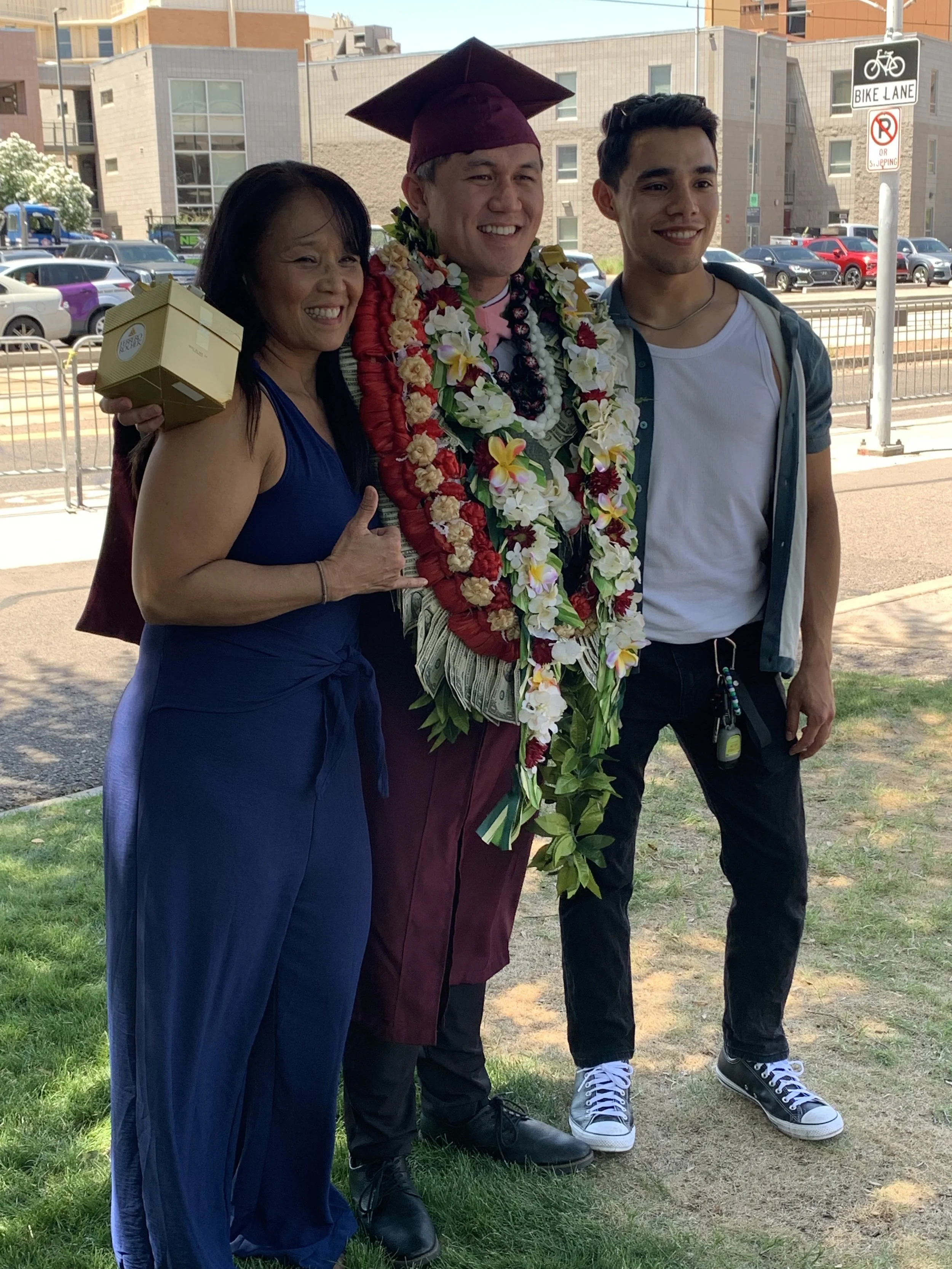
The call to bear and ease the burdens of others expanded beyond Hawaii for Iese. Besides instigating the fireside, while at BYUH, he had the opportunity to be a guest on both Richard Ostler’s “Listen, Learn and Love” podcast and Ben Schilaty’s and Charlie Bird’s “Questions from the Closet” podcast. After graduating, he pursued his master’s degree at ASU where he continued his advocacy efforts and has been asked to speak at institute and various ally events. Besides leading a high school choir program, Iese is now also the choir director for the Tongan ward he attends. He loves this ward, who overwhelmed him with support and flower leis at his recent masters’ program graduation. Last fall, Iese was asked to be the opening speaker at Gather, and he is eager to continue his efforts to magnify the voices and stories of LGBTQ+ members of the church from all over the world.
Iese has also recently experienced the joy of human connection, as he is now in a seven-month relationship with his boyfriend, whose family is involved in the performing arts. Iese says he appreciates how the Greeks have different words for love, which he has now come to better understand: “There’s agape for brotherly love. In the church, Jesus speaks of the communal family model of love. There is flirtatious love, but I wanted to understand romantic love, particularly as a conductor and trained musician. Having studied music through the centuries, one of the most studied topics is love, and I would be remiss if I didn’t experience it in this life.” Iese says he had to do a little work to gain the support of his boyfriend’s Christian dad, who at first resisted meeting him. But Iese laughs, saying, “I won him over by talking football and Jesus.” His boyfriend attended an ally event that Iese was speaking at. Iese watched with joy as his typically shy boyfriend was flocked by attendees after the refreshments and ended up sharing his story with strangers. Iese thought, “Look at him go; that’s my boyfriend.” On the way home, Iese’s boyfriend said, “I didn’t know what you meant by doing advocacy work with your church, but now I see and I understand. I want to support you in this, however I can. I want to stand by you in all this.” As for their future, Iese says, “Time will tell; but for now, I’m really grateful.”

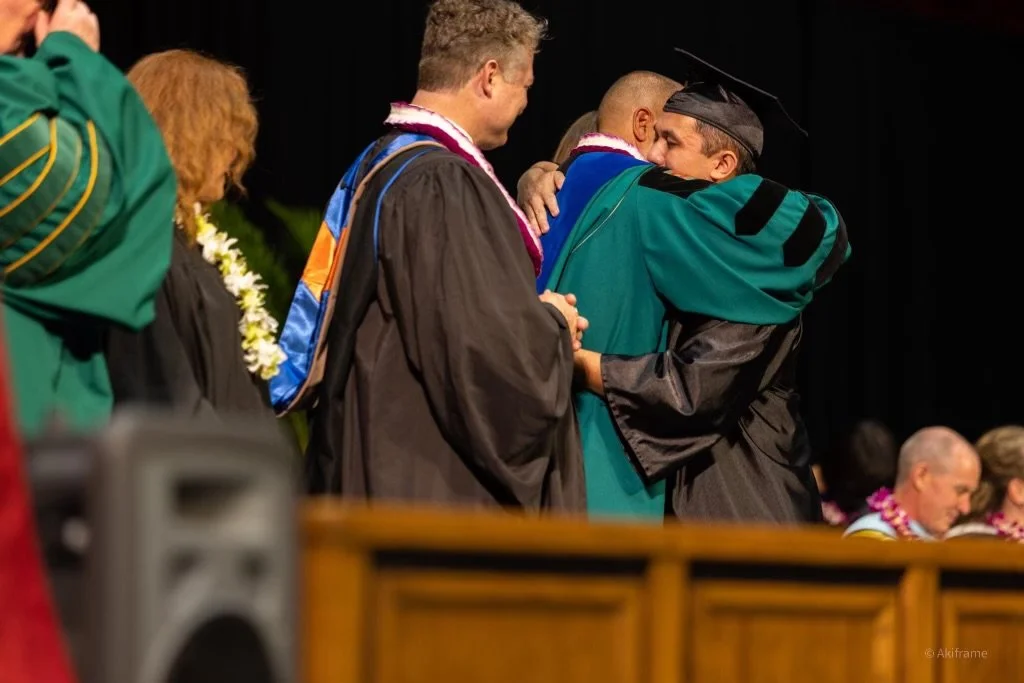

ANONYMOUS
M* drives across state lines to seek the healthcare for her preteen daughter that has improved her sense of well-being. She tells very few people where she is going, as few seem to understand. But a nearby state allows a puberty blocker shot that’s recently been banned for minors under 18 in M’s home state. It’s a shot that has been widely given without major concerns for decades to patients with early onset puberty, until the politicking of the trans community dominated airwaves and stigmatized it as “unsafe.” It’s a shot that can help prevent the further need for medication for trans individuals if timed right, which is why the trans-affirming medical community prioritizes its use in younger patients on the verge of puberty. But this process requires a parent and a medical team to trust the intuition and identity of a patient who is still a child.
M* drives across state lines to seek the healthcare for her preteen daughter that has improved her sense of well-being. She tells very few people where she is going, as few seem to understand. But a nearby state allows a puberty blocker shot that’s recently been banned for minors under 18 in M’s home state. It’s a shot that has been widely given without major concerns for decades to patients with early onset puberty, until the politicking of the trans community dominated airwaves and stigmatized it as “unsafe.” It’s a shot that can help prevent the further need for medication for trans individuals if timed right, which is why the trans-affirming medical community prioritizes its use in younger patients on the verge of puberty. But this process requires a parent and a medical team to trust the intuition and identity of a patient who is still a child.
M does trust her daughter to know herself better than anyone, describing her as an intelligent and fun-loving home schooled young tween who has “read all the things,” says M. “I know she doesn’t know everything, but she knows a lot more than I do.”
Healthcare. Safety. Well-being. They are the basic human needs most parents desire for their children. But when a child comes out as transgender, the method of how best to pursue each ideal can vary drastically between parents, often creating unease at home. Societal pressures can isolate children and families who don’t fit the binary norms of a classroom or bathroom, further exacerbating isolation. State legislation can dictate what is allowed in the doctor’s office, resulting in mental duress. These are the common realities for families of trans kids, and when a child comes out at an especially young age, the collateral fears can drive the child or family right back into the closet.
As M views the best path forward for her daughter differently than her social circle, church community, and state legislature does, she is only out anonymously, as the creator of the Instagram account, @mama_trans_kid_in_the_closet. The community she has built on this account, as well as her Mama Dragons network, have served as a salve for M, who has appreciated having public forums to discuss social transitions, hormone replacement therapy, puberty blockers, and bathroom bills. They are topics she once knew nothing about, but her network and a helpful book, The Transgender Child: A Handbook for Parents and Professionals Supporting Transgender and Nonbinary Children by Stephanie Brill and Rachel Pepper, have contributed to her new vocabulary and understanding. They have also been able to get acquainted with adult trans women, who offer hope for what can be.
A self-described “Molly Mormon,” M’s advocacy for her children surprises even herself. But she’s grateful for the 2020 impression she had to study LGBTQ+ issues, coupled with Elder Ballard’s oft-quoted nudge for LDS members to learn more about the experiences of LGBTQ+ people. Feeling compelled to do a deep dive into something she had never thoughtfully considered, M picked up Charlie Bird’s book, Without the Mask, at Deseret Book, feeling it might be a “safe” source, then Ben Schilaty’s, A Walk in My Shoes, and began listening to their podcast, “Questions from the Closet.” More podcasts, including “Listen, Learn and Love,” helped her begin to consider what life is like for an LGBTQ+ member of the church.
After reading past church teachings and some messages about queer people delivered over pulpits that were “really tough to swallow,” M began to understand why people in this community were misunderstood. Still, when her daughter came out as trans, it was “super shocking” for M and her husband. “I had heard about trans kids knowing about their identity from a young age—always dressing up as princesses or pirates. But ours was typically into boy things. Even now, besides growing out her hair, she hasn’t expressed a strong interest in make-up or dressing in a feminine way often. Though she has yet to come out publicly.” She came out to her mom via a phone message exchange, sharing she had been feeling confused for some time, like she didn’t know what was going on. And then she said a prayer and had a moment of clarity as a thought entered her head: “I’m trans.” M says her child described suddenly feeling good about that, like God was telling her, “Yep, that’s it.” She felt excited to tell her mom then, having felt some peace about who she was. M says this was at first very hard for her to grasp. Like all their kids, this child was named after a beloved relative, so honoring the name and pronoun transition took some time for M. While navigating this new reality, shortly after, one of M’s older children came out as bisexual.
M feels grateful her kids have had each other’s support and are close, as they have lost friends over people saying disparaging things about LGBTQ. While she and her husband still attend, the church has been a tricky place for some members of the family. When one of her older kids was asked about their plans to serve a mission, their response was, “I don’t see how I can tell people to go join a church where people like my siblings won’t be treated the same as everyone else. It doesn’t feel right.” M’s bisexual child doesn’t feel like they fit in, but says they’d return overnight for the social structure, if the church changed their LGBTQ+ policies.
Bi-erasure is also a new vocabulary word for M. “One of the hardest things with the church is that the teachings on marriage and family are all clearly directed for someone to choose a male or female—the opposite gender—and do what’s expected of them… People assume you can just choose the more simple path, making it much harder for you if you don’t. Also, you’re in between two spaces, making you feel like you don’t fit or are forgotten.” M says when she goes to the temple she can’t help but notice all the binary division, and considers if her trans daughter could ever feel comfortable in church spaces. “Like if she did come to church, would they let her go to Young Women’s? I have so many questions. She doesn’t go, so it’s not an issue.” M’s trans child is only out to her immediate family members and a few others.
M says her kids don’t speak out against her church involvement, but she has explained to them, “I’m not going to church because I support everything they say, but because it’s what feels right, right now. I’d like to help create change. I don’t want to leave, but sometimes I feel so tired.” As someone who naturally wants to talk through her current struggles, M says, “It’s hard when you have a kid in the closet. You want to talk about it, but can’t when they’re not out.” So for now, she speaks out from a closet of her own. And she reminds people that this is a topic that affects everyone. “If you think you don’thave an LGBTQ person in the family, the chances are very slim you don’t. They have always been here; there is just now more vocabulary to be understood and people feeling safe to come out.”
M continues, “It can never be said enough: we parents of LGBTQ kids know our kids, and for those of us who’ve grown up in the church, this is me following inspiration and following my God who wants me to support my child. That’s probably the most hurtful thing I hear people say—that you’ve got to be careful to ‘not be deceived,’ like you don’t know the gospel, when it’s all you’ve known for your whole life.”
(M* = to protect her children’s safety and well-being, M has elected to remain anonymous)

SPENCER SMITH
This past week found Spencer Smith, 31, strolling through his favorite place on earth, churro in hand, as he worked his way from Big Thunder to Guardians of the Galaxy with a group of friends. “Disneyland is the only place I know of where a full-grown man can run up to a character and no one bats an eye.” For Spencer, it’s a welcome escape, and the “one place I can completely be myself, and no one even looks twice…
This past week found Spencer Smith, 31, strolling through his favorite place on earth, churro in hand, as he worked his way from Big Thunder to Guardians of the Galaxy with a group of friends. “Disneyland is the only place I know of where a full-grown man can run up to a character and no one bats an eye.” For Spencer, it’s a welcome escape, and the “one place I can completely be myself, and no one even looks twice.”
Most weeknights, Spencer’s location is the new Spanish Fork, UT hospital ER where he works as the attending pharmacist, ready to administer whatever life-saving medicine may prove necessary for car accident survivors or “people who decide breathing is an optional activity.” It’s a job he loves. In his spare free moments, he can often be found in his epic game room, where over 300 board games from Settlers of Catan to Carcassonne line the walls. The one place he never thought he'd be, however, was at last year’s Gather—a Christ-centered conference for hundreds of LDS, LGBTQ+ individuals and those who love them. For Spencer, attending Gather at first felt uncomfortable—like taking something he had accepted but wasn’t happy about and celebrating it. His orientation was something Spencer had never envisioned could or would be celebrated within the LDS context.
But one day, his close friend Nicole forced him to pull out his phone and register online for the conference, promising she would go with him and telling him, “You’re doing this, even if you only go for an hour.” Spencer decided to volunteer for “all the jobs” at Gather that weekend, knowing that keeping busy might alleviate some of the pressure of being there. He was pleasantly surprised to see his mom also sign-up last minute to attend, which took away some of his stress and anxiety. Between his volunteer duties, Spencer absorbed words by speakers that finally gave terminology to how he had been feeling for years. He took in how many people were there, and realized he didn’t have to walk this path alone. While he says he didn’t come away from the conference with a ton of lasting friendships, Spencer committed to attending again this fall because he wants to be there this time and volunteer, and not because he needs to be distracted. He also appreciates how Gather opened up the line of communication with his mom, as they now have a shared reference point of language for him identifying as gay.
Spencer was born in Provo, a BYU baby raised in a family with a father who served as bishop and an uncle who served as stake president. A self-described “nerd,” which to him is a good thing, (“Nerds are my people”), Spencer says he was terrible at sports. Unlike his brother, he preferred reading, brain puzzles, “things that kept him inside.” His family lived in California during Prop 8, and while Spencer knew he might be gay by then (in his sophomore year), he pushed against it so hard during this time, constantly defending his church’s position on Prop 8 to hostile opposition by teachers and friends at school. He remembers thinking, “I didn’t know you could have a testimony and still disagree with something,” though he remembers a conversation with his dad about why the church was fighting so hard against the definition of a word. His father explained that while the church’s positions wouldn’t stop same sex unions, Prop 8 would protect the word marriage, saying, “We don’t care if they’re together; we just don’t want them to use that term, which is sacred.” Looking back, Spencer says he now recognizes the dissonance that unsettled him at the time for what it was: denial.
Highly academic, Spencer majored in biology while attending BYU for a year before and the three years after his South Dakota Rapids mission – both experiences he loved. He says he never dated much compared to his peers, and he was glad he “got out of BYU when I did—so I didn’t have to deal with all the recent stuff,” indicating the polarizing LGBTQ+ policy shifts of the past few years. After doing a 12-page report on pharmacists during the 12th grade, Spencer decided it would make a great career choice and later graduated from pharmacy school in West Jordan in 2020, leading him to his current vocation.
Around the same time, Spencer decided to finally come out as gay to a few friends and cousins. In early 2021, he started telling more friends, but continuously found excuses to delay telling his immediate family, saying that whenever the opportunity presented itself, he’d think, “Well I need to leave--bye!” And run. Though anxious, Spencer says he knew his parents would be supportive, but, “It was still terrifying to have that conversation.” That September, he pulled his parents into a bedroom at their house and came out to them. His mom was “not very surprised,” which Spencer says makes sense considering how he grew up, loving all things Disney and Broadway. He remembers his father’s first response being along the lines of “This doesn’t change anything; you’re still you and we love you.” Spencer texted his four younger siblings later that night, and says they handled it well. He was a little more nervous to come out to his huge extended family (his parents have 21 siblings between them), realizing that would minimize his ability to control the narrative. They, too, proved supportive, besides a little jocular teasing among cousins. Next, Spencer decided to post online, where he was met by overwhelming support, with some friends coming out privately to him in return. He was also touched to find out his mom and some friends were monitoring the comments his post received to protect him, but there ended up being no need. All were kind.
When Spencer’s dad got a job transfer to St. George, his mother became distracted with her other kids’ needs and felt she had abandoned Spencer a bit until she received a prompting in the temple that “He’s going to be fine.” This reassured her she could be confident all would go well for Spencer, which he says was “awesome for her to hear, and for me to hear now. And I have been fine—it all worked out.” He appreciates how his father has also been there to support him every time he came out or had to take a step outside of his comfort zone, and has vocally defended Spencer and other LGBTQ+ people in many settings. Spencer says, “It is easier to trust myself when I know how quickly my family will get behind me if things go south.” Spencer also credits a great therapist for helping him gain skills and tools that have helped him decrease his sense of anxiety about what his future might look like. “Everything used to feel terrifying and overwhelming. Now, I don’t know what my life is going to look like, but that’s ok. I have the support I need.”
His original plan to stay single for the rest of his life, Spencer says he is now more open to the possibility of dating. He remains “very active” in the church, currently attending a mid-singles ward, “having reached the terrible age I can’t go to a YSA ward.” While he can almost blend in as “one of 900 other single guys in my ward,” he says it can be hard being in a church space where so much of the focus is on getting people married and building families. “Sometimes I think hmm, not everyone’s in that boat. Some are gay or just got out of traumatic breakups. Sometimes church can be a little tricky with people not intending to cause harm, but still making harmful comments.” When his orientation comes up when conversations turn to dating, Spencer finds himself wondering if his orientation will change how people interact with him.
While he grew up always believing that whatever the church said was law, Spencer says he now realizes he doesn’t have to agree with everything said over a pulpit, but can still maintain a testimony. He says, “Overall the church is still a huge part of my life, and I don’t anticipate that changing anytime soon… But when my friends leave, it doesn’t change anything between us. I know who they are as a person… If I were to stop attending, I’d still likely have my testimony… I would never ask anyone in my family to give it up.”
At a recent family wedding, for the first time, Spencer said, “If I ever get married, we’re doing (this) differently.” His mother turned and repeated that to an aunt, saying, “When Spencer gets married...” Spencer says his parents are reaching a point where they anticipate him dating men and have said they will fully love and support whoever he brings home. He also senses the eagerness of his aunts to set him up, as they often approach him with invitations like, “We have this friend whose son just came out and he’s super cute…” Spencer appreciates the gestures, saying, “My family’s been awesome.”
If he could go back in time, Spencer says, “I did the dumb thing and tried to figure it all out on my own, presuming if I attacked it with everything I had, I’d be able to change who I was or figure out a world in which I could make it work.” But as he started to open up to people and build a support group, Spencer appreciated how he could fall back on his friends when things got hard and say, “I’m drowning; I need back up to talk through some of my thoughts.” Spencer has also started his own monthly Gather scripture study group, and attends another friend’s each month. As he’s expanded this social network to include the possibility of a wider net, Spencer says, “It sounds cheesy, but the Gather conference literally changed my entire life. It showed me there are other people like me, and that while church life isn’t perfect, it’s doable. There are always people who will help and support you. You just have to find them.”


THE JENKINS FAMILY
Content warning: suicidal ideation
Kathryn and Jare (rhymes with “care”) Jenkins had been married for eight years and were expecting their third child when Jare handed Kathryn an eye-opening letter. Kathryn opened it to read that the husband who she had met and fell in love with and married in the Salt Lake City LDS temple was now coming out to her as transgender. Kathryn was in complete shock: “It was a lot to process. I was emotional. It was a hard time for both of us.” Further complicating things, as soon as Jare (they/them) came out to Kathryn, they immediately went back into the closet, not ready to talk about it…
Content warning: suicidal ideation
Kathryn and Jare (rhymes with “care”) Jenkins had been married for eight years and were expecting their third child when Jare handed Kathryn an eye-opening letter. Kathryn opened it to read that the husband who she had met and fell in love with and married in the Salt Lake City LDS temple was now coming out to her as transgender. Kathryn was in complete shock: “It was a lot to process. I was emotional. It was a hard time for both of us.” Further complicating things, as soon as Jare (they/them) came out to Kathryn, they immediately went back into the closet, not ready to talk about it.
That was in 2015, and the not talking about it continued for another five or six years. Whenever Kathryn would ask Jare how they were doing, Jare would reply everything was fine, they could handle it. But downplaying it only elevated Kathryn’s concerns. She says, “Jare was used to hiding a lot of things and good at playing a part. We were happy in many ways, but this part of our lives was always hard.”
Around 2021, everything fell apart. Jare let Kathryn know they had been battling suicidal ideation for the past several years among hiding other significant things throughout their marriage. Feeling that Jare needed to seek outside help and support, she asked for a separation and Jare moved out for awhile. Jare remembers this as a time they felt like two different people. Jare says, “I was happy with certain things in life, like my relationship and family. But on my own, I focused a lot on negativity, feeding on any negative articles and comments I could find. I felt a lot of resentment and anger.” Jare credits Kathryn as being an immense support, saying, "Even though my life was caving in, Kath really saved me during that time. We separated but she still helped see me through a mental health crisis as I had to face everything I had been hiding; she didn't give up on me."
Having grown up in a conservative, southern California, LDS household, Jare had experienced a lot of shame with the way they’d felt since age three or four when they first knew they were different but didn’t have a word for it. There were a few instances in Jare’s youth when they dressed up in feminine clothing or attempted to deal with body parts in a way deemed socially unacceptable, and it was made clear through comments from family or church members that it was not okay to identify as LGBTQ. Instead, Jare threw themselves into sports to throw people off, “trying to be the best athlete possible so no one would ever realize I was transgender.” Their efforts resulted in Jare in fact becoming a national punt pass kick champion, and their team won the Little League World Series against Venezuela. As a teen in the ‘90s, Jare saw a Jerry Springer episode about transgender people, and even though the trans guests were not talked about positively, it was helpful for Jare to know they were not the only person in the world experiencing these feelings. But when Jare told a few close friends as a teen about their feelings, the friends never spoke to Jare again.
While coming of age, Jare says, “I figured I had three choices: 1- to take my life, which I considered a number of times; 2- to run away--leaving my old life behind and letting go of past relationships, and transition, or 3 – to hide and not let anyone know, which is what I tried to do.” Because of all the shame they’d suffered as a child, Jare never considered a fourth option as even possible: to come out and be accepted.
While it took some time for Jare to talk about it with Kathryn after that initial letter, because of the couple’s love for each other and their four sons, they came back together after their separation to try and work it out. They would go on long walks each evening, in which Jare opened up and shared earlier life experiences and all those pent-up feelings of shame. These conversations gave Kathryn time to listen, ponder, and process. She says, “I saw how much pain there was going on underneath, and just how long Jare had handled this alone… Jare was also responsive to me—how hard this was to have a relationship with someone who had lied for over 15 years in our marriage about what was going on. But still, we shared a lot of love and wanted to be together, which is why we are.” Kathryn says now they focus “a lot on the day to day, making the right decisions for us now, and knowing there are a lot of things we don’t have full control over. We’re working our way through that.”
As the parents of four young boys, two of whom are on the autism spectrum, Kathryn felt it was important to increase conversations about inclusion and kindness. In 2016, she had started her company the @inclusion_project, to not just shine a light on LGBTQ inclusion but toward anyone living with differences. This afforded her opportunities to participate in PRIDE parades and get to know those in other marginalized. She and Jare have adopted three mantras to guide their household: 1- Love should lead. 2- Be a good human. 3- Be careful who you hate; it could be someone you love. Embracing these themes helped their kids come to terms quickly with Jare’s identity, which at first was deemed “a little weird” by one of the boys, but now the Jenkins say their kids are very accepting and loving and they all talk openly about it. Jare appreciates how all the fears and worst-case scenarios they once had about how things would go if they came out have turned out to be much easier than imagined.
Most Sundays, Jare attends sacrament meetings with Kathryn and the boys, but goes home after, while they stay for their classes. Jare says, “I’ve had a complicated relationship with the church over the years--how things have been taught and the shame it brought me, especially in my youth. It was hard for me to see the differences between my relationship with God and His feelings about me, and with the church leaders and policies I’d hear. I felt God must hate me to have made me this way. But now, I’m working through these feelings. Now I believe that if there is a God, He loves everyone. I’m able to feel much more love now that I’m able to be who I am and how I feel.”
Kathryn’s spiritual journey is one that brings her to tears when she considers how “Heavenly Father loves me, and He equally loves Jare.” While she has a calling at church and says she gets something out of it often when she goes, she feels, “It’s not a safe place for everyone. I’ve had to adjust how I participate to preserve my relationship with God and my family.” Doing this has allowed her to have a lot of empathy for those going through difficult things and to give hugs to many at church as she realizes, “We’re all going through hard things—but there’s a lot I have questions about.”
One youth leader from Jare’s past who was “pretty awesome” made a real difference in their life, and was one of the only people in 2021 who Jare came out to, besides family. Many of the both Jare and Kathryn’s extended family have also been “incredibly kind and accepting,” though there have been some who haven’t been so supportive. Jare came out publicly last New Year’s Eve on Kathryn’s Instagram account, and the couple watched in trepidation after they pressed post. They were pleasantly surprised to see a steady stream of supportive comments, without anyone saying anything negative. Jare dresses differently now to match how they feel and they do participate in some gender affirming care that they say has helped a lot, but they haven’t fully socially or physically transitioned at this point. At church and in their neighborhood, Kathryn says they feel the eyes on them, and are nervous about sensitive questions some might ask about what this means for the Jenkins’ relationship, but feel they have mostly been met with kindness during Jare’s coming out.
In their ward, Kathryn says more people reach out to her to ask about Jare than to Jare directly, but, “In all fairness, Jare is very shy. They might get a little nervous about how best to approach.” Kathryn feels the weight of this and wishes sometimes she could just be Jare’s partner, a role she loves, rather than feeling like she has to be an educator or advocate all time. But those are also roles she owns as the mother of two kids with autism—she often wants to lead with introductory information, so people don’t say something offensive first. It helped when Kathryn and Jare recently recorded their story on their Spotify podcast; the link is available at their bio on their @inclusion_home IG site.
While Kathryn and Jare were worried about what Jare’s public coming out would look like, they have both felt “an incredible peace that has been freeing,” says Kathryn. “Seeing Jare as someone who is loved, who matters, who has these feelings and can still be valued, has also allowed me a chance to love and receive love and support from others.” Kathryn continues, “Even if it hadn’t gone well, we both feel giant relief and were able to take a deep breath for the first time.” For Jare especially, it’s been a long-awaited deep breath.
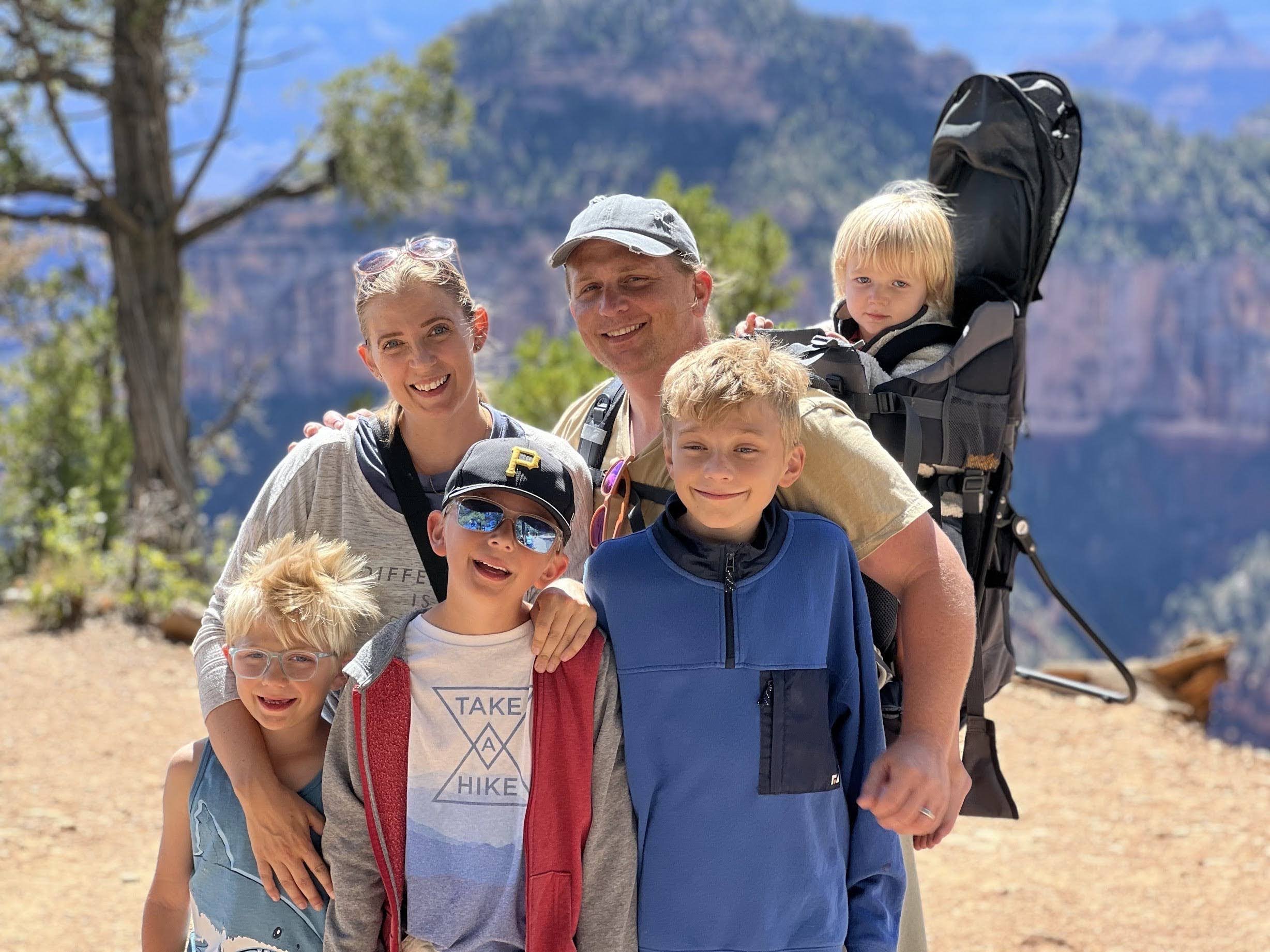


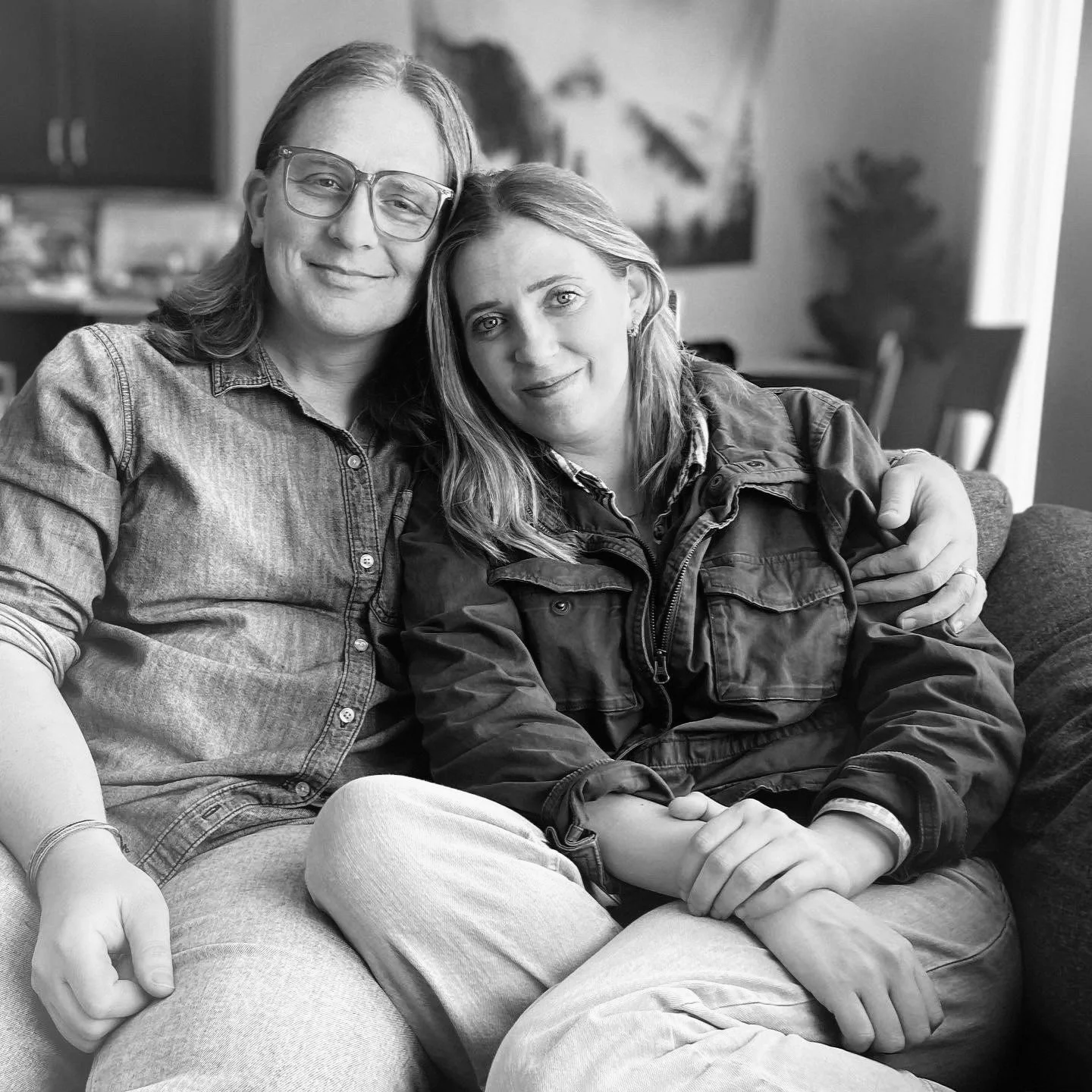
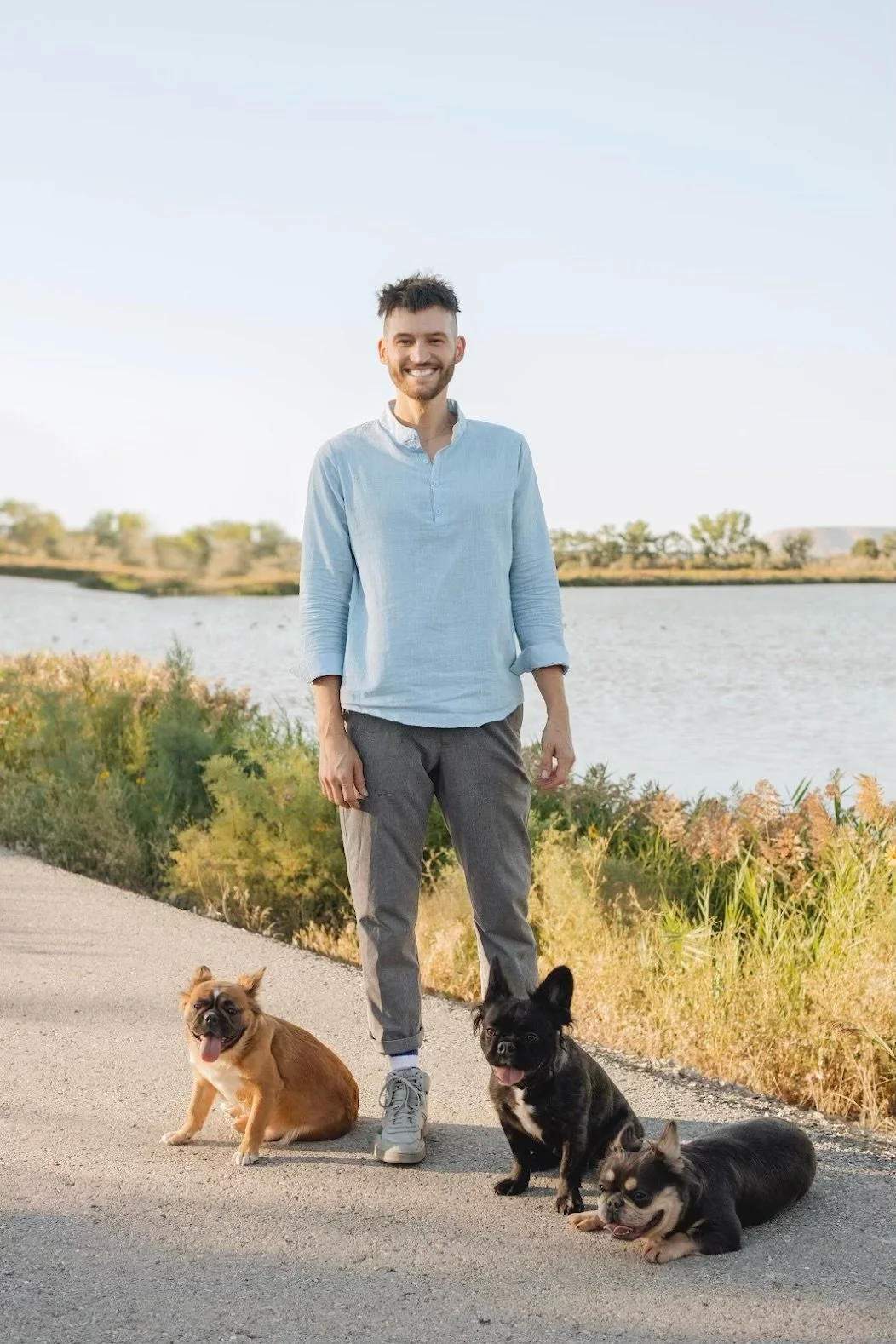
XIAN MACKINTOSH
On occasion, Xian Mackintosh is also invited to share his side of the story at firesides and speaking events at which his LDS parents, Scott and Becky, are asked to keynote. As referenced in last week’s story, this is something all three appreciate. Both sides of this parent-child dynamic acknowledge their journey has been one of growth, but most of all, love. It’s an impressive consensus as their lives currently look a little different from each others’ and from how they once thought things would go…
On occasion, Xian Mackintosh is also invited to share his side of the story at firesides and speaking events at which his LDS parents, Scott and Becky, are asked to keynote. As referenced in last week’s story, this is something all three appreciate. Both sides of this parent-child dynamic acknowledge their journey has been one of growth, but most of all, love. It’s an impressive consensus as their lives currently look a little different from each others’ and from how they once thought things would go.
Growing up, Xian (pronounced See-an) was very aware of his parents’ expectations for their son: earning his Duty to God award, attending Primary, Young Men’s and seminary, serving an honorable mission, an eventual marriage in a temple to a lovely young woman, followed by fatherhood, callings, and all the other things in alignment with the LDS faith. So when as a young child, Xian started to recognize that he felt more attracted to people of the same gender, he wasn’t quite sure what that meant, but knew it was something he needed to keep to himself.
As a teen, Xian struggled with what he now regrets most—that he wasn’t able to really be himself. Of those years, he says, “I listened to the music I thought I should, and had the friends people thought I should befriend. Every part of my life was focused on not letting people know what I was really feeling.” Xian was convinced he’d take his secret to the grave as he was so worried about disappointing his family. He acknowledges, “I have incredible parents who always made sure we knew we were loved. But I’d seen an older sister give them a harder time and didn’t want to be a burden on them. So I chose to deal with things myself and just handle it. I was always good at that. But it comes to a point where you can’t hide it anymore.”
After realizing his plea bargain to God, the same so many others attempt while serving a mission, didn’t pan out after returning from his honorable Detroit, MI mission and realizing a few months after, as hard as he had tried, “it wasn’t going away,” Xian chose to move to Hawaii. There, as a student at BYU Hawaii in the Social Work program, and later while receiving his master’s degree from the University of Hawaii, Xian was able to let down his guard as the dating pressure was less prescient than in the Utah culture in which he’d been raised. He says, “It was a huge weight off my shoulder when I went to college, but as I was still at BYU, I wasn’t able to be open. I was still closeted.” He only returned home for visits a couple times a year for a holiday or quick visit, minimizing his exposure to the inevitable and relentless “Who are you dating?” questioning.
During his senior year of college, he realized not being able to tell the truth made Xian feel like he was “internally killing myself. I had done all the praying, fasting, begging, scripture reading, trying to stay on the path to get rewarded. I was dealing with a lot of internal sadness, but it wasn’t what I portrayed. It got to a point where I realized I couldn’t do this my whole life.” One day, he decided to change his plea to God. He says, “Instead of praying for this to be taken away, I started changing what I was praying for. I started asking, ‘Am I ok?’ And I felt so much warmth and happiness with that simple question. I felt a, ‘Hey Sean, you’re ok.’ From there, I didn’t really look back. I knew I have a Heavenly Father who loves me, and He’s ok with me. I may not know all the answers, but I know Heavenly Father knows and is ok, so I don’t need to worry.” Xian then began to feel how amazing it felt “to be me and not worry if I’m good enough. It didn’t matter what others felt. God knows, and he’s fine with me, so it’s ok some of those teachings didn’t line up.”
This led to Xian coming out to one of his classes at BYU, and to the night often recounted by his mom. Xian saved his confession to his parents for the last night home at the holidays. While out saying goodbye to some friends in SLC, Xian sent a private Facebook message to his parents. Under the level of anxiety and stress he’d been dealing with, he knew it would not be good for his mental health to physically witness what he anticipated would be an intense reaction. Feeling it was better for all, he typed words along the lines of, “I’ve really been struggling to share this for a long time. Nothing’s changed about me, I’m still your same son, but I am gay.” Xian was able to see via read receipt that both parents saw it, but his dad did not respond. But his mother typed back the words, “Ok, but you need to come home now.” He replied he wanted to talk about it, but wanted the time to say goodbye to some friends first. His mom made it clear she’d prefer him come home now. Xian had borrowed his mom’s car for the night, and later, on the way back, he ran out of gas which resulted in him having to walk over a mile to a relative’s house to get help with gas. “I was worried they’d ask questions; it was kinda an ordeal.”
Xian finally entered his parents’ living room around 1:30am, where Becky was ready, hands clasped. The first words out of her mouth were, “So what are we going to do about this?” The hours passed with Becky assuring Xian she loved him and was there for him while also suggesting having Xian’s testosterone levels checked, the various ways they could keep this news quiet, and perhaps he could still marry a woman. Replaying in Xian’s head were the birthday wishes he’d silently made as he blew out his candles every year since the age of 5—with every wish, he’d plead to have being gay taken away from him. While Xian felt his mom was listening that night but not really hearing him, he did not resent her response. He says, “It took me 20 years to be okay with myself. This was her first time hearing it, so I couldn’t expect her to just know how to handle it. She was raised in the same setting I’d been.”
His patience continued every time his parents would send him scriptures or life advice afterwards that he didn’t exactly find helpful. “It took several years, but eventually they got it. They were just in fix-it mode.” Immediately after, Xian says Becky wanted to tell her oldest son, and Xian senses it was because as the “golden child,” he felt this brother would back up his parents’ religious perspective on things. But Xian wanted to tell his siblings all at once. Eventually, Xian got a call from his oldest brother while out with friends, a call that had “a bit of a funeral vibe.” Subsequently, Xian wrote an email to all his six siblings at once, not wanting to make phone calls that “would have taken a lot of out of me.” Within 24 hours, all his siblings had called him to express their surprise but for the most part, love and support. One call still hurts Xian to this day, as he remembers the words of one of his siblings: “Why are you doing this? Our family is not an eternal family anymore.” Xian replied, “I’m sorry you feel that way, but I’m still the same person. This isn’t a choice I’m making or something I’m just deciding to do.”
After a decade spent watching his six siblings all marry, it was finally Xian’s turn a few years ago. After having a couple longer term boyfriends who were always invited to family events, he eventually found a man he wanted to marry. As the day approached, the same sibling expressed a few days before that she would not be bringing her kids to the ceremony or joining the rest of the siblings in participating in the wedding party. It surprised Xian that his sister was still struggling, but during a heart-to-heart conversation on a park bench, he decided he wasn’t going to be mad at her for it, trusting that she was trying her best. He let her know he loved her and cared about her, and he feels she does love him in return, though feels their relationship is not what it once was.
When Xian was in grad school, he’d still attend sacrament meeting with his Catholic boyfriend at the time, but then would “say peace out” after that first meeting. But when the 2015 policy came out, Xian felt devastated—not because he wanted his future kids to be LDS, but that when he went back to the second Article of Faith, which preaches “men should be punished for their own sins and not for Adam’s transgression,” Xian couldn’t reconcile how if his kids chose to get baptized, they wouldn’t be allowed to because of who their parents are. He says, “It didn’t sit right with me, that Heavenly Father would allow that.” He and his boyfriend at the time went to dinner with his parents to talk about it, and Xian’s parents concurred they felt horrible about it all. While the policy was later reversed, Xian says, “I can only get stabbed so many times before saying I can’t get stabbed anymore. I needed to be healthy and stepped away. I don’t feel upset. I have so much more peace now than when I tried to fit in that box. I still use prayer, it’s a part of my life. And I feel closer to my Heavenly Father, and am more at peace with who I am.”
While Xian no longer believes in the LDS church as the “restored true church,” he says he has no anger with his family members for their beliefs, and would never expect them to change, as they wouldn’t try to make him change. “I try to love them for exactly who they are. If that brings them joy, who am I to take that away? I have so many aspects of my life that are positive from how I was raised. Also, some negative… but I try to compartmentalize and not focus on contention I don’t want with my family. Whether our beliefs are the same or different, we love and care for each other. My family has done a good job at that.”
The Mackintosh family now reflects a lot of diversity, and Xian says his mom Becky has credited his coming out to her ease at appreciating all the differences and “opening her mind to a world that wasn’t what she always thought it was.” Xian says he’s “super proud” of his parents who’ve been such a great help to many others. He appreciates how his mom recently apologized for things she said when he first came out, to which he replied, “I have no resentment. I knew you were doing the best you could at that time.” He loves how his parents both “did their best, which wasn’t great, but ever since, they’ve been learning and expanding. A lot of people don’t do that. Mine did want to understand and were willing to listen. They’ve constantly built on their love and capacity. They hold a LGBTQ FHE at their home, and my mom’s spent thousands of hours chatting with LGBT individuals. She’s come so far from the mom who first wanted me to get my testosterone checked.”
A lover of all things outdoors, Xian is self-employed, building and selling cold plunges. Now living in a home he purchased in North Salt Lake, Xian is healing from a difficult marriage and divorce, and taking the time to “focus on me”—as well as the numerous pets he cares for, as a lifelong avid animal lover and now, also a beekeeper. Xian owns High Mountain Frenchies, LLC and breeds rare Long Haired French Bulldogs. He loves how the pups he has at his house get along well with the very different (hairless) Sphynx cats and also the quail he raises. For Xian Mackintosh, it’s a coagulation of diversity and beauty in creation all under one household, values his entire family has worked to cultivate together as they’ve come together in increased love and understanding.
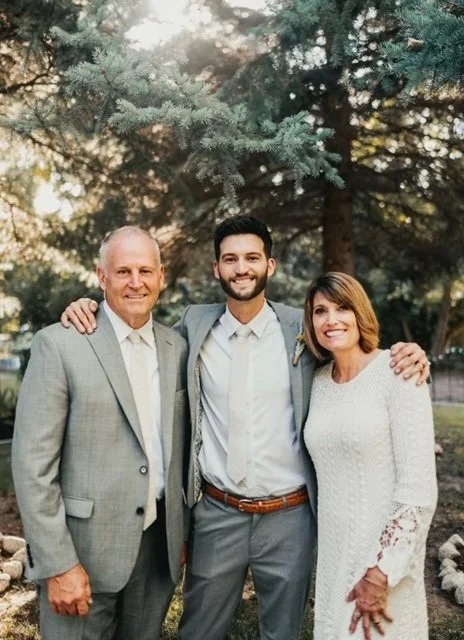


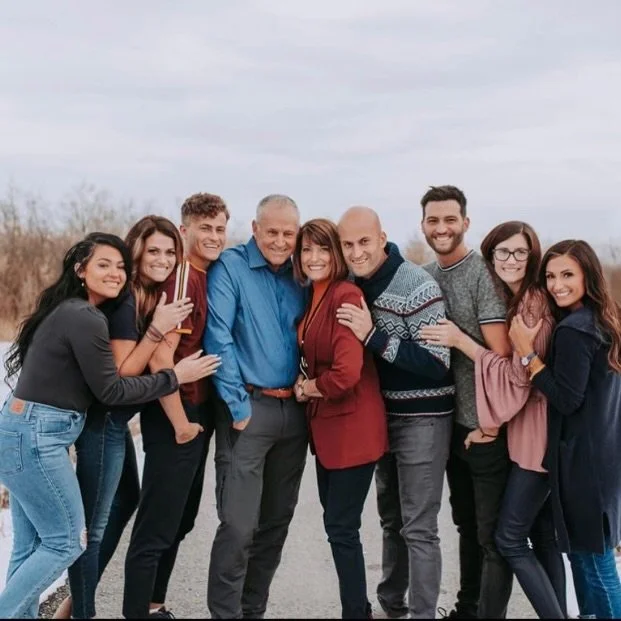
THE MACKINTOSH FAMILY
Theirs may be one of the first family stories you encountered at the LDS-LGBTQ+ intersection when you first leaned in, as the Mackintosh’s video about their son Xian has lived on the LDS church’s website for the past seven years. Becky Mackintosh’s book, Love Boldly: Embracing Your LGBTQ Loved Ones and Embracing Your Faith, may have also been one of the first how-to books you read.
Theirs may be one of the first family stories you encountered at the LDS-LGBTQ+ intersection when you first leaned in, as the Mackintosh’s video about their son Xian has lived on the LDS church’s website for the past seven years. Becky Mackintosh’s book, Love Boldly: Embracing Your LGBTQ Loved Ones and Embracing Your Faith, may have also been one of the first how-to books you read.
The church approached the Mackintosh family of Lehi, Utah to film a video showing “the reality of having a gay child in the church—that it’s not all tied up in a bow.” The church asked the Mackintoshes specifically to share their story because they knew Xian was in a relationship, and wanted them to answer the question many LDS families were asking at the time: “How do we respond when our child steps away from the church?” Becky’s answer: “Continue to love and include your child in the family circle.” The video has remained on the Church website since 2017, something Becky says a lot of people still don’t know. Deseret Books also initially solicited Becky and family to chronicle their story in a memoir, though ultimately, and with Deseret Book’s blessing, they went with Cedar Fort Publishing for a more expeditious print run. Deseret Books still carries it in their store (as does Amazon). And Becky and Scott Mackintosh are still frequently invited to speak at firesides. They especially love it when Xian is also invited to speak with them. At these firesides, Becky often invites audiences to pull out their phones and go to the gospel library app and scroll to “life help” where they can find “so much support for unique situations like unwed pregnancies, suicide, SSA, and transgender.” There, people will also find Becky’s face as the thumbnail image for the family videos under “SSA.” Becky says, “The story is still so relevant, so needed. However we may respond when our daughters or sons step away, you must love and include. It’s the only way to keep the family together.”
This is something the Mackintosh family has learned through experience, and over time. When Xian first sent his parents a private Facebook message on the last night of a Christmas break home, telling them in simple terms that he was gay, his parents’ initial reaction was not all sunshine and rainbows. It took Scott some time to come around to a place of affirming his son. Becky was the one to stay awake and wait for Xian to come home that night from being with friends; the two stayed up until 4am talking about it. But Becky says she was the one who “was suddenly an expert on this topic I knew nothing about” and did most of the talking—trying to convince Xian that since no one else knew, it might not be too late to “nip this in the bud and hold to the rod.” Becky pulled out Xian’s patriarchal blessing, reminding him of the passage in which he was told he’d marry a woman; and she referenced an LDS Living article about a mixed orientation marriage in which the man “experienced SSA but made it work.” Becky implored her son not to go back to the BYU Hawaii campus where he was studying social work and tell anyone, worried he’d be kicked out. Xian reminded her it’s not against the honor code to be gay, only to break the law of chastity. Xian went on to explain that while he had tried to date and kiss and like many girls, he had known his whole life where his attractions lied, and also tried so hard to “get rid of this.” Becky remembers Xian telling her he didn’t know what his future held, but he knew he couldn’t marry a woman or live a life alone.
With this, Becky thought back to his past. She and Scott had raised their seven kids on a farm they’d lived on for 25+ years. Xian especially loved animals and still does to this day, now the attentive owner of a plethora of pets. Becky says, “Xian was always a happy boy with a big smile on his face. He was a leader, liked by everyone, and had a diverse group of friends as he was able to make friends easily with whoever, wherever. He was always easy to love.” Taught to be faithful, Xian was dedicated to the church and served as both deacon’s and teacher’s quorum president as well as the first assistant to the priests. He served an honorable mission to Detroit, Michigan, and when his parents and sister picked him up there, they loved seeing how much the people loved Xian, and he loved them. While many girls chased Xian over the years and asked him on dates, Becky admits the thought crossed her mind he might be gay as “he was such a good-looking young man, and yet not showing interest in all the girls chasing him.” Becky chalked it up to the fact that Xian was very frugal with money and very studious and maybe just didn’t want a girl to get in the way of his goals to serve a mission and save money. She also admits to thinking at the time that “there’s no way my son would choose to be gay.”
Xian continued to focus on his studies post-mission. He didn’t come home often between semesters--just at the holidays and for a week in the summer after summer sales stints or his internship to Thailand. When he finally did come out in 2012 to his parents over Christmas break at age 24, it was after years of believing he’d take his secret to the grave, knowing how painful it would be for them. Becky says it makes her so sad to think how terrified he was to tell them because they had said so many hurtful things about the LGBTQ community over the years, believing it was a choice. Xian came out to his six siblings a few months later, and while most of his extended family responded immediately with love, some struggled with his news and created barriers that proved painful with family gatherings. With Deseret Books’ prodding, the first chapter of Becky’s book includes Xian’s story, and the last chapter details Scott’s—how he had to really push himself out of his comfort zone to try to understand his son’s orientation, and how realizing that loving his son was the most important thing and leaving the role of ultimate judge to Christ was what changed everything with their family relationship.
Shortly after, while they were serving in a BYU student ward bishopric, Becky recalls an eye-opening moment when they had to come to terms with the fact that two of their kids had moved in with their boyfriends—one a son, and one a daughter. The boyfriends were also both from different faiths. Becky thought, “What is happening to our family? We must be horrible parents! This is not how we raised our kids.” Since, they’ve realized a different perspective.
Becky told Scott that if they didn’t embrace their kids and their partners with open arms, then why would they ever want anything to do with them--or the church? She says, “Who would seek to know more about the gospel if the very people they know who go to church every Sunday are so judgmental and cruel?” Scott concurred. They decided to “embrace their reality” and make concerted efforts so that all their children would feel safe and welcome at home. Becky says, “We didn’t have to preach to them. They already know our beliefs and values. The greatest gift we can give them is our love.”
Now, Becky says she is so glad her daughter married that boyfriend—they are now expecting their fourth child. Xian eventually split up with that first boyfriend, who the Mackintoshes came to love, making it a hard break-up. But after watching his six older siblings get married, it was finally Xian’s turn to do something his parents had always wanted for all their kids: to marry a returned missionary. They just didn’t know it would be to someone of the same sex. Both Xian and a sister went through divorces, of which Becky says, “Divorce happens in gay and straight marriages. No path is easy, whether it’s in or out of the church. We’re all trying to do the best we can. Our job as parents is just to love and support our kids, and meet them where they are.”
The Mackintosh clan has grown to 32, with 17 grandchildren and counting. A new baby is due in a month. Becky loves her “very diverse family—with a spectrum of different races, religions, orientations, and political views. But we are a united family of respect and love.” Becky works hard to create a space where her kids know they’re loved, and want to come home and be around her. She says, “I’m not sure what the future holds, but that’s our lived experience. At the end of the day, they’re there for each other. I couldn’t ask for more to make me feel successful as a parent.”
After Xian came out, Becky says she dove into the scriptures and was comforted to be reminded there “are no perfect families, even in the scriptures.” She learned to focus on what she could control, which was how she responded to any given situation. And the answer she always got through prayer was to love and include. She remembers praying, “But he’s dating a boy!” and hearing in return, “Love and include.” She feels it’s this practice that helped set the tone for Xian’s wedding, a lovely ceremony all his siblings and friends attended, sincerely happy for him. She also feels this approach helped Xian feel he could rely on his family when his marriage later began to crumble. Becky feels, “If we had chosen not to go to the wedding to ‘stand for truth and righteousness and not condone,’ he might have not informed us of his later relationship problems.”
Xian owns a home in North Salt Lake, where he manages his businesses of vending cold plunge freezers and breeding Long-haired French Bulldogs. Given his rigorous work ethic, he financed his college education independently and emerged debt-free, holding a master’s degree in social work from the University of Hawaii.
Not all of Becky and Scott’s kids are active in the church, and she says once upon a time, she would have been “curled up crying thinking, ‘what happened to my eternal family’.” But now she says, “As I’ve laid things at the Savior’s feet, all I can’t control, that’s when peace comes to my heart. My job is just to love them where they are and trust God with the process.” The Mackintoshes try to maintain a respect for the diversity of choices in their family. Becky’s kids support her serving in the Saratoga Springs temple weekly, and she says she’s never felt pressure from them to choose between the church and her children. That being said, she believes if she were to reject her child, she would not be living the gospel which has taught her the two great commandments—to love God and love others.
For many years, Becky and Scott have been involved at North Star, and they’ve joined Xian to be the keynote speakers at Affirmation. In 2020, when Scott and Becky were the keynote speakers at North Star, they were surprised to learn it had been arranged that Xian would be the one to introduce them—a touching moment, especially as Xian was married to his husband at the time and still invited in by the more church policy-adherent group. They felt the love of their son in his introductory words.
The Mackintoshes, most of whom still live in Utah, gather for family dinner the third Sunday of every month. Xian always joins and doesn’t hesitate when asked to give the prayer. It meant a lot to him when one of his nephews also asked him to pray at his LDS baptism. Xian has given his parents his blessing in sharing their side of the story as he believes it will help a lot of families experiencing similar things. He is also willing to share his, which he will soon do in this same forum. Xian also challenges his parents to look at all sides of the issue. When he first came out, he implored his mom to read Carol Lynn Pearson’s, No More Goodbyes, which she was reluctant to finish because the book opened with anecdotes of LDS families kicking out their children after they came out, which she couldn’t fathom, then followed with tales of entire families leaving the church, feeling they had to choose between their child and their church. She knew neither was an option for her, and she never felt she was being asked to choose a side. With Xian’s encouragement to finish the book, she did and that is when Becky felt the confirmation to come out of her own proverbial closet and openly share her story as an LDS mother openly embracing her son and her religious faith. This was two years after Xian’s initial coming out.
With their new desire to openly share their story, Becky’s film school graduate daughter shot a video in which Becky and Xian shared their story and Becky encouraged viewers to invest in kindness. Having served in ward and stake leadership roles for decades, Becky wasn’t sure how leadership would react, so she made an appointment with her bishop and stake president to let them view the video and read the blog post that was about to go live. They responded she was brave and they appreciated her intent. There were hundreds of shares and comments when the video got posted on social media, and Becky was overwhelmed by how many recently returned missionaries related to what Xian had been experiencing and had also felt so alone. Feeling driven to do more, the Mackintoshes have since hosted parent support groups and a bimonthly LGBTQ FHE night for the past nine years, and tried to create safe spaces whenever and wherever nudged.
As for being a public figure in this space, Becky doesn’t want anyone to think the emotions expressed in their six-minute video of going from “My son is gay!” to “One big happy family” are in real time, for it took time. But her book was written “to relate to parents who are really struggling to embrace both their child and the gospel.” Becky owns up to their wedges, and the positives. “It’s been a diversity of feelings, and not an easy journey, but one I am so grateful for. I’ve learned to lean in to love, show empathy and respect, and look for ways to strengthen our relationship. I couldn’t do it without the guidance of God and our Savior.” She continues, “I’m so grateful for this journey. I can’t imagine my life without all the beautiful people I’ve met along the way. I’m so glad God sent me a son who’s gay (and six other perfectly imperfect children) – it’s completely opened my perspective.”

LUPE BARTHOLOMEW
For Lupe Bartholomew, they are the lyrics she inspired in her son David Archuleta’s new single, “Hell Together.” Once Lupe realized the depth of pain her son was experiencing at the crux of his faith transition, she made it clear she would navigate this road with him in words that resonate with many listeners… “If they don't like the way you're made, Then they're not any better, If paradise is pressure, Oh, we'll go to Hell together”
Lupe Bartholomew and her son David Archuleta
“If I have to live without you
I don’t want to live forever
In someone else's heaven
So let 'em close the gates”
They are lines many parents in this space understand. For Lupe Bartholomew, they are the lyrics she inspired in her son David Archuleta’s new single, “Hell Together.” Once Lupe realized the depth of pain her son was experiencing at the crux of his faith transition, she made it clear she would navigate this road with him in words that resonate with many listeners:
“If they don't like the way you're made
Then they're not any better
If paradise is pressure
Oh, we'll go to Hell together”
However, this was not the initial response Lupe offered when David first came out as queer. Having had little known interaction with the LGBTQ+ community until the moment her son shared his news with her on a phone call at age 29, (after three failed engagements with women and years of trying to make the LDS church’s teachings work), Lupe admits it took her time to get to a place of understanding and affirmation. She is now intentional about sharing her side of the story of her recent decision to step away from the church in solidarity of her son and her newfound understanding, so that she might sit with others. In this space, she recognizes many might echo the lyric, “I'm afraid of letting go of the version of me that I used to know.”
That version grew up in Honduras, the youngest of four daughters born to loving parents who worked hard to provide a happy home amidst widespread poverty. Lupe and her sisters loved to sing. After some missionaries introduced their mom to the LDS faith and they were baptized, the Mayorga girls would often don matching dresses and sing at new members’ baptisms and other services, taking their show on the road. At a young age, Lupe was also an accomplished basketball player and champion free throw shooter on Honduras’ national team. When she was 15, her father’s job allowed the family to move to Miami, where the girls continued their missionary efforts, singing at baptisms and church events.
While in Florida, Lupe met a man from church. At the time, she didn’t attend much as she was working long shifts as a caregiver to help her family pay the bills. But as she became more involved with the young man, she also increased her involvement with the church. The two eventually took a bus to Salt Lake City to get married in the temple, then right back to Florida, where four of their five kids were born. There was a sixth child, but Lupe’s third pregnancy resulted in a full-term stillbirth, which devastated her. But with two young toddlers at home, she had no choice but to keep living, not wanting them to “see me crying in my bedroom all the time.”
The Archuletas traded the sun for the snow when Lupe’s then husband felt Utah would be a better place to raise the kids, surrounded by the influence of the church. They moved west to Bountiful and then Murray, UT, where they could walk to church instead of driving 30 minutes as they had in Florida. Lupe says they loved being surrounded by temples and the church culture. Having always wanted eight kids, Lupe especially loved the supportive environment for men to work and women to stay home with the children. When they were little, Lupe loved homeschooling and taught all of their kids to read by age four. As the children also inherited their mother’s pipes, music filled their home as she taught them to sing. Lupe admits she didn’t love to cook or bake, so instead they would treat their neighbors with Christmas carols at the holidays, and often go sing to residents of senior living facilities.
David was just 16 when he appeared on American Idol. Though he had won Star Search at age 12, this newfound fame was “exciting, but so unexpected.” Lupe continues, “I had trained my kids to sing for fun, not to be famous… And David had always been so shy.” While the fame was “cool” at first, it quickly became overwhelming for Lupe as it affected the family’s privacy with people taking pictures of their house, randomly knocking on their door, and leaving presents. When people at church would ask, “How’s your son?” Lupe would think, “Which one? I have two?” She recalls, “The rest of us kind of became invisible.”
Once American Idol launched David’s career, Lupe says he never really came home full-time after that, nor experienced the childhood many other teens get to. His father handled most of the travel with David, while Lupe stayed home with their other kids. And the rest of the world watched as David took bold actions that affirmed his faith—he served a mission in South America. After he returned, Lupe says, “I saw David praying the gay away—he was so righteous. I thought he’d be a general authority or something, he was so obedient and dedicated. He’d stay in a white shirt and tie on Sundays, listening to conference talks. And he was put on a pedestal by the church, like a posterchild.”
Lupe and her first husband divorced, yet she remained devoted to visiting the temple every week for guidance. It was there while praying that God would send someone who understood her needs that a name clearly entered her mind: “Dave.” The next day, she felt a strong presence of love in her living room so overwhelming she started crying. She now wonders if that might have been a spiritual force nudging the union. Although they’d only been out a few times, Dave Bartholomew turned out to be the man she would marry, and later get sealed to in the Salt Lake City temple. With their blended family, they now enjoy time with nine children and 18 grandkids whom Lupe cherishes, saying, “The love I feel for them is so strong it hurts sometimes.” Lupe and Dave have been happily married for ten years, and she now sees how he’s the perfect person for her in all the ways as they have navigated this road together. She has watched some friends’ husbands leave them after calling them “apostates” when they underwent faith transitions, and she appreciates how Dave has stuck by her side.
When Lupe’s son David first called to tell her he was gay, she expressed how his family will always love him and be there for him. But as Lupe had recently increased her own activity in the church after being disappointed several of her family members had pulled away, she was in a place of determination to be the strong one, the example, the one to “gather my eternal family.” When her daughters stopped attending, she appreciates how they supported her still going but scoffed when one day her daughter said, “Have fun” as Lupe made her way out the door to church. Lupe thought, “I’m not going there to have fun! I’m going there to work and save others!” Resolved to keeping one foot in the door with the church and the other with her family, Lupe reasoned she could still love her child no matter what while also believing all the teachings of her faith. This resulted in several challenging conversations with her son as she tried to convince him to backpedal his announcement. She says, “I was struggling with it because in my mind, we needed to obey the prophet, and what the prophet says, goes. And I reminded him how the youth of the church look up to him and how was that going to work?... I worried all these kids would lose their testimonies, and was concerned for the youth if David stepped away and came out as gay.”
Lupe says she encouraged him to try to work through things and figure out how to keep up with the thousands of people he’d been an example to. She recalls how when visiting home, he’d join her for church at her request, but eventually he expressed it was too painful to keep trying to show up. Around this time, Lupe started to notice things—how when she looked around her ward congregation, she did not see LGBTQ+ people in the crowd. While she had never been interested in delving into church history before, she learned some information that troubled her. While she had been planning to become a temple worker, she started to wonder how honestly she could answer some of the questions anymore as she deconstructed her faith.
And then David’s article in People magazine came out, which opened Lupe’s eyes to realize just how much her son was struggling “having been hurt so much, trying to take his life away, feeling it better to be dead than not be a good example or sinner.” The article that came out on November 1, 2022 shook Lupe, and on November 5 she wrote her bishop after having agreed to say prayers in sacrament meeting along with her husband, but now realizing she couldn’t do it emotionally (although she had always loved praying). She expressed:
“I’m writing this email with tears in my eyes because it hurts so much to make this decision… After careful thought, ponder and praying, we have decided that we’re going to step away from this lovely church and take a break. My family and I have worked so hard on callings, three of our kids served honorable missions and gave everything they had to preach the gospel to others. The reason why we need to take a moment away is because our wounded hearts need some time to heal from knowing not everyone is welcome in this church.”
Lupe’s letter continued to mention how church leadership at the highest level had made some off-putting comments to David that he found dismissive. She also included an excerpt from his interview with People magazine: "For my own mental health, I can't keep putting myself in a place where it's so conflicting where they say, ‘We love you so much, but at the same time, you must change who you are. Oh, you can't? Then we are going to ignore this problem’."
Lupe told her bishop, “It’s hard for us to believe that a loving Heavenly Father doesn’t welcome my son and others like him in this church if it feels to us they don’t fit the profile God's gospel needs to fit: rich and poor, white skin, dark skin, gays, lesbians, all need to be welcome. There are many of them who are beautiful and talented in the eyes of God, but they are not ‘worthy’ like we are.” Lupe then shared the parable in Matthew of the 99 sheep and how Christ always ministered to the one who “went astray.” The Bartholomew’s bishop replied respectfully, letting Lupe and Dave know they were needed and would be missed, but he respected their choice.
Since, Lupe has said her South Jordan, UT community still smiles and waves, yet respects their space and does not pressure them to attend church. Lupe loves teaching voice lessons at the Lupe Bartholomew Vocal Studio, spending time with her husband, and full time grand-motherhood. She tried to attend another church in Draper, but found they had similar views on LGBTQ and concluded, “If everyone is going to be talking about how LGBTQ don’t belong in the church, I don’t want religion in my life. I just want to love my family and move on.” In her deconstruction, she has learned how the Bible was mistranslated in some parts to conflate homosexuality with child abusers and says, “The poor LGBTQ community has been criticized for a misunderstanding. Now that I know LGBTQ people are the most wonderful, caring, fragile, loving and beautiful people, it breaks my heart. David hasn’t changed, he’s always been the same sweet spirit I raised. I know there’s a God and these kids are going to keep coming, like it or not. I now have talks with my nine-year-old grandchild about how these people need to be loved, not bullied. As parents, we need to train our next generation to be more loving.”
Lupe was touched when she received a box of supportive letters from the Mama Dragons after David came out. Together, they went through them and were moved by the outpouring of love. Lupe has enjoyed finding a new community of like-minded mothers who love their kids and prioritize their mental health above all else. Having been on both sides, she says she now sees and understands a variety of perspectives: the faithful side and the ex-Mormon community who often get criticized or called lazy learners or apostates. But Lupe says, “If you’ve never gone through a faith transition, you never know how hard it is. It’s not like you wake up one day and think ok, I want a different life! I’m still the same person. I used to be critical; now I’m not. I read stories of people not talking to their family because they left church. We don’t do that; we still need to be a family, united.”
Of inspiring David’s new song, “Hell Together,” Lupe recalls how David once told her, “When I sang the hymns for the church and did all the things for the church, I meant it.” She says, “I knew my child was not below me because I was staying in a church, so sarcastically, I said, ‘David if you’re going to hell, we’re all going with you.’ I can’t picture my kids in a lower place than me. How can I be higher than them? So I said, ‘We’re walking out with grace.’ That song made me cry when I heard it. He couldn’t have written a more perfect song to describe it. There’s no way I’ll be in a higher glory than my child. He did nothing wrong but shared that he was gay and wants to live an honest life. And he’s ready to move on, and now everyone knows.”
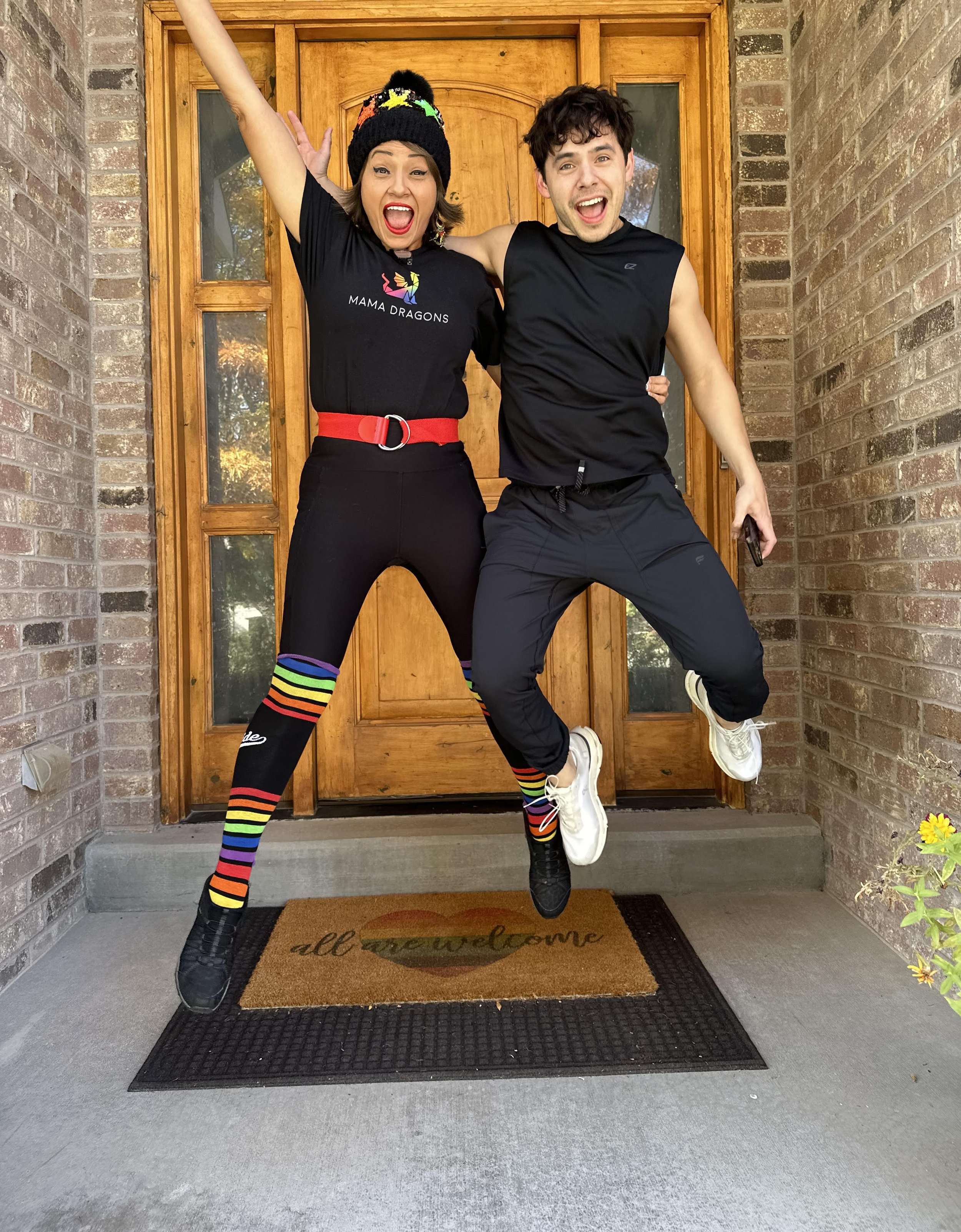
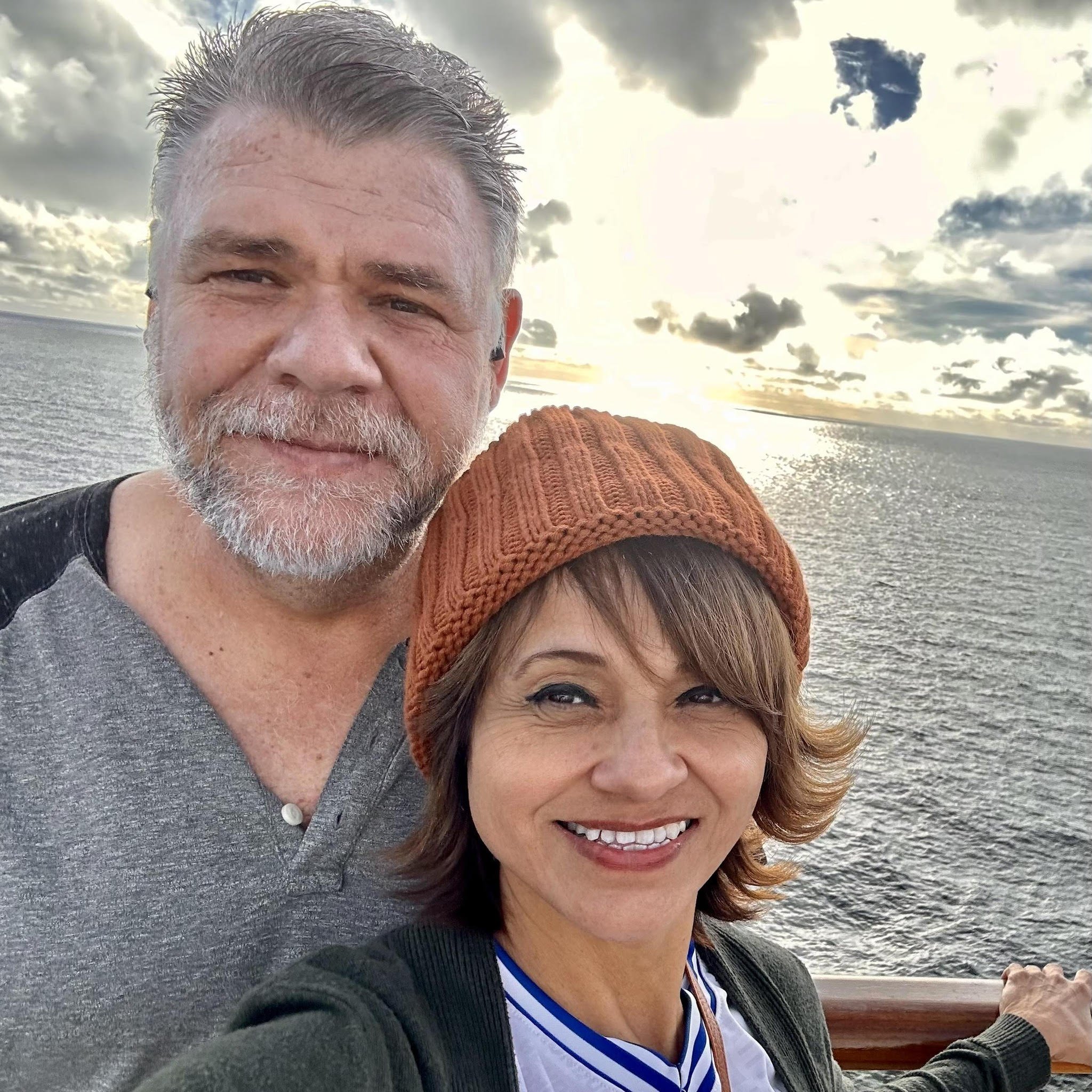

EVIE MECHAM
Emma “Evie” Mecham laughs that she grew up in a one gas station-town, as in, there was nothing else to do besides go to the gas station. In Firth, Idaho, official population of 539, there were no restaurants, no Walmart, just that fuel pump and a couple mechanic shops. “Most of the parents were farmers or teachers. For entertainment, kids mostly just hung out with their friends.” …
Emma “Evie” Mecham laughs that she grew up in a one gas station-town, as in, there was nothing else to do besides go to the gas station. In Firth, Idaho, official population of 539, there were no restaurants, no Walmart, just that fuel pump and a couple mechanic shops. “Most of the parents were farmers or teachers. For entertainment, kids mostly just hung out with their friends.” Though Evie recalls that if she went to her friend’s house, “We’d usually have to help her dad by moving pipe before we could do anything fun.” Students from small neighboring towns melded in to complete Evie’s graduating high school class of 51 students, and her father, a former teacher and librarian, is now the principal of an elementary school of about 250 kids. Yet Evie praises the strong library system and athletic programs of her youth as foundational. She grew up reading, which likely led to her love for writing poetry and other creative writing projects (IG: @theknownpast). When her history teacher begged her to join the varsity soccer team he coached her senior year because they needed a goalie, Evie agreed to do it as long as he didn’t make her run. Holding true to his word, Evie didn’t have to do extra running and says, “We lost every single game, but we had a lot of fun.”
Her home life was somewhat quiet, with her only sibling a brother eight years her senior, so Evie often felt like an only child. He now lives with his wife and four kids about ten minutes away from her parents in Firth. Growing up, it was a joke that Evie was always a lot more like her dad, while her brother was more similar to their mom. Evie loves her family, and says they are always learning how to try to understand each other better, even as Evie has recently come out as gay. In turn, she knows her family loves her and says, “Everything good about me came from my parents.” (Including her nickname “Evie,” a hybrid of her grandmothers’ names Emma and Virginia).
Firth was also a town with a predominant LDS population and conservative mindset—one in which people did not speak of gay people often or with affection. Evie deduces that that, coupled with body image perception and feeling like “not many people pursued me romantically anyway,” led to her putting a pin into coming to terms with her sexual orientation until adulthood. She says, “If you told me I was anything other than straight in high school, I’d have been like, ‘What? I like guys too much.’ And it’s true—but I really like guys as friends--you know, hanging out with guys. But I don’t want to kiss them, or do anything more with them. Romantically, sexually, they’re not my thing.” Since coming out, Evie has found her relationships with her male friends have become more relaxed and fulfilling, simply because the pressure to be anything more than friends has been removed.
Her upbringing also afforded Evie leadership and speaking opportunities in Family Career Community Leaders of America, where she would do Eagle-scout scale projects, one being to design an incentivized reading program for children with the participation of the fire department. “I had a great FCCLA advisor who took this weird little freshman and turned her into a state champ and national runner up.” Evie had always dreamed of attending BYU in Provo, Utah and was accepted—four times, to be exact. She went straight out of high school, but some mental health struggles and other “weird stuff that got in the way of being able to attend” happened, including the pandemic, leading to a start-stop path that required she reapply four times, but, “each time, I got in!” Evie turns 26 in May, and is now “taking it slow” studying psychology at UVU, where she has also loved working in the mental health training clinic for the past two years. She’s also active in her LDS ward, and considers her inherent belief in God and natural faithful mindset a spiritual gift. Evie says, “When I get frustrated with church things, I think ‘Ok, let’s say I left tomorrow, what would I do?’ I’d still be a Christian. I can’t deny God is real; I’ve had experiences with Him. The Church of Jesus Christ of Latter-day Saints makes the most sense logically to me within the framework of God being real… He’s all loving beyond what we know. My least favorite person is probably still going to heaven, and I love that. I have a strong testimony of God’s love.” Being a devout member of the Church of Jesus Christ of Latter-Day Saints is a core part of Evie’s identity.
Evie loves the world religions class she is taking, and says if she weren’t LDS, she might want to study Islam, as she’s fascinated by other devout religious lifestyles. She feels, “It’s beautiful to believe in something, even if it’s not the same thing I believe in. I think it’s a sign of integrity to believe in whatever it is you do and to be earnest on that journey.” Evie is considering becoming a chaplain, as she finds the relationship between religion and psychology to be so powerful. She has appreciated having kind leaders in her faith who have shown her love and support. She’s come out to two separate bishops while in college, one by accident after “the Holy Ghost snitched first,” the bishop concurring he already knew. That bishop then called her to teach Relief Society, where she has also felt impressed upon occasion to share her real experiences. That bishop went on to become her current stake president, and Evie has offered herself as a resource to her new bishop, with the caveat, “I don’t rep all gay people ever, but if you have a question about the queer stuff, let me know, and I’ll try my best to help” Evie is the first to recognize it can be new territory for some.
While in college, Evie started to wonder if she might be asexual. “I would think, if I don’t like guys, maybe I don’t like anyone,” wondering if in her vast love of music, this might be why she had never connected with love songs. But at the end of 2022, she was attending an activity and hanging out with a girl from her ward, and recalls, “It sank over me—this is something different. This is someone who I want to be more than friends with. This is a CRUSH! It rocked my world. I wanted to be with her, and not just in a lusting after her body way, like we try to boil attraction down to. She was so cool and funny. I’d met guys I thought were cool and funny, but this was an attraction.” Evie says it had never clicked mentally before, but now that it did, she didn’t know what to do about it. It took Evie a long time to approach the topic with God, assuming if she prayed about it, she’d hear a response like, “You’re not gay, pull it together, go date men.” It took some time for her to work up the nerve, but one day she allowed herself to read her patriarchal blessing through the lens of being gay. She says, “When I did, it was like holy cow, everything fit into place and made so much sense.” She finally felt ready to pray and asked, “Hey Heavenly Father, did you know I’m gay? I am.” She immediately felt a response: “Of course I knew. I knew before you did.” Evie then describes feeling overwhelming love, and then a sense of, “Ok, now you know we’re on the same page, let’s get to work. Let’s do this thing.” Evie credits this as being one of her biggest catalysts for spiritual growth, because she no longer had to hide anything from God, realizing He knew since even before she was 13 and got her patriarchal blessing. “He knows, and that’s the point—He did this intentionally.”
Recognizing there are a lot of lessons to be learned on her journey, Evie says her path is “sometimes lonely, and sometimes good.” But she believes there is good to come. Since coming out on social media in January, she says she hasn’t had any big negative experiences, “no ‘you’re going to hell’ sliding into my dm’s, no slurs.” But she says the sense of loneliness she feels might partly come from the difficulty of people assuming that once you come out, “it’s going to be all rainbows and then I leave the church… I don’t want it to seem I’m like white knuckling it by trying to stay in a church and posting all the time about it. I don’t think anyone cares or thinks about it a ton, but I do. My religious identity is a huge part of me, and I don’t ever want it to come across as if I’m being fake or dishonest about what I believe in, just because I’m gay.” Evie continues, “I haven’t yet found a community where I feel my devoutness to both church and my gayness are fully embraced and loved and understood the way I would like it to be. I haven’t found a place where both are well-held and balanced yet, except with maybe my therapist.” Evie loves that her LDS therapist has been both faith-affirming while also helping her explore her sexuality in a healthy way.
Regarding relationships, Evie says, “I’d love to explore going on dates with someone I’m attracted to, but I’m taking it one day at a time… I probably need to work more on myself now before I could consider really going on dates. I’m not sure I’d be a great girlfriend right now.” She also expresses that she wishes it didn’t have to be such a big conflict over whether she dates or not. She says, “I wish downloading a dating app wasn’t a huge deal… It’s hard in the church regarding mental health… I don’t know if people understand this is a wrestle every queer member of the church has had to deal with: do I want to live gay or die straight?” Evie says while her mental health in other areas has improved over time, “In relation to the gay stuff, it’s gotten worse.” Upon contemplating the teaching in the temple that it’s not good to be alone, she’s had to consider whether that means friendship or a relationship for her, and “What’s the bigger sin? Dating a woman or killing myself? Thankfully, we don’t view suicide as a terrible, taboo sin anymore, but it’s still obviously not the choice our Heavenly Parents want us to make. I’ve read the church handbook in these sections over and over, and I have thought, if I took my life, I could be buried in my temple clothes, and if I married a woman and passed away peacefully, I couldn’t, which is hard because the temple means a lot to me. It’s a very real wrestle I’m not sure others understand.”
As she considers her own future, Evie often turns to poetry and music to navigate her thoughts. Her favorite “informal love language” is making playlists for people. Evie loves all genres of music (she’s even starting to warm up to country), and is excited about her concert tickets to Hans Zimmer’s upcoming North American tour. A Twenty One Pilots concert is also on the horizon, and always a favorite. As Evie contemplates the heavier questions of her future, she’s reminded, in the words of Twenty One Pilots, “Life has a hopeful undertone.”

AUSTIN PETERSON
Austin Peterson’s Spanish Fork, UT upbringing was one in which he believed what he was taught, and he often faked what he didn’t feel to fit in with the other guys who surrounded him. He convinced himself that the draw he felt toward some of his male peers in middle and high school was presumably because he was envious of them. When friends would ask which of two actresses was worthy of celebrity crush status, Austin would respond, “They’re both fine.”
Austin Peterson’s Spanish Fork, UT upbringing was one in which he believed what he was taught, and he often faked what he didn’t feel to fit in with the other guys who surrounded him. He convinced himself that the draw he felt toward some of his male peers in middle and high school was presumably because he was envious of them. When friends would ask which of two actresses was worthy of celebrity crush status, Austin would respond, “They’re both fine.”
After high school, Austin did all the things expected of him and more. He went on an English-speaking mission to Accra, Ghana, where he also learned various tribal dialects and ASL. Always a top student, he graduated from BYU in linguistics and also studied for a year in Germany. A few years ago, he was on a Terryl Givens kick, reading all of his and Fiona Givens’ books. One day, Austin tuned in to listen to Terryl being interviewed on Charlie Bird and Ben Schilaty’s “Questions from the Closet” podcast. This opened a whole new dimension for him. One podcast turned into a binge fest in which Austin turned up the volume and his inner awareness as he heard the anecdotes of two active LDS, gay men who had experienced many of the same thoughts and feelings Austin had always pushed away. Austin recalls, “Theirs aligned so closely to my experiences, I felt like they were reading them.” But Austin had always believed being gay was a choice, and since he had not “chosen” to be gay, therefore, he couldn’t be.
As time passed, Austin crossed paths with Ben on several occasions as they shared mutual friends. One night they ended up at the same movie night. Ben made a comment about the attractiveness of one of the male actors, and it shook Austin. After stewing awhile, he reached out to Ben, and over lunch on BYU campus, at age 26, Austin came out for the first time ever--to Ben. Shortly after, Ben linked Austin with a friend who was also queer and looking for a place to stay, and Austin’s new roommate became the second person he ever confided in.
Austin recalls, “Gradually, I became more comfortable in my own skin and with queerness in general, and I began to let more people into my life.” He had already built a close friend network of those who would be supportive, and they were. Austin’s younger brother is gay and had been out for about ten years, so Austin found his family to be both comfortable with and supportive of his news. Austin felt a bit more anxious, though, about opening up to his ward, as he had recently been called in by the entire stake presidency and asked to serve as second counselor in the bishopric. At the time of that interview, he did not feel ready yet to share he was gay, but a few months later, when it was his turn to conduct December’s fast and testimony meeting, Austin felt compelled to open up to the ward family he loved all at once rather than in multiple phases. At the podium, he shared how difficult it was for him when some people say “the gospel is not a buffet where you can pick and choose what works for you,” because “being a gay member of the church, some of the doctrines don’t fit with me as a person.” An avid scriptorian who hosted a weekly Genesis study night, Austin continued to share how much he loved the story of Enoch in the Pearl of Great Price in which God weeps and switches the two great commandments to emphasize the need for people to choose to love. Austin concluded his remarks by saying that was his priority and the “one thing I know.”
After that meeting, some complaint calls were made by ward members, with one stating he should no longer be allowed to work with children and youth, and another saying, “I don’t know if I need to talk to the bishop or stake president, but this needs to be fixed.” Luckily, Austin’s entire bishopric were good friends who knew him well and proved fully supportive. The executive secretary, a close friend, conferred with his own kids and the deacon’s quorum with which Austin had served to make sure none of them had a problem with Austin continuing to serve. No one did.
A member of the stake presidency had been on the stand when Austin came out. At the next quarterly stake leadership training meeting, Austin’s Orem stake president took some time to pass along several teachings he had apparently heard at a training with some general authorities that advised that any youth who identified as trans needed to be visited by their bishopric so they could read the Family Proclamation together in their living room. The next month, Austin filled in for the bishop at a meeting with the stake president who again spent 45 minutes belaboring the point that youth identifying as bi or trans should not be believed, and that the statistics of increased mental health risks and suicide rates for LGBTQ+ youth were false. He continued to say youth identifying as trans should not participate in any gender specific activities or the temple unless they were presenting as the sex assigned at birth. His final counsel was that the handbook would clarify anything else, making “difficult things no longer difficult,” and that “no blessing would be denied to those keeping their covenants.” Austin walked away feeling this was pretty heavy counsel to give to those identifying as LGBTQ+.
Shortly after, Austin found himself falling into a depression. For several weeks, he struggled to sleep, focus, or fulfill his work duties as a business analyst. In questioning the source of his emotions, he traced their timing to the training with the stake president. He had loved working with the youth in the church and serving as an advisor capable of planning a night of activities like crab soccer for fun and fellowship while also giving advice about school and how to build healthy connections. Austin weighed how leaving the church would hurt his abilities to make a meaningful impact, but also knew it’d be painful to stay. “It was a balancing act to determine which would hurt more,” he says. “As long as it hurt more to leave, I chose to stay.”
And then, he attended another devotional. Last June, thousands of YSA around the globe tuned in to hear the counsel of President Dallin H. Oaks and his second wife, Kristen Oaks. In the discussion, President Oaks spent the first half praising all things marriage, young marriage, and the happiness that comes through marriage. He then pivoted to direct the second half of his remarks to expressing the need to “love” and “respect” LGBTQ+ people, while using us vs. them language and reading a letter by a young adult woman that Austin felt painfully othered the LGBTQ community in a way in which many likely left feeling the overall message was, “You can only find happiness in marriage, but if you’re gay, it’s not for you.”
Austin had already witnessed the fallout from Elder Jeffrey R. Holland’s “musket talk,” one delivered at a time in which he was still closeted but observed several friends express their hurt and extend comfort to each other. But after President Oaks’ YSA address, in the mental state he was in, Austin decided he just couldn’t do it anymore. It was a difficult choice to leave the church, as he had been looking forward to serving as an FSY counselor again that summer, something he had enjoyed doing the year prior. But Austin considered how as a member of a bishopric, one has to maintain a temple recommend which includes sustaining church leaders. While he was able to rationalize how sustaining can mean wanting the best for a leader or being willing to hear and obey them, Austin decided he was no longer ok with anyone believing he sustains some of the harmful rhetoric that was shared. As his recommend was up for renewal that month, Austin quietly let his bishop know, without getting into too many specifics, that he would need to find a replacement, as much as he had loved serving in his ward.
Austin also requested a meeting with his new stake president just to let him know how damaging his predecessor’s words had been. As Austin had at that time been volunteering behind the scenes fielding the emails for the “Questions from the Closet” podcast for about a year, he was able to share widespread feedback and best practices. The new stake president took notes from their conversation, asked follow-up questions, and proved to be “amazing.” Austin respects how that stake president took a proactive rather than reactive approach to LGBTQ+ issues, preparing himself for what might come so he could be a positive support to future young people like Austin craving spiritual support. A couple weeks later, the stake president honored Austin’s wishes and released him. Austin was wrapping up his final month of conducting and assigning speakers and musical numbers and now jokes that “because I can be dramatic,” he scheduled himself to play the same piano medley he had played at his mission farewell, a medley of “Consider the Lilies” and “God Be with You ‘Til We Meet Again.”
After Austin’s release and stepping away from the church, he still honored the arrangement for the youth to use his apartment’s pool, and he still regularly goes to lunch or dinner with friends from the bishopric. He also still teaches piano lessons on the side to several youth and adult ward members, with whom he has remained friendly. While Austin says he once spent a lot of time in councils trying to dissuade people from leaving or “calling in lost sheep,” he is now more a proponent of the mindset that if people want to leave, it’s good to give them the freedom to do so, knowing their ward will be there for them if they decide to come back.
Anticipating his first Sunday home to be difficult, Austin arranged to go on a long bike ride around town to distract himself. But he was surprised to see that for the first time in months, he didn’t feel angst and he was able to gently move on, just enjoying nature. He also enjoys skiing, pickleball, binging “bad teen dramas like Vampire Diaries, Teen Wolf, and other shows unrealistically cast with 30-year-olds,” and he occasionally gets on Minecraft. At 28, while he’s dated a few guys, he’s mostly just gone on a bunch of first dates and considers himself “single and open.” And now, when asked what advice he’d give his younger self, Austin marvels at the capability some young people have to be open and allow themselves to actually consider their options and choose their own beliefs. He remembers once being shocked to hear someone say he believed gay people should be able to get married in the temple. He thought, “You can believe that? We’re allowed to think outside what we’ve been taught?”
As a youth, Austin had never entertained the mindset the church might not be true. It was a seismic shift for Austin when he finally came to terms with being gay and considering his options to either “do everything the church teaches and die a little each week with no relationship, or die and marry a woman and have offspring for eternity, or be gifted to one of those people as a servant.” He rationalized then that, “If the church was true, I could do the alternative of living by my own values and choosing the life I want, then die and go to the telestial kingdom with the rest of the gays and have a party. For me, with the church’s Plan of Salvation, it still felt better for me to leave than subscribe to it if it was true.” A long-time historian who once considered majoring in ancient studies, Austin is now enjoying this period of open-minded discovery--of studying and respecting others’ beliefs. Of learning to form his own opinions and trust his own path.



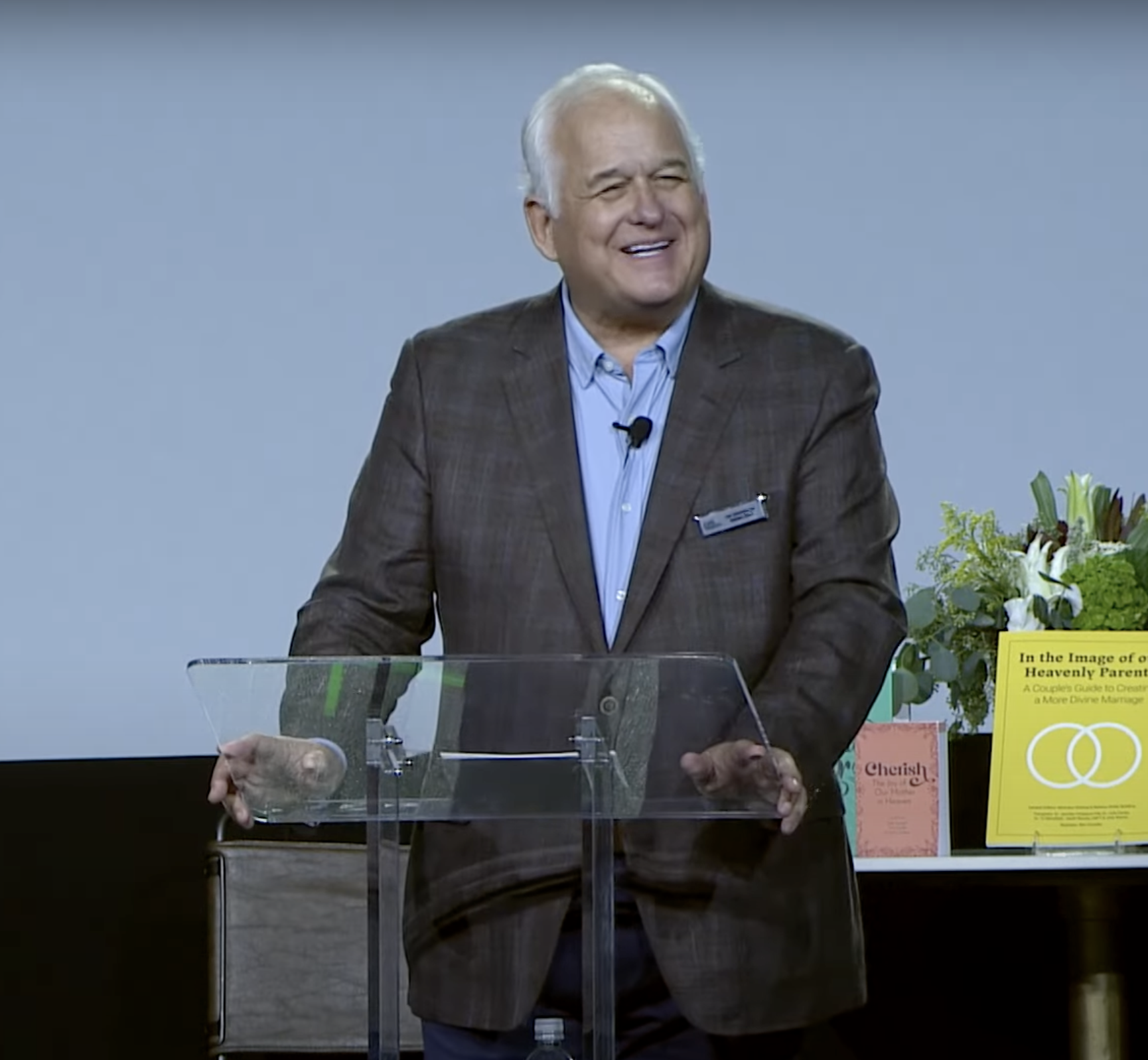
TOM CHRISTOFFERSON
Very much aware of the friction at the LDS-LGBTQ+ intersection, Tom says at least one reason for the Atonement was so Christ could know all the experiences we would have and could succor and be with us in our journeys. In turn, Tom says, “Allowing ourselves to rub against the rough edges of each other is painful, even hurtful, but if we can allow it, the experience can also help us to see the pain of others that drives their behavior. That understanding can, hopefully, be consecrated to greater empathy for those with whom we assume we have little in common. which might build bridges of understanding and unity.” At the same time, Tom recognizes the reality of the experience in his own life, and for others as well, in allowing yourself space or distance as needed from places or situations in order to rebuild strength and peace. Those experiences, too, he feels, can be used by the Lord to teach us how to share the journey, and the wounds, of those around us…
Tom Christofferson deems it a good day if he can take out his bike for a long ride in the Phoenix, Arizona sun, the place he has called home for the past six years. “The older I get, the more I need that dose of sunshine,” he laughs. Tom also enjoys travel, reading, cooking, writing, time with friends and family, and is a great conversation partner when it comes to Oscar-nominated movies and binge-worthy TV shows. He deems it a cinematic success if a film or show keeps you thinking about it two or three days later. (For instance, he found “The Chosen” episode on forgiveness centered on Peter and Matthew to be profound, and the portrayal of Mary and Martha choosing the better part “pitch perfect.”) His viewing repertoire has also contributed to his original nickname for his current ward, “The Schitt’s Creek Ward,” referencing its eclectic mix of people all trying to get along and see the good in each other has become “The Zion Ward of the Phoenix East Stake. Tom’s journey in the church has been as long and circuitous as some of his bike trails, but right now, he says he wholeheartedly belongs to “The Church of Jesus Christ of the Gateway Ward—because it really is a true and living church of people who care for and care about each other.”
This is a ward that notices if Tom misses a week showing up. A place where he teaches Sunday School, and where he appreciates how a variety of opinions can be safely shared and grace freely given when comments might not always land as desired. He says it’s the kind of ward where people send a “missed you today” text and they mean it, a gesture he appreciates. While he credits many friends and family members who help keep his life full, Tom says, “In my life, which can feel lonely at times being here by myself, that makes a difference, and helps when dating is awful and unproductive.”
Stepping back into the dating world has been a more recent choice for Tom, who after having a partner for nearly two decades, had taken a long hiatus from relationships after he decided to get rebaptized and reevaluate what the right path might be for a gay man seeking full church activity. But he has found the current dating world to be one that makes it more difficult to maintain a temple recommend with its requisite “Do you keep the law of chastity?” adherence. Tom says, “The current ethos seems to be that ‘I need to find out if we’re sexually compatible, so I know if it’s worth spending time to get to know you.’ It may be the same for my straight, single friends, too. But that’s the opposite of what I was used to, where that was the icing on the cake, but not the cake. That would come farther down the line for me—after I determine if this is someone who’s heart, mind, and soul I’d want to know deeply.”
While Tom says he’s met a lot of nice guys, “It can get old fast reciting your life story and feeling like you’re auditioning.” He’s given up on the dating apps and prefers to meet someone “in real life. If it happens, it happens.” For now, he acknowledges with feet in two camps, “It can be really uncomfortable to straddle the divide of being gay and dating while also being LDS and active. I want both in my life, though maybe 100% at all times may not be possible. Part of my journey is finding my own path.” Tom, who has enjoyed a long and fulfilling career in institutional investing, laughs that he does indeed have a “shopping list” and is grateful for referrals of potential partners. On his wishlist? Tom would love to find someone who is kind, has a sense of humor, is smart, a good kisser, and is a friend of Jesus, though he has broadened his dating pool to also include some Muslim and Jewish men and respects how they also value religion. Basically, Tom would like to find someone who would welcome praying together as an important part of a deepening relationship.
The decision to wade back into dating is of course always personal, though it’s garnered some chatter in Tom’s world as he is the brother of LDS apostle, Elder D. Todd Christofferson, and famously penned two books with Deseret (That We May Be One: A Gay Mormon’s Perspective on Faith and Family and A Better Heart: The Impact of Christ’s Pure Love). While Tom concurs he owed no one an explanation, before he posted publicly on Facebook a couple years ago about his decision to reenter the dating world, he first consulted with his brothers and some local leaders. The predominate feedback was to take it slow and be cautious. The message he was most grateful to receive was, “The Lord trusts you, and so do I.” From various conversations, Tom appreciated the takeaway that all learning can be consecrated for our good and Tom believes that we should “counsel with the Lord to seek correction as well as direction.” He also loved how one of his local leaders offered, “Tom, you know the temple recommend questions as well as I do. I can’t answer all your questions, though I wish I could. I don’t know how this all turns out, but I love you and care about you, and am here for you whenever you think I can help.”
Similar sentiments once expressed by a New Canaan, Connecticut bishop are what first welcomed Tom back to church after he’d initially stepped away decades earlier. While he first sensed he was “different” around the age of five, Tom didn’t have the language to understand he was gay until age 12. Raised in a faithful LDS home, he followed the common prescribed path in the 1980s and plea bargained with God through prayer, went on a mission, attended BYU, and married a woman in the temple, thinking at some point, these “righteous” actions would surely drive away even the notion of being gay. But when his parents questioned why his very short marriage was being annulled, Tom simply responded, “Well, I guess it’s because I’m gay.” Shortly after, Tom requested to be excommunicated, a more routine practice at the time, feeling he couldn’t reconcile his homosexuality with his membership in the Church. Of that time, Tom says he didn’t leave the church because he didn’t believe in it, but because he couldn’t see any place for him to live his life in it.
Some years later, Tom found a loving partner who was embraced by both his family and that New Canaan ward they both eventually started attending until the church’s actions around Prop 8 caused Tom’s partner to question whether the perceived loving behavior of their LDS friends was genuine. Yet Tom’s parents perfectly modeled how to set a tone of love and inclusion in their home, when his mother gathered Tom’s family members around and said, “I’ve realized that there is no perfect family, but we can be perfect in our love for each other… The most important lesson your kids will learn from the way that our family treats their Uncle Tom is that nothing they can ever do will take them outside the circle of our family’s love.” Tom’s parents continued to honor his partnership, offering them a room upon visits home, and the two joined the rest of the brothers and their wives at many a live General Conference sessions, including the one in which Tom’s brother became an apostle. When the exclusion policy of 2015 was announced, Elder Christofferson expressed to Tom that he would understand if Tom felt a need to distance himself from him, but Tom returned his mother’s unconditional love and said, “You have never distanced yourself from me, and I’m sure it hasn’t always been comfortable for you. I’m not going to back away from you in any way.”
Around 2007, Tom became more involved in the church, choosing to get rebaptized in 2014 with his partner’s support, although this did later contribute to the heartbreaking end of a 19-year relationship. Tom recalls, “He had reason to feel I had chosen the Church over him, and yet he was willing to support my decision despite its cost in his life. I can think of no higher tribute to pay to his selflessness and love.”
Tom also credits his parents as the template of Christlike people who listen to, trust and support their child and keep the lines of communication open. He says, “If I’d felt my parents knew all the answers and would be unhappy until I had come to the exact same answers, I would have felt less inclined to counsel with them… The way is to act and not be acted upon. My parents were always loving, engaged, and full of grace, like our Heavenly Parents—which we feel whenever we’re willing to turn to them.”
Very much aware of the friction at the LDS-LGBTQ+ intersection, Tom says at least one reason for the Atonement was so Christ could know all the experiences we would have and could succor and be with us in our journeys. In turn, Tom says, “Allowing ourselves to rub against the rough edges of each other is painful, even hurtful, but if we can allow it, the experience can also help us to see the pain of others that drives their behavior. That understanding can, hopefully, be consecrated to greater empathy for those with whom we assume we have little in common. which might build bridges of understanding and unity.” At the same time, Tom recognizes the reality of the experience in his own life, and for others as well, in allowing yourself space or distance as needed from places or situations in order to rebuild strength and peace. Those experiences, too, he feels, can be used by the Lord to teach us how to share the journey, and the wounds, of those around us.
When it was proposed by a friend that he apply for the VP of Inclusion role at BYU several years back—a university whose students he loves but grounds he can’t help but feel uncomfortable on after the dissonance he experienced as a student there in the 80’s, Tom thought “Not me, it should be someone with a deep love of the institution.” Yet, Tom says he can still appreciate the work being done there as an institution of higher learning, and tries to lend his voice when he can, if it might be helpful. After the “musket fire” talk given at BYU in 2021, Tom joined Patrick Mason on a powerful Faith Matters podcast to express why some of the words shared were so painful for so many in his community. While Tom has long loved and deeply admires the speaker of that message as one with “a magnificent heart and mind who has worn out his life serving the Lord,” he is quick to wish the speech could be allowed to recede into history. Tom says, “I hope we all can keep focusing on ways to frame our desire for unity in a way that engages everyone, which I think was the ultimate intent of that address.”
Tom is the first to recognize his path is not a prescription for anyone else’s, and never wants to impose the direction he’s feeling as the right way for anyone else. He is cautious about certainty, and careful to acknowledge his belief that personal revelation is “what God says to me at this time about my life,” and carefully adheres to his own three rules for inspiration: 1) Don’t tell the Lord what He must say, 2) Don’t tell the Lord what He can’t say, and 3) Keep to myself about what He does say. “My prayer is always that the Lord will help me to have a mind and heart ready to accept anything he’s going to say. As the body of Christ, we can all approach it that way, seeking more light and knowledge, but I’m not the one to tell Him how to do it.” Tom says, “This ‘I’m not finished yet’ is not just a statement about this life; I suspect it’s eternal.” Tom loves Holy Week and the chance to think about the events that took place each day. He says, “When I consider the triumphal entry a week later followed by the crucifixion and resurrection, there are peaks and valleys in my life, too, and I love that feeling of connection to Him. I know I don’t understand all He’s trying to teach me. But I love Easter and the new beginnings we get every Sunday with the Sacrament, and every morning with prayer.” Tom expresses gratitude for those who allow his journey to continue, never assuming the story is finished. “That’s what makes life interesting. We’re not static and never finished, and that is what gives me the greatest hope for eternal progression. I can’t imagine we would ever want to stop growing.”
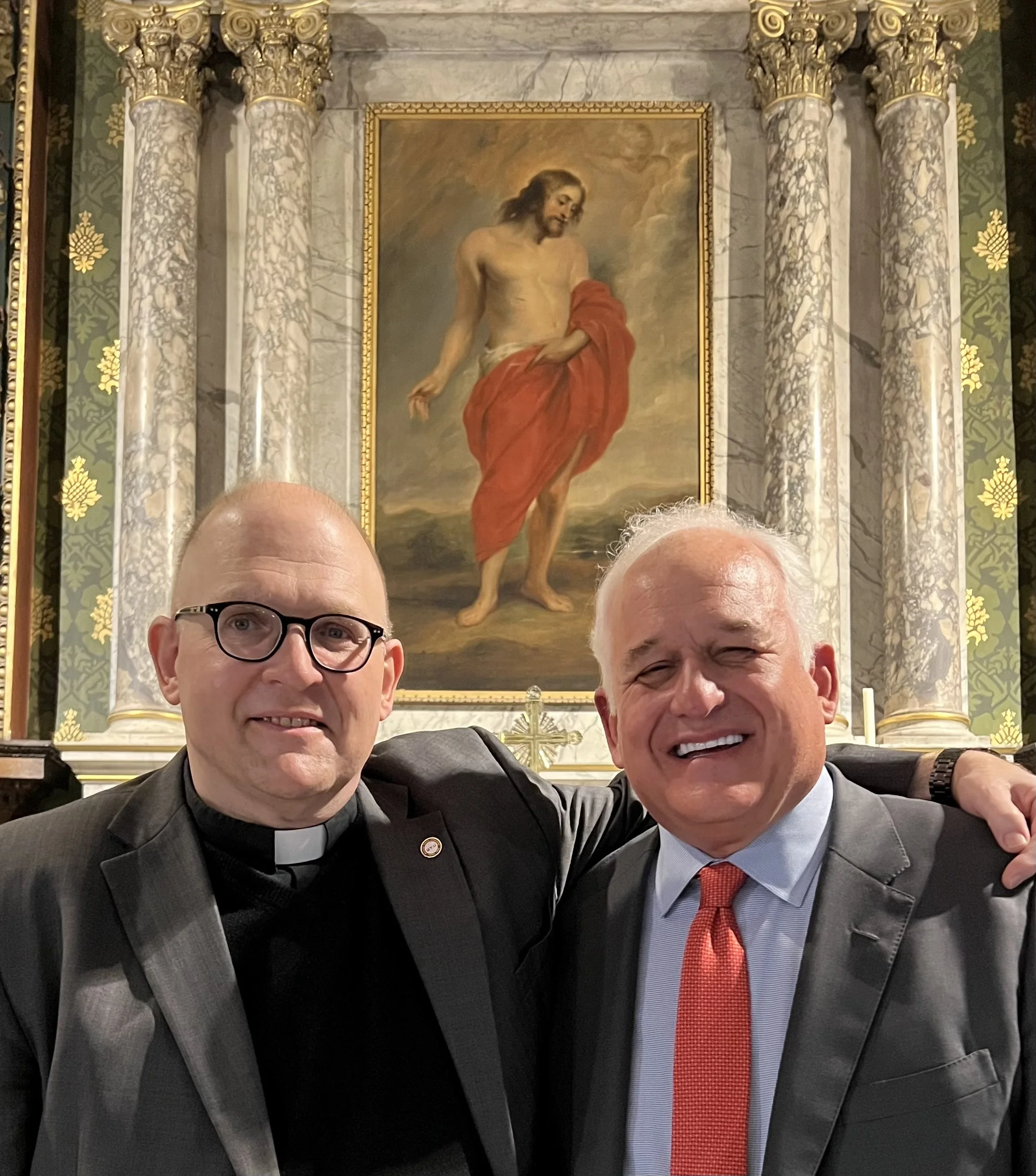
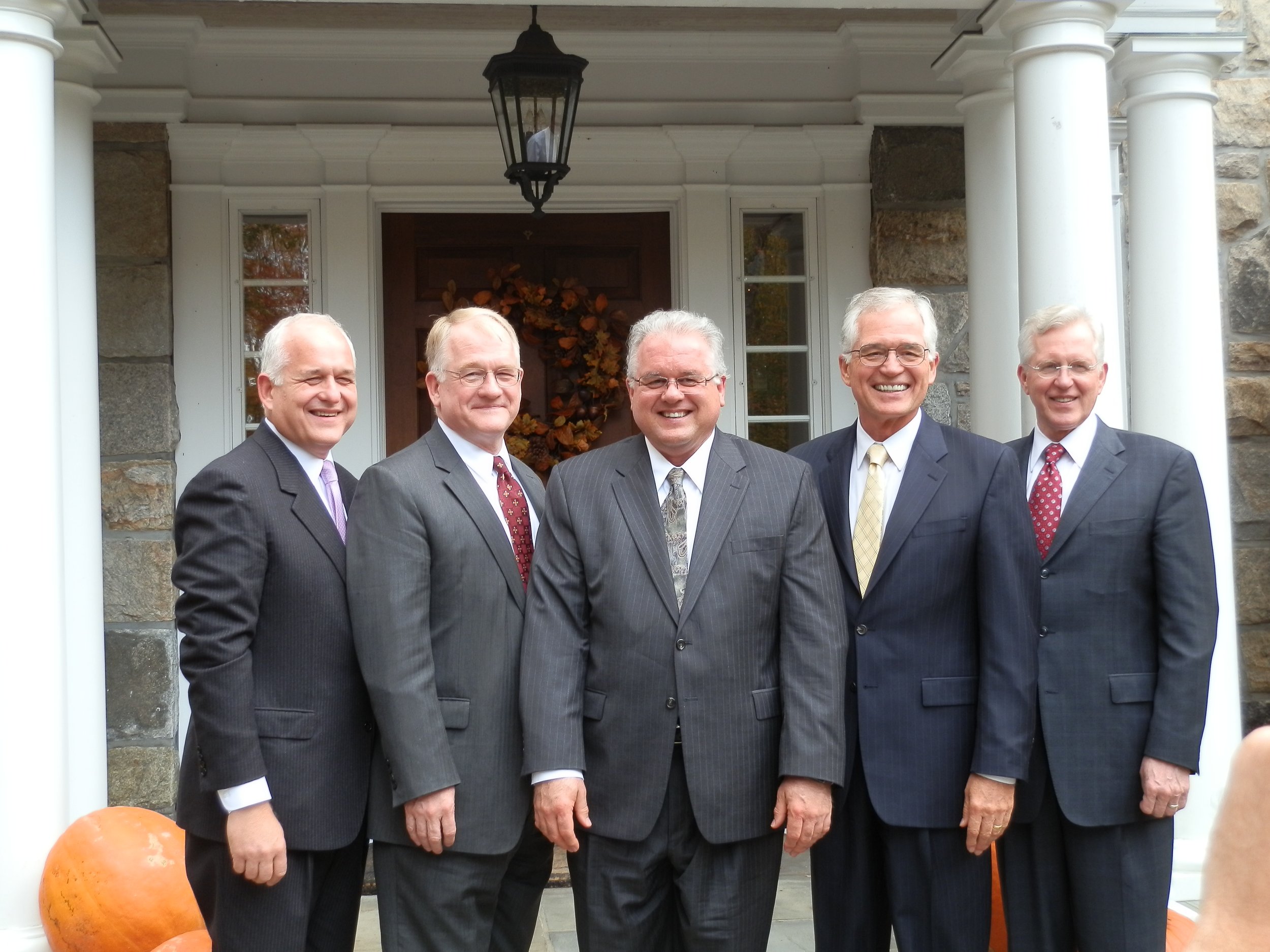
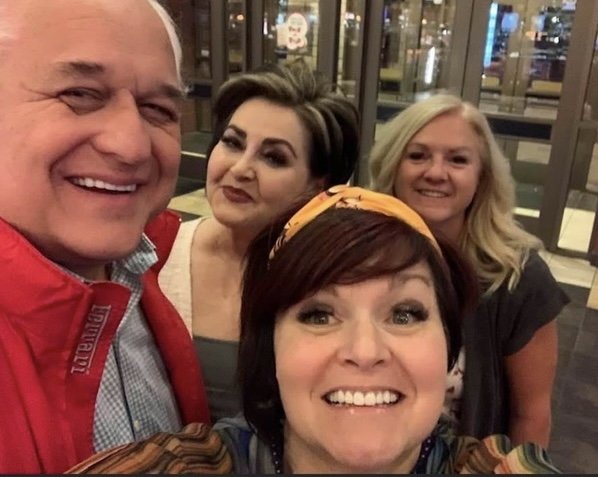
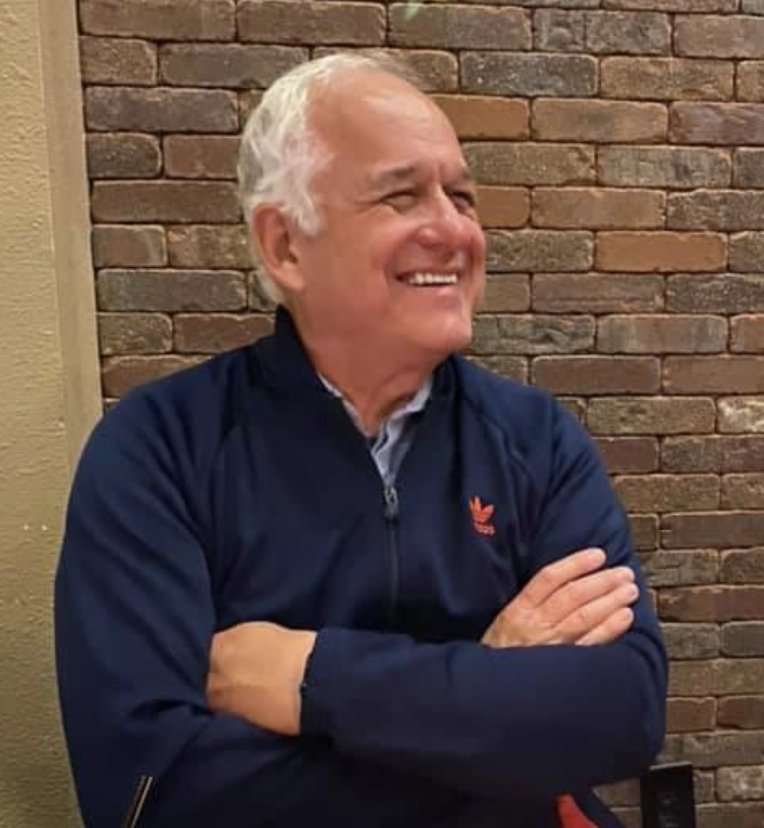
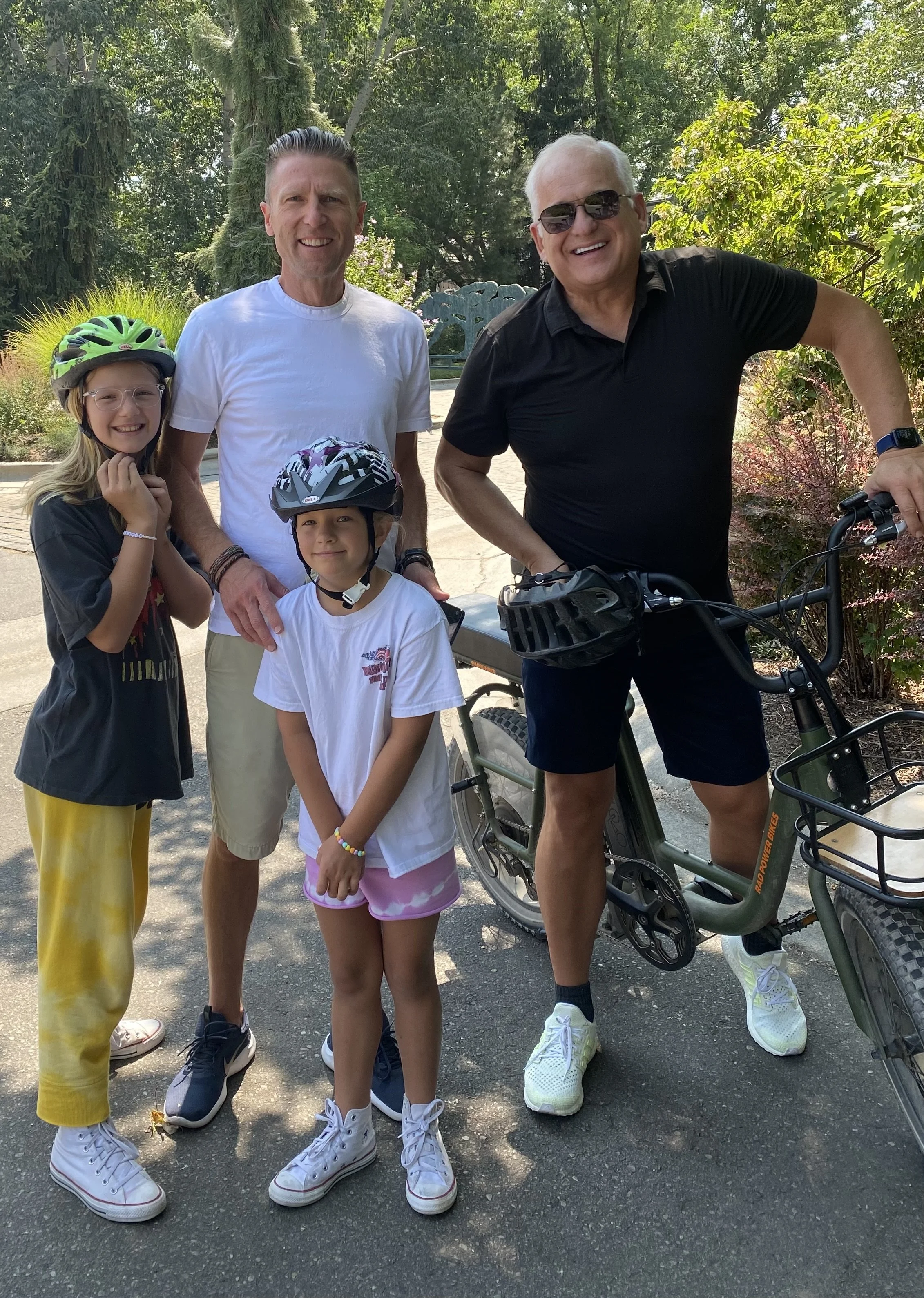

JAMEE MITCHELL
Several years ago, Jamee Mitchell stumbled upon the wedding video from her first marriage. Someone watching the video told her that, “Your body language clearly indicates that you didn’t want to be there.” And most would agree, Jamee looked quite different back then. Jamee was raised and known for most of her life as James, the son of an active LDS family with deep pioneer roots in Bountiful, Utah. From her earliest memory, Jamee felt different, but didn’t have the vocabulary to define the way she felt. Her family was amused that she played dress-up and loved pink until these things were no longer considered age-appropriate. Her parents took her to a church therapist at age 11 where she was told that if she would serve God faithfully, that “it would all work out.” …
**CONTENT WARNING: suicide attempt / suicide ideation**
Several years ago, Jamee Mitchell stumbled upon the wedding video from her first marriage. Someone watching the video told her that, “Your body language clearly indicates that you didn’t want to be there.” And most would agree, Jamee looked quite different back then. Jamee was raised and known for most of her life as James, the son of an active LDS family with deep pioneer roots in Bountiful, Utah. From her earliest memory, Jamee felt different, but didn’t have the vocabulary to define the way she felt. Her family was amused that she played dress-up and loved pink until these things were no longer considered age-appropriate. Her parents took her to a church therapist at age 11 where she was told that if she would serve God faithfully, that “it would all work out.”
Despite her misgivings, Jamee worked hard to do everything right and was eventually called to serve a mission to the Philippines. The mission was her first exposure to a culture that experienced gender differently—in the Tagalog language, there are very few gender pronouns. People have a child, not a daughter or a son. People have a spouse, not a husband or a wife. Jamee says, “I loved their beautiful language and how reflective it is of the culture.” While Jamee had no experience in accounting, her mission president called her as mission financial secretary, a rare assignment for a young elder. But this is where Jamee learned the accounting skills that would become her trade as an enrolled agent who now owns her own accounting firm, The Tax Company, in St. George, Utah.
After returning from her mission, Jamee continued her education in accounting. She mostly avoided dating but enjoyed attending institute activities. It was at one such activity that she met a kind but strong-willed girl who seemed determined to get married. That girl later wrote about the experience, “James seemed like the happiest and most carefree person I’d ever met. I wanted to find a way to date him. He had everything I was looking for!”
When the topic of marriage came up a few short weeks later, Jamee succumbed to societal pressures. She regrets not telling her first wife about her gender dysphoria until about a month after their wedding, thinking those feelings would go away. That announcement was understandably difficult, but they decided to stay together and try to work things out. Jamee finished school and they moved to St George, Utah where they began couple’s therapy. When that didn’t help, Jamee decided to throw herself into a life of work, church, and community service, and ignore the feelings she’d been experiencing all her life. Jamee served in the church, became a delegate for the Republican party, president of their HOA, and started her own business.
Living in St. George, the marathon was in Jamee’s backyard, and she had a visceral reaction her first time watching a friend cross the finish line. Jamee poured her sorrow into the distraction of running race after race, which over the years included close to 60 marathons, several ultra-marathons and even a full Ironman triathlon. One year, Jamee took on the challenge to run all six Utah marathons in the same year. A few years later, she did the St. George Marathon twice in one day, running from the finish line to the start and back again. She says, “I would run until the physical pain outweighed the emotional pain.” Her spouse hated the runs, and Jamee admits she neglected her spousal and parenting duties as running became her drug.
This led to a marital separation in 2010 which was kept secret from everyone, including the kids. In an effort to save the marriage, Jamee enrolled herself into conversion therapy which “was horrible.” And it didn’t work, to which Jamee adds, “The success rate is negligible, if at all.” Jamee had always been a fun-loving person, but the impossible challenge of changing an unchangeable part of herself led to her wanting to take her own life.
On one occasion she pulled her car into the garage and closed the door with the engine still on. While waiting for the end to come, she got a voice message from a friend who said, “I’m not sure why I’m calling you, but I feel inspired to let you know that you are a special person and that I care about you.” Jamee says, “To this day, I don’t think he knows that he literally saved my life.”
After that experience, Jamee received a priesthood blessing from her stake president. The takeaway was that the sin was not in being trans, but in harboring shame. Jamee felt the impression that, “You didn’t do anything wrong by being trans, but what you did wrong was to hide your struggle. Stop fighting it.” Shortly thereafter, Jamee’s first marriage dissolved in a bitter divorce. With four kids including three teenage boys still living at home, Jamee did not want to transition while the kids were still in high school. Instead, she got involved with North Star, where she was able to be more able to be herself and focus on her children without transitioning.
All of that changed in 2016 when Jamee was training for the Wasatch 100-mile endurance run. She dislocated her hip and just like that, her coping mechanism was gone. Within a year she made the decision to start hormone replacement therapy (HRT). The changes were gradual, and Jamee began presenting more and more as female.
Jamee’s legal name change came about once it became awkward to go to the doctor or bank and people questioned her ID. Once, she got pulled over by a police officer who looked at her driver’s license and said, “I take it you don’t go by James anymore?” Originally, Jamee had chosen a different female name for herself but as she started presenting as female, her friends just naturally started calling her Jamee. The unusual spelling is Jamee’s way of honoring her mother who was always proud of her firstborn’s given name. By keeping as much of the original name as possible, it gave homage to her parents. When Jamee was younger, she was never close with her mother, but now she says they’ve become remarkably close. Her dad still struggles, as do her brothers. At their last family gathering, Jamee was able to forge a bond by talking about cars with her brothers, who softened a little. Jamee reasons that, “It took me over 40 years to accept myself. If it takes 40 years for them, I need to give them that grace.”
Jamee remains very close with her best friend and sister, Jenny, who she once played dress up with, donning their grandma Arlene’s dresses as young children. Jamee loved her grandmother and later took her name as her middle name (instead of keeping her grandfather’s), feeling Arlene would have affirmed her and loved that honor. When Jamee turned seven or eight, she was told she could no longer dress up and do fashion shows in her grandmother’s closet. She didn’t understand why. Over this last Christmas break, Jamee teased Jenny for not having picked up on her gender dysphoria back in high school, saying, “How could you not have known? I worked at a formal-wear shop, had big curly hair, and was so effeminate.” After Jamee’s Grandma Arlene died, her jewelry was divvied out to her granddaughters, but being pre-transition, Jamee didn’t receive any. Once Jamee came out, Jenny brought over a care package for Jamee with some of Arlene’s jewelry as a gift, which Jamee says meant the world to her.
Three of Jamee’s four children still do not affirm or talk to her, but one is supportive. Her 26-year-old son who has autism lives with Jamee, identifies as gay, and is dating a trans man and is best friends with a trans woman. As this friend struggles to afford affirming care, Jamee says she uses her privilege (having had the funds to pay for medical procedures and the ability to change her name and gender markers on her birth certificate) to help people newer and less supported in their journeys.
A few years back, Jamee reconnected with a friend from high school named Susan Tolman. Susan showed interest in dating. It broke Jamee’s heart to have to tell her that she was trans and wasn’t attracted to girls. Jamee cried for about an hour over the second round of lost love until, to her credit, Susan said, “I don’t love the outside, I love the inside.” Shortly afterward, Jamee went to lunch with a friend who is the parent of a trans child and explained to Jamee she was likely pansexual, saying, “You love hearts, not parts.” Jamee now concludes, “If you have to put a label on me, that’s probably it.” While neither Jamee or Susan identify as gay (both say they’ll turn heads at an attractive man), Jamee says Susan is her best friend and they both realized “certain things are just better when you’re married.” At their wedding on 4/20/2020, Jamee says she “let Susan be the bride” as she had never been married before. Jamee presented as male at the ceremony but wore a black dress in some of their photos. The two love to laugh and have fun together. When Susan frets over her looks, Jamee jokes, “As long as you’re with me, honey, no one’s going to be looking at you!”
After spending decades building her tax business in St. George, Jamee feared she might lose clients after transitioning, but was pleasantly surprised when only four out of thousands of clients left. Her whole office staff still supports her as senior partner. She laughs, “I’m the girl boss, and I know this because no one listens to me.” Jamee does work hard to make her voice heard in her board role with Pride of Southern Utah. As a still active member of the LDS church, she acknowledges her presence as a trans woman makes some members feel uncomfortable at church; and her involvement in church makes some members of the PRIDE community challenge her loyalty. Jamee says she is an equal opportunity offender and that’s how she knows she is on the right path. Her relationship with the church is much like being presented with a form asking if you’re married or single. Her best answer: “It’s complicated.”
As someone who has served in bishoprics and stake presidencies, Jamee believes there is much room for change in the church—though it may take decades. To the “haters on the right and left who say, ‘God doesn’t change,’ I ask if they’ve ever heard of baptism for the healing of the sick?” (An ordinance that was performed in temples until around 1922, in which sick members were dunked in the baptismal font until the church learned about the sharing of germs and discontinued the process.) “To say the church will never accept gay or trans members--I can’t rule that out.”
Jamee recognizes the need to “be patient with others’ reactions and beliefs as we recognize experiences don’t have to be wrong or bad, just because they’re different from our own. Why do we have to have a mold? How shameful is it that there is a mold in the first place? Can we not have diversity? God made lots of different colors and types of people. Why are we trying so hard to homogenize?”
Recently, Jamee was a guest on the podcast of St. George’s ultra conservative city council member, Michelle Tanner, and both were surprised by the amount of backlash they each received from both sides for talking with someone with such different views. One of their interchanges included Michelle saying she doesn’t think people should have to honor trans individual’s preferred pronouns, to which Jamee replied, “Yeah, I could go around and call you Jerk Tanner but that would be rude, and I wouldn’t do that.” After the podcast aired, Jamee got comments from people on the far left accusing her of “being in bed with the enemy,” and notes that often, it is the allies and not LGBTQ+ people themselves who offer the harshest criticism. There were also comments from the far right calling her to “repent and turn from sin.” Much of the podcast episode was centered on Jamee and Michelle’s attempts to explain their respective sides, which was the goal of the episode and Jamee’s mission to try to listen better. Jamee appreciated when a prominent Utah politician assured her that “If you’re getting hate from both the left and the right, you’re probably on the right course.” Jamee says she’s strong enough to enter the fray, but there are many who aren’t, and she tries to do the outspoken work for them as much as possible, saying, “I’ve received so much grace—from my family, colleagues, coworkers.”
One of Jamee’s closest friends and first allies was her secretary. “She pierced my ears after I came out,” Jamee gushes. Recently the two were talking about the phrase, “Be careful who you hate; it might be someone you love.” Jamee says they deduced, “Hate can be an unreliable weapon. It cannot be easily aimed. It can go all ‘Elmer Fudd’ on you real fast and you can end up blackening the face of someone you love and care about. Put that weapon away; never let it see the light of day.”


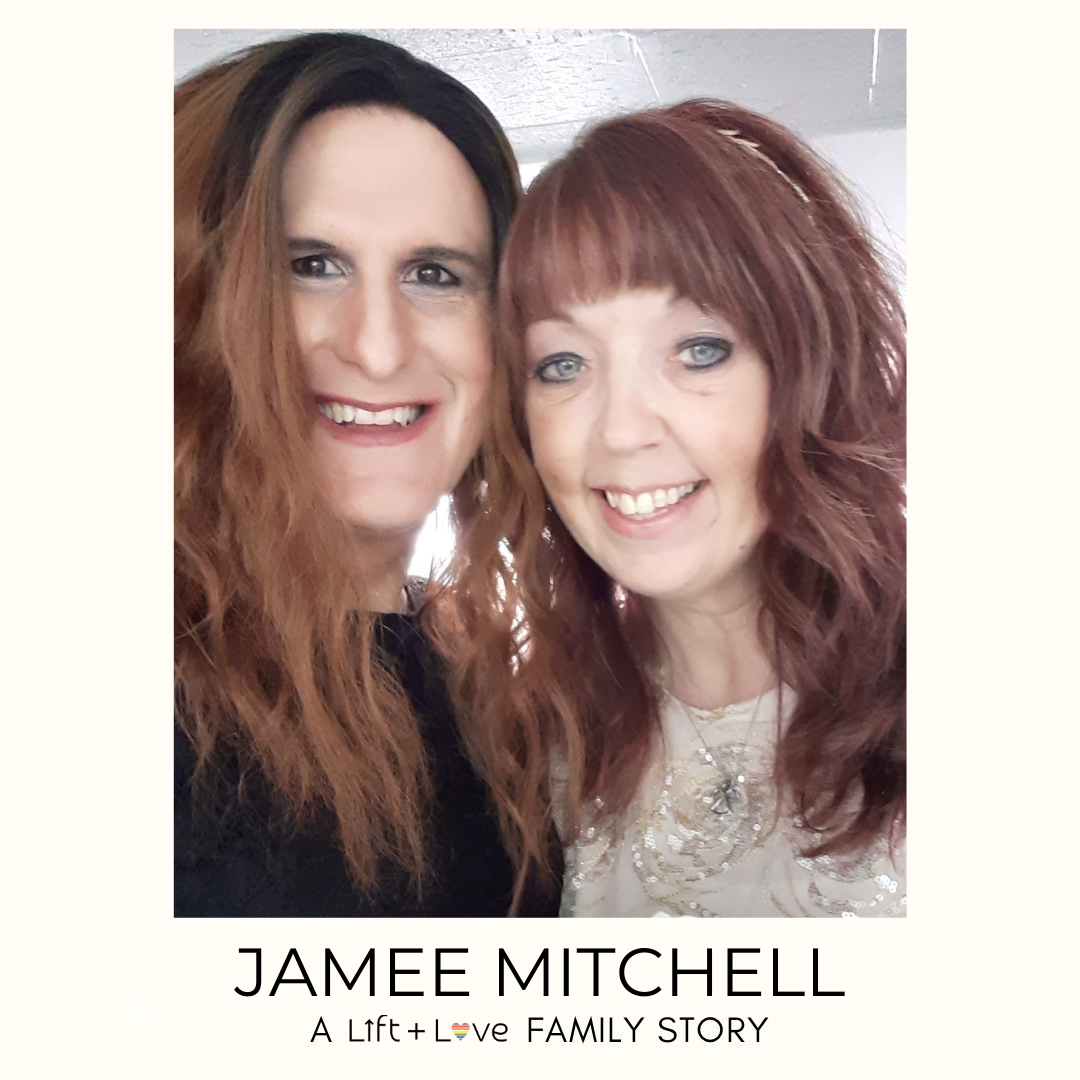


THE WRIGHT FAMILY
For the Wright family of St. George, Utah, last year was a magical time of dancing and dining amidst twinkling lights with two family weddings…
For the Wright family of St. George, Utah, last year was a magical time of dancing and dining amidst twinkling lights with two family weddings. On September 8, Jancee and Jeff Wright’s oldest daughter, Tylee, married her favorite cowboy, Nate, under the stars on a friend’s ranch in Arizona with a backdrop of vermillion mountains. Nate wore his cowboy hat, there was lots of line dancing and a couple’s first dance to Chris Ledoux’s “Look at You, Girl,” and loads of laughter when, after Tylee’s grandfather pronounced them husband and wife and Nate leaned in for a kiss, he tripped on Tylee’s veil and “it looked like Nate was riding a bull,” laughs Jancee, as the couple fell down together, Nate’s hat dramatically landing in Jeff’s lap in the front row. The candy bar the couple requested at the reception was emblematic of “their sweet hearts and light-hearted personalities,“ says Jancee, who still glows when talking about it.
A few months later, on December 30, many of the same partygoers donned black tie and traveled to Sandy, UT for the nuptials of the Wright’s oldest son, Jayden, to his fiancé, Connor, at Le Jardin greenhouse. The lush green plants alit in white lights, Connor’s dad married the couple in a “classy, beautiful and perfect” ceremony, before a crowd of 500 joined in at the reception to toast the couple with bottles of Martinelli’s placed on the tables. Guests also enjoyed snacking on the grooms’ favorites: Chic-fil-a nuggets, cinnamon rolls, chips, and a soda and lemonade bar. The youngest of five kids who are all married with kids of their own, Connor’s locally-based family also turned up in masses, and the room was full of well-dressed partygoers offering their exuberant love and support. Jayden’s newlywed sister, Tylee, produced their wedding video, and Jayden and Connor’s wedding photos were taken in the mountains, their dark, dapper suits a contrast to the white fallen snow.
“There was so much love at both weddings. And I felt the Savior smack dab in the middle of it all,“ says Jancee of her kids’ unions. (cont’d in comments)
She planned and partied and posted about each wedding the exact same way, and loved how “there were the exact same feelings of joy and support and each event.” She was especially touched by the turnout to Jayden’s event by their lifelong friends, relatives, and church leaders--including bishops, stake presidents and a temple president. It was important to the families that all could attend and witness the legal pronouncement and exchange of rings and vows at each event, so the families elected for civil ceremonies, and Nate and Tylee chose to get sealed in the temple the day after their civil ceremony. While Jayden and Connor are both returned missionaries who still attend church in an LDS ward that largely supports them, this is not an option provided to them.
Jayden and Connor met on a dating app and talked for four months before meeting face-to face. After so many weeks of FaceTime after work, by the time they said hello in person, they hit it off immediately. Jancee says, “I feel like they’re the same person; they're so compatible in their goals and beliefs. I love Connor so much, it makes me tear up. He’s such a good guy.” As the youngest in his family, Connor came out to his older sister-in-law first, knowing as a practicing therapist she’d likely be supportive. She was, and encouraged him to come out to his parents and siblings who were all active in the LDS church, with his father having served as a bishop. Connor was a 14-year-old ninth grader at the time and Jancee credits his family’s support and his own inherent sense of worth as lending to Connor’s sense of confidence at such a young age. “He knows he’s a son of God, he loves himself, and I love this because it doesn't matter what anyone else says or thinks--he knows who he is.”
Connor is now working to get his master’s to become an MFT, so he can help clients who are members of the LDS faith also navigate coming out. Currently, he works with CPS in Ogden, helping with difficult situations of emergency child and foster placement.
After graduating from Southern Utah University with his bachelor's degree, Jayden took a job working in administration for a national surgical company in Ogden, to be closer to Connor. Together, the two love to travel, and have the budding photo wall to prove it. They got engaged in New York City, where they proposed to each other, and just returned from a trip to Fiji with Connor’s family in November. “Connor is very adventurous, which has been exactly what Jayden loves,” says Jancee. “They have many great adventures planned.”
The revelation of Jayden’s orientation leaked back in high school, in an interchange Jancee now regrets, due to her initial reaction. Jayden was a multi-talented high school senior at the time- a triple threat with his acting, singing, and skills on the piano. He was a lead character in the school production of Aida, and happened to be the only child home one night with his mom when Jancee received a text in a thread that she was mistakenly included in. One of Jayden’s friends texted, “I’m gay.” Jayden responded, “I think I’m gay, too.” Jancee’s stomach dropped reading the words. In shock, she charged toward Jayden’s room, shaking, and showed him the message. “You are not gay, this is crazy! Why are you guys saying this?” she exclaimed, allowing fear to drive her emotions. They both started sobbing. Jancee recalls Jayden was vague and he followed her lead, denying his truth. He agreed to talk to his bishop about it, (even though he had not acted on it or done anything considered wrong), Jancee confirmed that was a good idea, and never brought it up again, even to her husband.
Shortly after, Jayden attended a year of college, then left for a two-year mission to Milan, Italy. He loved this experience and served honorably and returned ready for the next stage of life. A month after his mission homecoming, he came to his mom seeking guidance and had her connect him with a life coach from her professional peer group (Jancee is an organizational life coach expert).
Contrary to Jayden’s expectations that serving a mission would “make this go away,” the coach encouraged Jayden to acknowledge what he’d been hiding and fighting--it was perhaps time for him to accept it in order to progress.
Soon after, Jayden called his parents and asked if they could have the house to themselves one night because he needed to tell them something important. Jancee says the spirit told her, “He’s going to tell you he is gay.” She called Jeff, a physician assistant, at work and shared this prompting and asked him to prepare for the moment. Jeff agreed and comforted Jancee, who was in shock. But this time, as she approached her prayer bench in her closet, she also felt a calm peace--a much different emotion than she had the night of the misdirected text many years ago. Honoring Jayden’s wishes, Jancee canceled a house guest they’d agreed to host and made sure Jayden’s two sisters and brother wouldn’t be home--unaware Jayden had already told all of them his news.
Jayden arrived and came into his parents’ room. He had prepared for this, and first wanted to share a song with them, Matthew West’s “ Truth Be Told.” Then he fell apart crying. He couldn’t say it. Jancee approached her then 22-year-old son, buckled over on the ground, and put her arm around him and said, “Jayden, I know what you’re going to say and it’s okay to say it.” Jayden whispered back, “I’m gay.” Jeff also met their son on the ground in an emotional embrace. Jancee recalls, “The spirit was so strong. It was a really beautiful moment and all we felt was love. Such a different feeling from that first time which was based completely off of fear.”
Any perceived notions she’d ever had of orientation being a choice or something one could change were gone. Jancee says, “I trusted him. I believed him. And I changed in the blink of an eye.” Jeff also supported his son, though it was a growth journey for all. Both parents were broken-hearted when Jayden told them that he had worried when he was younger, they would kick him out if he told them about this part of him–something they could never imagine doing.
During the first year after finding out, Jancee also sought support of her own. While scrolling through a list of 300 potential life coaches, she landed on the name “Jenie Hunter,” not knowing Jenie’s own son was gay and that she was involved in Lift & Love. Jancee credits such moments as miracles: “God knew I needed Jenie. God loves Jayden, me, Connor and our families. God is just good, and has been present every step of the way.”
People now frequently ask Jancee how she can stay in the church and support her gay son, to which she replies, “I’ve come to a place where I just recognize the Savior in this whole journey; I’ve written down countless miracles that have happened. The Savior is not behind me, or in front of me, but smack in the middle with me. I’ve seen Him everywhere. As I’ve held onto that and let Him guide me and felt His spirit in this, I want to create a safe space for others coming behind me.” Jancee now gets a call from a worried mom almost weekly, especially since Jayden has gotten married, and she loves providing that safe, comforting place. She wears a rainbow ring and makes herself available to leaders seeking to understand their journey. She says, “I know church doesn’t work for everyone; there is so much hurt and pain and you have to choose what serves you best. If you stay or leave we all have our own journey. For me, I choose to stay, but I also know I have a great responsibility to be a voice and a safe place for those coming behind me. I have been able to come to this place only through my Savior, Jesus Christ.”
When Jayden and Connor even more frequently get asked why they still attend sacrament meetings in an Ogden ward where they’ve now bought a home, they say, “It’s because of the Savior. That’s why we attend each week.” Jancee says, “It’s hard, but that’s been their journey.” When people ask Jancee if her two married children’s unions look or feel any different, Jancee replies, “I’ve loved my kids' spouses long before I knew who they were.
I decided a long time ago that it didn’t matter who they were, I already loved who they would choose. I trust my kids--this has been a beautiful gift and blessing in my life to decide this long before it happened.”
Jancee’s scriptural lifeline has been Proverbs 3:5-6, and she recalls many years being on her knees in her closet asking how to navigate her family path with the church, and reflecting on the words: “Trust in the Lord and lean not unto thine own understanding.” Jancee says, “There’s a reason God keeps making children come to earth who are gay. I don’t know why, but God does-- I just get to trust Him. It’s just who they are, and my only job is to Love BIG!”


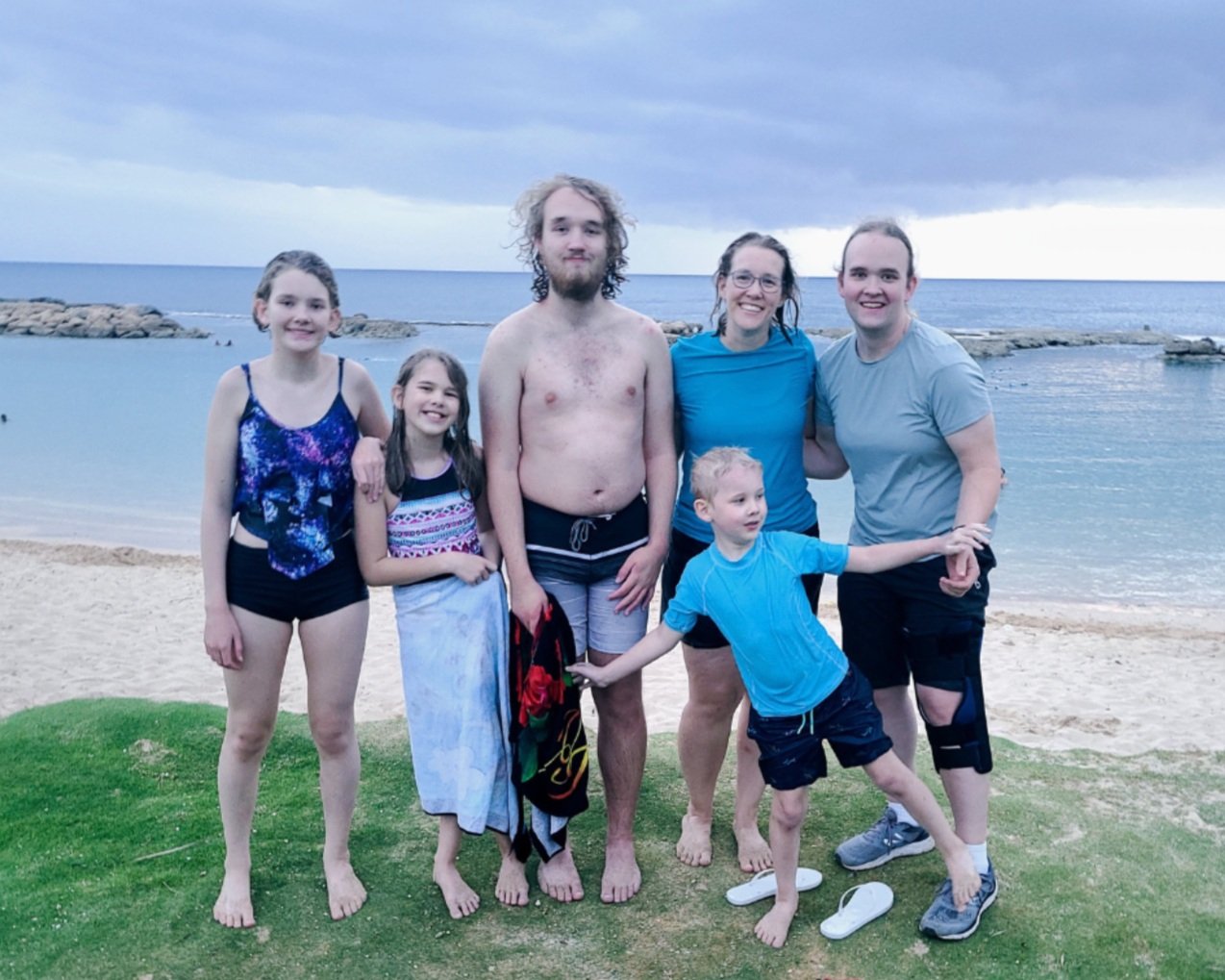
THE COONS FAMILY
Achievement and distraction. These were the coping techniques that have proved both useful and life-saving for Dr. Kristine Coons, who has struggled with gender dysphoria for as long as she can remember. Now happily married to her wife of 20 years, and working as an internal medicine physician at a hospital among supportive coworkers, Kristine has found her stride…
Achievement and distraction. These were the coping techniques that have proved both useful and life-saving for Dr. Kristine Coons, who has struggled with gender dysphoria for as long as she can remember. Now happily married to her wife of 20 years, and working as an internal medicine physician at a hospital among supportive coworkers, Kristine has found her stride.
Growing up in western Washington in the ‘80s as a middle child of five was especially complicated for Kristine. An older brother had contracted HIV from a bad blood transfusion, and as it was the height of the AIDS crisis, Kristine’s parents frequently moved jobs and homes to get their son the care he needed while trying to give all their kids enough fresh starts in new schools that they could overcome the stigma of being “the family of the kid with AIDS.” Kristine, who with Laura is now a parent of four kids ages 18 to 8 (Ben, Rachel Lizzy and Alex), marvels at all her parents endured.
As a young child, Kristine sensed her parents didn’t need one more thing to worry about, so she tried to lay low and battle her gender dysphoria alone. But every day, she experienced an intense quandary of wondering why she felt like she was a girl in a boy’s body. She says it felt “like a pressure cooker in which you’d stuff your emotions, lock them in place, and watch as the steam built to the point you felt like exploding.” Not wanting to cause trouble, she worked really hard in school while also striving to minimize the static coursing through the headphones of negative self-talk she endured. Sometimes the static is louder than others, sometimes softer, but Kristine says, “Never being able to take off those headphones with the constant noise drains you. It’s absolutely exhausting.”
Kristine’s hard work in school paid off, and she went on to a semester at BYU Provo where she met her future wife, Laura, before leaving for her mission to Phoenix, Arizona. While serving, she and Laura faithfully wrote to each other; the two married shortly after Kristine returned. Of their marriage, Kristine says, “Laura’s amazing, we are head over heels for each other. I love my wife.” As a newlywed, Kristine quietly negotiated her dysphoria, rationalizing something might fix it or make it go away—she trued prayer, fasting and study. She even attempted herbal remedies she’d heard might dampen the emotions, but found no fix. Alas, she threw herself into what she knew best—hard work.
While Laura and Kristine started having children, Kristine graduated in food science with minors in chemistry and business. She then entered medical school. Though she promised Laura they would not return to Phoenix after her mission because of the heat, the Coons moved back so Kristine could attend the Arizona College of Osteopathic Medicine. They eventually moved to Ohio for her to continue her training and residency. There, Kristine balanced working 24-hour shifts, moonlighting on her one night off at an urgent care, serving as chief resident which required scheduling duties and teaching interns, and helping rewrite training manuals once it was decided the osteopathic and medical world would merge. Kristine now calls this harried time “a perfect distraction from myself.” On their rare down time vacation, the Coons would take road trips during which Kristine would insist on driving so she could keep her mind focused on the road and elaborate math problems or mind games she’d play so her brain stayed busy—distracted away from the gender dysphoria.
As Kristine’s graduation day approached, it hit her that all the distractions she created were about to disappear. With a pending fresh schedule and new start, Kristine would have to face all she’d been battling and it scared her. In March 2014, standing alone in her kitchen, Kristine recalls an overwhelming spiritual impression wash over her. She felt the words, “Have you ever considered accepting this as part of yourself?” No, she hadn’t. Instead, Kristine says she’d spent years trying to pray, fast, wish, read, and study her gender dysphoria away, hoping it would just disappear. While the idea of acceptance had seemed foreign thus far, suddenly it felt right, even intentional. At that moment, Kristine had the strong impression to go confide in Laura—right then.
This was terrifying, as the few times her parents had found her cross-dressing as a child had been very bad experiences, as had reading what happened to relationships with a transgender spouse. Laura found Kristine on their couch, shaking and trembling as Kristine admitted she couldn’t keep up the secret any further. She had to tell someone—for the first time ever, at age 32. Laura listened patiently as Kristine shared two very important truths: 1) that she wanted to follow God as much as possible, and 2) she didn’t want to do anything to hurt the family. Those confessions opened up communication lines between the couple, as they both aligned with wanting to keep their family together, continuing their relationship, and working together to figure out what were the right next steps.
Kristine did not transition right away. Instead, this was a time of the self-reflection of navigating a difficult course. How does one manage gender dysphoria, maintain a marriage relationship, follow guidelines arranged by The Church of Jesus Christ of Latter-day Saints, and interact with a world and community? For Kristine, abruptly transitioning felt drastic and even overwhelming, but she knew it was important to work it out. The course of understanding herself and her family relationships required a significant amount of thought, prayer, and communication with Laura about what felt right and what didn’t. As the Coons moved to Spokane, WA for Dr. Coons to start her first official job in the fall of 2014, she began hormone therapy. She fondly remembers Laura saying it felt like Kristine had finally come alive, suddenly more present and engaging with their children and family life. Kristine concurs that this awakening allowed her to feel more authentic and able to bond with those in their family. In the midst of these transitional years, Laura was thoughtful, loving, kind and patient. However, Kristine’s transition still had its difficult moments for the relationship. In the end, they found working together and with God helped them most in navigating uncharted waters.
Starting hormone therapy has its physical side effects. As Kristine wasn’t trying to work toward transition or reveal herself to the world yet, it became necessary to hide the effects of hormone therapy under a daily uniform of baggy scrubs at work. There were occasional glances from co-workers Kristine noticed which made her wonder, “Do they know?” One observant nurse suggested maybe she should get her hormones checked, while another patted her on the back in a way she could sense the nurse was checking for a bra strap. Kristine laughs, “Yep, she found it.” Over time it became harder and harder to hide the effects of hormone therapy.
After coming out to Laura, Kristine and Laura slowly expanded the circle of who she told. Laura needed someone to confide in and share her feelings and Kristine needed to work to overcome her fear. Sensing they would be the most accepting, Kristine opened up to Laura’s family first, and they proved supportive. She mustered the courage to eventually tell her parents via an email and was grateful to have her parents accept her. After receiving the email, her dad called immediately and stated, “First thing, we love you.” Eventually, Kristine, with the support of Laura by her side, explained her gender dysphoria to the bishop and stake president. During these initial encounters with church leaders, Kristine stated she was trying to do her best to balance her reality with the recommendations from church policy (which currently prevent transitioned individuals from holding the priesthood and entering the temple). Unfortunately, that attempt at balancing turned into a “massive list of do’s and do not’s.” The constant worry of potentially doing something wrong intensified and depression led Kristine to a dark place. “I felt trapped. I felt stuck between a rock and a hard place with the pressure of maintaining policy and trying to be myself.” The pressure and depression became so intense she considered taking her life. She recalls, “The thought came, ‘There is a way out, why don’t you take it?,’ which scared me as for so many years I’d prided myself on never getting to that point.” But the feeling became palpable one day while dressing for work. In her closet, Kristine found medication from a past surgery and thought, “All I had to do was take those pain meds and it would all go away.” She lay there looking at the medications, thoughts racing. One of the things that helped her finally get up was her patients in need at that very moment.
As Kristine worked through her morning shift, the floods of thoughts of all the other people who would be affected entered her mind--her wife, her family. She realized something needed to change. She went out to her car, “cried a lot,” and tearfully called the suicide hotline. She says it was a very encouraging call that led her to go home and talk with Laura about what had happened and figure out how to make this work. Kristine continued to get help from her doctor, and her mental health improved. Both Kristine and Laura knew some things needed to change. Through continued work together and through prayer, there were intense spiritual experiences that offered Kristine assurance. “I sensed He knows me, sees me, and that my task was to continue to try as hard as I could to negotiate this pathway; and that through the spirit, it could work.” In 2022, with the help of Laura and spiritual guidance, Kristine decided to transition. The morning after she made this decision, Kristine woke up feeling a “huge weight off my shoulders.” The mental clarity allowed her to think and feel; gone were the suppressed emotions of anger, happiness, and sadness. Kristine says, “To start feeling those emotions and have them mean something was incredible.” Kristine stated she knew the struggle would continue, but this was her first glimpse at feeling real.
Kristine began the process of changing her name and markers, and lauds her medical community of bosses, coworkers, and patients who have in all but one or two cases been extremely kind and supportive. When she walks into a hospital room, she says, “Most patients don’t even bat an eye.” Using her medical experience, Kristine became curious about her own genetics and obtained a whole genome sequencing study. Using prior abnormal hormone levels before transition along with journal articles linking abnormal congenital bone growths, leading to eight hip surgeries, Kristine was able to link a diagnosis of congenital hypogonadotropic hypogonadism to her gender dysphoria, with the help of her primary care doctor. The results fascinated Kristine and she delved into an intense study of our genetics and human development. This work demonstrated gender dysphoria and even intersex conditions don’t always derive from one gene. Often, it’s multiple genes working in concert in a massive orchestration of hundreds of genes that lead to a clinical effect.
As Kristine has expanded her research, she started joining online forums where people discuss gender dysphoria, transgender concerns, and intersex conditions. She has even helped others study and decipher their own genetic testing. At the forefront of her mind, Kristine teaches that the problem is not that a child is born intersex or with gender dysphoria, but how do we care for that child so they can grow and be respected and loved in a way that’s meaningful? Kristine now regularly gives presentations to medical students, residents, medical schools and conferences. She shares her own story with colleagues and church members, educating others about our incredible genetic makeup and development that leads to an amazing human diversity to be loved and respected.
Because Kristine works every other Sunday, she tries to be as active in her ward as possible, where she is called “Sister Coons” (as is Laura). Kristine serves as ward organist. She says, “My prior spiritual experiences have helped me navigate muddy waters, and they are muddy. I find some policies hurtful, but I also know I need to keep going. My faith has grown as I see so many who have been wonderful, kind and thoughtful. I am grateful for my stake president who has said he’s seen a huge change in our stake just from me being present. The vast majority are open and curious in a good way.”
The Coons family lives near many relatives who they enjoy spending summers with, boating on the lake or skiing during the winter. Kristine says, “My kids like to brag they have two moms. Laura goes by ‘mom,’ I go by ‘madre.’ My kids are amazing. They stand up for me. I stand up for them. We have a great family.” All four of the Coons’ children are on the autism spectrum and Kristine says, “Their spirituality differs from what you’d expect from many other people. They believe in God and know their Savior… whether they keep going or not, I think they’ll navigate that while having a relationship with Christ.” Kristine has become involved with the political scene in states like Florida and Utah among others, contributing her medical research and opinions to policymakers. Because of laws in certain states, Kristine has been hesitant and even fearful of traveling to other states where things are not favorable for the transgender community. But she asks, “How do you negotiate or interact with a group of people who are fighting against you? The perspective I’ve found to be the most successful is to just do the next right thing. One step at a time. A lot of work, a lot of change – one step at a time, along the way – will have positive outcomes. I have to be hopeful with this, look for next right thing, and stand up for what’s right.”
“My work and efforts aren’t finished. I’ve been Kristine Coons now for two years, and I feel and love myself. I love me, I love seeing me, and even more importantly, I love helping others to see themselves.” At work, Dr. Coons has observed that “for some reason,” she is often assigned the transgender patients. “I wonder why,” she laughs. “But every time I interact with these wonderful humans and see what they go through and have to fight for, the more I want to share and work to make sure we have a voice and can stand up for those who don’t.”
SYTSKE WOODHOUSE
Looking back, much of Sytske (“seet-ska”) Woodhouse’s life can be sorted by the before and after of one major life event that initiated an awakening. Before the last of her four sons was born in 2011, Sytske was a dutiful Latter-day Saint defined by titles: supportive wife, nurturing mom, housekeeper--roles she had fallen in line with for about 10 years. Roles for which she’d been well trained. As a child, Sytske’s Sandy, Utah-based family of origin was absolutely dedicated to the LDS church. Her father worked as President of Ensign college for 17 years where he frequently met with general authorities. He also served as a bishop and stake presidency counselor throughout Sytske’s adolescent and young adult years. Her family was the type who read The Miracle of Forgiveness as a togetherness activity, as her four older brothers were preparing to “date to marry”…
Looking back, much of Sytske (“seet-ska”) Woodhouse’s life can be sorted by the before and after of one major life event that initiated an awakening. Before the last of her four sons was born in 2011, Sytske was a dutiful Latter-day Saint defined by titles: supportive wife, nurturing mom, housekeeper--roles she had fallen in line with for about 10 years. Roles for which she’d been well trained. As a child, Sytske’s Sandy, Utah-based family of origin was absolutely dedicated to the LDS church. Her father worked as President of Ensign college for 17 years where he frequently met with general authorities. He also served as a bishop and stake presidency counselor throughout Sytske’s adolescent and young adult years. Her family was the type who read The Miracle of Forgiveness as a togetherness activity, as her four older brothers were preparing to “date to marry.”
A product of her upbringing, Sytske now recognizes it was her personality to be a bit scrupulous. She remembers a childhood outlook of strict obedience to the point of self-righteousness and intolerance of the “sinners outside the church doing the things I didn’t agree with.” She also recalls struggling to understand why her high school friends would have to go to the bishop’s office to speak with her father on repeat about their weekend activities. She now laughs as she remembers thinking, “What is wrong with you people; what is so hard about keeping the law of chastity? I didn’t get the whole dating and romantic relationship thing. I had no feelings like this until my first year of college and then I thought, ‘Oh, now it all makes sense’.” Only it was women, not men, who Sytske felt drawn to. Still too observant to recognize it for what it was (“I didn’t even know what the phrase same-sex attraction was, let alone gay or homosexuality”), Sytske just thought she was a “really, really good friend” who would go out of her way to look out for her female friends and make their lives easier, seemingly “because I loved them. I’d get jealous when they had boyfriends. I still didn’t know I was gay,” she laughs.
Sytske was instead focused on the checklist she’d been handed—one she felt would give her structure, identity, and purpose. As a Mathematics major at BYU, she’d go to the temple to perform baptisms every Saturday morning. She found a man to marry in the temple and they got started right away on having kids. “I was just going through the motions; this part of my life was a blur. I wasn’t really alive, but just doing all the things a good, Mormon mom does.” Looking back, Sytske realizes she was missing out entirely on trying to get to know and become herself, instead following the edict: “If you do all the things you’re supposed to, you can create this perfect life of how things are supposed to go—missions, college, temples, kids.”
And then, in 2011, her youngest baby was born. Sytske and her husband began to notice their son, around the age of one, was not developing quite like the others had. An early intervention specialist came to evaluate him and surmised he was on the autism spectrum. “This blew up my entire construct of how I thought life was supposed to go,” says Sytske. Realizing her son might not serve a mission or even live on his own really changed Sytske. “I started asking questions I’d never asked before that had answers different from all the ones I’d been given since Primary. Questions like ‘what does life look like for him? How does he grow and become celestial’?”
Sytske’s older boys, who were 12 and 10 at the time, would say this was “the year mom changed.” The self-described helicopter, controlling parent stepped back and considered her kids for the first time as individuals with their own ideas and potential, not as people to be programmed to fit into a mold. “When I went through that experience and saw the box-checking I’d been doing, a voice went through my head that said, ‘You didn’t come here for this, to just fall in line and go through the motions’.”
Sytske credits this as the moment she decided to really get to know her kids and herself and uncover the shame she had not yet allowed herself to feel for the past 20 years. Sytske felt ready to deal with it. And it was a lot.
Three years later, in 2014, Sytske finally felt ready to acknowledge the attractions she’d had since those early college days. She came out to both herself and her husband. But she wasn’t ready to acknowledge her feelings publicly for six more years. Behind the scenes, Sytske and her husband sought marriage counseling for problems they were finally able to identify more authentically, and they both eventually concurred the marriage was not salvageable, though it took Sytske longer to get there than her husband. At the time, she was also battling the constant impressions she was receiving that to fully heal, she would need to explore the future possibility of dating women. “It was a wrestle because I was a very faithful member, and the shame kept eating at me.”
After she and her husband separated, Sytske asked for a priesthood blessing from her best friend’s son who had just returned from his mission and thought of her as a second mom. In it, he paused and said words Sytske sensed were divinely inspired, especially as she had not mentioned her private wrestle aloud to him. He said, “It’s difficult for us to be seeking for an answer and not find one, or not accept an answer that is given to us.” With this, it hit Sytske that it was indeed God telling her to date women. As she still struggled, feeling like she was fighting between what’s right and wrong, Sytske would reflect on Elder Uchtdorf’s quote: “We can block the growth and knowledge our Heavenly Father intends for us. How often has the Holy Spirit tried to tell us something we needed to know but couldn't get past the massive iron gate of what we thought we already knew?” Eventually, Sytske surmised the gate was now wide open, and she was able to clear her mental block and accept dating women without feeling it was wrong.
Sytske attended Northstar in early 2022, which was the first time she put herself out there in the LGBTQ+ space. At her first meeting in March, she met a woman named Angela. In May, Angela opened up and shared that she had experienced a similar life path as Sytske—marriage to a man, motherhood, and trying to do “all the things.” The spirit nudged Sytske to go talk to her; the two have been a couple ever since. Angela has since moved from Iowa to Utah with her children to be closer to Sytske, and the two go back and forth between their homes, their children now friends. Sytske has since found her spiritual home to be most comfortable with the LGBTQ+ affirming LDS group, Emmaus LGBTQ Ministry, who shortly after she started attending their FHE online group, invited Sytske to join their board. She loves working alongside founders, John Gustav-Wrathall, Erika Munson, and Valerie Green, to prepare devotionals and finds this to be her self-appointed calling, as her current ward has deemed her role as a single mother to a high needs child as busy enough. (Shortly after they divorced, Sytske’s ex-husband passed away, so she now has full custody of her kids.)
While at dinner on her oldest son’s 16th birthday, Sytske told him, “I have something I want to tell you. I’m gay.” He casually replied, “Oh, cool. I’m straight.” Sytske recognizes his nonchalance as a likely product of the fact that they had moved from Utah for a few years to a more progressive region in Oregon, where her kids had several friends at school with two moms or two dads. She also said his easy acceptance might not have been the same back when they were younger and Sytske was not the same mom. “Because I had spent so much time over the years getting to know my kids, they reciprocated and were very accepting. We talk openly about things; it’s in their nature to be open-minded.”
When Sytske started to come out to her Oregon ward, the bishop called Sytske just to check on her, with no attempts to discipline, which she thought was nice. She’d taught Relief Society for four years, and while the RS President was fine with Sytske mentioning her orientation in class, the bishop said he’d prefer she do a special fifth Sunday lesson on LGBTQ+ rather than “spring it on unknowing people in the ward.” This didn’t happen in Oregon, and while Sytske felt somewhat silenced there, when she moved back to Utah, she was touched by her new bishop’s warmth. Upon coming out to him, he said, “I’m so glad you moved into our ward; will you help me teach a fifth Sunday lesson?” In Provo, she says she’s felt not only included, but needed. Angela and Sytske take turns attending each other’s wards, where they feel welcome at both. Sytske honors her ward dynamic as something that “supports me instead of something I have to feel like I show up to ready to defend my community.”
While Sytske’s parents are now in their 80s and “it’s been a slower process for them to understand,” she credits her coming out as a state of self-acceptance that has transformed family gatherings from a space that once brought her anxiety to now being one in which all of her siblings, nieces, and nephews (some of whom are atheist and many of whom are nuanced LDS) can talk about hard things and disagree, but still love each other no matter what. Sytske says, “I used to blame my family for feeling I didn’t belong, like, ‘Why are they like this?’; but once I became myself, I started to feel I did belong and could love them more, because I now felt more like myself.”
A lover of volleyball, snowboarding, and playing the guitar, Sytske relishes activities that help ground her body and make her feel alive, much like how living authentically has done. “It’s so weird how I now finally feel peace, doing things I was told only lead to misery. I’m a huge advocate of following personal revelation, because no one else will know what your path is besides you, Jesus, and God. I often tell people to really get to know God and Jesus, because I think the ideas we have of them are not always accurate.” Sytske is grateful to have shed the days where she feared rejection and condemnation and instead got to know Them. “Whatever we know Jesus’ character to be, God’s is even more loving and inclusive. They’re not on opposite spectrums. I am no longer ashamed of myself and afraid to approach them, I can feel their presence. That’s why I’m able to go on, do all the work I do with Emmaus, and participate in church functions even when it’s hard to be in spaces I don’t always feel belonging and acceptance.” She continues, “I encourage everyone to ask God how He feels about you – you won’t be let down. We have so much turmoil in mortality, but there’s a peace that wipes that all away when you’re able to receive the love and grace that is freely poured into you.”
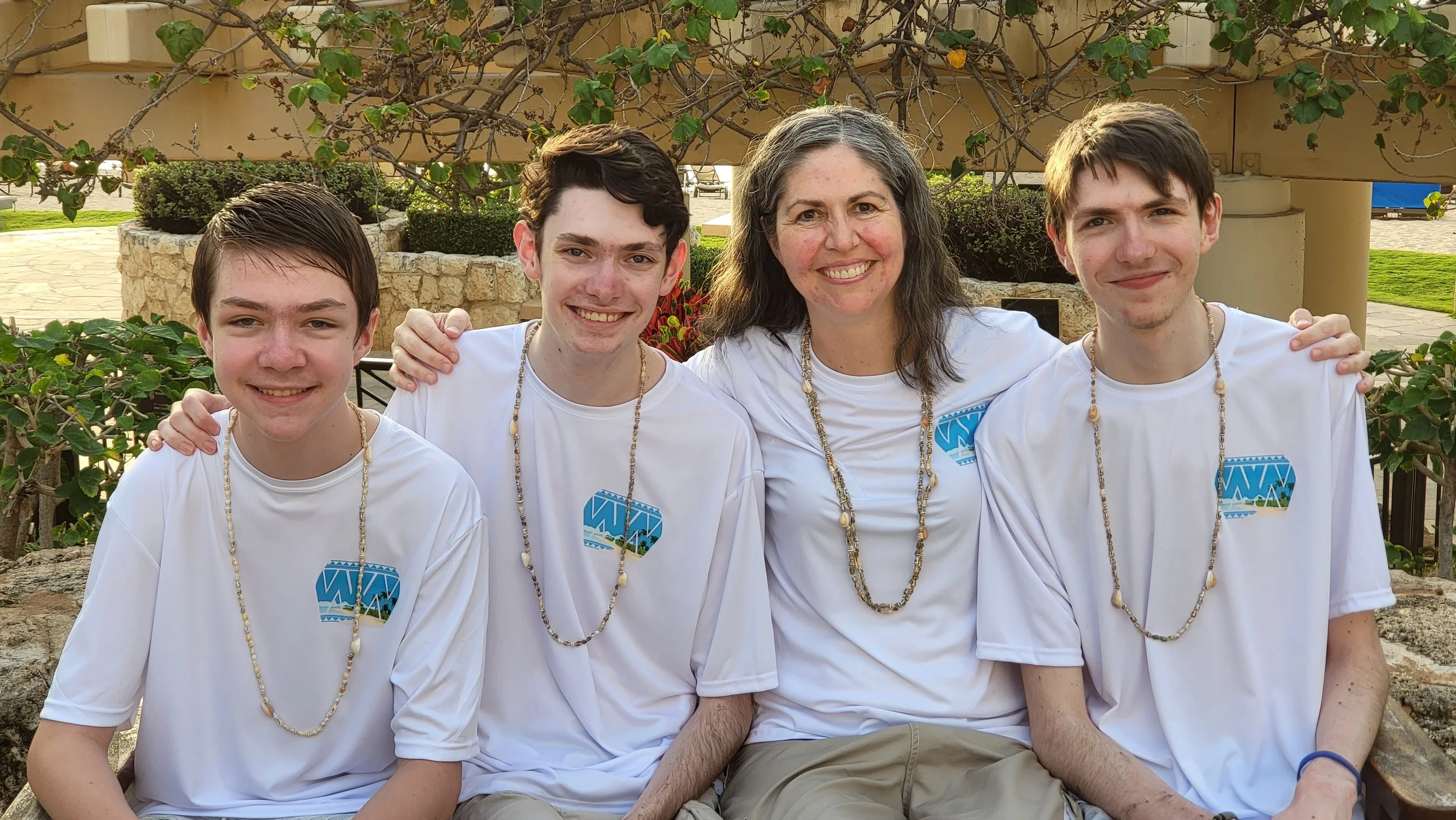
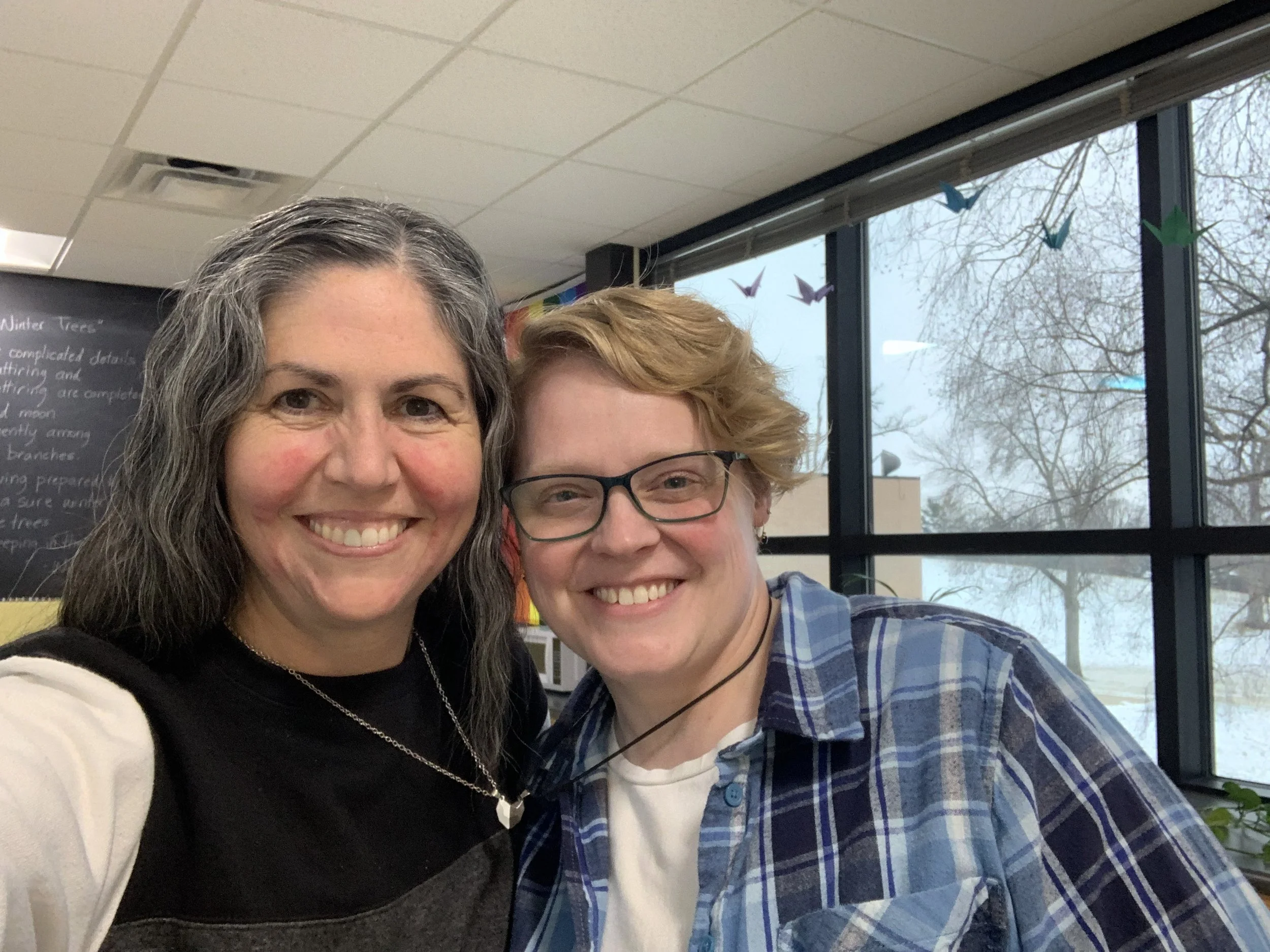
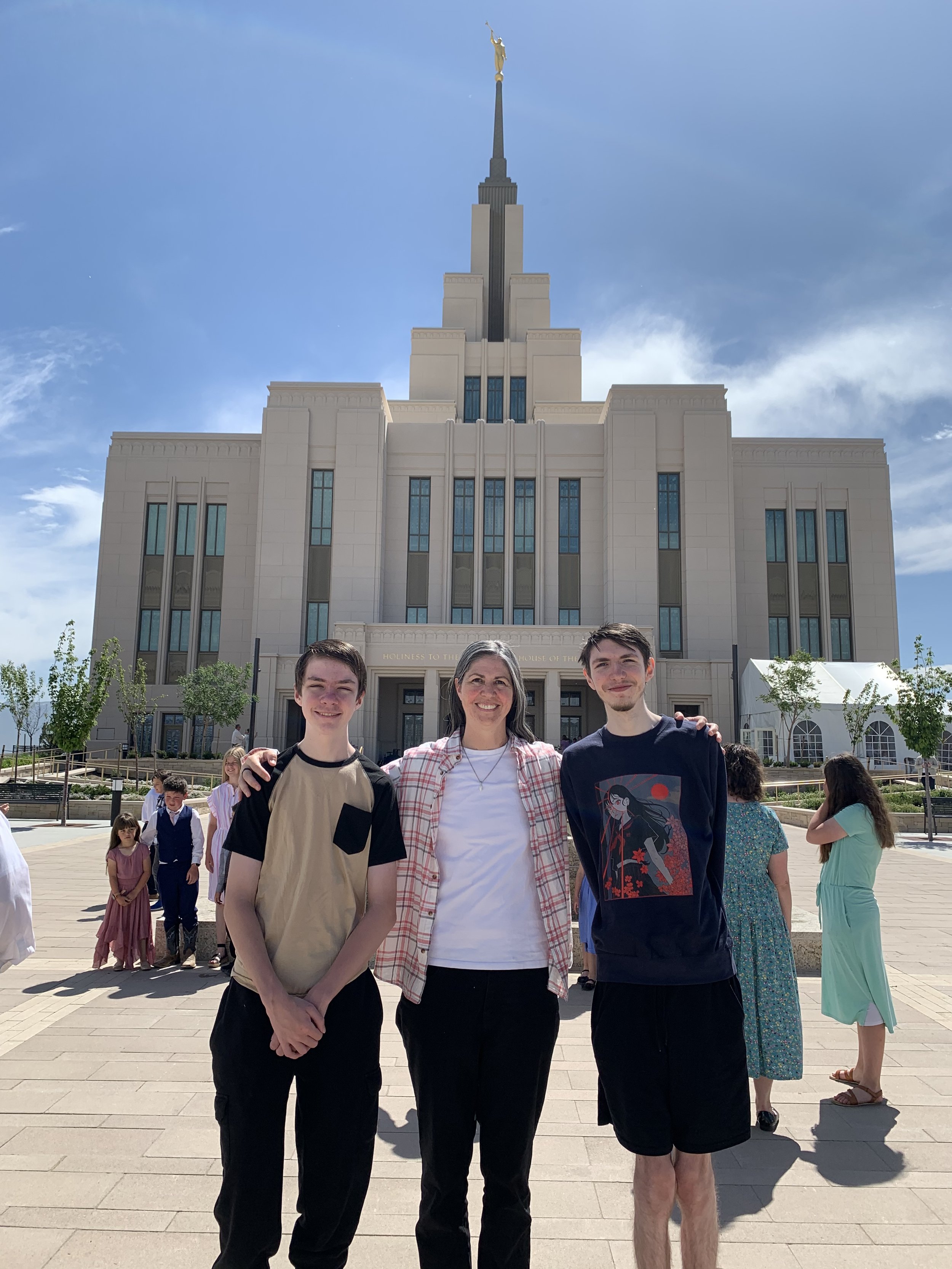
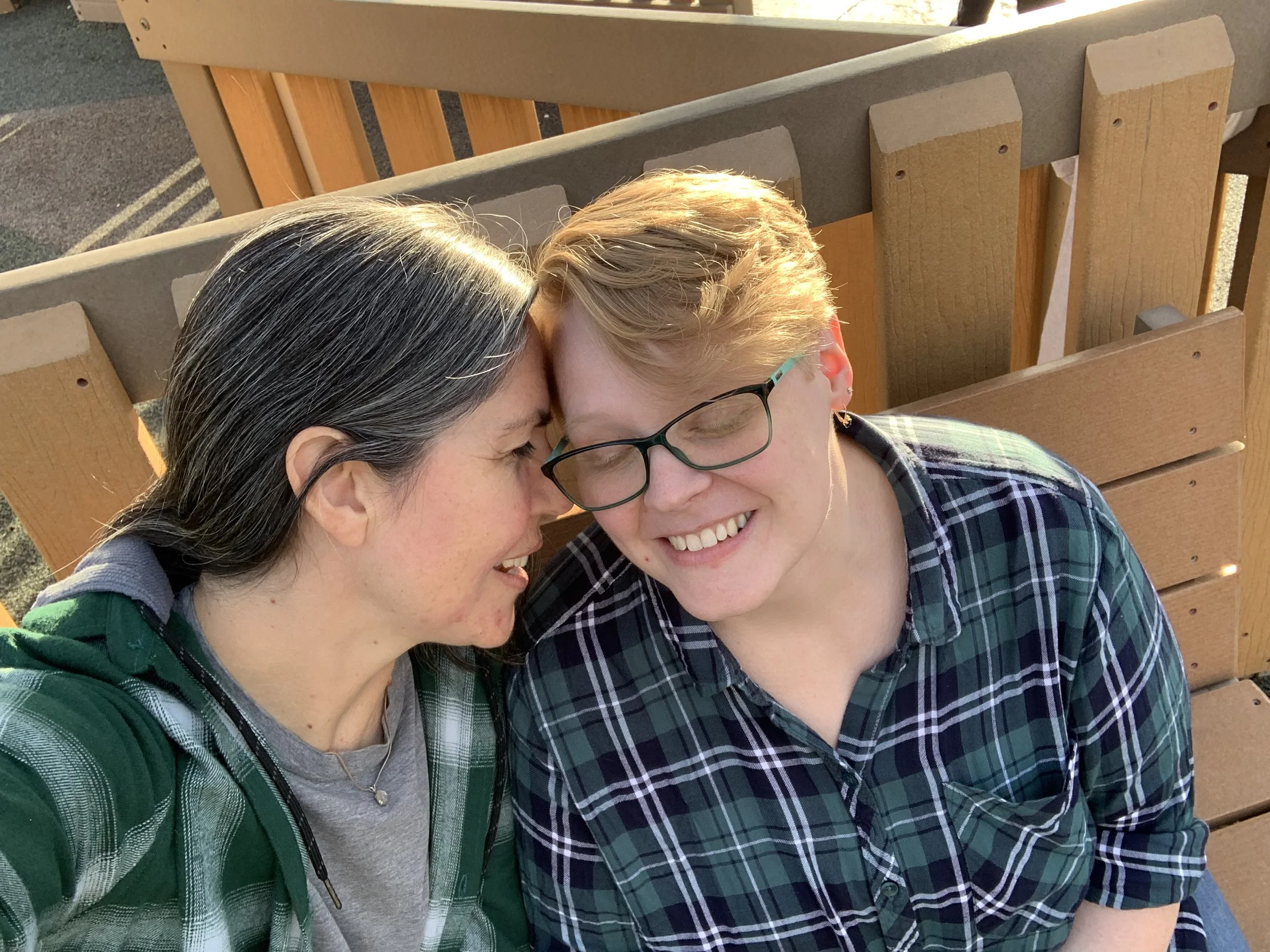
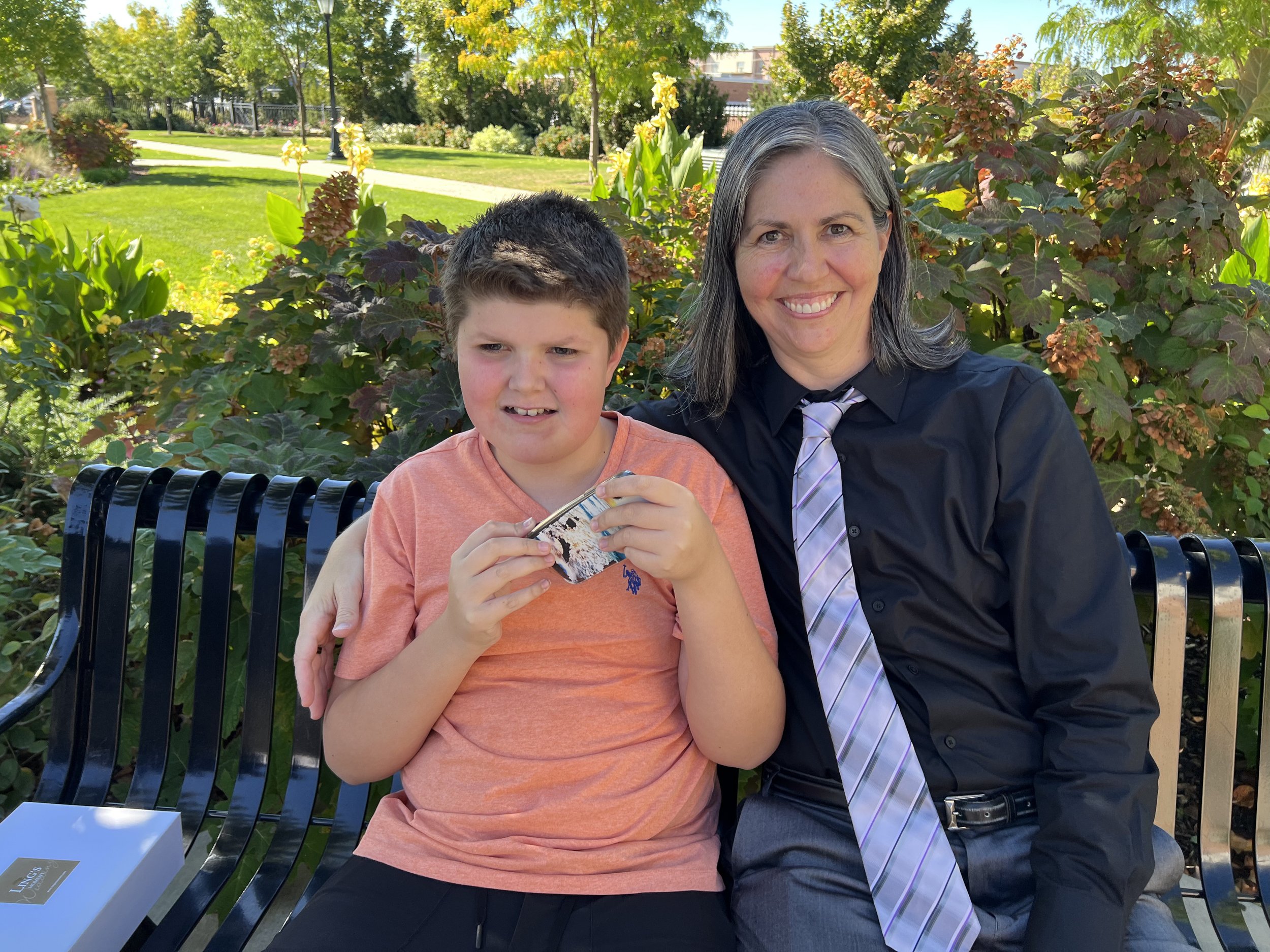

JOHANNE PERRY
At age 18, Johanne Perry showed up to Provo as a brand-new convert to the LDS faith, convinced she’d never marry a Utah boy. Born in Montreal, Canada and raised in Monrovia, California, the BYU dating scene was new to Johanne. She remembers looking across the sea of shiny-faced students in her Young Ambassadors performance class as Steve Perry, fresh off his mission, caught her eye when he was the one asked to give the closing prayer. She wondered, “What if I married him?” Seven years later, that’s what happened; and the couple (who has resided in Utah ever since) will celebrate their 36th wedding anniversary this May…
At age 18, Johanne Perry showed up to Provo as a brand-new convert to the LDS faith, convinced she’d never marry a Utah boy. Born in Montreal, Canada and raised in Monrovia, California, the BYU dating scene was new to Johanne. She remembers looking across the sea of shiny-faced students in her Young Ambassadors performance class as Steve Perry, fresh off his mission, caught her eye when he was the one asked to give the closing prayer. She wondered, “What if I married him?” Seven years later, that’s what happened; and the couple (who has resided in Utah ever since) will celebrate their 36th wedding anniversary this May.
Growing up in the 70’s, Johanne says, “I never knew ‘homosexual’ was a thing… the same way I didn’t know what bulimia and anorexia were. People just didn’t talk about it.” Looking back, Johanne says that as a musical theater major, several of her best friends and the young men she had crushes on later came out as gay—including her own husband. “I couldn’t have cared less about sports and big muscles—all I wanted was someone with a good sense of humor who could sing.” That defined Steve.
As they toured together with the Young Ambassadors and other musical performance groups, their friendship grew. After two and a half years, Johanne invited Steve over for dinner and proclaimed her love for him. He said, “Uhhh, we’re just friends.” Johanne resigned herself to the friend zone, but several months later, they tried dating. When they first kissed, she remembers Steve saying, “It’s like kissing my sister.” Johanne says, “Of course I was devastated, but we remained friends.” Johanne moved on to dating someone else, but after a few more months, Steve called to tell her he’d been up all night thinking and he knew he was in love with her. When she told him about her current boyfriend, Steve promised Johanne they didn’t even need to date, they could just get married. After all, they’d spent all those years traveling together, laughing, performing, and Johanne laughs that Steve already knew what she looked like backstage, “in curlers, sweating like a pig.” A week later, Johanne was engaged to the man who has proven the love of her life.
“Everything about Steve attracted me, but the first thing was his sense of humor. He just exudes goodness. You know he’s a good, kind person all the way to the core. And he’s intelligent – my mom always said the person you marry has to be able to talk about anything, and that’s Steve.” Johanne and Steve have raised four kids together and enjoyed decades sharing their love for music in various formats and professions. In their spare time, they love cuddling on the couch while watching YouTube episodes of the UK show, “Escape to the Country,” and dreaming about places they’d love to travel. They recognize their love story is unique.
“I found out about Steve being attracted to men during our first year of marriage,” says Johanne. “Back then, we didn’t know anything about orientation at all. We–like everyone– thought you could pray away the gay as long as you were righteous enough. I knew he loved me enough. And after years and years, it never did go away. But we never really talked about it.” Busy with their kids and careers, Johanne said it likely never really came up, because he gave no indication he was gay. “He was still attracted to me, we had a great life, great friends; I was totally head over heels in love.”
It terrified Johanne when Steve later shared that he wanted to come out publicly. With his public profile and their professions, she wondered if their whole lives would be destroyed. She also worried about personal safety. While Johanne recognized it was essential for his mental health to do so, each time Steve told her he’d opened up to a new friend or loved one, she’d spend the following two days feeling dizzy and trying to breathe. “Looking back, I don’t know what it was that I was afraid of—them judging me or judging him. Maybe I thought people thought we’d been lying to them, but that wasn’t the case.” As a longtime theater teacher at a conservative school, Johanne also feared what her colleagues might think. She was relieved to sense her boss’ and fellow teachers’ support, and actually discovered many teachers and students identified on the LGBTQ+ spectrum and had already been meeting in their own quiet support groups. The school now has assemblies promoting inclusion of various marginalized populations, and Johanne says several students have commented how much they like the rainbow heart pin she wears to class.
At home, Johanne was impressed by her own kids’ reactions to Steve’s orientation when she found out he had taken the liberty to share with each of them at a time when each of them had opened up to him about feeling confused or judgmental about themselves. “It was good for their relationship to know that about him—that he was a good, honorable man who had this thing in his life that wasn’t accepted.” The best thing for Johanne about Steve being more vocal is that now they can have open conversations in which he can reassure her about his love for her and their relationship. “Steve has been very humble about the whole orientation thing which has allowed us to keep a good relationship without either of us feeling defensive. He’s always worried about my needs and wants.”
There are times when Johanne has worried Steve may decide to pursue a relationship with a man, and she admits to feeling terrified every time he wants to go to an event where there will be a lot of gay men, as he is “so likeable. But then I wonder, how is that different from a straight man going to work with a bunch of cute female co-workers?” If given the chance to go back, Johanne says she would do it all over again and marry Steve, “Because it’s Steve. I don’t think ‘I’m married to a gay man.’ I’m just married to Steve. Others in our situation have to ask themselves the same question – is the fact that they’re married to a gay man overshadowing that they’re married to this person they fell in love with? I just got lucky with the guy I married. It’s hard to explain–I couldn’t possibly tell someone what to do. But my motto is always to choose love.”
If she could go back and give advice to her younger self, Johanne would say: “Don’t be afraid to ask hard questions.” She says she kept so much bottled inside for years, but “the not knowing was worse than the knowing. I was too afraid to ask because I didn’t want it to end our marriage, but now that I know it wouldn’t have done that, I wish I’d been more willing to talk about it earlier and be curious.”
After going to a support group for wives in mixed-orientation marriages a few years ago, Johanne saw how many women were still dealing with betrayal that didn’t necessarily characterize her situation, as she’d known about Steve’s attractions for such a long time. She didn’t feel a need to engage in those groups anymore. She also steers away from conversations in which she feels people’s pity. But now, the Perrys have formed a group of mixed-orientation couple friends who they’ve met through North Star and Emmaus gatherings. They regularly enjoy going out to dinner with these couples who get their inside jokes and shared language. “It’s good to just laugh,” she says.
While Steve has sent Johanne many podcasts to listen to about others in their situation, and Johanne has found Richard Ostler’s particularly helpful, she says she prefers to enjoy her dog-walking time focusing on nature and saying “good girl” to their lab-pit bull-boxer mix, Blossom. She is optimistic about her future with Steve, and hopeful the church as a whole will move forward with more loving messages from the pulpit where people make it clear that it’s not ok to kick out or minimize your LGBTQ+ children. As she’s become more fully immersed in the community in the past several years, Johanne has been introduced to “some of the most kind, compassionate people I’ve ever met—no one would choose this just to get attention. The people I have met are so humble, genuine and wonderful.”