lift+love family stories by autumn mcalpin
Since 2021, Lift+Love has shared hundreds of real stories from Latter-day Saint LGBTQ individuals, their families, and allies. These stories—written by Autumn McAlpin—emerged from personal interviews with each participant and were published with their express permission.

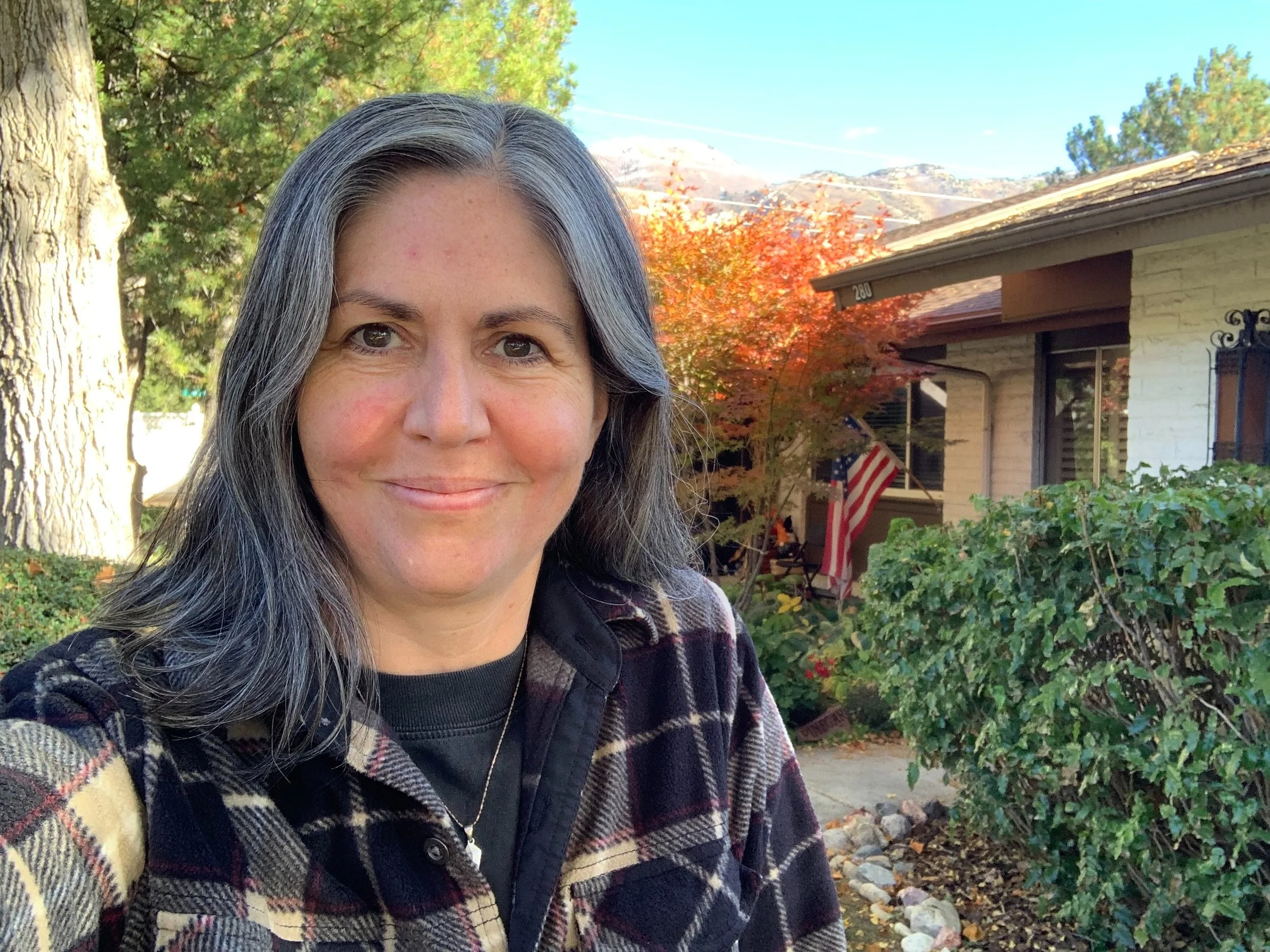
OAKLEY ROBERTS
“I have never expected God to actually answer the question I’ve been asking my whole life. I knew He could answer prayers, but this was something I thought was taboo for Him—a topic that was repulsive in the church. But He did.” These are the words that open a letter Oakley Roberts crafted to send to those who ask him about his experience as a gay member of the Church of Jesus Christ of Latter-day Saints…
“I have never expected God to actually answer the question I’ve been asking my whole life. I knew He could answer prayers, but this was something I thought was taboo for Him—a topic that was repulsive in the church. But He did.” These are the words that open a letter Oakley Roberts crafted to send to those who ask him about his experience as a gay member of the Church of Jesus Christ of Latter-day Saints.
Oakley, who is 21 and currently living in Payson, UT where he works as a caregiver, says he had sensed he was gay since 12 years old, but had spent his teen years living in denial. He grew up in a small town, going to church every week. But as each of his older three siblings drifted away from the church (with only one since returning), Oakley found it normal to ask questions and see things differently.
After his older brother moved out when he was just 10 years old, Oakley says he didn’t grow up around many men. His father was often busy with work and then moved out when his parents divorced when Oakley was 16. The guy friends he would make in school often seemed to move away or move on after a few months, so most of his friends in high school were girls. In his youth, Oakley always felt being gay was a punishment for something bad he’d done, and he hoped he’d be able to pray it away. But as he got older, he says his feelings only got stronger. He continued to try to convince himself he was bi and outwardly pass as straight; along the way, he dated a lot of girls.
Reluctant to go on a mission for any other reason than to make his parents happy, Oakley figured he’d go to school first after high school graduation. He also wondered if it was time to start dating guys. But sitting in his room one night, he had a strong impression to serve a mission as soon as possible. The next day he told his mom of the prompting, and says it strengthened his resolve thereafter to believe in Christ.
Having grown up feeling uncomfortable around men, being around a bunch of elders felt awkward. Oakley always preferred to be around the sister missionaries, but while serving, he says the strongest relationship he grew was the one with his Savior. He never told anyone on his mission he was gay. In fact, in the Liberian (African) mission where he served, it was not acceptable to be gay, and LGBTQ+ citizens often suffered discrimination and received threats. However, Oakley enjoyed his mission and recalls only hearing a few homophobic comments. He says he never wrestled with God. During those two years, Oakley continued to convince himself he was bisexual and that when he returned, he would date lots of girls and hopefully marry one. But after returning and spending four months dating many “amazing women,” Oakley felt defeated. He gave up and decided to start dating men.
Oakley says this initially felt like a wrong decision, that he’d be disappointing his family, himself and God. But then he met an amazing guy and kissed him and thought, “Holy crap.” He continued to date guys, not because he was wanting to start a relationship but because he was more curious about what it was like to be “a gay, LDS person.” But instantly, he knew his feelings for men were so much stronger than any of his attempts to feel attracted toward girls.
At this time, Oakley moved down to Southern Utah University to attend school, though reluctantly, with the distance he’d placed between himself and the one guy (he’d kissed) who seemed to understand what it felt like to be him. He says, “I struggled with the unknown. What should I do? Who am I? Why am I like this? Was it a mistake I made or a curse of sorts?” Oakley attempted to distract himself with friends, work, or school, but one night started to really worry as overwhelming thoughts took control. He says, “My mind couldn’t settle; I was feeling lost... I tried to call my friends, but they were busy and couldn’t hang out.” As Oakley started to go into a full-blown panic, he jumped into his car and drove up the canyon to distract himself. When it became hard to breathe, he pulled over. Oakley says, “I just sat there, mad at God. I yelled, ‘Why did you do this to me?! Can’t you just take this away’?!”
Suddenly, Oakley says it was as if God stopped his mind, and directed it toward his patriarchal blessing which spelled out the numerous attributes God gave him and how he was able to bless people around him by being empathetic, sensitive, and compassionate. He says, “I always felt a little different, but these feelings helped me to heal others.” Oakley says a question formed in his mind: “Do you want me to take all of these away?” Oakley thought, “My gifts? Never!” He says, “Then God connected everything. He was telling me that if I wanted Him to take away my attraction to men, I would then lose all those spiritual gifts; they were connected. These are what made me, me. I was filled with so much peace, knowing that I wasn’t a mistake; it wasn’t a sin I committed in the past or a curse. God made me in a way that I would be able to reach people around me that I wouldn’t otherwise be able to.”
Shortly after, Oakley came out for the first time to a trusted friend – a devout girl he was initially scared to confide in, unsure how she’d take it. But one day he got into the car and told her and loved how she was so affirming. Reassured that “even a religious friend would support (me),” Oakley called another close friend the next day, and that interaction also started with a buildup of stress but ended with relief. He then became comfortable telling all his friends, many of whom smoked, drank, had left the church and yet had always felt safe being around Oakley, as he tried to never exclude anyone. In return, he says it was easy for them to accept him for who he was.
Oakley then felt ready to tell his parents. Previously, whenever his mom would text asking about his dating life, he’d typically blow it off by responding, “I’d tell you if I was.” But then he went home to meet his mom and stepdad for lunch and let them know, “I’m not really interested in women.” This was the first time he fully admitted that he was gay and not bi. Oakley then learned his mom already knew. When at first, she told him she knew of gay guys who married girls, this didn’t bother Oakley because he had told her of his intent to stay in the church. Meanwhile, his siblings immediately encouraged him to date and marry a man. A few months later when Oakley clarified he’d only be dating men, his mother’s response was, “I hope you know that whatever you decide, you feel you can bring anyone home and we’ll welcome then.” She continued that she trusted Oakley in his decision-making and only hoped for his happiness. This trust helped Oakley to feel more confident in his own ability to make good decisions.
Later, Oakley told his stepmom he was gay and suggested she be the one to tell his dad. Since, he assumed his dad knows, although they have never discussed it. When Oakley came out to his ecclesiastical leader, he appreciated how the bishop expressed gratitude he’d trusted him with that information and encouraged him that wherever his path may lead, to just try to keep a close relationship with the Savior because “Christ will help you figure it out.” Oakley has since had many positive experiences coming out to straight friends before meeting up with a recently returned missionary who introduced him to Gatherings. This led Oakley to a new community of LGBTQ+ friends.
Oakley doesn’t believe that being gay is the most important thing about him, but that it is something with which God gifted him. He says, “I know that everyone has different experiences, answers, and beliefs. My answer might not be yours, but God is in control, and as we accept ourselves as His masterpieces rather than our mistakes, we can find peace and help others along their lives.” Oakley has continued to work on building his relationship with God while dating men. He says, “This might not make much sense to most people, but unless somewhere along the path I feel that this decision is distancing me from God, then I will continue.”
Oakley’s invitation to others to lean into journeys like his ends with these words he penned in his initial coming out story, “Thank you for reading. I hope this helps you get to know me a little better, and maybe it might help you find answers to your own questions. Ask God, and I know He will direct you to the truth.”
JAVIER AGUILAR
Tomorrow, Javier Aguilar turns 24. He’ll celebrate in Allen, Texas where he is currently working for a light installation company while taking a break from his studies at BYU Provo. He’s a long way from Mexico City, where he was born and raised, but not too far from his parents who moved the family to Texas while he was on a mission. While within their physical proximity, emotionally, family life is a struggle for Javier, whose parents would rather deny the fact that he identifies as bisexual, with his leanings more toward men…
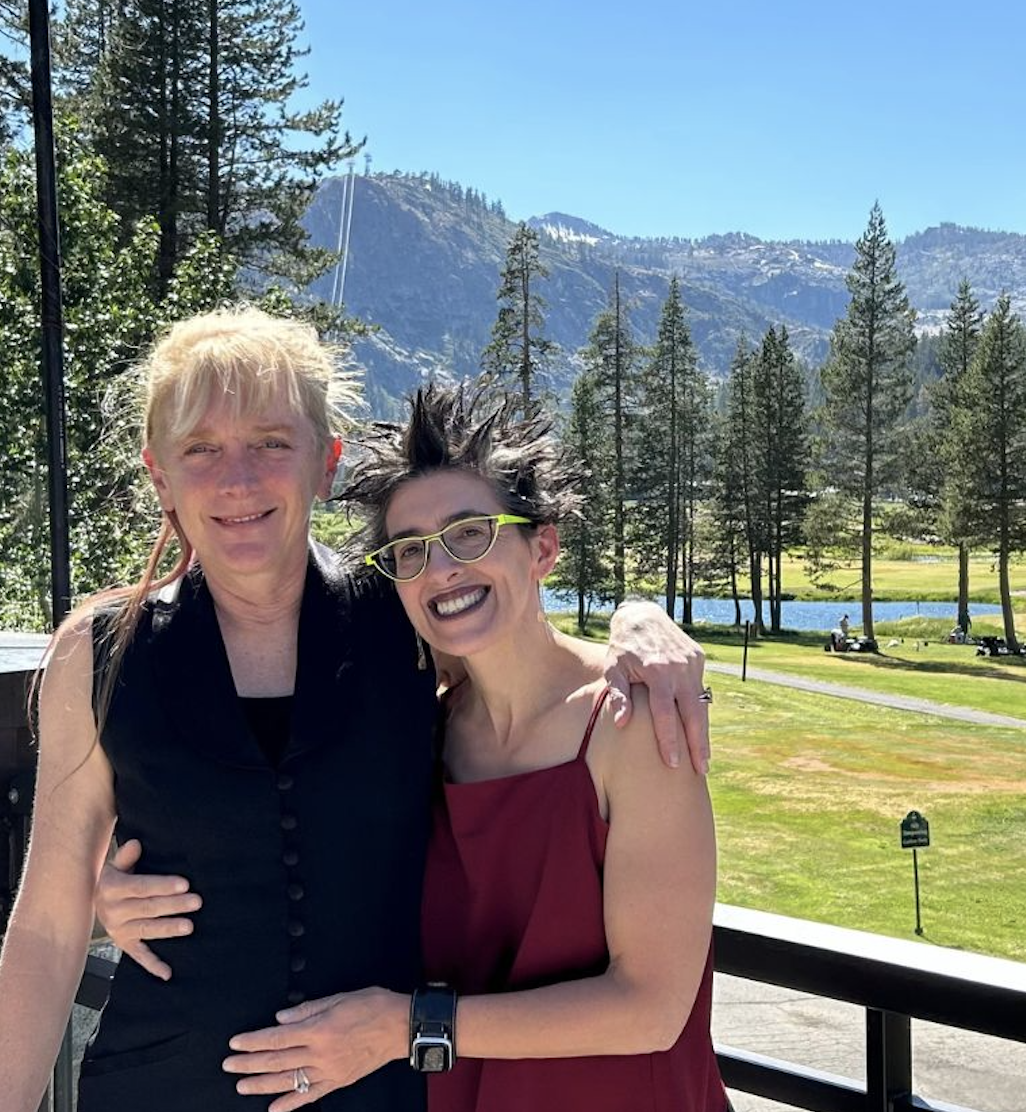
Tomorrow, Javier Aguilar turns 24. He’ll celebrate in Allen, Texas where he is currently working for a light installation company while taking a break from his studies at BYU Provo. He’s a long way from Mexico City, where he was born and raised, but not too far from his parents who moved the family to Texas while he was on a mission. While within their physical proximity, emotionally, family life is a struggle for Javier, whose parents would rather deny the fact that he identifies as bisexual, with his leanings more toward men.
The oldest of five kids, Javier grew up in a well-known, “pioneer” family in the LDS faith in Mexico. His grandfather was a patriarch, sealer, and principal of the LDS church-owned school in their region. As a child, Javier often felt the spotlight on him, with other parents in their congregation saying things to their kids like, “Why can’t you be like Javier? He’s so nice, so obedient.” Overhearing this, Javier would think, “If you only knew.”
His orientation was not at the forefront of his mind quite yet, but Javier certainly knew he wasn’t perfect. He says he was on autopilot mode with church—attending every Sunday with his family, and promising he was reading his scriptures, whether he managed to or not. He tried to always do what would best please his parents and his ancestry who prioritized strict obedience, discipline, and manners—there were no elbows allowed on the table at the Aguilar house. As the oldest kid, Javier knew he was to be the example.
Music was a large part of Javier’s upbringing, and he played the piano and other instruments. He was also involved in theater and the drama club. While his parents always encourage him to play sports, he says he “sucked at basketball but liked it.” He also liked school and tried hard, but claims he wasn’t always a great student.
Javier didn’t realize he was attracted to guys until high school. Before, it was more of a curiosity in which he’d find himself paying attention to those he found attractive. But he didn’t dare talk to his parents about it, as they had once told him if he ever saw someone who was gay, to move in the opposite direction and “keep yourself as far away as possible from this.” Helping him with a Primary talk once, his father even likened homosexuality to one of Moses’ plagues. It wasn’t until he was older that he got to know people in the LGBTQ+ community. But even when he met his first bi person, he didn’t get too close.
The time came for Javier to serve a mission. In his house, his father only half-jokingly would say, “You have two options. You either go on a mission, or I send you on a mission.” So of course, Javier went. It took him a little bit to acclimate, but he did love his mission. Today, he says if he had gotten an answer whether to serve for himself, it might have gone better faster. He spent the first half in Brazil and the second half in Mexico, due to the pandemic. Like many, Javier believed if he did his best on his mission, his attraction to guys would go away. But when he returned, that wasn’t the case – in fact, he found his feelings had only increased.
A couple months after his return, Javier started a long-distance relationship with a girlfriend back in Mexico, trying to please his parents in Texas. At the same time, he started talking to a male friend from the mission and realized he was developing feelings for him. Worried he might out himself or another person, Javier tentatively got in touch with a missionary he’d heard about in Mexico City who was gay, hoping he could ask some questions somewhere, to someone who might get it. Even though they’d never met, they had a productive conversation, though that alone made Javier feel very guilty for going against his parent’s wishes to turn away from all things LGBTQ+. The missionary was helpful and happy to help and directed Javier to the Questions from the Closet podcast, which converted Javier “into becoming a podcast guy.” Javier says, “It was great to finally listen to stories of people who are part of the church but also living out their sexuality. The podcast answered some of my questions.”
Javier had made a friend on the mission who had come out for the first time ever to Javier. In turn, Javier came out to this young man while communicating online, realizing he might even have a crush on him. In response, Javier says, “He lost his mind, he was super happy and called me. This was the first time I was actually starting to accept it.” Shortly after, Javier would occasionally whisper to himself, “I’m bi; I’m part of the LGBTQ community.” His internalized homophobia caused it to take some time to get used to, but gradually he became less afraid. TV shows about LGBTQ+ characters and the movie Love Victor helped Javier feel less isolated. His plan was to only tell two friends ever, but over time he realized he wouldn’t be able to keep it a secret for the rest of his life.
Soon, Javier found himself at BYU Idaho where he found a “cool group of friends who adopted me. They were Latinos, too, so they understood. I was able to come out and they were so supportive, even with having Latino backgrounds where machismo was often still a thing.” In Rexburg, Javier says, “I didn’t break the commandments, but I took a break from church.” After two semesters, he came back home with a new sense of confidence about who he was. He sensed he should tell his parents, but wasn’t sure how. Javier consulted with a close friend in Texas named Ben who was going through similar things. Javier’s depression peaked, and even when he was hanging out with friends, he felt so alone. One night, Javier went to a park where he says he “bawled my eyes out.” He put on his Air pods and walked around, “wanting to scream, to cry; I wanted everything and nothing at the same time.” Javier texted Ben and begged him to join him, risking the embarrassment of having his friend see him in that state just so he didn’t have to be alone. After arriving, Ben convinced Javier that not coming out to people was only going to continue to hurt Javier. Javier agreed and told his friend a date he’d come out to his parents, for accountability.
Having selected a day he’d be meeting his parents at the temple, Javier listened to music to prepare. But when he arrived, there were other ward members there so Javier requested he and his parents go off alone so he could tell them something. His mom expressed excitement, thinking he might be getting engaged (even though he wasn’t dating anyone). When Javier instead told them he liked boys and girls the same way, he saw their faces contort with anger, sadness, and deception. He calls it “a face I’d never seen before. I stopped talking; they didn’t say anything. My hands were sweating, I was shaking. Fortunately, the bishop came up and said, ‘Let’s go inside’.”
For Javier, the session was a blur and when he returned home, his parents called him into their room. He shared more and invited them to read up on LGBTQ+ from the church website. They replied they would not be doing that and told him he had a disease he needed to be cured of. Javier concurred that him telling them was a way of admitting he wanted to be cured, but that he was innocent and hadn’t done anything to cause this. He says, “I couldn’t say anything; the things I said were used against me. I felt destroyed.” He went to his room and texted Ben to share how badly it had gone.
The next morning, Javier begrudgingly went to church but felt “so broken and sad.” He sat next to Ben, who gave him a side-hug that meant the world in support. He says, “I wanted to cry; I just wanted that hug so badly from someone who was supportive of me.” As time passed at home, things were not great whenever the topic of LGBTQ+ came up. Javier returned to school where he participated in a research project wherein he realized how many students in Rexburg vitally needed support after facing discrimination. Javier and his friend Emily started a support group, mostly to combat racism, but also LGBTQ+ bigotry.
The next time he went home, Javier decided to come out to one of his brothers. He was met with confusion and surprise, although his brother tried to be supportive. Javier says, “It was nice to have one more person in my family know about it, though my parents got mad when they found out, saying, ‘You told us you wouldn’t tell anyone, especially your siblings’.” Around that time, Javier’s dad suffered from facial paralysis due to stress, and his mother blamed a portion of it on Javier, claiming it was due to his father’s worry Javier would force their family to not achieve exaltation. Javier has tried not to internalize this. He says he knows his parents love him, and he loves them.
Soon after, Javier heard about the inaugural Gathering and went to Utah with his friend. There, he says he “felt amazing. It was so great to be with people who understood and shared my values, beliefs, and experiences. I came away crying with happiness because of the good experience.” After attending a couple smaller Gathering events, Javier decided to get more involved in Rexburg by helping organize support gatherings. He got to know the person who leads the PRIDE parade in Rexburg, and found himself being asked to lead the walk. He recalls, “It was my first time being out at BYU, and my first PRIDE parade. I was excited but scared.” As the day approached, his anxiety increased but listening to the song “This is Me” from The Greatest Showman, Javier harnessed the strength of the line, “I am brave, I am bruised, this is who I’m meant to be, this is me.”
Indeed, Javier felt every bit himself as he realized how many he’d helped by coming out and sharing his story as he marched in front of hundreds of people at the event. “It was a surreal moment; it felt so good.” Javier ended up transferring to BYU Provo, where he met a friend from Mexico who concurred they needed to start doing Gatherings in Spanish. “All of this journey has required me to step outside my comfort zone to do things I never expected… Now I’m trying to help others in Spanish-speaking countries.”
Javier says things are still rough with his parents, but “as long as we don’t talk about it, we’re fine.” He maintains hope things might improve after hearing Charlie Bird on share on his podcast how it took him 20ish years to understand all this, so he could give his dad some time. Javier likewise figures he can give his own parents more time. Meanwhile, he finds joy with his “chosen family,” which consists of many friends who support him where he’s at. Javier says, “Sharing in the Lift & Love family stories is very important to me even though it might not be what you’d expect. Even though my family doesn’t support or accept this part of me, my chosen family is always there for me. Through my depression, they even got me ice cream. They’re always there.”
In Mexico, Javier shares that a cultural tradition is to call good friends “cousins” once you achieve a certain level of closeness, as if you’ve become family. He says, “I now understand why we’re called an LGBTQ+ community—it’s because we’re never alone’
DR. LISA DIAMOND
When Dr. Lisa Diamond first moved to Utah 25 years ago, she had never heard the term “LDS.” Likewise new to Utah, her wife, Judi Hilman, bought a Book of Mormon to try to understand the culture better, but may have only made it through a few pages. The two recently celebrated their 30th anniversary, and marvel how 25 of those 30 years have been spent living in the same house in Salt Lake City. As outsiders to the state’s predominant faith, Lisa finds it amazing that “Our whole marriage is planted in the soil of Utah. I never would have predicted we’d find such a sense of meaning and purpose and community here.”
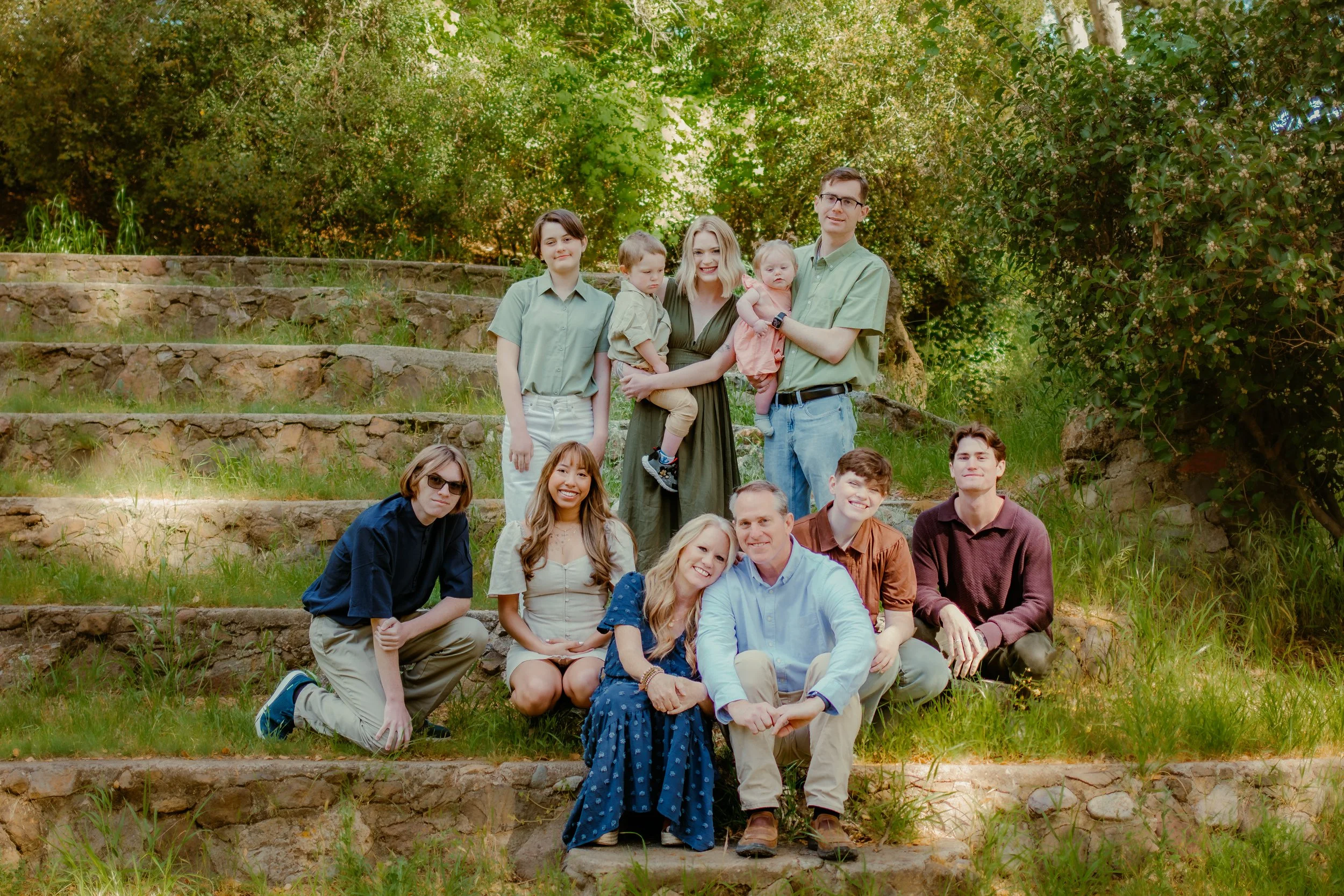
Lisa and Judi each grew up in California, and met in Ithaca, NY while graduate students at Cornell, at the very beginning of both of their careers. Now, Lisa is a world-renowned researcher and author in the psychology of gender and sexuality, who once appeared as a guest on Oprah--which she described as a positive experience, despite the hair and make-up team tamping down her trademark spunky hair into a mainstream “female politician” look. An expert in health policy reform, Judi is currently a professor of Community Health and Leadership at Salt Lake Community college, and was the founder and executive director of the Utah health policy project--a think and do tank for health policy in Utah. The two initially chose Salt Lake City because the job Lisa was offered at the University of Utah was the only offer she received! Her work was unconventional, integrating psychology with gender studies, and that was precisely the job opening available at the University. Now a Distinguished Professor at the U and past President of the International Academy for Sex Research, Lisa could not have known, when she arrived in Utah in 1999, how it would change her and her research.
Lisa’s interest in studying queer development started after her own coming out in the 90s, a time when it was hard to find representations of queer women in the media, and hard to find places to meet other queer people, especially if you were too young to go to bars. “If you were young and queer, you were stuck; you pretty much waited for the Pride parade to roll through town. There was no internet.” Although she came out in Chicago, during her college years, she had grown up in Los Angeles, where her exposure to spirituality was decidedly eclectic: Her father was an atheist (after having set aside his Greek Orthodox upbringing) and her mother was a Southern Baptist, but they sent Lisa and her sister to an Episcopalian elementary school, and all of the family’s best friends’ were Jewish. So Lisa never experienced religion as a monolith. Rather, moving through multiple faith communities became an everyday experience (as was religious conflict – when Lisa’s mom decided to have her baptized in the local Episcopal church, her atheist father originally refused to attend, and had to be talked into going). But the faith tradition to which Lisa felt closest was Judaism, due to those years and years of gathering with her parents’ friends for Passover and Hanukah, singing Jewish songs and making latkes and attending bar and bat mitzvahs. So perhaps it was fate that the woman she eventually married was Jewish, and that they celebrate the sabbath every Friday (with Lisa’s homemade challah), and had a Jewish wedding. For Lisa, religion was always about the people around you, not the doctrine.
Like many young people, Lisa was afraid to tell her parents she was gay, but “didn’t feel the threat that an entire community that might turn away from me,” a phenomenon of fear she has since often witnessed and studied in Utah. She came out while earning her bachelor’s degree in psychology at the University of Chicago, and remembers hanging out in the gay and lesbian section of bookstores and reading classifieds in the newspaper to find gay social gatherings, for which she usually had to take three forms of transportation to attend. But she didn’t mind; as she now says, “It was worth it for the connections.” There wasn’t much awareness or discussion of queer youth at that time – most research on sexual identity focused on adults. But while she was at the University of Chicago, one of her professors published a groundbreaking book on queer teenagers in Chicago, called Children of Horizons. She read the whole book while standing up in the aisles of the 57th street bookstore in Hyde Park, and found it perplexing that everything written about queer youth seemed to be about boys. Where were the women like her? She had been trying to decide whether to go to graduate school or to become an activist, and it now struck her that bringing women’s experiences into the study of sexual identity development was both a scientific and a political act. “As a feminist, it seemed like a rather low hanging fruit, to just put women in the studies.” The reason women were underrepresented was that they didn’t socialize in gay bars and community centers as frequently as men, and tended to be less open. Lisa finds this mind-boggling now, given that there are now many more queer women than men among Gen Z, along with greater acceptance of bisexual and plural identities. As she observes, “Now, far more women identify as bi or pan than exclusively lesbian, but bisexuality was not a fully validated identity in the past – bi and pan individuals had less community; it was often underground.”
When it came time to pursue her doctorate, Lisa sought out a program and mentor who could train her to study queer youths’ development, but there were only two academic psychologists doing so: Gilbert Herdt at the University of Chicago and Ritch Savin-Williams at Cornell, and she decided to go to Cornell. Her timing was spot on– Savin-Williams was on the verge of leaving the university because graduate students had stopped applying to work with him once he started studying queer youth. It was demoralizing, and he was ready to transition to clinical practice when Lisa’s application came through the door. He figured he’d give it one last try, and ended up staying at Cornell and mentoring scores of other queer researchers before retiring a few years ago. Lisa says, “I often joke with him that I extended his career 20 years!” During her tutelage, Lisa says she felt isolated from all the other grad students, who were studying conventional topics like cognitive development, or doing research in large teams. Ritch and Lisa were a tiny team unto themselves: As Lisa remembers, “It felt like him and me against the world.” Ritch didn’t have any research funds, but Lisa needed a Master’s project, so she bought a 1989 used Toyota Corolla for $4,900, and set off each weekend to collect data, driving around New York state to interview as many young queer women as she could about their own identity development. Some of her participants were lesbian, some bisexual, some not quite sure—and Lisa found these stories the most fascinating.
She continued to follow her 100 interview subjects over the phone, every 2-3 years, and ended up publishing the first 10 years of findings in her book, Sexual Fluidity: Understanding Women’s Love and Desire (Harvard University Press, 2008) which was awarded the Distinguished Book Award from the American Psychological Association. The book argues that while sexual orientation is not chosen, some women show unexpected and unbidden shifts in their sexual orientation identity over time. Lisa points out that in her research, younger women are usually a bit more focused on their identity labels than older women. As one of her participants stated, “These days, I care more about my 401k than my orientation.” Lisa’s work showed that change over time is a widespread phenomenon in women’s sexual patterns, but carefully pointed out that these changes are not under women’s control. But, she says, changes that individuals force on themselves, like conversion therapy, are totally different – they are unhealthy and ineffective.
When Lisa first started to get to know queer students with a background in the LDS church, she started to observe that the struggles they faced seemed different from the struggles she was used to seeing in young queer people –there was more of a sense of utter despair and loss. The contradiction between their sexuality and their faith seemed to go beyond just doctrine, it involved their entire sense of self and community and kinship. For LDS individuals raised in Utah, she came to appreciate that church membership was more than simply a matter of belief, it involved one’s entire sense of social selfhood. To leave the church meant being cut off from one’s entire community. Lisa had never lived in a religious community like Utah, in which one’s entire social environment was interbraided with the church, and she remembers her amazement when paging through the Salt Lake City White Pages in the early 2000s, seeing pages and pages and pages of entries for different wards, and realizing the degree to which church membership was literally embedded into each member’s physical environments as well as their psychological world. There was no way for queer young people to escape the eyes of their neighbors and ward members, the immersion was total – which meant that rejection was a more all-encompassing and devastating prospect than for other faith traditions. Being queer “could cut you off from not only your religious community but also from your neighborhood and potentially your family; that can result in a fundamental existential loss.” Lisa continues, “It shows that with as much progress as we’ve made, there are a lot of people who’d rather kill a part of them off to stay in the group. It shows how deeply social humans are… We live and die by social connections to people. When they cut us off for something we have no control over – that’s terror.” Over the years, she became increasingly fascinated with the unique experiences of queer Mormons, listening to their autobiographies on “Mormon Stories” and following “the devastating excommunications of figures like Kate Kelley, John Dehlin, Natasha Helfer, and Sam Young, simply for speaking out against the church’s views of sexuality.”
But it wasn’t until the pandemic that her observations about queer Mormons started to intersect with other aspects of her academic work. She had been doing a deep dive on the neurobiology of rejection and abandonment, and started to realize that the conventional view of anti-queer stigma as a form of “stress” was incomplete. Those models presumed that the mental health challenges of being queer stemmed from the stress of discrimination and victimization. Yet the newer neurobiological work suggested that a far more important threat to stigmatized people is the loss of social safety – the sense of unconditional connection, protection, and belonging that all humans rely on. As a social species, humans cannot survive alone, and our brains evolved to prioritize staying in the group above almost all else. Lisa was accustomed to hearing people describe queer people as “oversensitive to rejection,” but the newer neurobiological work suggested that there was no such thing, since the human social brain is literally a “rejection-detecting machine.” For a social species, social shame and rejection feels like a mortal threat, because isolation and abandonment was a mortal threat in our ancestral environment. She learned that our entire immune system has evolved to “turn on” under conditions of social threat, preparing the body for wounding and damage. “When humans are rejected, and their social safety is withdrawn, the brain and immune systems start amping up, fear coursing to the same place. That’s the type of loss my queer Mormon students were experiencing. They weren’t exaggerating. They were on fire with abandonment and a sense of real threat.” She saw this especially in the context of “ecclesiastical roulette,” in which youth never know for sure whether their Bishop will strictly enforce church doctrine on sexuality, or will allow queer youth to stay in the fold. On top of that uncertainty and doubt was the ever present possibility of new changes in church policy, such as the devastating “November policy” about the children of same-sex couples, and the more recent “trans ‘clarification’ that has solidified the church’s exclusion of trans individuals.”
Lisa realized that the toll of this uncertainty was just as significant as the toll of explicit discrimination, but had never been fully appreciated by previous research on queer mental health. As she says, “Nothing is more stressful for the human brain than unpredictable stress. Studies show that when mice can predict shock, they can handle it better. If they can’t predict it, they develop a state of learned helplessness. If you can’t predict where danger is, you’re in a protective stance at all times. The world becomes threatening, even terrifying.” Looking at the current mental health crisis, Lisa says it’s not daily threats, but sporadic ones that are the most harmful. “You’ll have six months of feeling good, then something terrible happens at church. And so then, you don’t know that the ground beneath you is stable. Unpredictable danger leaves everyone hypervigilant.” Lisa explains that this cycle of constant, chronic watchfulness and the stress preparation of looking around the corner, unsure of what’s to come, produces damaging long-term effects, especially on the immune system.
The solution? Lisa proposes young people without supportive home environments find at least one safe social setting where they can regularly connect with friends or people who they can trust will “come running if they fall.” While online networks can suffice, Lisa recommends in-person connection as the ideal, and shares that her work shows that close friends are often the most important source of social safety and inclusion for both youth and adults. In Utah, Lisa often refers young people to Encircle and SLC’s Sky Hop, which provides free media arts courses, to find joy and connection and community. Although it’s important to offer emotional support to LGBTQ+ youth, Lisa emphasizes that they also need fun, joy, laughter, and play, experienced in a safe setting with people they authentically enjoy.
In her conversations with LGBTQ+ youth who are struggling with non-accepting parents, Lisa encourages mutual empathy and patience. “I’ve seen some remarkable growth journeys. I tell young people, ‘Your parent may have it the capacity to become a huge ally, but it’s usually not overnight’.” Lisa explains that because the time course of parents’ and kids’ journey are often not in sync, it can create a lot of pain and disharmony. She explains, “Some kids initially lose the warm embrace of their protector, which can be terrifying to any person. But I say, ‘Don’t write them off just yet. And in the meantime, surround yourself with other people who do care, protect, and affirm.”
Speaking at the recent Gather conference, Lisa compared social networks to a dew-covered spiderweb, with life-giving drops of water clinging to the spots where the silken threads connect. “Some of have dense webs with a lot of threads and people. For others, there aren’t that many. But even on a sparse web, we find those drops of water, in human connection. That’s essentially what people are to one another– every relationship is a potential drop of water that offers a bit of connection and safety and support.” She expounds that often, we only focus on the drops closest to us (family, closest friends), but in our broader webs, there are so many more, and they are all important: “the people we regularly see at our book club, at the gym, at work, at our kids’ basketball games. All of these individuals are part of our social fabric, as well, and we can make active choices to strengthen those ties – each of us has the potential to be a life-giving drop of water for someone we know.”
Lisa advises parents to tap into the “wonderful sense of community the LDS faith provides” and find their own support network when their kids come out. “Meeting another parent whose kid has come out will do more than any website or pamphlet.” She also encourages parents to find their own way to show their allyship. “Some parents may not want to go to a protest, and that’s perfectly understandable. But they can choose other ways to show their love, for example having their kids’ friends over for pizza, and giving them the safety and space to nourish their own webs of connection. Make every step a step forward. For one parent, it can be going to a protest; for another, it can be a quiet conversation with bishop. There are a million ways to show up for one’s kid. And it might even be different between mom and dad – there’s no single way, and it’s important for us not to judge one another, but to keep moving forward together, step by step.” Lisa says that missteps and hurt feelings and poorly chosen words are inevitable, and that we should actually look forward to these moments because they are opportunities for real growth. “Those moments of rupture are the perfect opportunity to come together and ask for a redo and repair. Those are the opportunities where we can model what apology and forgiveness look like.” Lisa says parents need not relinquish their responsibilities as parents to support LGBTQ+ young people – and they need not even agree with or understand their child’s views. “But their first job, as parents, is to create a safe, protected environment in the home where kids know they are always welcome, and where they can let down their guard. They can do that just by showing their affection – it need not be a big emotional display, it’s a simple as spending time together doing the things you both enjoy, like watching movies together, feet intertwined, feeling that calm connection.” Those moments remind both parents and children that their essential bond will never change, and that they don’t have to agree with one another to fiercely love one another, she explains. “Loving in spite of disagreement is, in some ways, the most challenging but important form of love in a family.”
As the tension of election season escalates, especially in a sector in which so many rights are on the line, Lisa advises us to focus our attention on our social ties, instead of distant political debates. She says that if you really want to make a difference, then “pick one connection in your life, one person who you think could really use some more security in their life. Invest a little more. Go for a walk. Text them more often. Make sure they know that they can call you, anytime. It’s the fastest way to make a transformative effect on this world. How often do we hear stories that culminate with ‘and then I met this one coach’?” Lisa has seen this operate in her own family. Her mom grew up in Lakeland, FL, and dreamed of going to college, but there was no money. Her piano teacher was determined to help her find a music scholarship, and even helped her created an audition tape (in 1960, this required getting hold of reel-to-reel recording equipment). It worked – she went to college, and it changed the whole direction of her life. She met Lisa’s dad, they moved to Los Angeles, and eventually she became a piano teacher, too. And now both Lisa and her sister Nicole are teachers (Nicole teaches second grade in Burbank, California). They all link it back to Mrs. Raymond C. Smith, their mother’s dogged protector. She was that drop of water. Lisa thinks that all of us have the capacity to do that for those around us; to reknit our social fabric one relationship at a time. And that’s the change she’s now trying to foster in her adopted and beloved home of Utah.
THE PRATT FAMILY
Dan and Terri Pratt of Peoria, AZ experienced their first “what if” trajectory after their oldest of six children entered high school. As Brigham bean to struggle emotionally to the extent he battled suicidal ideation and received a misdiagnosis of borderline personality disorder, the Pratts began to question it all. The worry of “What if he doesn’t go on a mission?” took a backseat to “What if he tries to take his own life?”...

Dan and Terri Pratt of Peoria, AZ experienced their first “what if” trajectory after their oldest of six children entered high school. As Brigham began to struggle emotionally to the extent he battled suicidal ideation and received a misdiagnosis of borderline personality disorder, the Pratts began to question it all. The worry of “What if he doesn’t go on a mission?” took a backseat to “What if he tries to take his own life?”
This was not a path they had anticipated. After serving missions before meeting and marrying, Dan and Terri had raised their oldest kids “doing all the things” – daily scripture study, weekly church, and serving every way they could. While they read all the parenting books and tried to check all the boxes that their own Arizona-based, LDS families of origin had, the techniques with which they’d been raised just didn’t seem to result in what they’d been promised. Rather, their houseful of kids, Brigham (now 25), Ammon (24), Sonia (22), Amelia (19), Benjamin (15), and Echo (14) seemed contentious in their youth, and Terri says, “No matter how hard we tried, we didn’t fit.” Since those early days, all six of the Pratt kids have been diagnosed as neurodivergent, five of whom specifically are on the autism spectrum. “The autism now makes more sense of why things didn’t go according to plan.”
Their initial “what if” questioning did prepare Dan and Terri to work with God through prayer on how to love their kids unconditionally, and that no matter what happened, they trusted their kids would be received with open arms by loving heavenly parents whenever that time came. This has brought new comfort as they’ve been thrown more curve balls. A few years ago, their oldest daughter, Sonia, approached Terri and said, “What would you do if you had a gay or bisexual child?” Wanting to be honest, Terri replied, “Well, I think it would be really hard, but I know I would love them.” This started the Pratts on a new quandary that resulted in Terri feeling drawn to read all she could get her hands on to understand the LGBTQ+ community. She read Ben Schilaty’s book, A Walk in My Shoes, then Tom Christofferson’s That We May Be One, and then listened to and read as many stories as she could on Richard Ostler’s Listen, Learn and Love podcast and at Lift and Love. Eventually they realized Sonia’s question had been prompted by her younger sibling Amelia, (preferred pronouns she/her/they/them), who at age 15, had confided in Sonia that she was bi. When Amelia was finally ready to have that conversation with her parents, after they had seen some text messages revealing it was true, Terri says, “We were ready. We wanted to be on the journey with them – and told them we would, wherever it takes them. We told them, ‘We love you and are here to support you in whatever you discover about yourself’.”
A couple years later, their youngest child Echo (12 at the time, they/them) came out through a letter, letting their parents know they were a lesbian and hoped their parents could still love them. Terri showed the letter to Dan, who called Echo in. Both Terri and Dan thanked Echo for sharing that information. Since, Echo has told them they’re nonbinary, gender fluid and wanted a name change, though they don’t bristle when often still referred to by their name at birth, Evie. Sonia has also since come out as bisexual.
The frequent overlap of the neurodivergent and LGBTQ+ community has been something Terri has discovered to be quite common in her current masters’ studies to be a counselor. During Covid, she felt impressed to finish her bachelor’s degree, and now her graduate studies have led to an internship over the past several months with a practice in town called Neurodiverse Counseling. She says, “It’s been great to embrace more of that community. One’s heart opens to individual’s strengths and uniqueness, learning how a brain functions, and the beauty that comes with it. I’ve adopted an affirming rather than deficit-based perspective. It’s really helped me to love people.” After raising so many kids who struggled to find the therapists and support structures they needed, and seeing there’s not a lot out there in this space of overlap, Terri is eager to now become part of the solution.
Dan and Terri are long time owners of Pratt’s Pet Stores, owning several shops in their area. Dan also spent many years teaching early morning seminary. At the time, he was already undergoing a faith expansion journey, and as he’d read the assigned lessons, he often felt like a school teacher with a pen, mentally drawing red lines that he felt were too fear-based or not as loving as they should be for his young class. “There wasn’t the Jesus in it I’d hope for.” He adopted a class motto, “Haters gonna hate, but we ain't haters.” While he hadn’t yet become aware of his call as a father of LGBTQ+ kids, he was already struggling with a lesson on the Family Proclamation, one he was later glad he had softened, as a girl from his class later came out. Along with her family, she has attended the ally group, Love Without Asterisks, that Terri and Dan started with two other couples in their area.
This group formed after a particularly painful fifth Sunday school lesson on LGBTQ+ in their ward that seemed to focus more on maintaining the comfort of the general membership rather than the inclusion of the LGBTQ+ community. A local career seminary teacher, Clare Dalton, was invited in to be the special guest speaker but only was given a few minutes to speak about being a gay woman before the rest of the class shifted tones. It became so hurtful that Terri and her youngest child left early, but they had invited Clare to join them at their home afterward for lunch. Comforting them, Clare said, “Let’s have our own meeting.” Clare returned the next month to join the Pratts and a few close friends, and that began their monthly ally nights, which the Pratts say have been “such a blessing.”
The Pratts have had to carve out safe spaces for their children, and maintain boundaries. They have prioritized their spiritual focus on teachings that allow people to truly love and care for others. Terri says, “It’s beautiful to build a place where you can be whoever you are, wherever you are, and share that with others. It’s different than Sunday School, where you have to edit yourself to fit in. Our ally nights are a beautiful example of Zion, of expanding the tent to see how we can all fit. And it’s positive for our children to see that they can keep spirituality and God in their life, no matter what their relationship to the church might be. They’re each on individual journeys with that.”
After the recent transgender and nonbinary policy changes, Terri got a call from a good friend who was devastated. She said, “How do you stay and manage all of this?” Terri explained how their primary engagement is no longer serving the church as it used to be. While they attend sacrament meetings, Dan and Terri do not often participate in second hour nor currently hold callings. Instead, they focus on hosting their ally nights, and most recently found much joy and community in being on the committee for the youth program at Gather. The Pratts also love hosting many neurodivergent and LGBTQ+ friends of Amelia and Echo (who are gender fluid) at their house. They’ve witnessed how one of her AMAB friends is only able to express her gender identity in their home through dress and using she/her pronouns. Witnessing this young adult’s joy has expanded Terri’s. She says, “We are able to engage in different ways that feed our soul rather than suck it, which has been vital to our growth.” When the new policy came out, the Pratts had a moment of reckoning in which they realized, “They’re talking about our children, whatever wording they choose.” Terri laments, “I’m so glad they don’t attend church. It’s kinda sad, but that’s how I feel. Dan and I have to empower ourselves to 'stay in' in a way that’s healthy for us.”
Dan says, “In our home, I feel so much more love and acceptance for all my children as I redefine what’s an expectation versus acceptance. I’m always in awe when we get together now about how awesome it is as a father to not have to feel, ‘Are they on the right track?’ – always worried about how to fit in the box, and make corrections, but rather to let go of a lot of that and find out who they are and what they’re interested in or what makes them tick. I can see how glorious each of them are as they go through their journeys. And when they do ask questions about life, it’s all so authentically real in the way it happens.” Terri agrees that where they are now is so different than a decade ago in their relationships with their kids. She says, “They know we love and respect their journey as their own, and it doesn’t have to look like ours.” She explains that a lot of her children have been through hard things, “which may be seen as ‘hard choices,’ but they know they’re allowed to make mistakes and learn from them.”
Dan appreciates how he wouldn’t be where he is if “I was worried about empty chairs – or are we all going to make it to the celestial kingdom with its checkboxes and expectations? I’m not worried about a future of being ‘eternally happy.’ We have the present acceptance and love to bind us and help us through.”
DR. TYLER LEFEVOR
Dr. Tyler Lefevor has learned how to transform his pain into results. His trauma into a way to reframe and evaluate. His research into a love letter to his former self. After completing his doctorate in psychology from the University of Miami and a post-doctoral fellowship at Stanford, Tyler now conducts his research from a lab at Utah State University, where he works as a professor, while also operating a small private practice. Four years deep in a ten year research study on the longitudinal happiness and religious affiliation trends of LGBTQ+ people raised in the LDS faith, some of Tyler’s findings thus far are surprising, and some on par with common presuppositions...
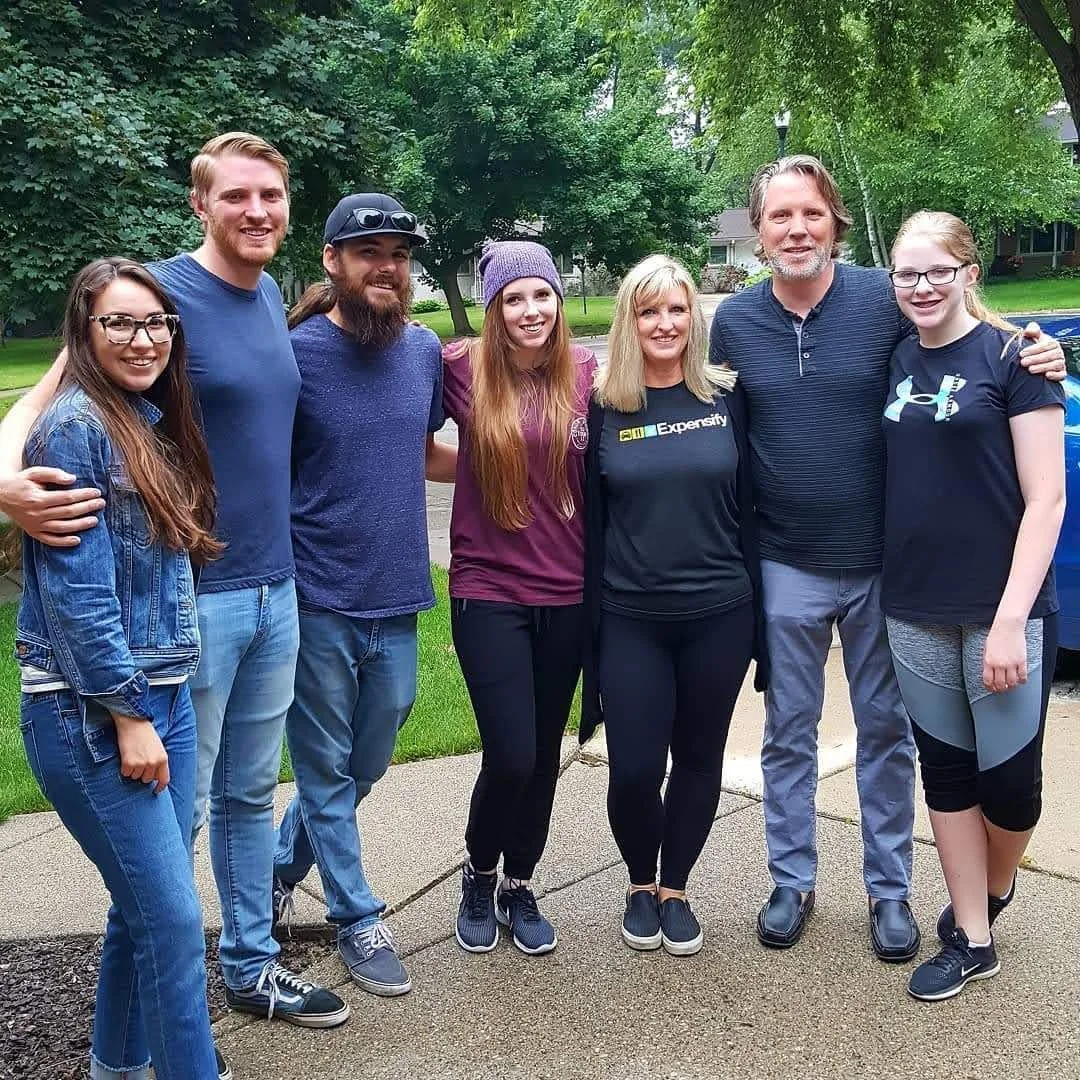
Dr. Tyler Lefevor has learned how to transform his pain into results. His trauma into a way to reframe and evaluate. His research into a love letter to his former self. After completing his doctorate in psychology from the University of Miami and a post-doctoral fellowship at Stanford, Tyler now conducts his research from a lab at Utah State University, where he works as a professor, while also operating a small private practice. Four years deep in a ten year research study on the longitudinal happiness and religious affiliation trends of LGBTQ+ people raised in the LDS faith, some of Tyler’s findings thus far are surprising, and some on par with common presuppositions:
LDS, LGBTQ+ people who stay in the church are not necessarily less happy than those who leave. (While this finding “gobsmacked” Tyler, he finds it empowering that people find ways to happiness regardless of their status.)
Four years after coming out, queer and trans LDS members are overwhelmingly less religious than they were prior, and every three years, most queer LDS members reevaluate and step away in some form.
Younger members of the church leave much faster than those in their 50s-60s+ who often were raised with different dogma and as a result are more likely to be in mixed orientation marriages with children, and to have built a life around the church.
People who religiously de-identify typically suffer psychologically for it during the process as they seek to find their personal coherence and community, though they are not worse off at the end of the day.
Parents who prioritize openness, communication, and love during their children’s coming out process rather than overemphasizing their political and ideological identities enjoy stronger relationships and more connectivity with their children.
While it is typical for queer kids to leave, and leaving proves to be a hard process, most in the study who left the church find ways to create meaningful, beautiful lives that “just look differently.”
Finding a diverse survey pool was of course a challenge for Dr. Lefevor’s study. He had to work much harder to recruit more conservative LGBTQ+ folks to participate. Not surprisingly, of the 1,000 LDS bishops his team cold called to request participation, they found it was bishops who had more personal proximity to an LGBTQ+ loved one who were more open to participating.
Proximity to Tyler grants a peek into a life that finds him waking up religiously at 5am every day, a dedicated pattern not surprising of PhD level scholar types. Tyler loves the gym and working out and has run four marathons and one Spartan race. He and his husband Brock frequently hike together, and love to spend time in the kitchen cooking. They have a fun, robust group of friends who recently joined them for Brock’s drag-themed birthday party where each of their friends dressed up as one of the drag names Brock has playfully created for himself.
In his current private practice, Tyler mostly treats patients identifying as queer, trans and nonbinary, and their families. As Tyler identifies as a cis-het queer man and has stepped away from the institutional LDS church, the recent clarification in the handbook regarding LDS trans members didn’t personally affect his day to day. Yet in his office and beyond, he sees a vast community who is hurting.
Recently interviewed by CNN about the policy shifts, Tyler said the updated policies are “really unfortunate” as they reduce the liberties local church leaders take in their interpretation of church policies.
“This is kind of the church’s way of saying, ‘No, this is how we want you all to do it’,” said Tyler. “The greatest harm is in the implication for trans members of the church just saying, ‘We really don’t want you here, please leave, (and) if you’re going to be here, you have to conform to these really high level of expectations on how you present yourself. I think that’s the damaging part of these new (updates).”
That being said, Tyler has taken concerted steps in his own life to not be defined by other’s actions. “I don’t want to see myself as a victim of how people treat me. I’d rather draw appropriate boundaries and work toward being who I want to be.” Tyler has learned to exude patience in his dealings with others and give those close to him space when they need more time to wrap their heads around new information. This has meant anticipating and accepting the fear and confusion some in his family of origin showcase every time he takes a new step away from the “anticipated LDS path,” which for Tyler has included not attending church anymore and marrying his husband, Brock, three years ago. “‘These steps have brought on moments of pause, reflection, and ultimately an attempt by all for understanding and growth.”
Working to create change that will make the world better for future generations, Tyler posits it’s “the systems of power in an institution perpetuating the cis-het normative” that direct him where to point his rage. “It’s not my family. If I can channel it at the right source, I can try to bring love to my family rather than forcibly changing their way of thinking.” He recognizes his own desire to have married likely stemmed from his family-centric upbringing. In reference to the LDS faith’s lack of support for marriages like Tyler’s and Brock’s, he says, “On the other side, I hold the power systems of it all accountable. It’s not fair and shouldn’t be like this. We shouldn’t have to experience such a burden to come out; we have to accept people’s experiences as their own. How can we make a world where this can happen?”
After months of scribbling, “I’m going to tell him tonight” in his journal, 15-year-old Tyler stood outside his dad’s office door when he first told him he liked men’s bodies. His dad asked if he wanted to work out more. Tyler replied, “Yes, that’s it. I want to work out more.” Tyler continues, “And then we left it there for a decade.” Soon after, he told a bishop, who asked, “Are you acting on these feelings?” Tyler replied no. The bishop said, “Good.” Tyler says, “It was awkward, shameful. No one outwardly threatened rejection; they were just people upholding the heteronormative world view. And they collectively whisked away my queer identity for a decade.”
After being born in Salt Lake City, Tyler says he experienced joy growing up between Los Angeles County, Colorado Springs, and West Jordan, Utah. He was raised in the LDS faith with four siblings, and “grew up the perfect golden child who loved my family and the church environment.” He went to BYU, had a great time on his mission, served as Elders’ Quorum president for three years, and for a year-and-a-half, dated a woman (who remains one of his best friends and who performed the marriage for Tyler and his husband). She was the first individual in Tyler’s life to whom he confessed he had “same-sex attraction,” later figuring and assuring his family he would just handle it the way much talked about LDS gay men like Josh Weed and Ty Mansfield did in mixed orientation marriages. There were times in their relationship that Tyler’s girlfriend would ask why Tyler didn’t cuddle with her during a movie. Tyler’s reply: “I didn’t know you wanted that.”
He continues, “It took me a couple years to see attraction is supposed to provide the glue between people wanting to build a relationship and connection.” Fraught with his lack of physical feelings, the two ended up breaking up, and it took some time for Tyler to vocalize what he was experiencing. As he became more open and filmed a “Voices of Hope” video, the ripples complicated his parents’ lives as more of their friends started to know.
Tyler now deeply appreciates the core level of his family dynamic, which he credits the LDS church for instilling. “My family’s commitment to our connection has kept me from rejecting the church entirely.” He’s clear to state that for him, “Mormonism is a cultural connection, not my religion. I’ve reclaimed the word in a sense regarding my identity because my family has stayed engaged in this interpersonally—a process that’s made it impossible for me to fully say the church or Mormons are bad because the church has worked so deeply well for my family and their spouses. I had to reconcile that it can work so well for others while not working so well for me.” While he’s observed the fear-driven thought train that guides many, Tyler concludes, “Who am I to say you need to dissemble your whole world view when your world views give so much? Maybe it’s better to say, how can you adjust your world view?”
When he was trying to figure out his own life, Tyler sensed immense purpose and meaning in studying how LDS-raised LGBTQ+ understood their orientation and faith, thus launching his study. He found there was no comparable research out there to the decade-long study he has now since begun, filled with questions and data “26-year-old Tyler was dying to know.”
With the many queer and trans LDS clients Tyler works with, he’s seen it also takes them time to address their entire world view and make changes. “It’s the same for cis-het individuals meaningfully trying to grapple with this. To completely confirm and accept someone—some aren’t ready for it; it’s too much. Too devastating. It’s a more realistic and better way to hope they might sit with you and hear you and spend time in discomfort in a way that in the long run leads to change.” A wise and patient answer from a man who is accustomed to waiting for results.
THE PEPER FAMILY
In 2019, Michelle Peper was called to teach early morning seminary in her hometown just north of Spokane, WA. Colville is a small town of about 5,000 mostly conservative residents, and Michelle’s class included 20 high schoolers, one being her youngest daughter, Madi – then 15. Almost immediately after receiving the calling, Michelle felt impressed that it would be important for her to ensure that any LGBTQ youth in her class felt loved and included…
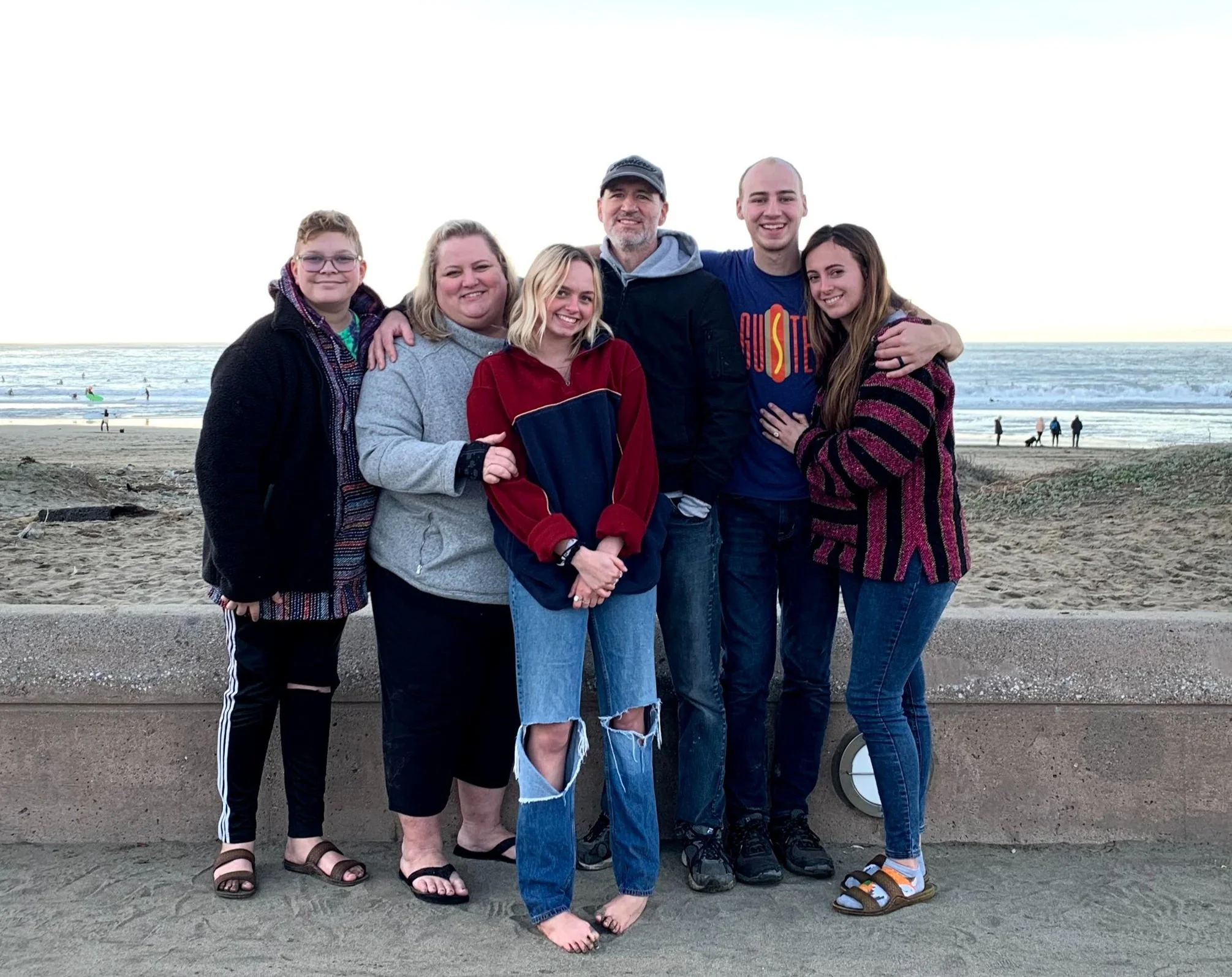
In 2019, Michelle Peper was called to teach early morning seminary in her hometown just north of Spokane, WA. Colville is a small town of about 5,000 mostly conservative residents, and Michelle’s class included 20 high schoolers, one being her youngest daughter, Madi – then 15. Almost immediately after receiving the calling, Michelle felt impressed that it would be important for her to ensure that any LGBTQ youth in her class felt loved and included. Just as she had a few years prior when the Black Lives Matter movement initially surged and Michelle felt compelled to dig into resources that shared human experiences different from her own, Michelle likewise felt it was time to learn about the LGBTQ community to better support them. As such, she dove into resources including Richard Ostler’s Listen, Learn and Love podcast and book, as well as the podcasts Questions from the Closet, Beyond the Block, and Called to Queer. Michelle committed herself to making her classroom a safe space. Both she and her husband Bob also stumbled upon Lift and Love, from whose online store they bought rainbow pins and began wearing them to church, signifying to all they were a safe space.
Michelle says, “My quest to listen, learn and love this community was powerful and I was all in. I was so vested in loving them that I started thinking there must be a more personal reason God had guided me on this journey.” Michelle and husband Bob’s two oldest children (Delaney – almost 30, and Riley – now 32) had both already married and she felt confident that Madi, who ended up being in her seminary class all three years, was also straight. Michelle thought, “Maybe one of my grandchildren would be? All I knew was that I had received a powerful witness that LGBTQ people were treasured children of our Heavenly Parents and I didn't doubt that.”
One morning in December of 2021, as Michelle was cleaning up the classroom and preparing to head home, she noticed all the students had left but one. Madi had stayed back and was just watching her mom scurry around. A senior with just six months left before graduation, Madi finally stepped in front of Michelle and said, “Mom, I need to tell you something… I think I might be gay.”
Thinking back on her youngest daughter’s affinity for all things ballet, girly girl, and pink since the time she was a toddler, Michelle says she could point to none of the stereotypical clues or signs her daughter might be lesbian. This was not the coming out Michelle had expected, but as she shared in an Instagram post, “Because I was already prepared to love and accept her, the conversation was fairly easy and quite beautiful. We both shed a couple of tears, but I think they were tears of joy more than anything. The spirit filled that classroom and we both felt peace and love. My husband and I fully embraced her from the second she came out, as did her older siblings. Nothing in our family has changed in any way. Our family is still intact, and each member feels honored, respected, and whole.”
Michelle appreciated the promptings that prepared her for that moment; they reminded her God is in the details. That Christmas season, after Madi shared her news, Michelle fondly remembers her joining Bob and Michelle on the couch to watch the new Christmas comedy, “The Happiest Season” (which features a gay couple), and together the three of them laughed and bonded over a story line they could now relate to.
The Pepers are grateful Madi (now 18) sidestepped internalized shame and trauma and experienced a soft landing when she came out, both at home and at her high school where there was a very accepting LGBTQ community. Michelle loves that, “She has been able to live a healthy, normal, adolescent life. She never had to hide in the closet or be ashamed, which is what I want for every LGBTQ kid.” Madi started dating girls her senior year, and found with her newly announced orientation, her parents became open to the idea of coed sleepovers, but Michelle joked that the ones with girls had to stop.
Madi graduated at age 17, then took a gap year in which she headed off to Santaquin, UT to live with her older sister and her husband and work as an electrician’s apprentice until the Deer Valley ski resort opened, which is where she now works as a ski instructor. “She is living her best life, thriving. She has a group of about ten friends she hangs out with, and she’s out and proud and doesn’t hide. She also doesn’t wear all the pink, frilly tutus anymore,” Michelle laughs. Madi will begin her college studies in the fall at the University of Utah with an academic scholarship.
Soon after Madi came out, she opted to step back from attending church besides the one Sunday a month she was asked to play the organ for her ward’s sacrament meetings, which she still “sweetly agreed to do.” Pivotal in that decision for the family was a December 2021 Sunday School lesson on the Proclamation, in which Bob and Michelle took Madi to the adult Sunday School class with them, fearing the youth one might prove uncomfortable. It turns out the adult class stirred up a buzz of its own as the teacher spared no punches in making it clear she felt that gay people were “an attack on the family.” While the Pepers had pre-planned to stay quiet throughout the meeting, Michelle found herself shaking while Madi cried quietly next to her in her seat, and Bob was unable to resist going head to head several times with the teacher. “It got ugly real fast; it was so awkward and uncomfortable.”
That was the last time the Pepers attended Sunday School in their ward. Soon after, Michelle also replaced Relief Society for self-study via podcasts or reading the lesson on her own, realizing that she couldn’t sit through some lessons given by and for orthodox members without feeling that if she expressed her own thoughts she’d be upsetting everyone, which was not her intent at church. A former Relief Society, Young Women’s and Stake Primary president, Michelle now solely attends Sacrament meeting to be with Bob, who serves as the stake executive secretary. She is now ready to be more open about the spiritual journey she’s been on, as she’s decoupled all she’s been taught with certain aspects of church history and policy agitating her conscience. In a ward that for so many years she was extremely active in leadership roles, Michelle now laughs that she feels like “the project,” as well-meaning people invite her to church-centric activities that she doesn’t really feel like attending. “People know we’re not ‘all in,’ and surmise that we’re probably ‘lazy learners’ and ‘lost to the world’.”
In this new phase of life as empty nesters who are also preparing to transition from the business they’ve owned for 25 years, Michelle is carefully considering her next chapter as she faces a “new freedom.” She’s grateful for a coed “clandestine book club” she and Bob have joined with like-minded friends from their ward, many who are in leadership and some who have stepped away. All in that group know Madi is gay and are supportive, though Michelle says they haven’t exactly told their whole ward yet. While her bishop and Relief Society president know and are kind, Michelle has faced open criticism from other local leaders who have commented or otherwise shown opposition to her Facebook or Instagram posts (@edge_of_inside_lds) that support LGBTQ. But Michelle says, “I would never let an institution let me know how to love my kid.” Bob, who recently served as bishop, has also faced criticism for his open support of the LGBTQ community.
Michelle said in her last year as a seminary teacher she began to feel a bit like a fraud, knowing she was bound to a manual that she felt was heavy on temple marriage and transactional living and allowed no room for her to share some of her more nuanced developing beliefs. She decided to accept a new calling, working at the call center for The Trevor Project (a hotline for suicidal LGBTQ youth). Michelle completed the 40-hour training, and now fulfills her shift each week as a digital counselor on chat and text. She admits the work can be emotionally draining, as she frequently chats with youth for whom suicide feels imminent, and she stays online with them until she can guide them to safety. She used to work the night shift, but afterwards found she couldn’t sleep, feeling fury over the callers’ struggles, so now she works in the afternoons. Before each shift, she prays: “Please guide me, tell me what to say. I need Him, we need Him. He loves those kids.”
In her deconstruction, Michelle admits there was a period she wasn’t sure anymore about God, but she built that belief back and now feels guided and inspired in her advocacy. “Sometimes when I finish a post, I feel that all this transitioning going on is intentional. I’m grateful.”
Upon reflection, Michelle says, “I may be frustrated with many things about the LDS Church, but I credit the Church with giving me many good things, including teaching me how to receive and embrace personal revelation. I will never doubt that the Lord’s guiding hand is in my life.”
THE HOLTRY FAMILY
“I’ll walk with you.” It started with a sticker stating those powerful words. The sticker was given to Brent and Jen Holtry by their close friends and neighbors, Monty and Annie Skinner. Brent had been tasked with coming up with the theme for their stake youth trek adventure that summer of 2020, and he loved the concept of “I’ll walk with you.” But like most great things, what would eventually become a revolutionary trek and movement for their Fair Oaks, CA stake was not without its growing pains and delays. In hindsight, the Holtrys are grateful: they needed more time. As the year 2020 progressed, it quickly became clear that the trek was not going to happen anytime soon with the shifting guidelines of the global pandemic. This gave Brent more time to think and cull and create the needed trek plan. It also gave Brent and Jen more hallowed time at home to tend to their youngest child, Jackson, who as it turns out, would need his parents to walk alongside him that summer of 2020, when he came out.
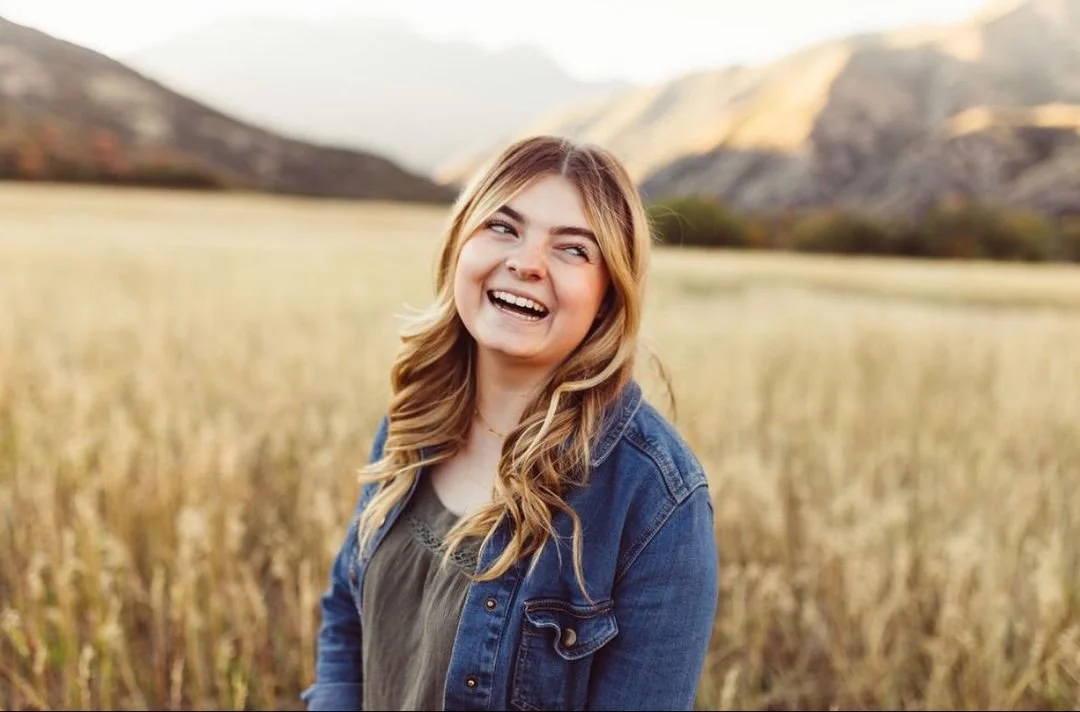
The Holtrys were enjoying backyard s’mores with some friends on a summer night when Jackson, who was 14 at the time, texted Jen and said, “Mom, come to my bedroom, we need to talk.” There, he told both his parents he was gay. Jen recalls they said, “Great, that’s fine, we’re supportive.” Jen had sensed this might be the case as early as when Jackson was in the seventh grade and first expressed a possible crush on a boy. At the time, Jen told him there was no need to label himself that young, and Jackson immediately said, “No, never mind.” And the conversation was forgotten. But now, Jackson knew he had his parents’ full support. He still felt worried to tell his siblings, Joshua – now 25 and in law school in Arizona and married to Lauren, and Hannah – who is now 20 and coming home from her Spanish-speaking mission to Orem, UT today (March 9, 2023). But both Joshua and Hannah were attentive to their brother and very supportive.
As were the Holtry’s friends, the Skinners, who had also introduced them to Richard Ostler’s podcast, Listen, Learn and Love, to Ben Schilaty’s and Charlie Bird’s podcast, Questions from the Closet, and encouraged Brent to read Charlie’s book, Without the Mask and Ben’s memoir, A Walk in My Shoes. The Holtrys had had some personal experience with gay family members prior to their own son coming out. Jen’s brother Joe had come out at age 20 when Jen’s parents were serving a mission and he had immediately left the church. That was Jen’s conception of what happened when someone is gay – that they naturally decide the church isn’t for them. So reading Charlie’s and Ben’s books opened them to a new possibility as they reconciled how to have a gay child and stay in the church themselves.
Digging into these resources opened Brent’s mind to new knowledge and ideas. He was surprised to learn that the church’s current position acknowledges that being gay isn’t a choice. He says, “Before we read those books, Jen and I were both loving and accepting but I don’t think we understood a lot of things. Before reading, I had no problem with gay people, but I didn’t like when they came out publicly. Those books helped me understand – now I welcome and celebrate when people come out.” Brent said he was filled with a desire to help LGBTQ people understand that they are loved and wanted, no matter what.
As Brent now had an extra year to consider the details of the stake youth conference and which mantra would keep the kids walking a Christlike path both on the trek and in life, he said a lightbulb went on: with statistics showing that so many youth and young adults are now leaving the church, what if there was a way they could instill a message that no matter what, they could always come back? That no matter how difficult life became, there would always be a place for them, and someone to walk alongside them, much like what the pioneers of the 1800s experienced. The Primary song “I’ll Walk with You” took on a new meaning. It all made sense.
Brent felt inspired to invite speakers to the trek who might not fit the perceived mold of an LDS congregation. As his research showed most people left the church over perceived misogyny, racism, and homophobia, he decided to invite a speaker who had been ex-communicated and later rebaptized and welcomed back into the church. He’d also invite a person of color who would not have been given the priesthood before 1978, as well as a single woman, and a gay man to speak. Jen wondered if they could possibly get Charlie or Ben to come and was shocked when Ben replied within an hour via social media that while Charlie had a conflict, he would happily join them on their trek. But Ben also mentioned that he would patiently wait until their stake approved it because while he is invited to come speak often, he is also often “disinvited” by stake leadership.
The Holtrys assumed it would be no problem for their stake to continue with this plan. Brent says he naively thought, “All would be on board with these Christlike principles of inclusion and love.” In reflection, he says he had no idea what he was walking into. His idea to invite marginalized voices to share loving messages of how they felt included in the gospel was met with fear, murmurings, and a lot of worries from the top down. Brent heard some people were complaining and even crying about the event; he heard the term “the woke trek” being thrown around with disdain. Most shocking to the Holtrys was how only one person in the stake ever addressed their concerns about a possible “agenda” to their faces – they wondered what all was being said behind their backs. But after a conversation with the stake president and his wife to dispel any fears, the leadership got on board. And once they were on board, the stake president worked hard to get the rest of the stake there. At an introductory fireside, he expressed his support for the idea, and with that, the trek, “I’ll Walk with You,” marched forward. Planning commenced, and the Holtrys were touched that Papa Ostler took the time to give them a 90-minute pep talk before the trek commenced.
And it was a beautiful experience – better than the Holtrys ever dreamed. All of the speakers came and were excellent, but one – Ben Schilaty -- stayed all three days and marched along with the kids. The Holtrys were amazed by Ben’s genuine interest in getting to know everyone, and were touched when they saw him form bonds of friendship with many – including the kids of some of the toughest adult critics.
Brent says, “After the trek, no one complained at all, about anything that had happened. Ben gave an amazing concluding fireside to the entire stake and the stake president said, ‘We have more people here than we do at stake conference.’ It was so packed, and so powerful.” Ben concluded his fireside by saying, “I don’t live here – I won’t be here every day. I’m passing the torch to you, to listen to each other’s stories.” With that wise advice, Brent and Jen, along with the Skinners, decided to start an LGBTQ support group, @learn_of_me_lgbtq.
In November of 2021, they held the inaugural “Learn of Me” LGBTQ gathering. They call it a fellowship and ally group. Jen says, “We probably have mostly allies attend, and we have had such wonderful success.” 20-30 people come and while they have not yet been able to convince their stake to advertise it, they have had a member of the stake presidency come, and a bishop has come just to check out what they’re doing. “It’s been positive. We have a 5-10 minute lesson about Christ first, and then open it up so whoever wants to can share their problems, concerns, positive things.” Sometimes they have guest speakers who are LGBTQ, and it is these meetings that Jackson, now 16, is most interested in attending.
They’ve also recently started a gathering for LGBTQ youth called S’more Love and Support Youth Hangout. The parents step out of that group, welcoming the Skinners’ daughter and her husband and a local gay couple to run it. In that circle, they invite the kids to talk and share a hurt they recently experienced. It’s been brought up that some hurts can’t be fixed, and just how hard it is to attend church. Brent and Jen acknowledge this and have told their son it’s up to him what he attends. Jen told him, “Even if you leave, you can come back. Even if you stay, you can always leave. We will support you whatever you decide.”
Jackson is now a junior in high school, and just got his driver’s license. Jen says he likes being on the swim team and “is a typical teen – he likes to hang out with friends. He has a lot of church friends, and is comfortable with a lot of kids in the ward – moreso the girls. He’s comfortable with some boys in the stake, but most of his friends are girls. At school, he has a diverse group of really nice kids, and travels from friend-to-friend group. He’s very social.” Brent laughs that he recently had an interesting conversation with a dad from their ward as they talked about the irony of allowing the other dad’s daughter to have a sleepover with Jackson and how that dad said, “I never thought I’d be advocating for my daughter to sleep over at a guy’s…” Brent says, “Everything is so different. Growing up, we told our kids. ‘When you live here, you go to church, you’re active,’ but we’ve had to rethink things.” Jen says, “I’m definitely known for speaking up now. People probably roll their eyes now when we speak. I don’t care anymore. I’m over it. I feel so much closer to Christ and my Heavenly Father -- moreso than I ever have over the past three years.”
The Holtrys have experienced love and support from friends and family, though they say they’ve learned that many want to draw a line as to what they will support. Some are less interested in hearing how the church should change policies or how leaders could be more sensitive. Brent says he’d love for leadership to understand that, “Many members are incapable of separating between loving and condoning – that message backfires, because it’s impossible to do that. What’s heard by the marginalized is they’re not accepted. That message is so very damaging. They need to know – we just love like Christ did. When people say, ‘Christ loved but didn’t condone.’ Nope, that’s not true. He just loved them.”
And in Fair Oaks, CA, that is the trek the Holtrys still walk as they invite others to “Learn of Me” and invite all into their circle where they commit to a mantra that now holds extra meaning: “I’ll walk with you.”
GRACEE PURCELL
It was fall of 2022 and Gracee Purcell had just arrived in Provo, UT to begin her first year at BYU. Not only was she excited about pressing play on life in a college town, but she was also feeling a bit safer after discovering the RaYnbow Collective—an LGBTQ+ coalition and resource provider wherein she could exhale and be herself. Their first initiative that fall was to fold and distribute 5,000 small booklets advertising LGBTQ+-friendly resources (therapists, safe housing, scholarship and event info, etc.) in the welcome bags that would be given to incoming students at New Student Orientation (NSO) with the hopes that the info would prove helpful to the (reportedly 13%) of BYU students who identify as LGBTQ+. But the day before NSO, the RaYnbow Collective received word that a unilateral decision was made against their contract with BYU and their booklets would be pulled and thrown away…
It was fall of 2022 and Gracee Purcell had just arrived in Provo, UT to begin her first year at BYU. Not only was she excited about pressing play on life in a college town, but she was also feeling a bit safer after discovering the RaYnbow Collective—an LGBTQ+ coalition and resource provider wherein she could exhale and be herself. Their first initiative that fall was to fold and distribute 5,000 small booklets advertising LGBTQ+-friendly resources (therapists, safe housing, scholarship and event info, etc.) in the welcome bags that would be given to incoming students at New Student Orientation (NSO) with the hopes that the info would prove helpful to the (reportedly 13%) of BYU students who identify as LGBTQ+. But the day before NSO, the RaYnbow Collective received word that a unilateral decision was made against their contract with BYU and their booklets would be pulled and thrown away.
Gracee says, “It was disappointing and disheartening to hear about the decision, especially when a lot of the council remembers how isolated, lonely, and unsupported they felt when starting at BYU. I know I personally felt a loss of hope. I had come to BYU hoping for a fresh start somewhere I could do more. Having this happen on day three at BYU for me was hard. I took time to process and the next day when I went to NSO, I definitely thought about the missed opportunity to support the incoming queer students.”
However, Gracee says this provided her with her “why” and a renewed passion for advocacy, especially at BYU, “as well as the realization that maybe there’s nothing wrong with us. Maybe it’s just really difficult to exist within a system that was not designed to support spirits like ours. No student should feel alone. No student should feel rejected by their university because of their identity. I chose right then that I was going to lead with love.” While Gracee says she’d rather have seen those resources end up in the NSO bags, she’s grateful for the experience it gave her. Impressive wisdom for a 19-year-old who only came out as gay to her closest friends and a few family members one year ago.
Gracee’s life thus far has likewise been rather impressive. She graduated from high school in Eagle, ID in 2021, and by that point, had already achieved her Associate’s degree from Boise State. Her father, Brandon Purcell, says she was a born leader. The oldest of six kids, Brandon says Gracee was just two when her first sibling was born and he remembers telling her she had a super power as the oldest child—that people were going to follow her. “In hindsight, that’s a lot to put on a young person. But we noticed in her toddler years, her future would be as a leader… I think one of the reasons she went to Provo was because there was an opportunity for her to both grow and lead. This year she’s found those. I see her doing a lot of fantastic, important and impactful things—not only for herself, but for others.”
After high school, Gracee spent the first semester of a gap year in Mexico teaching English part-time at a school through an International Language Program. As a first-year student at BYU, she is now a junior credit-wise, and studying Psychology with plans to become a physical therapist for athletes. Gracee’s always had a heart for helping those in need, and since the age of 15, has helped train seeing eye dogs. Throughout childhood and her high school years, Gracee’s also loved sports. She played soccer, lacrosse, and even tried pole vaulting for a season to overcome her fear of heights.
She also overcame her fear of coming out by doing so for the first time to her travel group in Mexico, six days in, which in hindsight she says was maybe not the best idea. But in a surprising turn of events, she was embraced and loved wholeheartedly by the girls in her group. She came home and went back into the closet but then started an Instagram and blog (@to_all_the_latter_day_gays) in which she shared her truth of being attracted to women. Soon after, she was invited to go on Richard Ostler’s podcast as a guest, at which point she felt it was time to tell her parents.
When she came out to her parents, Gracee says there were a lot of tears on her mom’s end. She had never considered this might be a possibility. Later that night, she came out to her dad privately and he thanked her for telling him. Brandon says he recalls thinking this was a moment with a lot of gravity and he didn’t want to say something that would come across as unsupportive or unloving. “I think I expressed something to the effect that I was grateful she had shared this with me, and I’d like to just think on it for a bit and talk about it after I’d collected my thoughts.” Gracee says she knew it would take some time for her parents to wrap their heads around everything due to their strong faith in the church. She senses their faith has always been straight forward and that this was a nuance they perhaps didn’t fully understand quite yet. But she appreciates how they listened to podcasts like Listen, Learn and Love and Questions from the Closet and read recommended books. Still, there wasn’t a lot of conversation about her orientation at home in that time before she started at BYU, and it was Gracee’s choice to not tell her younger siblings or extended family members quite yet.
Brandon concurs it took more than a minute for him to process that the future he’d envisioned for his daughter might look a little different, but that ultimately both his and his wife’s love for and hopes for their daughter to be happy and fulfilled haven’t changed one bit. Brandon hopes Gracee will “be everything she can be and have the types of connections that are important to all of us.” He appreciates the broadened experience he’s gained from listening to the experiences of others from the LGBTQ community. And he’s expressed to Gracee an impression he felt through the Spirit that while he doesn’t have all the answers to life’s complex questions, he knows one person who does. Brandon encourages his children to, “Stay close to the answers. Stay close to Heavenly Father, and He’ll guide you.”
Gracee had offers to attend other universities, but chose BYU for a particular major and to be closer to family. While she didn’t initially plan to come to BYU as such a vocal representative of the LGBTQ community, she has since realized the importance of the work that needs to be done there and is willing to be in the public eye, even under criticism, to try to create the changes necessary to make it safer for others—especially those who are not quite ready yet to be out. Gracee recognizes how important it is to find a support system and was very intentional about doing so, and thus joined the RaYnbow Collective as soon as she arrived in Provo. About 50 people serve on the council; Gracee has served as the website and design graphic design lead, and was just asked to take over as President in April.
Gracee acknowledges the climate at BYU is hard, and prospects for dating as a queer student even harder as there is always a fear that permeates. She says LGBTQ students are aware of the different messages given to different students based on who their bishop might be—there have been instances where bishops have required students self-report to the Honor Code for any attempts to date. “It’s so variable between bishops. Some are allies, some aren’t. You just have to choose what you tell them.” There’s also the constant fear that fellow students may rally against your very existence, as a group of protestors did at a Back to School Pride event held just off campus. Gracee is grateful her psychology program is filled with wonderful, supportive peers and professors.
“I think that the ultimate path forward will be with compassion and curiosity. If we move forward in that way, I think hearts and minds will be more open, and there will be more understanding. It’s not about policy change, but people changing,” says Gracee. “There’s always hope. I don’t think God should be confined to one religion or a set of practices. You can find God anywhere. I don’t think we should put God in boxes. In the end, the ultimate problem we’re having is in the core teaching of Jesus, which is to love your neighbor as yourself. The designation of who your neighbor is has nothing to do with geography or orientation or our differences, but rather with our ability to see our shared humanity.”
In high school, Gracee started training guide dogs as a strategic way she could negotiate bringing an animal into a pet-free home. She has since brought up three dogs in the program and currently has a lab puppy living and training with her in Provo. The dog attends classes and events with Gracee at BYU, and is a visible reminder to many students that some people walk through life differently. Some have different needs. And sometimes, it just takes a little training and some resources to get there. Gracee Purcell is one young adult willing to make the personal sacrifices to help others to get there. To help others to see.
THE CRONIN FAMILY
Decades ago as Kaci neared high school graduation, her dad would often think back on her childhood and say, “Some people would say Kaci thinks outside the box, but I’m not even sure she knows there is one.” While being raised in an active LDS family with a father who was later called as a patriarch characterized her childhood, Kaci Cronin has always had an adventurous spirit open to new ideas. “The balance of that and being rooted in the gospel can be a great contradiction, but I try to minimize that. Even if you have strong traditions, you can accept the new.”
While Kaci was attending a ward for the deaf 25 years ago, learning the ASL she now uses daily as an ASL interpreter at a Mississippi School for the Deaf, she crossed paths with a Deaf ASL missionary. Kevin had also been raised in the church, and the two met, married, and eventually had six kids: Shea-22, Mylee-21, Liam-18, Tierney-16, Maelin-15, and Kennilee-11. The church has continued to be an important part of their family experience in the small town in which they now live, located “just far enough outside Jackson, MS that we don’t lose water all the time” (regarding the recent water crisis affecting the area).
After moving away to Alabama for five years, a couple years ago the Cronins moved back to Mississippi and into a new ward dynamic in which they found they had differing opinions with leadership that were initially hard to navigate. They chose to speak up. For the Cronins, having a Deaf dad means communication has to be deliberate—they don’t holler from the other room and all calls are FaceTime calls. When they feel something, they say something. The Cronins operate off a spirit of the law philosophy and choose to get excited by kids who choose to go to church. During their move, they experienced growing pains with other leaders who prefer more of a letter of the law mentality with strict modesty and morality policing. Rather than step away, Kaci and Kevin leaned in to try to make this environment better, not knowing yet how much their family would soon need it, when one of their own children revealed she, too, didn’t exactly fit in the box.
Back while mothering her first three young kids, Kaci figured she could write a book on expert parenting. All three were soft spoken, clean-faced, shy--the type of kids you could confidently take out of a high chair at a restaurant. She on occasion questioned why other peoples’ kids were bossy terrors. “Then I had my fourth and by necessity had to become an ‘Oh my gosh, I’m sorry, I’m her mom and I’m coming right now’ kind of person.”
Kaci explains, “Tierney was wired differently from the beginning in all facets. As a child, she loved all things scary and intense, including shark attack books and her favorite flip flops with sharks on them.” Kaci says, “She’s still super fun and fills a lot of space wherever she goes.” Tierney loved sports—like, really loved them—and Kaci spent an extreme amount of time bonding with her daughter as she drove her to softball tournaments and basketball and track events.
When Tierney was around 10 or 11, Kevin asked Kaci if she thought their daughter might be gay. Kaci now recognizes Kevin may have been more intuitive in this regard, as Kaci shut down those early thoughts. When Tierney was around 13, she confided in her mom that she was indeed uncertain about her attractions. She thought she’d had crushes on boys, but she wasn’t sure. Kaci observed Tierney didn’t seem to feel or act the same as her older (and later younger) sister did, but Kaci advised they put a pin in it, and just see what happens.
When Tierney was 15, her parents noticed she was spending a lot of time with a particular female friend. She’d come home with a new ring or stuffed animal, and when asked its origin would reply, “My friend gave it to me.” When Tierney wanted to go to dinner with her “friend” and Kaci asked if she needed money, Tierney replied her friend would be picking her up and paying for her. After a few months of this, Tierney said, “Mom, I need to talk to you. I have been dating…” Kaci chuckled and said, “Yeah, I’ve been waiting for you to tell me—it’s kind of obvious.” Later that day, Tierney also opened up to her dad over an ice cream date.
Kaci felt gratitude their daughter felt comfortable with both telling her parents without fearing being looked down upon, and in pursuing a relationship in an authentic way. In a very short time, Kaci and Kevin had many conversations with each other and other supportive family members who all made rapid progress in understanding that they could support Tierney as they believe in a loving Heavenly Father whose gospel promotes hope and happiness. While being the parents of a gay child triggered more concerns related to the church culture and traditions (though not necessarily the gospel itself) for Kevin, Kaci says she came to the realization that, “If the church doesn’t bring us increased hope and peace, then I’m doing it wrong or someone else is.”
Determined to let this mantra both enhance and drive her spirituality, Kaci started to analyze various approaches and opinions to others’ perceptions about raising a gay child. While her family is also supportive of the couple’s dating, Tierney’s girlfriend was initially more hesitant to share her orientation with peers because of her Bible belt surroundings and different Christian faith that delegates some to hell for certain practices. Kaci appreciates that in her religion, at the very worst, anyone considered a dedicated sinner (not that she considers any of her kids as being in this category) would still achieve the lowest degree of celestial glory which, according to LDS doctrine, is “wonderful beyond imagination.”
The Cronins’ oldest son had a brief marriage around the time Tierney came out, which was also instrumental in causing the Cronins to reevaluate religious presuppositions. As the LDS couple was married with a plan to be sealed in the temple asap, from outside appearances, some would say they’d achieved something close to “the ideal.” But as the young couple lived with the Cronins, Kaci was a frontline witness to a toxic, difficult relationship that ended by necessity. In contrast, they simultaneously watched their daughter dating a girl, an LDS cultural taboo, but saw the sweet happiness in that relationship. Through this, Kaci has surmised, “You can find happiness, health and beauty in places you never thought to look. I’ve realized some of my goals are now much more primal for my children, in considering what is necessary on a human level to be able to function well. In the end, I want them to be happy, cared for, and to feel supported.”
During the pandemic lockdown, Tierney further surprised her parents by requesting a school and extracurricular change. Rather than continuing with her intense athletic commitments and the small, rural Christian school she’d attended thus far, Tierney wanted to shift to singing and playing the guitar and other instruments and to transfer to a nearby large public school where she’d audition for theatre. Kaci says, “Is there a box? No. When I posted about her not playing her lifelong sports the next year, it was kind of funny because that got more of a surprised response than her coming out. I’m proud that she’s grown and matured enough in her life already to make decisions for her own path, even beyond her sexuality. She’s realizing, ‘What do I want to invest my energy into to become what I want to become?’ I love her example that we have these things inside of us that we might not tap into if we’re not willing to try something new and go to new places to discover who we are. Because of this part of her personality, we all get to have these adventures with her.”
Tierney ended up landing the lead in the school play and when her school’s production advanced to state, she was personally named as part of the regional All-Star cast. She is still dating her girlfriend 16 months later.
When Tierney came out, Kaci was her ward’s Relief Society President. Since, their son Liam has gone on a mission where in the MTC, he was one of the trainees in his class who was unphased and supportive when their Spanish instructor opened up to the class about being gay. Kevin has since taken a job in Boston where he has surprised his progressively minded colleagues as “the guy from Mississippi who shows up wearing a rainbow bracelet.” The Cronin family are still part of the same ward, and they appreciate that their bishop has reached out to ask how they can make Tierney feel welcome, and no one has been confrontational or contentious about Tierney’s orientation or attendance at events (FSY, girls camp, etc.) that require bunkmates.
Tierney recently did attend FSY and had an intense spiritual experience she was eager to share at the first opportunity she had to bear her testimony. Over the pulpit, she told her ward she went into FSY wanting to know if she was really loved by her Heavenly Father, as is. Tierney reported that she received a testimony that, “He loves me, He still communicates with me, he hears my prayers. I’m not cut off at all.”
The entire Cronin family has shifted their beliefs to center on the personal relationship they each can receive with divinity and the foundation that comes with that. Kaci says, “FSY was a turning point for my daughter as she received a personal testament that she has a place and is valued. My prayer as her mother is she’ll always carry that with her regardless of her standing and involvement with the church.”
When it comes to parenting, the Cronins acknowledge that some out-of-the-box adventures their children have brought to their world are as unpredictable as the state of the Jackson, MS water supply. Some adventures are hard, and some are great. But Kaci says, “At the end of the day, that’s where the joy and connection come in our family–through continuing to show up for one another.”
THE NEW FAMILY
This is the story of a family who walked into your ward last Sunday for the first time. They are new in town, just moved here from the other side of the country. They sat in the back row, behind the accordion folds of the overflow dividers, hoping to blend in to oatmeal panels and a sea of pioneer stock. They hope no one will beeline their way during the postlude. They’re not sure how to explain it just yet, how much to tell. Why their records weren’t transferred just yet. Why there are no longer records…
This is the story of a family who walked into your ward last Sunday for the first time. They are new in town, just moved here from the other side of the country. They sat in the back row, behind the accordion folds of the overflow dividers, hoping to blend in to oatmeal panels and a sea of pioneer stock. They hope no one will beeline their way during the postlude. They’re not sure how to explain it just yet, how much to tell. Why their records weren’t transferred just yet. Why there are no longer records.
Three hymns, two prayers, some announcements. A youth speaker, a missionary, and a high councilman. Same line-up, different players. They’re not sure what to expect. They’re trying to remember why they came, besides their teen daughter’s desire to make some friends. But they could have signed her up for dance or something. She is distractible. The sacrament; that’s it. The sacrament still beckons.
For the purposes of this story, they shall remain anonymous. But they are very much real.
The first hour is innocuous – a talk about the Word of Wisdom, a talk about an exemplary zone leader, a talk about a baseball game with an analogy about striking out versus what it feels like to get walked or something. The words the family wants to hear don’t come. But neither do words they’ve heard before that would make them stand up and leave, never to come back. Again.
Something about the move made them hit reset. As they evaluated what they wanted to put in to this new life, this new town, they considered the things they might miss about the old one. And while most of church had become dusty and painful, like an abrupt desert storm, there were those things they missed. Recognizing faces in the grocery store, and having them smile back. Treats dropped off on the porch by youth leaders. Campouts. Potlucks. Midnight emergency calls to a minister. The Trunk or Treat. The sacrament.
So here they are. They stand and glance at each other, wondering if they should go for it: second hour. Or head to the parking lot. A friendly face offers to walk their daughter to Young Women’s. Her parents shrug, might as well stay.
Sitting alone in Relief Society, after a quick, safe “I’m a visitor” compulsory intro from the back row during announcements, a mama bear waits. Listening. On watch, it is impossible for her to settle into the comfort of the plush cushion of her green chair. She can’t call these chairs home just yet. Not without sensing the barometer of this room, this society. Could they bring relief? Some have turned and smiled, but would they do it again if they knew?
And then it comes. The teacher is young, blonde, seems friendly enough. She has picked a conference talk you didn’t listen to because you actually stopped listening to conference three years ago after that one talk. But at your last extended family dinner, the one that happened right before your move, your brother had gently mentioned that there was this one talk at the recent conference that you might want to listen to. One that was probably written with people like you in mind. This recap sounds like it. A woman gave it; her name is unfamiliar, new. But it’s about not judging others. You look at the blonde teacher and wonder how far she will take it, how far she will go. Where is her line where we’re all of a sudden allowed to judge, because most of the teachers in the past congregation seemed to have one. Hate the sin, love the sinner. Cannot condone the least amount of sin. Especially that one youth leader who let the kids keep saying those things…
And then she says it – the five initials that can turn a room on a dime: LGBTQ. Usually accompanied by the incendiary follow-up: “issues.” Because your family is an issue. Your child is an issue. You wish you could wear sunglasses so they couldn’t see your furtive glances. You subtly scan the room, searching for straightening spines, hunching shoulders, the familiar detached phone scrolling you took to when the last round of teachers would bring up your “issues.” Another game of ward roulette. One you lost in your entire stake before.
Only this room maintains a relaxed posture. And the teacher segues into her own story – about her nephew who came out. He is the best, the brightest, all his cousins love him. And in their family, they choose to love. And he loves them back.
She transitions to her next point, about another time someone judged someone else for something else. And you stop counting the steps to the Exit door. You feel your preparatory hot flash melt into a comfortably cool front. It has passed. You are no longer on trial. Your child is safe here. At least today. Not in presence, but in theory.
Because he is not here. He is at home. He will not be coming back to church – ever. And after all that happened in your last town, the one you left to keep this child alive, divine forces above whispered that’s how it should be. They still do. But on this Sunday morning, one that took a different direction because your daughter said she’d really like to make at least one friend in this town, your son half-smiled and told you he’d be fine at home, by himself. He has a paper to write about Native Americans. He always keeps “The Office” reruns playing in the background, for safety. He is distractable.
And for now, so are you. You have mastered the art of distraction. You know how to scroll through recipes during lessons on the Proclamation. You know how to sit in your car and play Sudoku. The meeting ends, and a few friendly faces approach and want to know more. And you tell them just enough, but not too much. They seem nice enough, but you are still new here.
THE QUIST/MUMFORD FAMILY
My oldest boy turned 16 recently. I found myself reflecting on his life, and the crosses he’ll have to bear.
I thought of those crosses because of the recent General Conference talk by Elder Holland who said, about those who carry heavy crosses, “I know many who wrestle with wrenching matters of identity, gender and sexuality. I weep for them, and I weep with them, knowing how significant the consequences of their decisions will be." This was the talk on Sunday morning during General Conference - the first talk actually - where I found myself looking over at Justice again and again, worried about what he was feeling. Worried that he was feeling singled out, or ashamed, or desperate, or dejected, or suicidal, or just plain sad.
He was reading a book. Because he has already checked out. And I'm glad I've taught him how to find safety. And peace.
But I noticed his eyes glance up furtively during the most personal part. I couldn't tell what he was thinking. He was just watching, with intent, as Elder Holland said that he knew individuals who "wrestle with wrenching matters of ... sexuality." Elder Holland weeps for them. Elder Holland weeps for Justice. But he won't be weeping with Justice, because Justice won't grow up feeling a need to weep for who he is…
(This Lift + Love Family story was written by one of our mothers @michlquist, who beautifully expresses sentiments so many of us relate to — the feeling of being in-between, in our own crafted safe spaces or waiting places. Here, we find comfort in knowing we are not alone. Thank you, Michelle, for sharing your story - Allison)
My oldest boy turned 16 recently. I found myself reflecting on his life, and the crosses he’ll have to bear.
I thought of those crosses because of the recent General Conference talk by Elder Holland who said, about those who carry heavy crosses, “I know many who wrestle with wrenching matters of identity, gender and sexuality. I weep for them, and I weep with them, knowing how significant the consequences of their decisions will be." This was the talk on Sunday morning during General Conference - the first talk actually - where I found myself looking over at Justice again and again, worried about what he was feeling. Worried that he was feeling singled out, or ashamed, or desperate, or dejected, or suicidal, or just plain sad.
He was reading a book. Because he has already checked out. And I'm glad I've taught him how to find safety. And peace.
But I noticed his eyes glance up furtively during the most personal part. I couldn't tell what he was thinking. He was just watching, with intent, as Elder Holland said that he knew individuals who "wrestle with wrenching matters of ... sexuality." Elder Holland weeps for them. Elder Holland weeps for Justice. But he won't be weeping with Justice, because Justice won't grow up feeling a need to weep for who he is.
But sitting there, feeling the way I was feeling, worried for my son, I wondered where to go from here.
I am a mother. It's what I was raised and conditioned to be. Am I a daughter of heavenly parents first? Do these roles conflict? Should they? Do my heavenly parents want me to choose between following them and loving and supporting my son live the life he was born to live? Would I deny him a life of love and partnership and marriage and family? Would his heavenly parents deny him such blessings? I can't imagine that to be true.
His burden is too heavy to bear. I will bear it for him.
I don’t know if there’s a choice to be made. All I know is that I choose him. And sitting in General Conference was uncomfortable in a way I never want to feel again. Nor do I want to put my own child in a position where he would ever feel bad about who he is, or that something is wrong with him, or, heaven forbid, ever feel the need to harm himself because he just can't be what the church tells him to be. Because everything about him is good and right and filled with light. I won’t do it. And if it’s not a safe place for him, then it’s not a safe place for me. Because I am his safety.
Here's the thing, though. I can't leave. Undeniable personal experiences have testified of light, truth, warmth, and love.
Yet, I cannot stay. I cannot look to my son during General Conference, or Sunday worship, or firesides, or activities, to make sure he’s ok from messages of exclusion and unattainable expectations. I cannot see him tortured by policies and blessings that don't include him. I cannot excuse him from activity and yet continue to belong where he is not welcome.
I used to be able to hear the Spirit in the messages. Now I only listen for what I'll need to heal. I wonder whether ears to hear and eyes to see means something different than what I thought before. Something more empathetic perhaps. Something more Christlike. Because I have the same ears that I had before. And I have the same eyes that I had before. But I hear everything so differently, and I see everything so clearly.
Christ lives. And my son is gay. And those two things aren't incompatible. I will celebrate both.
THE BURTON FAMILY
One night, when Holly Burton was tucking her 6-year-old son Sam into bed, he looked up at her with his imploring blue eyes and said, “Mom, I have a question and you have to tell me the truth. Am I adopted?” Holly responded, “No, honey. I would tell you if you were adopted; why do you ask that?” Her son replied, “I don’t know, I’m just… different.”
It turns out Sam would experience a unique path from many of his peers, in more ways than one. “He was always a very creative, gentle, inquisitive and intelligent child,” says his mom. “He tested to be in a gifted program, but he wanted to stay at his regular school and be with his friends.”
Sam is the second of five children in the Burton Family. Throughout middle and high school, Holly says Sam didn’t identify himself as being gay, but later reasons that the guys he admired back then probably were crushes. He told her, “Our culture never provided me with a healthy framework to even conceive of being gay, so it was easy to dissociate and convince myself it wasn’t so.” Sam had lots of friends who were girls, but no girlfriends. Holly now laughs, “I always just thought he was so pure, he wasn’t going to kiss anyone before his mission.” Indeed, as he prepared to serve, Sam’s stake president told his parents, “I interview a lot of missionaries before they leave and really grill them – I want to tell you that Sam is one of the purest souls I’ve ever spoken with.”
Sam loved serving in one of the New York missions, and his friends and family loved receiving his “wonderfully entertaining letters.” Halfway through his mission, Sam began having what he thought were heart problems. He was put through a series of tests, but came to realize he was experiencing severe anxiety attacks. Sam was coming to the realization that he was gay and the cognitive dissonance that it created caused his body to react. He came out to a LDS services therapist as well as his mission president.
One night, when Holly Burton was tucking her 6-year-old son Sam into bed, he looked up at her with his imploring blue eyes and said, “Mom, I have a question and you have to tell me the truth. Am I adopted?” Holly responded, “No, honey. I would tell you if you were adopted; why do you ask that?” Her son replied, “I don’t know, I’m just… different.”
It turns out Sam would experience a unique path from many of his peers, in more ways than one. “He was always a very creative, gentle, inquisitive and intelligent child,” says his mom. “He tested to be in a gifted program, but he wanted to stay at his regular school and be with his friends.”
Sam is the second of five children in the Burton Family. Throughout middle and high school, Holly says Sam didn’t identify himself as being gay, but later reasons that the guys he admired back then probably were crushes. He told her, “Our culture never provided me with a healthy framework to even conceive of being gay, so it was easy to dissociate and convince myself it wasn’t so.” Sam had lots of friends who were girls, but no girlfriends. Holly now laughs, “I always just thought he was so pure, he wasn’t going to kiss anyone before his mission.” Indeed, as he prepared to serve, Sam’s stake president told his parents, “I interview a lot of missionaries before they leave and really grill them – I want to tell you that Sam is one of the purest souls I’ve ever spoken with.”
Sam loved serving in one of the New York missions, and his friends and family loved receiving his “wonderfully entertaining letters.” Halfway through his mission, Sam began having what he thought were heart problems. He was put through a series of tests, but came to realize he was experiencing severe anxiety attacks. Sam was coming to the realization that he was gay and the cognitive dissonance that it created caused his body to react. He came out to a LDS services therapist as well as his mission president.
Unfortunately, telling his mission president is something Sam later regretted. His mission president approached Sam being gay as a problem to be fixed, a sin to be repented of, and proceeded by meeting with Sam regularly to help him determine what was preventing him from accessing the Atonement to help him be made straight. As a pretty straight-laced kid, Sam was unable to come up with answers that merited such a repentance process. Sam’s mission president advised him not to tell his family he was gay, so they remained unaware of what he was going through. After two years, Sam returned home to Holladay, UT, and began school at BYU Provo, where he found a good therapist. He found these sessions very helpful.
Soon after school started that fall, Sam met his mom for a last minute lunch at Thanksgiving Point. Over a table at Costa Vida, Sam shared a significant spiritual experience from his mission that happened during a time when he was in a particularly dark place. He was sitting outside his apartment on a fire escape feeling alone and without hope. As he prayed, he felt a great peace and these words came into his mind: “You are not broken. You are exactly who you should be. You are going to be okay.” This experience carried Sam for the rest of his mission until he returned home. On that day, after sharing this with his mom, he said, “You probably already know this, Mom, but I’m gay.” Taken back, Holly replied, “Wow. I didn’t know that. This is big… Just know I love you and that makes absolutely no difference.”
When Holly got back to her car, she had an overwhelming feeling of, “I wish it were yesterday. I wish I could go back in time.” While she was so grateful her son had shared this news with her, she says, “I was worried. I didn’t feel like this is end of the world horrible. But more like all those expectations and dreams I had for him are gone, and he’s going to have a different life, and I was mourning that. Things will be different – for this kid whose kindness, patience, and compassion are gifts. We thought he would be the best husband and father. And at that time, I thought that’s not going to happen for him. Now, my thinking has flipped – he will be the best husband and father, but it won’t be with a woman. And I’m completely okay with that.”
Sam had asked his mom to let him be the one to tell his dad, Brent, which presented a challenge for Holly who always shared her thoughts and feelings with her husband – especially big news. That night, as she was making dinner, Brent caught her in an emotional moment and asked what was wrong. She said, “I heard news about a friend who is going through some hard things. I can’t share the details, but I’m feeling sad.” Sam reached out to her that night to make sure she was alright, saying, “I’ve had a long time to process this mom…I just wanted to make sure you’re okay.” Holly says, “Sam was still Sam. His love and empathy still came through.” Over the next couple weeks, Holly found herself processing alone, with many nights spent crying in the bathroom by the kitchen -- a place no one would hear her. She urged Sam to tell his dad, completely confident Brent would respond the right way. And he did. Later, Brent said, “This is Sam we’re talking about – one of the best people we know. We know this isn’t a choice.” While Holly and Brent were united in love and support for their son, they then faced the questions that flood so many parents in this space: What does this mean? For our son, for this church, for these people? Where is their place?
Initially, Sam considered the idea of remaining celibate, or alone, and staying in the church. But his family watched as he spiraled into depression, devoid of hope. “God did not make us to be alone,” says Holly. “Especially Sam – who has so much love to offer, so much to share.” Brent initially struggled, wondering “What kind of God would do this to someone? It just seems cruel to give someone a testimony of God’s plan, only for them to realize that one of the end goals in that plan is not possible for them.” Holly ‘s first thoughts were, “Of course this is going to change! If this really is Jesus Christ’s church, it will have to. He has a plan for ALL his children. I’m just waiting for the further light and knowledge!” Though she hopes she’s not being naïve.
Sam remained at BYU, where Holly says loving, affirming professors in his undergraduate program offered Sam the support he needed. “They didn’t love Sam because he was a gay student. They saw him for who he was – this amazing, talented kid. They gave him opportunities to succeed. He won awards, he presented papers, he taught undergraduate classes. He even went to DC to help a professor present their research at a conference.” She credits one professor in particular with offering the kind of support that she feels helped save her son’s life. In light of recent events, she hopes the BYU faculty will remain a safe space for kids like her son who so desperately need them to be.
Holly will never forget when she received a call from Sam one late night. She could hear it in his voice. He was not okay. She asked, “Are you thinking about hurting yourself, Sam?” His response quickly prompted her to drive down and take him to the ER where they met with the psych department. A nurse asked Sam to explain what was going on. “I’m a gay man; I go to BYU.” “Say no more,” the nurse replied. Together, Sam’s support team made a game plan. He started to turn to music, specifically the BYU piano practice rooms, where he’d escape whenever he needed to destress.
It was a short time later that Sam asked his parents, “What would you do if I ever married a man?” They told him, “We’d be completely supportive and love him just like we love you. He’d be a part of our family.” Once Sam realized he had his parents’ full support, Holly says they saw a weight lift from him. He felt hope. Sam is now thriving at UT Austin where he was granted a teaching fellowship and is now pursuing his masters in Media Studies. He plans on being a professor someday. Recently, out of respect to his parents, Sam told them of his intention to have his records removed from the church, feeling he can no longer “in good conscience have (his) name on the records of a church that treats people this way.” Although, he fully respects his parents’ choice to try to stay in the church, serve, and hopefully make a difference.
Holly is serving as a stake Young Women’s president. She strongly believes we should lead with love instead of fear on these issues. She says, “By listening to others -- really listening, we can build bridges and come to understand different lived experiences unlike our own.” She flies a Pride flag not as a political statement, but to show her love. She has often felt the presence of her beloved father, who passed away three years ago, and she hears his spirit reminding her to “Be fearless. Trust in the Lord and know that this is all so much bigger than we can even comprehend.” She believes we need less judgment and more love. “My job is not to judge. I believe that is the Savior’s job. Our job as members of His church is to love.” She wishes we had better training for church leaders on these issues. “Probably the best thing leaders can learn to do is to listen to LGBTQ people.” Her bishop did exactly this with Sam. Holly was so touched by how their bishop just listened to Sam and asked questions -- for hours. He was then inspired to plan a fifth Sunday meeting where he invited Samuel (as the main speaker) to share his experiences, and Holly and Brent and two other parents of an LGBTQ child, to share theirs as well.
What Holly hopes for most right now in this space is that we can shift the narrative so that when a LDS parent’s child comes out, the parents don’t see this as devastating, but see their child as a gift. She says, “The LGBTQ people I know are incredible. They are amazing! I know we say we have a place for them, but our doctrine is not so clear about that place. At least not a place or space that many can live with. By not having or creating that space, we’re losing out. We’ve lost so many people – not just those who have stepped away, but literal lives have been lost over this. It is heartbreaking to me! These are people who have so much to offer. Sometimes we have to ask hard questions – and more importantly listen to the answers. When we really listen to LGBTQ people, we see them, we understand them, and it is then that we are better able to fully love them.”
JILLIAN ORR
“I didn’t commandeer this,” says Jillian Orr, the BYU graduate who recently made national headlines after flashing the rainbow-flagged lining of her Cougar-blue robe as she accepted her diploma. “I made a statement, and the world picked it up, because what is going on at the university is clearly unacceptable.”
Jillian’s now viral robe reveal was intended to be a civil protest of policies that made her experience at BYU less than comfortable, and at times downright painful as an LGBTQ+ student.
It was Jillian’s younger sister who first came up with the idea for the subtle statement. After seeing Jillian break down in tears after a troubling survey she took in a BYU marriage and family class in which her multiple choice answer of “loving our LGBTQ brothers and sisters unconditionally and accepting whatever they want as what is best for them” as the appropriate way to behave was marked wrong, Jillian’s sister suggested she wear a rainbow dress to graduation. “Nah, not my style,” Jillian thought. But she was intrigued by the idea of a Katniss Everdeen girl on fire/Cruella Deville at the party-esque reveal in which one’s wardrobe did the talking. “Kind of an, ‘I will stand against you, and you can’t do anything about it because everyone’s looking at me’ kind of way.”
The day before commencement, Jillian’s older sister dug out her sewing machine to do the handiwork. Jillian admits she was nervous, wondering if she’d be tackled or escorted offstage. But instead, it was a quick, quiet moment that all became worth the risk shortly after graduation when another female student approached Jillian and said, “My girlfriend saw you do that, and she wanted me to thank you.” Since, Jillian’s moment has gained momentum as a Tik Tok video attracted the eye of national news syndicates including CNN, People, Good Morning America, The Today Show, Teen Vogue, NBC, ABC, and every news station in Utah (besides Deseret), who have since covered the story. Which, diploma in hand, Jillian is now ready to tell.
The 28-year-old graduate in psychology was born and raised in Farmington, UT, the fifth of seven children. Her parents met at BYU, and her mother – a once orthodox Catholic who converted to the LDS faith – applied her music major to making every morning in the Orr household a music-filled devotional, complete with scripture reading, prayer, and song.
Jillian was a driven, ambitious, assertive kid who questioned things and sought out challenges.
“When something scares me, I want to run at it. That’s how I handle things that frighten me.” As a young child in Primary and into Young Women’s, Jillian offered to teach lessons, and frequently told her bishops she’d be happy to fill in as a last minute speaker, if needed. Jillian served a mission in Eugene, Oregon where she had multiple leadership roles, and later served in the temple for two years. She became an institute teacher, and once thought she’d end up a mission president’s wife, which would provide her more opportunities for public speaking and working with youth – her passions.
Career would come first for Jillian in her 20s, and she took early steps to go into the field of change and empowering people. Along the way, she worked with youth in rehab centers, where she discovered she was more interested in preventive care than rescue/rehab work. She worked at an after-school program, and after saving enough money to go to college, she entered BYU because they had “the best psychology program.” Indeed, she loved her studies including many “awesome psychology teachers” she met with in person before COVID required her studies to go mostly online.
It was during the pandemic that Jillian started to recognize that the feelings she had for her long time best friend – a girl – were more than platonic. And they were mutual. And that’s when some cognitive dissonance began to set in. She relates, “We both recognized what this was, but we’d been taught it was wrong, a sin. My understanding, being raised in the church, was as long as I don’t act on this, I’m not wrong; I’m not homosexual. Like if you don’t drink, you can’t be an alcoholic.” Jillian began meeting with a mentor who helped her see that her feelings weren’t something to be avoided, but were in fact a part of who she was. Jillian came to recognize that, “These so-called ‘demonic temptations’ had become a beautiful part of who I was. And it would be a gift I could later empower other people with.”
As she became more in tune with her bisexuality, Jillian began to more clearly identify the harmful toll some of her classes were taking, particularly her marriage and family courses. Of the way some professors spoke of LGBTQ people in a “They will never be as happy as the rest of us” manner, Jillian internalized how that felt for her and other LGBTQ students around her. While she’s grateful for some professors who introduced themselves as allies and safe spaces, others made it clear they would not be teaching any form of LGBTQ inclusivity if it contradicted church teachings – even if it meant being misaligned with the current ethical standards of the American Psychological Association. At one point, Jillian refused to write an assigned paper on why marriage is only between a man and a woman, instead taking the fallout of a failing grade. “The professor didn’t say anything; they just moved on.”
In contrast, Jillian’s entire family has been extremely supportive and affirming, for which she’s grateful. “They’re riding the roller coaster with me.” Her older brother came out as gay five years before, and the family acknowledges that when it was Jillian’s turn, things were handled better. “Props to him for being the maverick,” she laughs. The entire Orr clan, her “pit crew,’ travelled in to Salt Lake for Jillian’s recent graduation party, hosted by her and her girlfriend. Festivities included a mechanical bull and a lot of laughter.
Jillian has now resumed her career by overseeing the largest nonprofit after school program in Utah, working as the area director for the Boys and Girls Club. She’s grateful to work at a place that values inclusivity and positivity. As for her church affiliation, she’s finding comfort in letting things go and moving on. “In reflecting on the covenants between God and I and what He’s taught me about my sexuality, I’ve realized so many things I was once taught don’t line up with His truths. If I got married to my girlfriend, even if I begged to stay, I’d be kicked out of the church. It doesn’t seem like something Christ would do.” After two rounds of discovery, both with LGBTQ issues and some troubling bouts of church history, Jillian has felt it best to step away, saying, “I can no longer affiliate with an organization that treats people like me this way.”
When asked how others can implement best practices in the mental health space, Jillian says, “I want people to be able to hold space for others and ask what’s important to them, and not have an alternative narrative about what they think it should be. If you hold space for someone in love, they will navigate where they’re supposed to be faster. For those trying to navigate, find the next right thing for you and do it. Live it. Authentically. Allow your mess to be your message. And understand you’re going to use it to help other people.”
Her public journey started with the seemingly subtle lining of a graduation robe. But now, Jillian Orr is ready to take the podium to spread her message of inclusivity. “I’m meant to be a voice, and I can take a hit for those who need me to. I’m meant to stand for this.”
photo credit: Hope Orr
THE TANYA & BRENDEN DAVIS FAMILY
My husband Brenden and I are the parents of four beautiful children: Courtney - 25, Ren - 23, Eme – 15, and Jackson – 13, who are ALL LGBTQ! We are the only family we know with all LQBTQ kids and we feel like we won the lottery! But it has been a process to get to this point in our lives.
Our second child, Ren (they/them), was our first to come out in 2016 at age 16, originally as pansexual and more recently as non-binary as well. As our first to come out, Ren had the toughest time and we made SO MANY mistakes, especially me. Brenden and I were on our way to Europe to celebrate our 20th wedding anniversary when we found a note in our car at the airport, telling us Ren was pansexual, had known for more than five years, and was leaving the church. We were stunned. I found out later that they had a bag packed that day in case we asked them to move out – which broke my heart. We did call right away and shared our love and support, but that was really the only time we talked about it for the next few months. I chalked it up to giving everyone time to process; but the truth was, I was afraid, and hoped this was just a phase that would go away. I thought Ren was exaggerating pain to get out of attending church, and honestly, I made the experience at the time more about me and the pain I was feeling about their stepping away from the church, instead of about their feelings.
Even with our love and acceptance, Ren had internalized feelings of unworthiness and shame that were at times crippling. A suicide attempt in 2017 really opened my eyes. At the time, I felt there could be nothing worse than the despair you feel when your child tries to take their life. And then I witnessed the level of pain experienced by four separate family friends who each lost loved ones to suicide, some due to shame they faced from their church communities because of their identity.
After Ren’s attempt, the situation became painfully clear. It didn’t matter if this was a phase. It didn’t matter what I was feeling. What mattered was this kid, right now, and the fact that they were hurting deeply. And I needed to figure out how I could help. We were given a second chance – a gift many others don’t receive, and I was determined to do better, to be better for all of our kids.
It seemed unfathomable to me that the church that had brought such joy and fullness to my life could be causing pain for others. I asked Ren to explain more about what hurt at church, and several examples were shared. But the one that hit home the most was a regular and repeated experience – a brother in the ward who reliably bore his testimony every month about Satan’s attack on the family. With tear-filled eyes, Ren looked at me and said, “They are talking about me, Mom. He thinks that I am Satan’s tool to destroy families.” Ren continued, “How could God love me but make me this way?” It was the first time those thoughts had ever occurred to me, and I had no answer for my child who was hurting so badly. But from that very day, I became determined to dig in and learn more, to understand the pain points and to do a better job protecting. When I took my pleas to the Lord, they changed from “Change my child” to “Change me, help me to see.” As the Lord always does, He answered clearly and precisely: “Just love, without preconditions, without judgement, and without requirement to change.” I had four years to educate myself and to learn before life would change again.
One of the blessings for Brenden and I during the 2020 pandemic was lots of family time and many conversations that helped our kids to understand how we truly wanted to be supportive. Our daughter Eme (she/her), then 13, opened up in a tearful conversation and shared that she was pansexual. Five minutes into that conversation, our then 11-year-old son Jackson (he/him) burst into the room. He could tell he had walked into something important since we were crying together, and he started to back out of the room. Eme made eye contact with him and said, “I told her.” My response was, “Wait, he already knew?” To which my son responded that he might was well share his news, too: he was omnisexual (attracted to any gender, with a male preference) and gender fluid! That was a lot for one conversation! But the feeling was so palpably different than our first experience with a child coming out. I felt relief that we knew so early, without years of trying to hide and repress feelings. I felt so much gratitude that Ren had paved the way so that their siblings could have an entirely different experience.
Our oldest daughter, Courtney (she/her), got married civilly during the pandemic and about a year later came out in a Facebook post as bisexual. She shared this information with her new husband, Casey, prior to their marriage and he was nothing but supportive of her. He’s a keeper! She delayed telling us because she was worried that we would struggle with her decision to leave the church and that four LGBTQ kids might “put us over the edge.” By that point, I was a little bit relieved that for the first time, we were all in this together, in a different way than we had ever experienced before. We are making the decision to “come out” as a family together now because we want to celebrate how far we have come and to emphasize that there is no shame in the way the Lord made each of us. We are so incredibly proud of the amazing, talented, artistic, funny and empathetic children we have been blessed with. They have taught us the true meaning of love. We are better because they are part of our lives. We have told them repeatedly – and we mean it – that we will love whomever they choose to share their lives with!
These experiences have brought Brenden and I closer to the Savior, and to explain that further, I need to share a bit about my job. I am an architect and I work for the church in the Special Projects Department. I oversee the design of new temples in a large part of the world, and I have been participating in this work in some form or another since 2016, just months before Ren came out.
As I came to better understand the trauma our LGBTQ kids were carrying, I came to understand why the temple was such a source of pain for many. I have had tearful, honest conversations with my kids about the reality of their ability to attend the temple now and in the future. At times, it has seemed ironic to me that the majority of my time and effort on a daily basis is spent engaged in building temples that my own children may not be able to attend. It hurt tremendously, often more than I had words to explain. I don’t think it is a coincidence that I work where I do and that all my children are LGBTQ. It has given me the opportunity to search deeply for answers from the Lord.
As I repeatedly took my concerns to the Lord in the temple, several things were made clear to me. First, the valiant example of Eve: her ability to evaluate truth and evil and make a courageous choice allowed the unfolding of the Lord’s plan. She is someone I can emulate and admire as a mother and a woman who bravely does hard things. Second, the blessings pronounced in the temple go both forward and backward in time, they impact my ancestors and my children, and are based solely on my ability to keep my covenants, not theirs. Third, it was no accident that the focus of the temple is on the beauty and variety of the Lord’s creations. My children, and others like them, were beautifully and wonderfully created in His image and were some of the most valiant spirits saved for these latter days. That last truth came as I sat in a celestial room and looked up at the beautiful chandelier and saw hundreds – if not thousands -- of tiny rainbows. It literally took my breath away. I was also blessed with the opportunity to take my whole family to the open house and rededication of the Raleigh, NC temple, one of my earliest temple projects. As we sat in the celestial room together, I had the thought that it might be the only opportunity we would have, in this life, to be with our children in the temple and how grateful I was that we at least had that experience together. I was filled with tremendous peace that everything would be ok, and I have often looked back on that experience for peace and reassurance from the Lord.
We try to Lift + Love our children by believing them. We talk about everything honestly and openly. We try to help them process things that hurt, including comments and attitudes of others -- sometimes close friends. They have our permission to leave a space that doesn’t feel safe and to advocate for themselves and others. We are also working on allowing them the space and time they need to create their own relationship with the Savior and to understand that His love is not transactional; it does not need to be earned. The Lord has slowly been teaching me that I don’t have to hold on so tightly. He loves these kids infinitely more than I do – which is hard to imagine. Whether they stay members is not important; what matters most is that they connect with Him and feel His love in a way they can understand.
As for my husband and I, we feel called to stay, to tell our story, and to advocate for safety and inclusion. I believe that truly listening to each other and learning from each other paves the path to real Christlike love. Listening to the stories of other LGBTQ members as well as my own kids ultimately changed my heart. My desire is that one day we, as members of the church, will open our hearts and our minds to everyone and that we will have a desire to truly magnify our baptismal covenants -- to mourn with those who mourn and comfort those who stand in need of comfort -- with both our words and our actions. Church will be a place to come and heal, regardless of the trials and challenges we face individually and ALL will be welcome on the pews. We will be able to love without preconditions, without requirement to change -- to love like He loves!
We’d like to thank Tanya Davis for sharing her beautiful family story.
the gruwell family
Just after Christmas, on January 13, 2021, our Elli told us that she is bisexual. She was 16 years old. A series of events led me to feel impressed by the Spirit to ask Elli if she experiences an attraction to women. She opened up and shared that she doesid. Sitting across from me on my bed, she shared that she experiences a stronger attraction to women than men, and that she has a desire to embrace and explore this part of her life. This part of who she is.
Just after Christmas, on January 13, 2021, our Elli told us that she is bisexual. She was 16 years old.
A series of events led me to feel impressed by the Spirit to ask Elli if she experiences an attraction to women. She opened up and shared that she doesid. Sitting across from me on my bed, she shared that she experiences a stronger attraction to women than men, and that she has a desire to embrace and explore this part of her life. This part of who she is.
Life changed. We have put our arms around her and told her that we love her, and we always will;, she will always be a part of us. We told her we would navigate this road with her and walk with her wherever it took her. I told her if she married a woman, I'd throw a beautiful wedding for her, and we'd stand by her side.
But inside. my heart ached. Because I knew this would be a long road. Because I knew others wouldn’t understand like I do. Because I knew this road may take her away from the very thing that gives me breath.
The Lord prepared my husband, Matt, and I, and we were carried in His love during those first days. On the night she told us, I had a very strong, distinct impression from the Spirit that this experience would bless us. That this is what the Lord has always had planned for us. That this would cause us to dig deep and access places in our heart that we wouldn't be able to access otherwise. That we would become more like the Savior than we ever could in any other way imagined. That our life was always meant to be this way. Almost like there was something in our family,, in our reality and our space that was missing, that would now help us become more whole.
But somehow, it felt so deeply hard. Hard to reconcile emotions and feelings and dreams. Not hard to love her. Not hard to make our family a safe space. Not even hard to tell someone I have a gay child. It was just so hard as a parent to know what to do next, for her. What to do to help her be healthy and happy in this world of discrimination and fear. There's no map for this. It's really lonely.
I learned long ago that life doesn't follow a "plan,", or an expected path. It's an individual journey for each of us, and a lifetime of wrestling with a variety of realities that we each inevitably face. Elli's journey is no different, and she will work with the Lord to determine what that journey will be. Not me. I've learned to relinquish that role as a parent. My job is to love her and teach her that the Lord loves her. Our love for her will never change. W, we will love and accept whatever choices she makes and whatever path she chooses. We feel peace with that. And we are handing it over to the Lord. I think we often try to take on the role of the Savior in our children's lives. It's not our job. We can't fix or heal. We can't convince or change. That is His job.
We can love. That's all we have been asked to do. And if our children choose a journey that takes them on a twisting, winding path to find that light and that love, that is simply ok. It was always meant to be that way.
I have had multiple experiences over the last decade that have caused me to wrestle with the Lord and have given me deep love and gratitude for His love and His doctrine. There is so much I don't understand, but hasn't it always been that way? Weren't we told that there would be mysteries that we don't understand? Haven't we been told that we would have to wait upon the Lord? Isn't that why faith is what it is? We are asked to walk into the dark and trust Him. To have faith that what we don't know;, He knows. It's a different kind of faith -- deep faith. The kind of faith that only comes when we are blind.
The Lord has asked me to relinquish control over and over and over (and over) again in my life. I'm grateful for that repeated lesson that was preparing me, in ways I didn't know I'd need --, to do it again now.
I believe the Lord knows each one of us personally and intimately. No tear is unseen. In the months that followed Elli’s coming out, my husband and I immersed ourselves in learning more, and in listening. We talked with Elli often, asking a lot of questions, both to show support and a willingness to learn and understand. It was no coincidence that I decided, through a series of heaven-led moments, to return to graduate school for my Master of Social Work degree not long before Elli came out. As bishop, my husband and I both felt impressed to start listening to how we could better minister to the LGBTQ+ community the year prior, with no real comprehension as to why. It is no coincidence that we live in a beautiful, small corner of Pennsylvania where the Young Women’s leaders have loved Elliher and asked her to share her thoughts and experiences in lessons, in her small class of six young women. It is no coincidence that she was part of a 13-year career in competitive gymnastics with a team that knows her and would love her and accept her. Elli, who has always had the biggest and kindest heart, is happier and healthier than she has ever been, and she believes her Heavenly Father knows her and He loves her. She knows we love her. I wouldn’t trade the love and joy in those relationships for any guaranteed outcome.
We have learned and grown so much on this journey. I have felt inadequate every step of the way, but I have heard the Lord whisper to me -- sometimes moment to moment, day byto day -- what to say, what to do, and where to turn. He has been guiding us, strengthening us, and reminding us that the conduit to heaven is real. I have felt my relationship with my Savior strengthen and my heart expand. We want to help others as they navigate this path. We want to say, “Wwe see you, we know it’s real,, sit with us., Yyou can talk about it and you can be open about it, and you can share the reality of it in this space. And you will be safe.” This cultural change is not only needed in the church;, it is needed everywhere. In our homes, in our schools, in our streets. From both a spiritual, personal, and professional space, I can tell you it is needed everywhere. It will save lives. Invalidating the core of a person’s identity has lasting effects that cannot be measured, causing deep trauma and deep wounds. It is such an important thing to humanize the unknown. The more stories we hear, the more we clarify and dispel the single story often defined and communicated to us through society. We must love, and leave the rest to the Lord.
Often in my conversations with people, I wrestle with the irreconcilable aspects of this road. What is right or wrong, what the doctrine says, what the future will be like, where God stands. I honor and respect that for some, the healthy choice is to step away from the church. I have a heart wide open in love for both those who stay and those who can’t.
I don’t know the answers. But for me, believing that God knows things that we don’t, that understanding can change and be increased over time, that things can be revealed, that there is so much we do not know, and that … saying “as we know it” to an array of topics and questionss… ..is foundational to having hope and faith, and being able to trust despite all the questions. I don’t say “as we know it” to dictate or even assume what changes will happen. I don’t claim to know the answers. I just know I can’t make sense of it right now, and I pray more clarity comes along the way. “As we know it” doesn’t represent doubt;, it represents faith. My role is not to determine or change doctrine. That is the Lord’s job -- and His alone. I will leave that to Him and trust Him. But I can change the way I love. I can change me. I can change my home. I can change my pew.
I have had so many moments of asking, as Emily Belle Freeman doesays, “Where is God and can He be trusted?” Are all the impressions I’ve had my whole life real? How does this fit into that picture? Am I wrong? Are they wrong? Maybe none of us are. Maybe all of us are. Am I understanding my impressions correctly? Are these Gods’ thoughts, or just my own? The list goes on. Faith is hard work. And sometimes I am tired. But then I feel the Savior give me strength from both seen and unseen sources, and I remember that it’s ok not to have the answers. That my life’s story -- Elli’s life story -- is young. Sometimes we put limits on the Lord and his timing with our expectations. Who is to say all our dreams won’t come true? I love the principle of not having our faith based on particular outcomes.
Sometimes I look around and realize that what is happening is exactly what I asked for. I asked to be stretched and molded to become more like my Savior. I asked for doors to be open where I could serve Him. I asked to be broken open, and made new. I promised long ago that I would listen to the Lord’s whisperings and try to do His will. Every step of our lives has been in hopes of serving and sacrificing for our Savior, in an effort to love all His children. This step will be no different. I love my Savior, Jesus Christ. I’m here, both in this church and in this space, because of Him. And because I’ve also knelt in the Sacred Grove. And in the temple. And I’ve had the heavens open in my life. I have had experiences I cannot deny. And I also have questions I cannot reconcile. That’s when I lay it at the Lord’s feet. Despite all that is unanswered, there are also answers to other deep questions of my heart that I cannot find anywhere else.
The loneliness and confusion I experienced, sitting in my corner of the world in those first moments on that January day, were stark and overwhelming. It's amazing how alone you can feel... ..until all of a sudden you realize you are not. That's my hope. That I can help another mother who feels alone in her corner of the world, feel less heartache, and less loneliness. We want to carry these burdens together. We want to share our deep love of the gospel and desire to love and support our daughter at the same time. We want to share that we do believe those two realities can exist. We have access to heaven’s power. We are not alone. You are not alone. Your family was always meant to be this way.
The Gruwell Family consists of Stacie and Matt and their four children: Ashlan (21), Elli (18), Kate (13), and Monty (8). They live in Harborcreek, PA, where Matt is a professor of genetics and evolution at Penn State University, and Stacie works in mental health at a junior high school.
Elli will be attending Utah State University on a scholarship with the Huntsman School of Business Scholar Program this coming Fall. She looks forward to coaching gymnastics, and continuing her passions in vocal performance and digital art.
THE TALBOT FAMILY
Last Saturday night, 42 parents met at the base of Y Mountain in Provo, UT. Industrial-strength flashlights in hand, they were ready to hike to the top. To get there, they’d need to circumvent BYU’s newly installed orange fencing and prohibitive signage, as well as bypass two patrol cars parked at the path’s entrance. The night was cold, but they were on fire with the fervor of their mission – to shine a rainbow of light that would remind their LGBTQ kids that they’re seen and loved. Charalece Talbot helped distribute the lights (that have lived in her garage over the past year) to the other parents – many anonymous, all willing to risk arrest and fines to complete their mission. Some might call it a protest, but for these parents, Saturday night’s hike to the Y was part of a movement…
Last Saturday night, 42 parents met at the base of Y Mountain in Provo, UT. Industrial-strength flashlights in hand, they were ready to hike to the top. To get there, they’d need to circumvent BYU’s newly installed orange fencing and prohibitive signage, as well as bypass two patrol cars parked at the path’s entrance. The night was cold, but they were on fire with the fervor of their mission – to shine a rainbow of light that would remind their LGBTQ kids that they’re seen and loved. Charalece Talbot helped distribute the lights (that have lived in her garage over the past year) to the other parents – many anonymous, all willing to risk arrest and fines to complete their mission. Some might call it a protest, but for these parents, Saturday night’s hike to the Y was part of a movement.
This would be the third rainbow-themed lighting of the 380-foot-tall Y that has become the nationally recognized insignia for BYU, a campus that as of late has had a complicated relationship with its LGBTQ population due to various policies and speeches bestowed by its leadership. The lighting of the Y events, initiated in March of 2021 by Charalece’s son, Brad, has garnered national attention, and BYU’s finger wagging.
Charalece never predicted any of this would be her path when her firstborn entered her and husband Paul’s world in Pleasant Grove, UT 24 years ago. Brad is the oldest of their six children (which also include Preston – 21, Kailene – 19, Breanna – 17, Sterling – 14, and Aliza – 9). When he was younger, Charalece only had mild suspicions Brad might be gay, but she never asked. It wasn’t until he was serving a mission in Winnipeg, Canada that Brad finally emailed his parents to tell them about his orientation. Charalece appreciated this approach, as it gave her time to process and study before he returned home nine months later, and most importantly, to “not say something stupid I would later regret.” Charalece turned to church resources for guidance and was a little surprised at how little she found, so she turned via blogs to “the experts” – i.e. the parents in this space, much as she had sought out forums of a different kind when her son Preston was diagnosed with autism as a toddler. Charalece was dismayed to find how rare it was for a gay member to stay in the church. She mourned a bit as she came to terms with the notion that her son, who was serving a mission, “might not always be a part of the church I love in the way I thought.” But Charalece clung to her faith that, “The Lord has been a part of our whole journey; I knew I could not do this without Christ.”
Once back from Canada in 2018, Brad started his education at BYU, from where he would later graduate in 2021. (He’s headed to Boston College this fall to pursue a MSW). During Brad’s junior year at the Y, he decided he needed to do something to help his fellow LGBTQ peers feel a little less alone – a common reality for many he’d met. He started Color the Campus, an initiative asking allies to show up to campus in rainbow colors twice a year, once in September and once on March 4 – the anniversary of BYU’s Honor Code policy reversal in 2020 that confused and angered many LGBTQ students. A day he wanted to make something positive. Brad’s @colorthecampus IG handle states his mission: “We will support, protect, befriend, and love members of the LGBTQ+ community at all CES schools.”
The Talbots’ extended family has always shown enthusiastic support for Brad, and Charalece was touched when all his BYU cousins showed up in full rainbow gear to support his first event. She was even more moved when on the first two “Rainbow Days,” it rained in Provo, casting beautiful rainbows across the sky and visible from campus. “Sometimes you just want God to give a sign – and sometimes he does it in such simple ways,” she says.
But Brad’s movement was not without backlash. A protest was advertised by alt-right group DezNat, though its showing was paltry, and Charalece says Brad has received countless cruel messages from keyboard warriors. While the Rainbow Days can be hard for Brad, she admires his dedication to the cause.
The first lighting of the Y (on 3/4/21) was carried out by 42 well-organized allies. After receiving a copy of Brad’s detailed instructions via Google docs, Charalece summoned her like-minded sister to join her for the hike, needing her own arm of support. Charalece was much more nervous than Brad was about repercussions, fearing it could affect his ability to graduate. But Charalece remembers that first lighting as a deeply spiritual experience. When everyone took their posts and first turned on their screen-tinted lights, they let out a cheer. And then a stillness set over the mountain, as they basked in their solidarity and this symbol of love. Charalece began getting texts from family members across the valley, imploring her to look out her window at the rainbow Y. She laughed, realizing the success of their secrecy – no one knew she was actually at the foot of the Y, holding a purple light herself. After an hour, their legs shaking from their awkward slanted perch and cold, the participants made their way down the mountain, only to be met by a crowd of 8-10 students running up, eager to relieve them of their posts and offering to take a turn themselves. “That was when I realized we’d made an impression, we’d done something. Others wanted to be involved. And it was a life lesson. Right when we were thinking, ‘I can’t do this anymore,’ someone showed up to say, ‘Let me take that burden.’ Sometimes we have to pass the baton.”
There were no repercussions from the event, besides a tweet BYU sent clarifying they had not authorized the event. But that night was a turning point for Charalece. She felt, “I’m just a mom, but I just did something that mattered. Being a mom isn’t always tangible. That night I saw I actually did something good. I didn’t just say, ‘I love you;’ I showed my love. I made a difference.” Her participation was also a turning point for Charalece’s relationship with her son, Brad, who she says now has no doubt she fully supports him.
After the lighting, it took days for Charalece to read through the hundreds of messages of support on social media. She remembers bawling, so caught up in the emotion of all the kids saying they felt seen, heard, and loved. “I want them to remember that. When they feel lonely, that there’s no one, I want them to remember the night we lit the Y. They have people, allies, those who love them unconditionally. Hopefully that will carry them as long as they need it.”
The next lighting in the fall was not a secret and approximately 100 people came to hold flashlights, this time many of them LGBTQ+. Again, there were no repercussions. But as both the online support (and backlash) for the lighting events grew, last weekend’s event remained undercover (yet anticipated). When the No Trespassing signs went up, Charalece started to wonder if maybe they should skip it this year, hoping not to put any BYU students or faculty at risk of disciplinary action. But then, a father called her to say, “I think your son did the lighting of the Y. I’ve been talking to some other dragon dads and we want to do it this time. Moms can come, too. I’m not asking permission – I just need to know the logistics and if we can borrow the lights.”
Due to weather, the date shifted three times, and with each change, the pit in Charalece’s stomach grew. “I’ve never felt more anxiety,” she says. Traditionally a quiet and reserved rule follower, Charalece feared having to help summon 42 rounds of bail money from a county jail, or worse. The night before the lighting, she barely slept. But then she felt a strange prompting that brought to mind scripture heroes who had defied the norms: Rebecca regarding her sons’ blessings, Nephi smiting Laban’s head. She heard the words, “Their rules are not my rules. Have courage. I need you to do this.” And she did.
Charalece and Brad were followed last weekend by a film crew from HULU, for a 20/20 segment they’re shooting on LGBTQ LDS members. Much of the series follows church members who (understandably) leave because of their orientation, but reps from the show have told Brad they admire how he is trying to stay and make it work. Charalece herself says she often envies Brad’s relationship with the Savior. “He goes through a lot of crap, and he follows his heart.” As to the naysayers who speak against Brad’s Color the Campus or lighting the Y efforts, Charalece replies, “If you can show me something as good as this or better, I’ll do it. It’s a simple nonviolent thing that has a huge impact.”
Besides the film crew and potentially the police, the Talbots were also nervous DezNat might be on their tail Saturday night as they’d been tipped off, so tensions were high Saturday night. After handing out the final lights, Charalece and Brad were the last to approach the entrance to the path. They walked toward the BYU police, then past them. Like the parents who had hiked up before them, they were not stopped. Once at the top, Brad told the participants their demonstration might be short-lived, knowing the cops could quickly reach them via ATV. He cued the crowd and they each hit the on switch to commence lighting the Y with first the pink and blue hues of the trans flag, to show support to the many suffering from various recent national and local policies. They waited, but no one came to stop them. After 15 minutes, they switched their lights to rainbow colors. Again, no one came to shut them down.
But soon after, Charalece looked up and saw a lone BYU policeman making his way up to the top of the Y and talking to each of the light holders in a non-threatening way. She overheard he offered some water. Still, her anxiety returned as she waited for him to descend down the Y, where she held her blue light. As he neared, she realized she recognized the man. He was a family friend. They softened as they faced each other. She asked, “What’s going on? Why the fences this year?” He replied, “I just think they’re trying to keep this a neutral place so people don’t get too carried away.” He continued, “I don’t want all this to happen. You guys are doing a good thing and what BYU is doing isn’t helping. I’m sorry this is happening. I wish it wouldn’t. I just have to do my job and remind you you’re on private property and ask you to leave.” Charalece replied, “I respect that this is your job and that you’re treating us so respectfully. I’m a mom of a gay son and I’m just doing my job.” As she said this, she noticed her friend tear up, in a moment of shared understanding. This is how Charalece believes real change will come – one heart, one connection at a time.
Charalece and Brad were the last to leave the mountain, making sure nothing was left behind. On their descent, Brad told his mom if their group was arrested at the bottom, he wanted to take full responsibility so none of the parents would end up in jail. She responded, “Brad, you do not need to take this all on your own. Give it to me.” Saying this brought to light so much she had felt over the years as Brad’s mom. “What parent doesn’t want to take away their child’s pain? Their heartache and sadness? Every parent would in a heartbeat. But we realize our kids have to go through what they do to grow, to turn to Christ.” Charalece recalled that shortly after Brad told her he was gay, she too offered a desperate prayer in which she told the Lord she couldn’t do this anymore. She said, “This is too hard for me, so I know it will be too hard for him. I’m giving it to you. I need you to do this.” And she felt the Lord take away the burden of worry to lighten her load.
When Charalece and Brad finally hit the bottom of the trail, they were shocked to see there was no one lying in wait to arrest them. In fact, the police cars were gone. Later, they were told that the police had not come that night to stop them but to protect them from any potential harm.
“That’s when I realized the Lord was right – I was going to be okay; I was doing just what I needed to be. Sometimes our rules are not His. He is in the details,” says Charalece. “I want to be brave, because I need these kids to know I’m willing to do something out of my comfort zone to show them love. They live in fear daily. I want them to not be afraid. I’m just trying to be the best I can, and if I have to go to jail to show people I love them, I can’t think of a better reason to go to jail then for shining a light that tells people ‘I love you’.”
THE BENCH FAMILY
After 14 years of marriage, Lindsey and Keegan Bench of Spokane, WA have defined their role in their church and community as strong allies willing to speak up in love for the marginalized. Because this was a found path for them, rather than an inherent one, they bring the added asset of understanding where others are coming from who might still struggle to be stone catchers in a world filled with stone throwers. But Lindsey and Keegan are the first to admit, it took time to get here. In fact, when Lindsey’s brother first came out as gay over a decade ago, they weren’t even on the same page with each other when it came to understanding LGBTQ issues. Now, united in their quest to break down the fortresses that prevent us from fully embracing God’s love for all, Lindsey and Keegan Bench are grateful to have glimpsed what it means to expand the tent of Zion…
After 14 years of marriage, Lindsey and Keegan Bench of Spokane, WA have defined their role in their church and community as strong allies willing to speak up in love for the marginalized. Because this was a found path for them, rather than an inherent one, they bring the added asset of understanding where others are coming from who might still struggle to be stone catchers in a world filled with stone throwers. But Lindsey and Keegan are the first to admit, it took time to get here. In fact, when Lindsey’s brother first came out as gay over a decade ago, they weren’t even on the same page with each other when it came to understanding LGBTQ issues. Now, united in their quest to break down the fortresses that prevent us from fully embracing God’s love for all, Lindsey and Keegan Bench are grateful to have glimpsed what it means to expand the tent of Zion.
Lindsey says she was born and bred in the “typical, picture-perfect Mormon family.” But their Utah county home was rocked when Lindsey’s brother came out while in high school. Without proper resources to support him, the family struggled to know what to do. Some local church leaders advised Lindsey’s parents they were not to let her brother take the lead of his life, and tried to give counsel as to how he could try to be straight and dismiss this aspect of himself. But all this did was make her family sense that perhaps they could not trust their priesthood leaders. Newlyweds Lindsey and Keegan were living at home at the time with her parents and brother, and they sadly watched as some ward members who had always embraced her brother quietly pulled away. Lindsey reasons, “I know it wasn’t malicious; they didn’t know how to respond. But it was painful watching my family end up on an island. A community that once felt safe and sacred suddenly didn’t feel so safe.”
Even some extended family members distanced themselves, and Lindsey was hurt when they’d ask about every family member except her brother, as if they’d erased him from their lives. It hurt even worse when years later, they would avoid the topic of his wedding altogether, as if it never happened. But all along, inside Lindsey’s home, each of her immediate family members had the same personal revelation: to just love their brother, and to each figure out what that meant for them. For Lindsey, she felt something like the cracking of a shell -- a pull to deconstruct and break down everything she had been taught about the heteronormative, gender-focused, family-centric “plan” as she reevaluated where her family now fit.
Lindsey’s shell continued to crack as she would sit through talk after talk in church that would “remind me my brother’s desire for true companionship was a ‘sin.’ But as I watched him pursue that desire, it didn’t look and feel like a sin to me. This was hard for me to reconcile.” As she reflected on the future of her promised eternal family unit, Lindsey realized that a kingdom that excluded gay family members was no heaven at all. She says, “I’d rather be in a lesser place with my whole family than with a God who wouldn’t allow some of them in because of their desire for the wholeness found in committed, intimate relationships. So many things started to not make sense.” As the church evolved in their teachings (by eventually acknowledging that people don’t choose to be gay, and can’t change it), Lindsey continued to question. “Policies created ‘in the name of God’ that excluded people from saving ordinances in the church were SO painful. Then, we saw the same policies rescinded in the name of God. It was like… is God homophobic, or are they not? Why can’t God make up their mind? It was then I realized this isn’t God’s problem; it’s ours. When we as humans put our own prejudices and faults on God, people give up on God. And that’s on us. It’s painful.”
Lindsey had moments when she found herself telling others, “We’re just so grateful my brother doesn’t have a testimony of the church because he doesn’t have to reconcile who he is.” One day, she says she realized how absurd that felt – knowing her family member was healthier, safer, and happier because he was no longer in the church. At the same time, she was watching one of her close, LDS gay friends struggle with depression and suicidal thoughts while he tried to stay in the church. “The happiness we are promised if we do what we’re told – which for them at the time would be to enter a mixed-orientation marriage – does not only NOT bring happiness, but destroys lives. It was hugely problematic and eye-opening for me.”
As Lindsey internally processed all this, she struggled with her construct of God. Rather than trusting God, she started to fear Him. But ironically, she says it was attending her brother’s wedding that started to reverse that. She’d grown up hearing “the gay agenda” would destroy families, but as she watched the happiness of her brother and his adored-by-all husband as they committed their lives to each other, Lindsey no longer believed that. She officially realized his marriage in no way hurt her own. Lindsey says it was “a holy, joyous experience watching my brother and his husband find each other, and the healing that took place. He came alive; we had our brother back.” Her family describes the wedding as a beautiful day and they were pleased so many from their ward and his life did show up to celebrate.
Lindsey admits she had never actually asked God if gay marriage was wrong until her brother’s wedding – “probably out of fear.” But now she says she’s “so grateful for the personal revelation I received that God would not ask people to forgo companionship in this life. Honestly, the sweet fruits of my brother's beautiful love with his husband are what introduced me to the real God for the first time. This opening has healed me, taught me about my own worth, and the worth of all souls.”
Keegan says he’s now on the same page as his wife, though he took a more circuitous path to get there. In the early days of their marriage, Keegan faithfully embraced the religious dogma of the time that led him to believe that homosexuality was wickedness and could never bring happiness. He admits, “Like Elder Packer, I refused to believe that a loving God would allow anyone to be born ‘that way’ and as a result there would be a way to reverse those ‘innate tendencies’ while in this life.” But over time, that quandary took on new weight. Keegan explains, “As I began looking inward at my own sexual and gender identity and how it had developed naturally over time, I began to imagine being asked to reverse that process by any means possible. The prospect was sobering. I felt that if I was unwilling to give up my current relationship with Lindsey and my children, as a sacrifice for ‘something better’ in the eternities, then I could no longer ask others to do the same. I began to be haunted by the way I had dismissed the pain felt in the LDS-LGBTQ community. How I had assumed it was all natural consequences of sinful behaviors – God’s way of inviting them to repent. I realized it was actually me who needed to repent.” He began to transition from his allegiant obedience to “infallible church leaders” and instead began taking responsibility for his own actions and beliefs. “I began asking myself why I believed what I did, was I actually using the Spirit to guide my life or the words of select leaders? If I open my ears to some but close them to others, am I allowing the Spirit to testify of ALL TRUTH or just the stuff I’m willing to listen to? Using this newfound curiosity to seek out the lived experiences of all those around me has flooded my life with witness after witness that there is a loving God weeping with their LGBTQ children and not because of them, that their happiness is not in fact wickedness.”
It was then that Keegan began the painful process of repentance and educating himself. He credits the brave voices of the LGBTQ+ community found in books and podcasts for helping to prepare him for a profound spiritual experience he had while “walking in Ben Schilaty’s shoes,” via his book of a similar title. Having tasted the fruits of charity, he felt an urgency to better listen to, learn from, and love all who’ve distanced themselves from the church for any reason. Through calls and texts, Keegan reached out to over 50 friends and family members with differing beliefs in an attempt to ask forgiveness, mourn with those that mourn, celebrate their newfound joy, acknowledge the validity of their concerns, and share those concerns with other church members in hopes that we can do better. Keegan’s own role as a parent and desire for his kids to prioritize their relationships with each other helps him now better understand that as we focus on the first two commandments, that it’s the second one of loving our neighbors – all of them -- that helps us to more fully obey the first. “If we can really love those who we see and know, we can work toward loving a God we don’t exactly see every day. The reverse order is how we actually come to love God.“ Lindsey adds, “Sometimes I think about things in context and it becomes laughable. It’s silly to conceptualize God saying – ‘Oh dang, you loved others too much’.
As the floodgates of understanding broke open for Keegan, too, he and Lindsey came to a reckoning and committed to becoming dedicated allies. They joined Richard Ostler’s Ministering Resources for LGBTQ Facebook group, where they are vocal, and now encourage others to listen to the stories and voices willing to share on sites like Listen, Learn, and Love and Lift & Love. After their efforts to help their stake leaders plan events to increase LGBTQ+ understanding lost momentum, the couple started their own Spokane-area ally group, which has now met twice this year. The Bench family, along with their four children (Asher – 12, Ruby – 10, Milo – 7, and Luca – 4) “hardcore celebrated” last June’s Pride month, which they say may have put off some in their circles, while other relationships were strengthened or formed anew. But they concur they’re prepared to take hits along the way. They warn, “Stone catching is painful and resisting the urge to return fire is hard. Highlighting the stones and the wounds in charitable ways can help soften the hearts and lower the arms of those who continue to feel the need to defend themselves from those who they do not understand. As a church, we are not whole without these marginalized voices.” As Keegan and Lindsey have together embarked on the work of encouraging all to just love the many LGBTQ children coming to earth, they say they’ve also felt their own marriage strengthen. “We feel better prepared to approach the future with informed and unconditional love as stewards of the next generation – in our home, ward, and community at large.”
Lindsey says she is gratefully now at a place where, “I refuse to hurt people in the name of God anymore. In fact, God has asked me to do the opposite. When we put our shortcomings on God and hurt people in the name of God, that is taking Gods’ name in vain. It’s worshiping a false God. God has beckoned me over and over again to learn to just love, love, love. Letting go of the conditions placed on ‘God’s love’ has allowed me to remove those same conditions of love that I put on others and myself. This has been the most freeing, healing, sacred work of my life and I’ve been humbled to experience it. I look forward to a lifetime of continual learning and big, bold love.”
THE ROWELL FAMILY
To this day, it’s still hard for Penny Rowell to talk about without emotions resurfacing. It’s been almost a decade since her son Trevor, now 27, first came out to his parents, but he only felt safe coming out publicly in the past couple years. While his parents are so proud of him and optimistic for Trevor’s future, sometimes they wish they could go back and get a redo. To rewind and shield him from so many painful things heard at church. A decade ago, many in their circle – including Todd and Penny – were operating off limited understanding about what it means to be gay. But now, they are grateful for the plethora of resources available, and thus choose to be one themselves through sharing their story…
To this day, it’s still hard for Penny Rowell to talk about without emotions resurfacing. It’s been almost a decade since her son Trevor, now 27, first came out to his parents, but he only felt safe coming out publicly in the past couple years. While his parents are so proud of him and optimistic for Trevor’s future, sometimes they wish they could go back and get a redo. To rewind and shield him from so many painful things heard at church. A decade ago, many in their circle – including Todd and Penny – were operating off limited understanding about what it means to be gay. But now, they are grateful for the plethora of resources available, and thus choose to be one themselves through sharing their story.
When Trevor was about 18, Penny recalls sitting in a sacrament meeting when abruptly, her husband Todd got up with Trevor and left her and their other three boys (Brandon – now 25 and married to Kieryae, Tyler – 22, and Nathan – 18) behind. Penny texted her husband: “What’s going on?” Shortly after, Todd replied she needed to come home. Trevor was due to receive the Melchizedek priesthood in preparation for serving a mission, but something was weighing heavy on him. Penny and Todd don’t recall their oldest child ever saying, “I’m gay,” but that day was the first time he opened up to his parents and shared he had an attraction to guys.
Because of what she’d been raised to believe in a predominately LDS culture, Penny says they replied with support but also thought this was something they could “work through” as a family and made an appointment for Trevor to meet with the bishop. Trevor talked with 3 different bishops as well as his mission president over the years, and the advice was always the same. That if he said his prayers, read scriptures, conference talks, remained faithful through his mission, everything would be okay – in fact, this could even go away. Trevor’s mission president even suggested that when he came home from his mission that he should marry a woman right away, and not delay. After meeting with a BYU bishop, Trevor himself had to point the bishop to the church’s mormonandgay.org website of the time and implore him to stop telling other gay kids errant information – that reading a conference talk would not offer a magic cure for changing one’s orientation.
Trevor served a mission to Fortaleza, Brazil. But of course, nothing changed about his orientation, and Penny now says they feel stupid for ever thinking that might be a possibility. Trevor came home and resumed his schooling at BYU, where the climate endorsed his notion to keep his sexuality under wraps until that diploma was in hand. The weight of the secrecy bore on his parents, who together realized how much worse must be the burden their son carried, having to keep such a huge part of himself secret. Penny remembers driving Trevor to work one day, after he returned from his mission and him just breaking down. Later, he opened up that on that day in the car, he realized he could never marry a girl – he could never do that to someone. And he no longer wanted to give his parents any false hope. He was gay.
While BYU was a difficult place to be for Trevor and he often contemplated transferring to another university that would be better for his mental health, he stayed to complete his studies in graphic design. He loved the program there and felt more comfortable in that environment, with those teachers and people, than any other time at BYU. While in Provo, he received counseling at BYU and at Flourish therapy. (He decided to start therapy after meeting with that BYU bishop.) Penny said she started to see a weight being lifted a bit when he started going. Trevor says that going to therapy is what finally started to change things for him. He graduated in April of 2020, and the lack of the closure of a graduation ceremony during the pandemic felt like yet another defeat. But once Trevor finally received that diploma in the mail (that was unfortunately delayed through a shipping error), he was finally ready to come out publicly. And so were his parents.
Along the way, through the quiet years, Penny felt guided and buoyed by support resources that would show up in just the right time and just the right way. Penny remembers one late night when she was lamenting the pain her son was experiencing. She got up from bed and went into her (literal) closet where she stumbled on Becky Mackintosh’s video on the lds.org site. She went to Facebook and happened to connect immediately with Becky. Later, Becky and her husband both became great confidantes and mentors for Penny and Todd. Penny also found a great lifeline through the Facebook group I’ll Walk With You. Not only did she cherish meeting like minds who got her family, but she feels she’s benefited from learning about other identities in the LGBTQ space as others share their experiences.
Penny now feels it’s vital that more training is offered in the church, as such a huge population of LDS members identify as LGBTQ. She says, “It’s a crapshoot of what kids will hear. And you’re playing with their mental health. I think all bishops, youth leaders, and seminary teachers should undergo necessary training so they’ll stop saying things that might give our kids a reason to not want to be here anymore.” In her own corner of the world in Liberty Lake, WA, Penny works to be a visual ally by hanging a Pride flag at her house so others know she offers an open heart and listening ear. Something her family needed. Todd also hangs a rainbow-themed “All are welcome here” sign in his high school AP history and government classroom to let his students know he is a safe space. They both encourage other LGBTQ parents to just love their kids, and draw boundaries if and when necessary with others to maintain a healthy support system for their kids.
Trevor is no longer affiliated with the church, which Penny says, “I’m 1000% okay with because I know it’s not a safe place for him. He’s now able to be comfortable with who he is. When you hear your kid say they grew up feeling like they’d rather have a terminal disease than be gay, you know there’s something wrong there. I hate that we subjected him (unknowingly) to that.”
Trevor is now living his best life as a graphic designer in Seattle, working from home, hanging out with friends, going to museums, and dating. Penny is eager for him to find the love of his life, just as she hopes for all her kids, (and maybe, if not more for Trevor). She hopes that one day, he “has a family, happiness, success in his job, feels loved and cherished, makes a difference, and most of all she hopes for him to feel healed – not from being gay but from the hurt and pain caused by those who don’t accept that. I don’t want him to carry this stuff with him forever. I’d much rather my son be here (on earth) and in a happy relationship and feel love than alone in the church.”
Of the new perspective Penny has gained since her oldest son came out, she says one pivotal realization has been that, “I truly in my soul don’t think a loving Heavenly Father would create a gay kid then expect them to fight it and live alone. With everything I am, as a parent myself, I just don’t believe that.”
Penny and Trevor share a special mother-son bond, loving their time spent together watching reality shows like Project Runway, shopping, and on occasion, learning Tiktok dances. Penny describes Trevor as an amazing and caring man, a fun guy to be around, a great friend who gives good advice, and a loving and supportive big brother and son. She loves how Trevor stands up for himself and for what’s right.
Church can now be a hard place for the Rowells, especially after recent painful talks and policies stemming out of Utah. They try to practice patience for those who have not yet experienced what their family has in this realm, and hope better resources and education from church headquarters are offered soon. In the meantime, Penny says her family relishes watching “The Chosen” series and often finds that to be the Sunday School lesson they crave. She says, “I can’t picture the Christ of The Chosen turning away a whole body of people.”
The love Penny bears for all her children runs deep, and of the tears she’s shed while reflecting on the pain Trevor’s experienced, Penny wants all in her circle to know, “This is an emotional topic for me, I would never want someone to mistake my tears for sadness because my son is gay. I’m not sad because I have a gay kid; I’m sad (and cry) because of how they’re sometimes treated. I’m really grateful I have a gay son; I know it’s a blessing. We’ve grown in ways we never would have, if not for him. And we feel so very blessed.”
THE MACDONALD FAMILY
“We had wonderings, when he was young. But you know, we’re LDS. We didn’t quite know how to fit that in,” says Liz Macdonald, of her 27-year-old son, Matt, who is gay. “In my mind, I figured he’d probably be able to marry a woman and make it work.” While Liz and Eric Macdonald are fairly progressive in their religious and political beliefs, when they were raising young kids, Liz said they operated more off an “it’s probably not my child” mentality in terms of LGBTQ issues, and put them on the shelf…
“We had wonderings, when he was young. But you know, we’re LDS. We didn’t quite know how to fit that in,” says Liz Macdonald, of her 27-year-old son, Matt, who is gay. “In my mind, I figured he’d probably be able to marry a woman and make it work.” While Liz and Eric Macdonald are fairly progressive in their religious and political beliefs, when they were raising young kids, Liz said they operated more off an “it’s probably not my child” mentality in terms of LGBTQ issues, and put them on the shelf.
Now, Liz is so grateful it’s her child, as her journey as Matt’s mom has infused her life with a tremendous amount of additional love, education, and perspective. “My heart has been blown wide open. We talk about a broken heart. I had no idea what that really meant. But because of these experiences and the people we’ve met, my heart has expanded to sizes and places I didn’t know existed. And it’s only because my heart was broken open.”
The Macdonalds call Mesa, AZ home, along with their high school senior son, Zach – 18. Their adult children are spread across the country with oldest, Katie - 30, in NY with her husband Rick; Matt – 27, in dental school in Seattle; Andrew – 24, in law school in Tucson; and Rachel –22, finishing her degree at BYU.
When Matt was 16, Liz asked him if he was gay, and he vehemently denied it. She told him, “If you are, just know we love you, no matter what.” Matt went on to have a girlfriend and go to BYU before serving a mission to Mexico City. As her first missionary child out, Liz was “dying to get him home.” But she could tell he wasn’t that excited to come back, and she took it personally. Now she realizes he was likely delaying the inevitable. Something she didn’t always envision at the time as he was always the “perfect LDS child.” She remembers, “We’d walk by his room at night and he was reading his scriptures or his patriarchal blessing. He was always going to temple… In retrospect, we realize he was bloodying his knees to change himself. It’s heartbreaking as a parent to realize.”
When Matt finally returned from his mission, the Macdonalds were in the midst of “a hellacious two years of stress.” Liz was busy planning oldest child Katie’s wedding, and their youngest, Zach, was experiencing health problems and had been undergoing a bone marrow transplant. But still, Liz observed “the light was going out of Matt. He was troubled about something.”
When Matt came home for his sister’s wedding, even Liz’s sisters noticed and expressed their concern for him. Now in hindsight, Liz knows Matt was likely thinking, “If I tell mom one more thing, she might break.”
Soon after, Matt texted his dad, Eric: “Hey, I wanna come home. I have some things I want to talk about.” He was finally ready. That was six years ago. Liz says Matt is no longer engaged with the church, a decision that they think is wonderful for the sake of his mental health. “The shame and loathing he felt for 22 ½ years – that has to be dealt with. We are here to walk with him as he does that.” When Matt came out to his parents, he was a student at BYU and they knew that could jeopardize his standing. Liz says, “We had people tell us, ‘Oh if I knew of a gay kid graduating from BYU, paid by my tithing dollars, I’d have him kicked out’.” And they knew people who had been kicked out. So they encouraged their son to stay quiet.
He did. And finally, the Saturday following Matt’s Friday graduation was Liz’s coming out. She spoke at an ALL (Arizona LDS-LGBTQ) conference. It was liberating. “While those two years of staying quiet were excruciating for me, it was just a tiny taste of what he was going through. The inauthenticity I felt every time someone asked, ‘Oh is Matthew dating anyone?’ Imagine how he felt.” Liz says most of their friends and family have been great since he’s come out, though some just don’t want to talk about it. And sometimes she’s surprised by who falls in each category. Of those who are unsupportive, she reasons, “That’s fine, everyone gets to walk the path they want to. But it’s painful.”
While Matthew is now thriving in Seattle where he’s making friends as his authentic self, his parents have increased their activism back in Mesa. Operating off the motto, “All are alike unto God,” they’ve helped organize ALL gatherings and parent nights at which the likes of Richard Ostler, Tom Christofferson, and the Givens have come to speak in their home. The evenings consist of a dinner, a speaker, then families share their stories and connect. The Macdonalds also assisted with Mesa’s non-discrimination ordinance which just passed and now allows equal opportunities for employment, housing, and accommodations to all. They were pleased to see many friends, community leaders, and the church itself get behind the ordinance for equality, though Liz said it was quite stressful and disappointing to also see so much vitriol.
Liz has held just about every church calling one can, and is now the gospel doctrine teacher in her ward. As someone who also holds a nuanced perspective, she appreciates the opportunity to balance how to teach Noah and Sodom and Gomorrah without sending people on their own faith crisis, while focusing on how to exemplify Christlike love to all of God’s children. Liz has observed how it can be really easy to marginalize people you don’t know and see. “But once those people are in your face and you see the pain, your heart can never be the same,” she says. Liz embraces Brene Brown’s philosophy, “People are hard to hate up close.”
Up close, Liz is active in the LGBTQ-resource space. She serves as a moderator on the parent support site, I’ll Walk With You, and regularly goes to lunch with moms whose kids have just come out and who are seeking a safe space to process. Liz feels, “This is where we should be ministering as a church, instead of stopping gender speech therapy.” Liz really hopes church leaders will heed Elder Uchtdorf’s wise words, when considering healthy prospects for people in the church like her son: “How often has the Holy Spirit tried to tell us something we needed to know, but couldn’t get past the massive iron gate of what we thought we already knew?”
Most of the Macdonald kids still attend church, but Liz isn’t sure what the future holds. “They’re all thinkers. I just trust that wherever they end up is exactly where they’re supposed to be.” Liz’s husband Eric has told their bishop he’ll serve in any calling a gay married couple could also hold. In the meantime, he has stepped up as the ward’s “self-appointed candy man.” Eric’s convinced candy is the best medicine, and the bishop knows he can call up Eric at any time to take candy bars to anyone who may need it.
Together, Liz and Eric have loved their time on the frontlines of LGBTQ advocacy as they regularly witness hearts soften and minds change, including those of their own family members and friends. A father of four daughters recently asked Eric, “Can’t he just marry a woman and make it work?” in reference to their son, Matt. Eric replied, “Which of your beautiful daughters would you like to marry him?” Then watched his friend’s wheels turn, and he said, “Oh, no I get that. I get it now.”
THE SARAH DAVIS FAMILY
As a child, every morning, Ehren Clark got put on a special bus and shuttled off to the Gifted and Talented school. He was handsome. A charmer. Artistic and fashion forward. He’d grow to be 6’4, a great swimmer and excellent student, and the manager of a bakery while still in high school. He graduated from college, got his masters, and began a successful career. He had all of the brains, talent, and charisma to do whatever he wanted in life, but according to his big sister, Sarah, “The world crushed it out of him. It’s kinda not fair.”…
As a child, every morning, Ehren Clark got put on a special bus and shuttled off to the Gifted
and Talented school. He was handsome. A charmer. Artistic and fashion forward. He’d grow to
be 6’4, a great swimmer and excellent student, and the manager of a bakery while still in high
school. He graduated from college, got his masters, and began a successful career. He had all
of the brains, talent, and charisma to do whatever he wanted in life, but according to his big
sister, Sarah, “The world crushed it out of him. It’s kinda not fair.”
Sarah Clark Davis is the oldest of six siblings who grew up in Houston, TX. She always shared
a special closeness with second-in-line, Ehren, even when things got complicated toward the
end of his life. Their dad came from LDS pioneer roots; their mother, Joanne, was a convert
who jumped in headfirst and embraced everything about her newfound faith. Joanne’s kids’
aptitude for art and fashion trickled down from her side, which included several LGBTQ
members: a brilliantly creative artist and gay uncle who died of AIDS when Sarah was 14, a
lesbian aunt, and a trans cousin. Growing up, Sarah says Ehren, “was always the good kid,
mom’s favorite. He made us all look bad. If we ran out to play, he’d stay back to clean the
kitchen. It was obnoxious -- he always did the right thing in church, school, home. Until he
didn’t.”
Around age 15, things fell apart. Ehren started failing school and failing to come home. He loved
music and dancing and would go out to clubs all night with an older crowd, returning home in
Depeche Mode-esque eyeliner. Sarah says, “There was never a moment he sat me down and
said, ‘Sarah, I’m gay.’ I would have been like ‘Yeah, I know.’ He was just open with himself in a
way that everyone knew this guy was gay. And he wasn’t afraid to be his flamboyant self.”
Growing up in Texas, Sarah remembers defending Ehren against name-callers who made fun of
the way he ran. He gravitated toward safer pursuits and really found his people in the theatre
community. There was never really a conversation about him going on a mission – by that age,
Ehren was out on his own path. He remained close to his family, especially his mom, but longed
for a family himself. Sarah noticed a grief she assumes was impacted by his inability to
reconcile his life with church teachings.
All of Ehren’s siblings went to BYU, while he went to the U. Shortly after, he backpacked
through Europe, where his troubles escalated and he had a substance abuse-related
breakdown. “The drugs were not helpful to the issues he already had going on in his brain,”
says Sarah. He was admitted into a hospital, where he was diagnosed with drug-induced
schizophrenia and bipolar, what's often referred to as schizoaffective disorder.
Ehren returned to Utah, where he found the church’s addiction recovery program useful in
helping get his substance abuse under control. After earning a masters in art history from
University College London, Ehren became very active in Salt Lake’s arts community – teaching
at Westminster College, and befriending artists and gallery owners alike while working as an art
critic for City Weekly. Sarah says, “He loved that life and community so much.”
All the while, Ehren’s family focused on loving and supporting him with zero unrealistic
expectations. They adopted the “we don’t know how this will work out in the church, but it will”
approach. Even after he stepped away at age 18, Sarah was always comforted by the many
people on various ward rosters who continued to reach out to Ehren throughout his life and
show him love. “I realize it’s a lottery and not everyone has that in the church, but I want to do
what I can to provide that where I attend – to leave the doors as wide open as possible so
people feel wanted.”
To his family’s shock, after nearly two decades of being out of the church, around age 36, Ehren
was ushered back in by a faith community Sarah describes as his “angels.” She says he lived in
this “funky little branch in Salt Lake that was filled with diversity, artists, and he found his people.
The bishop just loved him, and Ehren went back and became the assistant executive secretary.
Then he called us up one day to invite us to his endowment exactly thirty years from the date of
his baptism.” Sarah still marvels that her brother chose to quit drinking, smoking and even
coffee to go to the temple especially since all of that was part of his social circle. But she says
his complicated mind longed for a peace he somehow found in the temple -- where he worked
weekly up until he died.
Toward the end of his life, Ehren also worked at the enterprise Sarah founded, Fashionphile,
where he’d pen product descriptions for resale luxury goods. Loving fashion the way he did,
Ehren had a flare for the words that described it, though his mental health sometimes impeded
his productivity. Of his output, Sarah laughs, “We just figured, it is what it is. At the end of the
day, we’re going to get something, even if it may need a little editing!”
Sarah had a startling dream one night in which both she and Ehren had died, and he joined her
at the pearly gates in the form of the handsome, smart, witty, cool guy she’d known when he
was younger and before his mental break. He said, “What happened? Right when I needed you
most, you backed away.” Sarah woke up in a sweat and thought if Ehren had cancer, she would
have moved him in with her family. From that moment, she made a concerted effort to strip any
boundaries that might prevent her from being there for him, even when he was difficult.
As Ehren lived alone, Sarah and her sister initiated daily FaceTime calls with him. His mood
swings were extreme. In the same call, he might put them on a pedestal, then start swearing
and call them she-devils. Sarah mastered the art of, “Ehren, I love you. I can tell this isn’t a good
time. Let’s talk later.” And they would. To this day, Sarah is still triggered by the sound of a
FaceTime call, remembering the beautiful face and complex mind of the brother she loved.
2017 was not a good year for Ehren or the Clarks, especially on the tail of their father’s
diagnosis with brain cancer and onset of their mother’s dementia. In an attempt to convince
them he was okay, Ehren had pulled away a bit from the family, while also exhibiting extreme
mood swings and weight fluctuation – his meds out of balance. But Sarah and siblings thought if
they could just get him through their annual 4th of July gathering at their family cabin, they could
work together to get him admitted somewhere and get his meds regulated.
Right before the gathering, Sarah called, but Ehren didn’t answer. Their brother, Jesse, went
over to check on him and Sarah says as he walked up the stairs, he says he felt a heaviness.
He just knew. They all did. At 42 years old, Ehren was gone. Jessie found him in bed in his pj’s
and his slippers at the bedside. His room was tidy and his cat was curled up next to him. Ehren
had overdosed on the wrong medicine cocktail – his dosage off. It still plagues Sarah how easy
it is for some to overdose on prescription medicine.
Reflecting on the tragic loss of her brother, Sarah says, “It’s all interconnected – part of his
mental illness and personal tragedy was his never being able to accept that constant tension in
his brain – his sexuality against his testimony. He loved being ‘a Mormon.’ What does that mean
for your brain if you love that, and you’re gay?” Sarah acknowledges there are many things
about Ehren’s life she doesn’t know. She guarantees there was likely a plethora of hard stories
involving bullying and nastiness that she wasn’t privy to. She reckons, “I’m sure it was there. I’m
sure there were people who weren’t nice. But I also know he was blessed with a lot of angels
who loved him.”
Meanwhile, Sarah is grateful for her lesbian aunt who lives a great life in Poway as a diehard
Dodgers fan and successful, contributing member of society. But most importantly, she’s always
been a friend and support to Sarah. She has modeled a loving openness that has inspired the
Davis family. She freely shares her own mission stories and has always been encouraging to
Sarah and her kids when they've embarked on their missions. And in turn Sarah and her family
have done their best to follow her example, showing love and support to their trans cousin after
having top surgery. “Post-surgery, my aunt thought it was cool their Mormon family was doing
what they do best, and sending over dinner.”
Sarah regrets that Ehren’s path was more difficult as he battled a series of heavy things -- his
eating disorder, his schizo-affective diagnosis, his drug addiction. “Maybe if just one of those
things wasn’t there, he could have just been himself and done anything.”
Every December, Sarah’s family now decorates a Christmas tree in rainbow décor in her
brother’s honor. “He loved attention - for his amazing outfits, for who he is. And he’s in heaven
right now loving that we’re talking about him.”